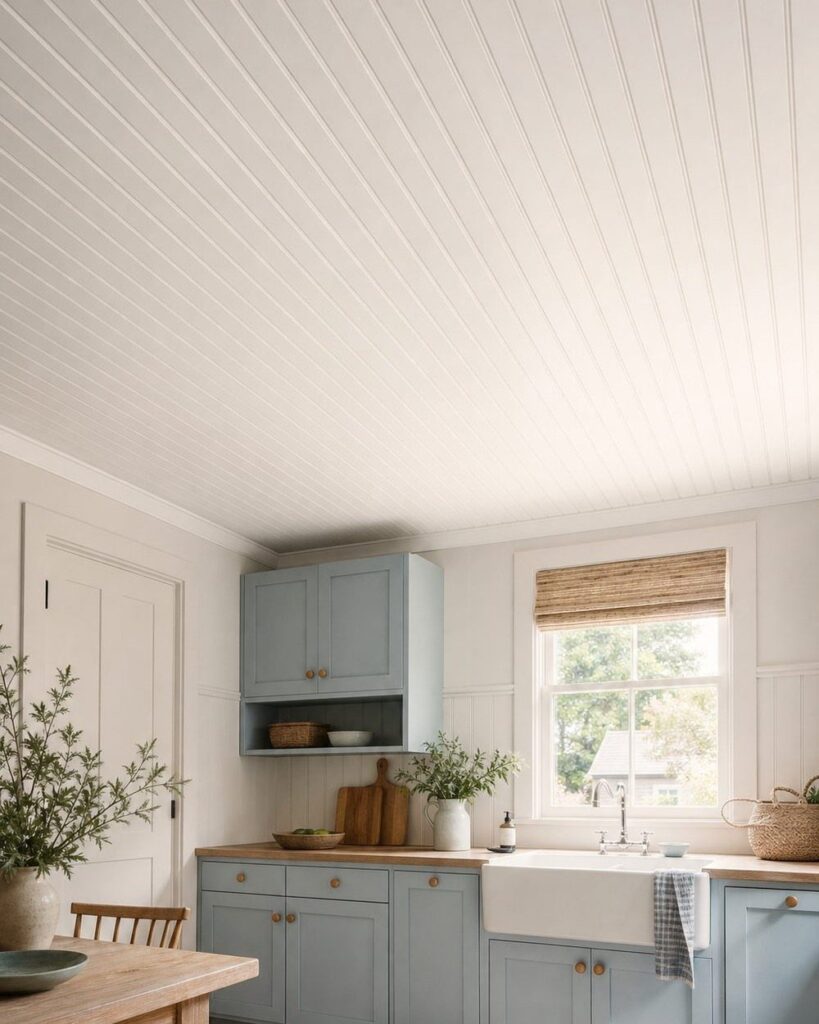
The ceiling you already have decides the pick, since the options run from a coat of paint, the cheapest on the list, to tongue and groove planks, which cost more than tiles.
A flat but tired ceiling can take drop tiles, foam tiles or trim, while one with flaws or low clearance points toward paint, wallpaper or beadboard.
A drop-ceiling grid hangs several inches below the existing ceiling, which makes a room with low clearance feel even tighter.
1. Drop Ceiling Tiles
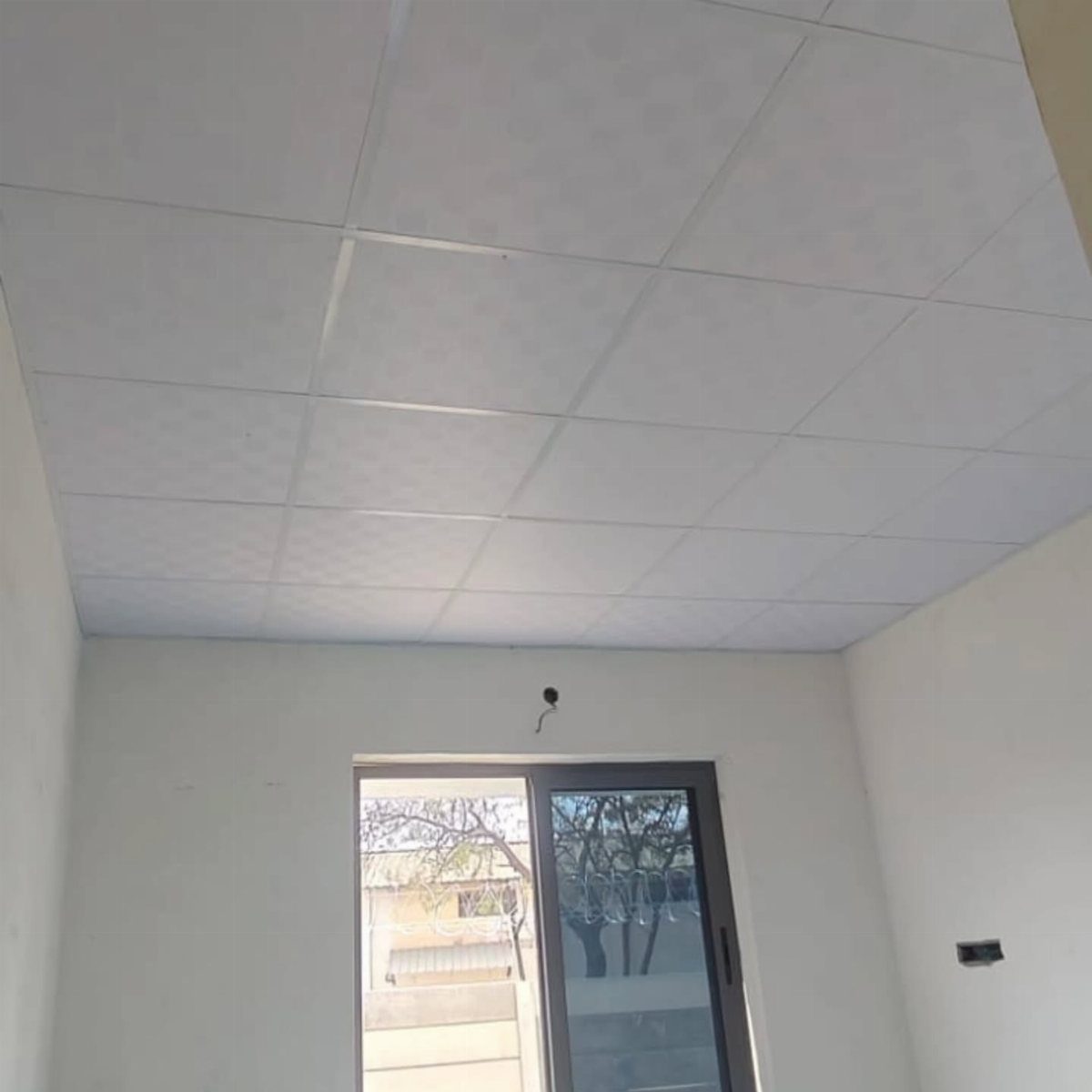
A drop ceiling is a metal grid hung below the existing ceiling, with lightweight tiles that rest in the openings. That is why it suits a weekend and a small budget: no taping, no sanding, no patching what sits above.
I like the textured white tile for hiding a flat, tired look. Measure the room first so the grid starts and ends with evenly sized border tiles, not a thin sliver on one side.
The cost is height. The grid hangs below the old ceiling, so a low room feels lower.
2. Tongue and Groove Planks
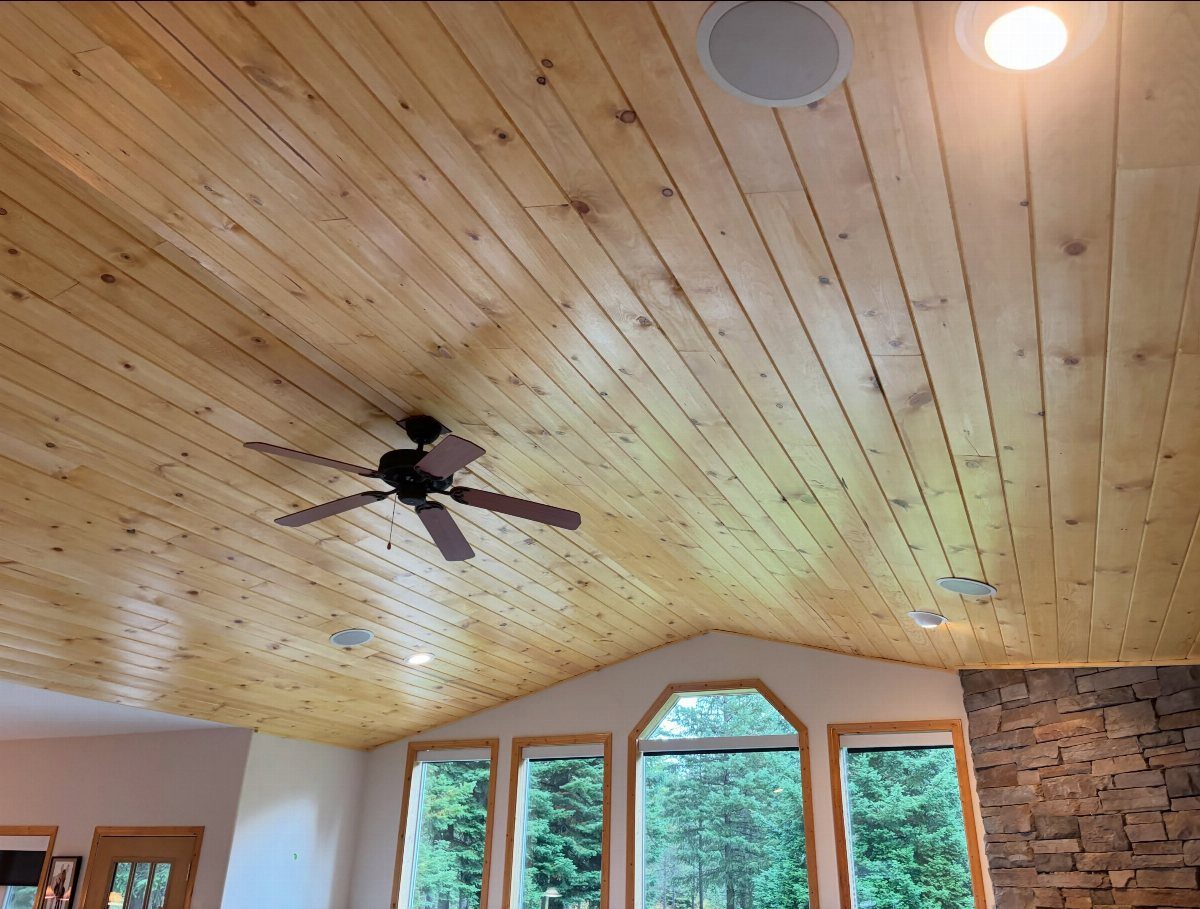
Wood planks that lock edge to edge give a ceiling a continuous, clean surface, and a light finish keeps it airy, as on a vaulted ceiling like this one.
Boards run along the slope, so the lines draw the eye upward.
For a budget, I would pick plain, light-toned boards and finish them yourself. Fans, recessed lights and speakers all work with this ceiling, but plan where each goes before the first board is up, because cutting openings later is harder.
Wood costs more than tiles, so this is my pick for one room, not the whole house.
3. Faux Tin Ceiling Tiles
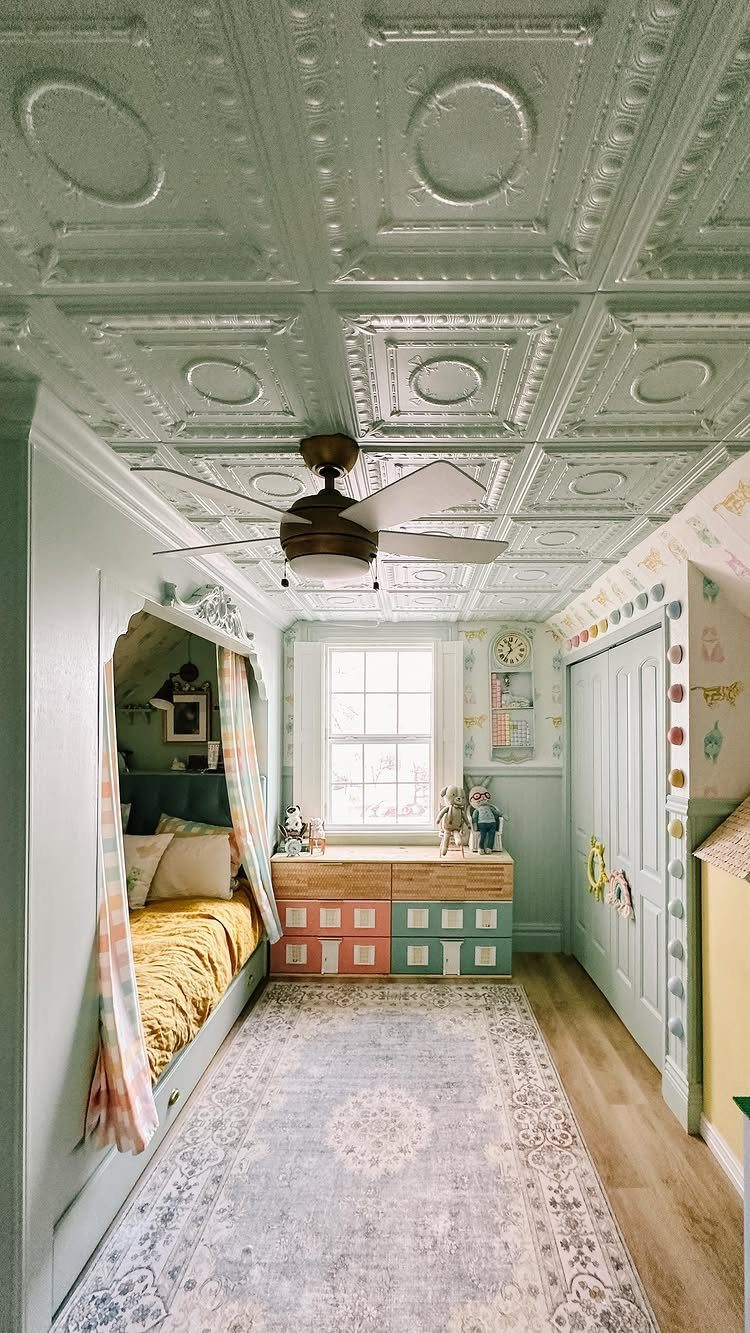
Embossed faux tin tiles give the look of an old pressed-metal ceiling for much less than the real thing. In a child’s room, a soft color like light green or blue makes the pattern feel playful instead of formal.
Paint is the cheap upgrade here. Pick one color, ideally a shade that matches a door or dresser, and the raised pattern picks up shadows on its own.
Plan around the ceiling fan: cut the tile for the fixture before you stick it up.
4. Painted Ceiling
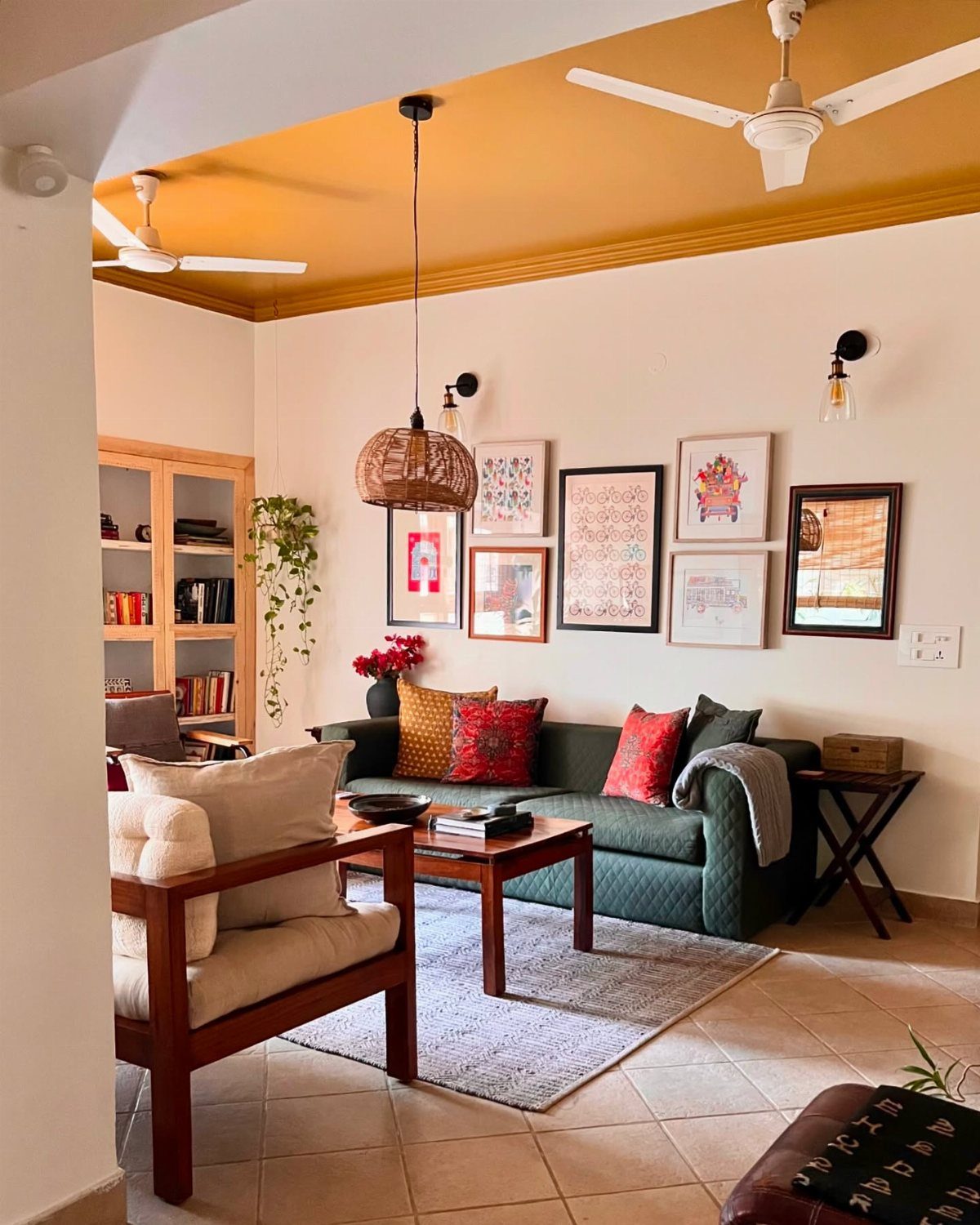
Paint is the cheapest ceiling covering there is, and a color such as yellow proves it. Against a green sofa and wood furniture, a warm ceiling reads as a deliberate choice instead of a leftover surface.
Roll it on with an extension pole and cut in the edges first. Tape off the fan bases so you are not painting around them with a brush.
I would test a sample patch first. Color looks stronger overhead than on a small swatch.
5. Styrofoam Ceiling Tiles
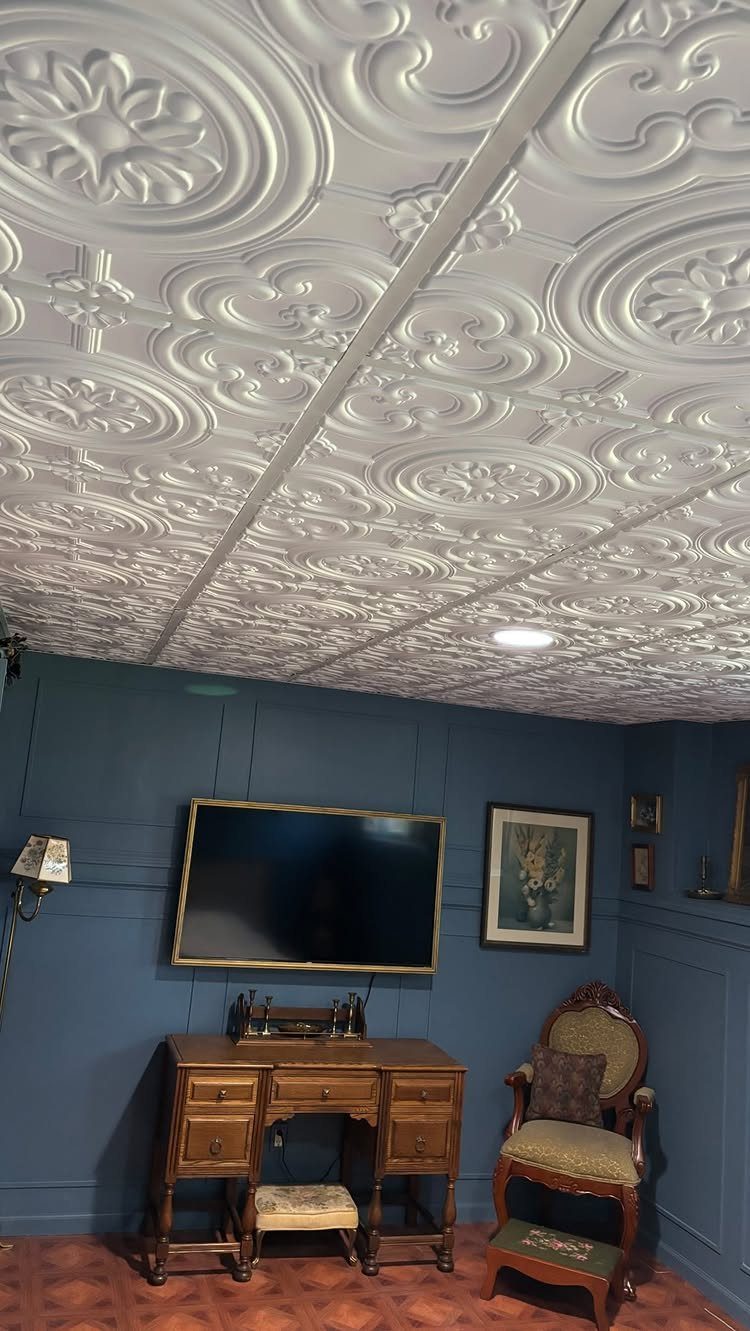
Styrofoam tiles are light enough to glue up with little more than adhesive and patience, and the ornate pressed-tin pattern in white looks like old metal from across a room.
That makes them a strong budget stand-in for a decorative ceiling.
Their best trick is hiding imperfections: the pattern covers small flaws in the surface underneath. Start from the center of the room so the border stays even.
Paint them for a custom color, though white works well above a bold wall color like blue.
6. Decorative Trim Molding
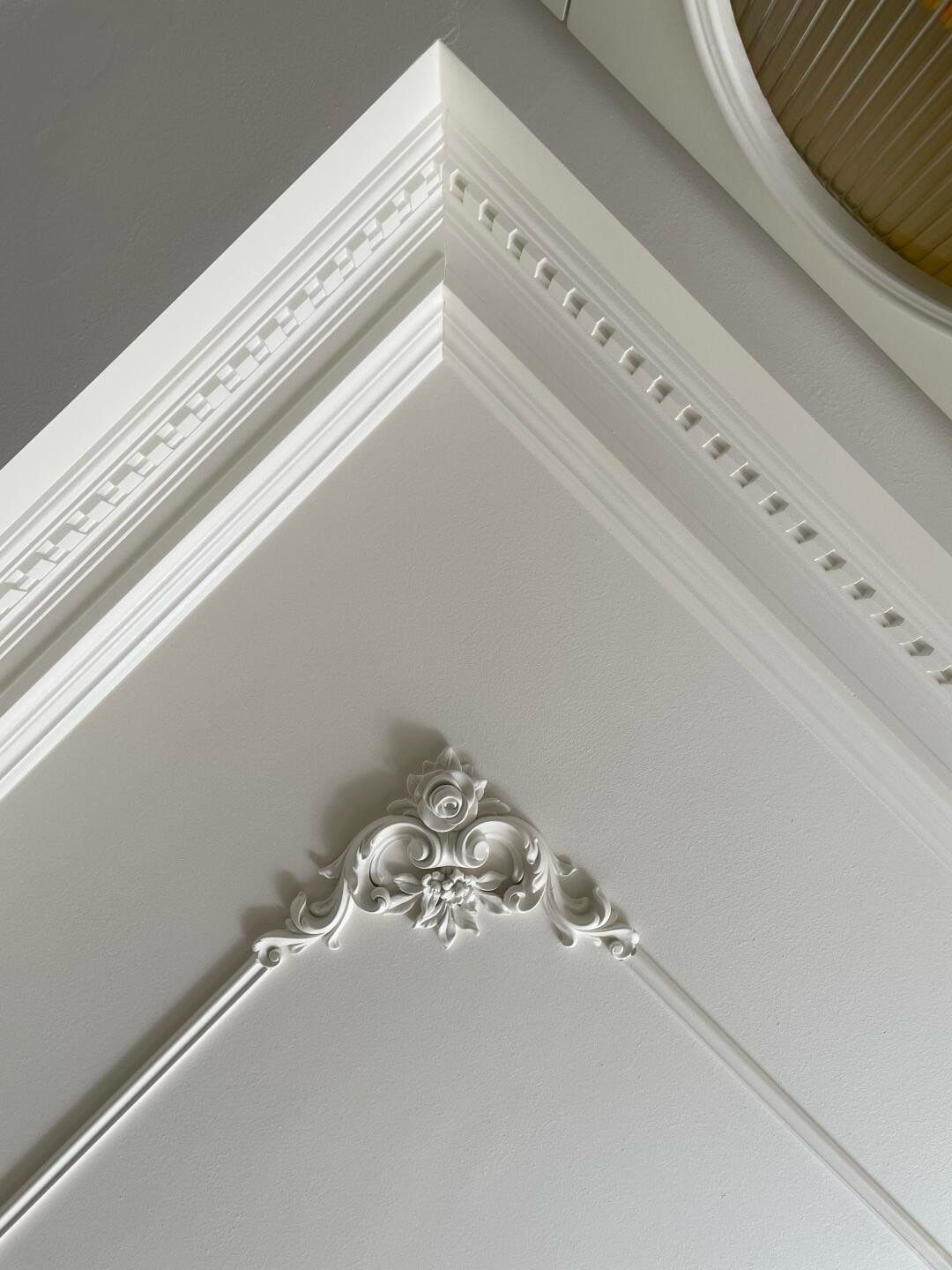
Crown molding is the finishing line where wall meets ceiling, and an ornate corner piece adds detail without covering the whole ceiling. That is the budget angle: a few pieces of trim change how the room reads.
Painting the molding the same white as the ceiling keeps the effect soft and lets the shape do the work. Caulk the seams and corners before painting so the joints disappear.
I would use it when the ceiling itself is fine and only looks plain.
7. Beadboard Panels
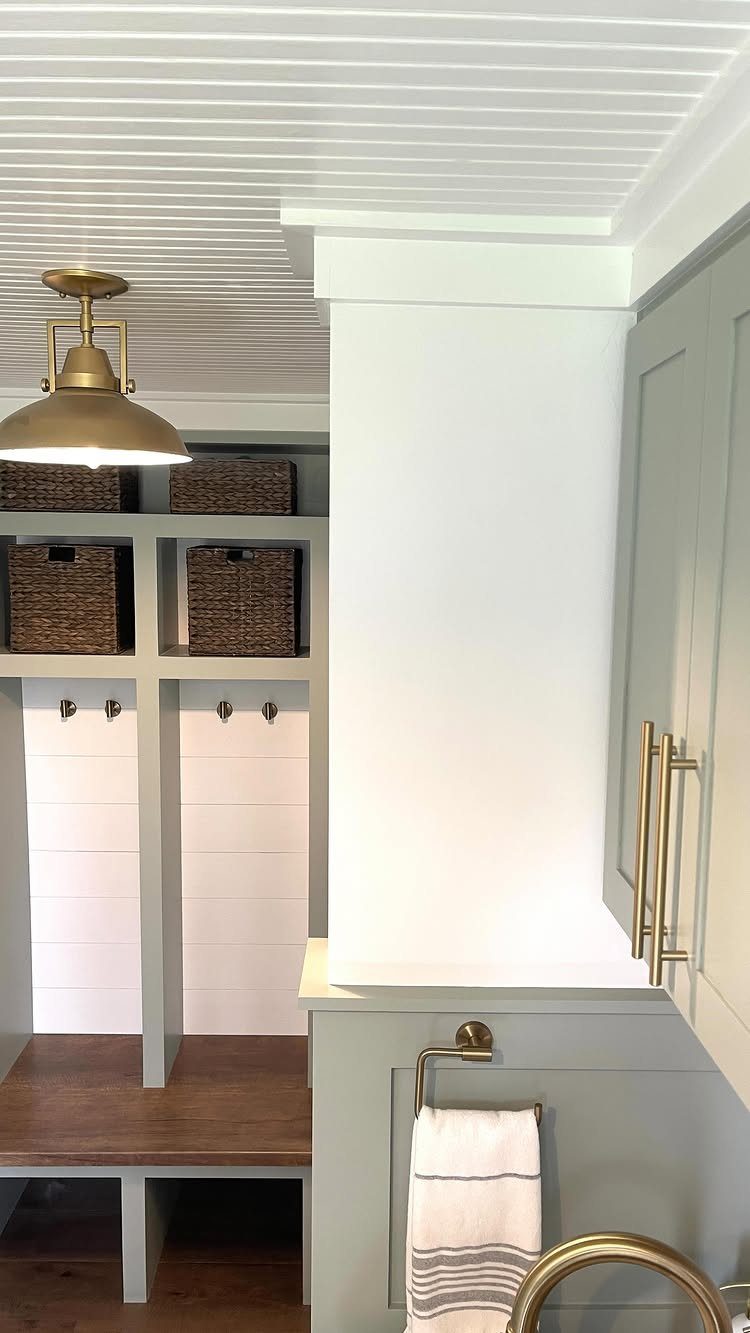
Narrow vertical grooves run across a beadboard ceiling and give a flat surface a little texture, which is why white panels feel cozy in a small mudroom or laundry area.
Against grey cabinets, white keeps the ceiling soft and lets the fixtures stand out.
Panels cover a lot of ground per piece, so they suit a weekend better than individual planks. Paint them after they are up, and caulk the seams so the grooves read as a pattern, not as joints.
I would pick this for a small room, where the cost stays low.
8. Wallpapered Ceiling
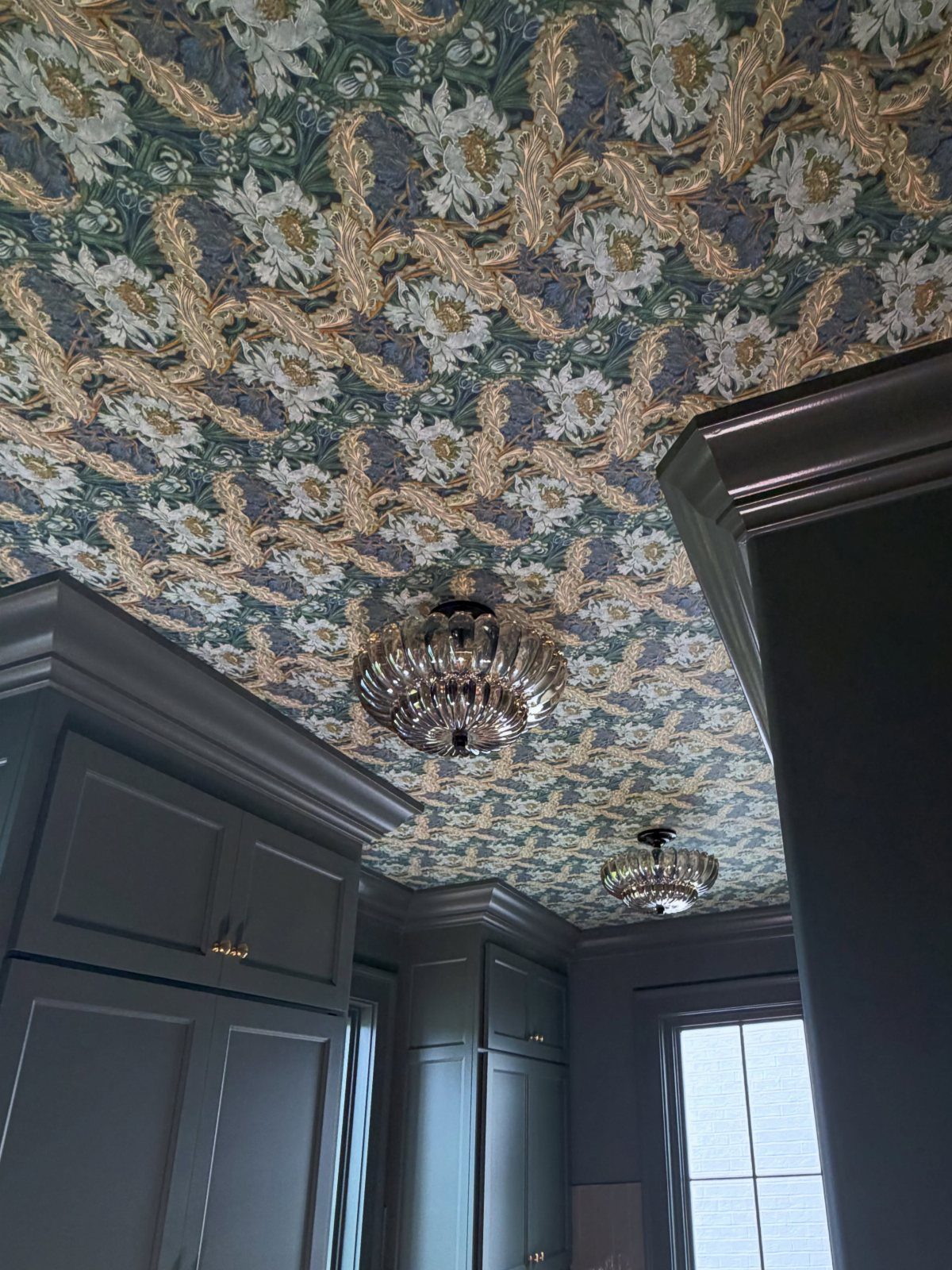
Wallpaper on a ceiling puts pattern overhead and pulls the whole room together when you pick something that plays off the colors below. A busy print also hides small flaws in the surface better than plain paint does.
Cabinets in one dark shade do that well, and light fixtures read as part of the design.
Use one or two rolls in a small room, and hang a test strip before you commit. Overhead work is slow, so a helper holding the paper saves a lot of frustration.
Affordable Ceiling Solutions
Peel-and-stick materials are the easiest place to start if you rent or want no adhesive mess. Inexpensive molding is another route: run strips in a grid across a flat ceiling and paint it all one color for a coffered effect.
Fabric is also an option for a budget ceiling, and many of these projects are fine to do yourself, which is where most of the savings come from.
Drop-ceiling grids are cheap, but the tiles decide how long they last, so pick a vinyl-faced or washable type with a mold-resistant core, especially in a bathroom or basement, because plain fiber tiles sag once humidity gets to them.
Basements, bedrooms and home offices all suit them.
Installation Tips
Gather the tools before you start, because climbing down a ladder for a missing item wastes more time than anything else on an overhead job.
For most ceiling materials, 4 tools do the job: a tape measure, a utility knife with fresh blades, a metal straightedge to guide the cuts, and a sturdy ladder.
Fasten each material the way it wants to be held: construction adhesive for lightweight foam or tin-look tiles, and small finish nails or staples for thin planks and beadboard panels.
A level is worth having when alignment matters, as it does with a grid.
Prep decides how the finish looks. Clean the surface and fix loose spots before you paint or stick anything up.
Cut with the straightedge as a guide and a fresh blade, since a dull knife tears the edges.
Ceiling Maintenance
Choose materials you can wipe down. PVC and metal are durable, and both clean easily and resist mold, which matters most in kitchens, baths and basements.
For a fresh start, new drywall is the option that should stay maintenance-free for years once it is primed and painted.
It takes more time and effort, and hanging it alone is hard, so line up a friend or rent a drywall lift.
Keep your budget in mind, but put quality first on anything you can’t easily replace.
Frequently Asked Questions
What is the cheapest option for a basement ceiling?
For a basement, a coat of paint costs the least, but once the ceiling needs real covering, a drop ceiling is what most people end up choosing.
Humidity is the problem down there, so I go with vinyl-faced or washable tiles that have a mold-resistant core; plain fiber tiles soak up moisture and sag.
Drywall costs about 50–80 cents per square foot, and screws, tape and joint compound add another 35 cents to $1.10, but sealing the ceiling shut makes later repairs to the pipes and wiring above a hassle.
How do you fix a sagging ceiling?
New drywall is the fix that starts fresh. Replacing the damaged section lets you fix the cause first, then gives you a flat surface to prime and paint that should need no upkeep for years.
A full sheet is awkward to hold overhead by yourself, so recruit a helper or rent a drywall lift.
Sagging also shows up in plain fiber drop-ceiling tiles that take on humidity, so in damp rooms switch to a washable, mold-resistant type.
What can you make a ceiling out of?
For a low budget, the main choices are drop ceiling tiles, tongue and groove planks, faux tin tiles, Styrofoam tiles, beadboard panels, wallpaper, molding and plain paint.
Fabric works too: muslin or drop cloths draped over curtain or tension rods, with muslin running around 50 cents per square foot.
Peel-and-stick materials suit renters, since they avoid adhesive mess. Wipe-clean metal and PVC panels shrug off mold, which makes them a good fit for kitchens, baths and basements.
How do you hide a rough ceiling?
Beadboard panels, ceiling tiles or new drywall will cover a rough surface. Patterned Styrofoam tiles and a busy wallpaper also hide small flaws, because the pattern pulls the eye away from what is underneath.
A thick textured paint can also blur bumps and dips in an uneven ceiling. Before any of these, scrub the ceiling and repair loose or flaking patches, or the new finish will not stick.





