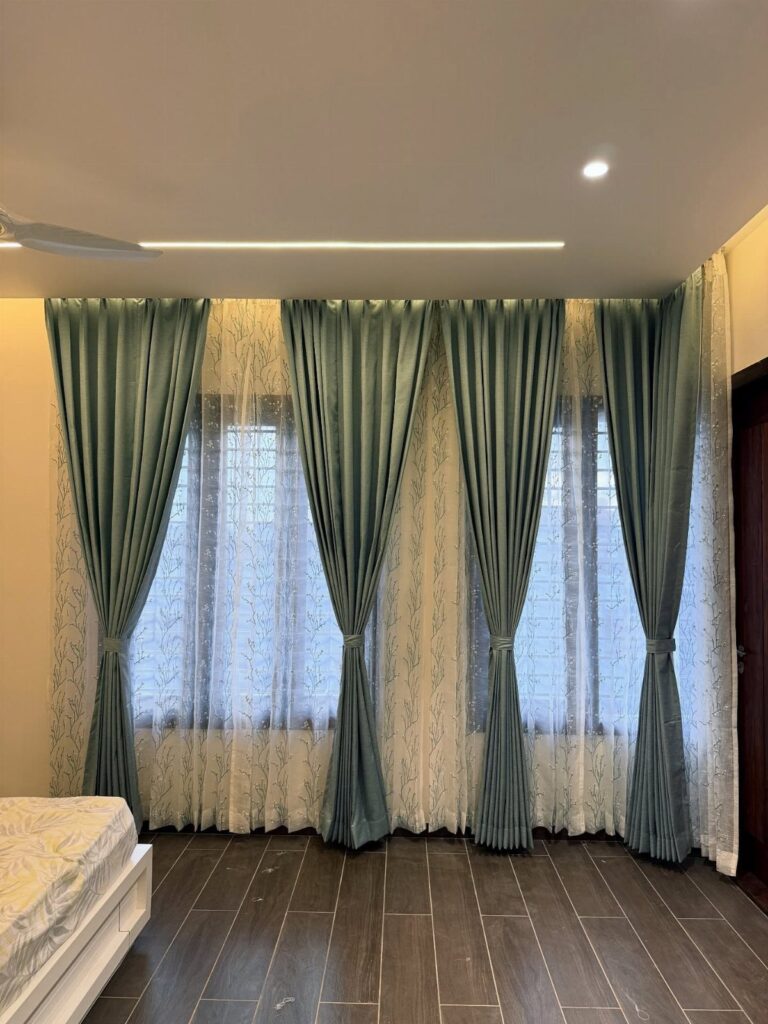
The list has 12 entries, and which ones fit a big window depends on one thing: what the glass has to do after dark.
If you want to keep the view and need little privacy, sheer curtains or Roman shades are enough; if the room has to go dark or feel private, layered curtains or plantation shutters do the job better.
The ideas run from stitching pom-pom trim onto curtains you already own to shutters that usually cost well above fabric, and the rod matters on every one: a wide span needs center support brackets so it doesn’t bow.
1. Roman Shades
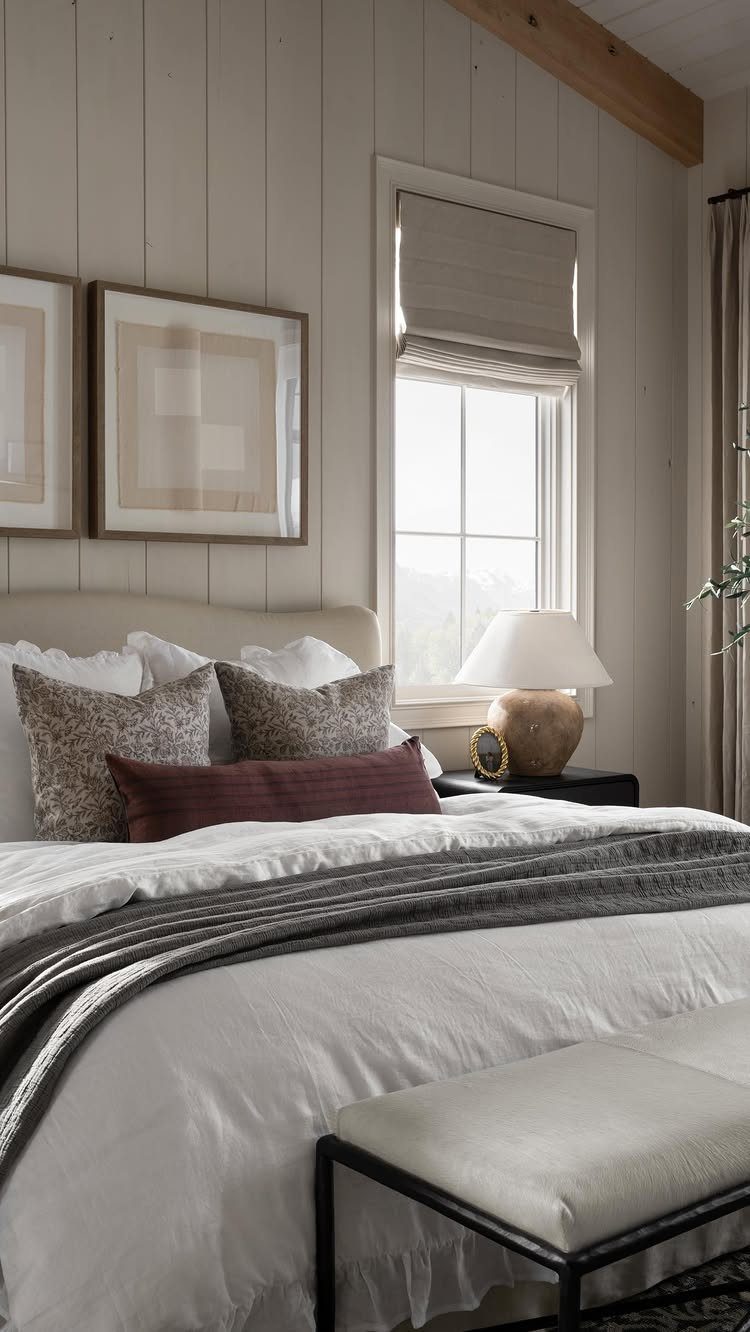
A Roman shade folds flat into clean horizontal pleats, so a bedroom window gets a tailored edge with no fabric pooling on the floor. A neutral shade like beige keeps the wall quiet and lets the bedding do the talking.
I would pick a plain, solid fabric for this look. Patterns work against the minimalist feel.
Mount it inside the window frame for the sharpest lines.
2. Sheer Curtains
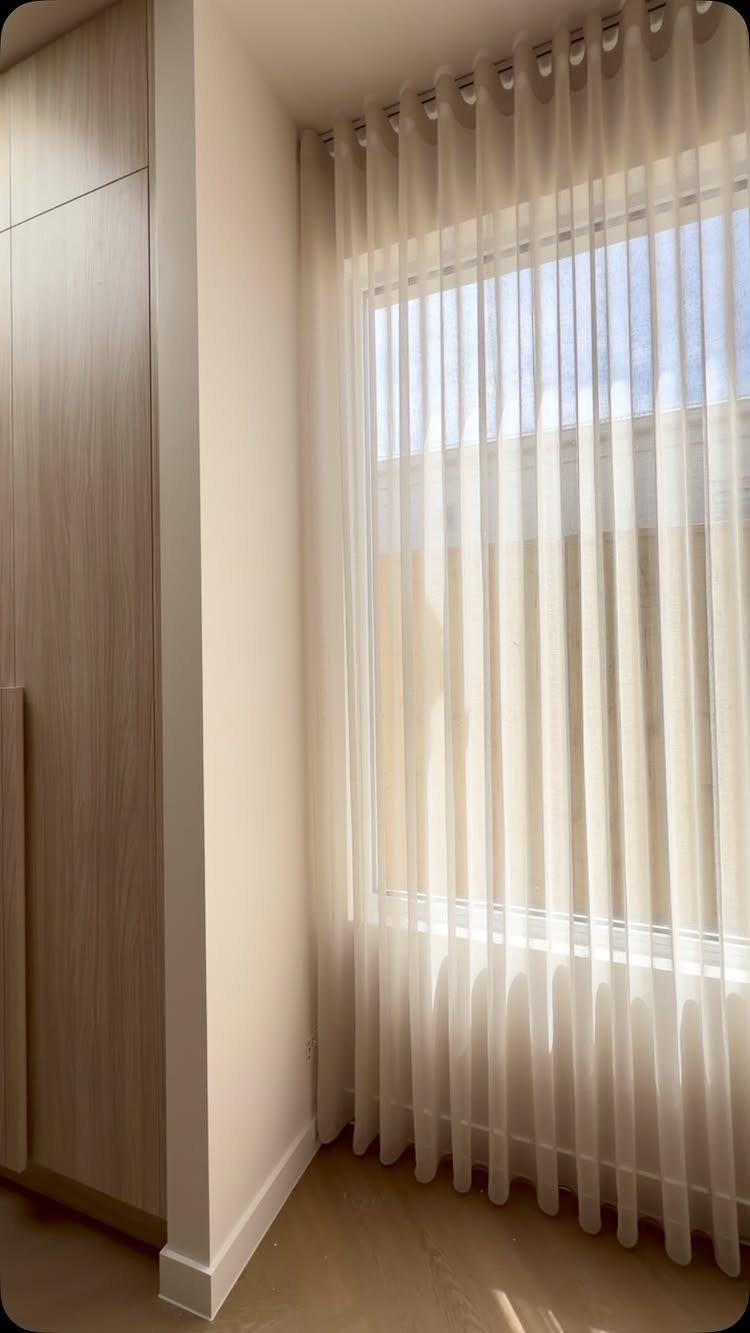
Sheers are the easiest answer when a big window has a view you refuse to hide. White, floor-length panels soften the glass and still let daylight and the outdoors show through.
Hang them on a rod set high and wide so the fabric clears the glass when pulled open.
Light fabric on a large window can look thin, so I would buy generous width and let it fall full rather than stretched flat.
Sheers give a little daytime privacy, but not much at night, so plan to add something heavier if that matters.
3. Floor-to-Ceiling Curtains
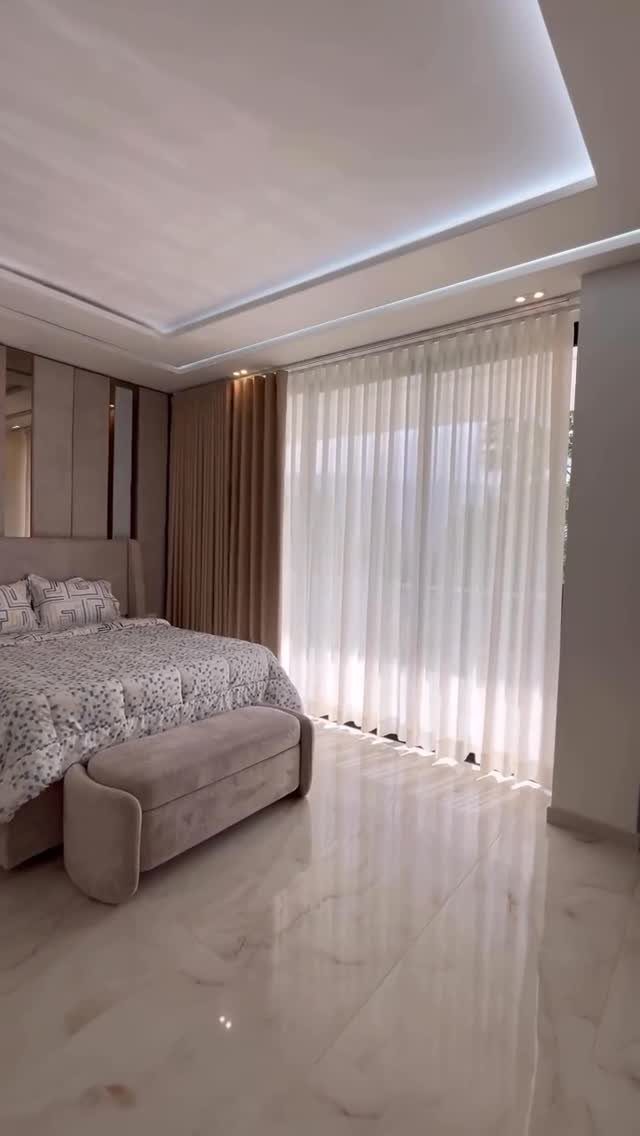
Mount the rod or track near the ceiling and let the fabric run all the way to the floor. Measure the full drop first, since ready-made panels often fall short of a tall wall.
I would choose a sheer layer plus a solid one, so you can have light by day and cover when you want it.
4. Mix and Match Colors and Fabrics
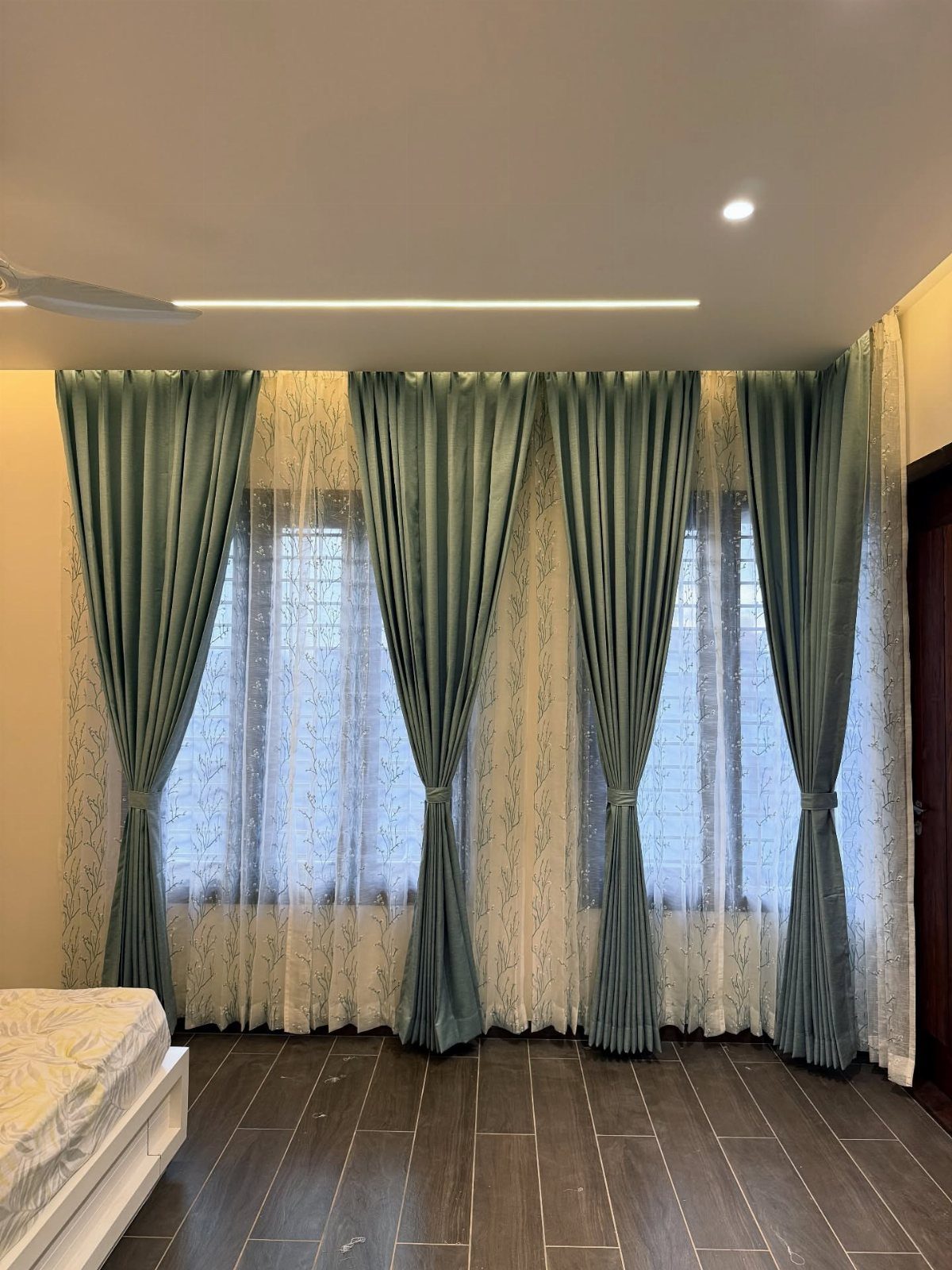
Pairing a bold solid with a patterned sheer is the quickest way to make a window look like your own. A deep teal panel over white lace is a good model: one color carries the weight, the other stays airy.
Keep one element calm. If the sheer has a pattern, choose a plain solid on top, and the mix reads as intentional rather than busy.
Tiebacks hold the heavy panel open so the lace still shows. Buying two inexpensive sets and combining them costs less than one custom order.
5. Layered Curtains
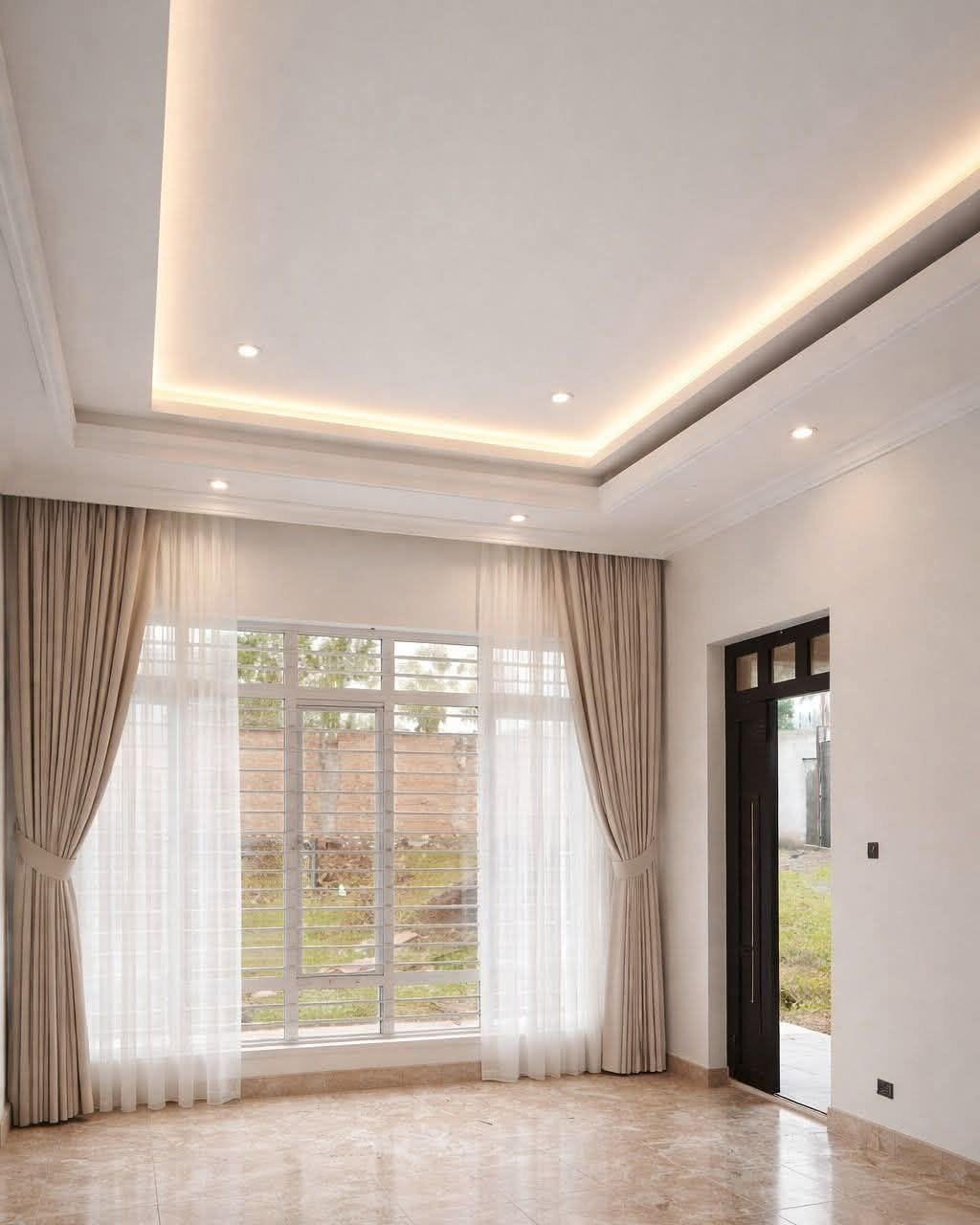
Two rods, two fabrics: a sheer closest to the glass and a heavier beige panel in front. That setup gives you more control over one big window than any single curtain can.
Slide the sheer shut for soft daytime light, then draw the heavier layer when you want privacy or a darker room.
Keep both layers in the same color family, as the beige and white do here, and the window stays calm. Use a double rod, or hang 2 separate rods if the wall allows.
6. Plantation Shutters
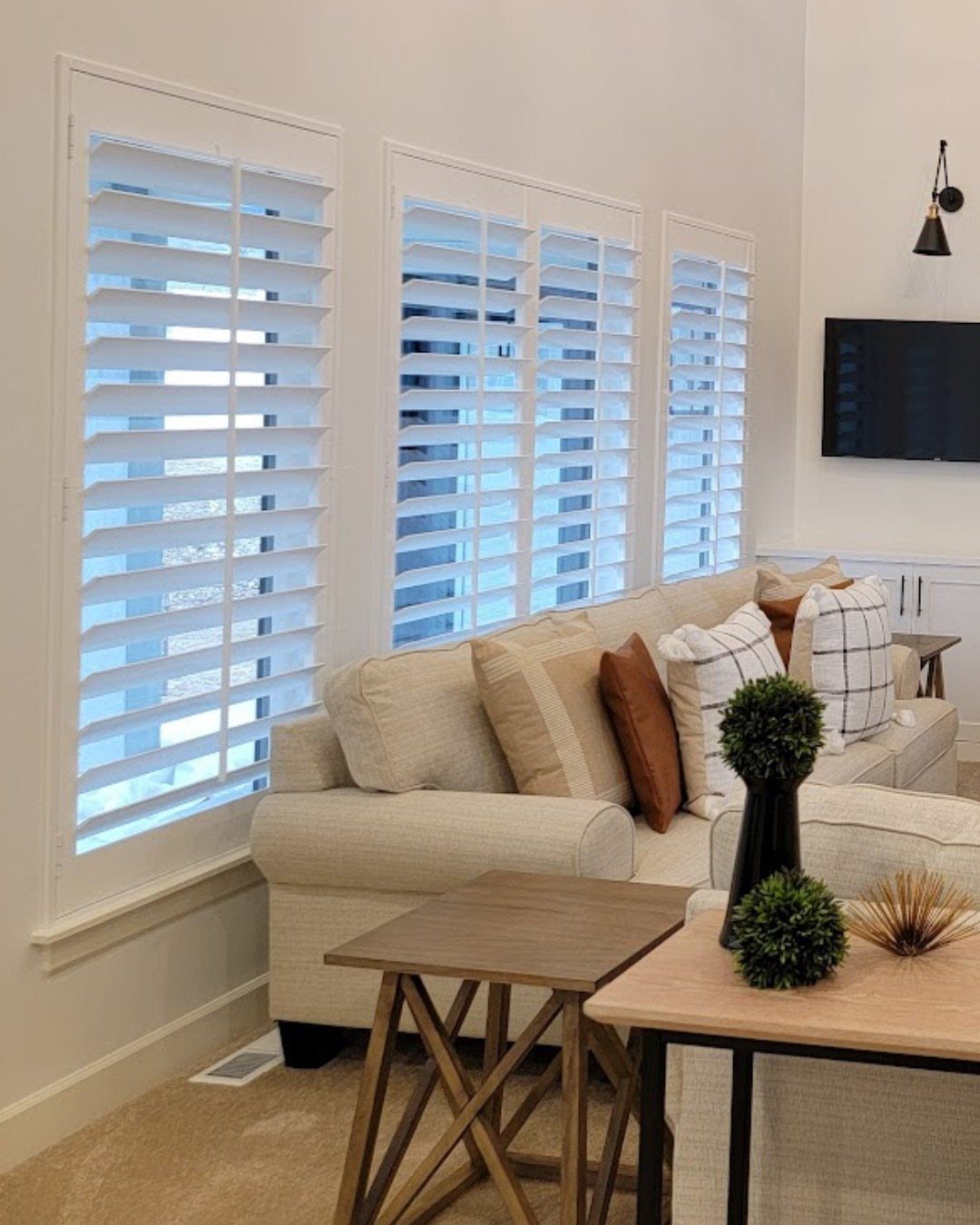
Plantation shutters swap fabric for wide wooden or wood-look louvers that tilt with a single rod. White ones across 3 windows give a living room a crisp, uniform line.
They suit anyone who wants easy operation: tilt the louvers to aim light or close them for privacy, with no cords or folds to manage.
Cost is the limit.
Shutters usually run well above fabric treatments, so I would price a few options before committing. Measure each window carefully, since they are built to fit the frame.
7. Curtains with Piped Edges
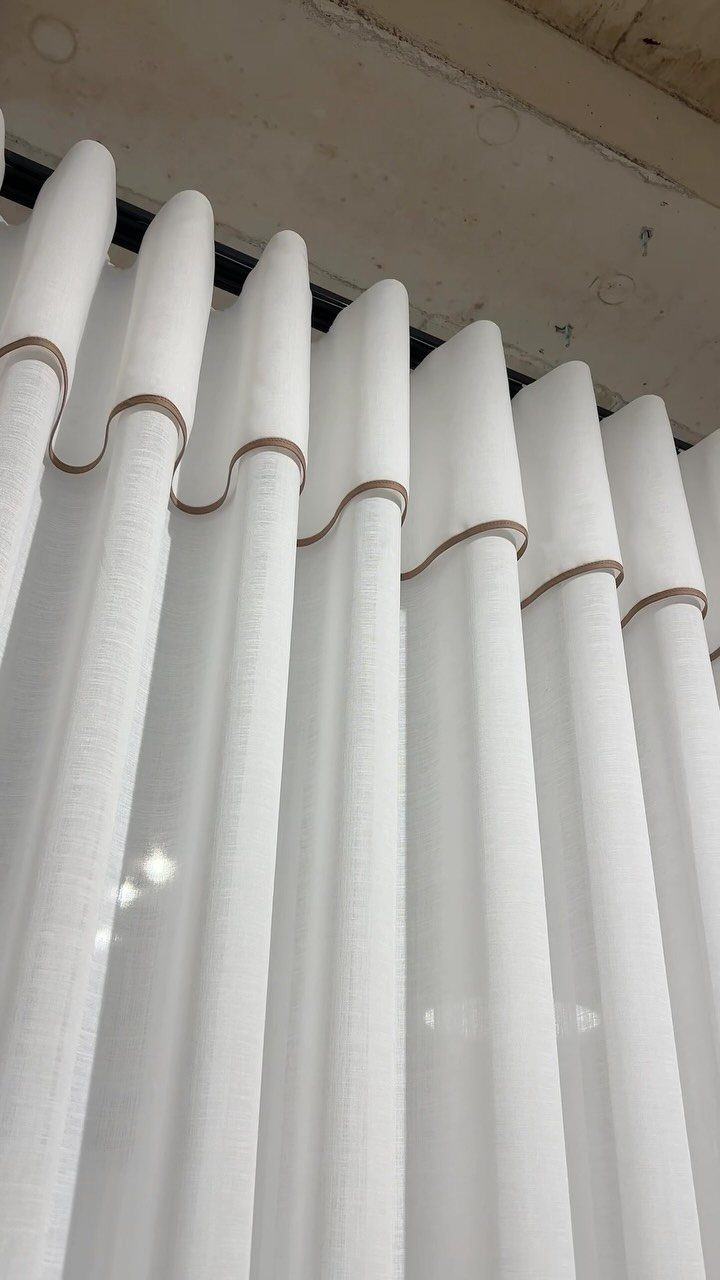
Piping is a thin corded seam sewn into the edge of a panel, and in a contrasting color like brown it draws a clean line along the top of the fabric.
Brown on white, hung from a dark rod, gives plain curtains a defined outline without adding pattern.
I would match the piping to the rod so the two read as one deliberate pairing. Keep the panels themselves solid, since the trim is doing the decorating.
Ready-made panels with piping run higher than plain ones, so look closely at the edge trim in the store or the product photos and make sure the cord is sewn straight.
8. Curtains with Half Cafe Curtains
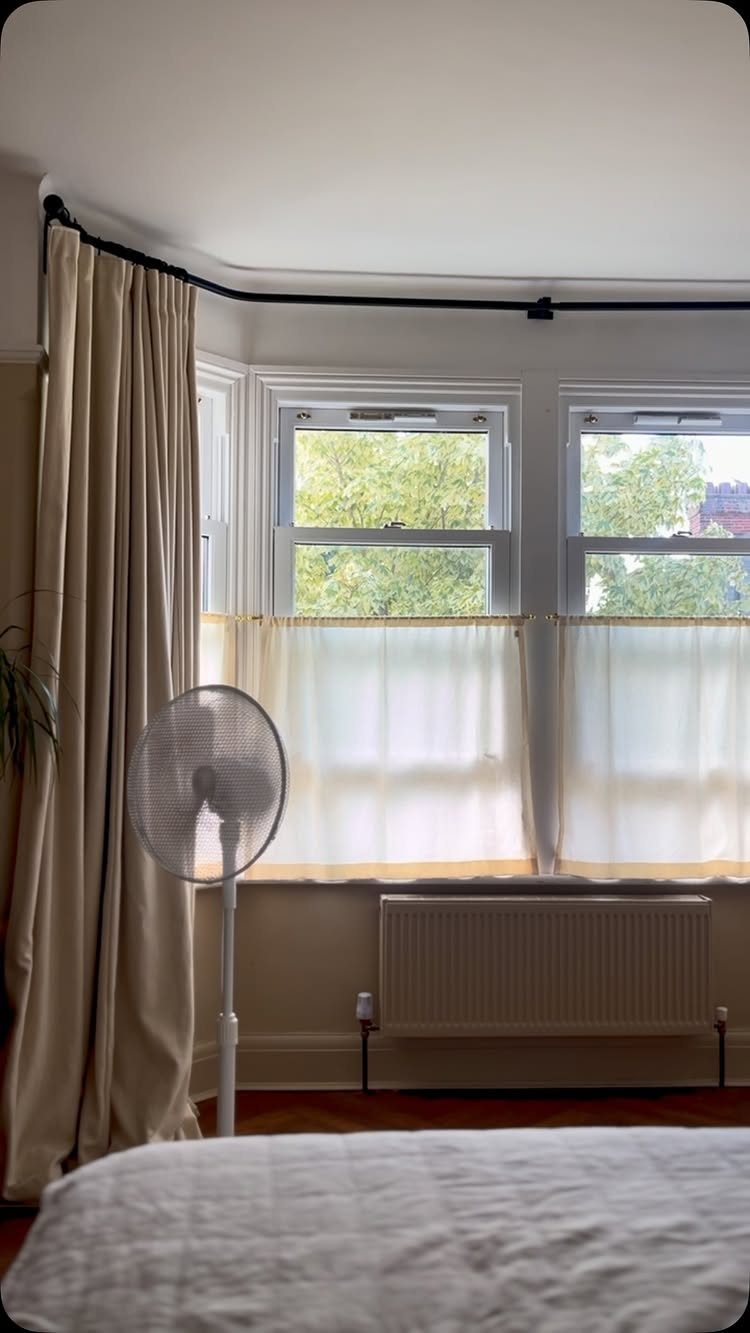
Full-length cream panels at the sides, with sheer cafe curtains covering only the lower half of the glass, make a bay window feel dressed without losing the light.
The sheers handle daytime privacy at eye level while the upper glass stays open.
Hang the cafe rod at the middle of the window and keep the sheer pale so it sits close to the cream.
A radiator or furniture below the sill is a good reason to choose cafe curtains: short fabric clears it, and long panels would not.
9. Pom-Pom Trim Curtains
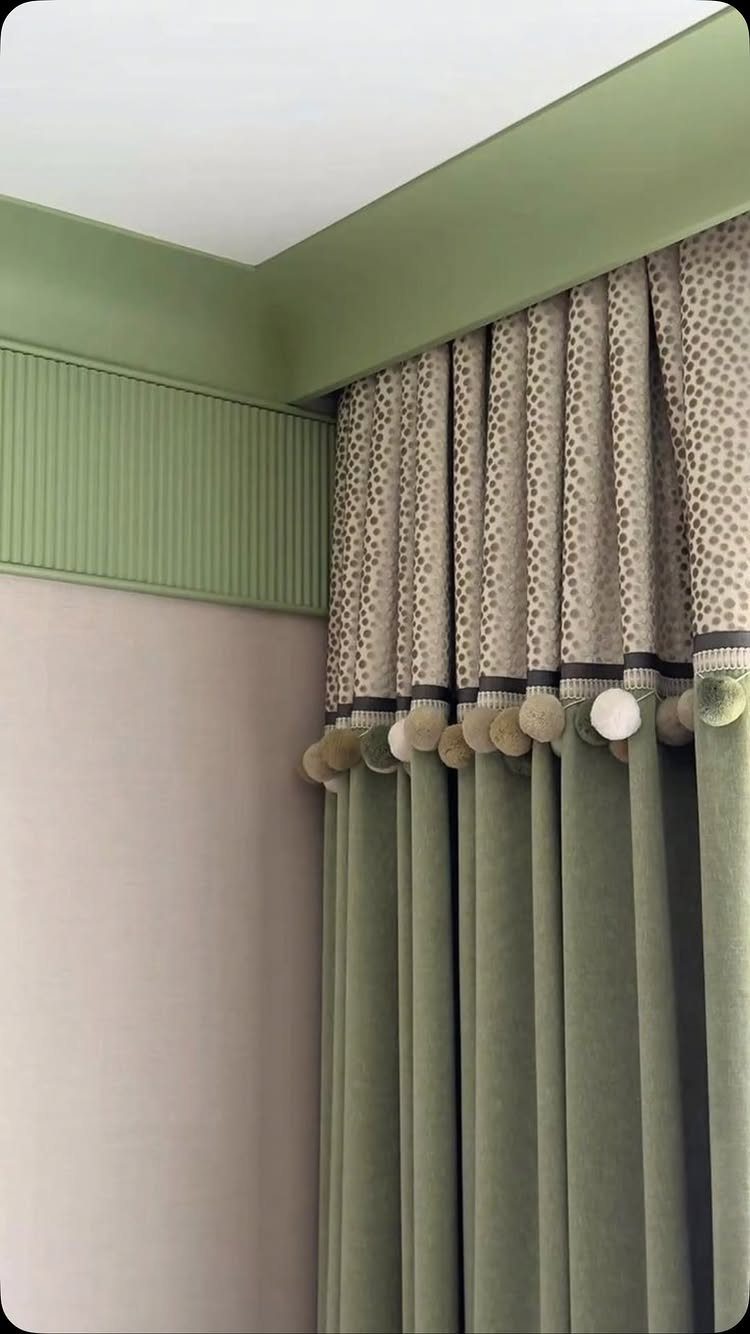
Velvet in a deep green already looks rich, and a patterned band across the top with pom-poms hanging from it adds a playful edge.
The trim is the whole personality here, so I would keep the rest of the window simple.
Sewn-on pom-pom trim is sold by the yard, so you can add it to plain curtains you already own instead of buying new ones. Stitch it by hand along the hem or top edge.
Choose a pom-pom color that sits close to the fabric, as in this green and beige room, for a softer result.
Curtain Rod Considerations
A rod that looks right on a small window can sag across a wide one, so pick one sturdy enough for the span.
Wood, wrought iron and other metals are the most common materials, and the finish should suit both the curtains and the room.
Length matters as much as strength. Plan for the rod to extend at least 6 inches past the window frame on each side, so the panels stack beside the glass when open.
Some sources push that to 10 inches, and I would go with the longer figure if you have the wall space and want the whole window clear.
On a large window, ends-only brackets are rarely enough.
Add one or more center support brackets so the rod doesn’t bow under the fabric’s weight. Brackets come decorative or minimal, depending on whether you want them noticed.
A DIY rod also works: a wooden dowel, plumbing pipe or long branch can hold curtains well.
Measuring for Curtains
Start with the width.
Curtains look full when the fabric is 1.5 to 3 times the window width. Closer to 1.5 gives a lighter, flatter look; closer to 3 gives deep folds.
Hanging multiple panels means splitting that total width evenly so both sides look balanced.
Write the numbers down and check them twice.
Balancing Light and Privacy
A single curtain panel on a big window works best as one part of a layered setup rather than the only layer.
For nights, add a blackout or room-darkening curtain over the sheer. A sheer panel behind a heavier curtain gives you control over light and privacy from morning through evening, and the double layer insulates better than either one alone.
Adjustable blinds or shades are another way to control the glare and the view without moving curtains. On a big window, I would pick whichever combination you will actually open and close each day.
Frequently Asked Questions
What color curtains make your room look bigger?
Light colors make a room feel more spacious, so pale shades like white or beige are the safest pick. On a big window, a white sheer lets daylight and the view through, which keeps the wall from feeling closed in.
Pairing a heavier panel with a sheer works best when both layers stay in one color family, because the window then reads as a single calm surface.
What is the newest trend in window coverings?
Layering different fabrics is the trend I see most. Motorized blinds are another option, though they cost more than a basic fabric setup.
What to put in front of a big window?
Curtains, blinds or shades all work, and a combination usually does the best job. A sheer panel with a heavier curtain over it handles daytime light and nighttime privacy, and adjustable blinds or shades help with glare.
Whatever you choose, it should be the setup you will really pull open and closed every day, since a fussy one tends to stay shut.
How do you hang curtains in a large window?
Mount the rod high and wide, extending at least 6 inches past the frame on each side so the panels stack beside the glass instead of covering it.
A rod spanning a wide window sags under the fabric’s weight, so screw in at least one center support bracket into a stud or anchor. For fullness, buy fabric 1.5 to 3 times the window width.





