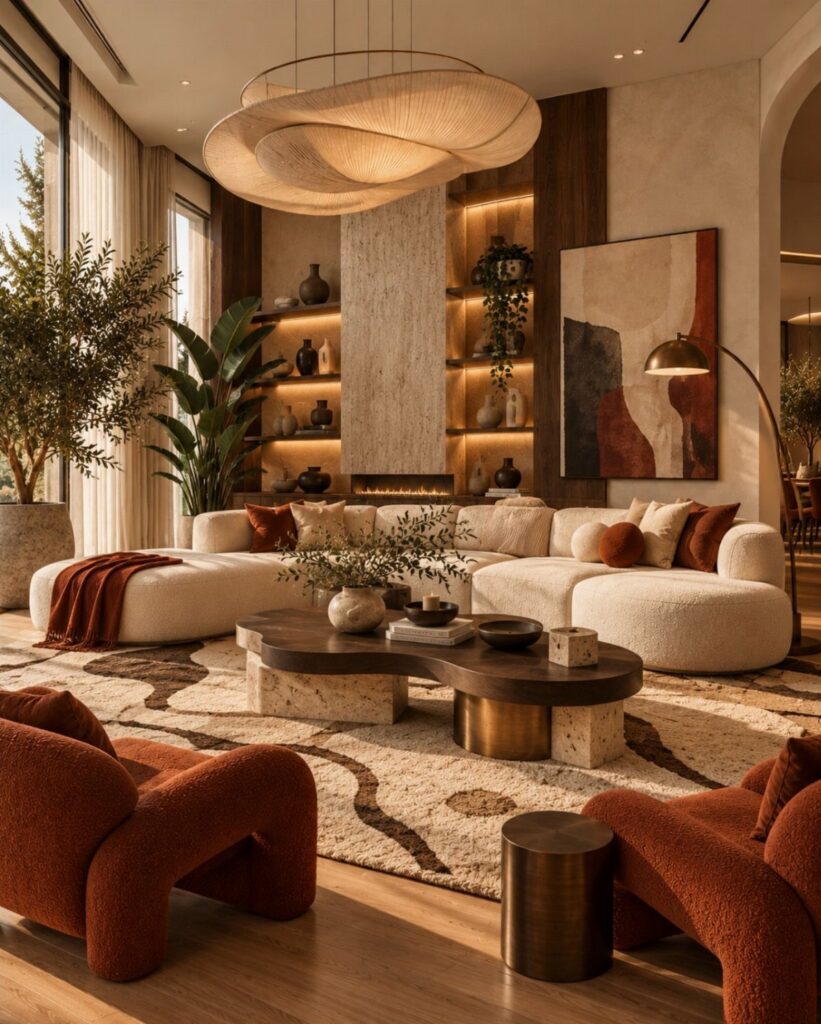
A renter can bring in a leather lounge chair, an accent rug or a sculptural lamp, while floor-to-ceiling windows and floating vanities belong to owners who can open walls.
The span runs from a single rust throw or a glass-top side table to floor-to-ceiling windows and wall-mounted floating vanities.
1. Floor-to-ceiling Windows and Sliding Doors
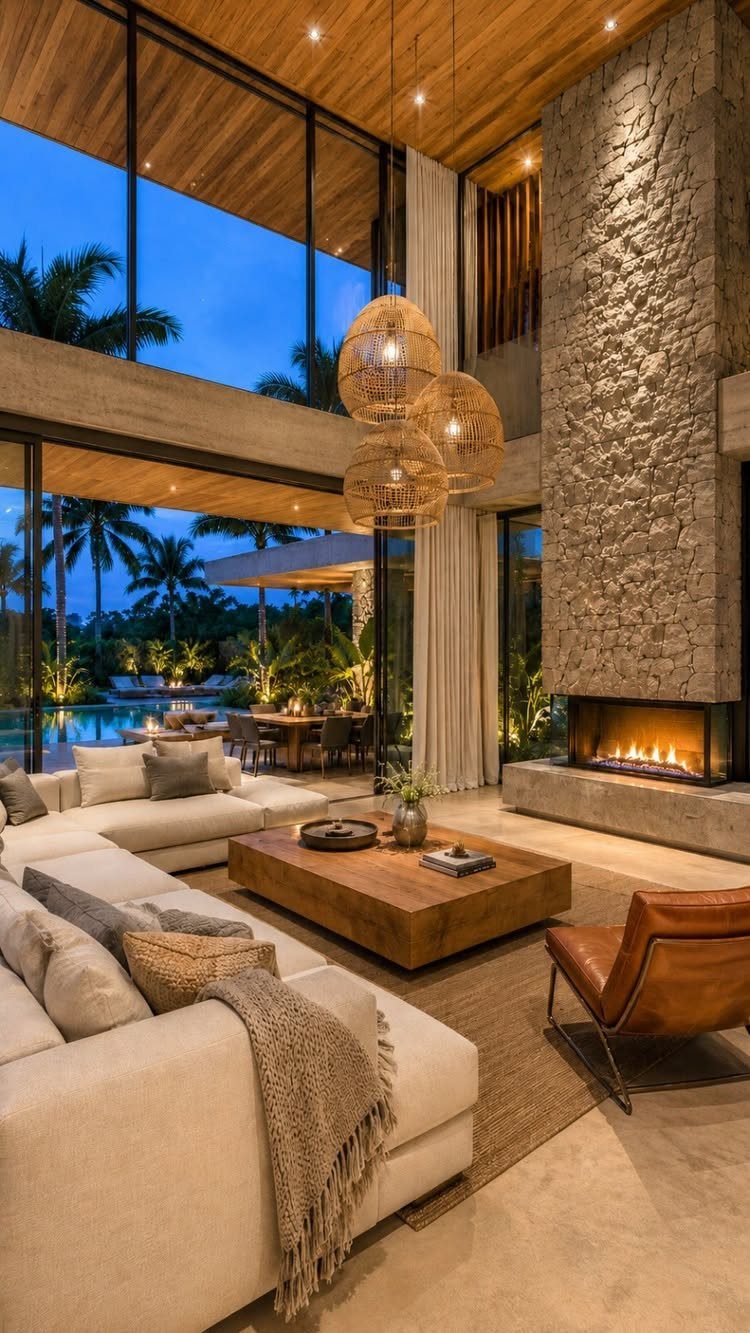
Glass that runs from floor to ceiling makes the view part of the room, so I treat the outdoors as the biggest piece of decor. Keep the furniture simple so the pool and greenery supply the color.
A stone fireplace on the solid wall balances all that glass nicely. Sliding doors also keep the opening clear, with no swing space eating into the seating area.
Renters rarely get to cut new openings, so for most of us this is an idea to borrow rather than build: keep the window area free of heavy drapes and tall furniture.
2. Warm Woods
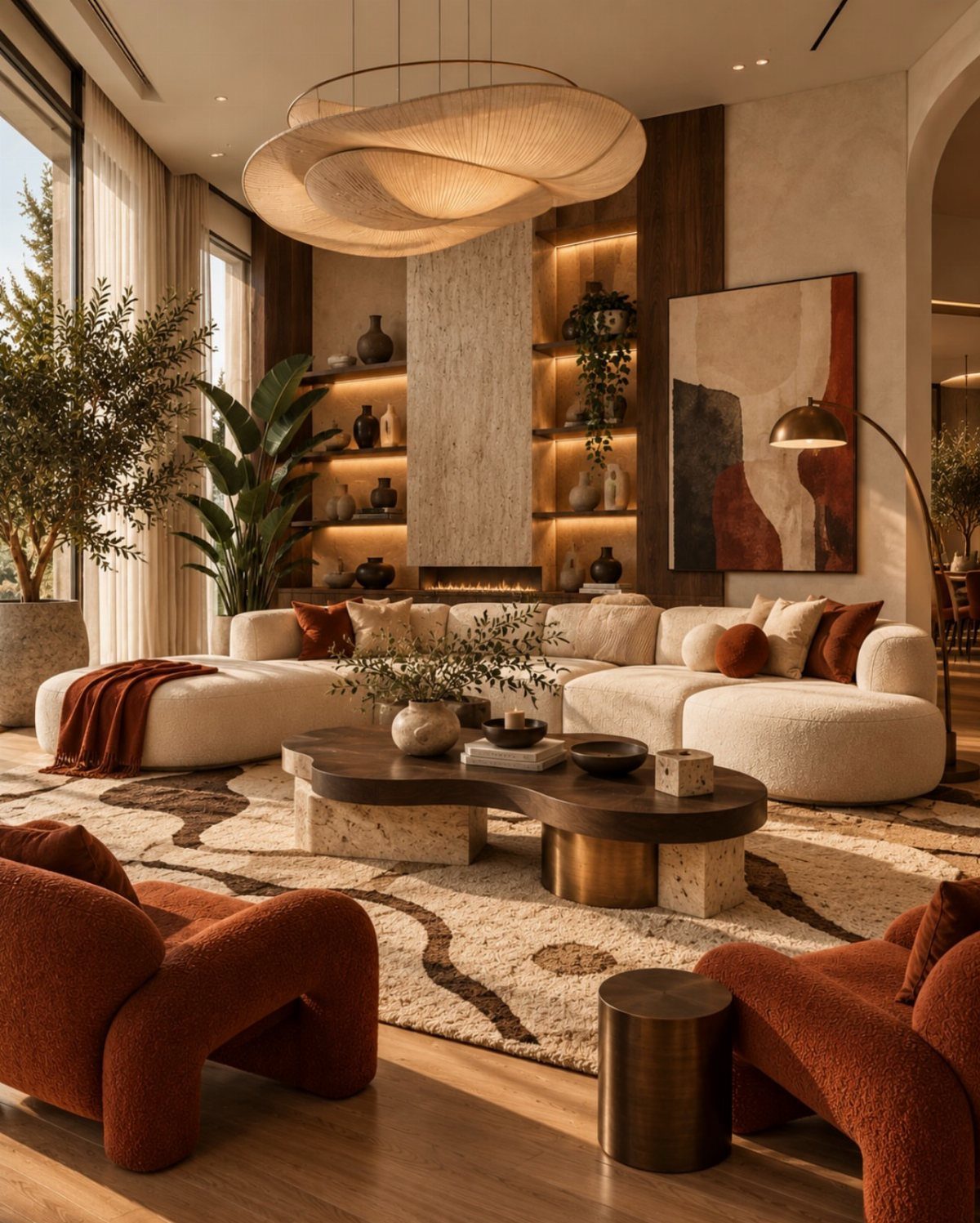
Wood on the floor, the walls and the furniture at once is what gives this room its glow, and I like that the tones sit close together instead of matching exactly.
Paneling with built-in shelving makes the wall do double duty, holding books and objects without extra furniture.
If a full wall of paneling is too much for a rental, start with one wood piece and build from there.
3. Low-profile Furniture
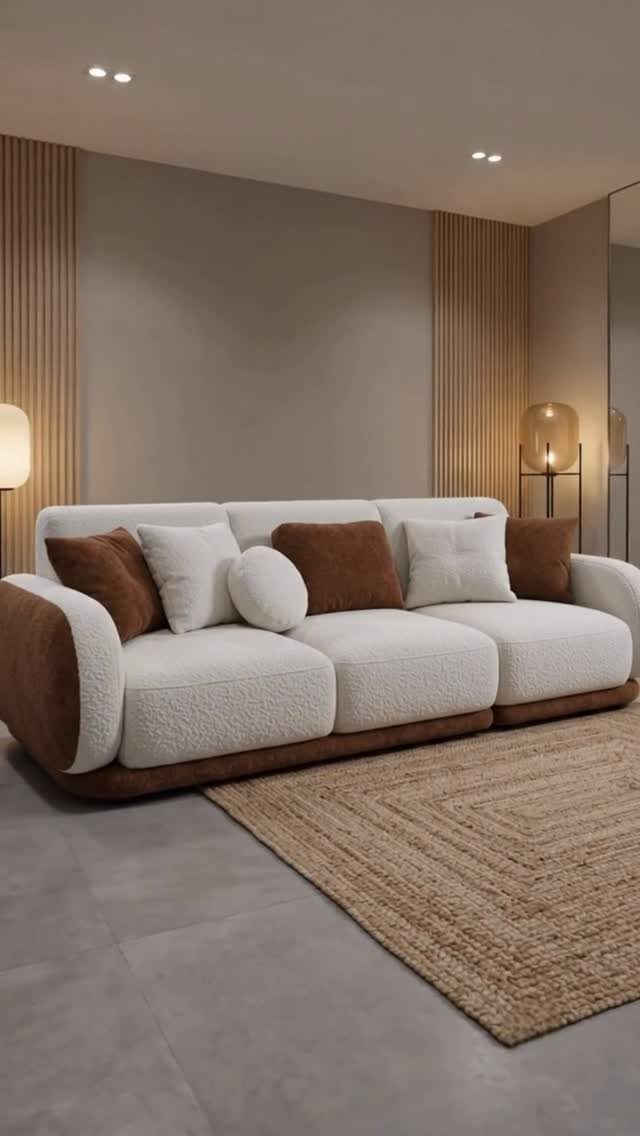
Seating that sits close to the floor is the quickest way to make a room feel wider and calmer. A modular sofa is my pick here, since you can rearrange the sections as the room changes.
Set it on a textured jute rug so the low shapes have something grounded to rest on.
Check your doorways and stair turns before buying; long modular pieces are easier to move in sections.
4. Ambient, Task, and Accent Lighting
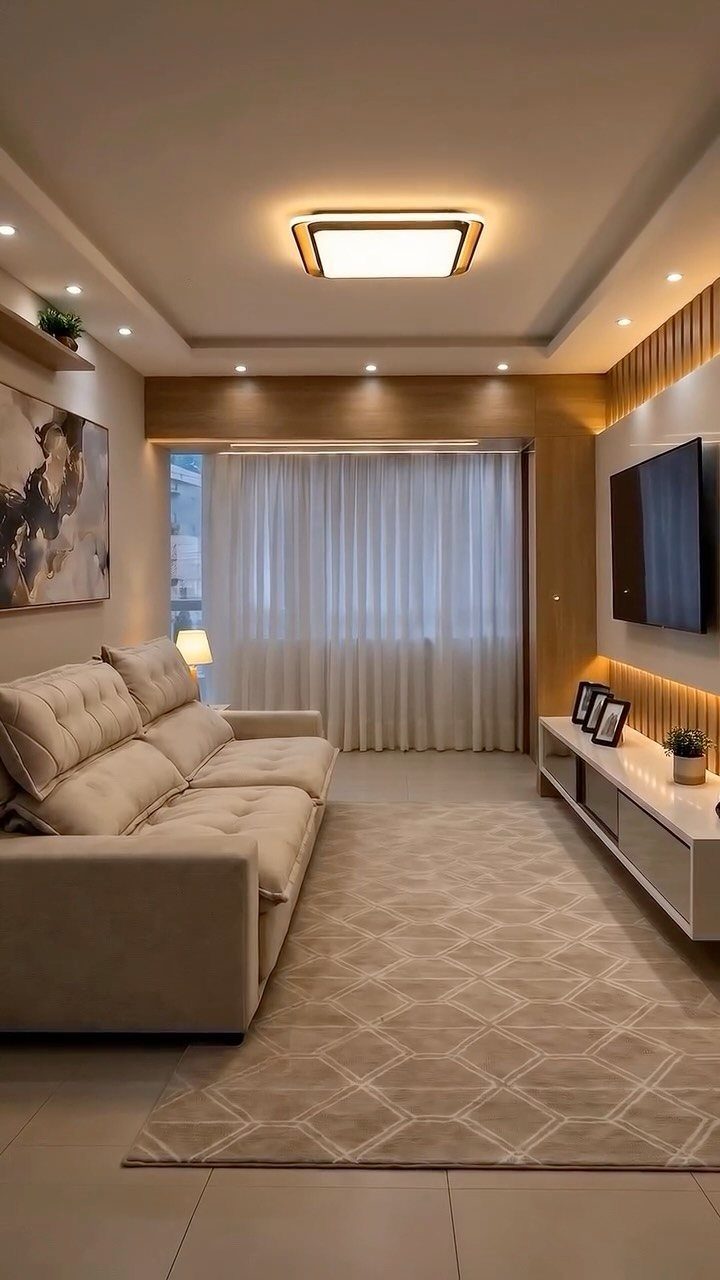
One ceiling light rarely does the job, so plan on layering a floor lamp, a table lamp and a wall or picture light.
A central fixture and recessed spotlights set the general light, a table lamp covers reading, and LED strips under the shelves and behind the TV add a soft glow.
Renters can copy most of that without touching the wiring: a plug-in strip and a good lamp go a long way.
I would put each layer on its own switch or plug so you can dim the room for movie night.
5. Geometric Patterns
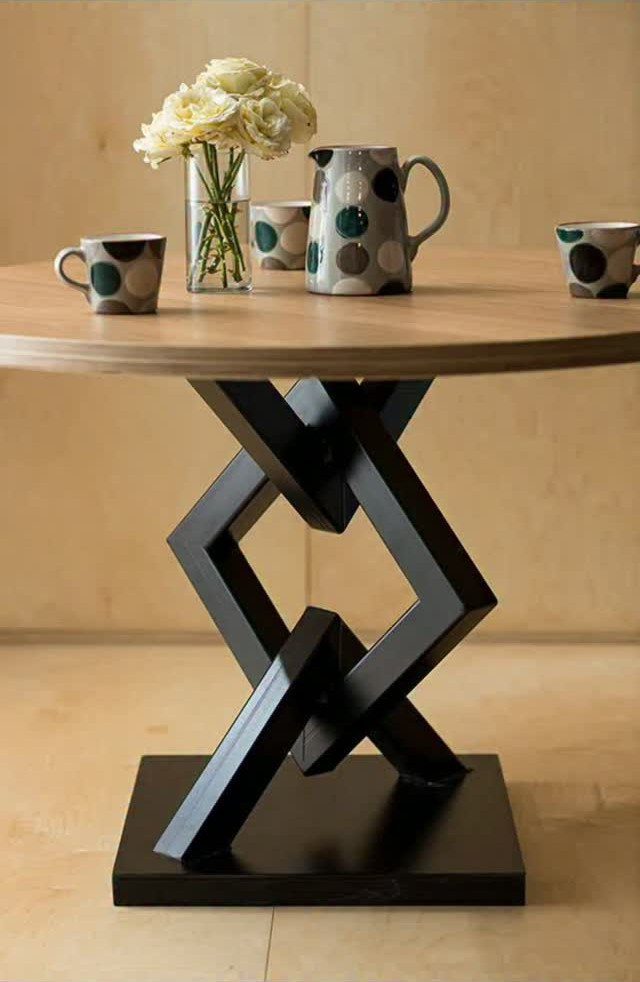
A black base with interlocking geometric lines turns a plain round wooden table into the focal point of the room. Shape does the work here, so the tabletop can stay simple.
I like that the mugs echo the idea with a grey and green dot pattern, which keeps the table playful without adding clutter.
Keep one bold pattern as the star and let everything else on top stay quiet, like a single vase of white flowers.
6. Sculptural Lamps
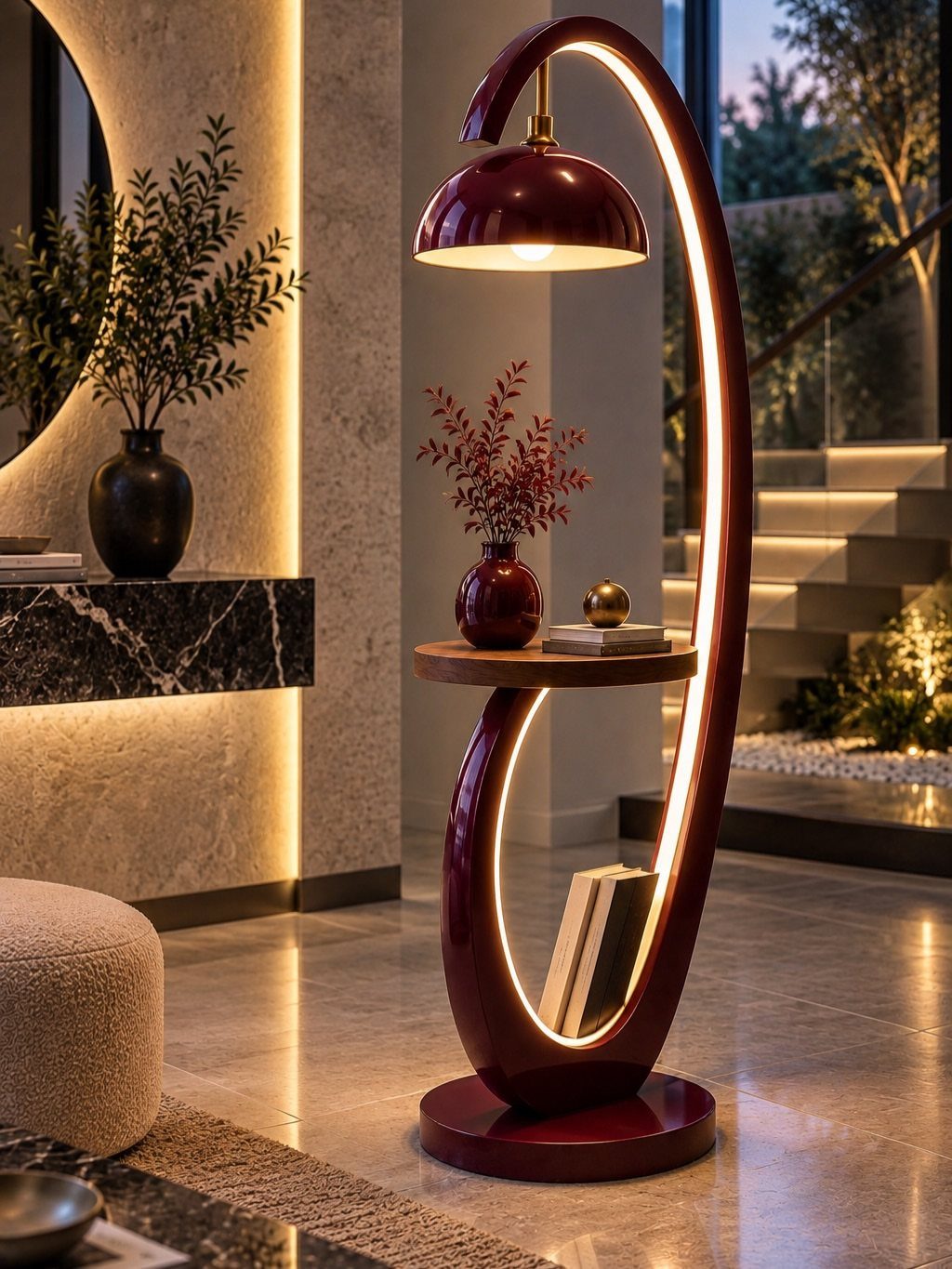
A curved floor lamp with a built-in shelf does the work of a lamp and a small side table, which suits tight spaces. Burgundy gives it presence even when it is switched off.
Integrated LED lighting means no bulb hunting, though you cannot swap the glow later. Use the shelf for a few books and one vase, not a crowd of objects, so the curve stays the star.
Place it beside a sofa or chair where the extra surface will actually be used.
7. Wood, Metal, and Textiles
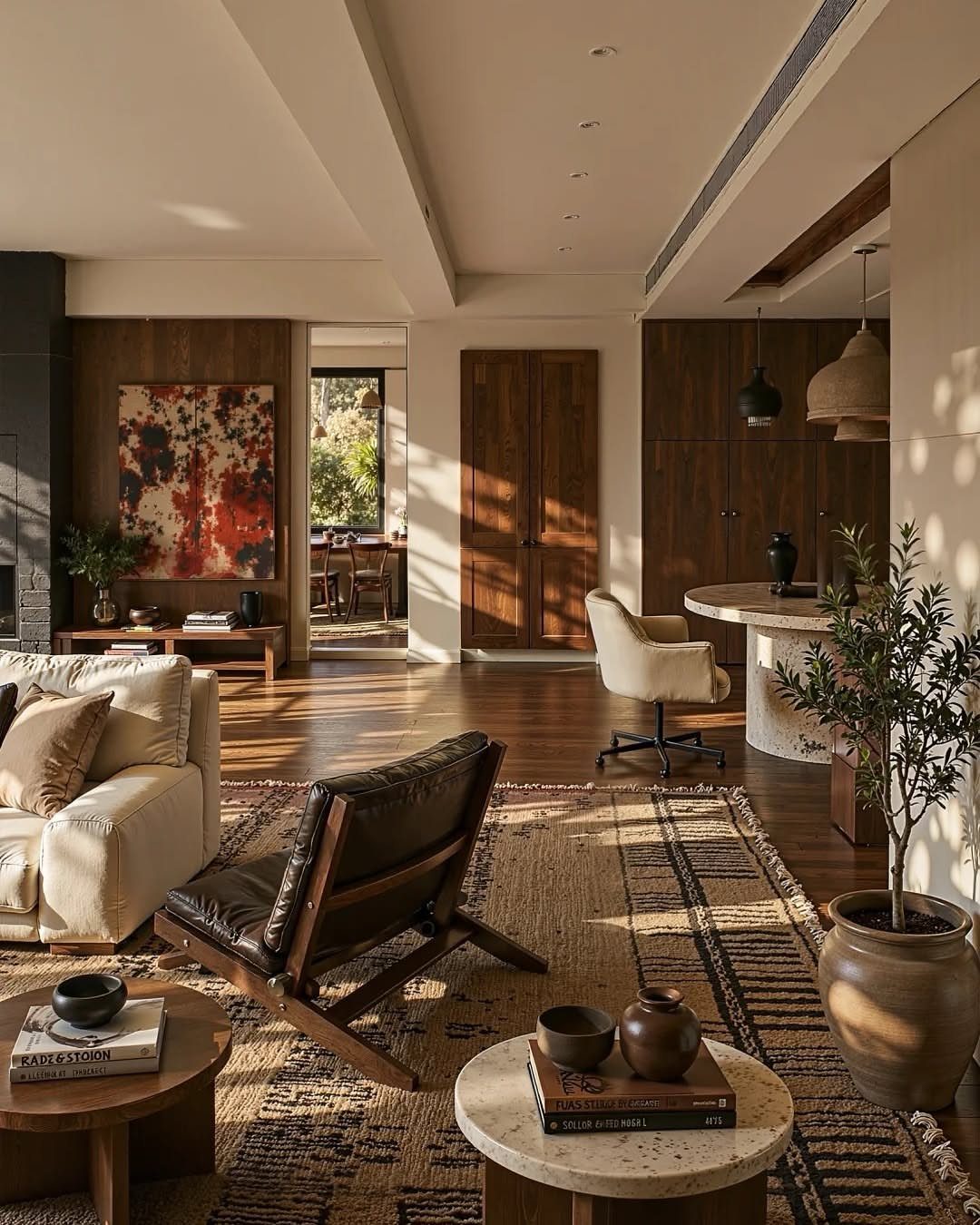
Mid-century rooms lean on 3 materials: warm wood (teak or walnut) on walls and tables, a leather chair for depth, and a woven wool or jute rug underfoot.
A white sofa gives them a calm backdrop so none of the textures fight.
I would copy the mix rather than the pieces. Pick one wood, one metal and one soft fabric, then repeat each at least twice around the room.
A patterned rug is the cheapest of the three to swap in.
8. Glass in Furniture
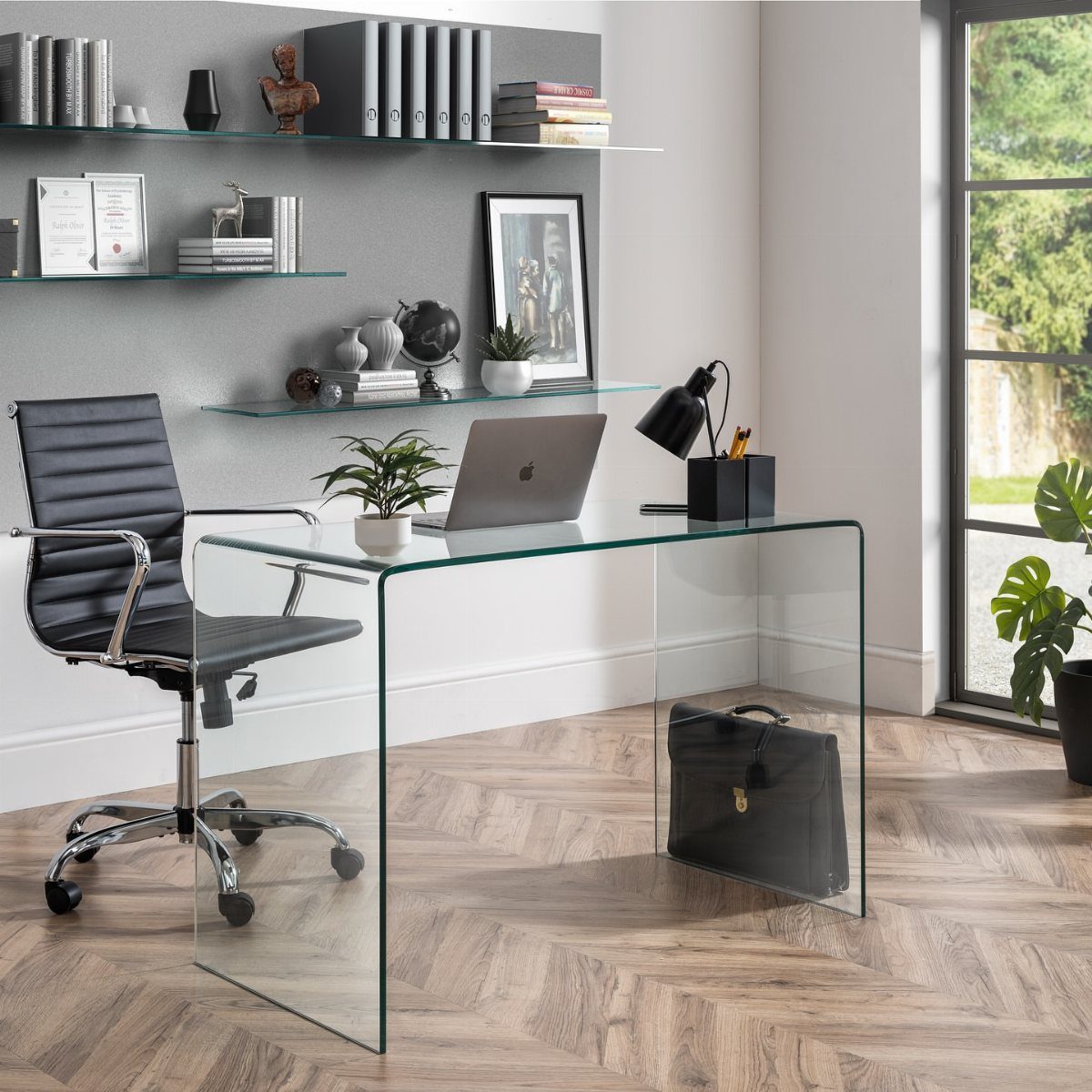
Floating glass shelves above it keep the wall open instead of stacking up solid furniture.
Pair the glass with one dark piece, like the black chair, so the room has an anchor.
Glass shows fingerprints and dust fast, so keep a microfiber cloth in the drawer. If a full desk feels like too much, start with a glass-top side table.
9. Art Pieces
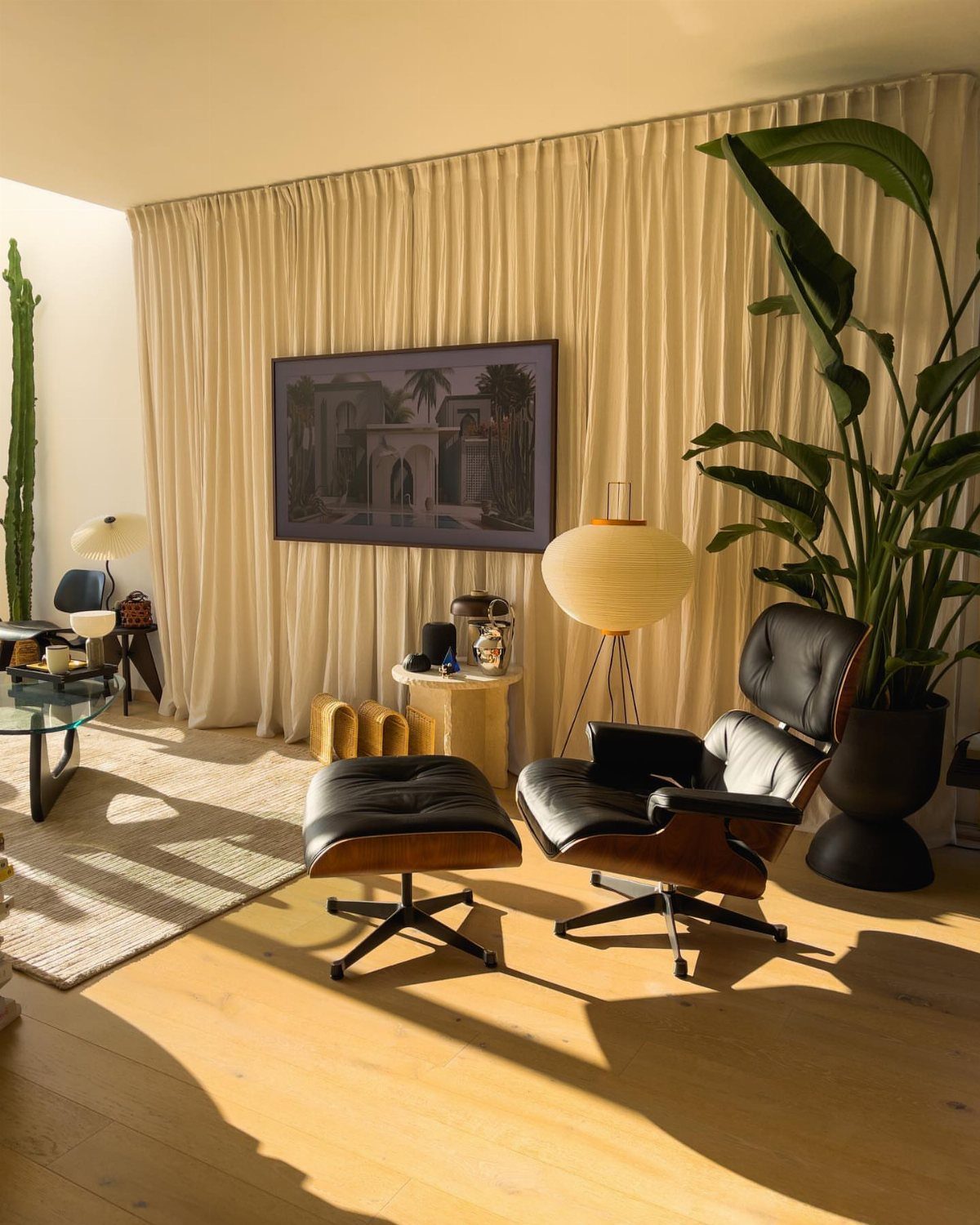
Hang one large painting and let it carry the wall. Here it sits against curtains, which gives the art a soft backdrop and keeps the lounge chair, tall plant and floor lamp from competing with it.
Choose a piece with a color you already own, so it ties into the room instead of sitting apart.
Renters can lean a big frame on a console or a low shelf and skip the nail holes entirely.
10. Accent Rugs
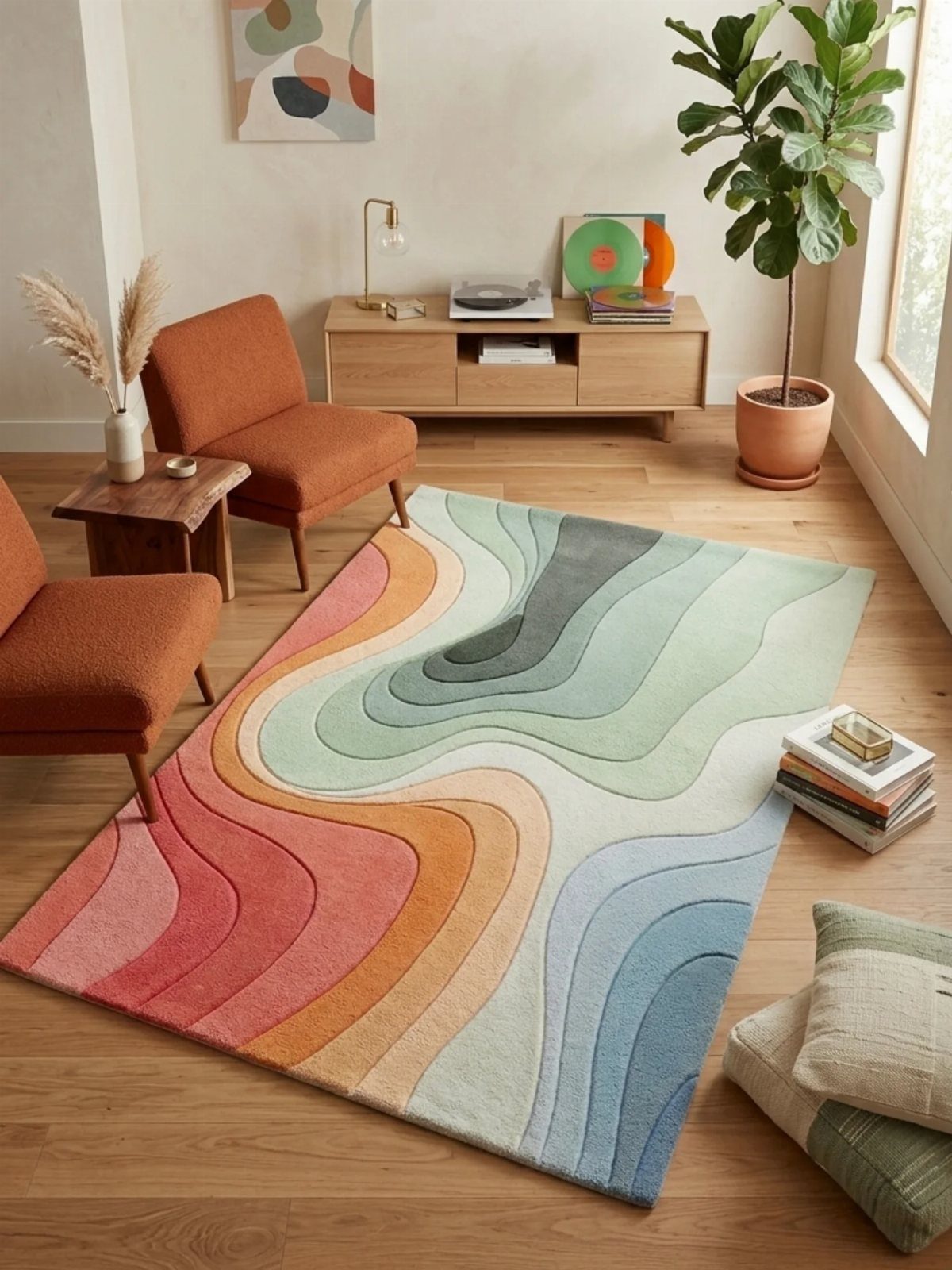
A wavy, multicolored rug marks out the seating area in an open room, and the pattern lets two orange chairs read as a pair on one shared patch of floor. On light wood, the color stands out even more.
Pull one shade from the rug and repeat it in a chair or cushion. Keep the front legs of every seat on the rug so the zone feels planned.
A rug is the easiest way for a renter to add a pattern.
11. Colors Like Rust, Olive
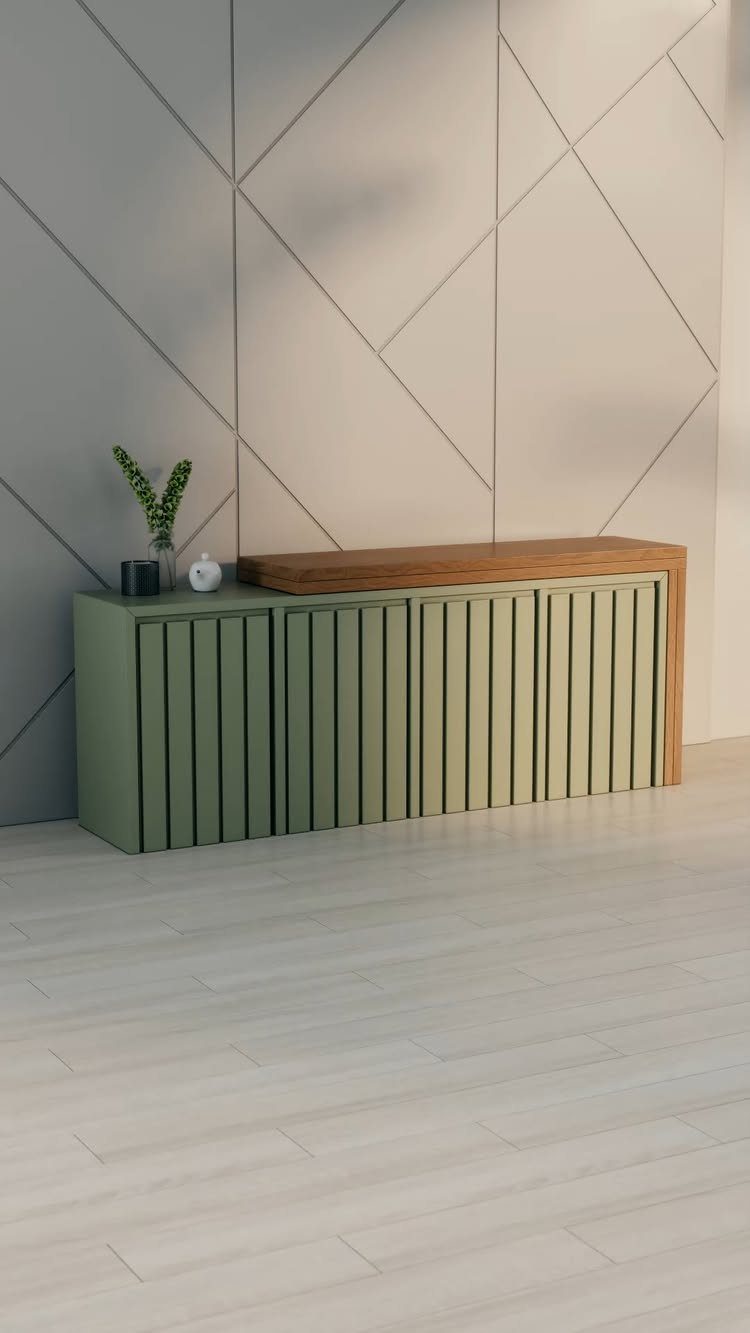
Paint is not needed to try this: a single olive piece does the job, and rust works the same way in a chair or throw.
Keep the top styled lightly, as here with a small plant and a vase, so the color stays the focus.
12. Floating Vanities
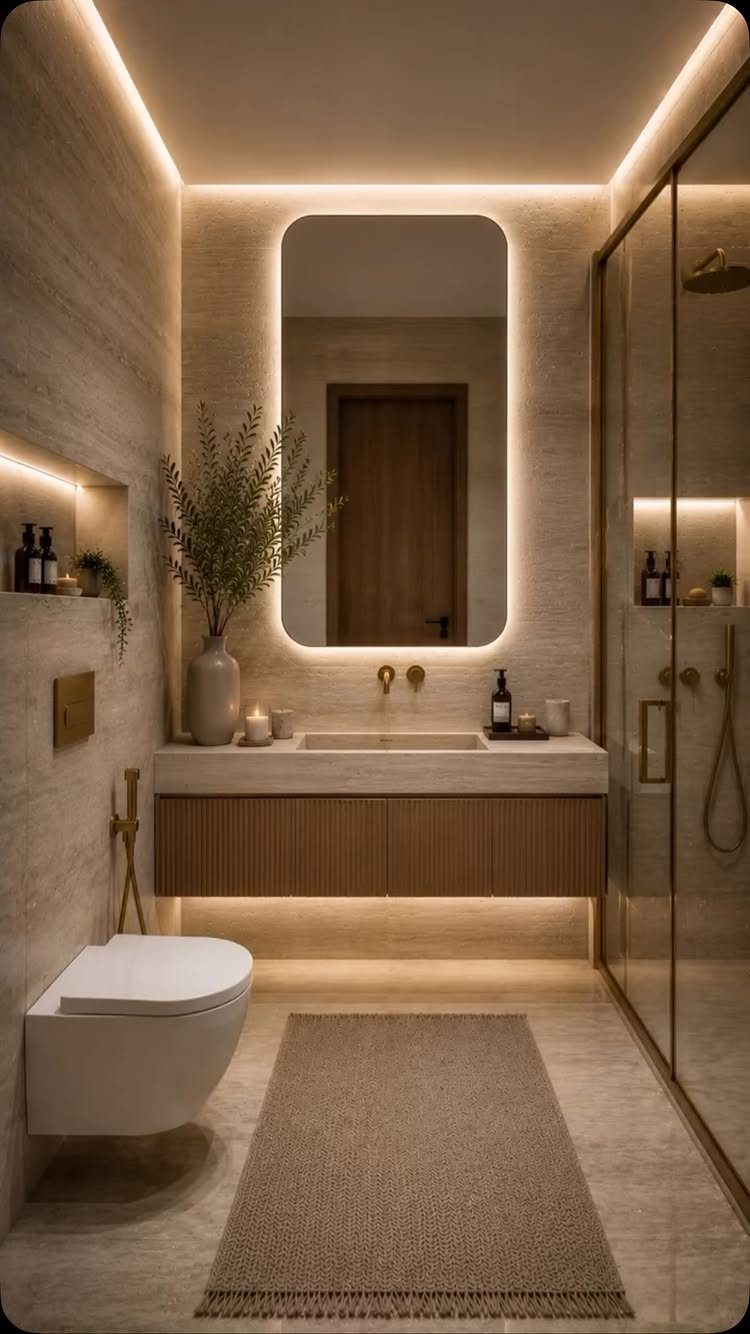
Mounting the vanity on the wall leaves the floor visible underneath, and that visible floor is what makes a small bathroom feel larger. A wood finish keeps the look warm next to the glass shower and gold accents.
The creator describes taking the bathroom from basic to luxury spa in 6 aesthetics, and I’d pick the floating vanity as one of the easiest to copy.
Wall mounting means opening walls and moving plumbing, so budget more than for a swap-in cabinet. Have a pro check that the wall can hold the weight.
13. Open Layouts
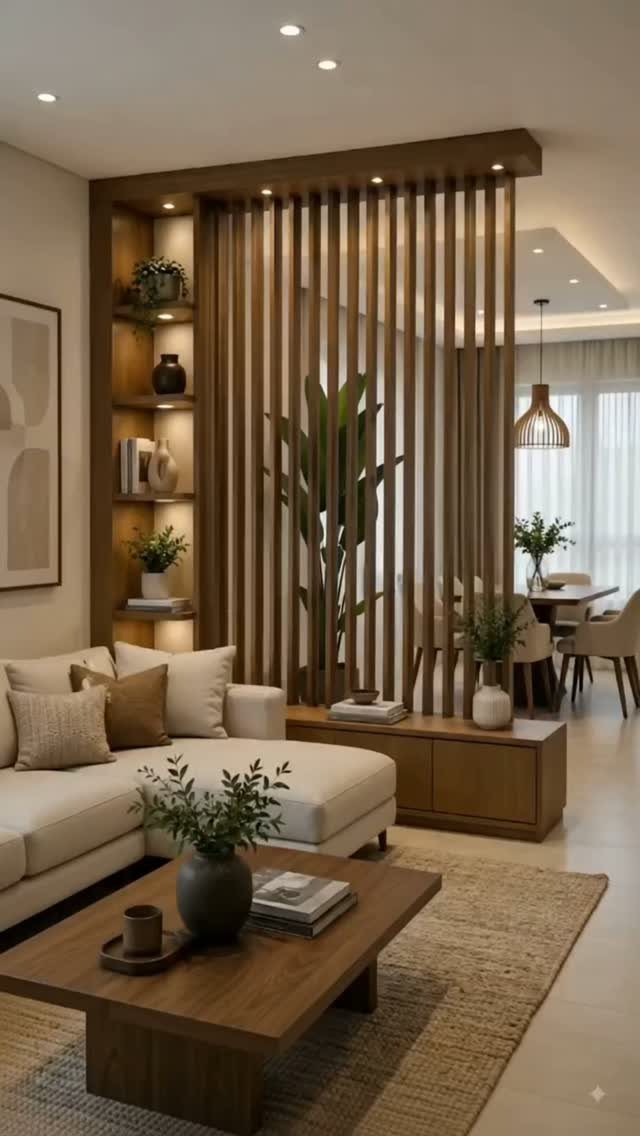
A vertical wooden slat partition splits the lounge from the dining area while light and sightlines still pass through.
That is why I prefer it to a solid wall in an open plan: each zone gets its own edge without the room closing in.
Match the slat tone to the coffee table so the divider reads as part of the furniture family.
Renters can get a similar effect with a freestanding slatted screen, which needs no drilling and moves with you.
14. Tapered Legs
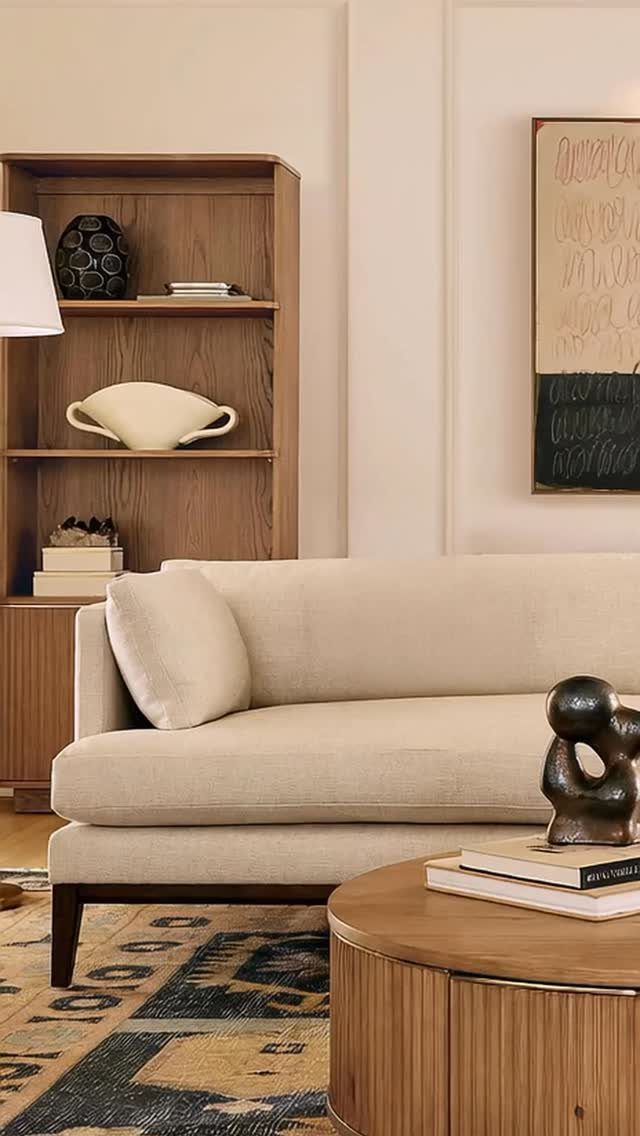
Dark tapered legs lift a cream sofa off the floor and give its bulk a lighter, narrower base. The floor stays visible underneath, which keeps the room from feeling heavy.
Designed by VUUE for CB2, this sofa is a good model for what to look for: slim legs that narrow toward the foot.
I would check the leg finish against the wood in the room, here the bookshelf and round coffee table, and pick a tone that sits near them.
If a new sofa is out of budget, start with a smaller piece like a side table or stool.
15. Minimalistic Designs in Lighting and Cabinetry
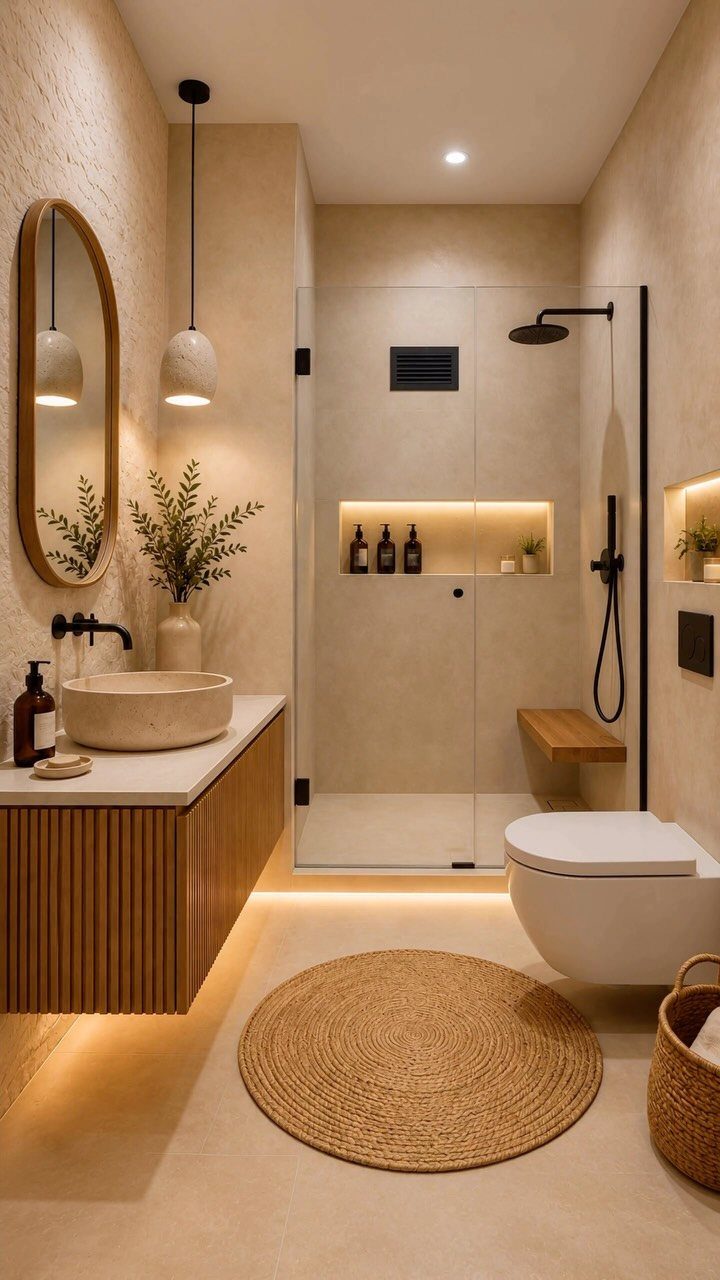
Ribbed wood adds texture, so the cabinet fronts need no hardware or pattern.
Pick one wood tone and let the stone sink and white fixtures stay quiet around it.
Wall mounting and rewiring a pendant both call for a pro, so price those in before you commit.
16. Classic Leather Lounge Chair
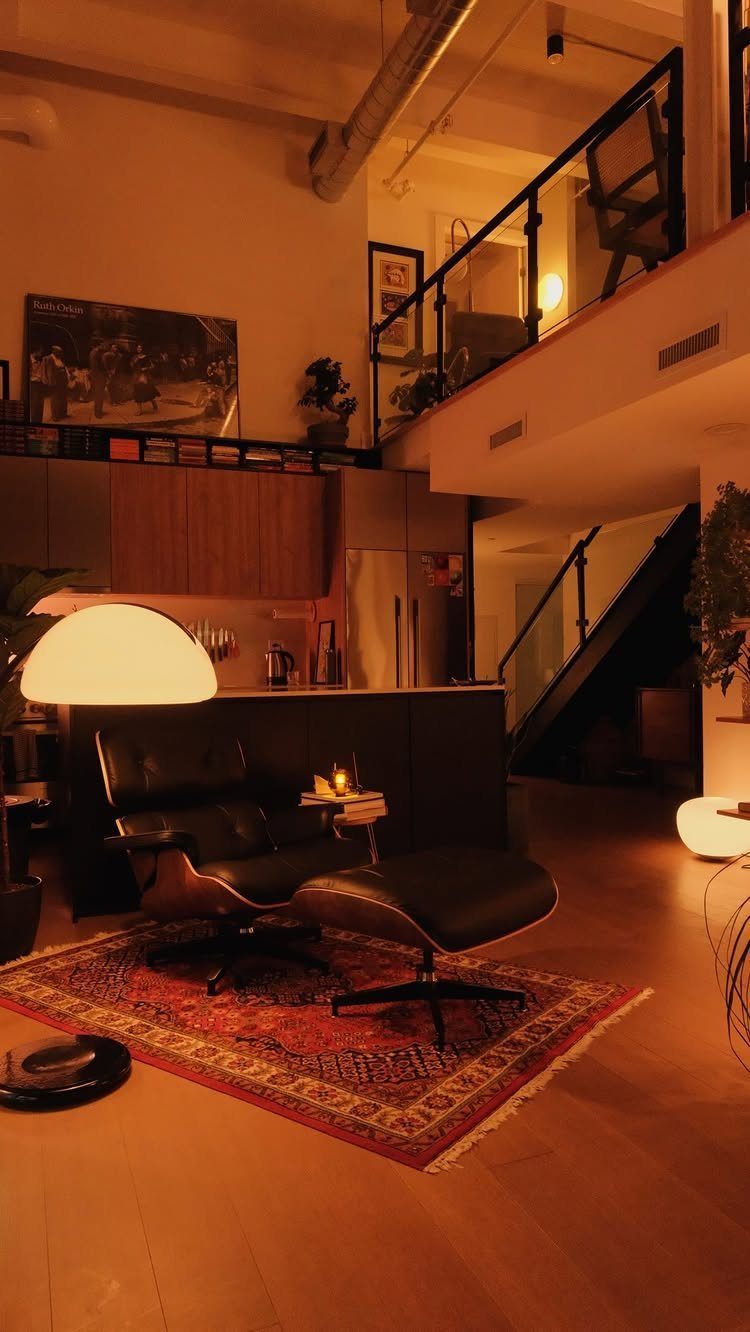
A black leather lounge chair with a matching ottoman is the one piece that can anchor a whole corner. Against warm wood accents, the dark leather gives the room depth and a place to sit and stay.
A bold rug, such as a red one, keeps a black leather lounge chair from reading as a heavy lump and makes the dark color look chosen.
Leave open floor around the chair and ottoman, since the pair takes more room than it looks like it will. If a full set is too much, a chair alone still does the job.
Timelessness of Mid-century Design
Mid-century modern has lasted because its rules still solve everyday problems. Pared-down pieces that put practicality before style suit small rooms and busy households.
The style also grew out of the post-war boom, when designers were testing what steel, concrete and newly available insulated glass could do.
The result was a move away from ornate, fussy design, and that restraint is why it still looks calm today.
Rich color is part of the formula, but it works as an accent against neutral tones. If you want the look to last, keep the base quiet and let one deep hue do the talking.
Styles that have had their heyday are resurrected in new ways. And while midcentury modern design is by no means the only aesthetic to have had a resurgence, it has certainly done so with unmatched staying power.
Mixing Styles
A room filled only with period pieces ends up feeling like a museum, so I mix in contemporary, antique or handmade items that share a similar scale, color or material.
Buy for comfort, craftsmanship, proportion and durability rather than famous-name reproductions.
Fewer, stronger focal points beat a period reference on every surface. Art, books, ceramics, textiles and plants add story and softness.
Edit with this checklist. Remove anything that:
- Blocks walking paths
- Brings in too many accent colors
- Has a sculptural shape, but nobody wants to sit in it for long
Practicality in Design
Mid-century design starts from a simple question: what problem does this piece solve? Clean forms, practical space planning and warm materials all serve everyday use, so beauty never gets in the way of living.
Use that as a buying filter. Before you commit to a chair, table or shelf, ask whether it makes the room easier to use, and skip it if the only answer is that it looks good.
The original movement also cared about making good design affordable through mass production without cutting craftsmanship. That gives you permission to buy well-made, ordinary pieces instead of rare originals.
Frequently Asked Questions
What is mid-century interior design style?
Mid-century modern covers roughly 1930 to 1965, a stretch when designers favored rooms that worked hard, simple shapes, and easy movement between the house and the yard.
Because it dropped the ornate trim and clutter of earlier decades, a mid-century room still reads as calm today.
What are key elements of MCM decor?
The core pieces are warm wood like teak or walnut, clean-lined low furniture with tapered legs, layered lighting, and one deep accent color such as rust or olive against neutral tones.
Practicality drives every choice, so each piece should solve a problem in the room.
Is mid-century modern still in style in 2026?
Yes, though tastes are shifting. In a 2025 survey from 1stDibs, designers who named it their top pick dropped from 40% to 20%, mostly because more of them now mix eras in one room.
Even so, comfort, usefulness and natural materials still hold up, and I would pair a few mid-century pieces with modern, vintage or handmade ones so the room feels lived in, not staged.





