The ideas here run from free to a splurge: minimalism costs nothing because the work is subtracting, while a live edge dining table or curved wood integrated seating takes real money.
What picks yours is whether you can alter the room or only what sits in it.
1. Minimalism
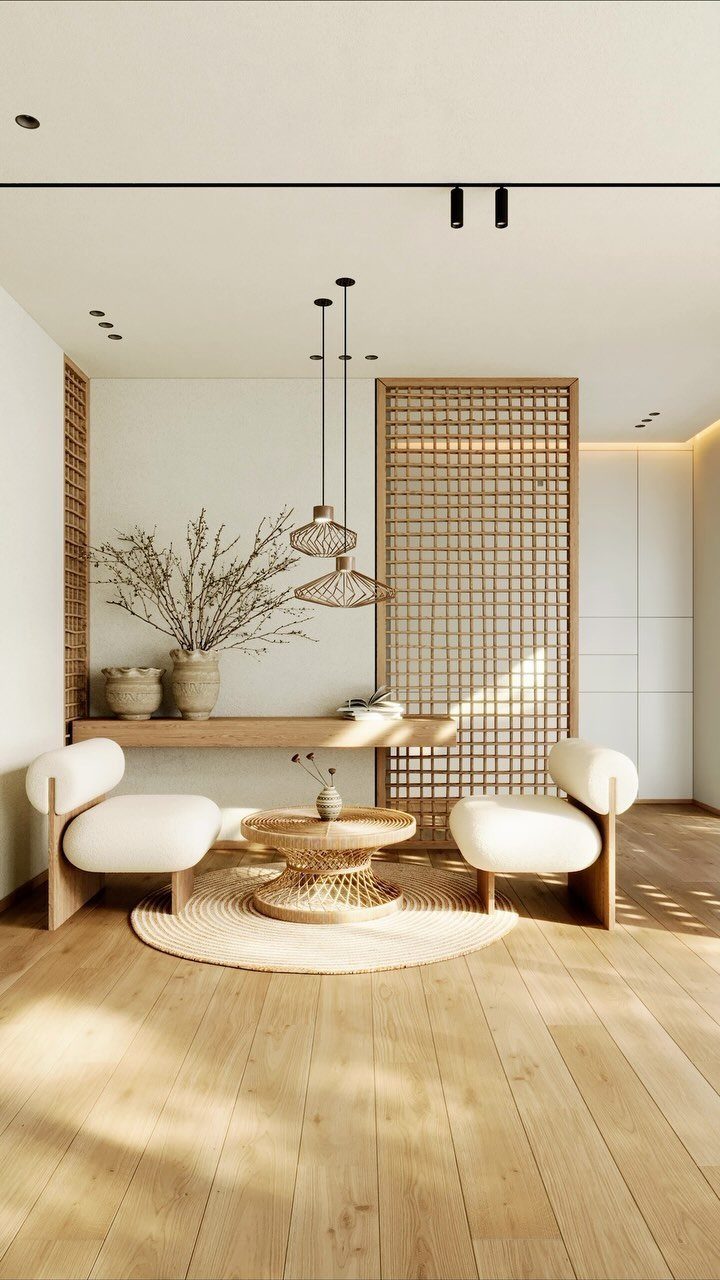
Minimalism in an organic mid-century space means each piece earns its floor space through shape or material, not quantity.
On a real budget this is the cheapest idea on the list, because the work is subtracting.
Clear the surfaces, keep the pieces with curves or visible wood, and use the pendant lights as the decoration. I would stop at one woven or slatted element so the room stays quiet.
2. Natural Materials
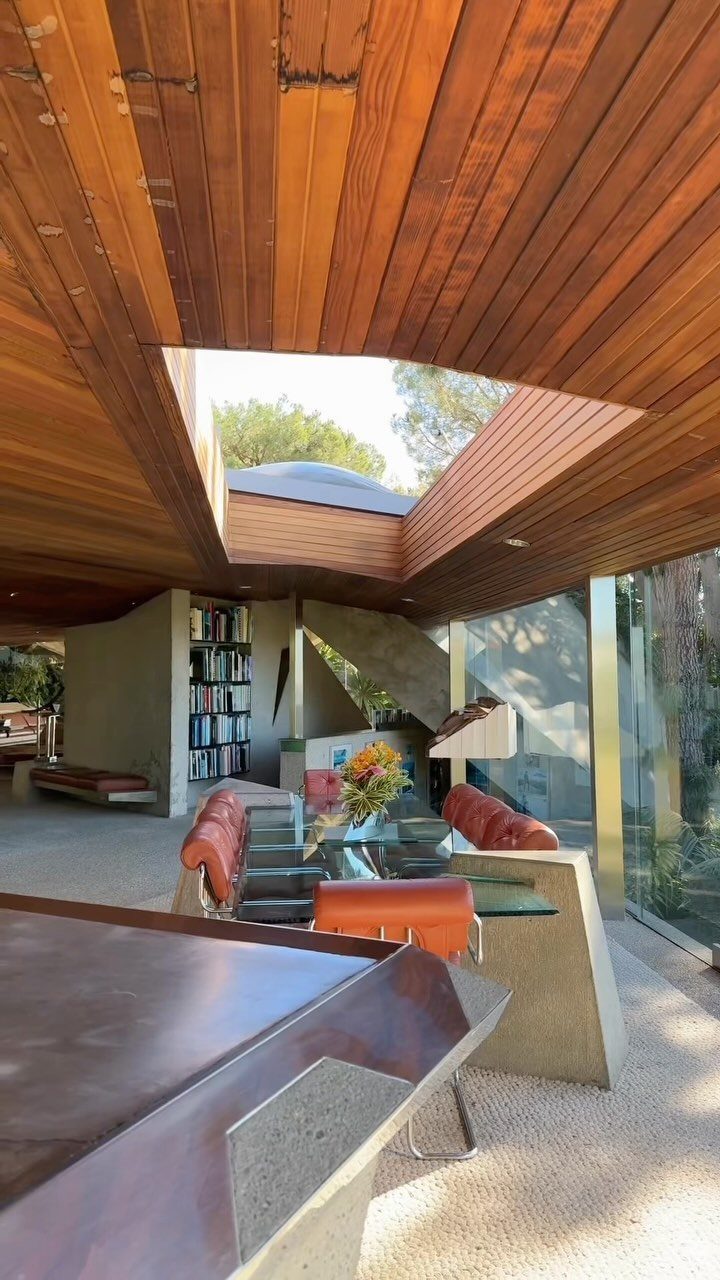
Raw materials do the decorating here: wood on the ceiling, bare concrete on the walls, and leather in a color that reads as warm against all that gray. Skip the paint so the surfaces can show.
Renters can borrow the effect without touching a wall.
Choose leather or wood furniture with a visible grain, add a glass-top table so the materials stay in view, and keep one bookshelf for warmth. I would put the money into a single leather piece before buying anything else.
3. Warm Earth Tones
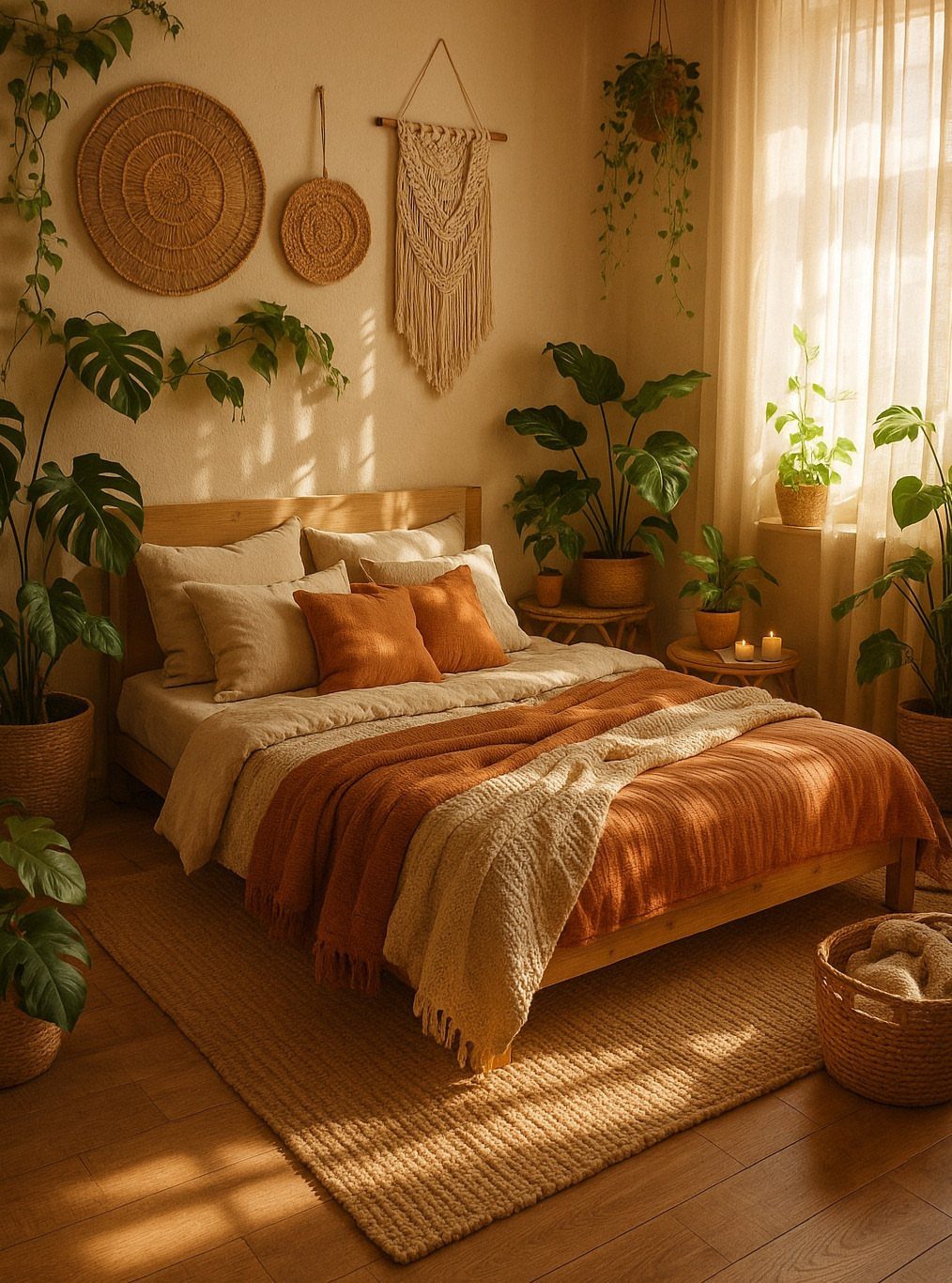
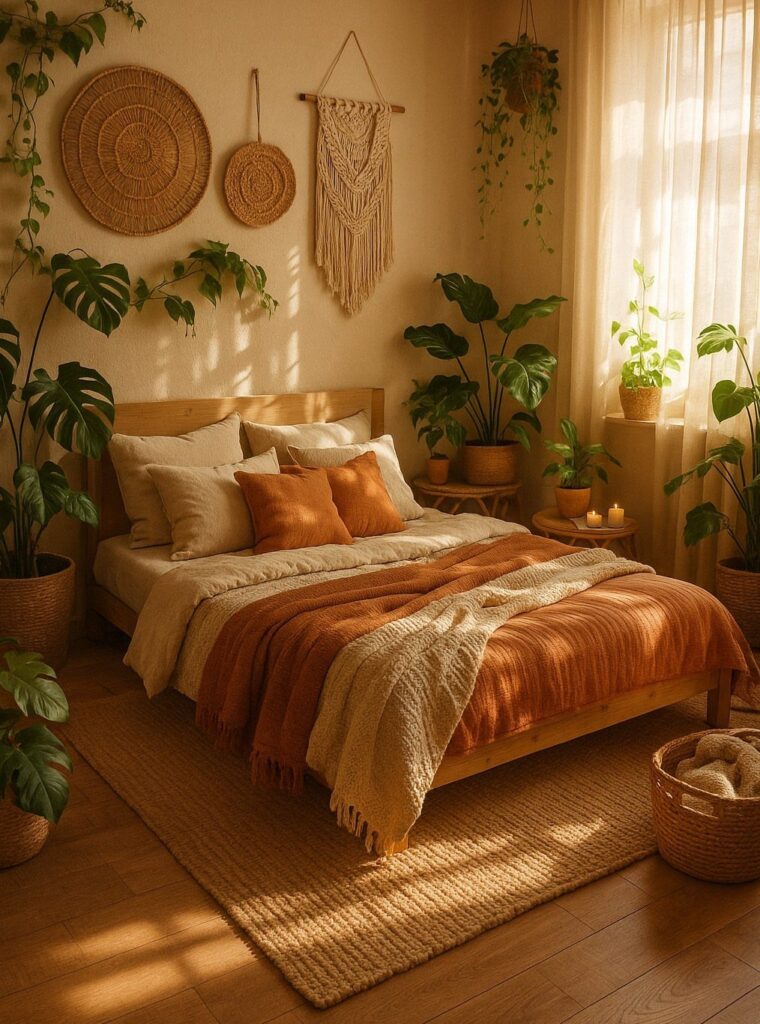
Terracotta and beige bedding against a wooden bed frame is a color scheme you can build for the price of new linens. Orange sits well beside natural wood, so the palette stays soft instead of loud.
Start with the bed, since it is the largest color field in a bedroom.
Then add a jute rug underfoot and a few plants, which bring in green that suits those warm tones. I would keep the walls neutral and put the color in textiles, because sheets are far easier to swap than paint.
4. Layering Textures
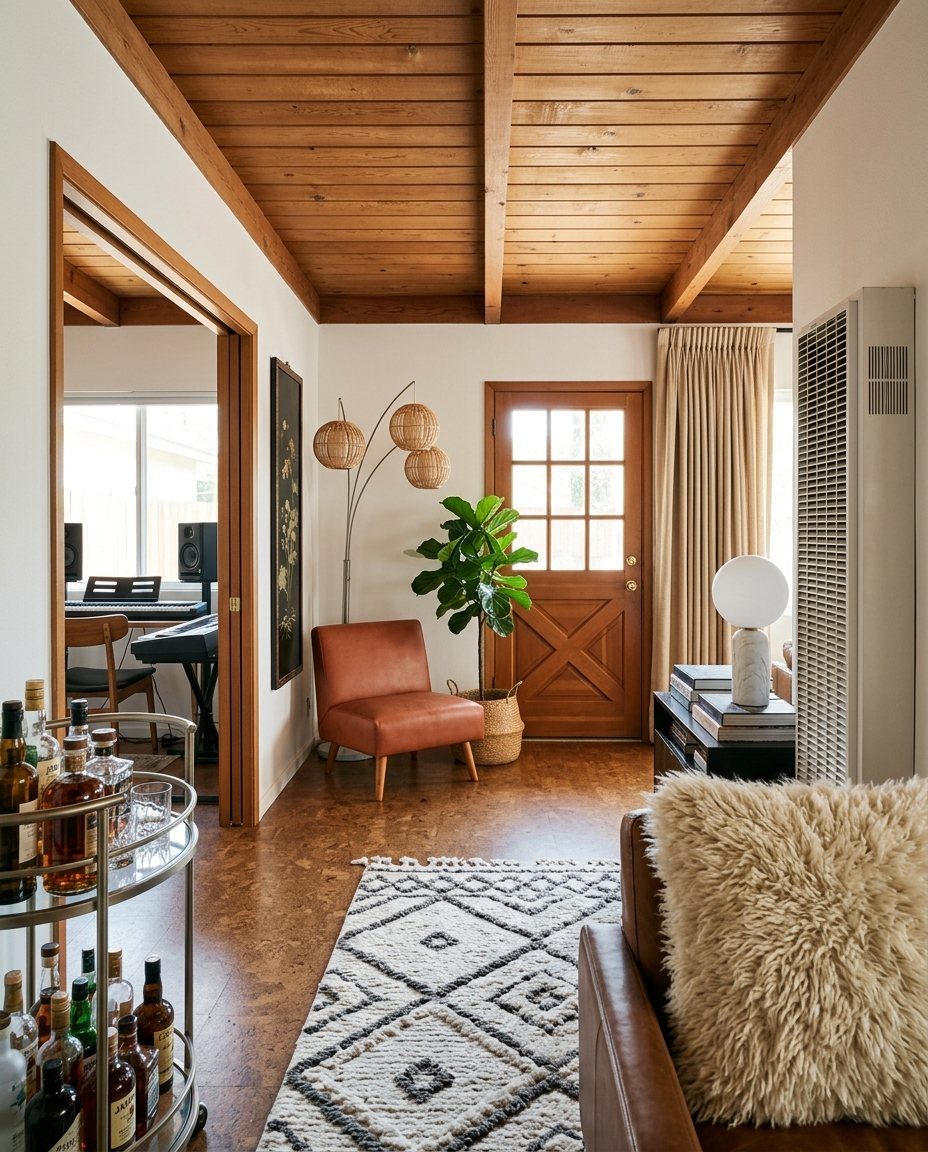
Leather, shag, pattern and wood can share one room if each gets its own job.
Pick one rough texture, one smooth and one woven, then stop. Pillows are the cheapest place to experiment, and a rug is the piece that shows most.
A fiddle leaf fig adds a leafy texture without costing floor space. I find that a few contrasting textures read as layered, while too many start to look cluttered.
5. Large Windows
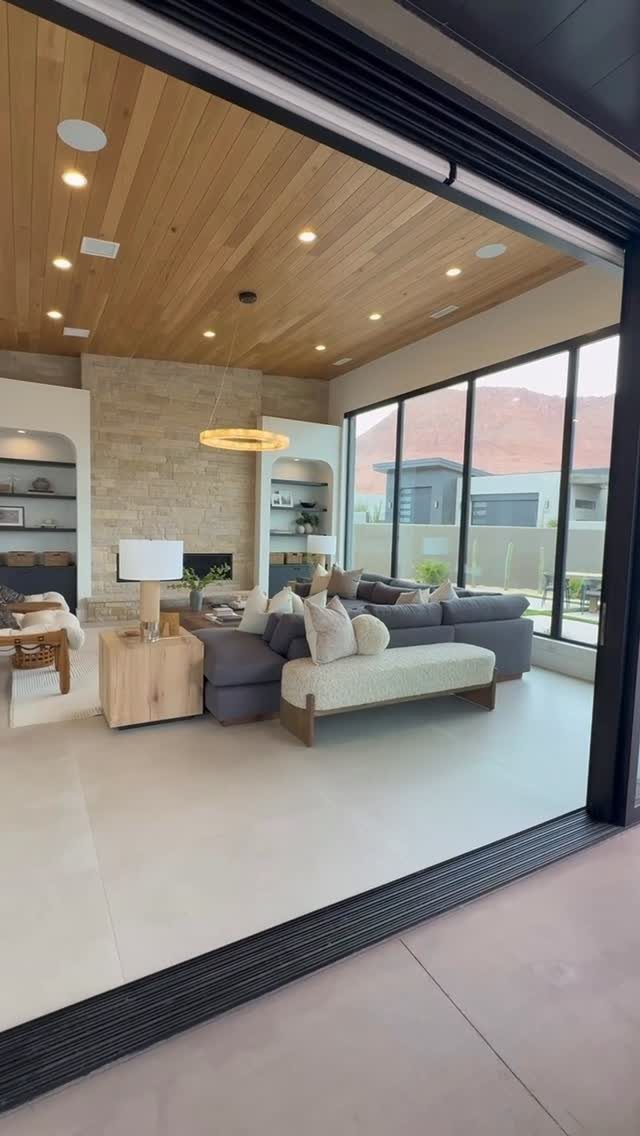
Floor-to-ceiling glass makes the view part of the decor, which is why this room can stay simple inside. When the view is big, a stone fireplace and a simple gray sectional are enough.
Few renters or first-time owners can add windows, so work with what you have. Keep the glass clean, push furniture back so sightlines stay open, and skip heavy drapes.
If privacy is a concern, I would choose a light, sheer shade over anything dark. A wood ceiling keeps a glass-heavy room from feeling cold.
6. Mid-Century Modern Accents
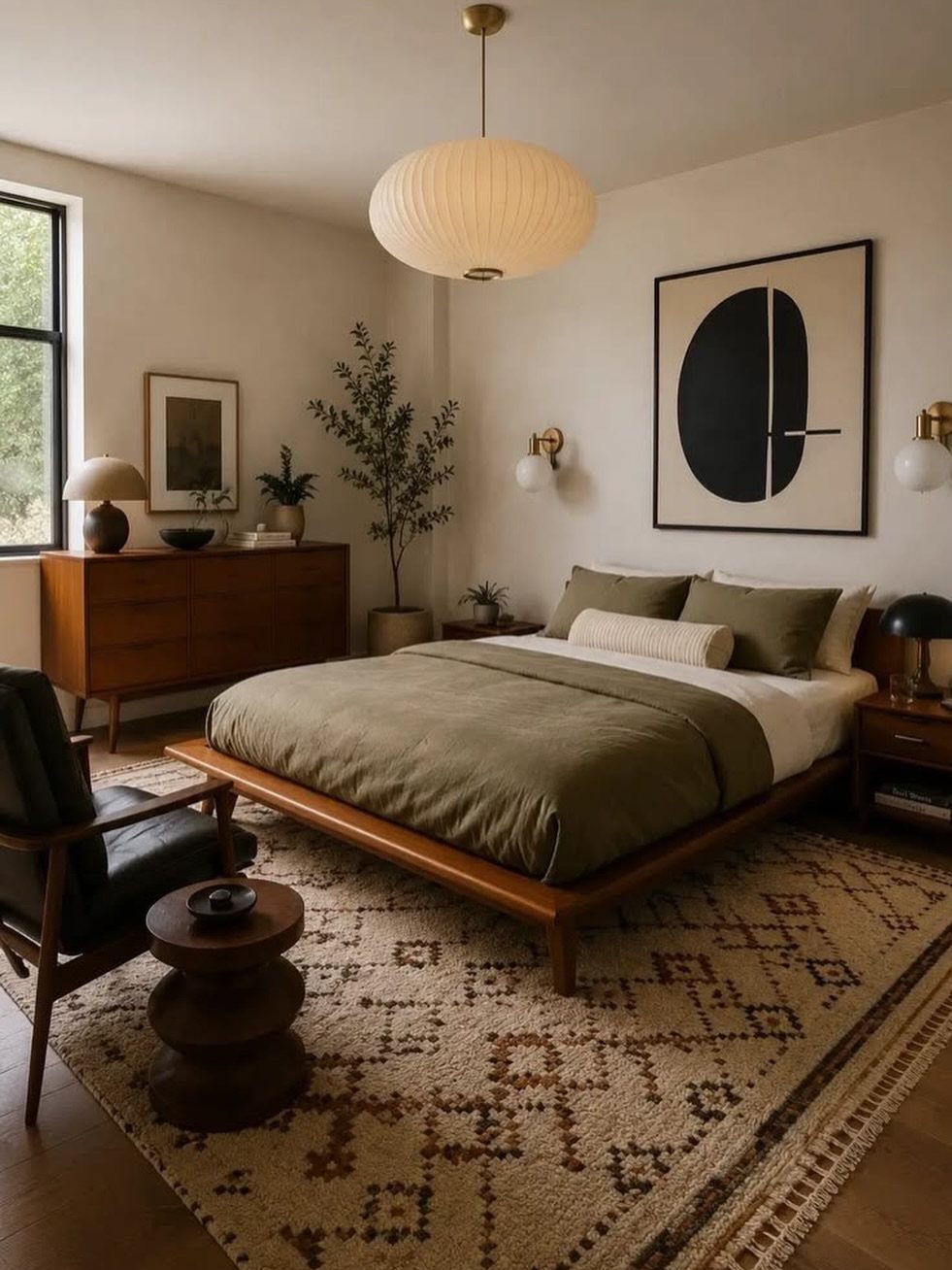
A few well-chosen pieces say mid-century faster than a full set of matching furniture.
A black accent chair sharpens the look against all that wood. I would start with the pendant, since a paper shade is an inexpensive swap and changes the whole room.
7. Live Edge Dining Table
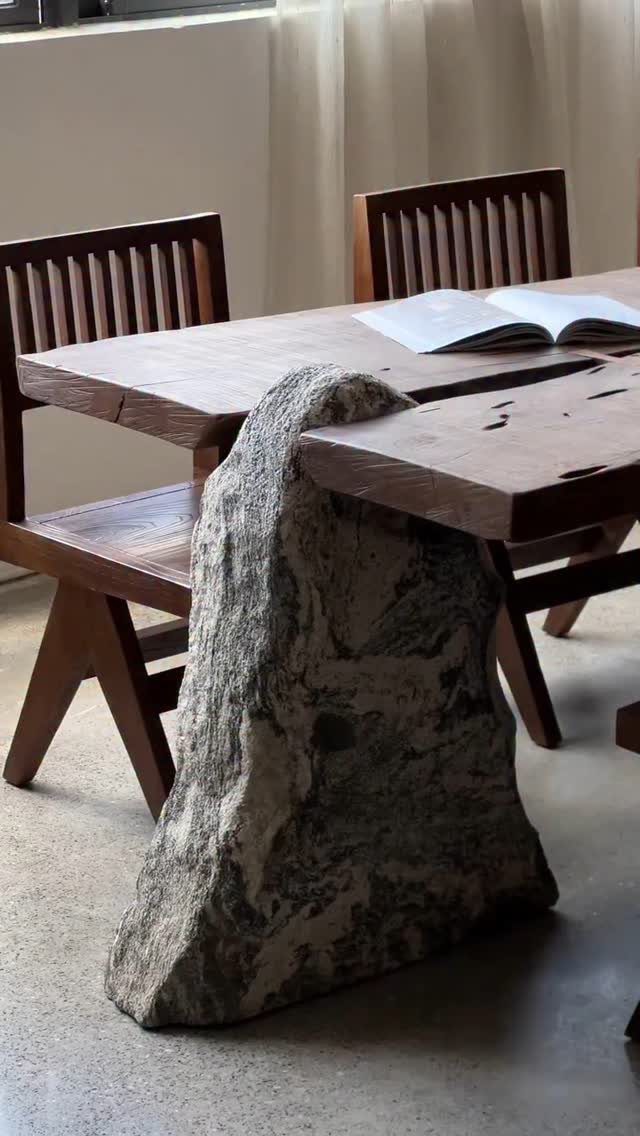
A live-edge top keeps the tree’s own outline, so no 2 tables match, and a heavy stone base gives that wavy edge something solid to sit on.
Pair it with slatted wooden chairs, as the photo does, so the room has one grain and one pattern to look at.
I would keep the rest of the dining area bare: no runner, no centerpiece beyond a bowl, so the edge stays the focus.
A solid slab and stone base cost real money. If that is out of reach, a secondhand top on a simple base is the version I would hunt for.
8. Curved Wood Integrated Seating
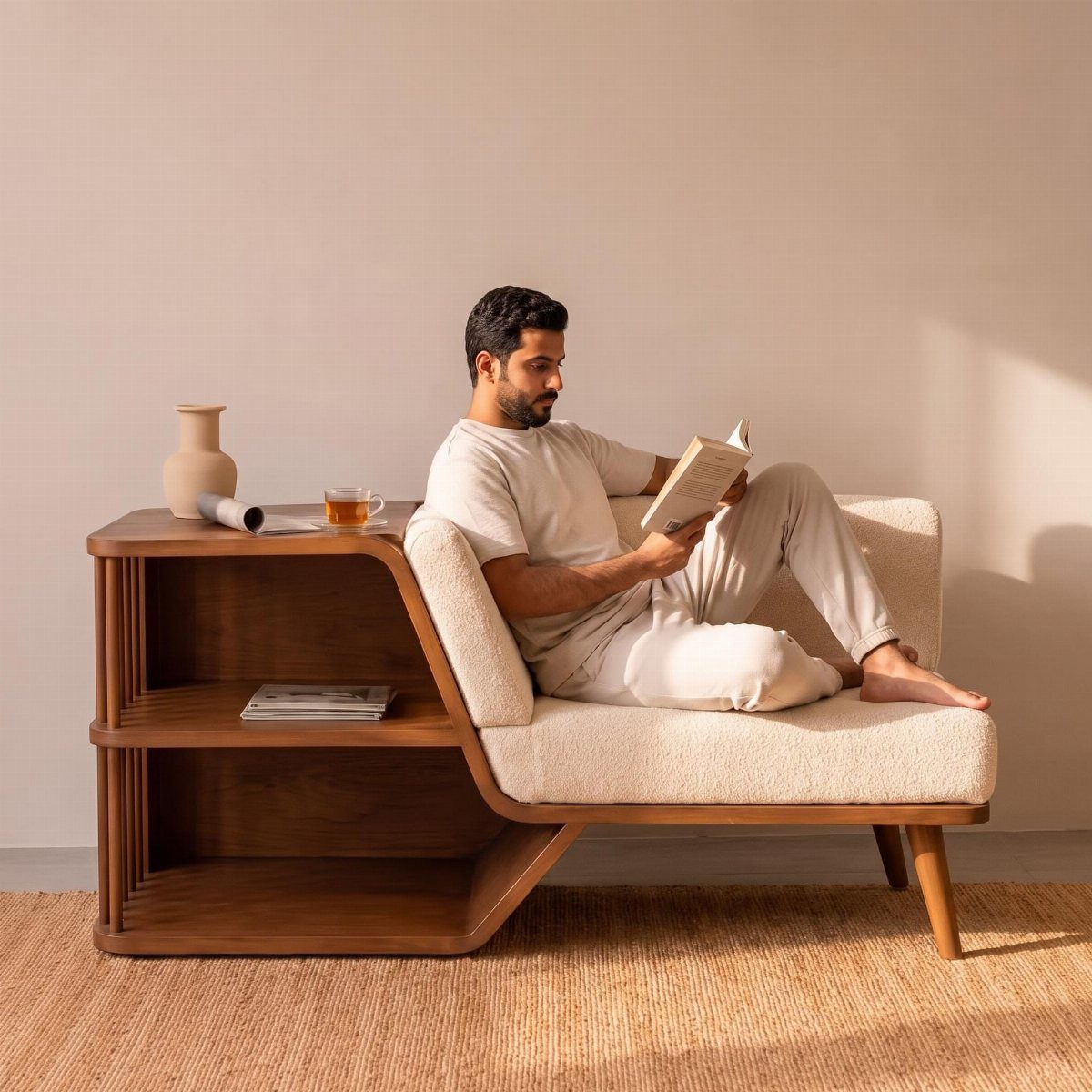
Shelving that curves out of the sofa itself puts a lamp, a book stack and a mug within reach, so the room needs no side table at all.
For most renters this is a splurge piece, so I would treat it as the one built-in-style item and keep everything around it plain. A cream upholstery color and a jute rug let the wood curve carry the room.
If a custom sofa is out of budget, a curved wooden shelf or low bench placed beside a regular sofa gives a similar soft line for much less.
9. Sculptural Travertine Side Table
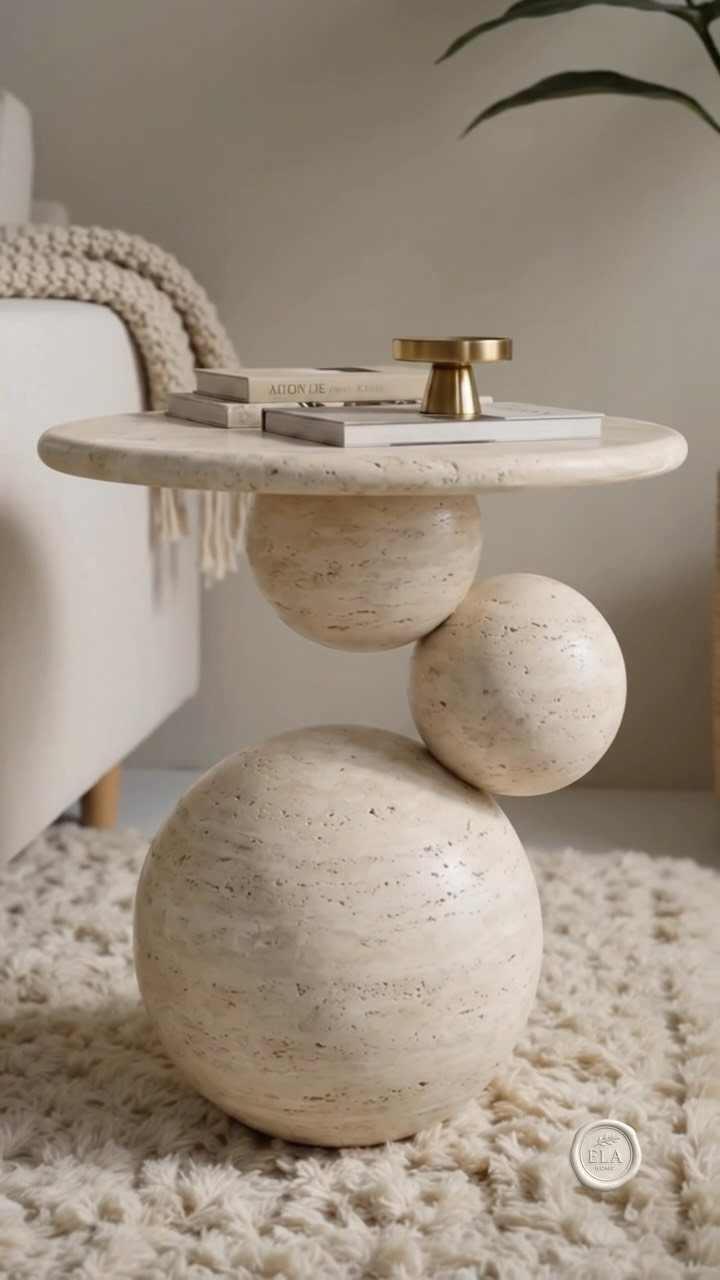
A round travertine top on a base of three stacked spheres works as sculpture first and a table second, which is why a few books and one gold object are all it needs.
Place it next to a sofa so it earns its keep, with the stone’s pale, pitted surface playing against a shag rug underneath. I like that pairing because hard and soft sit side by side.
Real stone is pricey, so a stone-look top on a round base is the budget route. Keep the styling sparse either way.
Tips for Organic Modern Design
Start with where things come from. Wood, stone, clay and wool sourced near you tie a room to its surroundings, and a local source often means a lower price and a story behind the piece.
Texture does the work that pattern and color usually do, so let linen, rough ceramics, woven baskets and raw wood carry the room. Keep the palette in warm neutrals; the materials themselves will supply the variety.
Simplicity is the part that holds it together.
Choose pieces with clean silhouettes and handcrafted character, then leave open space around them. If a room looks busy, I take something out before I add anything.
The aesthetic scales from a single room to a whole house, since it rests on a feeling rather than a checklist.
History of Organic Modern Style
Frank Lloyd Wright introduced the organic building idea at the turn of the 20th century: structures that respond to their sites, built with local materials and sustainable practices.
Alvar Aalto’s work in the 1930s shaped what Charles and Ray Eames would later do with plywood and molded forms. Material shortages during World War II nearly killed the movement.
The sustainability movement and Green Design grew out of the counter-cultural reaction to postwar consumerism and its toll on the planet. Those ideas have since moved into the mainstream as organic modern.
The current version pulls from Scandinavian restraint, mid-century shapes, and enough bohemian texture to keep it from going cold. Warm neutrals, earthy textures, simple shapes and handcrafted forms are what tie it together.
Affordable Shopping Sources
The big chain stores are the easy starting point: West Elm, Crate and Barrel, World Market, Anthropologie, Design Within Reach and Restoration Hardware all sell this look. Know that some of those run expensive, so compare before you commit.
I would still source the heart of the room locally. Vintage shops, local artisans and makers working in reclaimed or natural materials give you pieces with more character, and often a better price.
When you shop, look for pared-back designs, handcrafted details and sustainably sourced materials like wood, clay and metal.
Metal chairs and a few pieces in clay or glass give you the material contrast the style needs.
Frequently Asked Questions
What is organic modern furniture?
Think of organic modern furniture as plain, clean-lined shapes built from things that came out of the ground or off a plant: wood, stone, clay, linen and jute.
Warm neutral colors and handcrafted character keep it from feeling cold. Texture does the work that pattern usually does, so a room can stay calm and still look rich.
How to style mid-century modern?
A couple of good pieces will do more than a matched set, so look for rounded edges and wood grain you can actually see.
Against warm wood, a black accent chair adds contrast, and a paper pendant shade costs little but changes how the whole room feels. Clean silhouettes and open space around each piece keep the style from looking cluttered.
Where can I find affordable mid-century modern furniture?
Start with vintage shops and local artisans, who often have more character and a better price than big stores.
A live-edge table can get expensive fast; a used slab set on a plain base gets you the same look for far less.





