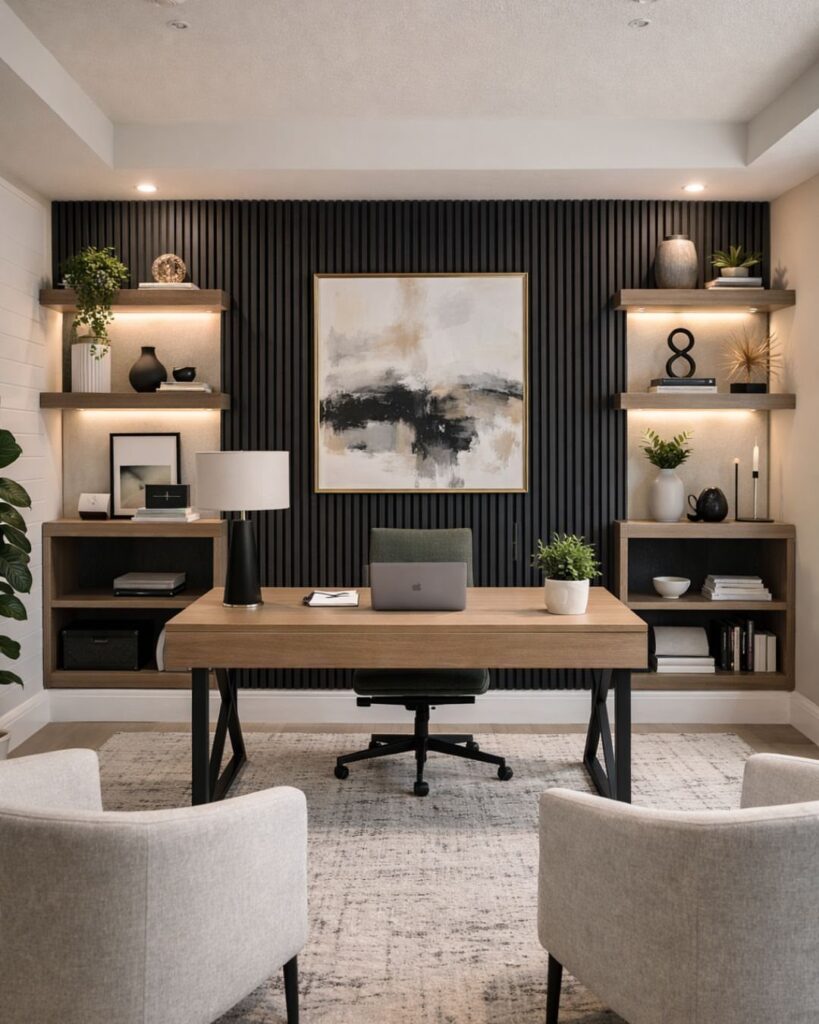
The ideas here run from a cozy rug that rolls up and moves with you to acoustic ceiling panels that stay put, so your lease decides more than your taste does.
If you rent, stick to what comes down clean: a painted arch, plug-in wall sconces, felt panels behind the desk.
If you own the place, a floating work desk or a wood slat accent wall is fair game, since both mean fastening something permanent to the wall.
Either way, the best pick is the one that fits what the room already gives you, such as a window for natural light.
1. Wall Art
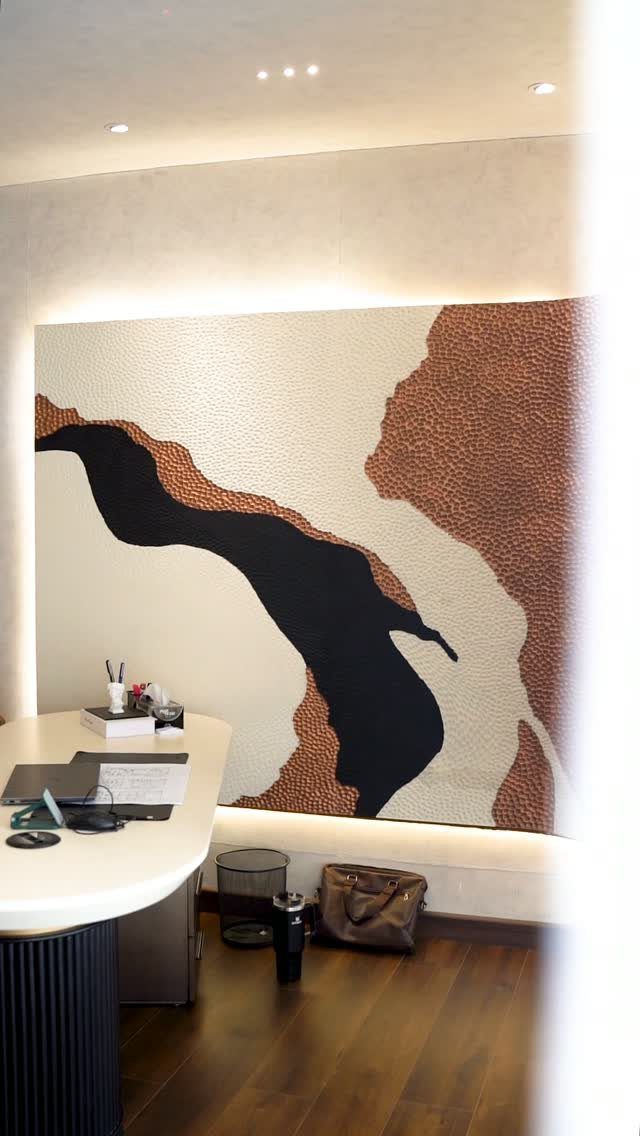
A single oversized piece does more than a gallery of small frames, and the abstract canvas over this desk proves it.
Hang it where your eyes land when you look up from the screen, centered over the desk.
Pick colors that already live in the room so the art ties into the setup, and choose something you could look at daily without tiring of it.
2. Colorful Walls
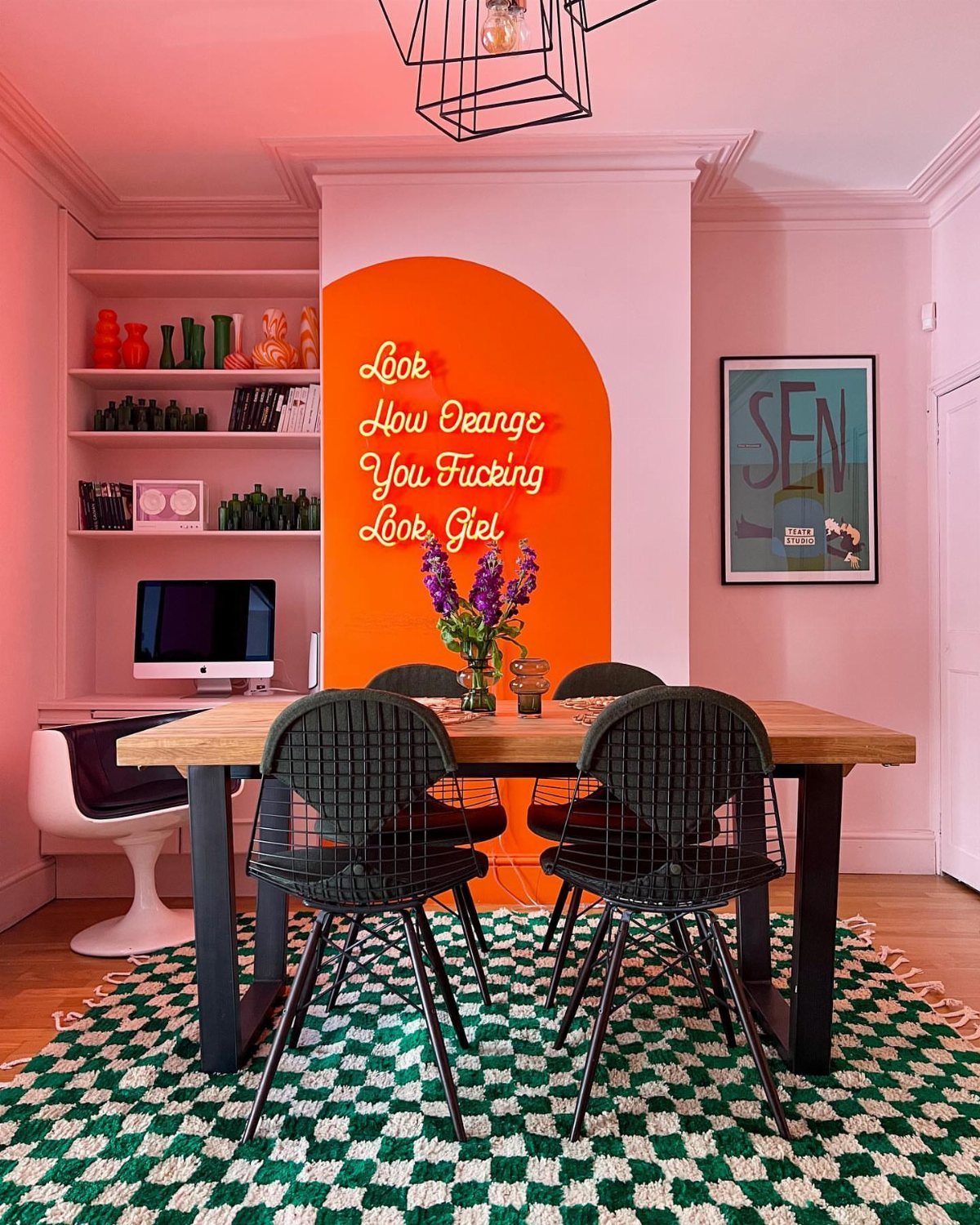
Pink walls with an orange painted arch behind the desk say plainly that this is someone’s own room, not a corner of a spare bedroom.
The arch is the clever part: one shape and one extra color give the wall a focal point without painting everything bold.
On a renter’s budget, a painted shape costs a fraction of what a full room does and is easy to cover later. A neon sign adds a final punch.
Keep the floor simple or, like the checkered green rug here, go all in.
3. Cozy Indoor Plants
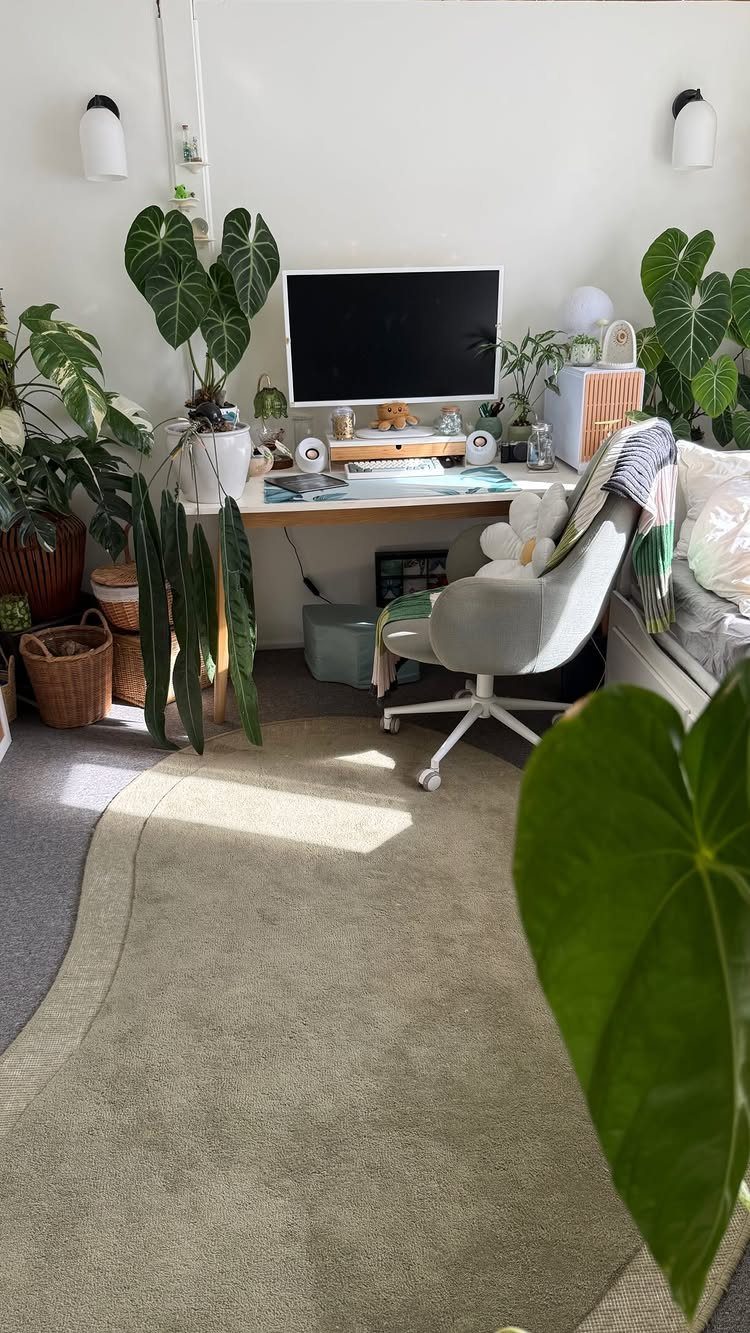
Plants crowd this white desk on every side, and the effect is a small indoor garden that softens the grey chair and plain walls.
Large leaves do the most, since a few big plants fill space faster than a dozen tiny pots.
Group them at different heights near the desk, with a tan rug underneath to anchor the cluster.
Check the light your window gives first, then pick plants that suit it, because a plant that sulks in the corner works against the whole idea.
4. Open Shelving
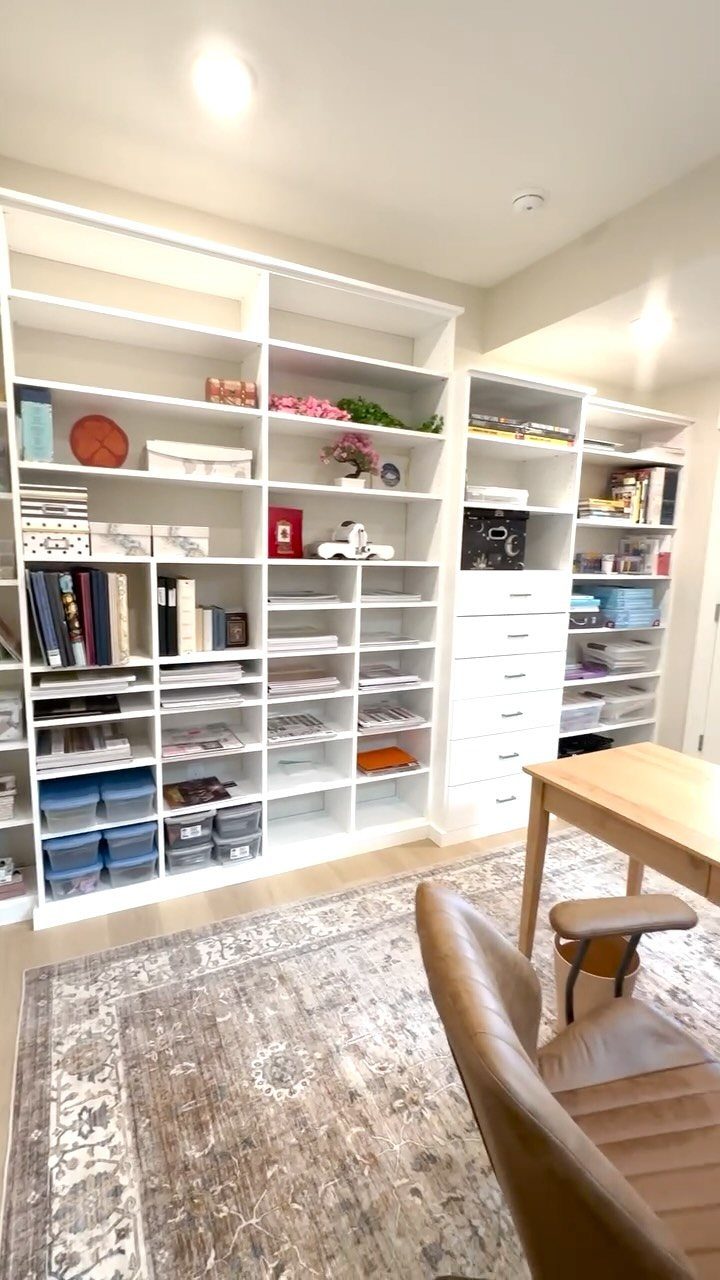
Open shelves let books, bins and decor share one wall, and white units stay light next to a wooden desk. Bins hide the clutter, such as cables and paperwork, while books and a few objects fill the rest.
Alternate closed bins with display items so the wall has rhythm. Leave some gaps; a fully stuffed shelf reads as storage, while a partly open one reads as design.
Built-ins look great, but a plain freestanding unit can get you close.
5. Turn Your Closet
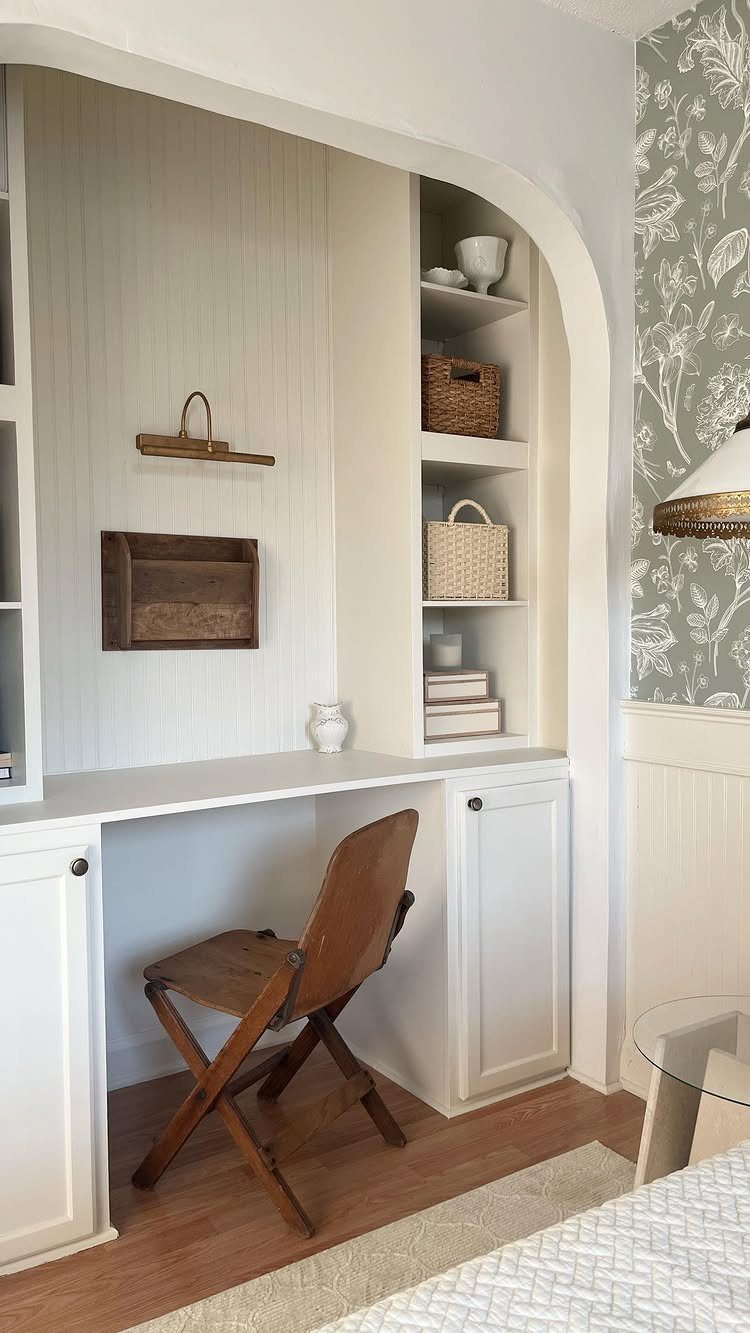
A closet or alcove becomes an office the moment a desk fits inside it.
An arched nook can hold a built-in desk, shelving and a small wall shelf, so everything sits within arm’s reach and the whole setup can be shut away when work ends.
Paint the inside a fresh color to make it feel intentional.
This suits tight spaces best, though a deep closet with no light needs a lamp.
Curating home office decor that reflects your personality, encourages you to embrace creativity, and supports productivity.
6. Bulletin Board
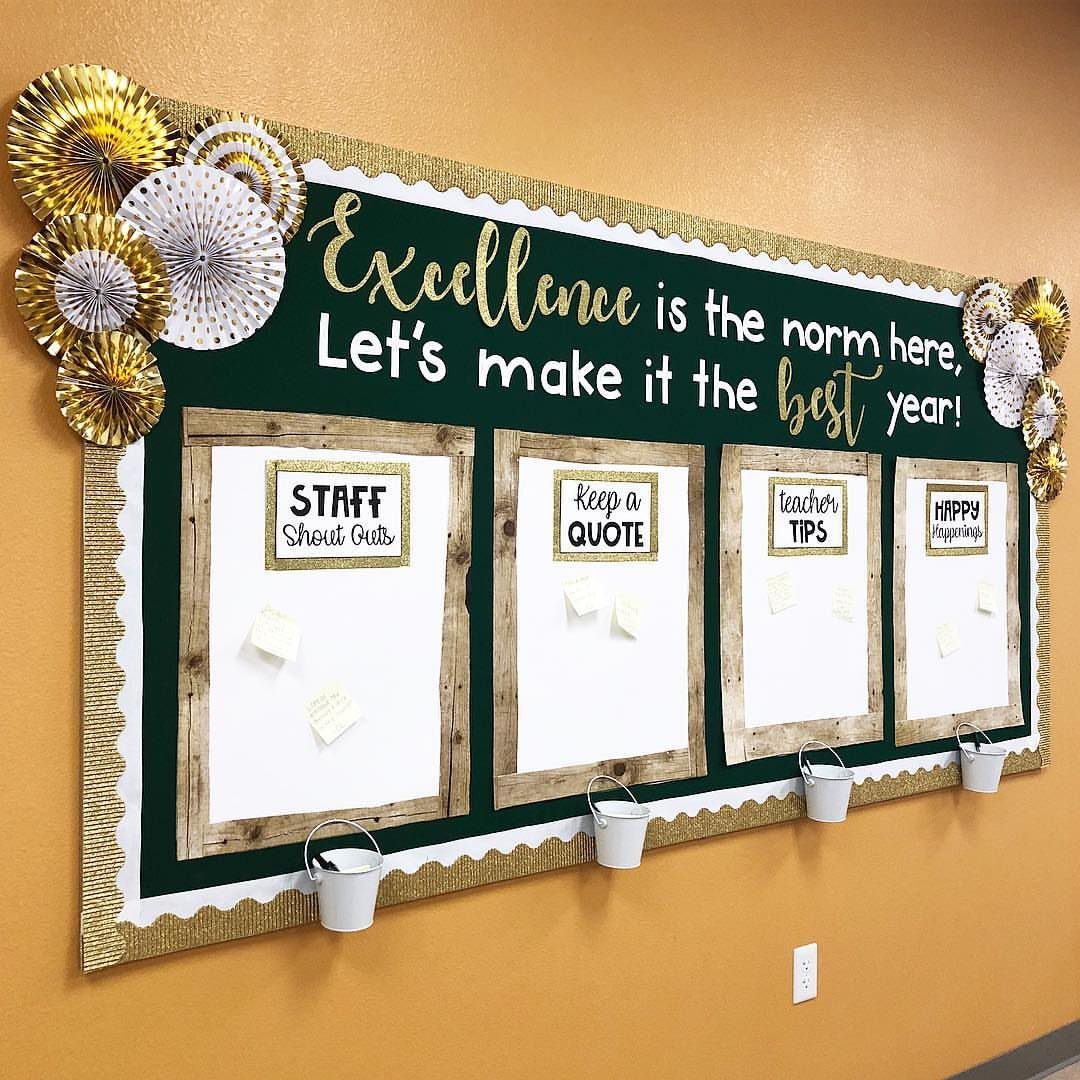
A bulletin board earns its place only if it holds what you actually use, and this green one sets up sections for staff shout outs and tips so notes land in the right spot.
At home, divide yours the same way: deadlines, inspiration, and reminders. Use white note cards as section headers and pin only current items.
Clear it out weekly, or it turns into a pile of old paper.
7. Dry Erase Board
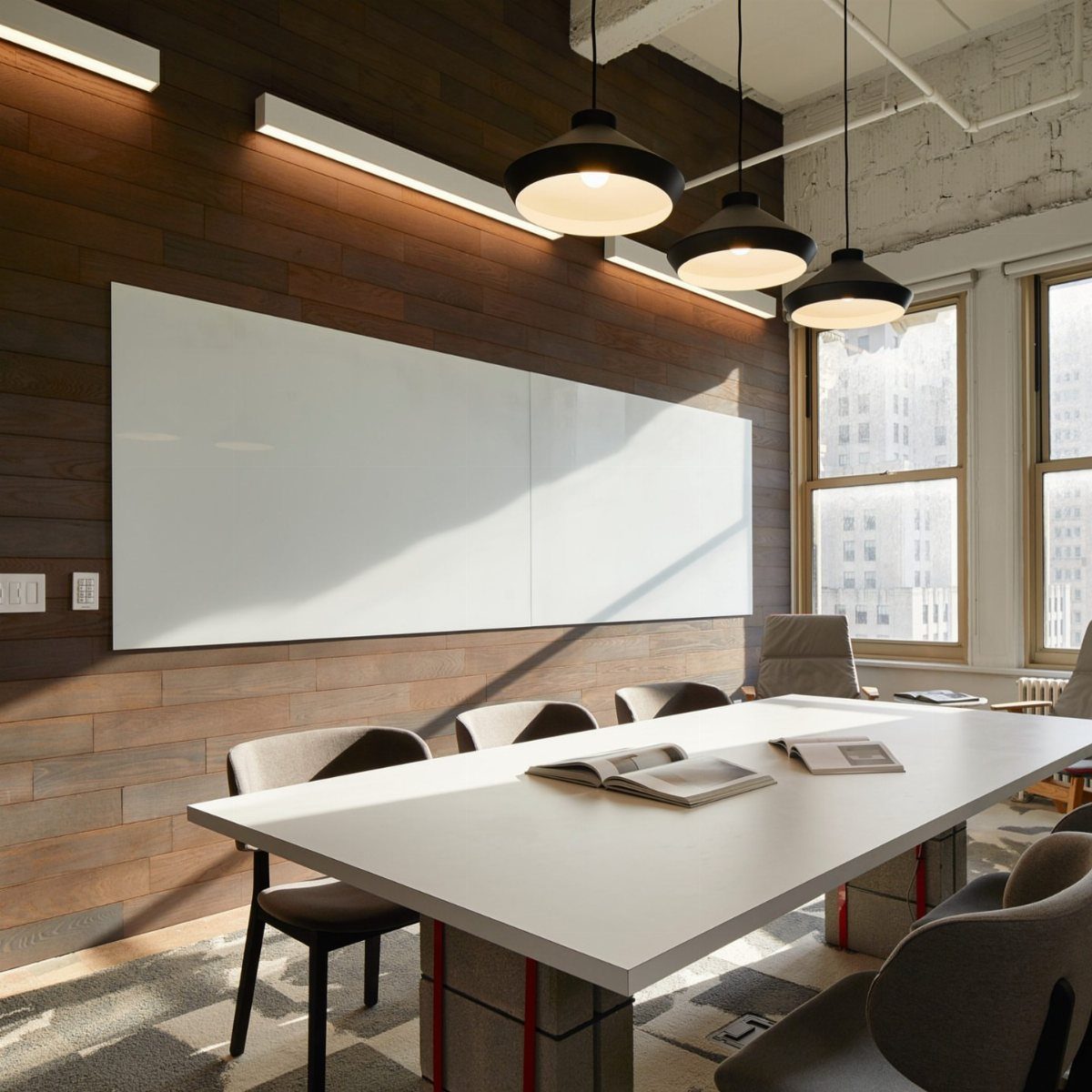
A large dry erase board on a wood wall works as both a task tracker and a piece of decor, since the white surface and clean edges sit calmly against the grain.
Mount it where you can see it from your chair, and choose a slim frame so it blends into the room instead of looking like office equipment.
Divide it into columns for this week, today and waiting on, then wipe it down every Friday.
I would write in one marker color so the board stays tidy.
8. Cozy Rug
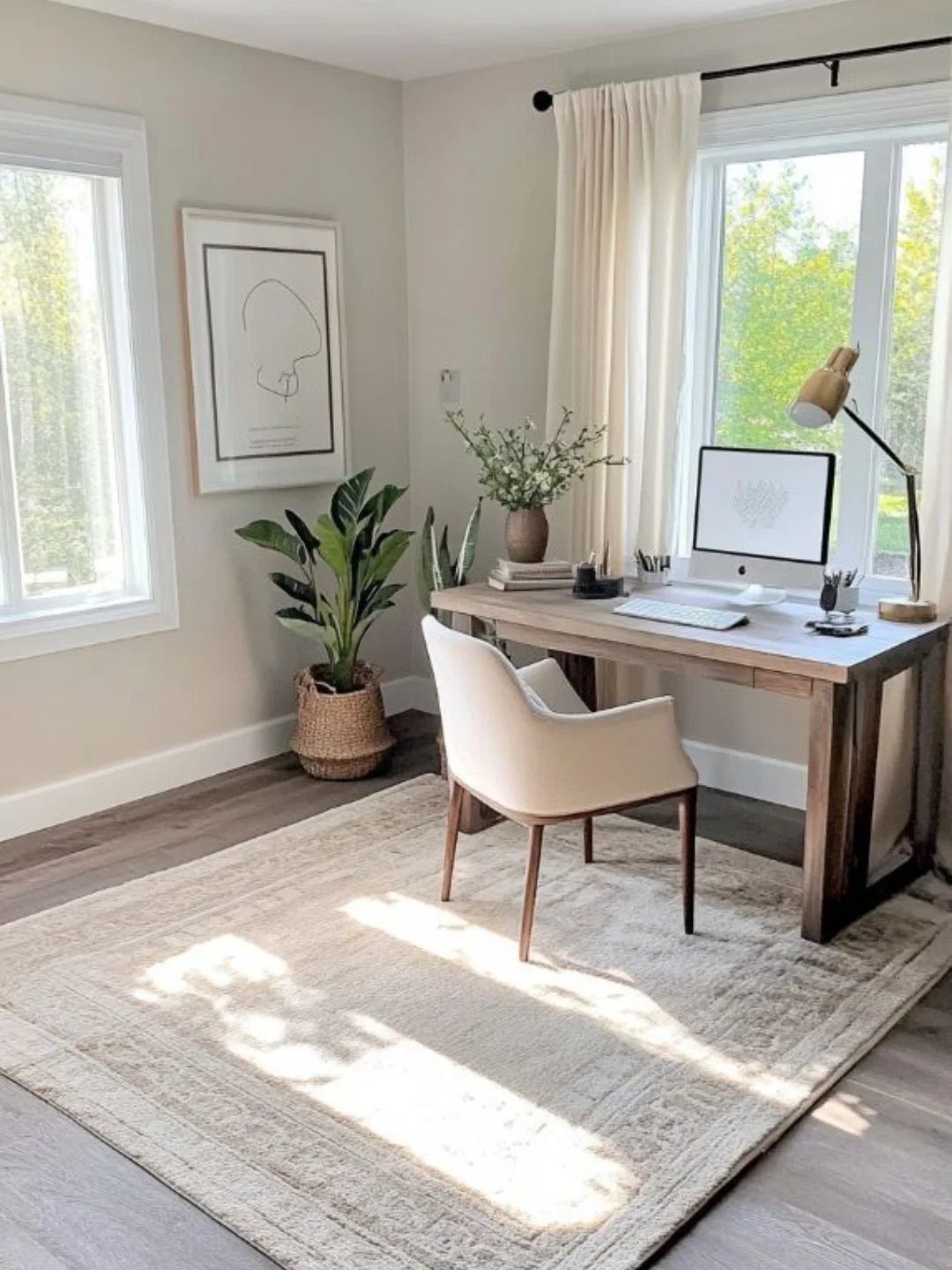
A light, textured rug under the desk makes a wood floor feel softer and a home office feel finished.
Choose one big enough that the desk legs and the chair both sit on it, so the chair rolls without catching an edge.
Beige keeps a bright room calm and lets the lamp and plants do the talking. A textured weave hides small crumbs better than a flat one.
For a renter, a rug is the cheapest warmth you can pick up and take with you.
9. Use of Natural Light
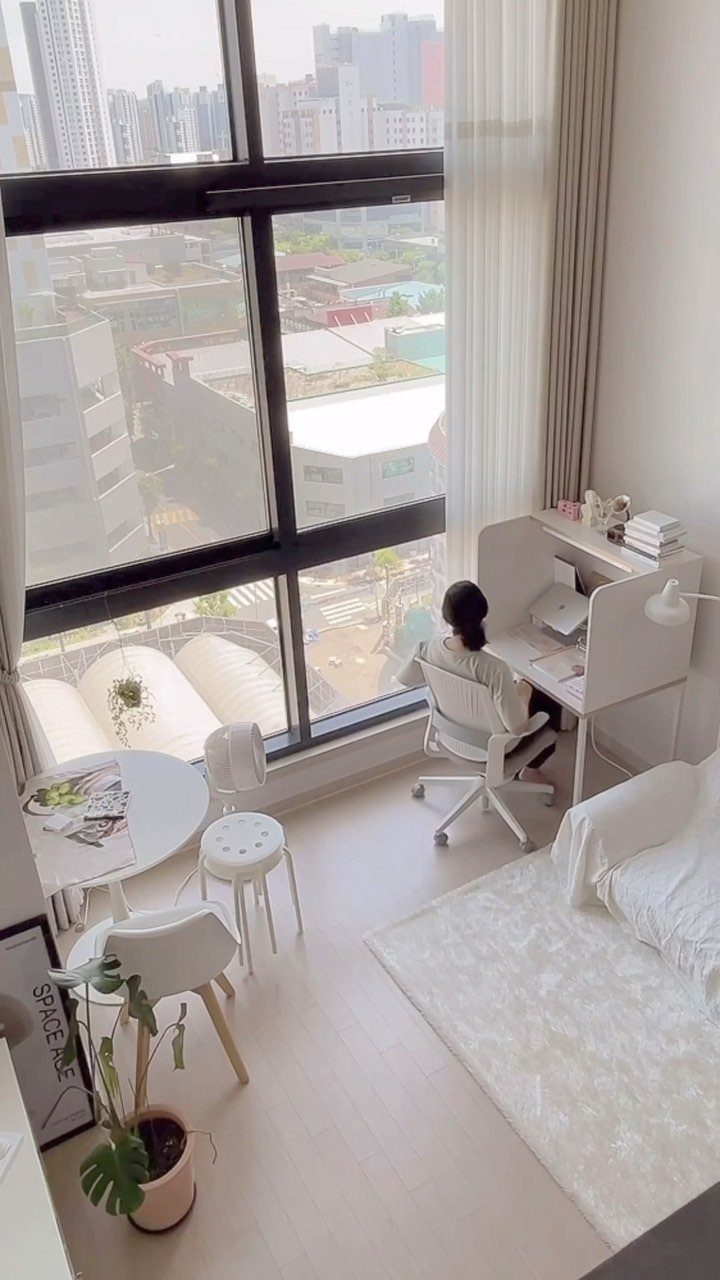
Set the desk beside a big window and the room does half the decorating for you. Light on a white desk and walls makes a space feel larger without a single purchase.
Keep the glass clear: pull curtains fully aside, or choose sheer ones that soften glare without blocking the view. Angle the screen sideways to the window so reflections stay off it.
I would always take the window spot over the roomier corner.
10. Floating Work Desk
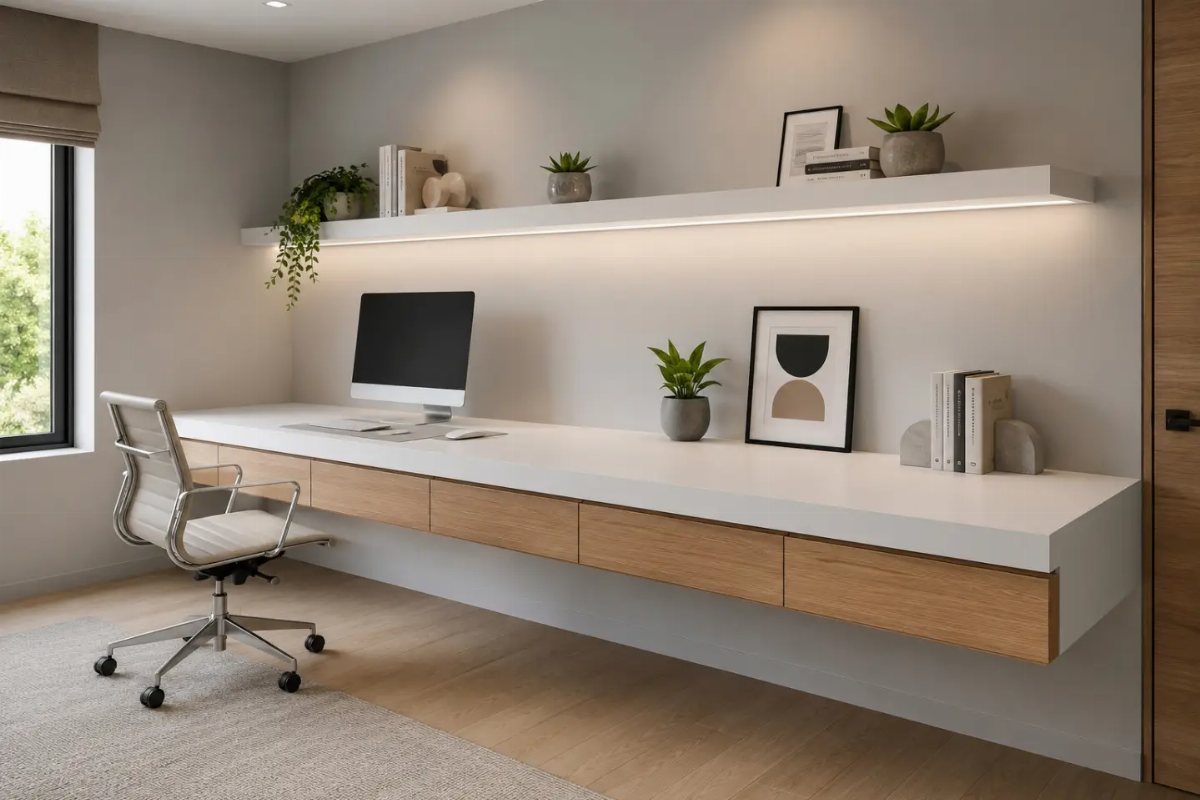
A floating desk bolts to the wall and leaves the floor open, which makes a small room read as bigger.
Wooden drawers built into a floating desk add storage without legs or a bulky base, which keeps the floor clear and the room looking larger.
Mount it into studs, since a computer and daily elbow weight add up. Hang a matching shelf above for plants and art so the whole setup stays slim.
The trade-off is that the height is fixed, so measure it against your chair before drilling.
11. Wood Slat Accent Wall
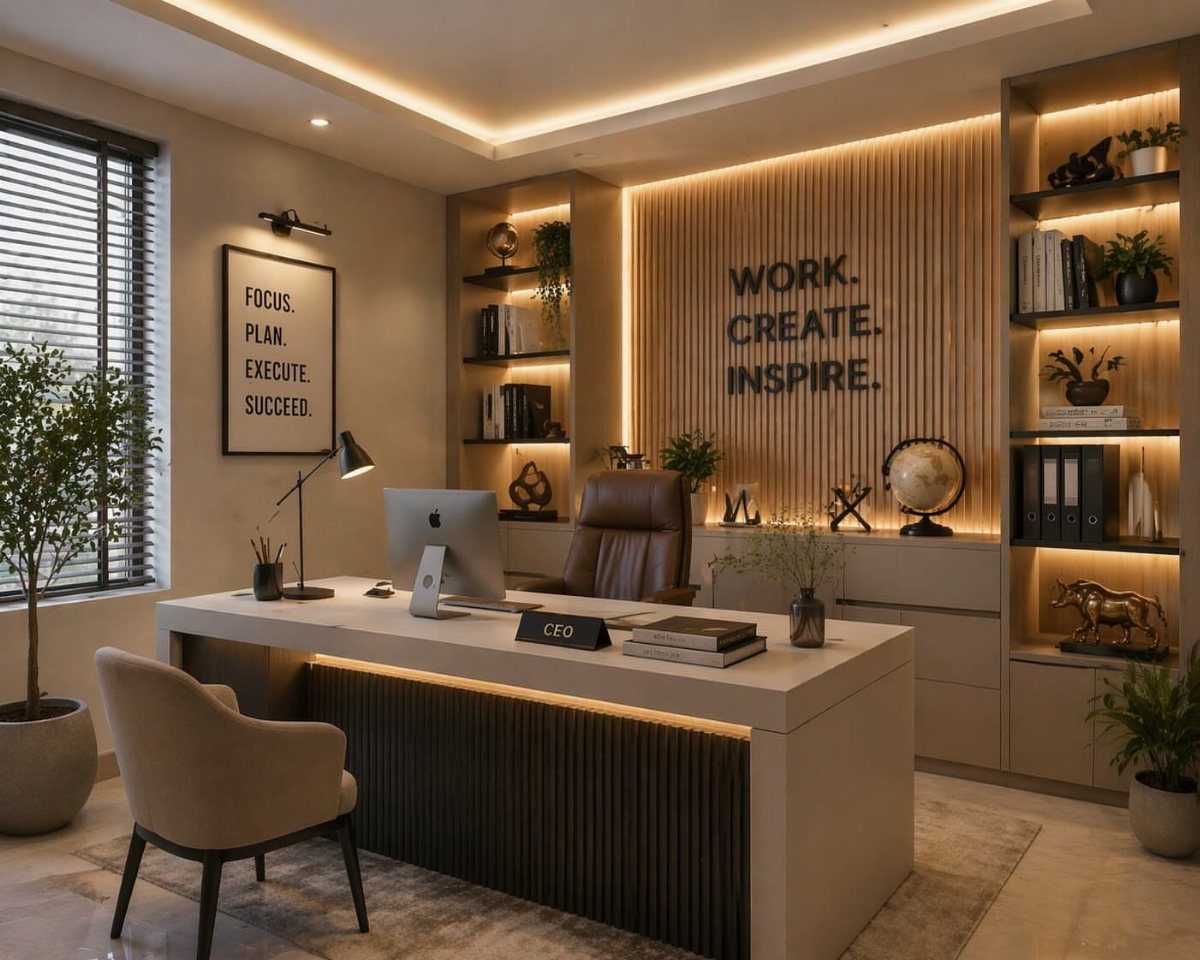
Vertical wood slats give a plain wall depth and warmth, and floating shelves set into them keep the look tidy. Warm accent lighting along the shelves makes the wood glow in the evening.
For a weekend job, slat panels are the easier route than cutting your own strips. Put the slats behind the desk, where video calls will catch them.
Keep the signs and shelf objects few, because the wood is already doing the talking.
12. Lounge Seating Area
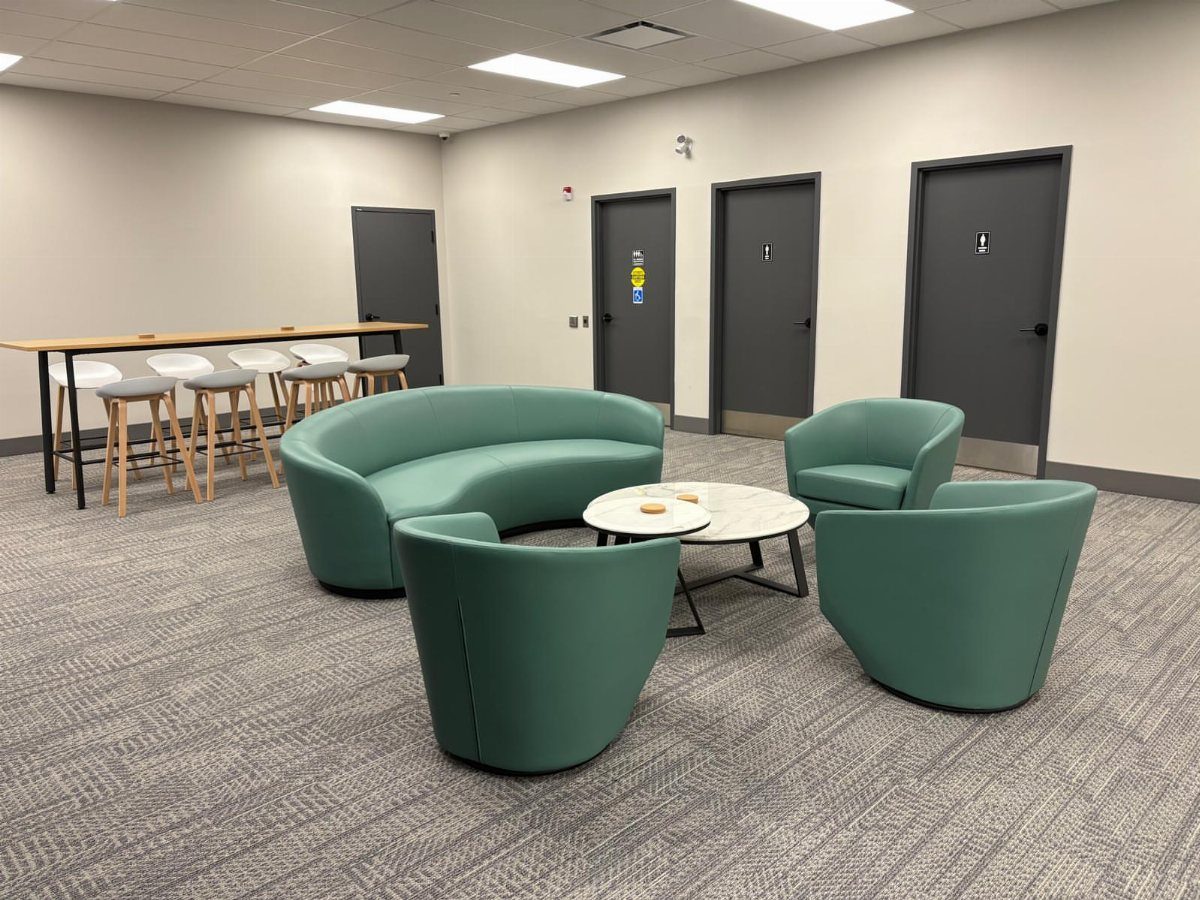
A lounge corner gives a break from the desk, and a curved sofa with 2 matching armchairs around a marble coffee table makes a spot for a call or a coffee.
Bold color like teal works because the grey around it stays quiet.
In a small space, one loveseat and a single chair around a small table do the same job. A high table with stools adds casual seating without taking much room.
I would pick one strong color and keep everything else neutral.
13. Acoustic Ceiling Panels
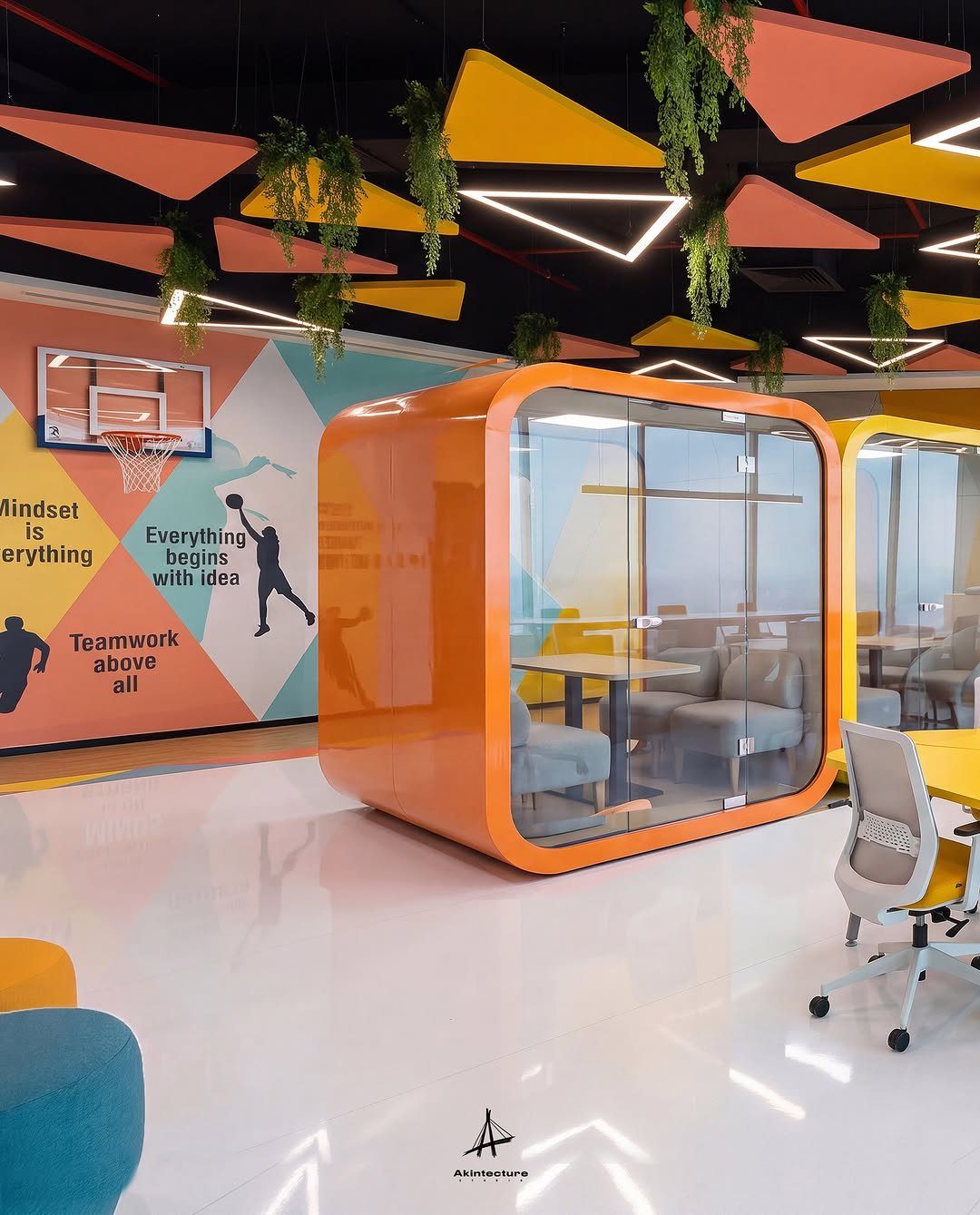
Geometric acoustic panels overhead turn the ceiling into a design feature while softening echo, which is why they suit an office with hard walls and bare floors.
Here the panels sit in a pattern, with hanging plants dropping from them, so the sound control also reads as decor.
Mounting panels overhead is a bigger job than most weekend projects, and a renter should check the lease first. For a rented room, felt panels on the wall behind the desk do a similar job and come down without damage.
A muted panel color is my pick, with the plants supplying all the green.
Creating a Cohesive Workspace
A monitor stand is the cheapest tidy-up on this page.
A monitor riser puts the top of the screen at eye level, which saves your neck, and the space beneath it holds a keyboard, a notebook or a small tray of pens.
Pair it with a bulletin board and shelves, and each piece takes a job off the desktop surface.
Pick one palette for everything you store.
Black, white and brown works well, and sticking to those 3 makes a mix of bins, baskets and open shelves look planned instead of piled up. Use different sizes, but keep the colors in the same family.
I would buy the bins before the shelves, so you know what needs a home.
Importance of Lighting
Good light decides how long you can work before your eyes tire, so treat it as a setup choice and not an afterthought.
A wall-mounted light is worth a look if your desk is small. Because a wall sconce or clip-on light needs no footprint on the desk, the spot where a bulky lamp would sit stays open for papers and a laptop.
Plug-in wall sconces suit renters, since they need no wiring. A cord cover painted to match the wall hides the line.
Use both sources together: a window for daytime and a wall light for gray afternoons and evenings.
Natural light makes ordinary tasks feel less dull, so a desk in front of a window is worth a try, with the wall light as backup.
Using Color Effectively
Blue is my pick for a home office wall. It calms and energizes at once, which suits a room where you need to stay focused without feeling tense.
Shades run from deep indigo to light sky blue. A darker shade feels cozy, while a lighter one keeps a small room open.
If blue alone feels too quiet, add a bold second color. Blue paired with yellow turns a workday room into a peaceful retreat instead of a place of drudgery.
Keep the yellow to small things like a chair cushion, a mug or a frame, so the blue stays the main color. Test a sample patch first and look at it in morning and evening light.
Frequently Asked Questions
What are some professional office decor ideas?
Plants, wall art and tidy storage cover most of it.
A single large print hung over the desk makes a stronger statement than a grid of small frames, and one big-leaf plant like a fiddle leaf fig or monstera fills a corner faster than a shelf of little pots.
Bins on open shelves hide cables and paperwork, so the desk looks organized on video calls.
How to decorate a home office guest bedroom?
Pick pieces that save floor space, such as a floating desk bolted into wall studs or a desk tucked inside a closet or alcove.
Both leave the room open for a bed and let you close up the work setup when guests arrive. Add a lamp if the closet has no light, and keep the palette calm so the room still feels welcoming.
How can I decorate a home office on a renter’s budget?
Start with a rug, a painted shape on the wall and a plug-in wall sconce.
A painted arch or block of color behind the desk takes one quart of paint and an afternoon, and a roller of the wall color covers it when you move out.
What color should I paint a home office?
Blue is my pick, since it calms and energizes at once, which helps you stay focused without feeling tense.
Deep indigo feels cozy, while light sky blue keeps a small room open. If it feels too quiet, add yellow in small touches like a cushion or mug, and test a sample patch in morning and evening light first.
How do I make a small home office look bigger?
Use a floating desk and a window spot. A wall-mounted desk leaves the floor open, so the room reads as larger, and a desk beside a big window gets light that makes white walls feel more spacious.
A wall light instead of a bulky desk lamp also frees up desktop room.
Before you drill a wall-mounted desk or floating shelf, sit in your chair and check that the surface lands around 29–30 inches high with room for your knees.





