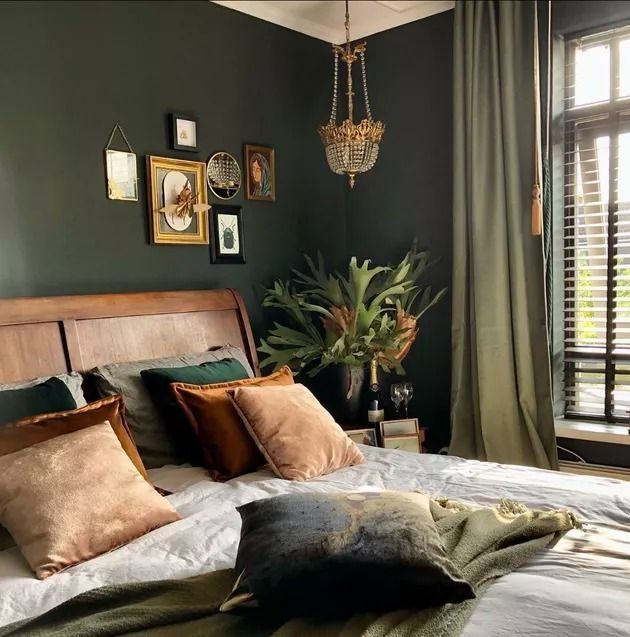
Whether the green on your wall leans yellow or blue decides the curtain: warm fabrics like tan, brown or gold-toned linen suit a yellow-leaning green, and cooler ones like gray suit a blue-leaning one.
The ideas here run from sheer white panels that keep a window light to lined burgundy and dark green velvet that hang heavy and rich against the wall.
Hold a paint chip against the wall first, then tape a fabric swatch to the glass for a full day so you can see it in morning light, at midday and under a lamp.
1. Beige Linen Curtains with Dark Green Walls
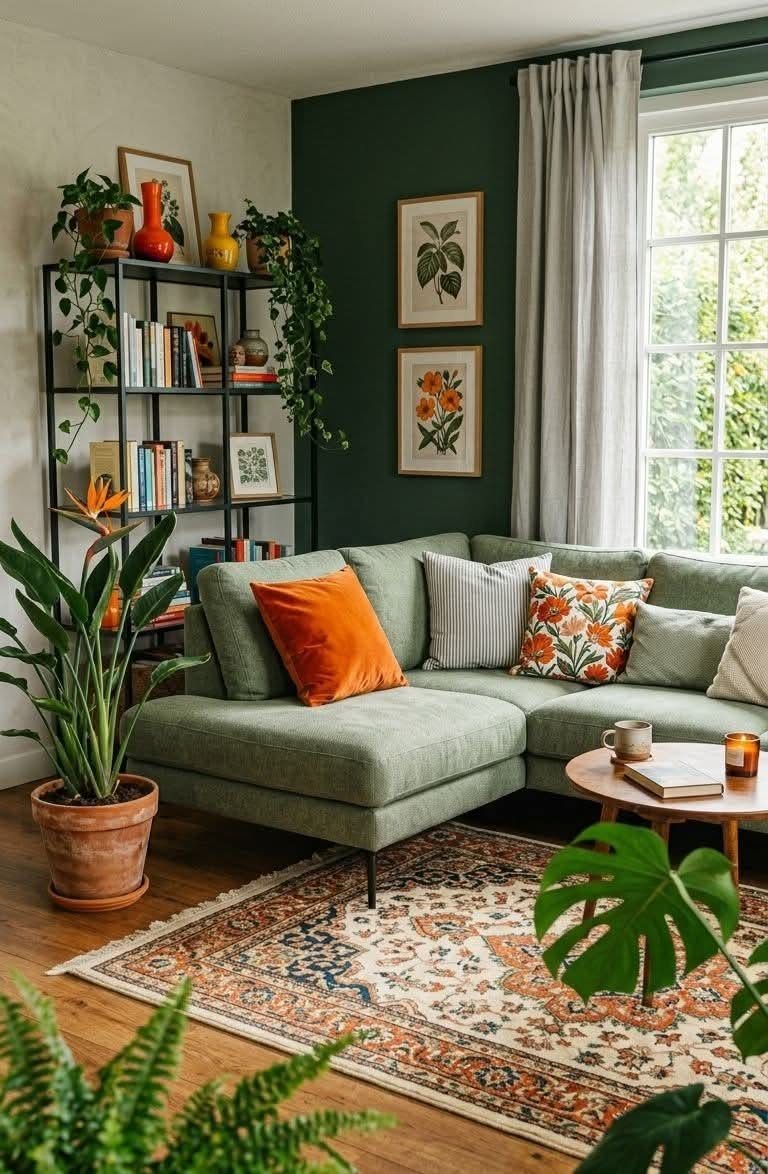
Beige curtains sit quietly against a deep green wall, which is why I like them for a living room already busy with a patterned rug, plants and art. They add warmth without competing.
Linen has a loose, textured drape that softens the wall’s weight.
Hang the rod close to the ceiling so the fabric reads as part of the wall, and pick a beige with a warm undertone, since a gray-leaning one can look flat next to dark green.
2. Dusty Pink Curtains with Dark Green Walls
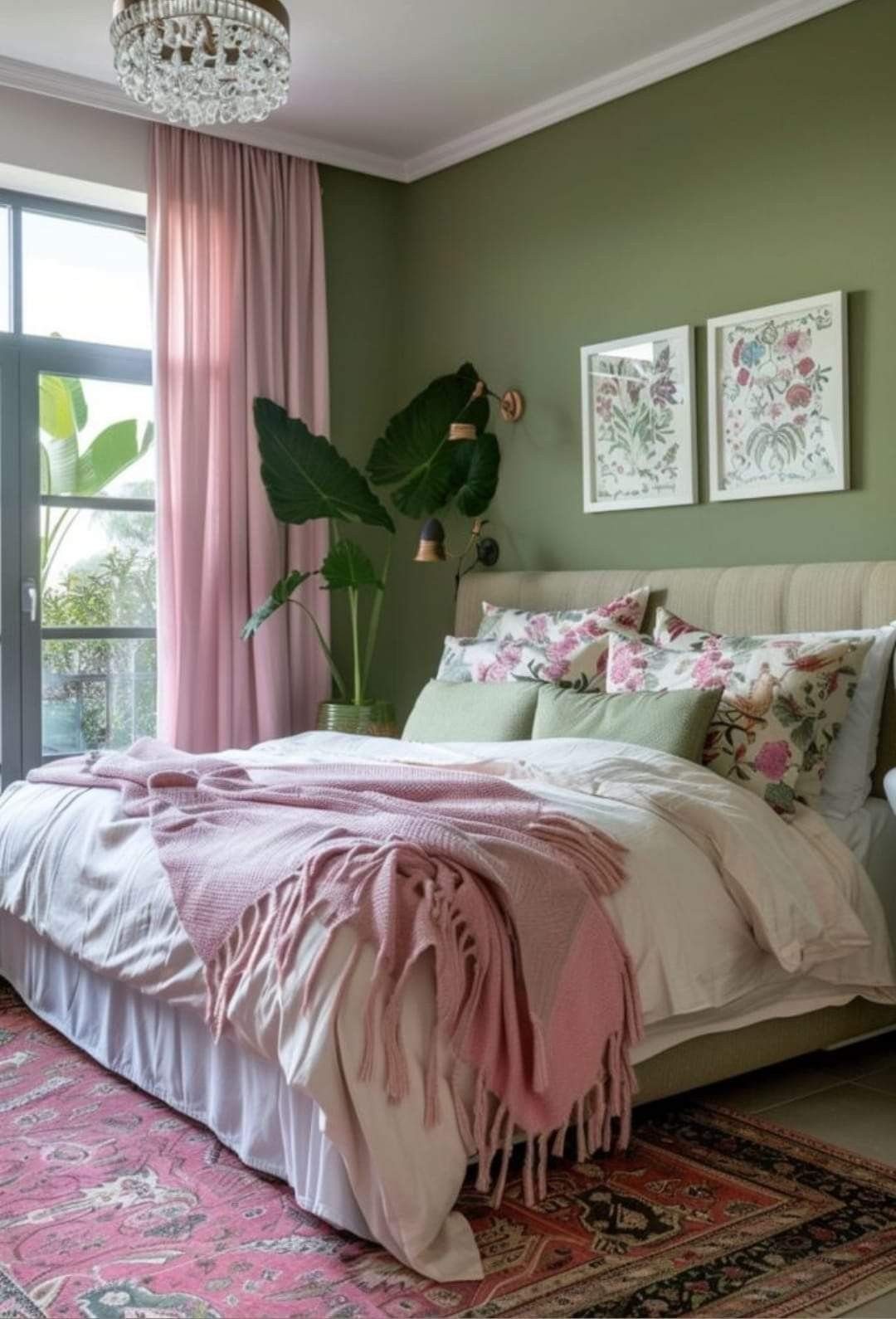
Dusty pink and dark green are close to opposites on the color wheel, and the muted pink keeps the pairing soft instead of loud. In a bedroom, that contrast feels cozy rather than sweet.
Choose a pink with a little gray in it; a bright one will fight the wall.
Echoing the shade once or twice elsewhere, on a rug or pillows, makes the curtains look planned. I would go with a lined fabric so the pink stays even in daylight.
3. Olive Green Curtains with Olive Green Walls
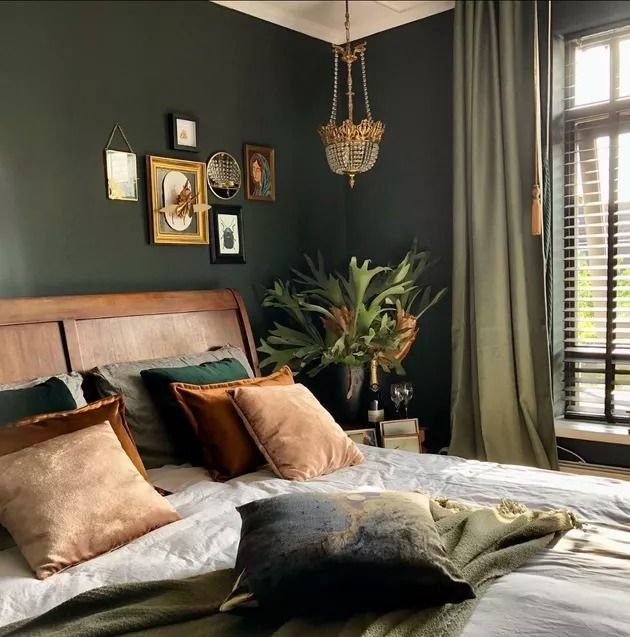
Matching curtains to olive walls makes the window disappear into the room, and that is the appeal: one calm, wrapped-in-color bedroom with no hard edge at the glass.
Buy a fabric swatch before ordering panels, because olive shifts from yellow to brown depending on the light. Then let texture do the work.
A curtain slightly lighter or darker than the wall, or in a different weave, keeps the match from looking flat. Wood and gold accents suit it well.
4. Navy Blue Curtains with Sage Green Walls
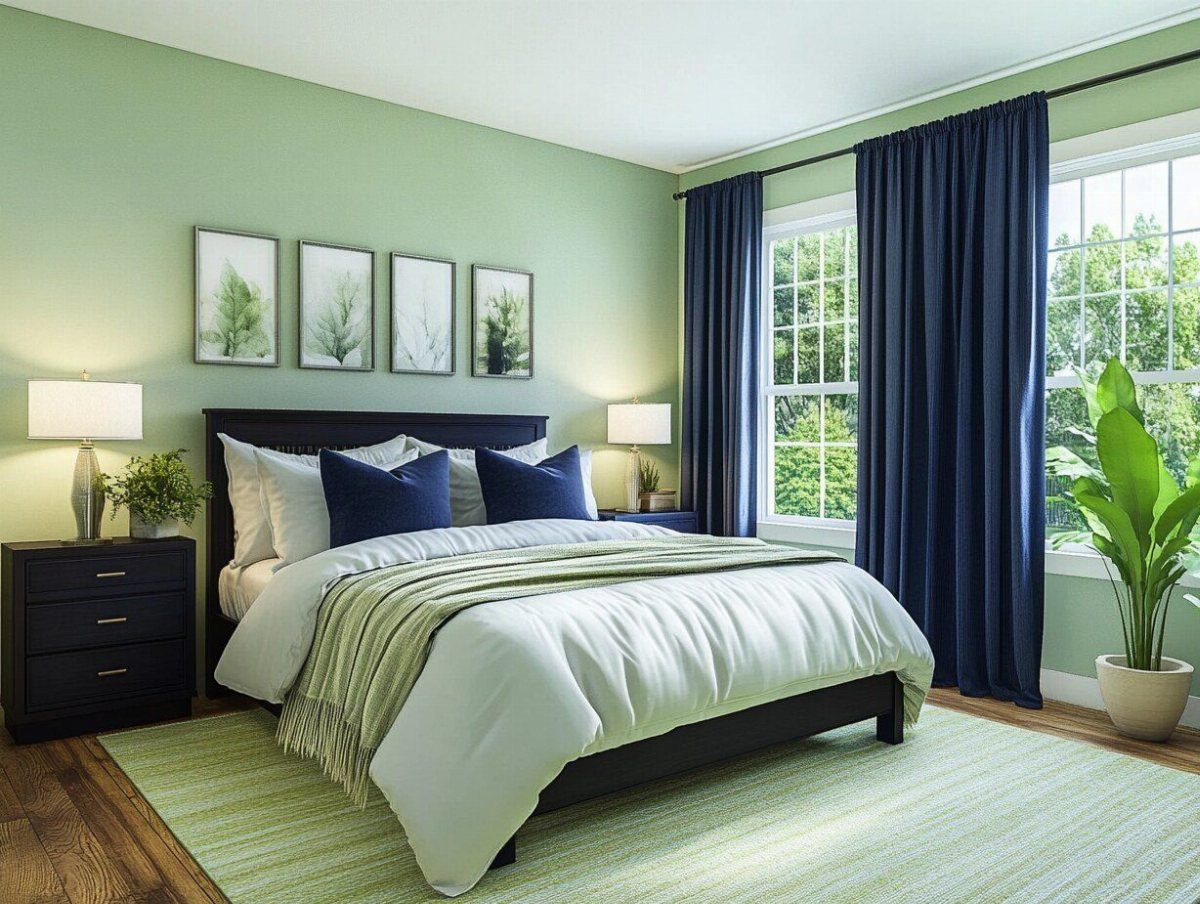
Navy against sage is a cool, grounded pairing, and I find it calmer than the usual white-and-green bedroom. The gray in sage keeps the navy from looking harsh.
Go for a deep, solid navy and let the walls stay the lighter partner.
White or blue-toned bedding ties the two together, as does a green rug that repeats the wall. Skip heavy patterns on the curtains; the 2 colors already carry the look.
5. Sheer White Curtains
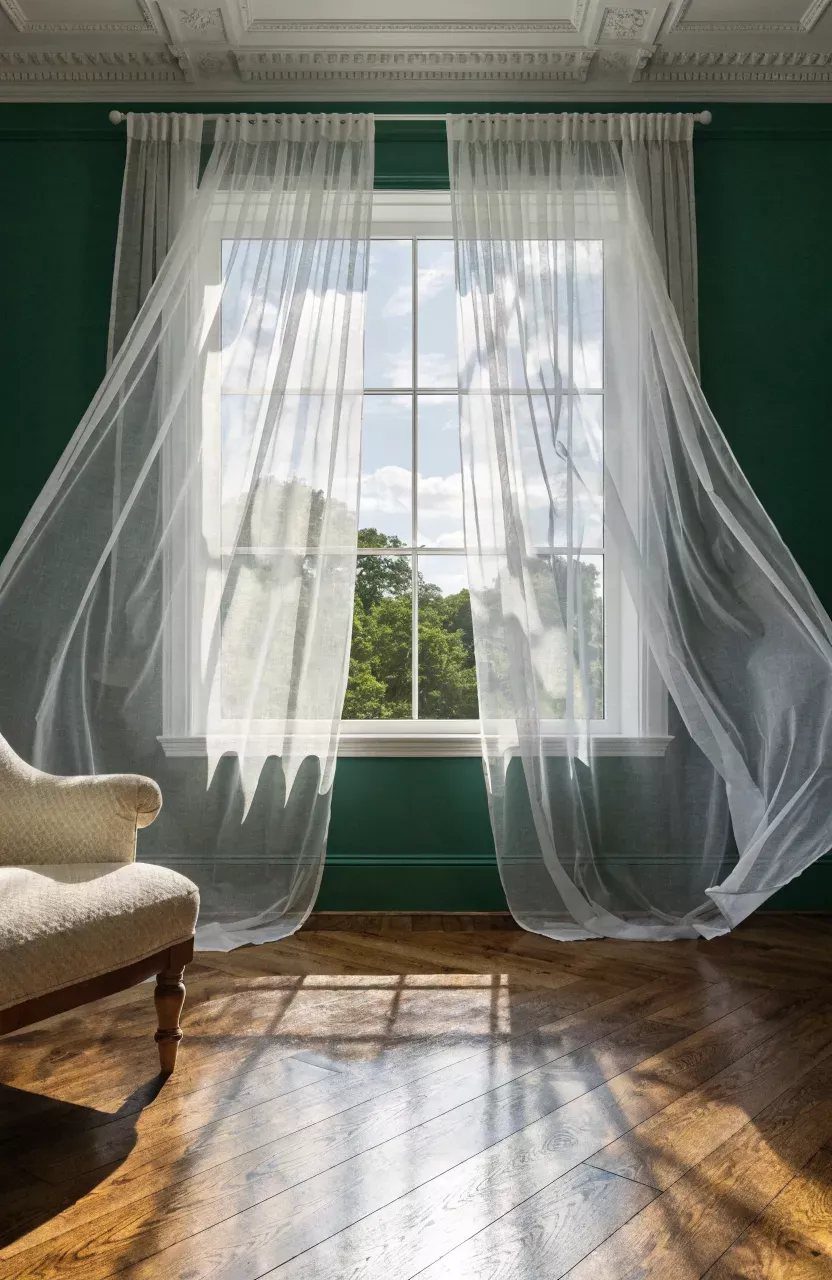
Sheer white is the lightest answer to a dark green wall: it filters sun, keeps the window bright and lets the green stay the star.
I would pick a sheer with a soft, slightly textured weave over a stiff, shiny one, and hang it wide and full so it ripples.
Sheers give little privacy and almost no light blocking, so pair them with blinds or a second layer if the room needs both.
6. Cream Curtains with Sage Green Walls
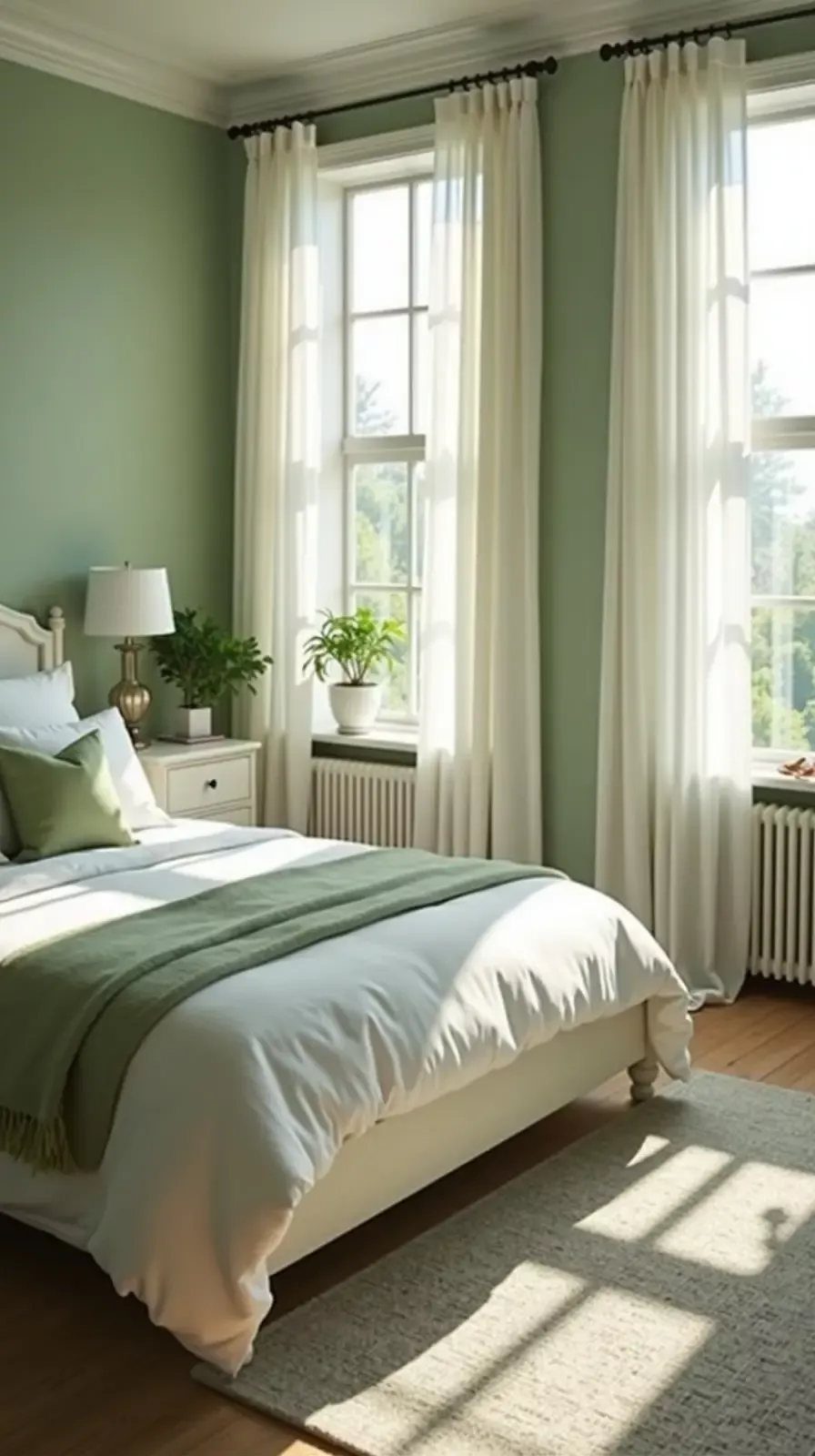
Cream is the gentlest curtain for sage walls, with enough warmth to stop the room from feeling cold or clinical. It sits between the wall and white bedding like a soft bridge.
Choose cream over stark white if your bedding is white, so the layers have some depth. With 2 windows, hang matching panels at the same height on each, and extend the rod past the frame so the glass looks wider.
7. Sage Green Curtains with Sage Walls

Sage curtains on a sage wall, in lace or a lightweight fabric, keep the window soft and quiet. Lace adds a little pattern without adding a new color.
Hold a fabric swatch against the wall in daylight first, since a curtain that runs a shade greener or grayer than the paint will show.
I would aim for a close match, then let the lace’s texture create the difference. Light comes through lace, so the room stays bright, though privacy is limited.
8. Burgundy Curtains with Dark Green Walls
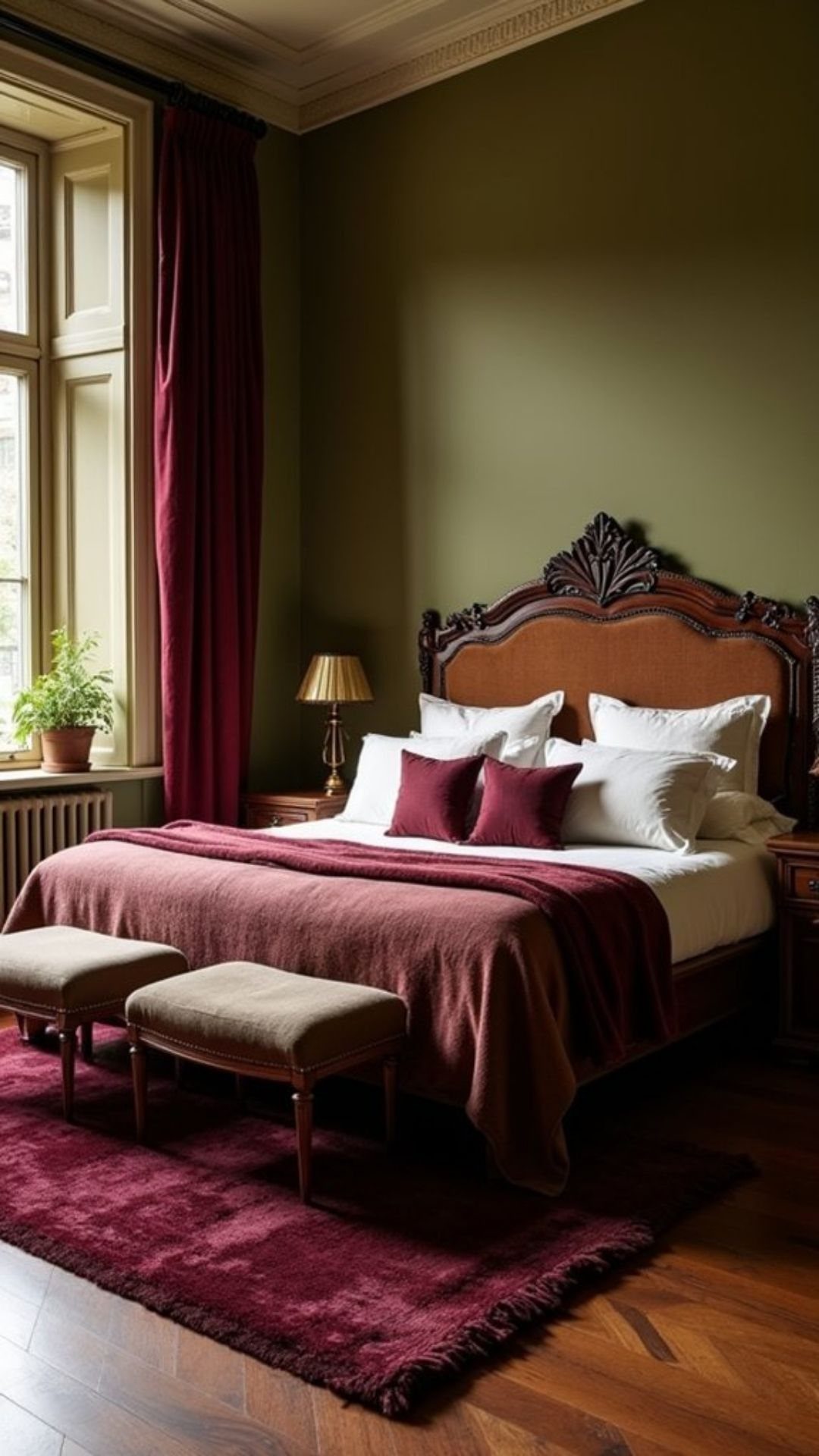
Burgundy against dark green is a rich, old-fashioned pairing, and it works best when the red repeats beyond the window. Bedding and a rug in the same shade make the curtains look intended rather than borrowed.
Pick a burgundy with some depth, not a bright red-leaning one, so it settles into the green.
A wood bed frame and dark wood floor suit the warmth. Lined panels will hold the color evenly in daylight.
9. Dark Green Velvet Curtains with Sage Walls
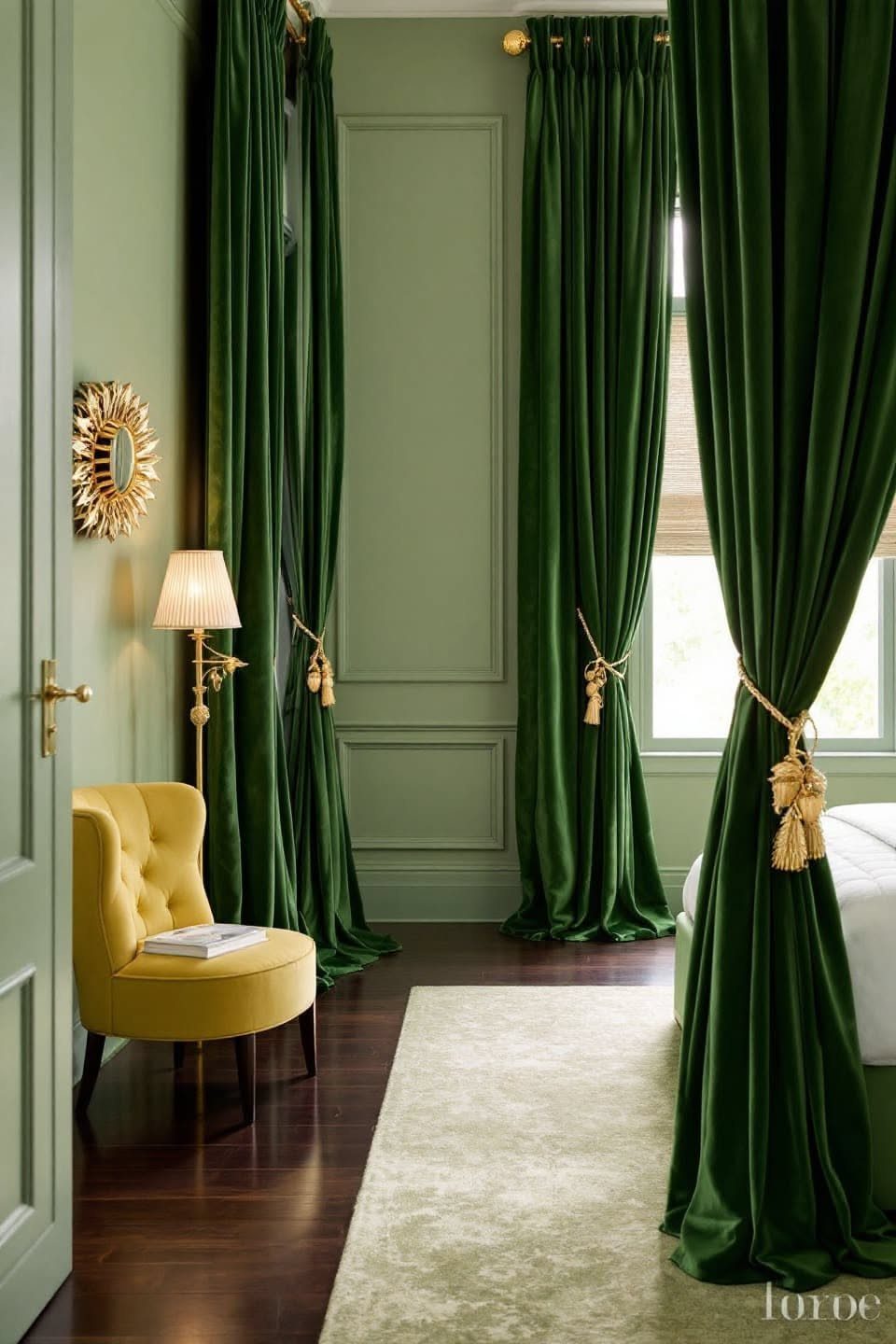
Dark green velvet on pale sage walls gives you contrast within one color family, and a gold tassel tieback makes the window feel dressed. Tied back, the panels frame the glass instead of hiding it.
Velvet is heavy, so use a sturdy rod and strong brackets.
I would repeat the gold once or twice in the room, on a mirror or a lamp base, so the tassels don’t stand alone. Hang the rod high and wide for the fullest look.
Choosing Curtain Colors
Hold a paint chip next to the green and ask whether it leans yellow or blue.
A yellow-leaning green looks best with warm curtains, such as tan, brown or gold-toned linen. A blue-leaning green looks best with cooler ones, such as gray.
Earthy neutrals keep a natural, outdoorsy feel in the room.
In a smaller room, go with lighter fabrics so the window doesn’t feel heavy.
Layering Curtains
Close the sheer for soft daytime light, and draw the heavy layer at night for privacy and a fuller look.
Keep the 2 fabrics different in weight and weave, since a smooth drapery over a slightly nubby sheer gives the depth. Choose colors from the same family so the layers read as one treatment instead of two competing ones.
Mount the outer rod a few inches above the inner one and make sure the brackets clear both fabrics. Then the panels can slide without catching.
Testing Fabric in Light
Tape a large swatch or a loose fold of the fabric to the window and leave it there for a full day.
Check it in the morning, at midday and again under your evening lamps, because the same cloth can look warm at noon and flat at night.
Dark green walls change a fabric’s color the most. Ivory, oatmeal, clay, dusty rose and charcoal are all worth comparing against the wall in your own light.
Look at the fabric against the wall, not on its own. If you plan to order online, request a sample first and test it the same way.
Frequently Asked Questions
What color curtains go with green walls?
Cream, beige, dusty pink and navy blue are the easiest matches. A paint chip held against the wall will show you which way your green leans.
Which curtain is best for sun protection?
A lined curtain does more than a sheer. Sheer white filters sun and keeps the window bright, but it blocks almost no light and gives little privacy.
Layering a sheer under a heavier panel, or pairing it with blinds, lets you soften daytime light and close the room off when you need to.





