Start with the window you already have: a window with blinds can take a valance over them, and one above a sink needs a short style that hangs nothing down into the basin.
The ideas run from a valance for a small window to curtains with a valance for a large one, and a few add a padded trim, a light wood box or a decorative bow, so the header can be soft or structured to match the room.
1. Curtains and Valance for Large Windows
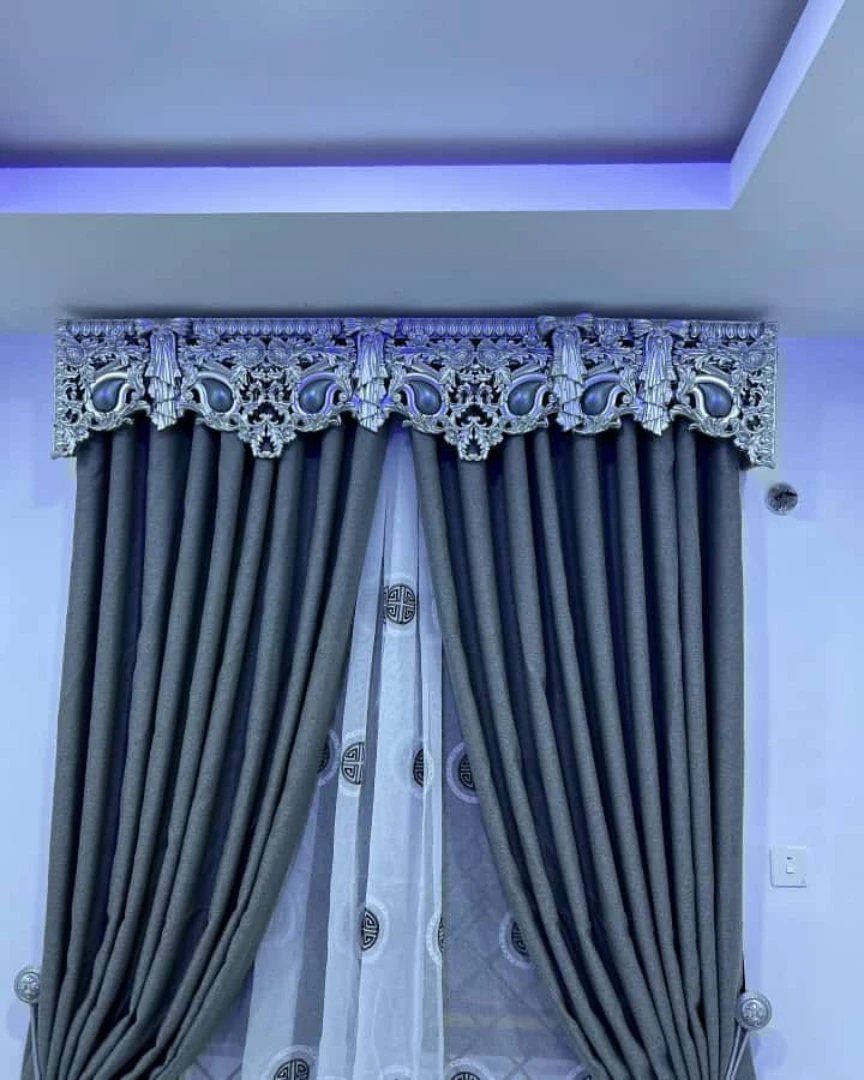
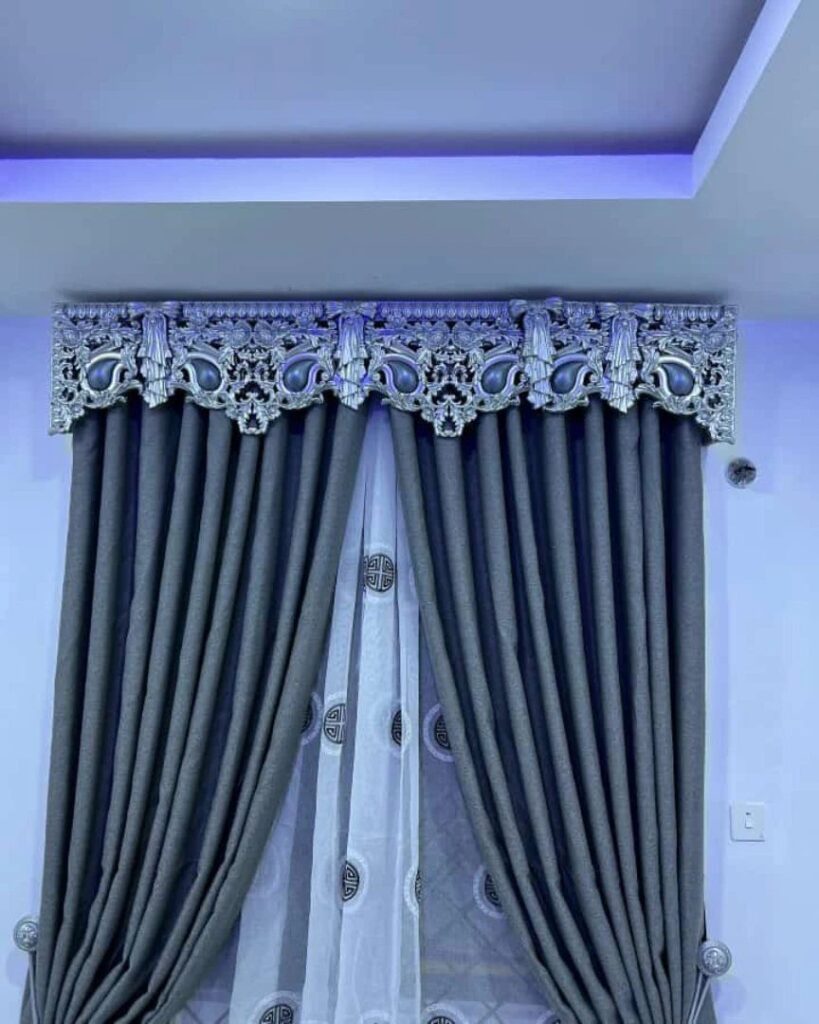
Tall or wide glass can swallow a room, and a valance is what pulls the eye back up and gives the window a finished top.
Here the grey pleated panels and white sheers sit under an ornate silver valance, so the window reads in three layers instead of one flat sheet.
I like this approach because the sheers keep daylight coming in while the heavier grey panels handle privacy.
Pick a valance finish that picks up the metal tones already in the room, such as a light fixture or frames, so it looks planned.
2. Valance for Small Windows
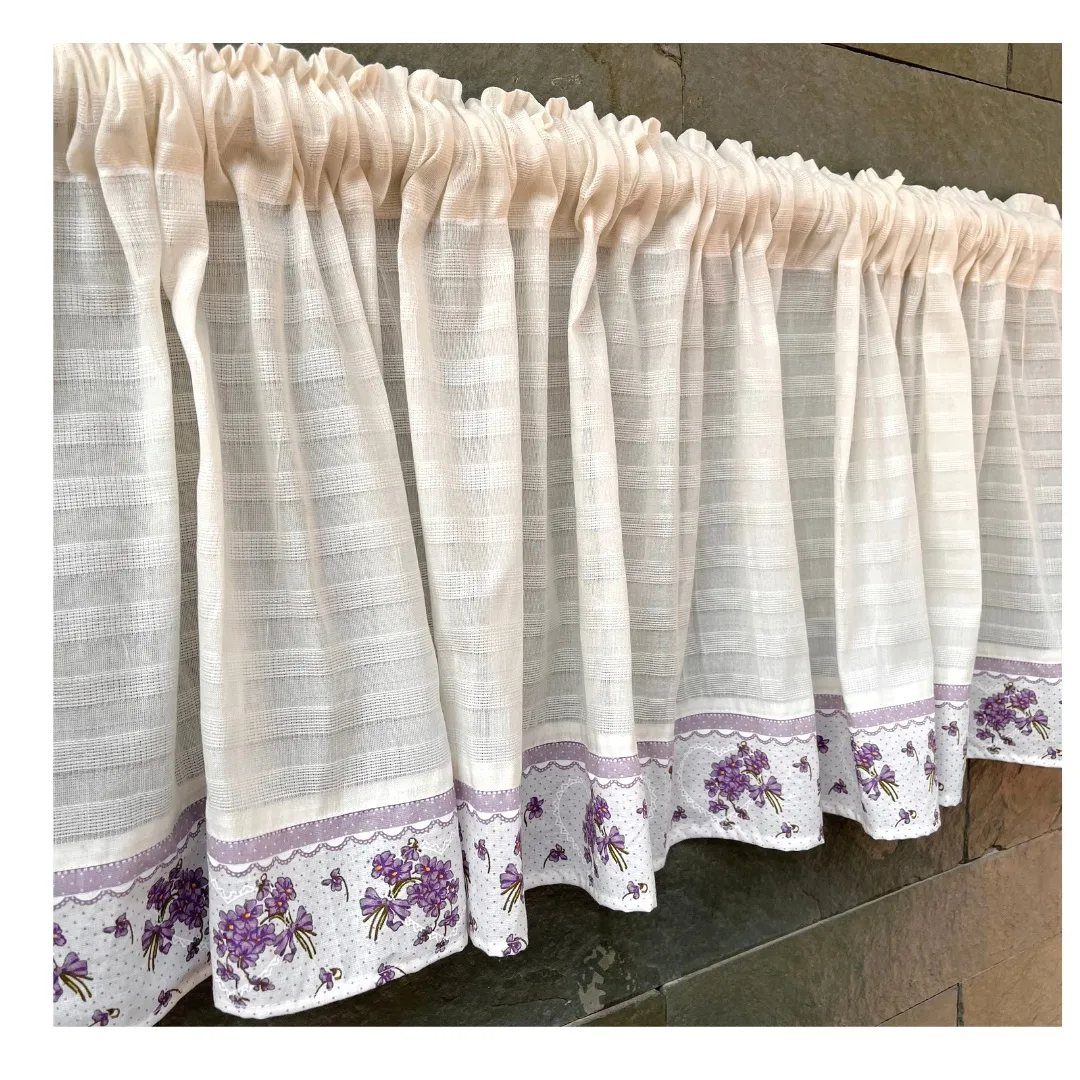
A short gathered valance is a gentle way to dress a small or high window without hiding the glass. A sheer valance with a colored border lets light through while adding pattern to a small window without blocking the view.
Keep the fabric light on a compact window.
A heavy valance would crowd the opening. A border in one accent color is the easiest way to add pattern without overwhelming the frame.
3. Valance Over Sinks
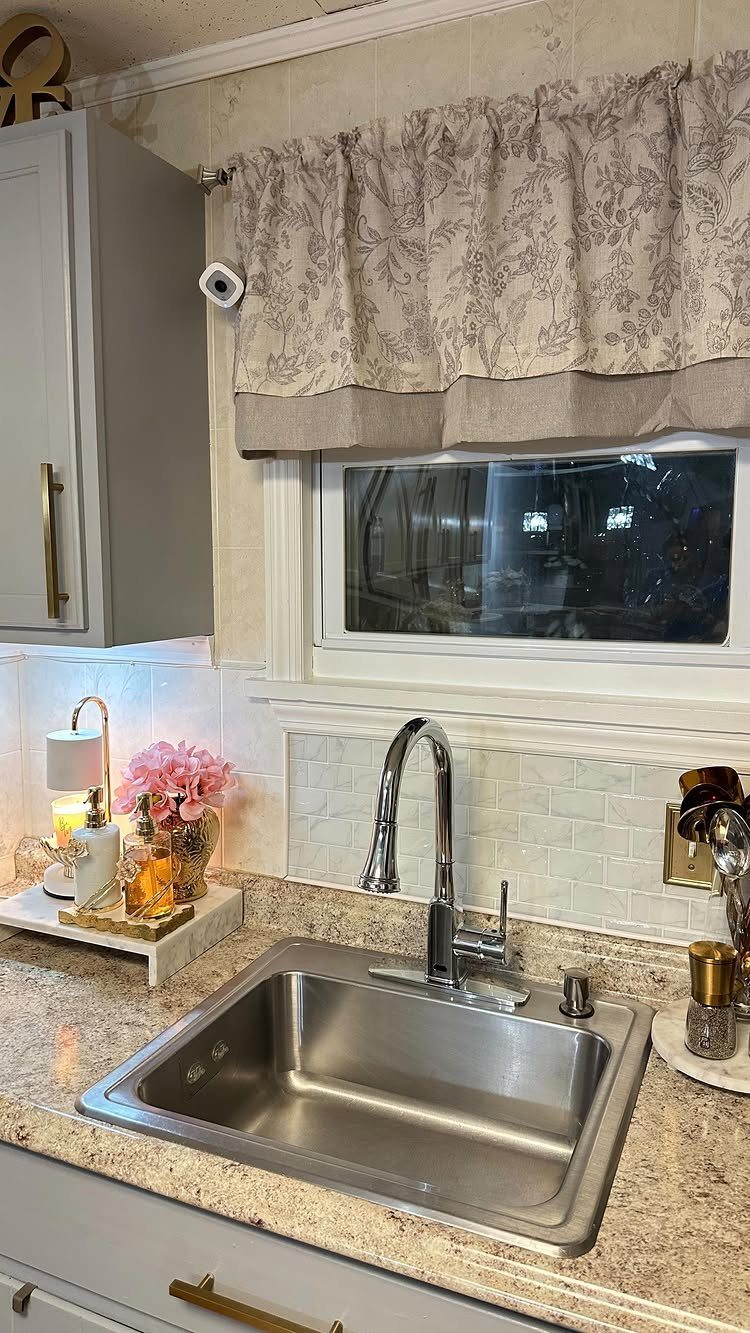
Over a kitchen sink, a small floral valance does more than a full curtain ever could, since nothing hangs down to get splashed. Fitting it to the width of the window keeps the faucet and counter clear.
I would choose a soft, muted print like this beige floral, because it warms a cabinet-heavy kitchen without competing with the countertop items. Fabric near a sink will need an occasional wash, so pick something easy to take down.
4. Highlight Your Windows
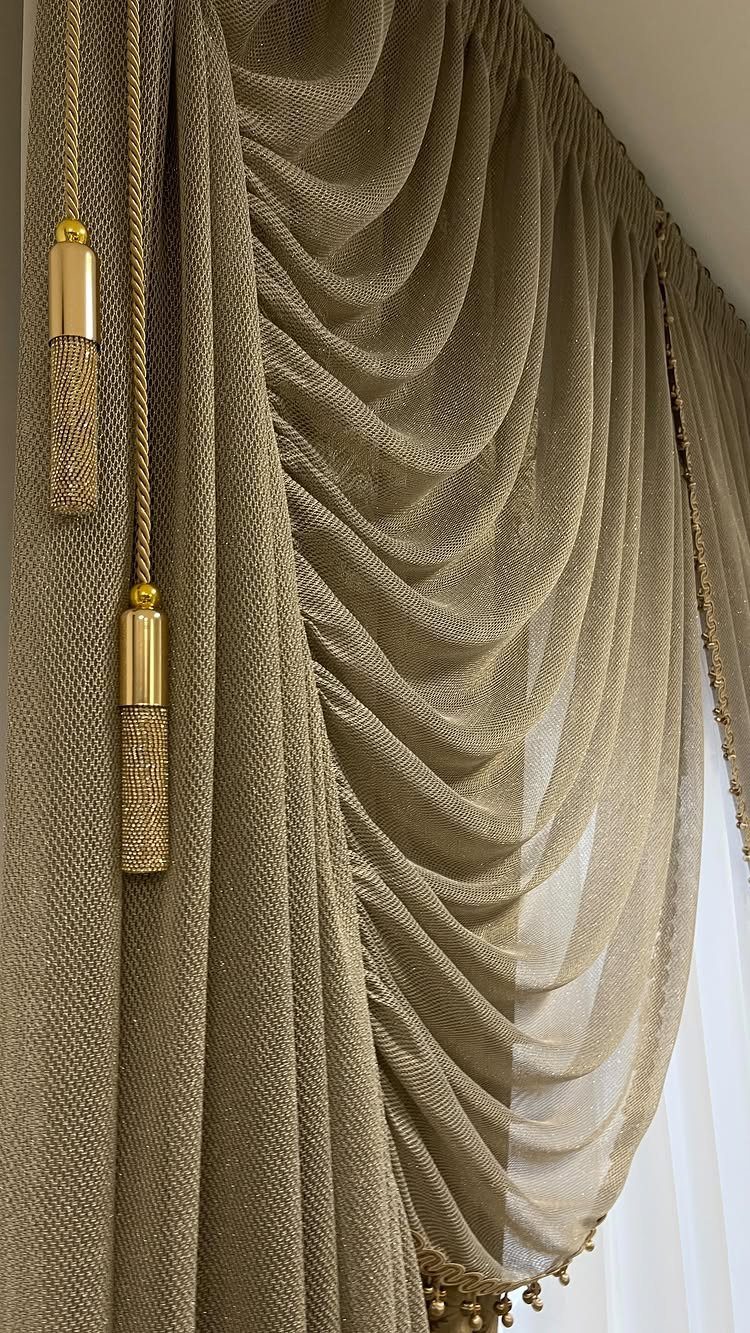
Gold curtains with a draped valance turn a plain window into the first thing people notice in a room. Tassels add weight and a little movement along the drape.
This works best when the rest of the room stays quiet. Let the shimmer be the one bold element, and keep wall color and furniture simple so the window doesn’t have to compete.
5. Valance and Blinds
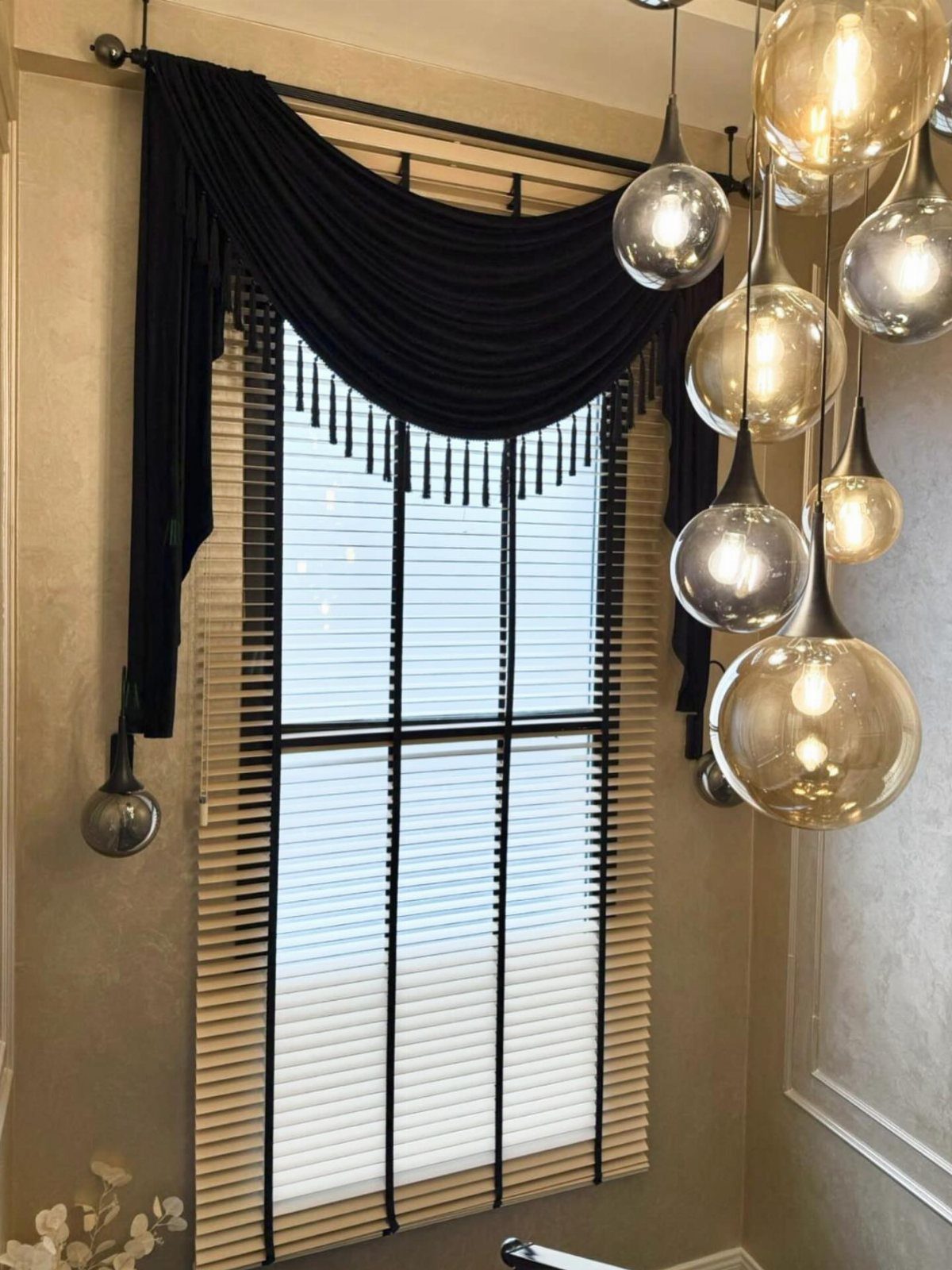
Blinds handle light control well but look stark by themselves, and a valance across the top fixes that. A black draped valance with fringe over tan horizontal blinds hides the headrail and adds contrast.
I prefer this pairing for renters who want to keep existing blinds.
Add the valance and the window looks styled, with no need to buy new treatments. Choose a color that contrasts with the blinds if you want it to stand out.
6. Arched Valance
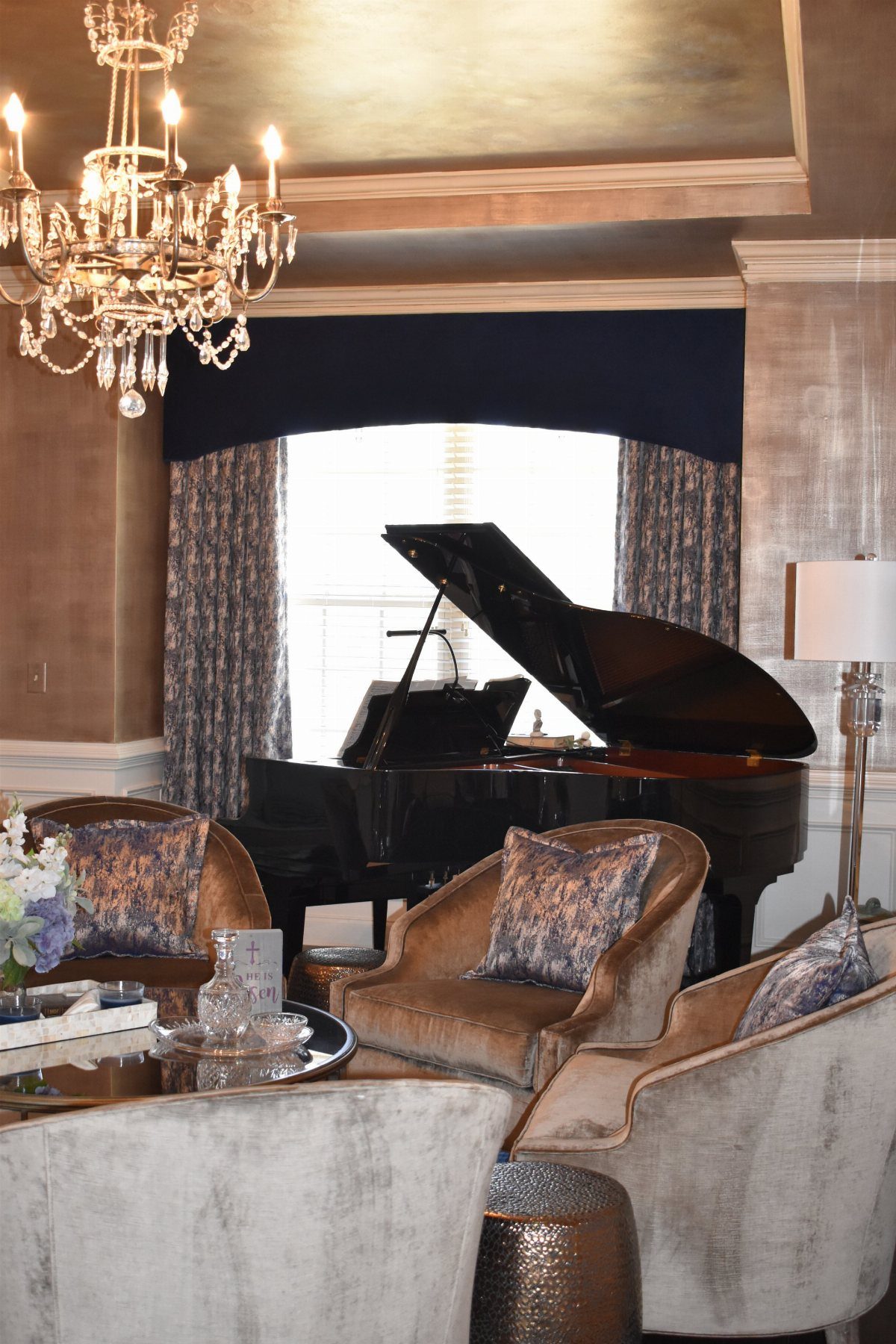
A flat valance with a curved bottom edge is one of the simplest shapes to sew or buy, and the arch gives it character that a straight hem lacks.
A solid valance frames patterned curtains and holds the look together when you want pattern below without competing at the top.
Keep the valance solid when the curtains below carry a pattern, as here. The arch softens the straight lines of the window and adds a gentle curve to the top of the room.
7. Gingham Checkered Valance and Curtains
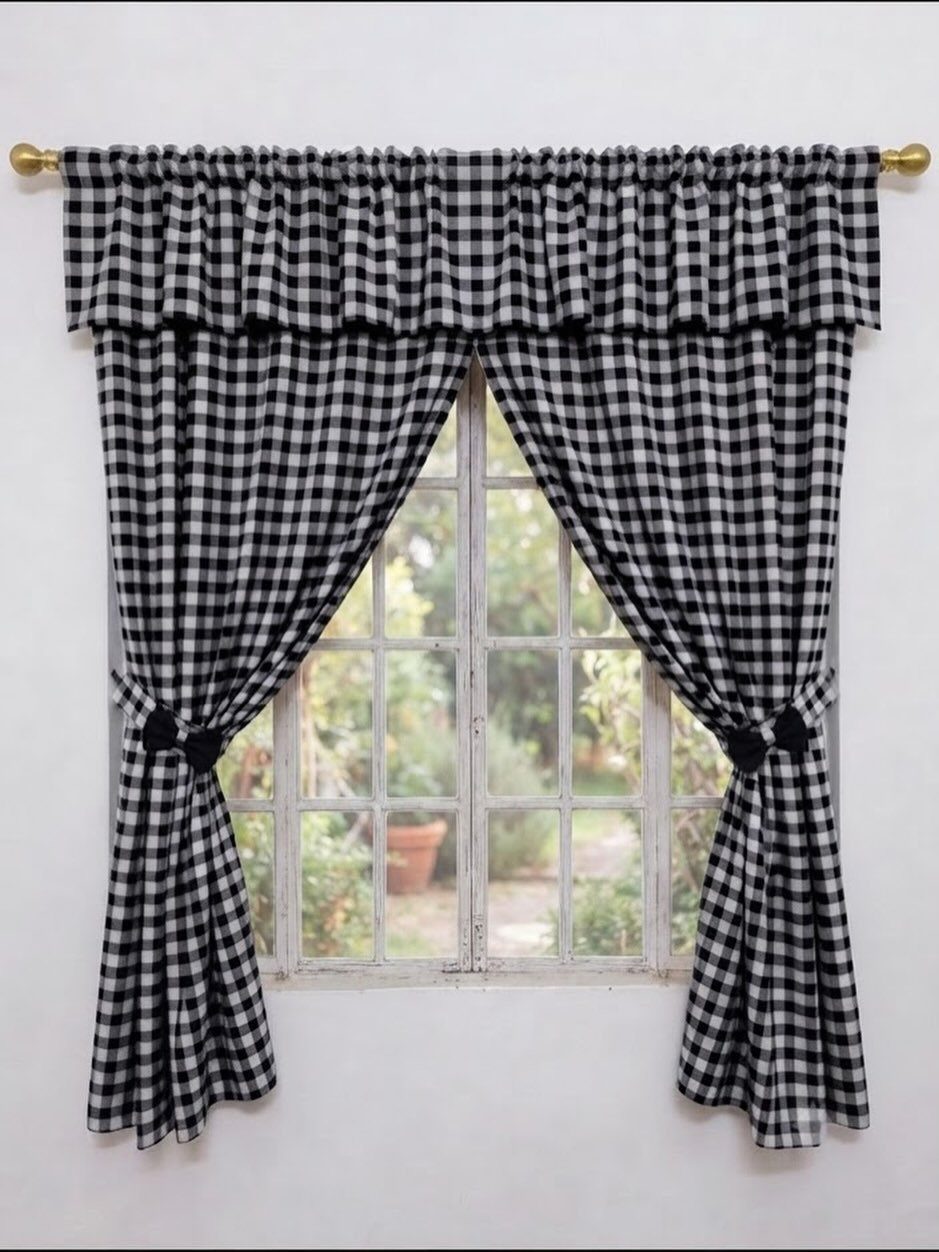
Gingham is the easiest pattern to repeat across a window, because the same check on the valance and the panels reads as one deliberate piece.
Black and white keeps it crisp, and the gold rod gives the cool palette a warm line along the top.
Tie-backs are where I would spend the effort.
Black bows hold the panels open to the garden view and echo the check without adding another pattern. Keep the walls plain so the gingham is the only print in the room.
8. Scalloped Valance with Sheer Curtains
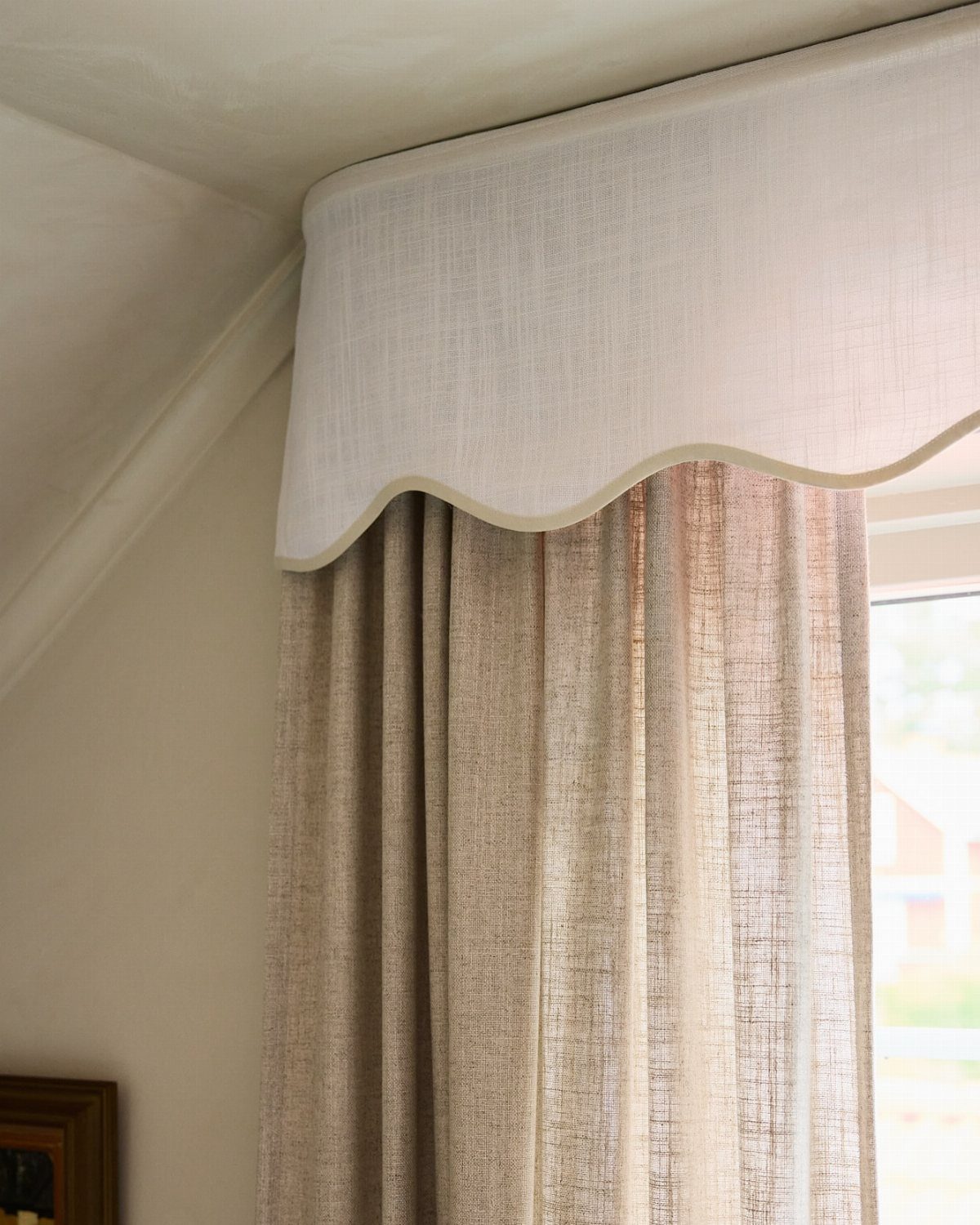
White scallops over beige linen is a quiet pairing, and the contrast in texture does most of the work. The crisp valance edge sits on top, while the semi-sheer panels below soften the light and the lines of the window.
I would keep the valance bright white so the scallops stay sharp against the beige. It also suits a room with a slanted ceiling, since a short valance adds a finished edge without much bulk.
9. Padded Valance with Trim
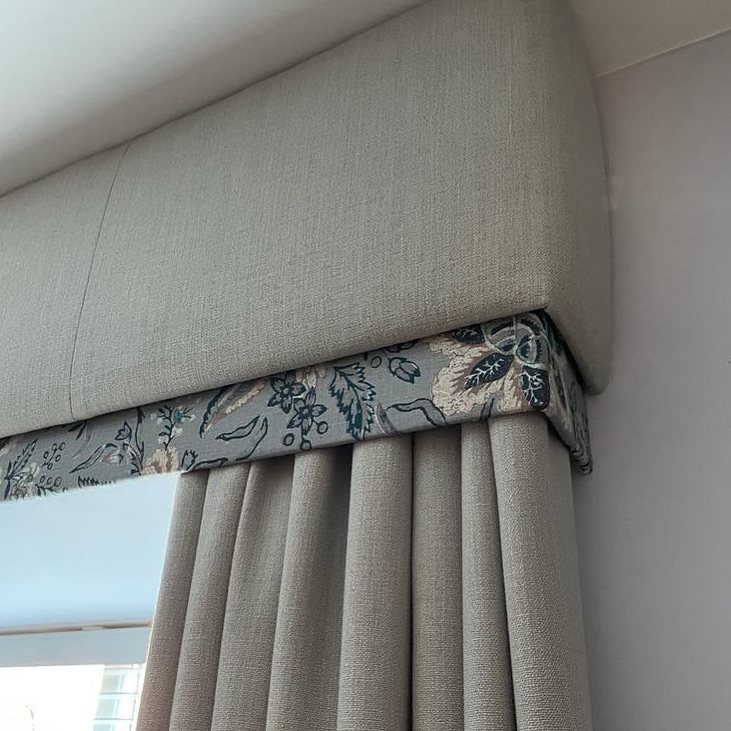
A padded valance holds its shape in a way gathered fabric never does, and a patterned trim along the edge gives it a tailored look.
Grey upholstered fabric over matching pleated grey curtains keeps the whole window in one color family.
Let the trim carry the pattern, as the floral does here, and keep everything else solid.
The structure gives the top of the window a clean, boxed line, so I would choose this when you want a polished look over a soft one.
10. Black Lace Valance and Curtains
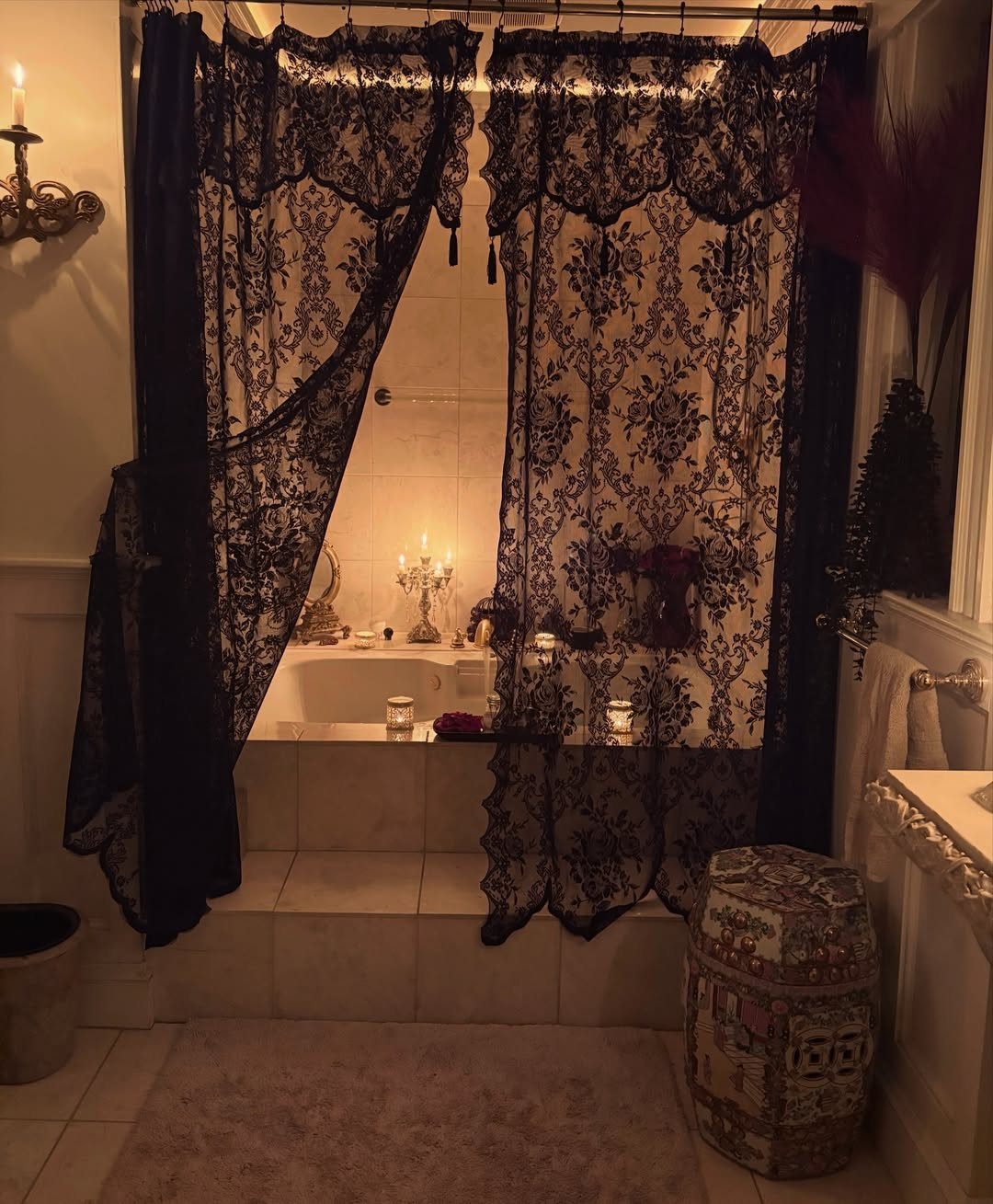
Black lace in a bathroom is a bold choice, and it works because lace is see-through. The lace keeps the alcove bright while the pattern adds privacy, and the valance covers the curtain rod and hardware.
Against white tile, the black reads as a dramatic outline. I like pairing it with warm touches like candles and a small rug, so the dark fabric feels moody rather than heavy.
11. Gathered Neutral Valance and Panels
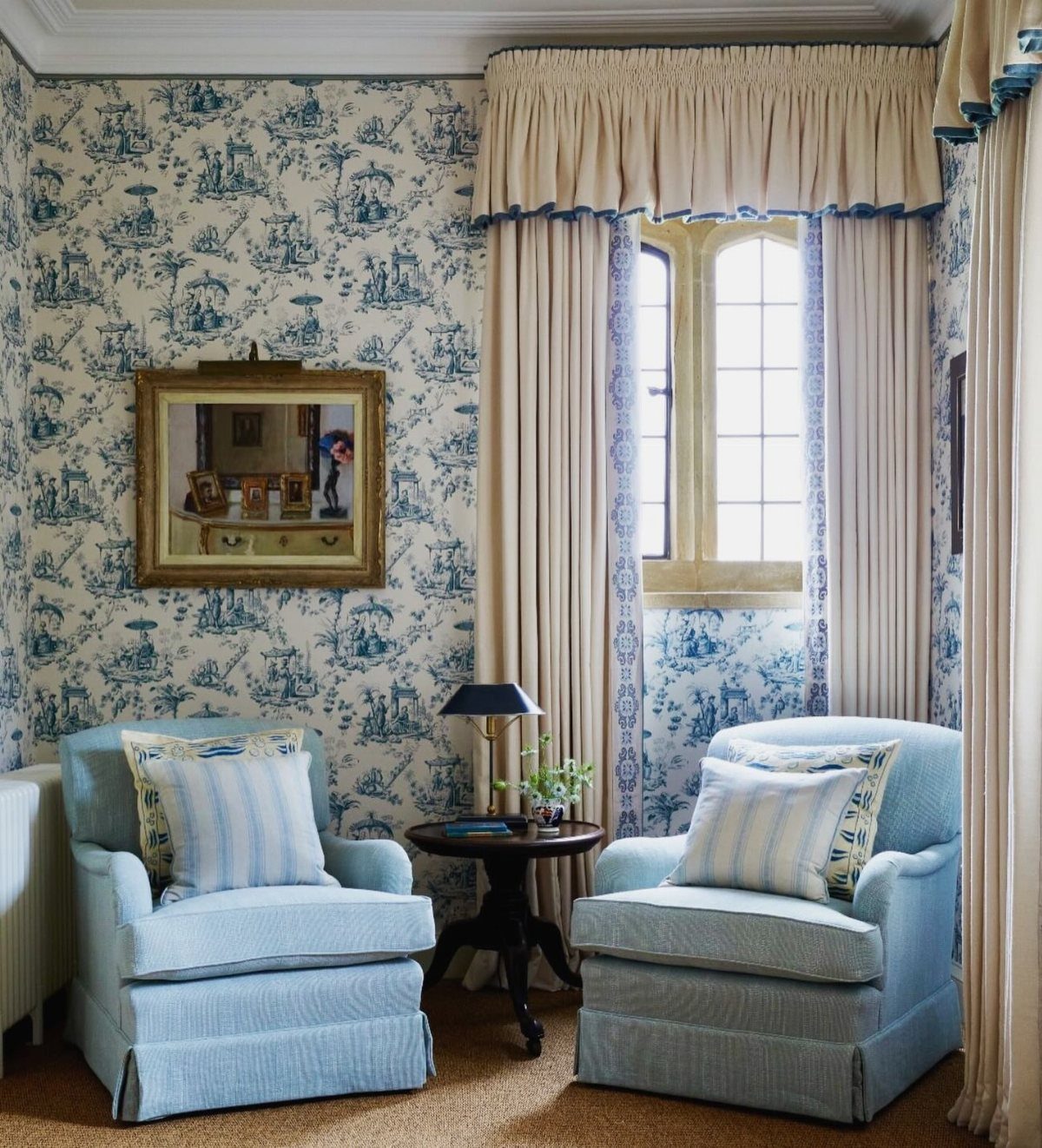
Against a busy wallpaper like blue and white toile, cream curtains are the calm part of the room. Gathered valances and simple panels frame the window without adding another pattern for the eye to sort through.
Keep the cream warm and the fabric plain.
If the wallpaper already has plenty going on, a solid gathered treatment is what lets it shine. Pale blue armchairs nearby tie the colors together.
12. White Lace and Draped Valance
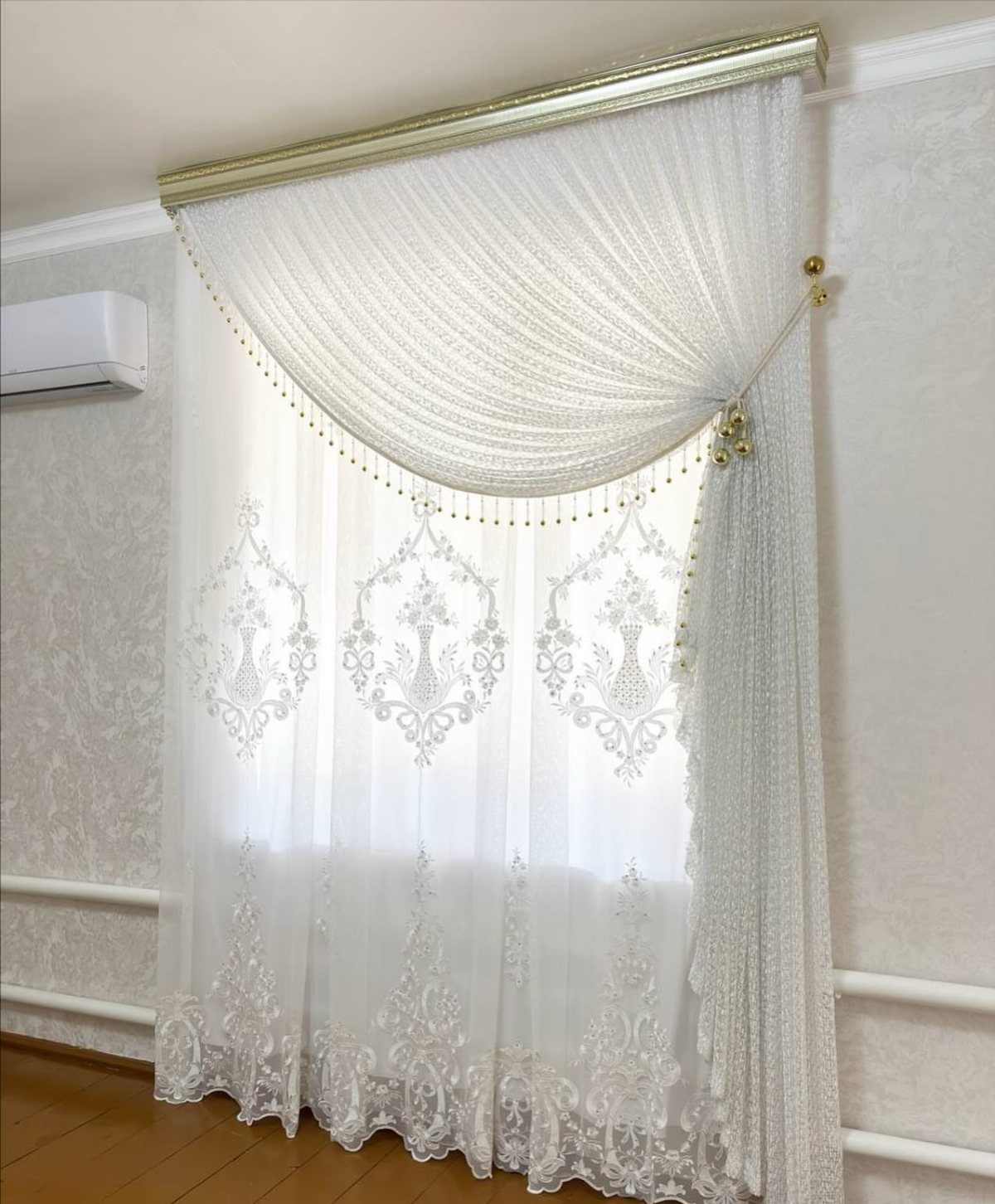
Embroidered white lace brings texture that a plain sheer can’t, and a draped valance with gold beaded trim makes it feel formal. The gold beading warms the white fabric where it drapes across the window frame.
I would use this with patterned wallpaper and wood floors, where the lace has some depth to sit against. Put the beading on the valance only so the lace panels below stay plain.
13. Ornate Fringed Valance with Drapes
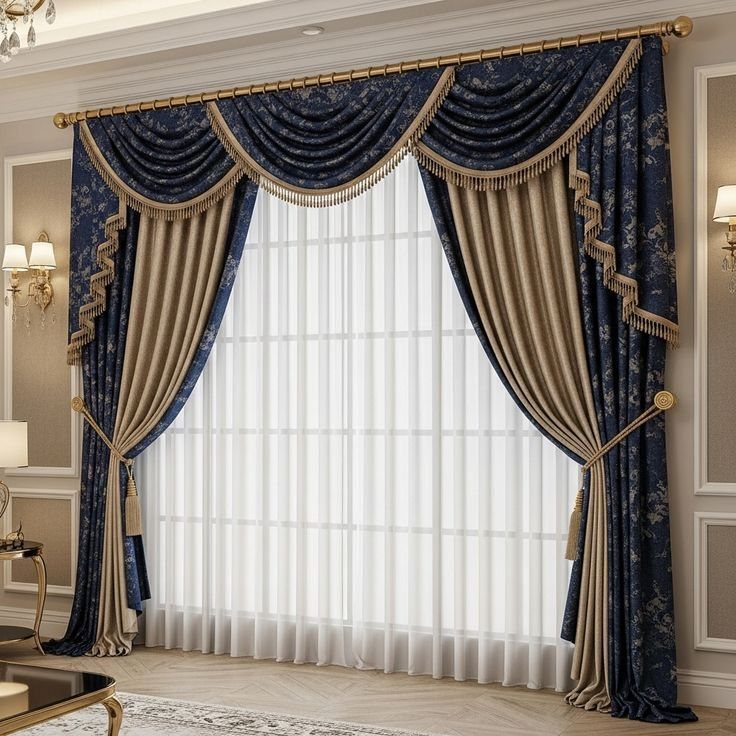
Fringe along the lower edge of a layered valance gives blue patterned drapes a formal finish, and white sheers underneath keep the window from feeling heavy. 2 valance tiers add depth at the top without adding more pattern.
Gold is the detail to match here.
Pick fringe close to the tone of the sconces or other metal in the room so it reads as planned. Plain white sheers work best here, with the pattern left to the drapes, since fringe already brings plenty of texture.
14. Light Wood Valance Box
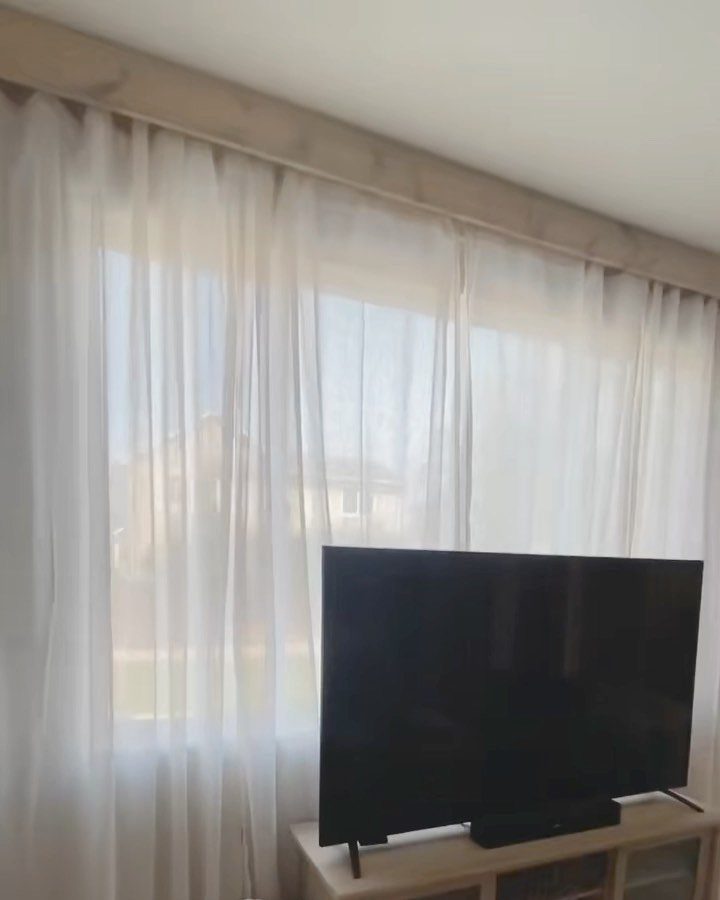
A valance box in light wood hides the curtain hardware and gives sheer white panels a clean, solid header. The wood adds warmth that a fabric valance can’t, and floor-length sheers keep the window soft beneath it.
I would match the wood to the nearby furniture, such as a TV stand, so the box looks built in rather than added on. Hanging the sheers from just behind the box lets the full length show.
15. Valance with Decorative Bow Accents
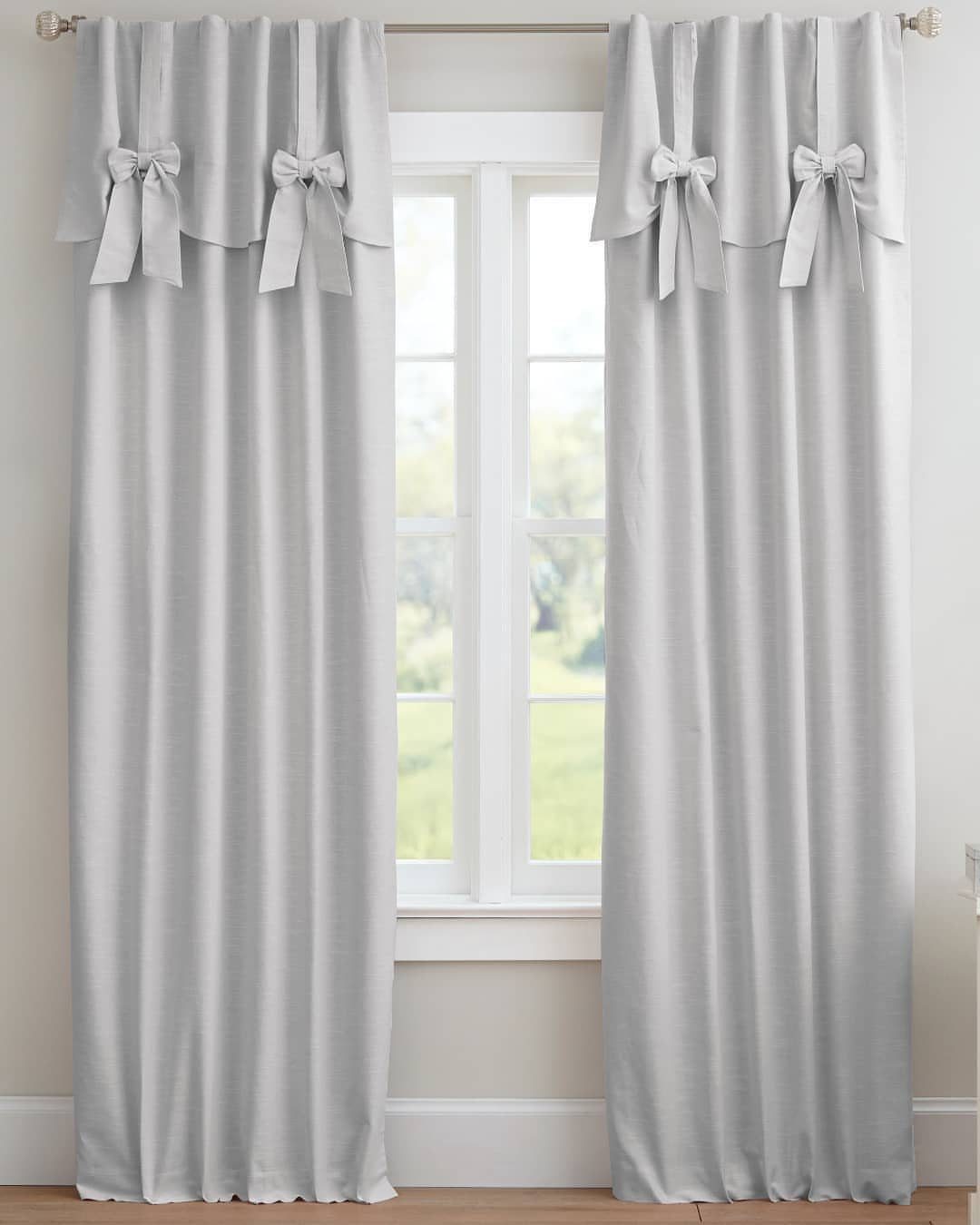
Fabric bows spaced across the rod turn a plain grey valance into something a little playful. Matching light grey curtains below keep the bows from looking busy, since the color stays in one family.
Bows are an easy detail to add yourself: tie or stitch them in the same fabric as the valance so they blend in.
On white walls and light wood floors, I would keep the bows small and even so the window stays calm.
Why Use Window Valances?
A valance costs less than full-length curtains because it covers only the top of the window, and it uses far less fabric. That makes it an easy first project on a small budget.
A valance also suits a window that already has curtains or blinds, because it finishes the top edge and evens out the look of the whole treatment.
Room by room, the choices change.
In a kitchen, pick fabric that resists stains. In a bedroom, I would layer one over blackout curtains or shades, which keeps privacy and light control while the window still looks soft.
Frequently Asked Questions
How do you hang a valance and curtains together?
Mount the valance on its own rod or board, a couple of inches out from the curtain rod, so it hides the hardware and the panels drop straight down behind it.
Patterned curtains pair best with a plain valance; if the valance has the pattern, a contrast band or trim along the hem is plenty, and the curtains stay solid.
Matching a metal finish, like gold fringe or a silver valance, to a light fixture or frames in the room makes the layers look planned.
What are the different types of curtains?
Common looks include sheer panels, which let daylight in; heavier pleated panels, which handle privacy; lace; and gathered or gingham panels.
Layering works well: sheers under heavier drapes, or a valance over panels or blinds. Blackout curtains suit bedrooms, where they keep privacy and light control while a valance softens the top.
Are window valances out of style?
No, as long as you keep the look simple. Overly elaborate older designs can feel dated, while clean lines, neutral tones and natural materials read as current.
A solid arched valance, a crisp white scalloped one or a padded box shape with a plain finish all stay on the modern side.
Can a valance go over blinds?
Yes, and it is one of the easiest upgrades for renters. A valance in a shade that clashes a little with the blinds, like navy over white or sage over wood, will read as a deliberate accent.





