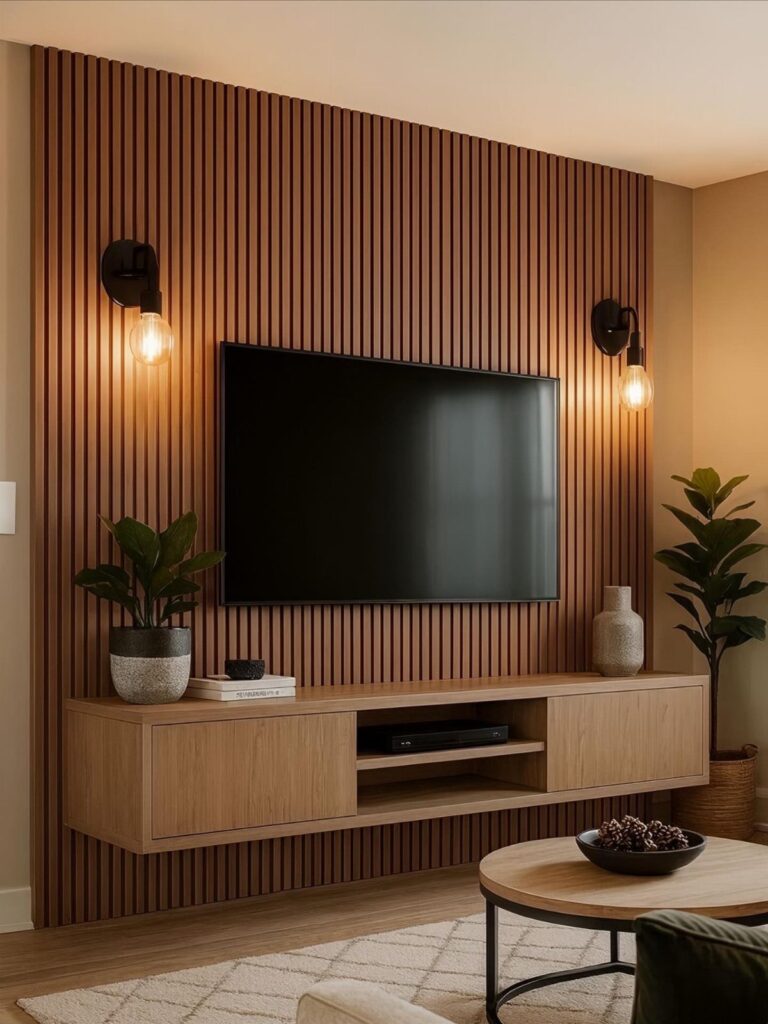
Ideas here run from a gallon of paint on one wall to a recessed cutout with built-in shelving that I’d hand to a carpenter.
Which one is yours depends on whether you rent or own: renters should stay with paint, moulding, faux panels and cord covers, while owners who can open the wall can run power and HDMI inside it or recess the screen.
A 60" electric fireplace insert under an 85" TV set into shiplap shows how far the bigger builds go.
1. Shiplap TV Wall
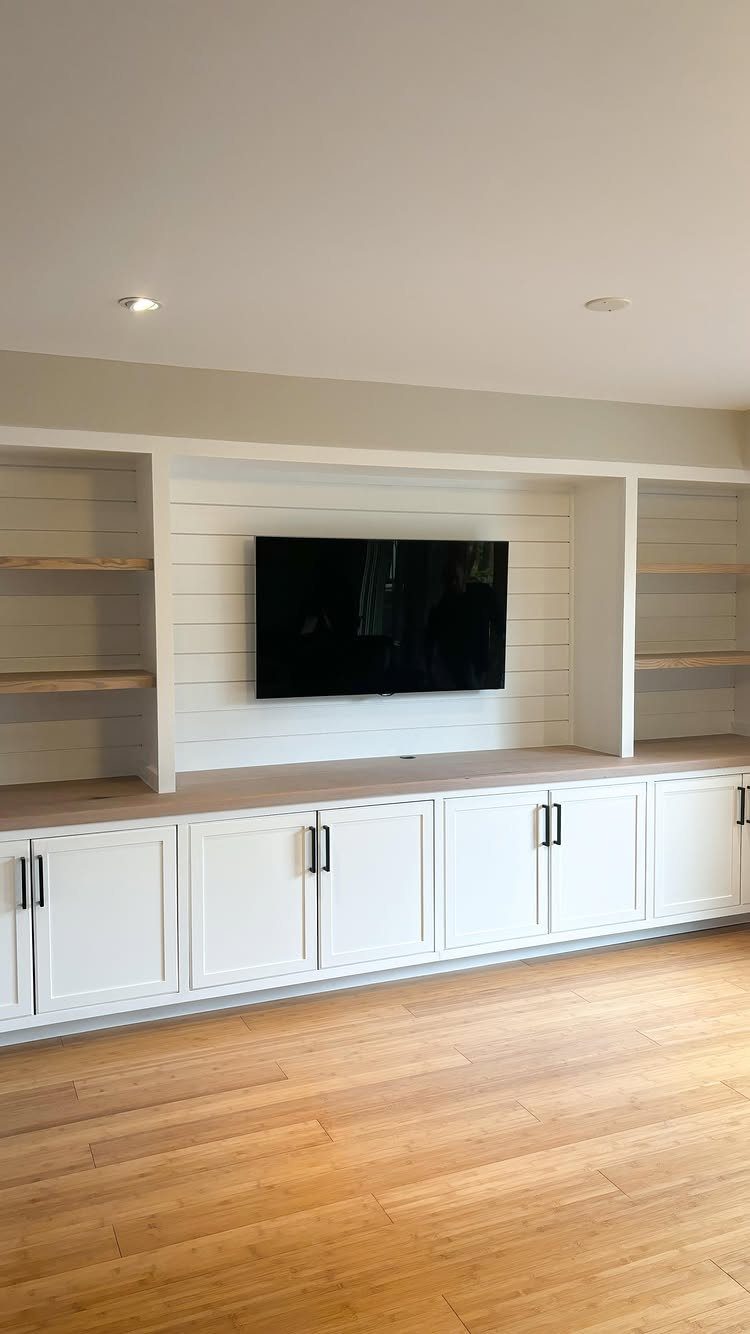
Shiplap works as a rustic or modern accent wall depending on one choice: paint. White boards read clean and bright, and a TV mounted on them looks calm rather than busy.
Pair it with natural wood so the white doesn’t go cold. The builder of this wall used a solid 15 ft stained countertop and stained upper shelves, and that warm tone against white is the move I’d copy.
Paint the boards before you nail them up, since the grooves are a pain to cut in afterward.
2. Wood Slats Accent Wall Behind TV
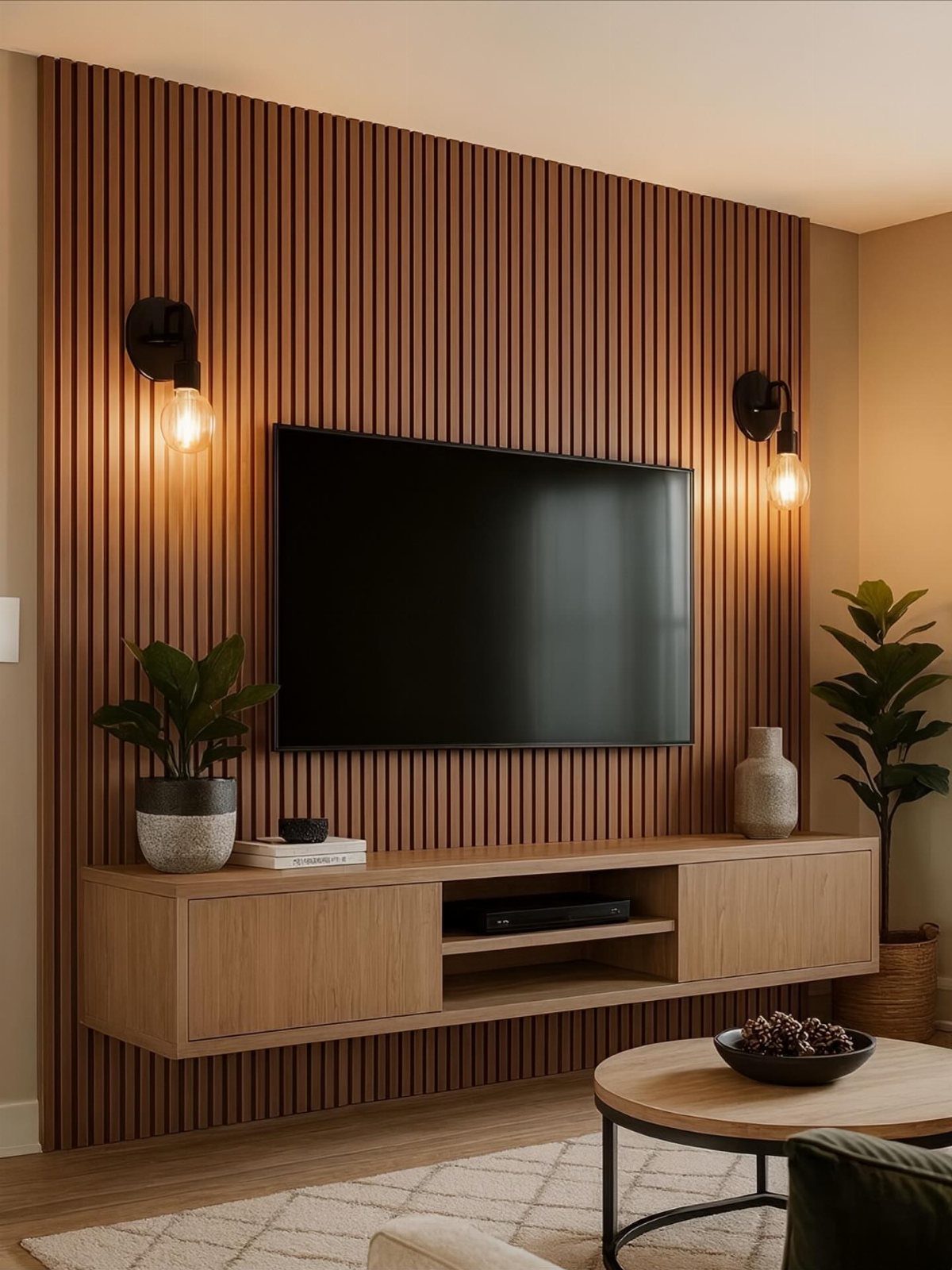
Vertical slats add texture without adding color, which makes them an easy backdrop for a dark TV screen. Run them floor to ceiling so the wall feels taller.
I like the pairing here: a floating wood console in a matching tone, plus a plant for a bit of green. Keep the wall sconces on the sides so the slats catch light at an angle and show their depth.
3. LED Backlit TV Wall
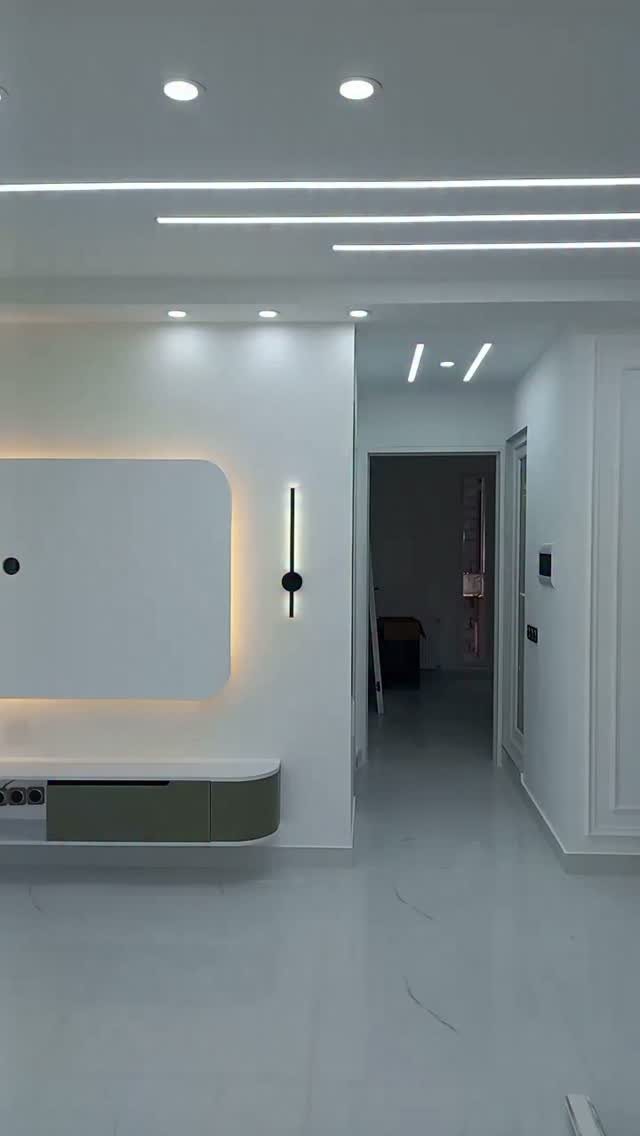
A strip of warm LED tape behind the panel cuts the glare when you watch in the dark, since the screen no longer sits against a black wall. Choose warm white over cool; cool looks clinical in a living room.
Put the strip on a dimmer or remote so you can lower it for movie nights. Pairing it with a floating console keeps the whole wall light and uncluttered.
4. Stone TV Accent Wall
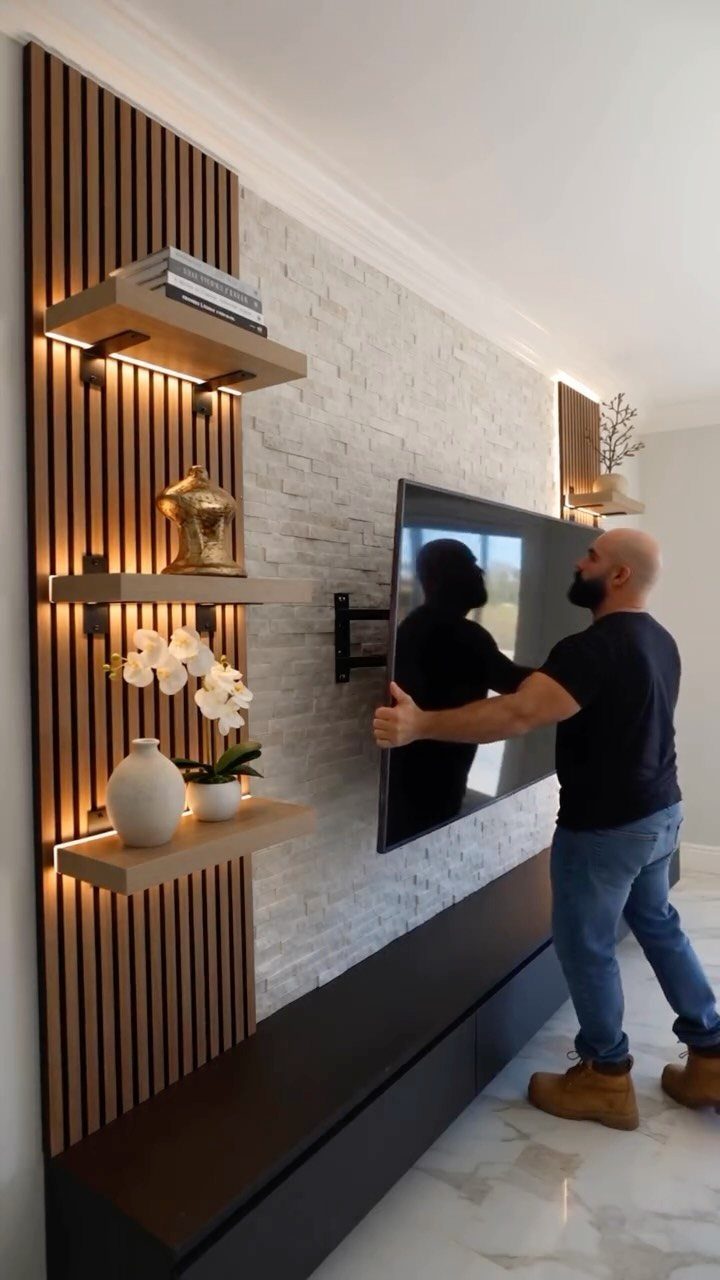
Faux stone is the version I’d pick on a renter’s or first-home budget. It gives the rough, rustic surface of real stone without the weight, and panels are far easier to mount than masonry.
White stone keeps the room bright, and a few wood slats beside it add warmth. Fasten the TV bracket into studs, then set a dark floating console below to anchor the wall.
5. Accent Wall with Fireplace and TV
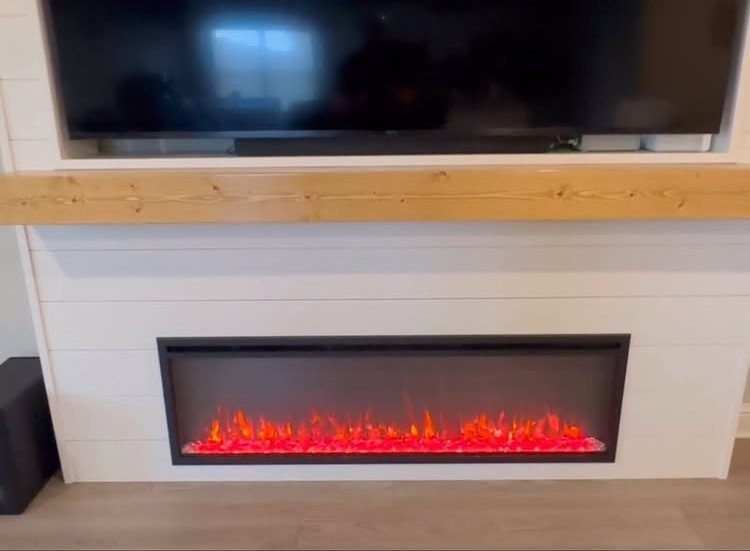
A 60" electric fireplace insert set into a shiplap wall, with an 85" TV recessed above, makes one clean focal point. The builder of this wall did exactly that, and recessing the screen keeps it from jutting out over the mantel.
Electric inserts need no chimney, so they suit almost any living room. Plan the wiring before you close the wall: power and HDMI runs are easiest to hide behind the TV recess.
6. Wall Shelving
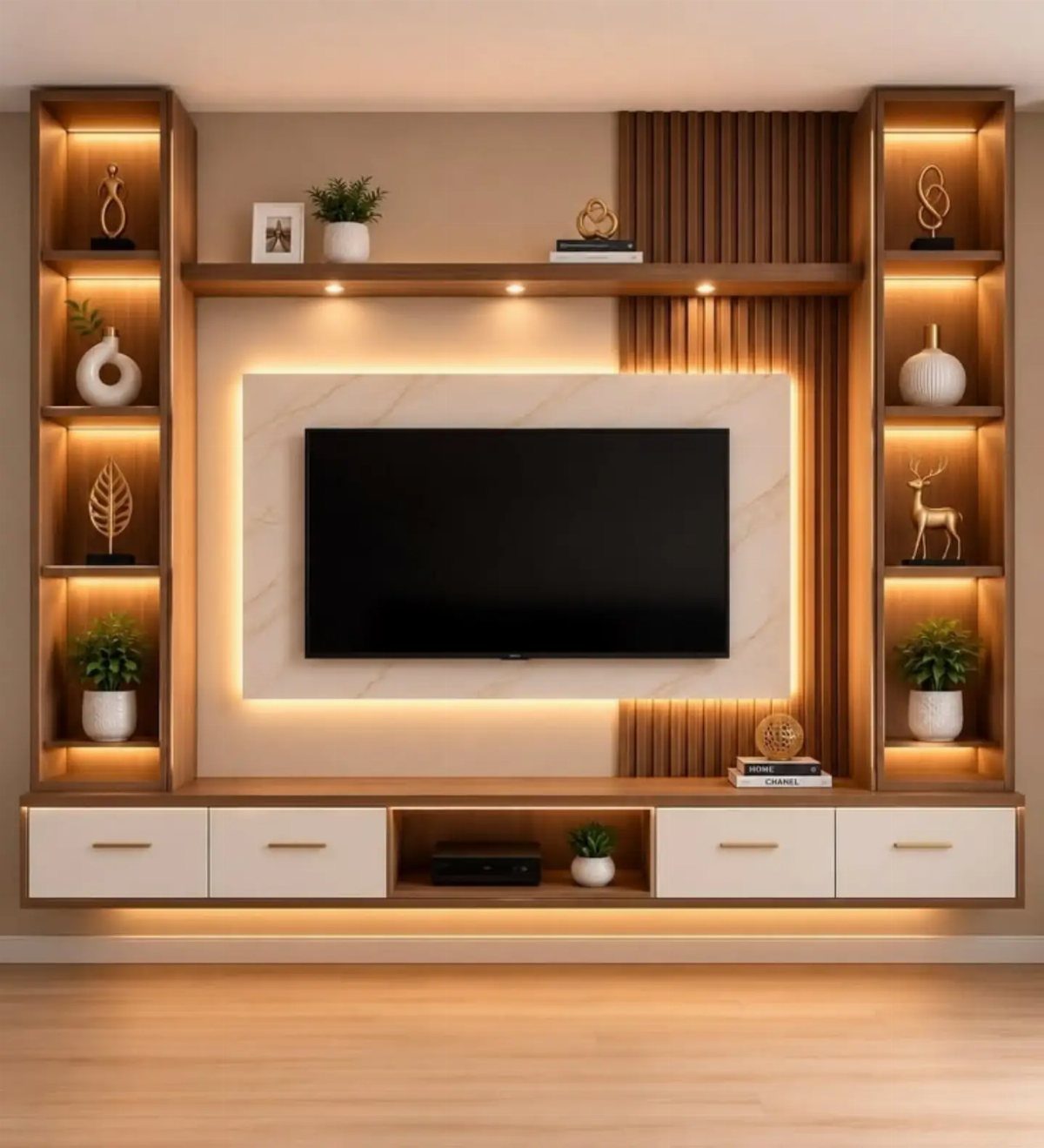
Shelves and cabinets built around the TV spread attention across the whole wall instead of leaving the screen as the only thing to look at.
Closed lower cabinets hide cords, remotes and game consoles; open shelves up top hold plants and sculptures.
Add small integrated lights to the shelves so the display still reads at night. This costs more than a bare mounted TV, so build it in stages: cabinets first, shelves and lighting later.
7. Painted Accent TV Walls
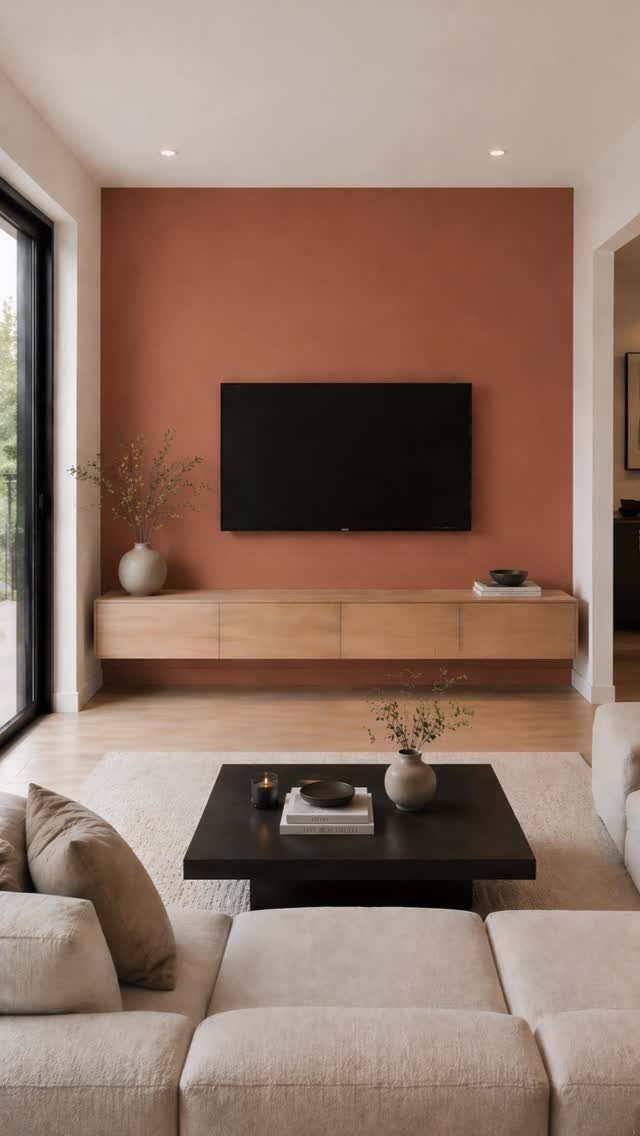
Terracotta behind a TV is a bold choice that works because the screen is dark and the wall is warm, so the two stop competing.
One coat of a deep color does more than any amount of decor, and a gallon of paint is about the cheapest weekend project there is.
Keep the furniture quiet. A floating wood console and a black coffee table let the wall carry the color, and a beige sofa gives the eye somewhere to rest.
8. Gallery Wall Surrounding the TV
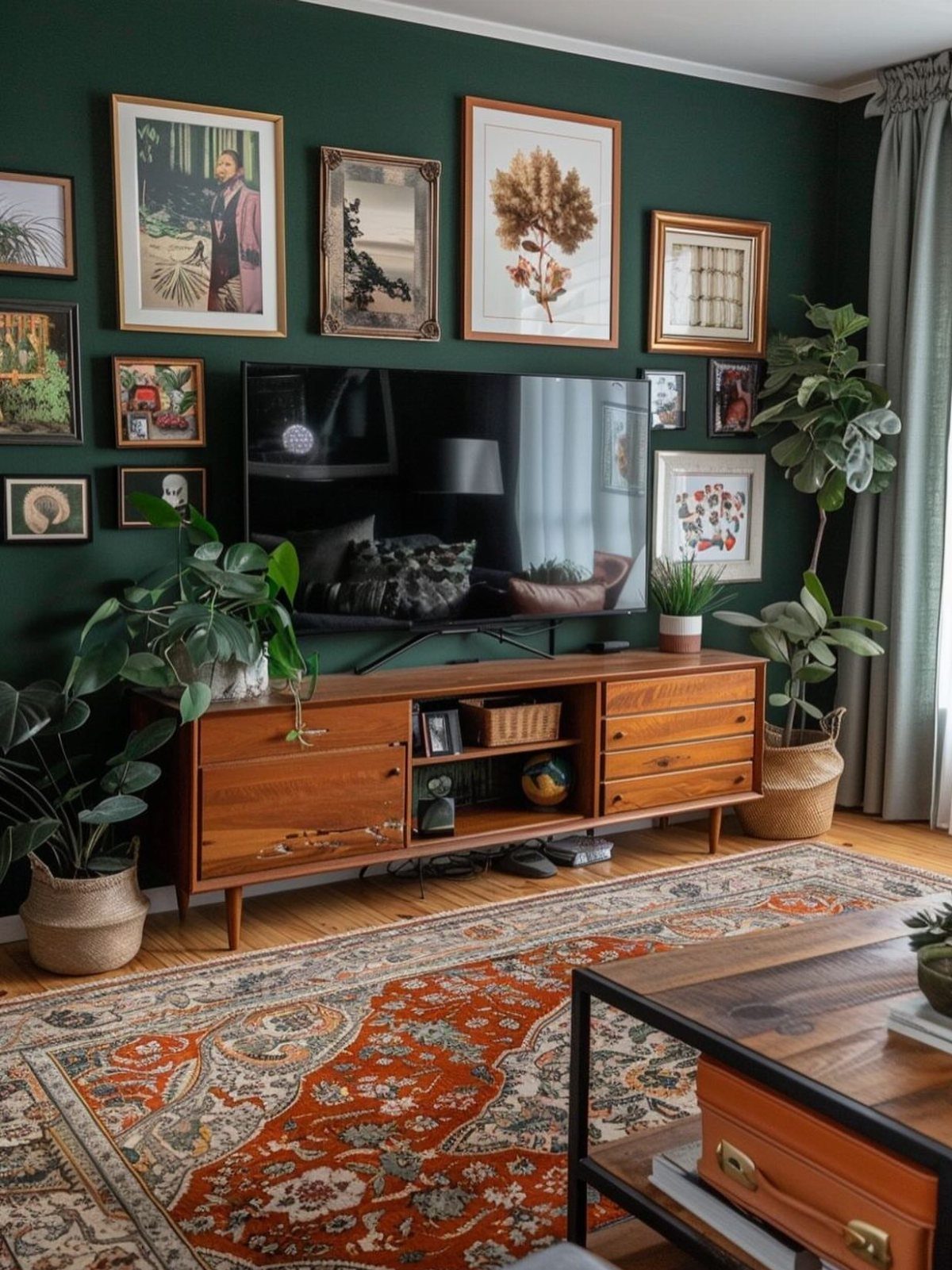
Framed art around the TV makes the screen one piece of a display instead of a black rectangle on its own. A dark green wall helps, because the frames and the screen both sit against the same deep backdrop.
Mix frame sizes, but keep one or two finishes so it doesn’t look cluttered. Lay the layout out on the floor first, then trace each frame on paper and tape the paper to the wall before drilling.
9. Minimalist Design
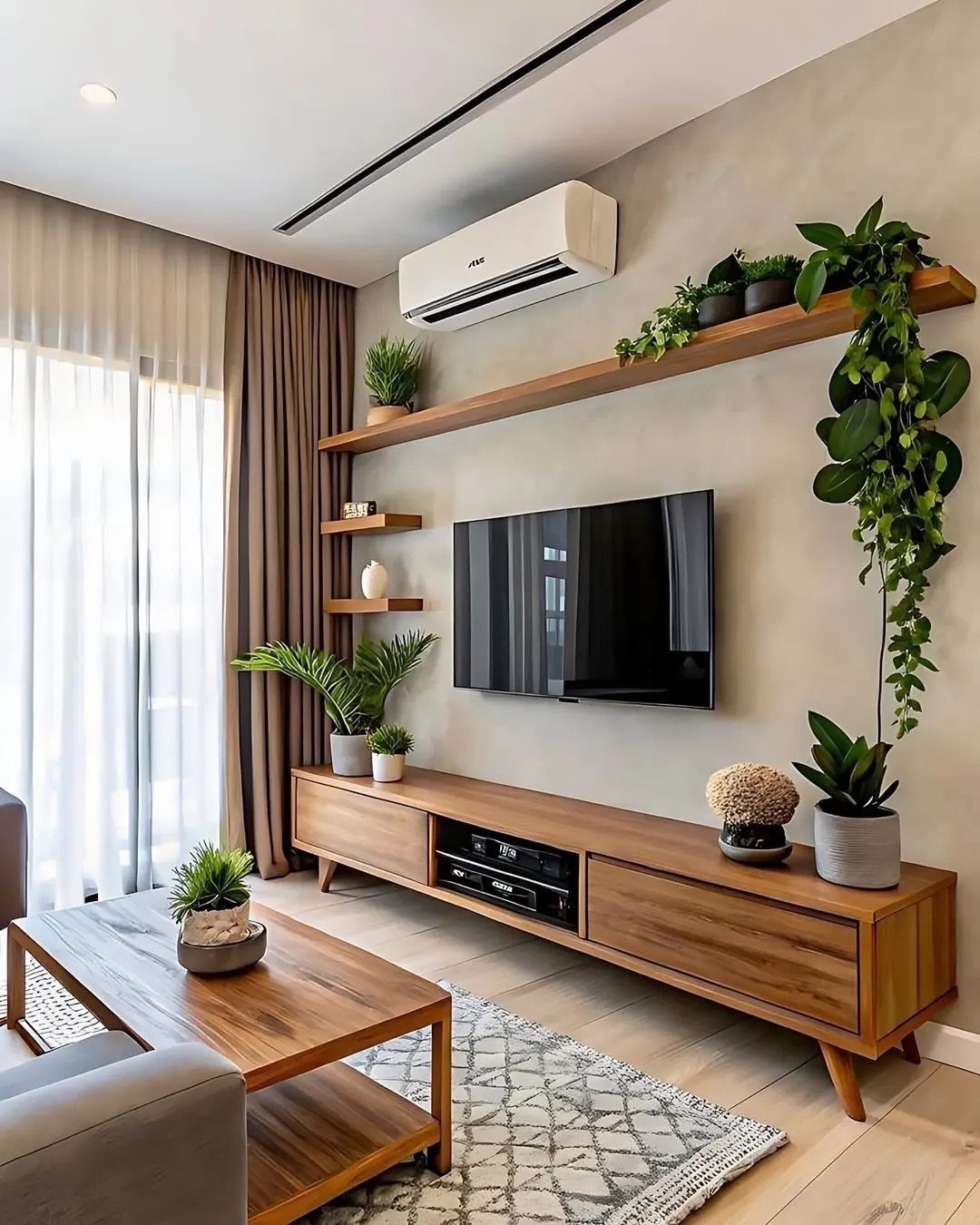
Minimalism here is mostly about what you can’t see. A wall-mounted TV with no cords hanging down looks intentional, and a textured grey wall gives the room depth without adding objects.
Run the cables inside the wall, or hide them in a paint-matched cord cover if you rent.
Then keep the styling short: one long wood console, one floating shelf, a couple of plants. Stop there.
10. TV Accent Wall with Moulding
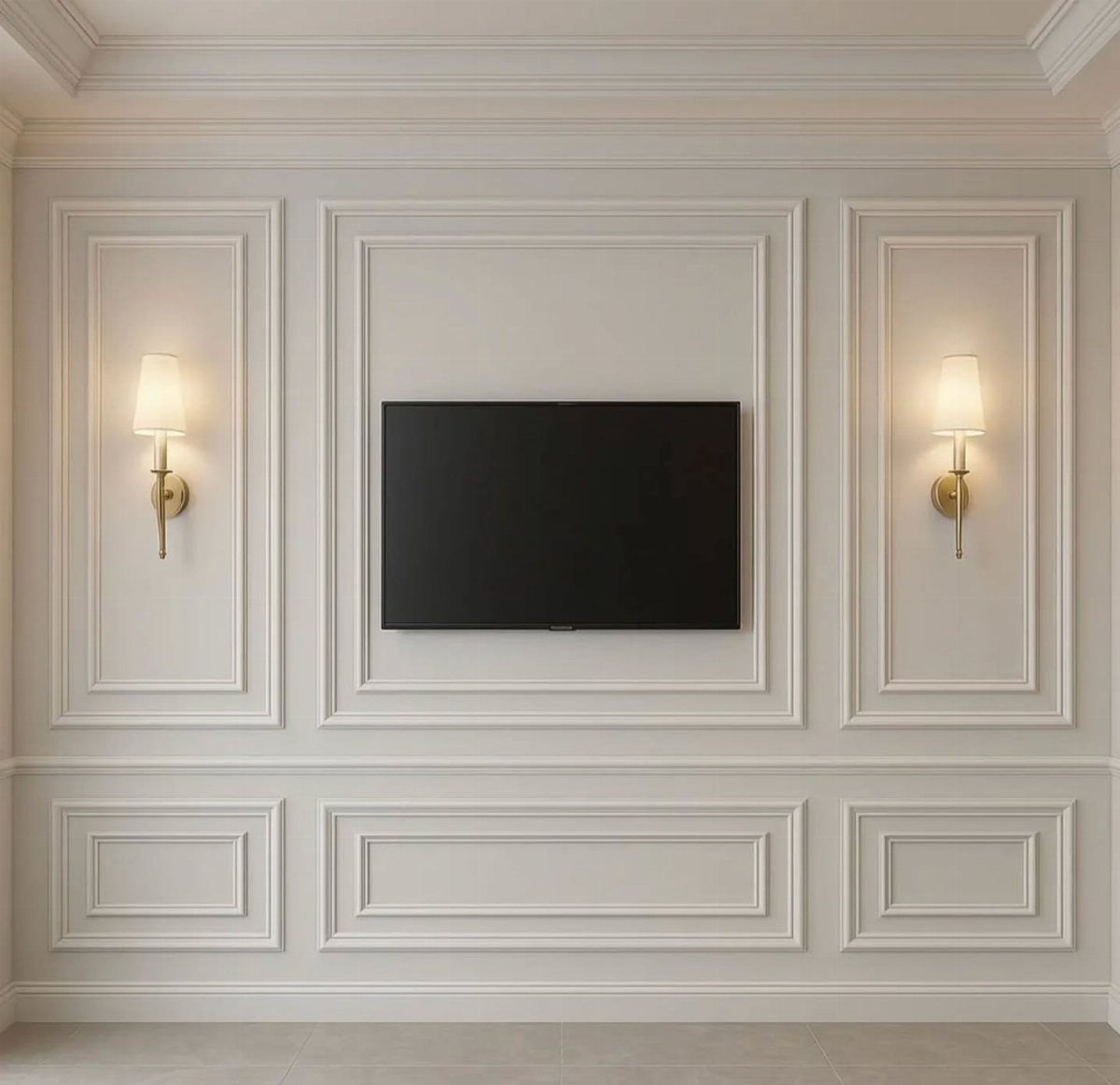
Picture frame moulding turns a flat white wall into a feature wall with nothing but thin trim and paint. The rectangles frame the TV and make the wall feel finished, which suits a room that’s otherwise plain.
I’d keep everything white so the shadows between the trim do the work. Sconces on either side add a soft glow, and they also keep the screen from being the only light on the wall.
11. Custom Cutout for the TV
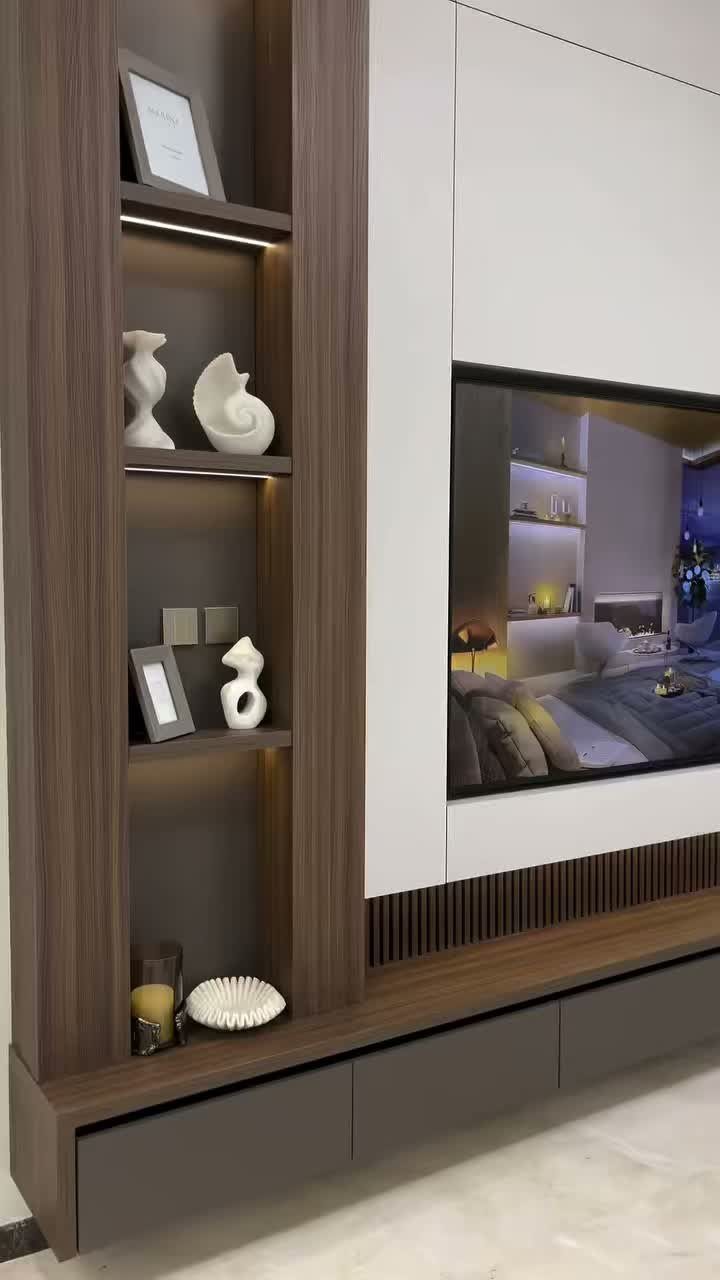
A recessed cutout lets the TV sit flush with the wall, so it reads as part of the paneling instead of something hung on it. Shelving beside it fills out the wall and gives you a place for objects.
Decide on the TV size before building, and measure the depth the screen and its plugs need. This is a bigger job than a bracket, so I’d treat it as a project for a confident DIYer or a carpenter.
12. Marble Accent Wall
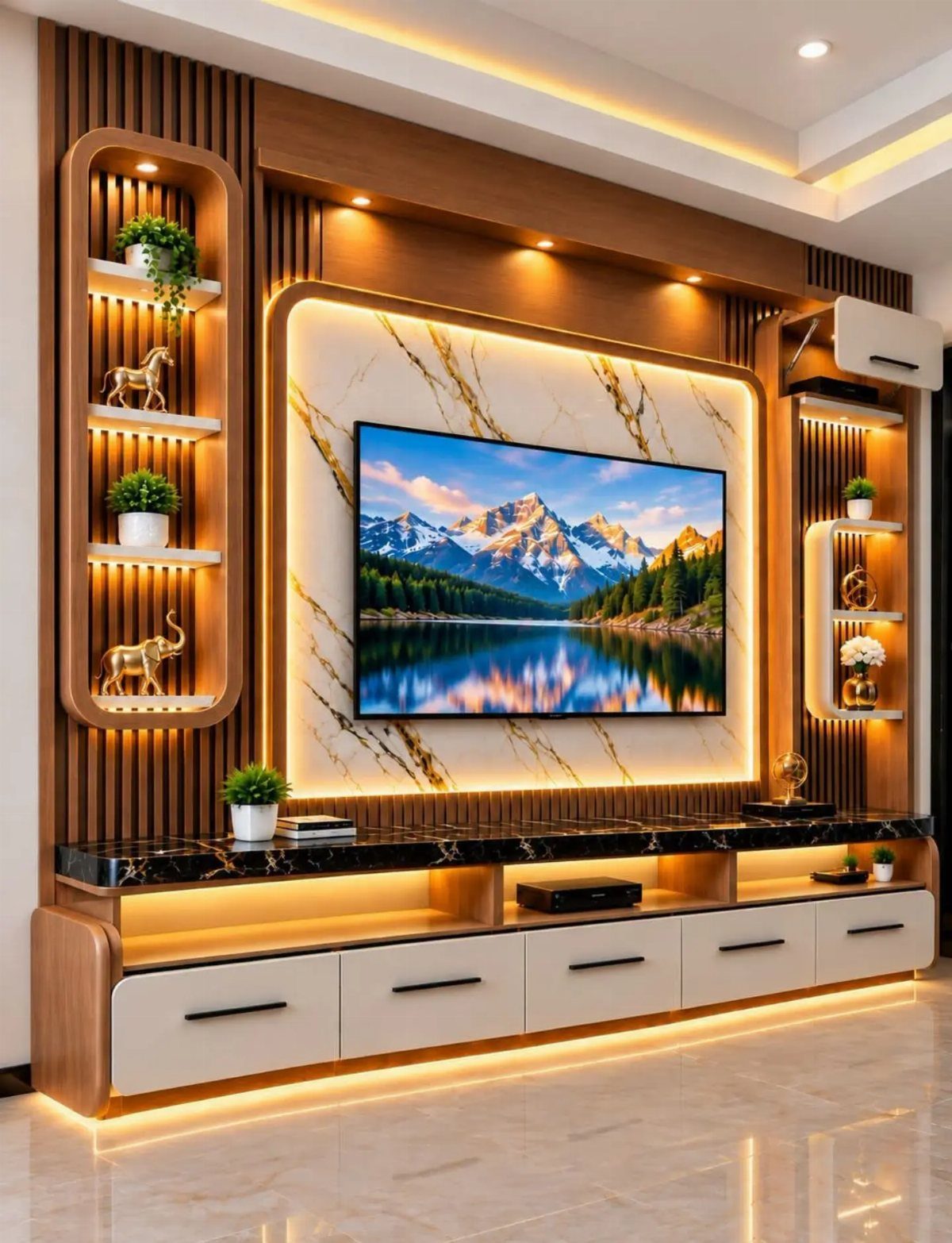
Marble with strong dark veining gives the wall a focal point before the TV is even turned on. Wood slats beside it take the edge off the cool stone, and warm LED lighting keeps the whole wall from feeling cold.
Real slab is expensive and heavy, so I’d look at marble-pattern panels for a first home or a rental. Keep the console long and low, white and wood, so the veining stays the star.
Mid to dark-tone wood slats would pair well with a white marble such as the Calcutta. Portoro or Marquina black marble backdrop with a recessed light wood accent wall behind the TV will create a striking feature in your living room or bedroom.
13. Floating TV Console with Backlit Panels
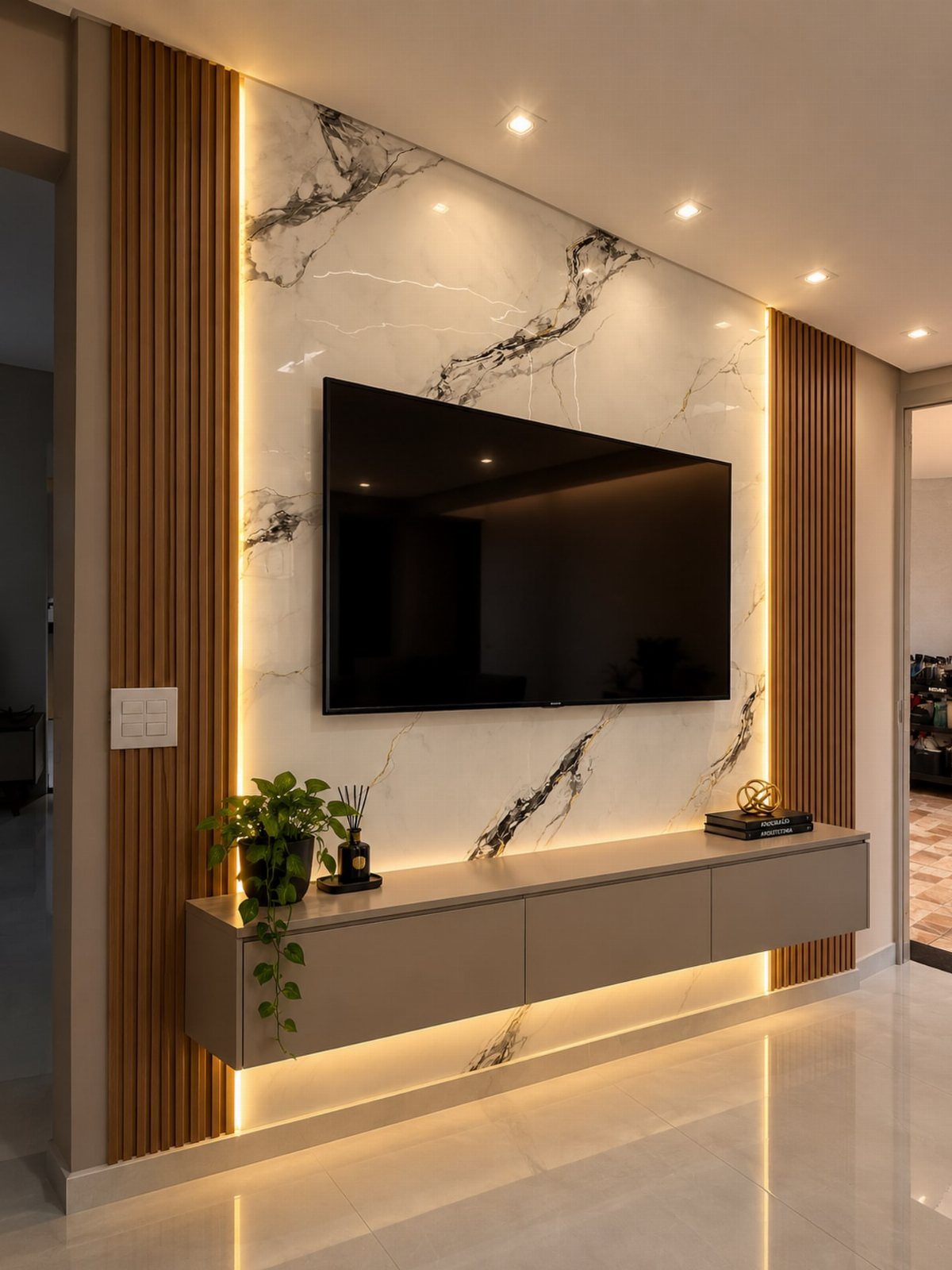
A floating console lifts the cabinet off the floor, and the open strip of floor underneath makes the room read as bigger.
Grey works well against a marble-pattern panel and warm wood slats because it stays quiet and lets the wall do the talking.
Mount it into studs, since a console with a TV above it carries real weight.
I’d keep the backlighting warm and put it on a dimmer, so the panel glows rather than glares. Leave the top of the console mostly clear.
Tips for Creating Your TV Accent Wall
Cords are the first thing the eye catches on a TV wall, so deal with them before you pick a finish. If you can open the wall, run the power and HDMI lines inside it.
Check the height before you drill. Sit on your sofa, look straight ahead, and mark where the middle of the screen should land; that spot should be near eye level.
A TV hung too high, a common mistake above a mantel, strains your neck over a long movie.
Tape a paper template of the screen to the wall and live with it for a day. Moving tape costs nothing, and moving a bracket leaves holes.
Keep the wall’s materials simple. Neutral or dark tones keep attention on the picture, while texture does the decorating.
Frequently Asked Questions
Is it a good idea to hang a TV on a wall?
Yes, as long as you plan the cords and the height. Running cables inside the wall or tucking them into a cord cover painted to match gives you a clean look and opens up the floor.
Find the studs before you drill, because the combined weight of the bracket, the TV and anything mounted below needs solid backing.
What are some tips for decorating an accent wall?
Pick a finish that does the decorating, then keep everything else quiet.
Materials like shiplap, wood slats or picture frame moulding bring dimension to the wall without added styling, and darker or neutral finishes keep the focus where you want it.
Warm lighting such as sconces or LED tape on a dimmer helps the wall hold up at night.
What is the best color to paint a TV wall?
Dark, deep colors work best. A dark screen sits against a warm or deep wall like terracotta or dark green without competing with it, so the TV blends in instead of looking like a black hole.
Matte finishes throw back less light than satin or gloss, which matters when the screen is off and daylight hits the wall.
A light backdrop in grey, white or taupe gives the black bezel something to read against if you want the TV visible as part of the room.
What is the best height and placement for a wall-mounted TV?
Center the screen at seated eye level so you watch straight ahead instead of looking up.
Sit and look straight ahead, mark that spot on the wall, and mount from there. Mounting too high, which happens often over fireplaces, tilts your head back for hours and hurts by the end of a film.





