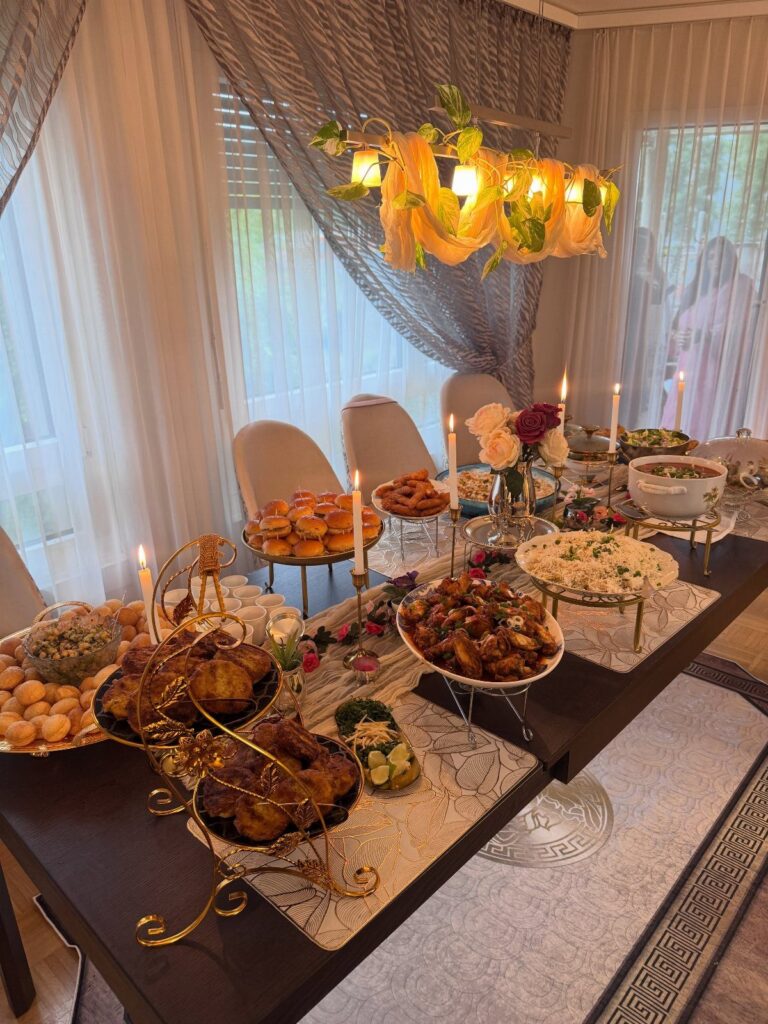
The ideas here run from a grocery store bunch of flowers to a mirrored tray, and from one-minute swaps like fruit or candles to a full layered place setting with linens and chargers.
Your table’s size picks the winner: a small one can only take a single low arrangement, while a long table has room for runners, linens, and clustered vases.
1. Simple Centerpiece
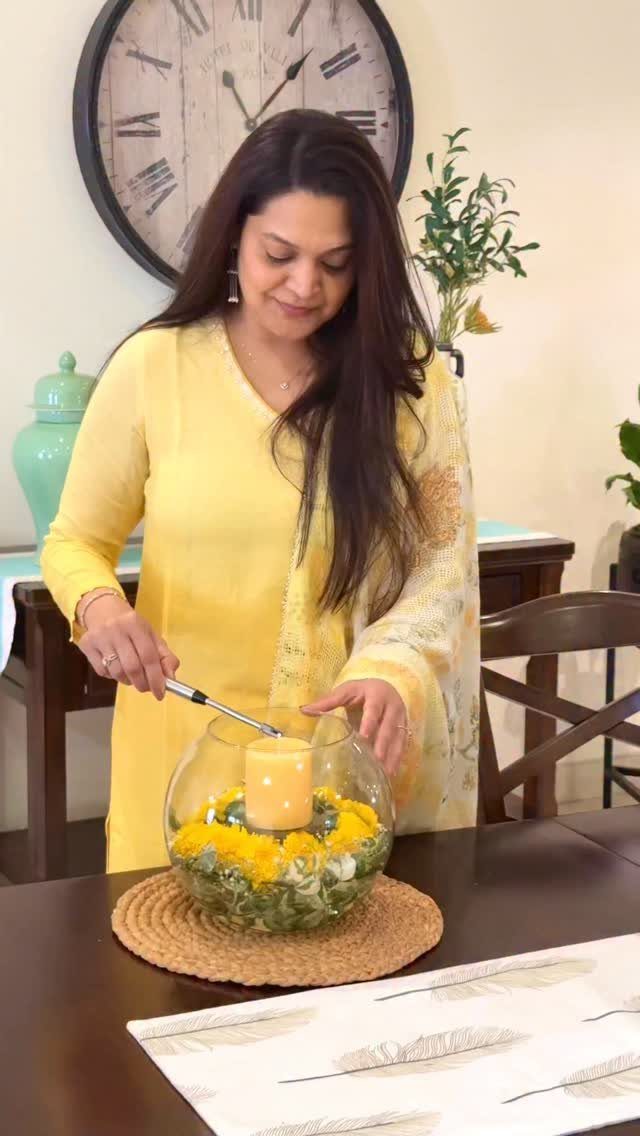
A low bowl keeps sightlines open, so guests can talk across the table without leaning around a tall arrangement.
A clear glass bowl with a few yellow flowers and a candle floating or set among the stems is easy to build from a grocery store bunch.
Keep the whole thing below eye level when you are seated. If you have to move it to pass a dish, it is too big.
2. Salt and Pepper Shakers
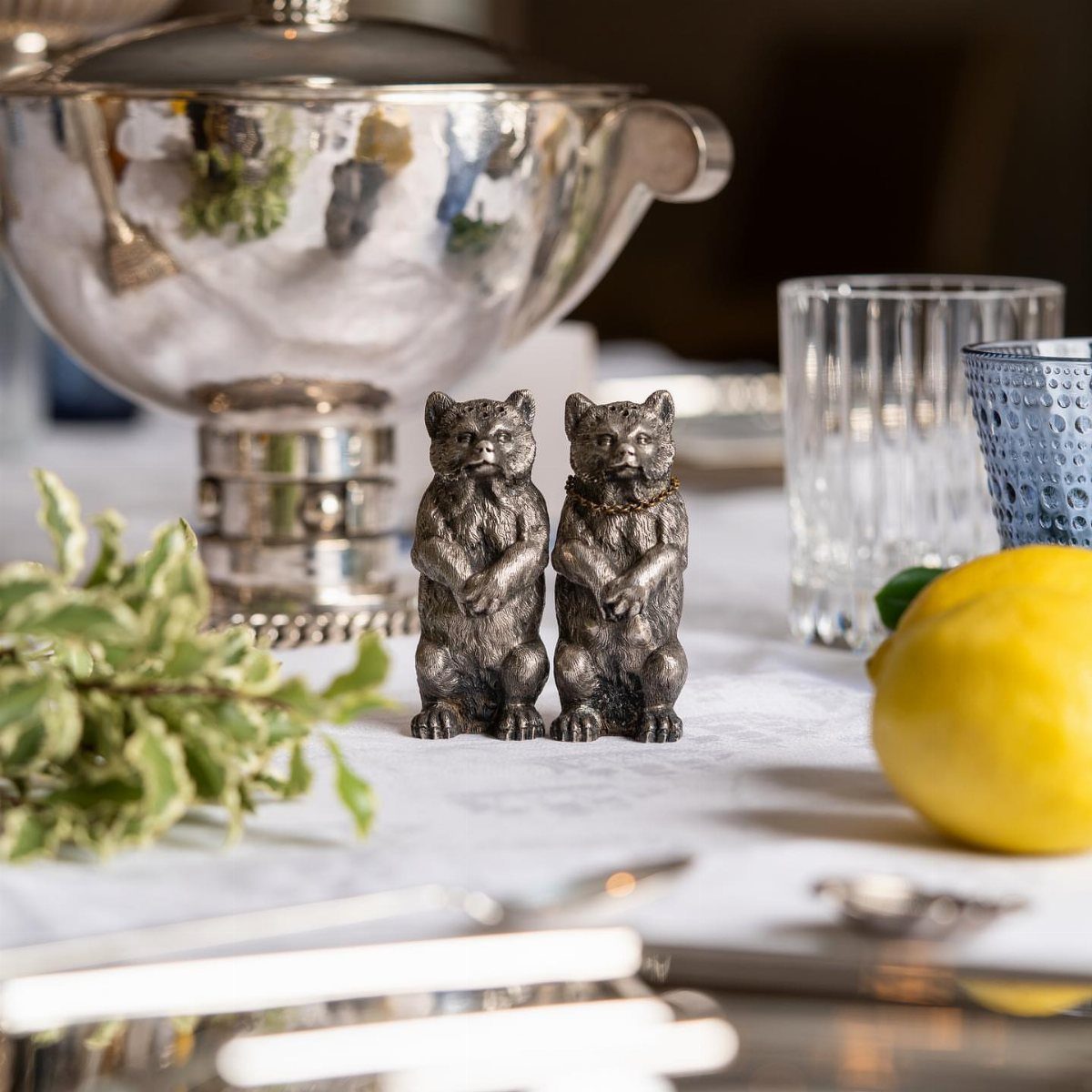
Shakers shaped like a pair of animals give a plain table a small joke without adding clutter. Silver bears sit well beside a silver tureen because the metal repeats instead of competing.
I would pick a matched pair in one finish, then keep everything else around them quiet. Set them near the center, within reach of both ends.
3. Fruit as Decor
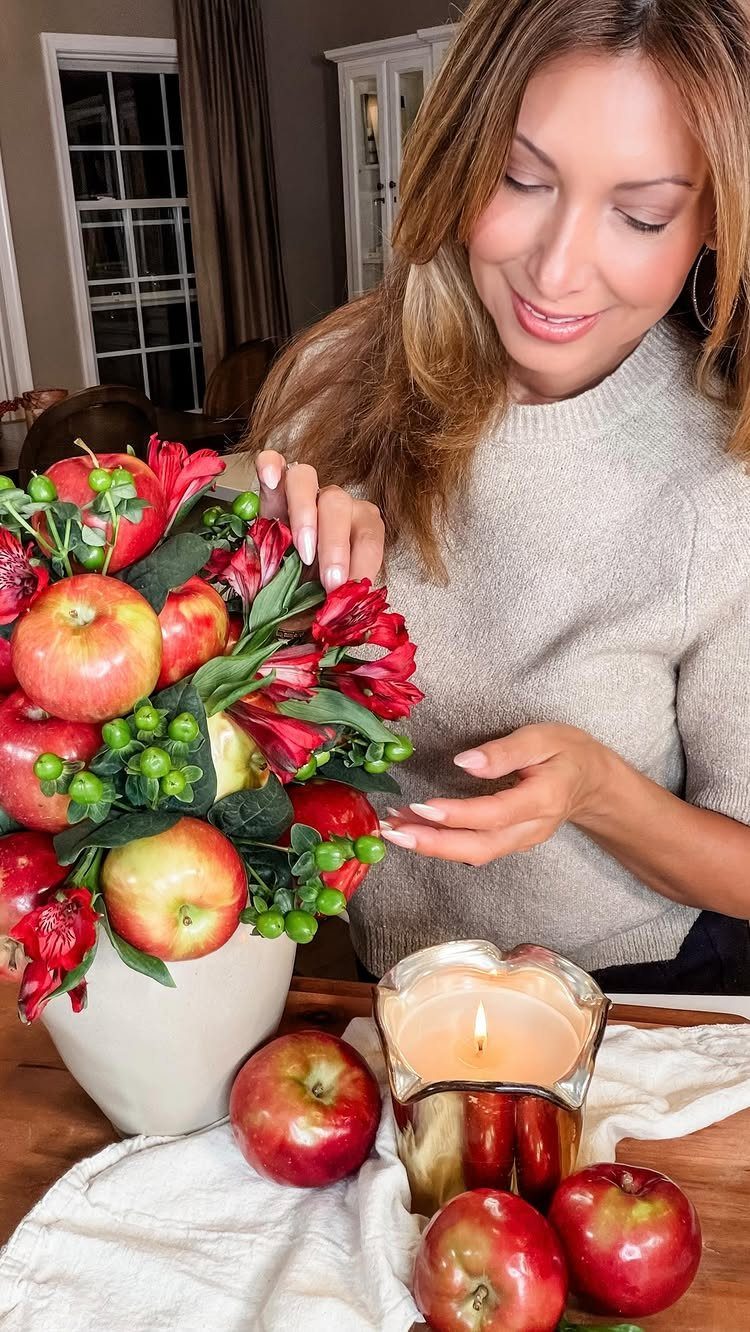
Red apples are a cheap way to bring in color, and they can sit right in the bowl with flowers. Tuck the fruit around the rim and fill the gaps with stems, so the arrangement looks full without extra vases.
The maker of this piece points to the rich color and natural texture apples add. I would buy a few extra, since some will have a bruise on the side that faces the room.
“Mixing fruit, flowers, and vintage items in tabletop decor is attractive,” she says. “It is often unexpected, which makes it fun!”
4. Colorful Accents
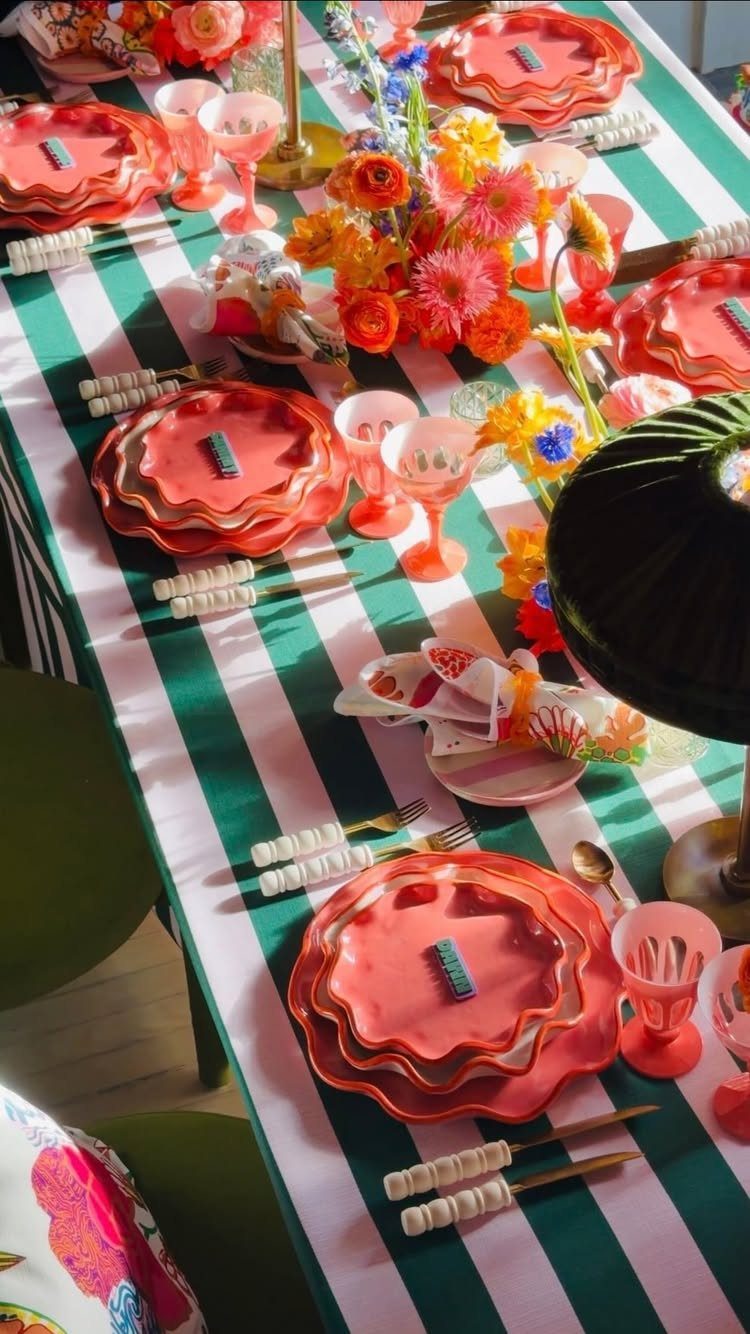
Pick one bold stripe or pattern, then let a small handful of warm shades do the rest.
Green and white stripes underneath red plates and orange glassware work because the cloth is the calm part and the dishes carry the heat.
Bright orange and yellow flowers in the middle pull the palette together. If color feels risky, buy only the glassware first; it is the least expensive way to test it.
5. Candles of Varying Heights
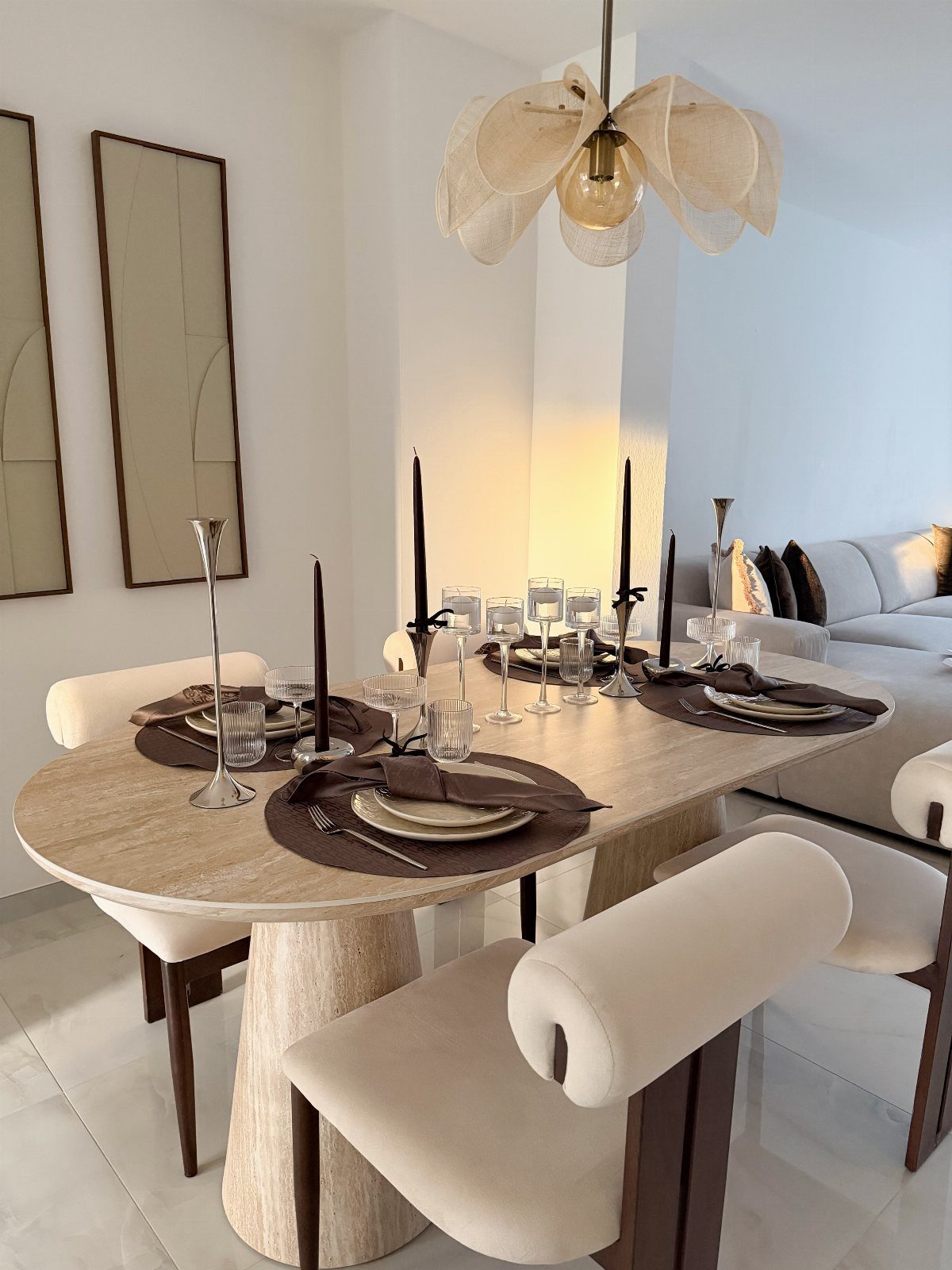
Taper candles in different heights give the table a staggered, flickering glow that a single row never does.
I like odd numbers, so go with 3 or 5 and vary the holders as well as the candles. Keep flames clear of any hanging greenery, and light them just before guests sit.
6. Handwritten Name Cards
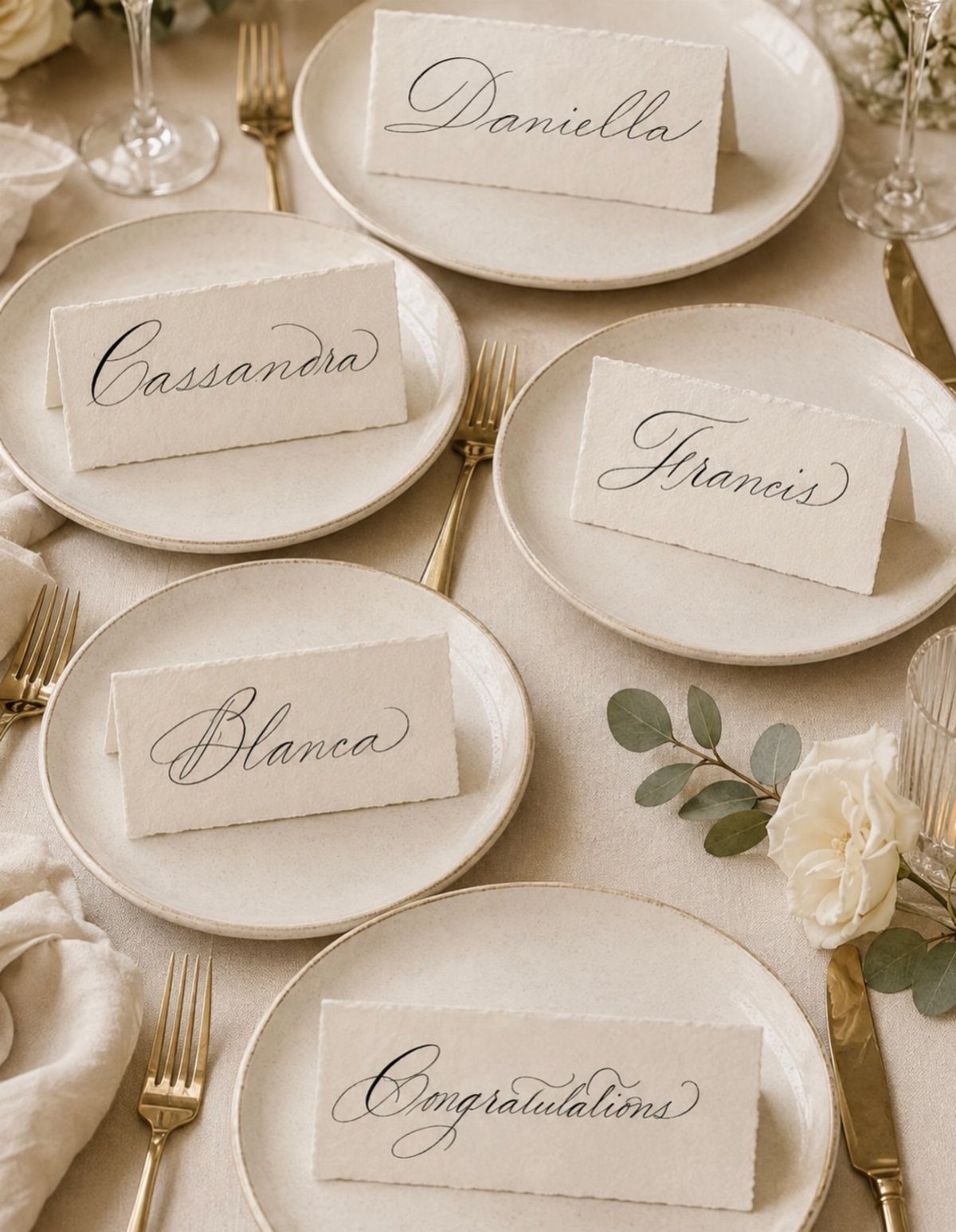
Handwritten cards tell each guest the seat was chosen for them. Fold plain white card stock into small tents and write each name in your best script, using a fine pen so the ink stays crisp.
Practice on scrap first, since one smudged card on the plate is hard to hide.
A short line like "Congratulations" on the honoree’s card marks the occasion without extra decorations. Set the cards on the plate, above the cutlery, where they are easy to read.
7. Clustered Vases
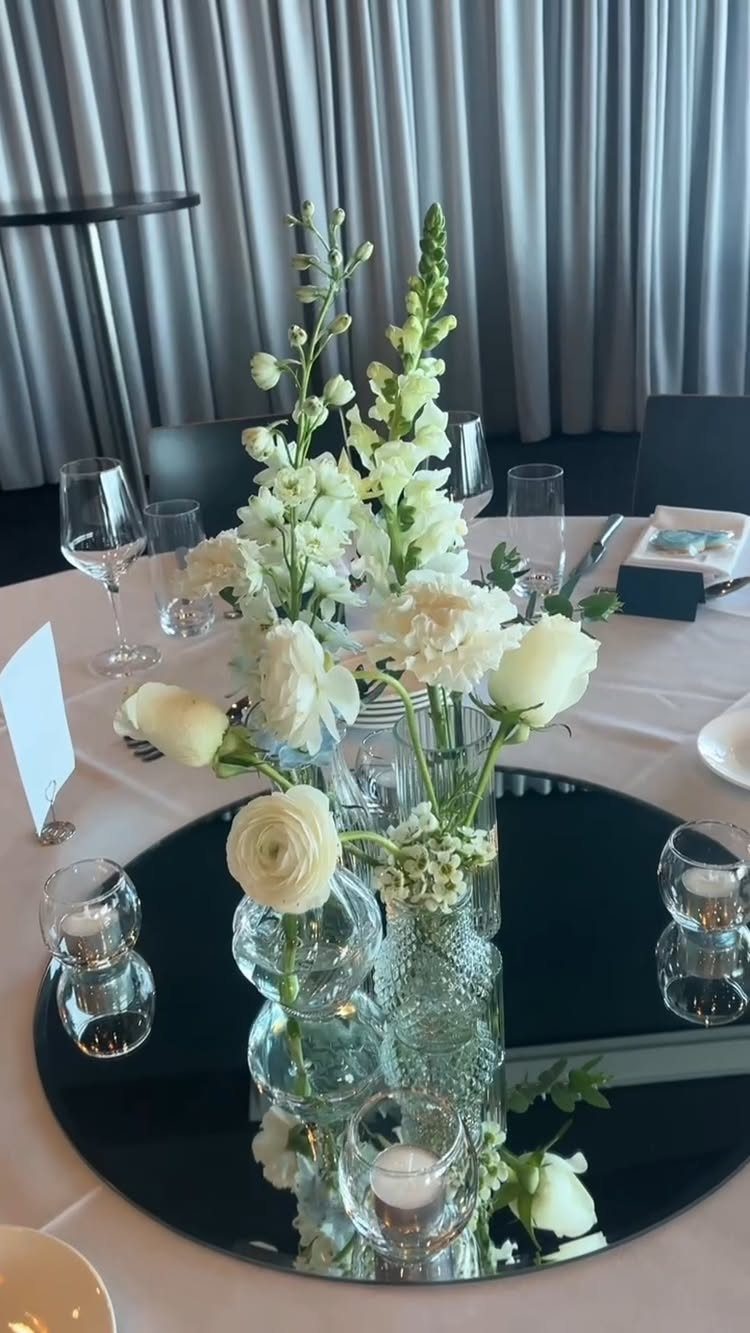
Small clear vases work best grouped together, each holding just a few stems of the same white flower. Cut the stems short so every bloom sits just above its rim.
A mirrored tray gives a cluster of vases a defined edge and bounces candlelight back at the table. Mismatched glass looks casual and intentional, so thrift-store bud vases are enough.
Keep the group low and leave room beside it for serving dishes.
8. Decorative Tray
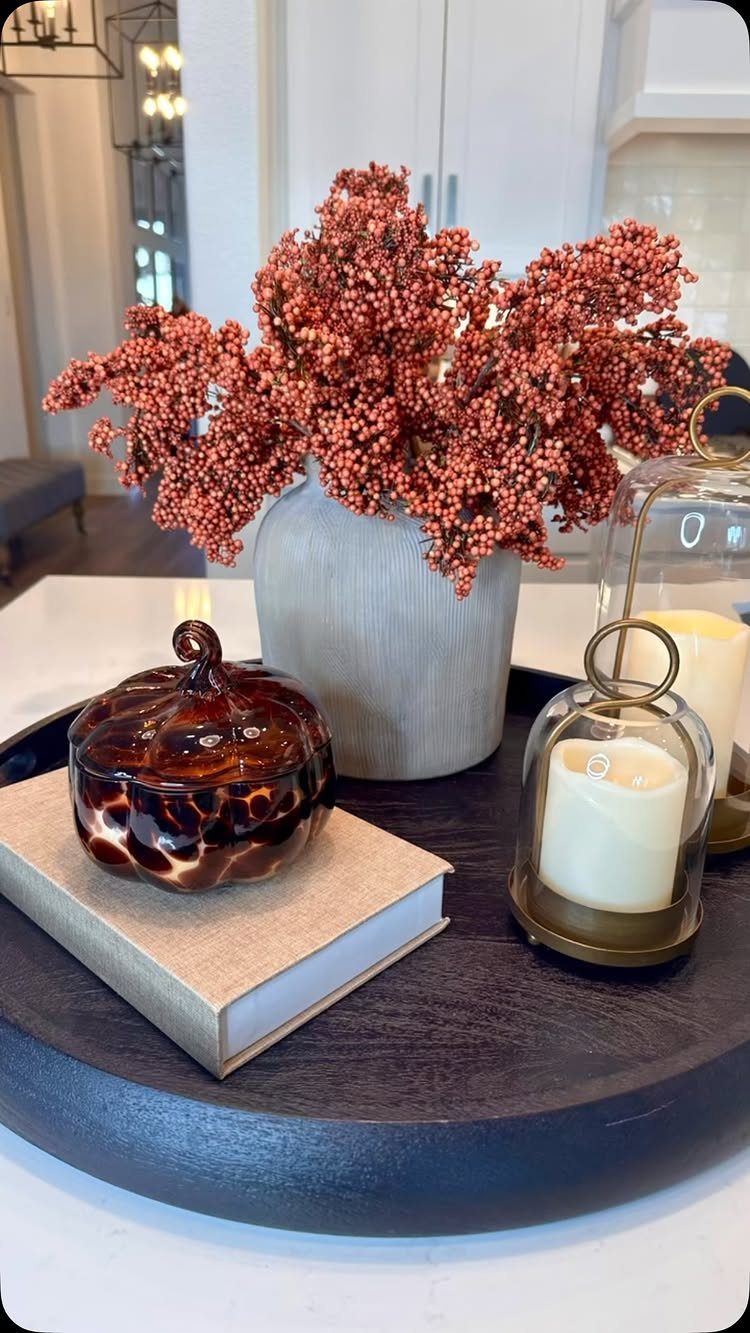
A tray turns a handful of loose objects into one piece you can lift off the table in a single move.
Dark wood suits this: a vase of berries, a small jar set on a book for height, and 2 candles under glass cloches all read as a set because the tray frames them.
I would pick a tray with a raised edge and keep the items on it in different heights. Clearing for dinner then takes one trip.
9. Gold-Leaf-Burled Resin Bowl
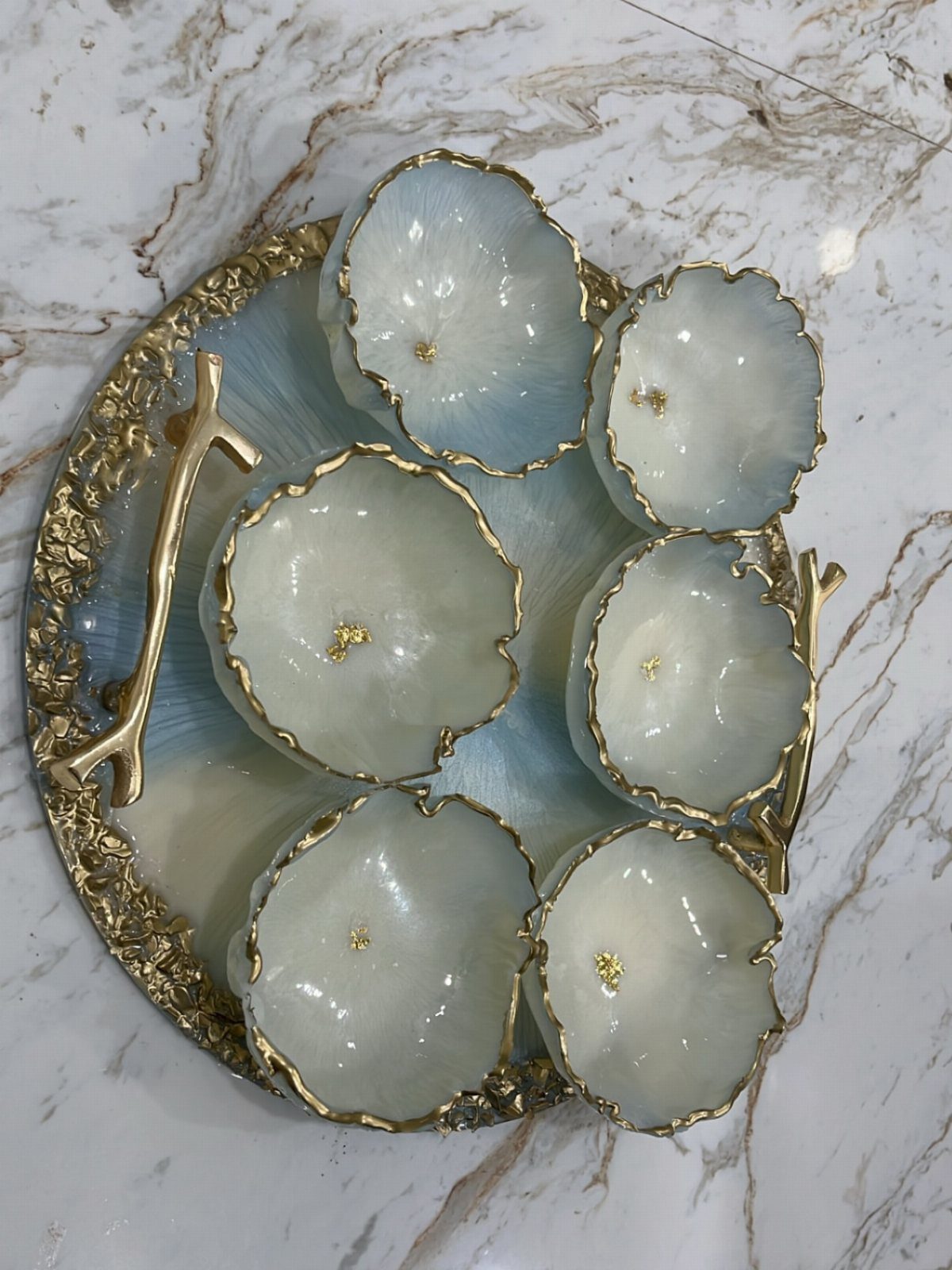
A set of small resin bowls with gold flecks and a matching tray gives a table a little shine without any flowers. Lori Moscato chose the gold-leaf-burled version, and the burled pattern means each bowl looks slightly different.
Use the bowls for nuts, olives or sugar cubes so they earn their spot.
A white marble tabletop lets the gold stand out, while a busy cloth would hide it. Resin pieces like these cost more than plain ceramic, so start with the tray and a few bowls.
10. Layered Dinnerware
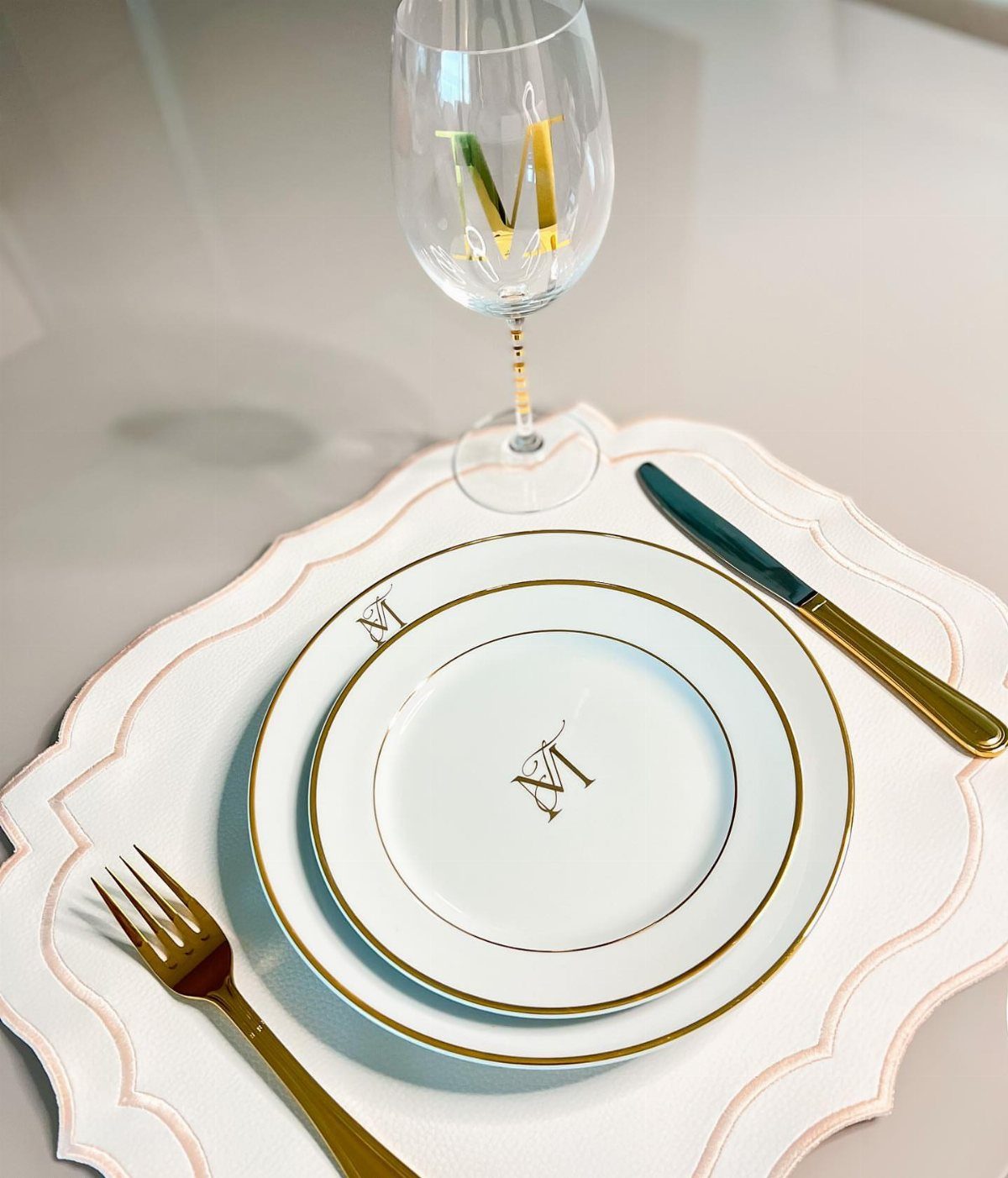
Stacking a charger, dinner plate and salad plate builds depth that a single flat plate cannot. Start with the largest at the bottom and let each rim show, so the gold edge repeats from layer to layer.
Keeping the plates white and gold makes it look planned rather than crowded. A monogrammed glass is a nice touch, though a plain one works fine.
Add the salad plate only for courses that need it; otherwise 2 layers look cleaner and leave more room for cutlery.
11. Seasonal Centerpieces
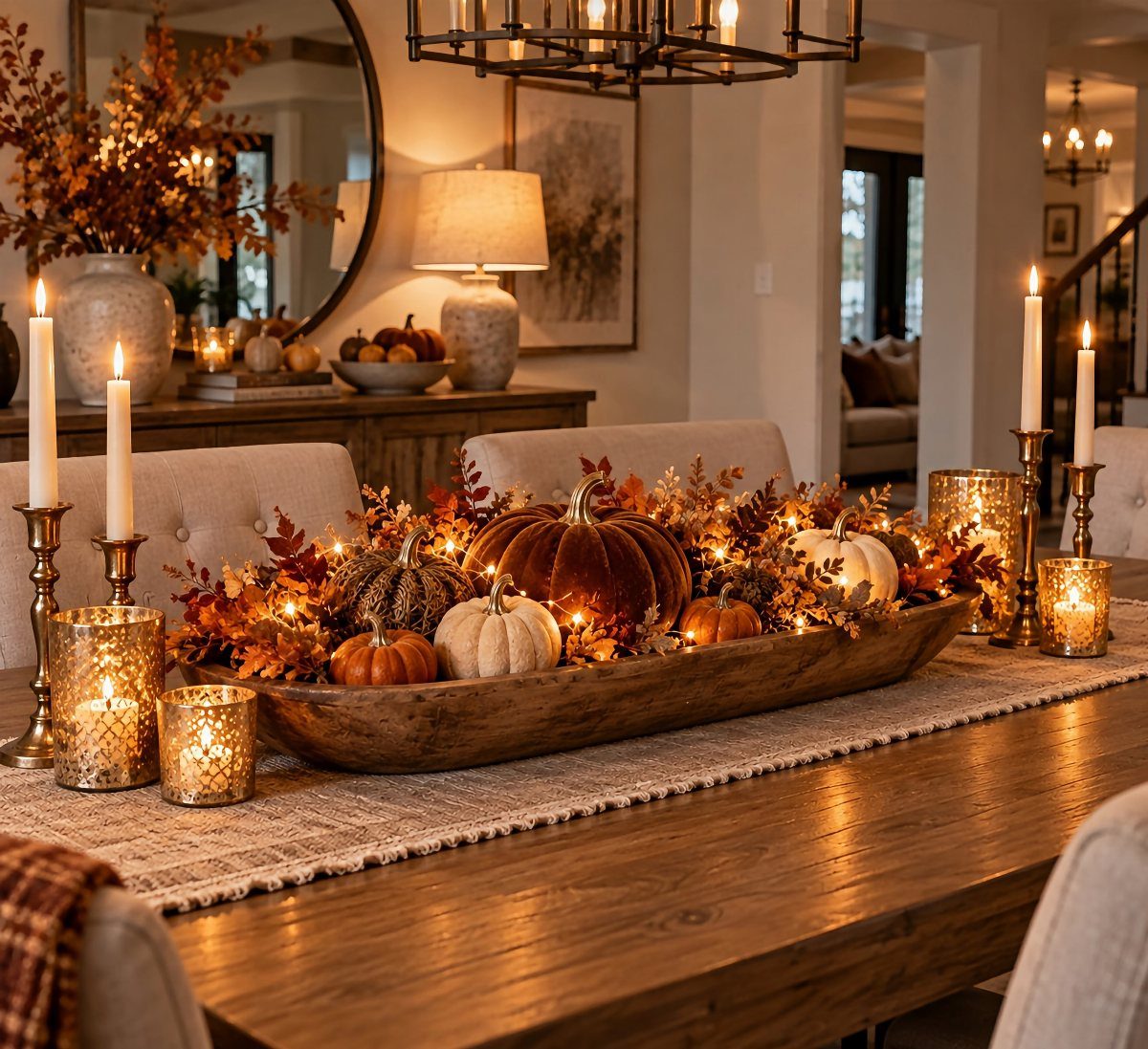
A long wooden bowl is an easy centerpiece to swap out each season: pumpkins and leaves in fall, then pinecones or greenery later, with candles tucked in for height.
The bowl stays; only the filling changes, which keeps the cost low.
For fall, mix pumpkins in a few sizes and tuck leaves into the gaps.
I would keep dry leaves well away from any open flame, and where candles sit near pumpkins, battery-operated LED tapers or flameless tea lights are the safer choice. Come winter, empty the bowl and refill it with pinecones or greenery.
12. Table Linens and Chargers
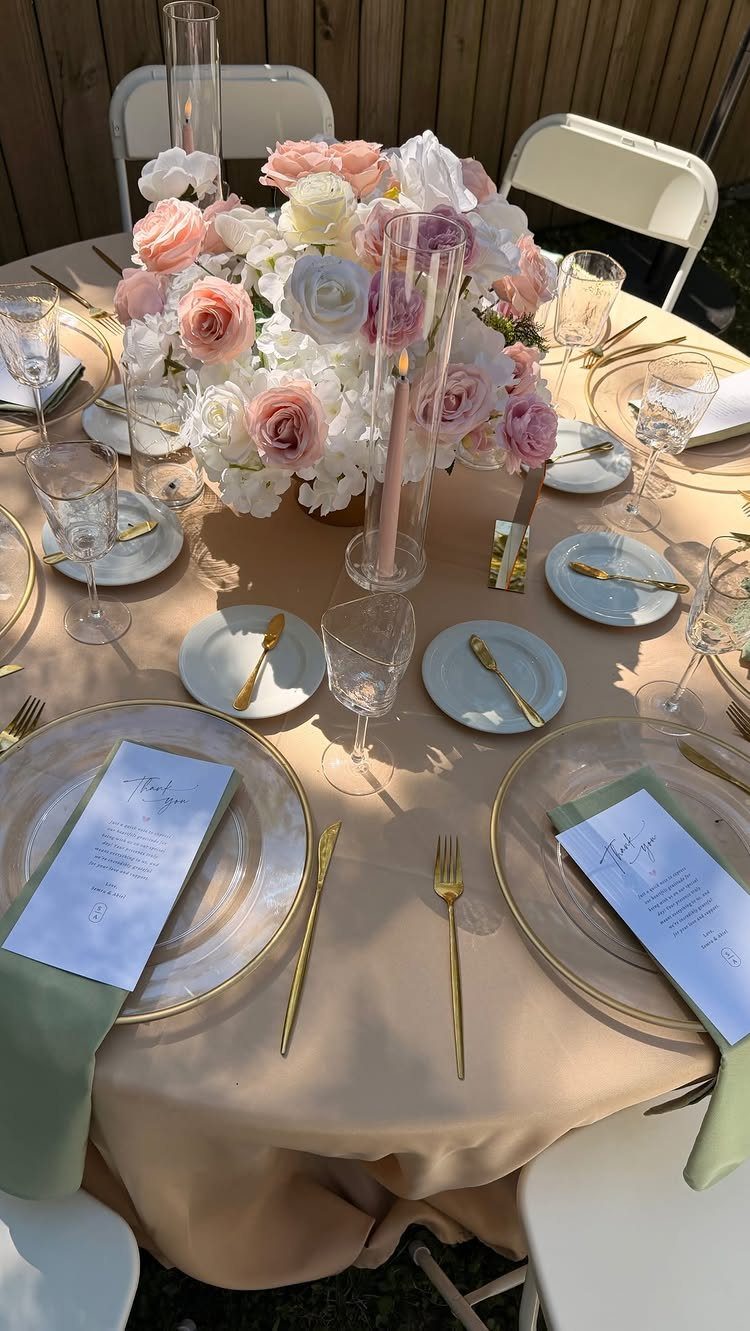
Linens set the mood before any plate hits the table. A tan cloth is a neutral base, and green napkins add a second color that makes gold chargers and white plates look deliberate.
Choose one cloth color and one napkin color; the chargers can carry the shine. Press the cloth, since creases show most on a plain surface.
If chargers feel like too much to buy, rent or borrow them for a single special dinner.
13. Table Runners
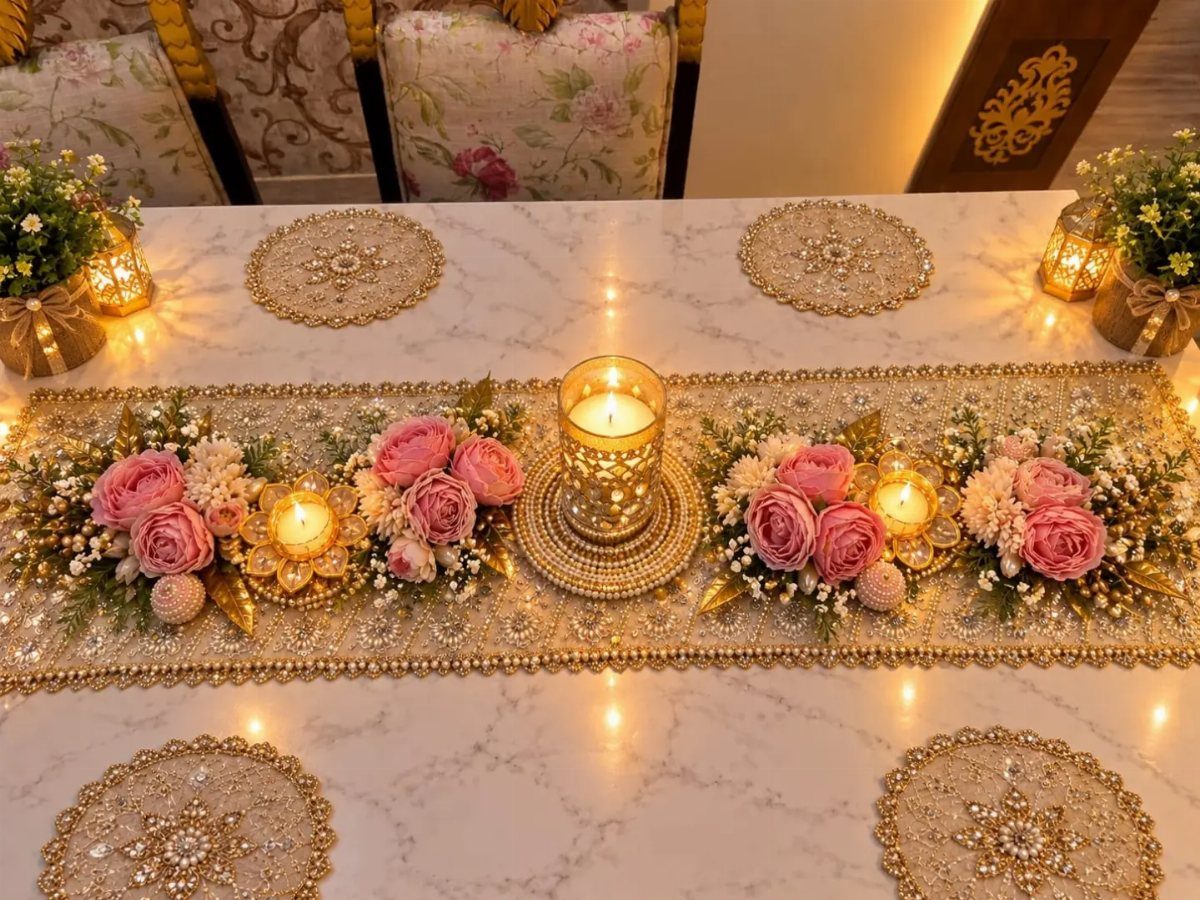
A runner adds a strip of texture down the center of a bare marble table, and a beaded gold one catches candlelight along its whole length. Matching beaded placemats tie it to each seat, so the set reads as planned.
Keep centerpieces on the runner low and spread apart, so serving dishes still have somewhere to sit.
Marble feels cold under a runner, and that works in your favor: the contrast makes beads on the fabric stand out.
14. Vintage Ceramics
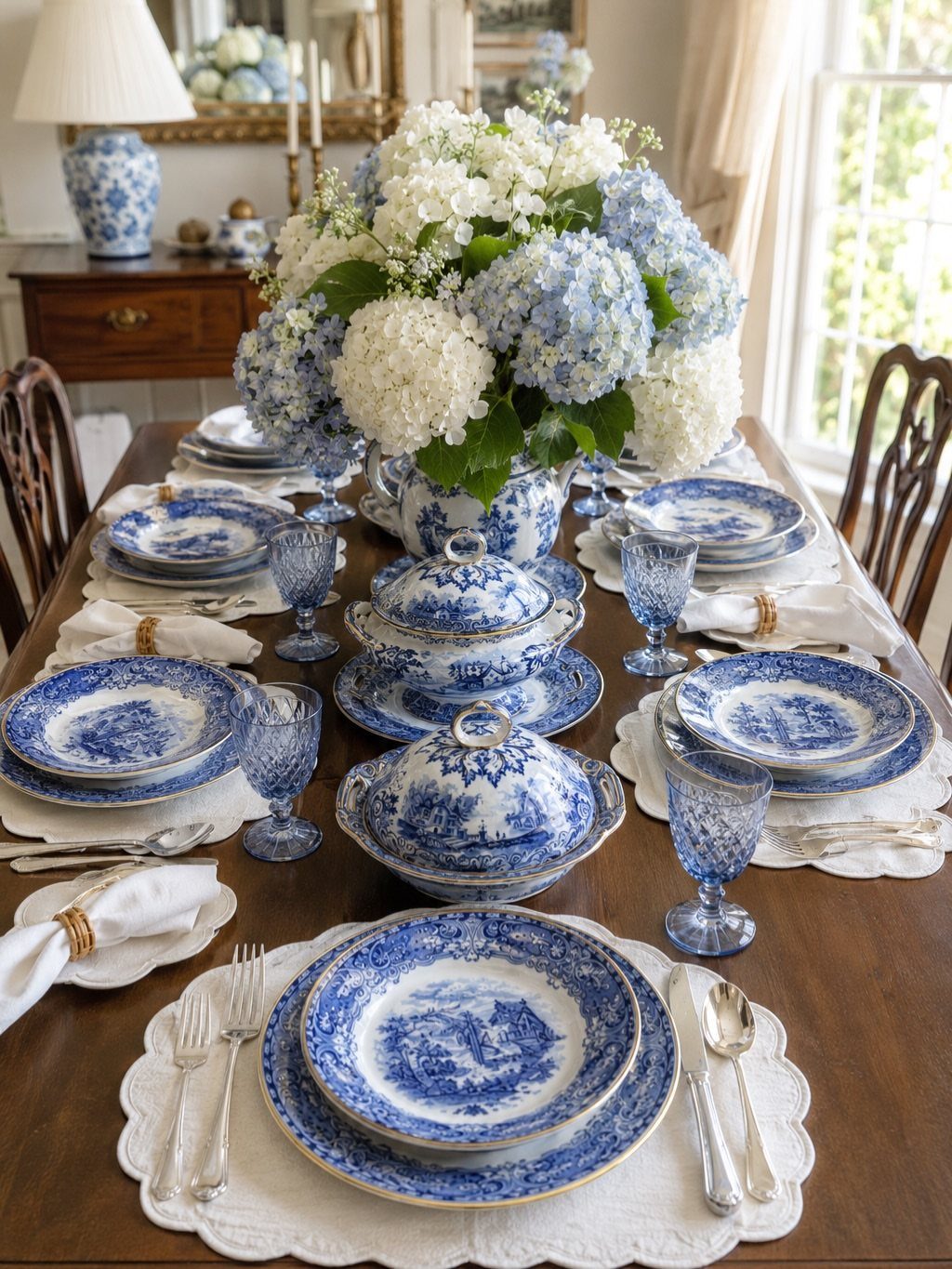
Secondhand ceramics are the cheaper route, and a slightly different pattern from plate to plate looks collected rather than careless.
White napkins keep the pattern from getting loud.
Buy the tureen first; it does the most to set the tone.
15. Mirrored Floral Centerpiece
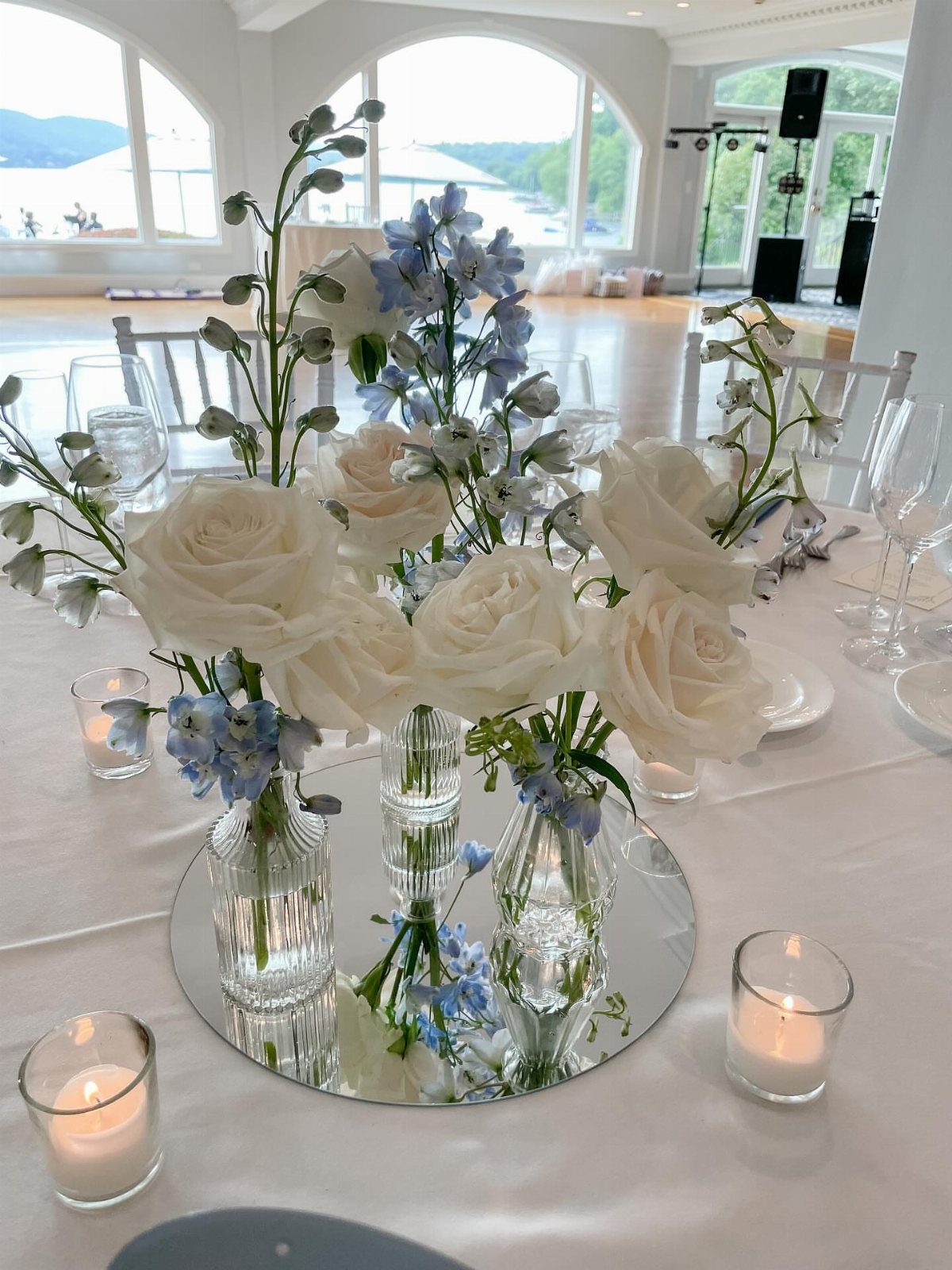
A round mirror in the middle of the table turns a few small flowers into a bigger display. Set 3 bud vases on it, with white roses and a touch of blue, then ring the edge with tea lights.
Tea lights are cheap, so buy a bag and fill the gaps until the circle looks even. The mirror doubles every flame, which is why a white tablecloth underneath works so well.
I would keep the vases short, so guests can see across the table.
16. Mini Table Lamps
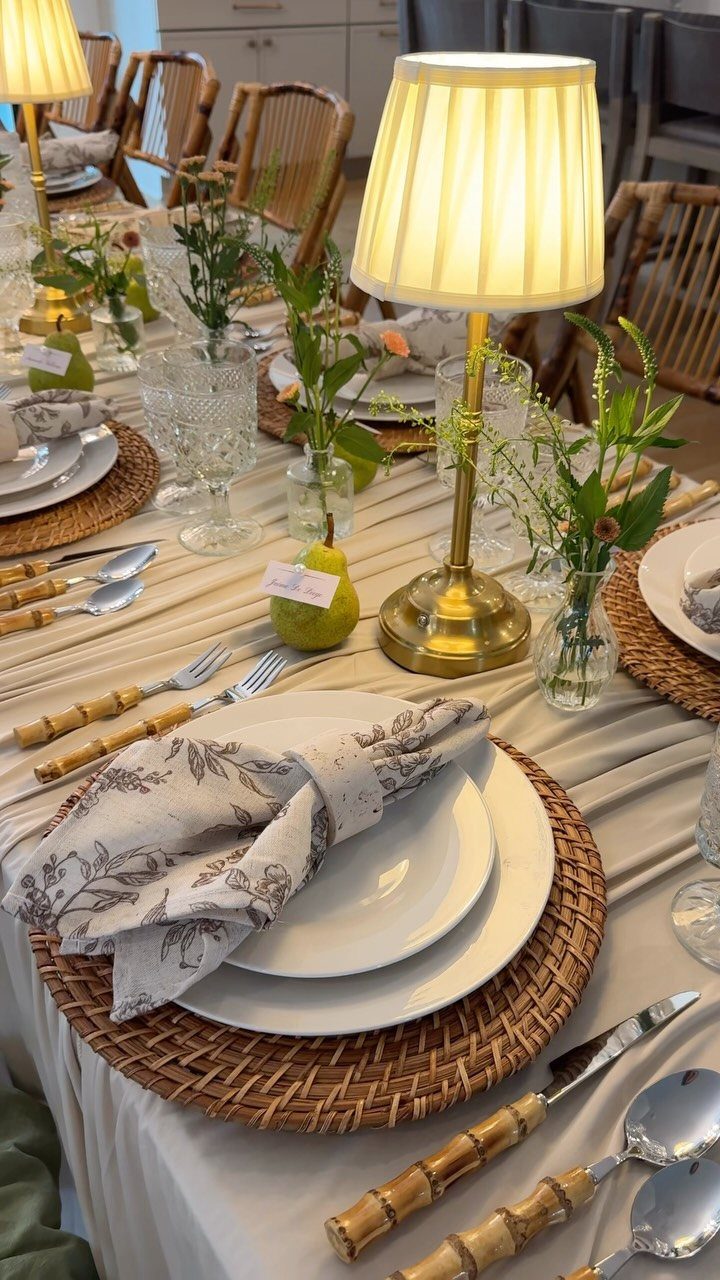
Cordless mini lamps with fabric shades give a table a soft glow that overhead light cannot, and with no cord, they can sit anywhere along the table. Space them down the center among the plates and a pear or two.
I would use 2 or 3 lamps rather than a crowd of them, so the table keeps room for dishes.
Charge them before guests arrive, and dim the room lights a little.
17. Woven Placemats
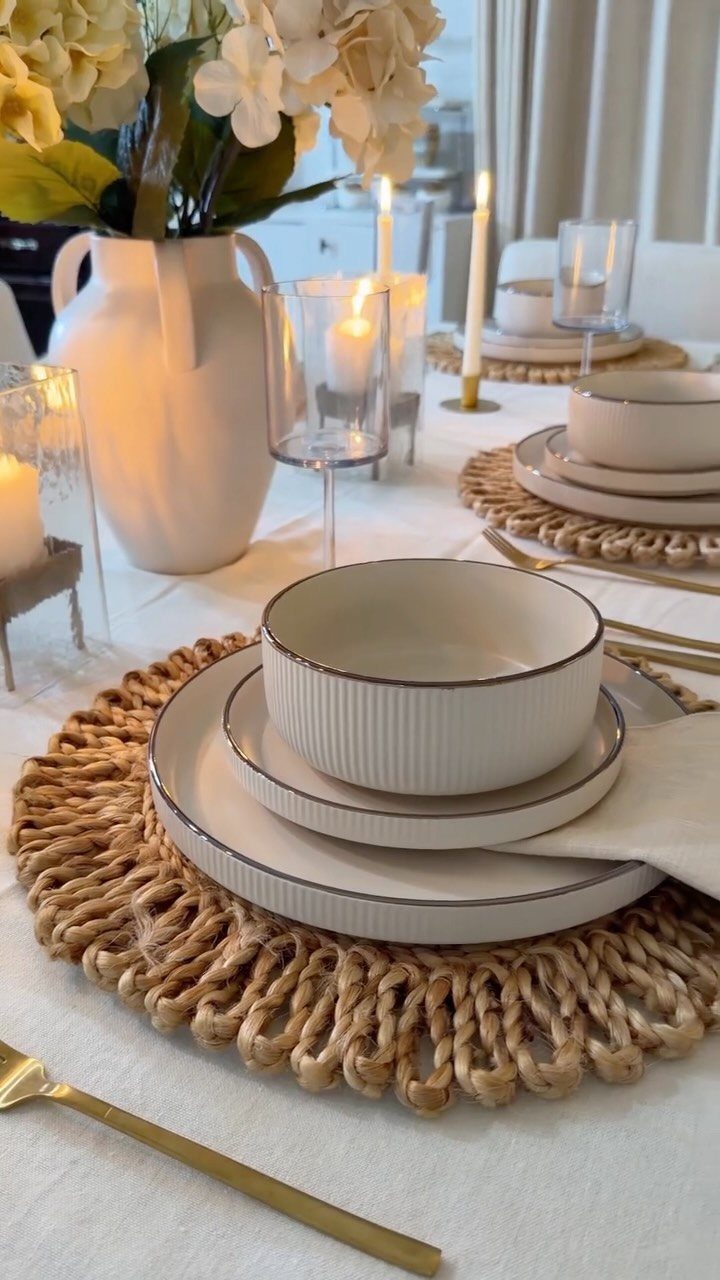
Woven jute or rattan placemats add texture under each plate, and they do it without competing with the food. White ribbed plates and gold cutlery stay crisp against the natural fiber, so the neutral palette never feels flat.
Choose placemats in a single tone, then give the candles and cream flowers the job of adding interest. I like jute for its rough, earthy look, though the weave can catch crumbs, so shake them out after dinner.
Set glasses just off the edge, where the weave could tip them.
Importance of a Tablescape
A table set with some intention tells guests the meal matters before anyone sits down. It also takes pressure off the host, because the decisions are made ahead of time and the evening can be about the people.
The setup shapes the mood for any kind of meal: a casual family dinner, a quiet dinner for two, or a holiday crowd.
Plates, glasses and a few chosen objects are a small creative project, and your own taste can show in them.
I treat the table as the first thing guests see, so it gets set before I start cooking.
Choosing a Theme and Color Palette
Pick the occasion first, then the colors.
Each occasion pulls toward its own colors: pale pastels suit a spring birthday brunch, rich jewel tones fit an autumn gathering, and white with gold trim works for a winter dinner and still looks right years from now.
If the palette is hard to settle, pin a few photos and swatches together on a simple mood board and see which colors keep showing up.
If you want bold color, pick pieces you can leave out all season, like a pair of hurricane lanterns beside a pitcher, basket or vase.
Cut a few branches from your yard or buy them at a florist, set them in a vase, and the table is done. Amber glass works well beside orange accents.
Avoiding Overcrowding
Size the decor to the table and the room.
Skip anything ultra-tall. Choose low or clear elements so nobody has to lean around them to talk.
A small dining table is the clearest case for restraint. A single low flower arrangement or a branch, kept as low as it will go, does the job without crowding plates and elbows.
I test it by sitting down: if the decor competes with a plate or a view of the person across from me, something comes off.
Frequently Asked Questions
How to decorate a table on a budget?
Start with what you already own and cheap finds: a grocery store bunch of flowers in a clear glass bowl, red apples tucked around the rim, or thrift-store bud vases grouped together.
Mismatched glass and secondhand ceramics look collected rather than careless. Tea lights come cheap by the bag, and a wooden bowl you refill each season keeps the cost low.
How to make your dining table look nice?
Pick one palette and stop there.
A neutral cloth, one napkin color and chargers or plates with a shine make a table look planned, and a pressed cloth shows off the whole setup. Add a low centerpiece and a few candles at different heights.
What is the proper place setting for a dinner table?
A simple layered setting stacks a charger, a dinner plate and a salad plate, largest at the bottom, with each rim showing.





