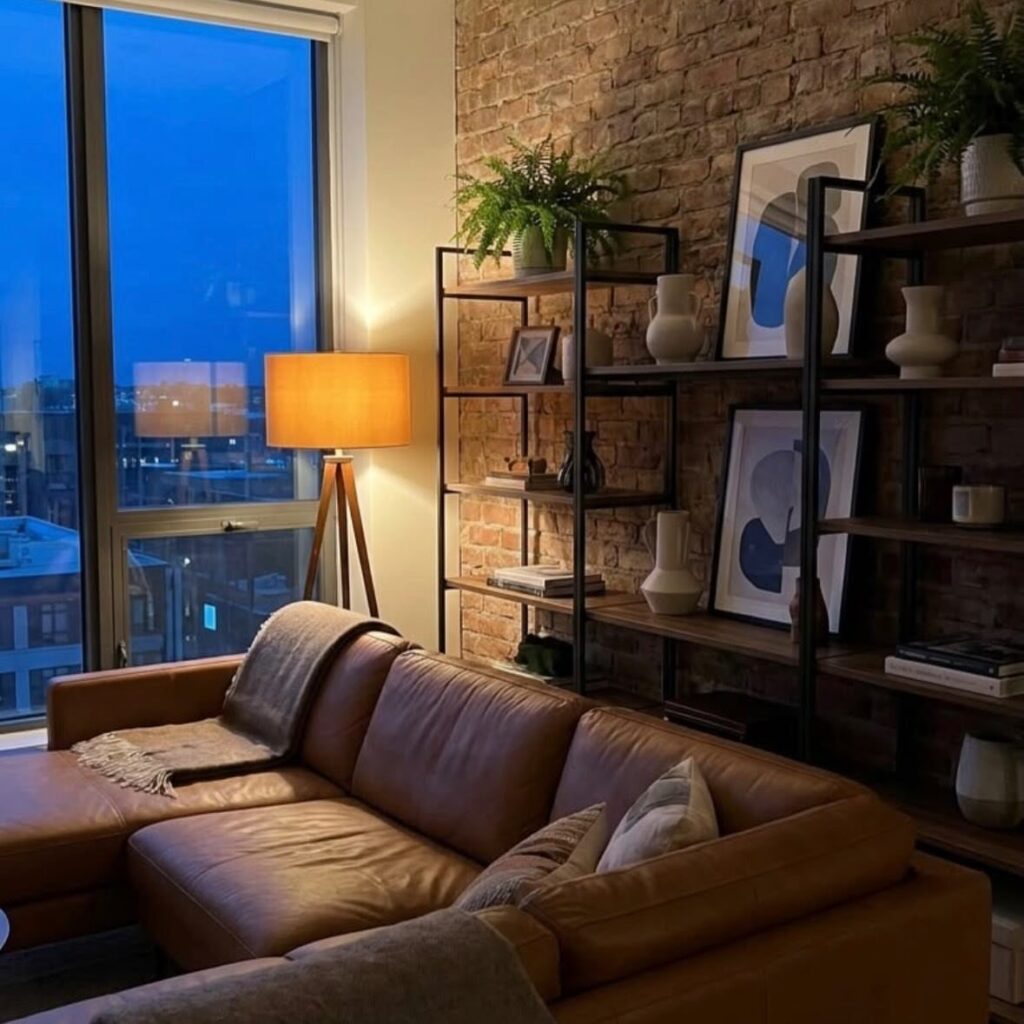
Which brick idea fits depends on whether you can live with the color red, since white paint on brick is the one choice you can’t take back.
1. Exposed Brick Accent Wall
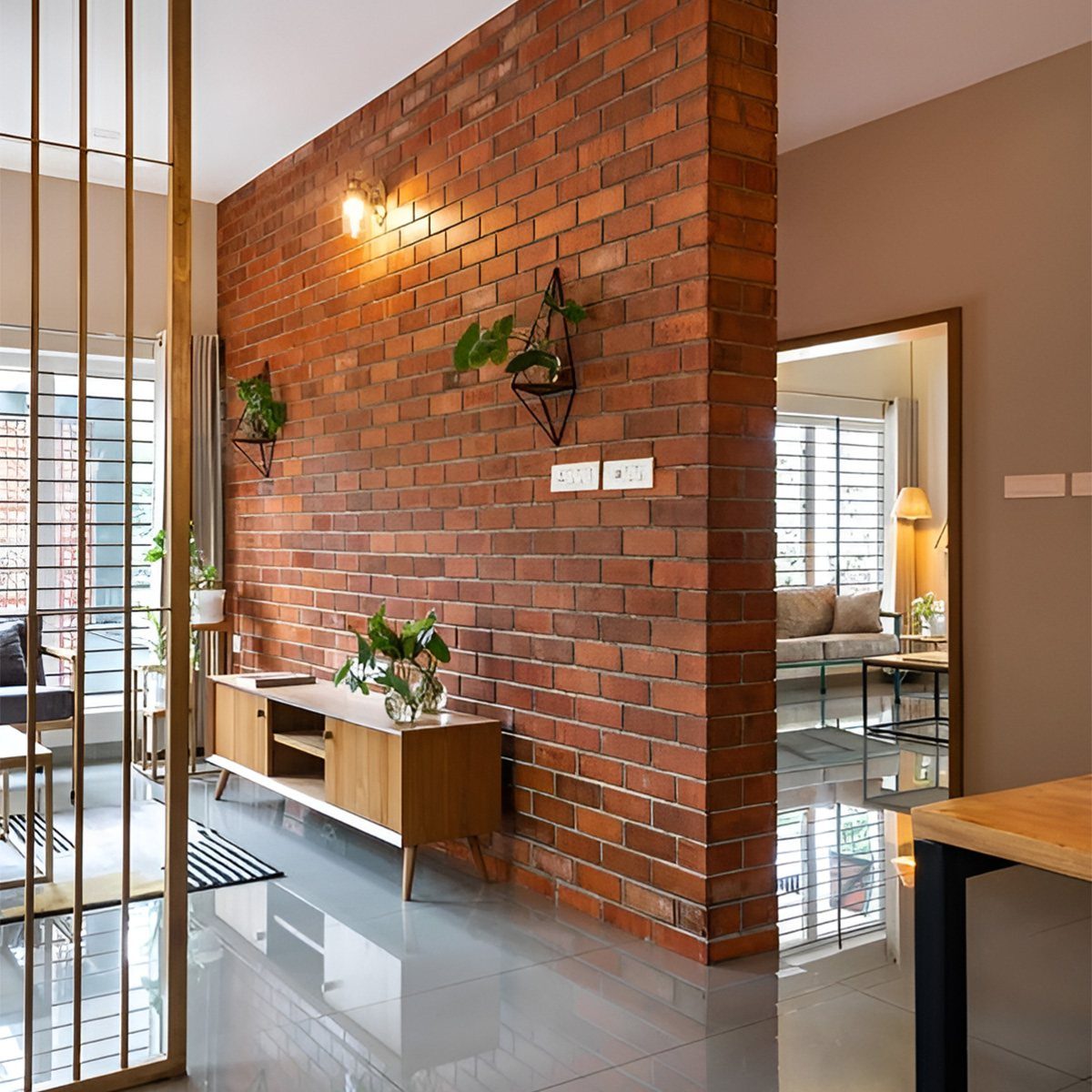
A single brick wall does the work of a whole decor scheme, so keep everything else in the room quieter.
Red brick sets the palette in a living room, so I pull its warmth into everything else: a wood console, a gold-framed divider, and plants with trailing vines all sit well against it.
I would pick the wall that faces the main seating, not the one you pass on the way to the kitchen. Keep the other walls plain and light so the brick reads as the one loud thing.
2. Wood Shelves on Exposed Brick

Open shelves are the easiest way to put brick to work, because the wall already supplies the background.
Use a masonry bit and follow the anchor manufacturer’s instructions for brick installation. Limit yourself to 2 shelves; more starts to hide the wall you wanted.
One builder noted that choosing brick from over 100 different pallets was the fun part, so if you’re building a wall, look at the color range before you commit.
3. Plants Surrounding Exposed Brick
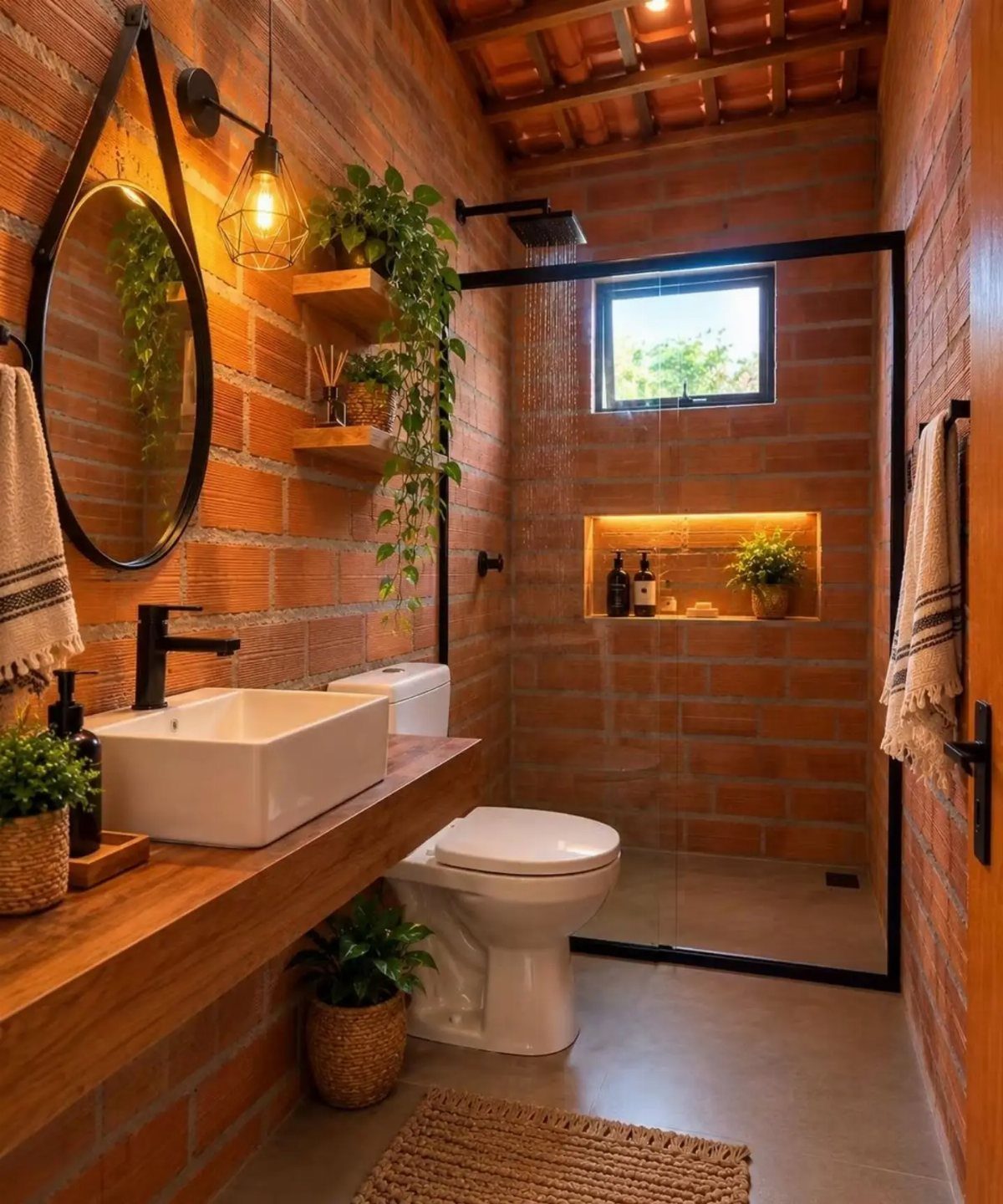
Green leaves look sharper against red brick than against almost any painted wall, and a bathroom gives plants the humidity they like.
Wood shelves for the pots are a smart pick on brick, because the wood warms the wall up. That matters most in a bathroom, where a glass shower and white fixtures can make the room feel cold.
Spread the plants at different heights instead of lining them up. Pick types that tolerate low light if the room has a small window.
4. Brick Kitchen Backsplash
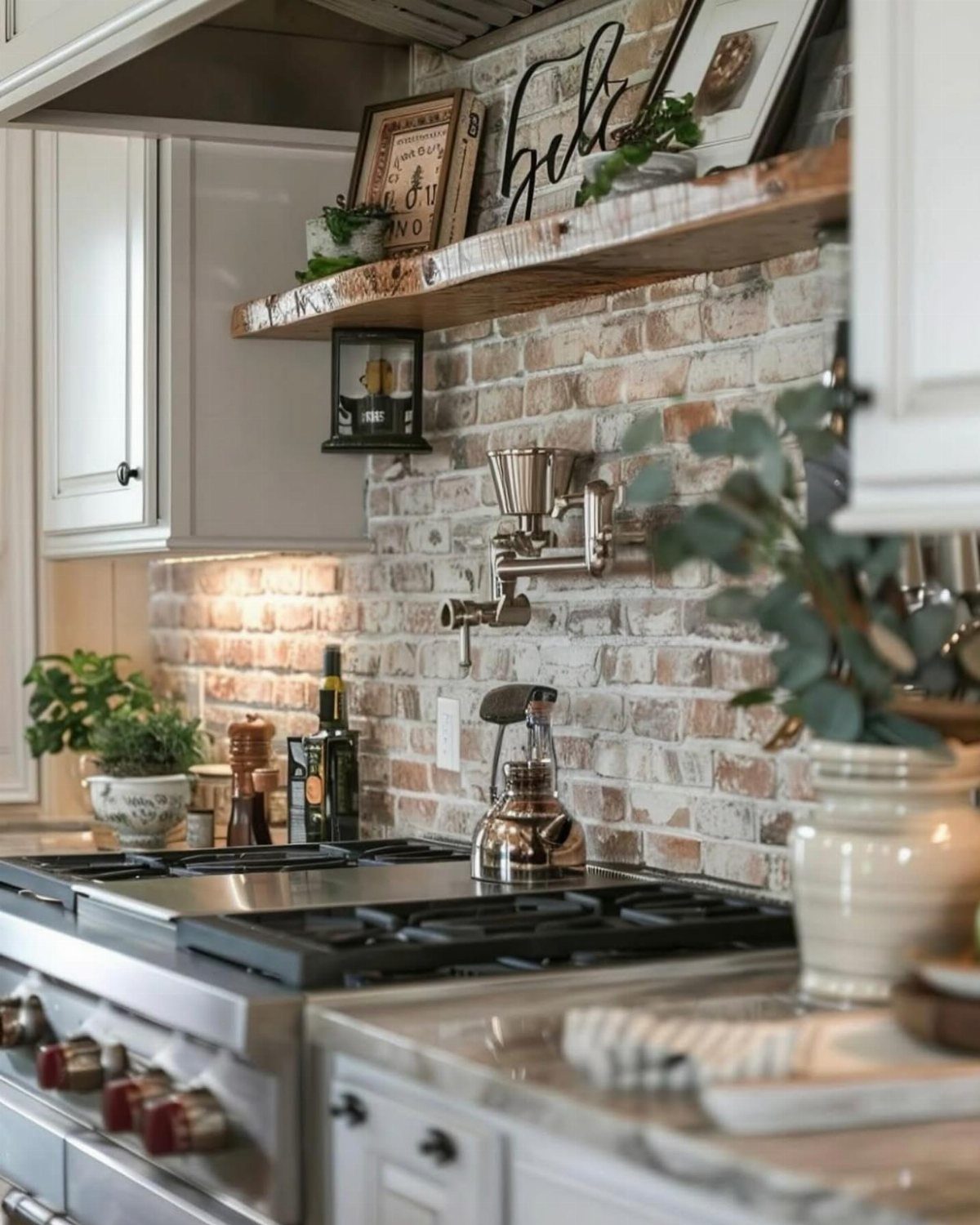
White-washed brick behind a stove gives a kitchen texture without the cost of a tile run.
A coat of white or light paint softens the red, and the wall reads lighter. A wood floating shelf above the backsplash brings the warmth back.
Cooking splatter is the limit.
Brick is porous, so a sealer is worth applying before you cook near it, and I would wipe the area behind the burners often. The sealed surface wipes clean far more easily than raw brick.
5. Artwork on Exposed Brick

Brick already has pattern, so art on it needs scale to be seen. One large circular piece with a metal sculpture layered in front holds its own against the rough wall, where a small framed print would disappear.
Choose dark, simple shapes; black stands out well on red. Hang heavy pieces on masonry anchors, and check the weight rating before you trust them.
6. Brick Wall Mural
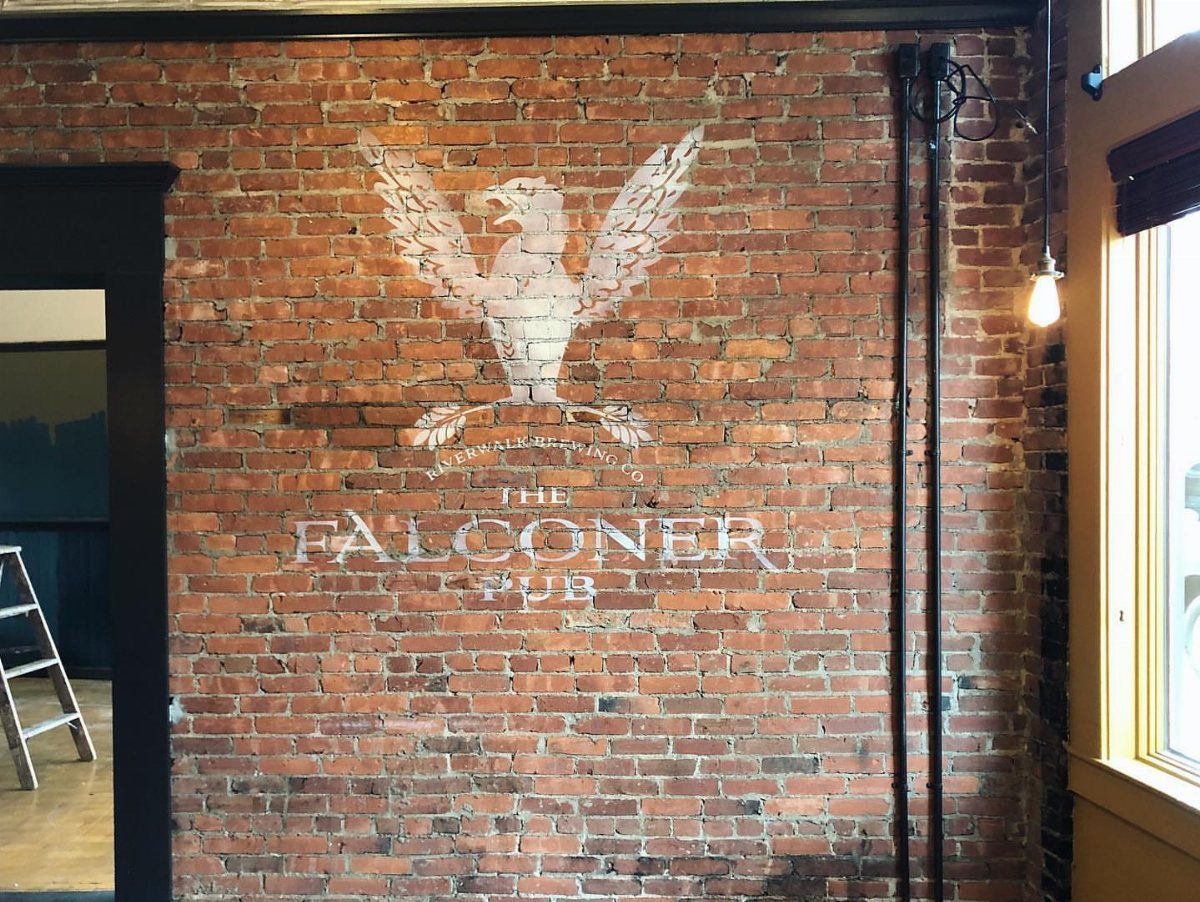
Painting a mural straight onto brick gives you a graphic that no poster can match. White paint on red brick, as in this falcon and lettering, has the strongest contrast you can get, and it reads from across a room.
Keep the design bold and simple, since mortar lines break up fine detail.
Use masonry paint, and expect to coat the porous surface more than once. A mural is hard to undo, so I would sketch it in chalk first.
7. Brick Arches and Built-in Platform
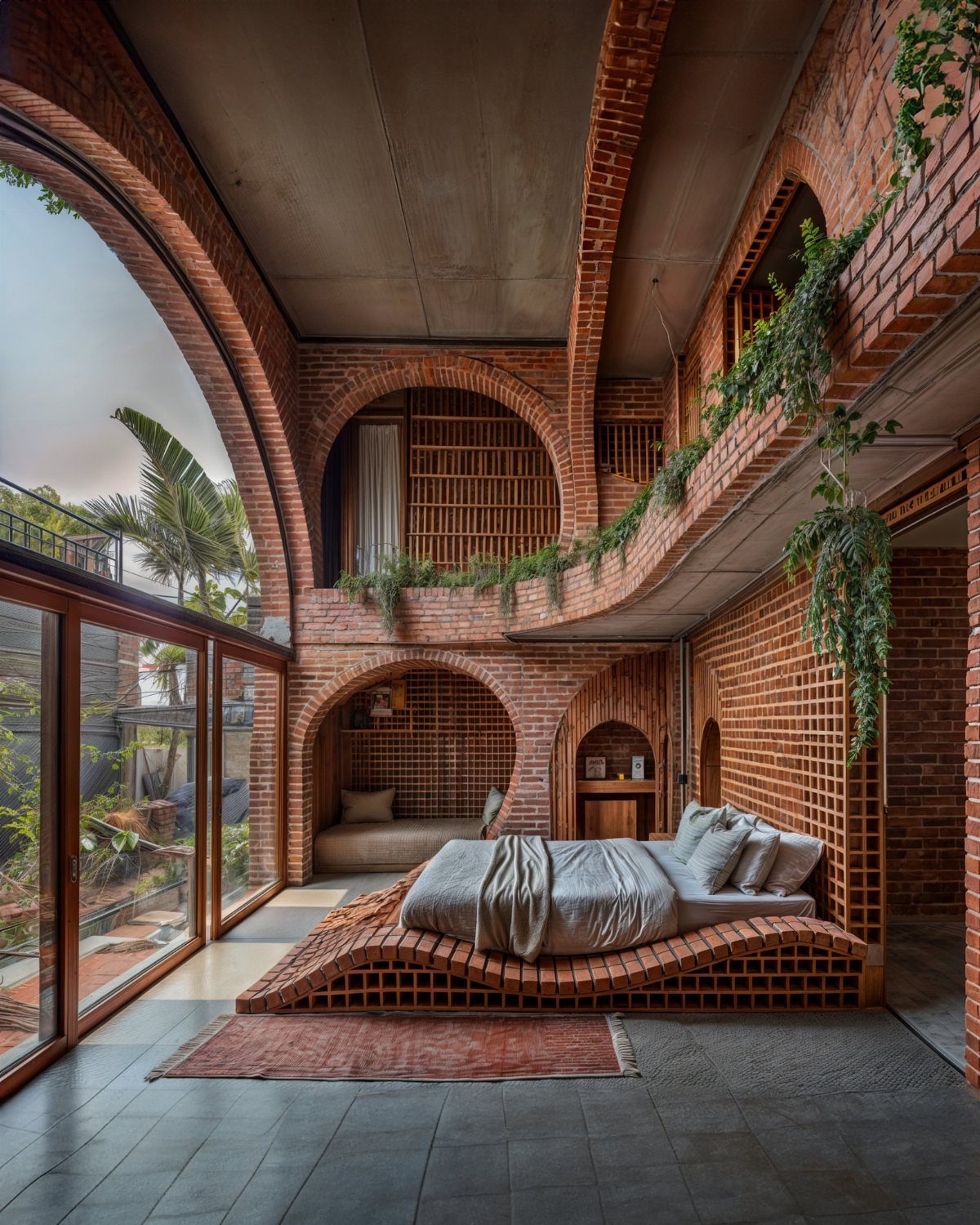
A curved brick platform makes the bed part of the architecture, and the arches repeat that curve, so everything in the space looks like one built piece.
White linens suit it best, because red brick supplies all the color and soft fabric balances the hard surface.
This is a build, not a weekend swap. For a rental, a plywood platform with a rounded edge gives you the shape without the masonry.
8. Industrial Loft with Steel Beams
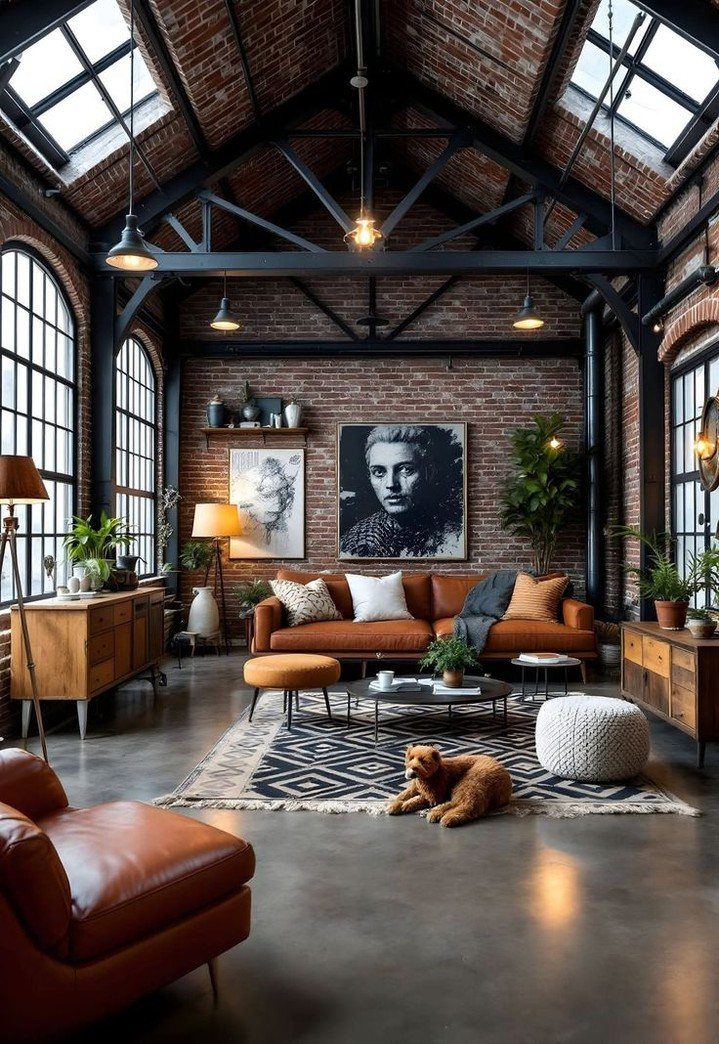
Black steel beams give a brick room its structure, and the two together say industrial more clearly than any decor can. Tall red walls need something dark overhead to balance them, which is why the beams work so well.
If your ceiling has no beams, I would not fake them.
Borrow the effect with black metal frames, a dark leather sofa and one oversized black-and-white portrait. Keep the rug simple so the walls stay the focus.
9. Exposed Brick with Fireplace
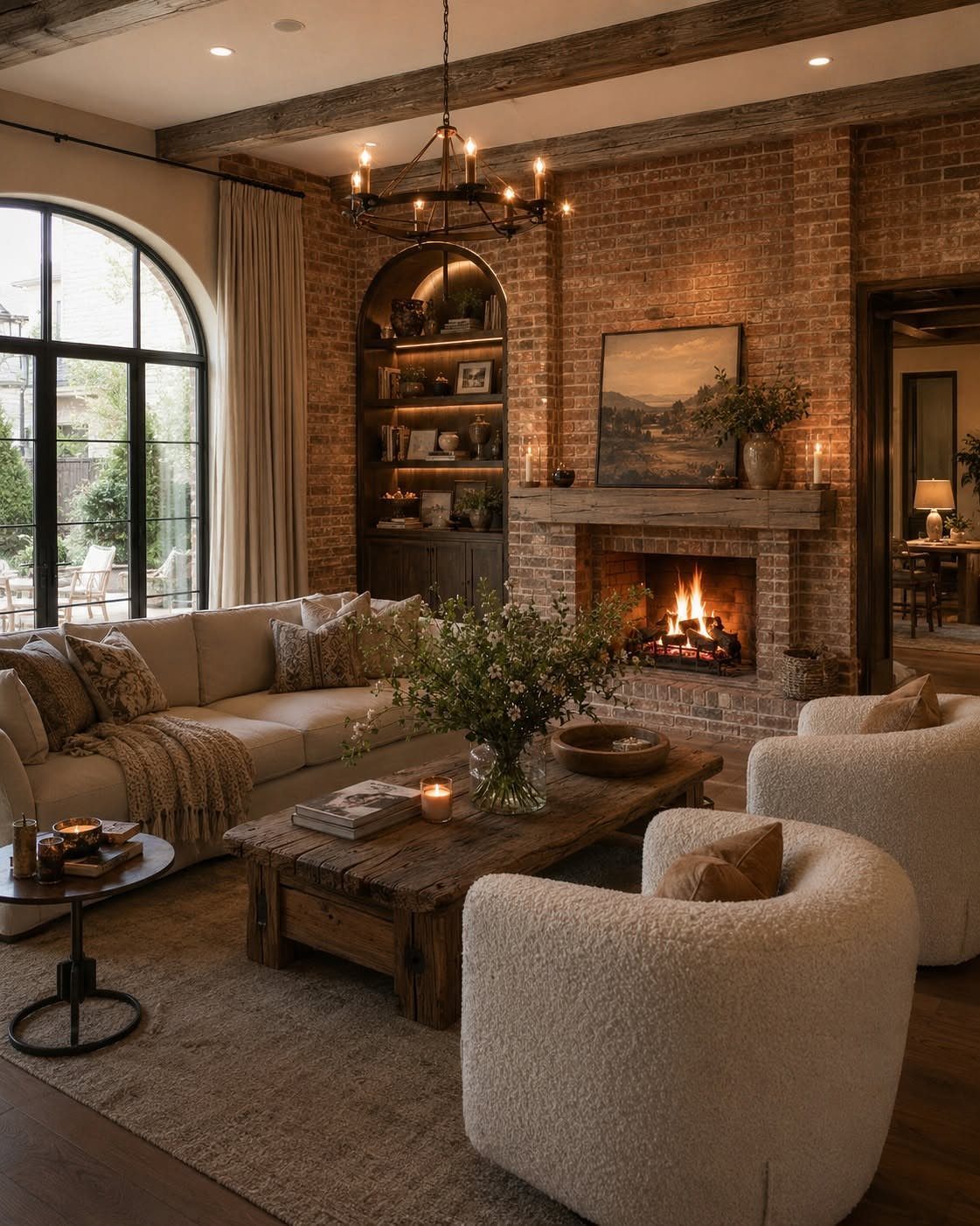
Brick on the fireplace and on the walls around it makes the hearth look original to the house, and it is the coziest way I know to use the material.
Matching brick means no seam where the fireplace ends and the wall begins.
Soften it with texture: boucle chairs, a beige sofa and a rough wood coffee table all sit well against the red. Keep the mantel bare or nearly so, since the brick already has plenty going on.
Exposed brick brings a sense of warmth, character, and texture to a space. It also speaks to the history of a building, of the hand that carefully laid down each brick, and of a craft that’s quickly becoming less and less common.
— Dwell
10. Industrial Brick Dining Room
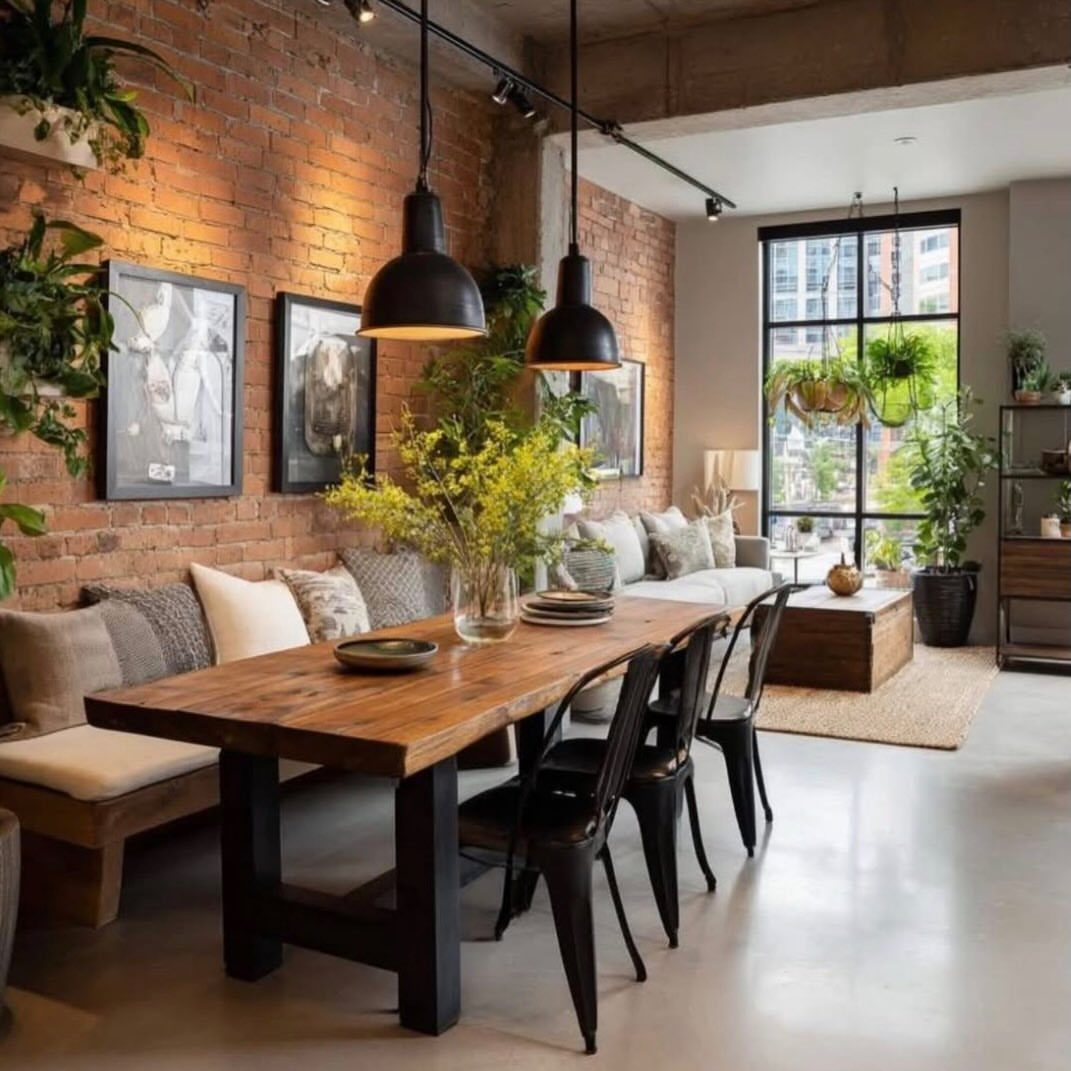
Black pendant lights hung over a wood-and-metal table give a brick dining area its industrial edge. Hang them low enough to define the dining zone, especially when the room opens onto a living area.
Black chairs keep the palette tight, and the wood tabletop keeps it from feeling cold.
I would choose one brick wall as the backdrop and leave the others plain, so the table sits in front of the brick rather than competing with it.
11. White Painted Exposed Brick
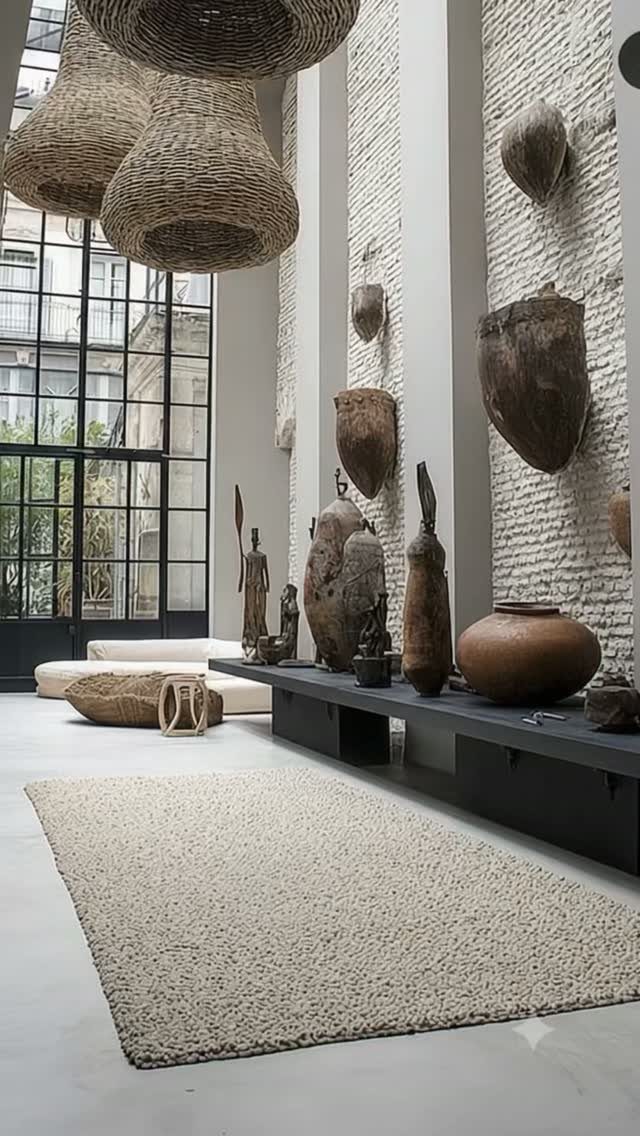
White paint turns brick from a statement into a backdrop, and that is the version I would pick for a small or dim room. The texture stays; the heavy red goes.
Woven pendants and pottery on a black shelf then do the talking, and the black shelf stands out against white far more than it would on red.
Use masonry paint, and be sure of your choice first: paint on brick is very hard to remove later.
Pros of Exposed Brick
Smooth paint, glass and metal all look sharper next to its rough surface.
It is also tough. Treated correctly, exposed brick holds up well in high-traffic spots like a hallway, where a painted wall would scuff.
Cost can work in your favor too.
Uncovering brick can come in cheaper than most other wall finishes if you have the time and the right tools, and you bring in a pro only for the jobs that call for one.
Cons of Exposed Brick
Not everyone likes brick. Some guests read it as messy or unfinished, so think about who spends time in the room before you commit.
Brick behind plaster is often a gamble. Expect some flaws: chipped faces, joints that don’t line up, old doorways or vents bricked over, and scars from past repairs, and occasionally the brick itself is just low grade.
Uncover a small test patch before you plan the whole room around it.
Your color is already set. Paint can change it, but painted brick loses the natural look.
Rough technique shows, so go slowly when exposing it. Plan on upkeep too: brushing, cleaning and re-treating keep brick from deteriorating, so be sure you have the time.
Care for Exposed Brick
For marks, test a diluted pH-neutral cleaner on a hidden spot first, and use as little water as you can. Skip pressure washers, wire brushes and acid cleaners indoors; they chew up the surface.
If you would rather change the look, paint also protects. The result resists moisture, and the texture still shows through.





