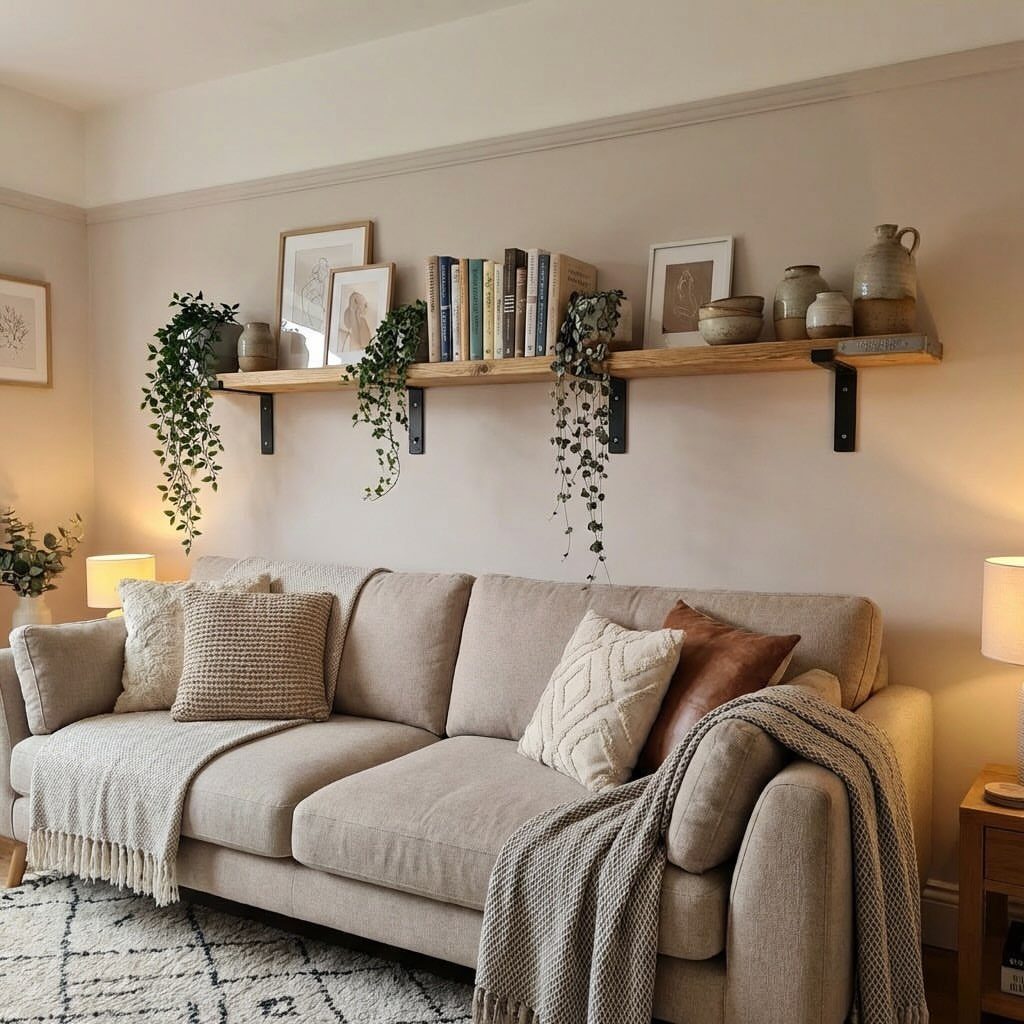
The ideas here run from a single wooden picture ledge that takes one drill session and one level to a backlit shelf where the cord has to be planned before mounting, and from a hidden compartment to a tree-shaped unit for potted plants.
What decides your pick is what the wall has to do besides look good: a renter who may need to patch holes later should lean toward a plain ledge or a hanging shelf, while anyone who wants to hide clutter gets more from the built-in storage of a hidden compartment.
Whichever you choose, the shelf hangs 12–24 inches above the backrest, right over people’s heads, so the hardware matters as much as the style.
1. Multi-Layered Floating Shelves
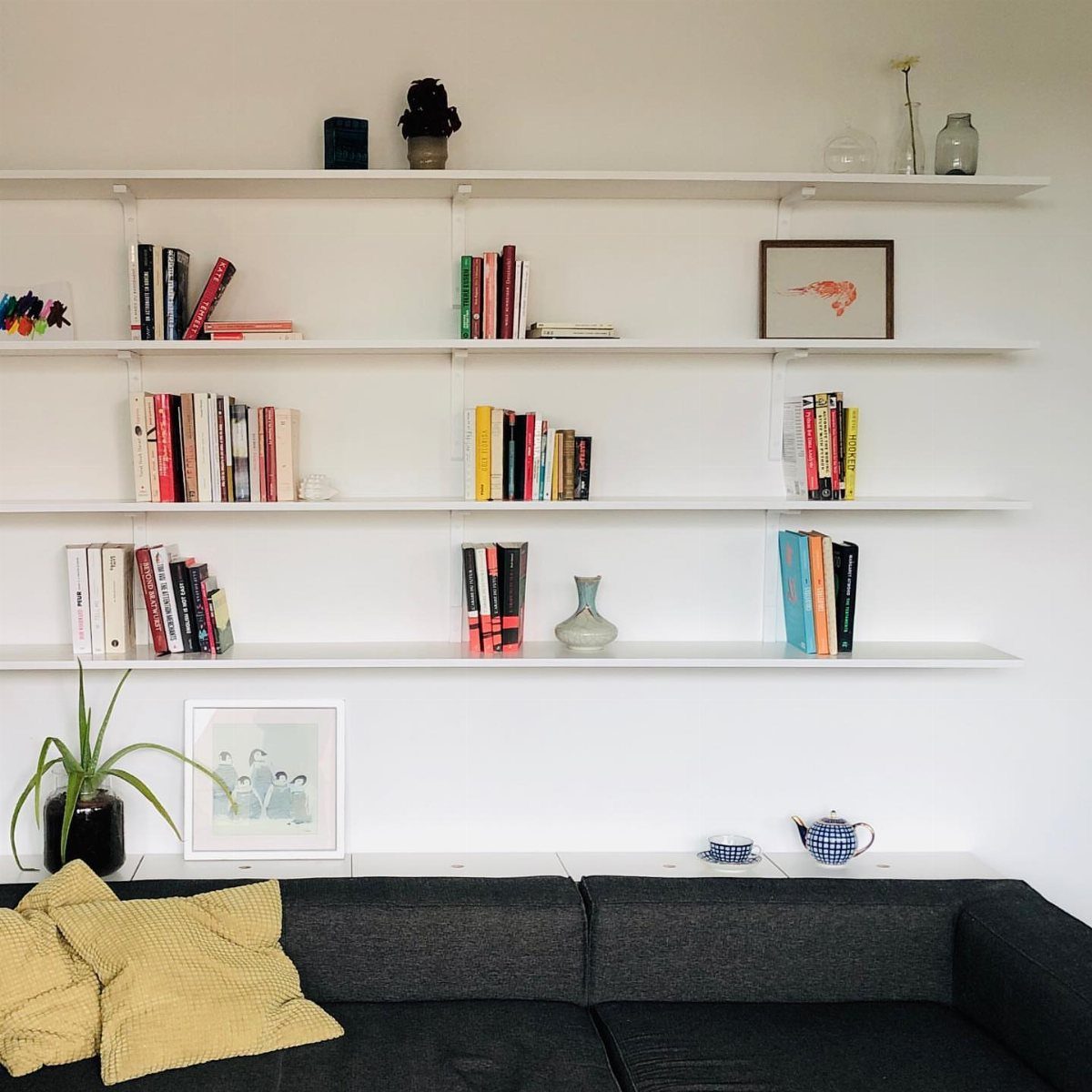
Three long shelves stacked in a column give a wall more rhythm than one shelf can. White shelves on a white wall nearly vanish, so the books, vases and the small framed picture do the visual work.
Stagger what sits on each level: tall vases on one, stacked books on another, a single frame leaning on the third.
Keep the shelves shorter than the couch so the stack reads as part of the seating area, and leave some bare shelf. Crowding all 3 is the quickest way to make the wall feel busy.
2. Hanging Shelf Above the Sofa
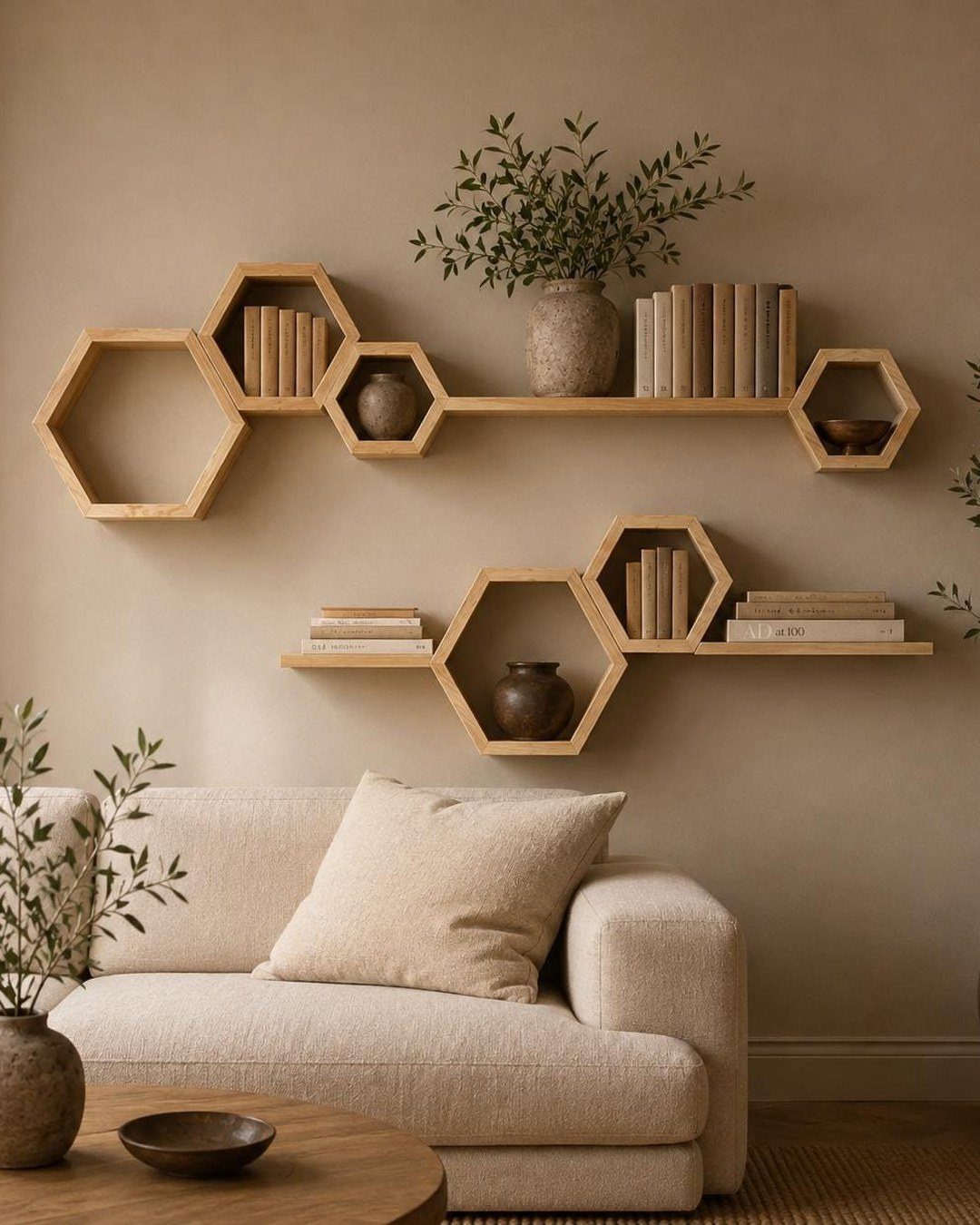
Hexagons break up the straight lines of a living room, and pairing them with a plain linear shelf keeps the wall from looking like a craft project.
Wood grain does the warming on a cream sofa and beige wall, so choose a shelf with visible grain, like oak or walnut, to keep the neutrals from going flat.
Set the hexagons slightly off-center from the sofa, with the linear shelf anchoring the group.
Trailing plants suit the open cells, while books fit better on the flat shelf. Hang the cluster before drilling by taping paper templates to the wall.
3. Floating Shelf with Hidden Compartment
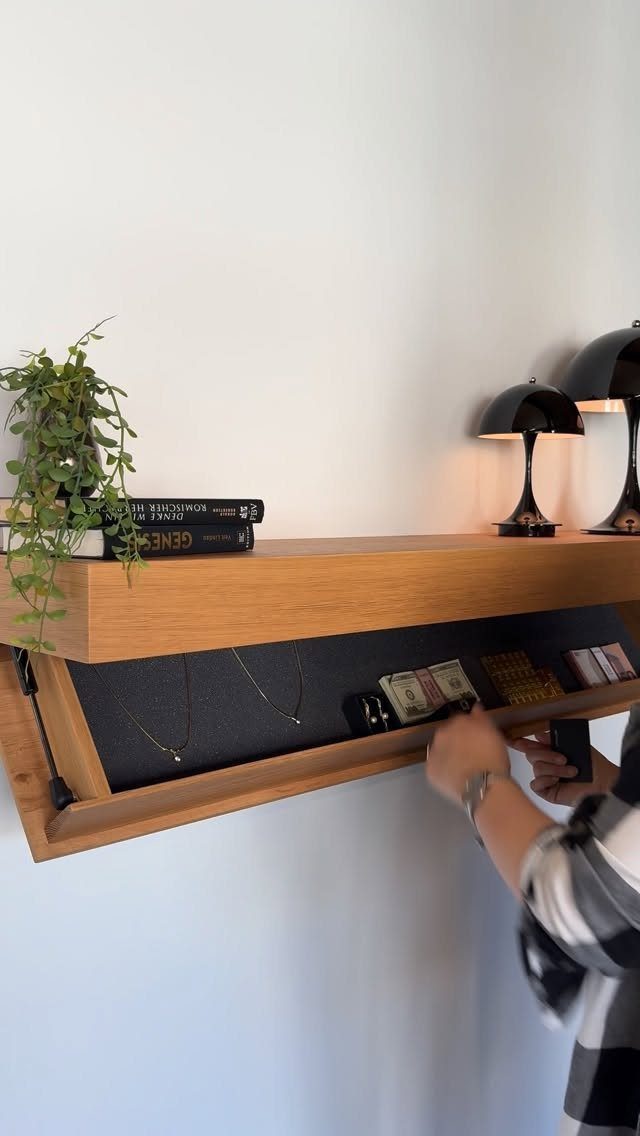
A shelf with a hidden compartment looks like ordinary display space but holds the things you would rather not leave out.
Spare keys, remotes and cash all fit in a slim hidden drawer or flap, depending on how the shelf is built.
I like this one for a shared living room, where the shelf stays tidy while the clutter disappears.
Wood is a good match for black lamps and a row of books on top. Check how deep the compartment is before you buy, since a thin shelf may only hold flat items.
4. Floating Shelf with Book Straps
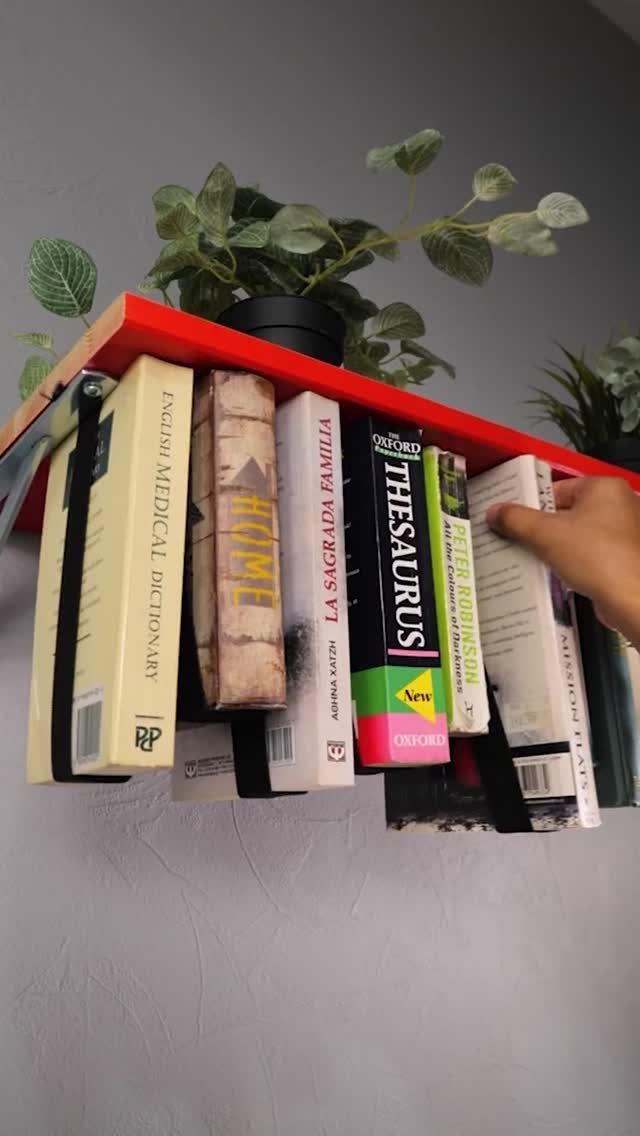
Straps turn a shelf into a place where books stay put, even when someone bumps the wall or drops onto the couch. Black straps against a red shelf also add a graphic line that plain ledges lack.
If you buy a strapped shelf, pick a color that contrasts with the wall, as the red against gray does.
A potted plant on top softens all that hard color. Strapped books are less convenient to grab, so keep the ones you read often elsewhere.
5. Single Wooden Picture Ledge
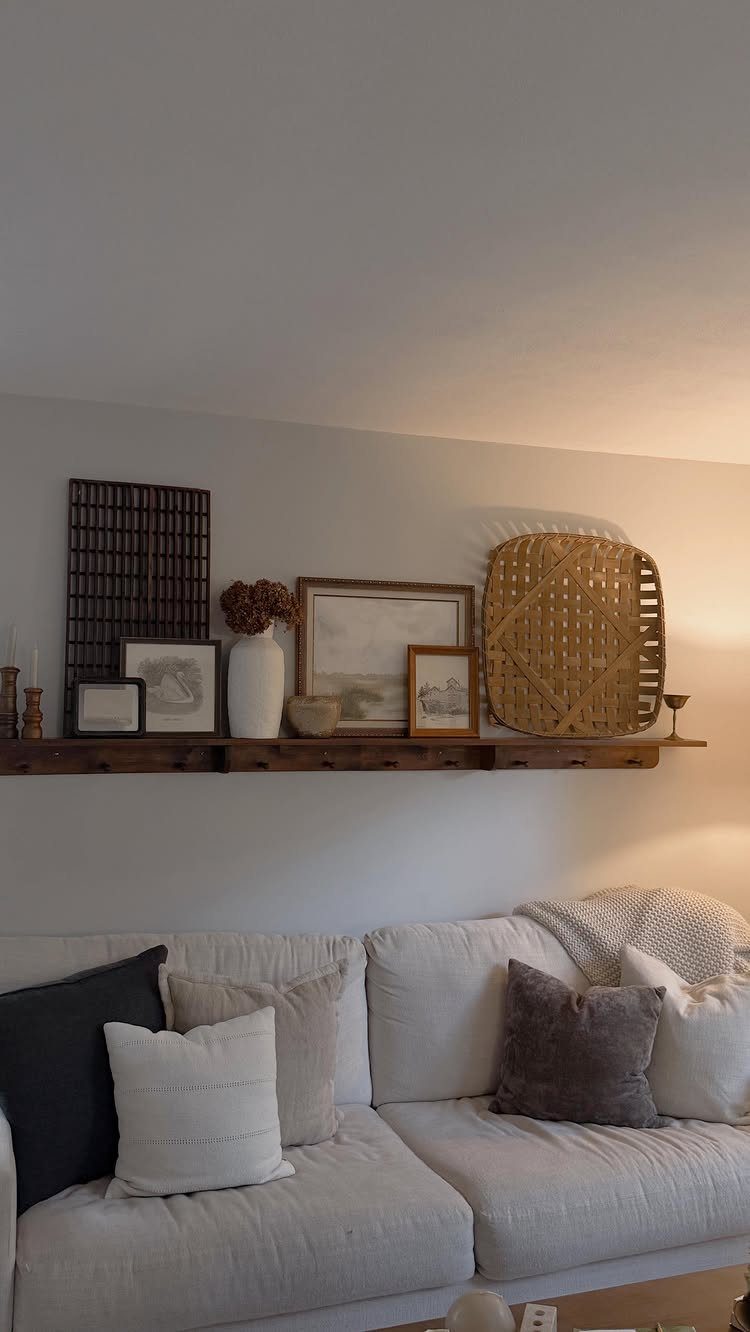
One wooden shelf, hung level above the couch, is the simplest version of this whole idea, and for a renter it is the easiest to patch later. It is about one drill session and one level.
Let the framed art lean rather than hang, and mix in a vase and a few woven pieces for texture.
Wood against a gray wall and a white couch adds warmth without another paint color. Odd numbers of objects, three or five, tend to look more natural than pairs.
6. Backlit Floating Shelf
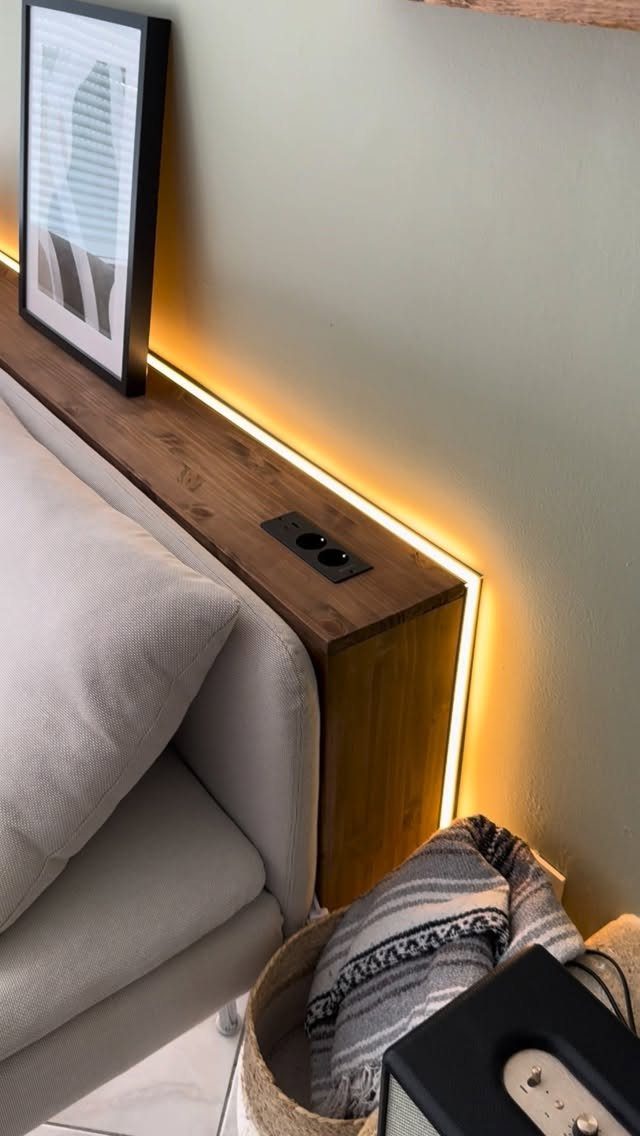
Warm LED strip lighting tucked into a wooden shelf gives the wall a soft glow that replaces a floor lamp. That makes it practical in a small living room where outlets or floor space are short.
Choose a warm white strip, not a cool one, so the wood looks golden rather than harsh.
Hide the strip along the back or underside edge so you see the light, not the diodes. Plan where the cord will run before mounting, because rerouting it afterward means taking the shelf back down.
7. Floating Shelf with Mirror
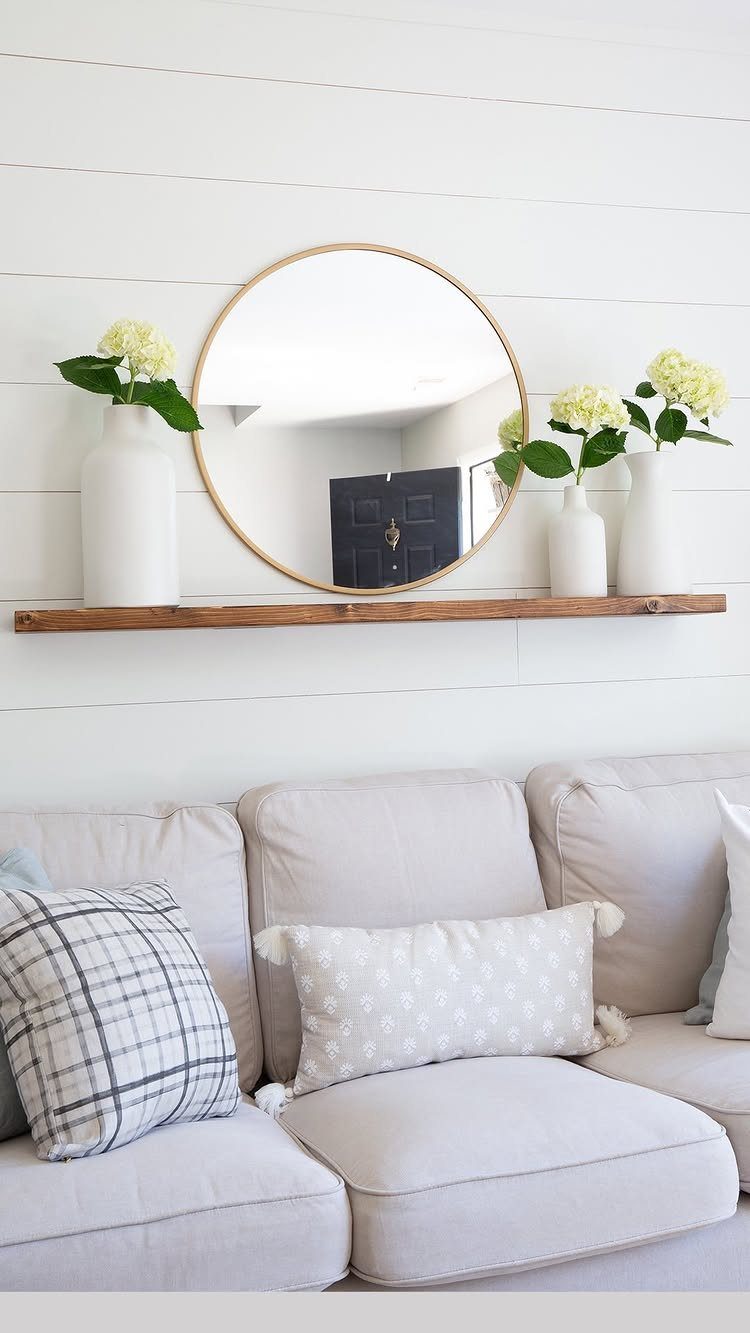
A round mirror on a wooden shelf bounces window light back into the room, and that is why it beats a second piece of framed art for me.
Leaning it against the wall keeps the shelf renter-friendly, with no extra holes beyond the shelf brackets.
Gold framing against white shiplap reads warm, so the wood and the frame work as a pair.
3 vases of different heights beside the mirror give it company. Fresh flowers add color, though they need new water every few days.
8. Geometric Floating Shelf Unit
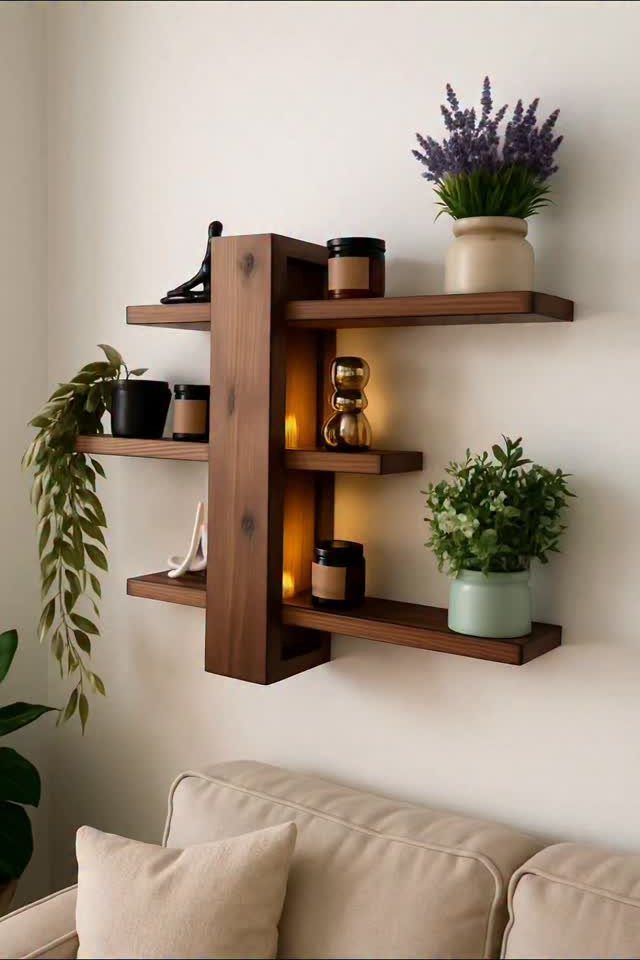
Dark wood shelves set at different angles turn a plain white wall into a focal point, and a beige couch gives them enough contrast to stand out.
Because the unit is already busy, I would keep the decor small: a few plants, a couple of candles, one or two objects.
Mount it before you style it, and trace the pieces on paper first so the spacing stays even. Dark wood shows dust quickly, so expect to wipe it down often.
9. Tree-Shaped Floating Shelf
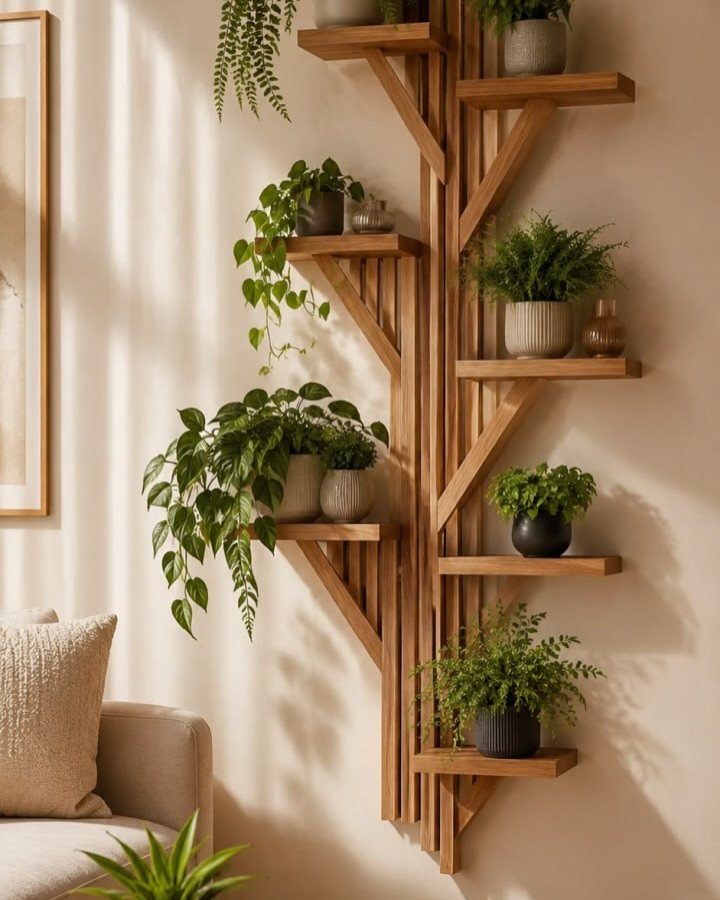
Branches that hold potted plants make the shelf look like a tree growing up from the couch arm, a softer shape than a straight board.
Plants are the obvious match for it, and small pots keep the branches from looking overloaded.
Light wood against a beige wall stays calm, so let the greenery supply the color. Hang it where the pots can sit clear of anyone leaning on the couch arm, and choose pots that fit each branch before you buy.
Installation Process
Start with a pencil mark at the height you chose, then run a level across it and draw the line the full length of the shelf.
A crooked shelf above a couch is obvious from every seat, so check the line twice before any drilling.
Mark each bracket spot, drill a pilot hole there, and tap in an anchor rated for your wall type, since drywall, plaster and masonry each call for a different one.
Screw the brackets on and give each one a firm tug before the shelf goes anywhere near them.
Slide the shelf onto the brackets, set the level on top once more, and press down on it with real weight.
If it shifts or sags, fix it now, while the shelf is still empty. Only after it passes that test should any decor go up.
Selecting the Perfect Spot
Line the shelf up with the center of the couch, and hang it so there’s 12–24 inches of clear wall between the top of the backrest and the underside of the shelf.
Lower than that and the shelf feels cramped; much higher and it drifts away from the seating. Leave enough room that nobody hits their head when they stand up or lean back.
Size matters as much as height. A shelf about 2/3 to 3/4 of the sofa’s width looks balanced, while a shorter one looks lost and a longer one overpowers the wall.
Group small items into one cluster instead of scattering them, and leave some bare shelf around them.
Choosing the Right Hardware
A shelf above seating has to hold up when someone bumps it, so spend a little more on heavy-duty brackets.
Match the anchors to your wall type, since the right anchor for drywall is not the right one for plaster or masonry. The package will say which wall it suits and what weight it holds.
If the shelf will carry heavy items like stacked books or a large mirror, hidden metal brackets add support and keep the look clean.
Pick the sturdier option over the cheaper one here, because the shelf hangs right over people’s heads.
Frequently Asked Questions
What should I put on floating shelves above a couch?
Books, vases, a framed picture or two, and a few plants or woven pieces work well.
Where should I position floating shelves?
Center the shelf over the middle of the couch. Mark the height with a level before drilling, since a crooked shelf shows from every seat.





