Which of these front door and porch ideas fits depends on the porch you already have: a small one tops out at 2 chairs and a pair of planters, while a wraparound needs zones and repeated colors to hold together.
The list runs from a one-quart door repaint and a wreath that came together for about $30 up to a full porch dining and lounging set.
Measure the porch before you buy anything, because dining and lounging furniture is usually the biggest cost on the list.
1. Painted Front Door
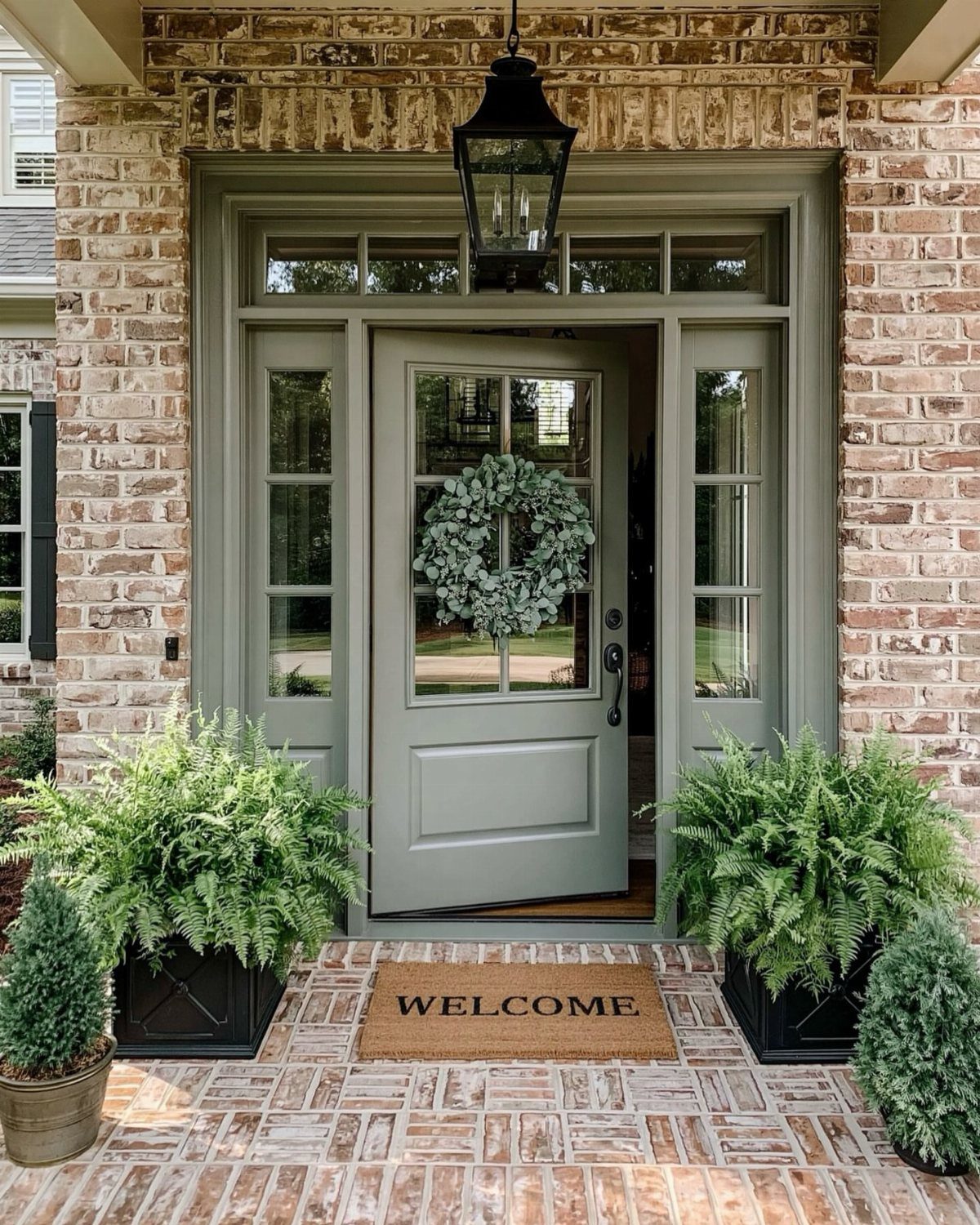
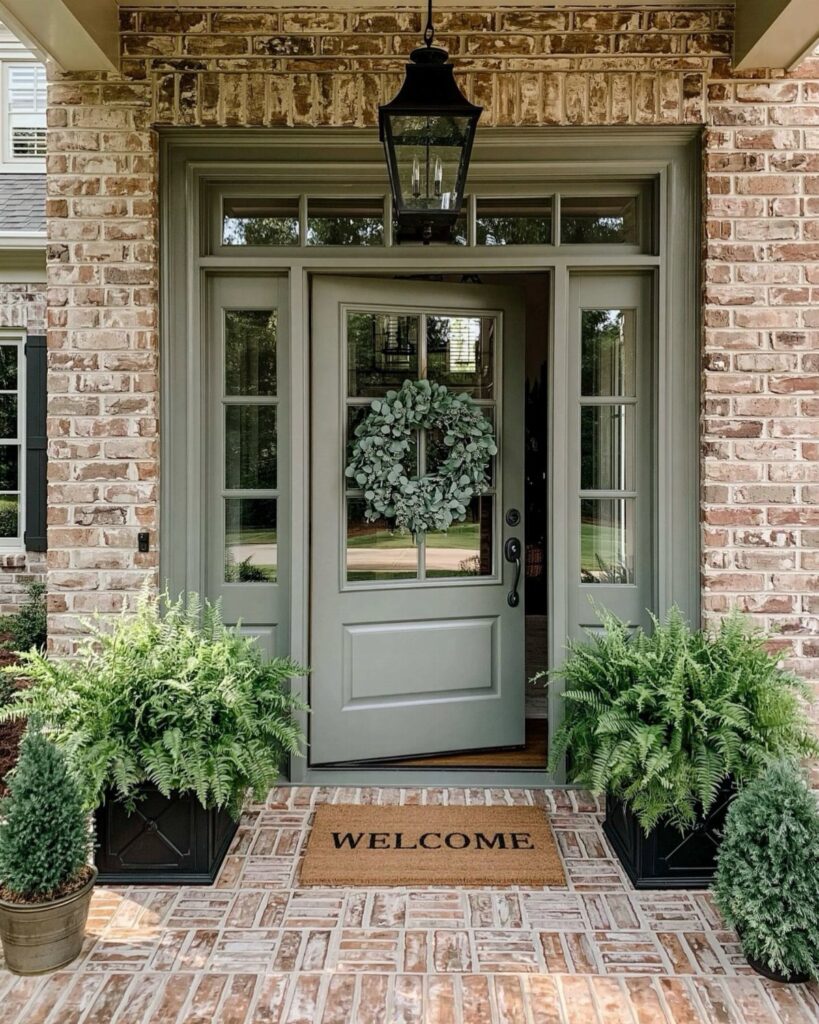
Sage green on a door with sidelights and a transom reads soft against red brick, and it ties in the ferns without matching them.
A painted door is one of the lowest-cost changes an entry can get: one quart and one weekend.
Pick a color that sits a shade away from the brick rather than fighting it. Grey and green both do that well.
Tape the glass edges and hardware, and let each coat dry fully before the next.
2. Porch Hanging Baskets
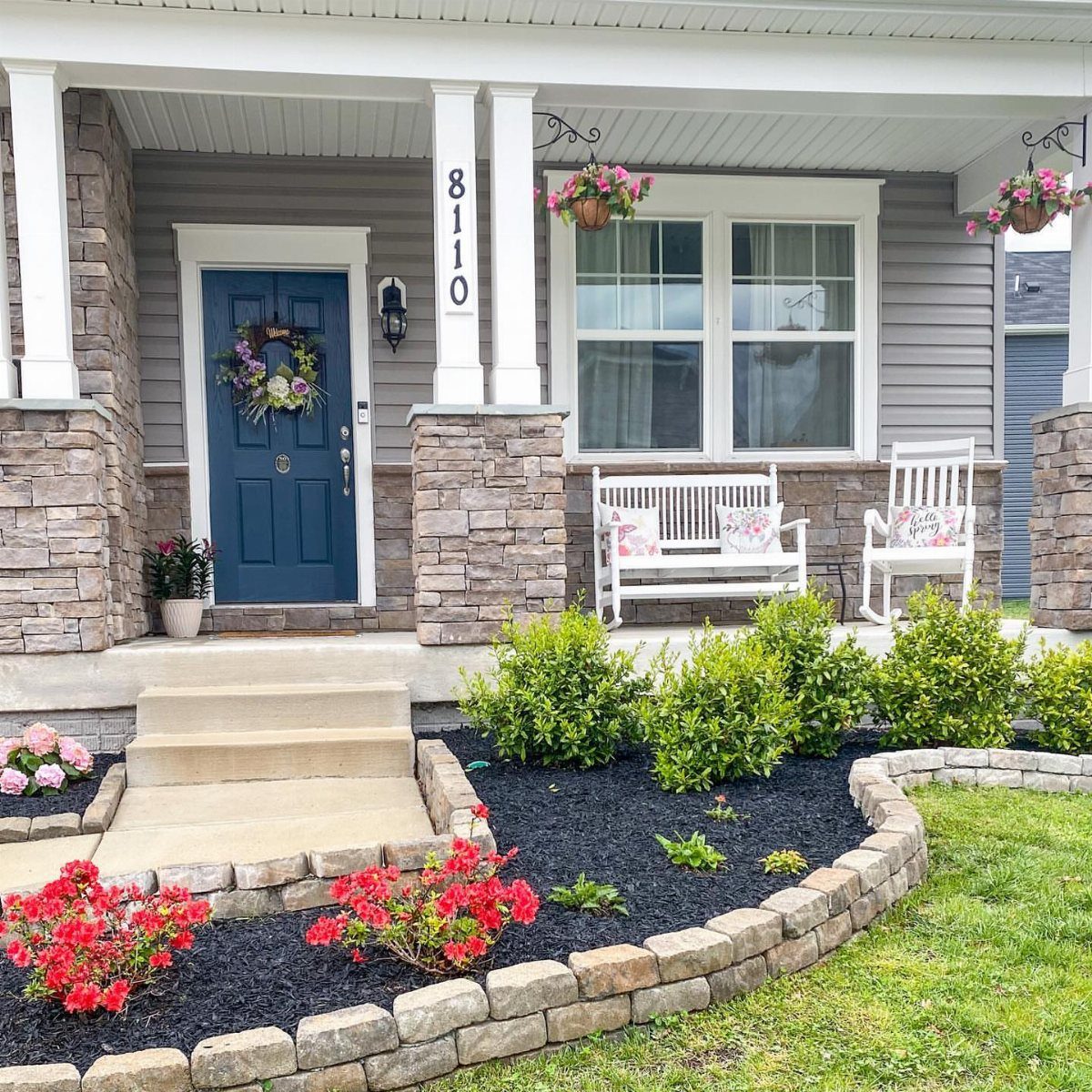
2 hanging baskets spaced evenly on a porch with stone pillars give the eye something soft to land on, and pink blooms look good against a blue door.
Hanging them keeps the floor clear for the white furniture, which matters on a porch with limited room.
Match the pair in size and plant so they read as a set. Hang them at a height where you can reach them to water.
Baskets dry out faster than pots, so I would plan on frequent watering.
3. Layered Doormats
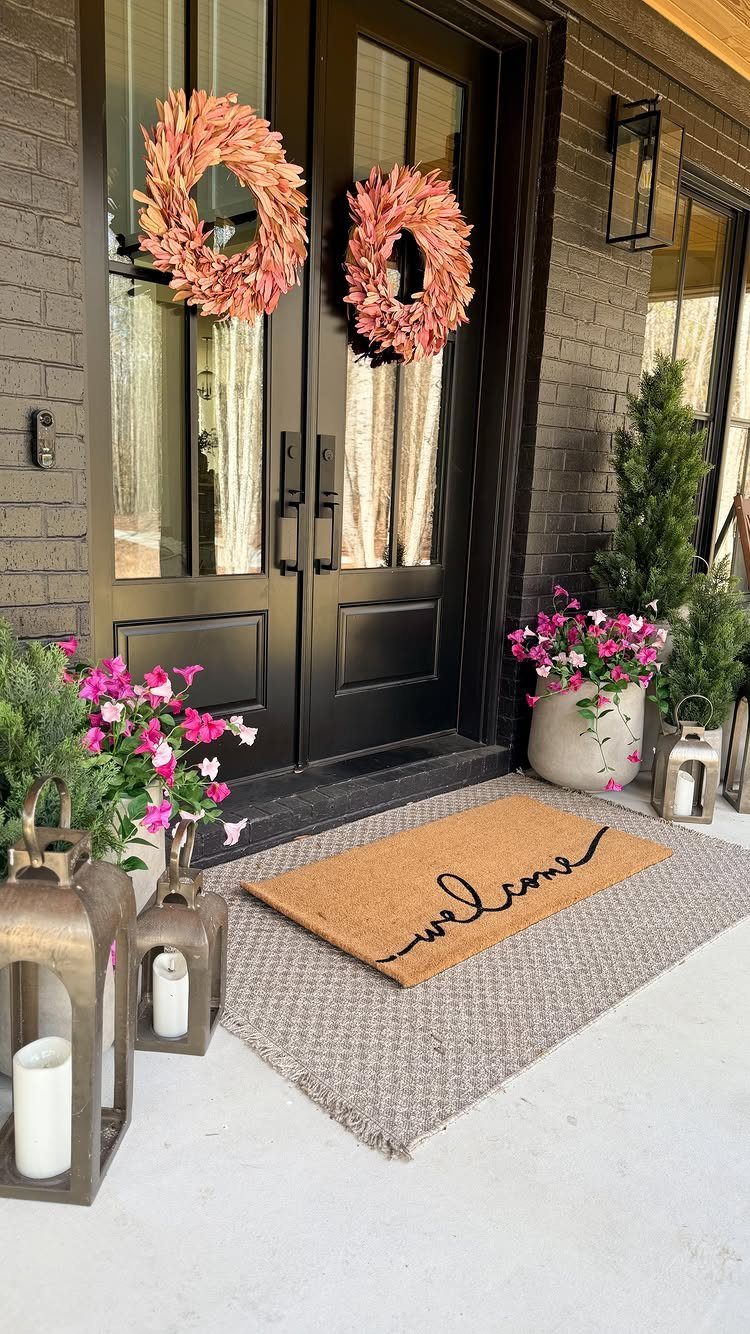
A coir "welcome" mat sitting on a larger grey patterned rug gives a black door a proper landing zone. The rug adds pattern and color; the coir stays practical for wiping shoes.
Choose a rug wider than the mat so a border shows on every side. Keep the base rug in an outdoor-rated fabric, since it will take rain and grit.
Stick with one pattern on the bottom layer and a simple word or graphic on top. 2 busy layers fight each other.
4. Seasonal Wreaths
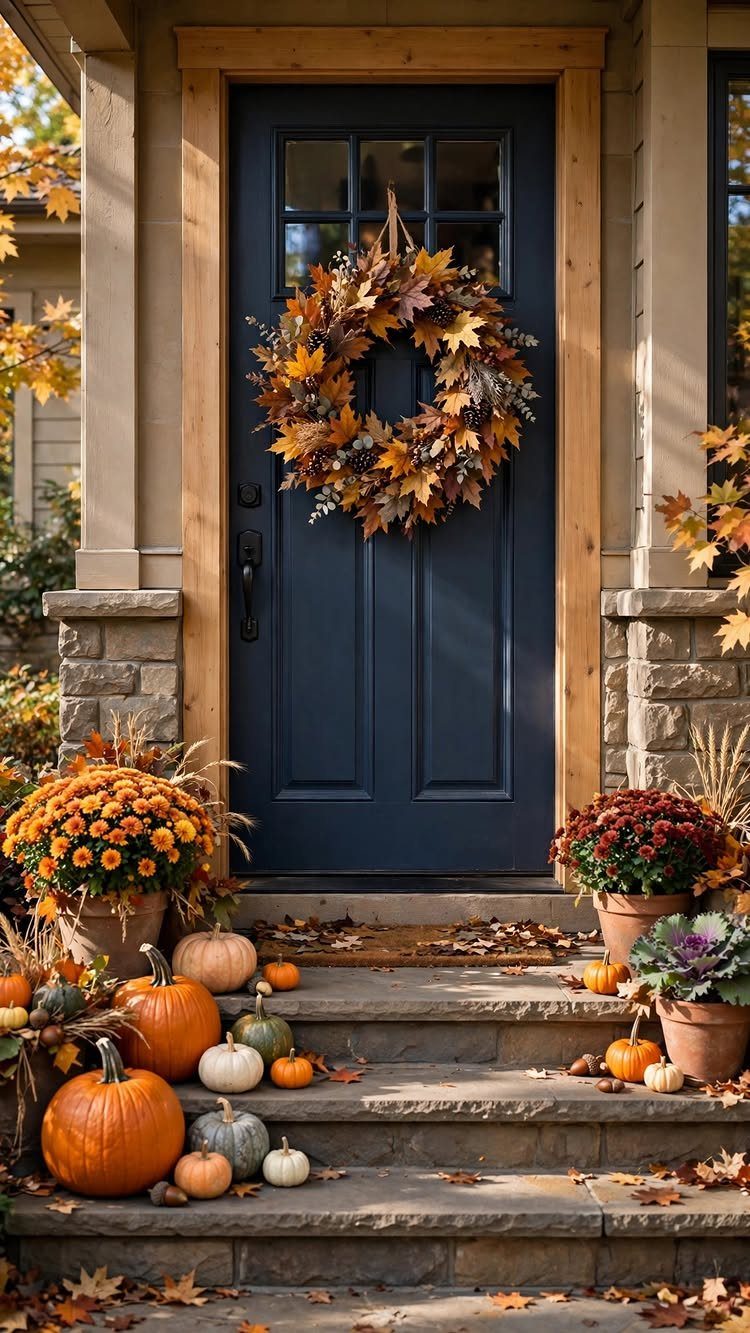
Fall can be handled with one wreath, a few pumpkins and some mums on the steps. The maker of this blue-door display says the whole look came together for about $30, which is a fair target for a seasonal refresh.
Buy mums in pots and set them on separate steps at different heights. Keep the wreath in matching tones as the flowers so the display feels like one idea.
Swapping these pieces each season is cheaper than redoing anything permanent.
5. Porch Dining and Lounging Furniture
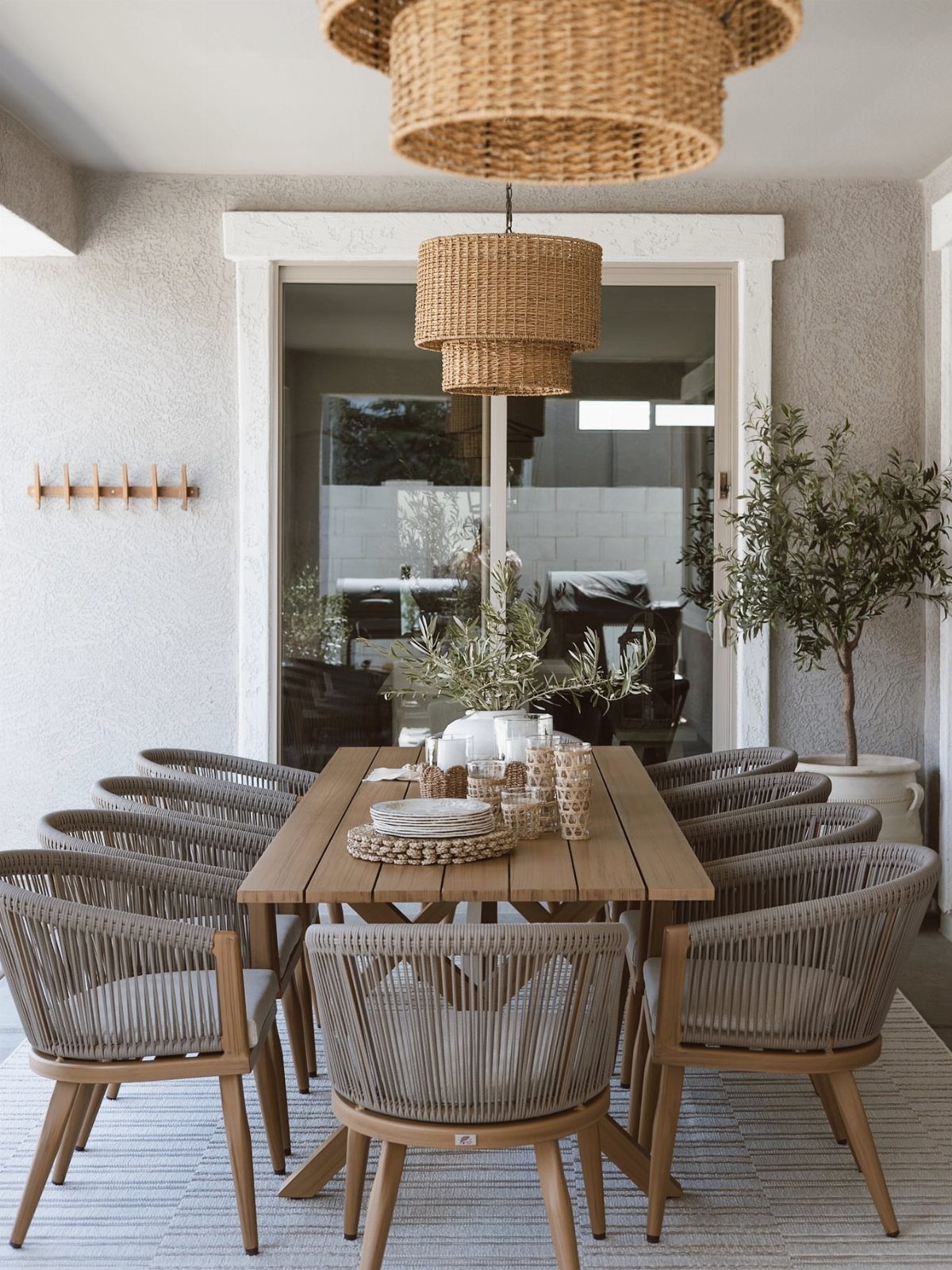
A wooden dining table with rope chairs turns a covered porch into a real outdoor room, and woven pendant lights overhead make it feel finished at night. Setting the table with plates and glasses is half the appeal.
Measure first.
A table needs room for chairs to pull out, so leave a clear walkway around it. I like natural textures here, since wood, rope and a potted olive tree stay calm together on a neutral porch.
Furniture is the biggest spend on a porch, so buy the table first and add lounge pieces later.
6. Wraparound Porch

On a curved wraparound porch with white railings, the challenge is that one long space needs to look like one design.
Split it into zones, such as a seating area, a dining spot and a quiet corner, then repeat a few colors across all of them.
Pick a few accent colors and use them in every zone: cushions, planters, lanterns.
Spreading small items thinly across the whole length looks scattered, so I would group them in clusters instead.
7. Small Front Porch Chairs
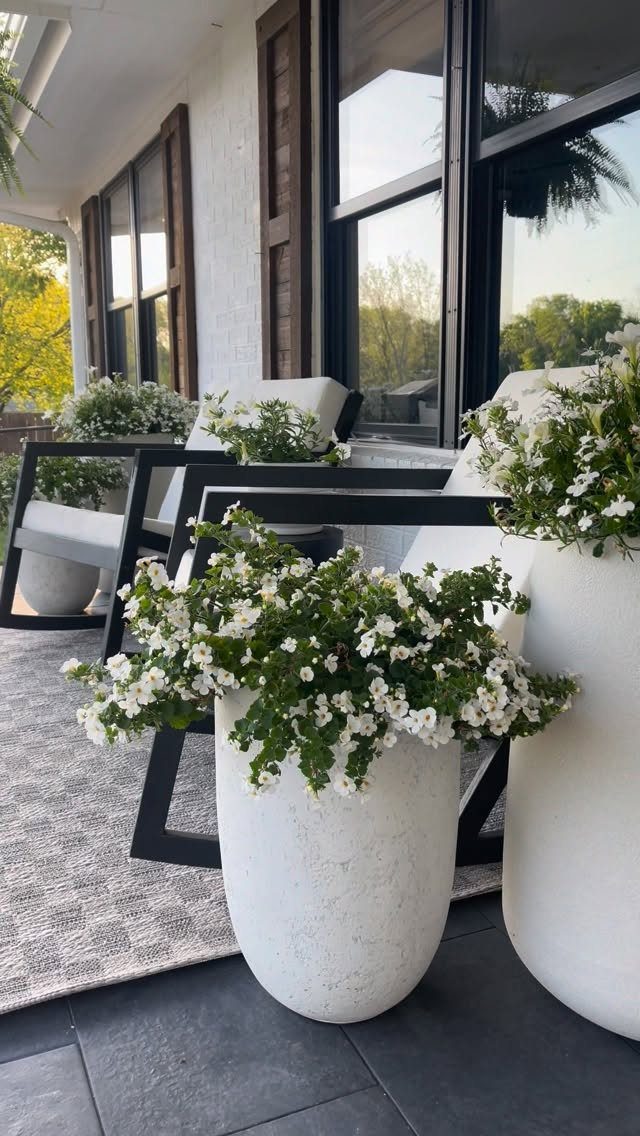
2 chairs and a pair of planters are enough to turn a small porch into a conversation spot.
Angle the chairs slightly toward each other instead of setting them parallel to the house. Keep the planters at the outer edges so they frame the seats without crowding the walkway to the door.
On a porch this size, 2 chairs is the limit I would set.
8. Porch Light Fixtures
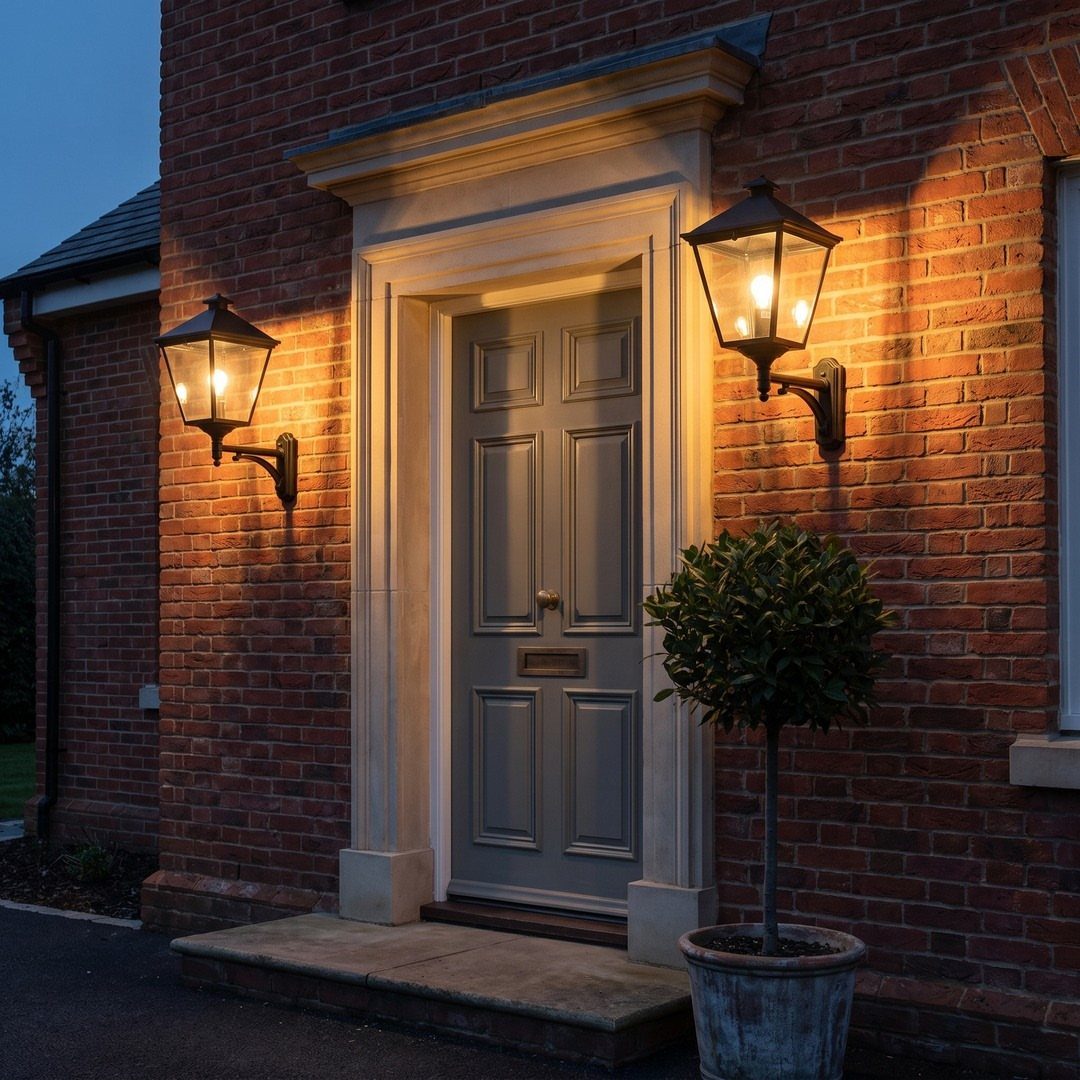
Lantern-style wall lights flanking a grey door give brick a warm glow after dark, and the black finish keeps them looking classic. Hung as a matched pair, they frame the door and make the entry feel balanced.
Choose a vintage-inspired shape if the house is brick, since the old-fashioned lines suit the material. A modern fixture works on smoother siding.
Swapping a fixture is a small project, but I pick the style before buying so both lights match.
9. Outdoor Pillows and Blankets
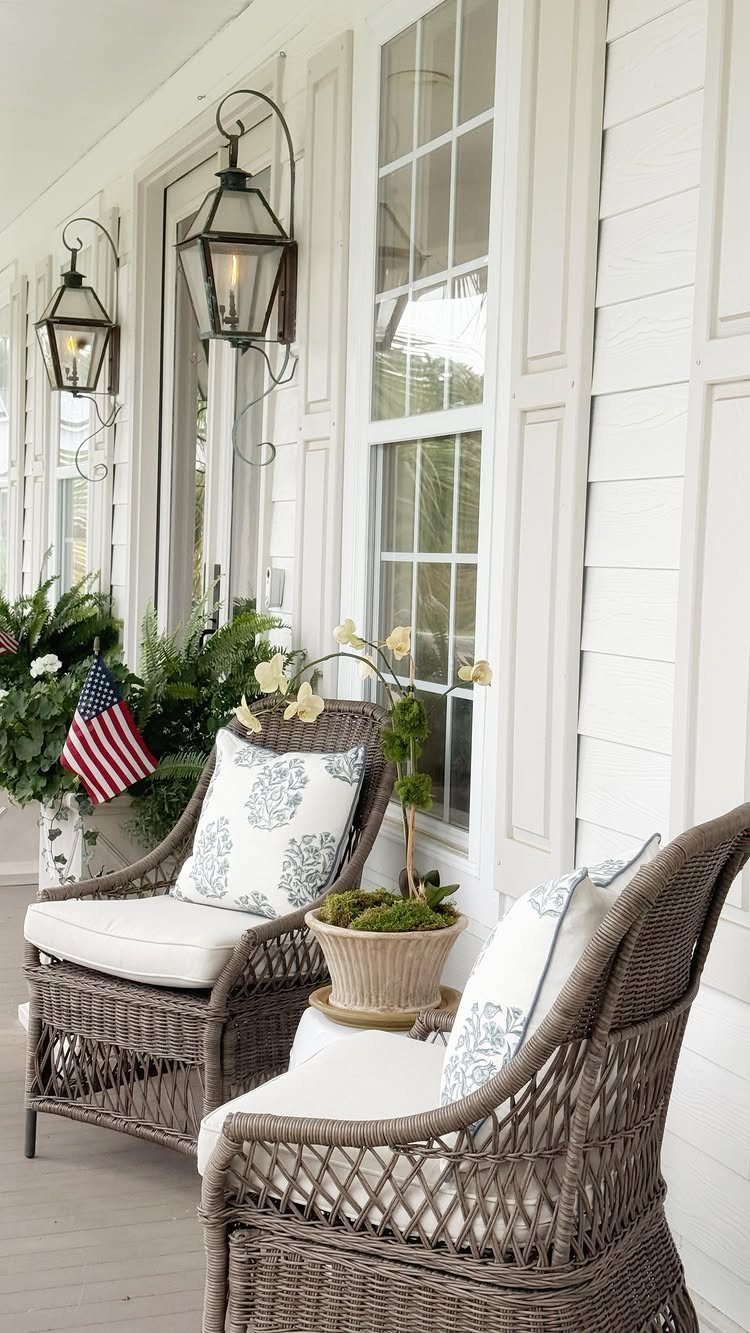
White cushions on wicker chairs get their personality from the pillows, and a blue-grey pattern keeps a white porch from going flat. Pillows are the easiest layer to change, so start there.
Stick to one color family and mix pattern only in the pillows, leaving the cushions plain. 2 pillows per chair is plenty.
A throw blanket folded over an armrest is a cheap add-on for cooler evenings. I would choose outdoor-rated fabric for anything that stays out.
10. DIY Porch Decor
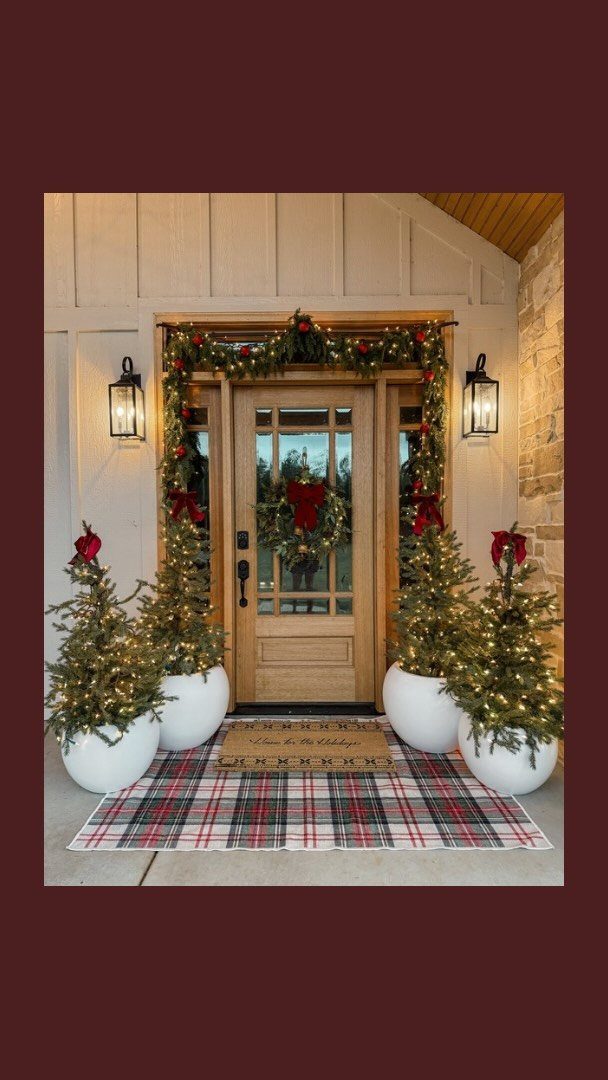
The lights on the trees do the most work after dark.
Line the potted trees up in matched pairs so the display reads as planned.
Each piece is cheap to make or buy on its own, so you can build the look over several weekends and store it for next year.
Tips for Porch Maintenance
Start with a sweep before you buy anything. Dirt and cobwebs hide how a porch actually looks, and a power wash on the floor, steps and railings often does more than a new accessory would.
Then clear out whatever isn’t earning its spot. Unused furniture and half-dead pots make an entry feel neglected, so pull them out before you add anything new.
Check the light fixtures while you’re at it. A fixture that is outdated or no longer works is worth replacing with a style that suits the house.
If the porch still looks drab after cleaning, paint is the next step. The trim or the porch floor can take a fresh coat, in either a bold or a neutral color that works with the exterior.
Plan to repeat the sweep and rinse on a regular schedule, so the porch never needs a big rescue.
From refreshing your front door with a new coat of paint to replacing dated light fixtures, there are so many ways — big or small — to breathe new life into your home’s exterior.
Choosing Materials
Material choice sets how much time and money the porch costs you after the project is done. I lean toward low-maintenance options for anything that takes weather, like decking and railings, because they cut down on repainting and repair.
If the house already has traditional columns and railings, keep them. Repainting or refurbishing them is cheaper than replacing them, and they add a timeless look on their own.
Stone and wood add the texture a painted door and vinyl siding can’t, and both warm up a porch that otherwise looks flat.
Swap plain concrete steps for flagstone, or lay a deck of cedar or pressure-treated boards, and the porch reads as a different place.
Both need upkeep, though. Keep them in good repair, since worn steps or damaged boards are a safety problem as well as an eyesore.
Designing for Space
Size the porch to the space around it. A porch that crowds the yard or walkway works against you, so check how much room is left before you commit to a footprint.
Make a new porch look like part of the house. Its shape and detailing should match the exterior so it reads as original to the façade.
Decide on railing early, and ask whether you need it for function or only for looks.
On a large or wraparound porch, give each seating zone its own purpose and keep the design cohesive. Better views help too, so face the seating toward them.
Frequently Asked Questions
How do I build a porch on the front of my house?
Before anything gets framed, mark the footprint with stakes and string; a porch that crowds the walkway or eats the front yard will annoy you every day.
Roof pitch, trim profiles and post style should echo what the house already has, so the porch looks like it was there from day one.
Railing is worth settling during planning: in many areas codes require it once the deck sits 30 inches or more above grade, and below that height it is purely a style call.
How do I decorate my front door?
A fresh coat of paint is the cheapest place to begin: one quart and one weekend.
Stay close to the exterior, say a muted green or soft gray against brick or siding, and the door will look planned instead of loud.
A wreath adds a second layer, and a neutral, leafy one lasts through every season, while a flower-heavy one needs swapping more often.
What can I put outside my front door?
A layered doormat is a good first piece: a plain coir mat on a larger outdoor-rated rug, with a border of rug showing on every side.
Potted plants, a pair of matched wall lanterns, hanging baskets and a couple of chairs all work too.
Outdoor pillows and a throw are the quickest layer to swap with the seasons, but only if the label says outdoor-rated, since indoor fabric fades and mildews fast.





