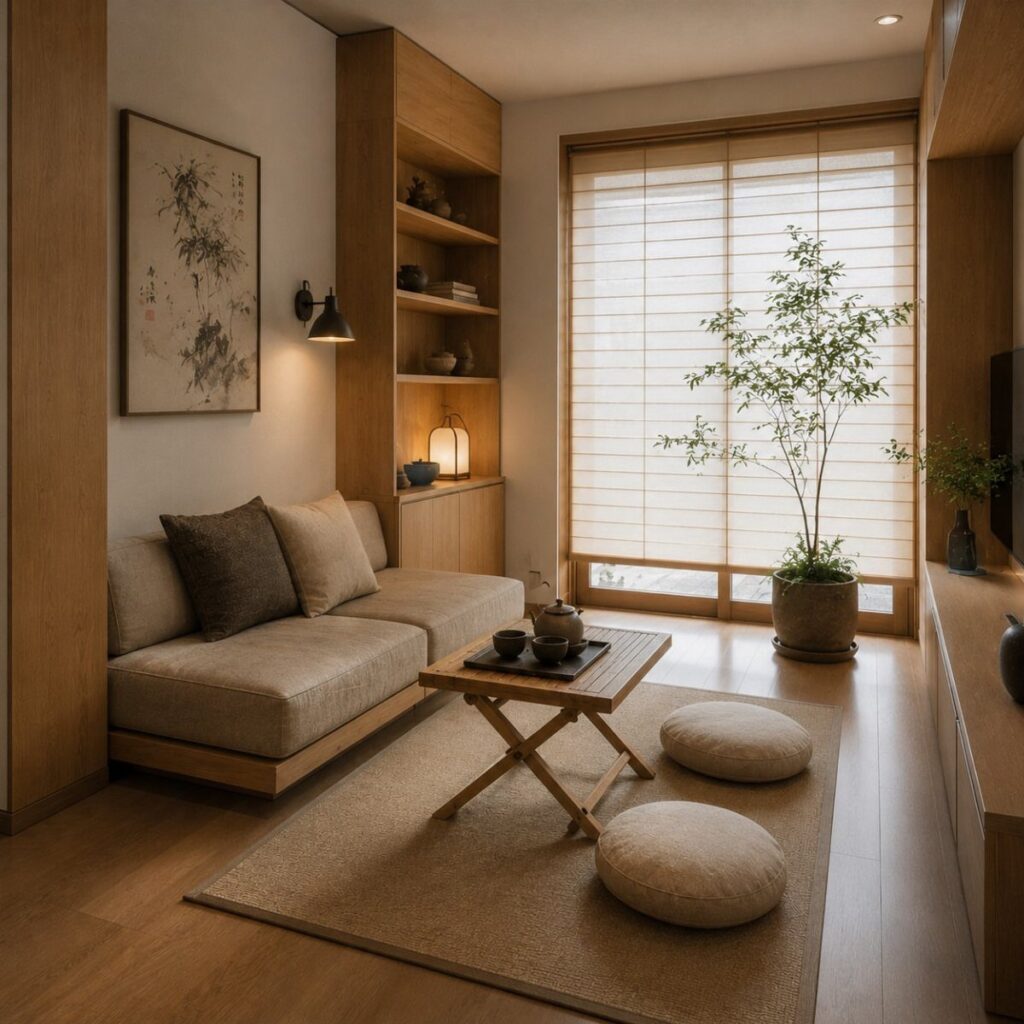
Renters can get this look with a freestanding shoji-style screen, a paper lamp for diffused light and a few pieces of wood and stone, while owners can go as far as tatami mats and a full Japanese modernism bathroom.
What decides your version is whether you can drill, paint or build, because the ideas run from a single stone piece on a shelf to low-profile bedrooms with shoji screens and an inner courtyard.
If you rent, start with the pieces that lift out and leave the walls alone.
1. Uncluttered Spaces
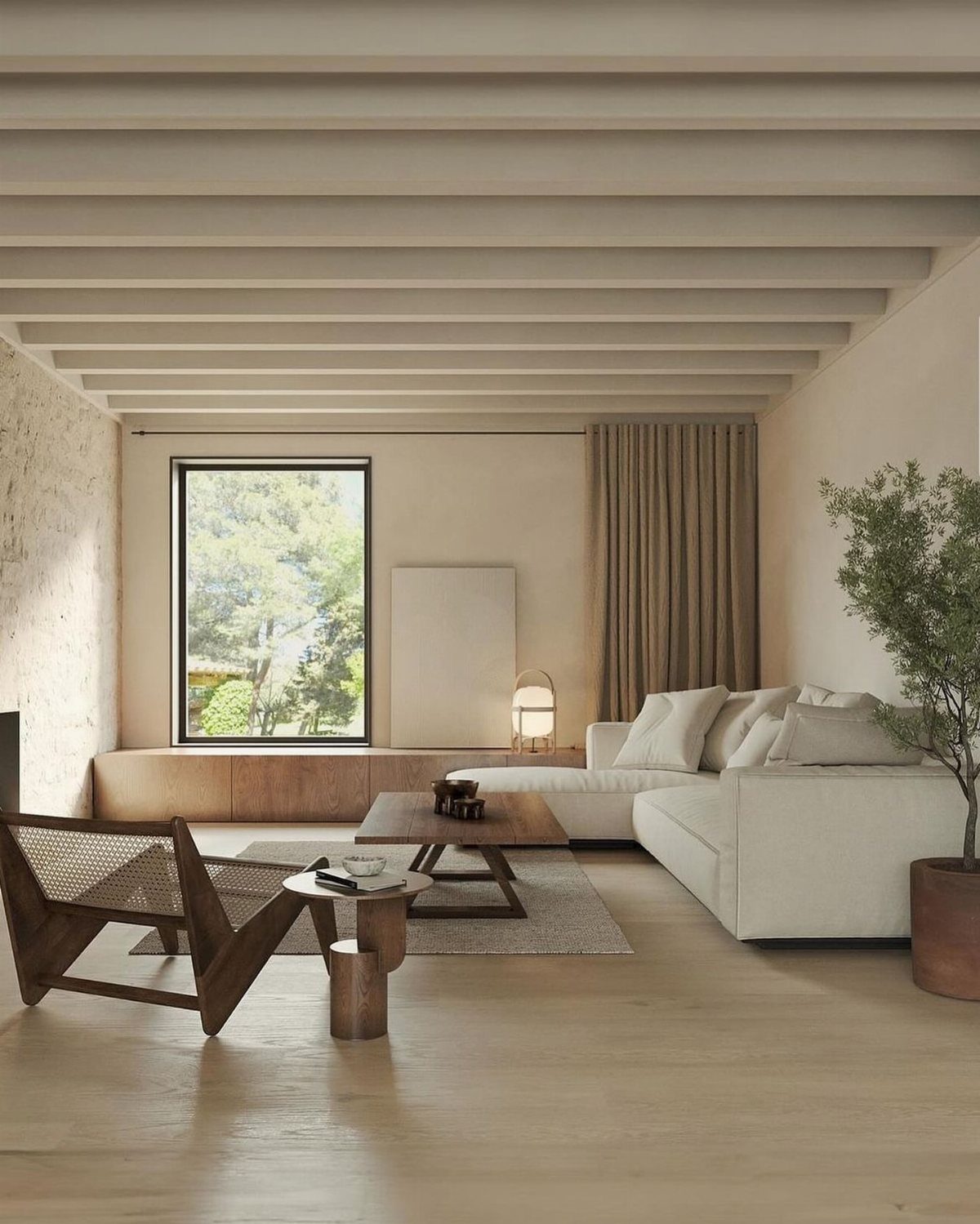
A room this calm depends on what stays off the surfaces.
Try it in one weekend: clear every flat surface, then return only what you use daily.
Closed storage helps, because a basket or a cabinet keeps the rest out of sight. Since the window frames the view, leave it free of heavy curtains.
I stop at just a few pieces of furniture in a room this size.
2. Wood and Stone
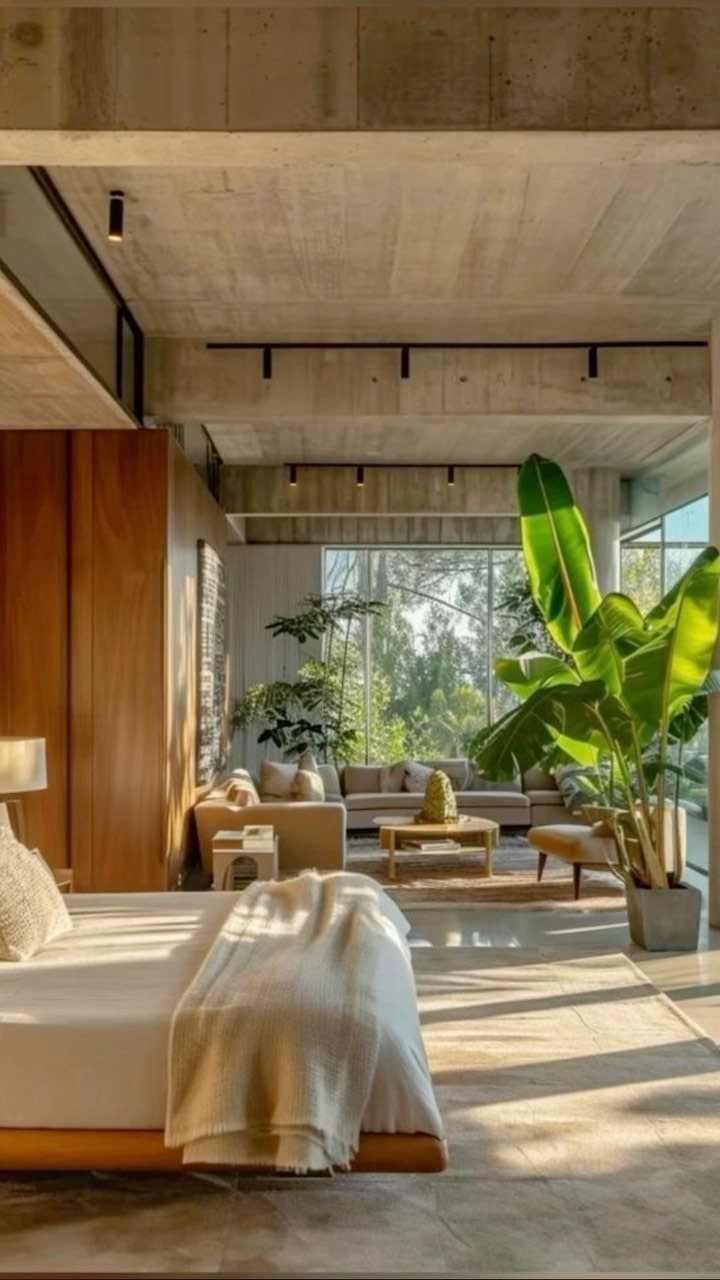
Raw wood against concrete is a pairing that costs little to borrow. You do not have to build a house around it; one wood-paneled wall does most of the work, and the green plants soften the hard surfaces.
Renters can get the same effect with wood slat panels or a wood-look peel-and-stick product. Add stone through small pieces: a tray, a bowl or a side table.
I like keeping the wood in one tone, so the space feels warm and not busy.
3. Meditation Areas
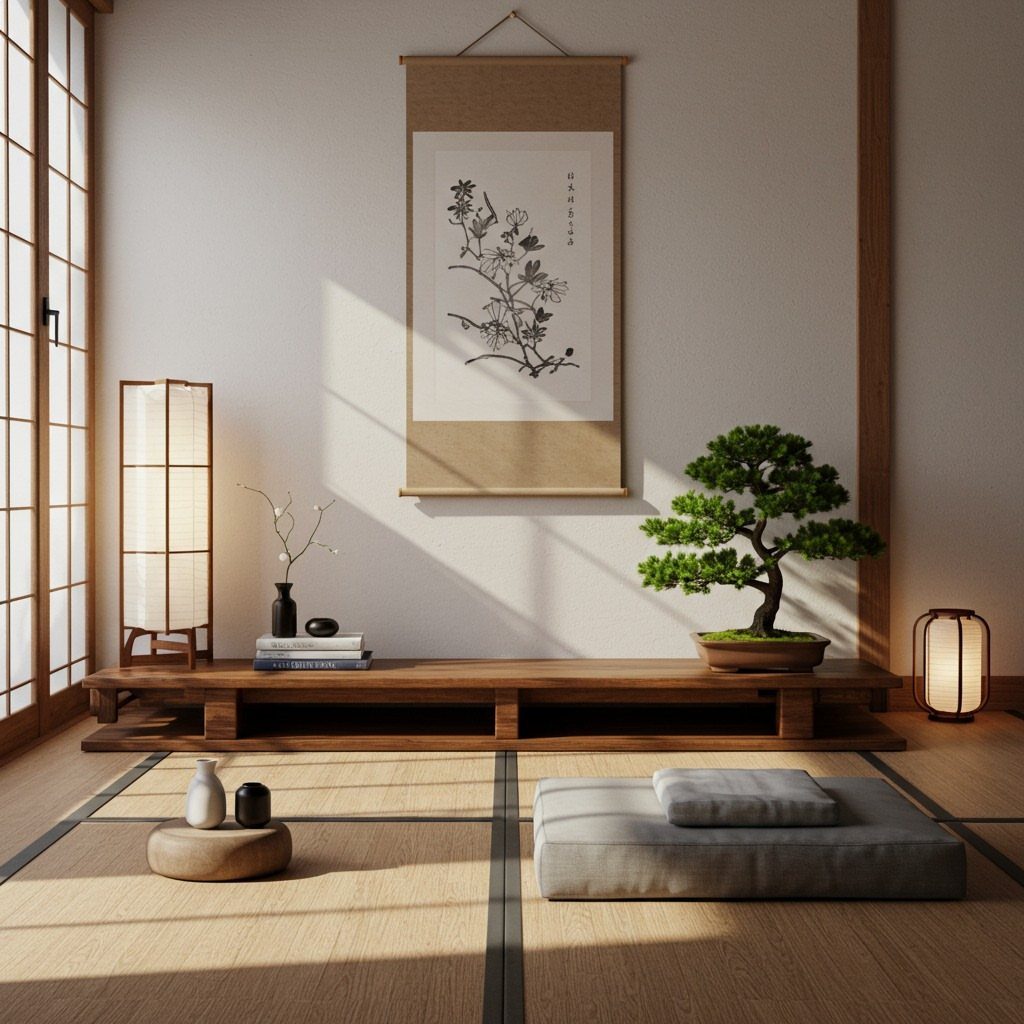
A meditation corner needs less than most people expect: a floor cushion, a low surface and one thing to look at.
The bonsai and the hanging scroll give the eye a place to rest, and the paper lamp keeps the light gentle.
In a small apartment, claim a corner and keep it for sitting only, with no laptop or laundry basket nearby. A single cushion marks the spot.
Choose one focal object, not three. The quiet comes from restraint.
4. Tatami Mats
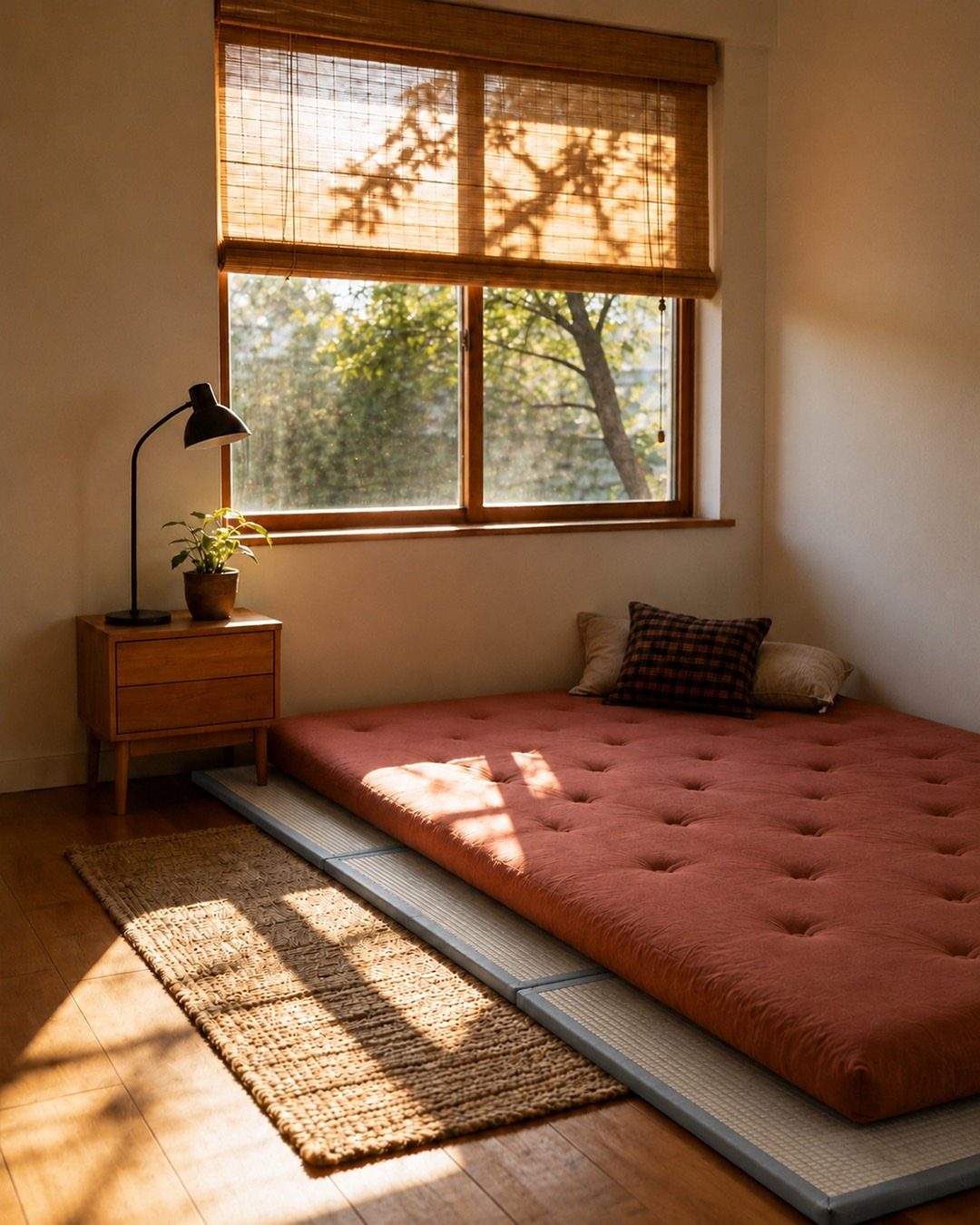
Tatami changes how a room is used, because the woven surface invites you to sit and sleep close to the floor. A low mattress on tatami keeps the bedroom open and the ceiling feeling high.
Full-size mats are a real commitment on a renter’s budget. Cheaper options are tatami-style rugs or a few mats laid in the sleeping area only.
Pair them with bamboo blinds, as here, to keep daylight soft. Take shoes off at the door.
5. Japandi Living Room
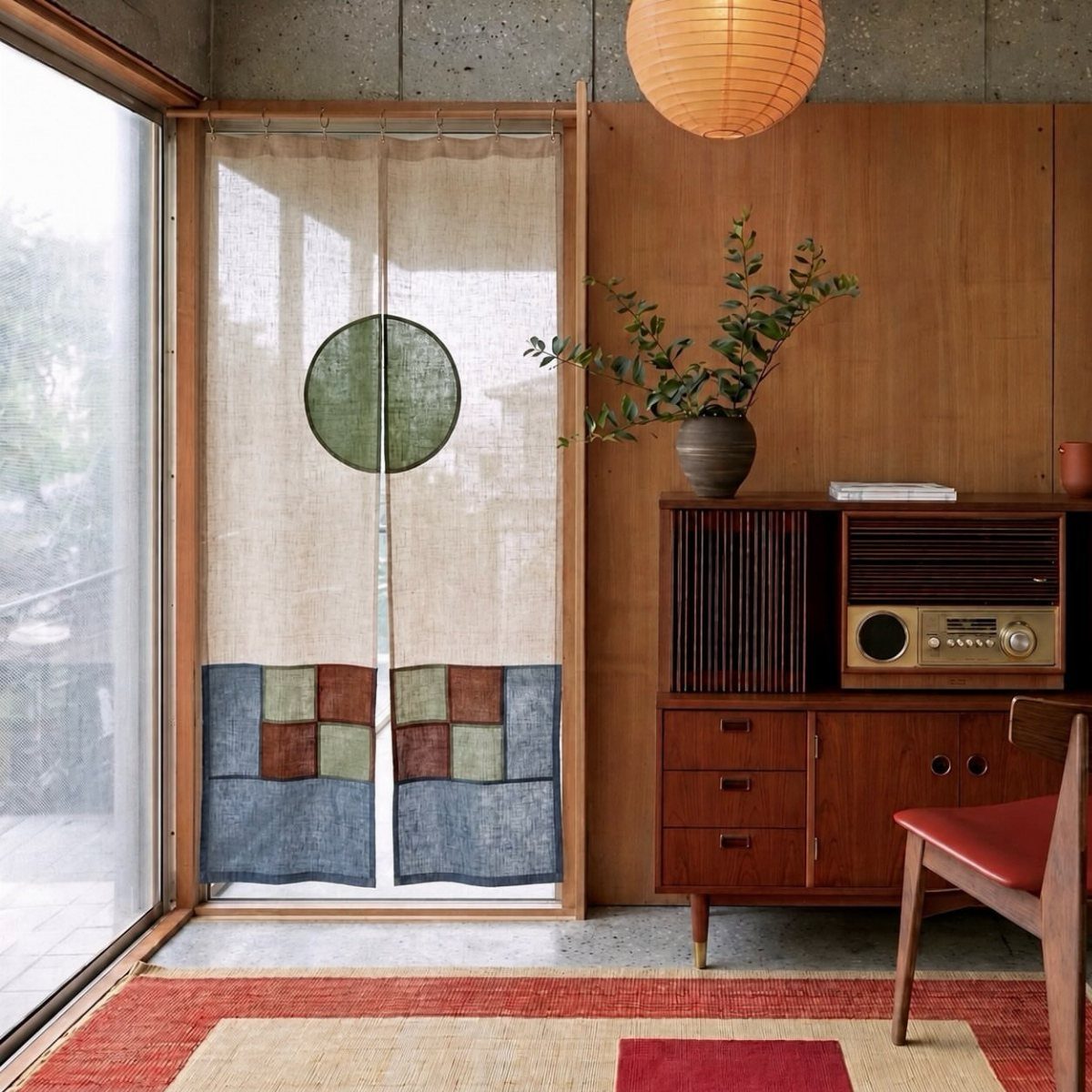
Japandi is the easiest version of this style to live with, since it lets you keep the furniture you already own.
Warm wood, a linen curtain and one bold color, like the red chair, keep the room simple without making it cold.
Start with the window: swap heavy drapes for plain linen. Then thin out the shelf tops and let a few objects stand alone, such as the radio and the plant on the sideboard.
I would keep the rug patterned and everything else quiet.
6. Japanese Interior Design in the Kitchen
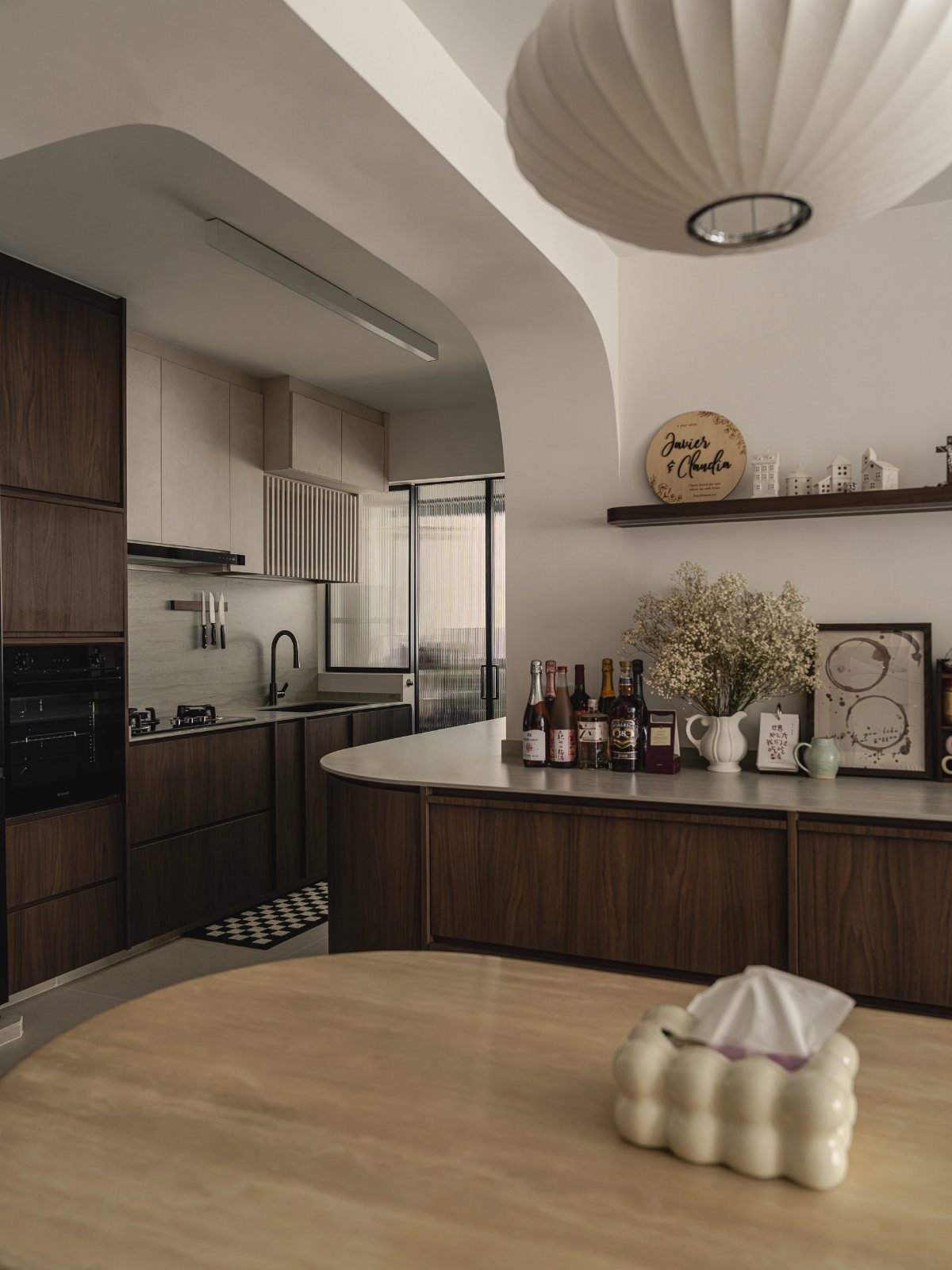
A kitchen like this one works because the island curves and the cabinet fronts stay plain. Dark wood against white walls gives depth without any pattern, and a single pleated pendant over the island supplies the only decoration.
For a rental, you can copy the calm cheaply: clear the counters, keep a few tools in drawers, and add one paper or pleated pendant.
I would spend any extra money on the light, since it sets the mood of the whole room.
7. Japanese Modernism Bathrooms
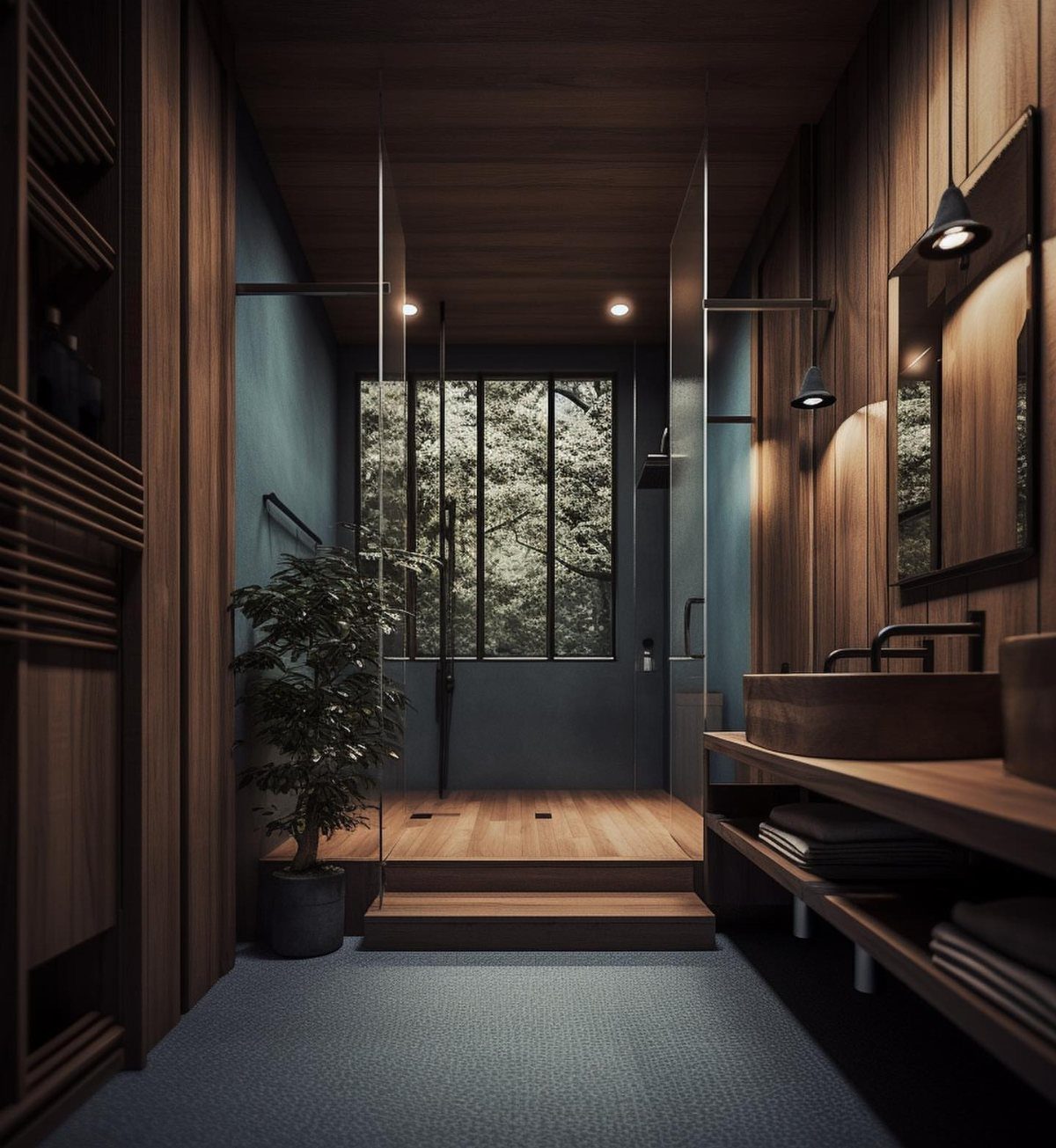
Glass walls around the shower let the wood run through the whole room.
A renter can borrow the look with a wood slat bath mat and a stone or stone-look soap dish. A vessel sink is a bigger project, so I would start with the small pieces.
Keep the window clear of heavy curtains so the trees stay in view.
8. Neutral Color Palette
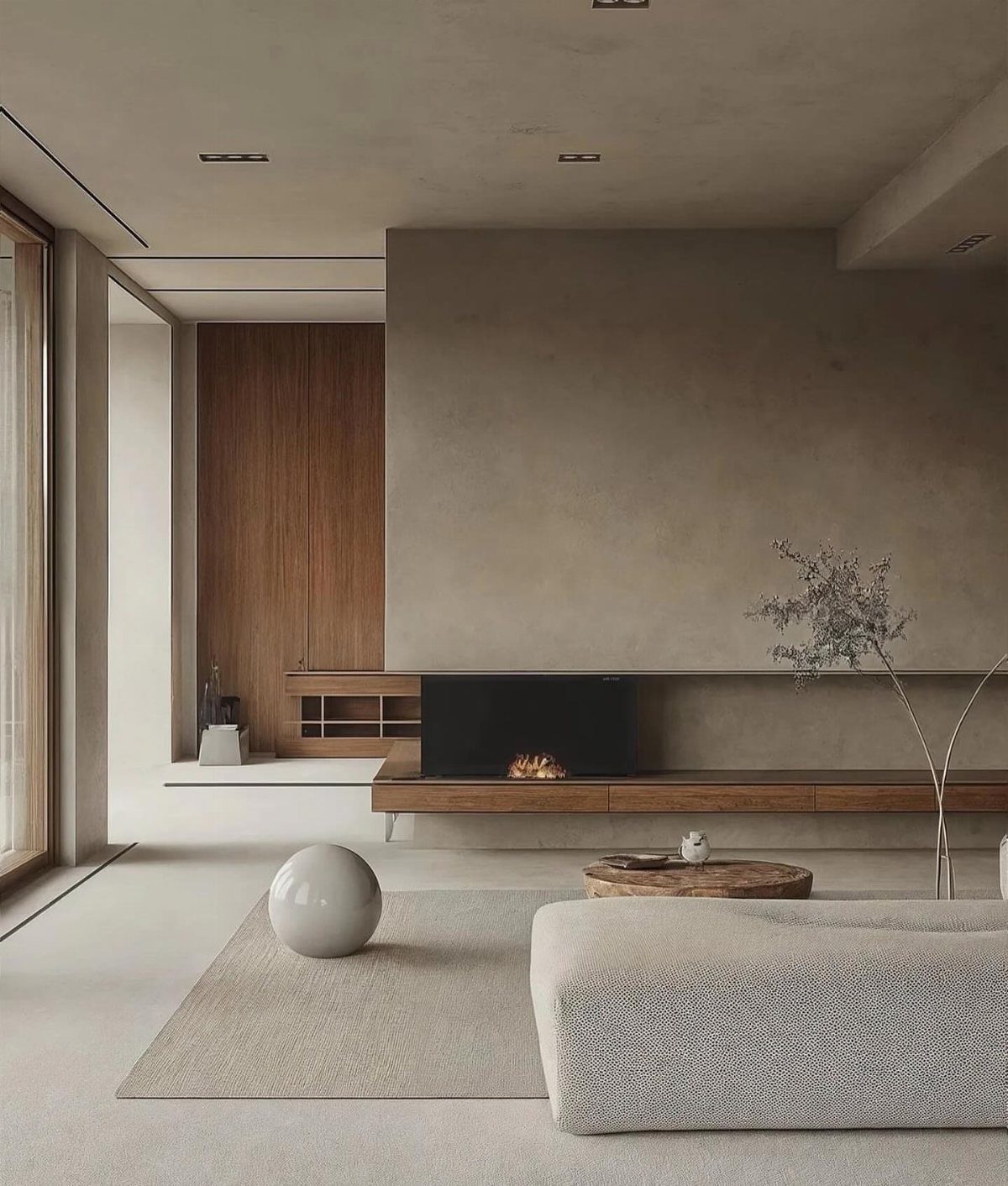
Soft, natural tones do the work in this style: beige, grey and pale wood, with no strong color competing.
On a budget, paint is the cheapest way in.
Pick a warm grey or beige for the walls, then add one wood piece, like a small coffee table. A low sofa in a quiet tone keeps the eye level down.
I would repeat two or three shades and stop there. Adding a fourth makes a neutral room look unfinished.
9. Views of Nature
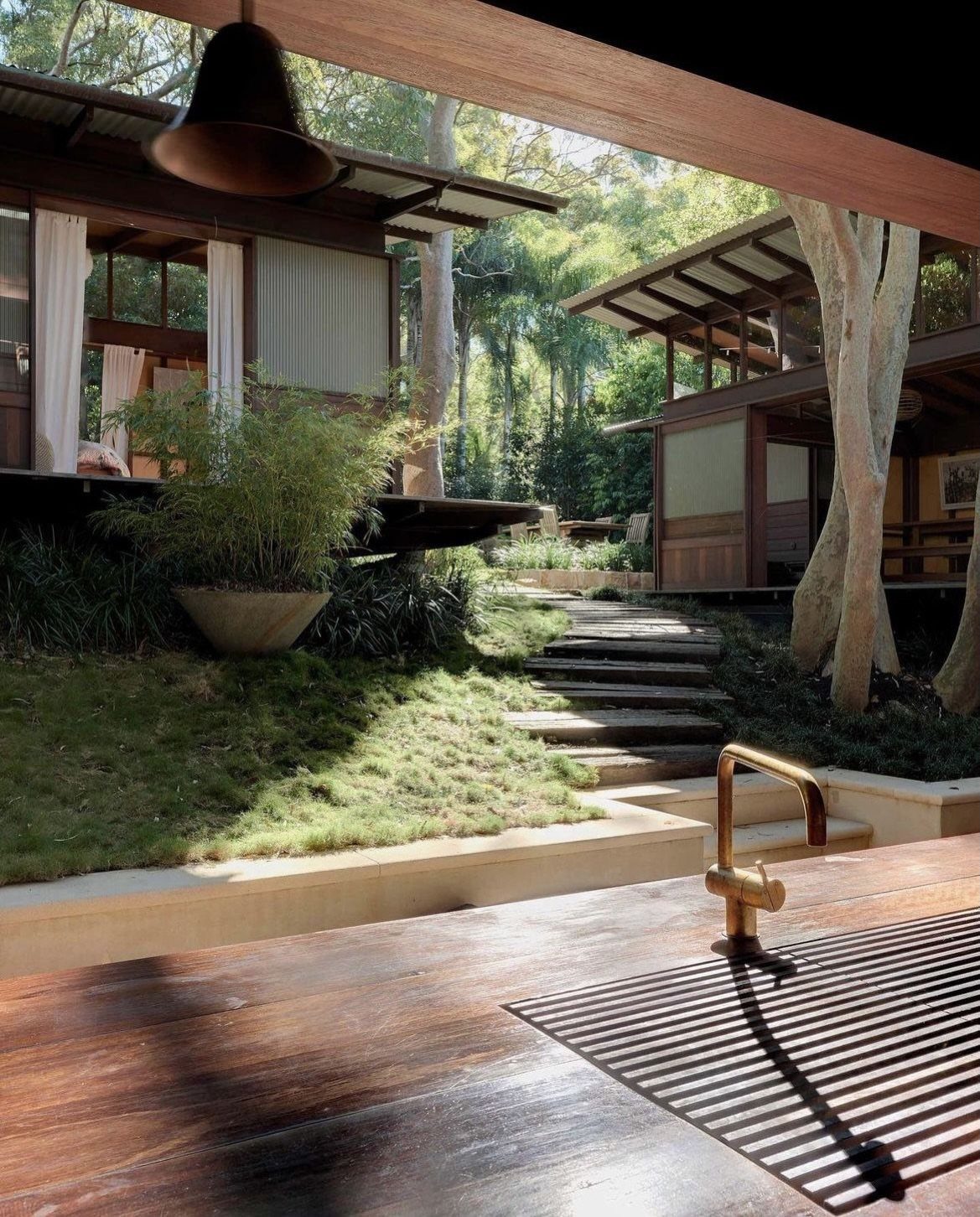
A view of greenery counts as decor, and it costs nothing once the window or opening is clear.
Trees, stone steps and plain wooden structures all belong to the room when you can see them from where you sit or work.
If your outlook is a parking lot, bring the green closer: a few potted plants along the window or balcony rail. Keep the furniture facing outward and the sill clear.
I would put the seat, not the TV, where the view is best.
10. Diffused Lighting Lamps
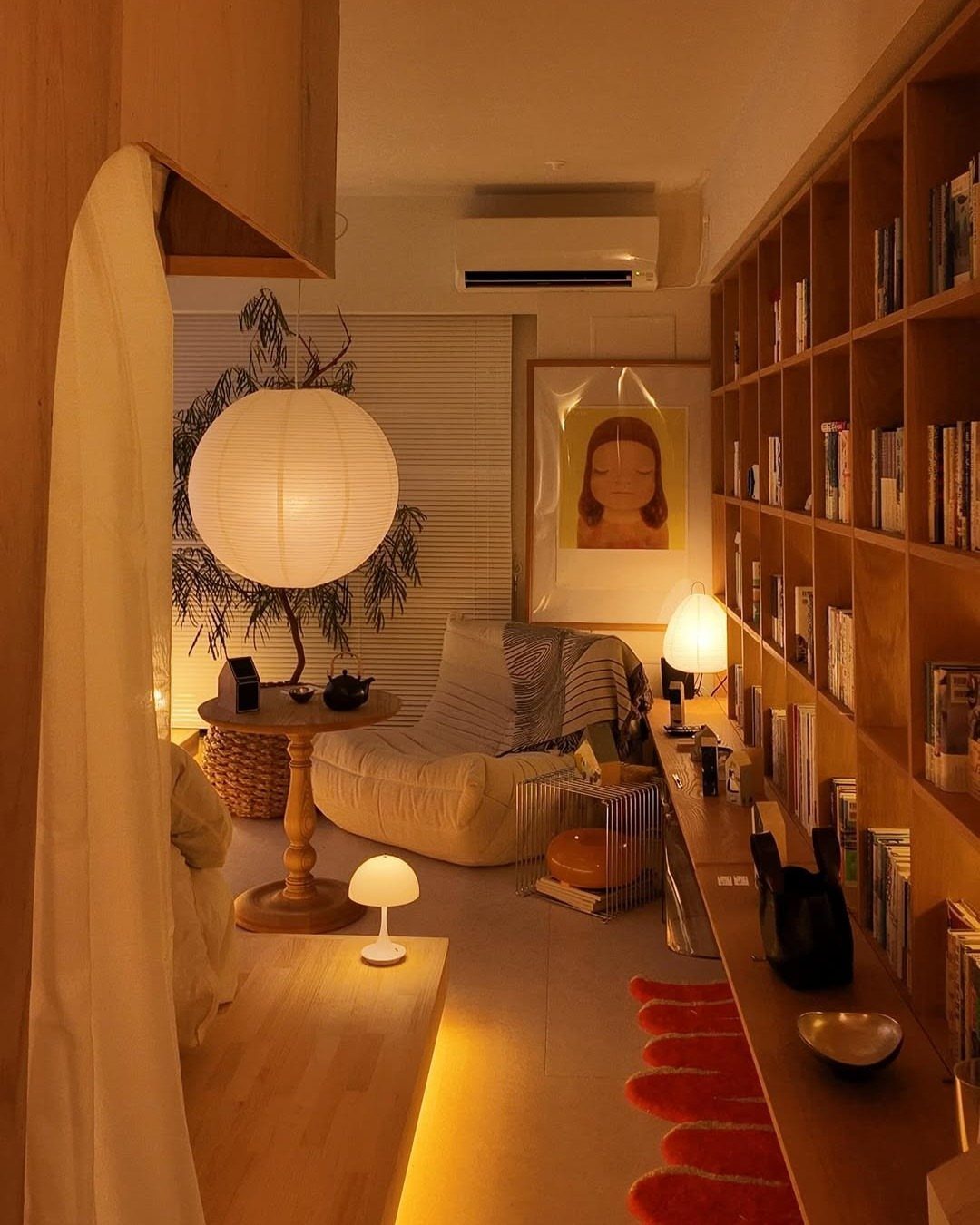
Three small light sources beat one overhead fixture. A white paper globe pendant and a pair of table lamps give a room a warm, even glow, and wood shelves look richer in it.
Paper shades are cheap and easy to swap in a rental. Put the lamps at different heights, one hanging and the others on a table or low surface, and turn off the ceiling light in the evening.
Choose warm bulbs, since a cool bulb undoes the effect of the paper.
11. Adaptability
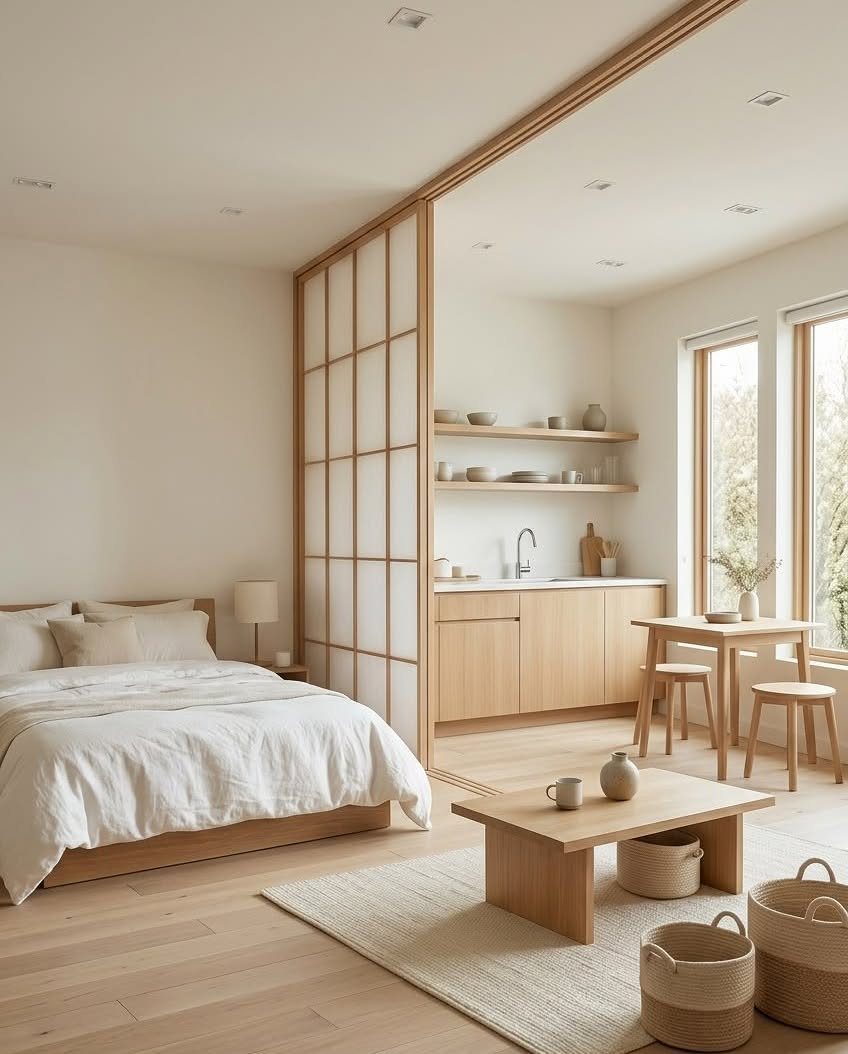
One sliding wooden grid screen can split a studio into sleeping, cooking and dining zones, then slide open when you want a single room. That flexibility suits small spaces and tight budgets.
In a rental, a freestanding screen or a ceiling-mounted tension track avoids drilling much. Keep furniture light and low so you can rearrange it quickly.
I would leave the floor bare and light-toned, so the space stays one calm area whichever way the screen sits.
12. Inner Courtyards and Tsuboniwa
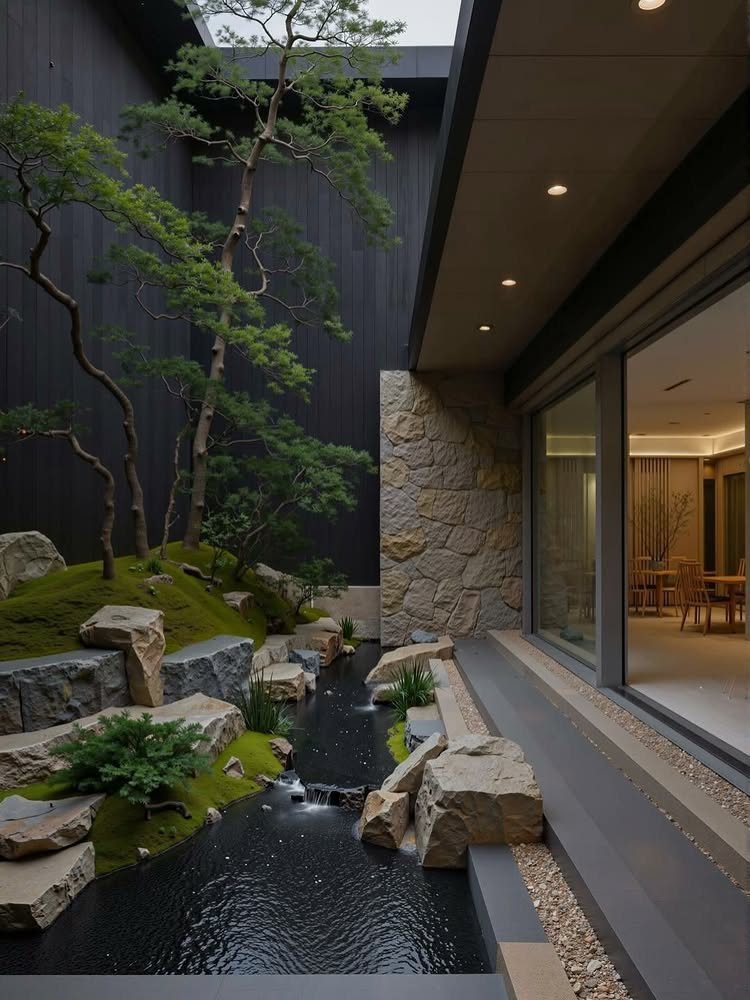
A tsuboniwa is a tiny courtyard garden, and its appeal is how little it needs: a few mossy rocks, one pine, and the sound of a small stream.
Glass sliding doors make the courtyard part of the room, so a small garden can feel like added floor space.
Most of us have no courtyard, but a shallow tray or a balcony corner can hold a few rocks, moss and a small pine. Keep it simple and place it where you can see it from your seat.
A small water feature adds the sound, though it needs regular upkeep.
13. Low-Profile Bedrooms with Shoji Screens
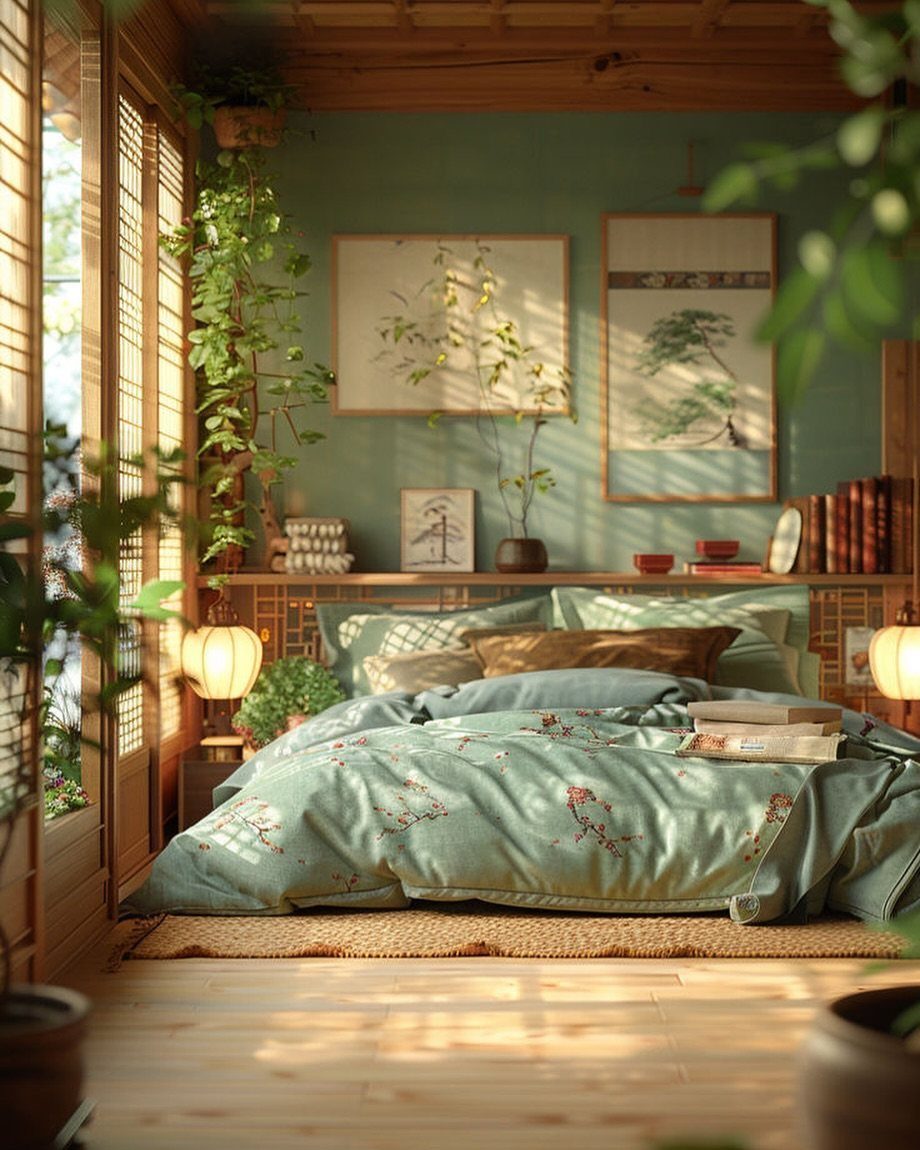
A low bed frame under shoji screens and warm wood paneling makes a bedroom feel quiet before you add anything else.
A low platform bed and a shoji screen can handle a lot more color than people expect, even deep green walls and floral linens, as long as the shapes stay simple and the wood stays light.
For a rental, start with the bed: a low frame or a mattress on a platform keeps the line of the room close to the floor. Then add a freestanding shoji-style screen near the bed instead of changing the walls.
I would keep the wood in one tone and let the bedding carry the pattern.
Importance of Natural Light
Daylight does more for a small room than any purchase, so protect it first.
Check what blocks your windows: a tall bookcase, a bulky valance or a row of clutter on the sill can all cut the light you already have.
Where you need privacy, use a thin, pale fabric that lets light through and still softens the glare.
In the evening, switch to lamps made of natural materials such as paper or wood, which give a warm glow without flattening the room.
Leave some empty floor and wall space too. Negative space lets light travel, and it gives your eyes somewhere to rest.
If you want one living element near the window, I would choose a single plant and give it room. One plant with space around it looks deliberate, and several crowded together look busy.
Cultural Influences
Japanese design is not the same as minimalism, and the difference helps when you shop.
Minimalism aims to remove things. Japanese design aims for harmony, so imperfection and age are welcome.
Wabi-sabi sits underneath this look, and it values a chipped glaze, a knotty board or a linen curtain gone soft with washing over anything flawless and new.
In practice, choose natural materials that age well, like wood, bamboo, paper and stone.
Look for handmade pieces with visible texture or small irregularities, such as a hand-thrown bowl with an uneven glaze. A flawless factory finish works against the mood you are after.
Zen thinking also shapes how a room is arranged. Mindfulness and simplicity mean each piece has a purpose, so before you buy anything, ask what it is for.
As Wijaya notes, though Japandi includes many elements of wabi-sabi philosophy, it encompasses more than just this. “Wabi-sabi is based on traditional Japanese aesthetic and world view philosophy, while Japandi is the design movement consisting of both Japanese wabi-sabi and Scandinavian hygge philosophy,” she explains.
Sustainable Practices
Sustainability in this style is mostly about buying less and keeping it longer.
Japanese design asks how a room will work, feel and wear over time, so I would pick the piece that gets better with years of use, like solid oak or a hand-glazed bowl, before the one that only looks perfect on day one.
Put your money into solid wood, bamboo, paper and stone, which wear in rather than wear out. Secondhand wood furniture fits well, since its marks add to the character.
Timber cladding and black lacquer are 2 finishes this tradition has given to Western design, and both suit a small accent rather than a whole room.
Before replacing something, I would try repairing or refinishing it first. It costs less, and it fits the idea.
Frequently Asked Questions
What are the key principles of Japanese interior design?
Japanese style rests on 3 things: materials taken straight from nature, a restrained hand with objects, and a room that sits easily with the outdoors.
Under all of it runs wabi-sabi, the habit of preferring a knotty board, a chipped glaze or a well-washed linen curtain to something flawless and new.
What are some modern interior design styles?
Japandi is the one I would start with if you want a modern take on Japanese design.
Japandi pairs the calm of Japanese rooms with the cozier side of Scandinavian design, so think warm wood, plain linen drapes and a single bold accent like a red chair.
Japanese principles also mix well with other contemporary styles, because they shape layout, a limited palette and empty space more than any single look.
What is the purpose of a tatami room?
A tatami room is built for sitting and sleeping close to the floor, and for relaxation and meditation.
A tatami room pulls everything toward the floor, and with a low mattress on the mats the space stays open and the ceiling reads as higher.
Real tatami mats run expensive for a renter, so I would go with a tatami-style rug or a few mats just around the bed.





