Whether you rent or own decides which of these ideas is yours: a quart of paint, a rug, a hardware swap or a plate wall are all renter-friendly, while an apron-front sink, shiplap, a track-mounted barn door and wide plank floors belong to owners.
The ideas here stretch from a quart of paint on a single wall to custom cabinets built around a deep farmhouse sink, and wood, black metal and a soft neutral palette keep showing up from room to room.
1. Neutral Color Palette
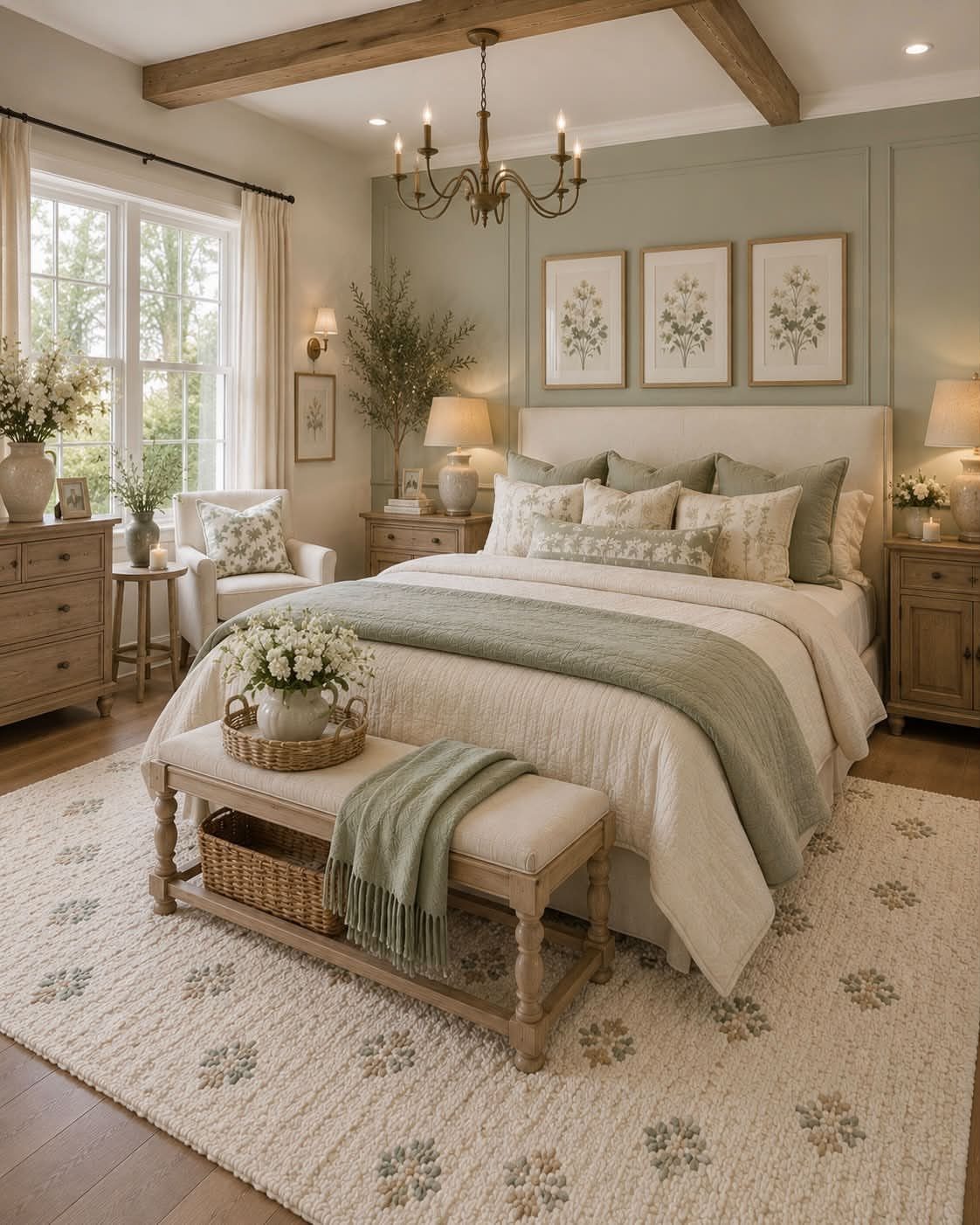
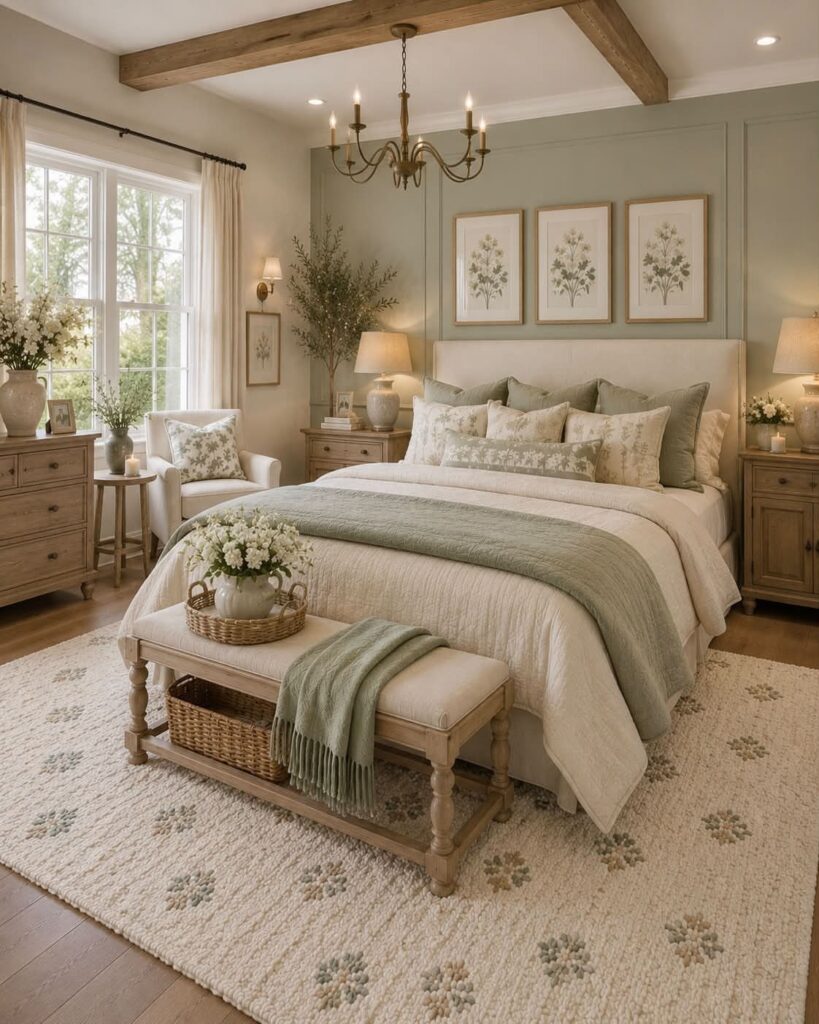
Sage green on the walls, white on the bed and a muted rug underneath make a bedroom that reads as calm before anything else. Soft, low-contrast colors suit a room you want to wind down in.
Keep the green light and slightly gray so it sits quietly beside wood. If you rent, a quart of paint on one wall is a cheap test; tape up a swatch first and check it morning and night.
2. Large Windows
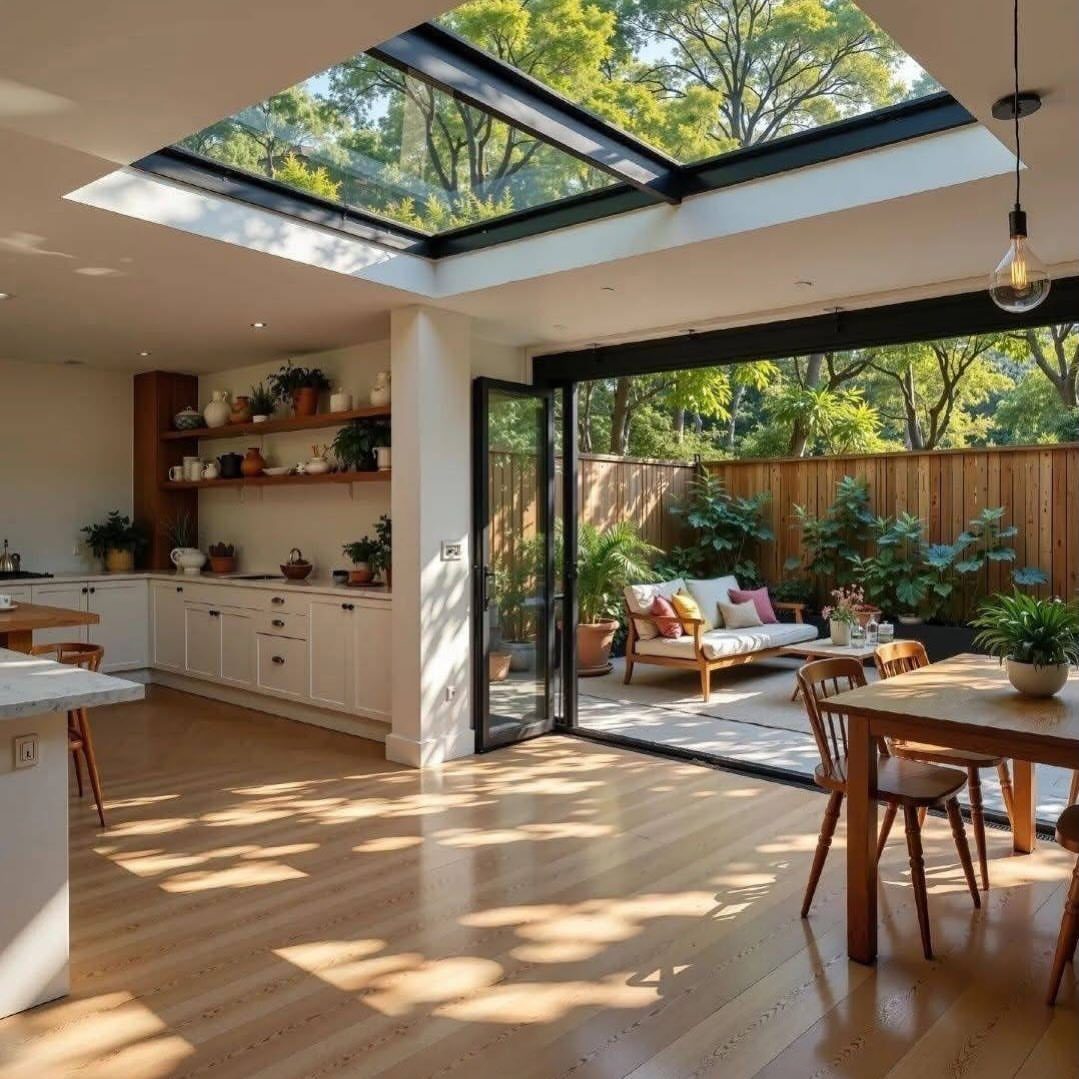
A big expanse of glass does more for a room than any paint color, and a skylight over a kitchen table is a good example.
Folding glass doors work when the dining room sits against an exterior wall and you want the option to open the whole room to a patio.
New windows are a major expense, so renters should skip them. Keep glass clear of heavy drapes, and let a sofa and a few plants outside carry the view.
3. Bold Chandeliers and Pendant Lights
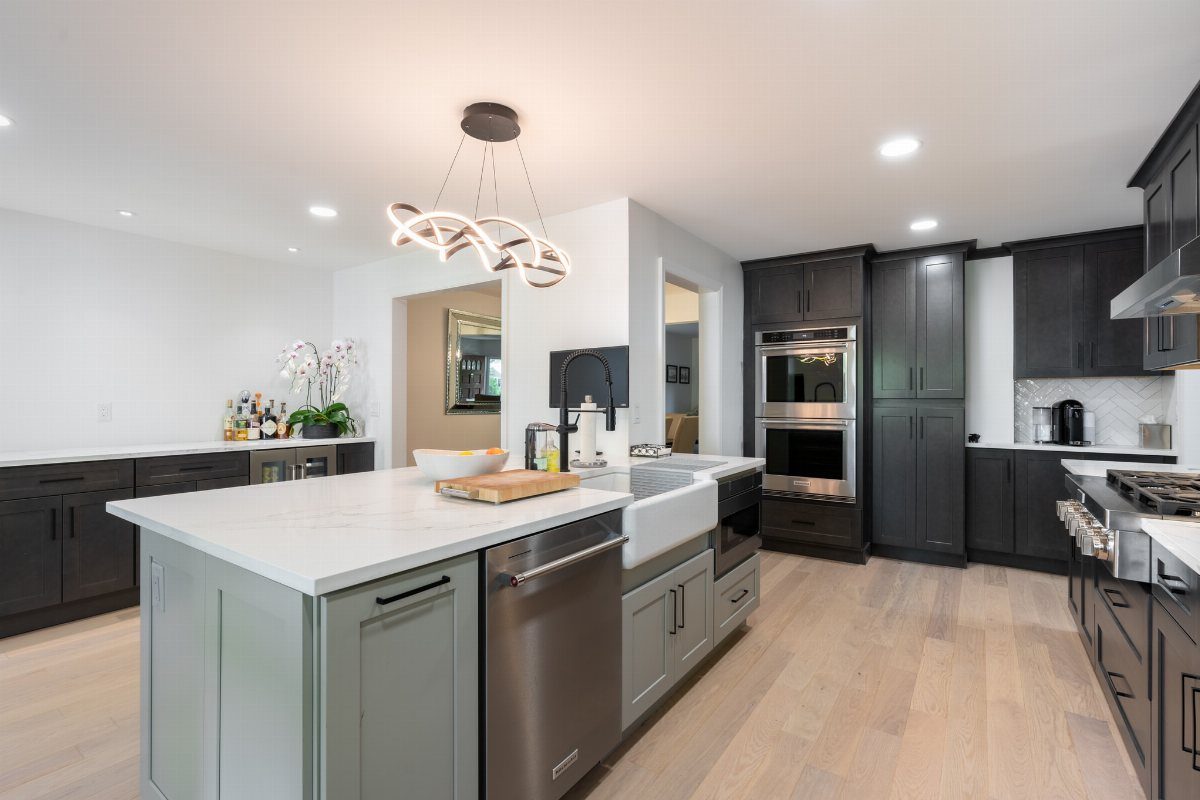
A single sculptural gold chandelier can anchor an entire kitchen, especially over a white marble island with dark gray cabinets around it. The warm metal against cool stone is the contrast that makes it work.
I prefer one oversized fixture to several small ones. Hang it where the eye lands first, and pick a shape with movement, like a wavy form, so it reads as art even when switched off.
4. Dining Table
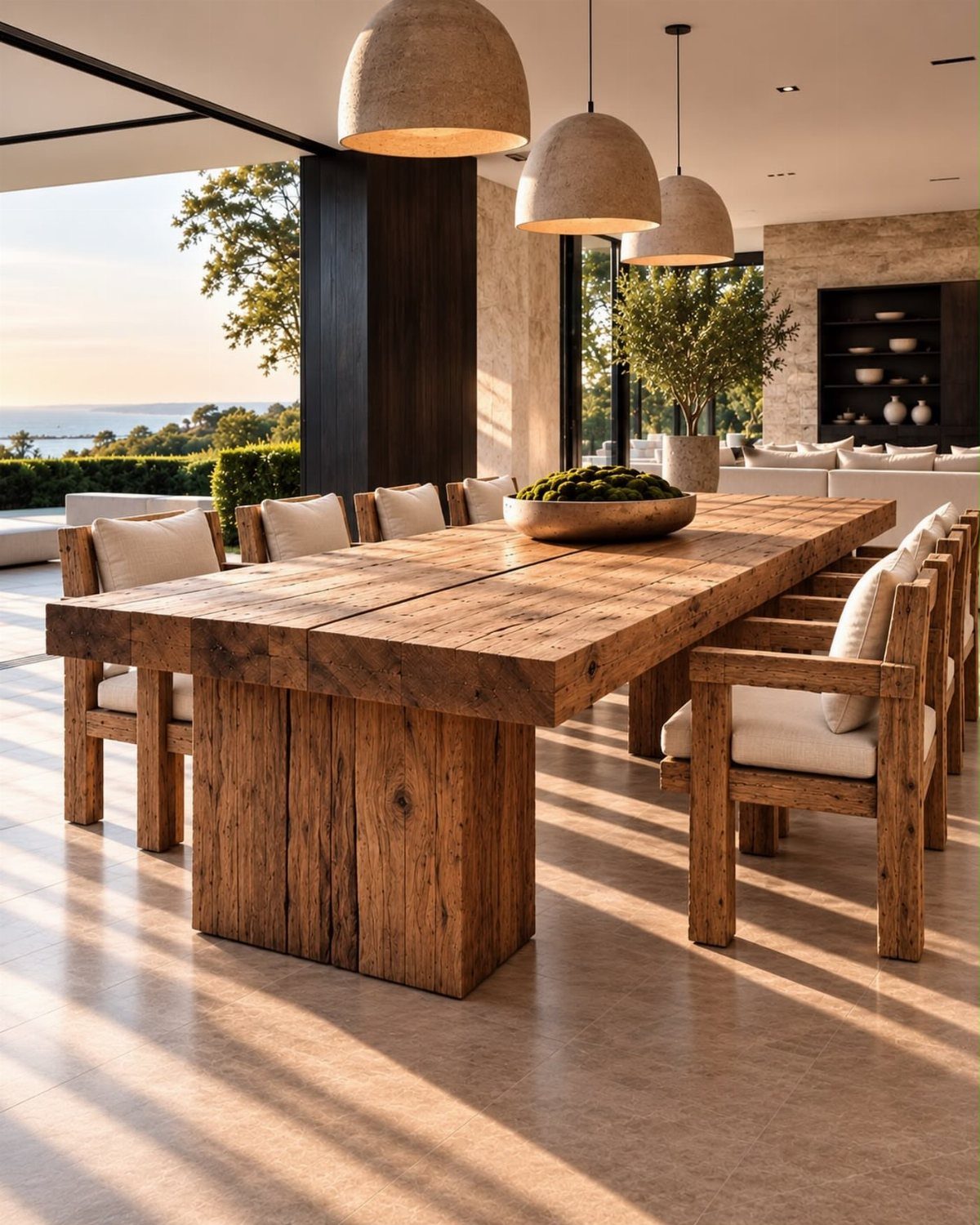
A long reclaimed wood table with upholstered chairs invites people to stay seated after the plates are cleared. Matching chairs keep the table calm, so the grain can do the talking.
Hang dome pendants low over the table, and I would space three of them along the length rather than centering one. A bowl of moss is an easy, cheap centerpiece that never needs to be moved when you eat.
5. Wood, Textiles, and Metals
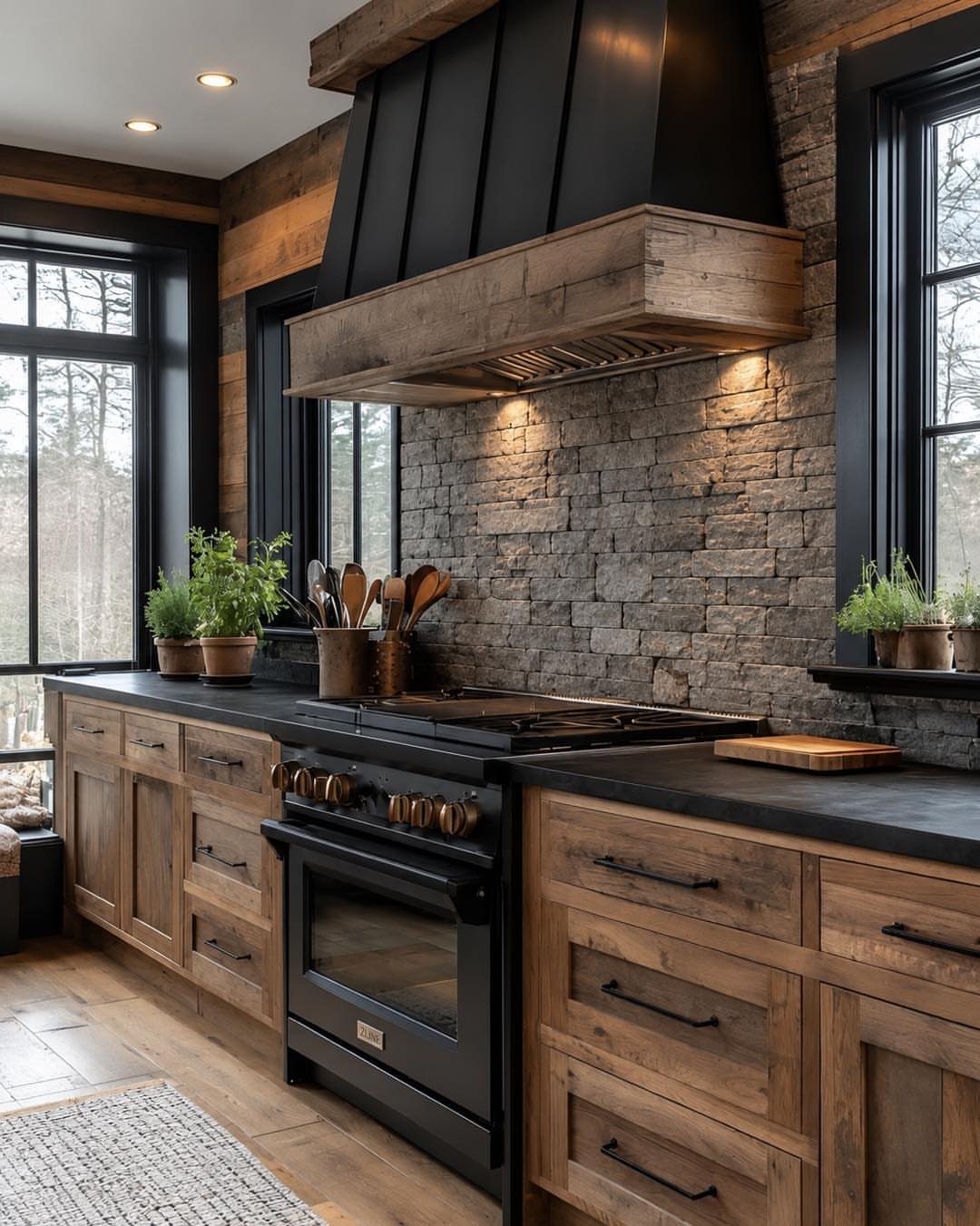
The black ties the wood and stone together instead of competing with them.
Repeat each material at least twice: black in hardware or a faucet, wood in a cutting board or stools. Add softness with a linen towel or runner, since a kitchen of hard surfaces can feel cold.
6. Custom Cabinetry
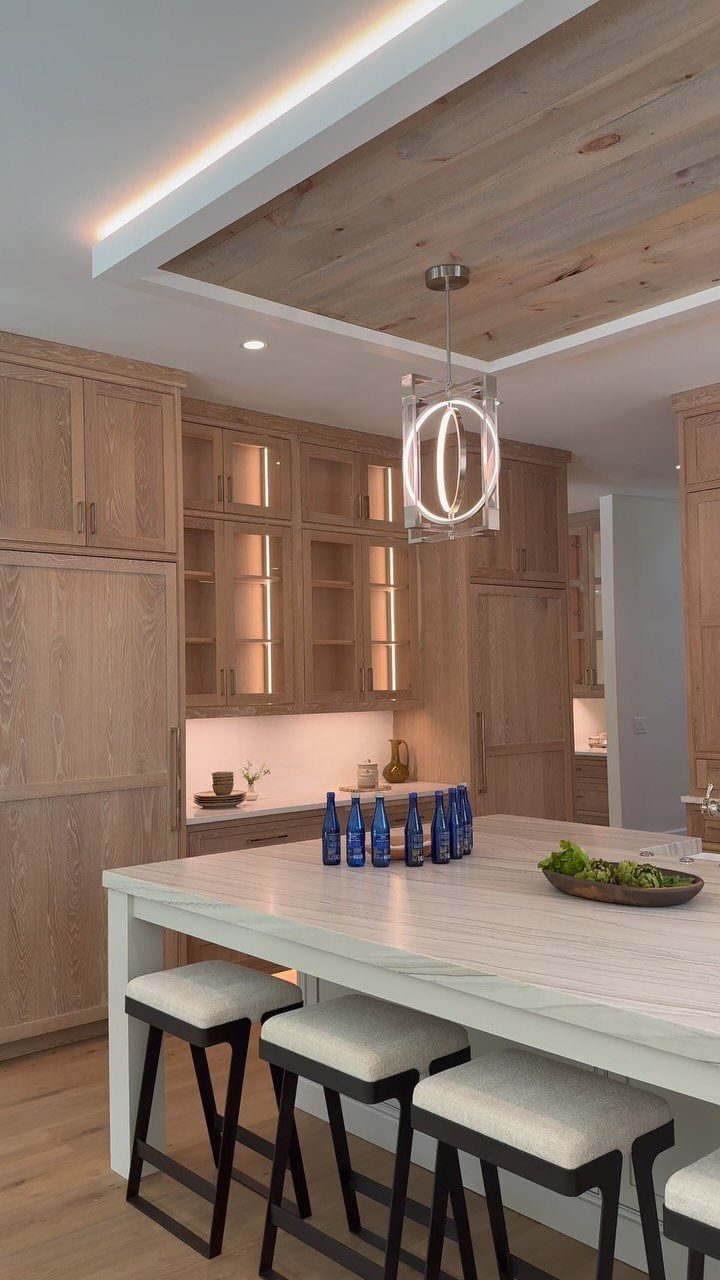
Light wood cabinetry built to fit the room, with a matching island, keeps a kitchen feeling like one piece instead of a set of boxes.
Custom work costs far more than stock, so I would spend it where fit matters most: the island and the tall storage.
The homeowner mentions a full scullery, a smart way to hide clutter. A slim ring pendant keeps the look light.
7. Open Kitchen and Living Areas
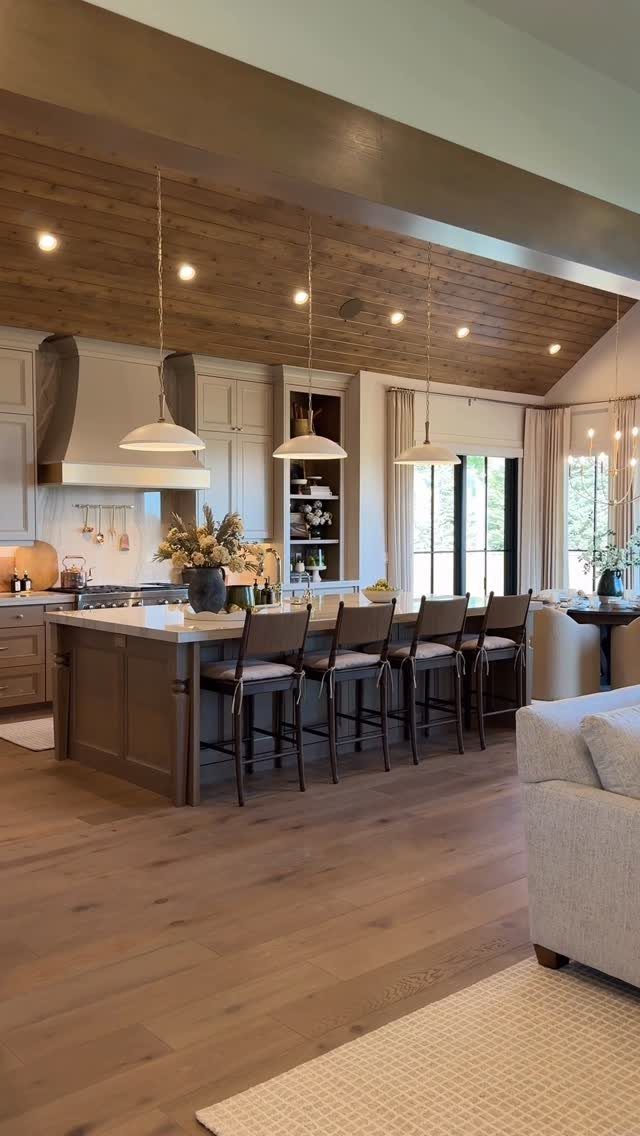
4 stools along a big island do the work of a dining table and a room divider at once.
Wood-paneled ceilings that run from the kitchen into the living area help too, since the same material overhead tells the eye it is one room.
White cabinets and upholstery let wood finishes hold the room without competing voices. Floors in the same tone as the ceiling would be my choice.
8. Modern Farmhouse Bathroom Vanity
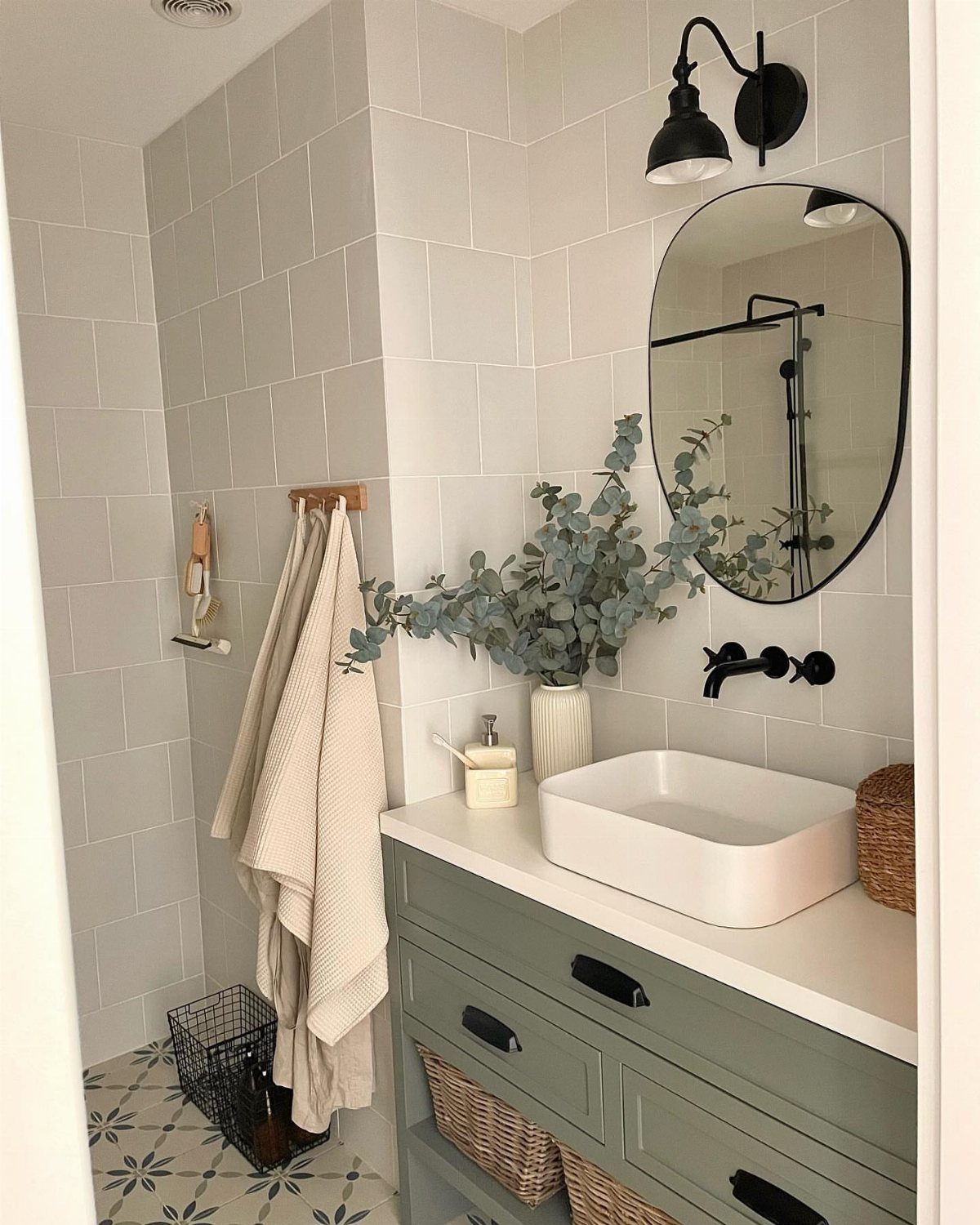
A vanity in sage green carries a whole bathroom, and everything around it can stay quiet. White counters, black fixtures and light gray tile give the color room to stand out.
A vessel sink sits on top of the counter, so it needs a faucet tall enough to clear the bowl. An oval mirror softens all that straight cabinetry, and a few eucalyptus stems in a vase cost very little.
Renters can’t swap a vanity, but a quart of paint on an existing cabinet gets close.
Experiment with different concepts, from a classic black and white farmhouse interior with a subway tile backsplash to a warmer, more transitional farmhouse style.
9. Wide Plank Floors
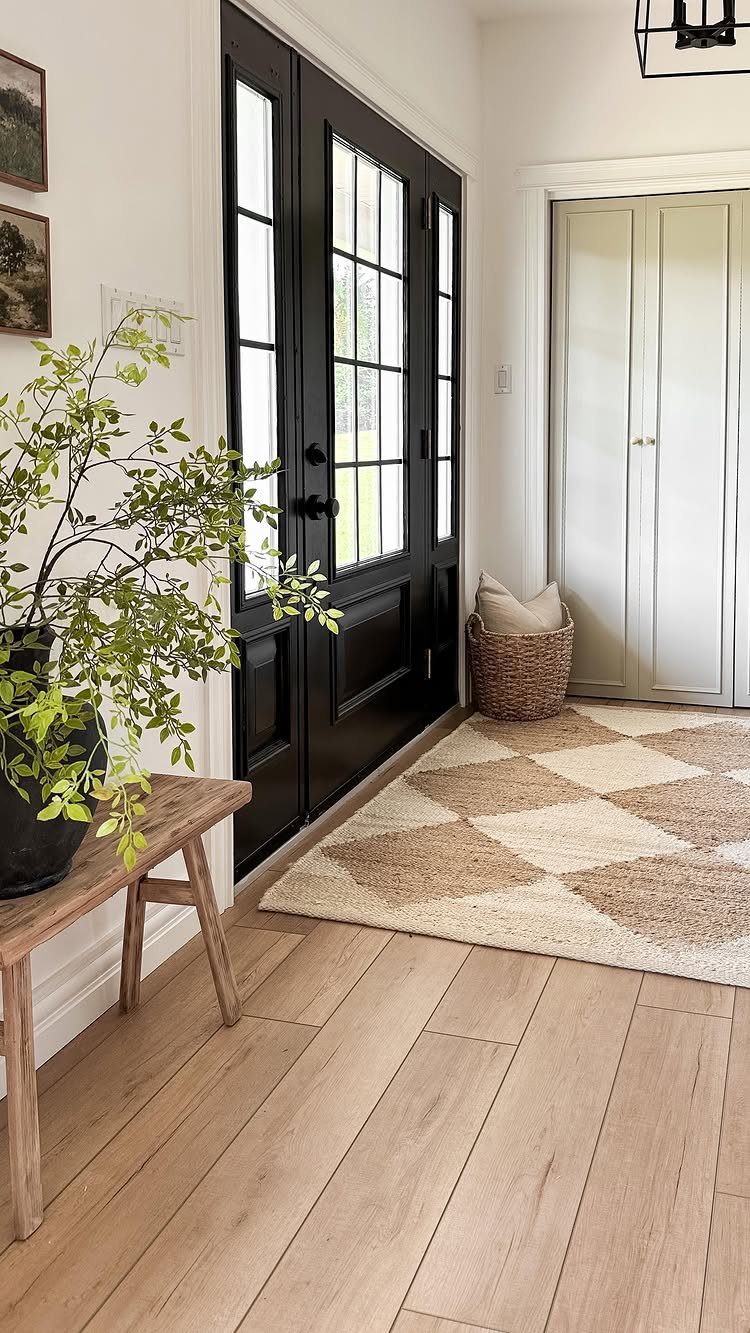
Wide planks mean fewer seams, and fewer seams make an entryway look longer and calmer. Light wood pushes that effect further by bouncing daylight around a small space.
Black door frames look sharpest against a pale floor like this. A checkered rug adds pattern without hiding the boards, and a woven basket beside a bench gives shoes and bags a place to land.
If you rent, a rug is the easy way to borrow the look.
10. Vintage Decor and Furniture
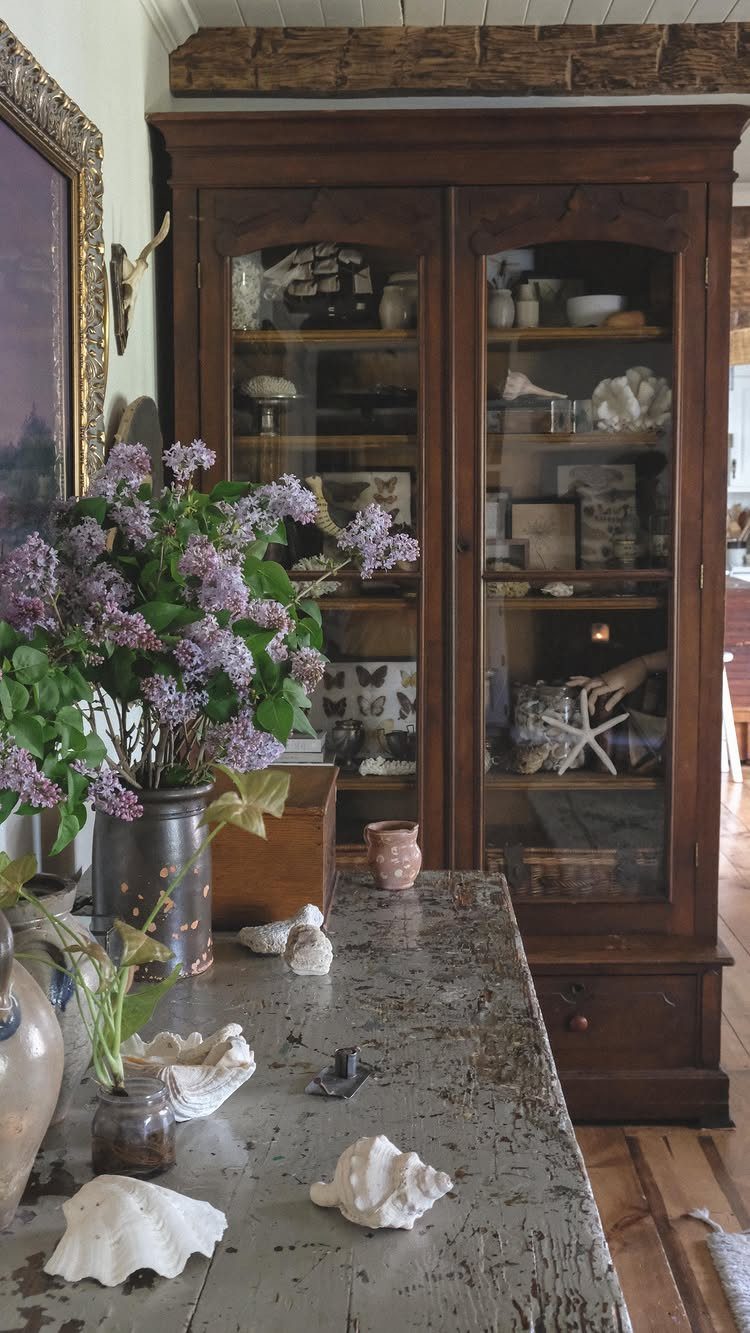
Old pieces earn their place by looking lived in. A dark wood display cabinet packed with collectibles gives a room depth that new furniture rarely manages, and a weathered table beside it keeps the mood relaxed.
I would buy one large piece and let it lead, then add small finds like seashells in a bowl.
Fresh lilacs in a vase lift all that dark wood, and cut flowers are a cheap way to keep it from feeling heavy.
11. Plants and Natural Materials
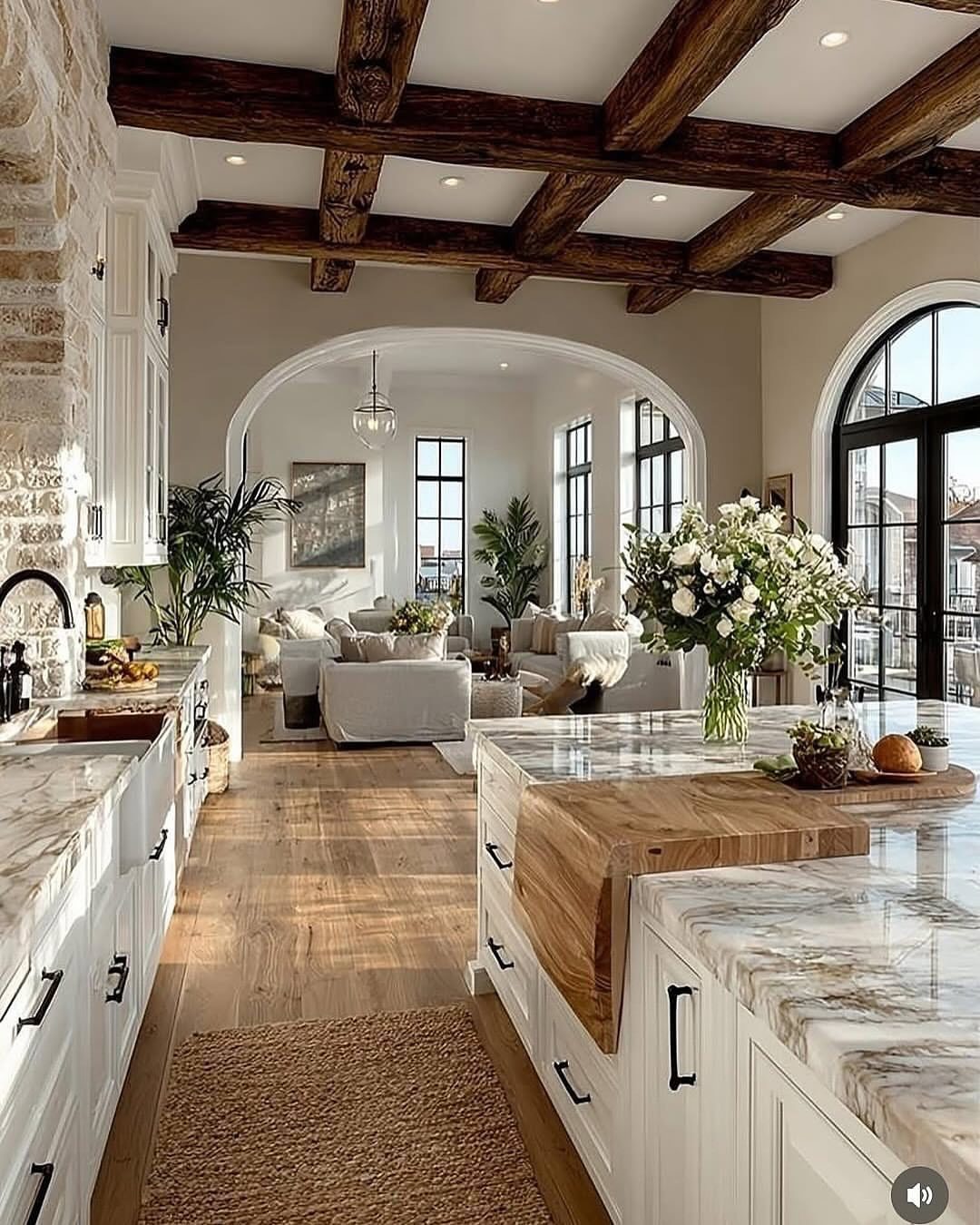
Butcher block, exposed beams and greenery warm a marble-and-white palette without adding more color. Each natural material softens the hard surfaces around it.
Put plants where light reaches them, such as a counter corner or a shelf near the window. A butcher block inset beside stone is a smart way to add wood without redoing the whole counter.
Real greenery beats fake, though it does need watering.
12. Farmhouse Sink
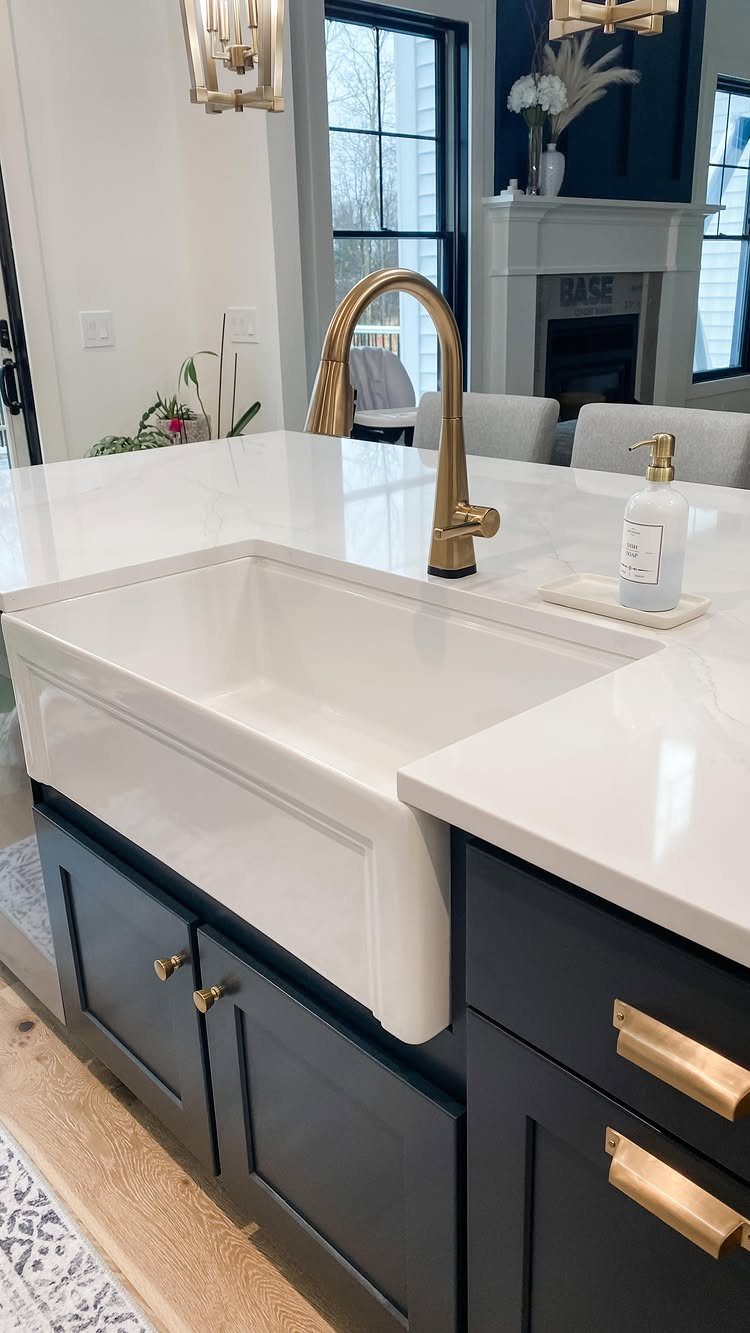
An apron-front sink puts the deep white basin on display, and navy cabinets give it a strong backdrop. A gold faucet adds warmth against the blue, and I like that pairing more than chrome.
The deep bowl handles big pots and baking sheets better than a standard sink.
It also needs a cabinet cut to fit it, so plan that before you buy. For a renter, this one is a project for a future home.
13. Shiplap Walls
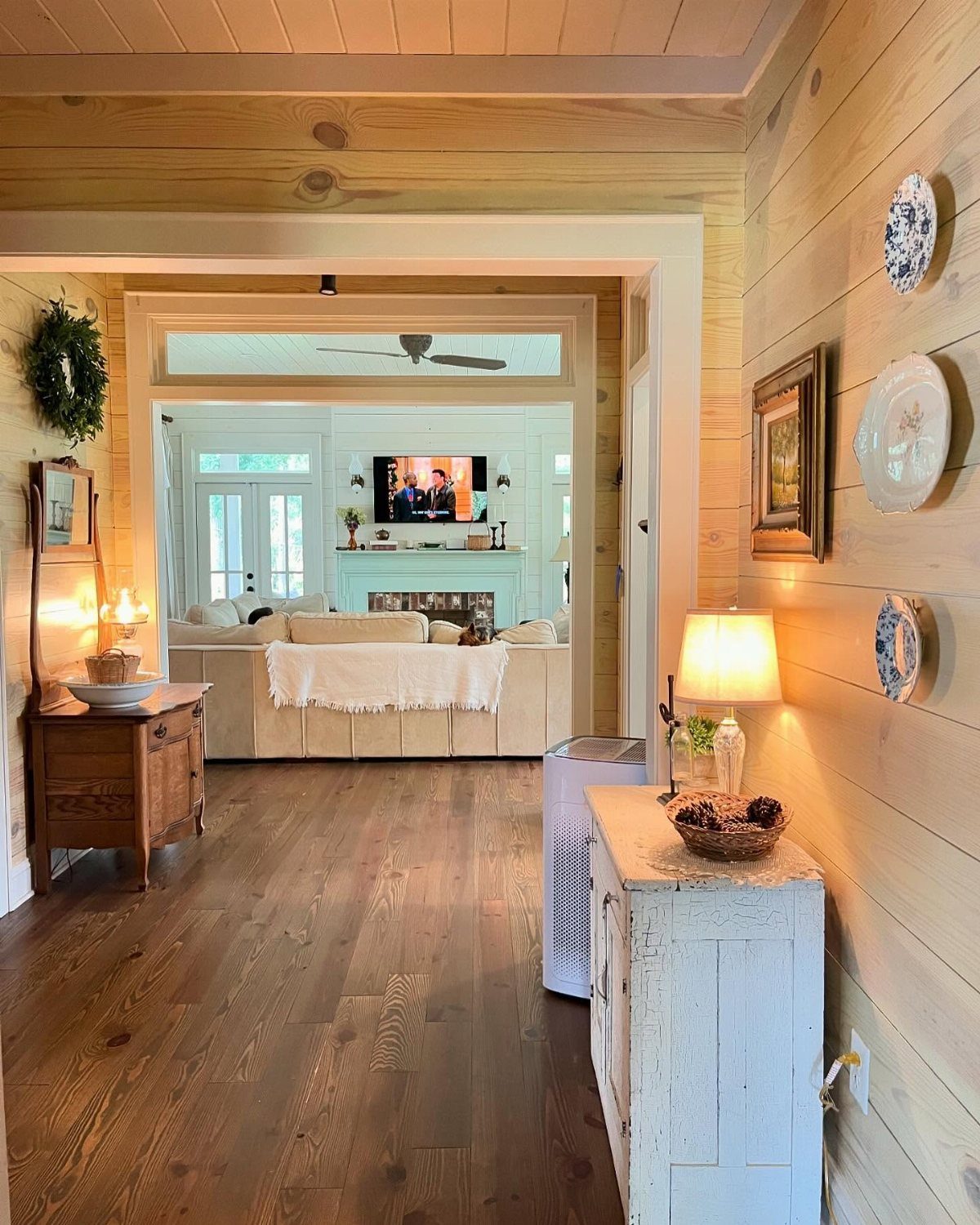
Shiplap in a light wood tone turns a hallway into a warm tunnel, and dark floors underneath give it a clear edge. Pale boards against dark planks keep the walls from blurring into the floor.
Hang a few decorative plates and a lamp on the boards, as the room does, and the wall becomes the decor with no extra art. I would keep the furniture white so the grain stays the star.
Shiplap is a real building project, so renters should skip it and borrow the look with a plate wall instead.
14. Sliding Barn Doors
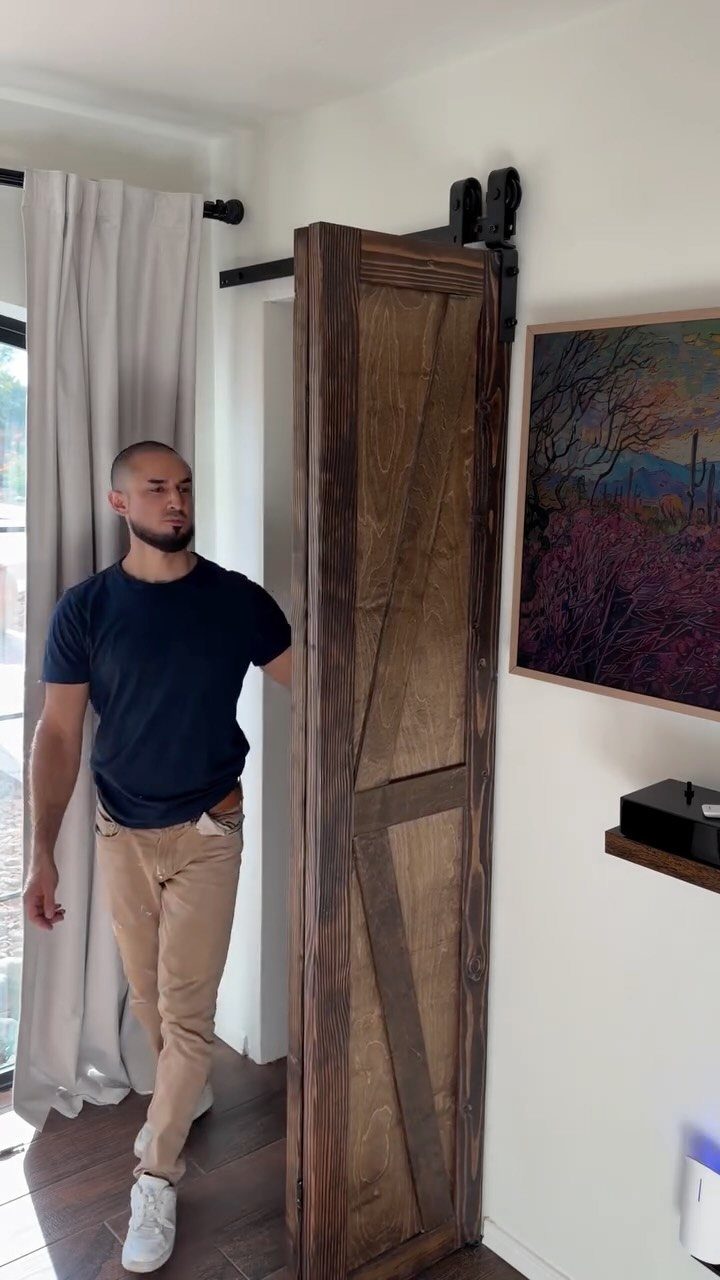
A dark wood sliding barn door with black hardware sits flat against the wall and takes no swing space, which makes it a smart pick for a room where a hinged door would hit a bed or a dresser.
Against white walls, the dark wood becomes the focal point on its own. I would leave the wall beside it clear so the door has room to slide and the rustic look reads cleanly.
Hanging one means mounting a track, so a renter should ask the landlord first. Measure the opening before you buy anything.
Importance of Material Choices
Materials do most of the work in this style, so spend your budget there before you spend it on accessories.
Wide plank white oak floors, smooth plaster walls in a warm off-white and iron or brass hardware are the ones I would build a room around.
Choose finishes that age well. Unlacquered brass and iron are meant to patina, so don’t polish them back to new.
I pick wire-brushed oak in a matte finish because it hides the daily wear far better than gloss, and the texture keeps the floor from reading slick or cold.
Keep the base palette to whites and light grays. Neutral surfaces let the older, characterful pieces stand out and won’t date the way a bold countertop color can.
Renters can borrow this with hardware swaps and a good rug, since plaster and flooring are owner projects.
Balancing Rustic and Modern
Pick one side to lead and let the other support it.
If the room has rustic bones like a reclaimed mantel or exposed beams, keep the furniture and lighting clean-lined. If the room is plain and modern, one weathered piece is enough to give it age.
Decide between a single statement piece and several small worn items spread around. I would choose one in a small room, since a scatter of small pieces can look like clutter.
Restraint is what keeps the mix from turning into a theme. Skip busy patterns and decorative trim, and let texture carry the character.
Check each room against the next one. They should read as one home, not compete for attention.
Creating Cozy Atmosphere
Layer in 3 steps: a rug to define the space, then throw pillows and a blanket for softness, then something living or natural to finish.
Contrast is what makes layers work. Fur or leather pillows look best against hardwood and stone, because the soft and hard surfaces sharpen each other.
Greenery adds texture too, and faux cuttings work in a dim corner where real plants struggle.
Pick seating you can actually sink into. A room that looks cozy but has stiff furniture won’t get used, so test the sofa before buying.
Area rugs are the one layer I would never skip, since they add warmth underfoot and suit renters as well.
Frequently Asked Questions
Is farmhouse decor still in?
Yes, modern farmhouse is still popular and keeps changing.
It holds up because it is built on materials that age well, like wide plank oak floors, plaster walls and iron or brass hardware, rather than on trendy accessories. A bold countertop color dates quickly, while neutral surfaces don’t.
What is modern farmhouse interior design?
It pairs traditional farmhouse features with clean, contemporary pieces. Shiplap walls, apron-front sinks, barn doors, reclaimed mantels and exposed beams supply the rustic side, while simple furniture and open rooms keep it current.
What are the key differences between farmhouse and cottage decor?
Classic farmhouse leans on practicality and rustic, old-time warmth, while cottage decor leans toward coziness and an eclectic mix.
Modern farmhouse updates the classic version with open layouts and clean, simple furniture. It is not minimalist, but it is more streamlined than either of the older styles.
What are some examples of contemporary farmhouse plans?
Contemporary farmhouse plans typically use board-and-batten or lap siding, metal or asphalt shingle roofs and large multi-lite windows.
Inside, they favor open layouts where the kitchen flows into the living and dining areas, unlike the separate rooms of a traditional farmhouse. Those open spaces suit gatherings and still leave room for private retreats.





