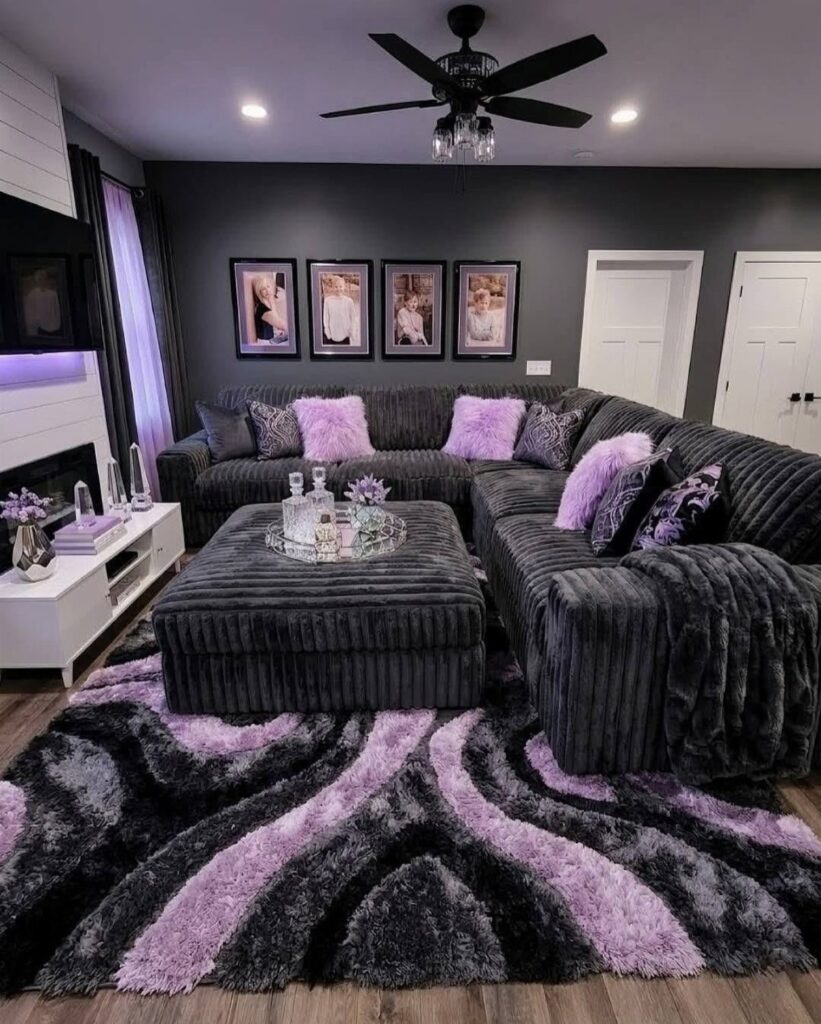
The shade of your grey decides which rug is yours: warm greys like greige pair with beige, taupe, mustard or rust, and cool greys go with cooler tones, so check a swatch against a rug sample in daylight before buying.
The ideas here run from bold black rugs to soft grey ones, with pink, patterned, ivory and yellow in between, so you can choose between strong contrast and a quieter, tone-on-tone look.
Front legs on the rug, back legs off: that placement anchors the sofa in any of these colors.
1. Black Rugs
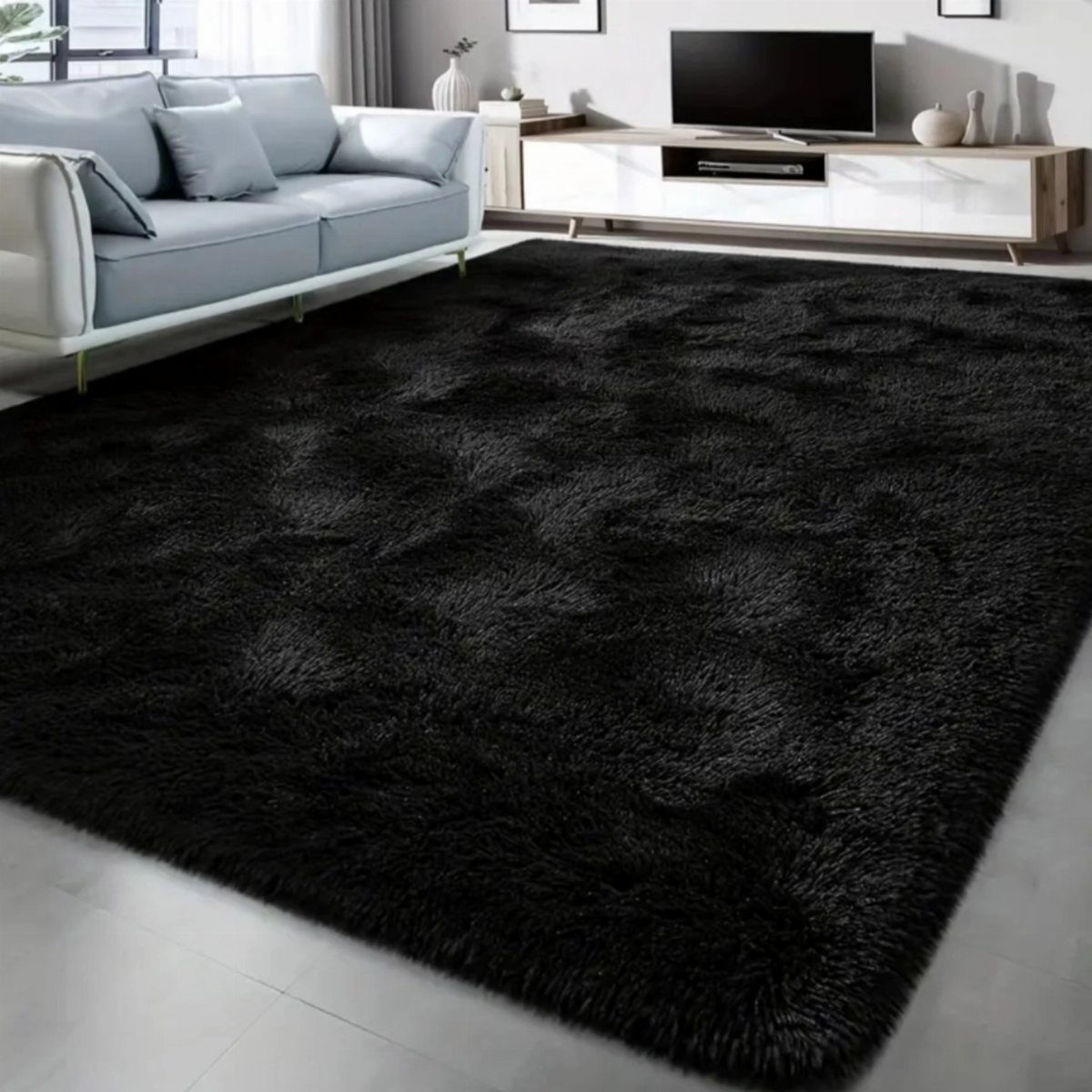
A black shag rug is the loudest move you can make under a grey sofa, and I like it for exactly that reason.
Against a light floor and a light grey sofa, it gives the room a hard anchor that a soft neutral never would.
Go big. A rug that stops short of the sofa legs looks like a dark puddle, while one that reaches under the front legs ties the seating together.
Shag holds the eye with texture as well as color, so keep the pillows and throws simple.
2. Grey Rugs
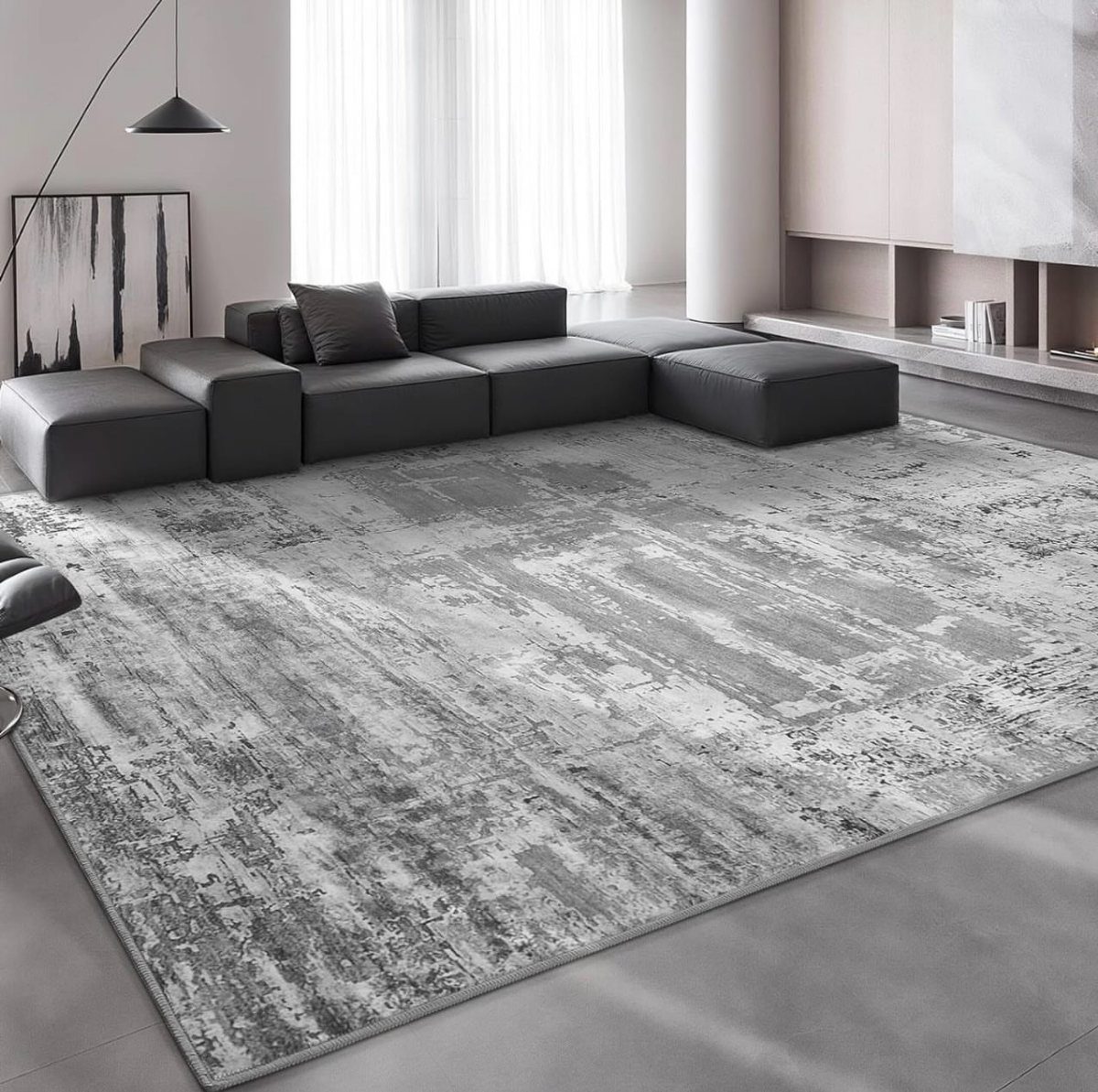
Grey on grey works when the 2 greys differ in tone and texture. A distressed rug with white worked into the grey keeps a dark modular sectional from blending into the floor, so choose a rug lighter than the couch.
I would keep the rest of the room quiet: one slim lamp, one piece of abstract art, no competing colors. The look depends on restraint, and a monochrome room can go flat fast.
Add a single warm material, like wood or a woven basket, if it starts to feel cold.
3. Pink Rugs
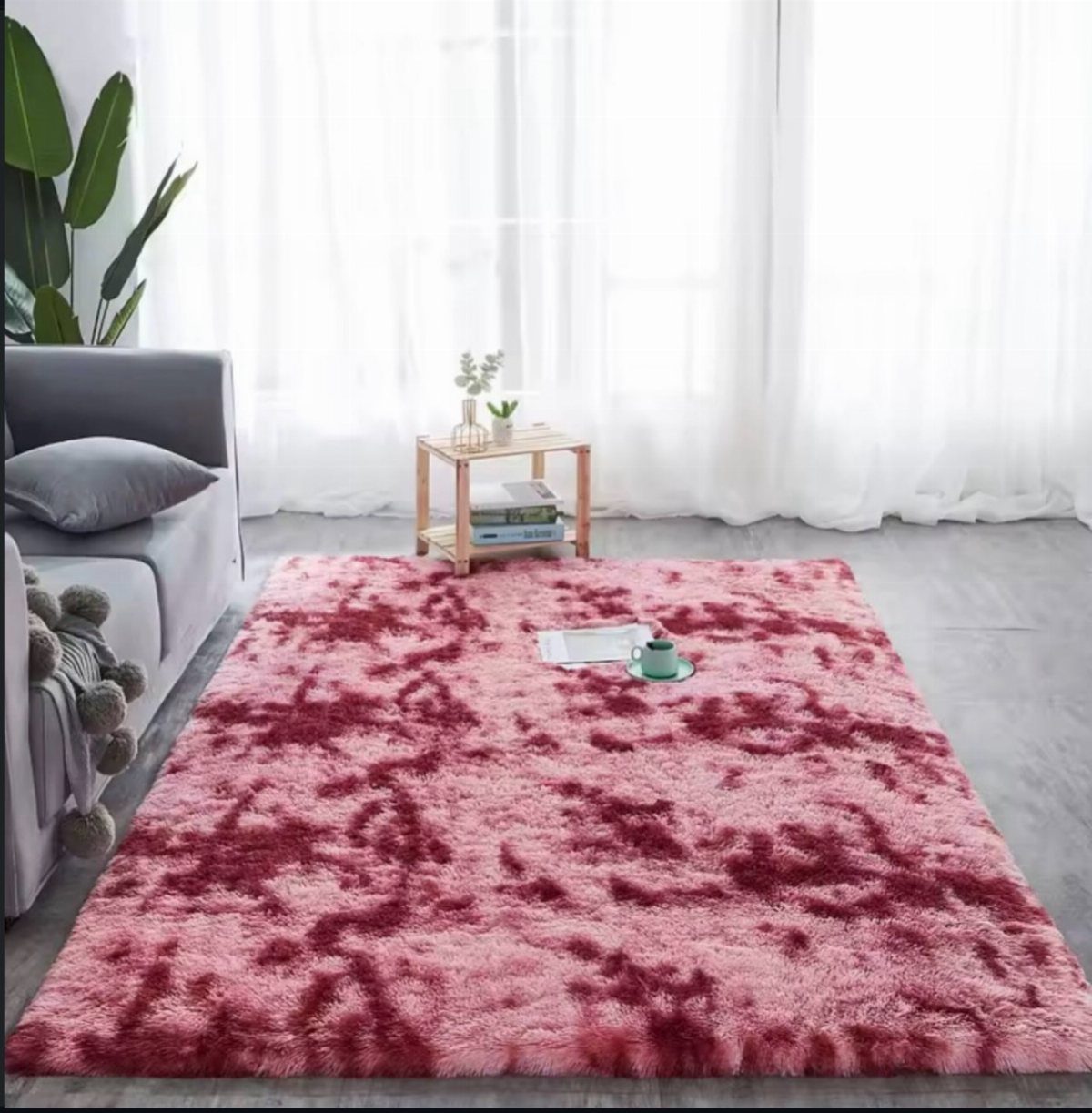
Pink against grey is softer than it sounds, because grey calms down even a strong magenta.
A marbled shag that blends pink and magenta reads as one soft color at a distance, which makes it easier to live with than a flat hot pink.
On light wood floors with white curtains, it brings warmth without a repaint.
I would pick this for a room that gets plenty of daylight. Keep the side table wood and plain so the rug stays the one bold note.
4. Patterned Rugs
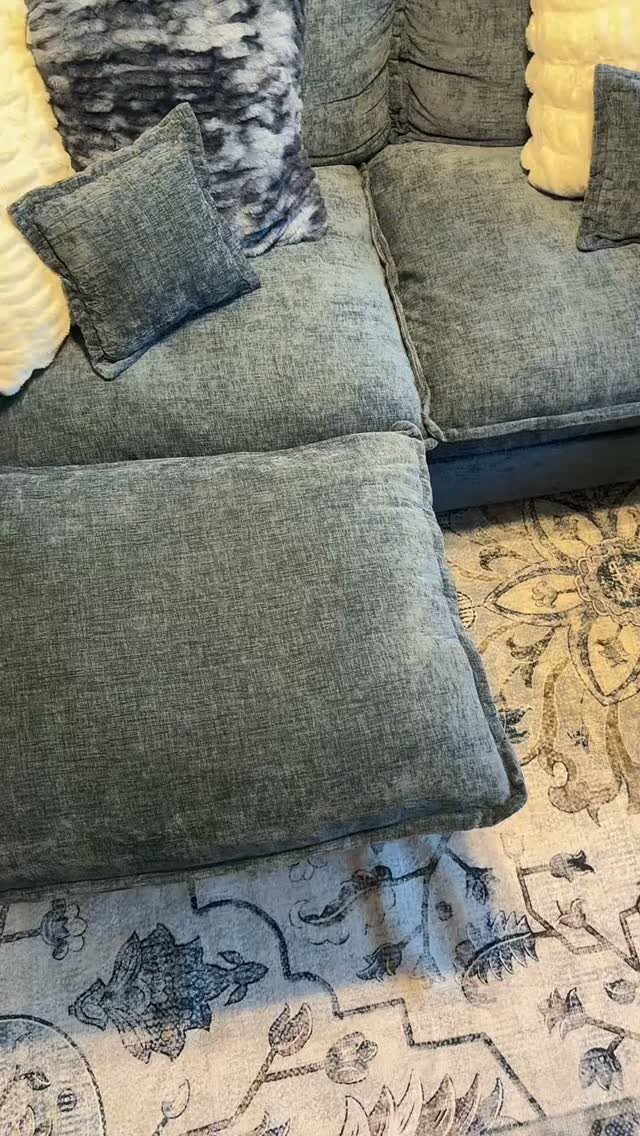
Pattern is where a grey couch gets personality. A cream and blue rug gives the grey something to play against, and the blue picks up cool undertones in the fabric while the cream keeps things light.
Pull your throw pillows from the rug’s colors, mixing solids with one or two prints, and the whole set looks planned instead of random.
If you are nervous, pick a pattern with a cream base. It forgives spills and busy afternoons better than a rug with a solid, dark field.
5. Ivory

Ivory is the easy yes for a grey sectional: warm where grey is cool, and light enough to work with both pale and charcoal sofas. A plush ivory shag adds a soft, cozy layer under the front of the seating.
Blankets in grey and cream layer on top without clashing.
My one caution is upkeep. Light shag shows dirt, so plan on regular vacuuming and quick action on spills.
6. Yellow Rugs
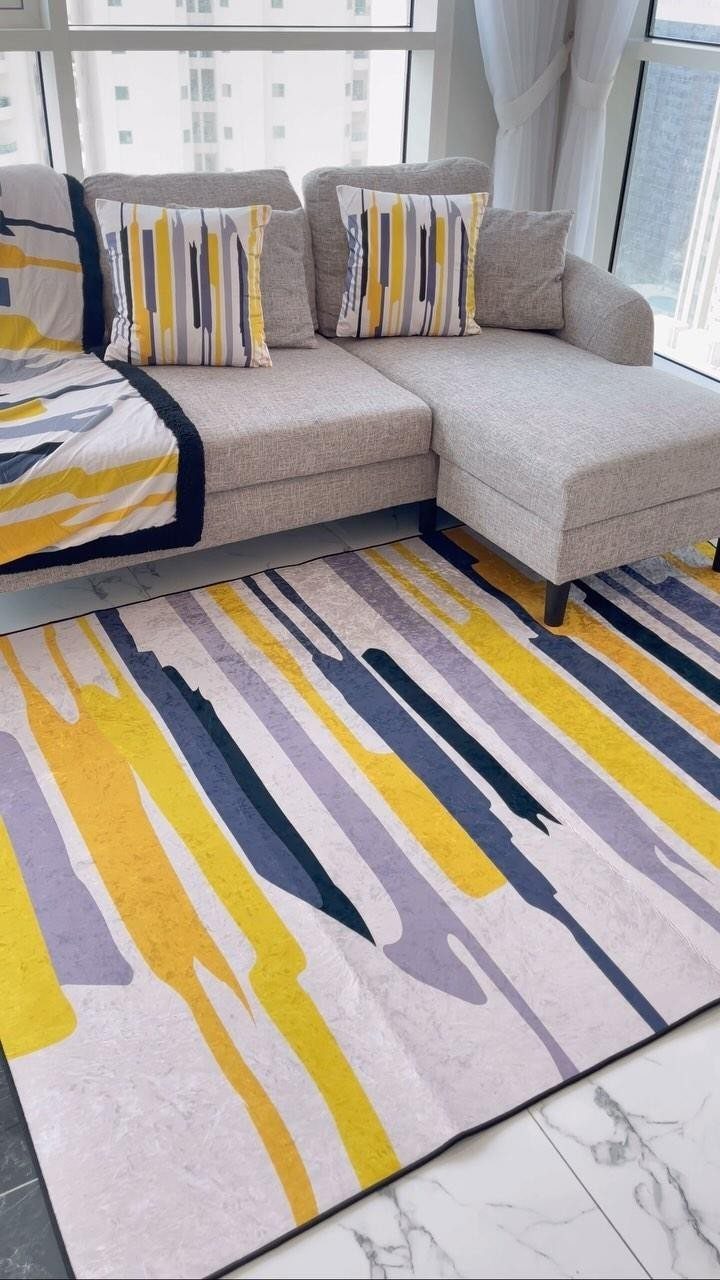
Yellow brings the energy, and a grey sectional is a perfect backdrop for it.
The trick in this room is that the rug is not plain yellow: it mixes in grey and white abstract shapes, which links it straight to the sofa.
Repeat the colors in small doses. Yellow and grey pillows plus a matching throw tie everything together without piling on more brightness.
If a full yellow rug feels like too much, choose one where yellow is only the leading color.
7. Grey Area Rug
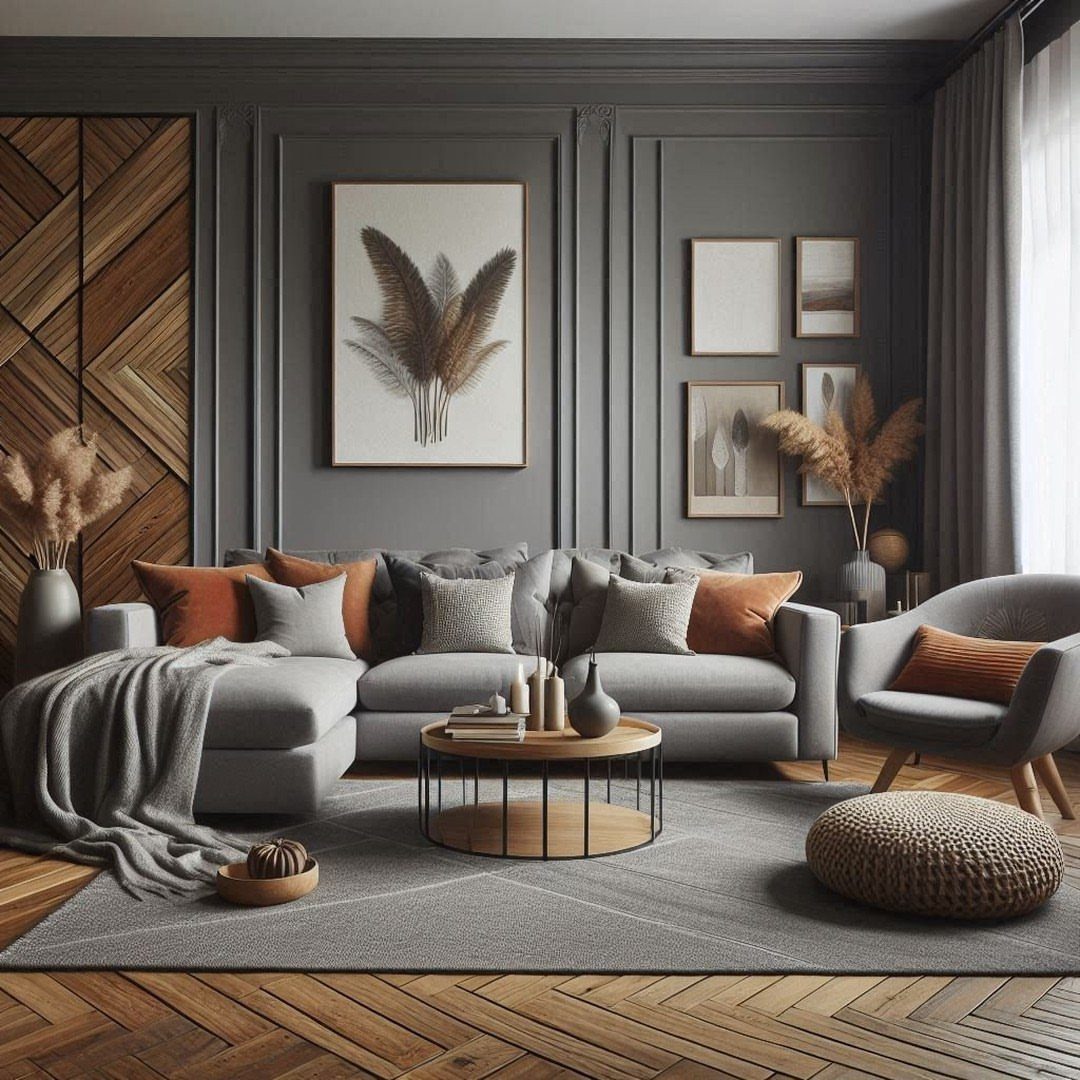
A matching grey rug under a grey sectional makes the seating and floor read as one block. With dark grey walls and a grey armchair in the room, the whole space becomes a single quiet palette.
Texture does the separating, so choose a rug with a visible weave or pile that differs from the sofa fabric.
Skip busy pillows and bring in contrast through the framed art or one wood piece instead.
Choosing Rug Colors
Daylight is the fair judge, so hold a swatch or a spare cushion from the couch against a rug sample near a window before paying for anything.
Grey runs from warm, soft greige to cool charcoal, and a rug that flatters one tone can clash with its neighbor.
If your grey leans warm, pair it with warm colors like beige, taupe, mustard, or rust. If it leans cool, go with cooler tones.
Neutral rugs in white, beige, and taupe give a soft look. Navy, mustard, emerald green, and rust add contrast and warmth.
Rug Placement Tips
Measure before you order. Rule of thumb: the sofa’s front legs sit on the rug, whatever style of couch you own.
With a sectional, I would go a step further and let the rug extend past all of its edges.
A big L-shaped piece of furniture needs a rug that covers the whole footprint, or the seating looks like it is floating on a patch of floor.
Lay painter’s tape on the boards or carpet to outline the rug’s footprint. It’s a quick step, and it shows how the size will sit in the room before you commit.
Maintaining Rugs
A weekly pass with the vacuum keeps grit from settling into the fibers. Deep clean every few months, with the method depending on the rug’s material, so check the care tag before you pick a cleaner.
For spills, blot right away with a clean cloth and use a mild detergent only if the stain needs it. Rubbing pushes the spill deeper into the pile.
Put a rug pad underneath. A rug pad holds the rug in place, helps it last longer, and protects the floor underneath from wear.
If you are choosing a white rug, expect to clean it often, since it shows dirt easily.
Frequently Asked Questions
What color rug goes best with a grey couch?
Ivory, cream, beige, and taupe are the easy picks, and navy, mustard, emerald green, and rust add contrast and warmth.
Grey runs from soft greige to cool charcoal, so match the rug to your sofa’s undertone: warm colors for a warm grey, cooler tones for a cool one.
Take a fabric swatch or a rug sample to the couch and look at both in the light from a window, since daylight shows an undertone that store lighting hides.
Should a rug be lighter or darker than a couch?
A rug a shade or two lighter than the sofa is the safer pick, particularly with charcoal grey, since the contrast stops the seating from blending into the floor and the room stays airy.
A darker rug can work too, and a black shag gives a bold anchor against a light grey sofa on a light floor.
Going darker gives the floor more weight and depth, and it works best where daylight is strong enough to balance it.





