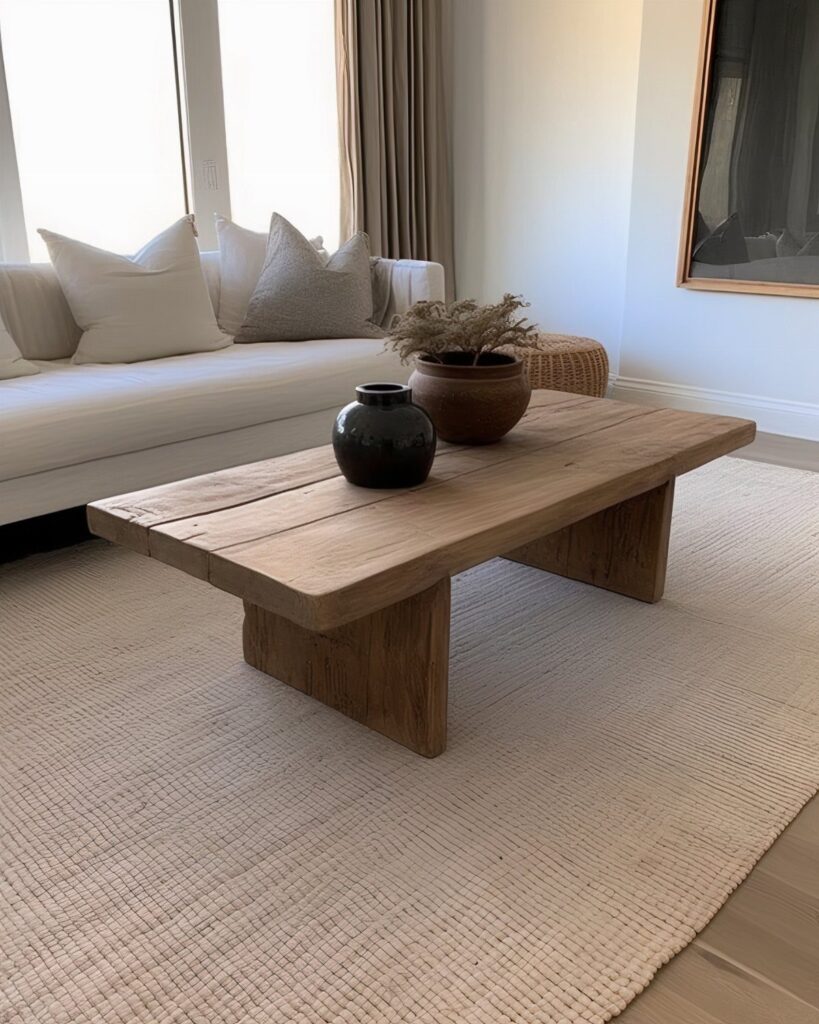
The table that fits depends on the shape your room needs, the storage you want, and how much character you can handle in the grain.
Drawers, a two-tier shelf, a crate frame or a studded trunk handle storage, a round pedestal or chunky-leg top clears the walkways, and a live-edge slab or driftwood-style base gives a plain room its one bold piece.
The styles run from a live-edge slab to a farmhouse table with drawers, so the choice comes down to whether you need storage, how much floor space you have, and what kind of wood finish works with the rest of the room.
1. Live-Edge Slab
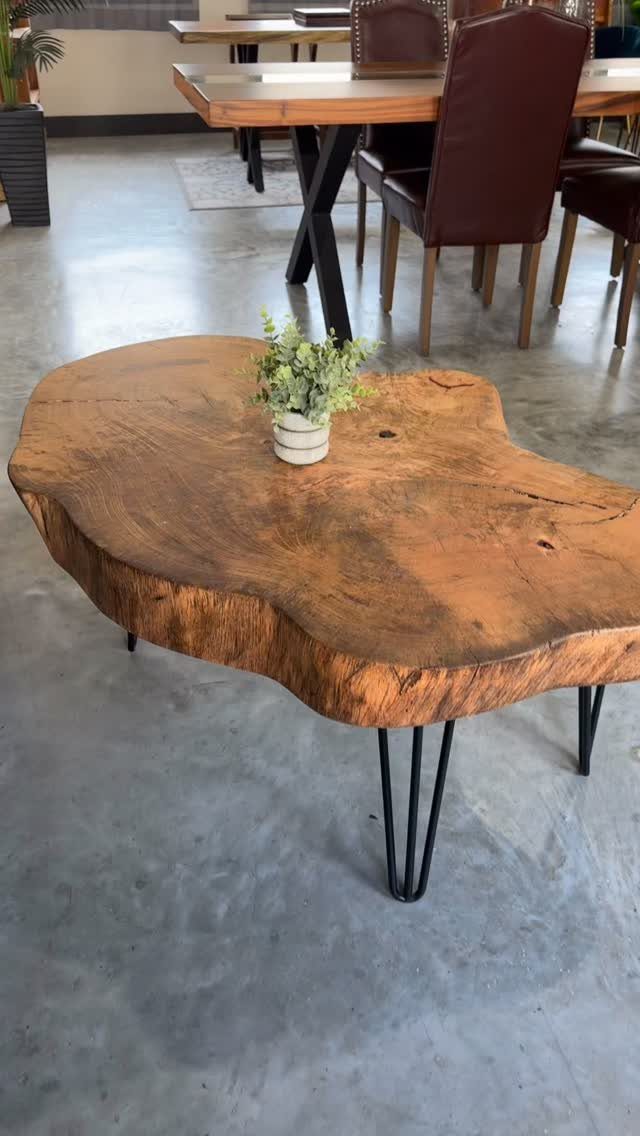
A slab that keeps its natural edge reads as a tree first and a table second, and that is the reason to pick it.
A slab’s wavy, irregular edge breaks up the hard lines of a sofa, TV stand and window frames.
Black hairpin legs keep the base thin, so the wood takes all the attention. I would leave the top simple: one small plant is enough, since the edge already does the decorating.
2. Reclaimed Barn Beam
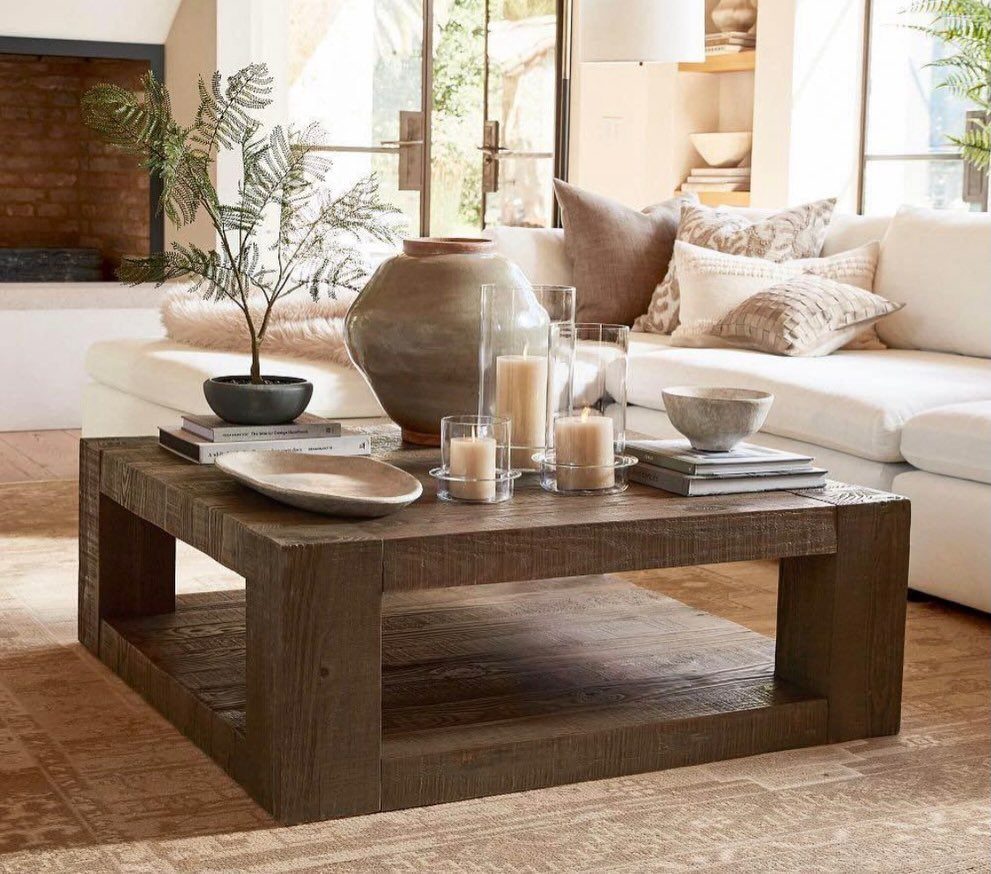
A thick beam gives a coffee table real weight, and dark brown stain leaves the age of the wood fully visible.
Marks, grain and rough patches are the decor here, so styling stays light: a single tray or a small stack of books is plenty.
Against a white sofa and neutral pillows, a table like this works as the one heavy, warm piece in the room. Pick a top made of chunky beams rather than thin boards if you want that solid look.
3. Round Pedestal
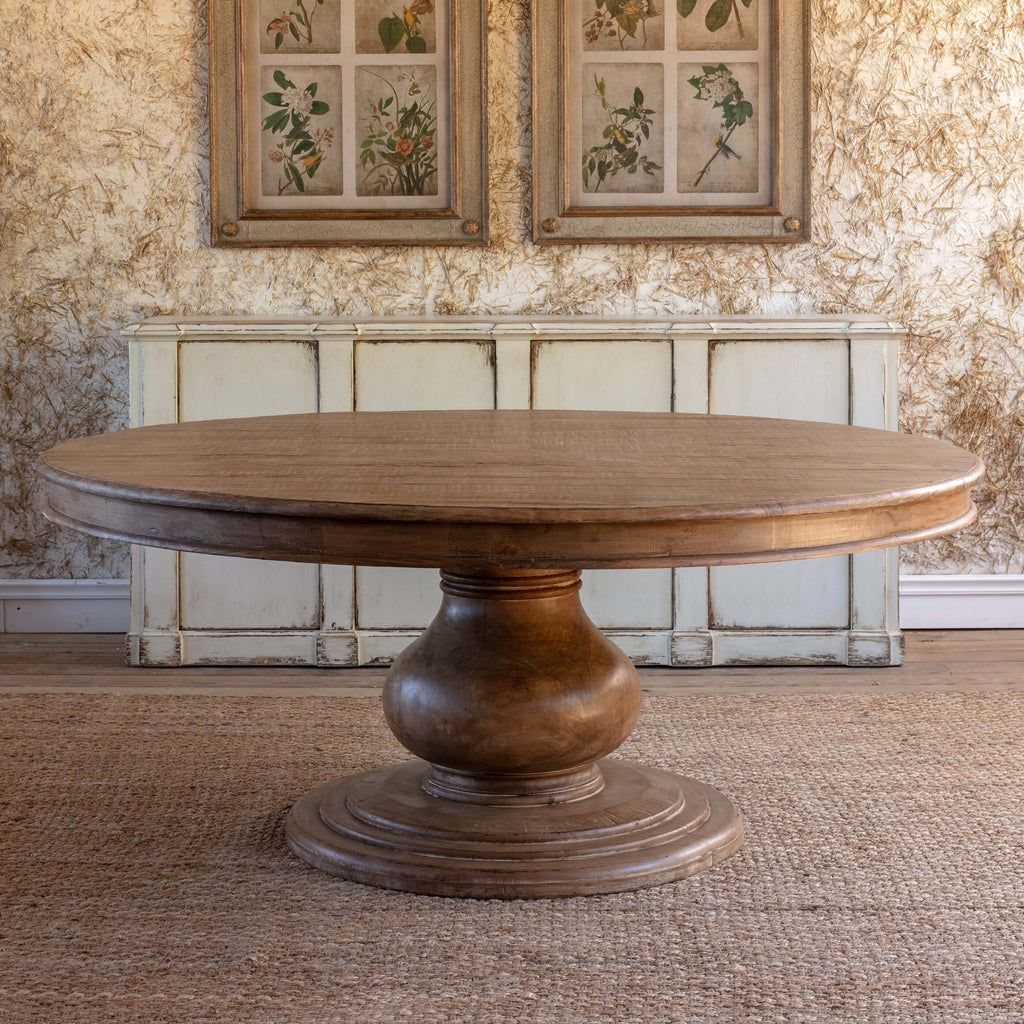
One central pedestal means no table legs to stub a toe on, and a round top lets people walk around it. That makes this shape easy to slide aside when you need floor space.
A carved base adds detail without clutter, and a woven jute rug under it suits the rustic look. I would choose this shape for a living room where traffic passes close to the table.
4. Two-Tier Plank Table
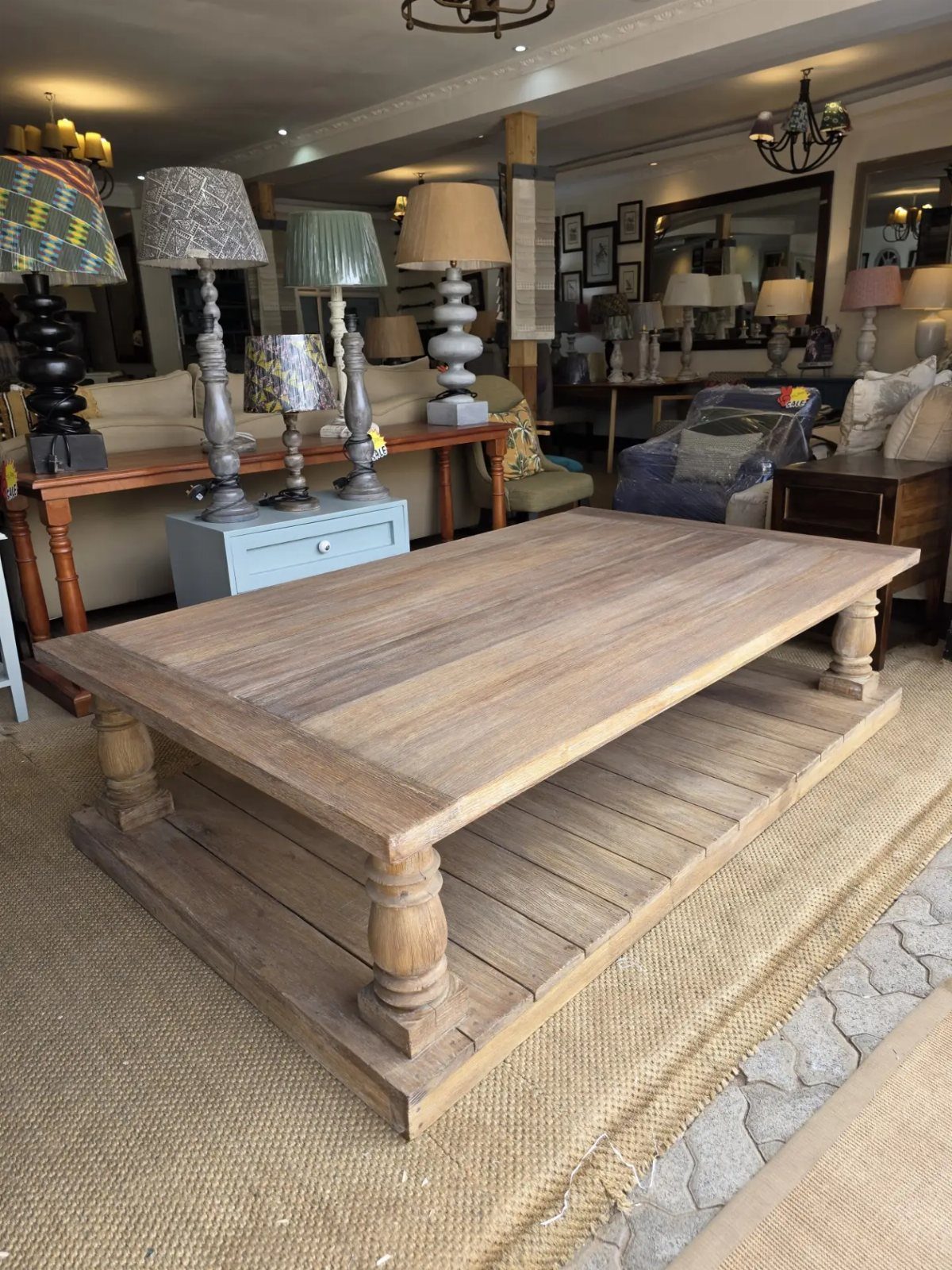
2 tiers double what a small table can do: books and a candle on top, baskets or magazines on the lower shelf. For a living room that collects clutter, that lower tier is the better half.
Plank tiers beat a solid block when storage matters more than one bold slab, since the lower shelf holds baskets, blankets and magazines.
5. Driftwood-Style Coffee Table
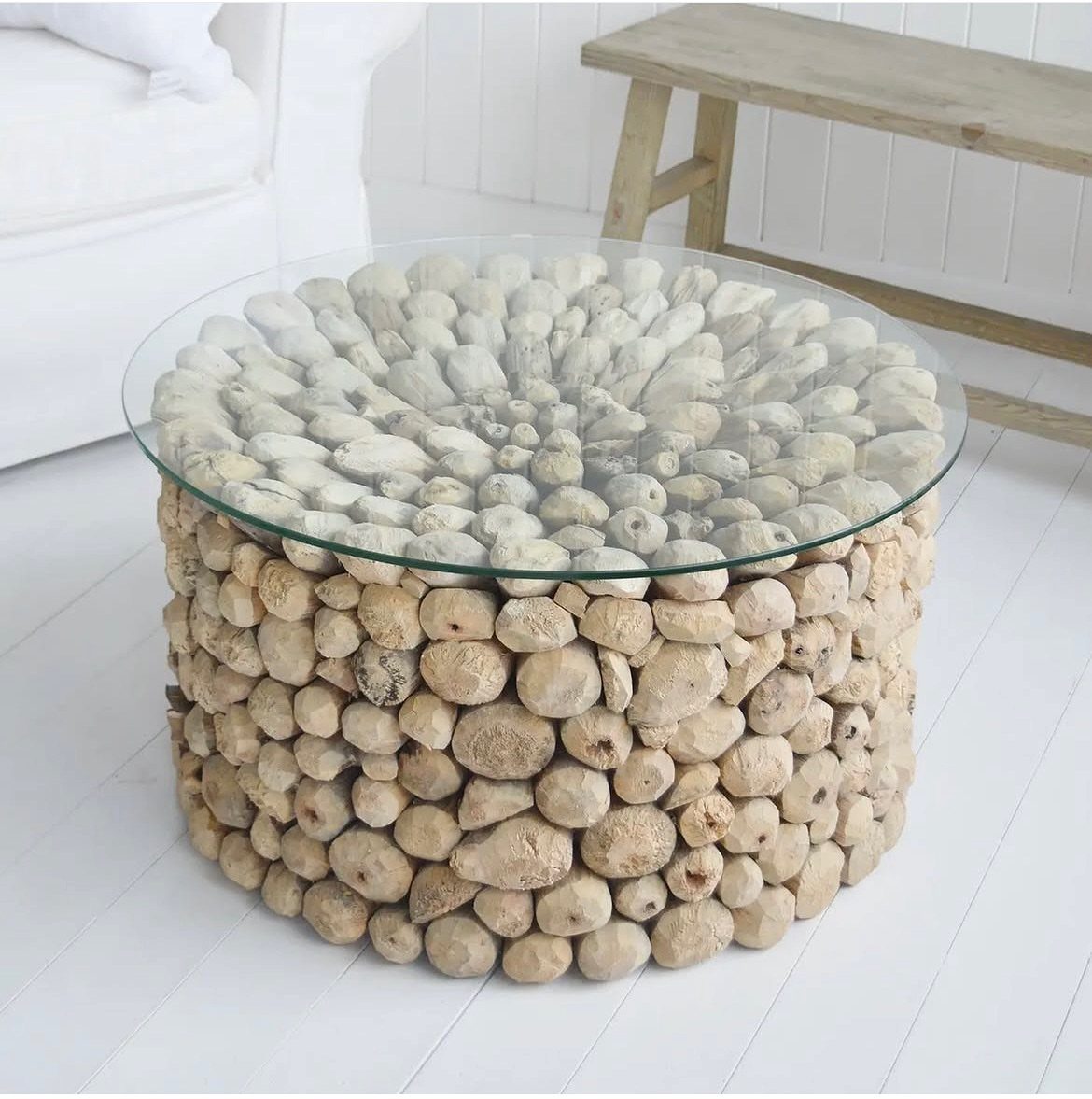
A base of stacked driftwood-style pieces gives you the look of sun-bleached beach wood indoors. The pale tone suits a white room better than most dark rustic tables do.
A glass top, as here, lets the irregular stack show from every angle, so the base does all the work. Driftwood-style finishes give you rustic texture in a paler, lighter tone, so the room doesn’t feel dark or weighed down.
6. Farmhouse Coffee Table with Drawers
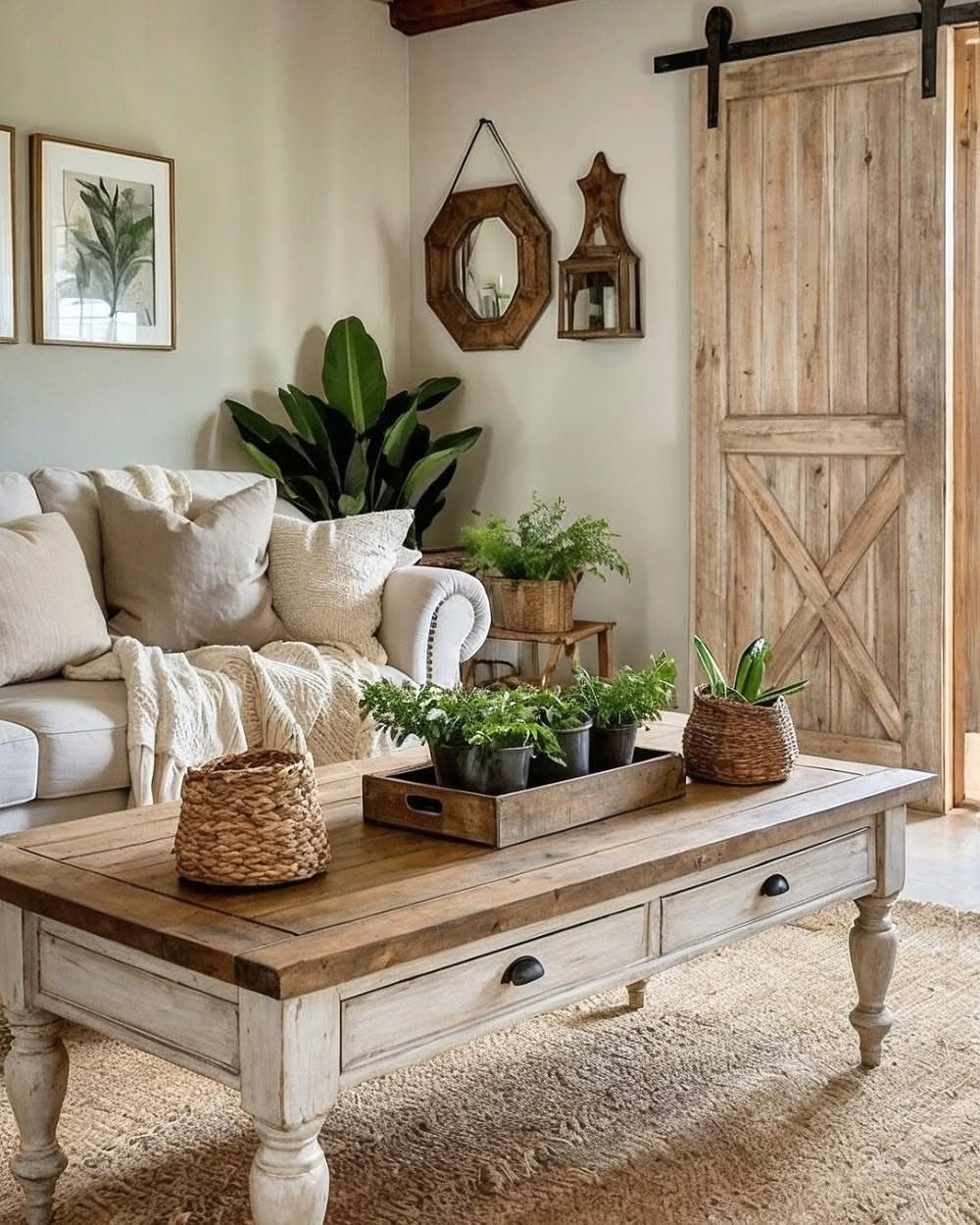
Drawers turn a coffee table into storage, which is hard to beat in a living room without a lot of closets. Remotes, coasters and throw blankets all disappear.
Open shelves beside the drawers give you a spot for baskets or books.
White drawers under a wooden top keep the piece rustic but lighter, and they pair well with a white sofa. I would choose this over a solid slab if clutter is your problem.
7. Antique Door Slab
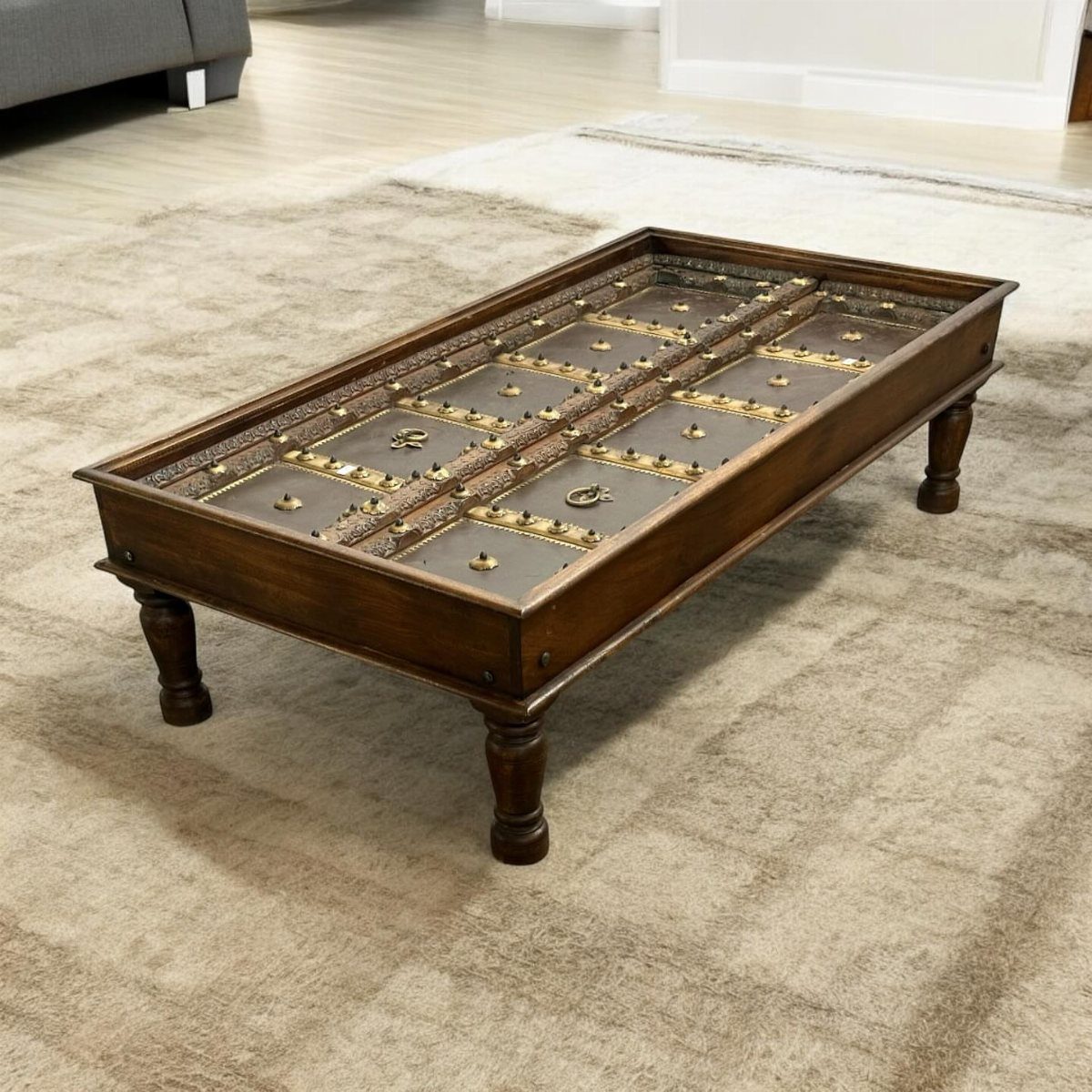
Old doors already come with carved panels, worn paint or dark finish, and metal studs and handles, so a door laid flat on a base becomes a table with almost no decoration needed.
Each one is different, which a store-bought top can’t match.
A beige rug under dark wood keeps the room calm and lets the carving stand out. I would leave the handles on and keep the top bare, with maybe one book.
8. Round Table with Chunky Legs
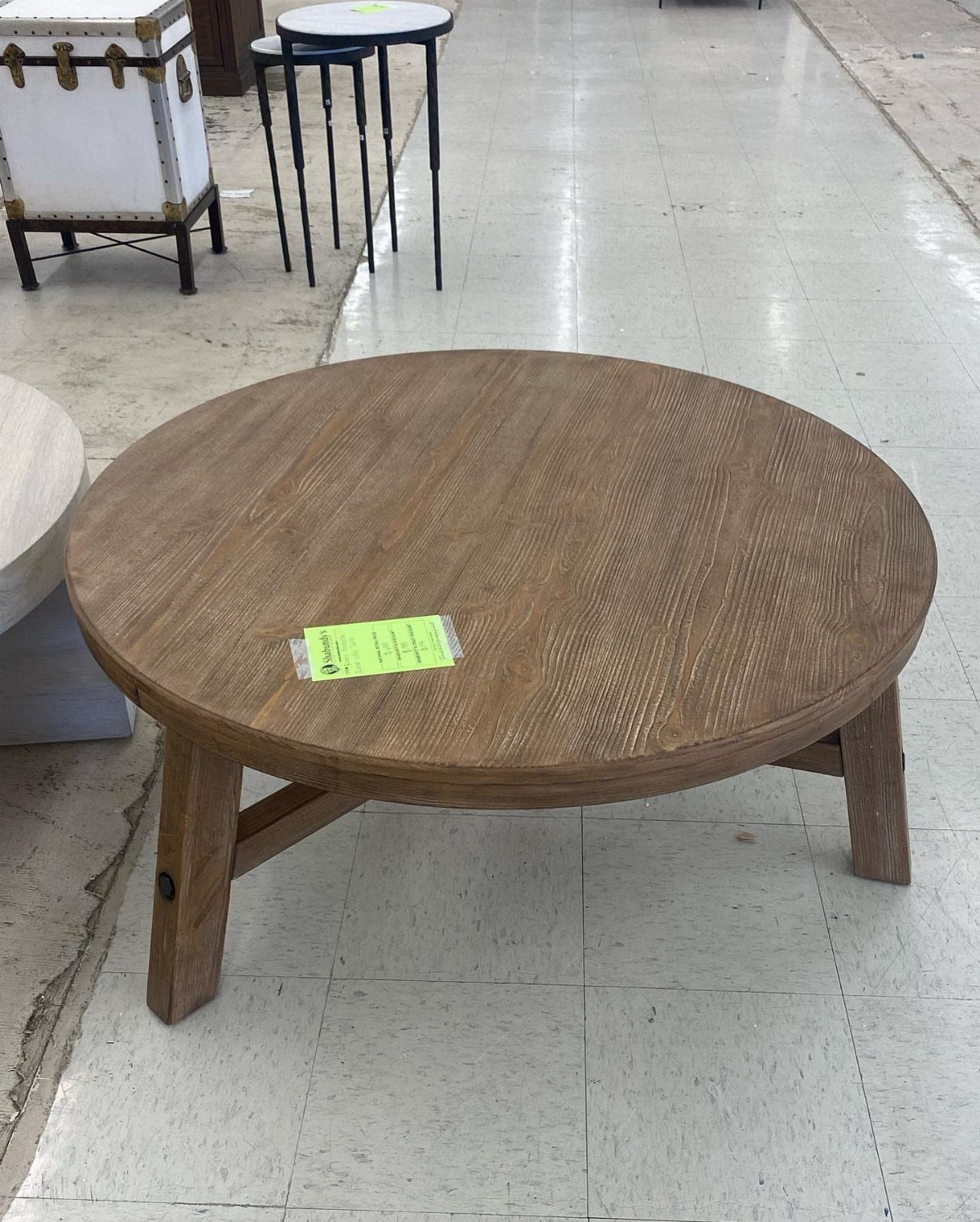
Chunky legs on a round top give a coffee table a sturdy, grounded look, and a natural brown finish keeps it warm without feeling heavy.
On a tiled floor like this one, the brown wood adds the warmth the tile lacks. I would pick this shape for a small room, since a round top has no corners to catch on.
9. Square Block-Leg Coffee Table
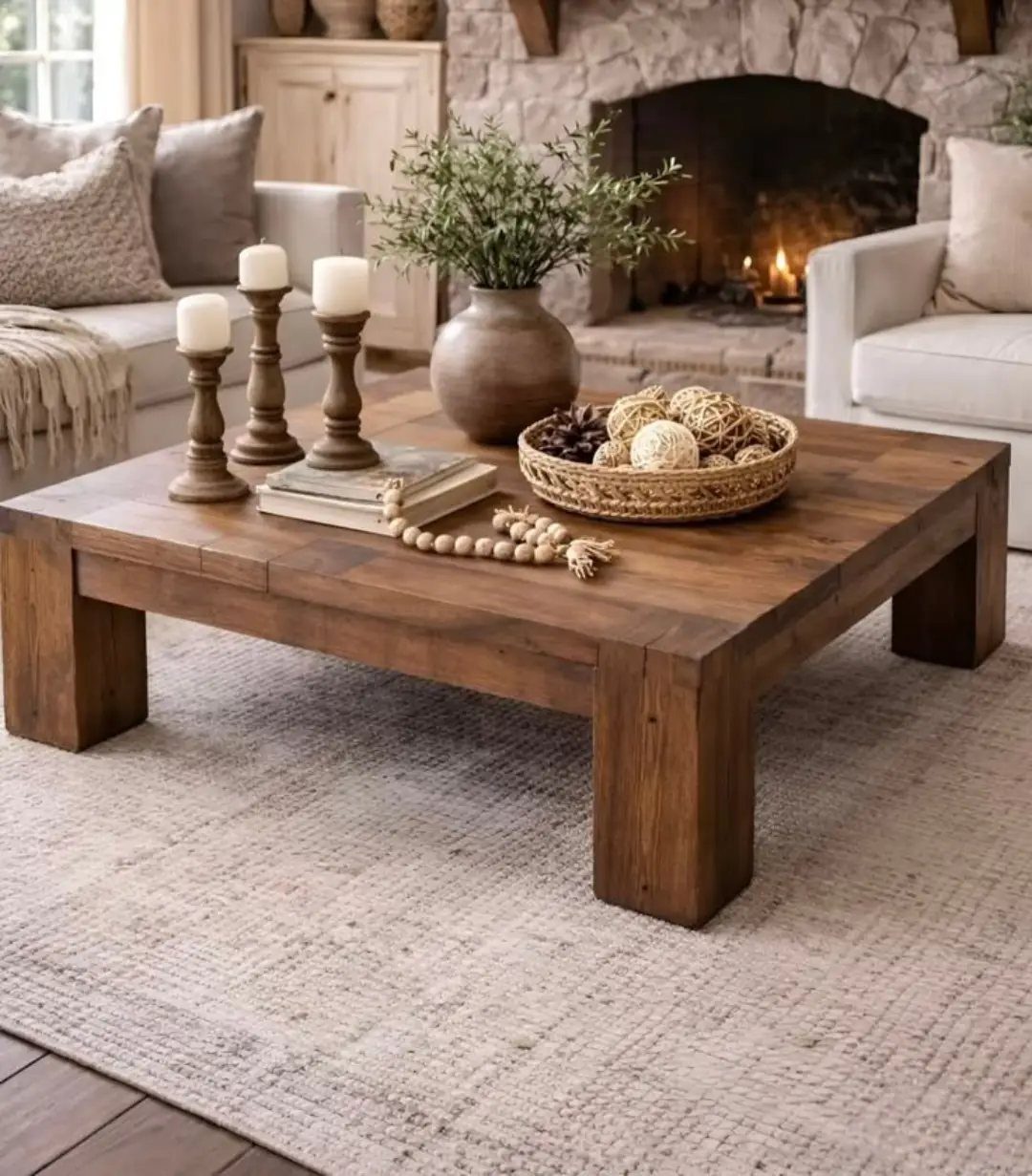
Thick block legs make a square table look like a single solid piece, which suits a room built around a fireplace. A square top gives you plenty of surface for candles, books and a bowl.
Group items in odd numbers and vary the heights so the top stays tidy. I like this one best in a living room where the table is meant to feel heavy and cozy.
10. Tree Root Base Coffee Table
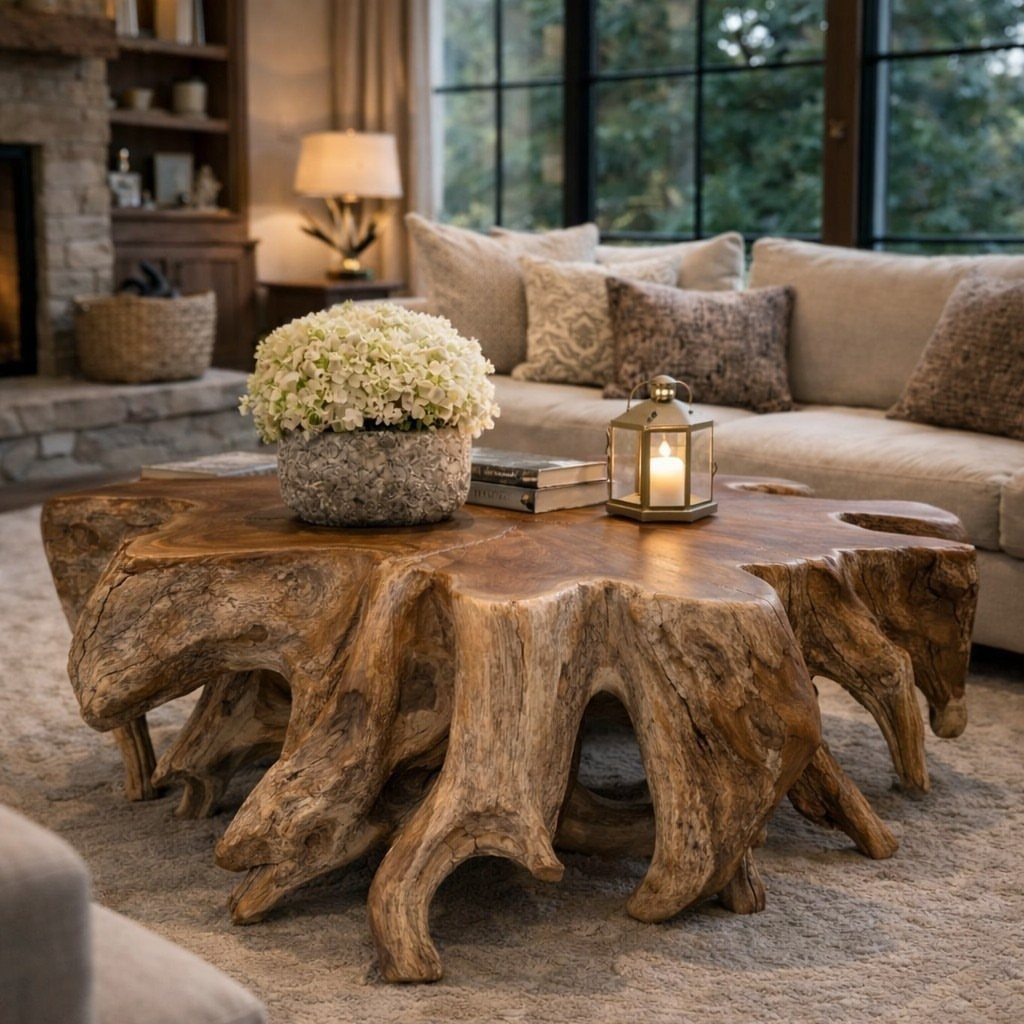
A polished top over a sculpted tree root base puts the twisting shape of the wood below and a smooth, usable surface above. The base is the whole design, so keep the top nearly bare.
I would choose this over a plain slab if you want a conversation piece rather than furniture that blends in.
11. Wooden Crate Coffee Table
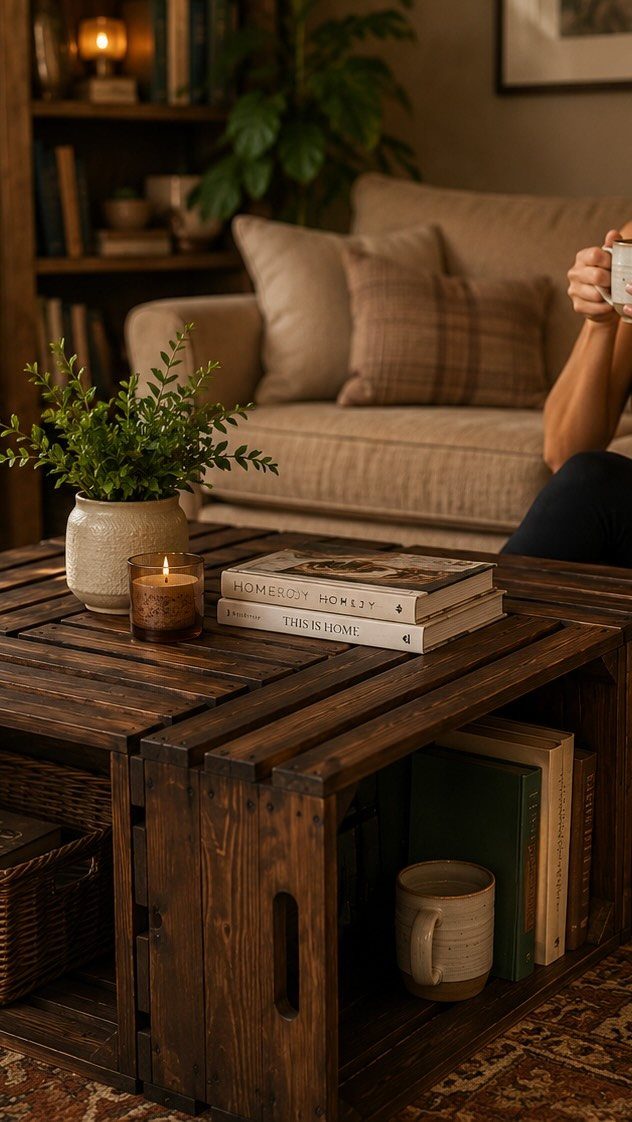
Crates stacked into a table give you built-in cubbies for books and decor, and the weathered wood suits a cabin look.
The maker of this one liked the hidden storage and handmade feel, and both are real reasons to build it.
Put heavier books in the lower cubbies and keep the top for a candle and a small plant. Crates are the pick if you want a project you can finish yourself on a small budget.
12. Studded Wooden Trunk Coffee Table
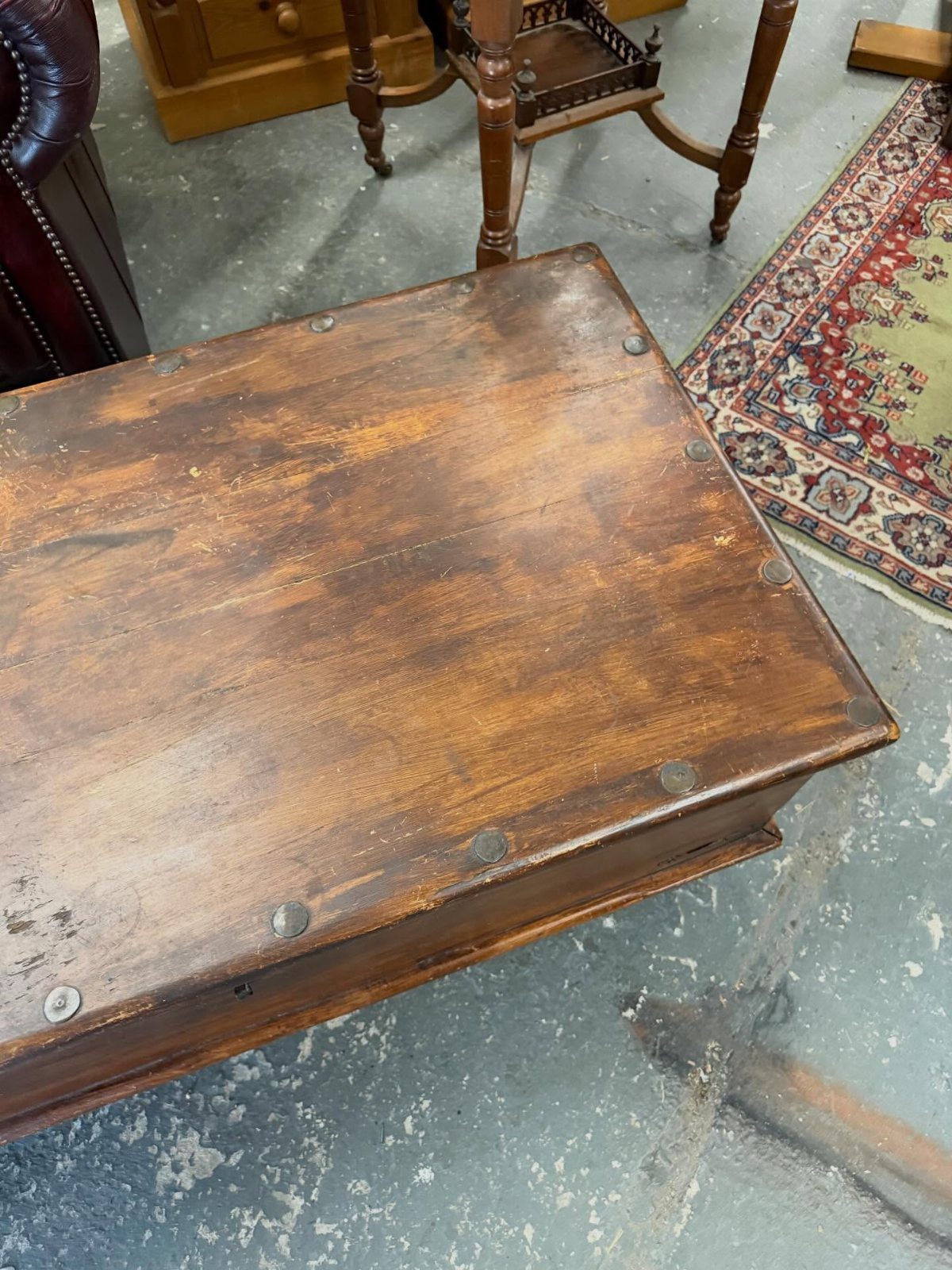
A weathered chest with metal studs along the edges gives you a coffee table and a storage box in one piece. The studs add an industrial note that keeps the rustic wood from looking too sweet.
It sits low and wide, so it works well over a rug among other wooden furniture. Blankets belong inside and the lid should stay clear, so the worn surface stays the focus.
Choosing Rustic Wood
Check the nail holes first. Genuine reclaimed boards give themselves away with small dark-ringed holes, which are old iron stains that soaked into the grain over decades, and with color that shifts noticeably from one board to the next.
Fake distressing gives itself away by repeating. If the same dent, scratch or worm-hole pattern shows up every few inches, a machine or a stamp made it.
Look at the grain too. Genuine old boards vary a lot from one plank to the next, while a printed or distressed laminate surface looks uniform across the whole top.
Run your hand over the surface and look along the edges. Laminate often shows a seam or a thin printed layer at the corner, and real wood does not.
Caring for Rustic Tables
Rough surfaces hold dust in the grain, so go with the boards, not across them.
When the top needs more than dusting, wipe it with a cloth that is only slightly damp and dry the wood right after so moisture never sits in the grain. Standing water is what leaves rings on an open grain.
Plan on rubbing a fresh coat of hardwax oil into the top about once a year. It protects the patina you chose the table for, and it takes about an hour of work, so an easy weekend morning is plenty.
Styling Rustic Tables
A tray is the simplest way to keep a rustic top from looking cluttered. It groups small things into one shape, so the wood still reads as the main feature.
Dough bowls, lanterns and vintage boxes suit the style just as well; pick one or two, not all of them.
Less is more here. If you can still see more wood than objects, the balance is right.
A ready-made option is a tray-top table, like the Farmhouse natural rectangle tray top coffee table from Home Depot at $252, which builds the tray into the table itself.
Frequently Asked Questions
How can I tell real reclaimed wood from fake rustic-look?
Iron stains around old nail holes are the fastest tell.
Decades of oxidation leave dark rings that sank deep, and each plank ages to a different shade. Mass-produced distressing stamps the same gouge in a pattern, and thin veneer peels or shows printed grain at an edge.
How do I clean a rough reclaimed wood coffee table?
Dust it weekly with a dry cloth, moving with the boards instead of across them, since rough grain traps dust.
A wrung-out cloth does the job when dust alone will not move, and you wipe it dry immediately. One coat of hardwax oil per year keeps the finish intact without changing how the wood looks.
Can a rustic wood coffee table work in a modern living room?
Yes.
Treat the table as the one organic, warm piece and keep the lines clean everywhere else. Hairpin legs in matte black ground the organic edge against straight-lined furniture and trim.





