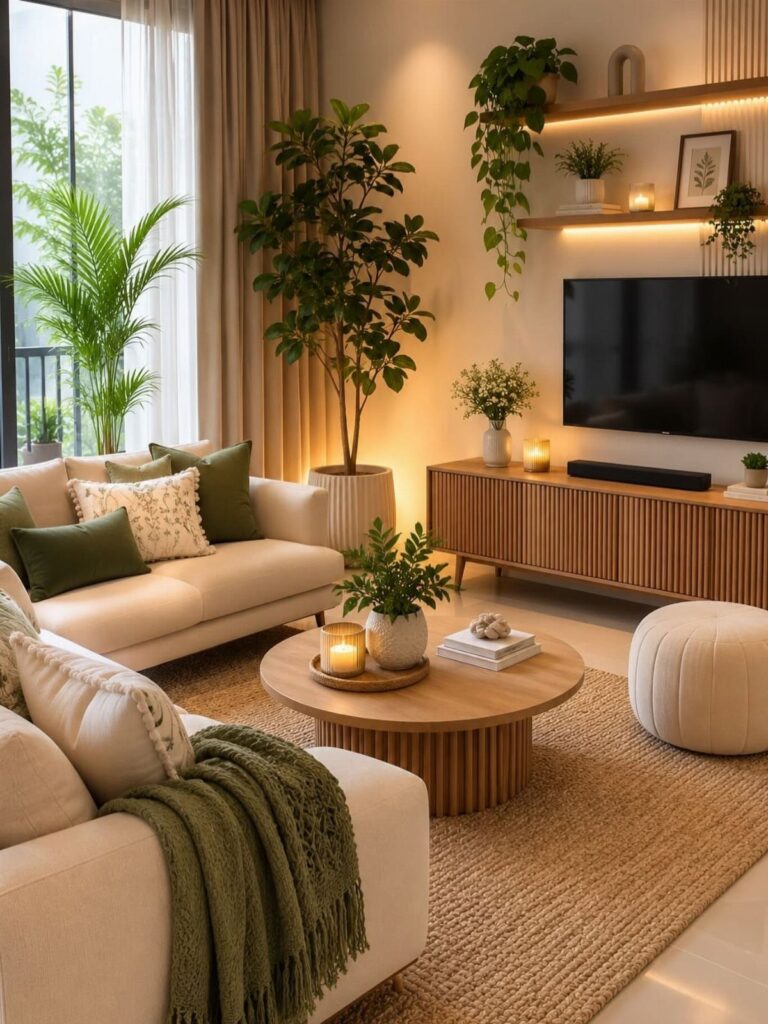
Warm transitional ideas go from neutral paint and gallery walls to statement lighting and built-in display cabinets, so the one thing that decides your pick is whether you rent or own.
Renters get the same balance from layered textures, simple vases and metallic hardware swaps, while owners can install Shaker cabinets, tufted headboards or glass-front display cabinets.
Either way, the base of the room stays in warm neutrals and the small pieces carry the contrast.
1. Neutral Color Palette
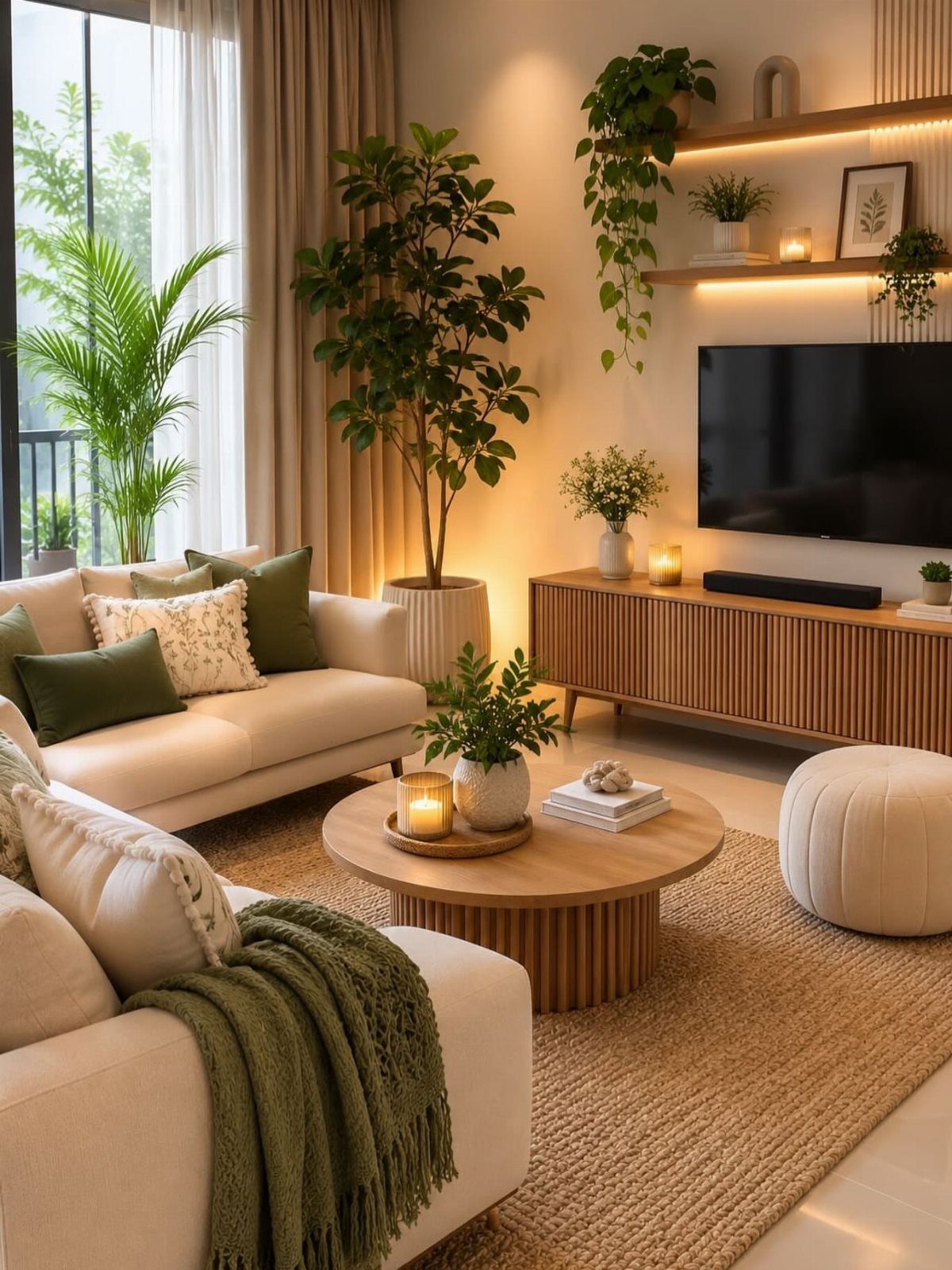
For a first transitional room, the formula I trust is to keep the big pieces in warm neutrals, then let the small, cheap things carry the contrast.
Pillows and plants cost far less than a new sofa, so swap those when you want a change. Choose cream over stark white; the warmth is what makes the room feel cozy.
2. Spacious Armchair
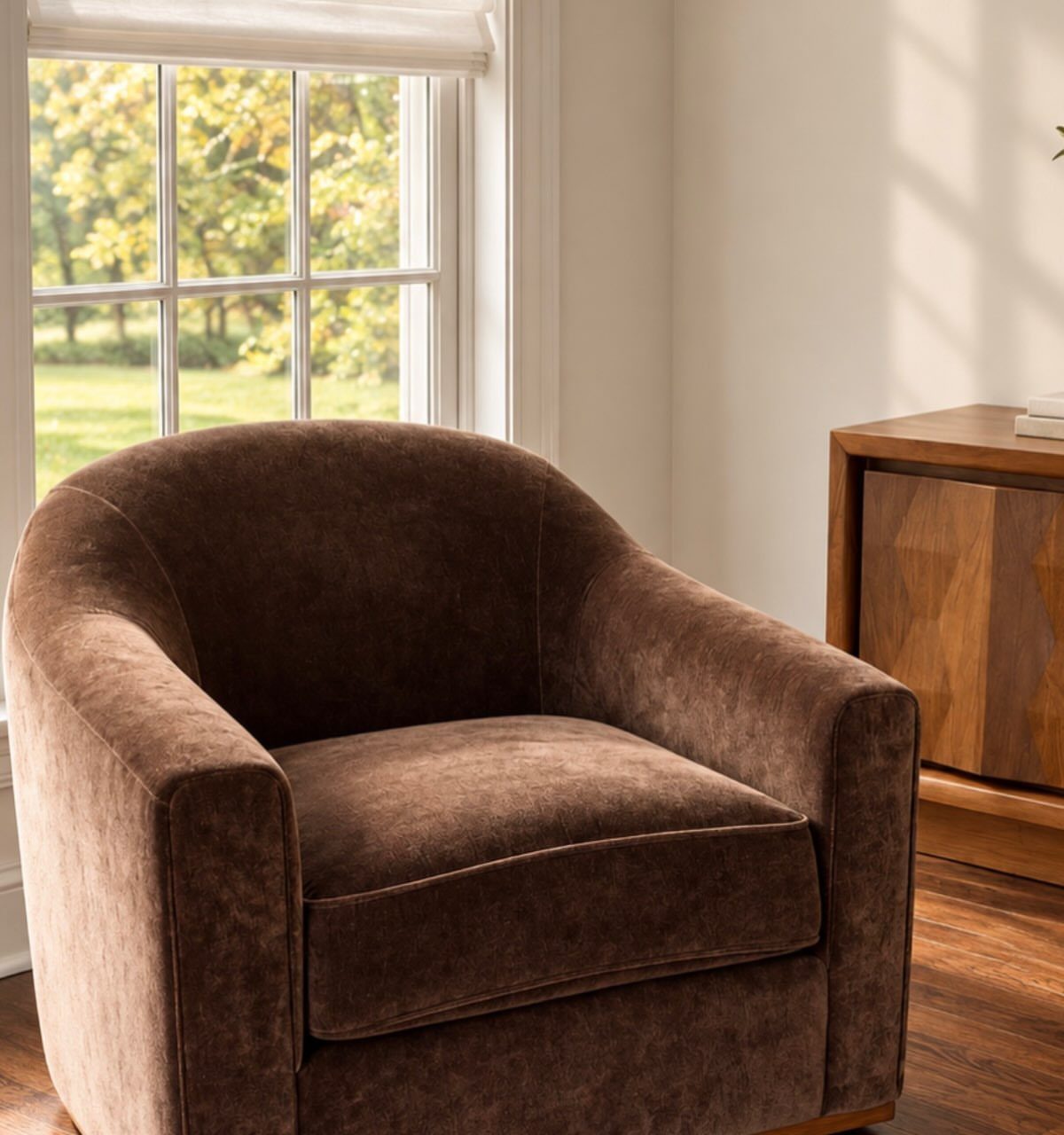
A brown velvet swivel chair by a window gives a room one seat that people actually fight over. Velvet adds softness, and the swivel lets someone turn from the conversation to the view.
For a small budget, one good chair beats a pair of mediocre ones.
I would park it near a window with a wood piece beside it, as here, so the brown reads as part of the room rather than a lump of color.
Sit in it before buying if you can; "spacious" should mean your back and legs both fit comfortably.
3. Shaker Kitchen Cabinets
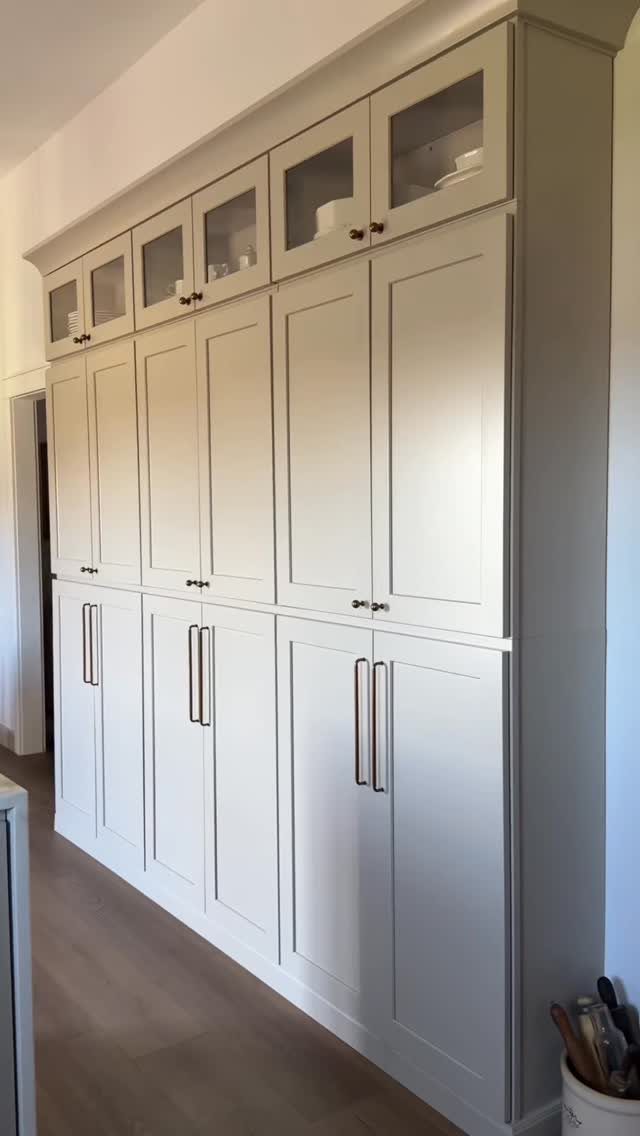
Light grey Shaker doors are about as plain as a cabinet gets: a flat center panel and a simple frame. That plainness is why they sit comfortably in a warm transitional kitchen.
Mixing in a few glass-front uppers breaks up a long wall of solid doors and gives you a spot for dishes you like looking at. Long metal handles add a modern line without changing the classic door.
One tip from the maker of this kitchen: pairing a warm, earthy tone with natural textures makes the space feel grounded and inviting.
4. Simple Vases
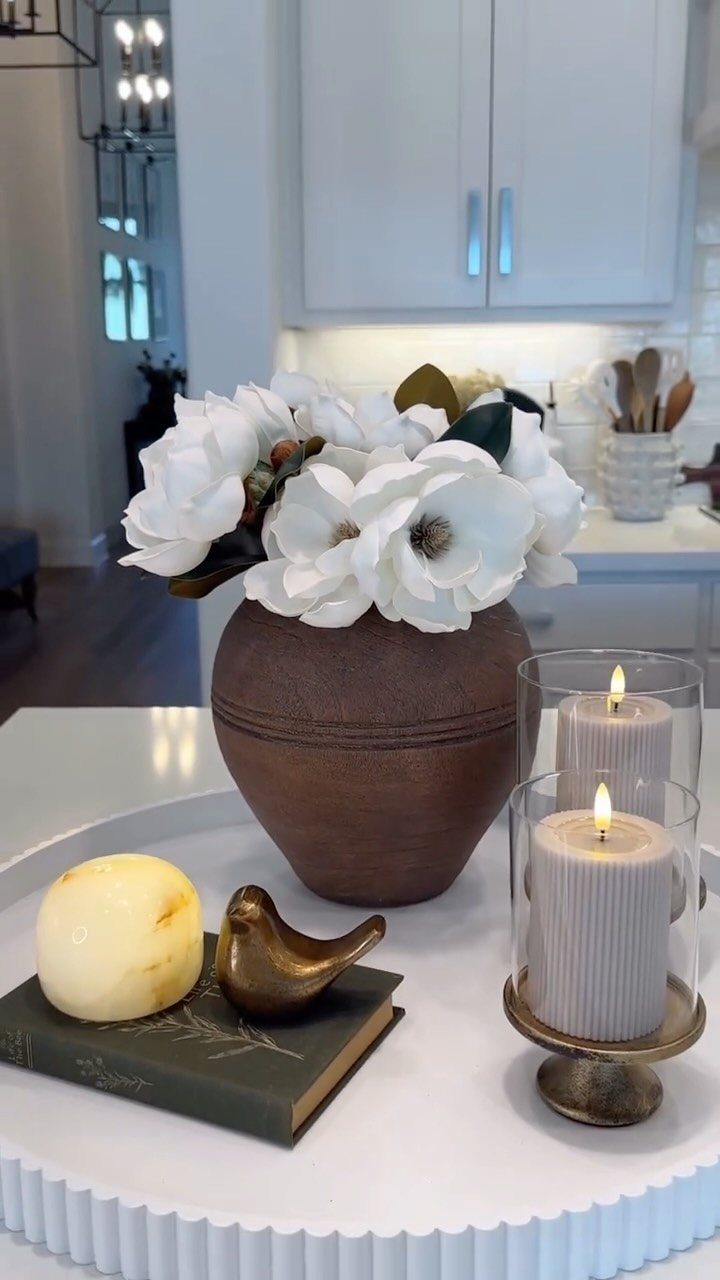
Magnolia stems in a single brown ceramic vase need no arranging skill at all. The textured glaze does the decorating, and white blooms stand out cleanly against it.
Set the vase on a tray, as here, with a candle or a book beside it, so the grouping reads as one deliberate cluster instead of loose objects. A kitchen counter is an easy place to try it.
I prefer one larger vase to three small ones; it looks calmer and costs less to refill.
5. Blend Modern and Classic Pieces Thoughtfully
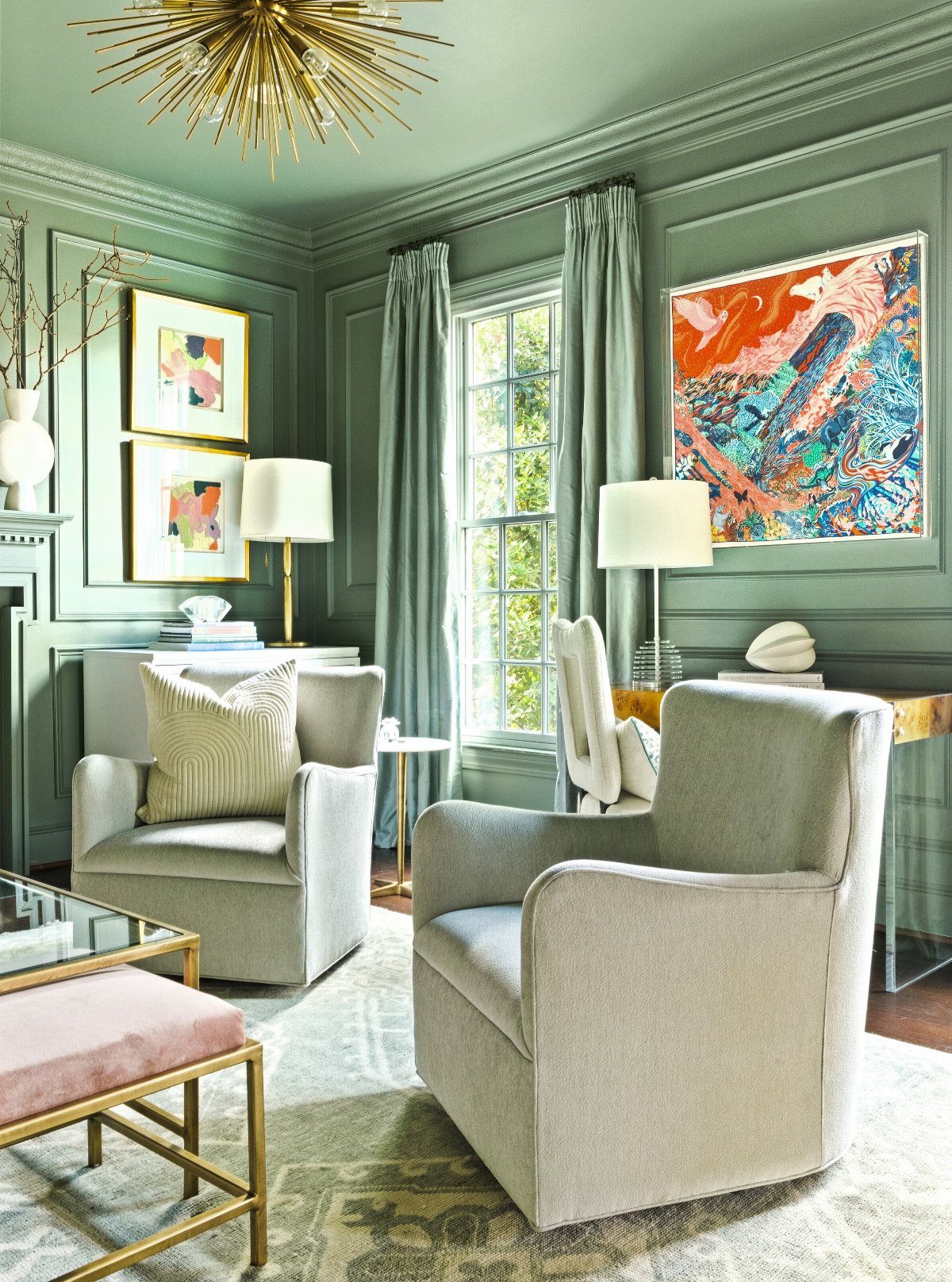
A gold starburst chandelier over plain grey armchairs shows the whole idea: one decorative, classic-leaning piece, and seating with clean lines. Sage green paneling adds the traditional architecture without any heavy furniture.
Pick a single showpiece per room, then keep everything around it simple. Here the abstract art brings the modern note, while matching curtains stay quiet.
If you are renting, you can borrow the same balance with art and a light fixture swap rather than paneling.
6. Layered Textures
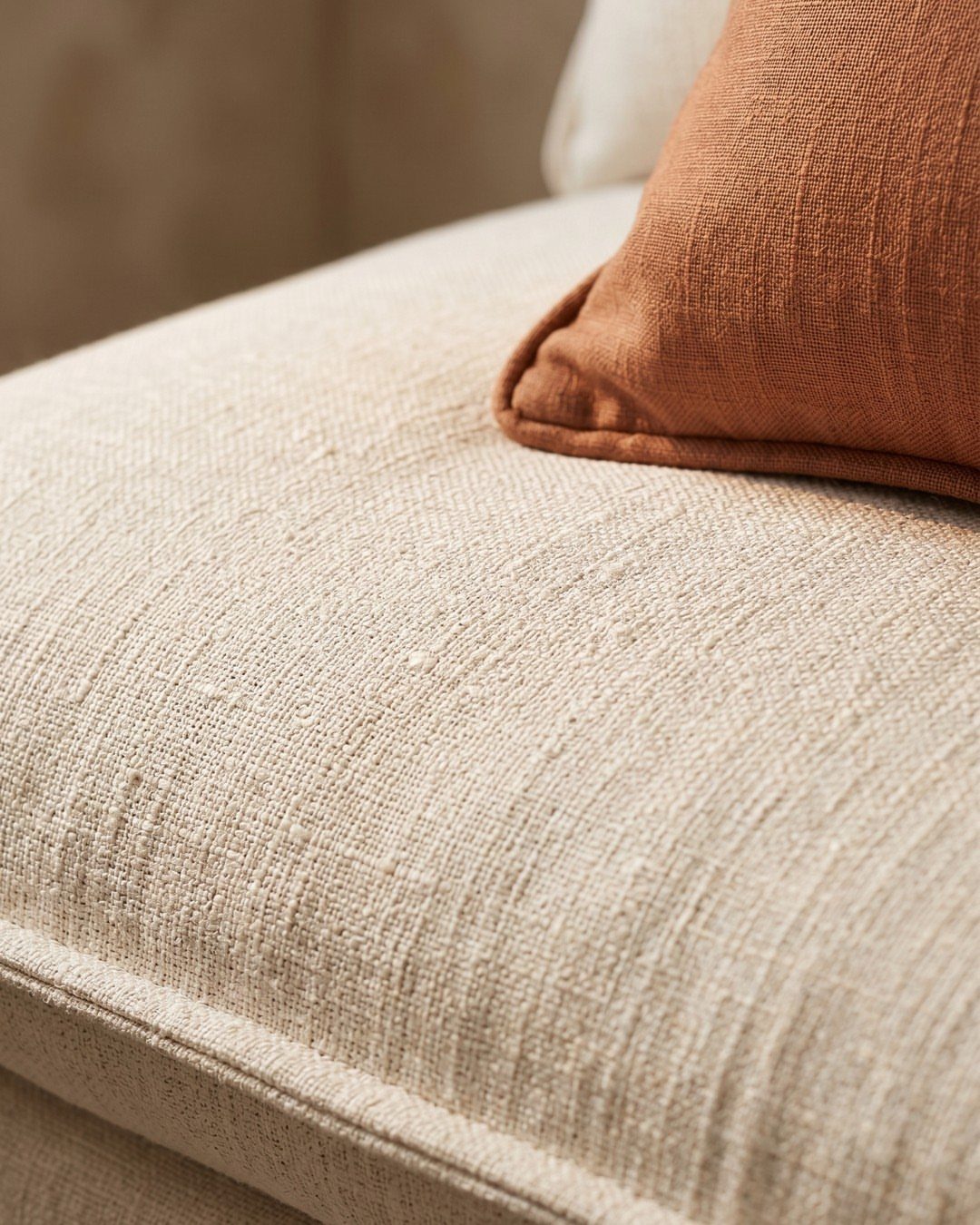
The 2 fabrics differ in weave and in color, so the eye keeps finding something new.
Stay within one color family for the base and add a single warm accent, as in this pairing. Texture does the work that extra colors would otherwise do.
Pillows are the cheapest place to practice; buy one, live with it a week, then add a second texture.
7. Statement Lighting
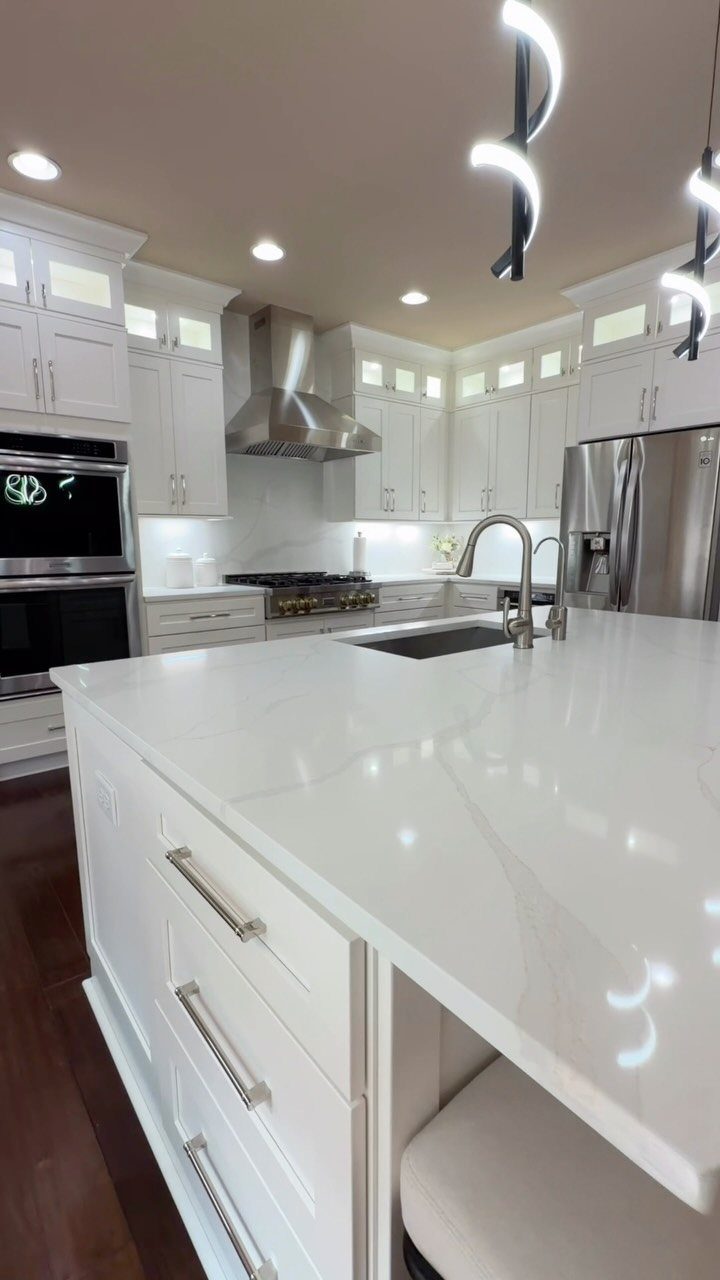
Two curved white pendants over a marble island do the job of a sculpture, and they keep the sightline open because nothing about them is heavy. Over a white kitchen, the shape is the only contrast you need.
Pick one fixture style and repeat it over the island. Hang them low enough to read as a feature but high enough that nobody ducks.
Swapping a pendant is a weekend job, and for a renter a plug-in version is the easier route.
8. Metallic Hardware
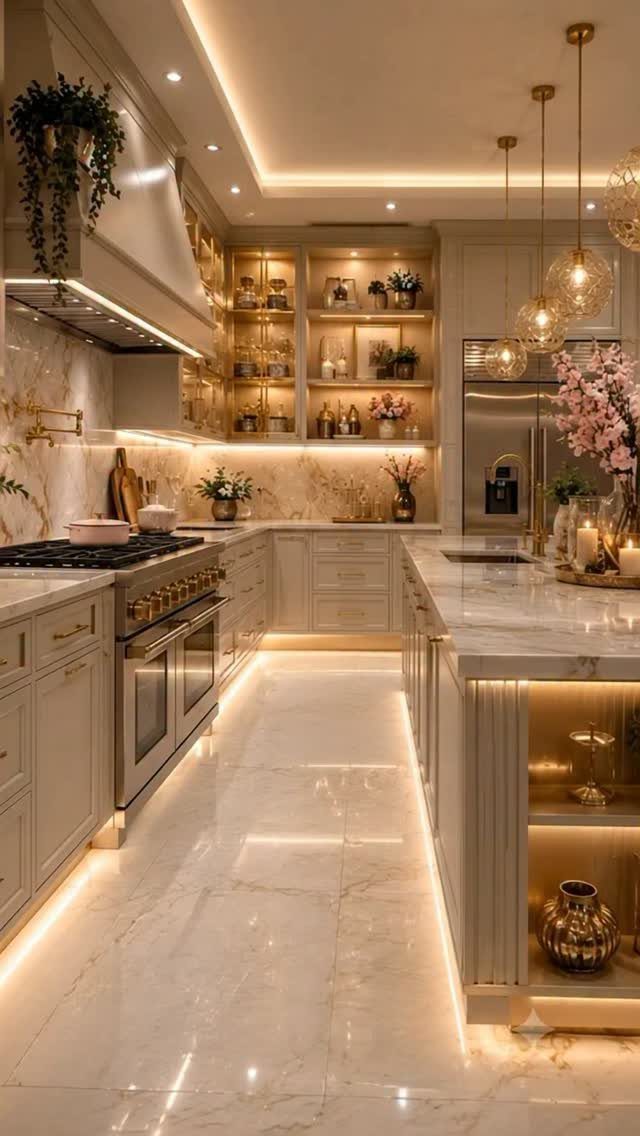
Gold handles on beige cabinets add warmth that chrome or black would not. Against white marble, the metal reads as a deliberate accent instead of just a fastener.
Nothing changes a set of cabinets for less money than new hardware, and the whole job takes one screwdriver and an afternoon. Measure the distance between the existing screw holes first, so the new pulls fit without any drilling.
I would stick to one metal finish across the whole kitchen and repeat it on the faucet or lighting if you can.
9. Tufted Headboards
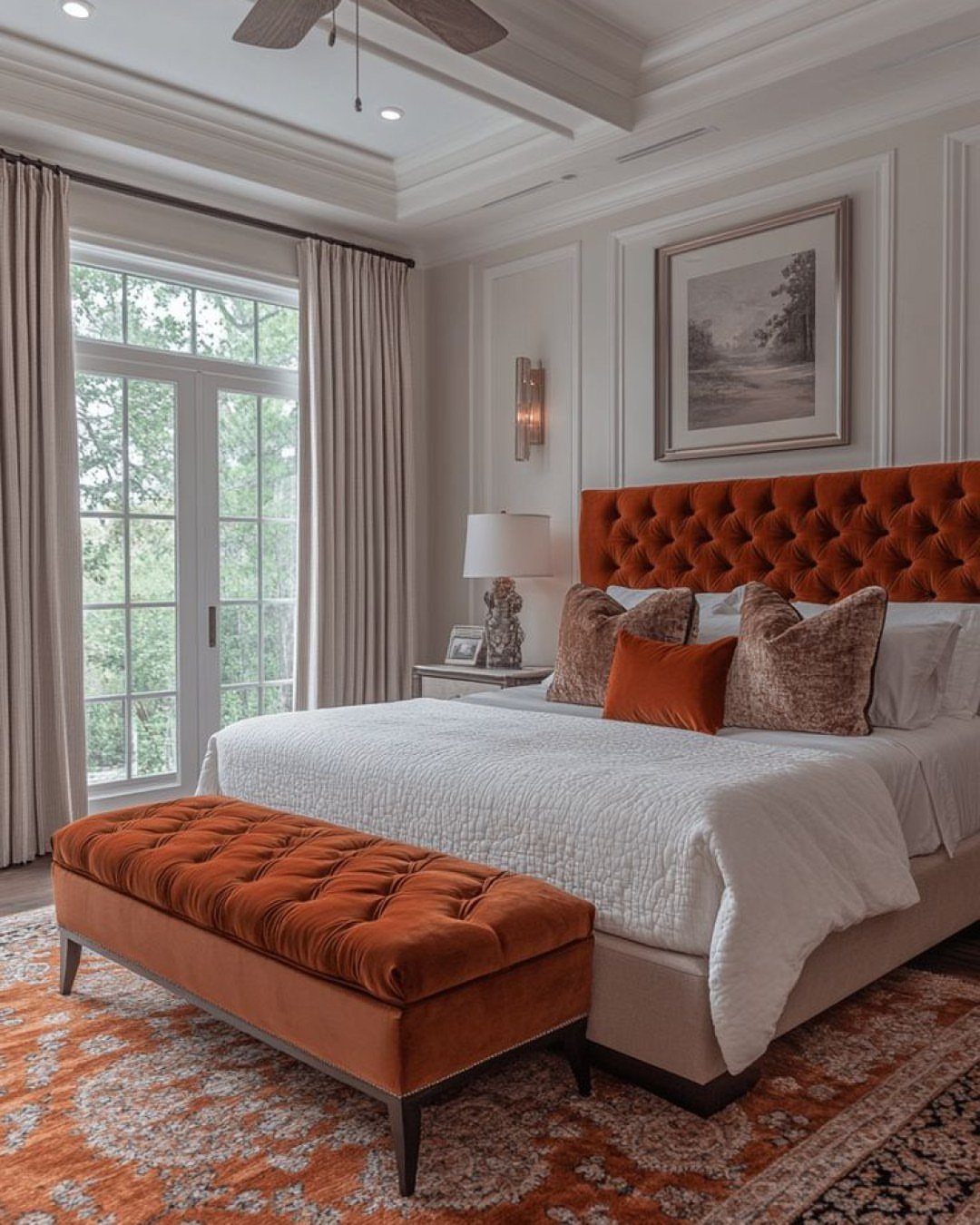
A burnt orange tufted headboard brings classic shape and a strong color into a bedroom that is otherwise white and neutral. The matching bench at the foot of the bed repeats the color, so it feels planned.
Keep everything else quiet, as here: plain bedding, soft curtains, and one patterned rug for pattern. If a full upholstered set is out of budget, buy the headboard first and add the bench later.
One bold color in one fabric is enough.
10. Purposeful Display Cabinets
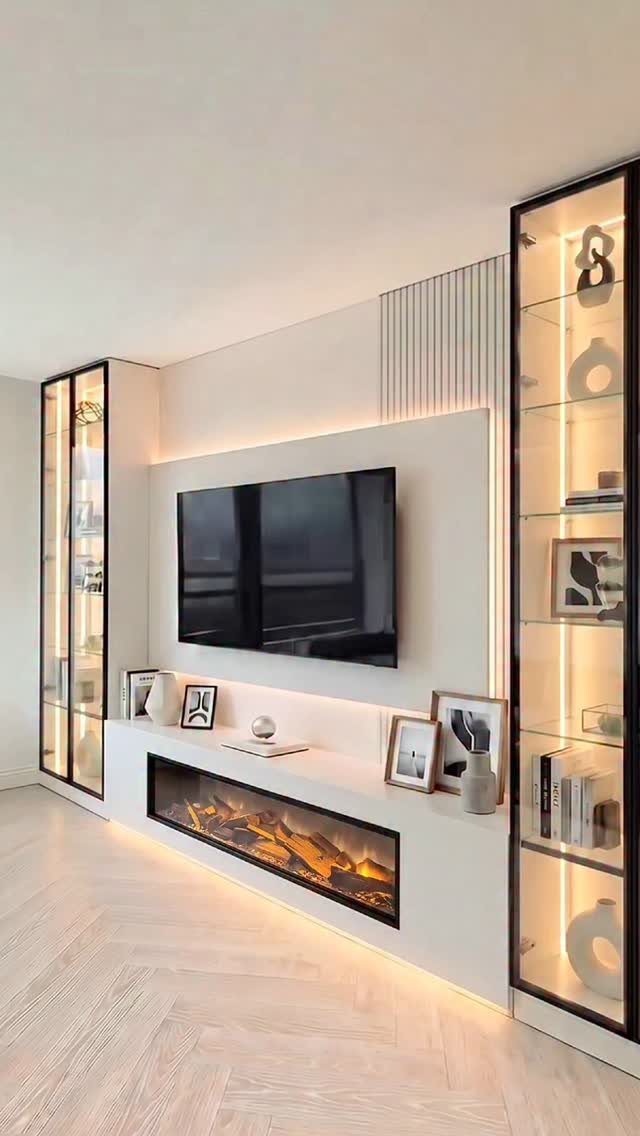
Tall glass-front cabinets on both sides of a TV wall give you storage that also looks like decor. The maker of this room says the warm LED lighting inside does 2 things beautifully, which is reason enough to add it.
Fill each cabinet with only a few things you actually like, and leave some empty space on each shelf. Cabinets that match on both sides give the wall an even, balanced look.
Battery-powered LED strips are a low-cost way to get the glow without an electrician.
11. Monochromatic Gallery Walls
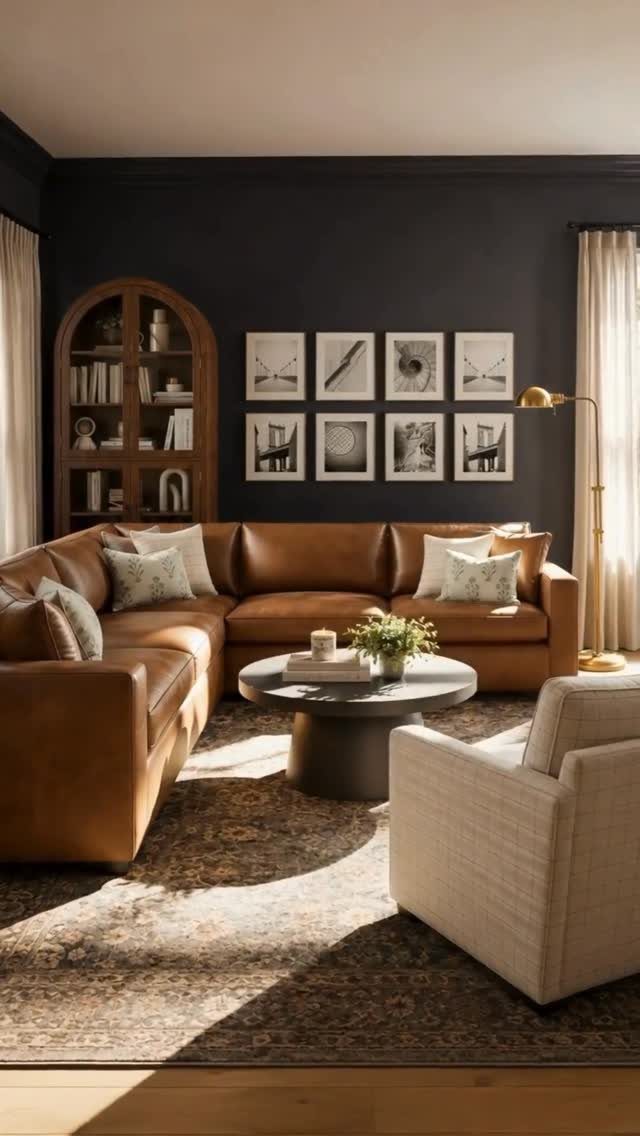
The grid does the organizing, so you do not have to think about layout.
Choose frames in a single finish and keep the gaps between them equal. Paper templates taped to the wall let you check spacing before you put in a single nail.
On a dark wall, lighter prints stand out best, so each one reads clearly.
Transitional vs Other Styles
Modern interiors run sleek and spare, sometimes edging into cold.
Transitional sits between them and avoids the extremes of both, which is why it works for people who like clean lines but don’t want a room that feels cold or impersonal.
A quick test for any piece: is it too ornate, or too sharp?
If so, it belongs to one of the other styles. Familiar shapes with simple lines and soft textures belong here.
The modern side brings clean lines; fabric, texture and layers bring the softening.
If a room feels chilly, add the soft half. If it feels fussy, simplify the shapes.
The balance is loose enough that older pieces you already own sit fine alongside whatever new ones you bring in.
Timelessness of Transitional Design
Transitional design ages well because it never leans hard on one trend.
A room built on balance between classic and current elements doesn’t look dated when trends shift, and that is also why it is a steady choice for staging a home to sell.
For a budget, that matters most.
Put your money into the base of the room, then refresh accessories when you want a change. Swapping small things is far cheaper than redoing the whole style.
If you are unsure about a purchase, ask whether it would still look right next to something older or something newer. If it fits both, it will likely last.
Choosing the Right Furniture
These rooms are built for living in, not for standing back and admiring. Comfort comes first, and the polished look follows from good shapes rather than stiff ones.
I like pairing modern upholstery with straight lines and no trim against older case goods like dressers or cabinets.
Together they feel collected instead of matched. Secondhand shops and online listings are good places to find the older pieces on a small budget.
Pick pieces that look sleek but relaxed, and check that they are actually usable. An upholstered bed frame is a good example: classic in form, soft to the touch, and practical every day.
Choose shapes that don’t compete, so the old and new sit together quietly.
Frequently Asked Questions
What is transitional interior design?
Transitional design sits right between traditional and contemporary, pulling enough from each side that the room reads as neither.
You get the ease of classic furniture shapes but stripped of fussy detail, and colors stay in the neutral range where almost anything works together.
What is warm transitional decor?
Warm transitional decor is the same classic-meets-modern balance, with warmth coming from cream, beige and off-white instead of stark white. Natural textures and earthy tones add to it.





