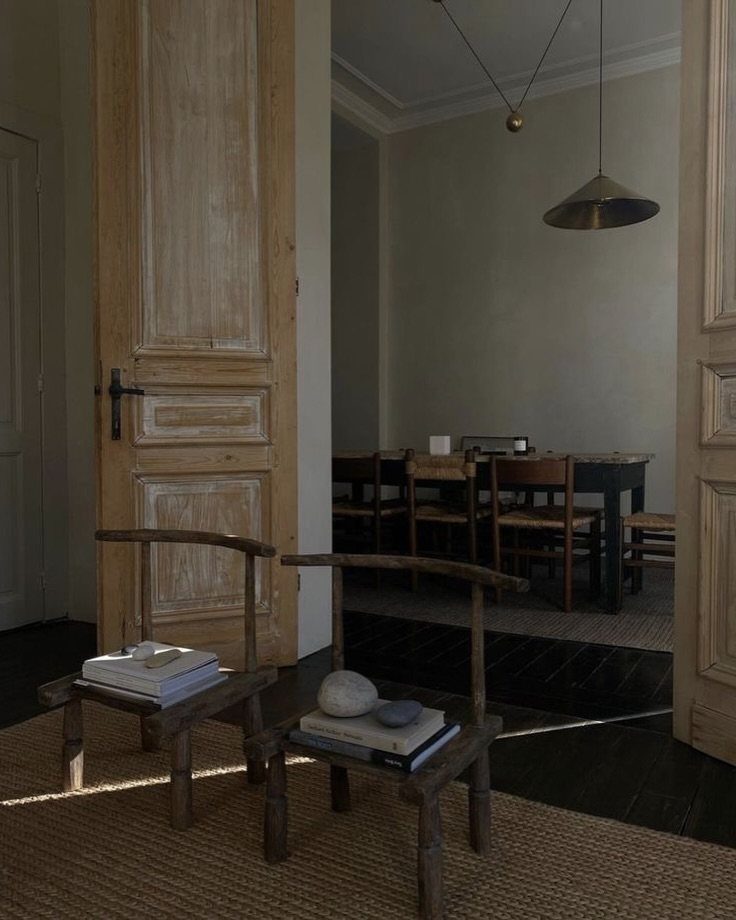
Renters and owners get different halves of this list: a branch-style floor lamp, a round mirror or a few dried stems cost little and leave no mark, while cabinets, counters, vessel sinks and ceiling beams are plumbing or structural jobs that only make sense if you own.
Whether you can change the walls and fixtures decides where to start: renters can begin with floor lamps, a low-slung bench or asymmetrical decor, while owners can take on beams, a kitchen or a bathroom.
The range runs from a floor lamp with a warm bulb to a full wabi sabi kitchen, and I’d begin with whatever you can carry out the door when the lease ends.
1. Wood, Stone, and Clay
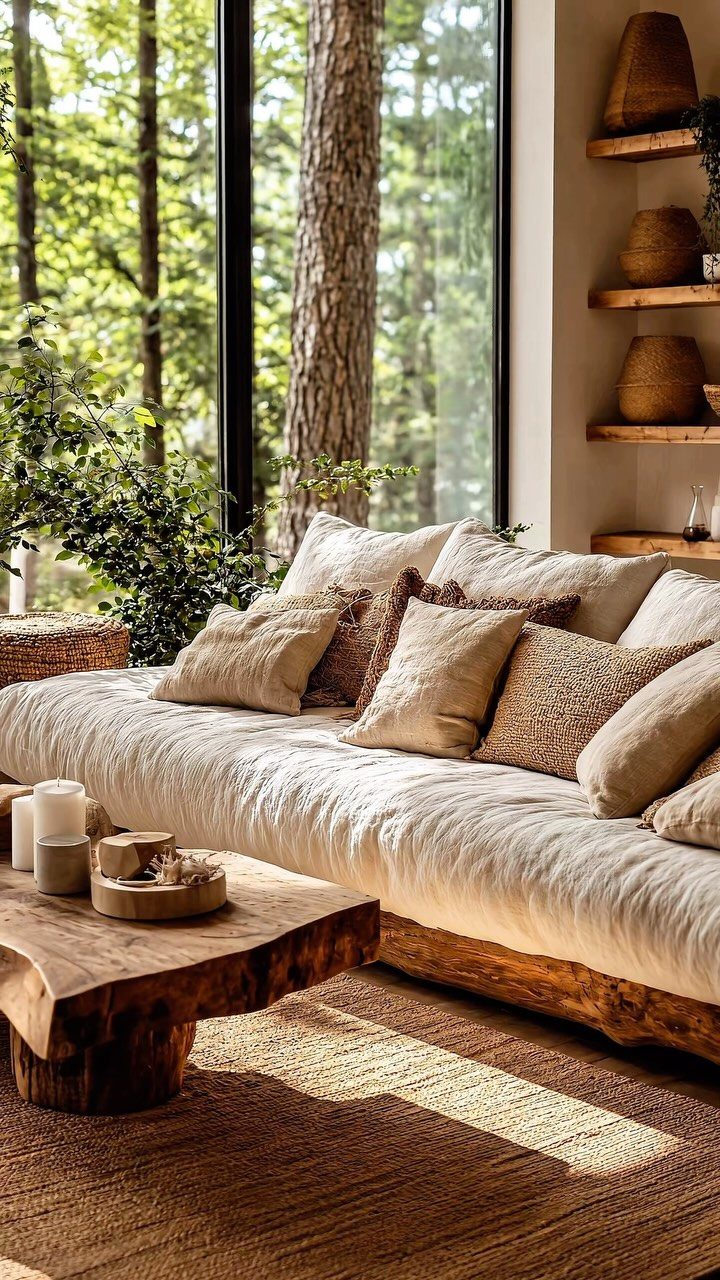
A live-edge coffee table does the work of a whole room’s worth of decor, because the uncut edge shows the tree’s own outline.
Pair it with clay pots, which carry the same earthy, unfinished feel, and a low sofa in a plain white.
Keep the material list short: one wood, one clay, one stone. 3 textures that don’t compete let the grain and the uneven glaze be the pattern.
I’d rather buy one good wood piece than three matching ones. Matched sets lose the point.
2. Floor Lamps and Accent Lighting
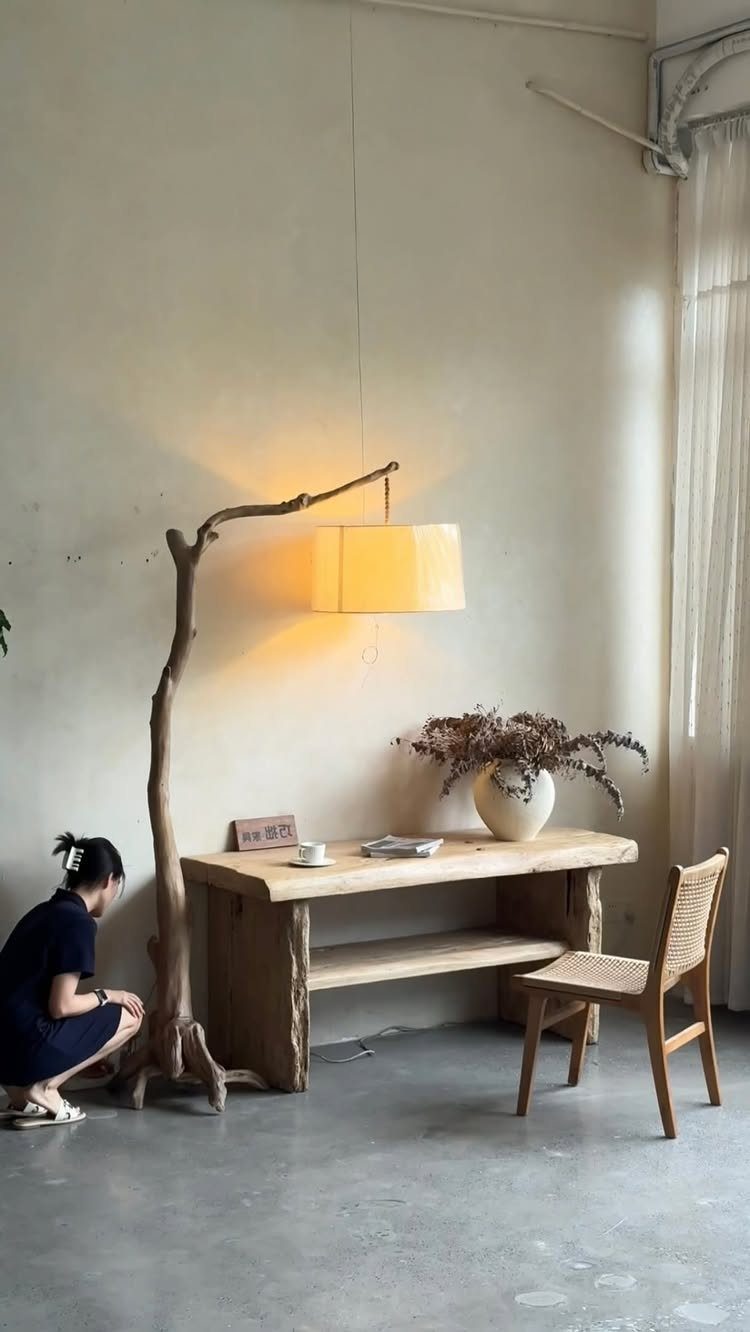
Overhead light flattens a room, and a floor lamp with a branch-style base fixes that by putting the glow low and to the side.
Set one beside a desk or chair, and the wood and dried stems pick up a warm edge.
Choose a bulb labeled warm white, around 2700K, and a shade that diffuses instead of spotlighting. A lamp that casts soft pools beats one bright fixture.
I’d skip a matching second lamp. One uneven source suits this style better than a symmetrical pair.
3. Embrace Simplicity
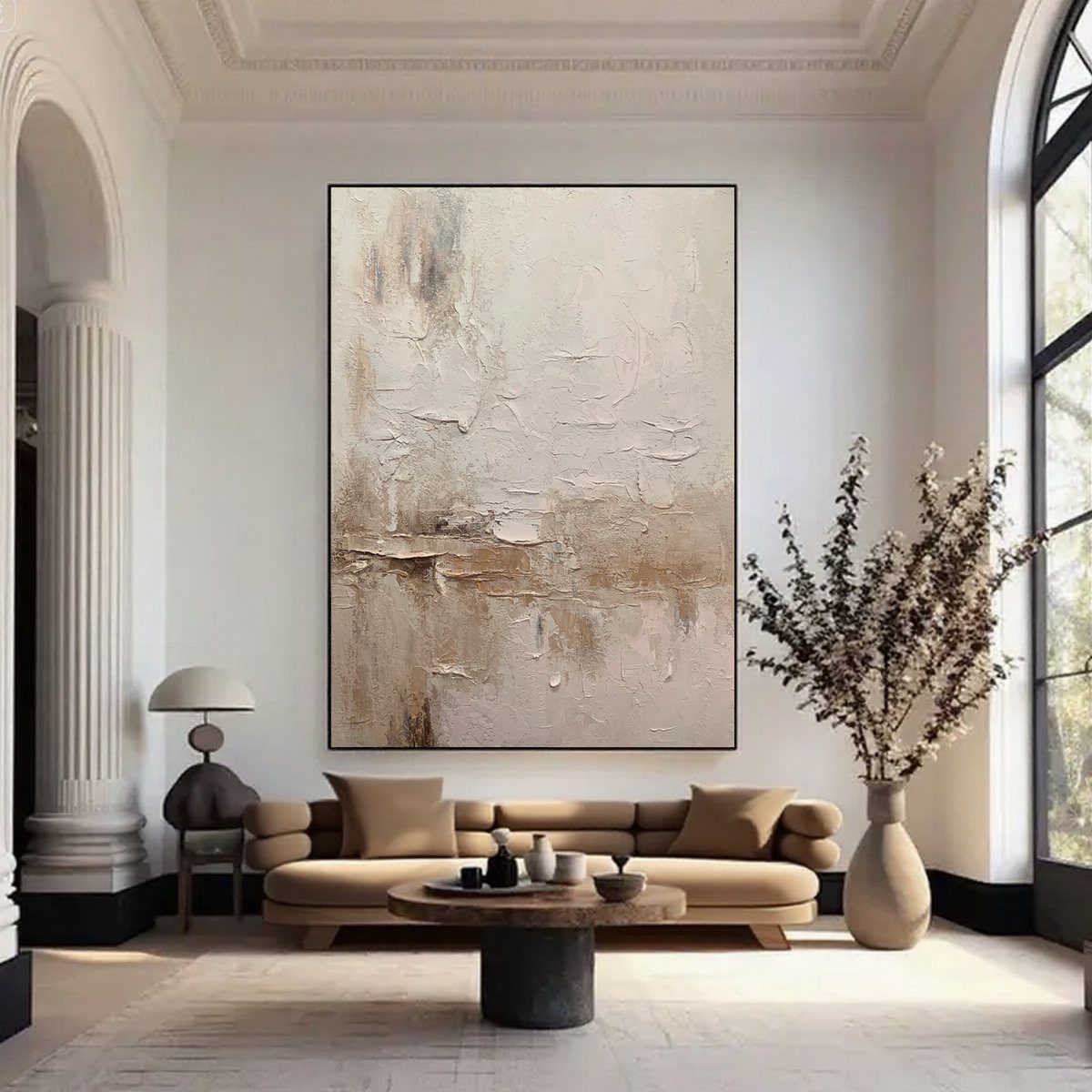
Simplicity here means fewer things, each one given room. A single large abstract painting on a white wall does more than a gallery grouping, and it costs less to hang.
Clear one surface at a time down to just a lamp and a single organic element like dried branches. Live with that for a week before touching the next surface.
Stay in neutral tones, like the tan sofa, so the eye rests. Empty space is part of the decor, not a gap to fill.
4. Create a Wabi Sabi Kitchen
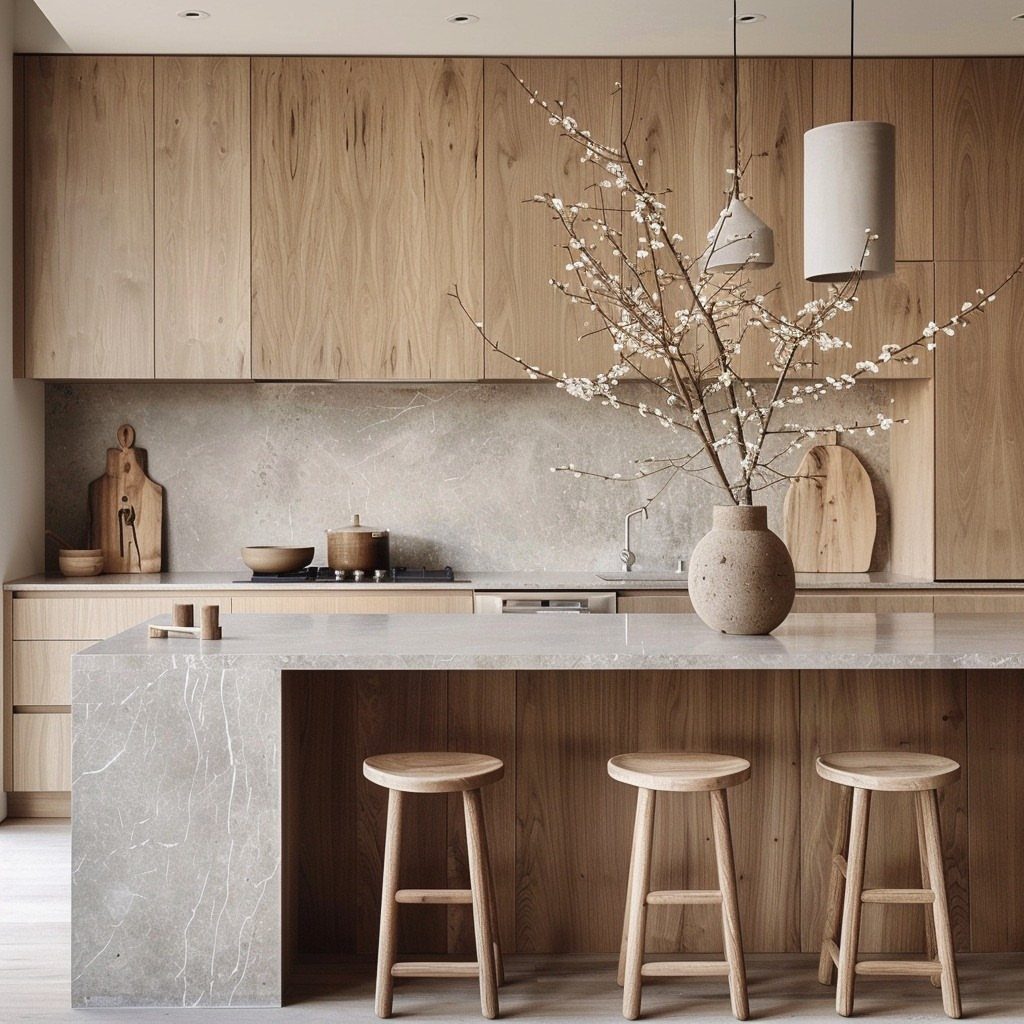
A kitchen like this relies on light wood cabinets and a stone surface that will show its use over time. Wear is expected, so choose materials that look better with a few marks than a glossy finish would.
Keep the counters mostly clear.
For a renter, the cheapest move is the branches and the stools. Cabinets and counters are costly changes, and I’d leave them alone unless you own.
5. Choose Sustainability and Longevity
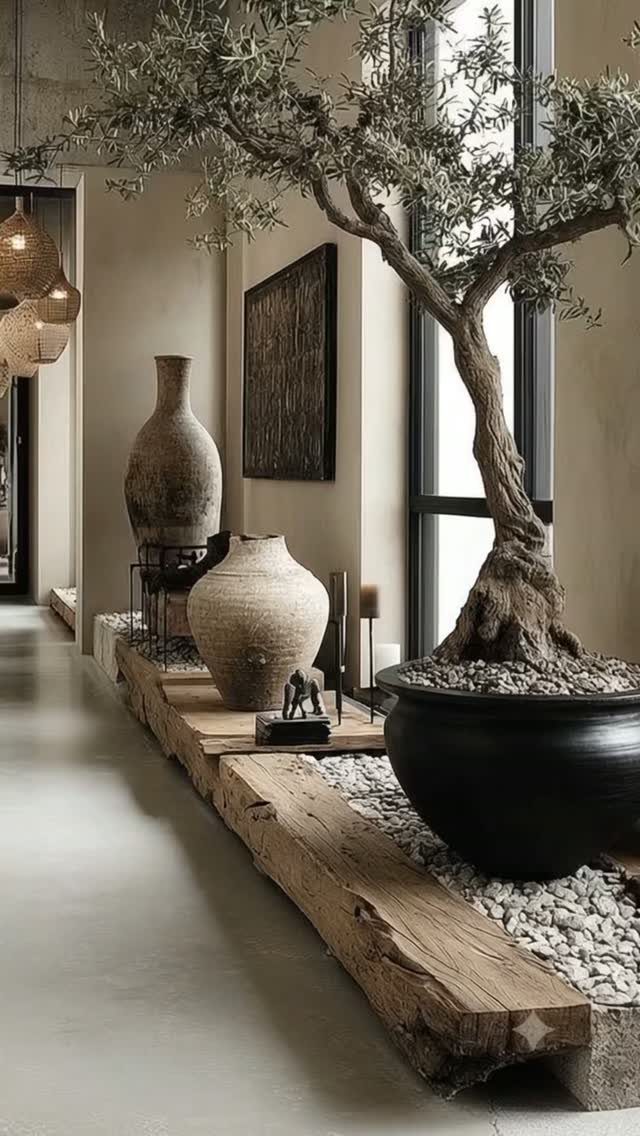
Buying fewer, sturdier things is the quiet core of this style. A potted olive tree, handmade clay vases and reclaimed wood all age well and last decades instead of needing replacement.
Look at secondhand shops, salvage yards and local potters before big-box stores. Reclaimed wood already carries its history, so a scratch won’t matter.
A real plant costs less than most statement decor and keeps growing, though it needs steady light and watering. Pick something you will actually care for.
6. Low-slung Furniture
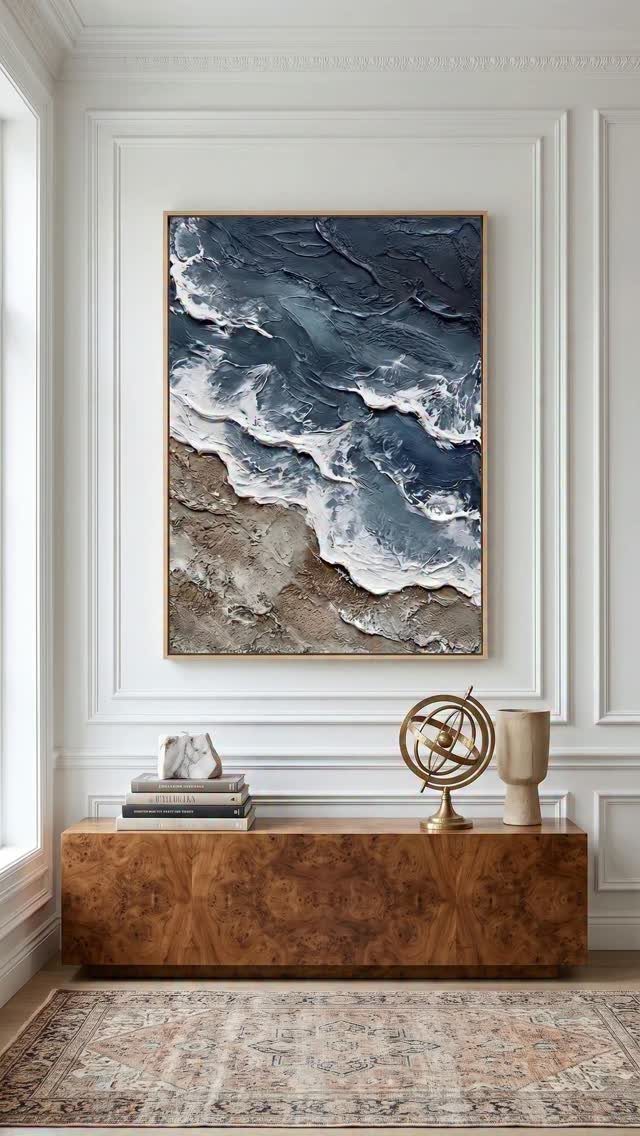
A low wooden console keeps the eye near the floor, which makes a room feel settled and calm.
A burl wood piece adds swirling grain that works as decor on its own, so the top can stay lightly styled with a few books and one object.
Hang art above it with a generous gap, so the wall stays open.
Measure your wall first so the painting spans at least two-thirds of the furniture width below it. Low pieces look best when they sit under plenty of empty space.
7. Asymmetrical Arrangements and Decor
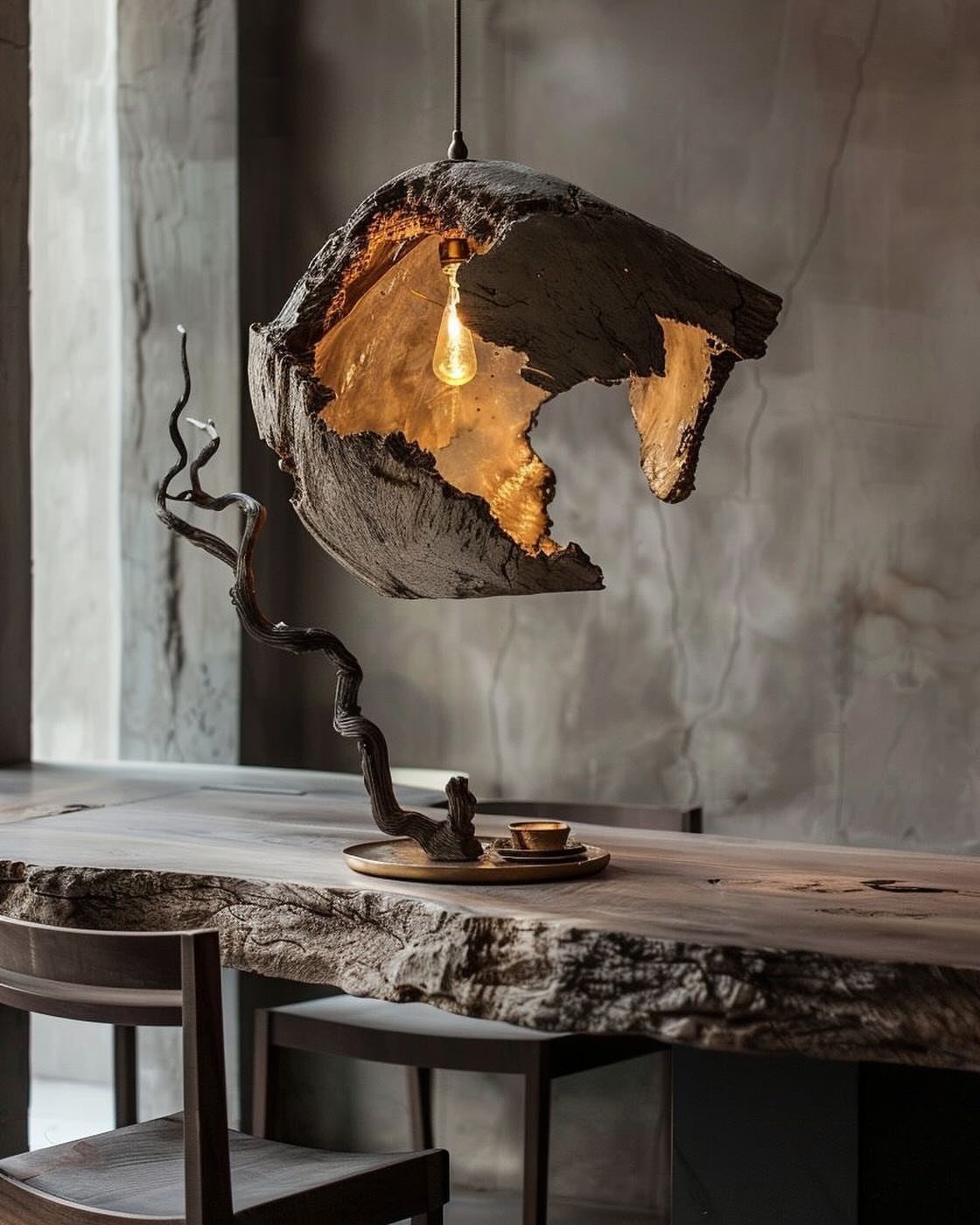
Odd-numbered, uneven groupings are what make this style feel lived in.
A rock-textured pendant hung off the table’s center, with one twisted wood sculpture sitting to one side, gives the eye a place to land without a mirror image on the other half.
Start with the table.
Put one heavy object on it, then add a second piece in a different height and material. Stop there.
I’d hang a pendant a little off-center over a long table instead of dead center. It looks chosen, not measured.
Leave one end of the table bare. The empty stretch balances the weight of the objects.
8. Wabi Sabi Bathroom
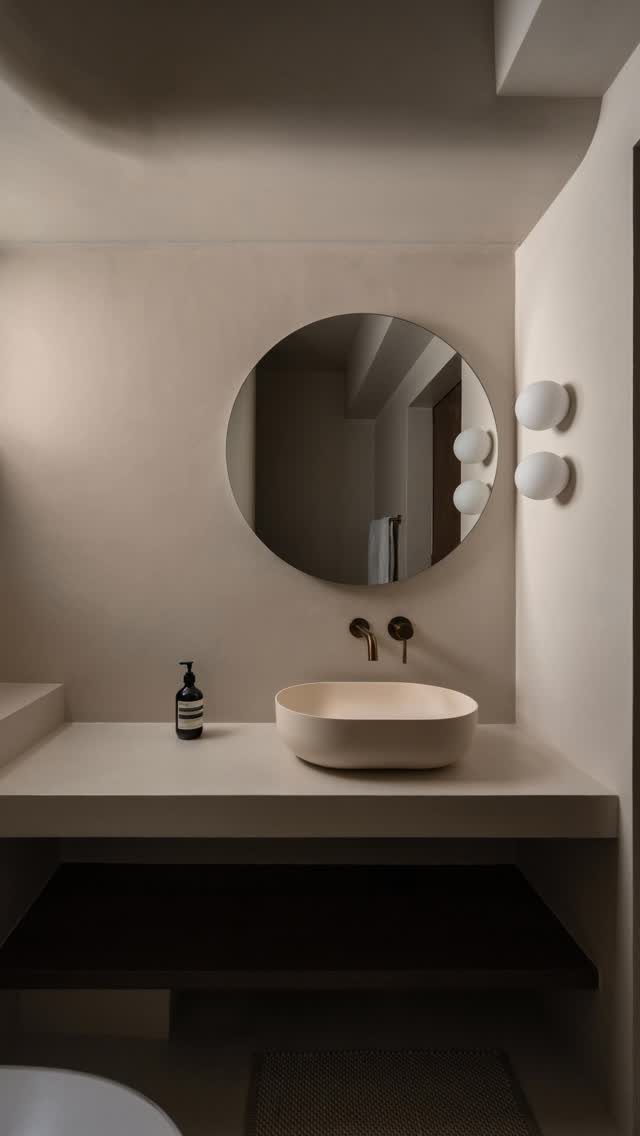
A vessel sink in a pale beige tone, set against a beige wall, keeps a bathroom quiet because nothing in it fights for attention. Wall-mounted faucets free up the counter, so the basin reads as one clean shape.
Round shapes soften the room: a round mirror and globe sconces repeat the curve of the bowl. Pick sconces with a frosted glass finish so the light spreads gently.
Renters can swap the mirror and lighting more easily than the sink or faucets, which are plumbing jobs. I’d start with the mirror.
A dark shelf adds one low-key contrast. Keep it nearly empty.
9. Exposed Rustic Wooden Beams
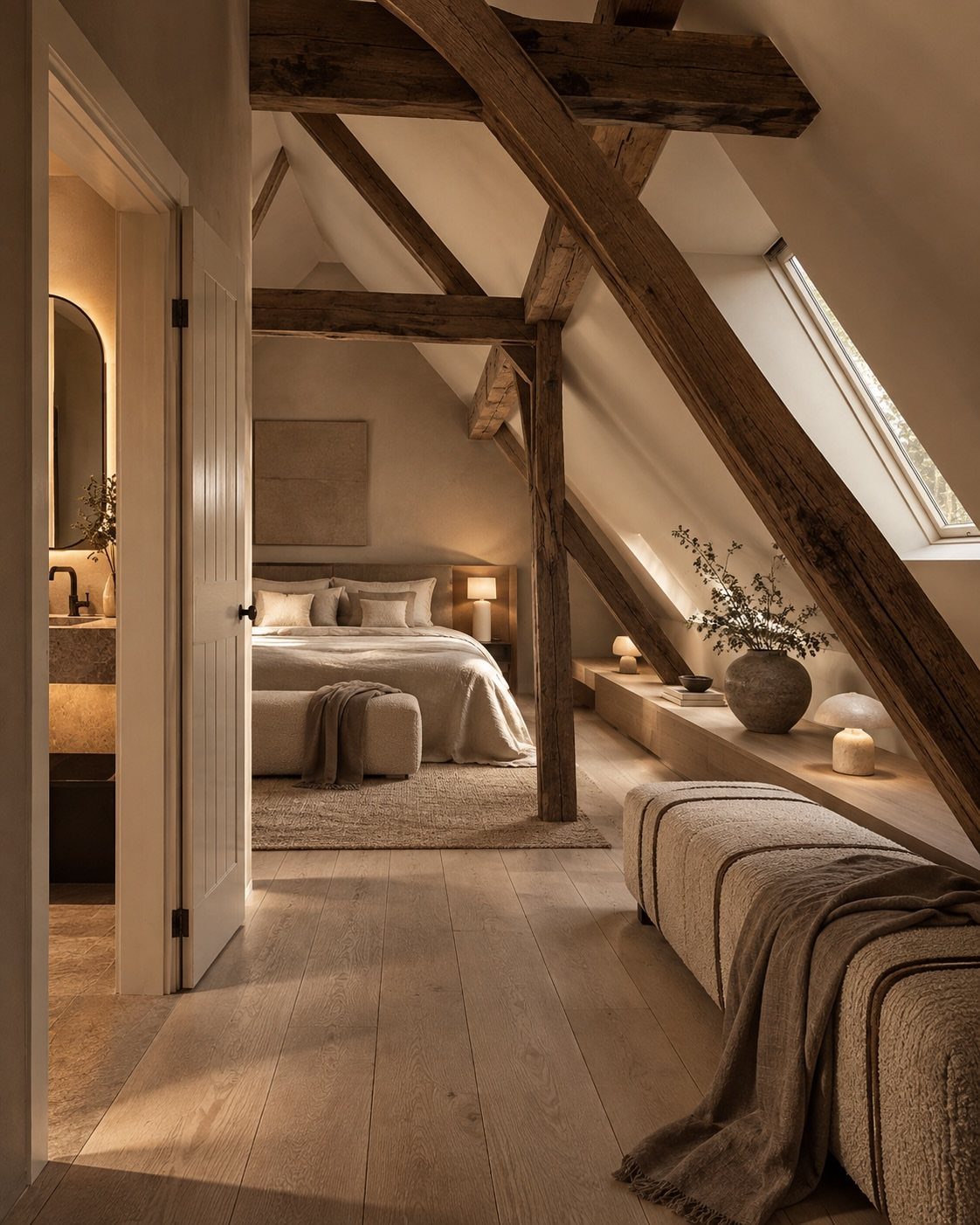
Weathered ceiling beams do the decorating in an attic bedroom, so everything else can step back. Neutral linens in plain, unpatterned fabric let the rough grain stay the loudest thing overhead.
Keep the furniture low and light: a low concrete shelf with a few pieces of pottery suits the slanted space, and a light wood floor stops the beams from making the room feel heavy.
Real beams are a structural feature of the house, so this is a look to choose when buying, not to build. I’d skip it as a renter project and borrow the feeling with texture and color instead.
10. Raw-edge Wooden Bench
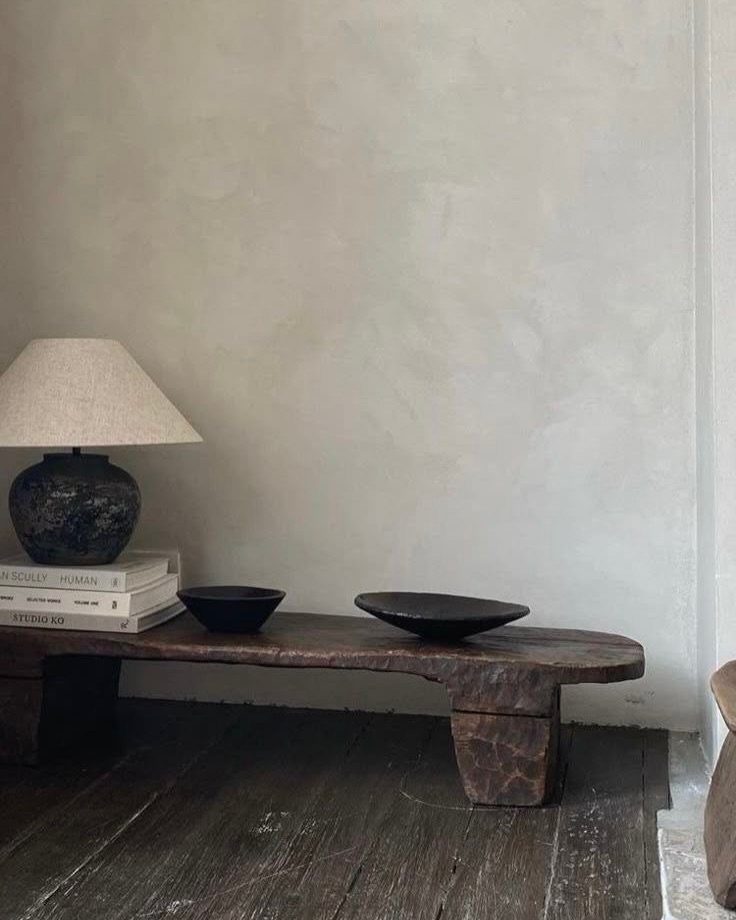
A raw-edge bench works as furniture and a display shelf in one, and it looks best against a plaster wall with a rough, neutral finish. The uncut edge gives you a wavy line that no store-bought straight board can copy.
Keep the styling sparse: 2 dark bowls, a lamp with a dark base and a short stack of books are plenty, because a raw-edge bench already carries the visual weight.
Keep the objects grouped to one side so the bench’s length still shows.
Choose a bench whose grain you actually like, since it is the main feature. I’d rather pay for one solid slab than for a thin veneered one.
11. Wooden Beaded Pendant Lights
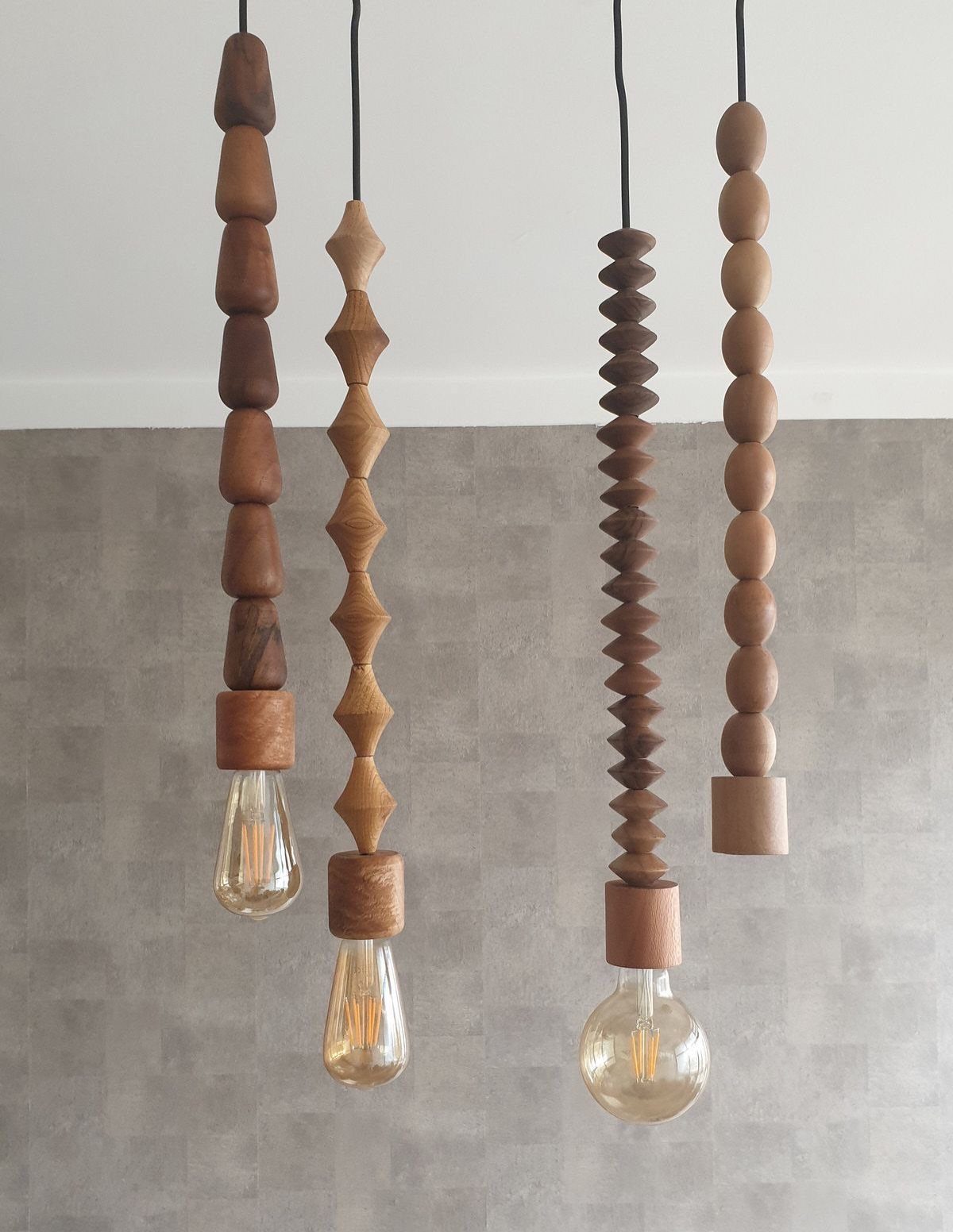
Pendant lights strung with carved wooden beads give off a warm, patterned glow, and the exposed filament bulb inside is part of the look.
Hung together in a cluster of four, each with a different bead style, they feel collected, not matched.
Vary the drop lengths so the cluster has an uneven rhythm. Against a grey textured wall, the wood tones stand out more.
A 2700K warm white bulb makes the beads glow amber, so skip anything labeled cool white or daylight, which turns the wood flat and gray.
I’d choose clear filament bulbs here, since you want to see the glow through the carving.
Wabi Sabi Vs. Japandi
Wabi sabi and Japandi share a love of calm, natural materials, but they land in different places.
Japandi leans on clean lines, tidy surfaces and muted colors. Wabi sabi runs earthier and darker, with rustic, organic pieces that look handmade.
If you like a room that looks sleek and pulled together, Japandi is the better fit. If you want a room that looks lived in and a little rough, wabi sabi wins.
Mixing them is fine, but pick a lead. A sleek, straight-edged piece in a wabi sabi room reads as an accident, while one rough piece in a Japandi room reads as a choice.
Settle on the feeling you’re after first, calm and spare or worn and layered, and let that choose what goes in the cart.
Philosophical Underpinnings
Wabi sabi is a Japanese philosophy built from 2 words. Wabi points to plain, rough-edged beauty, while sabi is the beauty a thing gains as it ages and wears.
Put the two together and you get a taste for what is imperfect, fleeting and unfinished. Nothing lasts, and the style treats that as a reason to enjoy things as they change.
In practice, this gives you a different way to judge a purchase or a flaw.
A chipped edge or a faded patch is not something to hide or fix. It is the surface doing what the philosophy says it should.
Before you replace something worn, ask whether the wear is the best part of it. Sometimes it is, and you can leave it alone.
“Wabi Sabi is a Japanese design philosophy that embraces the beauty of any substance in its most authentic and natural form,” explains Paul Richardson, showroom stylist at Wren Kitchens.
Personalization in Design
A wabi sabi room works best when it holds your own story. Use the philosophy as a filter for what stays and what goes, not as a trend to copy.
Keep the objects that have a history, even a small one: a hand-stitched piece, a clay bowl with a speck in the glaze, a wood knot you like.
Let softness register before color. Limewashed walls, oak or cedar with the grain showing, and woven flax or hemp make a gentle base.
If you want a motif, use one with intention, such as a crescent moon or a crane. Give it a stretch of empty wall so it has room.
Skip plastic shine and short-lived finishes. They fight everything else you chose.





