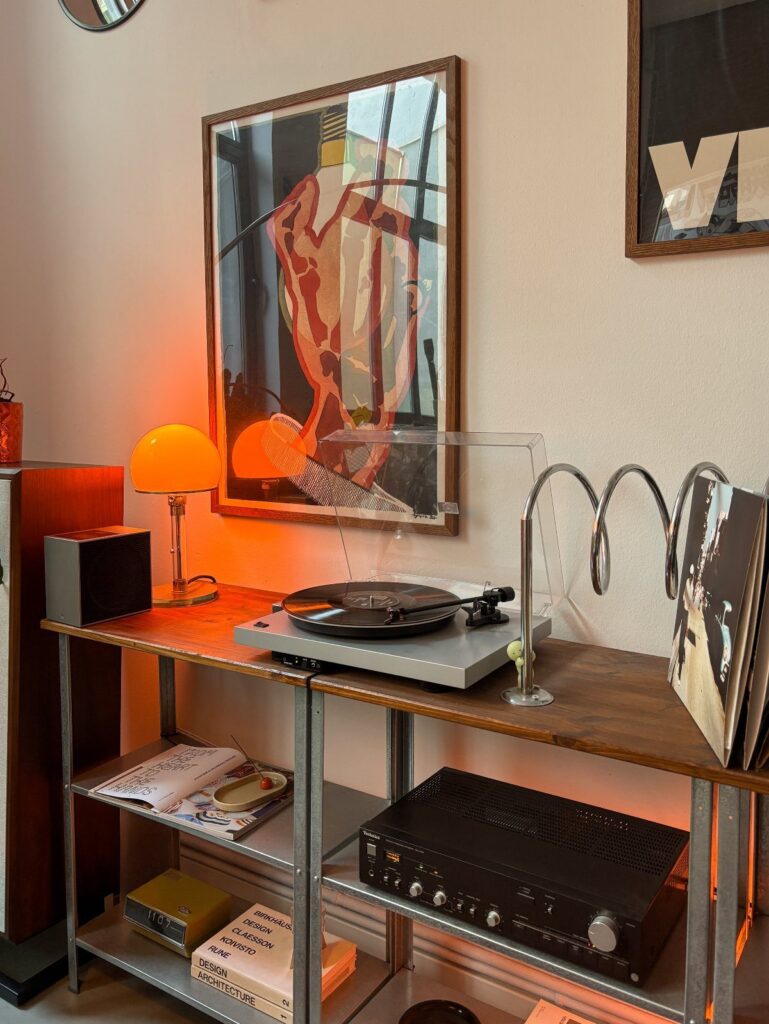
Renting or owning decides which of these ideas is yours: a renter can’t retile a bathroom or put up full wood paneling, so low-slung furniture, statement art and curved pieces are the easy starts, and the green tile wall can wait for a place you own.
1. Wood Paneling
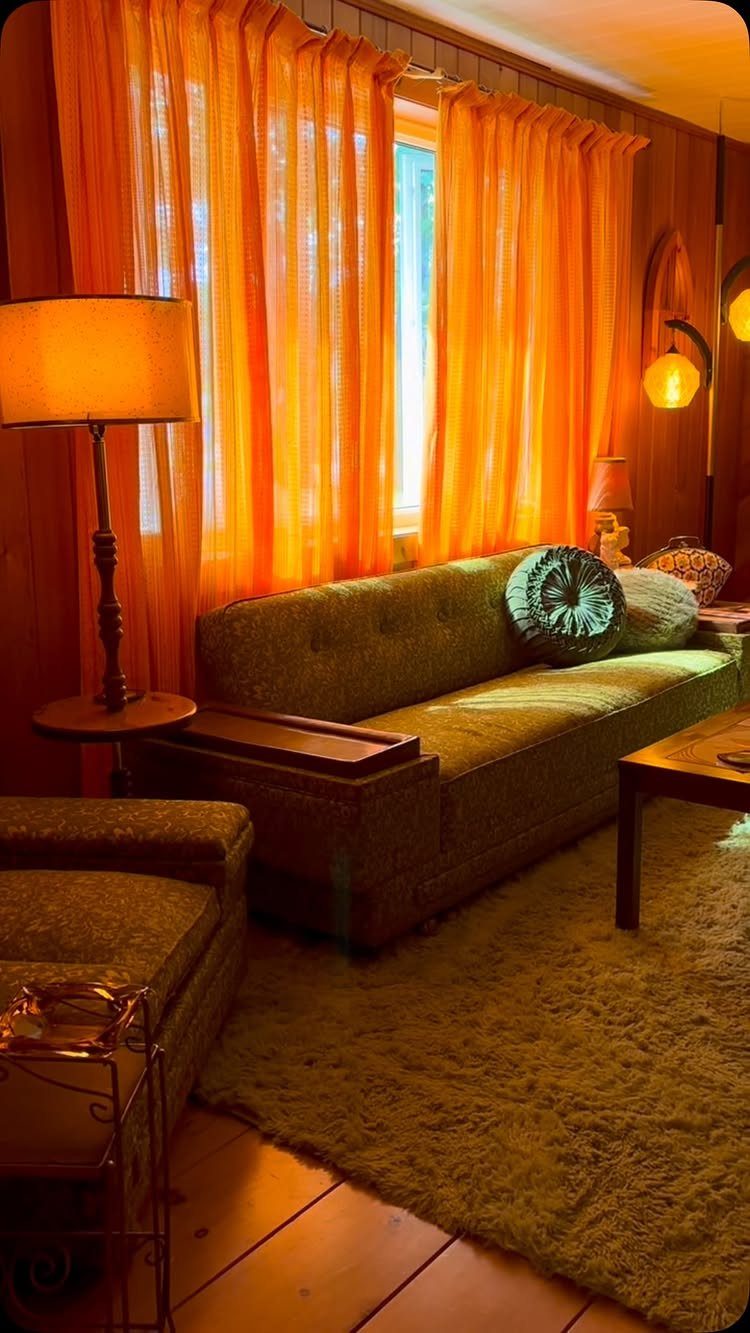
Wood on the walls does the warming work in a room like this, and it pairs well with saturated color. Orange curtains and a green sofa hold their own against the grain, where white walls would let them shout.
In a rental, full paneling is rarely allowed.
Peel-and-stick wood planks on a single wall give a similar effect, and an accent wall is plenty. Keep the furniture lines clean and let the shag rug soften the rest.
Pick one wall, not four. 4 feels like a basement.
2. Restored Vintage Furniture
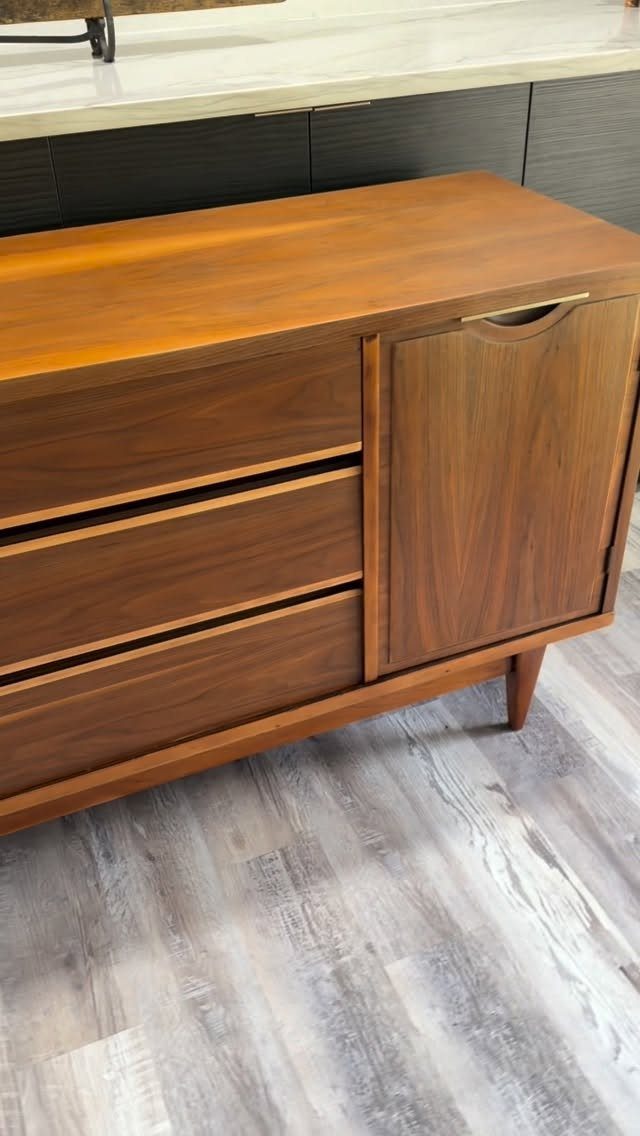
A sideboard with tapered legs earns its spot in a small apartment because it stores plates, linens and board games while keeping the floor visible beneath it. Restored pieces carry grain and wear that new flat-pack versions can’t fake.
Look for solid construction first: drawers that slide, a frame that doesn’t wobble.
Scratches and dull finish can be fixed with light sanding and a coat of oil or wax. Skip heavy refinishing on a piece you love as it is.
Over time, one good secondhand piece beats three matching new ones.
3. Low-slung Furniture
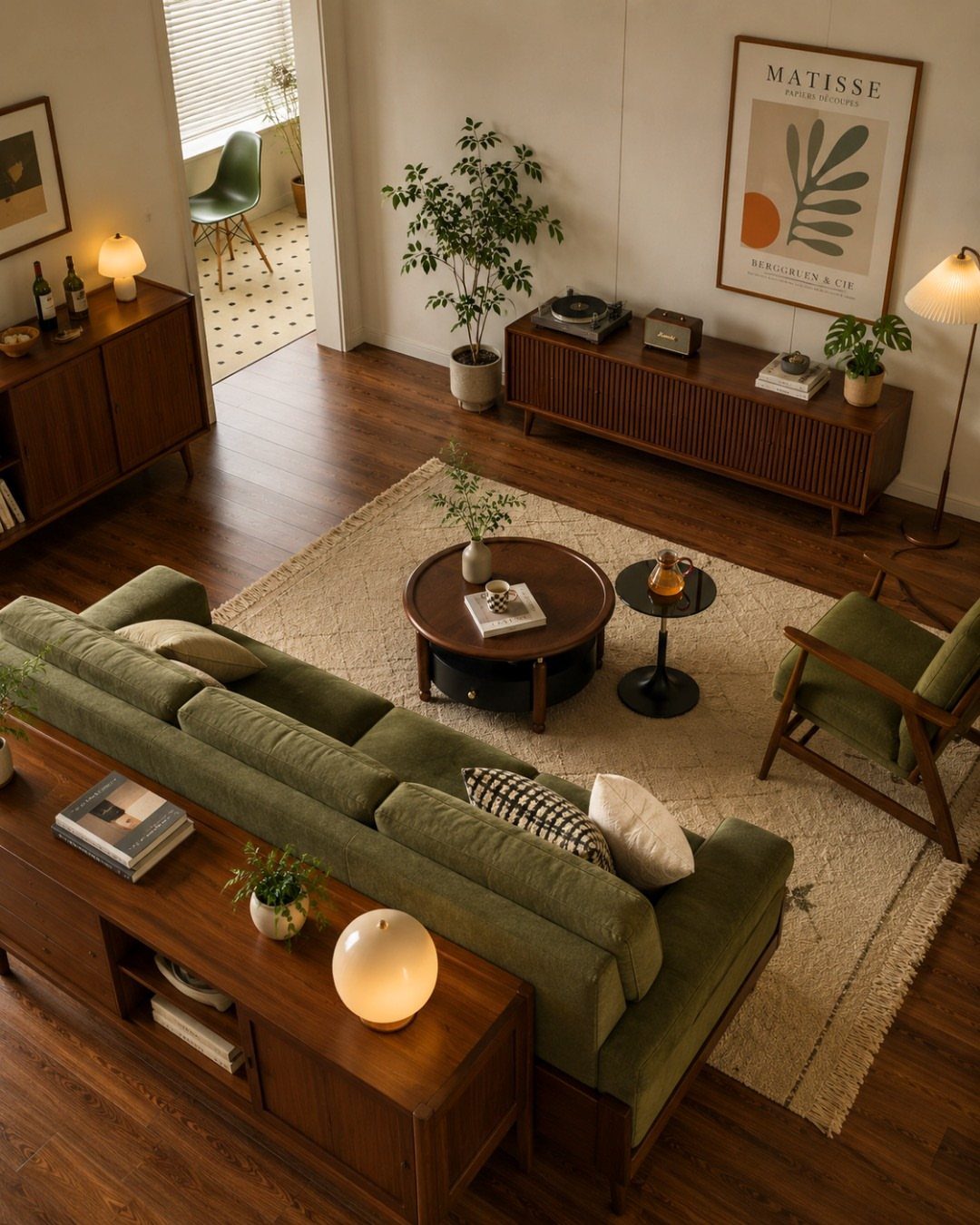
Sitting low changes how a room feels: ceilings read taller, and the whole space looks more open. A sofa, coffee tables and sideboard all kept close to the floor make a small living room seem calmer and wider.
Matching the heights matters. Keep the coffee table at or just below the seat cushion so drinks stay within reach.
Getting up from a deep, low sofa takes effort, so sit in one at the store first.
4. Statement Art
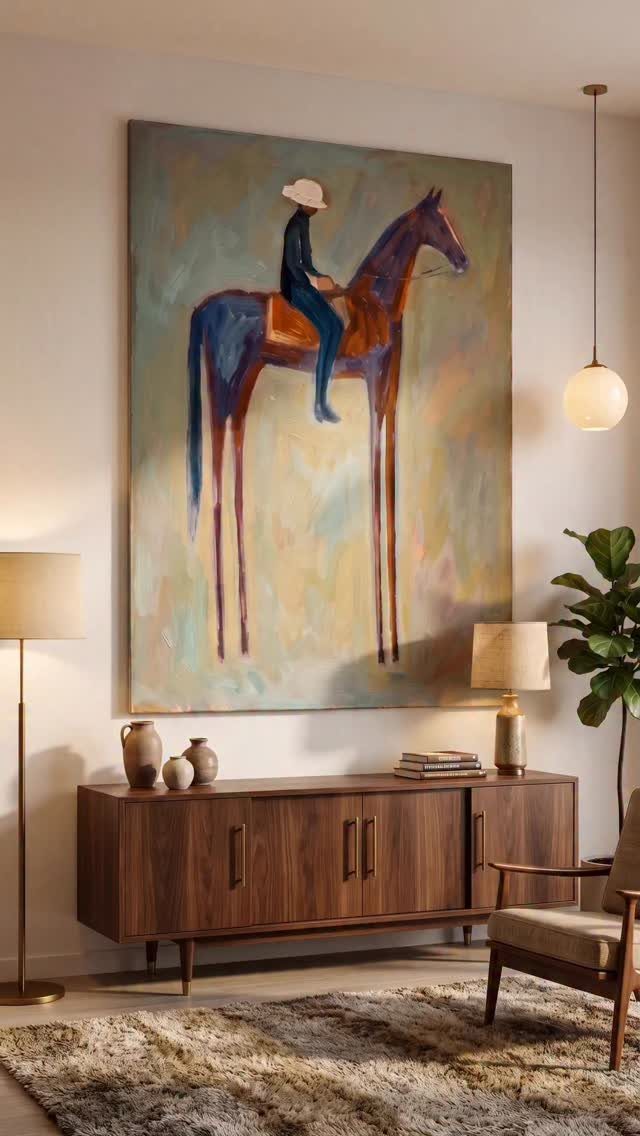
Hang the art big. A large painting over a sideboard pulls the eye upward and gives a low room some height, and one oversized piece looks calmer than a cluster of small frames.
Aim for a piece roughly two-thirds the width of the furniture beneath it, and hang it a hand’s width above the top. A lamp and a plant on the sideboard frame it nicely without crowding the surface.
Thrift stores and print shops sell large pieces cheaply. Spend your money on a good frame instead.
5. Curved Furniture
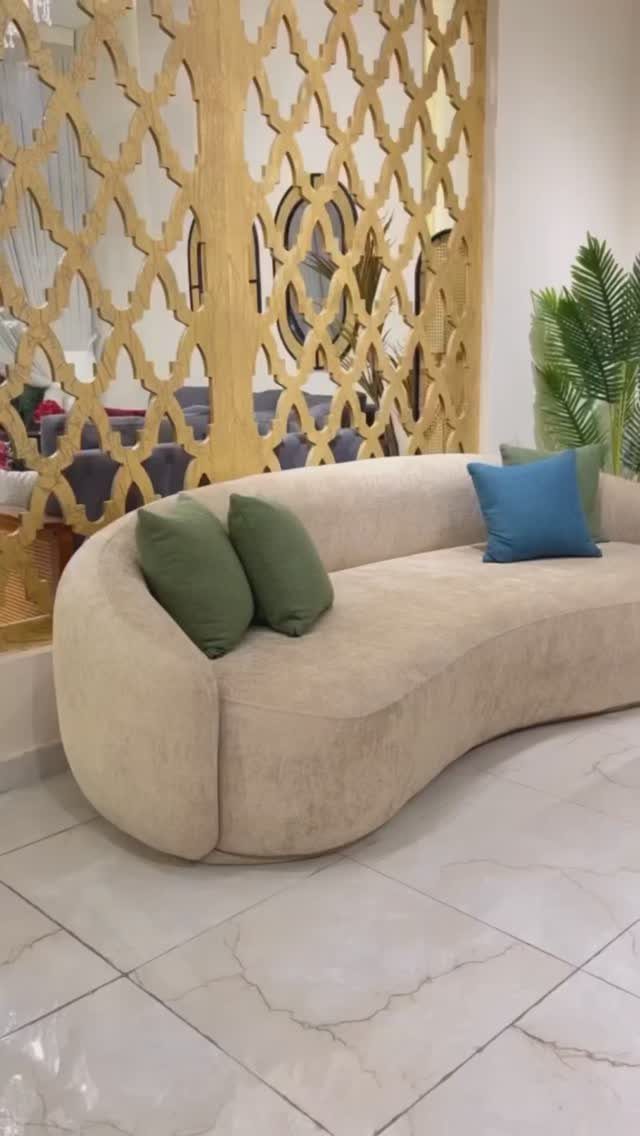
A curved sofa softens a room full of straight lines, and it gathers people into a conversation circle better than a boxy one. Pair it with a graphic backdrop, like a lattice screen, and the curve stands out even more.
Measure before buying: curved pieces take more floor than their length suggests, and they sit best away from a flat wall. In a studio, one can also mark off the living area without any walls.
Small curved accents, like a round pouf or arched mirror, offer a cheaper start.
6. Geometric Patterns in Decor
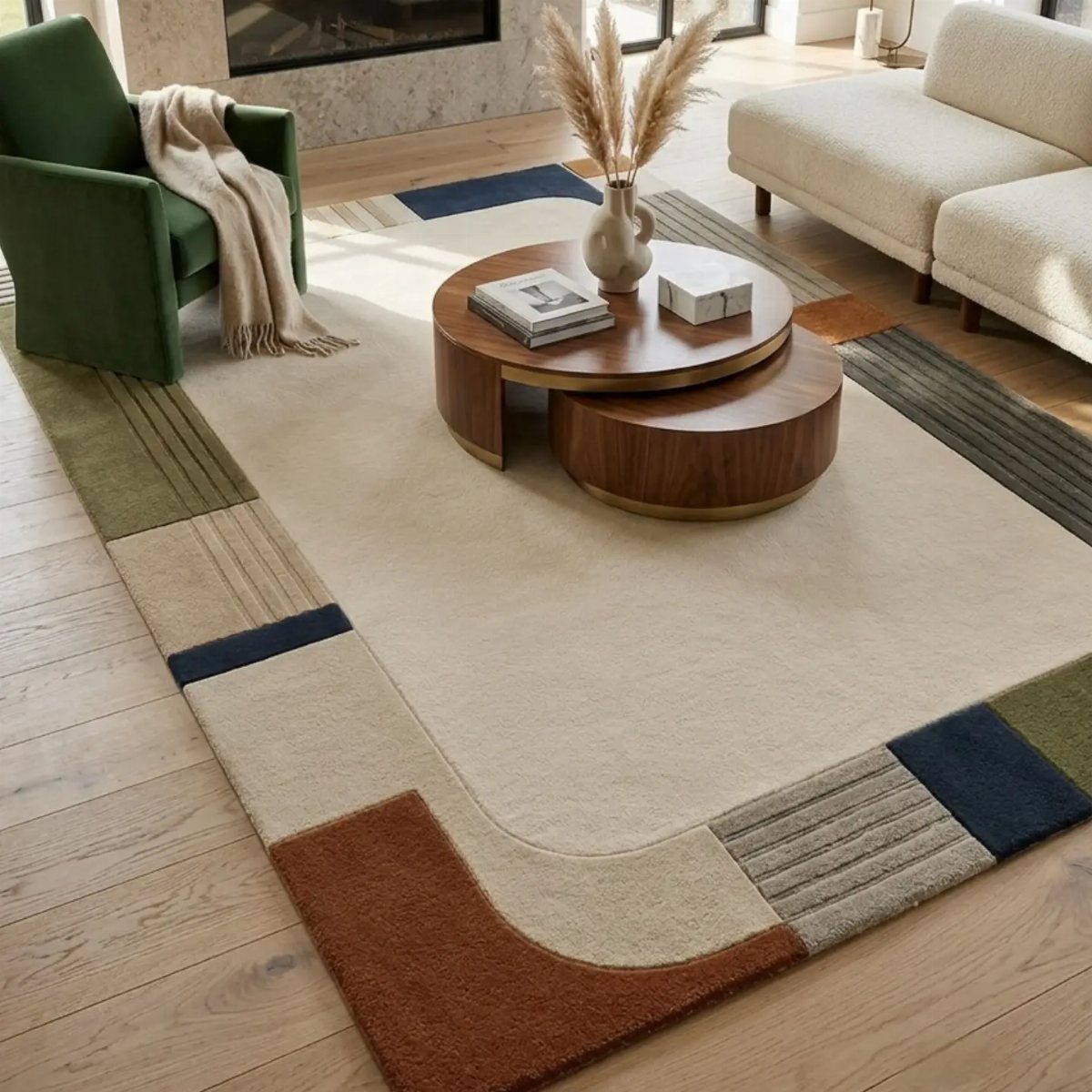
A rug with geometric borders sets the palette for a whole room and costs far less than repainting. Here the cream center keeps things quiet, and the colored edges tie the green chair to everything else.
Choose a rug whose colors you already own in small doses, then repeat them in pillows or a throw.
Keep it to one patterned piece per seating area; with a round wooden table sitting on top, the shapes already balance each other.
Size up, since a rug that’s too small makes a room feel chopped.
7. Colored Glass Room Divider
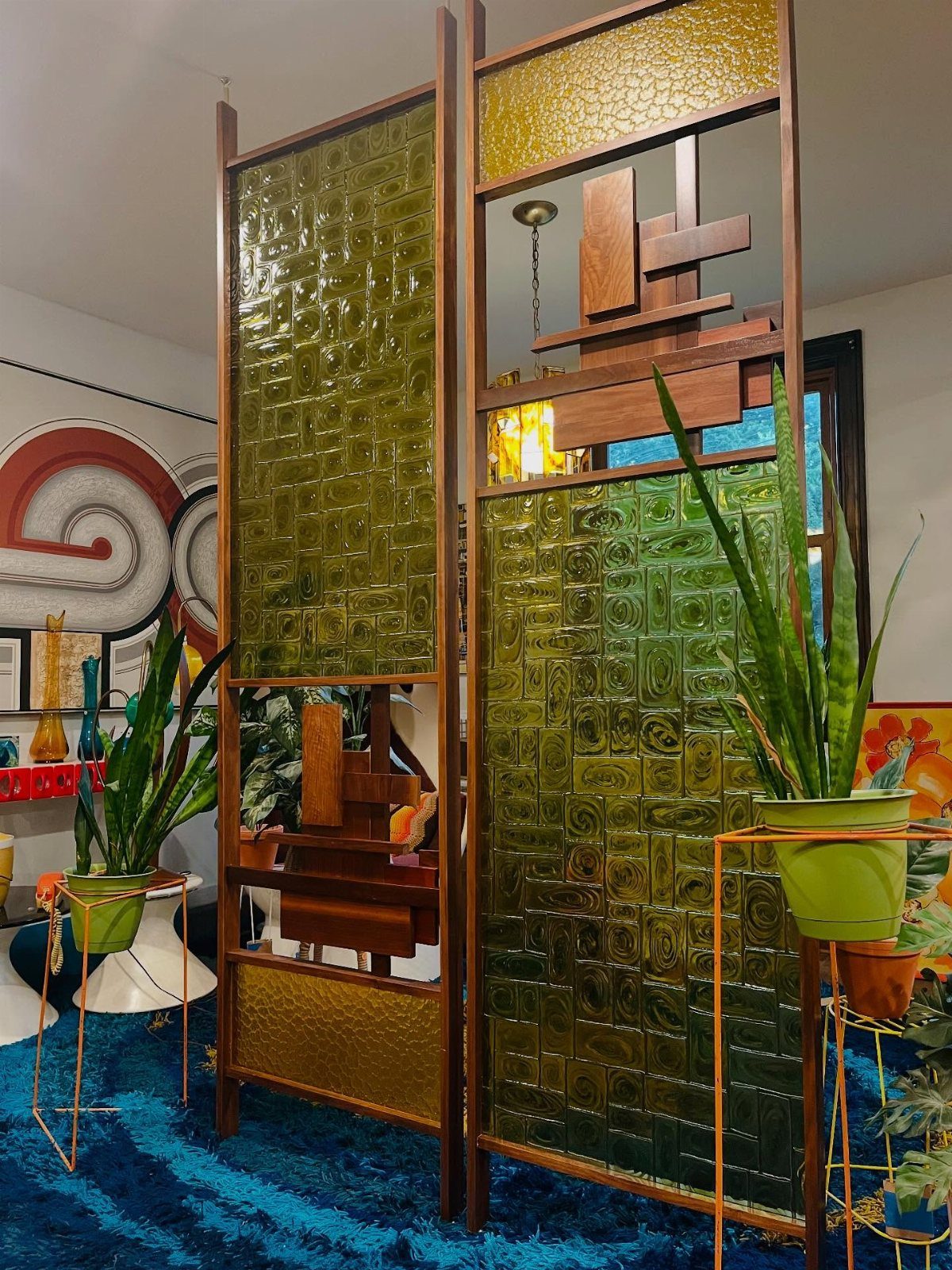
A wooden screen with green and yellow textured glass panels splits a room without closing it off.
Light passes through the glass and breaks up softly, so the far side never goes dark the way it would behind a solid wall.
In a studio, I would put one between the sleeping area and the living area. The textured glass blurs the view while still glowing, which suits a small space better than a bookcase does.
A wood frame around the glass ties the divider to the teak and walnut pieces already in the room, and a saturated floor color like deep blue or teal picks up the tint in the panels without competing with it.
8. Retro Green Bathroom Tiles
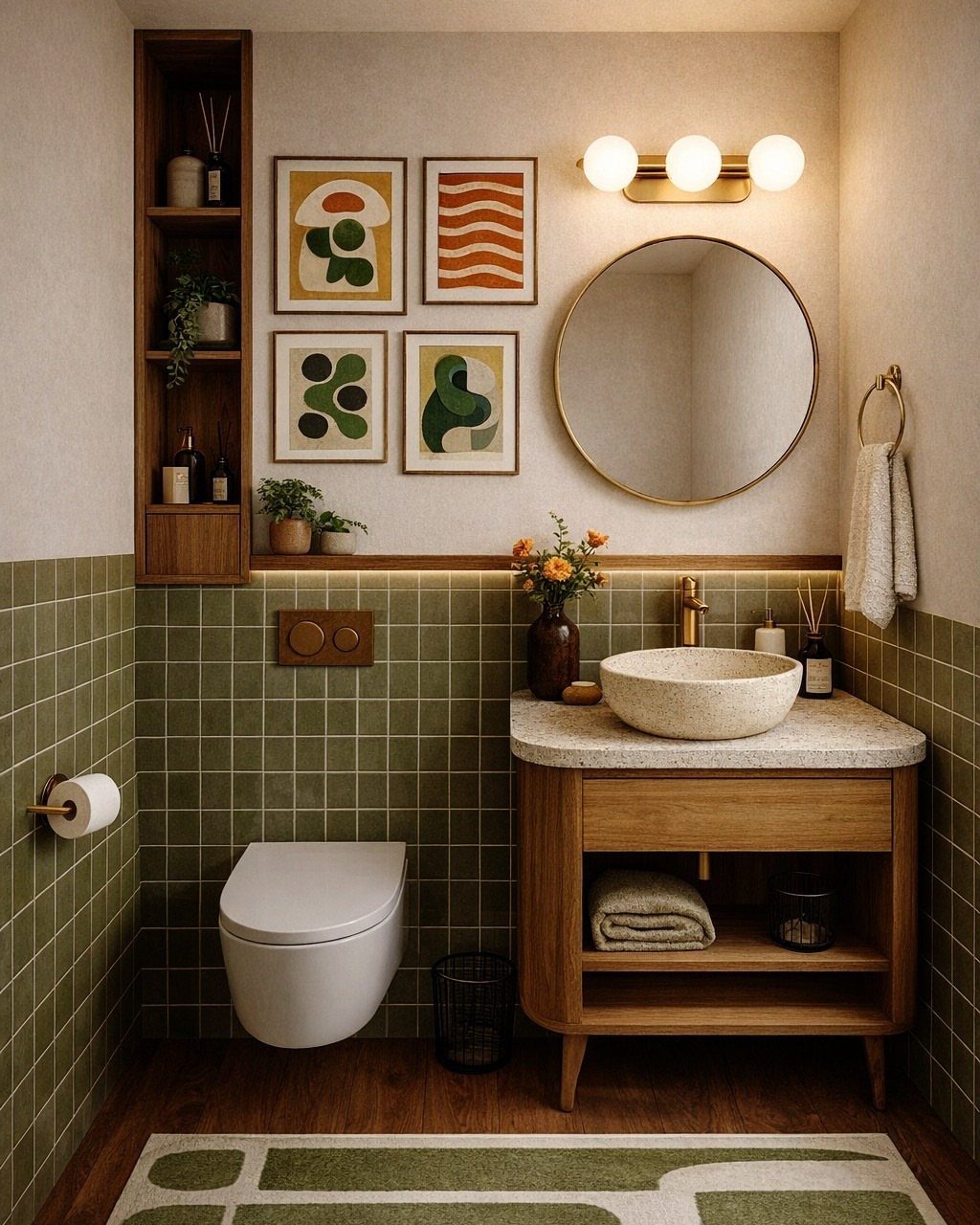
Green square tiles on the bathroom wall give a small room real personality for the price of one wall’s worth of tile. Against a warm wood vanity, the green reads rich instead of loud.
Keep everything else simple. A round mirror and a stone vessel sink soften the grid of the squares, and a few abstract prints bring in color without competing.
Renters can’t retile, but the idea still works in part. Pair a wood vanity or shelf with green accessories, and save the full tile wall for a bathroom you own.
Timelessness of Mid-century Modern Design
Mid-century modern lasts because the design is built on function. Warm woods, sleek shapes and retro patterns were made to be used, and a piece that does its job without fuss doesn’t go out of date.
That same simplicity makes the style easy to update. Move the furniture into a new layout, or swap in different art, and the room reads fresh again without a single new purchase.
For a renter, this is the best argument for the style. Nothing in it depends on permanent changes, so a cheap art swap or a rearranged seating group can shift the whole feel of the room.
The interior design style is popular today for its timeless, adaptable nature, but it actually rose to prominence in the middle of the 20th century.
Styling Tips for Mid-century Modern
Give every piece a purpose, whether that’s gathering people or helping them unwind. Arrange seating so it faces other seating, and leave the rest of the room open.
Stay close to natural materials. Mix straight, streamlined furniture with a few rounded pieces, then set them against warm wood, a stone top or a slim metal frame; an oval coffee table or mirror echoes the curves nicely.
Color works best in pairs that sit close together on the wheel:
- chartreuse over yellow
- tan over khaki
- forest green over jade
- brown over charcoal
Add one or two vintage touches, such as an unusual light fixture or a period chair, to give the room richness and ground the plan.
Large, colorful contemporary art is also worth trying against neutral furniture, since it keeps the look current rather than a period replica.
Frequently Asked Questions
Is mid-century modern still in style in 2026?
Yes, it is still a sought-after look. Function drove the design of those warm woods, clean curves and retro prints, and anything that works hard without calling attention to itself stays good-looking for decades.
It also updates easily: rearranging the furniture or swapping the art makes the room feel fresh with no new purchases.
How to make an apartment mid-century modern?
Start with warm wood, low furniture and a few saturated colors. Add a sideboard with tapered legs, a curved sofa or round accents, and a rug with a geometric border to set the palette.
Hang a big, bold piece of art over a plain sofa and sideboard, and the room reads as lived-in rather than a museum set.





