Ideas here run from a hanging planter and a shag rug, which are cheap and done in an afternoon, up to terrazzo floor tile and a conical fireplace that needs real installation.
Renting decides most of the choice: renters should stick to pieces that move out with them, like vintage couches, hanging planters, shag rugs and a wooden sideboard, while owners can commit to wood paneling, terrazzo tile and a conical fireplace.
Across all of it, the 70s works best as a layer of burnt orange, avocado green and patterned texture over the clean lines of mid-century modern.
1. Mid-Century Modern Characteristics
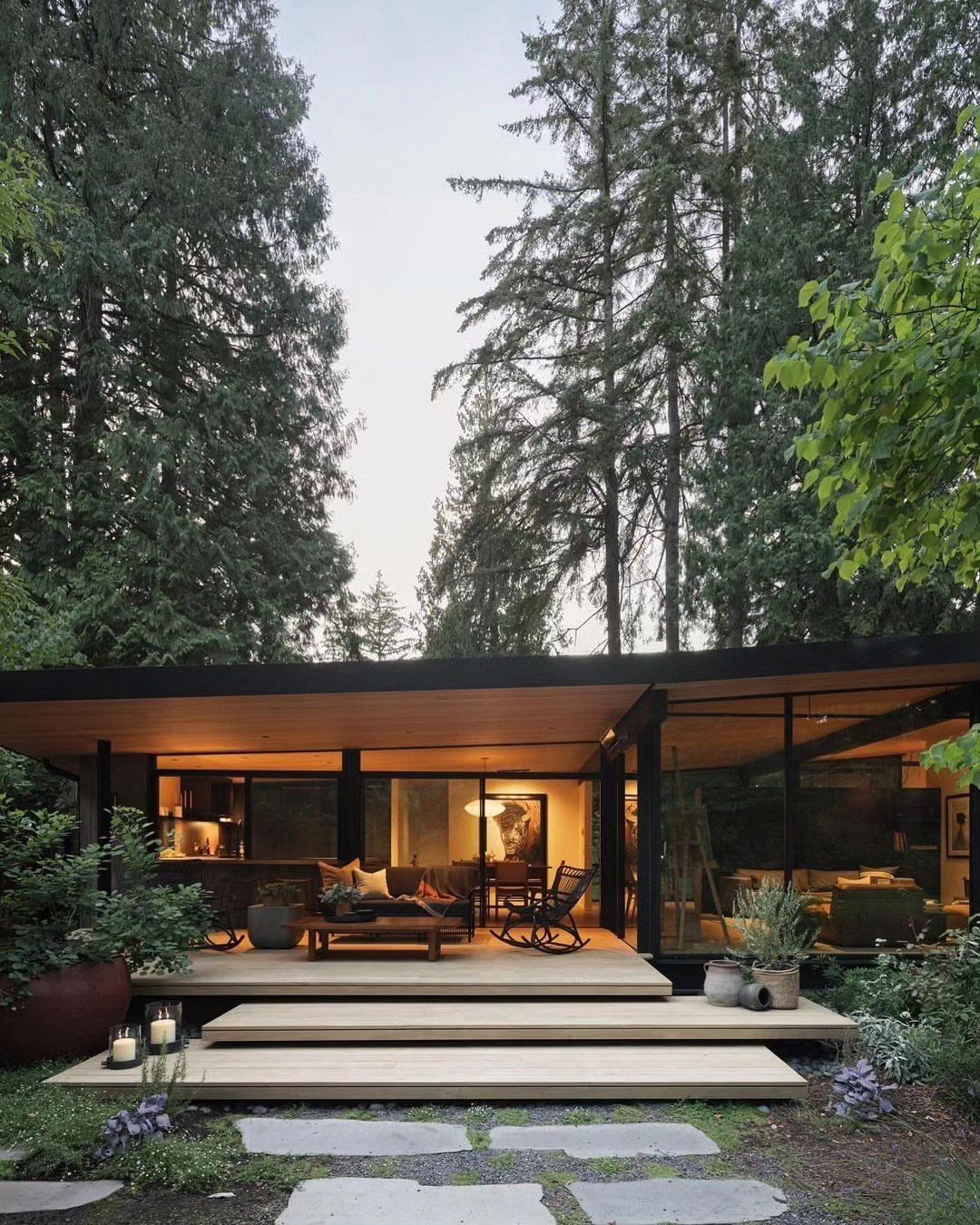
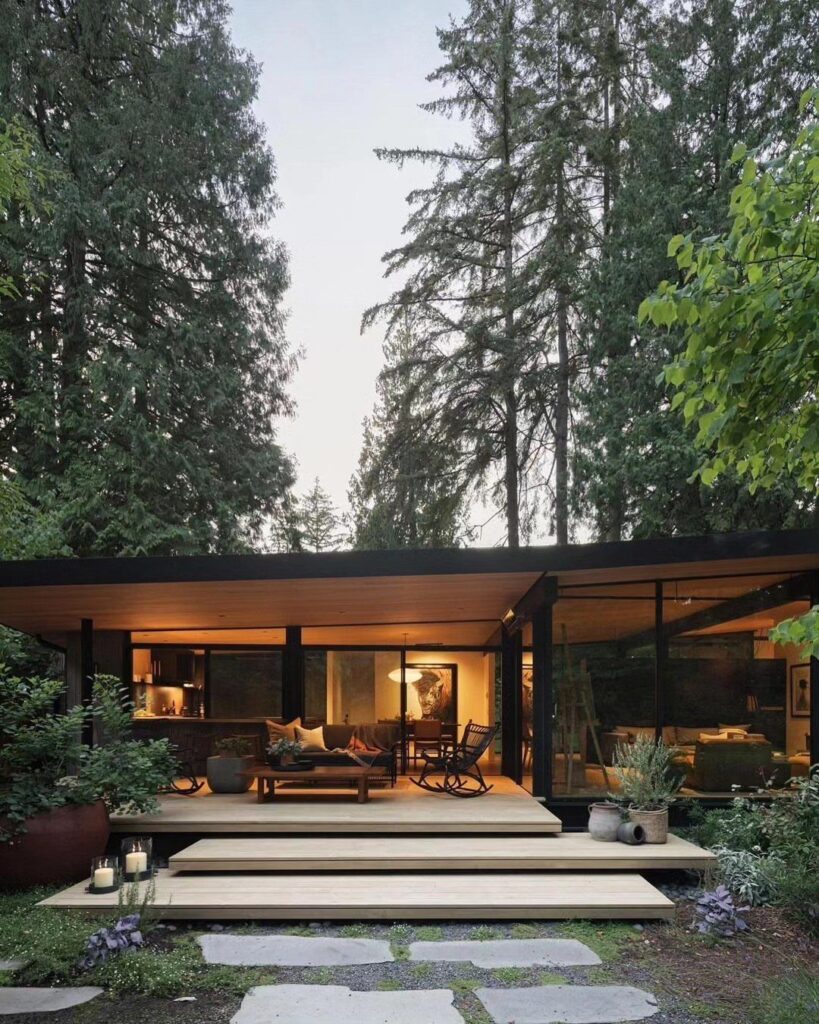
Clean lines and function come first in this style, and the glass-walled house shows both: a flat roof, a plain wooden deck, and nothing added just for decoration.
For a rental or a first home, I’d borrow that restraint before buying anything.
Clear surfaces, straight-edged furniture, and one or two warm wood pieces get you closer than a pile of retro accessories. Decide what each item does, then keep only what earns its spot.
2. Large Windows
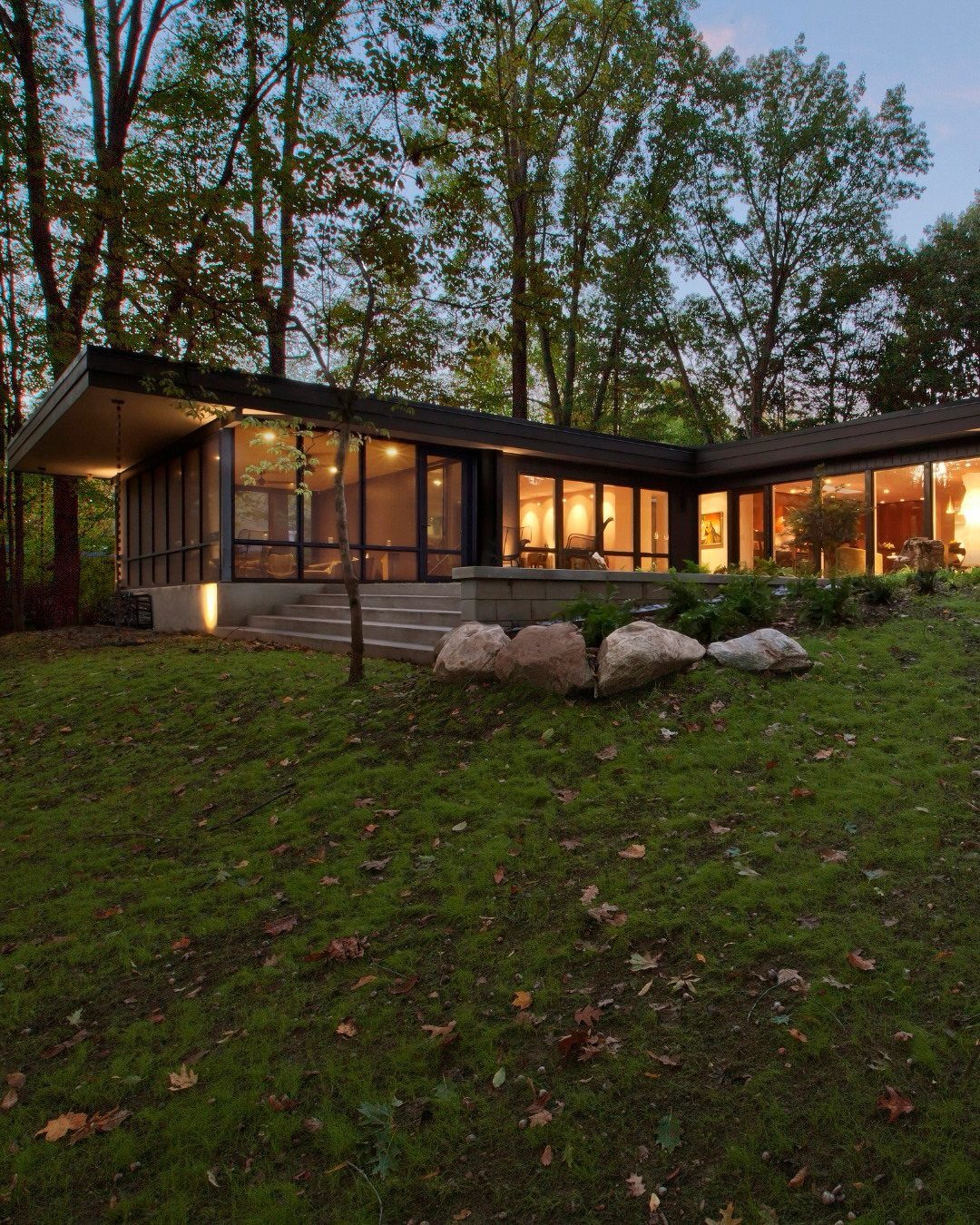
If your windows are small, strip away heavy drapes and let the frame show.
Keep the sill area clear and look for sheer, light curtains that stay out of the way. Trees outside act as living wallpaper, so I’d arrange seating to face the glass.
3. Hanging Planters
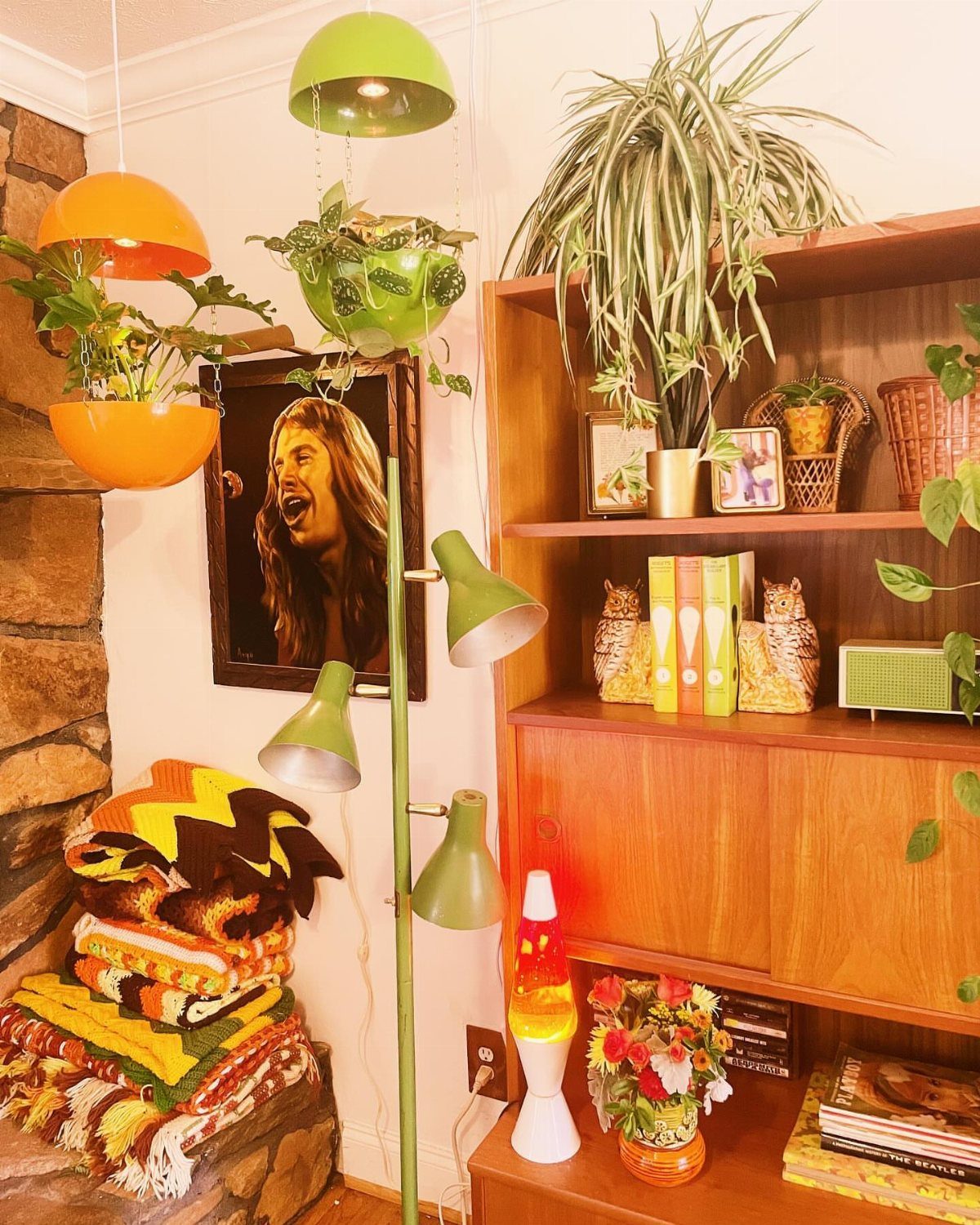
Orange and green pots hung at different heights put 70s color up near the ceiling, where most rooms have nothing going on.
Spider plants suit this well because their leaves trail down over the sides.
I’d hang two or three planters at staggered lengths instead of one lone pot, and keep them near a window. Hooks and macramé hangers are cheap, which makes this an easy afternoon project.
4. Vintage 70s Couches
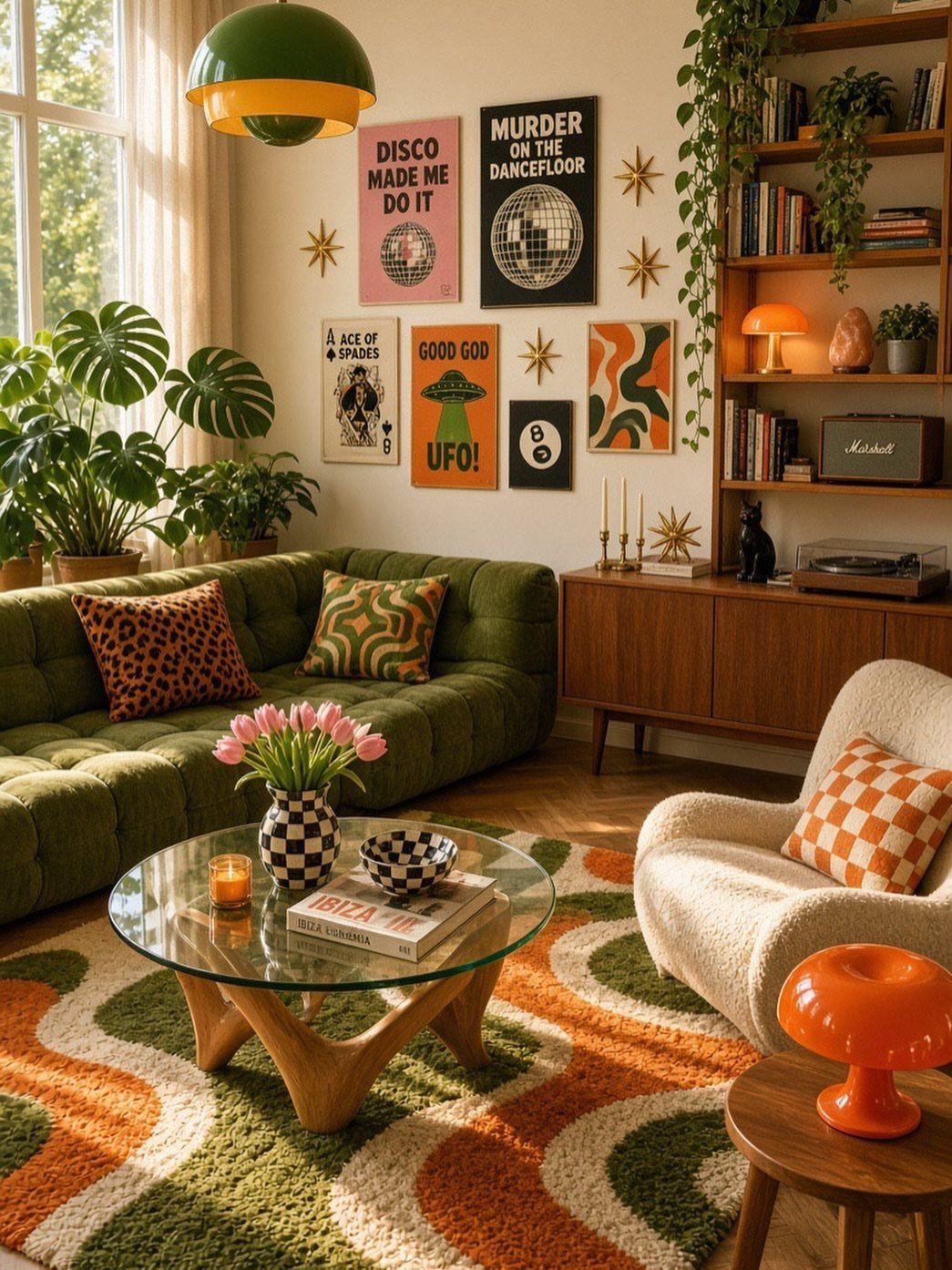
A deep, tufted sofa in green velvet sets the tone for a whole room, and a white bouclé chair beside it keeps the look from feeling heavy.
I’d spend the budget here first.
Choose a sofa you actually want to sink into, since this style is about guests sitting and staying a while. Pair it with a glass coffee table so the room stays open, and let a rug add the warm color.
5. Burnt Orange and Avocado Green
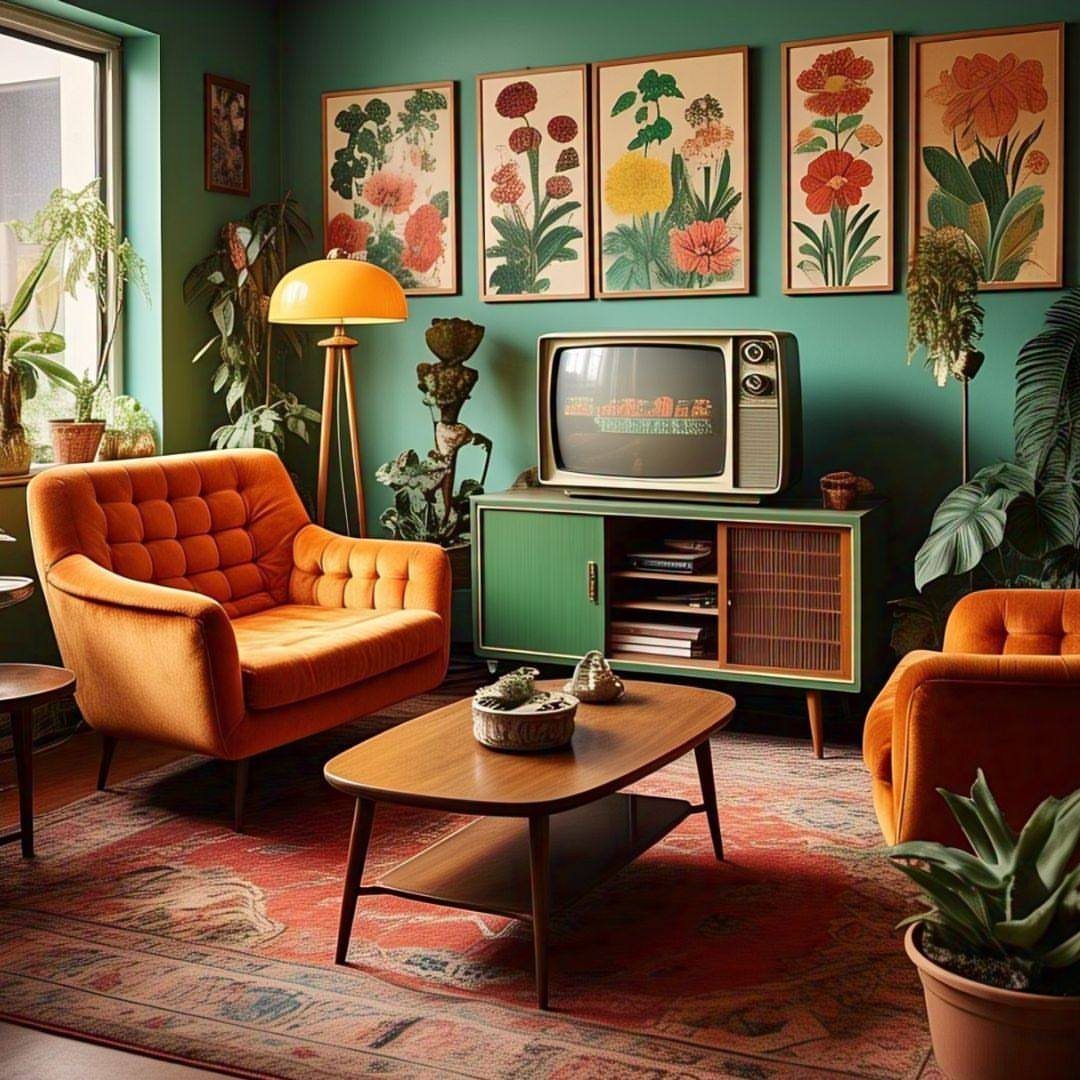
Green walls with burnt orange armchairs is a bolder pairing than most people try, and I think it works because both colors are earthy and warm.
If painting every wall feels like too much, start with the chairs or a console in one color and add the other through art prints.
Wood tones, like a plain coffee table, calm the 2 shades down. Keep one color dominant.
6. Terrazzo Tiles
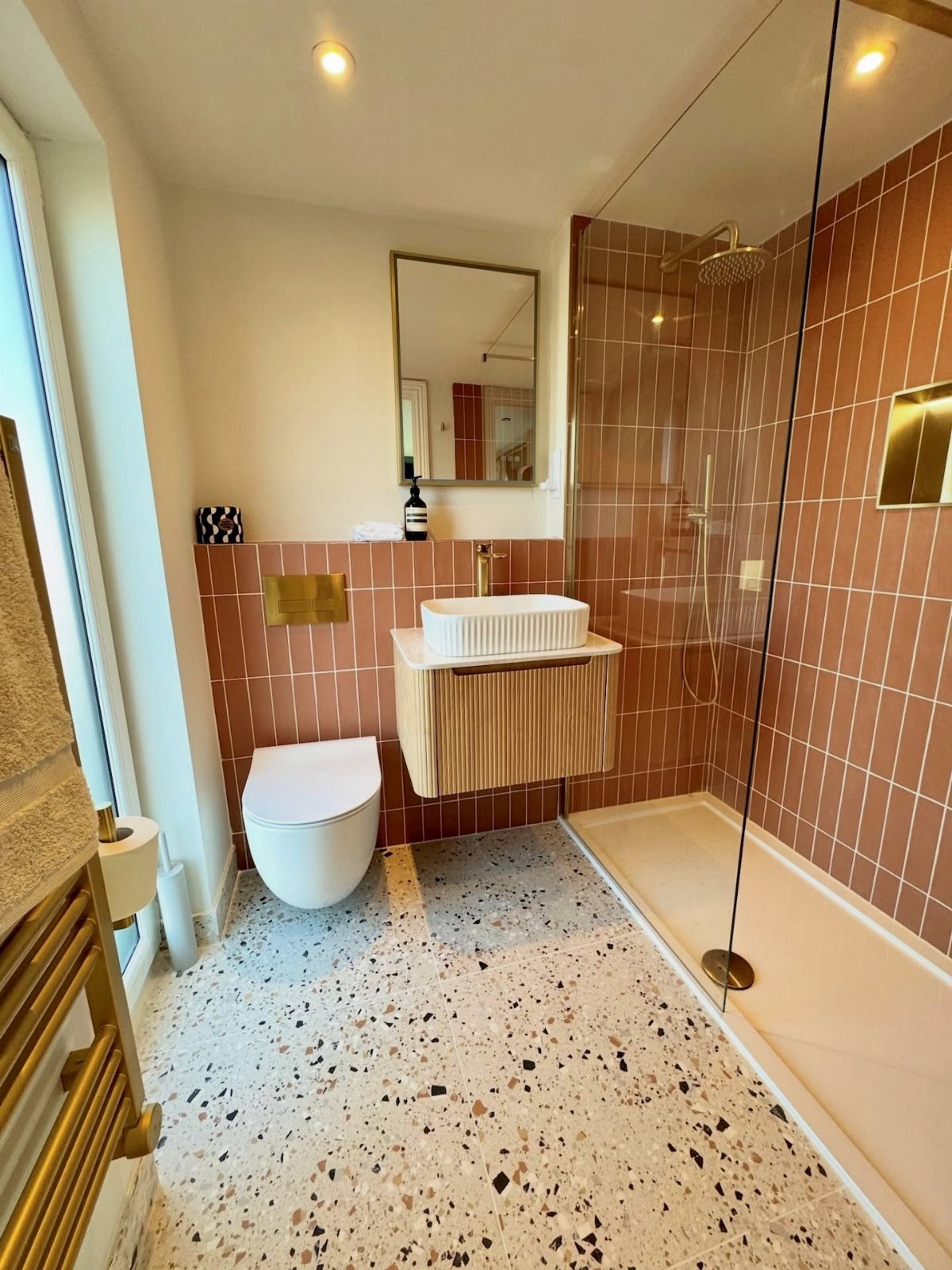
Terrazzo brings flecks of color to a floor, and in a bathroom it gives even a tight footprint a surprisingly luxurious feel.
Because the pattern is busy, I’d keep everything around it simple: a floating vanity, a clear glass shower, and plain fixtures.
Pink or terracotta walls pick up warm chips in the floor. Tile costs more than paint, so a single bathroom floor is the smart place to use it.
7. Futuristic Lighting Fixtures
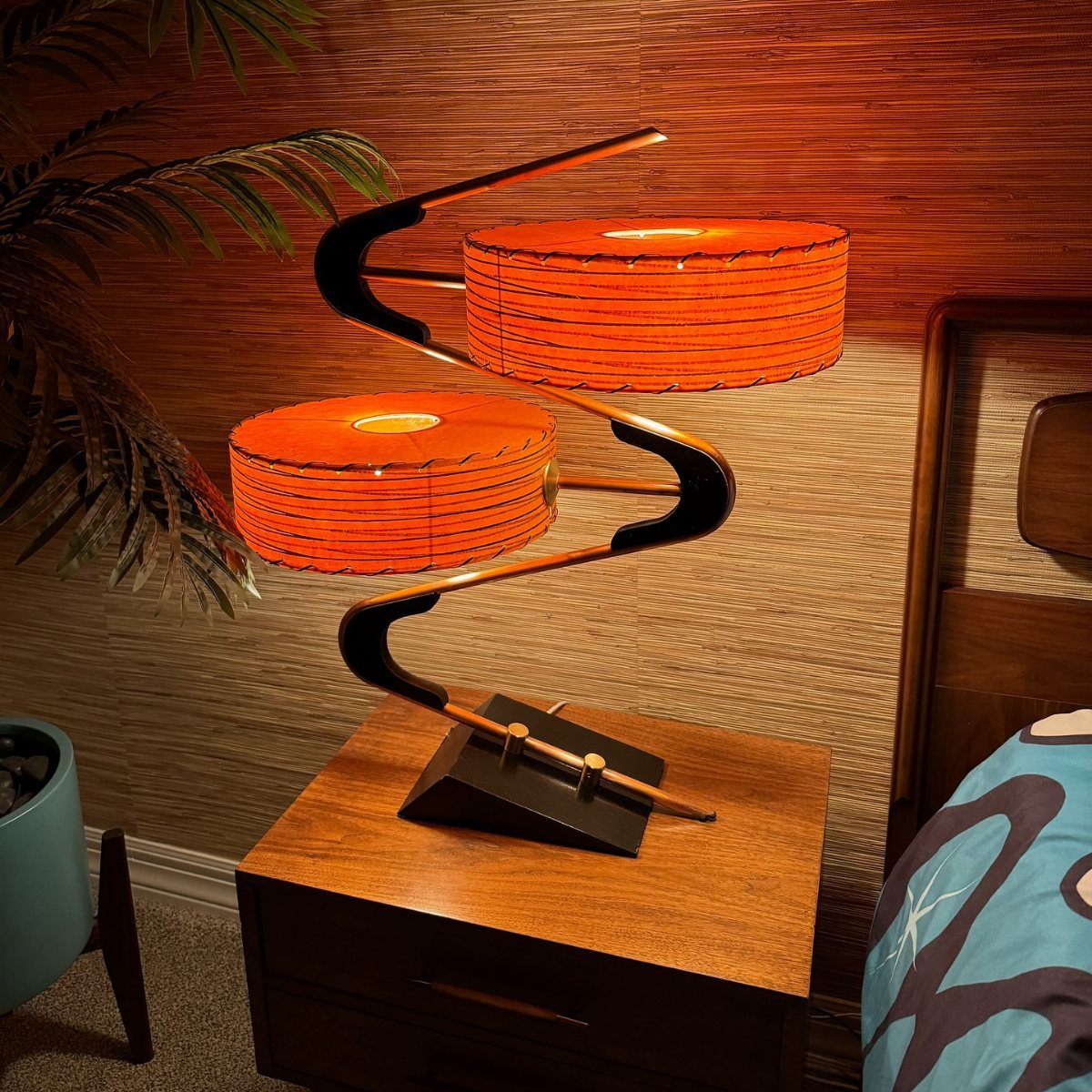
Keep the surface around it plain.
Wood underneath and a single plant beside it let the base be the loudest thing in view. Buy one statement lamp instead of a matching pair, then repeat the orange in a throw or print elsewhere in the room.
8. Mismatched Patterns
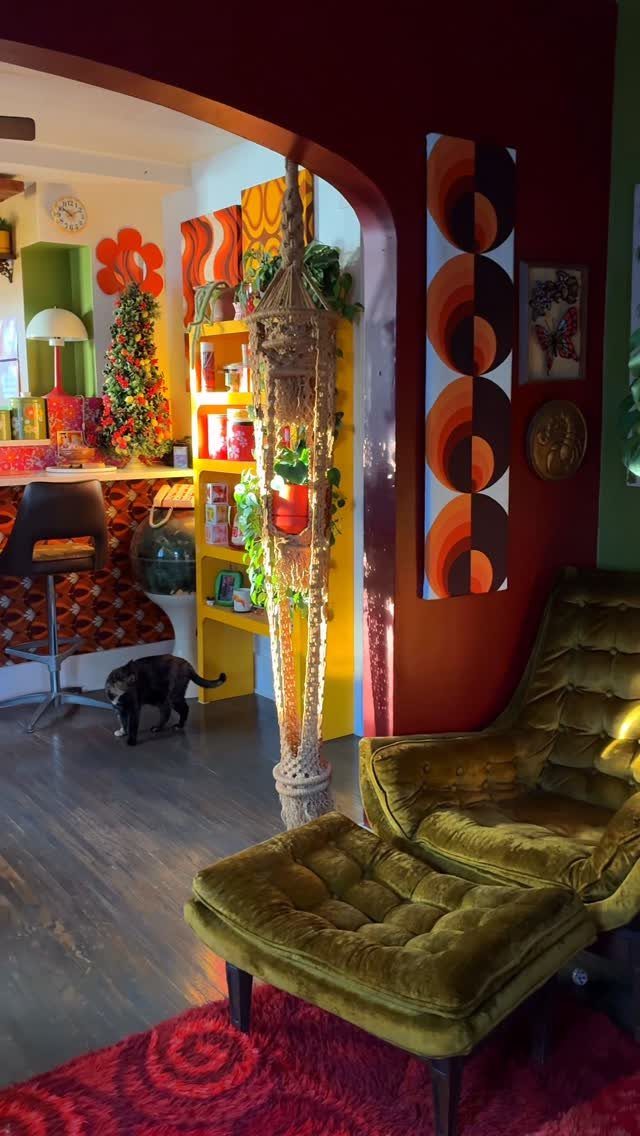
I’d pick one anchor, here the green chair and ottoman, and let everything else sit around it.
Dark wood floors calm the noise. Add patterns one piece at a time, and stop when the eye has no place left to rest.
9. Wood-paneled Accent Walls
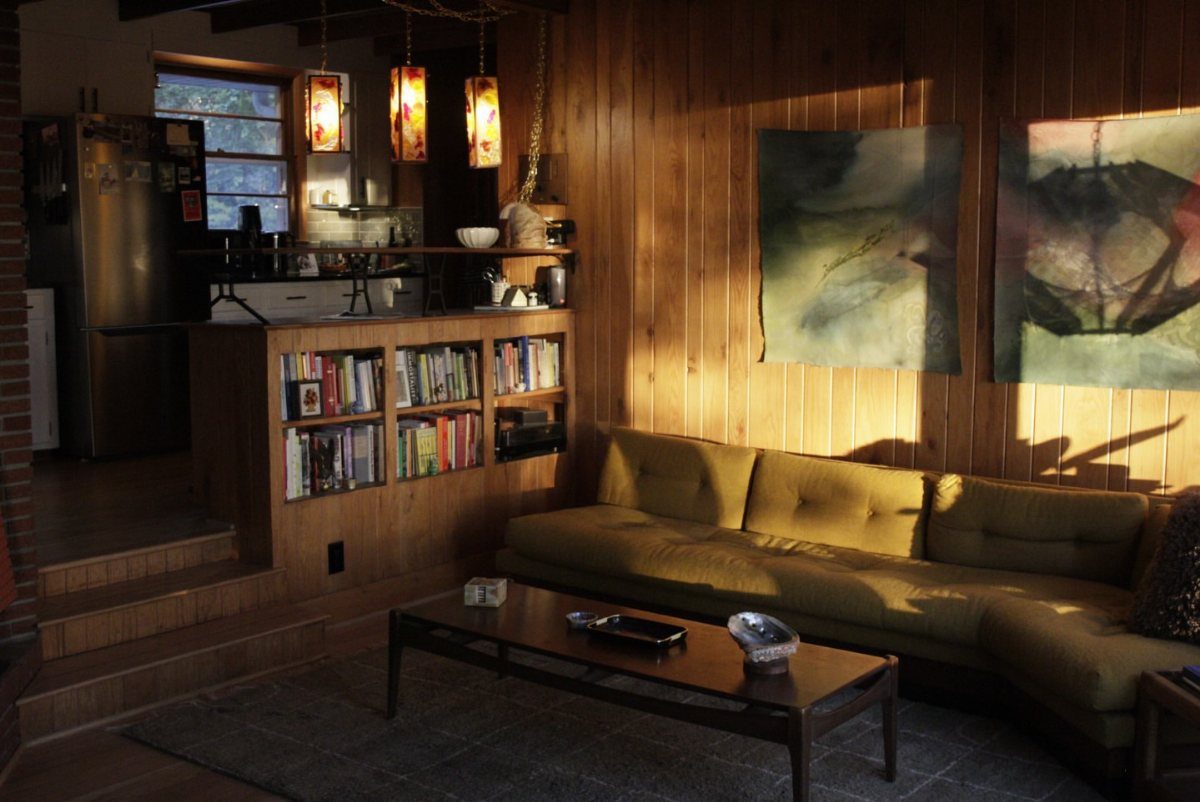
Wood paneling on the walls gives a room its warmth before any furniture arrives, and a mustard sofa against it is a pairing I’d copy without changes.
Hanging 3 orange lamps at staggered heights adds soft light that the wood soaks up. Keep the coffee table wood too, in a slightly different tone, so the walls don’t swallow it.
10. Retro Conical Fireplace
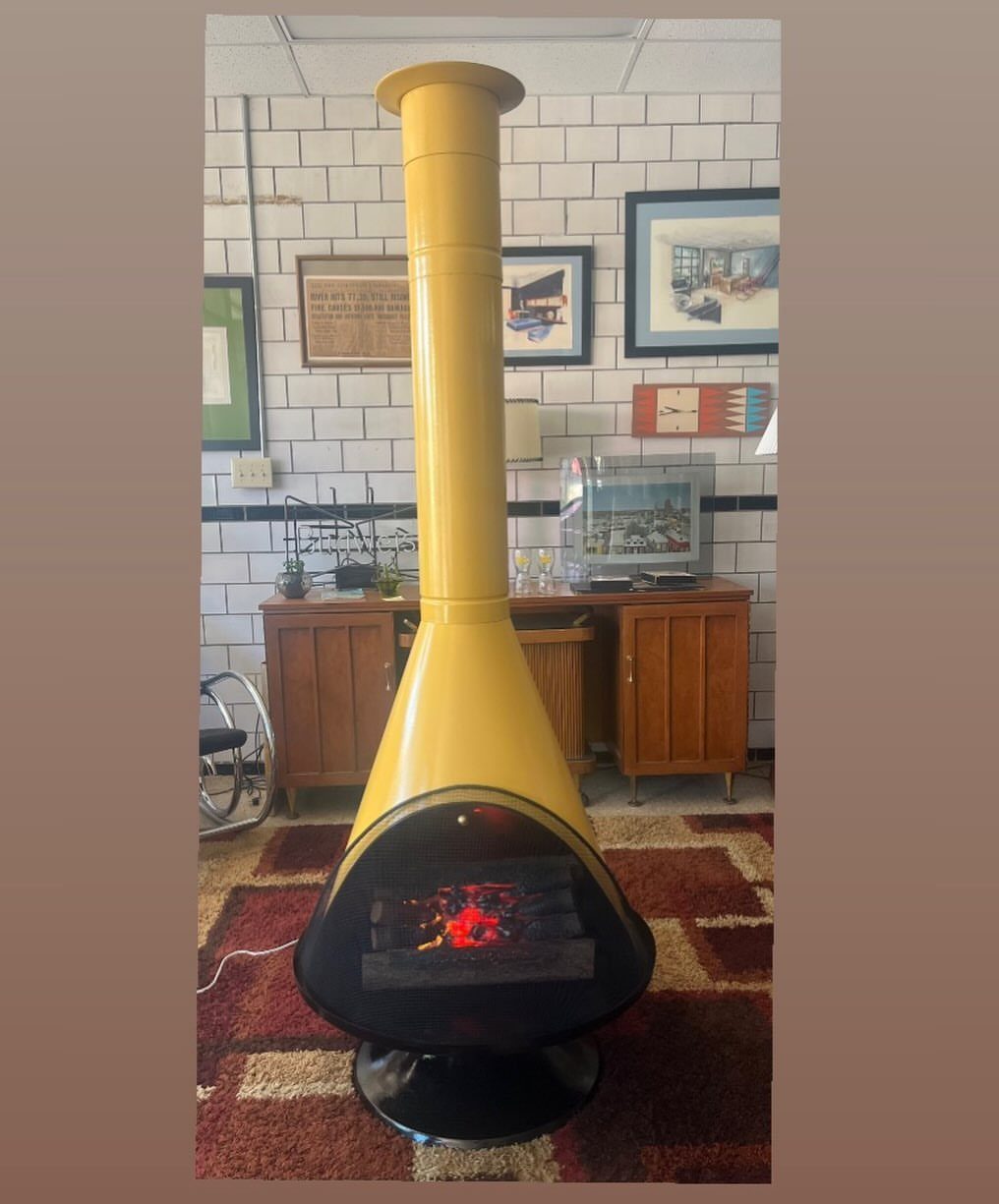
A cone fireplace with an exposed flue pipe works as a piece of furniture first, so give it floor space and let it stand alone.
Yellow is a loud choice, and I like it with white tile behind, which keeps the color from competing with anything else. A patterned rug nearby marks the spot as its own zone.
A wooden sideboard nearby adds warmth. Fireplaces like this need real installation, so plan that cost before falling for the color.
11. Patterned Shag Rugs
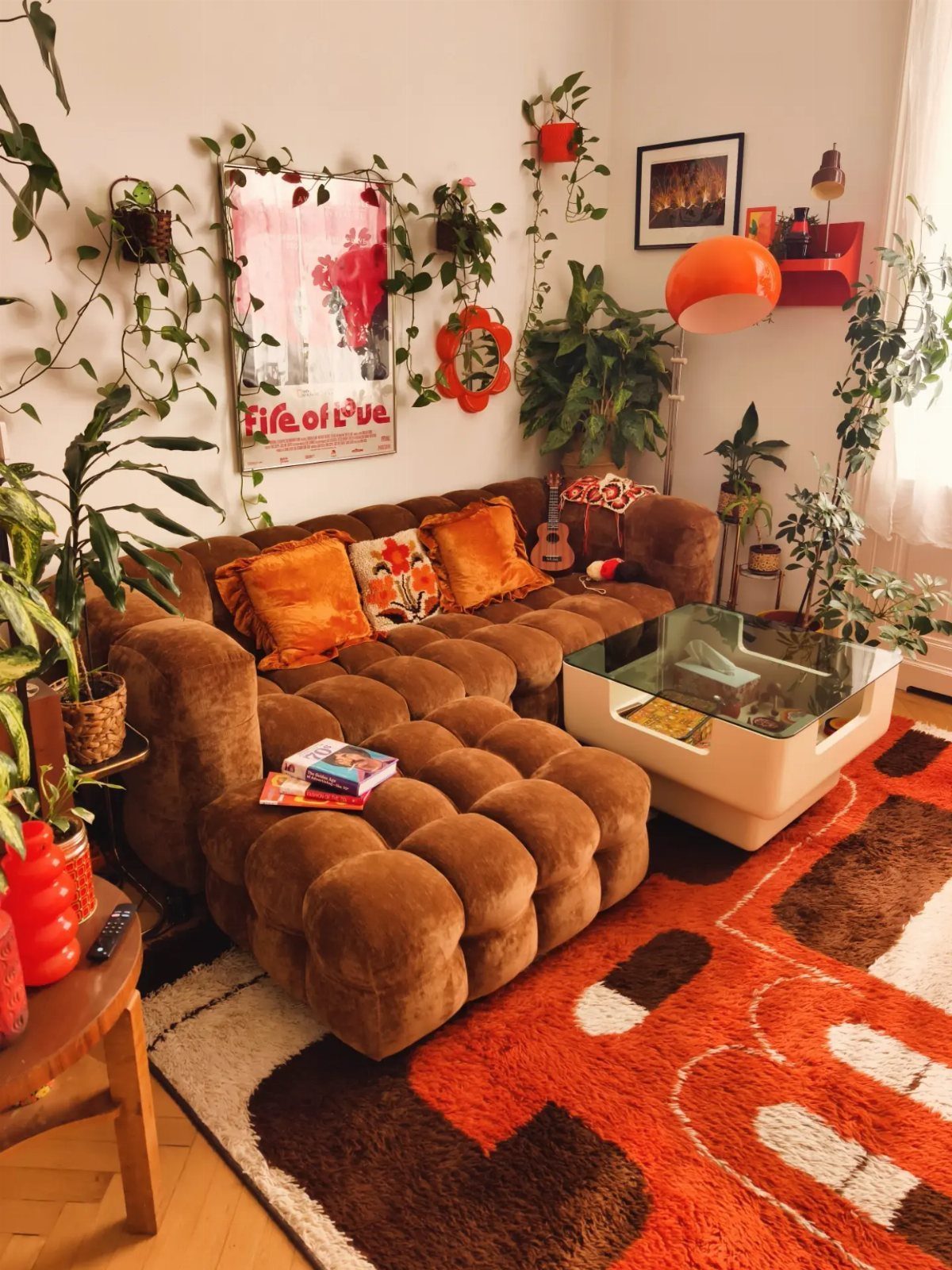
An orange and brown shag rug is the cheapest way I know to settle a living room into the 70s, since it brings pattern, color and texture in one purchase.
Choose a size large enough that the front sofa legs sit on it. Keep walls and other pieces quieter so the rug leads.
12. Wooden Sideboards and Houseplants
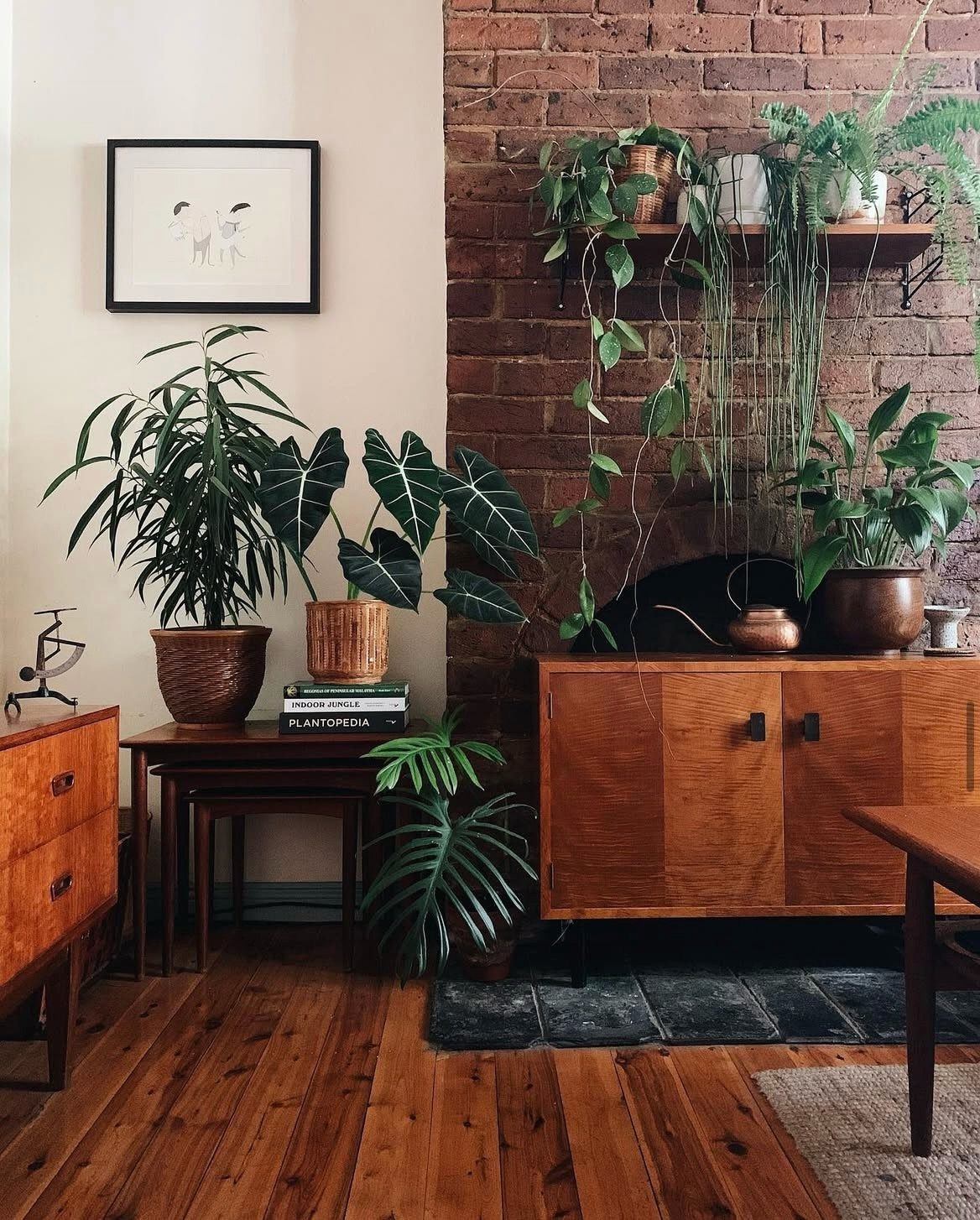
A wooden credenza lined with potted plants is the simplest mid-century vignette I can think of, and exposed brick behind it makes the wood glow.
Mix plant heights: tall ones on the floor or side table, trailing ones on the sideboard’s edge.
Stack a couple of plant books beside the pots for a layer that costs little. If you rent and have no brick, a warm-toned wall gives a similar backdrop.
Timelessness of Mid-Century Modern
Mid-century modern has stayed popular because it was built around function. Warm woods, sleek shapes and retro patterns still look fresh, and the comfort is real, not just visual.
It also updates easily. Rearrange the furniture, hang a new piece of art, and the space looks current again without a full redo.
For a renter, that makes it a safe base. Buy the sofa and the wood pieces once, then refresh the room with prints, pillows or a new arrangement whenever you want a change.
The interior design style is popular today for its timeless, adaptable nature, but it actually rose to prominence in the middle of the 20th century.
Influence of 70s Design
The 70s added bold color, texture and mixed styles to the cleaner mid-century base, and that blend is why the look is coming back in modern rooms.
My advice is to treat the decade as a layer, not a theme. Keep sleek lines, natural materials and practical furniture underneath, then bring in the 70s through color and texture.
That way the room keeps the comfort of a current home. It also stays easy to change if the bold touches start to wear on you.
Architectural Features
Mid-century homes were built around open floor plans, large windows and a close tie to the outdoors. Open plans let light and sightlines carry from one area to the next, so keep the middle of the room clear.
You can borrow the nature link even without the architecture. Large, leafy plants work like living sculpture, and I’d treat them as part of the room’s structure, not an afterthought.
Place a big one where a wall or corner feels empty. It does the job of a piece of furniture, and it costs far less.
Frequently Asked Questions
Are the 1970s considered mid-century modern?
Yes, the 1970s are treated as part of the mid-century modern movement. Seventies designers kept the clean mid-century frame and piled on saturated color, heavier texture and a looser mix of styles.
Is mid-century modern still in style in 2026?
Yes, mid-century modern is still popular and relevant. Warm wood, slim silhouettes and retro prints still look current, and furniture built around daily use fits a busy household.
Easy updates are another point in its favor: moving a chair or hanging a new print freshens the room with no major project.
What makes a home look cheap?
Clutter with no purpose is the likeliest culprit. Decorations added just for show and a pile of retro accessories make a room look cheaper than a few well-chosen pieces.
Put the first dollars into a sofa that feels good to sink into, then fill in with warm wood pieces and keep the surfaces clear.





