Whether a mid-century idea suits you depends on what you can change: renters can swap brass pulls with a screwdriver and an afternoon, hang peel-and-stick wallpaper on one wall, or line a balcony with planters, while floor-to-ceiling glass is a build project or a landlord’s decision.
Sentence 2 runs from small hardware swaps to bigger secondhand pieces, so the list covers both ends of the budget.
Choose the ideas your lease and your wallet allow, and let one good piece, such as a curved sofa or a statement light, anchor the room.
1. Low-slung Sofas and Chairs
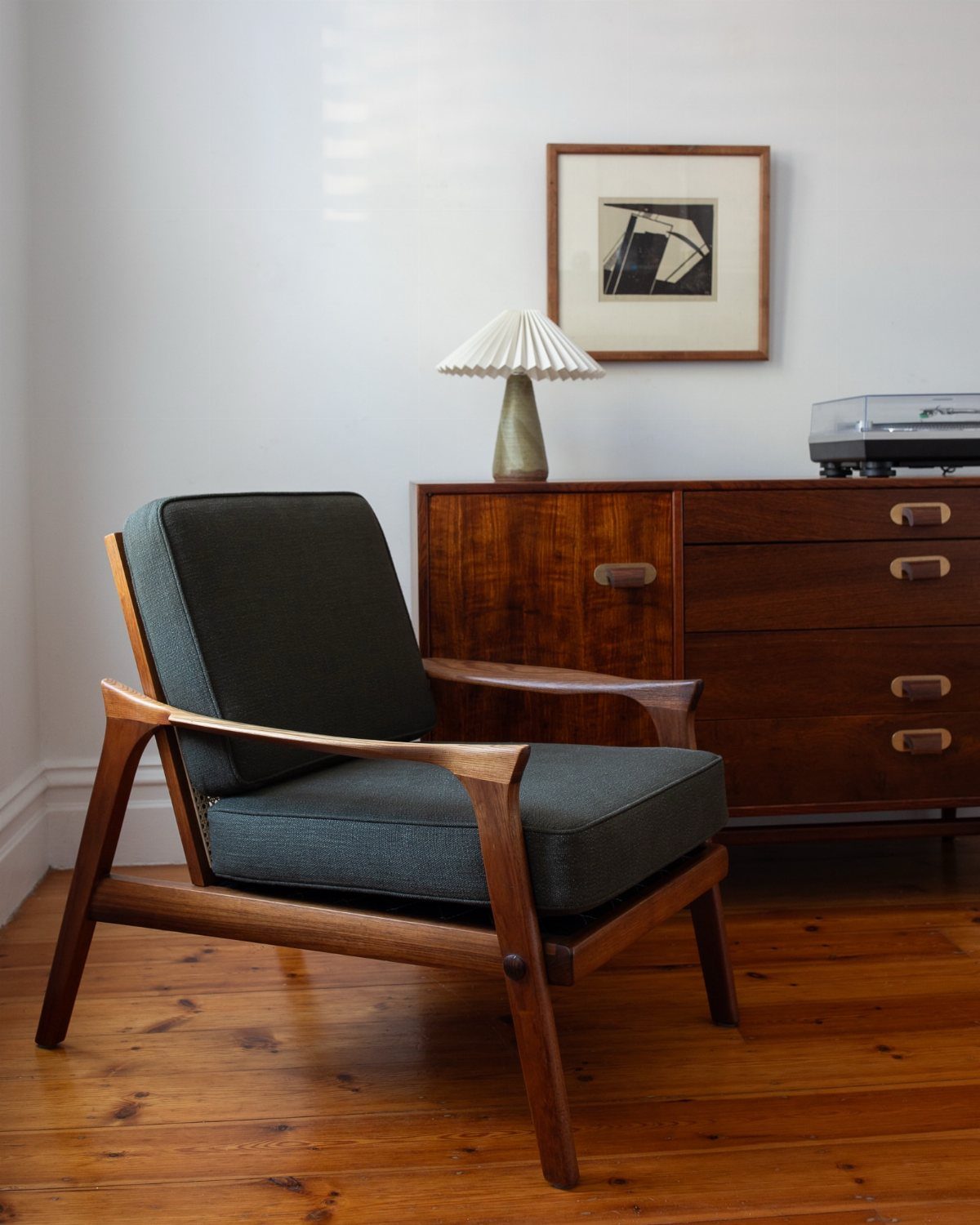
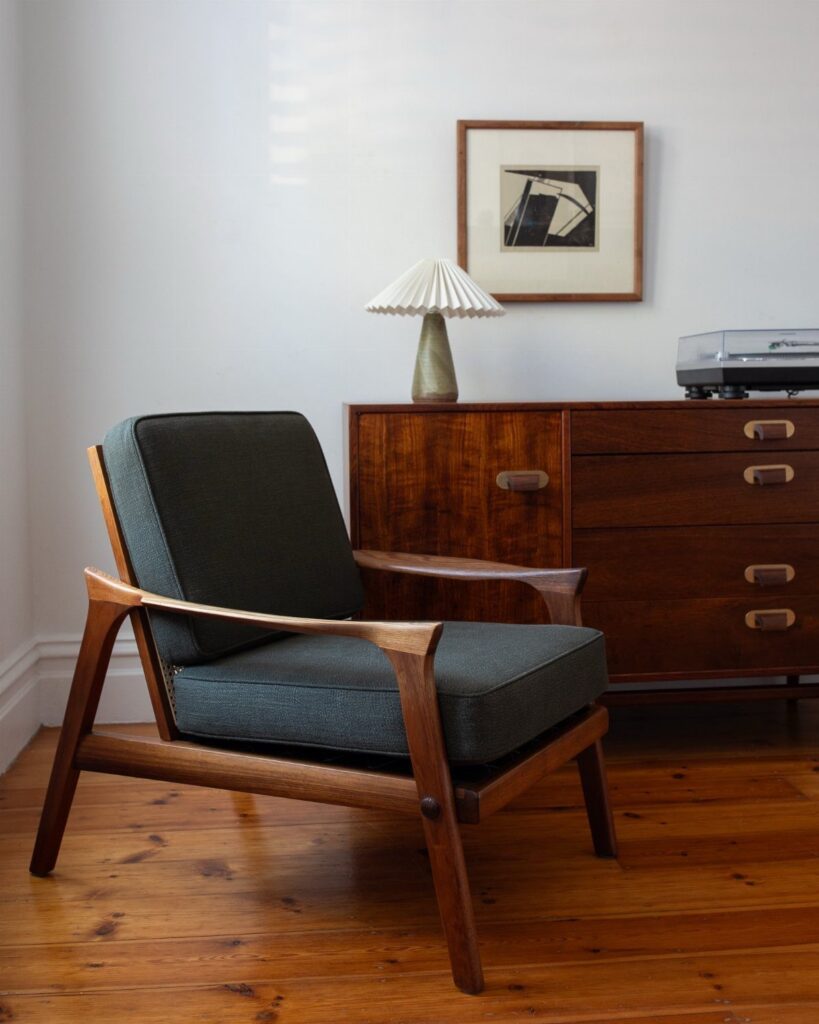
A chair that sits close to the floor makes a room read calmer, and the dark grey cushions on a slim wooden frame are what keep this one from looking heavy.
Leave the legs showing so the floor runs under the seat.
A low sideboard nearby keeps the eye level across the wall, so match the heights as closely as you can. On a tight budget, one good armchair does more than a whole matching set.
2. Wood Paneling
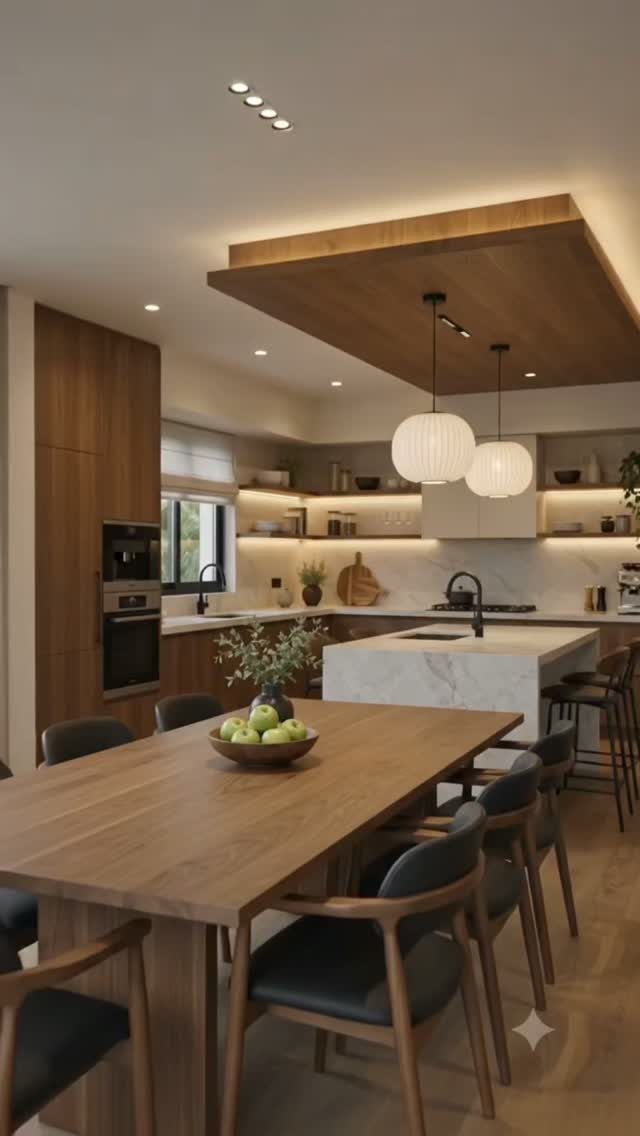
Paneling on the ceiling is the version I would try first, because it warms a room without touching the walls. Wood overhead, a pale marble island below and black chairs around the table keep the mix from turning heavy.
Pendant lights hung against the planks pop out nicely. Paneling takes a weekend of work, so for a renter, a single wall or one stretch of ceiling is the realistic start.
3. Mid-century Pieces with Modern Elements
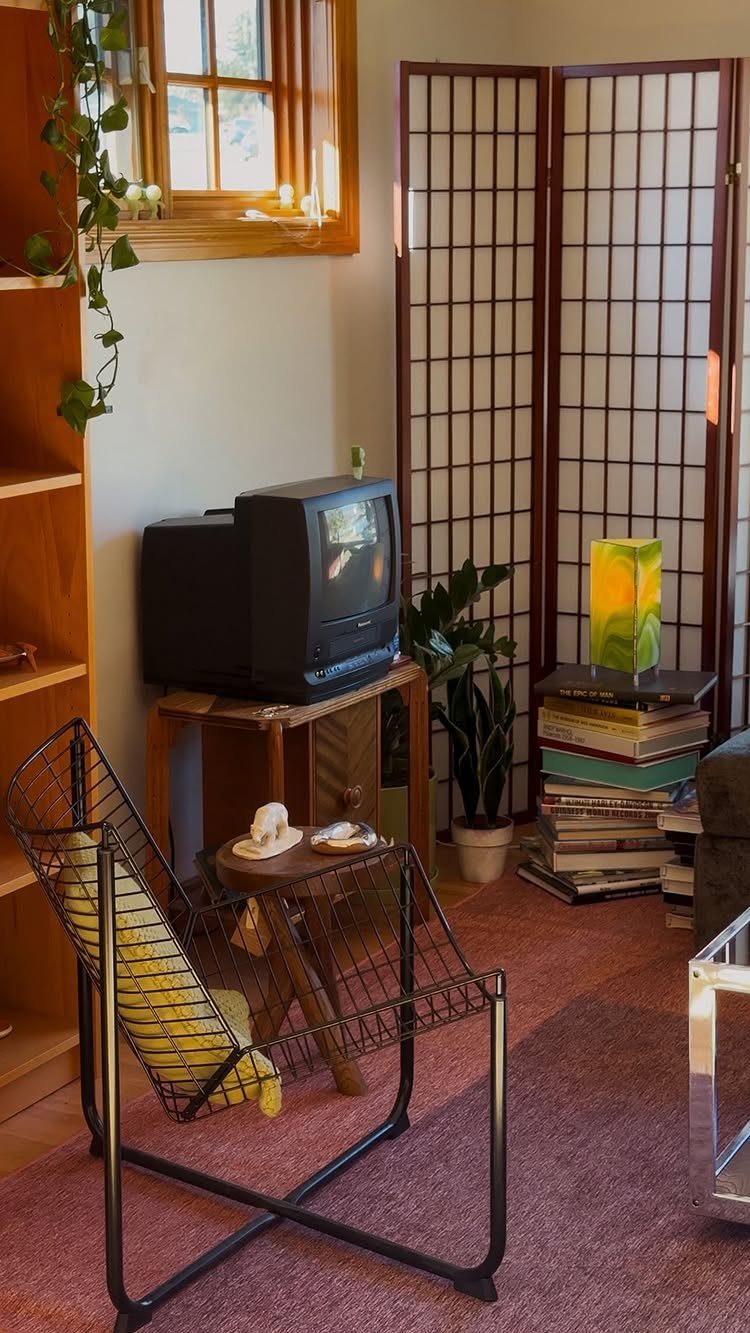
A vintage frame can carry a few unexpected partners, and a wire chair with a yellow cushion proves it.
Mix one old piece with something plainly newer, like a screen or a bold rug, and the space looks collected instead of themed.
Keep the old wood pieces few, and make the extras cheap. A purple rug costs far less than another sideboard and changes the mood just as much.
4. Statement Lighting
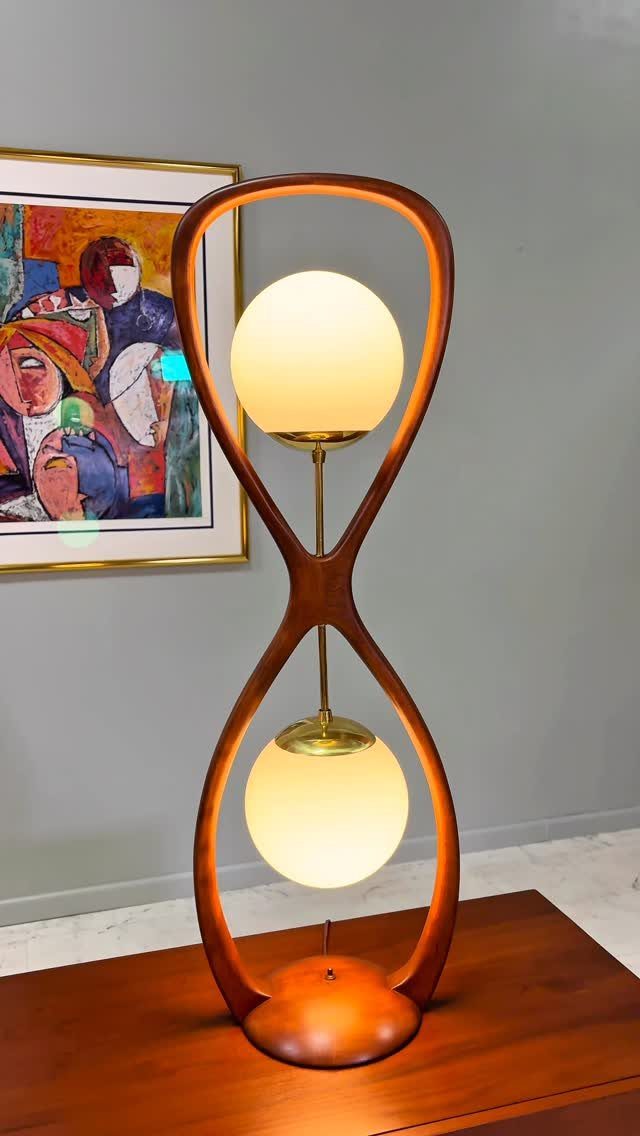
Put it where it has room, on a sideboard or console, so the shape reads against the wall behind it.
Keep the surroundings simple. A single abstract painting beside it is enough, and a lamp this sculptural does not need a second competing light on the same table.
5. Bold Colors in Furniture
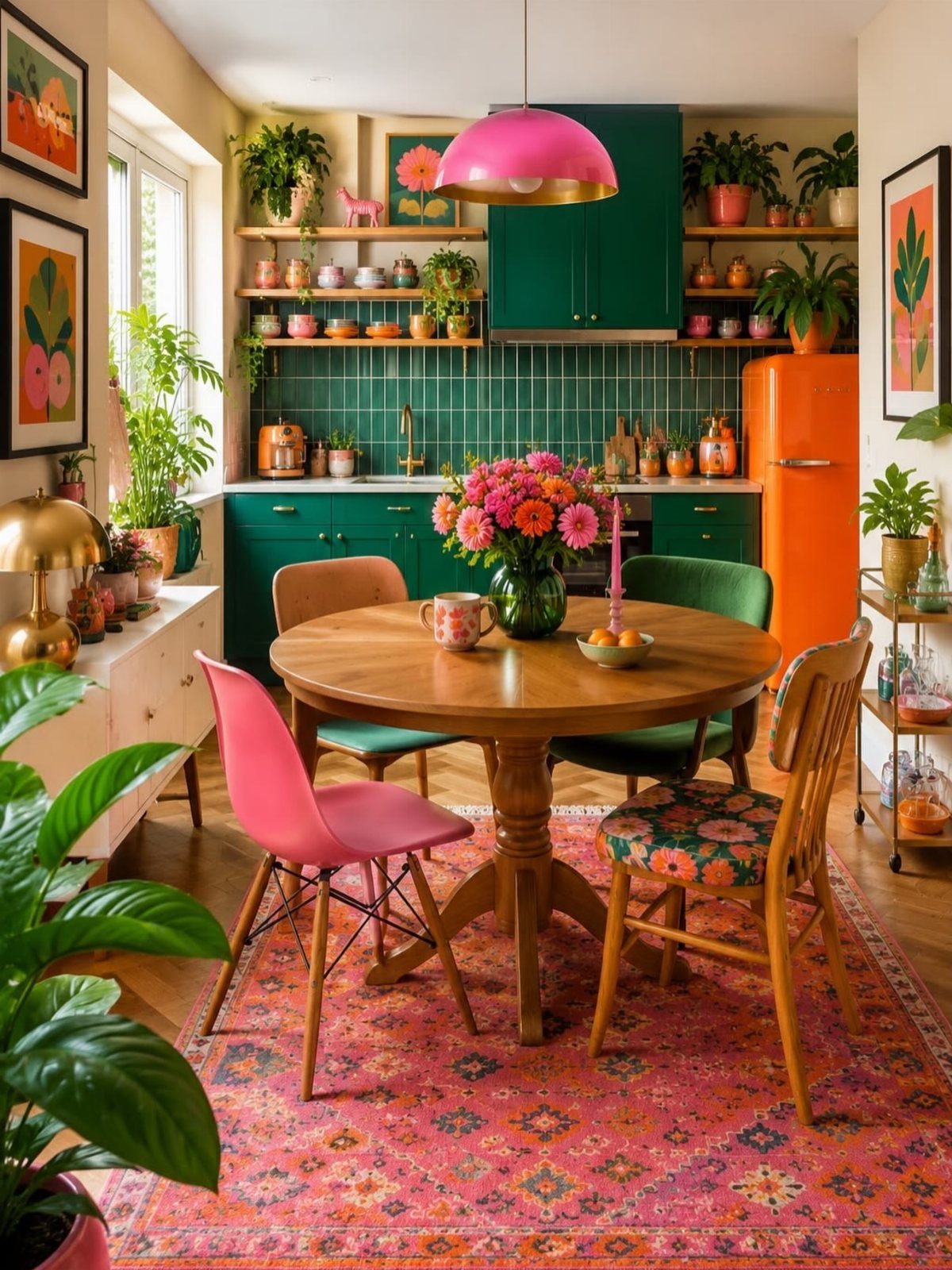
Mismatched chairs are the cheapest way to bring color in. Mismatched seats around a round wooden table look planned when the colors are limited, and the wood keeps the whole thing grounded.
Choose 2–3 colors and repeat them somewhere else in the room, like the rug or a pendant. Chairs are easy to swap, so they make the best first move; leave larger pieces alone until you trust the palette.
6. White Walls
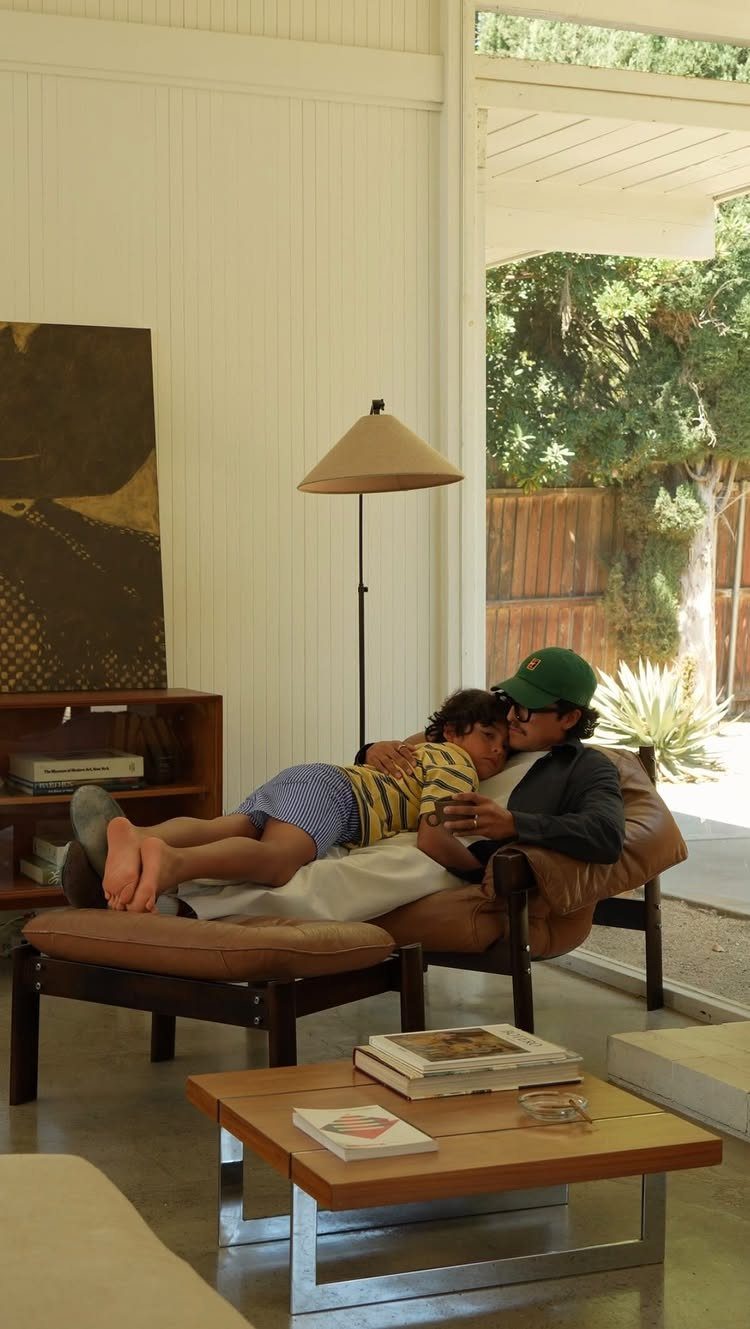
Paneling adds texture, so flat white paint does not feel blank. Repaint if the walls are dingy; fresh white is a small cost for a big, quiet change.
7. Iconic Furniture Pieces
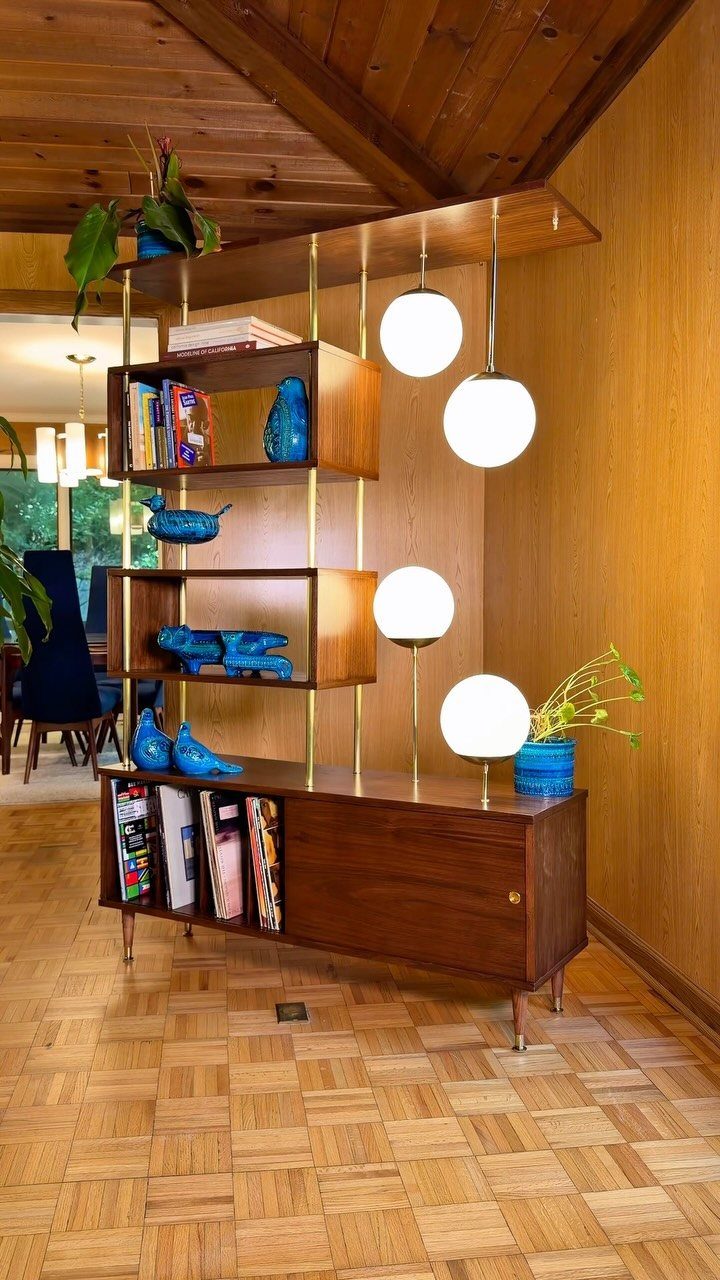
Signature mid-century designs earn their place through storage, and a walnut wall unit is the clearest case.
The maker of this one built it entirely in walnut, with divided record storage in the base, so the piece works as both display and filing system.
Sliding doors on each side let you reconfigure the bottom cabinet.
Globe lights built into the shelves give the unit its own glow, so you can skip a nearby lamp. Hunt for one piece like this secondhand, since a single anchor does the job.
8. Open Shelving
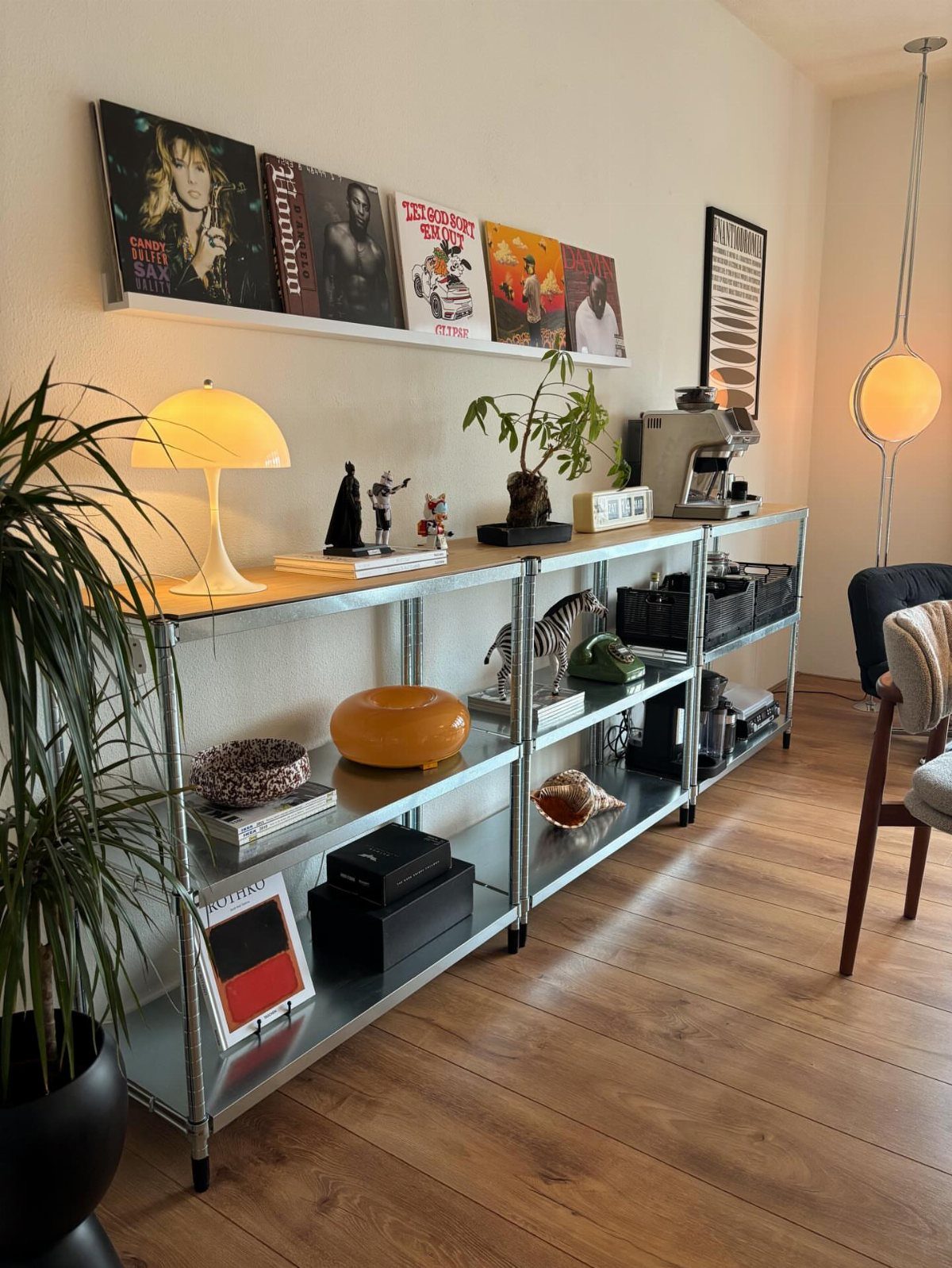
Open shelving keeps a room from feeling boxed in, and a thin chrome and glass frame with wood shelves does it better than a solid cabinet.
Light passes through, so the floor and wall stay visible behind the things you store.
Stop at a few items per shelf: a lamp, a coffee machine, one decorative piece. Hang records on the wall above the shelves to carry the display higher without crowding the shelves themselves.
9. Bar Cart
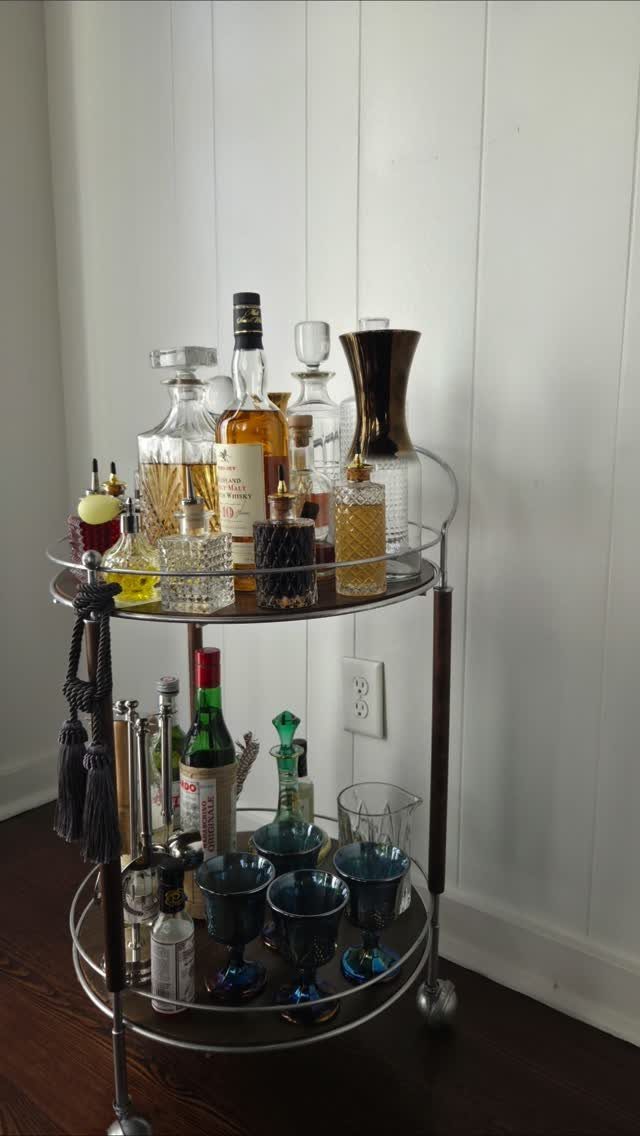
Put the heavier bottles and decanters on the lower tier and keep the glassware on top, where it is easy to grab.
Stick to one glass color, blue for example, so the cart looks styled rather than stocked.
A white wall behind it keeps the colors clear. It rolls, so it can move to wherever the party is.
10. Retro Artwork
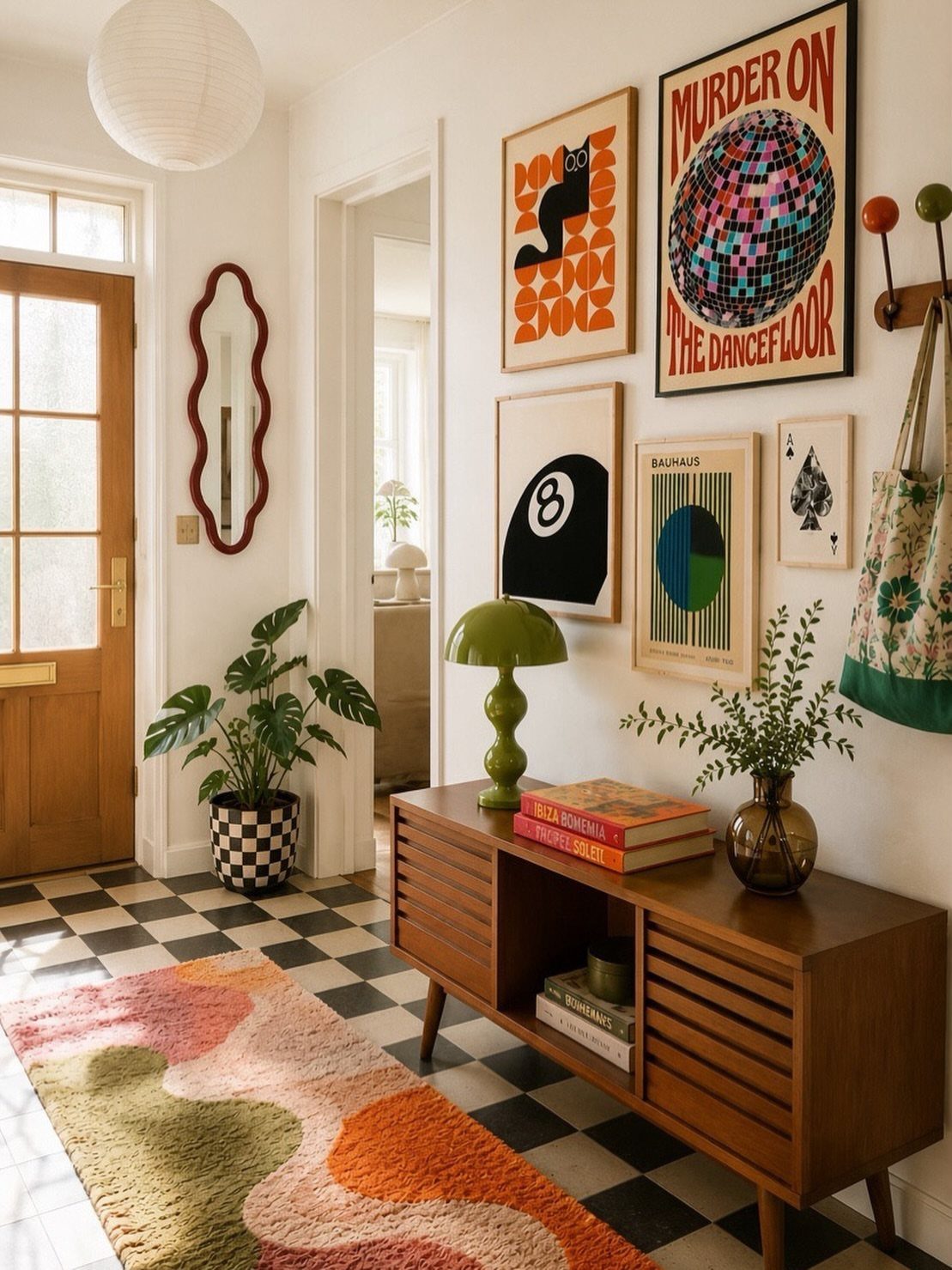
Retro prints do the most work in a hallway, hung above a low wooden sideboard where the eye lands as you walk by.
Mixing bold graphic posters with a few typographic ones keeps the wall playful without a single large purchase.
Prints are the cheap route: frames cost more than the art, so buy matching frames and keep the posters as the variety.
11. Integrate Statement Mirrors
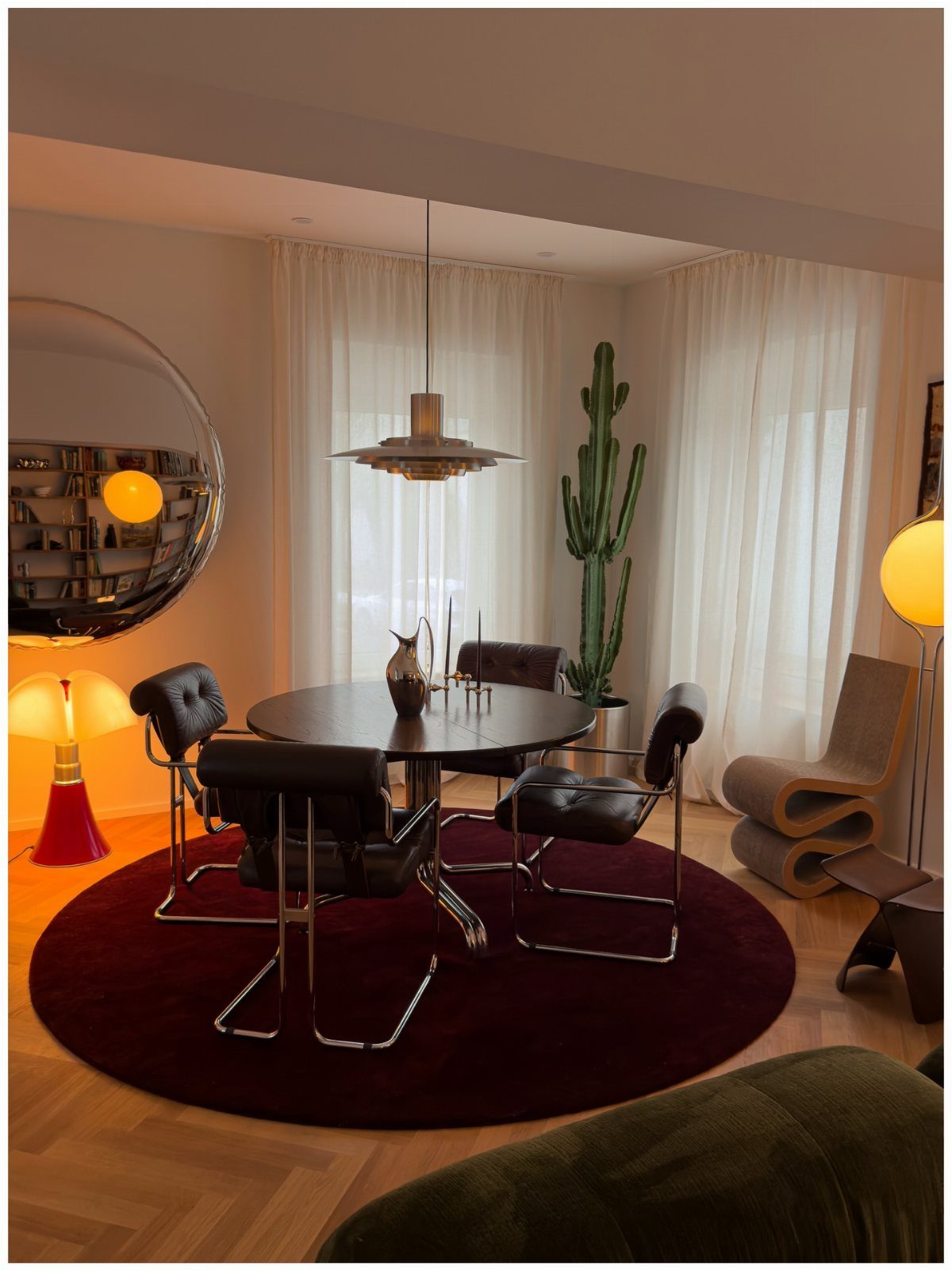
A big round mirror softens a dining area full of straight lines, and its curve echoes the round table below.
Hang it where it can catch light from a window or a lamp, since a mirror only helps if it has something worth reflecting.
Keep the bottom edge a comfortable distance above the sideboard or table so it reads as part of the furniture group. A thin frame suits mid-century pieces better than an ornate one.
12. Floor-to-ceiling Windows
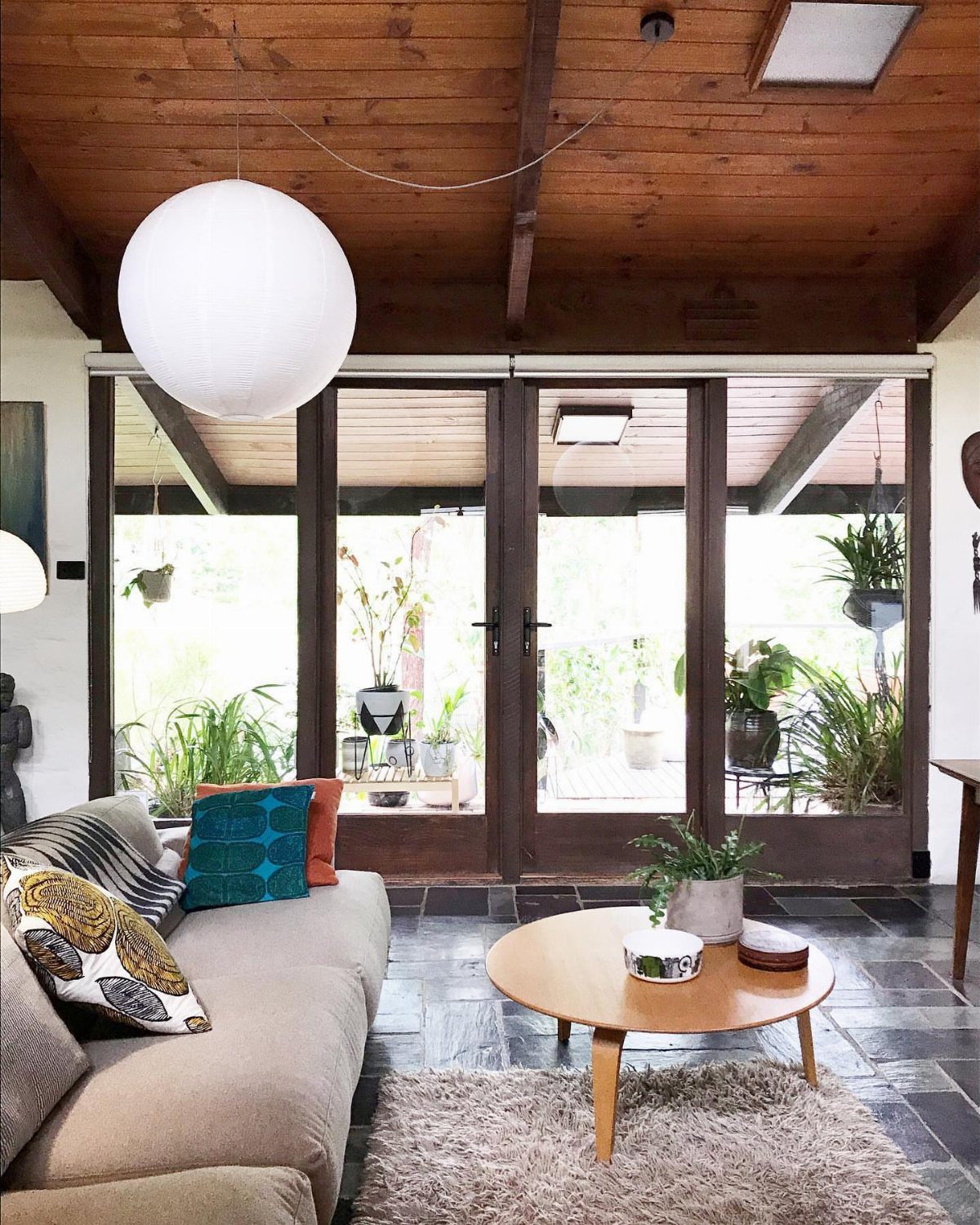
Glass doors framed in wood bring the garden into the living room, and I prefer them to a single huge pane because the frames echo the furniture.
Floor-to-ceiling glass is a build project or a landlord’s decision, so renters should not count on it.
Without it, keep the sightline clear.
13. Curved Sofa
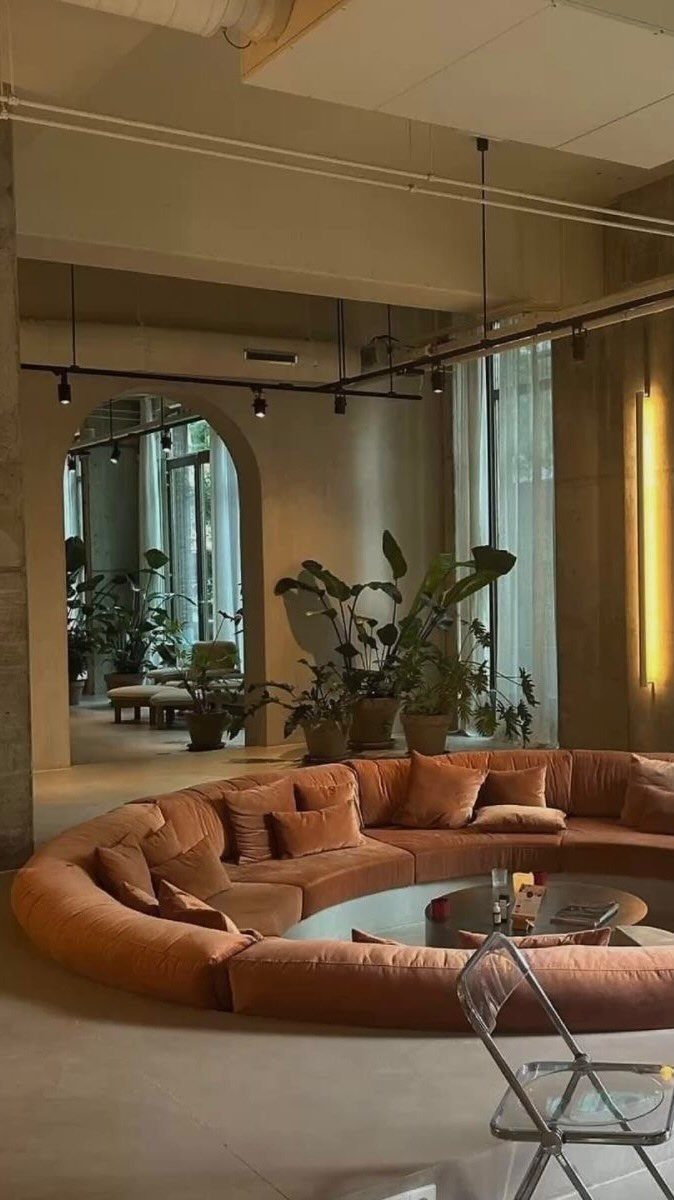
A curved sectional turns a seating area into a circle, and orange is a strong choice against concrete walls, because the color warms a cool, grey room. Plants and a glass coffee table keep the mood light.
Curves ask for floor space.
Leave a clear path around the outside edge, with the sofa floating away from the wall rather than pushed into a corner. On a small budget, one curved piece secondhand beats a full new set.
14. Statement Wallpapers
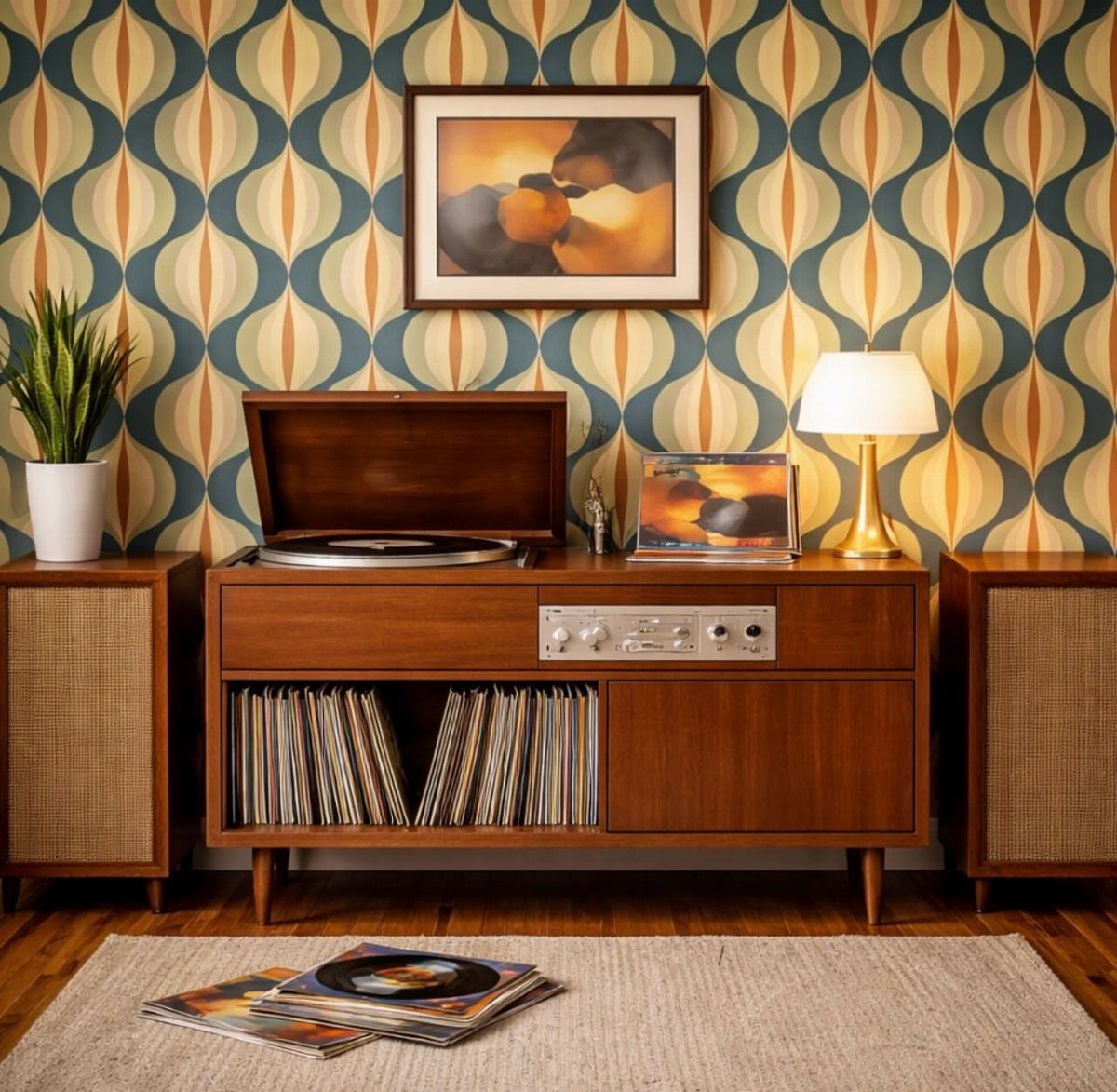
Wallpaper behind a record console gives the furniture a backdrop with a pattern of its own. A blue and gold geometric print against warm wood is the pairing I would copy.
Hang it on one wall only, the one behind your best piece, and keep everything in front of it simple.
Peel-and-stick paper is the renter’s route, since it comes off at move-out. One wall is also a small enough job to finish in a weekend.
15. Incorporate Brass or Gold Accents
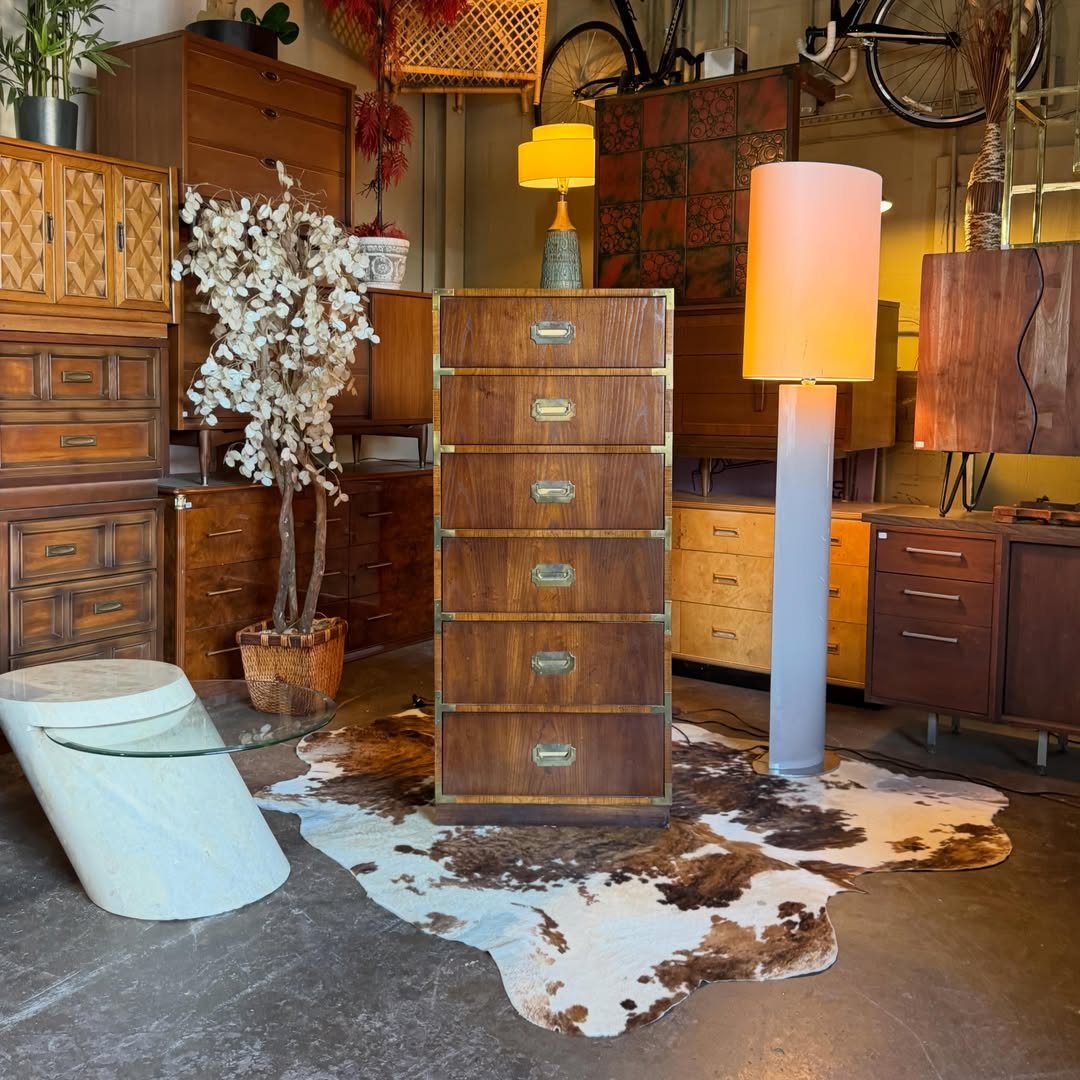
Brass pulls on a wooden dresser add shine without changing the shape of the piece. A little metal goes a long way against warm wood.
Swapping hardware is the cheapest version: a screwdriver and an afternoon, and the dresser looks new.
Add one more brass or gold item elsewhere, such as a lamp base or a frame, so the metal repeats. Stop there; too much gold starts to feel heavy.
16. Statement Clock
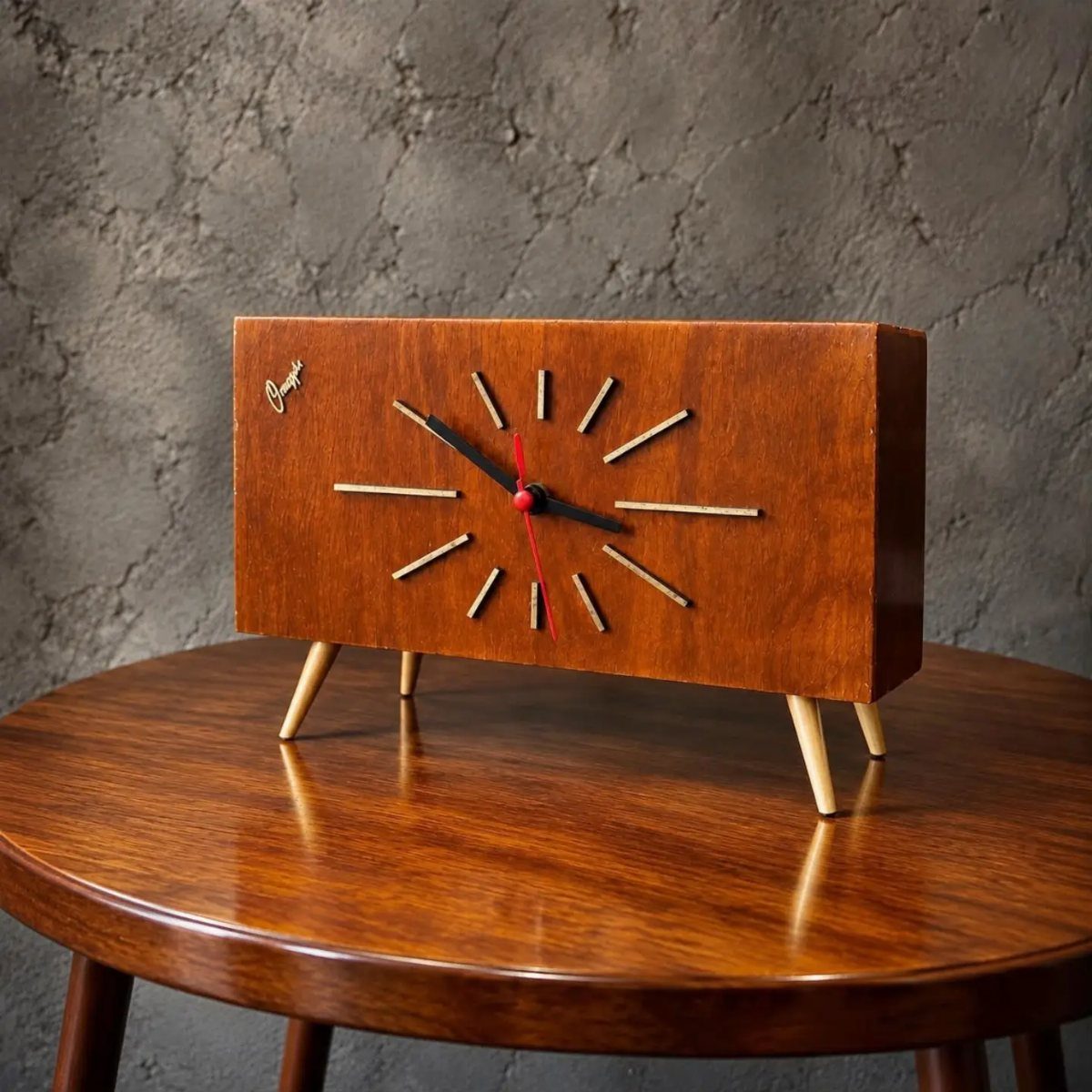
A wooden clock with tapered legs works as a small piece of furniture, not just a timekeeper. Red hands against pale wood markers give it one sharp accent.
Leave space around it, with one plant or a single bowl at most, so the clock stays the focus.
17. Large Art Pieces
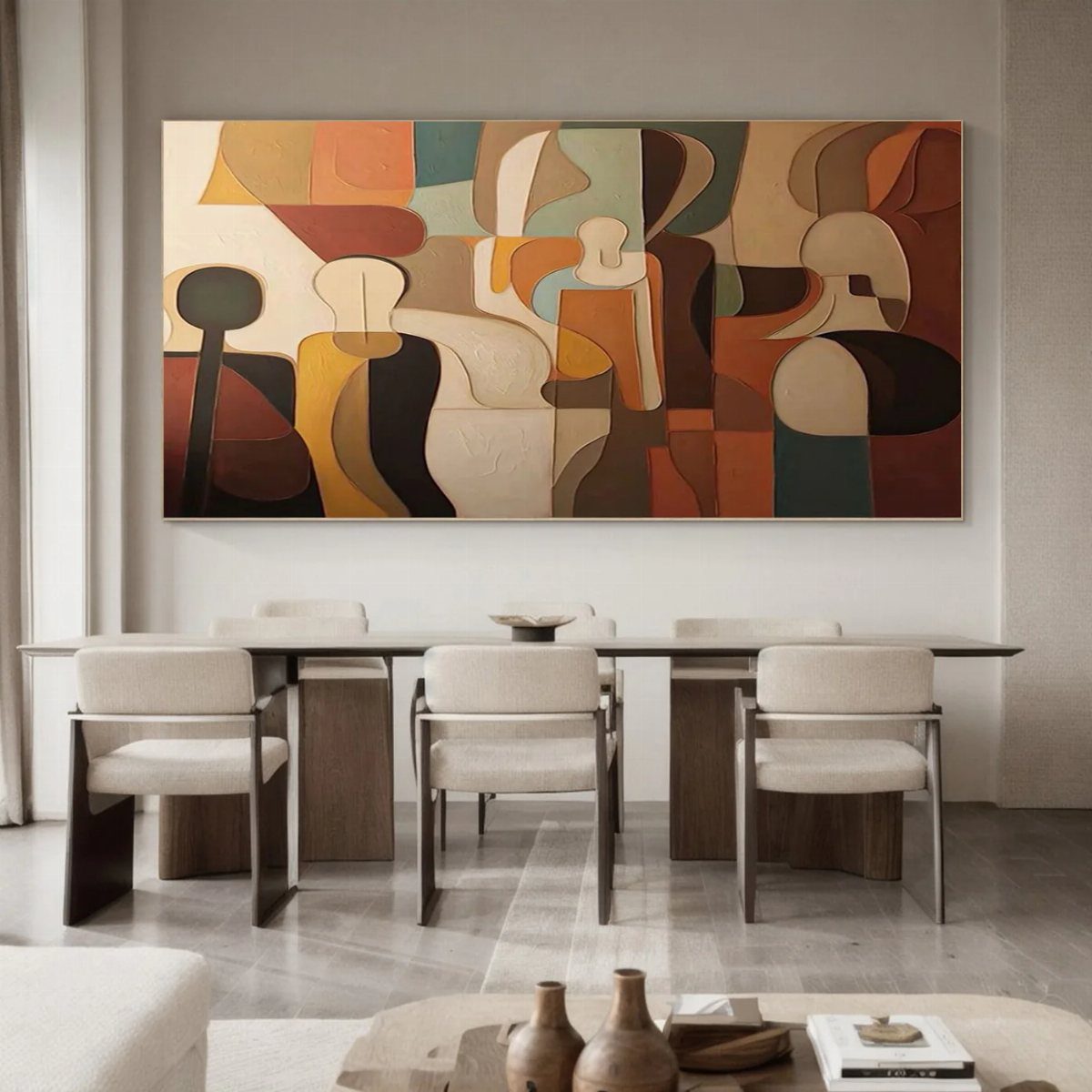
Pick colors that already appear in the room so the painting looks chosen for it.
Big canvases are costly; a large print in a plain frame gets the same effect for much less.
18. Create Harmony Between Inside and Outside
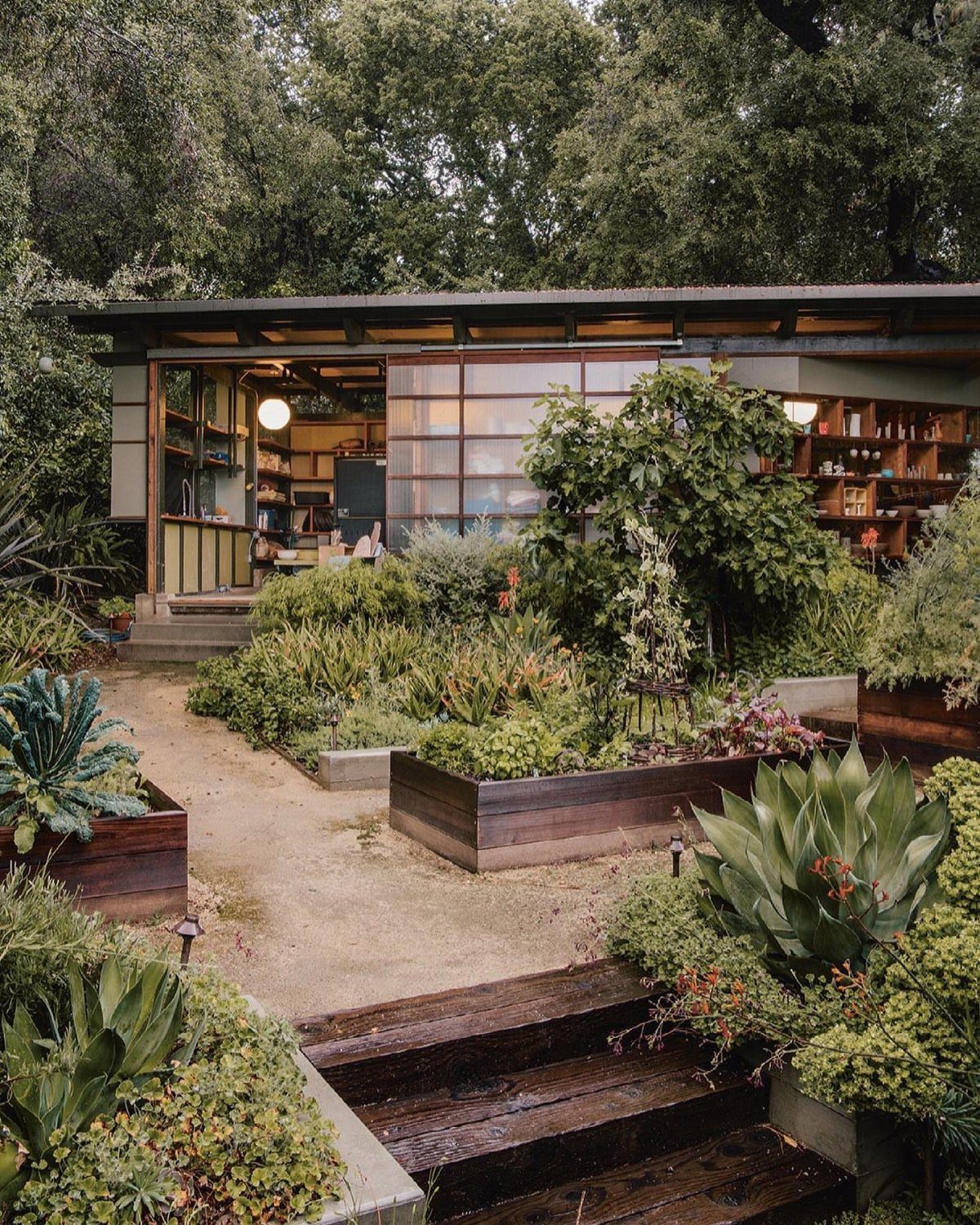
Sliding glass walls and raised wooden planters blur the line between inside and outside, making the yard feel like another room. The wood in the planters picks up the wood inside.
Renters can borrow the idea on a smaller scale. Line a patio or balcony with planters in the same wood tone as your furniture, and keep the door area clear.
Succulents are an easy choice for a first garden. Keep curtains open and the sightline clean.
Timelessness of Mid-century Design
Mid-century modern has lasted because the pieces were built around function and simplicity.
A chair that is comfortable and has no fuss rarely goes out of style, and that is why a design from the 1940s and ’50s still looks current.
The style is also easy to update. Rearranging the layout or swapping in new art gives a room a fresh look without buying anything big.
The movement is American, though it grew out of Bauhaus ideas brought over by German designers and artists who emigrated after the war.
Bauhaus pushed function forward and stripped out the decorative excess that defined Art Deco and its predecessors. Because the pieces were made for mass production, they spread through ordinary homes, which is why they are still easy to find.
Midcentury-modern furnishings, with their warm woods, sleek shapes, and retro patterns, look just as fresh now as they did in the 1940s and ’50s.
Finding Budget-friendly Pieces
Thrift stores, antique shops and flea markets are where I would start. Secondhand is the cheapest way into this style, and the older pieces are often the better made ones.
Go in with a shape in mind. Tapered legs and a slim profile are the marks of a mid-century dining set, and a round tulip table is a good alternative if the room is tight.
Splurge on one piece you truly love, and fill in the rest cheaply. Design should not require a huge budget, and a single good find does more than a full set bought new.
Mixing Styles
Mid-century pieces blend well with other styles, and that is where a room gets personal. Industrial and Scandinavian both pair easily with it, because all three favor clean shapes and honest materials.
Pick one era to mix in.
Stay close to natural materials: wood trim, stone surfaces and metal frames all suit curved furniture. I reach for chartreuse instead of yellow, forest green instead of jade, brown instead of charcoal.
One vintage lighting fixture or period piece is enough to ground the plan.
Frequently Asked Questions
What is mid-century modern style?
Mid-century modern is a design movement built around function and simplicity, with clean lines and no decorative excess.
The style began in the US, but its roots run back to Bauhaus teaching, carried across the Atlantic by German architects and artists who left Europe after the war.
Factories could turn these designs out by the thousands, so they landed in everyday living rooms, and that is why secondhand listings are still full of them.
How do I style a mid-century modern living room?
Start with low, slim furniture, leave the legs showing, and add one old wood piece next to something plainly newer, like a bold rug or a screen.
Wood, stone and metal do most of the work here: think a walnut trim, a slab of marble or a thin steel frame.
Muted, earthy tones beat bright ones, so chartreuse stands in for yellow, forest green for jade, and warm brown for charcoal.
A single vintage lamp or one true period piece gives the room an anchor, and the rest can be simpler.
How do I find mid-century modern furniture on a budget?
Thrift stores, antique shops and flea markets are the cheapest way in, and older pieces are often better made than new ones.
Scan for slim lines and tapered legs, and if floor space is limited, a round tulip table fits better than a rectangle.
Spend real money on the one piece you will love most, then fill in around it with budget finds.





