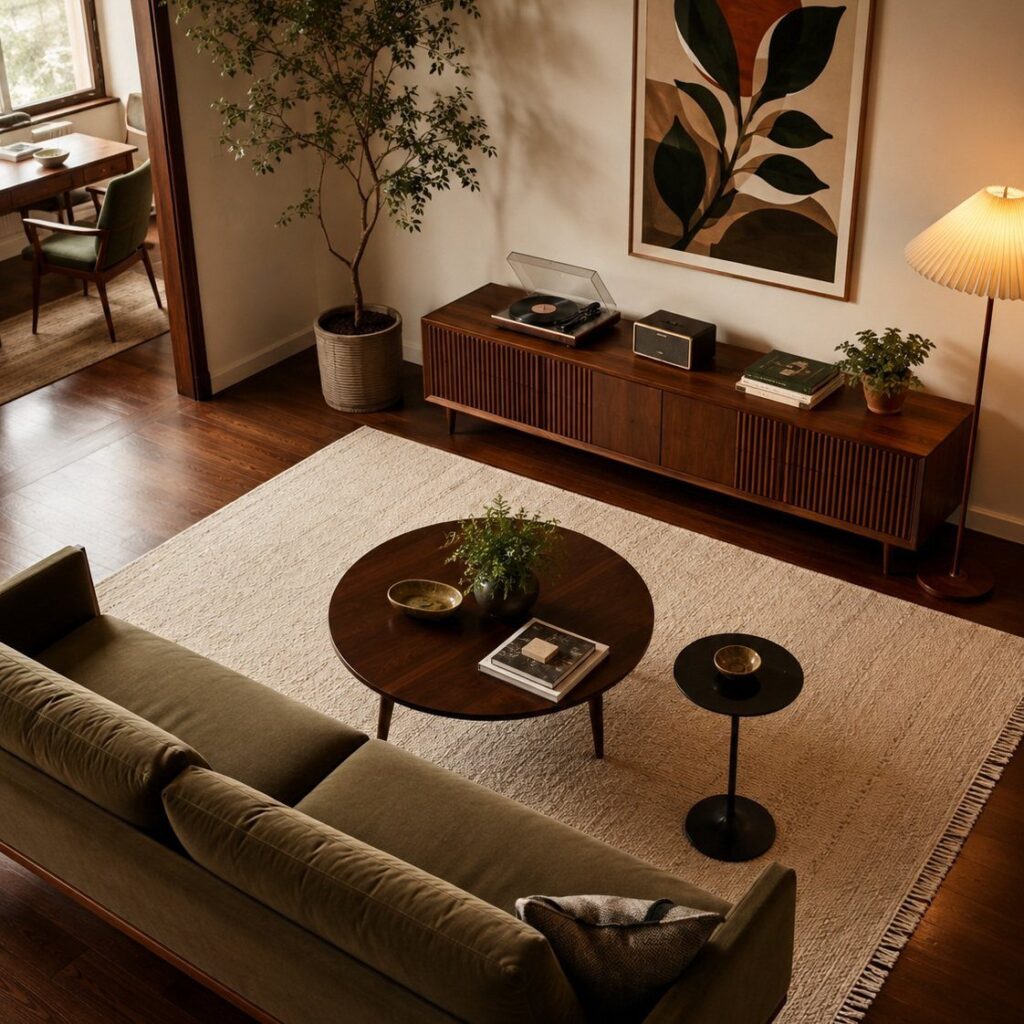
Which of these ideas fits depends on what you can change: a renter can swap in a rug or sculptural side table, while an owner can build a wood slat and marble accent wall or repaint in charcoal gray.
The ideas run from a coat of stain on walnut furniture to a wood slat and marble accent wall with LED strips behind it.
1. Warm Dark Walls
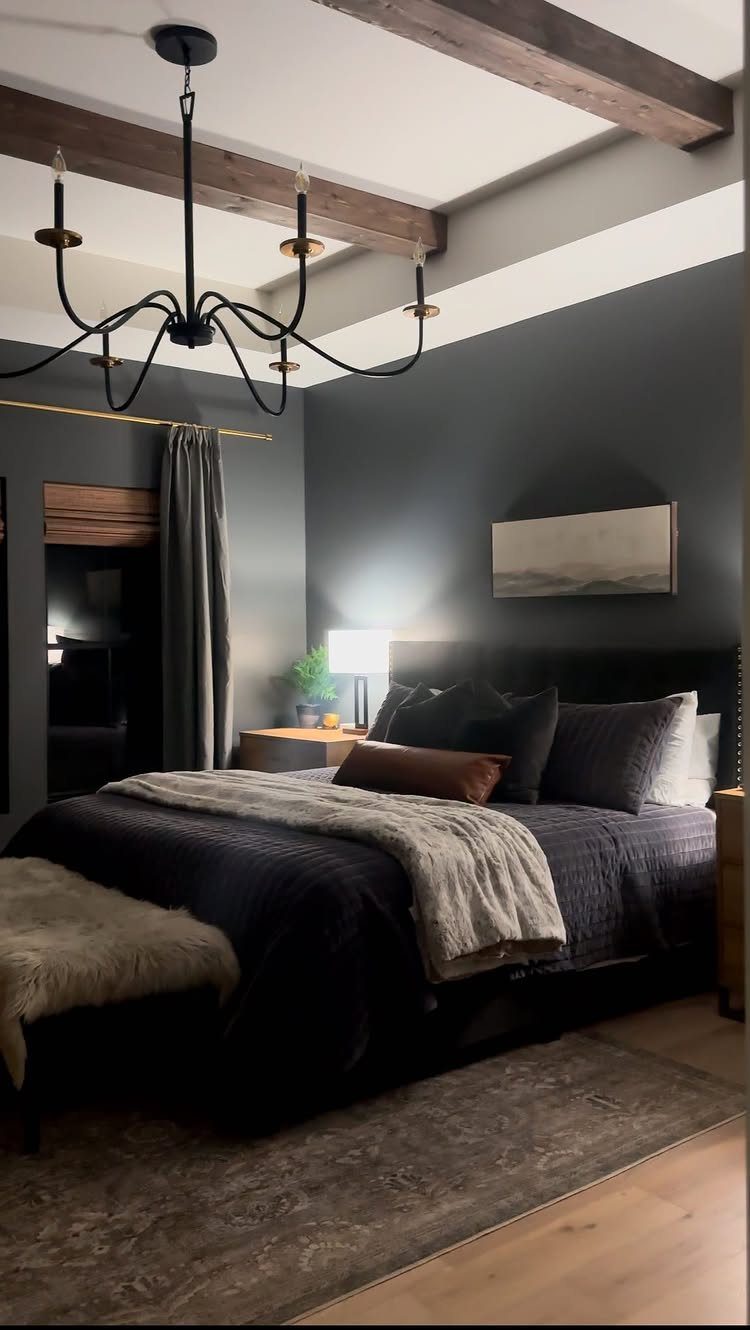
Charcoal gray on every wall reads warmer than black, and it leaves room for the wood to do the talking. Exposed beams and a light wood floor keep a dark bedroom from feeling like a cave.
Pick a gray with a brown or soft green undertone rather than a blue one, and test a large sample on the wall for a few days. Light changes dark paint more than any other color.
I would keep the rug light and let the bedding stay in a soft gray, so the walls stay the single dark move.
2. Textured Rugs
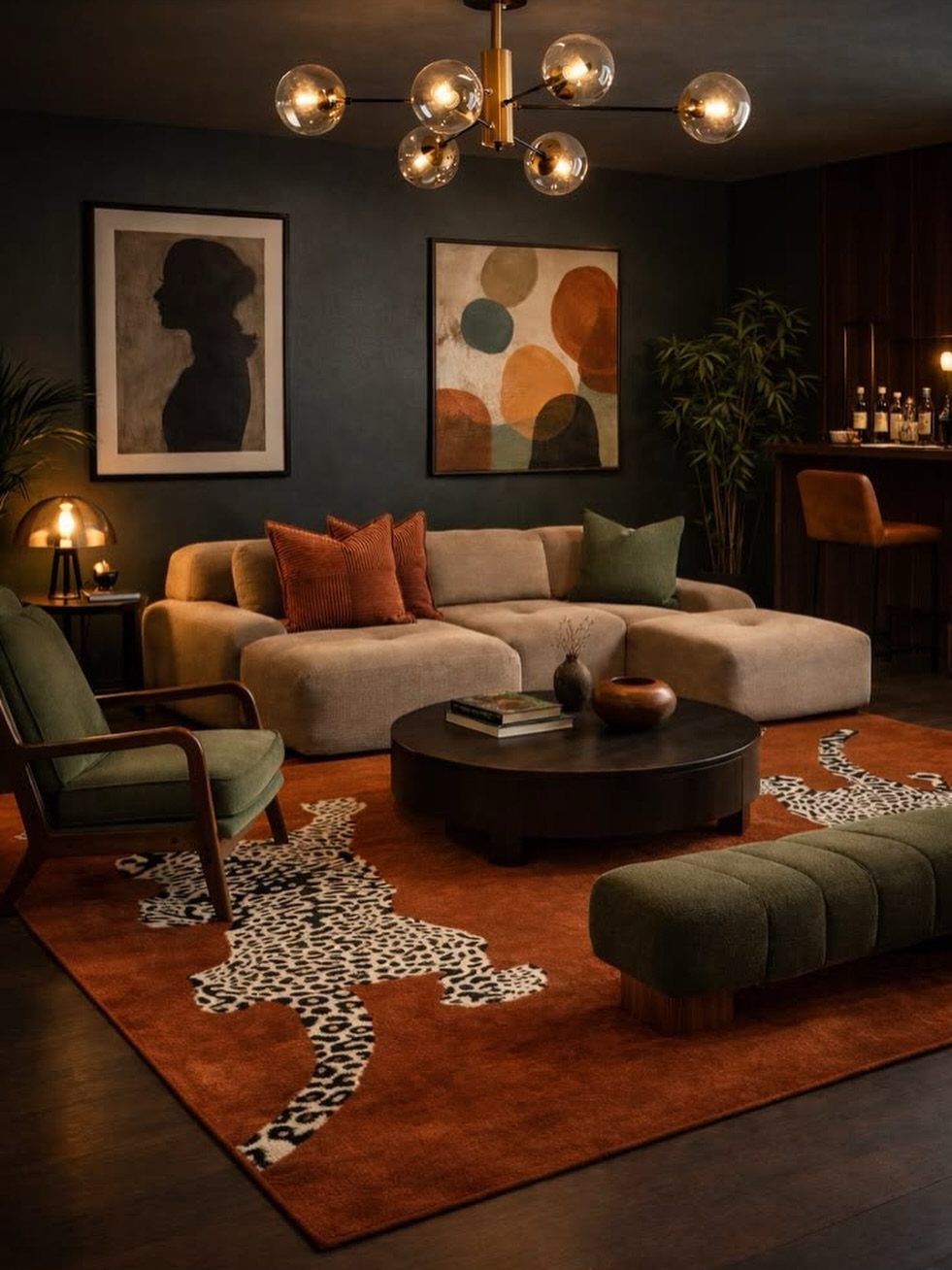
A rust-colored rug with a pattern is the quickest way to soften a dark living room. Burnt orange sits well against green seating, and the pattern breaks up a big block of floor.
Choose a pile you can feel through your socks: wool, shag or a thick weave. A flat rug looks thin against dark walls, so choose one with a visible weave or pile; the texture counts for more than the color.
Size it so the front legs of the sofa and chairs rest on it. A rug that floats in the middle of the floor shrinks the space around it.
3. Layered Lighting Techniques
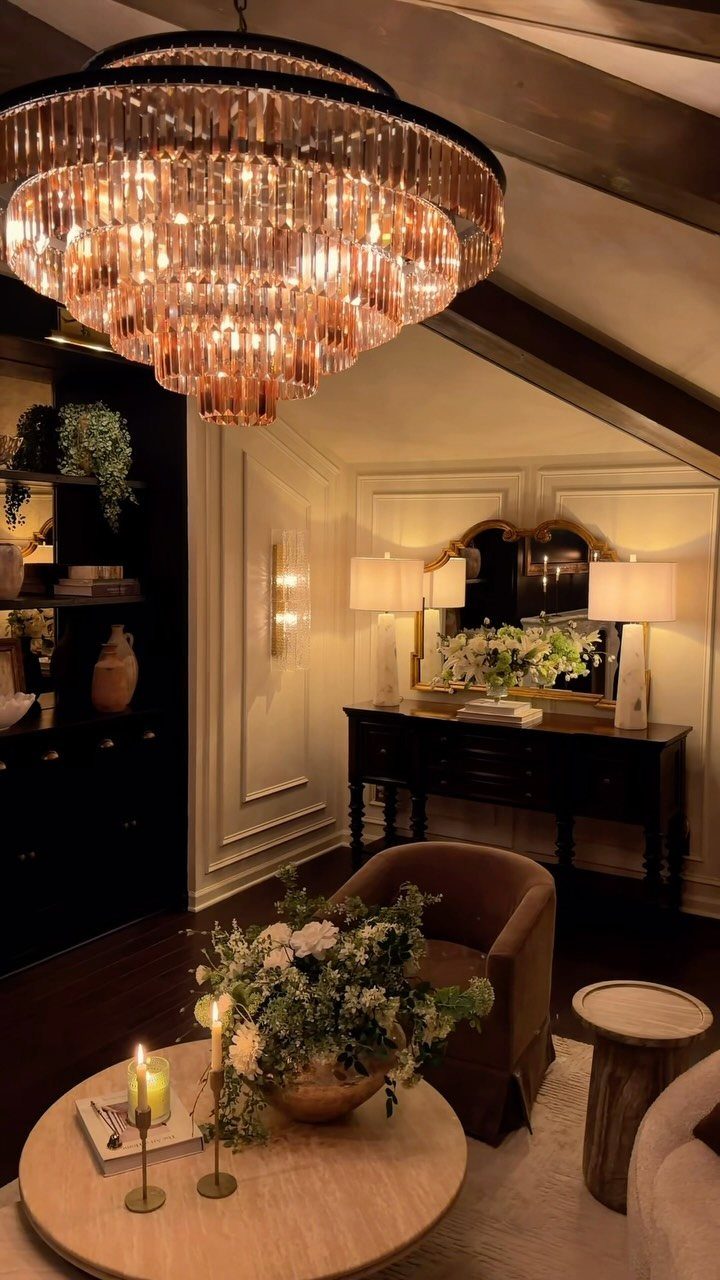
3 light sources at different heights keep a dark room from going flat. One overhead fixture, a couple of table lamps and wall sconces give you choices from morning to late evening.
Put each level on its own switch or a plug-in dimmer, so you can run just the lamps at night. Candles on the coffee table add a low, warm layer for free.
Renters can swap hardwired sconces for plug-in versions with a cord cover. A chandelier is the one piece I would splurge on, because it sets the tone for the whole room.
4. Sculptural Side Tables
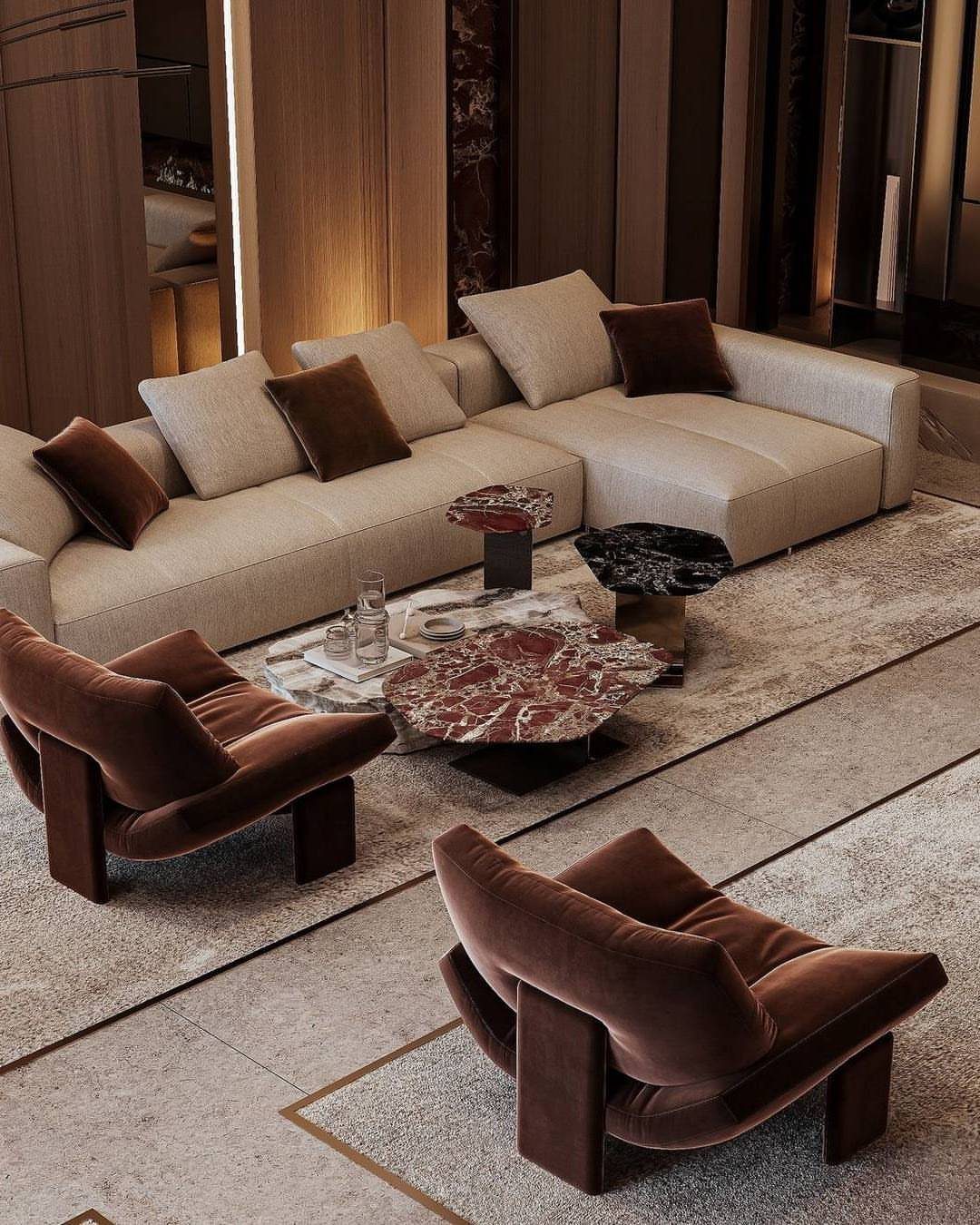
Marble side tables with organic, rounded forms prove a practical room can still have personality. A cluster of three in different heights reads as one sculptural group beside a sectional and velvet chairs.
Odd shapes also soften the straight lines of a sofa. Keep the tops clear or hold them to one small object, so the form does the work.
Real marble costs a lot and is heavy, so check the price before you commit. Faux-marble tops on a sculpted base give a similar look for less.
5. Walnut Furniture
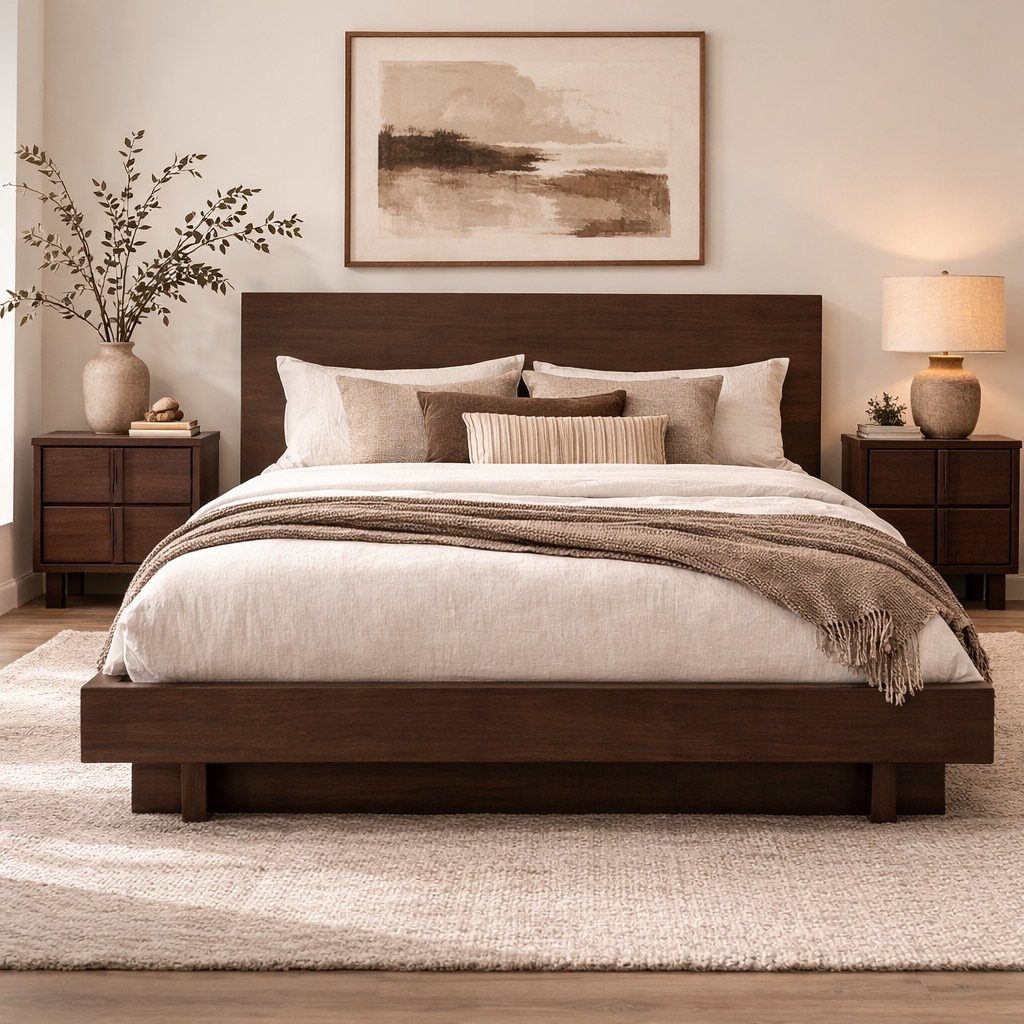
Dark walnut is the wood most tied to mid-century design, and a platform bed with matching nightstands shows why: the grain gives a plain shape its depth.
Matching pieces keep the room calm, so buy the bed and nightstands in the same finish if you can. Pair them with white bedding, as here, so the wood stands out.
Secondhand vintage pieces are often a better buy than new, and a worn finish can be revived with a wipe of wood oil. I would check the legs and joints for wobble before paying.
6. Wood Slat and Marble Accent Wall
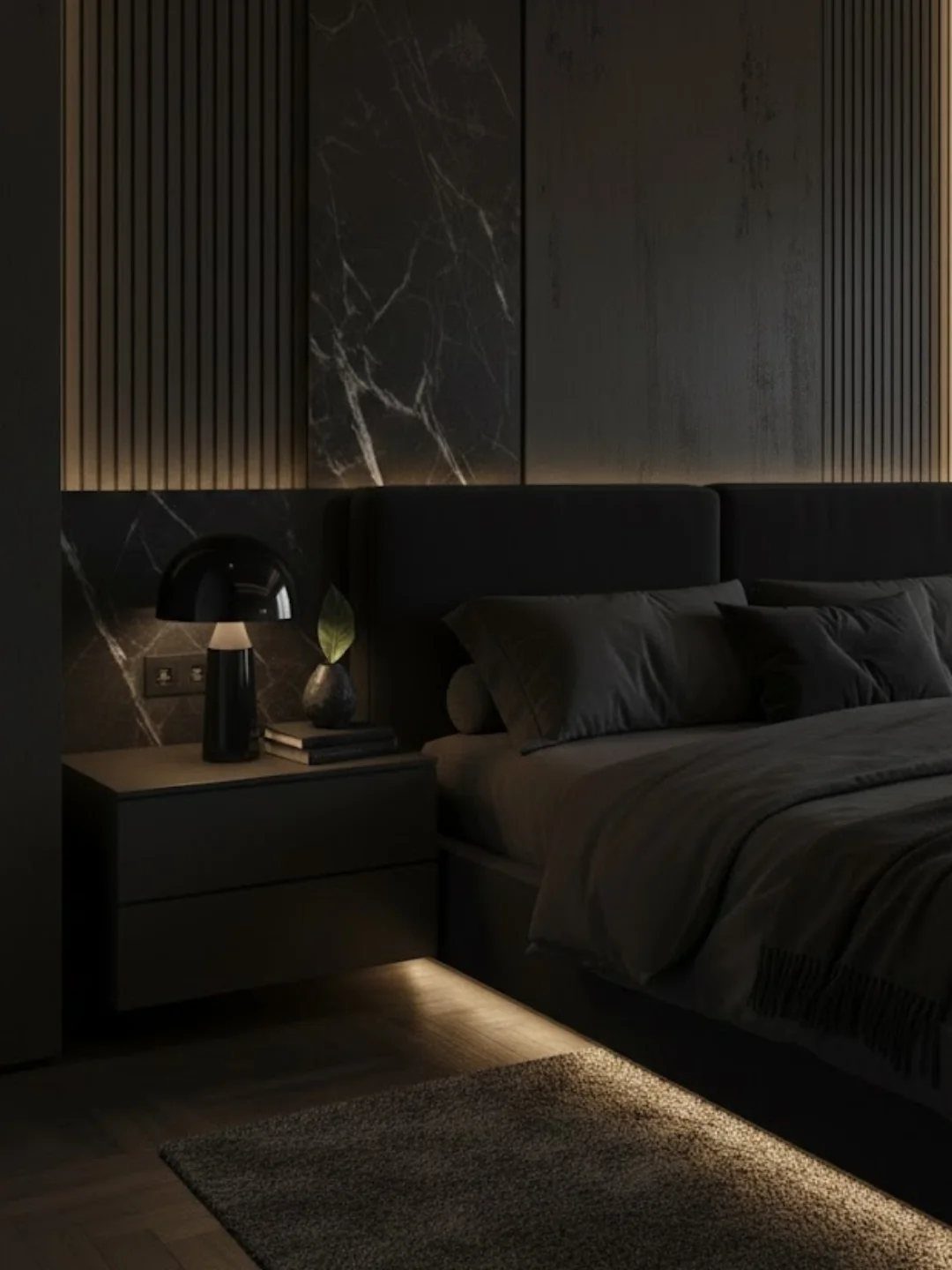
Vertical wood slats beside black marble panels give a bedroom wall two textures in one dark palette. Warm light tucked behind the panels makes the stone glow instead of swallowing the room.
This is a bigger project than paint. Slats can be done over a weekend, but real marble panels are costly, so a marble-look laminate or peel-and-stick tile is the budget version.
Use warm-toned LED strips behind the panels and put them on a dimmer. Cool white would flatten the whole effect.
7. Dark Brown Tufted Sectional
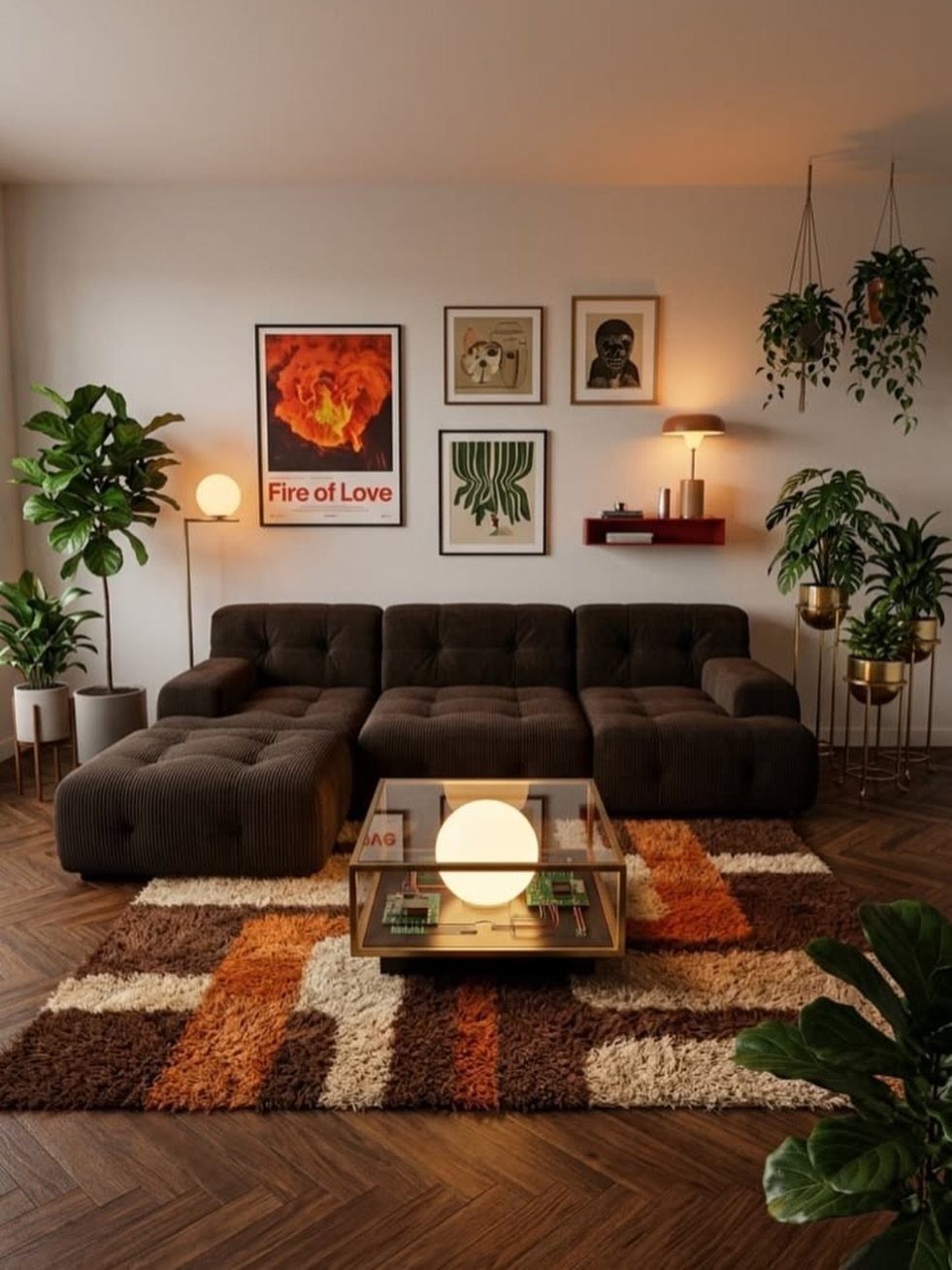
A deep brown sectional with tufted cushions anchors a living room the way a fireplace would, and the plants and shag rug keep it from feeling heavy.
Brown leather or fabric both suit mid-century rooms, so pick the one that fits your cleaning habits.
Tufting adds shadow and depth, which is why a dark sofa looks rich instead of flat. Keep the rug a lighter, warmer tone so the sofa has something to sit against.
Green leaves look good next to brown, and wall art in bright colors breaks up the dark block. Measure your doorways before ordering a sectional, since the pieces are large.
8. Dark Dining Furniture
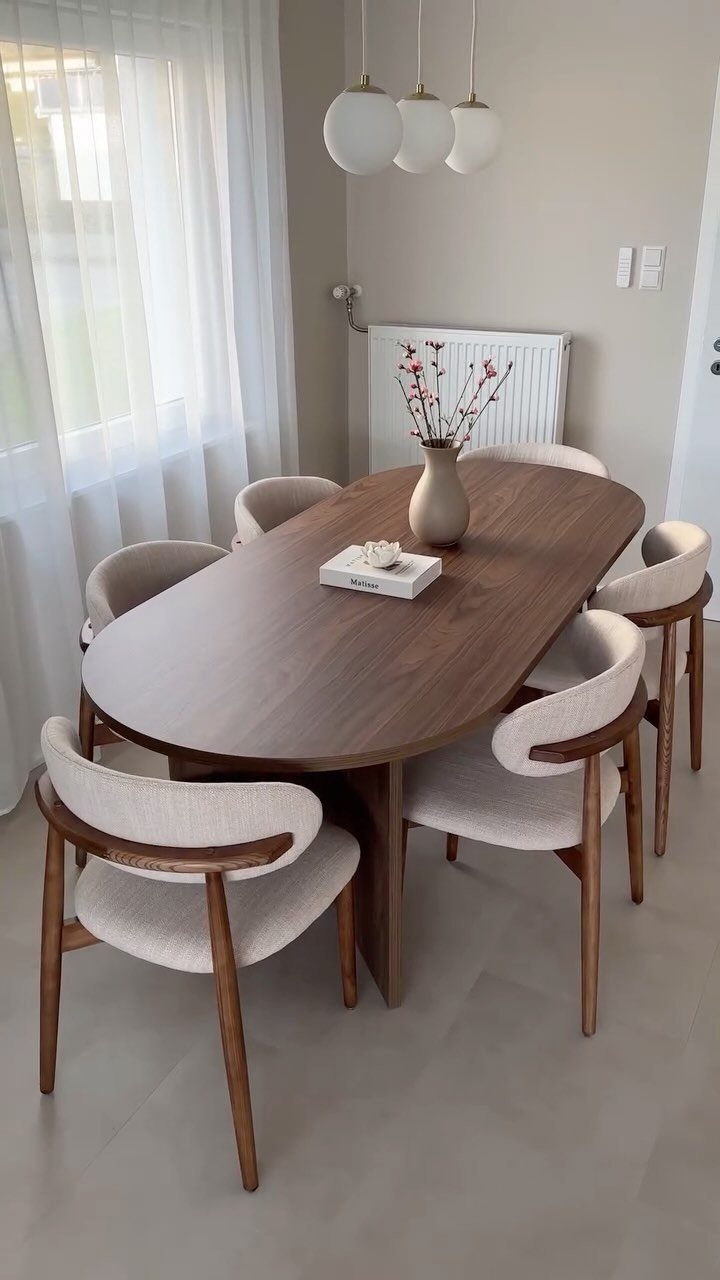
An oval dark wood table suits a small dining room better than a rectangle, because there are no corners to bump into. Six curved chairs fit snugly around it and make the whole set read as one soft shape.
Beige upholstery against dark wood keeps the table from looking heavy, so I would choose a light chair fabric over a dark one. Light curtains help too.
Hang pendants low over the middle of the table, and put them on a dimmer so dinner can run on a softer glow.
Measure the room first and leave space to pull chairs out and walk behind them.
Choosing the Right Paint Color
Paint decides this style more than any piece of furniture, and the undertone matters more than how dark the shade is. Cool or blue-based darks turn a room icy, while warm ones feel like being wrapped in a blanket.
For a dark mid-century room, charcoal gray is the base I trust most, since it reads as deep without going flat black.
Deep olive brings earthy warmth, warm black gives drama, dark taupe reads quiet and expensive, and chocolate brown is the coziest of the group.
If you want one wall to stand apart, deep green or deep blue makes a room feel intimate. A geometric wallpaper with an atomic or starburst repeat, even on one wall, pulls the era together.
Check that the accent wall suits the colors already in the room. It should not overpower the space.
Lighting Importance
Use warm bulbs, around 2700K, in every fixture. Mixed bulb temperatures are an easy way to make a dark room look off.
Spotlights or LED strips can also pick out artwork or an architectural feature.
A dimmer switch lets the same room move from bright to moody. In a dark room I would never rely on one overhead fixture, because it leaves the corners flat and shadowy.
Balancing Dark Elements
Bedding is the easiest place to balance dark walls. Cream, warm beige, camel, soft gray and muted olive soften the contrast and keep the room cohesive.
Skip cool whites and bright colors; they clash with warm darks instead of settling beside them. Linen, cotton and waffle weaves add depth through texture, so I would pick those over busy patterns.
The same rule works for black. Balance it with white, cream or light gray, and mix finishes so no surface turns into one flat dark block.
Frequently Asked Questions
How to style mid-century modern?
Start with sleek lines, warm colors and furniture that earns its place. Wood trim, stone surfaces and metal frames work well with rounded, ovoid shapes.
Brown, olive and charcoal give a dark version its depth, and wool, solid wood and leather keep it natural. Vintage lighting or period pieces ground the look.
What is vintage mid-century modern?
It is design from the mid-20th century, roughly the ’30s to the mid-’60s, built on simplicity and function.
Think low furniture with clean lines, streamlined wood details and geometric accents. A secondhand chair or sideboard usually costs less than a reproduction, and if the finish looks tired, a coat of wood oil brings it back.
Before you hand over cash, give the legs a shake and check that the joints sit tight.
What is the name for the mid-century art style?
It is usually called mid-century modern. The style took shape in the hands of designers and artists working from the 1930s through the mid-1960s.
Its signatures are warm natural materials, soft sculptural lines and a palette of ochres, browns, soft whites and warm neutrals, often with one spike of red.





