The ideas here run from candles and rose petals to a sunken mosaic tub or a raised marble platform, so the first question is whether you can change the tub itself or only what surrounds it.
Renters and anyone on a weekend budget will get the most from the cheap layers: paint on one wall, a wooden tray, a jute rug, dimmable lighting.
Owners ready to open walls can think about sunken tile surrounds, slab marble, built-in LEDs or hydrotherapy jets, which all need plumbing, power or a pro before you buy.
1. Bathtub with a Garden View
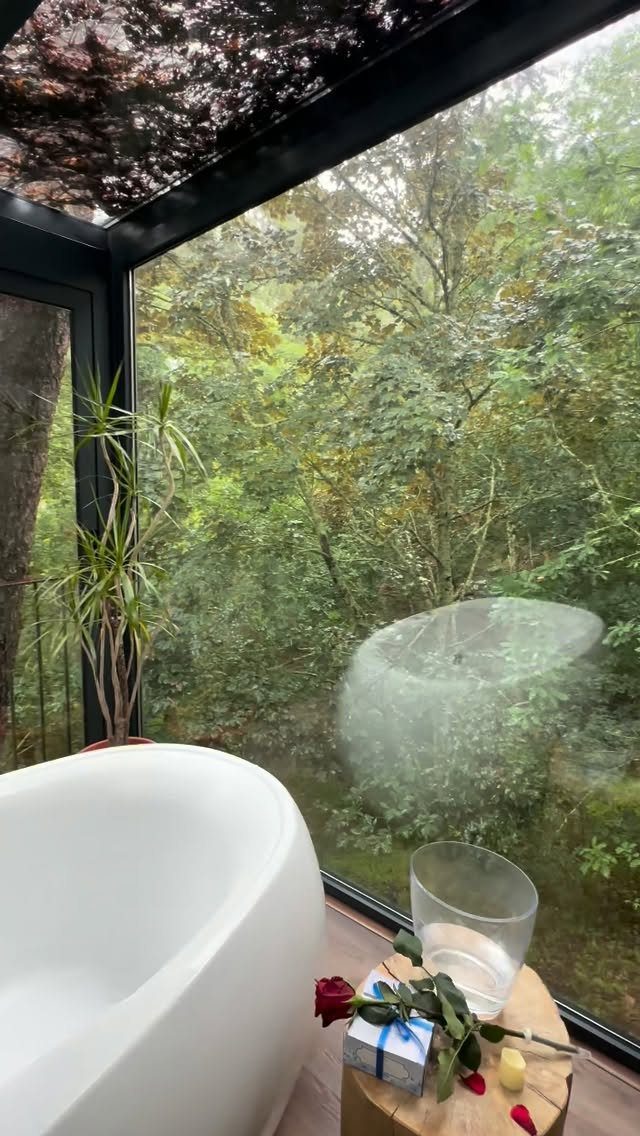
A tub set beside a big window gives you a view that no wall art can match, so I would aim the long side of the tub at the glass and leave the sightline clear.
Keep the nearby pieces low and small, like the little wooden table in this setup, so nothing blocks the trees.
A table that holds a glass of water and one flower is plenty. If neighbors can see in, a sheer curtain or a window film keeps the light and adds privacy.
2. Freestanding Tub Focal Point
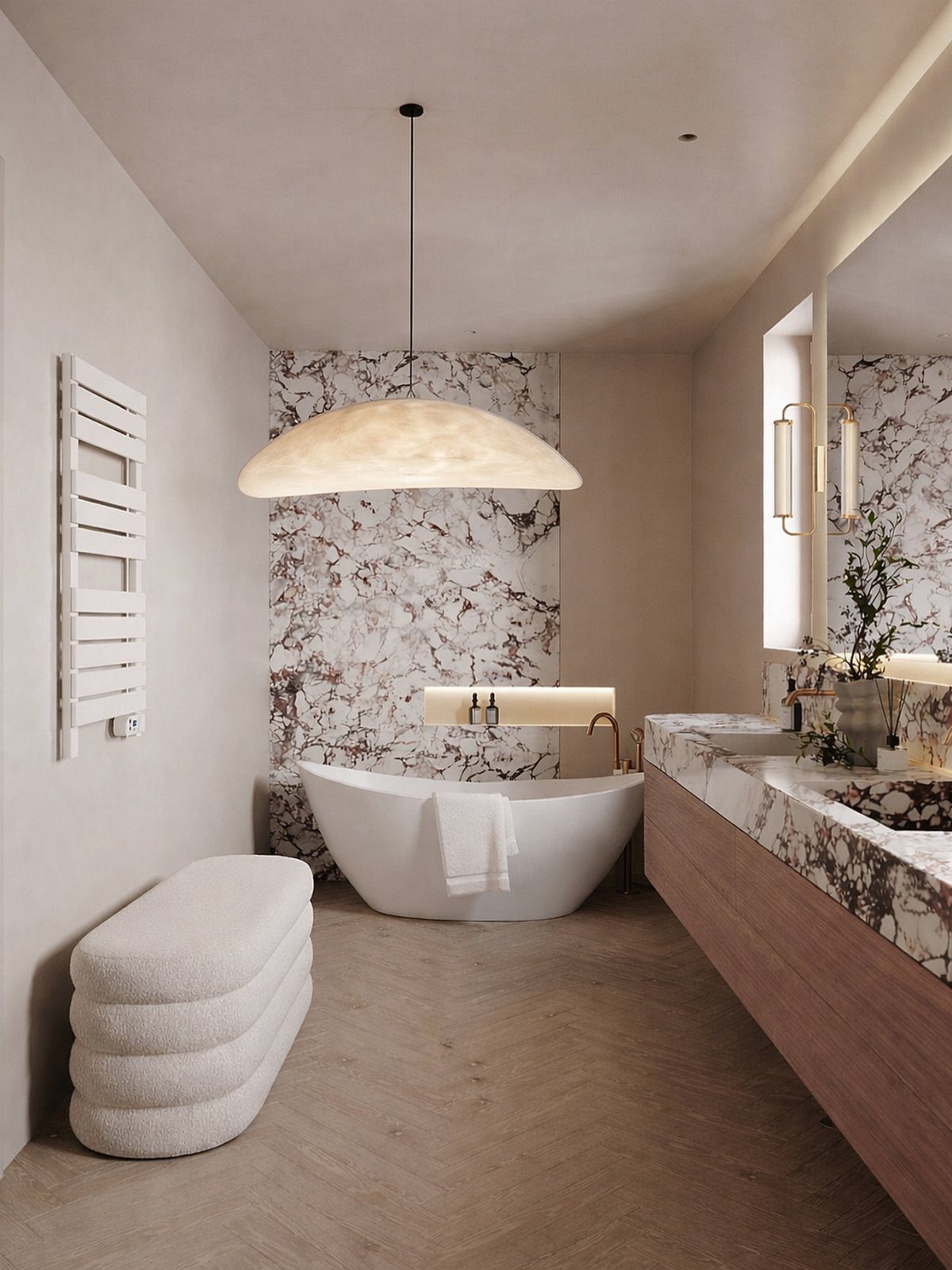
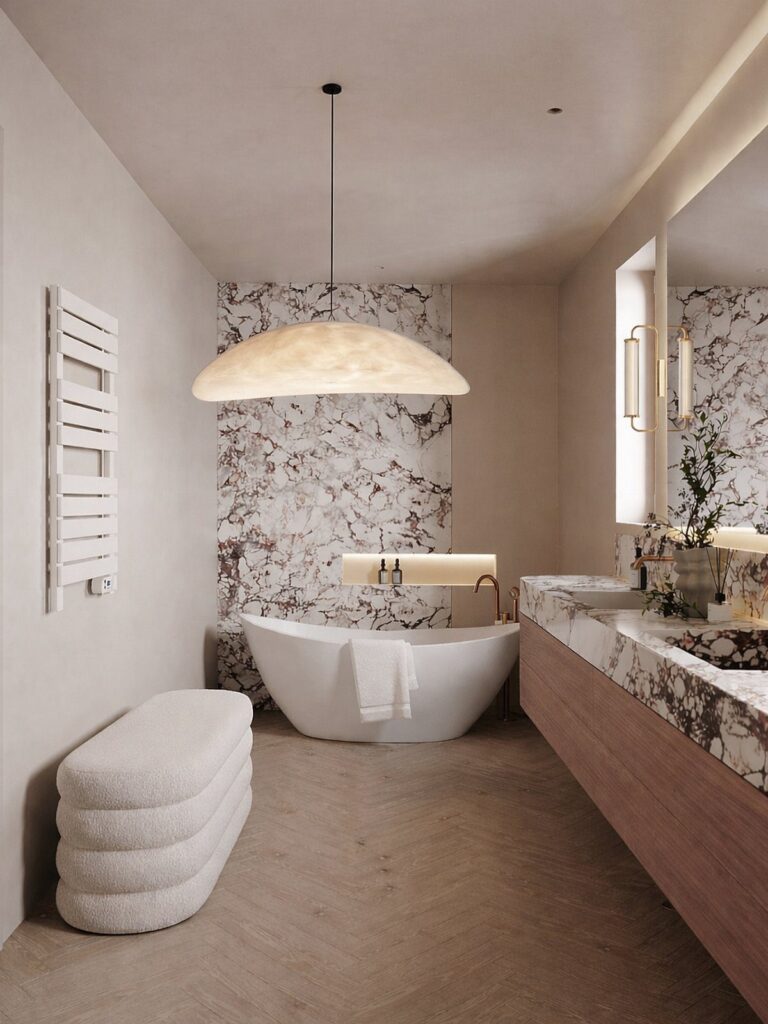
Marble on the wall behind a white freestanding tub gives it a backdrop that makes it look like the point of the room. Center the tub on that wall so the eye lands there first.
A large pendant hung above it adds a second pull, and I like that the rest stays quiet: a wooden vanity and one ottoman for towels. Skip extra accessories near the tub, because crowding it weakens the effect.
3. Artwork Around the Tub
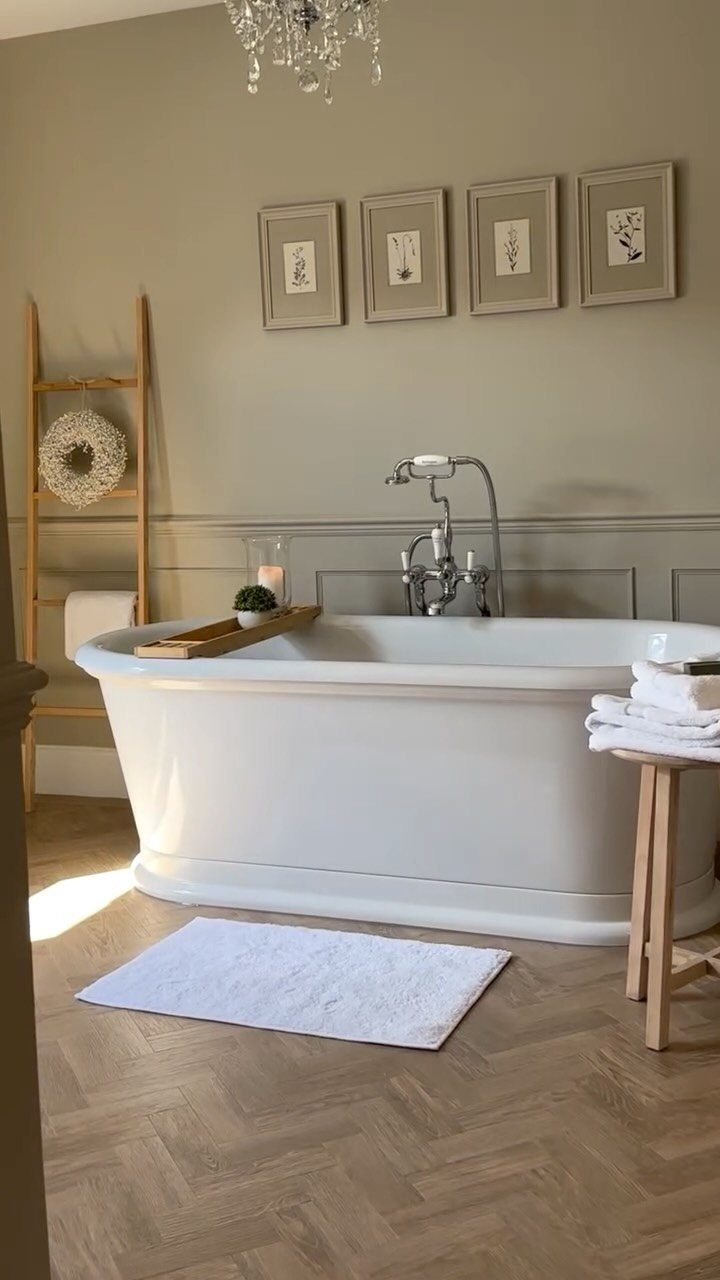
Four small botanical prints in matching frames hung above a tub add personality for very little money. Hang them in a tidy grid or a single row, with even gaps, so the wall looks planned.
Beige walls and a white tub let the art carry the color. Pick frames with glass and a bit of room behind the print, since bathroom steam can wrinkle paper that sits too close to a bare surface.
4. Sculptural Tub
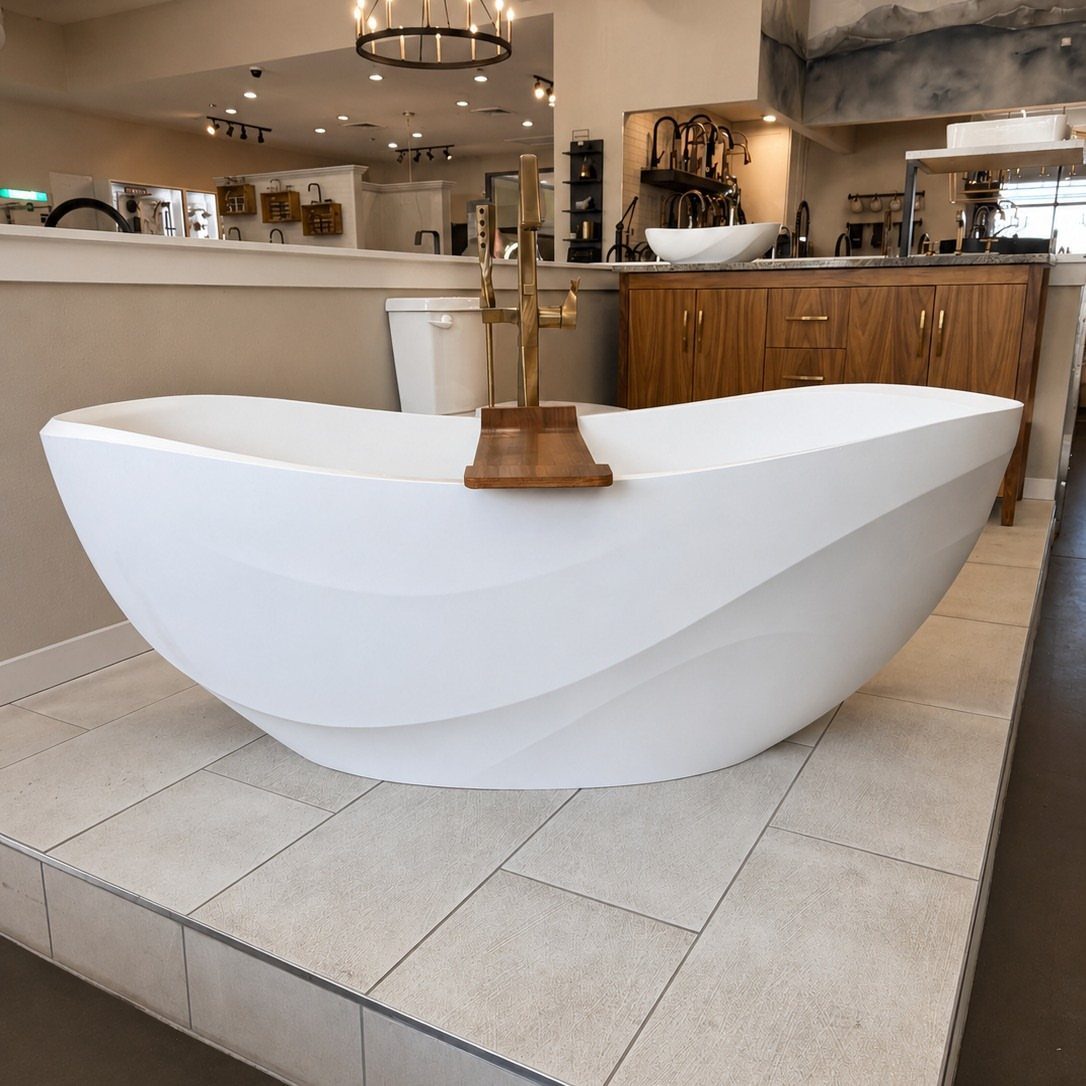
A tub with wave-like curves does the decorating by itself, so I would keep everything around it plain.
Pair a curved white shell with a gold faucet and a wood base, and leave the surrounding tile in a quiet light gray.
Skip patterned rugs and busy shelving nearby. One sculptural piece reads best when nothing competes with its outline.
5. Clawfoot Tub with Gold Hardware
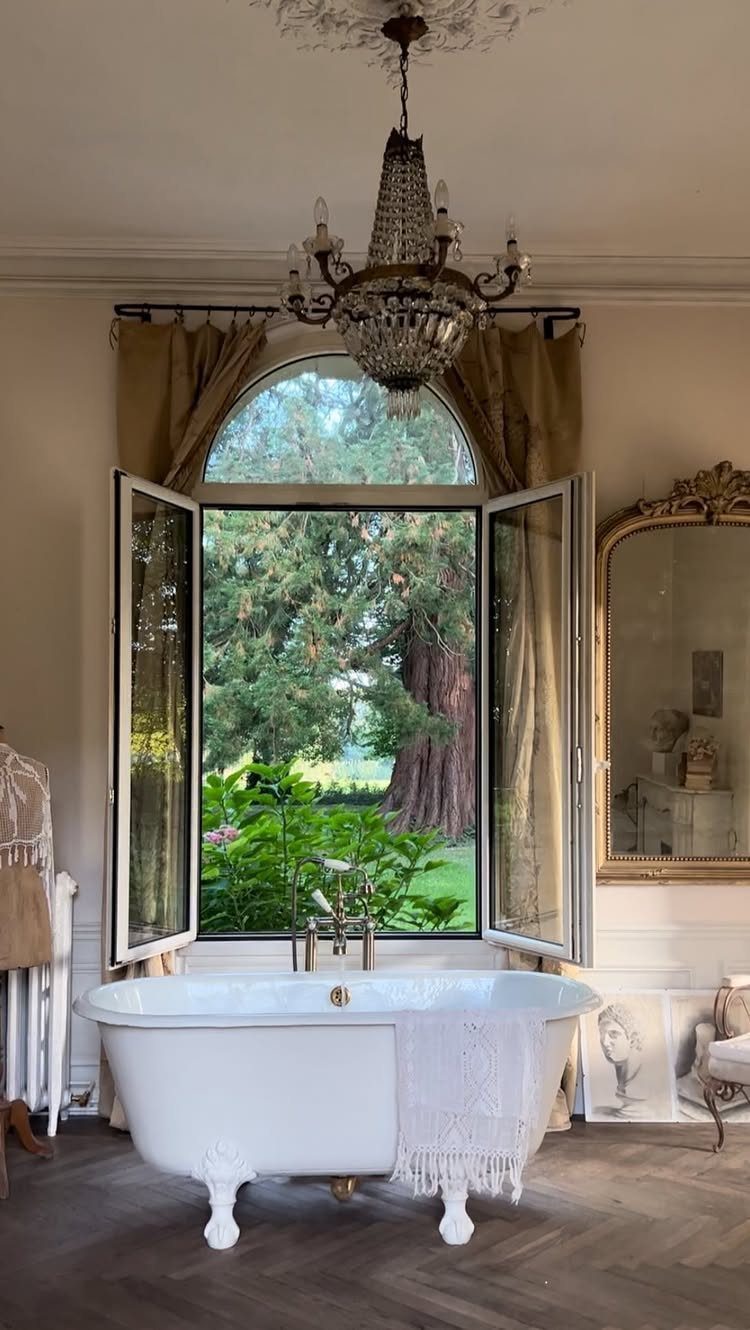
Clawfoot tubs look best when the hardware matches something else in the room. Gold fixtures on a white tub echo a gold-framed mirror, and a chandelier overhead completes the old-fashioned look.
Place the tub in front of a window so the claw feet and the view both show. I’d stop at repeating the gold twice, maybe 3 fixtures at most, because any more makes the room feel weighed down.
6. Sunken Tub with Mosaic Tiles
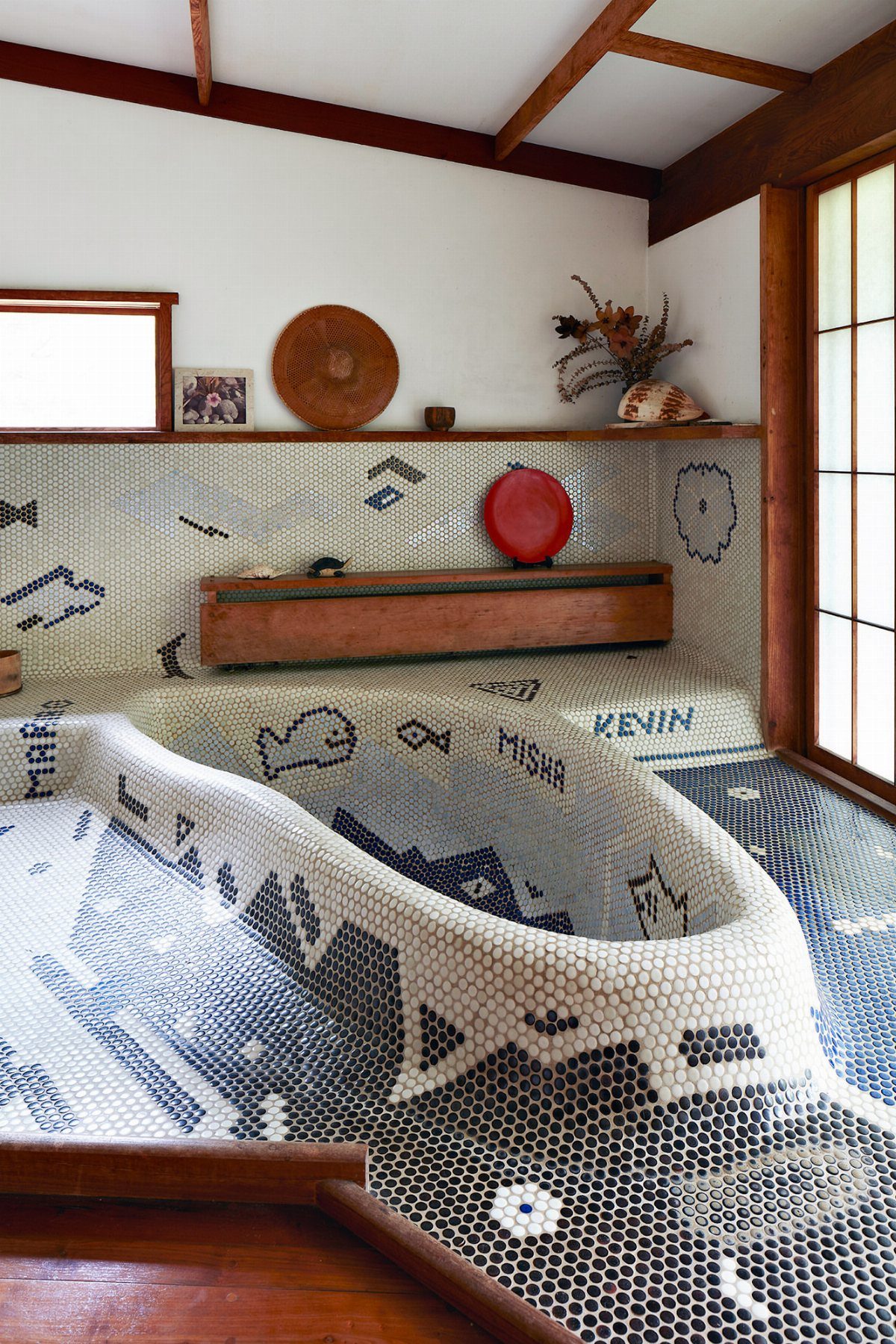
Blue and white mosaic tiles turn a sunken tub into a small piece of craft. Patterns and even names set into the tile make it personal, which is what I like most about it.
Keep the walls and ceiling simple so the tile is the star.
Wooden beams, as in this room, add warmth against all that cool blue. A mosaic like this is a big tiling job, so plan for time and patience.
7. Bathtub with Integrated Lighting
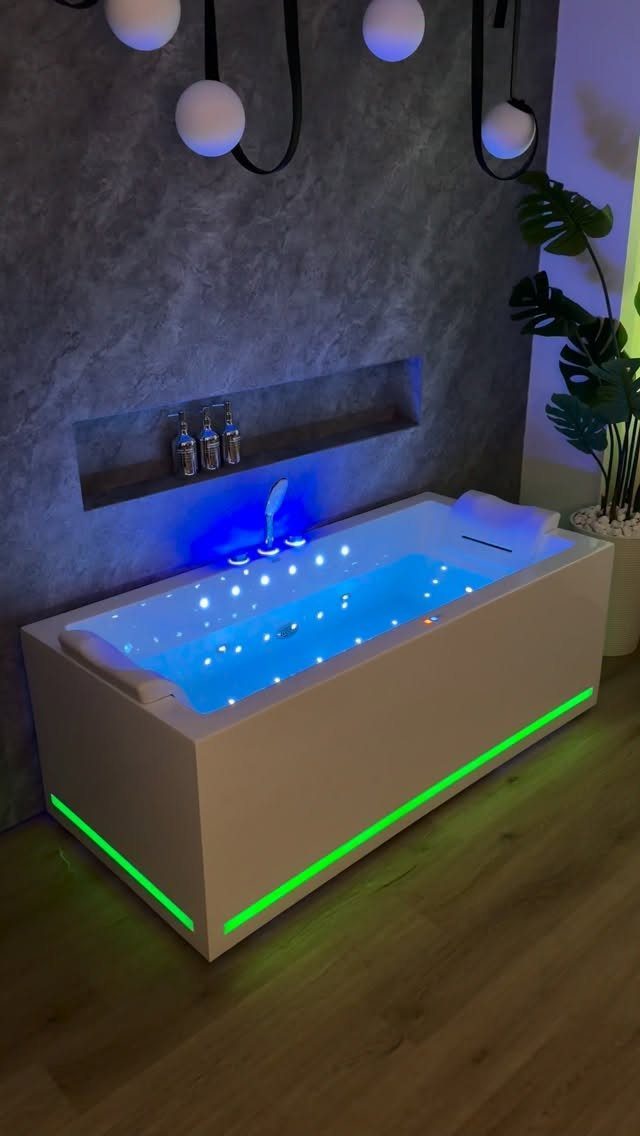
Blue light inside the tub and green light along the base give a bath two moods at once, so I would pick one color to lead and keep the other soft.
Against a gray textured wall, the glow reads clearly without any extra decor.
Pair it with the recessed shelf and pendants already in the room, and dim the overhead lights when you bathe.
Built-in LEDs in a tub are a job to plan before you buy, so check that the tub and its wiring are made for it.
8. Botanical Bliss
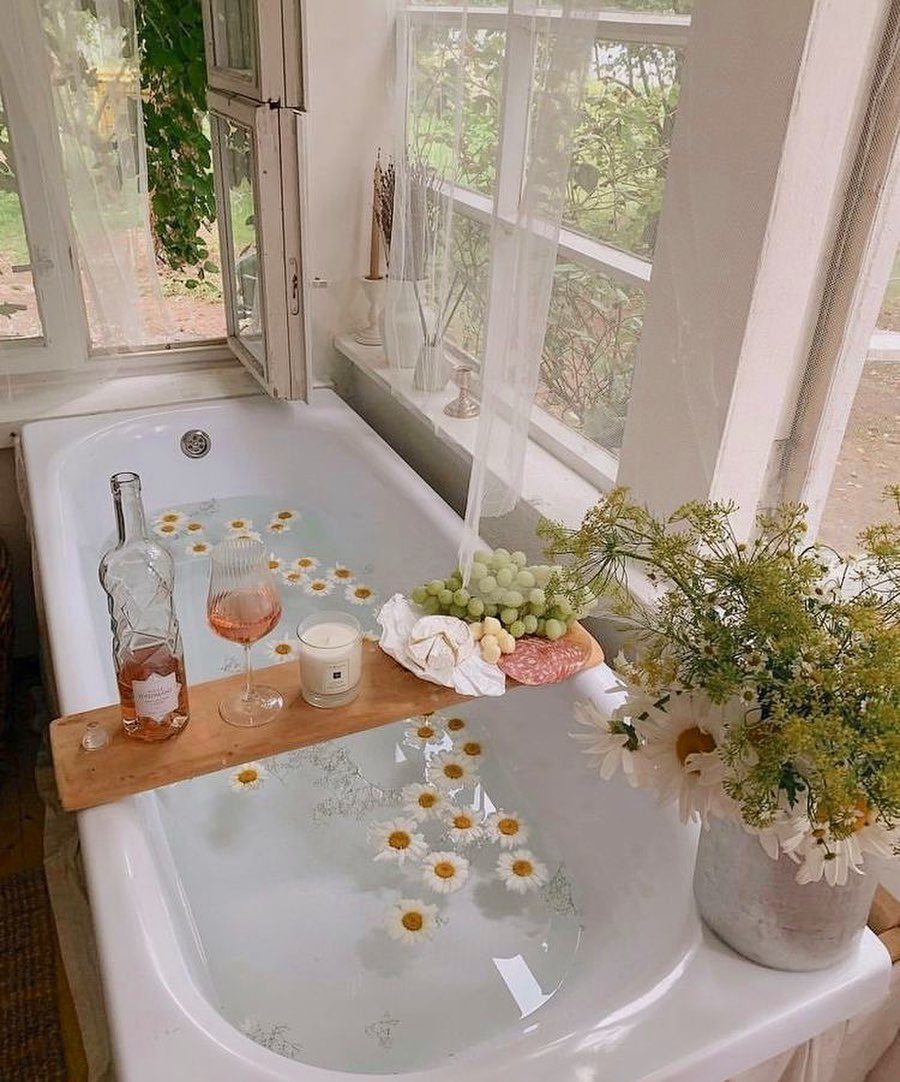
Floating daisies turn a plain white tub into a garden bath for the price of a bunch of flowers.
Pull the petals loose or drop in whole heads, then limit the tray to a few things: a candle, a glass, something small to eat.
A wooden tray across the tub is the piece I would buy first, since it holds everything within reach. Put fresh flowers on a nearby surface too, and set the tub where sun comes through the windows.
9. Elevated Bathtub Platform
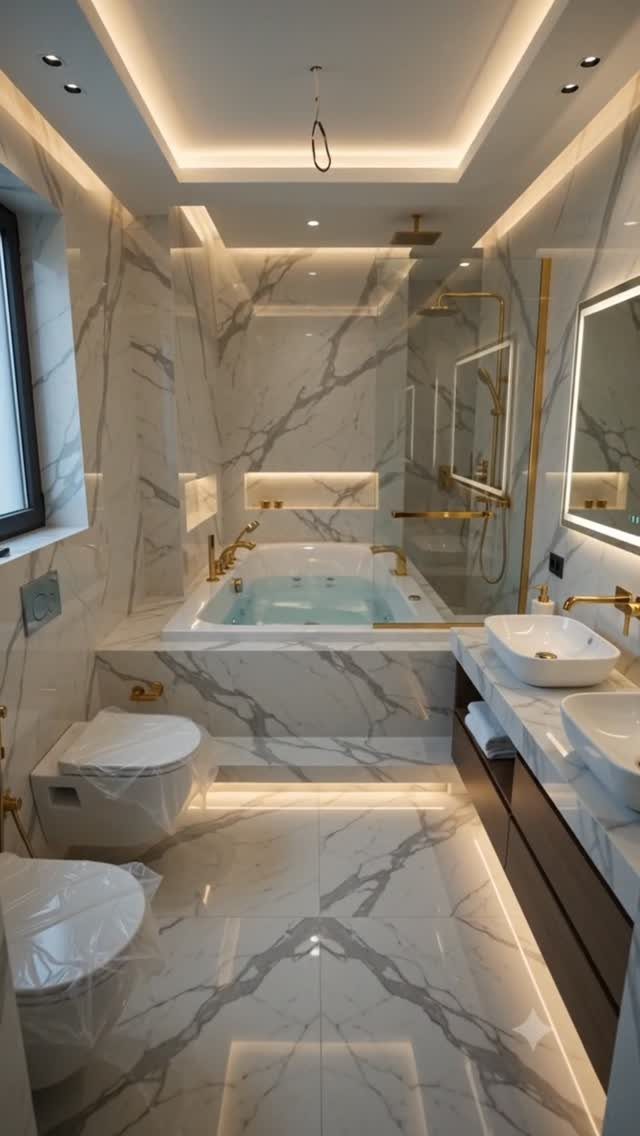
Raising a tub on a platform makes it feel like the center of the room, and marble on the platform, walls and floor keeps the whole thing calm.
I would stay with one stone throughout so the step reads as part of the architecture.
Spa looks like this depend on good materials and hardware, so spend there first and keep decor minimal. This is a build, not a weekend swap, and it costs the most of any idea here.
10. Plants Around the Tub
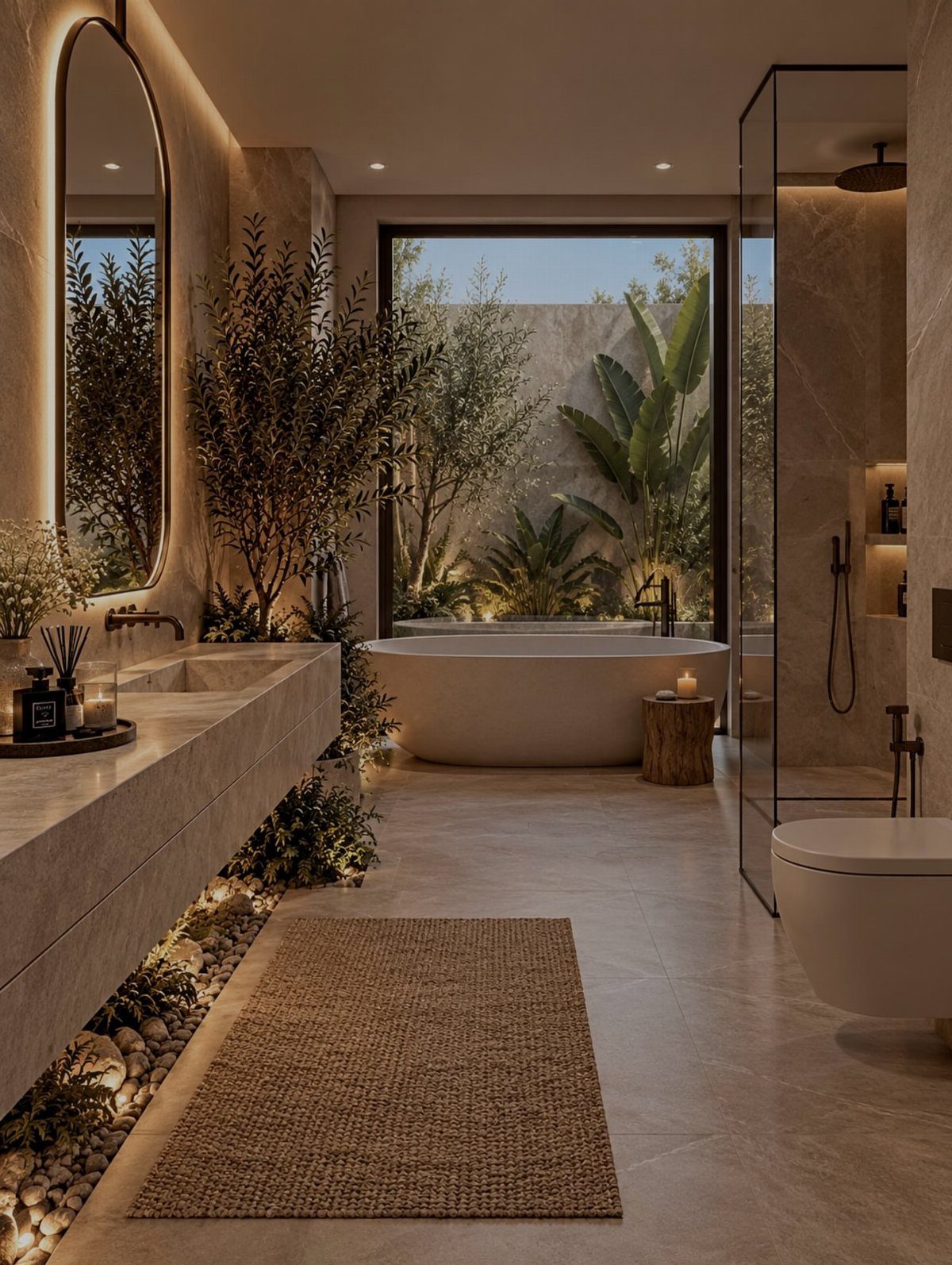
Large leafy plants beside a freestanding tub make the bath feel like part of the garden outside.
Pick plants that put up with steam and keep them off the tub’s edge where water splashes. With white and stone surfaces, the greens carry all the color, so I would not add much else.
11. Scented Candles Around the Tub
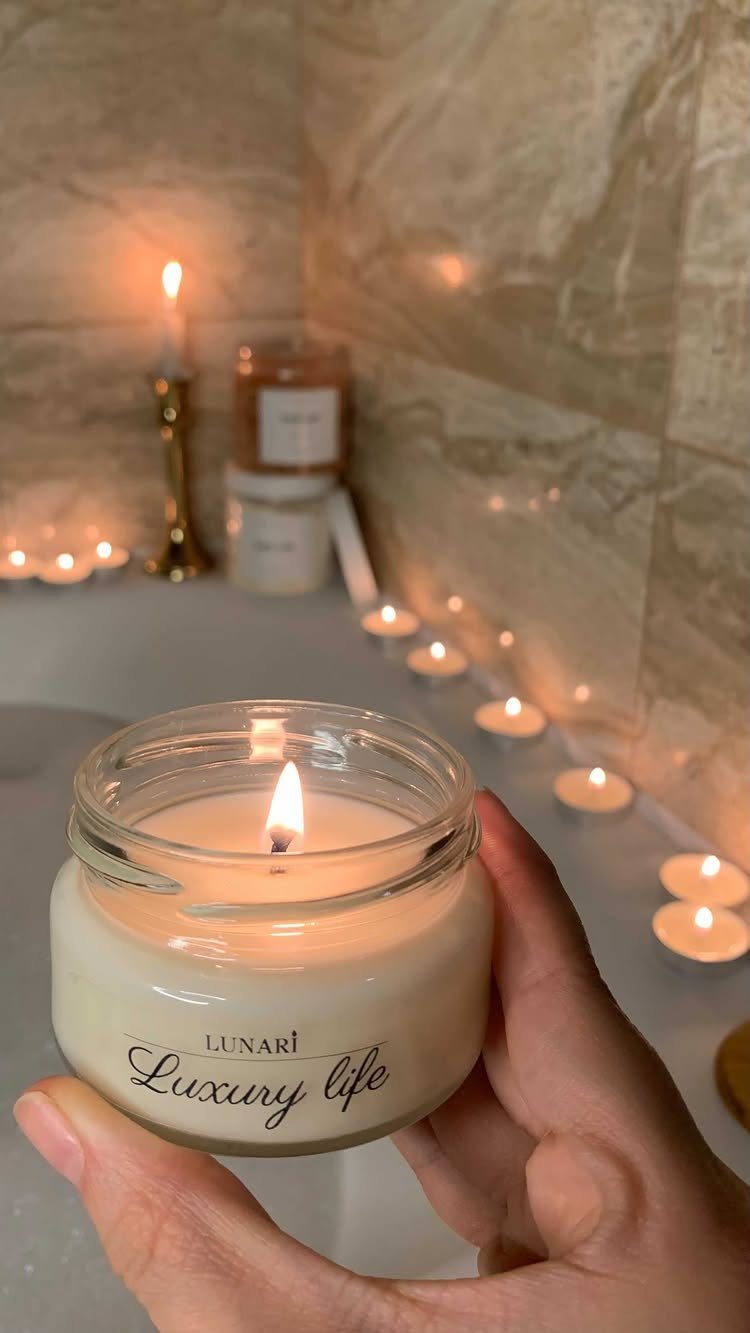
Candles along the tub edge are the cheapest spa upgrade I know, and a mix of heights looks best: a few short jars and one tall taper.
Pick one scent and use it across all of them, since several fragrances fight each other.
Keep flames away from towels and curtains, and set the jars on a flat, dry edge. Blow them out before you leave the room.
12. Natural Light Haven
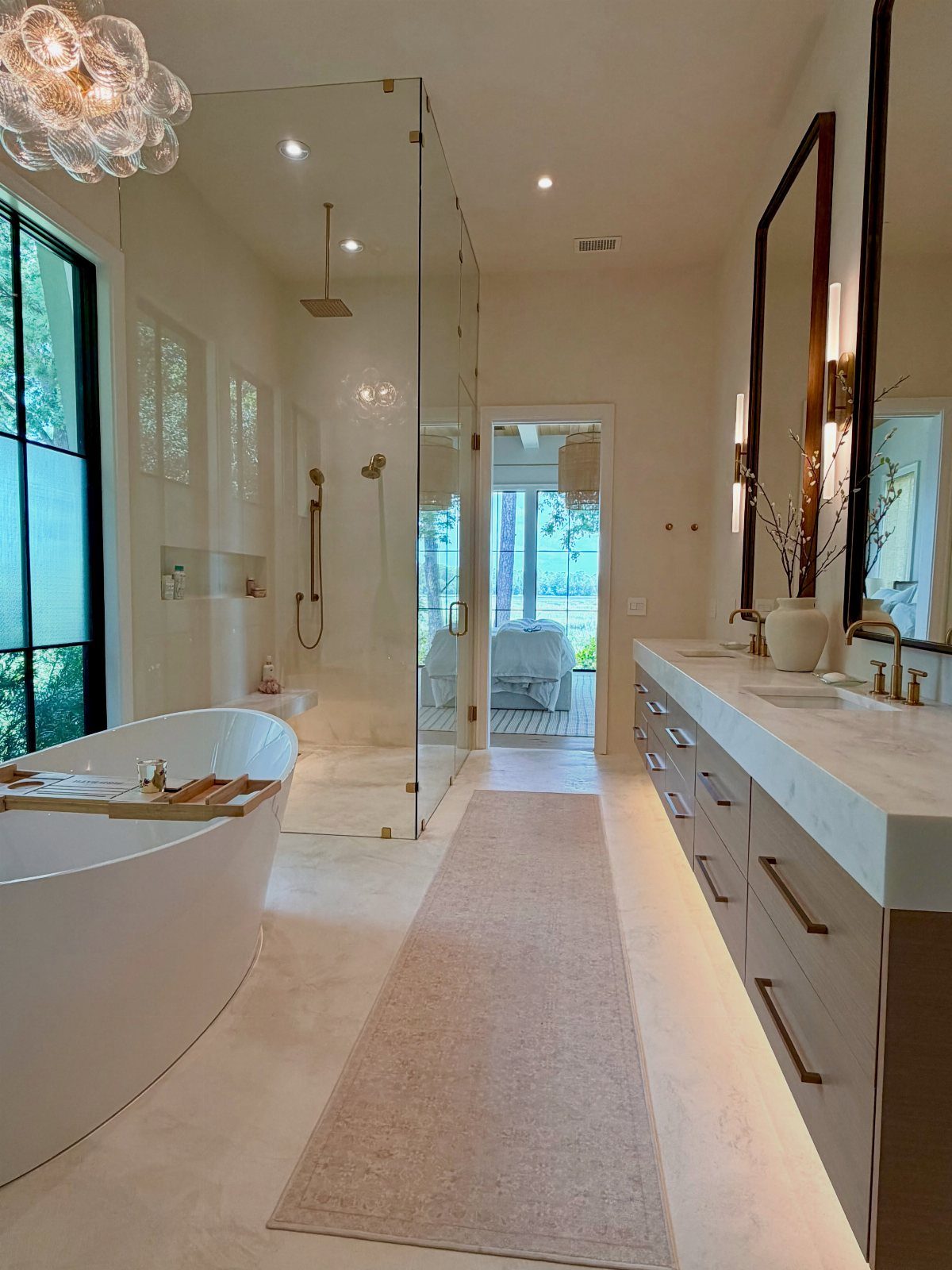
A big window beside the tub fills the bathroom with daylight, and I would keep it as bare as privacy allows. White walls and a white freestanding tub bounce that light around, so the room feels open and breezy.
Skip heavy drapes.
A sheer panel or frosted film handles privacy while the light still gets through. Mirrors placed across from the window push the brightness further into the room.
13. Rustic Spa Escape
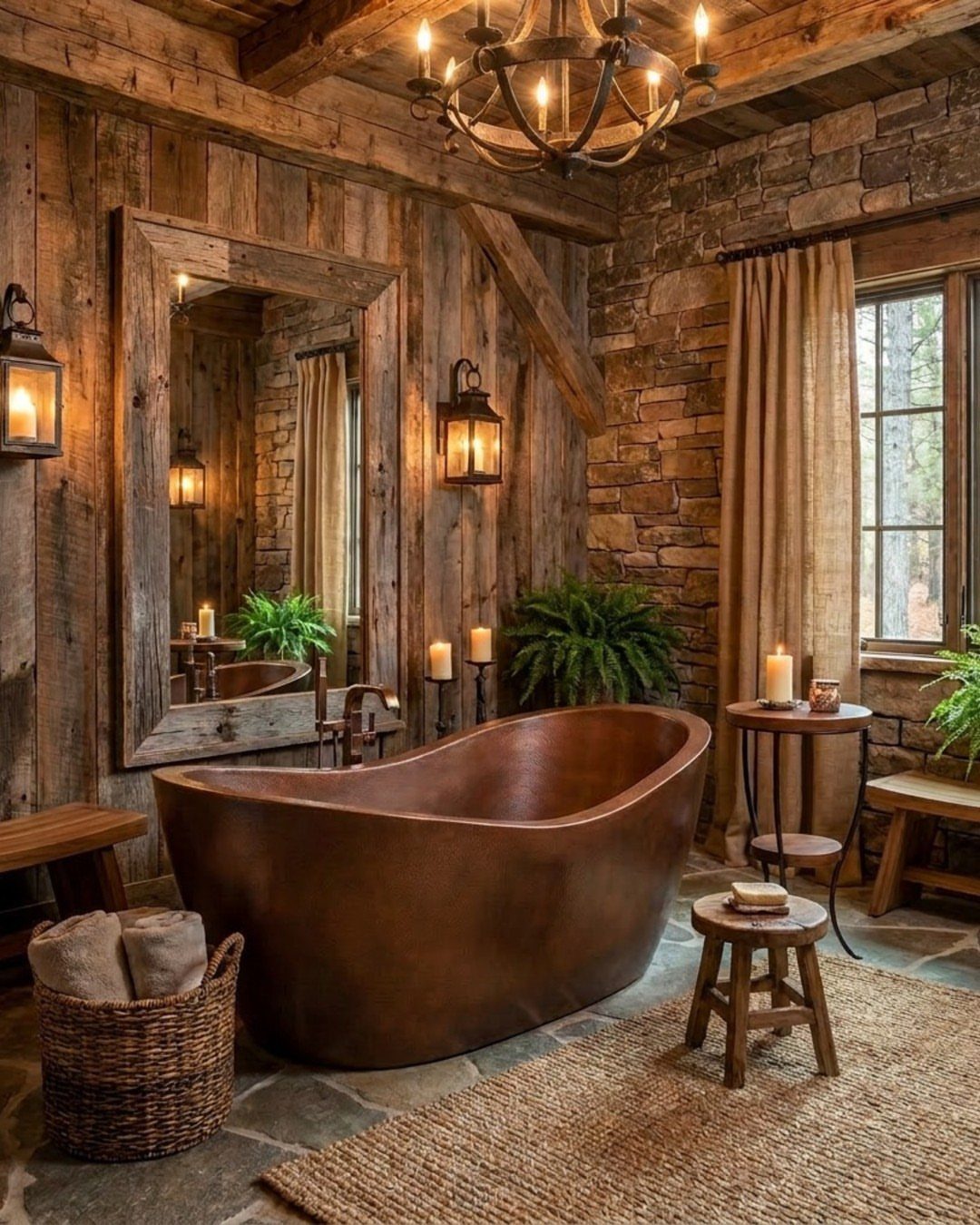
Reclaimed wood and stone walls give a copper tub the warm, earthy backdrop it wants, so I would let the materials do the work.
A jute rug underfoot adds texture without adding color, and lanterns beside a chandelier keep the light soft.
Stay with natural tones and textures, and skip anything glossy or bright that would pull attention from the wood and stone. A rug is the easiest piece to swap in on a weekend.
14. Slab-Style Marble Tub
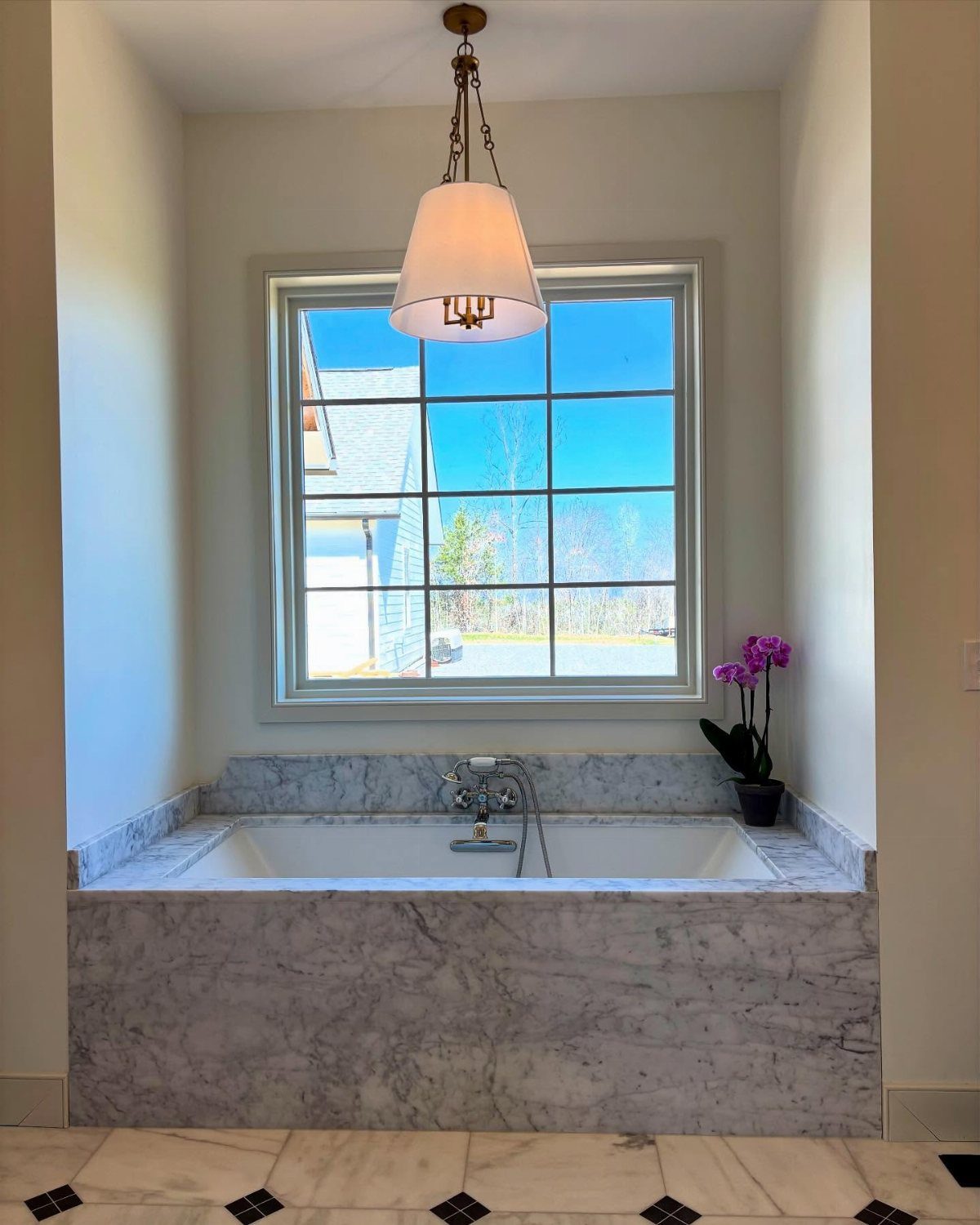
Grey-veined marble slabs around a white tub give the bath a quiet, polished look. Running the stone up to the window grid keeps the surround reading as one clean block.
One pendant and a single orchid are all the decor I would add.
Marble is already the statement, and anything more would fight the veining. Real slab is a pricey, heavy job for a pro, so a marble-look finish is the cheaper route if the budget is tight.
15. Copper or Brass Bathtub
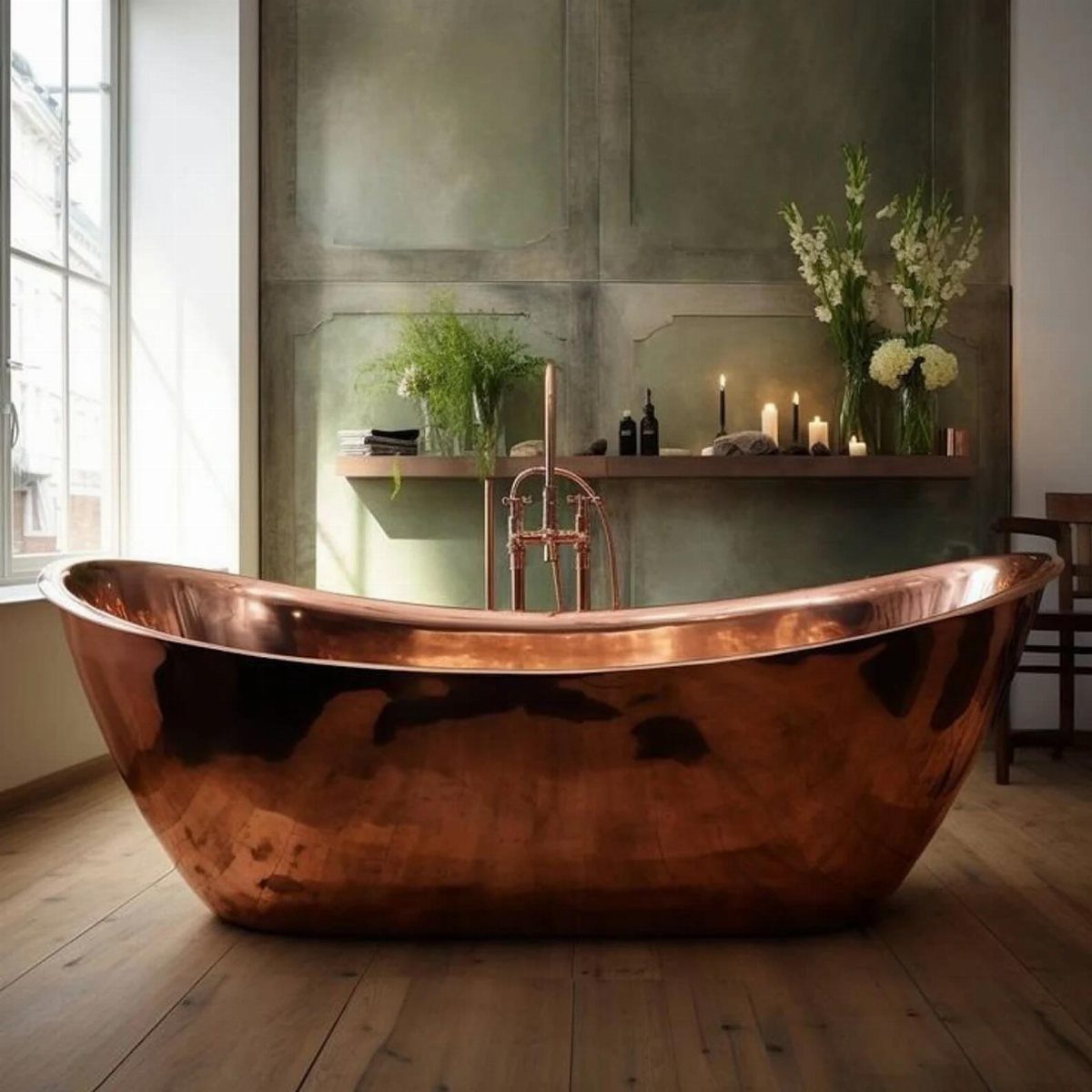
A polished copper tub is a bold choice, and green walls are the pairing I like best. The warm metal pops against the cool color, and wooden floors tie the two together.
Match the faucet and fixtures to the tub’s finish so the metal looks planned. Then keep the shelf simple, with candles and flowers, and leave the large window uncovered so light bounces off the copper.
16. Hydrotherapy Jet Tub
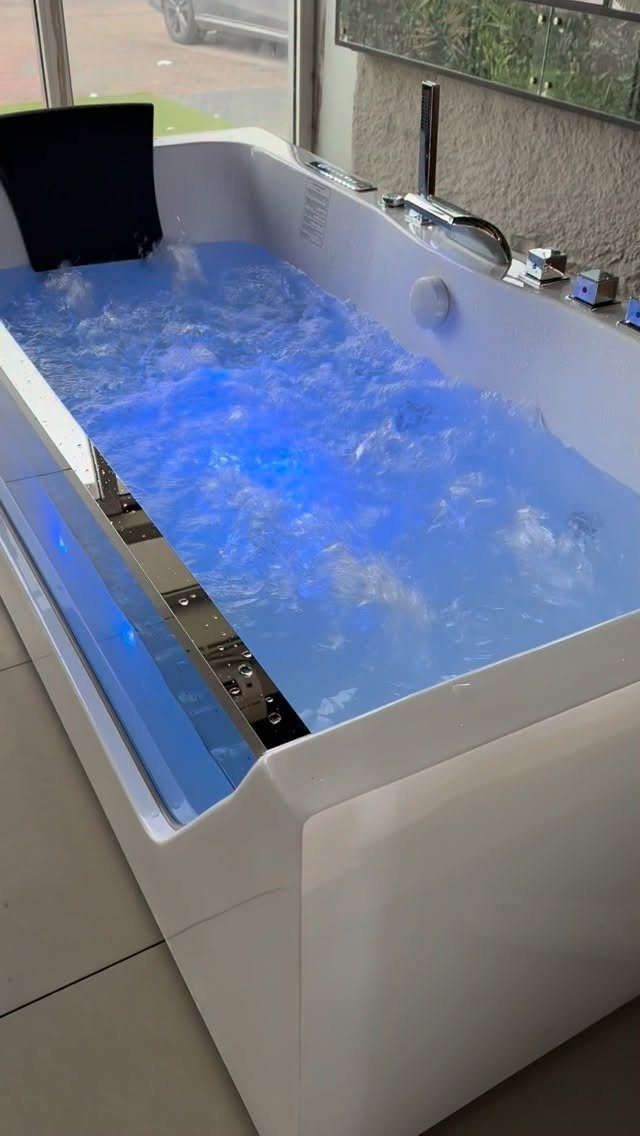
A jet tub adds the soak and the massage in one piece, so it earns its space as the room’s centerpiece. Chrome fixtures and the built-in lighting keep a white rectangular tub looking clean and modern.
Set it near a window, then limit the decor to a mirror and a stack of towels. Jets mean plumbing and power, so plan the install before you buy the tub.
17. Romantic Rose Petal Setup
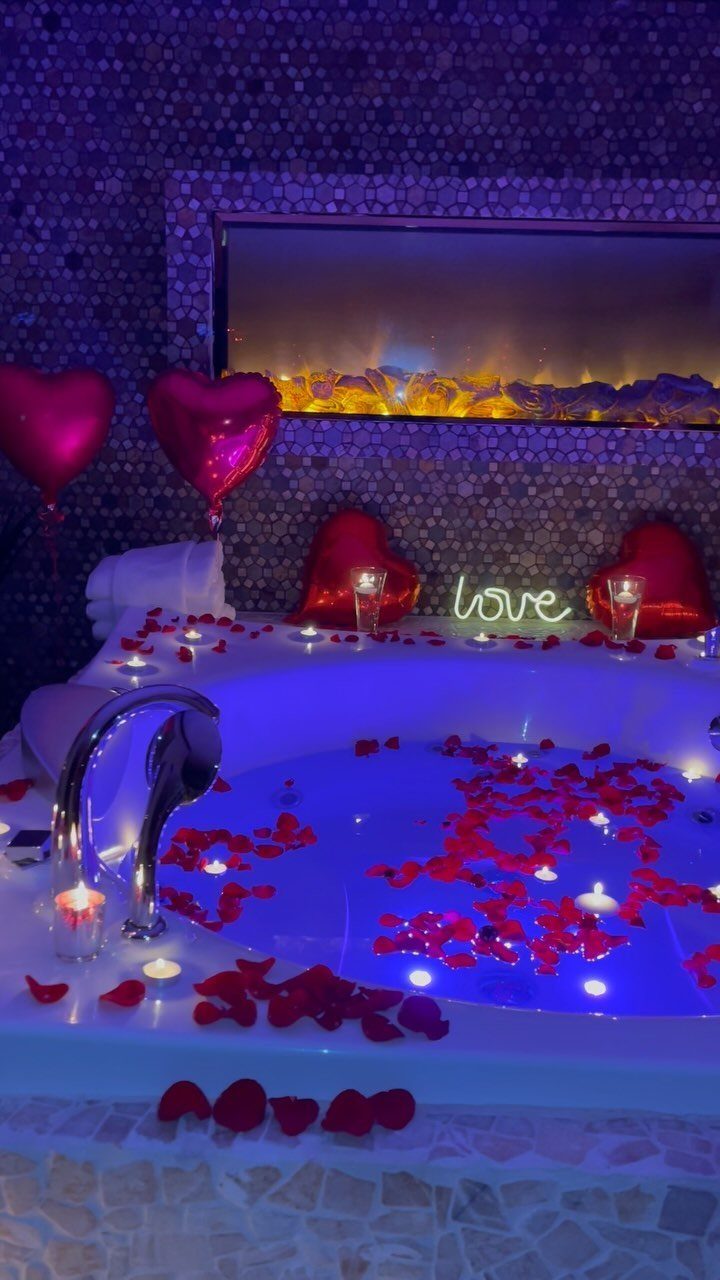
Red rose petals on the water, a few candles and a neon sign are the whole recipe, and each costs little. Scatter the petals right before the bath so they stay fresh and bright against a white whirlpool tub.
I would hold the balloons to one cluster so the room does not look like a party. Keep candles clear of the balloons and any fabric.
18. Inflatable Indoor Spa Tub
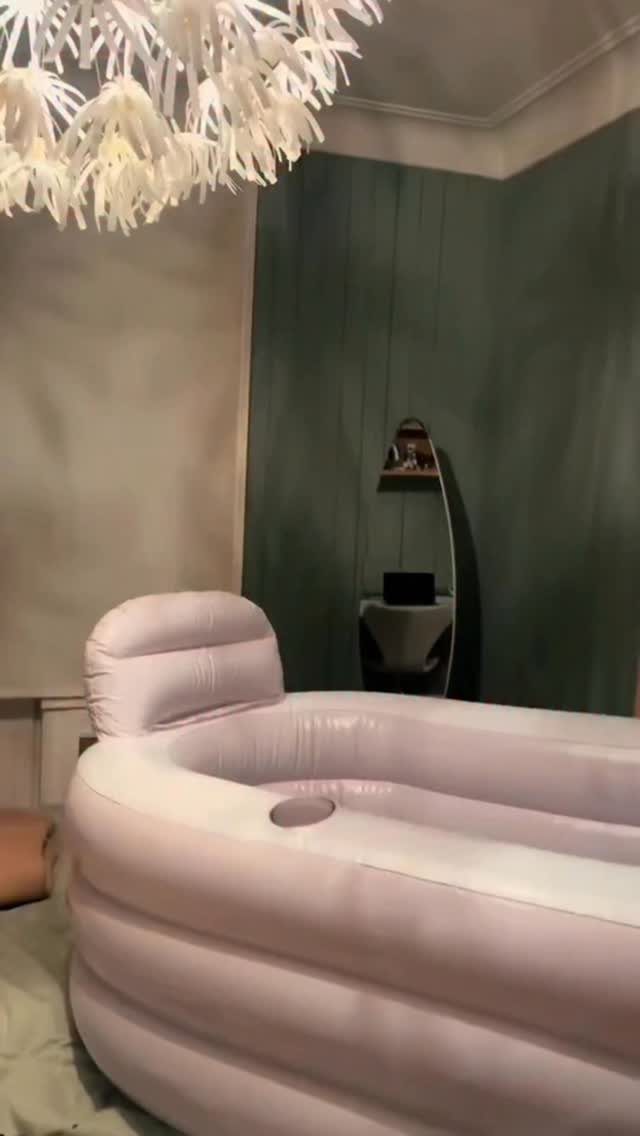
An inflatable tub is the cheapest way to get a spa feel indoors, and a dark green accent wall makes it look intentional. White against deep green reads sharp, and a decorative chandelier overhead adds a touch of elegance.
Paint is the weekend part: one wall, one color.
Add a small shelf within reach for a towel and a drink. Choose a spot you can reach with water and power easily before you commit to the room.
Choosing Materials for Spa Feel
Judge a material by how it looks after a few years of daily use, not on install day.
Stone, solid wood and bronze finishes soften and gain patina with age, while synthetic finishes tend to feel sterile, throw harsh glare and show wear fast.
Then limit how many materials you use. Spa bathrooms stay calm when the floor, walls and ceiling draw from a short list, which gives the room continuity and cuts visual clutter.
On a tight budget, I would put the real material where hands and feet touch it, like a wood stool or a bronze towel hook, and keep everything else plain.
Lighting Strategies for Calm
Plan lighting in 3 layers: ambient, task and accent. Each does a different job, and a calm bathroom needs all three.
Ambient light is the soft overall glow. Tucking a light strip into a ceiling ledge washes the room in soft, even light and keeps hard shadows off faces and walls.
Task light belongs at the vanity and mirror, where you need clear light for grooming. Choose dimmable or adjustable fixtures so the room can go from a bright morning routine to a slow evening bath.
Accent light adds depth.
Tuck flush LED strips in soft white beneath the vanity, behind the mirror or inside a niche to bring out texture and shape. Backlit shelves also make your favorite bath products look good.
Creating a Relaxing Atmosphere
A spa feel comes from a few calm decisions. Pick soft, calming colors, and keep sightlines open so the eye travels across the room without snagging on clutter.
Plush towels and one or two elegant textures do more than a shelf of small accessories. Efficient storage matters too: when bottles and spare rolls have a home, the room stays airy.
Spend on the pieces you touch every day, such as fixtures, and choose natural materials and soft lighting around them.
Frequently Asked Questions
How can I decorate my bathtub?
A wooden tray that spans the tub holds candles and a few stems of something that floats, daisies or carnations. Large leafy plants nearby and a row of small framed botanical prints on the wall add more, for little money.
Plants sit back from the edge where spray reaches them, and anything framed goes under glass so the mat inside stays dry.
What defines a luxury spa bathroom?
A luxury spa bathroom gives you calm and privacy, and it gets there with fixtures that perform, storage that hides clutter, and lighting you can adjust.
What are essential elements of spa-like design?
Calm colors, open sightlines, natural materials and soft layered lighting do most of the work.
Use ambient light for the overall glow, task light at the mirror and vanity, and accent light such as soft white LED strips under the vanity or in a niche.
Plush towels and storage that hides bottles and spare rolls keep the room airy, and money is best spent on the pieces you touch daily, like fixtures.





