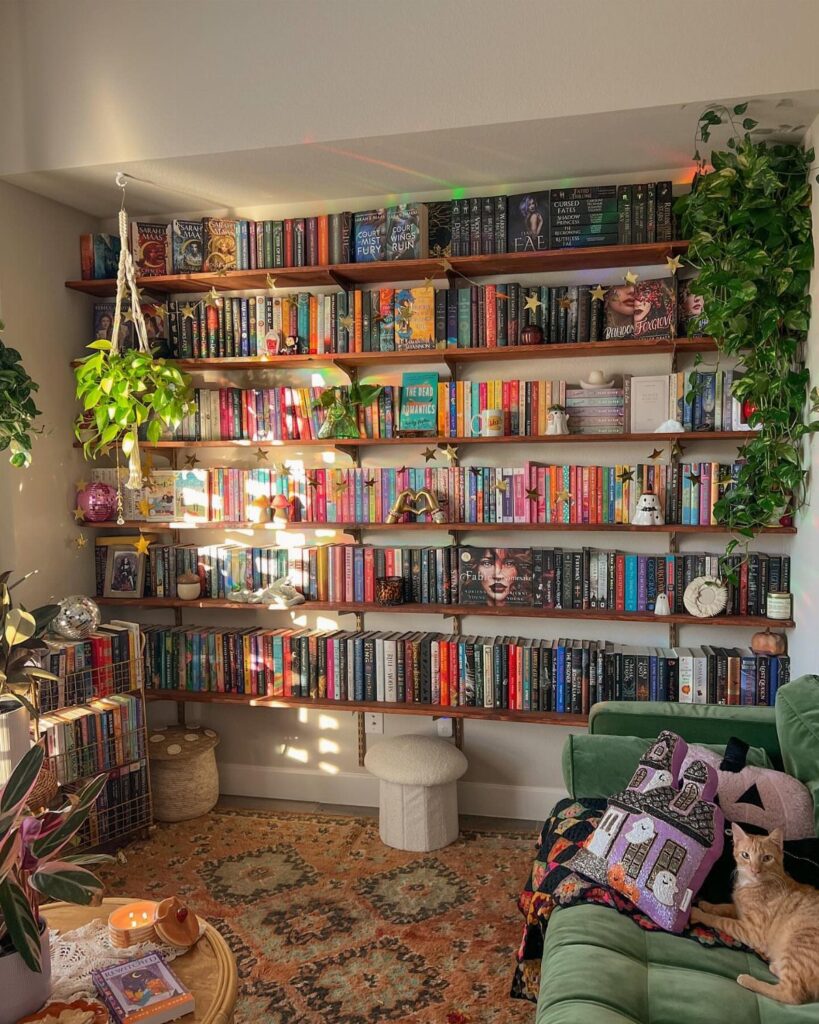
The ideas run from color-coded books on floating shelves to custom-built joinery that the post calls the priciest on the list, and the space you have decides which one fits.
A renter with floor space but no plans to stay can start with modular shelving that adds pieces later, while a room with a tall ceiling can justify a rolling ladder and built-in shelves around a fireplace.
If the floor can’t hold a bookcase at all, floating shelves need only wall space, anchored into studs because books are heavy.
1. Layered Lighting
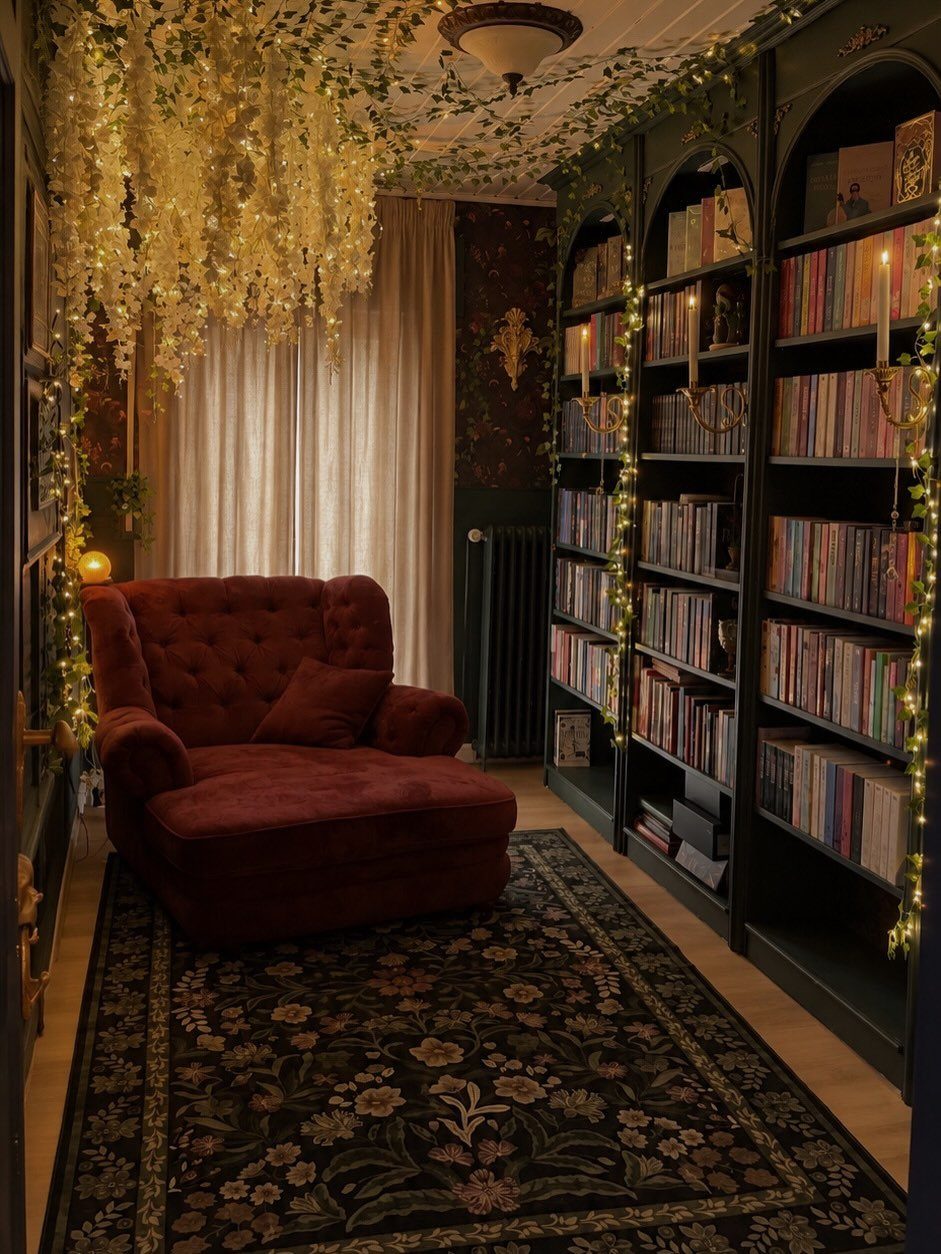
Fairy lights and candles on the shelves give a library its glow, but they work best as one layer, not the only one.
Add a lamp beside the chair for actual reading, and keep the string lights and candles for evening mood.
Warm bulbs keep the red velvet and dark wood looking rich. Putting each layer on its own switch or plug lets you dim the room down to candlelight without losing the reading lamp.
Battery candles are the easier choice on shelves full of paper.
2. Color Code Books
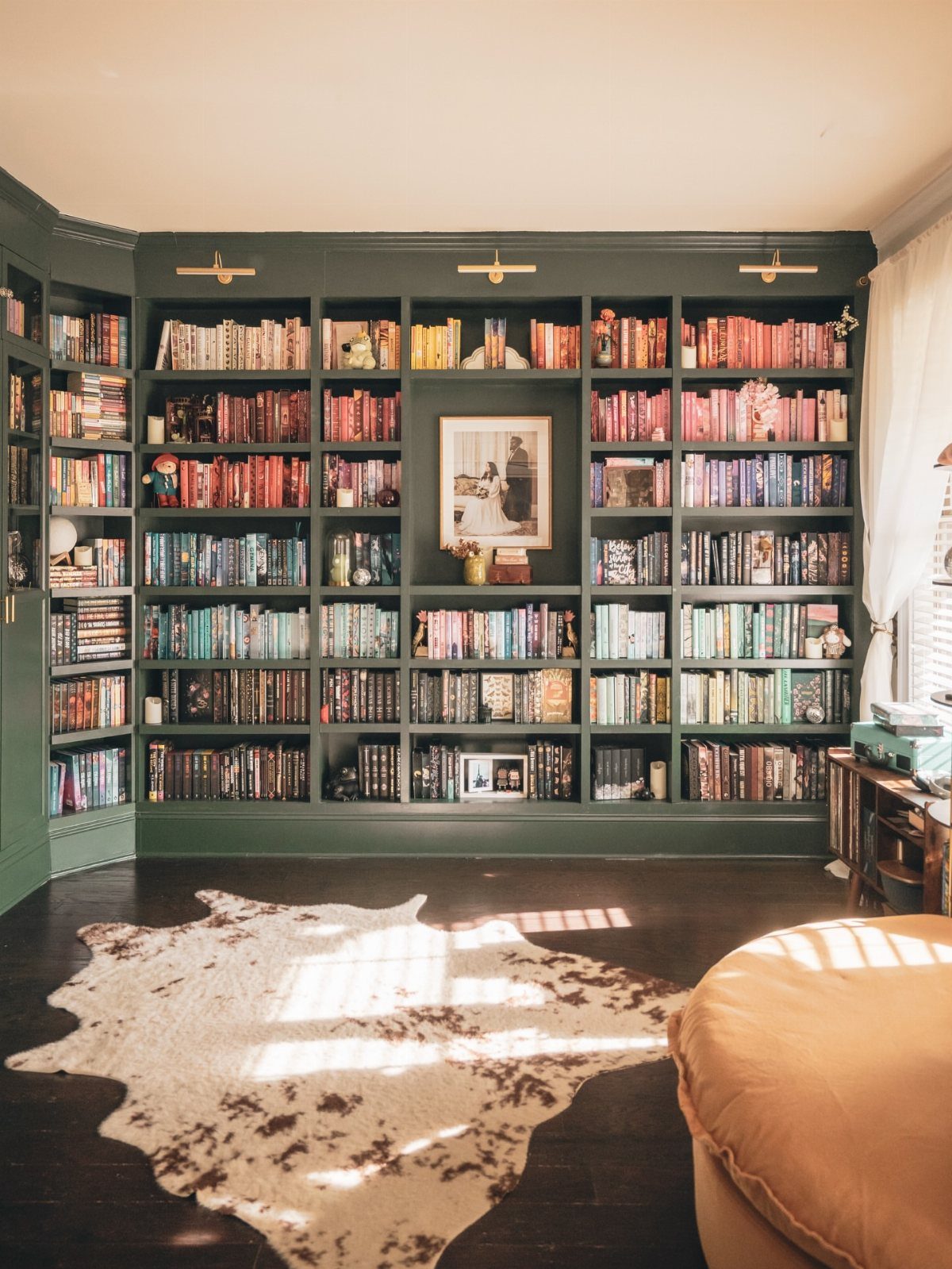
Sorting books by spine color turns a wall of dark green shelving into a gradient, and it costs nothing but an afternoon on the floor.
Pull everything off the shelves first, stack by color, then rebuild one shelf at a time. Keep a few off-color outliers in the mix if a strict rainbow feels too stiff.
I like it best on a painted backdrop like this one, where the spines stand out against the green.
Shelving by hue costs you the author order, so you will be hunting for books by color; it works best for a collection you know by sight.
3. Use Floating Shelves
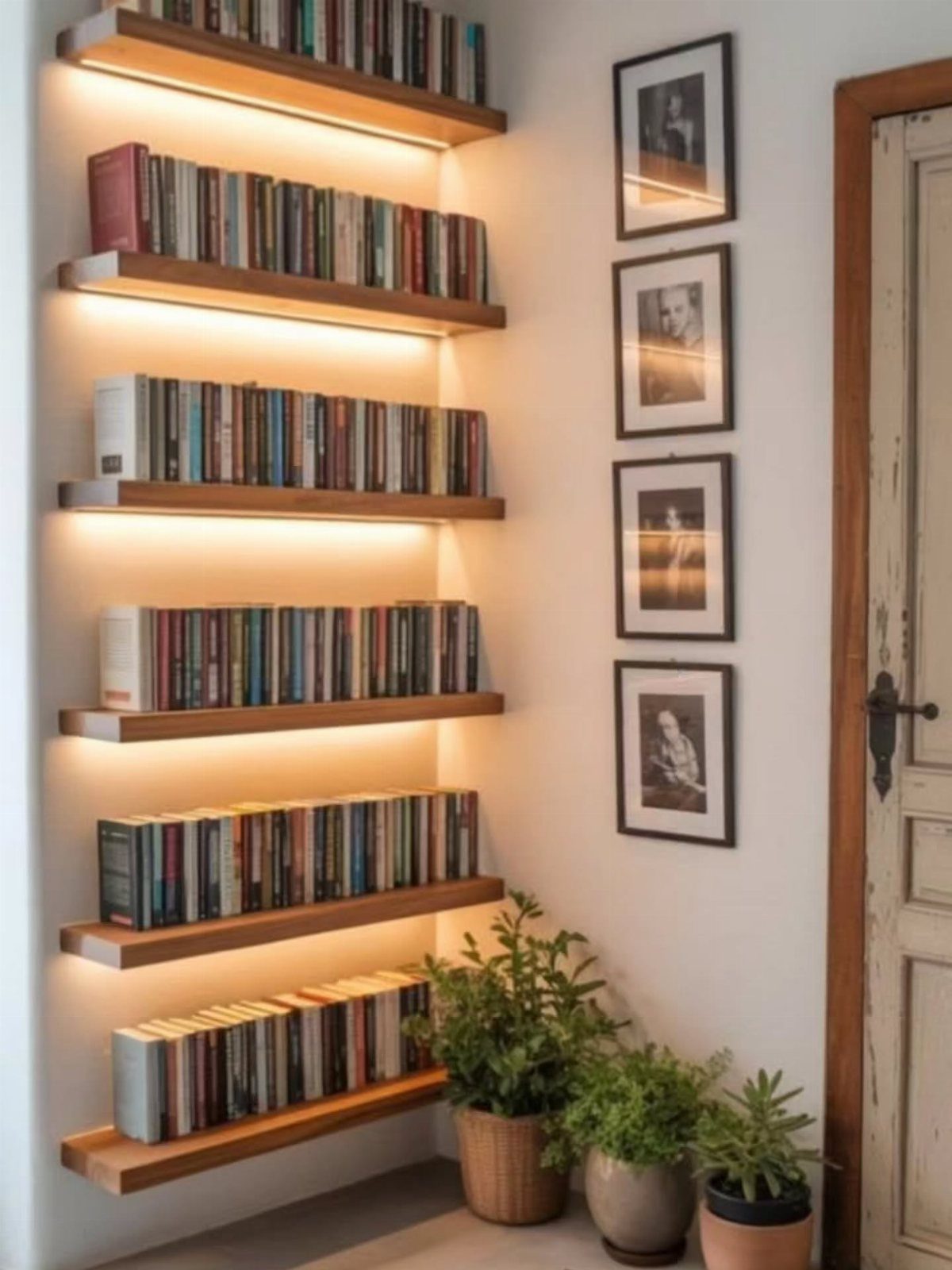
Floating shelves ask for wall space and nothing else, which makes them a good fit when a floor can’t hold a bookcase.
Under-shelf lighting is the detail I would copy. A strip of warm light below each shelf washes the spines and doubles as a reading glow.
Anchor into studs or use proper wall anchors, since books are heavy. Shorter spans carry more weight than long ones.
4. Reading Area in Small Spaces
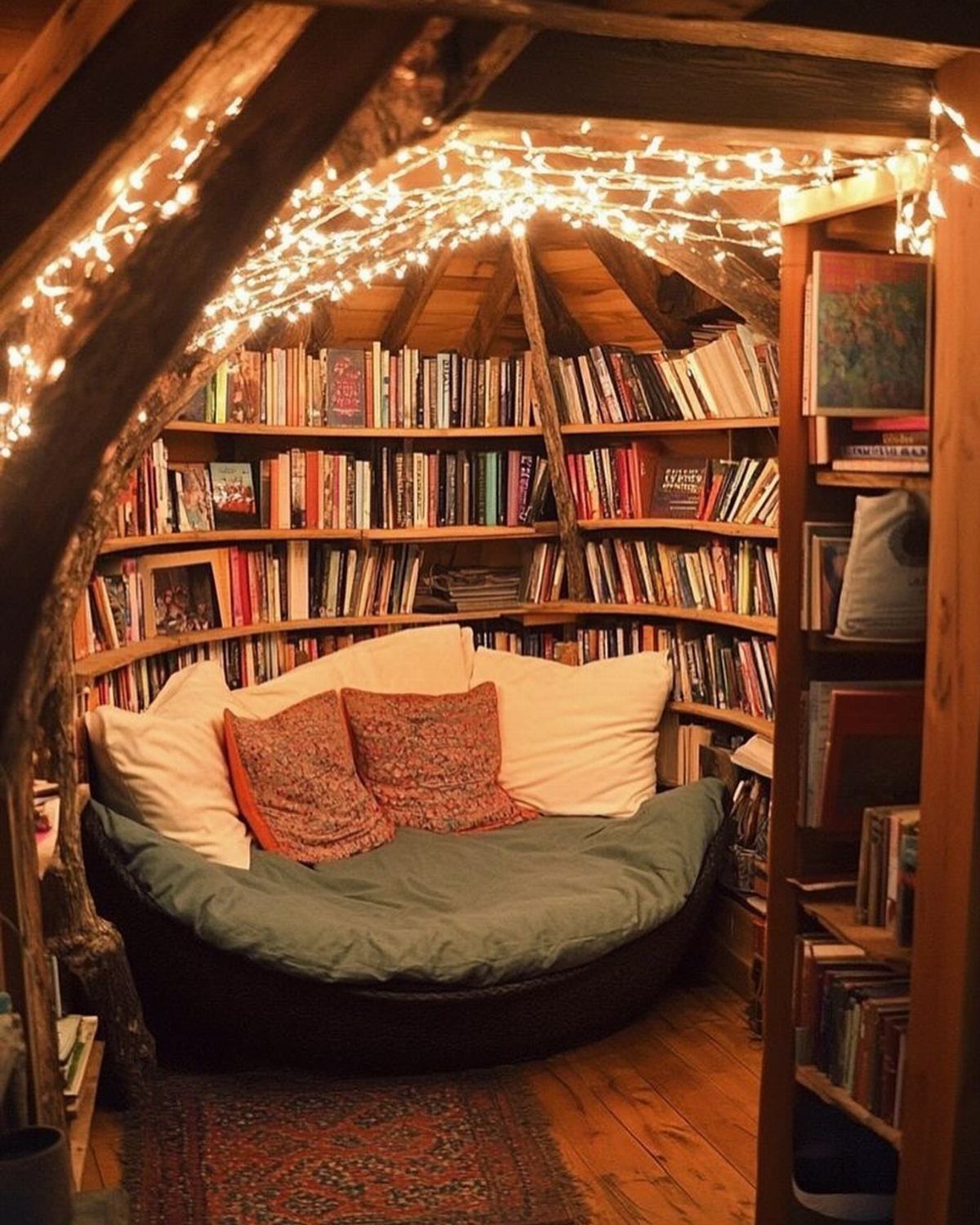
A round daybed tucked under a sloped ceiling proves a reading spot needs very little floor. Curved shelves wrapped around the seat keep every book within arm’s reach, so the nook feels like a small room of its own.
String lights overhead do the mood work without taking up a single inch of surface. Add a pillow or two against the back and you have a place to stay for hours.
If you can’t build curved shelving, a corner, a window seat, or an odd slanted wall can get you most of the way there.
5. Bookshelves Around a Fireplace
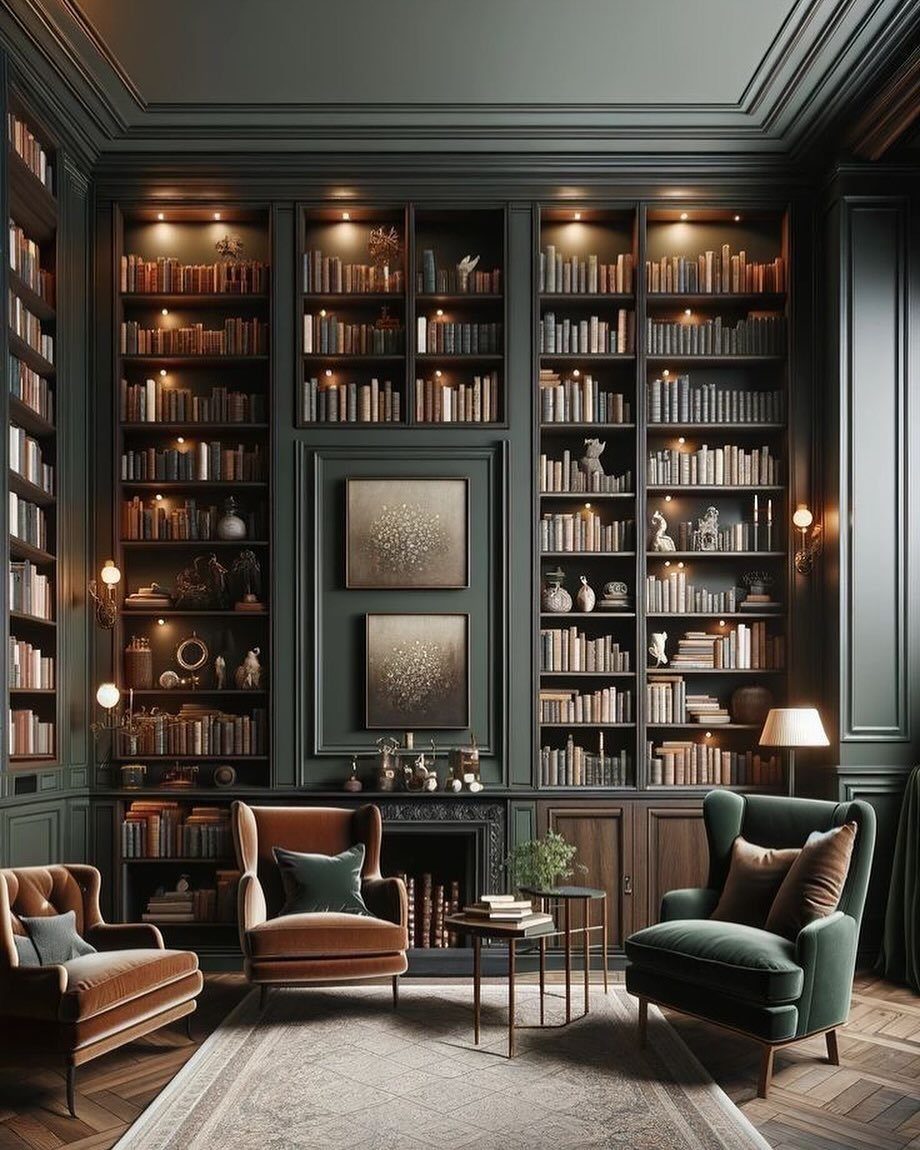
A fireplace gives a library a built-in center, and shelves on both sides frame it like a picture. Running them floor to ceiling makes the wall read as one piece.
Deep green walls and shelves, as here, pull the mantle and books into a single color field, so the room feels calm and enclosed.
I would add a side table within reach of the chairs, for a drink or a book in progress.
Leave the mantle lightly styled, such as one or two framed pieces, so the books stay the main event.
6. Use Modular Shelving
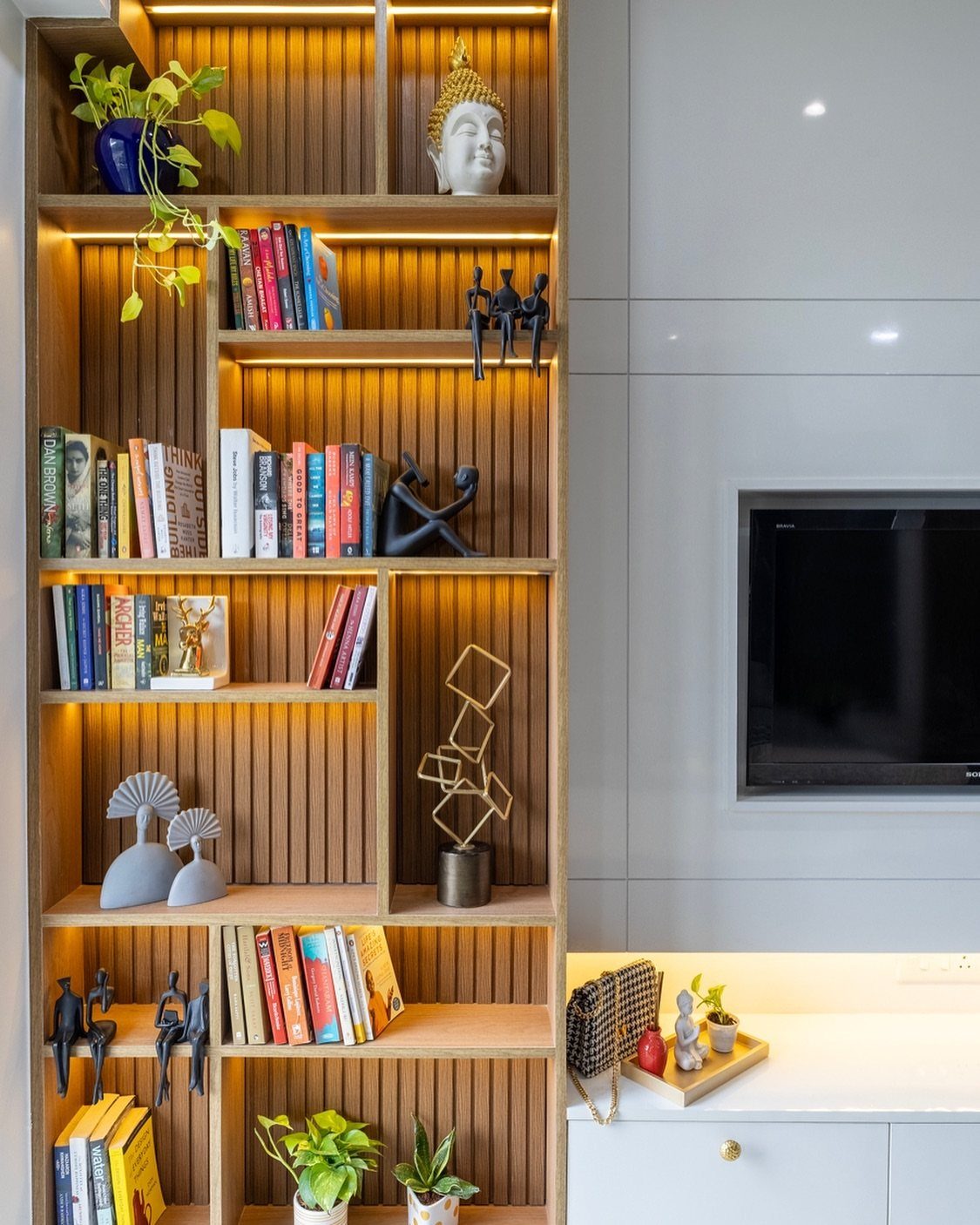
Modular shelving lets you rearrange as the collection grows, which suits a renter who may move. Light wood keeps a small room open, and the units can mix open cubbies with a few spots for objects.
I would leave a few cubbies half empty on purpose.
Choose a system with pieces you can add later, so you can start small and extend it over time.
7. Rolling Library Ladder
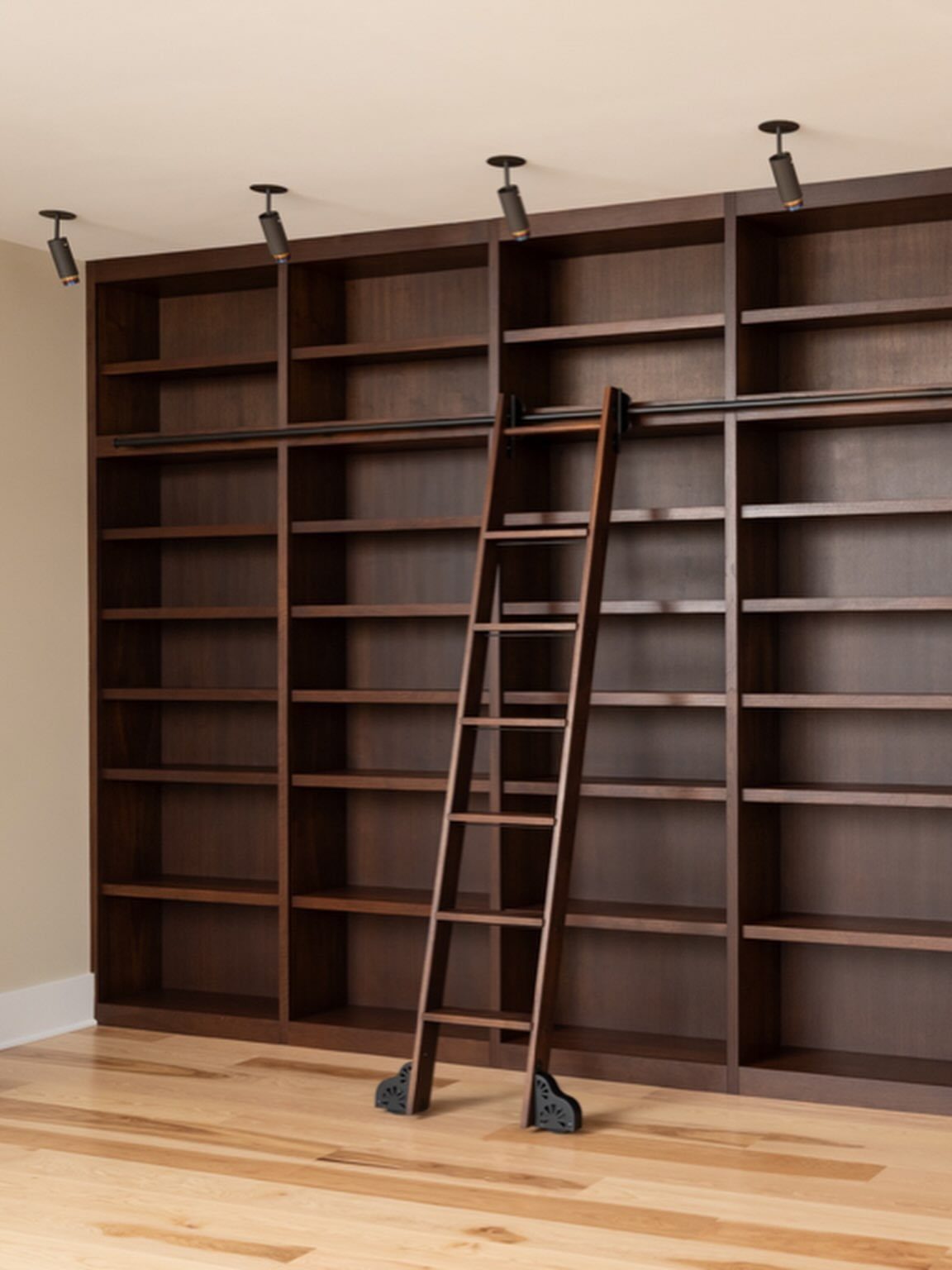
A rolling ladder on a rail is the one piece of hardware that makes a wall of shelves look like a real library.
Here it matches the dark wood of the built-ins, so it reads as part of the wall instead of an add-on.
It also does a job: the top shelves become usable, not just decorative. Keep the books you reach for least up there.
Plan on a ceiling tall enough to justify it. In a low room, a step stool does the work for far less money.
8. Add a Dining Room Library
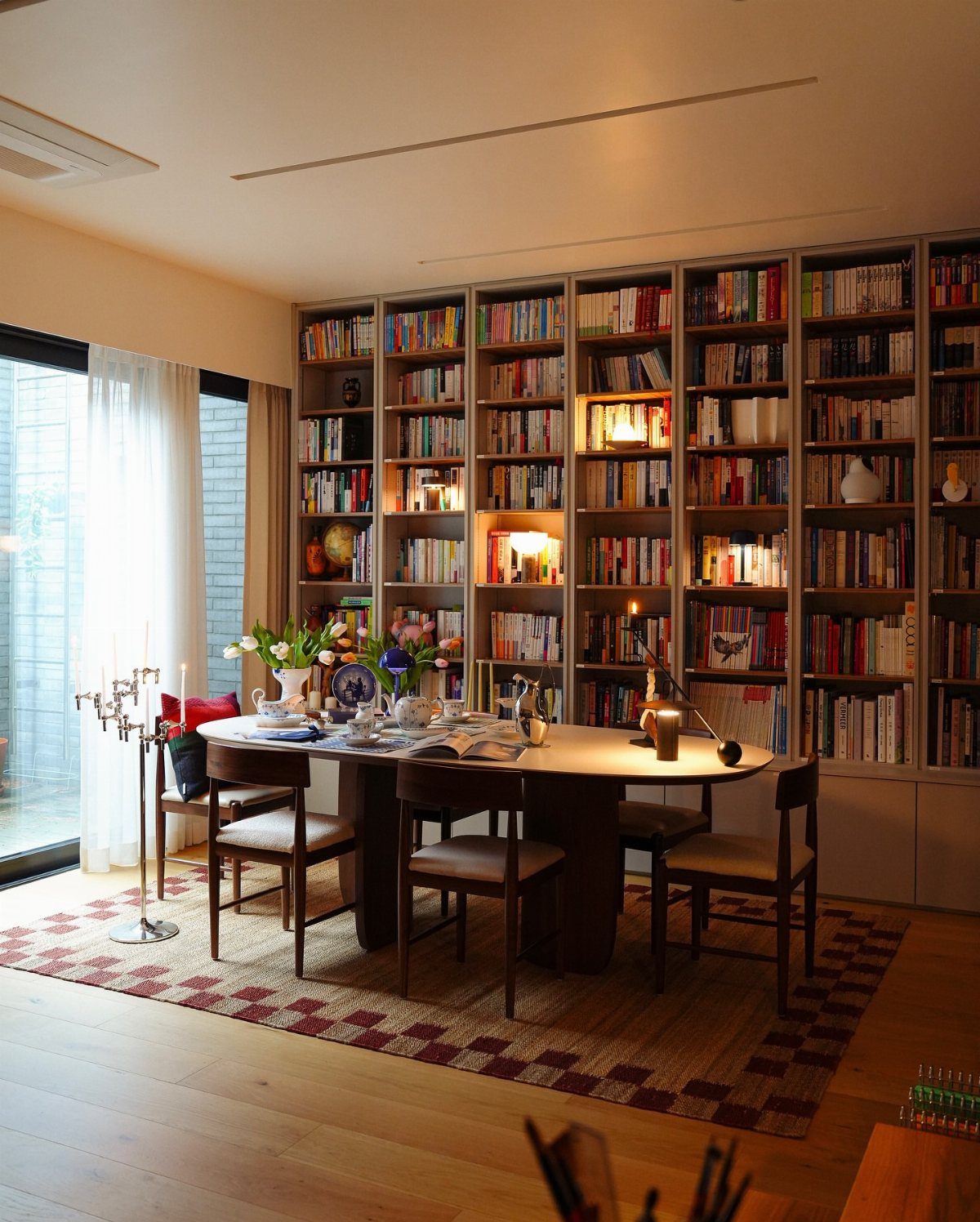
A dining table pushed up against floor-to-ceiling shelves lets the space work double duty without claiming a second room. For anyone with no spare space for a library, the dining room is the easiest place to borrow.
I like keeping the lower shelves for books you actually read and the upper ones for objects, so nobody is pulling a paperback off the wall mid-dinner.
Chairs need room to slide back, so leave a clear gap between seat backs and the shelf fronts.
9. Wall-to-wall White Bookcases
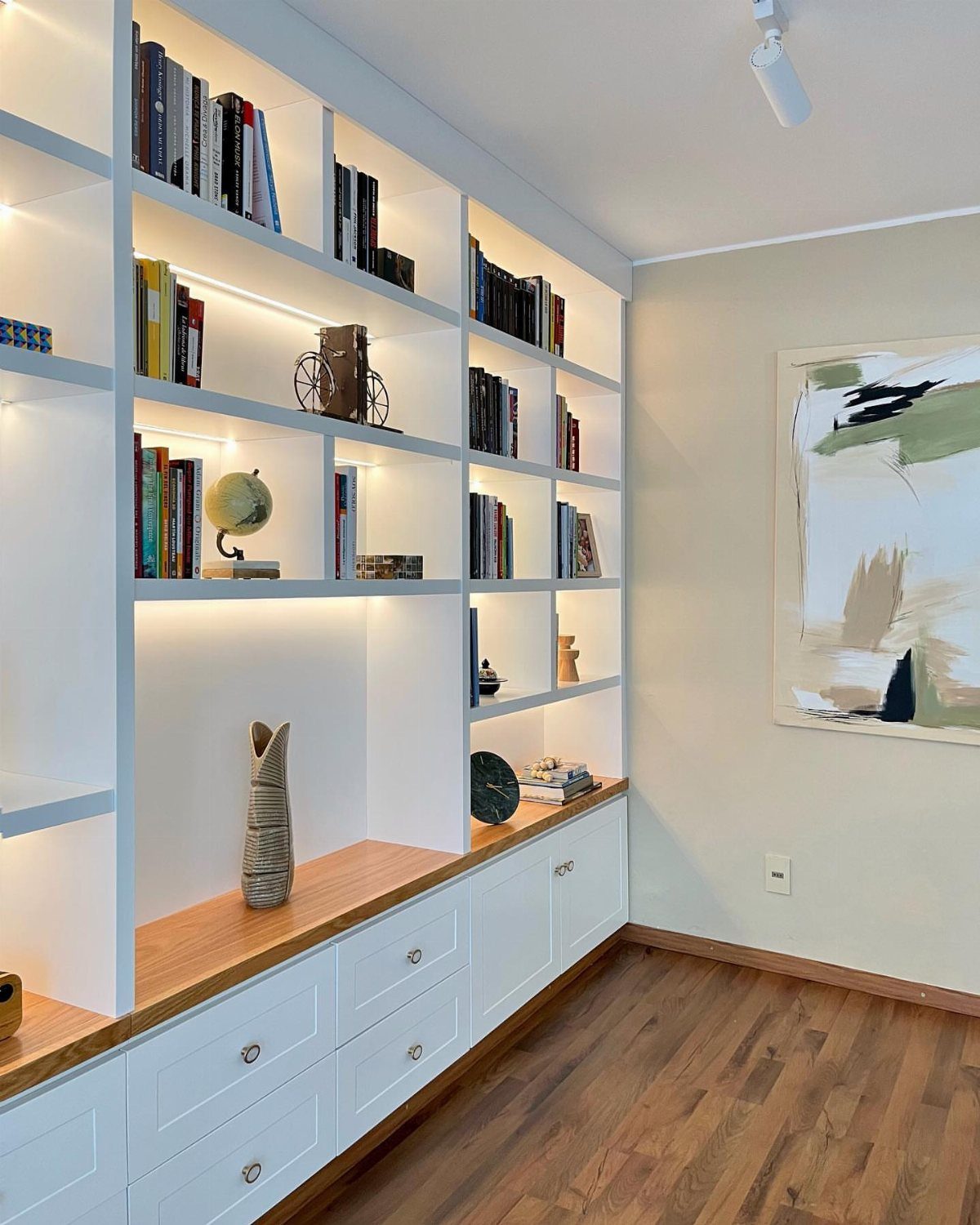
White built-in bookcases run wall to wall read as architecture, not furniture. The light finish keeps a big wall from feeling heavy, and the integrated lighting turns the shelves into a glowing feature after dark.
A wooden countertop with drawers below, as here, adds a working surface and hides clutter.
Custom built-ins cost real money. Stock white cabinets topped with shelving can come close for less.
“Bookcases are a wonderful addition to any home because they offer such a flexible design element, be it for storage, display or an architectural millwork feature,” says Victoria McKenney, principal and founder of Enivable Designs in Vancouver, Canada.
10. Custom Bespoke Joinery Shelving
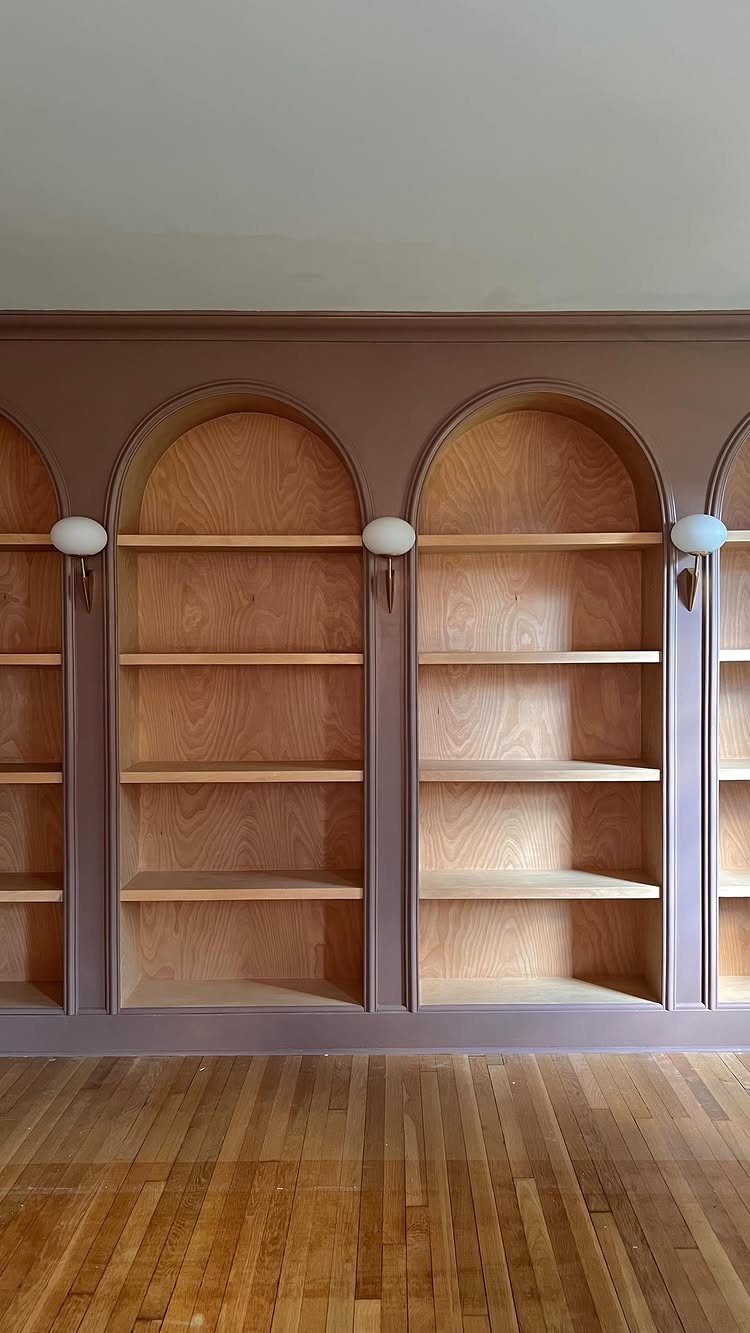
Arched, custom-built shelving sized to your own collection is the most personal way to hold books. Each opening can be cut to fit your tall art books or a row of paperbacks, so little space is wasted.
Small sconces above the arches add light without stealing shelf space.
Expect this to be the priciest idea on the list. Measure your books before you meet a carpenter.
11. Incorporate Plants
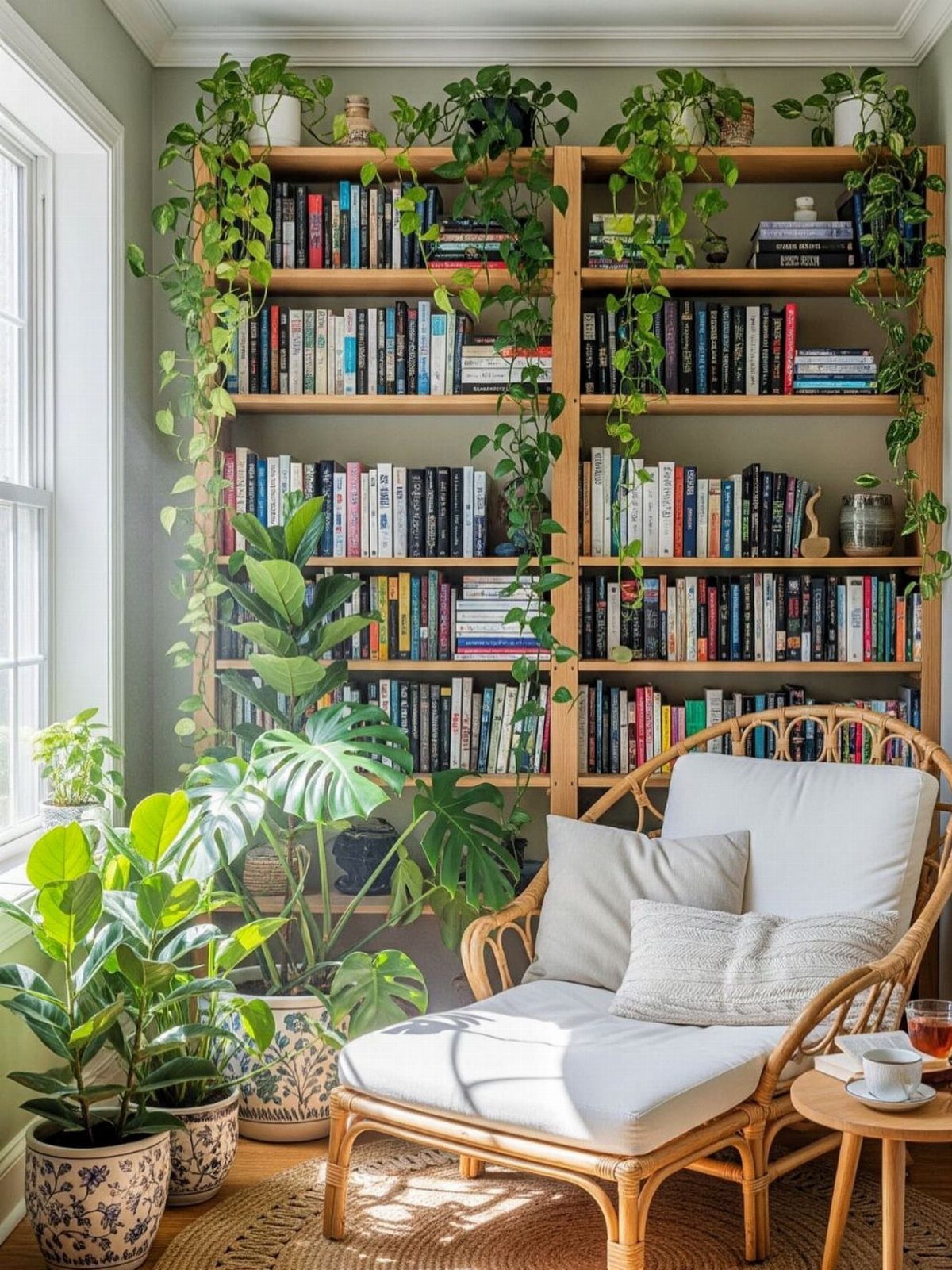
Trailing plants soften the hard lines of a wooden bookcase, and the vines spilling over the shelf edge make rows of spines look lived in.
Set them near the window, where the light is best, and leave the chair beside it.
I would put pots on the upper shelves so the vines hang down, and keep a few books on the same level so the greenery doesn’t swallow them.
Water carefully near paper. A saucer under every pot is cheap insurance.
12. Mix Decor with Books
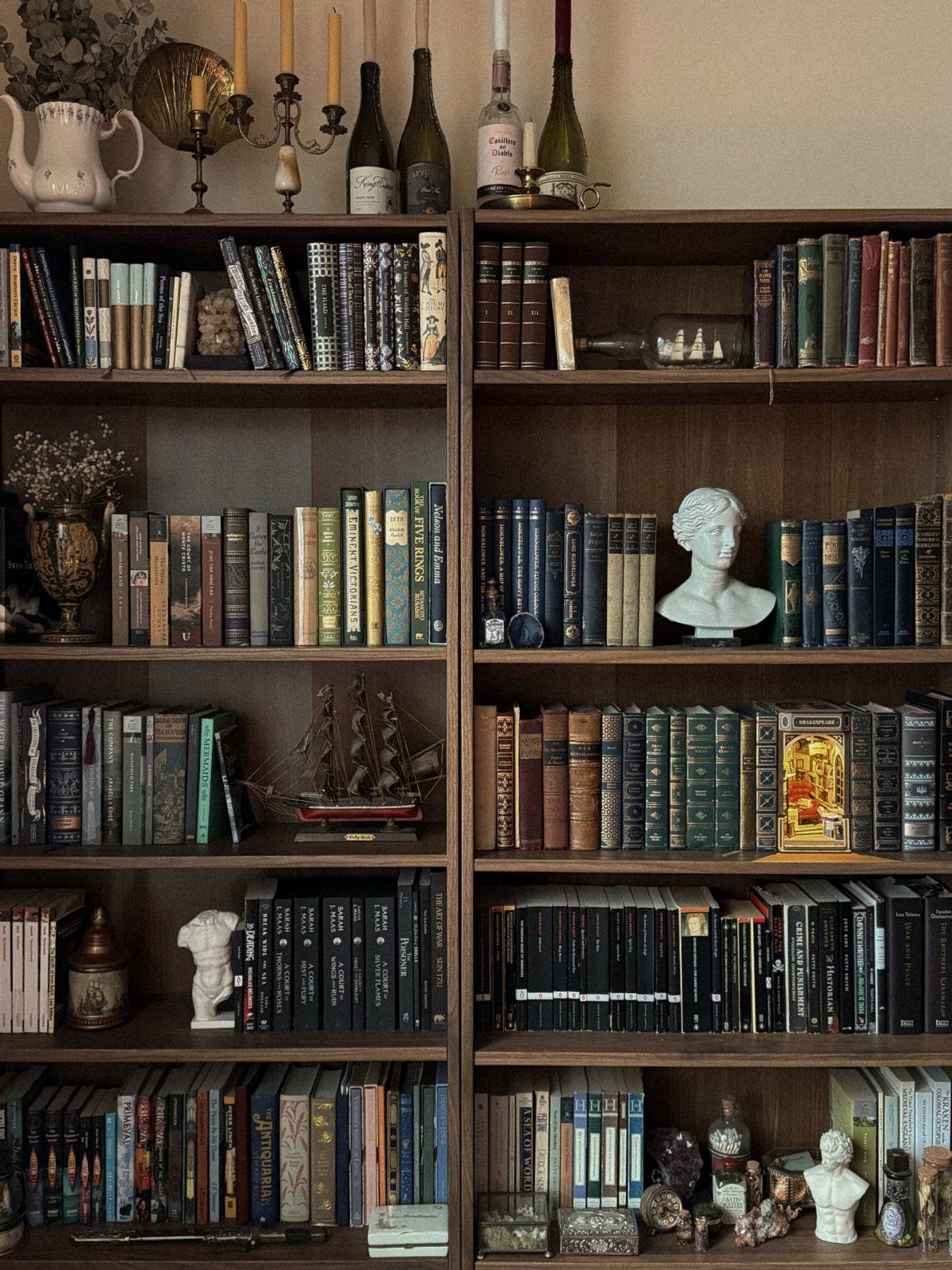
Old books look best when they share the shelf with objects: a ship model, a bust, a few bottles, a candelabra. The objects break up the spine rows and give the eye places to rest.
Set taller pieces at the ends or on top, and lay a few books flat to make a platform for smaller items. Space things unevenly; a perfect pattern looks stiff.
Aim for roughly books first and objects second, or the shelves turn into a shop display.
Essential Furniture for Libraries
Start with 3 pieces: storage for books, a seat you can sit in for an hour, and a table or desk. Skip any one and the room stops working as a library.
Plan shelving for the collection you will own in a few years, not just the one you have now. A bookcase with room to spare saves you from buying a second one later.
Pick a chair or small sofa that holds you comfortably for an hour, and put a reading lamp next to it that keeps the page bright enough.
A table in the center works for writing notes, laying out a jigsaw puzzle, or dealing cards. When space runs tight, a small desk with drawers tucked inside covers the same ground and leaves the floor open.
If a window gets direct sun, consider a solar shade. It protects book spines and upholstery from UV light.
Lighting Considerations
Good library lighting comes in 3 kinds, and each has a job. Ambient light fills the room from ceiling fixtures or recessed lights.
Task light, from desk lamps, wall sconces, or a floor lamp, lets you read. LED strips mounted inside shelving throw light on the spines or objects you want noticed.
Wall sconces are worth a look in a small room, since they free up the desk and side tables.
Daylight counts as a fourth source. A large window or skylight brightens everything in reach, so place your chair where daylight lands and switch to lamps once the sun drops.
Personalizing Your Library
A library tells people who you are through what sits on the shelves, so let the personal pieces lead. Framed art, family photos, small vases, and potted plants fill the gaps and break up long runs of spines.
Group objects in odd numbers. Three small items look more natural than two or four.
If your shelves or walls lean toward a bold color like green, choose accessories that stand out against it instead of matching it.
Objects can also divide the books into sections, so a vase or a photo marks where one subject ends and the next begins.
Frequently Asked Questions
What does every home library need?
Every home library needs 3 things: storage for books, a seat you can sit in comfortably for an hour, and a table or desk.
Add a table or small desk if you want a spot for notes, puzzles, or cards. Shelving should fit the collection you expect in a few years, so you don’t have to buy a second bookcase later.
Where should a home library be placed?
A spare room is ideal, but alcoves beside a fireplace, hallways, landings, and open-plan dividers also work. Fireplace alcoves give you tall shelving without using floor space.
Hallway shelves can be shallow since most books don’t need depth, but keep the walkway clear. A dining room works too: put the table against floor-to-ceiling shelves, with books on the lower shelves and objects higher up.
What are some suggestions for improving a library?
Start with lighting: a reading lamp by the chair, warm bulbs, and LED strips under or inside the shelves.
Then add personal touches like framed art, family photos, plants, and a few objects among the books. Group objects in odd numbers and leave some shelf space open so the display doesn’t feel crowded.
How can you add a small home library?
A reading spot needs very little floor.
Wall sconces free up side tables and the desk. Modular shelving is a good fit for renters, since you can start small and add pieces as the collection grows.





