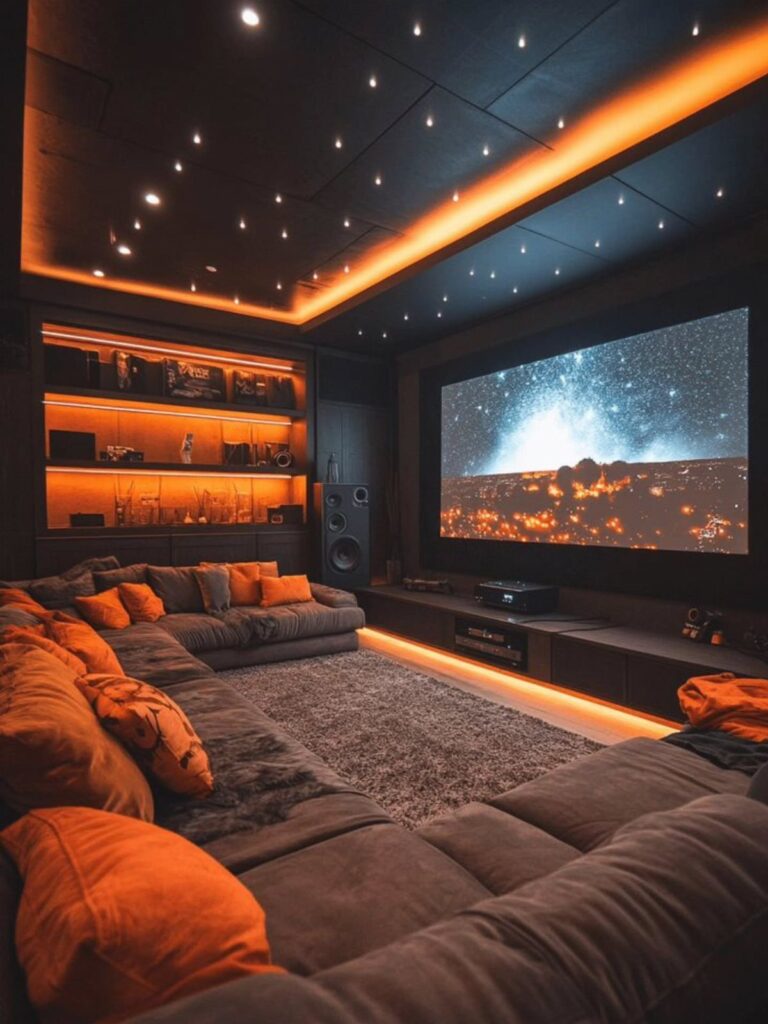
The ideas here run from cheap LED strips and bias lights you can stick up in a weekend to fiber-optic star ceilings and recessed cove lighting, where the install goes behind drywall.
Your room decides which one fits: a dedicated dark theater with a projector can carry a star ceiling, while a living room that doubles as a media room does better with dimmable strips or cove lights that drop to nothing when the picture starts.
Even the color temperature range is wide, from 2700K–3000K warm white up to 6500K daylight behind the screen.
1. Cove Lighting
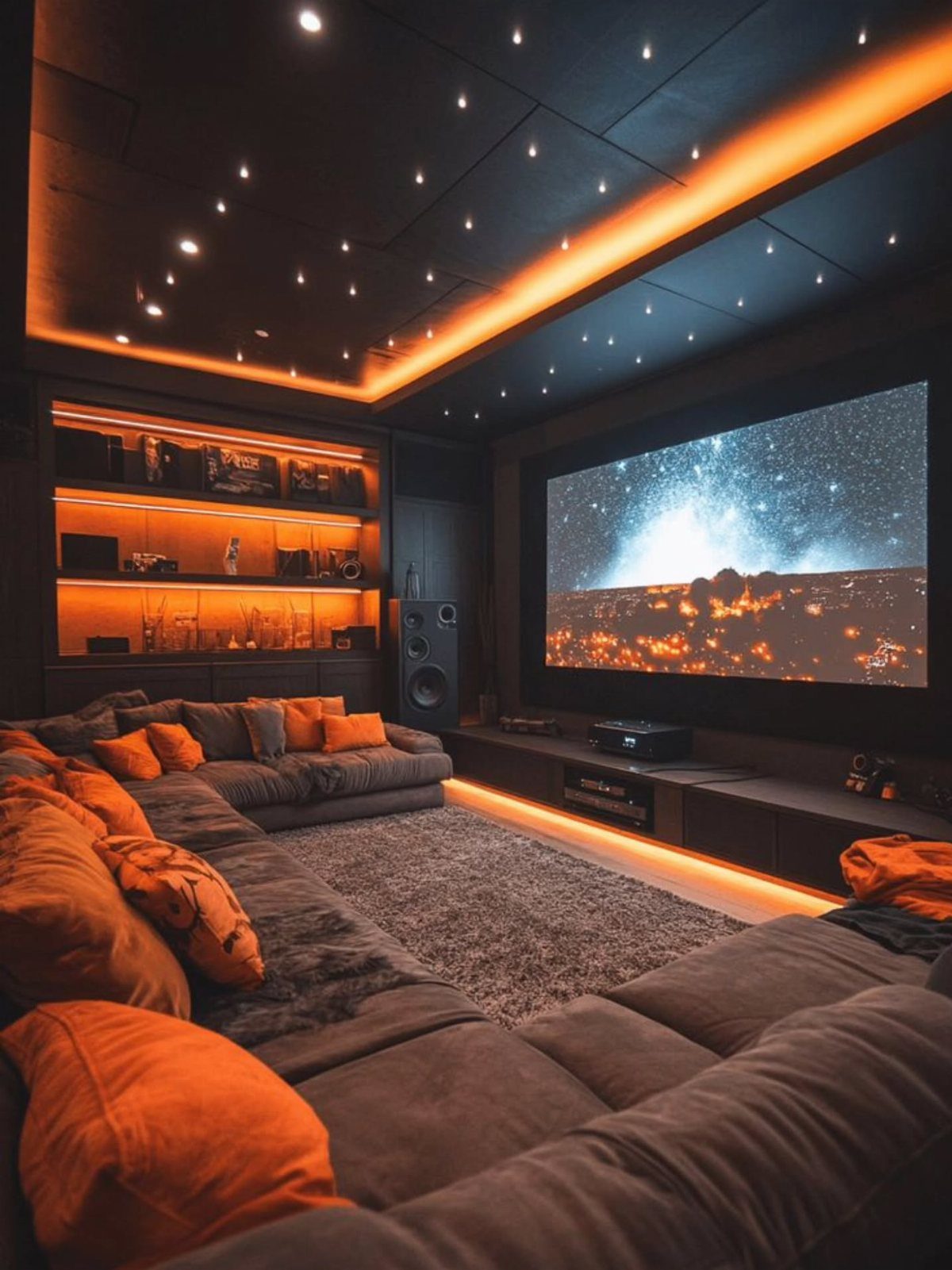
Light that bounces off the ceiling instead of shining at you is the whole appeal of cove lighting. Hiding the source in a ledge along the ceiling edge leaves only a warm glow, which keeps glare off a projection screen.
Orange cove lighting that spills onto the shelving ties the room together instead of leaving the ceiling to glow alone. Color is the part to decide early, since a ceiling-line glow sets the mood for everything below it.
Put it on its own switch or dimmer, separate from any other lights.
2. LED Strip Lighting
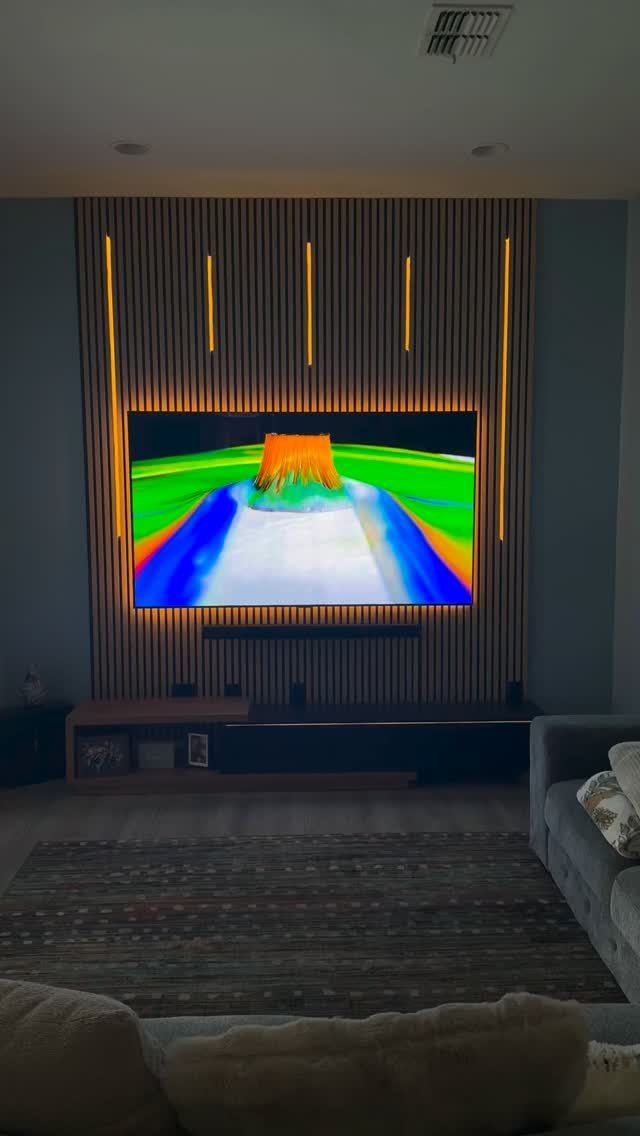
A vertical LED strip set into a slatted wall gives the TV a frame without a single visible fixture. Running the strips in the gaps between slats lets the glow spill sideways and wash the wood.
For a budget build, strips are cheap and easy to tuck behind wood, so this is a good weekend job. Warm yellow and orange suit wood better than cool white, which tends to look clinical.
Keep the strips on the wall around the screen, not across it.
3. Accent Lighting for Movie Memorabilia
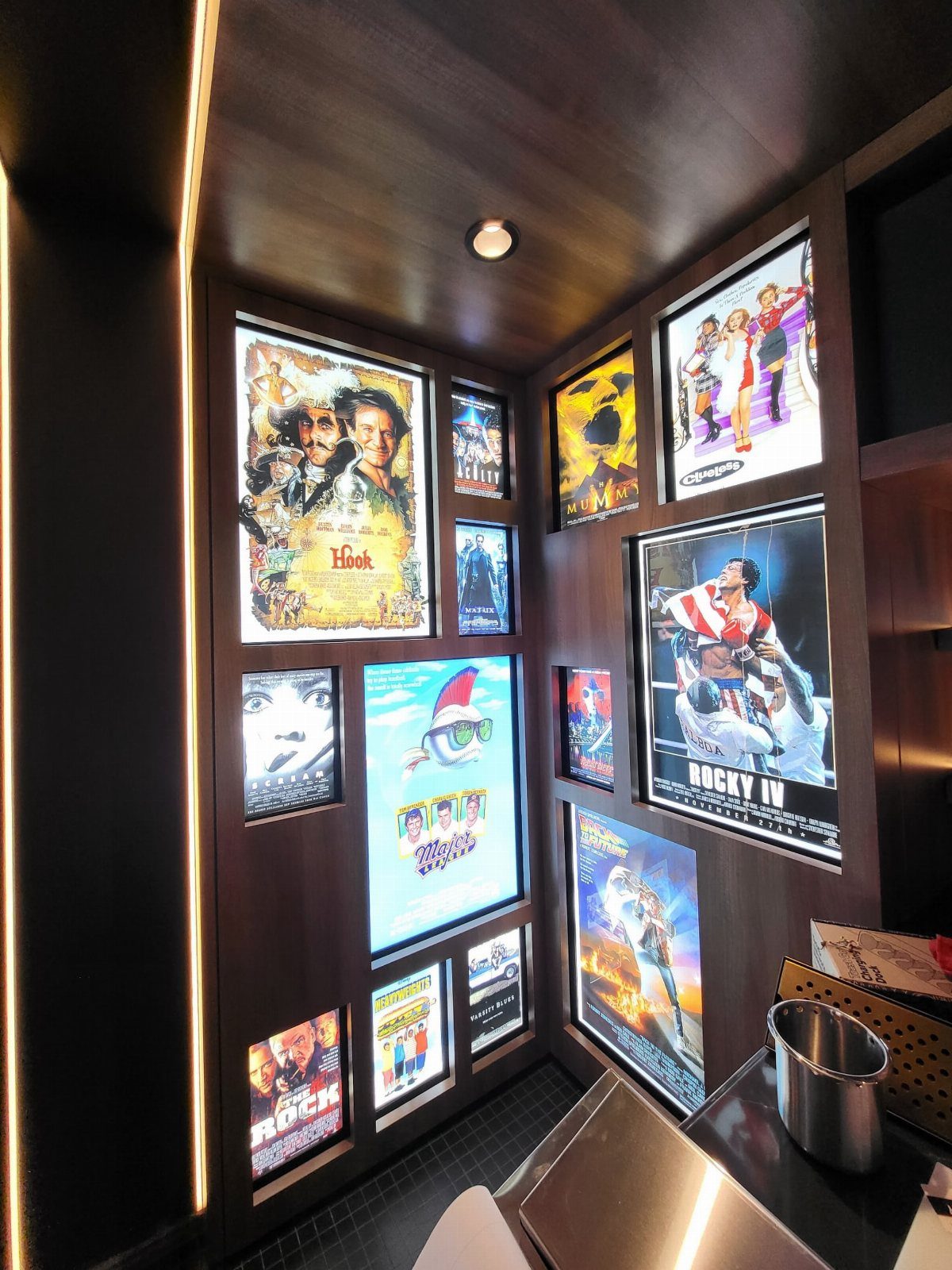
Backlit posters turn a wall of movie favorites into the room’s light source. Dark wood makes them pop, because each poster becomes a glowing panel against a dim background.
I would pick a mix of eras, as with the Hook, Rocky IV and Mummy posters here, so the wall feels collected rather than matched.
Lit frames should sit on a dimmer or a separate switch from the rest of the room, so you can turn them down or off once the movie starts.
4. Screen Bias Lighting
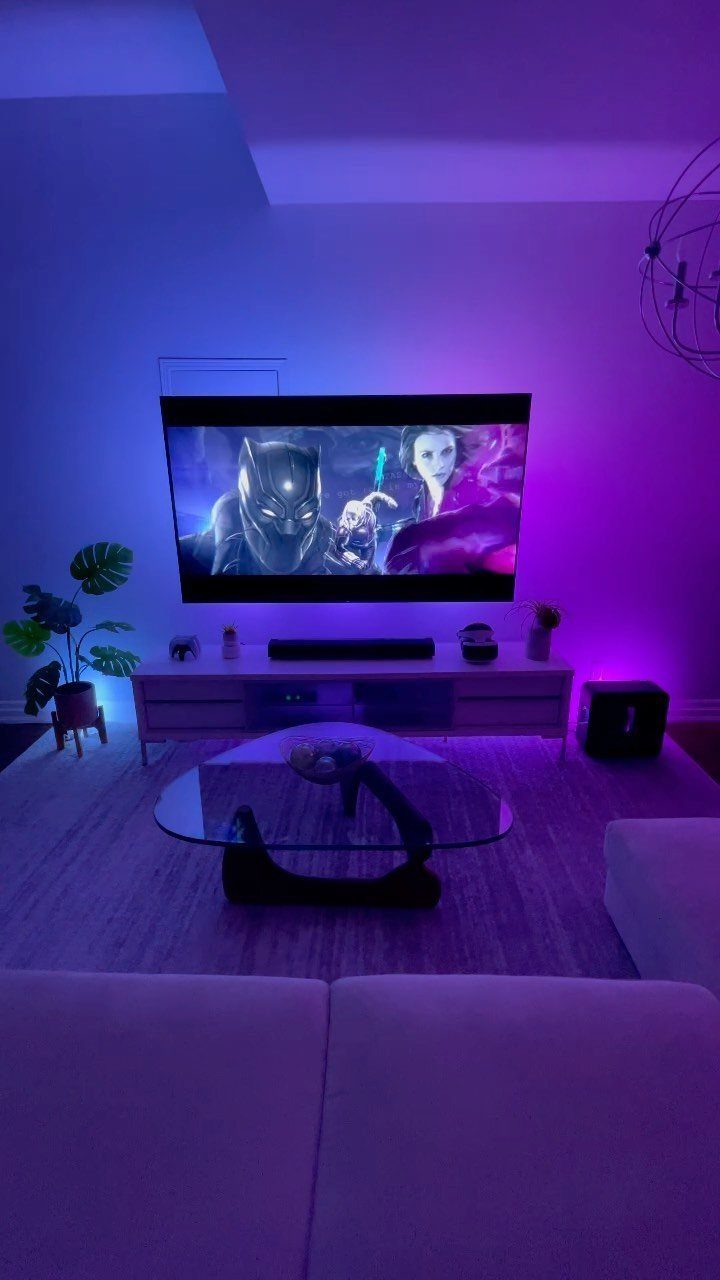
Bias lighting is a soft glow placed behind the TV, and it is the cheapest fix on this list for tired eyes.
A bright screen in a dark room makes your eyes work hard, and light on the wall behind it eases that contrast.
A white wall bounces bias lighting back evenly, which matters more with colors like purple and blue that shift tone easily.
Pick a color you can live with for a full film, and keep it dim enough that it never competes with the picture.
5. Star Ceiling
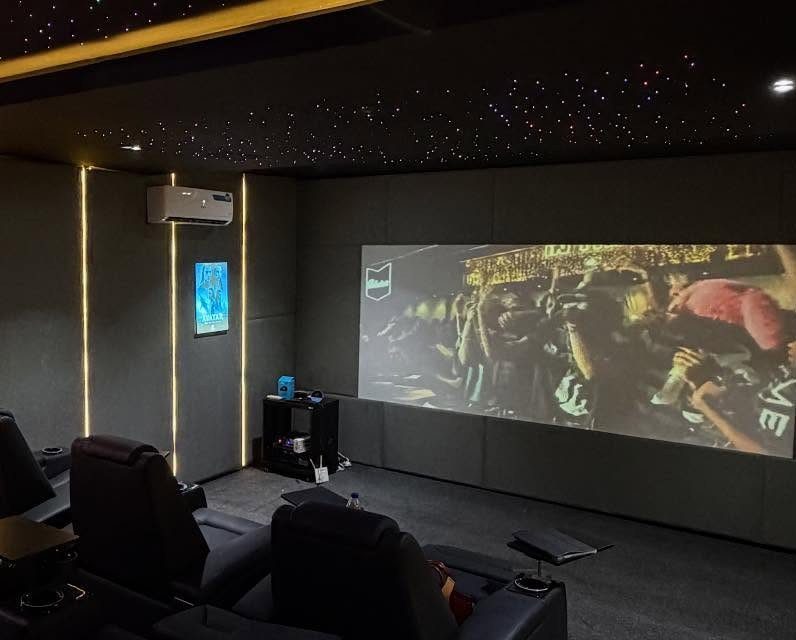
Small fiber-optic points across a black ceiling make a theater feel like it has no top. Black matters: it hides the ceiling itself, so the lights read as stars rather than as bulbs.
This suits a dedicated room with a projector, where the ceiling is already dark. Keep wall lighting low and warm if you want the stars to stay the focus instead of competing with brighter fixtures at eye level.
Expect a bigger job than strips, since the fibers run through the ceiling.
6. Mood Lighting
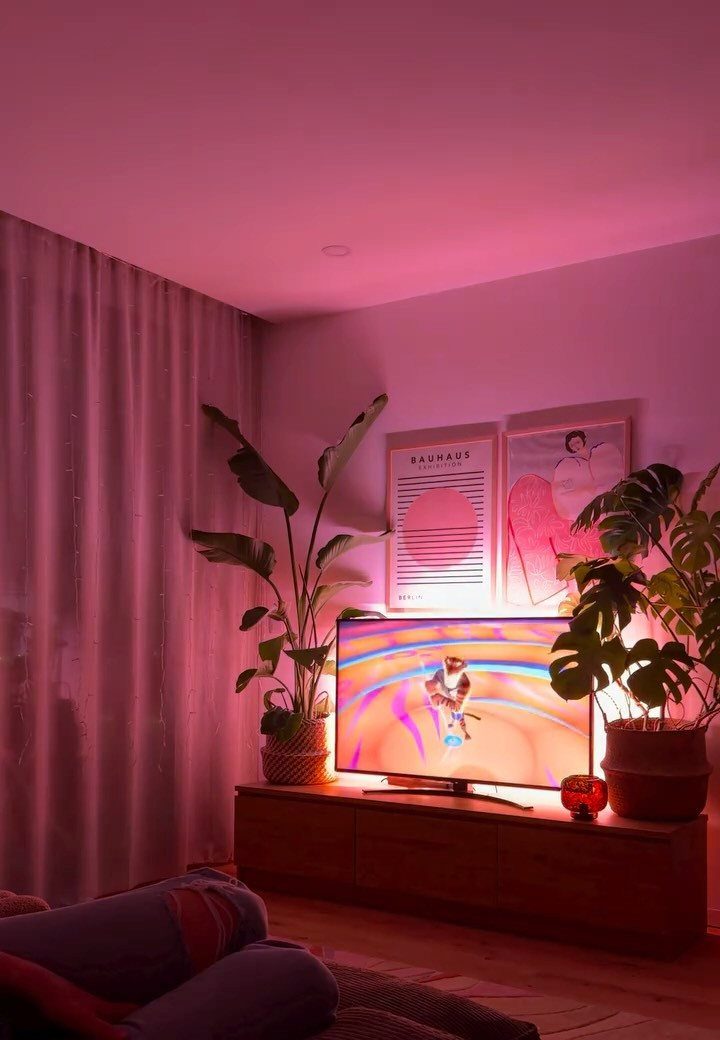
Mood lighting means you can change the room’s feel with one control. Pink behind the TV and art suits a casual night, and a different color or a lower level can suit a serious film.
Smart bulbs or color-changing strips make this affordable, and a remote or app does the switching. I would choose a setup with a dimmer, since brightness changes the mood as much as the color does.
Set one or two favorite scenes and leave them.
7. Wall Panels Resembling Star Wars Lighting
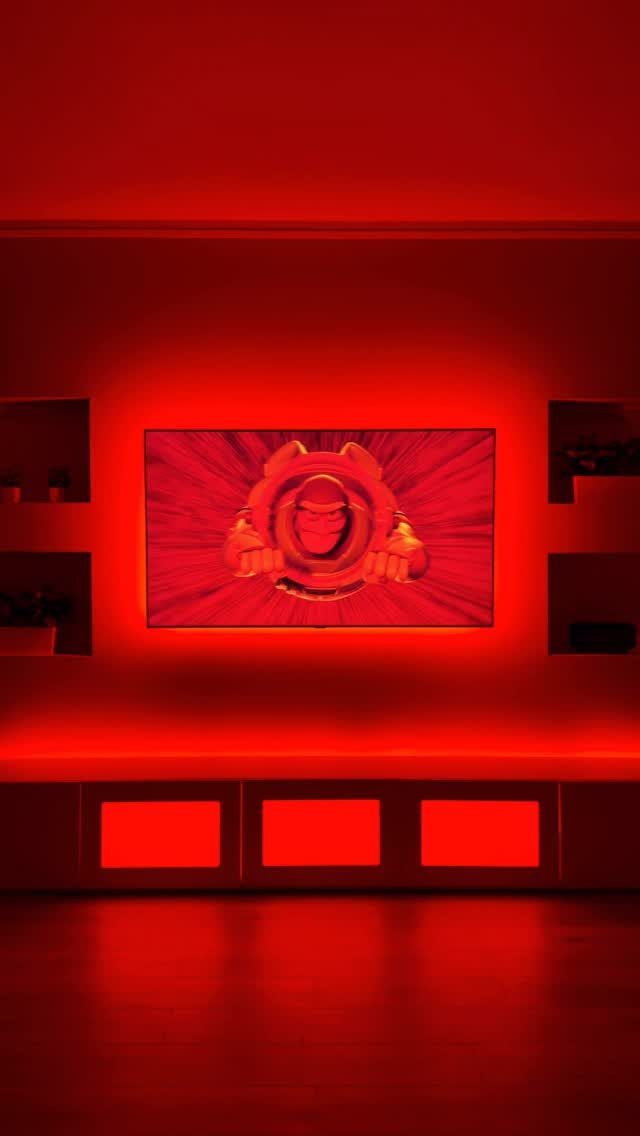
Three glowing red rectangles under the screen borrow the look of the Death Star’s panel lighting, and they cost far less than the idea suggests.
Backlit panels or lit rectangles set low on the wall give a sci-fi accent with no fixtures overhead.
Red suits a dark room, and it works best when the rest of the lighting stays off. I would keep the panels on their own switch so they can go dark for films that don’t match the theme.
This is a playful choice for a dedicated fan room, not a wall for a shared living space.
8. Ambient Lighting
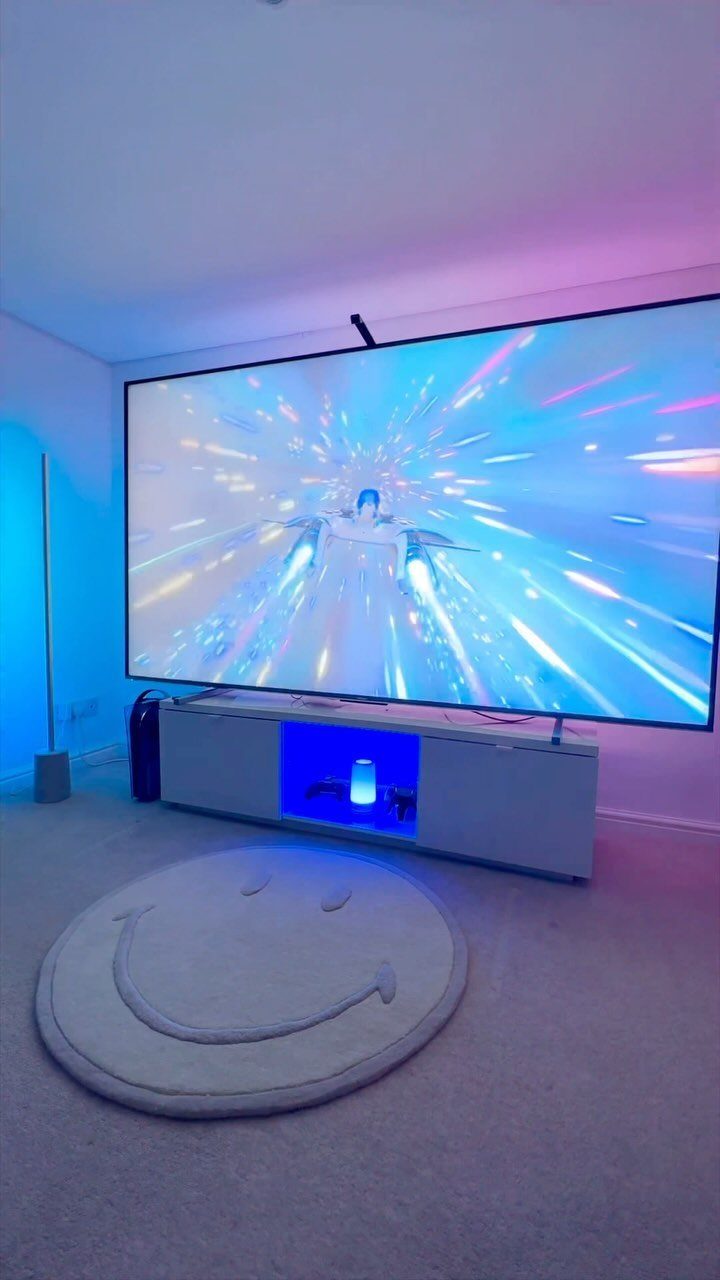
Light inside the cabinet works well against a white finish, which reflects the color back evenly.
I like keeping both sources in the same color family, as here, so the glow reads as one wash instead of two competing lights. Dim is better than bright, since the screen should stay the brightest thing in the room.
Strips or smart bulbs make this a cheap weekend setup.
9. Integrated Slatted Wall Lighting
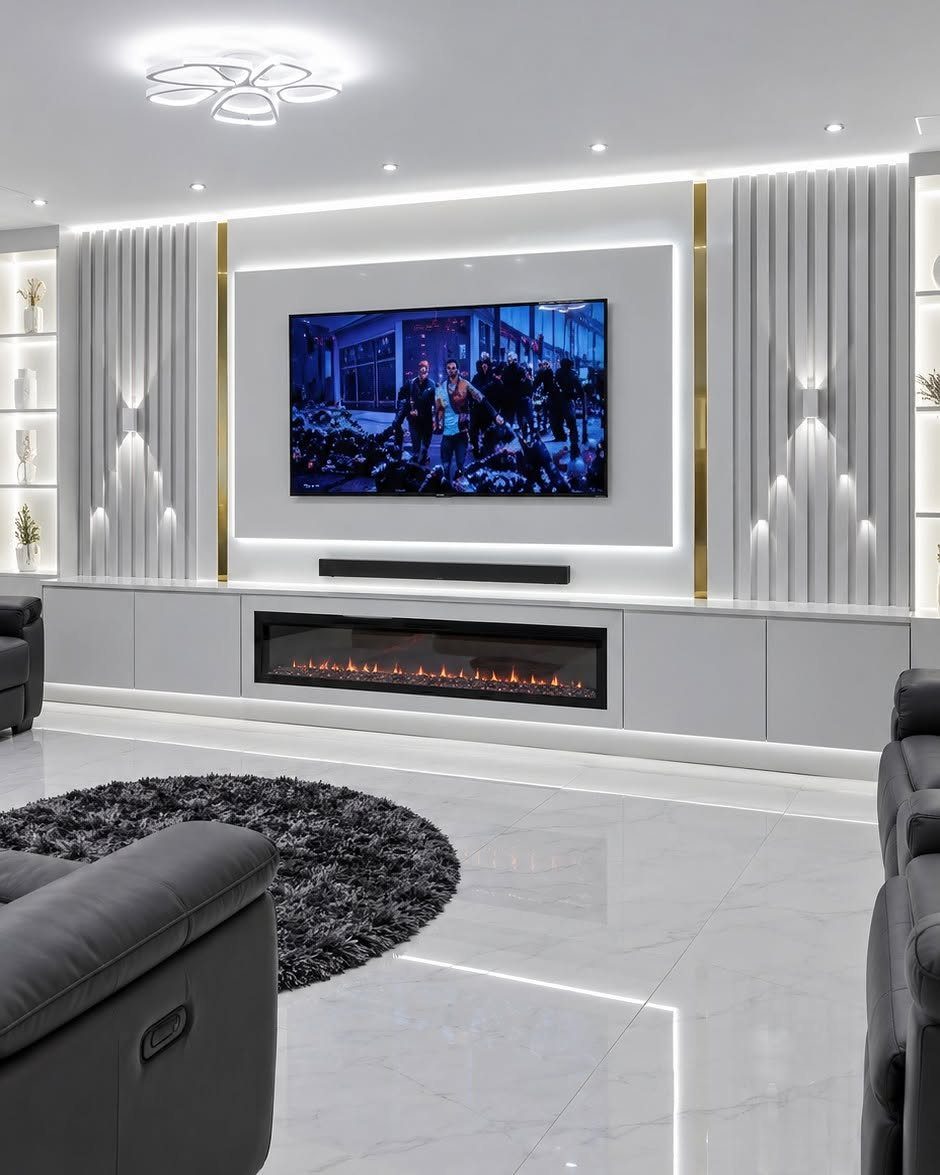
White slats with vertical light built in on either side of the screen turn the TV wall into a clean, modern frame.
The light runs in lines that match the slats, so it reads as part of the wall instead of an added fixture.
White slats also bounce the glow around, which softens it. I would choose a warm tone to match gray seating and a shag rug, since cool white can feel clinical next to them.
Plan the wiring before the slats go up. Cutting in lights afterward is the harder job.
10. Illuminated Built-In Shelving
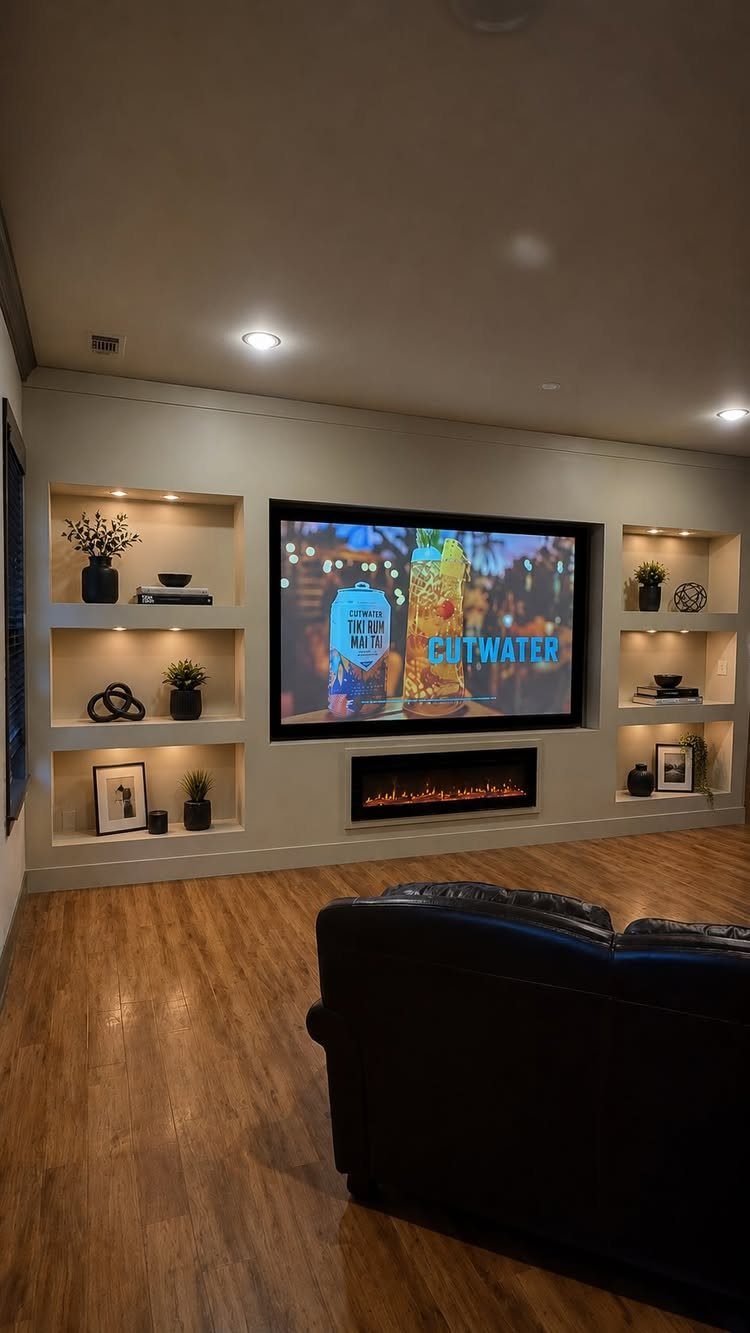
Lit shelves beside the screen make a media wall look finished even when the movie is off.
The maker of this one used 48" floating shelves with recessed lighting, a 60" fireplace and a 100" projector screen to turn a blank wall into the focal point.
Warm light suits the decor on the shelves and the wood floors below. I would keep the shelf lights on a dimmer so they can sit low during a film and not compete with the picture.
Recessed lighting is a bigger job than strips, so budget builds can start with strips.
An ideal home theater has big cushy seats, a huge screen and an impressive sound system; but don’t overlook the lighting design! The right lighting is pivotal to creating ambiance and improving your viewing experience.
Importance of Proper Lighting
Stray light washes out black levels and flattens contrast, so the lighting you choose decides how deep and sharp the screen looks.
Too much brightness washes out contrast and color, and too little leaves your eyes working hard, so aim for a room that feels cinematic without being hard to see in.
Glare is the other problem. Lamps and bright fixtures that reflect off the screen flatten the image, so check for reflections from every seat before you settle on placement.
Low lights along the path to the seats are worth adding, since people can walk in late or get up for snacks without a bright overhead flicking on mid-scene.
Dimming Options
Put every light you plan to use on a dimmer, and think of the room as having 2 modes: everyday and movie. One adjustment should get you from a bright room to a dark one.
Smart controls make this easier. Many can store presets, so a single command or a schedule sets the level for you.
Match the setting to what’s on. A romantic film may want a soft glow, a horror movie often works best in near darkness, and sports or video games sit somewhere in between.
With color-changing LEDs, deep blue suits calm scenes and red suits tense ones, but use them sparingly and keep them low.
Color Temperature Considerations
Check the Kelvin number on the box before you buy, because it decides whether a room feels cozy or sterile.
For a dedicated theater, choose warm white at 2700K–3000K. It mimics classic incandescent light and avoids the clinical look.
In a living room that also serves as the media room, I’d pick bulbs around 3500K–4000K: a neutral white that feels easy during a movie and still bright enough for everyday use.
Daylight at 6500K belongs only in bias lighting directly behind the display.
Film is graded to a white point of 6500K, so a bias light behind the screen at that temperature keeps skin tones and colors looking the way the director intended.
Skip cool white at 5000K and above for main lighting. Its heavy blue content suppresses melatonin and keeps you alert when you want to wind down.
Frequently Asked Questions
What is the best type of lighting for a home theater?
Layered lighting works best: a dim ambient base, a soft bias light behind the screen, and low accent or path lights.
Put every layer on a dimmer so one adjustment takes the room from bright to dark. Ambient light reduces contrast and makes blacks look gray, which is why the display itself should outshine everything else.
How to decorate a home movie theater?
Start with lighting that doubles as decor: lit poster frames, LED strips tucked into a slatted wall, or lit shelves beside the screen.
Backlit posters from a mix of eras look collected rather than matched, and dark wood makes them glow.
Keep everything warm and dim, and put the decor lights on their own switch or dimmer so they never compete with the picture.
What is bias lighting and does a home theater need it?
A low-level light placed directly behind the screen costs almost nothing and cuts down on eye strain during long sessions.
Your pupils dilate in darkness and then constrict when they hit the bright display, and a backlight reduces that constant adjustment. Daylight at 6500K suits it best, since film is graded to that white point and skin tones stay true.





