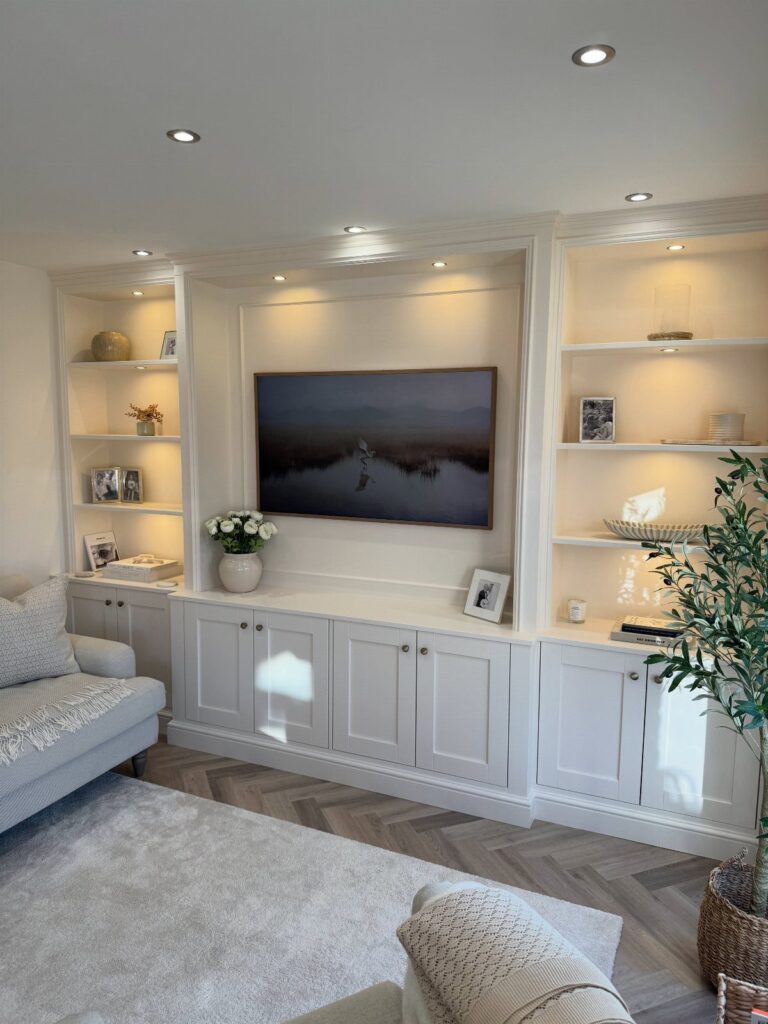
Ideas here run from a custom entertainment center and a built-in look that reads as one piece, to concealed cabinets with open shelves, a curved slatted unit, and a stone accent wall with recessed shelving.
Which one fits depends on how much of the wall you can actually build or cut into: if the wiring, curve or stone is out of reach, a flat unit with trim, slat panels or stone veneer gets you the same look.
A closed cabinet traps heat, so even the simplest version needs a few inches between devices and vents in the back panel.
1. Custom Entertainment Center
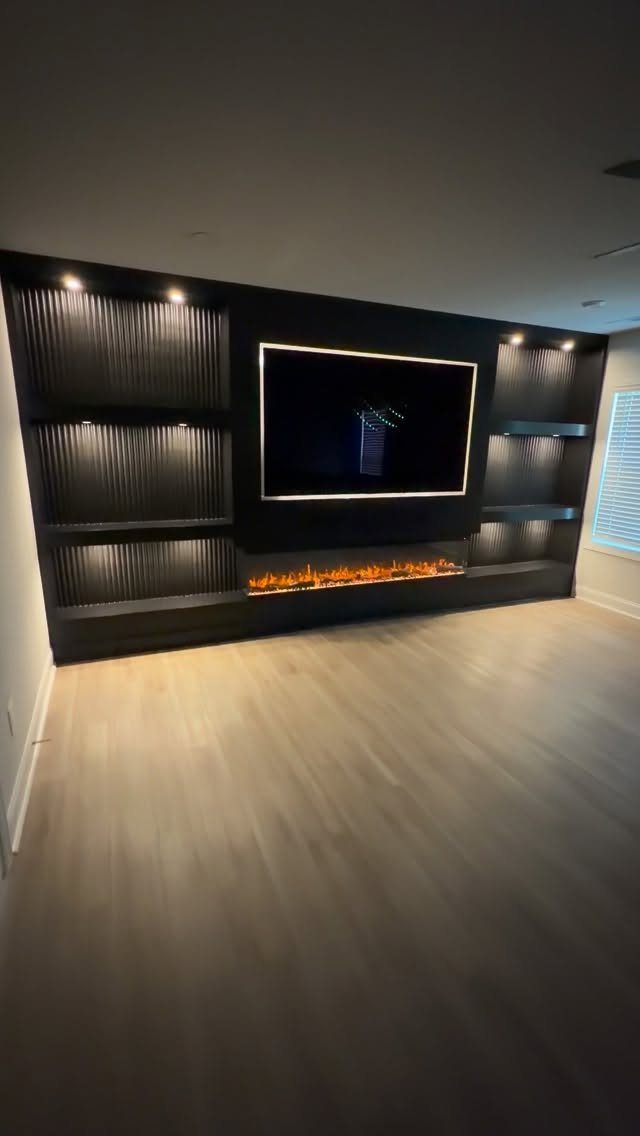
A black finish makes a TV nearly disappear, which is why I like it for a wall that holds a screen, a linear fireplace and lit shelving together.
Dark paint hides the screen’s black bezel, so the unit reads as one calm block.
Plan the fireplace and TV positions before any cabinet sizes are set. Electric units need power behind the wall, and cutting that in later is the part that costs time and money.
2. Built-In Look
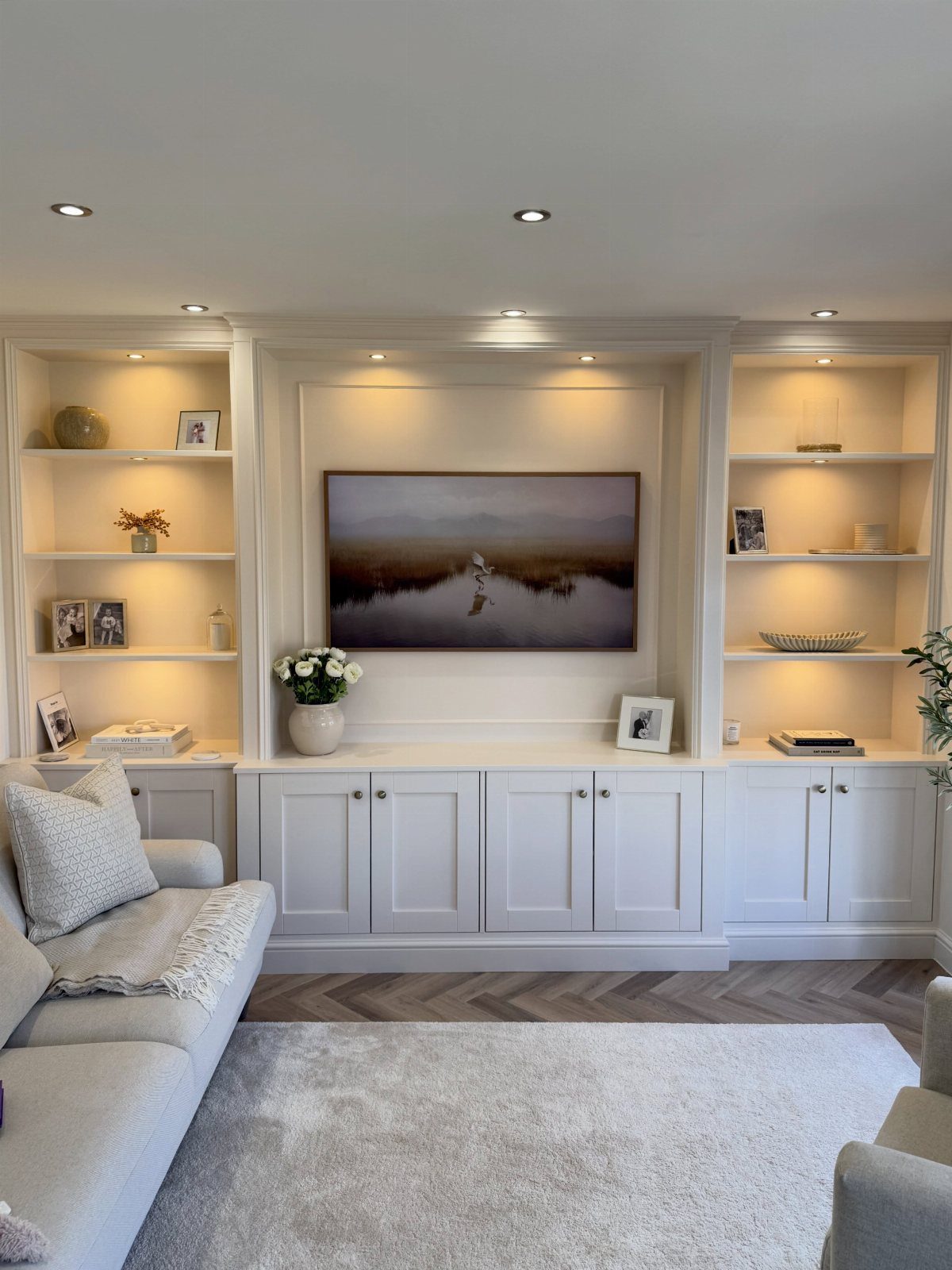
White paint on shelves, cabinet doors and the frame around the TV is what makes a unit look original to the house instead of added later. Painted trim and a recessed TV niche do most of that work.
For a renter-friendly budget, I would build the look with stock bookcases and trim, then caulk and paint them as one piece. Warm bulbs in the shelves soften all that white.
3. Concealed Cabinets and Open Shelves
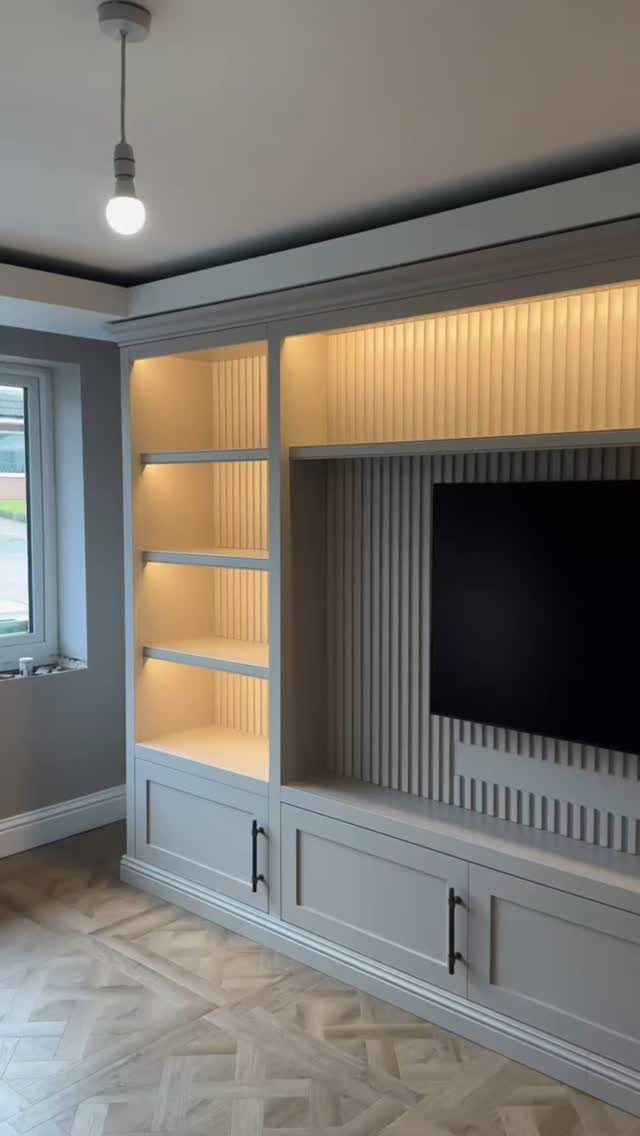
Closed doors below, open shelves above: that split is the most practical way I know to keep a TV wall from looking cluttered.
Cables, game consoles and remotes go behind the doors, and the lit shelves hold only the things you want seen.
Keep the shelves about two-thirds full. A light grey paint keeps the whole unit calm against a busy floor pattern.
4. Integrated Lighting
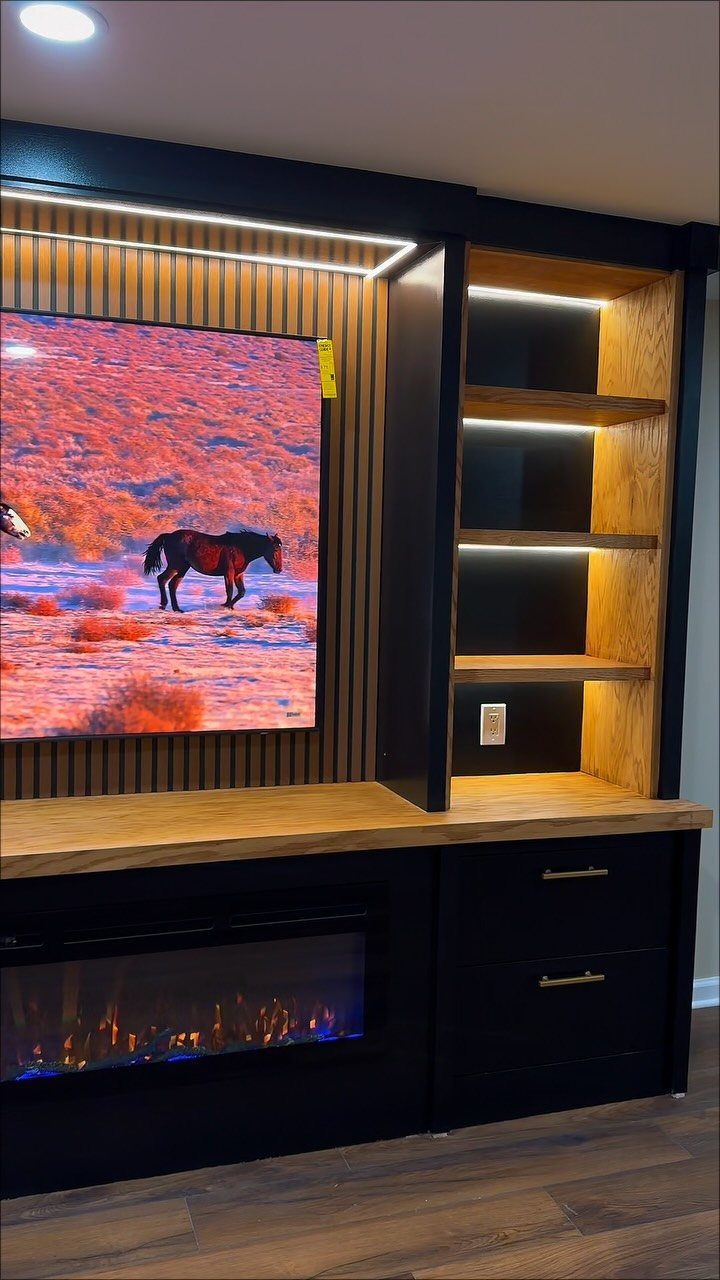
LED strips tucked under a top overhang and along the shelves give a built-in its glow, and they cost far less than cutting in recessed fixtures. Choose a warm white so wood and a fireplace flame look natural together.
Hide the strip behind a small lip so you see the light and never the diodes. Put it on a dimmer if you watch TV in the evening, since a lit wall behind a screen can glare.
5. Entertainment Center Wall Units
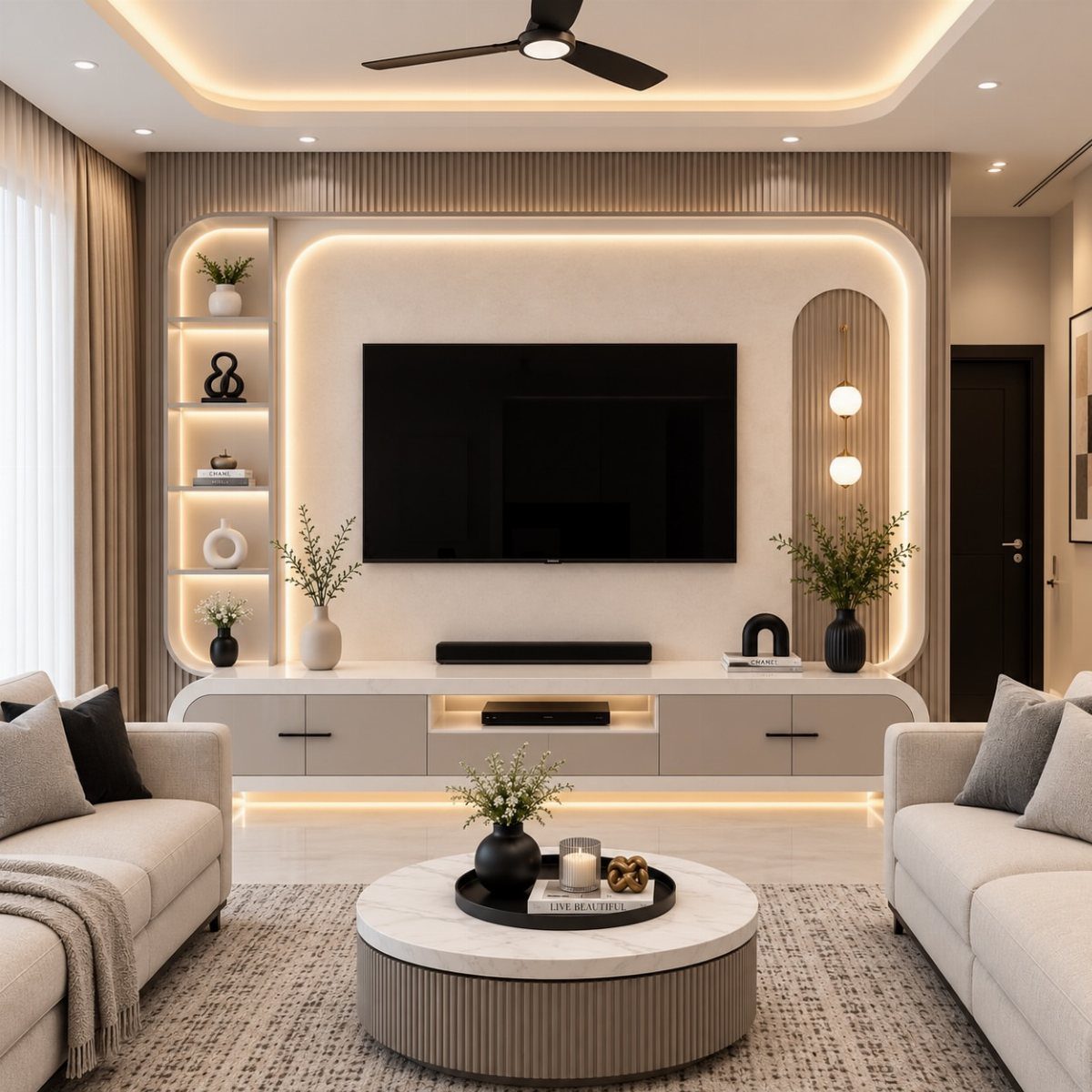
A wall unit that runs the full width of the room turns the TV wall into the focal point and gives every remote, router and board game a place.
With a low cabinet under a big screen, the storage sits at hand height.
Measure the TV’s width and add several inches on each side so the screen does not feel jammed in. Seating that faces the unit, like 2 sofas around a round table, keeps the viewing angle comfortable.
6. Custom Finishes
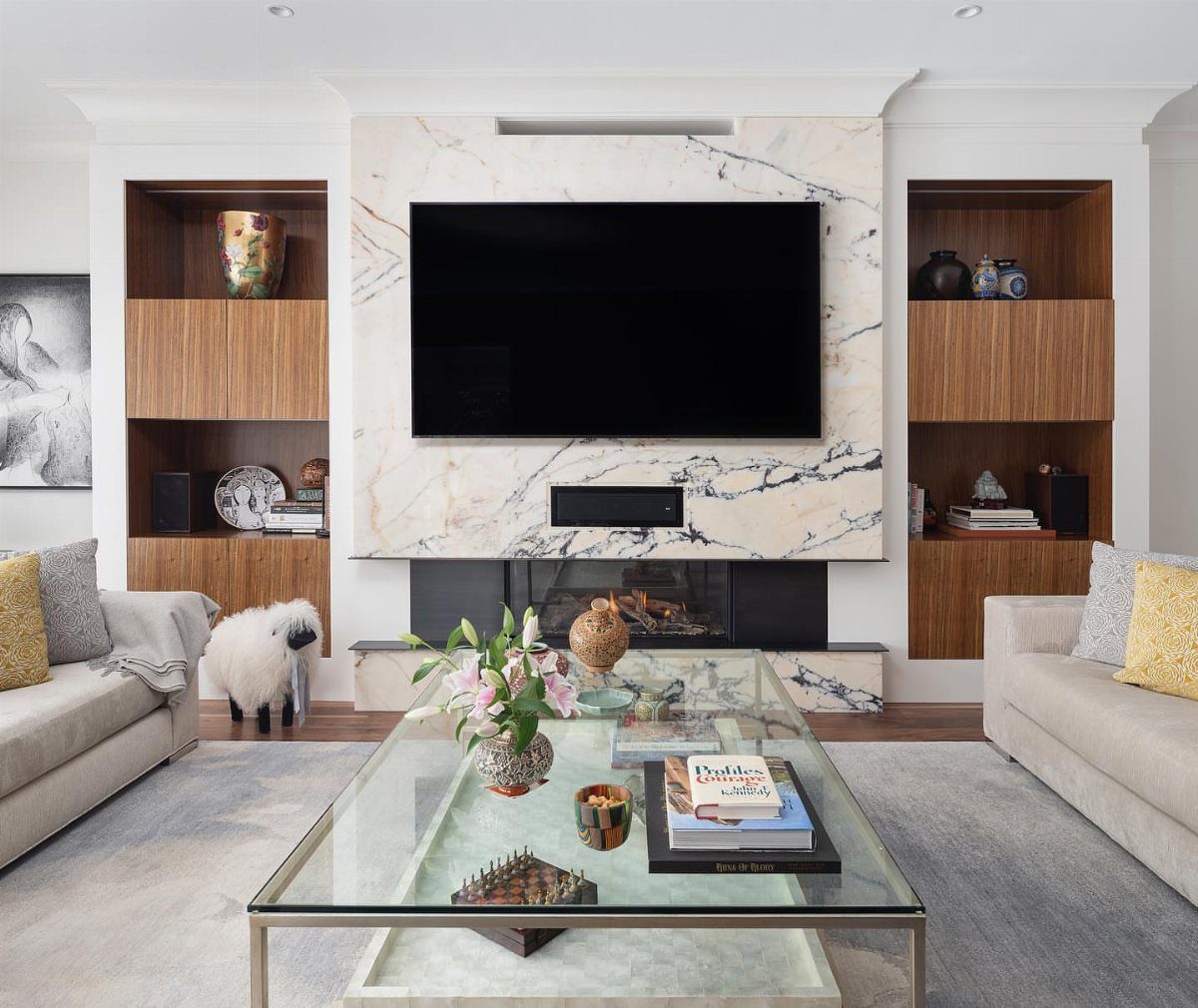
Finish choices decide whether a built-in feels cold or lived in, and I lean toward pairing marble on the fireplace wall with warm wood shelving. The stone brings pattern; the wood keeps it from feeling like a showroom.
If real marble is out of budget, a marble-look surface can carry the same idea. Order wood samples first and hold them next to your floor, since slightly mismatched tones look worse than a clear contrast.
7. Curved Slatted Entertainment Unit
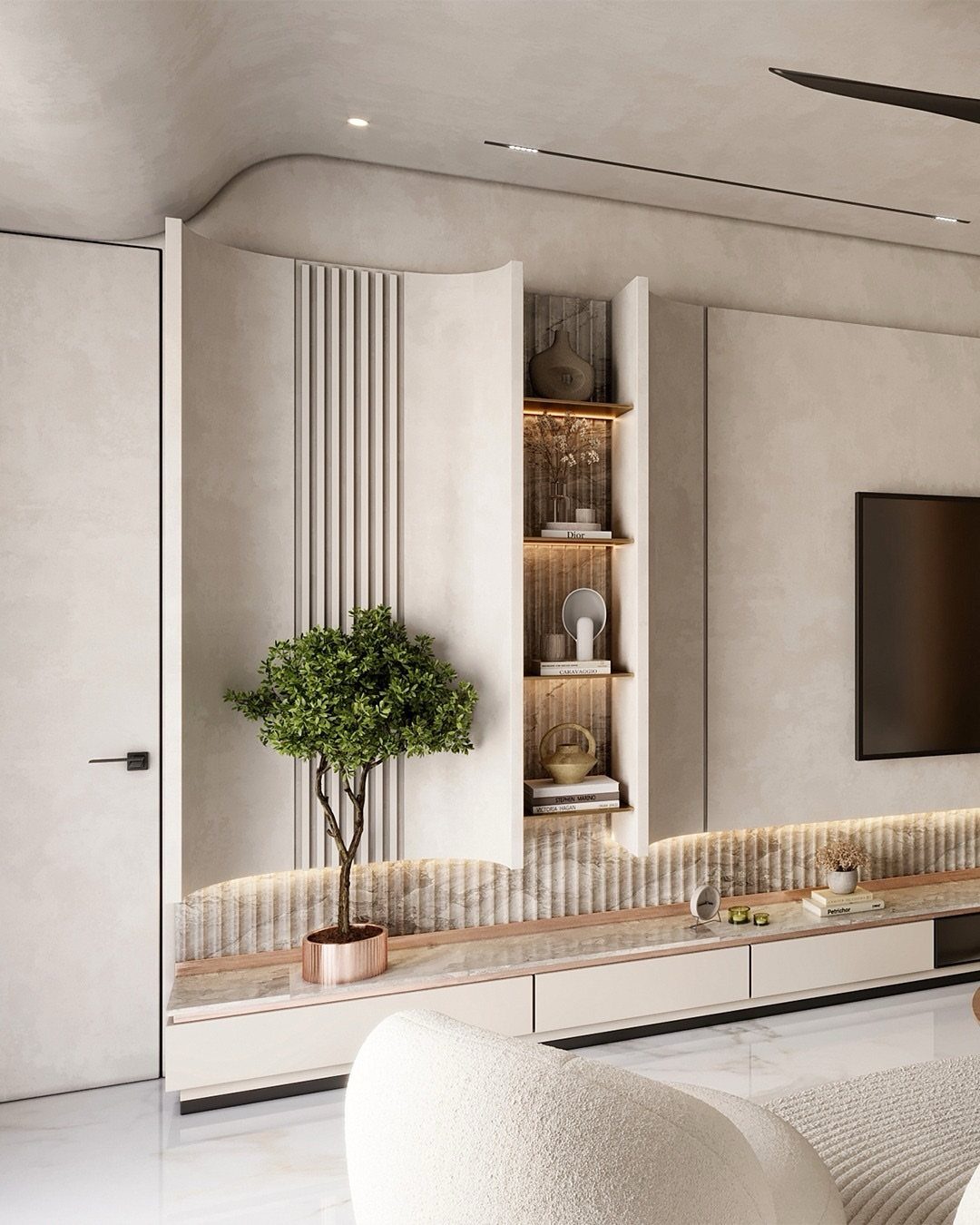
Curved walls soften a TV wall in a way a flat box cannot, and vertical slats make that curve read as a deliberate design rather than a bend in the drywall.
A beige or similar soft neutral suits the shape. If the full curve is beyond a weekend build, I would copy the look with a flat unit and slat panels, which are the part people notice.
8. Stone Accent with Recessed Shelving
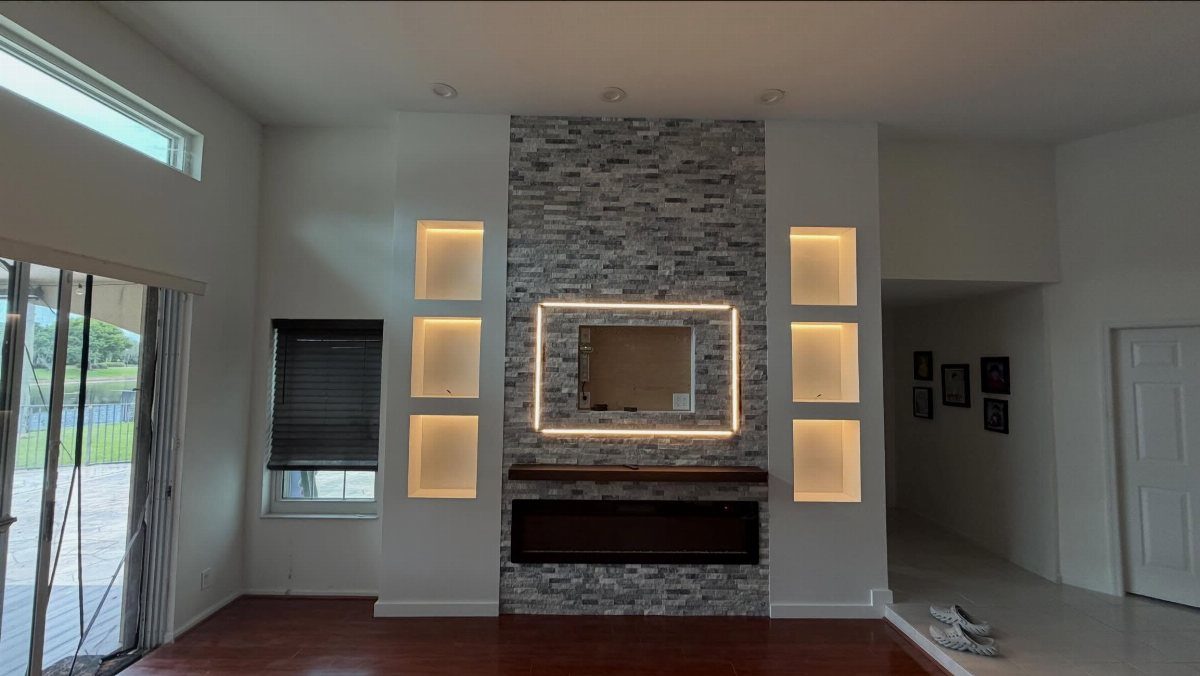
Stone around the TV inset and fireplace gives a media wall weight, and square niches lit from inside keep that weight from feeling heavy.
Matching columns on both sides make the wall balanced, so decor in the niches can stay sparse.
Grey stone is easiest to live with next to a mirror or screen because it stays neutral. Run lighting inside each niche and pick one warm white for all of them, so the columns glow evenly.
Stone veneer is the budget route: a real-stone fireplace wall costs more and takes more labor.
Design Process for Custom Centers
Start with a rough brief before you talk to anyone: the TV size, what has to be stored, and the 2–3 looks you keep saving.
A short list of ideas makes a meeting with a cabinet designer far more productive, and it keeps you from paying for changes later.
A professional visit usually includes measuring your room, so ask for that early. Walls are rarely square, and the final design should be drawn from real dimensions, not guesses.
Ask what the cabinets will be built from, and look at a finished door or drawer in person if you can. Solid construction costs more up front, but it is what holds up under daily use.
If custom work is out of budget, the same steps still help. Sketch the wall, measure it, and choose materials before buying anything.
Ventilation for Electronics
Electronics make heat, and a closed cabinet traps it. Space TVs, DVRs, DVD players and cable boxes a few inches apart on their shelves, and never stack one on another.
If any of them will sit behind doors, plan vents in the back panel so air can move through.
Do this while the unit is being designed, because drilling vent openings into a finished cabinet is messy and easy to get wrong.
Doors are still worth having. They hide cords and clutter and protect what is inside, as long as the air has somewhere to go.
Put the warmest devices on the shelf with the most open space around them. After a long movie night, touch the top of each box; if one feels hot, give it more room.
Maximizing Aesthetics
Look at the trim already in your room before you choose a design: baseboard, crown molding, window casing and door casing.
Matching those profiles on the unit makes it look like part of the house instead of a piece of furniture pushed against a wall.
Repeat the details you can. If the room has a chair rail or paneled walls, carry that line across the unit at the same height.
Extend the unit to meet existing architecture, such as a ceiling line or the edge of a window wall, so no awkward gaps are left.
Paint the unit to match the trim sheen, since a mismatch is easy to spot in daylight.
Where the house has no millwork to copy, simple flat trim in one consistent width still looks intentional.
Frequently Asked Questions
How to make a TV look nice in a room?
Make it blend into the wall around it.
Paint the wall around the TV a deep color like black or charcoal and the bezel disappears into it; set the screen in a recessed niche with painted trim and it looks like the house was built that way.
Warm lighting beside it, like LED strips behind a small lip, softens the screen, and a dimmer helps if a lit wall glares behind the picture.
What is a built-in entertainment center called?
Most people call it a built-in entertainment center, and once it spans the full width of a wall it often goes by media wall or wall unit.
It is cabinetry fitted to the wall that holds the TV, shelving, storage and often lighting. Some people also call the version with a fireplace a media wall, since the fireplace and screen share one surround.
How much does it cost to build an entertainment wall?
I can’t give one reliable figure, because the cost depends on the materials and how much is custom. Real stone and cutting power into the wall later both cost more, so settle the fireplace and TV positions first.
Where can I find custom-made TV cabinets?
A cabinet designer or professional cabinetmaker is the usual source for custom work.
Bring a short brief to any builder or cabinet shop: the TV’s dimensions, everything the unit has to hold, and 2–3 photos of styles you keep coming back to.
Ask them to measure the room, since walls are rarely square, and ask what the cabinets are built from. If custom is out of budget, sketch and measure the wall yourself and build from stock pieces.





