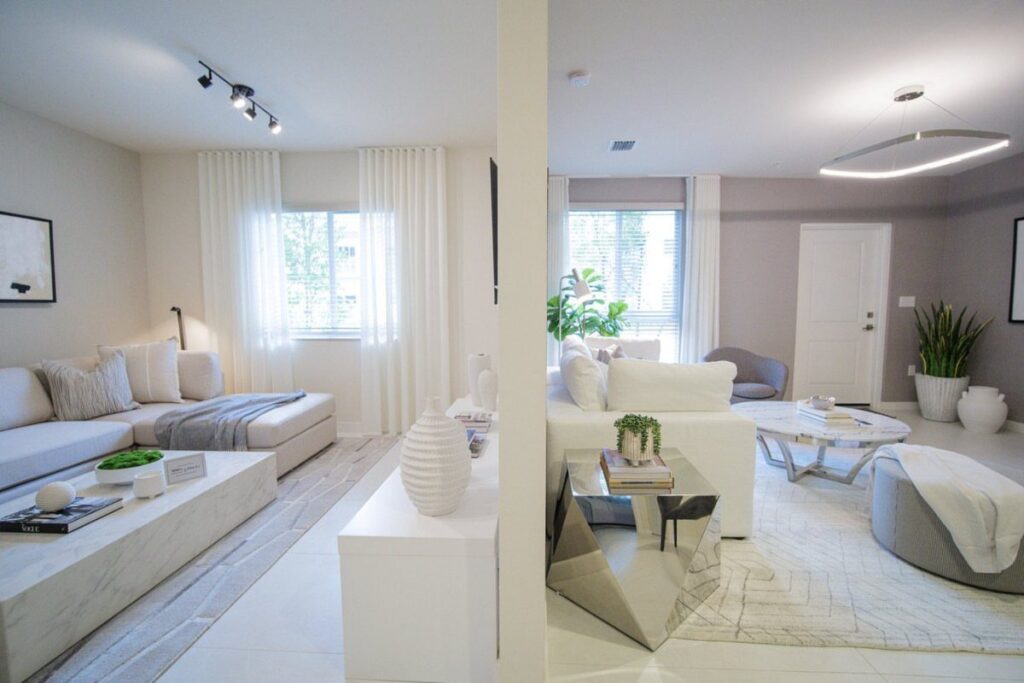
Whether you rent or own decides which of these ideas is yours: peel-and-stick herringbone planks and a dimmer on one floor lamp come up or unplug when you move out, while tall custom treatments for double-height glass suit a place you plan to keep.
Ideas range from low-cost window treatments to whole-room layouts, like an open plan with wood floors or a moody living room built around a night skyline.
1. Window Treatments
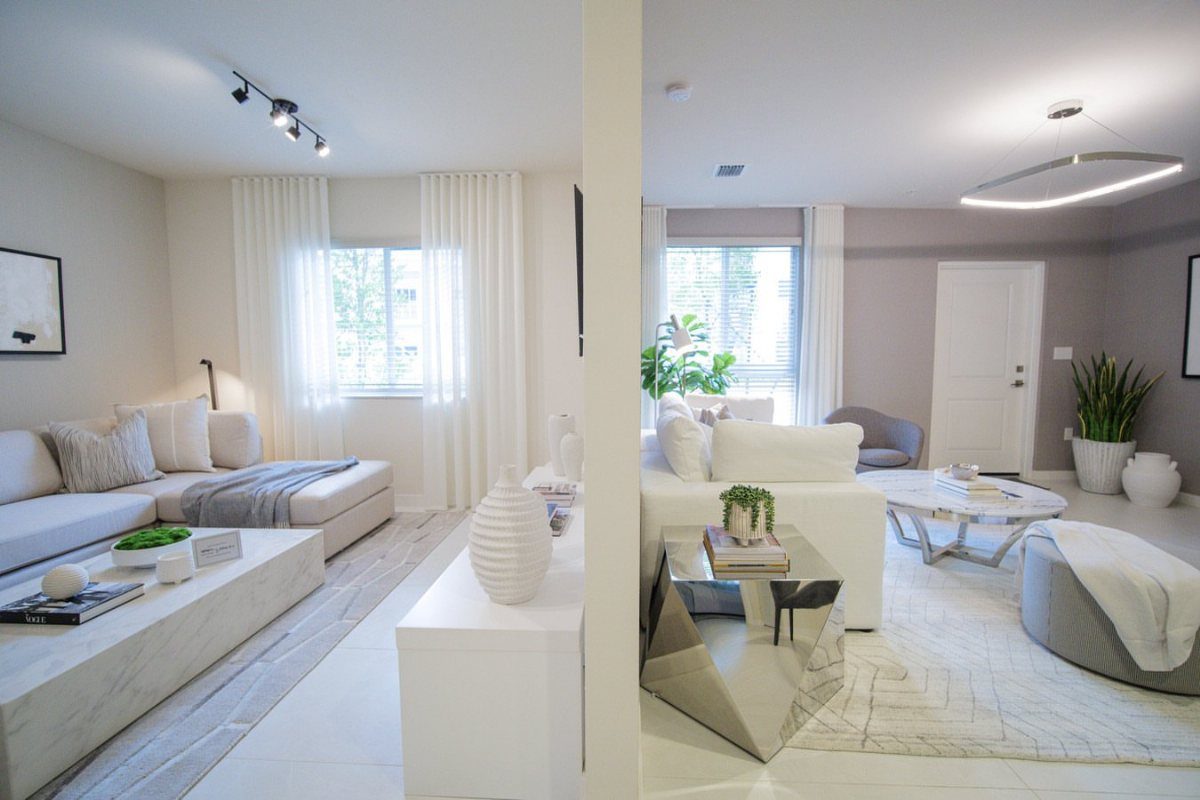
Sheer white panels hung from ceiling track to the floor give a glass wall its softest finish, and I would choose them first.
Sheers cut glare and blur the view from the street or the building across the way, while the room stays bright.
Hang them as high as the ceiling allows, so the fabric reads as part of the wall.
For a bedroom, add a second track behind the sheers for blackout panels, since sheers alone will not give you full privacy at night.
2. Panoramic Views
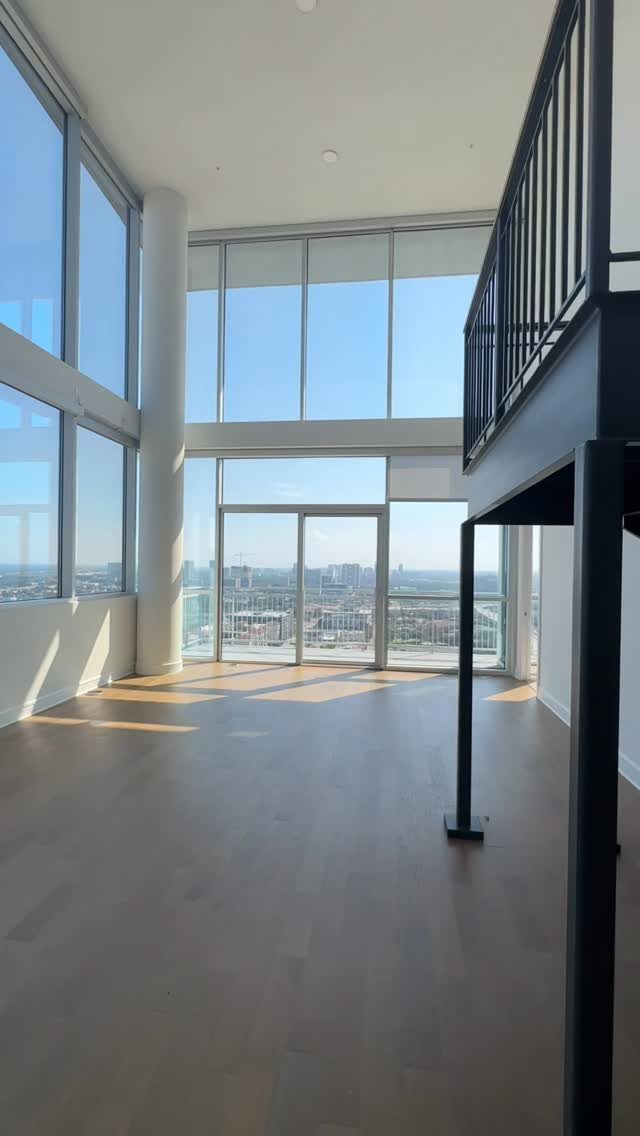
A skyline that fills the whole wall is the reason to rent a glass-walled unit, and it deserves a room that stays out of its way. Keep furniture low and the palette quiet so the view stays the focus.
Check the lease before you fall for the view. One listing here states that income must be 3x the monthly rent, which is a common bar for premium units, so run your numbers before you tour.
Initially a wow-worthy selling feature in pricey condo projects by architects like Richard Meier, who is credited with making glass residential buildings popular in NYC, floor-to-ceiling windows are now common at a broader range of prices, which means more New Yorkers are living with them.
3. Natural Light Benefits
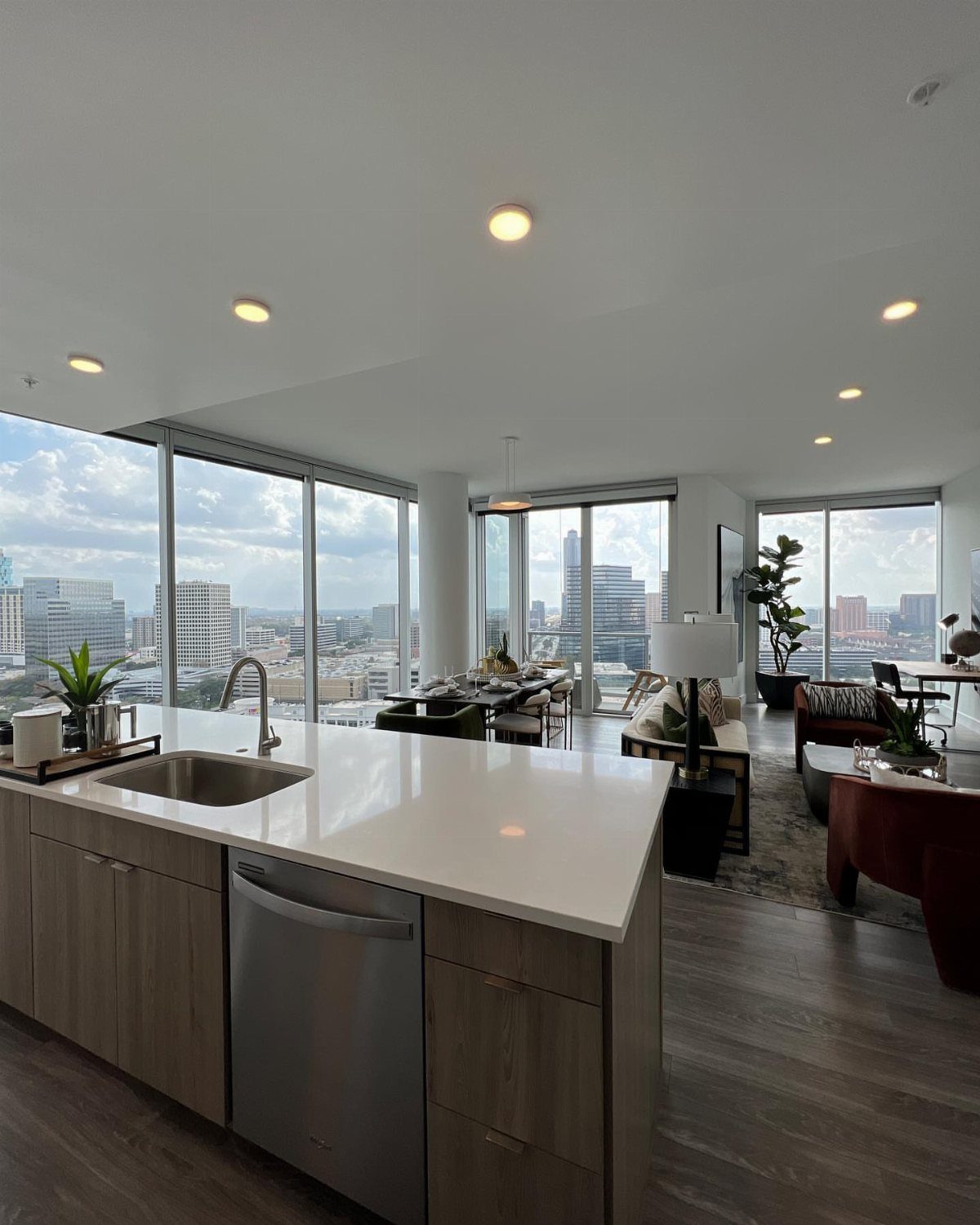
Glass from floor to ceiling puts the sun to work all day, and a white island and pale surfaces bounce that light deeper into the room.
Open plans like this spread it from the kitchen to the sofa without a single lamp.
My advice is to keep the big surfaces light and matte. Glossy finishes glare when the sun hits them at a low angle.
4. High-rise Apartment Floor to Ceiling Window
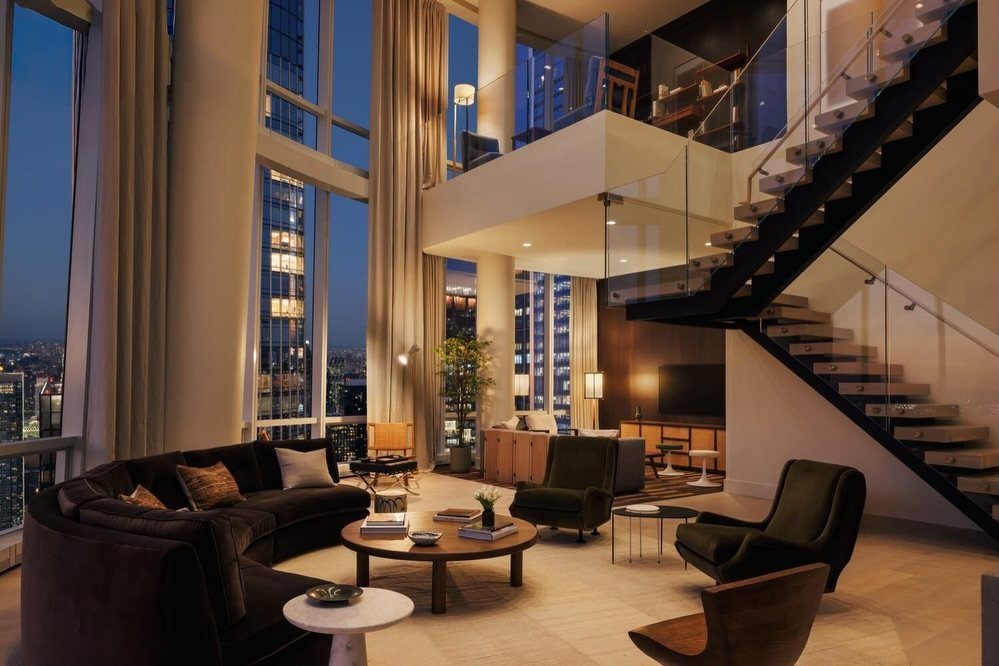
Double-height glass is the most dramatic version of this idea, and dusk is when it pays off, with the city lights coming on behind dark furniture. Dark pieces hold their own against that much window.
Plan for the scale, though. Standard curtains will not reach, so budget for tall custom treatments or accept a bare window and the lack of privacy that goes with it.
5. Open-Concept Layout with Wood Floors
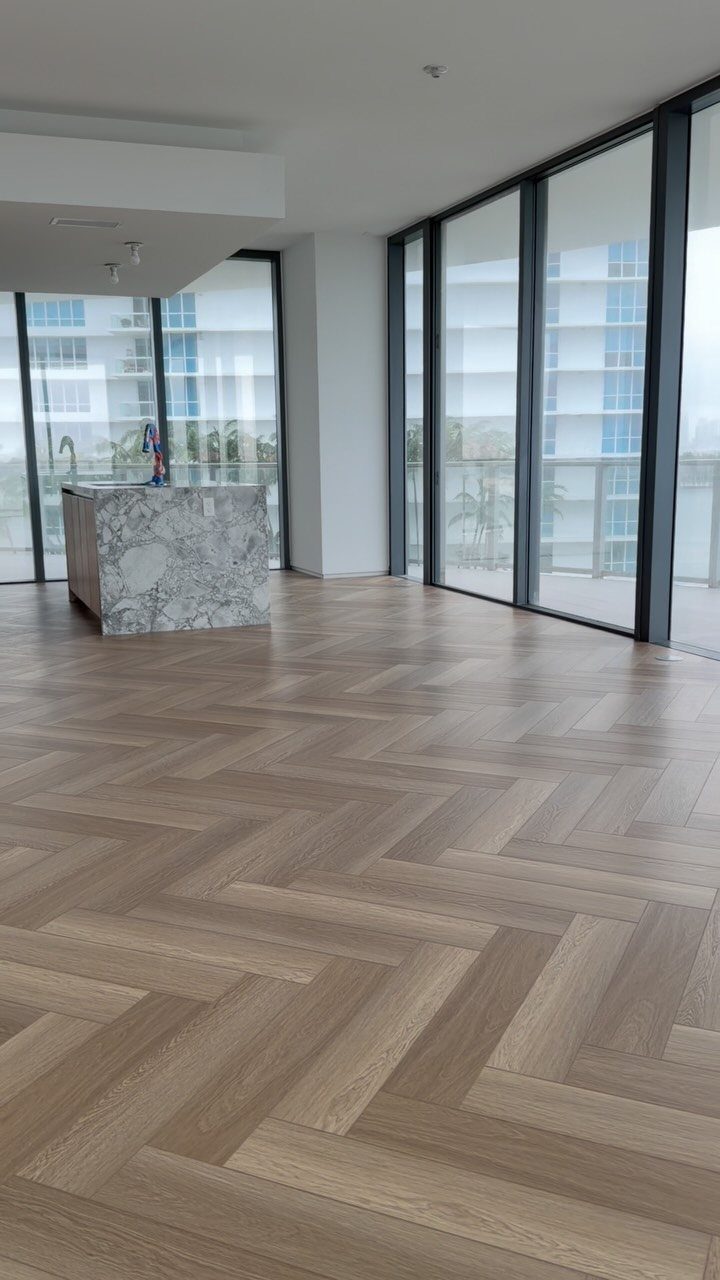
Herringbone flooring in a pale wood gives an empty, glass-walled apartment a pattern to rest the eye on. The zigzag adds interest underfoot while the walls stay clear and bright.
In a rental, you can get the look with peel-and-stick herringbone planks, which cost a fraction of real wood and come up when you move out. Choose a light tone so the floor keeps reflecting daylight instead of absorbing it.
6. Arched Doorway to Bright Lounge
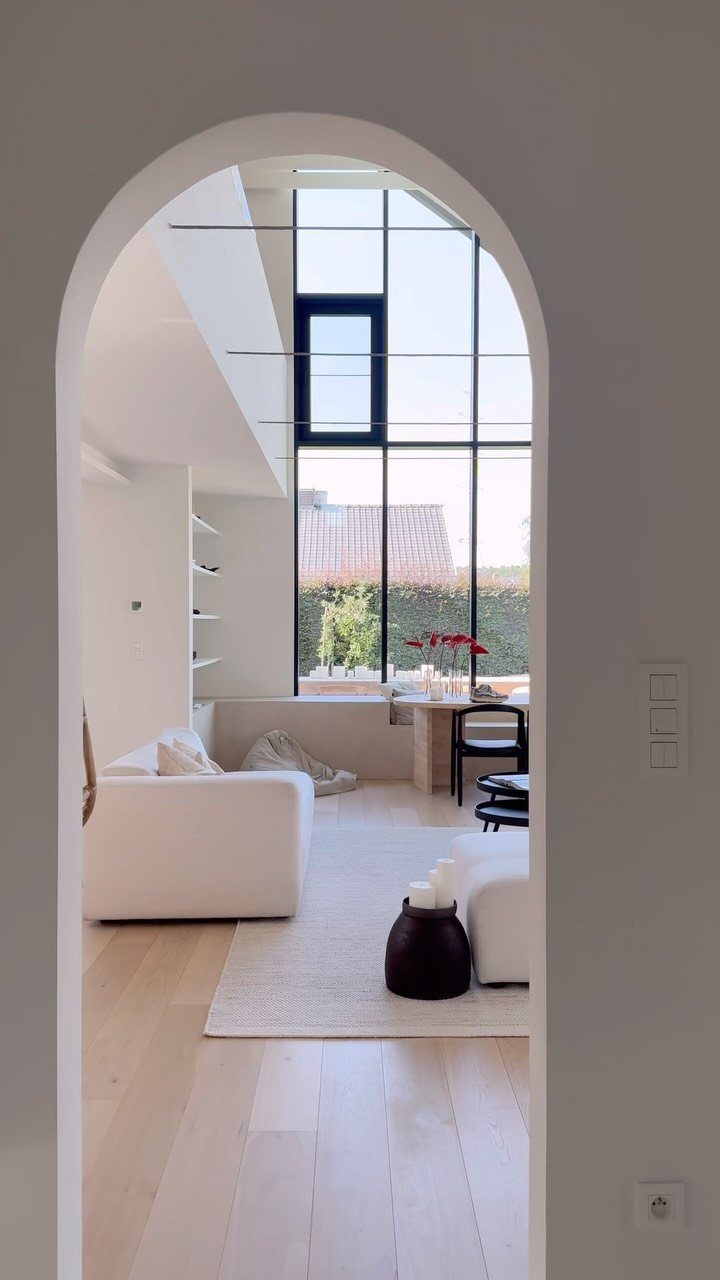
An arched doorway frames a glass wall like a picture, and I find that more striking than an open plan where everything shows at once. The curve softens the hard lines of a black-framed window beyond it.
Keep the lounge simple: a white sofa, light wood floors, and nothing blocking the glass. The thin black frame is the accent, so leave the trim and walls plain.
7. Moody Night Skyline Living Room
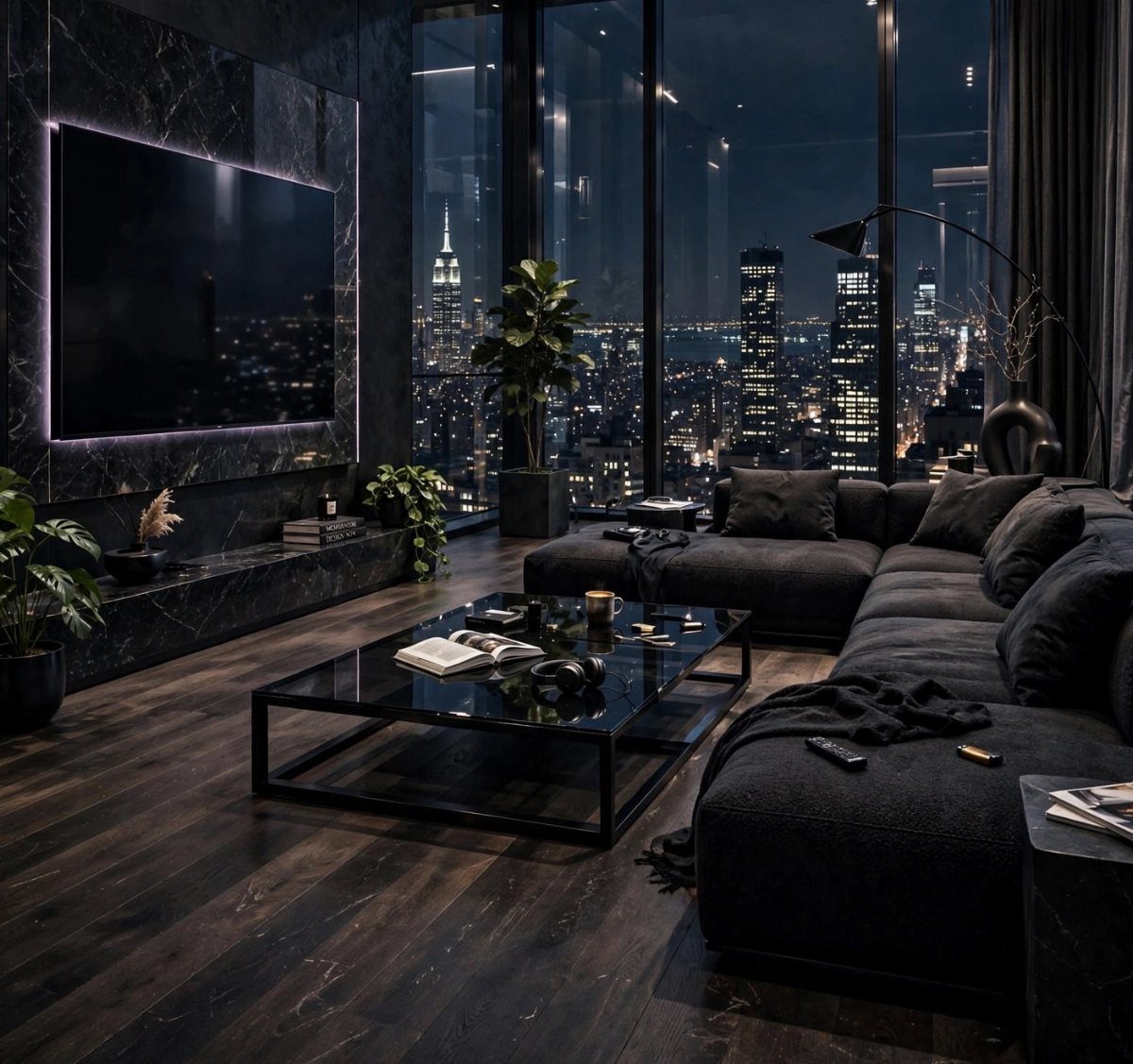
Black upholstery against a night skyline works because the room goes dark enough for the city lights to become the decoration. A black sectional facing the glass keeps every sightline pointed outward.
Keep the lamps low and warm, and skip overhead lights after dark, or the windows turn into mirrors and the skyline disappears. A dimmer on one floor lamp is cheap and does most of the work.
Matte fabric on the sofa will hide glare better than leather.
8. Light-Filled Living Room Layout
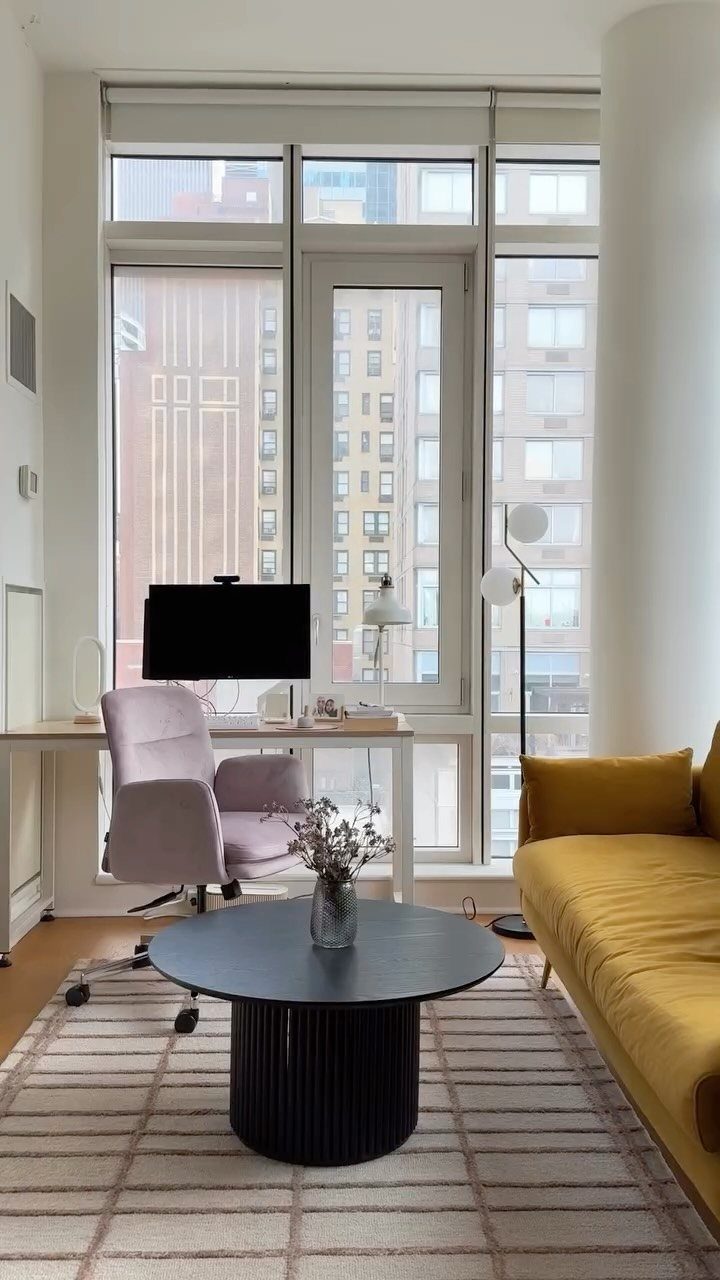
A yellow sofa is the bold move in a room this bright, and I would pick it over another neutral. Against a wall of glass and gray towers, the color reads as warm instead of loud.
Set the desk in front of the windows as well, so a work-from-home corner gets daylight without taking floor space from the seating.
A round coffee table, especially in a dark finish like black, keeps a floor-to-ceiling window layout open, since it has no corners to catch your hip as you walk around the sofa and it grounds the room against all that glass.
Keep the rest pale so the sofa stays the one strong color.
Considerations for Living with Large Windows
Floor-to-ceiling glass can make a room feel like a fishbowl, so sort out privacy and glare first, then shop for furniture. At night the view reverses: the lit room becomes the show for everyone outside.
Angle seating perpendicular to the windows instead of straight at them. You still get the view, and the direct sun stays out of your eyes.
Low-profile sofas and chairs keep sightlines open. Light wood or stone floors push more daylight upward, while dark floors soak it up.
Window-friendly plants like fiddle leaf figs, bird of paradise, or palms like bright, indirect light, so they do well near the glass. Place them at the window edge, where they also soften the view in from outside.
Benefits of Biophilic Design
Glass walls bring the outdoors in, which is the core idea of biophilic design: connecting the people in a space with nature. A view of sky, water, or city streets counts.
Light in the morning nudges your internal clock into place, which often means better sleep, a steadier mood, and more energy by afternoon. In long, dark winters, the extra daylight can also help with seasonal affective disorder.
Put your bed, desk, or breakfast spot where morning sun reaches it. If you work from home, that desk placement pays you back every day.
Add a few plants near the glass to strengthen the link to nature.
Maintenance of Large Windows
Most luxury buildings include professional exterior window cleaning several times a year, so ask the leasing office about the schedule before you move in. That leaves the inside to you, and interior glass needs more frequent attention.
Wipe it often, because smudges and fingerprints show badly against a bright view. A short routine beats a big monthly scrub.
Low-E glass, the coated kind many high-rises use, cuts UV and infrared light while letting visible light through. A good film or shade keeps the room from overheating and stops the sun from fading your rugs and sofas.
If your building has smart shades, set them to lower partway on workdays to tame screen glare and close fully at sunset.
Frequently Asked Questions
Are floor-to-ceiling windows a good idea?
Yes, if you can handle privacy and glare. Daylight pours through a full wall of glass, and light, matte finishes on the walls and floor push it further back into the room instead of bouncing it around as glare.
Morning sun can also help your sleep and mood. The cost is a fishbowl effect at night, so plan sheers or blackout panels from the start.
Are there any apartments in New York City with floor-to-ceiling windows?
Yes, many newer Manhattan glass towers have them.
ARO in Midtown West rises over 60 stories with a white metal grid around its glass, and 50 West Street in the Financial District uses curved glass panels that remove corner interruptions and open up harbor views.
Expect premium rents. Some listings set an income requirement of 3x the monthly rent, so run your numbers before touring.
How do you keep floor-to-ceiling windows from turning into mirrors at night?
Skip the overhead lights after dark and use low, warm lamps instead.
Bright ceiling light makes the glass reflect the room and hides the skyline. One floor lamp on a dimmer costs very little and fixes most of the problem.
How do you clean and care for floor-to-ceiling windows?
Before you buy a squeegee, call the leasing office and ask how often the outside glass gets washed; plenty of high-end buildings schedule a crew a few times a year.
On the inside, I wipe the glass down often, since fingerprints and smears stand out sharply against a bright view.
Five minutes every week or so works better than one long scrub at the end of the month. A film or shade also protects rugs and furniture from sun fading.





