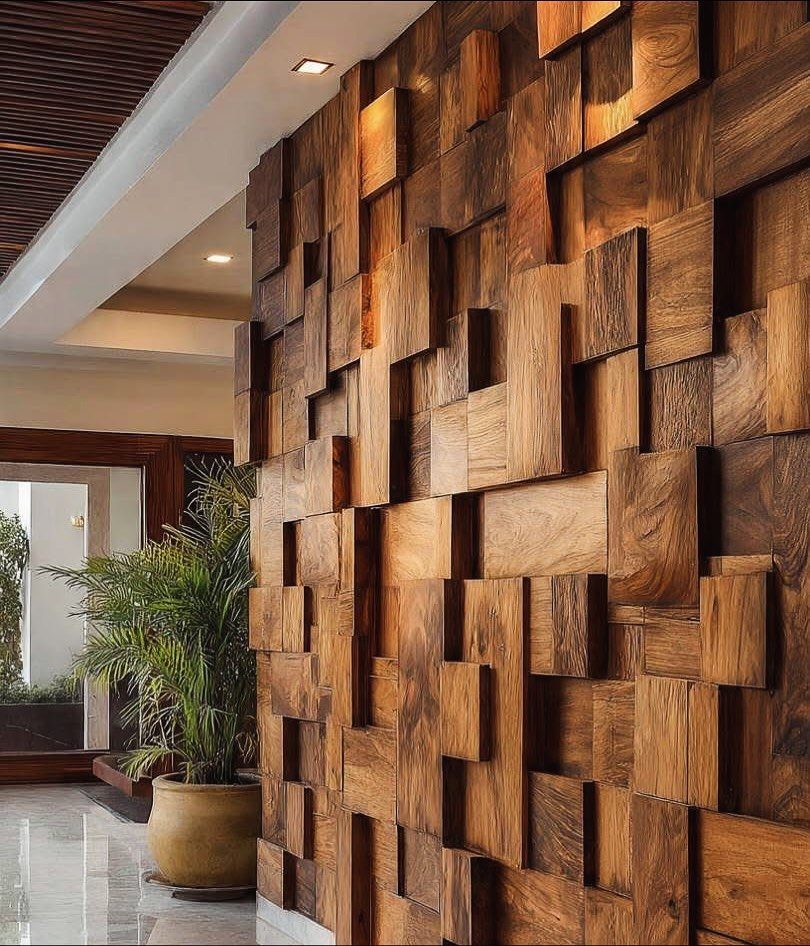
Wall panels in this list run from pallet planks to 3D geometric shapes, and the finish matters as much as the wood: a clear coat shows grain while paint leaves only shadow lines.
1. Board-and-Batten Paneling
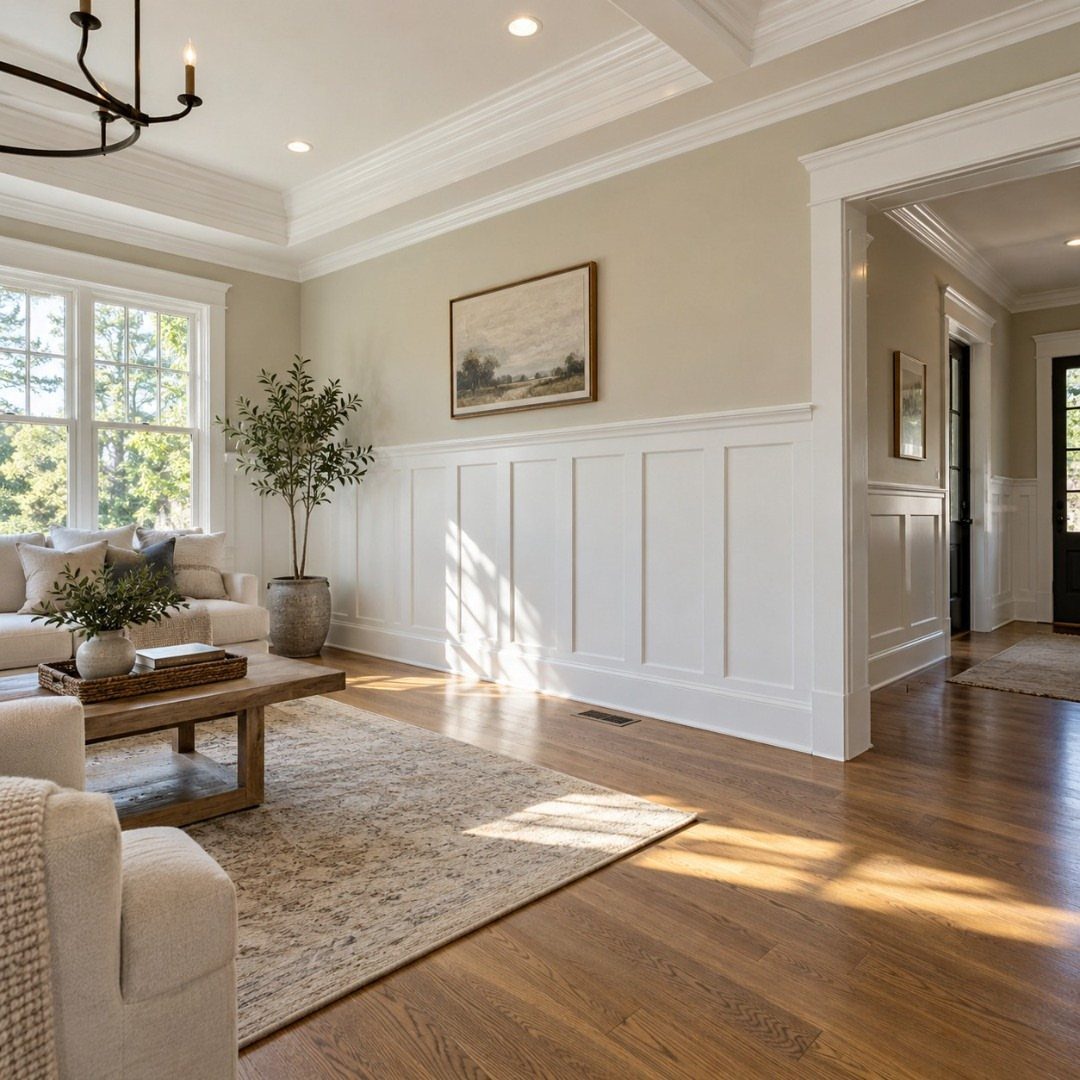
Vertical strips are what give board-and-batten its depth, and painting the paneling one color lets the shadow lines do the work.
Hardwood floors and a plain sofa let the strips stay the main feature.
For a weekend project on a renter’s budget, I would keep the paneling to the lower part of one wall first and see how the room feels before going taller.
2. Modern Wainscoting Wood Wall Panels
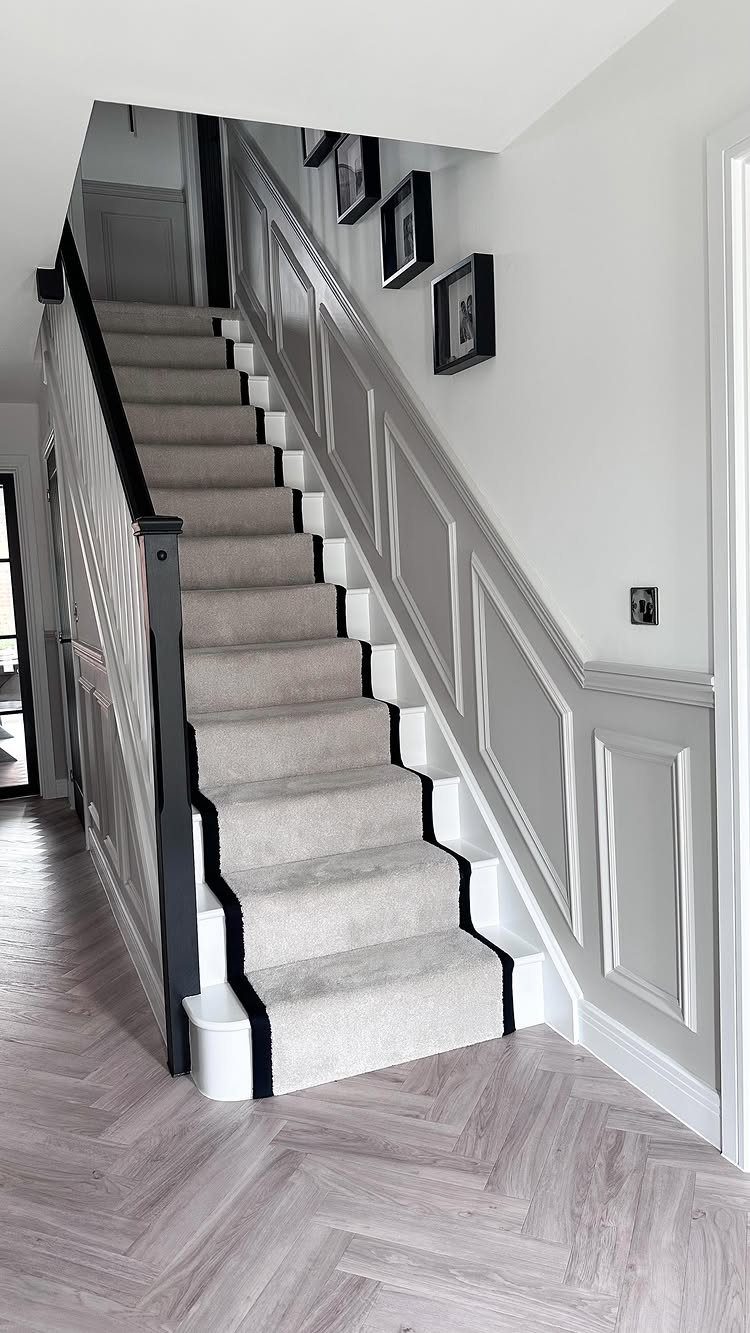
A staircase wall is where wainscoting earns its keep, since the panels run alongside every step and the wall gets scuffed more than any other.
Grey panels over light grey walls keep the look quiet, and I prefer that tone-on-tone approach to a high-contrast one.
Painting the panels a shade deeper than the wall gives a soft edge without adding clutter. Match the panel top to the stair slope so the line stays steady from bottom to top.
3. 3D Wood Wall Panels
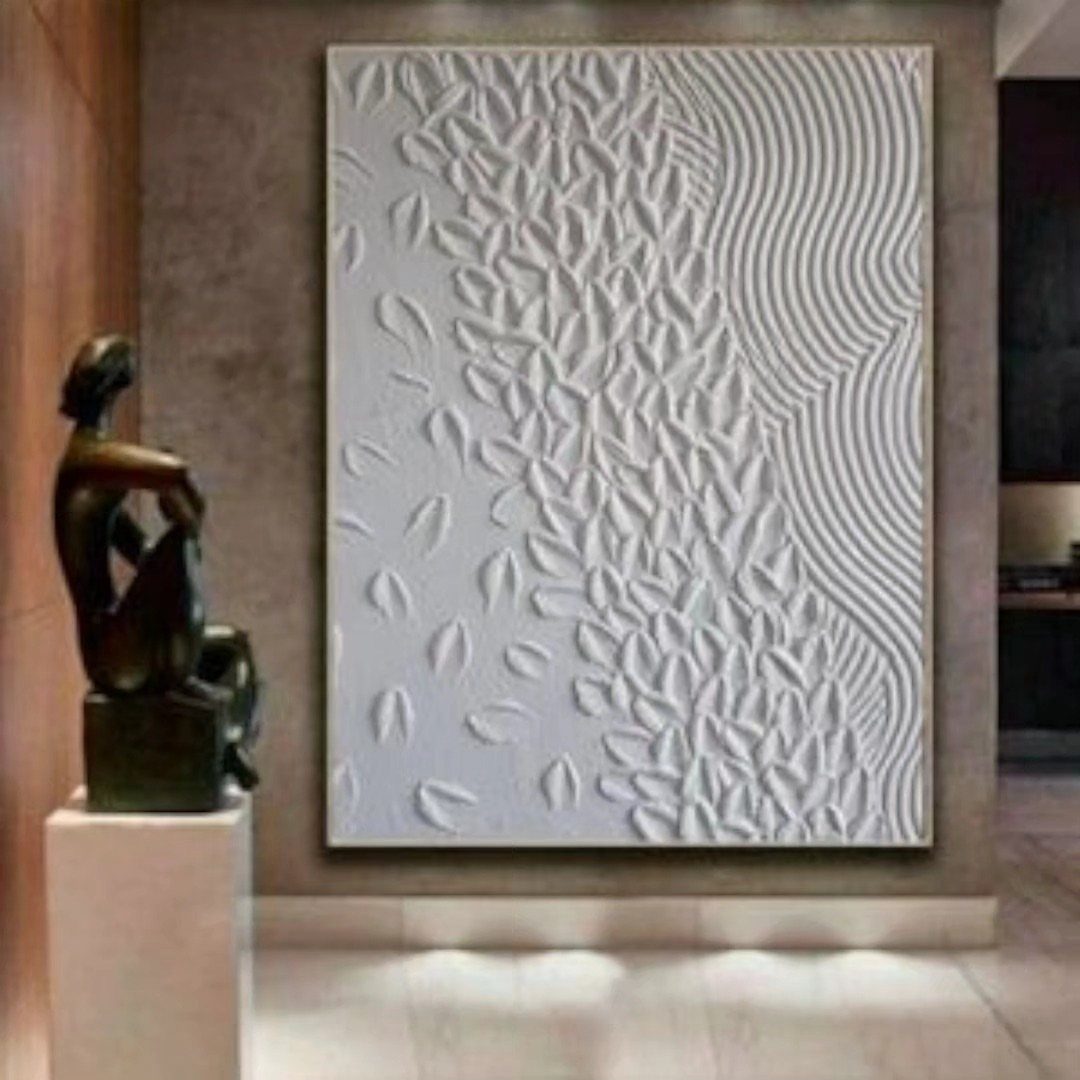
Raised leaf and wave patterns turn a flat wall into something that changes with the light, and a single white panel is enough to do it. Painting it white, as here, lets the shadows carry the pattern instead of color.
I would use 3D panels on one focal wall, not a whole room, because the texture is busy up close. Give the panel space, with a sculpture or one lamp beside it, and keep the surrounding walls a calm neutral.
4. Pallet Wood Accent Wall
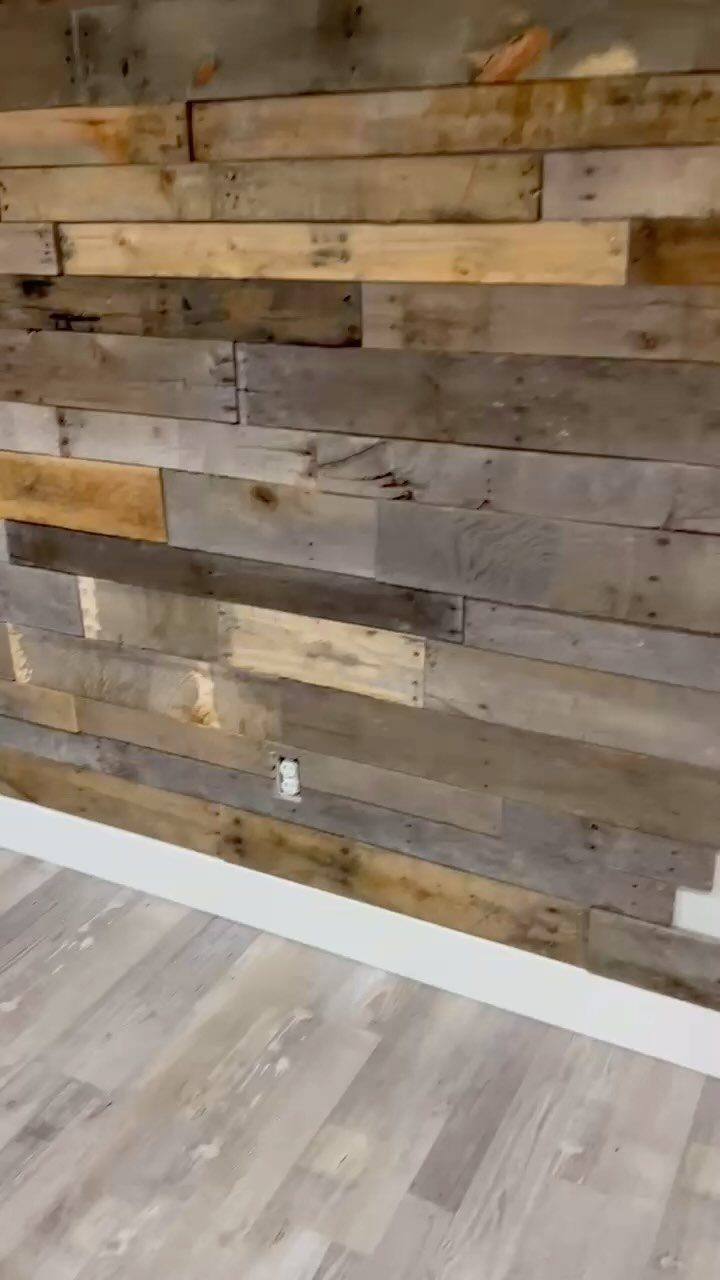
Mixed widths and tones are the whole charm of a pallet wall, so resist sanding everything to match. Recycled planks laid horizontally give a rustic look for little money, since the material is often cheap or free.
A white baseboard, as in this one, keeps the wall looking finished instead of rough. Check each board for protruding nails and splinters before it goes up, and sand just the edges and faces your hands will touch.
5. Acoustic Slat Wall Panels
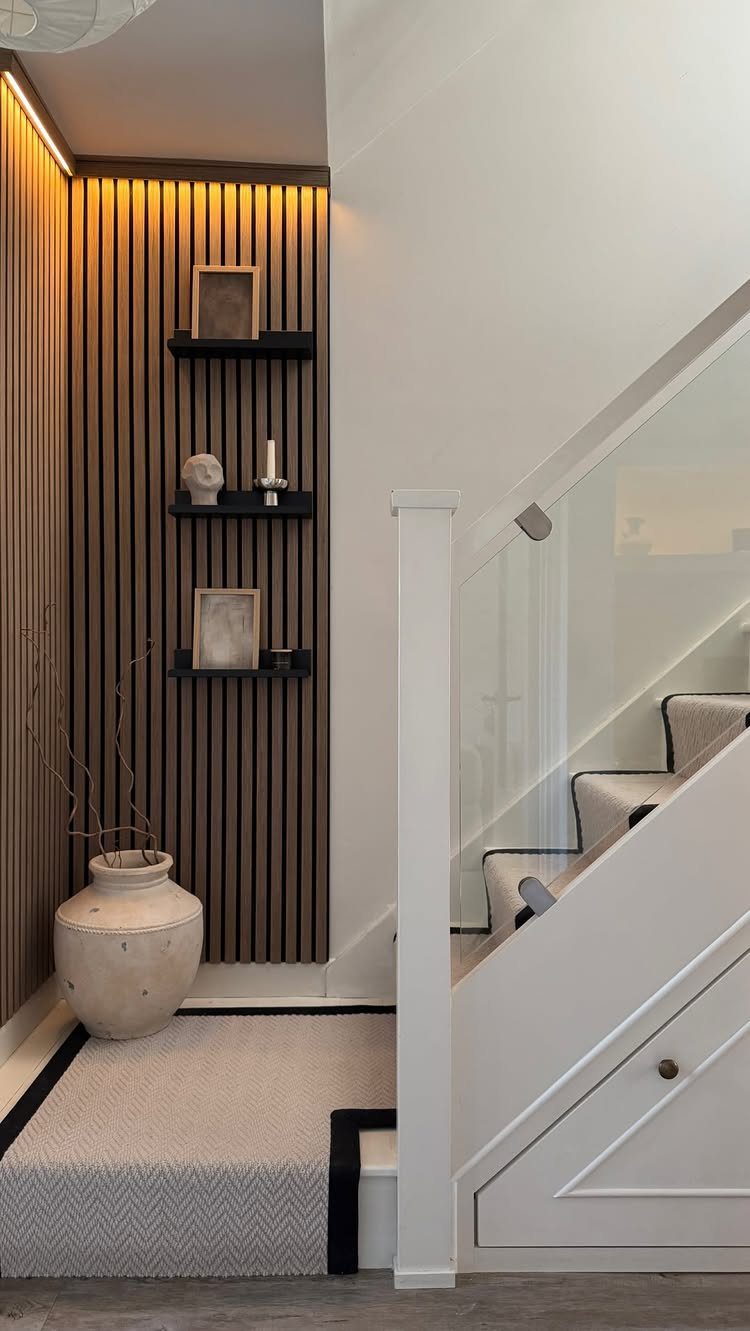
Slat panels do 2 jobs: the vertical lines make a room look taller, and the gaps between slats absorb some sound. They work particularly well in stairwells and other hard-surfaced areas where echo is a problem.
Black shelves mounted on the slats add contrast without crowding them.
I would pick a wood tone close to the flooring so the wall blends in, and choose slat spacing before you buy, since it sets both the look and how the wall feels.
6. Half-Wall Vertical Wood Paneling
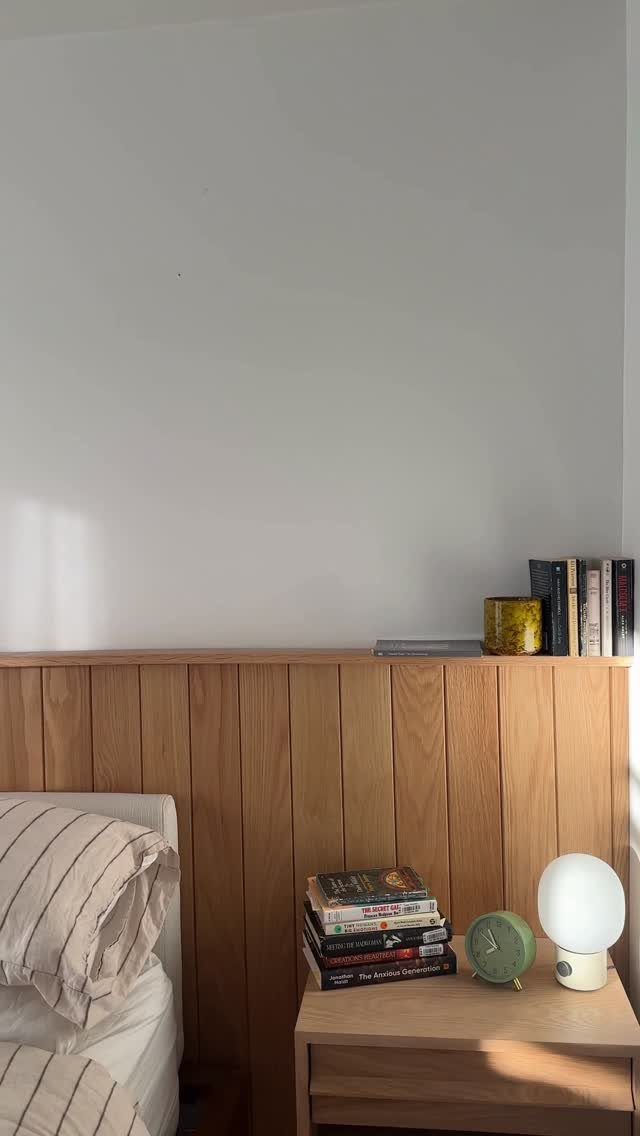
Stopping vertical paneling partway up the wall gives a bedroom a headboard effect without a headboard. Light wood behind a nightstand keeps the room airy, and the grain does the decorating.
The lower section is also the easiest height to handle alone in a weekend.
7. Geometric Wood Accent Wall
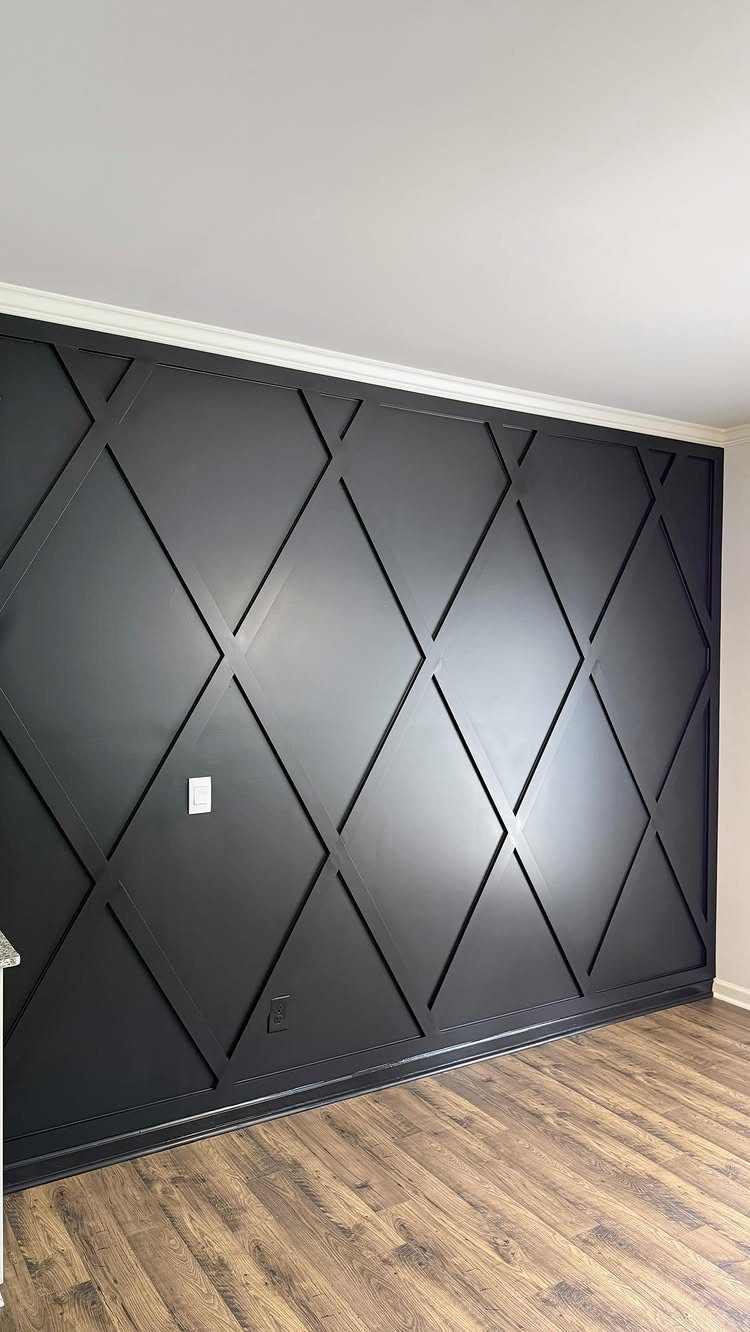
Diamond shapes built from raised wood trim give a dark wall a pattern you can see without adding any color.
On charcoal, the trim catches light along its top edges, so the design reads even when the room is empty and plain.
I would paint the trim and the wall the same charcoal, which keeps the look tonal and lets the relief do the work. Light wood floors, as here, balance a wall this dark.
Lay the diamond out in pencil on the wall first and step back before anything gets glued. Dark paint also hides small gaps, so a first attempt forgives uneven cuts.
Installation Tips
A basic kit covers most panel jobs: a 4-foot level, pencil, tape measure, utility knife, a saw (circular, jigsaw or a fine-tooth hand saw), and a screwdriver or nail gun.
Pick up a tube of construction adhesive too (Liquid Nails is the one most hardware aisles stock), along with a box of finish nails and some screws for anchoring into studs.
Start by drawing a level line with the 4-foot level before any panel touches the wall. Every row hangs off that first line, so a crooked start shows up at the ceiling.
Renters should ask the landlord before using adhesive, since it can pull paint and drywall paper off when removed.
Screws into studs are easier to patch later, and panels that arrive prefinished and pre-measured cut the sawing down to almost nothing.
Dry-fit the pieces on the floor first, then mark your cuts. Measure twice, because custom sizes cost more to replace than a pencil line costs to check.
Design Versatility
Wood paneling suits modern and traditional rooms alike, and it works in homes and commercial spaces. The finish decides which way it leans: a clear coat shows the grain, while paint turns the same panel quiet and plain.
It also does practical work. Panels hide marks, scratches, dents and even cables from electronics, so they are a smart choice behind a TV or along a hallway that takes a beating.
They add some sound and thermal insulation too, which helps in a busy room.
Upkeep is easy: wipe panels with a damp cloth and a mild household cleaner, and if one gets dinged, swap out just that piece instead of redoing the wall.
If you buy ready-made panels, check that the face is real wood veneer and not laminate, and that all 4 edges are banded in a matching veneer. Unfinished edges give away a cheaper panel.
Frequently Asked Questions
What is the best wood wall paneling?
It depends on the room and the look you want. Board-and-batten suits a lower-wall weekend project, 3D panels work best on a single focal wall, and acoustic slats do well in hard-surfaced spaces where echo is a problem.
Ready-made panels should carry real wood veneer on the face and wrap the same veneer across every edge.
Is paneling outdated in 2026?
No.
Paneling holds up in spaces built last year and in rooms furnished decades ago. The surface treatment decides character: clear finish lets the grain read, paint brings it down to line and shadow.
What are some ways to cover up wood paneling?
A coat of paint settles the pattern into background texture, and staying close in tone keeps the wall from pulling focus.
You can also add new panels over the wall, such as raised trim in a diamond pattern painted the same color as the wall. On a dark wall, the relief carries the design without any added color.





