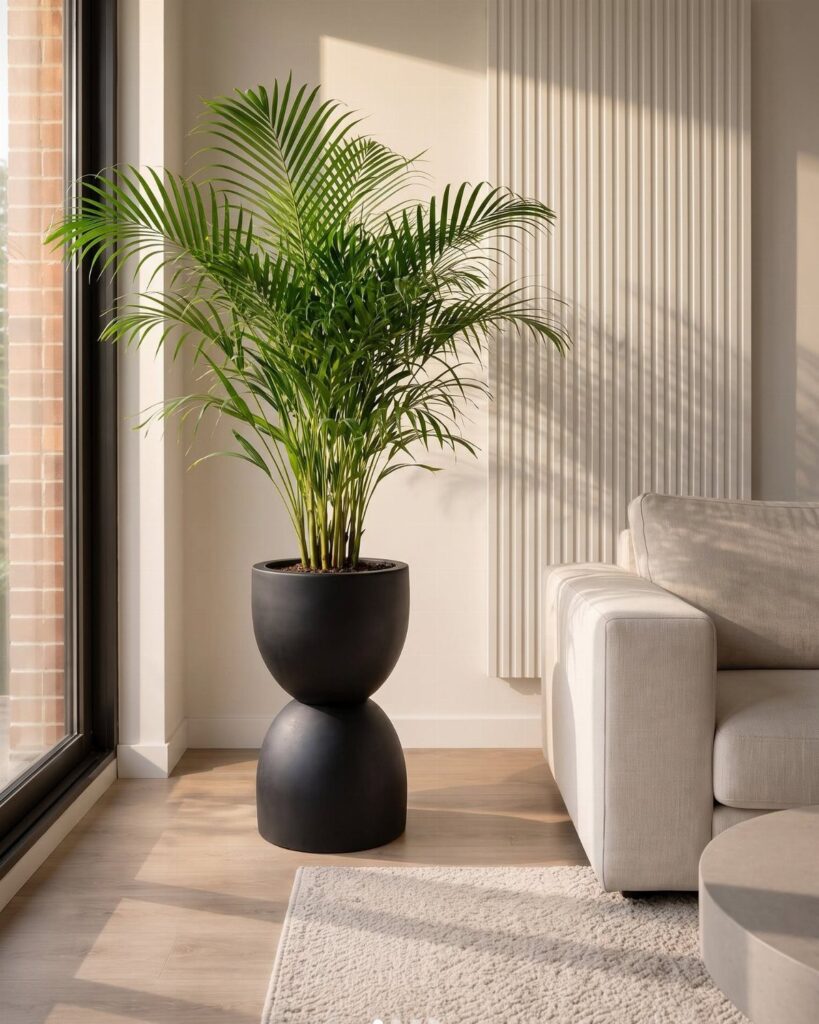
A bare floor corner fits a trunk, a ladder or a tall plant, while a corner with an outlet can take a lighted shelving unit, and a rental wall leaves the leaning blanket ladder, which needs no mounting at all.
The list runs from a cozy reading nook to a corner wine bar cabinet, so budget and effort stretch a long way. Measure the footprint and check for studs or an outlet before choosing anything.
1. Cozy Reading Nook
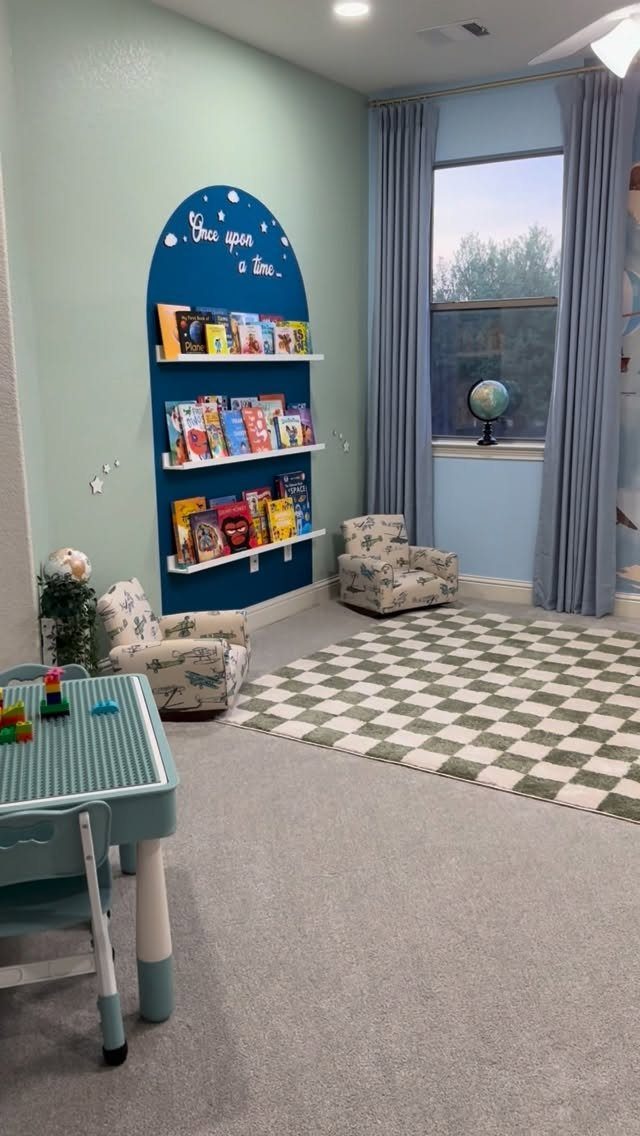
A corner gives a reading nook 2 walls to lean on, which makes it easy to build a cozy spot around a pair of armchairs and a small table.
Painting the wall behind the seating a single bold color, like the blue here, marks the nook as its own zone for the price of one can of paint.
Put the shelves within arm’s reach of the chairs so the books you actually read sit closest. A rug under the chairs defines the footprint, and a pattern hides spills in a kids’ space.
2. Tall Plants
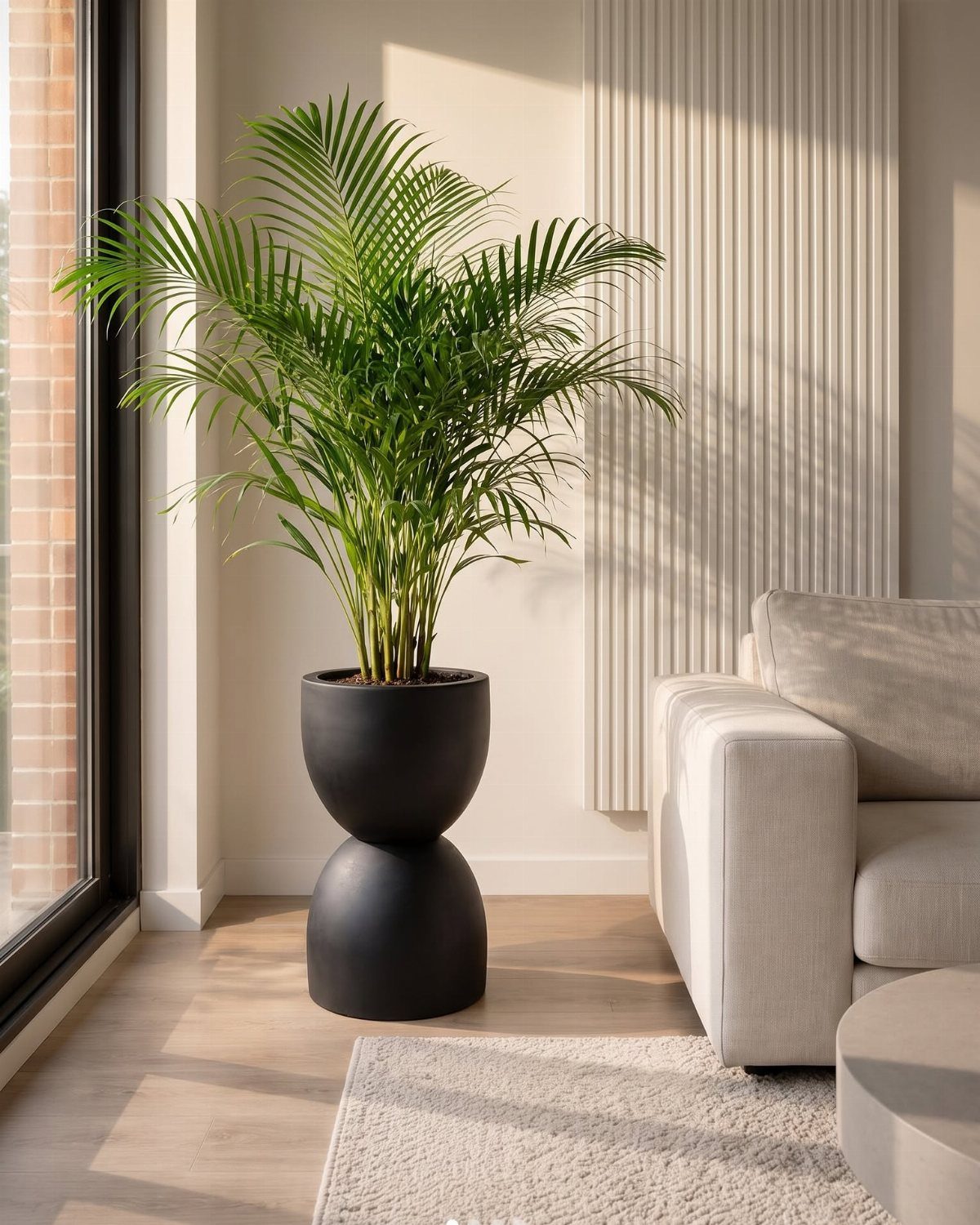
Tall plants fill a corner without eating floor space, since all the bulk sits in one upright column. A palm like this one draws the eye up and softens the hard angle where two walls meet.
I would pick a sculptural pot as seriously as the plant, because in a plain corner the pot is half of what you see. Black against a pale wall gives the strongest contrast.
3. Compact Desk
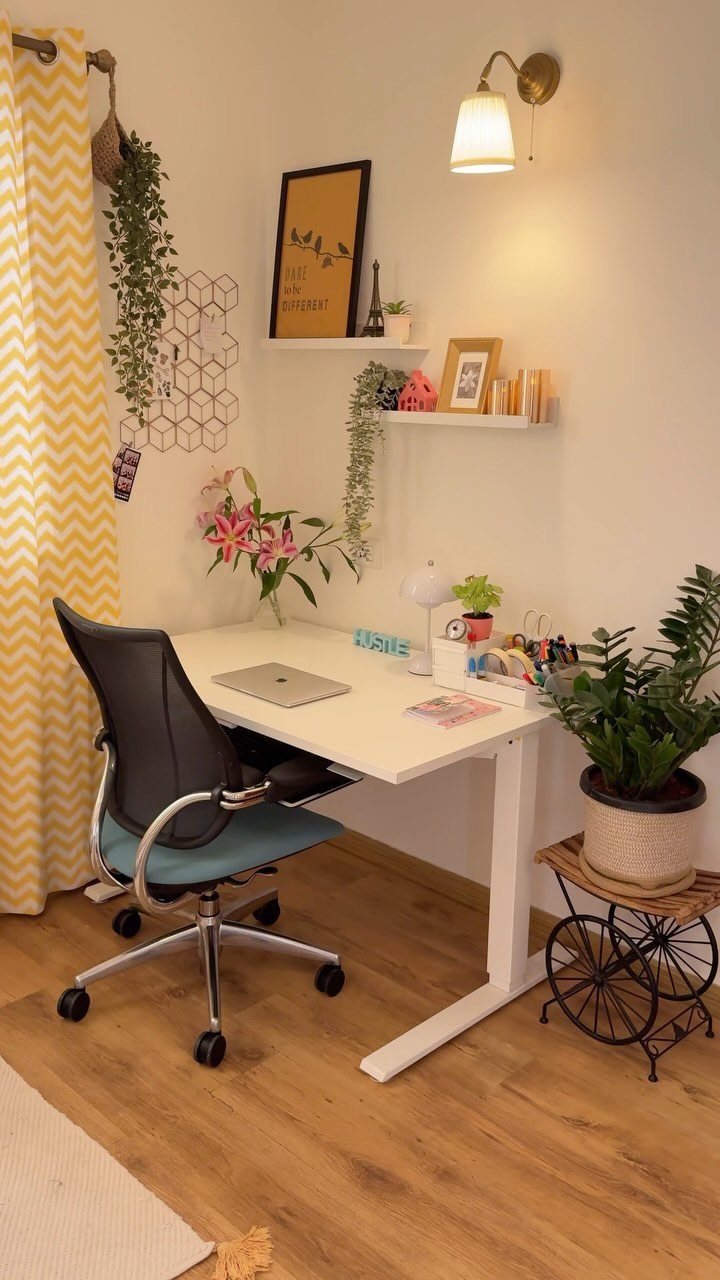
A small desk tucked into a corner gives you a home office without giving up a whole room. Choose a compact surface that fits snugly against both walls, with just enough depth for a laptop and a notebook.
Use the wall above it as your storage: framed prints, a sign or two, and a plant keep the area feeling personal.
A white desk keeps a tight corner from looking heavy, and a comfortable chair matters more than any accessory here.
4. Bar Cart
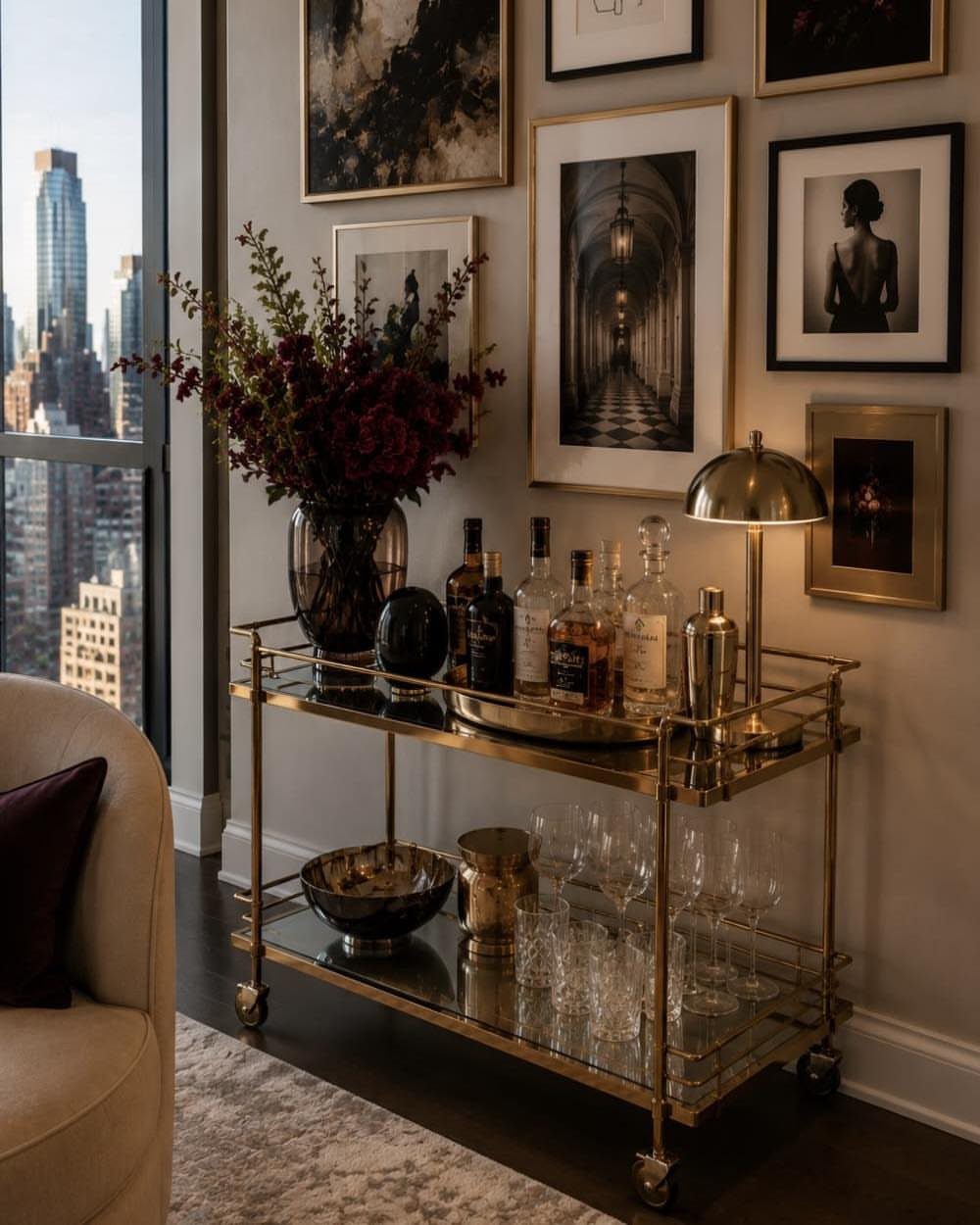
Anything with a flat top and a few shelves can become a mini bar, and a cart is the easiest version because it rolls out when guests come over.
Keep the top for the bottles you actually pour, plus glasses within reach.
A small lamp adds evening glow, and flowers soften all that glass and metal.
Group items on the lower shelf by use so the top never looks cluttered. A bar cart has a fraction of a cabinet’s room, so cut the bottles down to the few you actually pour.
5. Vintage Trunk
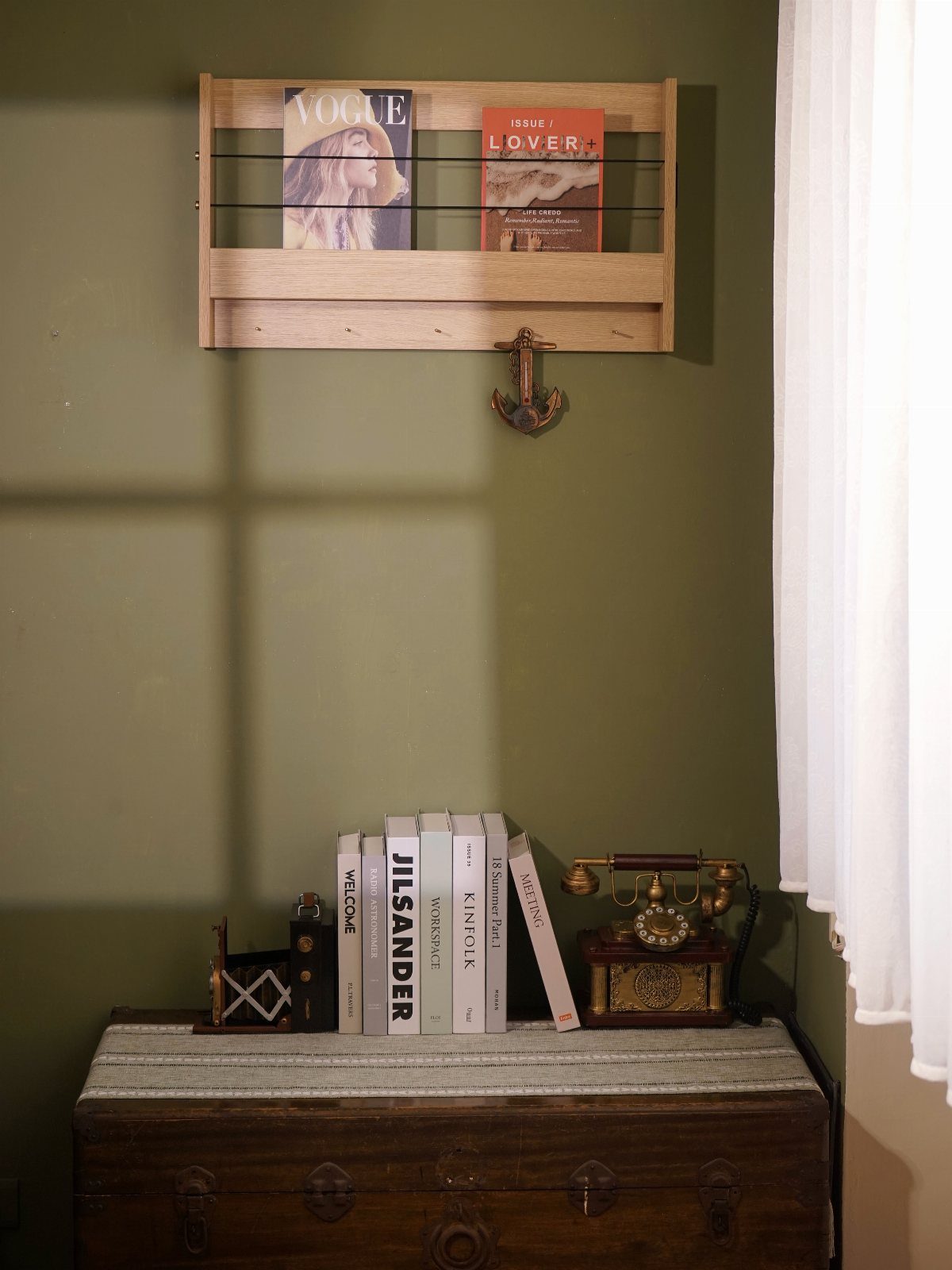
An old trunk does 2 jobs in a corner: the lid is a display surface and the inside hides blankets, games or off-season items.
Top it with a runner, a short stack of books and one quirky object, such as a rotary phone.
Hang a wooden shelf above it to carry the display upward, which leaves the trunk’s top from getting crowded. Check the lid closes freely before you pile things on it, so you can still reach what’s inside.
6. Artful Gallery Wall Spaces
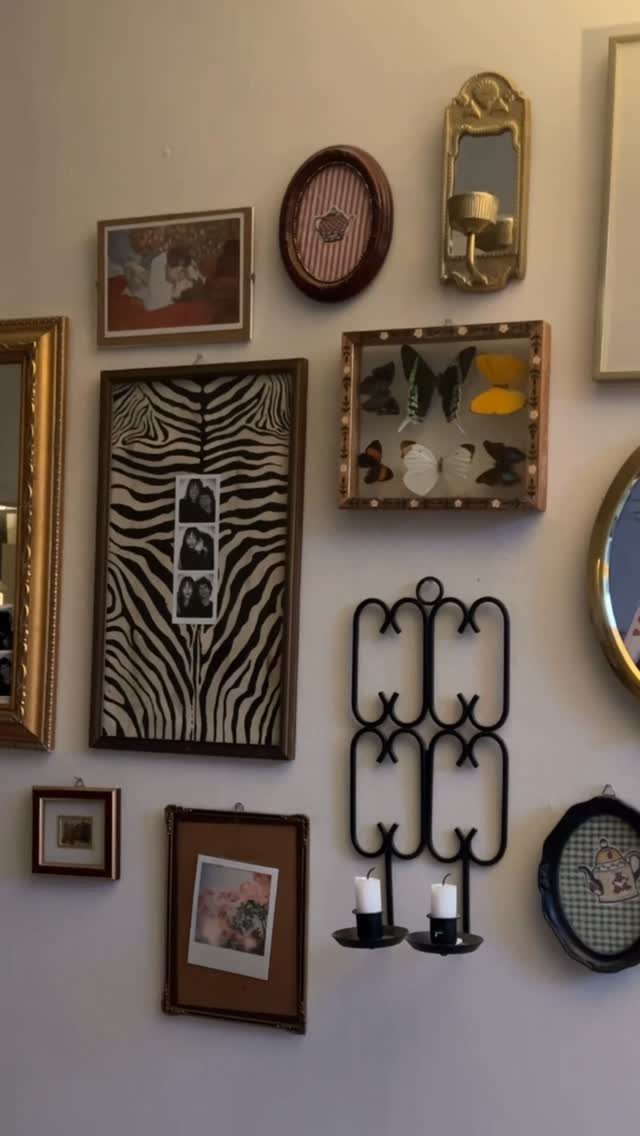
A corner wall is a small canvas, and a gallery wall costs less than almost any other way to fill it. Mix frames, mirrors and a few odd objects so the arrangement feels collected rather than matched.
Lay everything on the floor first and shuffle until the gaps look even, then hang from the center outward.
Mirrors bounce light into a dim corner, and a white wall lets busy art breathe. Keep the spacing between pieces tight, about the same gap throughout.
7. Plant Stand
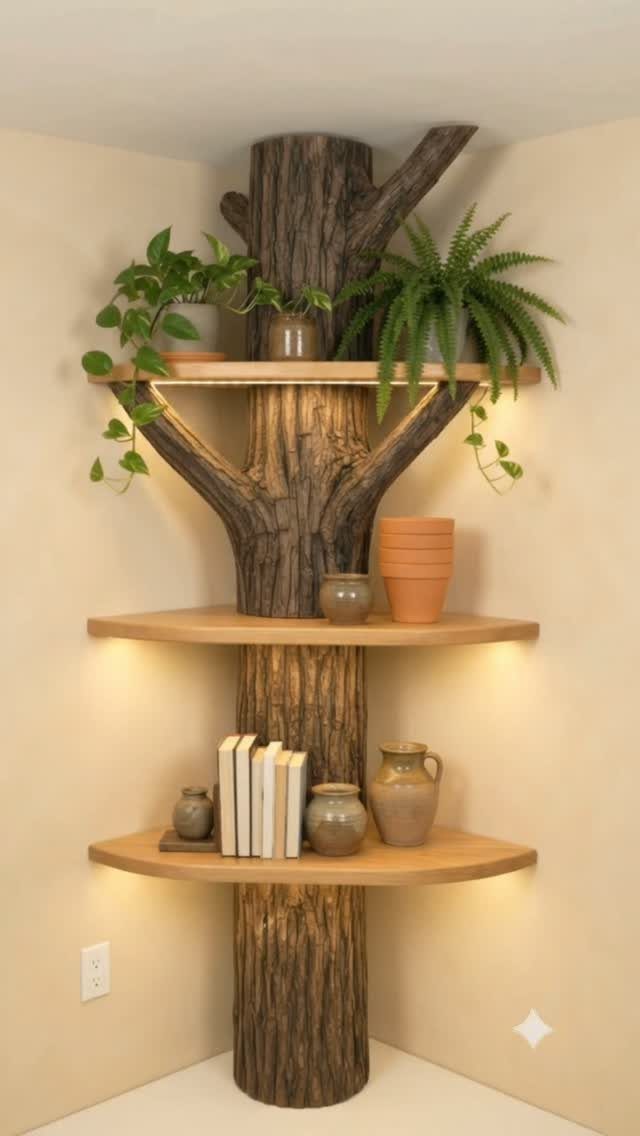
The 3 wooden tiers keep everything at separate heights, so nothing hides behind anything else.
Put the heaviest pot on the lowest tier and the lightest on top. Against a plain beige wall, the wood grain does the decorating, so I would keep the objects few, with the shape of the shelf in plain view.
8. Decorative Pedestal
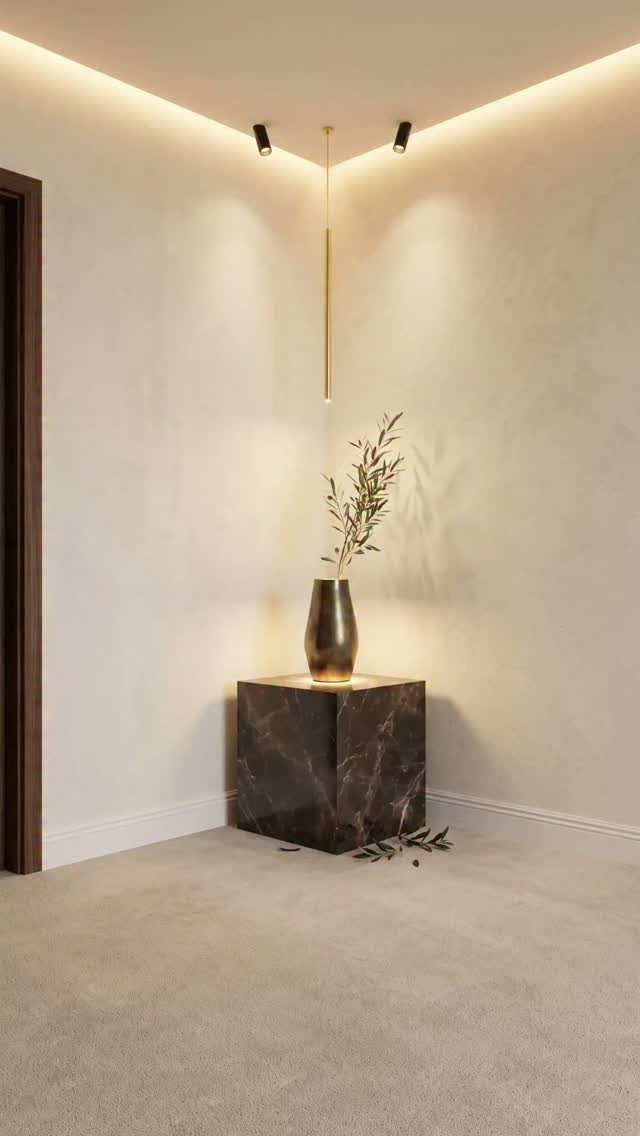
A pedestal gives one object the stage a corner usually denies it. Pick a plain cube, like a marble one, so the vase gets the attention; a single piece with a branch or two is plenty.
Height matters more than the stone.
Choose a pedestal that lifts the vase to roughly eye level, and light it from above if you can. A small spotlight or a lamp nearby makes a dark corner look intentional.
A painted wood box works if marble is out of budget.
9. Blanket Ladder
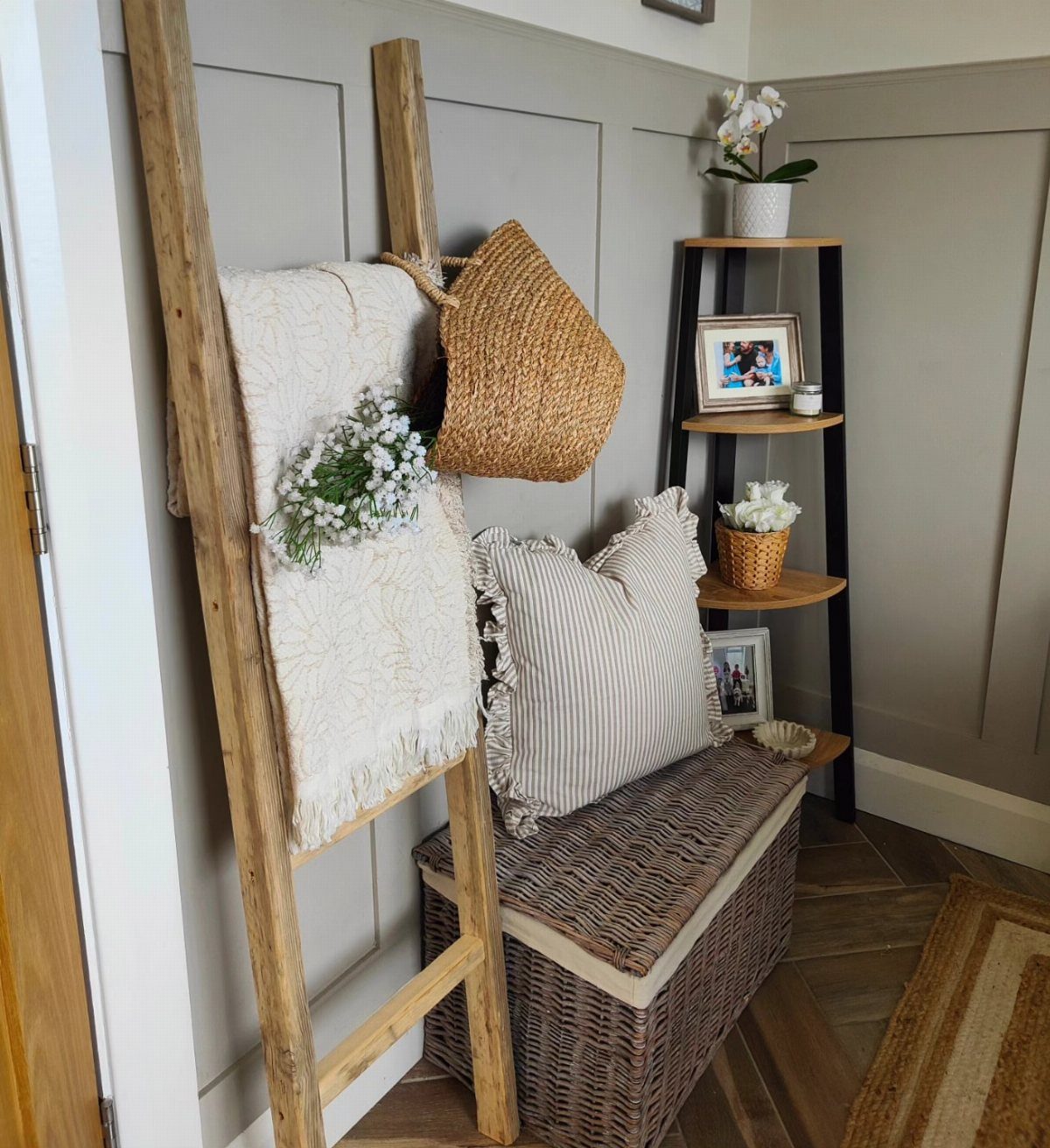
Lean a wooden ladder into the corner and a pile of throws becomes decor instead of clutter. The rungs hold folded blankets at different heights, and a basket on the floor beside it catches the overflow.
Drape the throws unevenly, with one folded and one hanging loose, so it looks lived in. White against a grey wall stands out nicely.
Pick a ladder with a wide enough lean that it stays steady, with the heaviest blankets on the lower rungs so it never tips.
10. Floating L-Shaped Corner Shelves
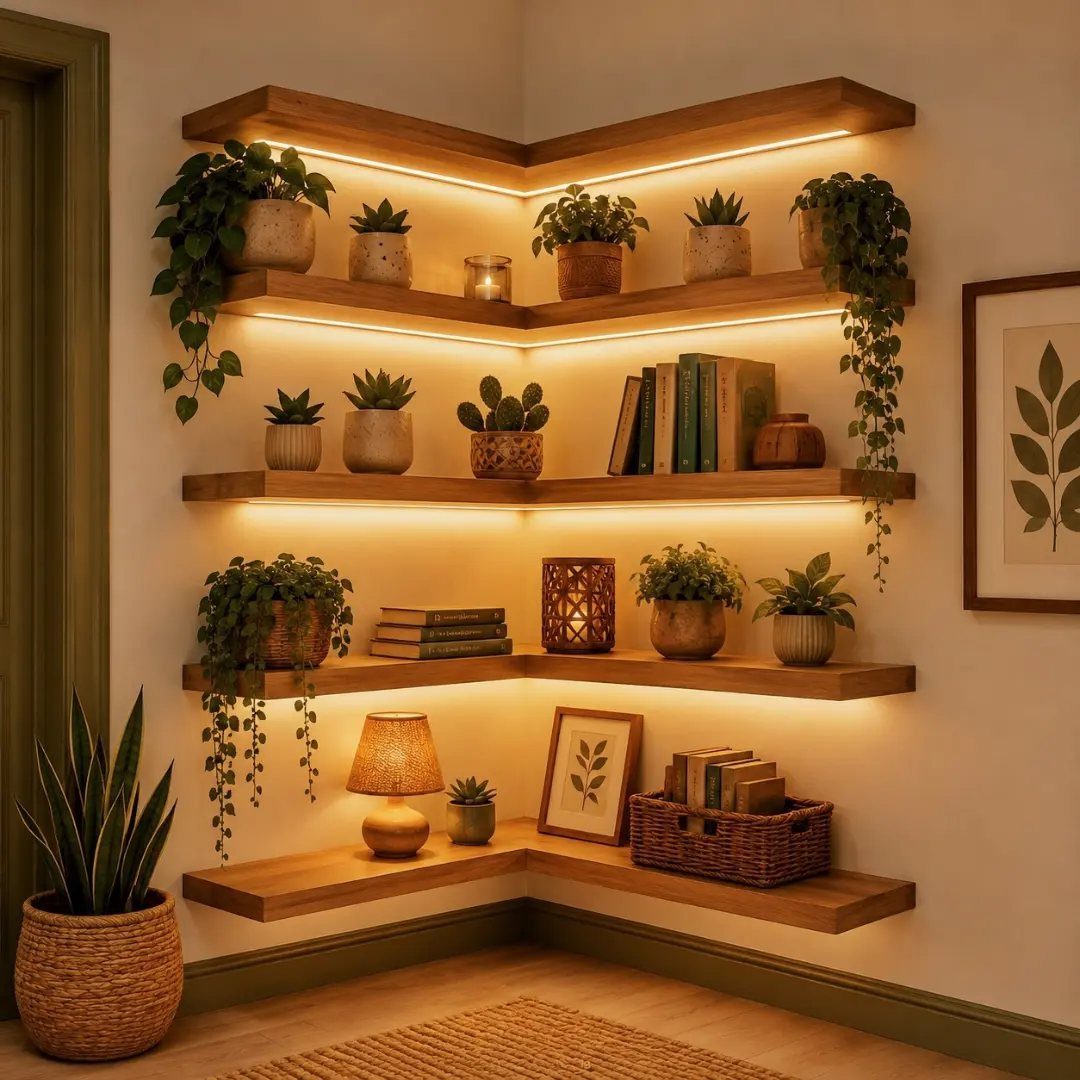
L-shaped floating shelves wrap the corner itself, so every tier uses space that was otherwise dead. Stacking several wooden ones gives you a column of display room without any floor footprint.
Add a strip of built-in lighting, as here, and the corner glows at night.
Keep the objects small: little plants, a few books, one or two decor pieces. A larger plant on the floor below, like the snake plant in a basket, balances the stack.
Mount the brackets into studs or use proper wall anchors, since books are heavier than they look.
11. Architectural Fire Escape Corner Shelf
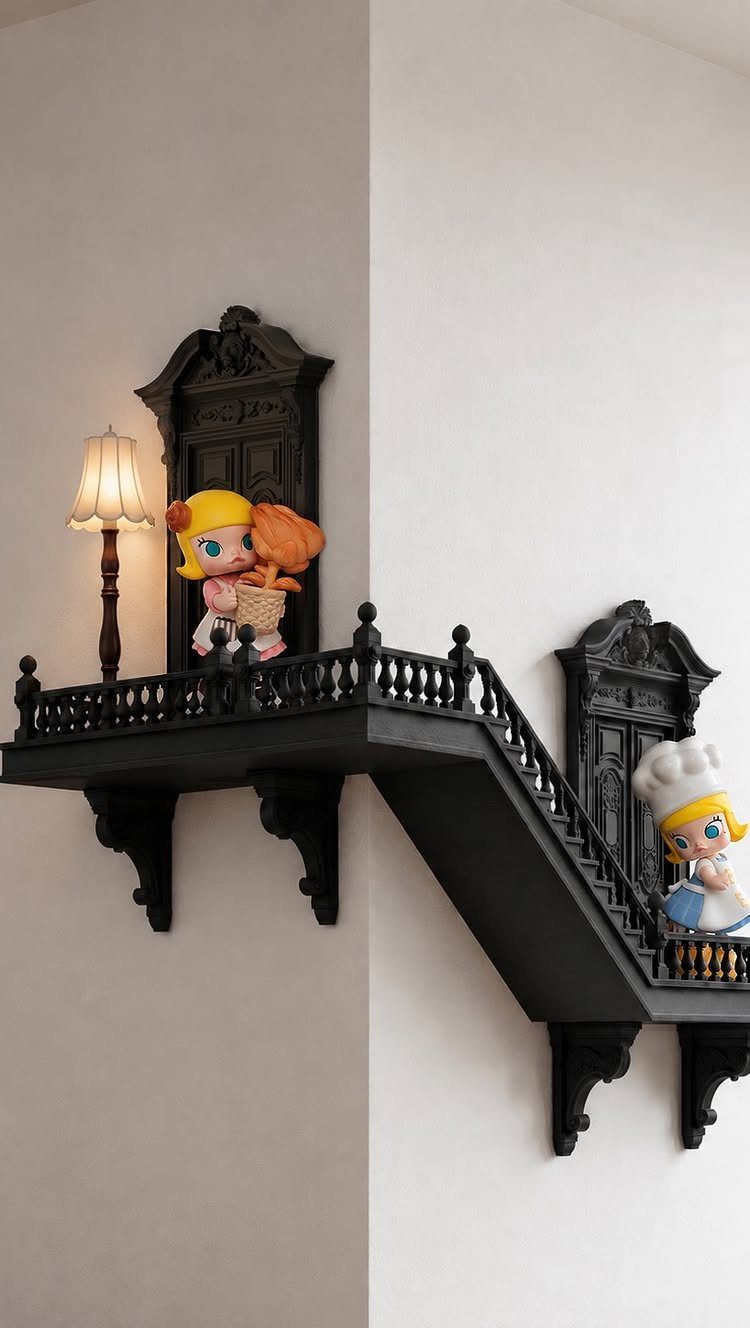
A miniature fire escape is a shelf that acts like a sculpture. The black balcony and tiny staircase mount right into the corner, and small figurines and a little lamp make a scene on it.
Against a white wall the black metal reads as a crisp graphic line, which is why I like it over a plain shelf. Keep the cast small: a few figures and one light, or the detail turns to clutter.
It suits a corner with nothing else competing for attention.
12. Corner Wine Bar Cabinet
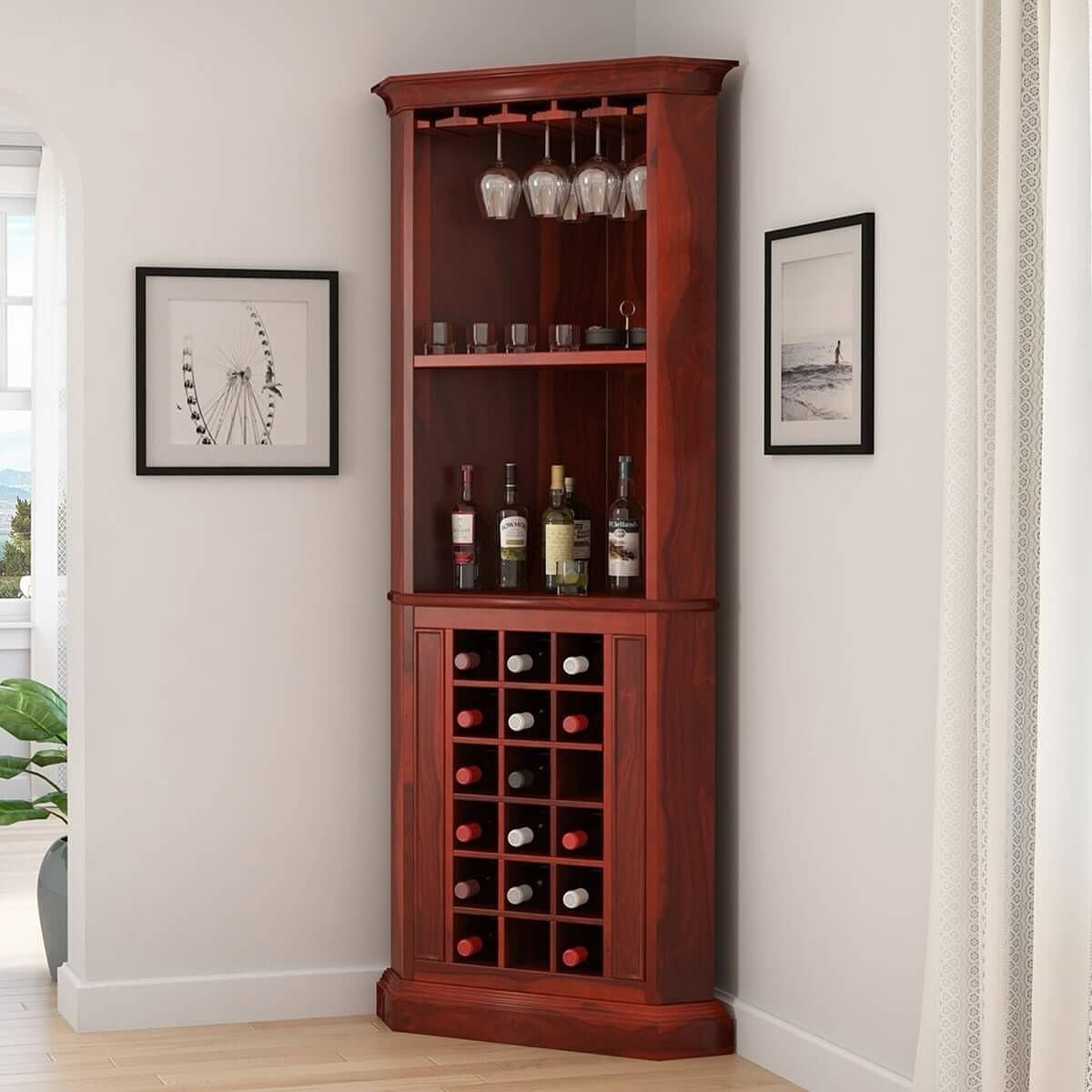
A tall corner cabinet turns an awkward angle into a compact wine bar, with a rack for bottles and a place to hang stemware.
Everything lives in one tall column, so it takes little floor space for how much it stores.
Keep the bottles you will drink soon at the front and the glasses within reach below.
A reddish-brown wood stands out against white walls and light floors, so it works as a statement piece. Measure the corner first, since cabinets vary in how far they reach into the room.
13. Lighted Curvy Corner Shelving
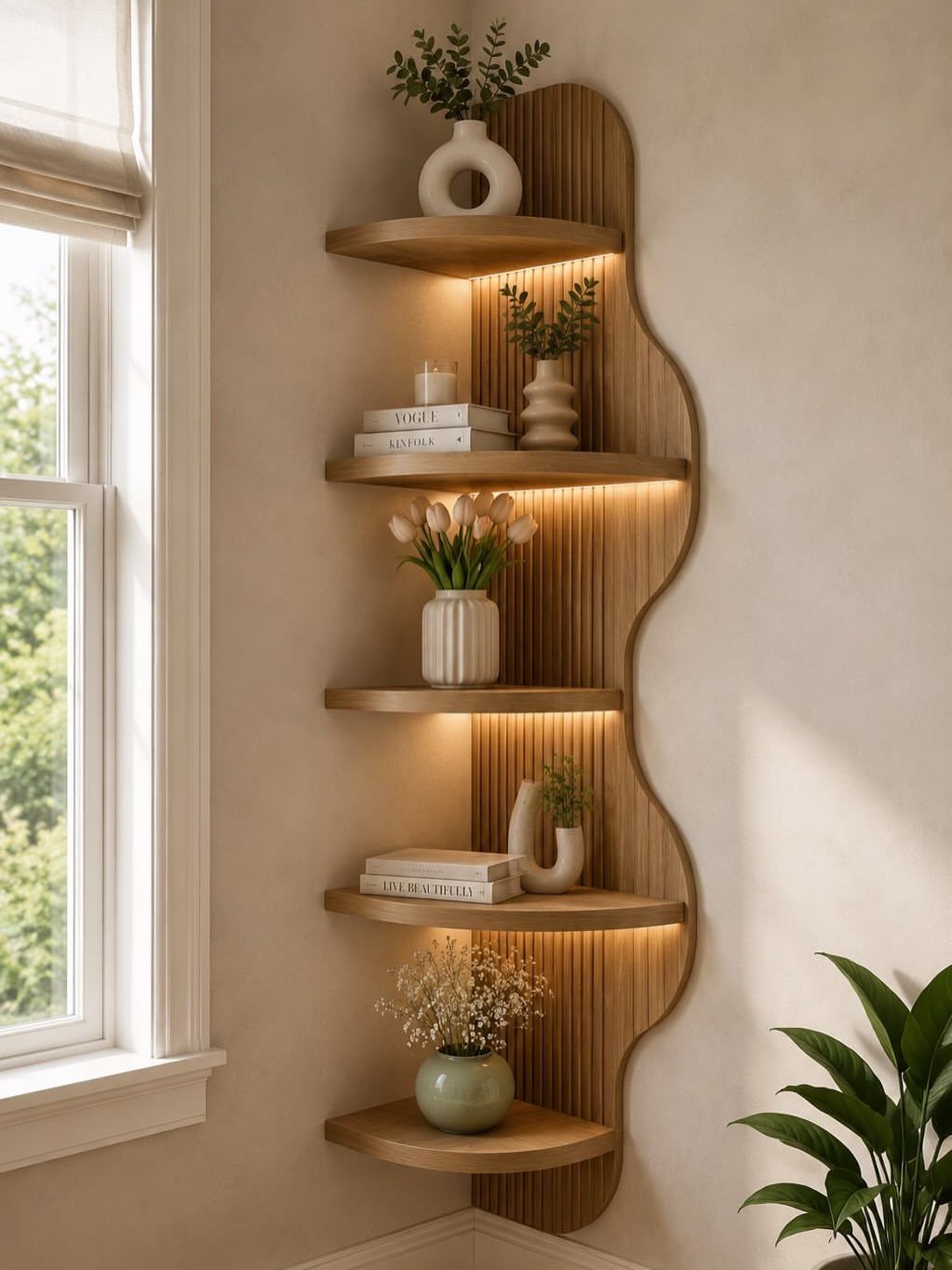
A curved back panel makes a corner shelf read as one piece of furniture instead of two walls with boards stuck on.
Warm LED backlighting is what I would pay extra for, because it turns the unit into the room’s evening light.
Keep the styling neutral on curved corner shelves: a few vases, a plant or two and a short stack of books, so the lighting stays the focus and the curves don’t get crowded.
Leave gaps between objects so the glow shows around them.
Set the unit where an outlet is close, so the cord stays out of sight.
14. Geometric Optical Illusion Mural
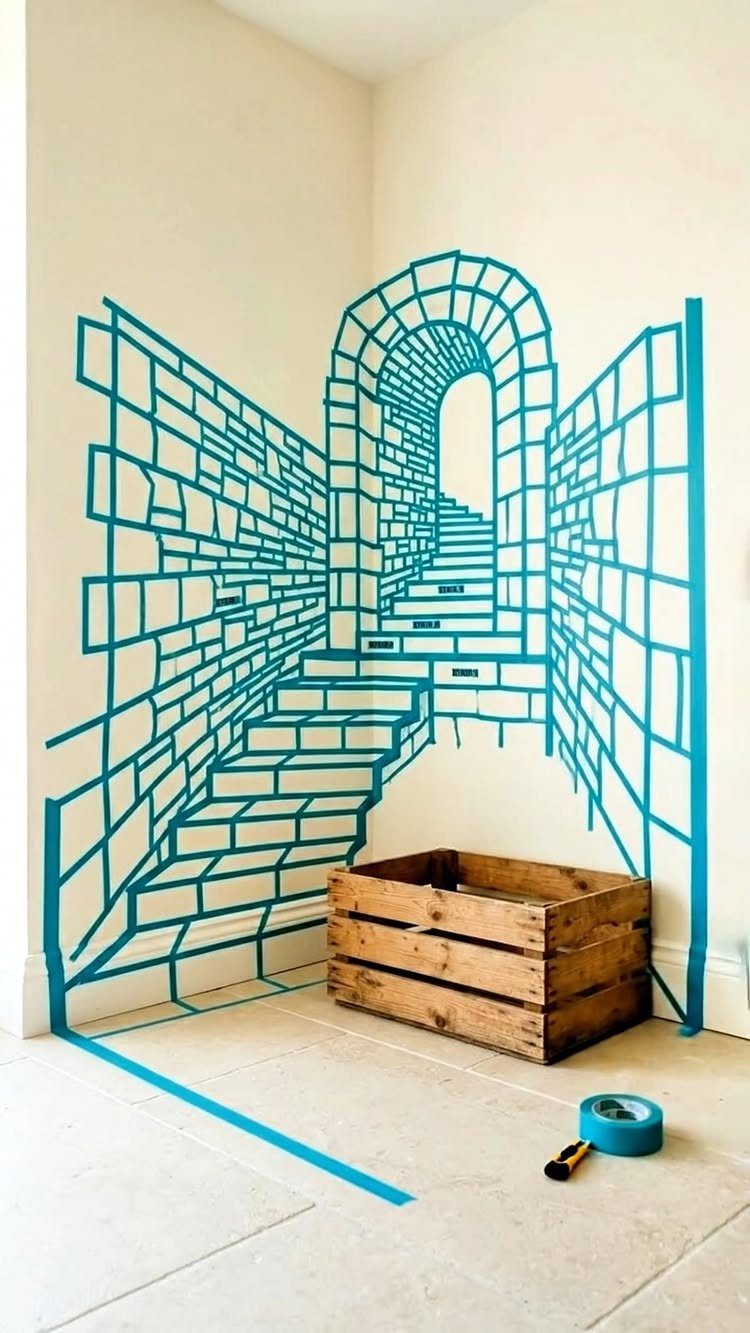
Blue painter’s tape on a plain wall can draw a stone staircase and archway, and the corner’s 2 planes make the depth look convincing. The whole project costs about one roll of tape, which suits a rental.
Sketch the lines lightly in pencil first, then lay the tape along them, pressing each strip flat. Keep the arch and steps simple, because crisp straight edges sell the illusion better than detail.
A wooden crate at the base, as here, makes the scene feel like a real doorway.
Choosing the Right Decor Style
Before buying anything for a corner, I look at what is already on the walls and floor, because the two or three colors in the room should decide what goes in the corner.
Pull one or two shades from the rug, sofa or curtains and repeat them in the corner, so the new piece looks like it belongs.
Complement is the safer route. A corner that echoes the room’s wood tones, metal finish or overall theme will read as planned.
Contrast works too, but pick only one thing to push against the room. A single modern piece in a traditional room looks deliberate; 3 different ones look like a mistake.
Check the frames as well as the art. Frames that match the furniture’s finish tie a corner to everything around it.
Maximizing Small Spaces
Negative space is your friend. Leave breathing room around each piece so the corner looks intentional instead of crowded.
A tall, slim piece, such as a narrow shelf or a leaning ladder, or a few small items hung in a column, pulls the eye up the wall, and the corner reads as roomier because the floor stays mostly open.
Before you add a last item, take one away and look again. If the corner still works, leave it out.
Mixing Decor Elements
Mixing styles gives a corner an eclectic, personal look, as long as something ties the pieces together. A shared color scheme or a common theme is enough to do that.
Pick that link first, then shop. If every piece repeats one color, even very different shapes and materials will sit well together.
Keep the mix to a few items so the link stays easy to see. Pieces that reflect your taste will always feel more personal than a matched set.
Frequently Asked Questions
How to decorate a corner of a wall?
Fill it with a gallery wall, shelves or a tall plant. L-shaped floating shelves wrap the corner and add display room with no floor footprint.
What to fill an empty corner with?
A tall plant, a slim shelf or a leaning blanket ladder fills a corner without eating floor space.
Tall pieces pull the eye up the wall, so the corner reads as roomier. Leave breathing room around each item, and if you can take one piece away and the corner still works, leave it out.
How do I make a small corner look bigger?
Go tall and slim, leaving most of the floor clear.





