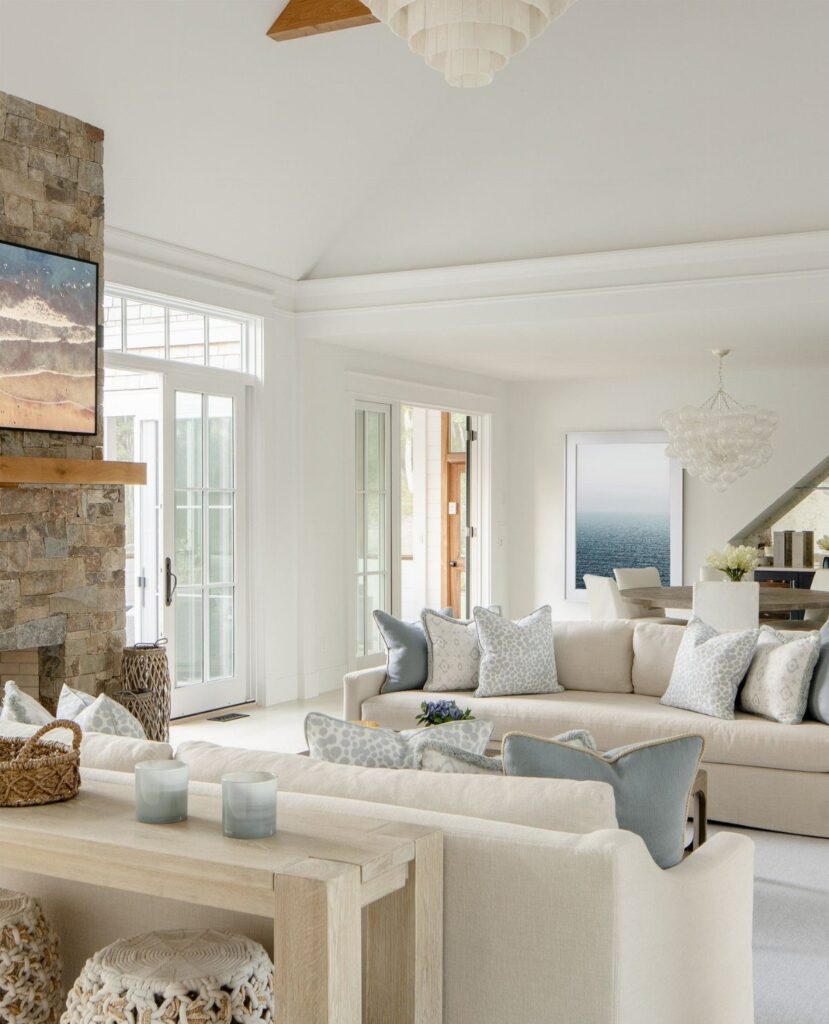
Renting or owning decides which of these ideas you can use: murals, wallpaper, arched doorways and open floor plans mean paint, adhesive or construction, while wispy white drapes, natural woven textures and artisanal glassware can come and go with you.
The list runs from a single piece of coastal glassware to a built arched doorway, and the cheaper end still gets you the same calm, pale, open look.
Even the style names split by place: Sarasota leans on curves and sun-bleached wood, Nantucket on cedar shingles and crisp white trim.
1. Large Windows and Glass Doors
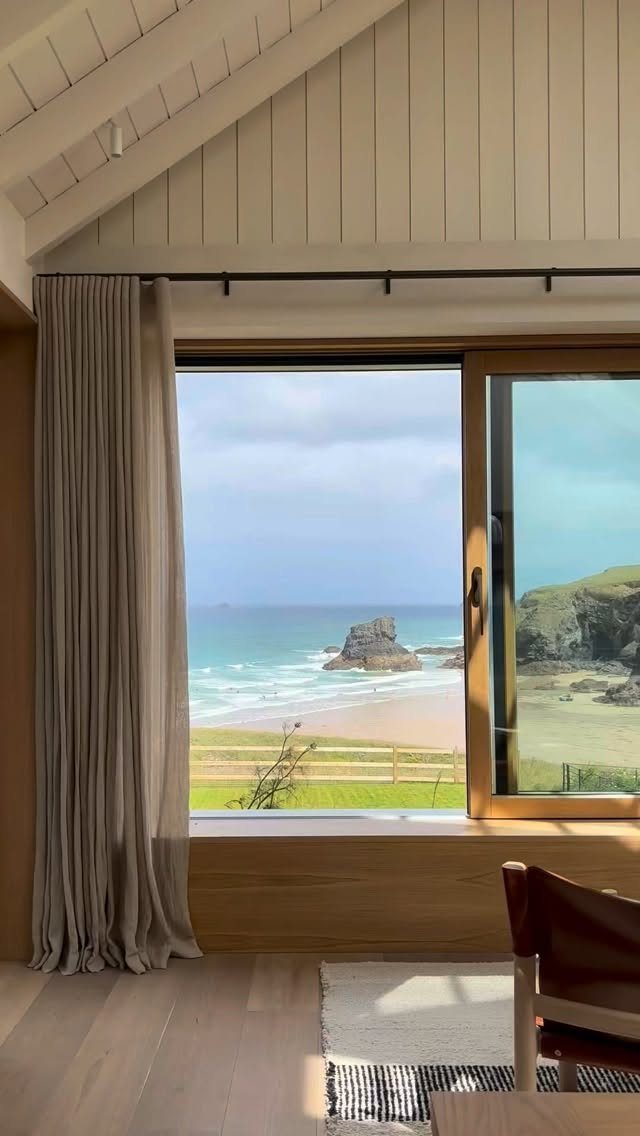
A big window wants very little around it. Here the white paneled ceiling, light wood floors and beige curtains stay quiet so the water does the talking, and I would copy that restraint before spending on anything else.
If your view is a parking lot instead of a beach, the same quiet palette still makes the window the brightest thing in the room.
2. Whites, Creams, and Light Beiges
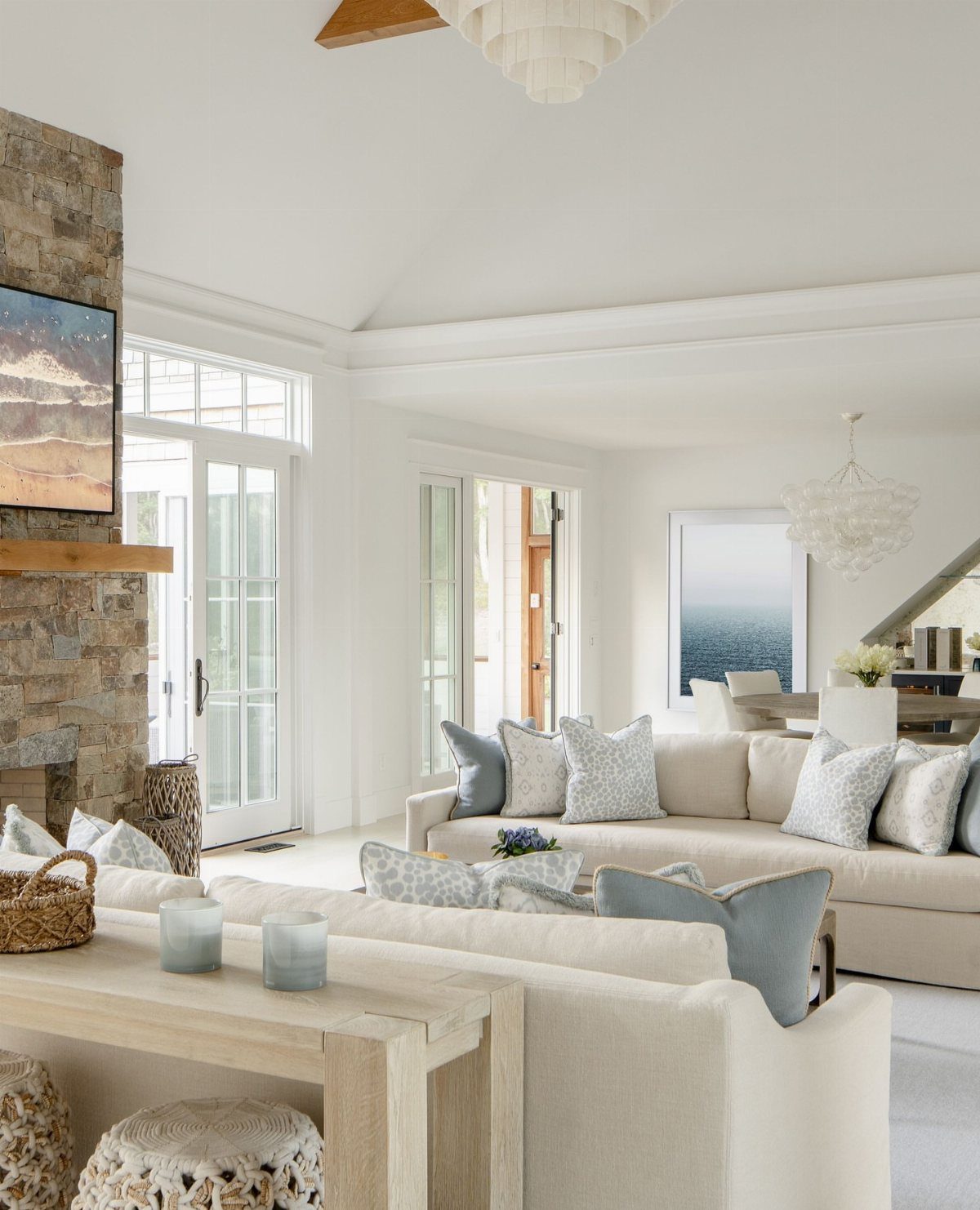
Cream sofas against white walls only work when the shades differ just enough to read as layers. Put a warm cream next to a cooler white and the room looks planned instead of washed out.
The stone fireplace does the job of adding weight, and I like that choice.
On a budget, a rental can get the same effect from a stone-look or textured throw, a rug, or a painting, since pale rooms need one heavier element to feel settled.
3. Outdoor Spaces
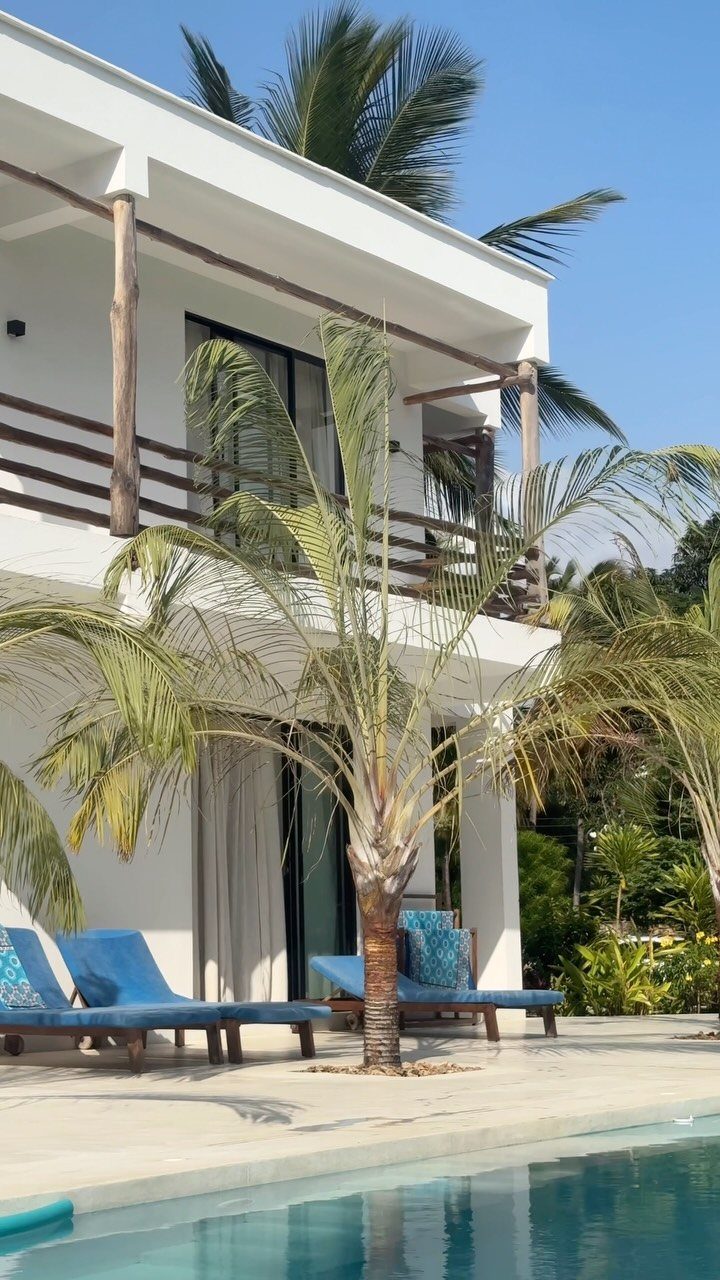
Blue lounge chairs beside a pool give a white house its only strong color, and that is a smart, cheap move. Chairs are easy to swap, so you can test the shade before committing to it on anything permanent.
If you have only a small patio or stoop, one pair of chairs in a single color gets you the same idea at a fraction of the cost.
4. Natural, Woven Textures
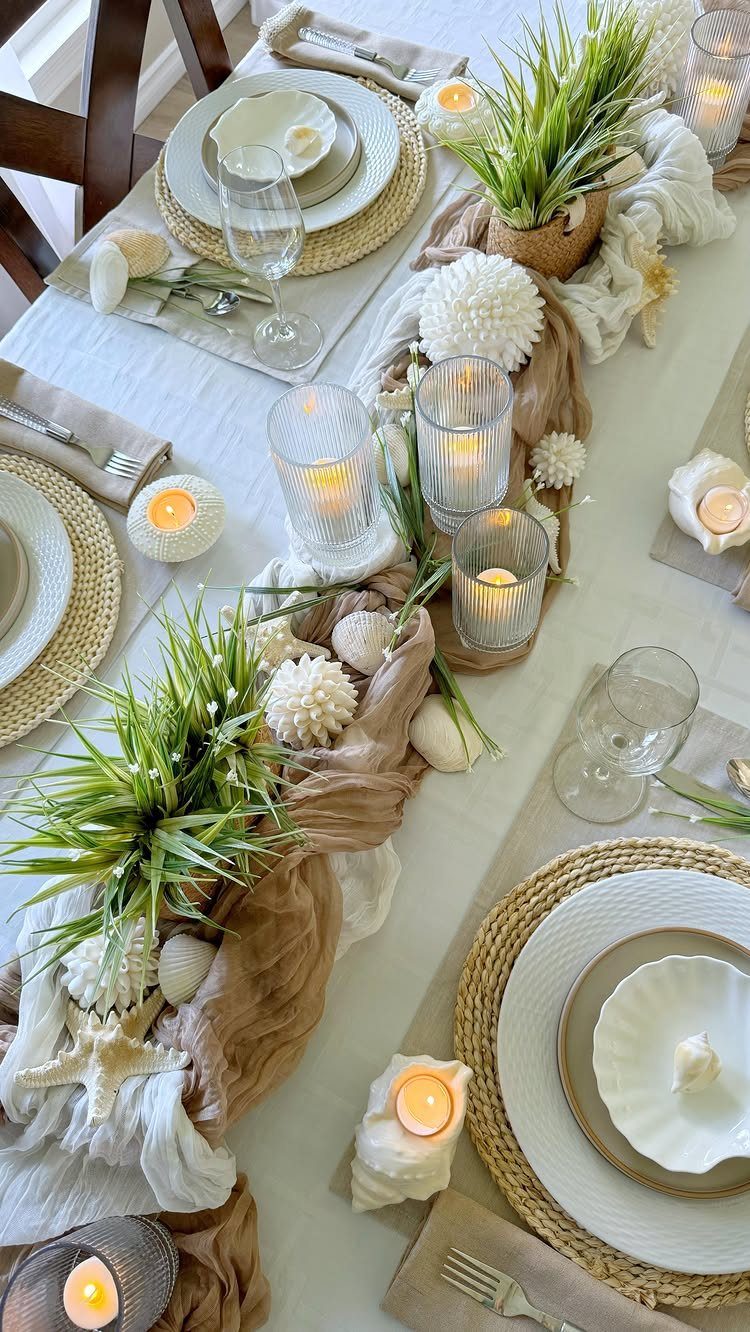
Texture does the work of pattern in a coastal room, and a table costs less to fill than any other surface.
Woven placemats, shells, candles and green plants layered over a tan runner add up to a full look without a single bold color.
Cheesecloth makes an easy runner, according to the person who styled this table.
Beyond the table, think rugs, baskets, lanterns, frames, and grasscloth, even faux. Keep the nautical pieces simple: a few shells beat a whole shelf.
5. The Bedroom
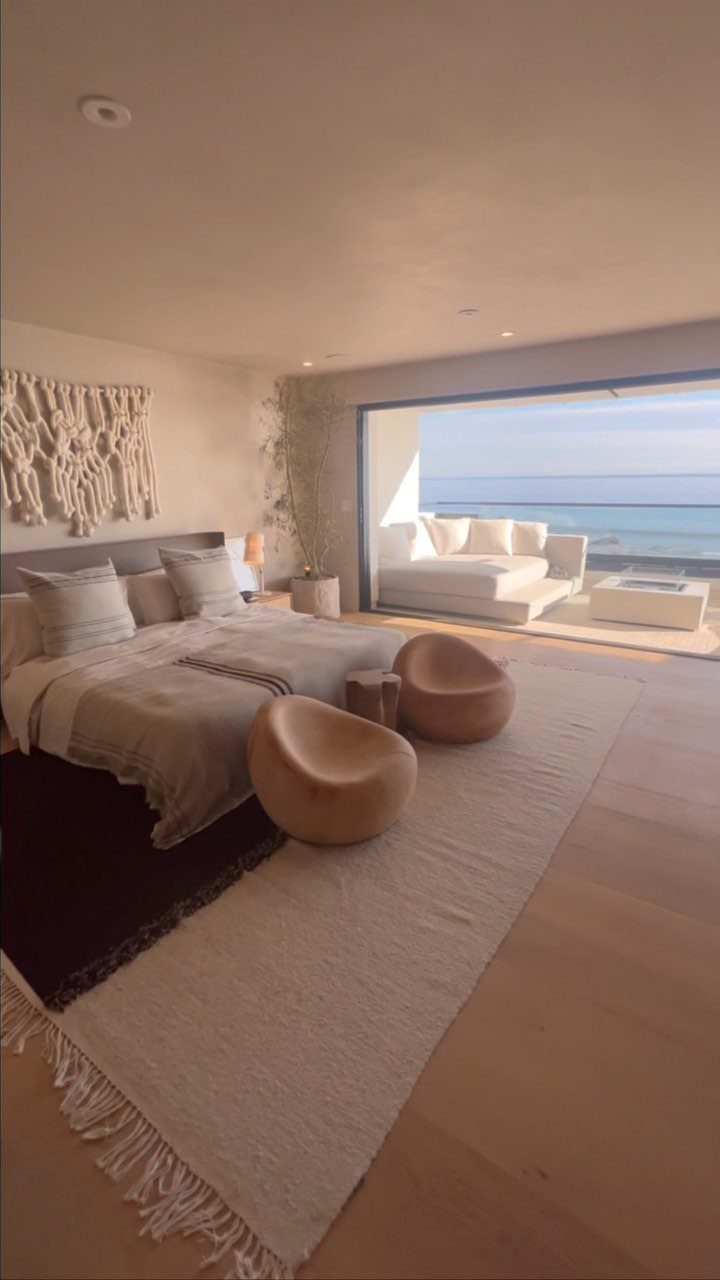
Keep a beach bedroom to neutral linens, a white rug and rounded shapes, and it feels like a retreat. Organic-shaped chairs soften the bed’s straight lines, and that contrast is worth copying.
If you lack a patio, let the bed face the window and keep the nightstands bare, so nothing competes with the quiet.
6. Open Floor Plans
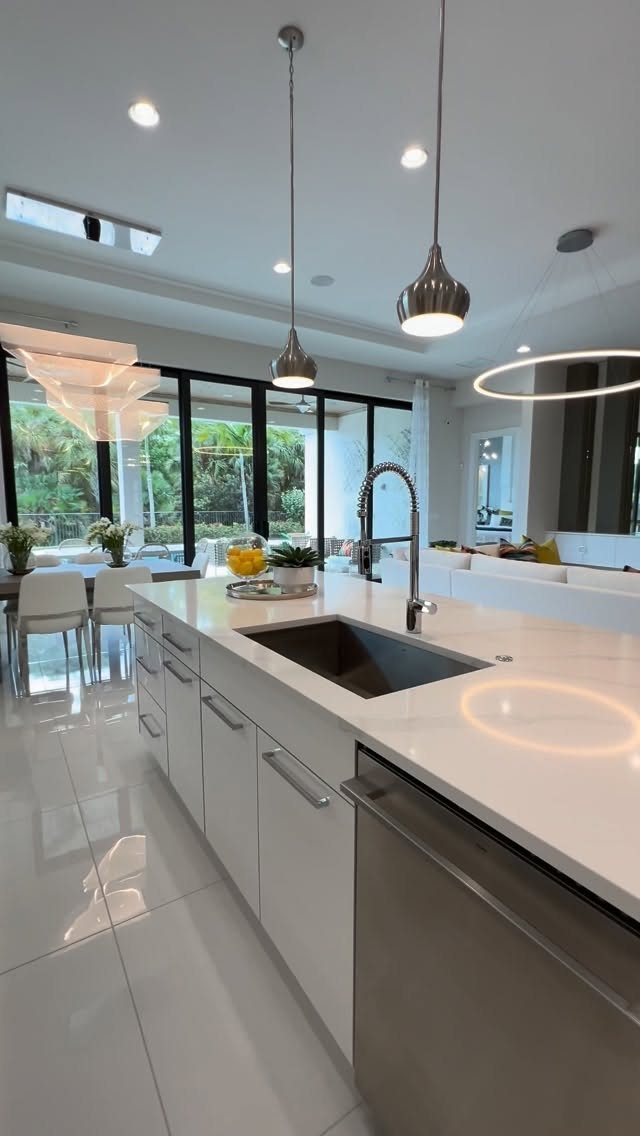
An island is what makes an open plan work: it gives the kitchen a clear edge without a wall.
In this white kitchen, pendant lights hung over the island mark that zone, while the dining area and glass doors carry the eye outside.
Open layouts mean the kitchen is always on display, so I would choose simple, matching finishes. Removing a wall costs real money, so in a rental, rely on lighting and a rug to define each area.
7. Artisanal Glassware and Coastal Finds
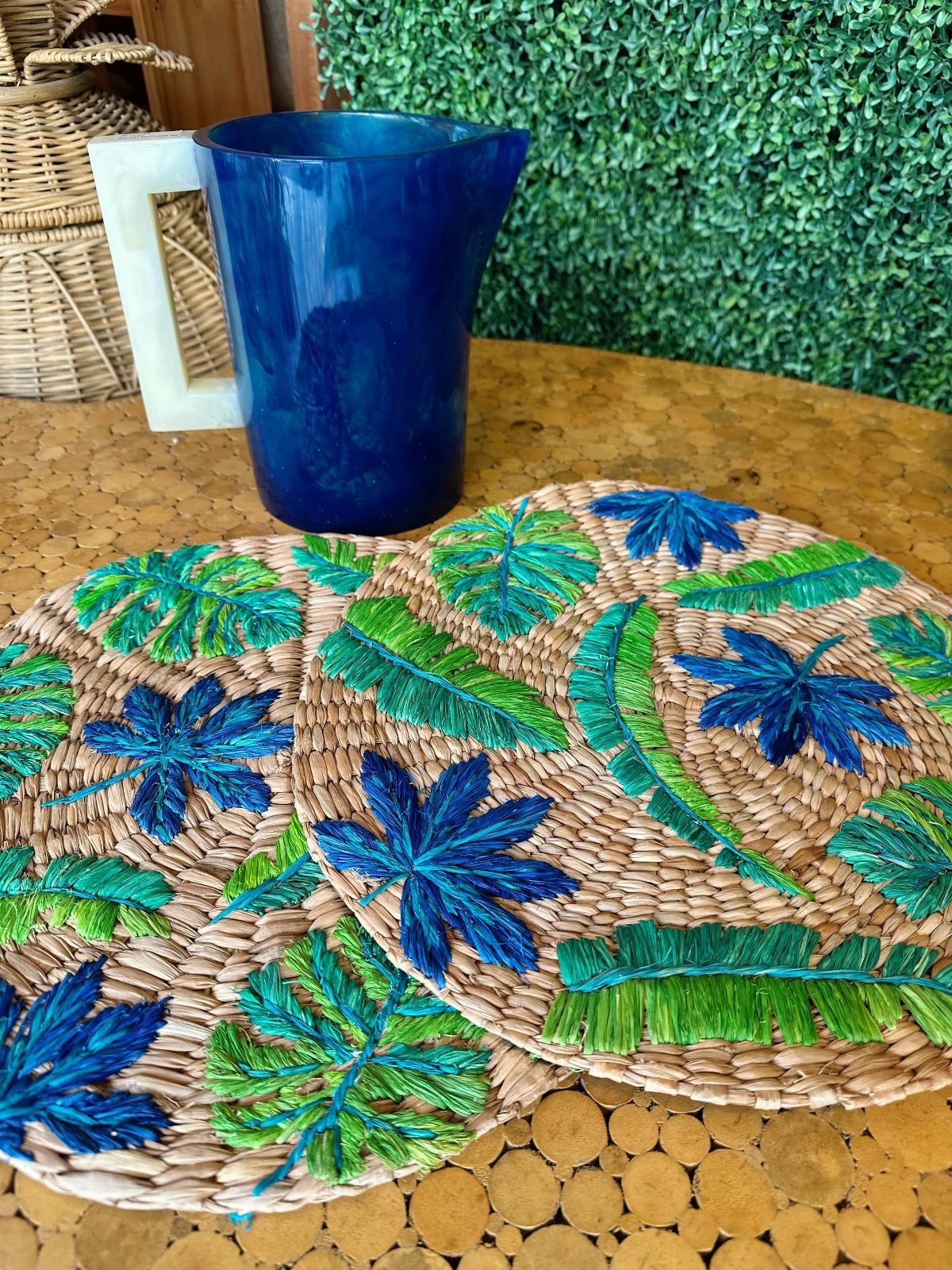
A single blue glass pitcher does more for a coastal table than a shelf of souvenirs. Against woven straw placemats, its color reads as the one deliberate accent, and the white handle keeps it light.
Pick one glass piece in a sea tone and keep the rest natural. Thrift stores and flea markets are the cheap place to look, and a pitcher doubles as a vase when it isn’t holding lemonade.
8. Wispy White Drapes
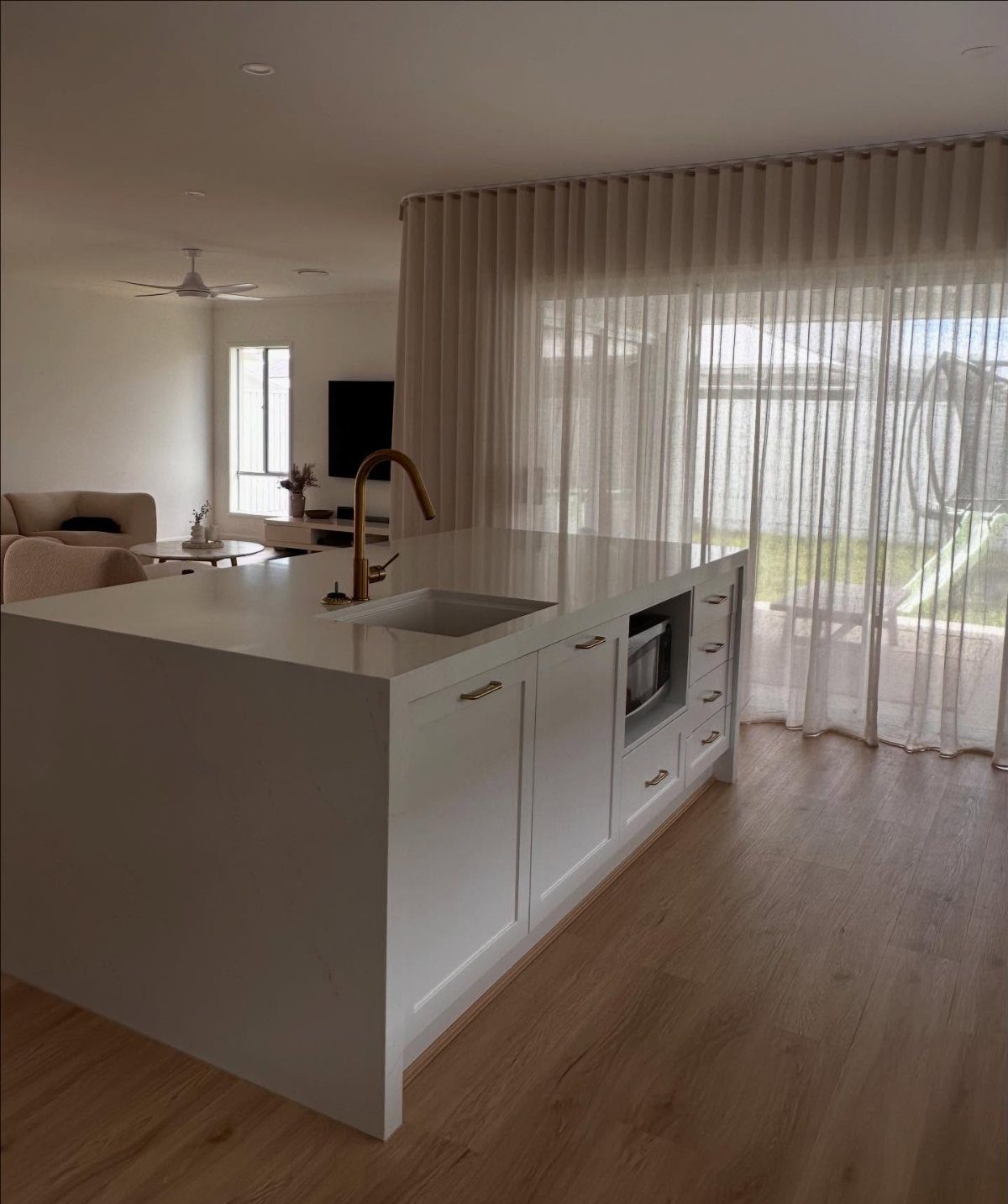
Over a sliding door beside a white island, they add movement and keep the light-wood floors looking warm.
Hang the rod close to the ceiling and use panels wide enough to look full when closed. Plain white sheers work better than patterns when the kitchen already has gold hardware to catch the eye.
Curtain rods and sheers are an easy renter project, no wall removal needed.
9. Murals and Wallpaper
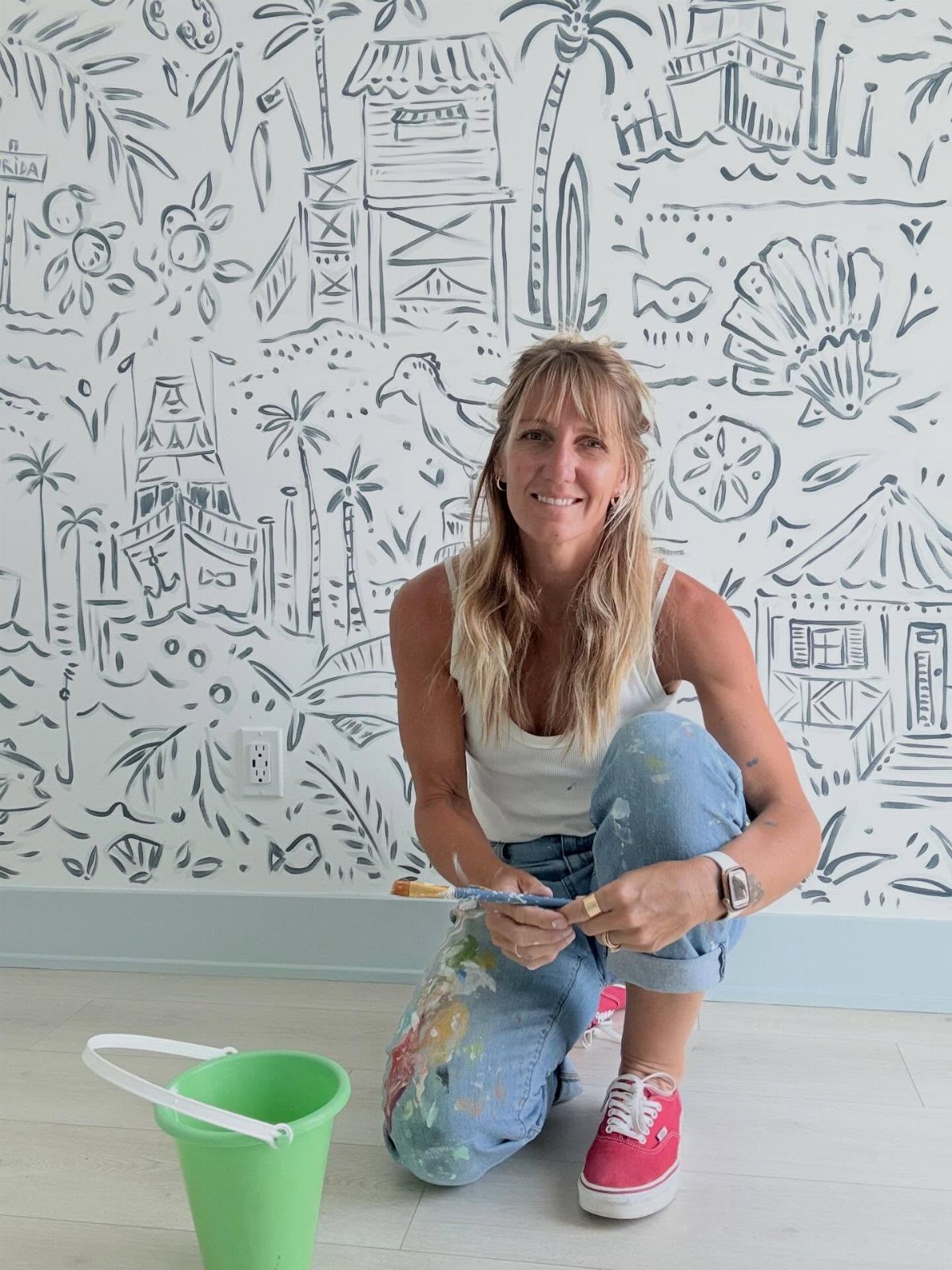
A hand-drawn mural turns one blank wall into the room’s personality, and a single color of line work keeps it simple.
Paint is the cheap route: a brush, a small bucket and a sketch will do. Wallpaper is the tidier choice if you rent, since removable types come off later, though a mural is the one that feels truly yours.
Keep it to one wall and leave the others plain.
10. Stripes in Textiles and Decor
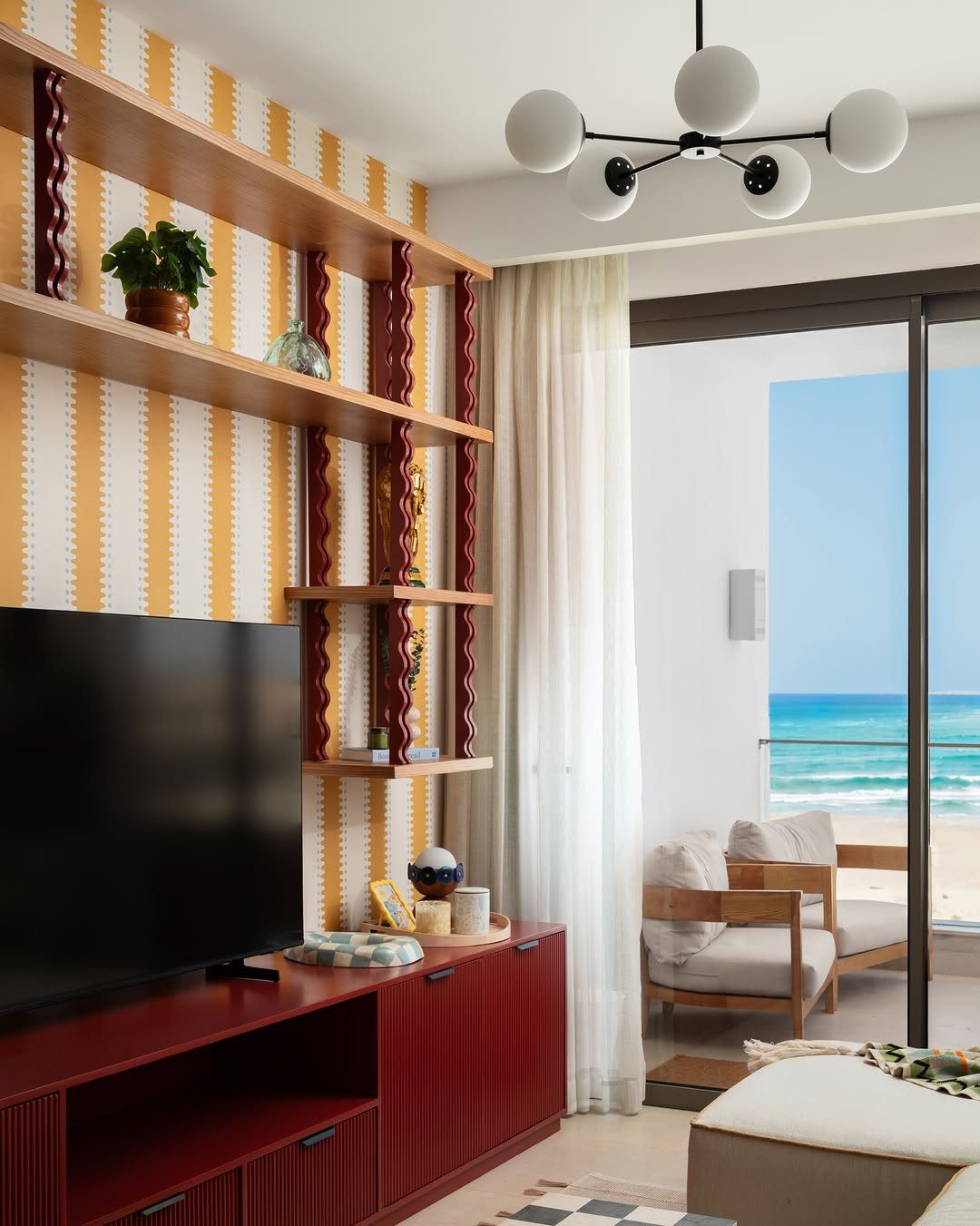
Yellow and white stripes give a living room a sunny, classic look, and they pair well with a view of the ocean.
Even with a red console in the mix, the pattern holds the room together because it stays in 2 colors.
If wallpaper feels like too much, bring stripes in through pillows, a throw or a rug. Narrow stripes make a bolder statement than wide ones, so I would test a small piece first.
Stick to one striped item per surface so the pattern stays calm.
11. Arched Doorways
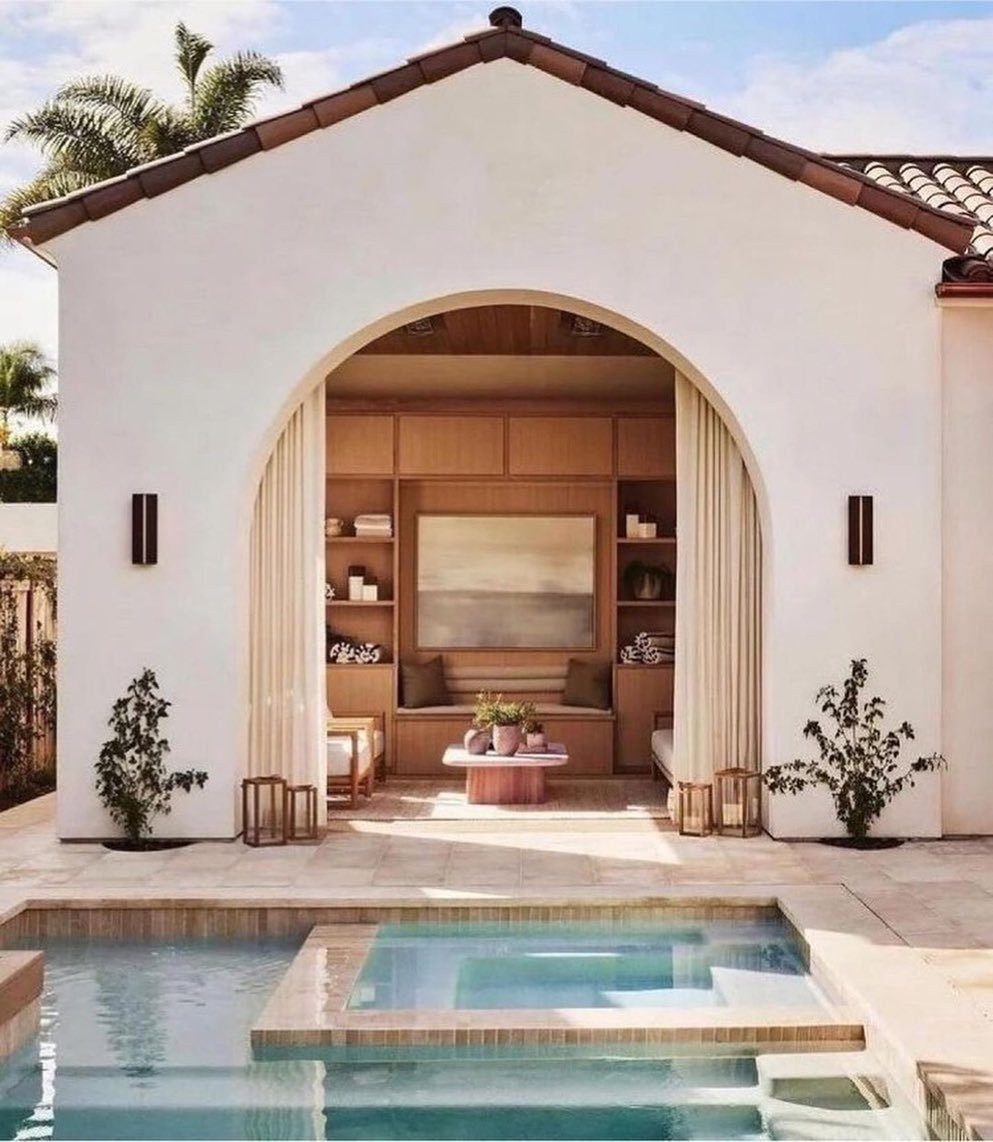
An arched opening softens a boxy white building, and it frames the lounge beyond like a picture.
Building one is a real construction job, so most renters should not count on it.
A cheaper option is to paint an arch shape around a doorway or mirror in a contrasting shade, which gives the same curved line for the price of a can of paint.
12. Artistic Light Fixtures
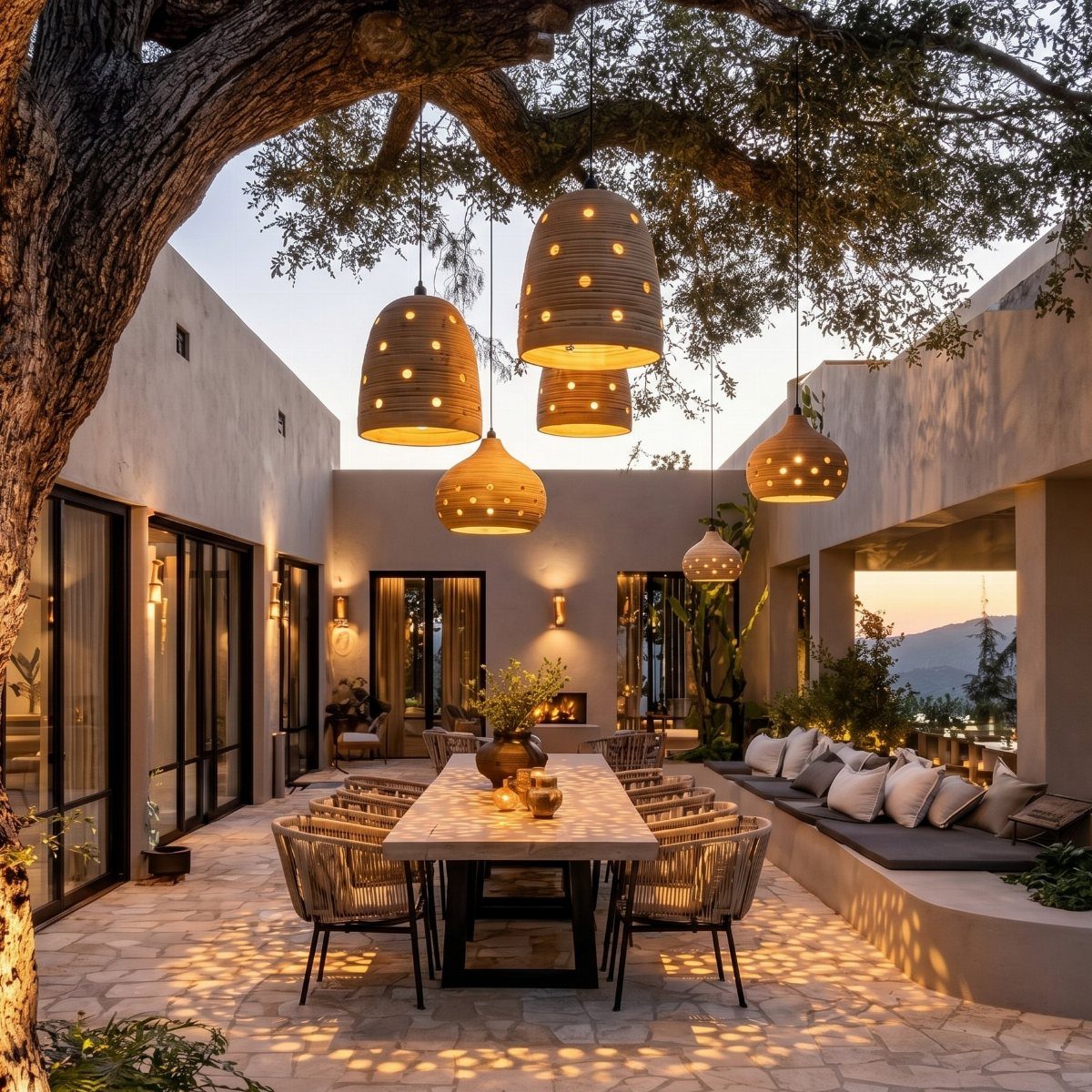
Hung low over a long wooden table, they feel like part of the setting rather than an add-on, and the texture matches the natural coastal look.
One big shade gives a cleaner line than several small ones. Check that the fixture is rated for outdoor use before hanging it, and choose a warm bulb for evening.
Coastal Vs. Beachy Design
Coastal and beachy are not the same style, and the gap shows up in how much you hold back.
Coastal design stays restrained and refined, built on light palettes, soft materials, and one or two sculptural pieces. Beachy is casual, colorful and sometimes kitschy.
If you want the polished version, pick one regional direction.
Sarasota leans on curves, indoor-outdoor flow and sun-bleached wood. Nantucket leans on cedar shingles, crisp white trim and historical detail.
You also don’t need to live near water to get the feel.
Sea glass, rope and driftwood sit well beside wicker, wood or stone. Soft blues and whites, plus house plants, read as beach without turning nautical.
Anchors and model boats are allowed, but a couple of accents go further than a theme.
Best Materials for Coastal Design
Material decides whether a beach room feels relaxed or staged. Pick things that look better as they wear: linen, rattan, white oak, hand-thrown ceramics, jute rugs, cane, and slipcovers you can wash.
Steer away from chrome, plastic, glossy leather, and anything else with a slick, high-shine finish.
They read cold and corporate next to sand and sun. I judge it by touch: a material that feels like plastic will read as plastic in the room.
On a budget, start small.
A jute rug, a linen slipcover or a ceramic bowl brings in warmth without a full furniture swap. Thrifted cane and rattan pieces are easy to find and easy to mix.
Common Mistakes in Beach House Decor
The most common mistake is filling every space. A beach house should feel open and breezy, so leave negative space, meaning areas with nothing in them at all.
Resist lining every wall with furniture, and don’t tuck a plant or side table into each corner.
Keep clear paths for walking and enough open space for air to move through the room. Less really does work better here.
Theme is the second trap. Blues, whites and shells are common, and nautical touches are fine in small doses, but a room built entirely around them looks like a gift shop.
Storage is the third. Clutter ruins a calm room fast, so give baskets, lidded boxes or closed shelves a spot for the things you use daily.
Frequently Asked Questions
How to make your house look like a beach cottage?
Start with a light base of whites, creams and soft beiges, then add natural textures like jute rugs, linen slipcovers, cane, rattan and woven baskets.
Keep nautical touches to a couple of accents, such as a few shells or one sea-toned glass pitcher, because a room themed entirely around them starts to look like a gift shop.
Leave plenty of bare floor and open wall too, since a beach cottage breathes best when the furniture doesn’t crowd it.
How to style a coastal living room?
Use light colors, natural textures and comfortable furniture. Stripes in 2 colors on pillows or a throw add pattern without clutter.
What is coastal interior design?
Coastal style stays quiet and uncluttered, using wood, linen and stone in shades borrowed from sand, sea foam and a clear sky. It relies on pieces like linen, rattan, white oak and jute rather than seashell and sailboat motifs.
What are the best colors for beach interior design?
Whites, creams and light beiges make the best base, with soft blues and whites as the main accent tones.
Keep the shades just different enough, such as a warm cream beside a cooler white, so the room reads as layered rather than washed out.
If you want more color, try a single strong shade on easy-to-swap items like outdoor chairs.





