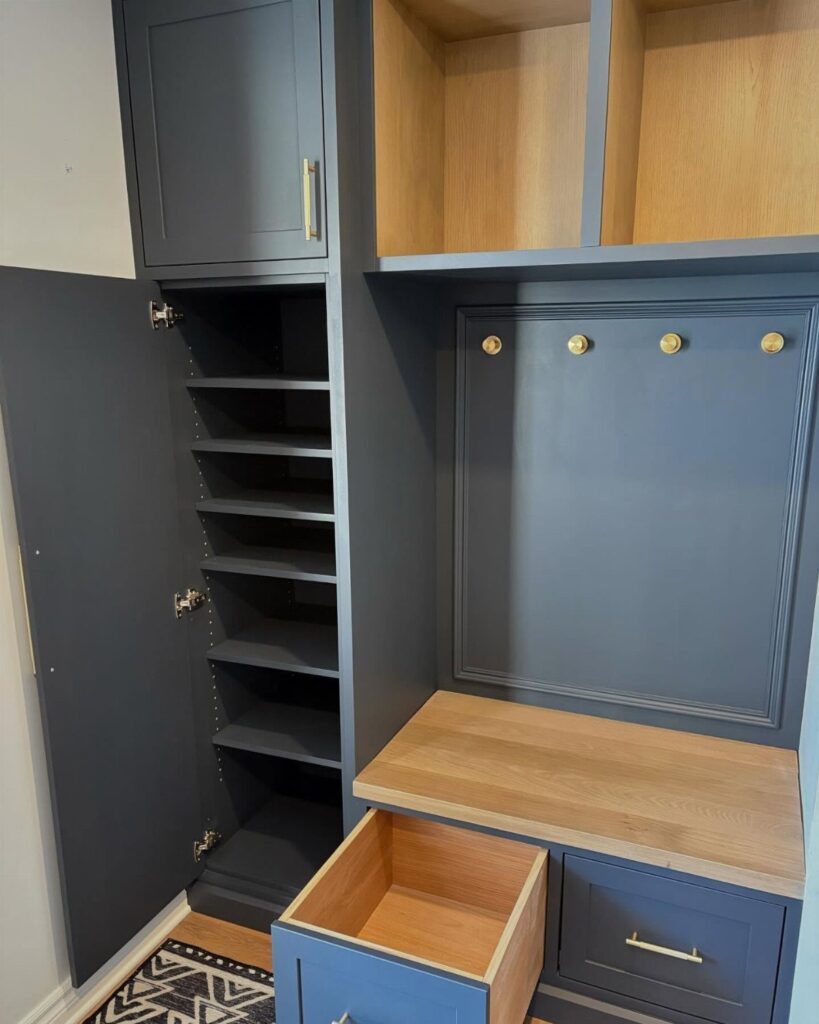
The ideas here run from a simple bench to a built-in hall tree with a cabinet, and a paneled version with a shoe shelf, so the real question is how much wall and how much building skill you have.
Once trim pieces enter a build, it moves from beginner to intermediate, and that is usually what decides which version is yours.
1. DIY Hall Tree Bench
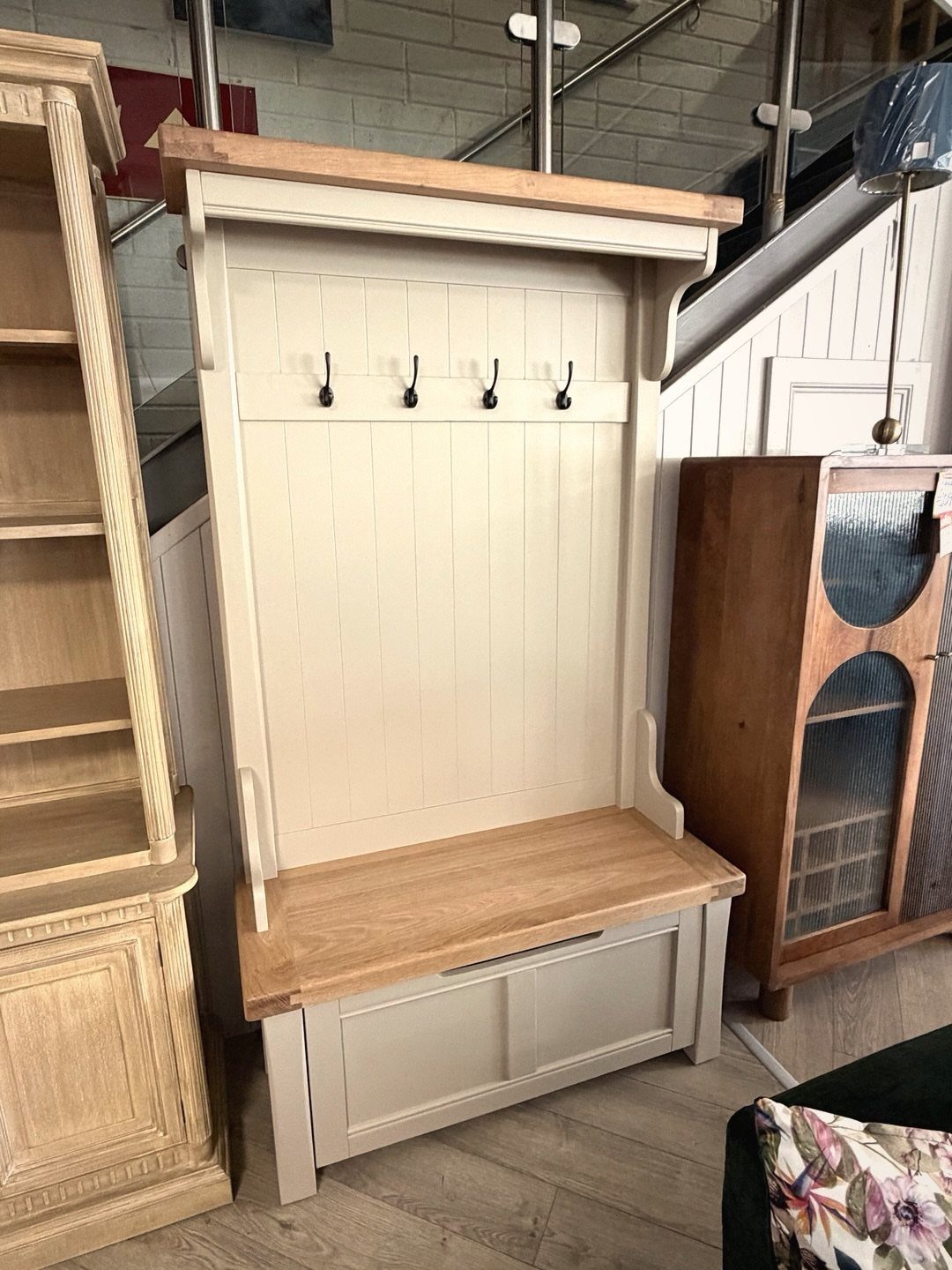
A bench with a drawer under the seat and 4 hooks above it is the smallest version of a hall tree worth building.
Cream paint on the frame with a natural wood seat keeps it light and easy to match to nearly any entry.
Hooks are the cheapest part, so buy sturdy ones.
Black hardware reads crisp against cream. I would put the drawer to work on gloves, hats and dog leashes, and keep shoes off the bench so the seat stays clear for sitting.
2. Built-in Hall Tree
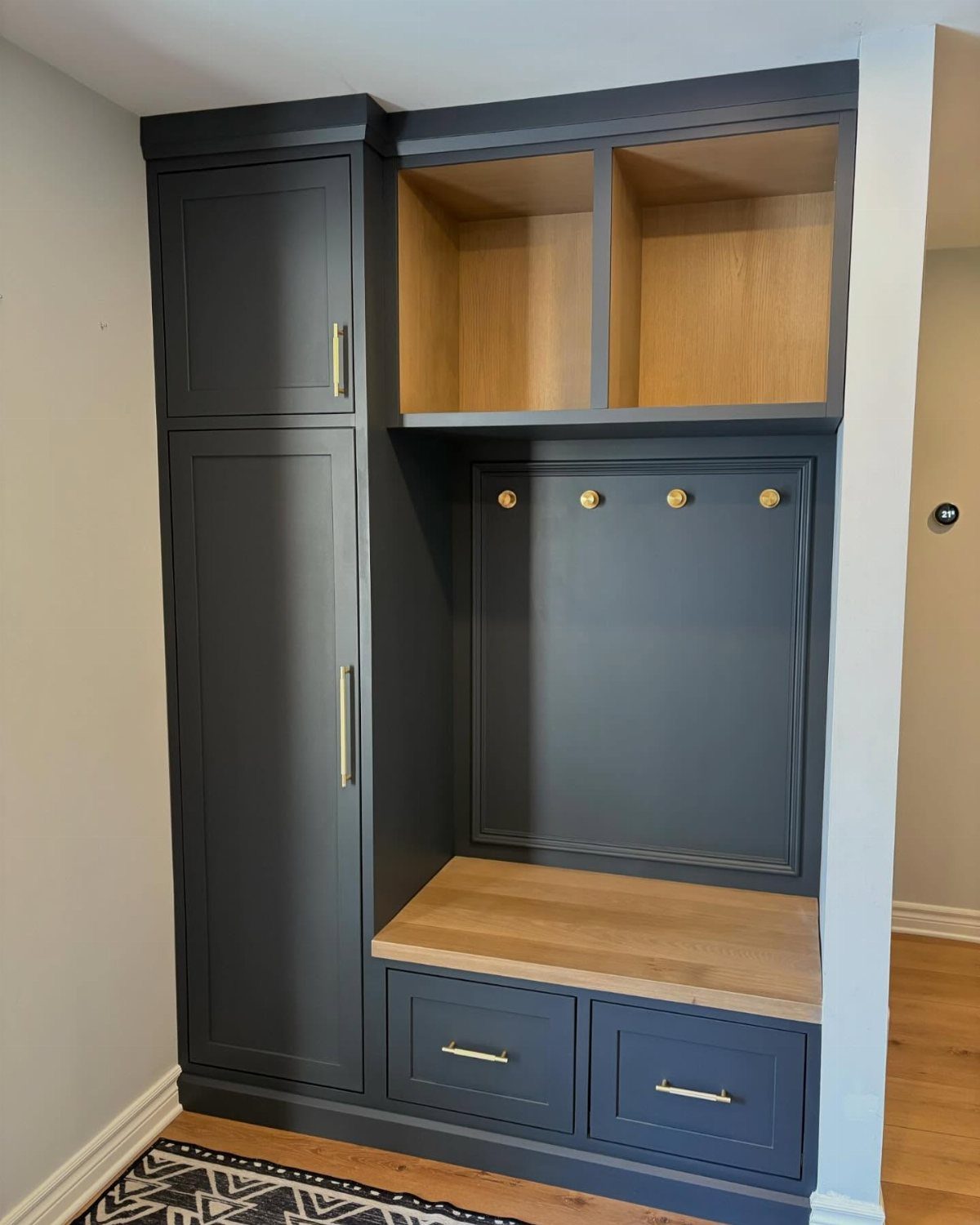
Where a closet isn’t possible, a built-in hall tree can stand in for one. Cubbies up top, hooks in the middle, a bench and drawers below: everything a closet does, in a hallway.
Gold hooks on a dark finish catch the eye because of the contrast. Keep the items you grab every day at arm level and below, and save the highest cubbies for things you only need now and then.
3. Customizable Built in Hall Tree
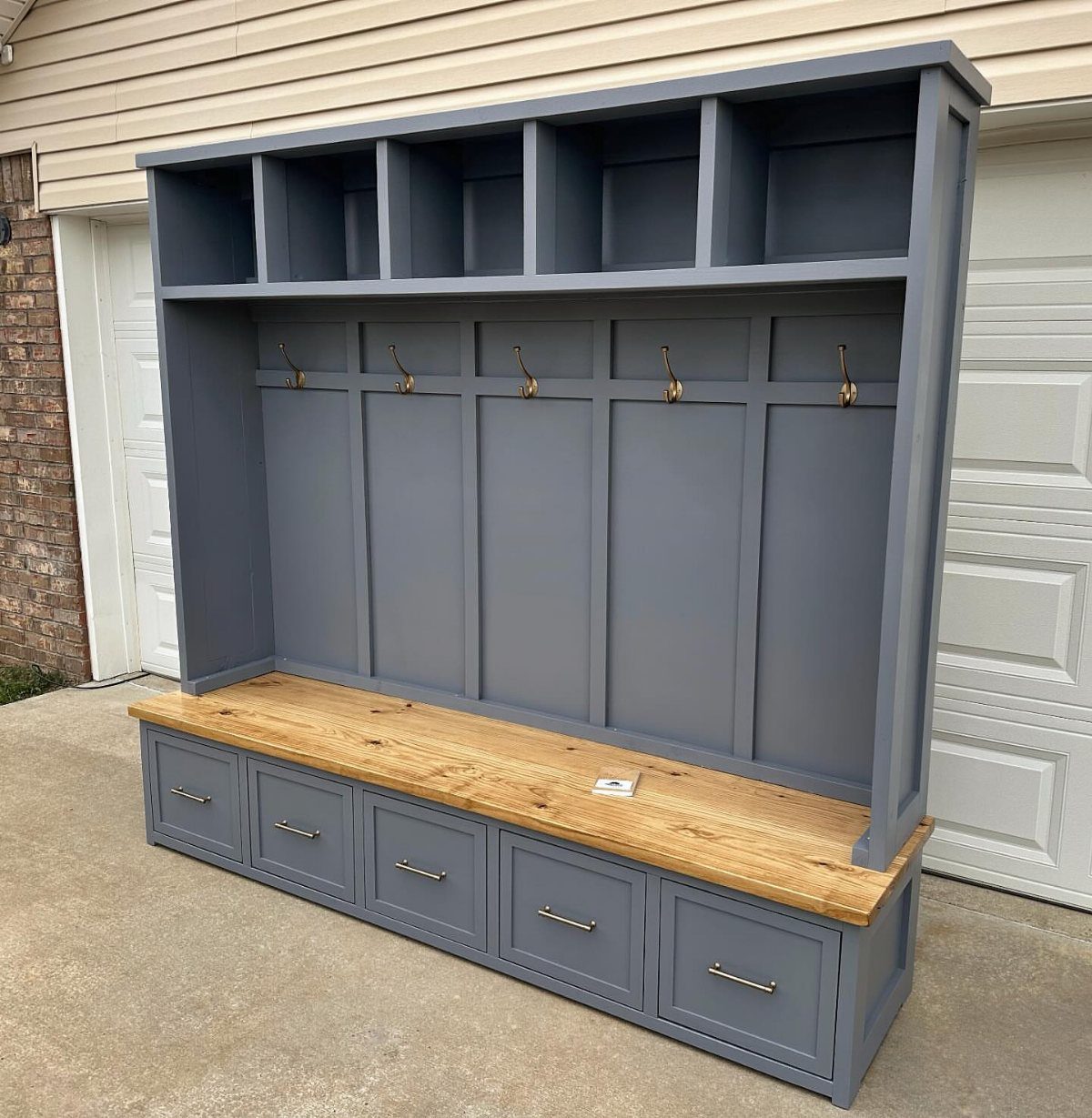
Sizing a built-in to your own wall is its biggest advantage. Drawers, hooks and cubbies can be mixed in whatever ratio your household needs, so a family with lots of shoes can add drawers while a coat-heavy one adds hooks.
Grey paint with a natural wood bench is an easy pairing to copy. Sketch your layout first, counting how many people will use it, then give each person a hook and a cubby.
4. Built in Hall Tree with Cabinet
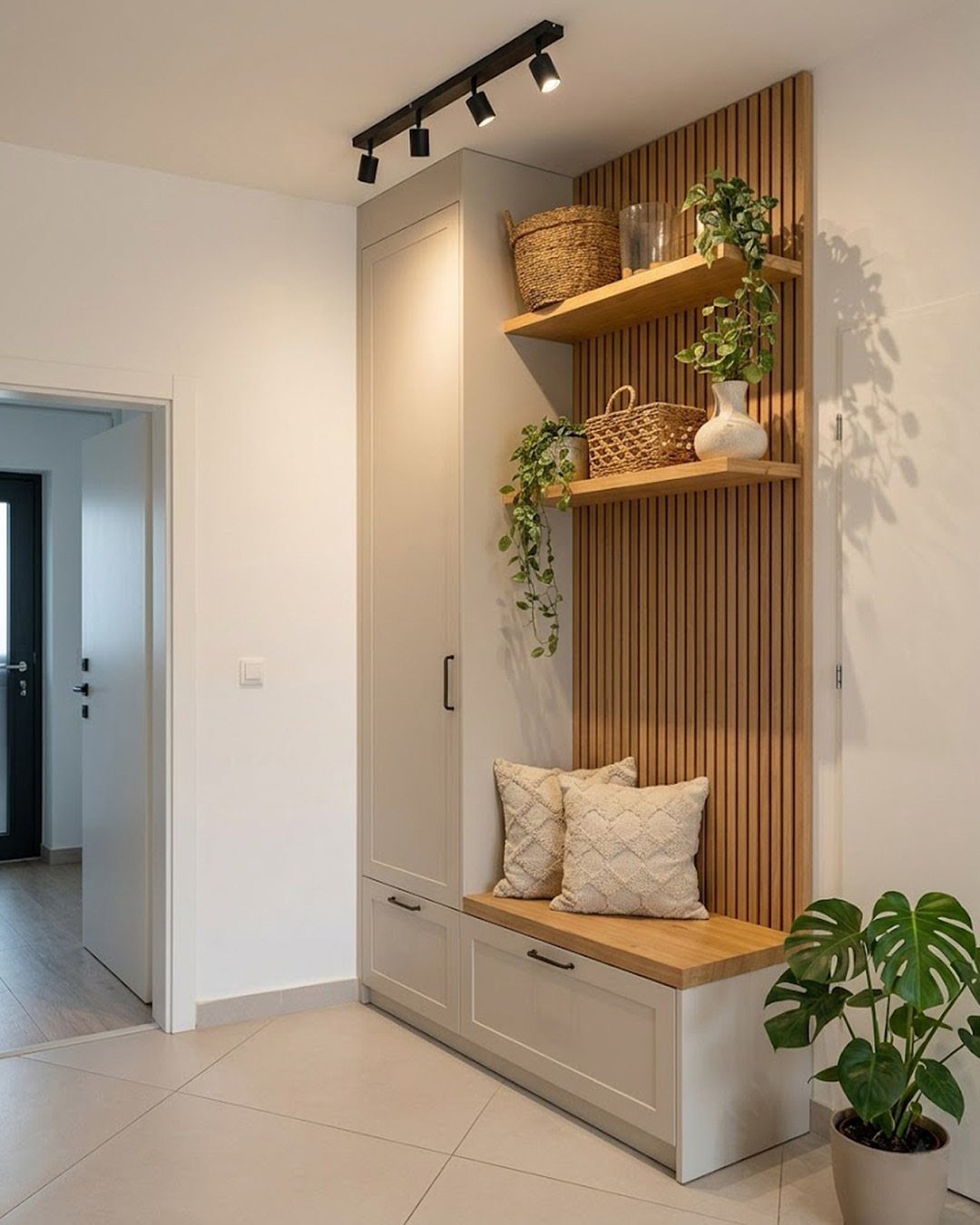
A tall side cabinet is what separates this unit from a plain bench. It hides the clutter you don’t want on display, such as bags, umbrellas and cleaning supplies, while the open shelves handle the pretty things.
Floating shelves over a wood slat wall add warmth to an all-white build.
I would keep the shelves for a few objects only. The bench drawers take daily items, and pillows make the seat comfortable enough to actually use.
5. Paneled Hall Tree with Shoe Shelf
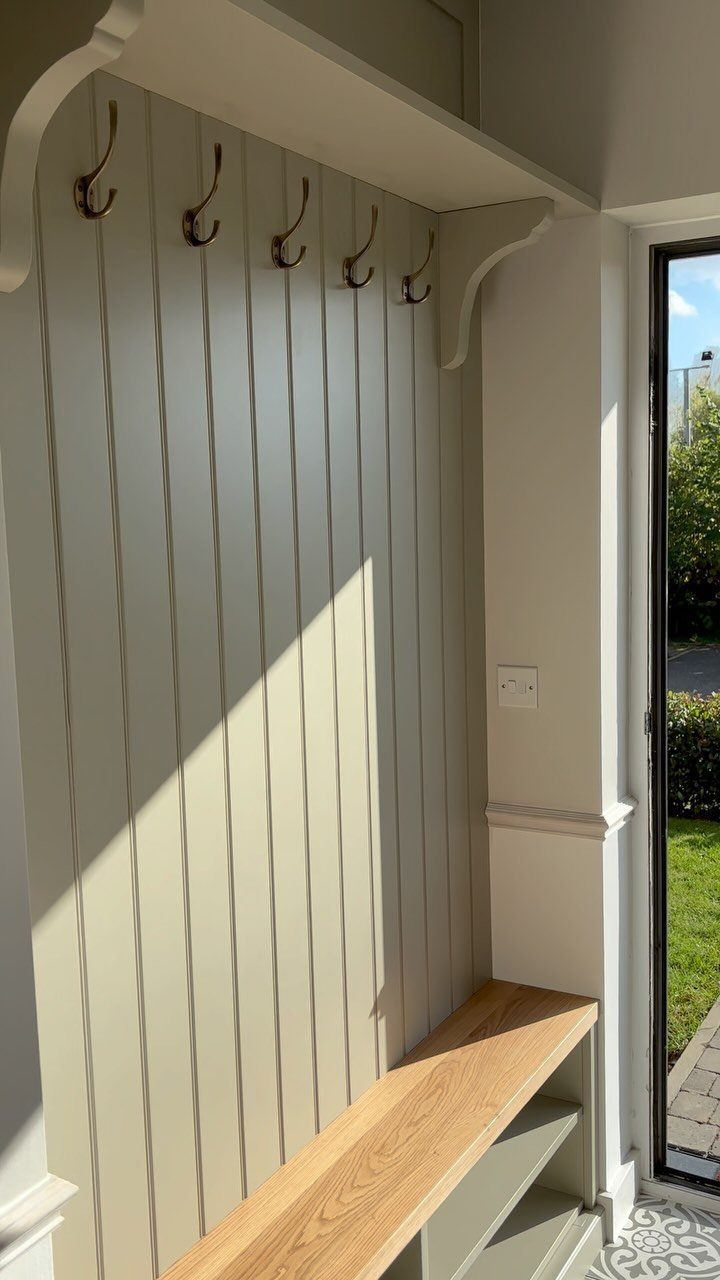
Paneling does the quiet work here, turning a plain wall into a finished backdrop for hooks. Light grey keeps it calm, and brass hooks add a little shine without clutter.
I favor the open shelf below the bench for shoes, because you can drop them in without opening anything.
Shoes stay visible, so line them up in pairs. Paint the panels and the bench frame in one coat color for a cleaner look.
Building Materials and Tools
Plywood, wood boards and screws cover most of a hall tree build.
Pocket hole screws come in two lengths worth buying: 2 1/2" for the thick joints and 1 1/4" for the thin ones. Add 1.5" brad nails, wood glue and 4 coat hooks.
For tools, a Kreg Jig, a drill, a miter saw, clamps and a brad nailer do the assembly. A circular saw or table saw handles the long cuts.
No saw at home? Ask the lumber counter at the home improvement store to cut your boards to length while you’re there, since most will do it for little or nothing.
Most stores will do a few for free, and it saves a weekend of setup.
Wood glue plus pocket screws makes the joints stronger than screws alone, so clamp each joint before you drive anything.
Design Considerations
Look at the trim around your entry before you pick a style. Door casing, baseboards and the hardware on your front door tell you whether a clean modern unit or a more traditional one will look like it belongs.
Modern leans on flat panels and plain lines.
Be honest about skill, too. Once a bench build adds a bunch of trim pieces, I’d call it an intermediate project, not a beginner one.
The pocket holes, screws and brad nails are simple, but it is a fairly large build, and the trim pieces may need a little trimming to fit.
If you’re newer to building, choose the flatter, simpler design. Fewer miter cuts means fewer places to go wrong.
Functionality and Organization
Plan the unit around what you do at the door: hang a coat, pop off your shoes, set down a bag. If a spot doesn’t serve one of those actions, it’s decoration.
Stand in your entry and act out your usual arrival. Note where your hand goes first, and put the hooks there.
A bench that works as a seat and a shoe-removal spot keeps the doorway clear, which does more for a small entry than any amount of extra storage.
Frequently Asked Questions
Are hall trees a good idea?
Yes, especially where there’s no closet near the door. A hall tree gives you hooks for coats, a bench for taking off shoes, and drawers or cubbies for the rest, all in one spot.
Yes, mostly because the bench gives people a place to sit and pull off boots, so shoes end up in cubbies instead of piled on the floor, and in a tight entry that keeps the walkway open better than an extra shelf would.
How much does a hall tree cost?
A DIY hall tree can run around $92, while retail versions typically cost $250-$500.
Building it yourself costs less, but you need basic tools like a drill, a miter saw and a Kreg Jig, plus plywood, boards, screws, brad nails, wood glue and coat hooks.





