How often the door actually slides decides which of these styles fits: a slider you open all day, like one off a kitchen, does best with a durable fabric and panels that glide on the rod, while a bedroom door can carry a heavy drape over a sheer.
1. Sheer Curtains with Heavier Drapes
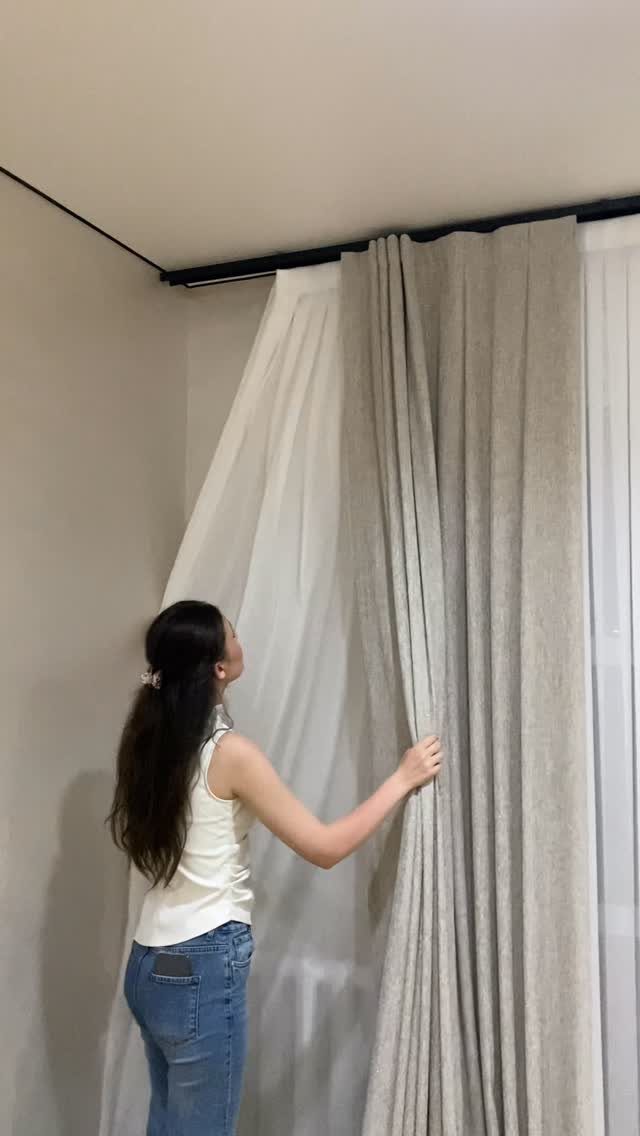
Two layers on one rod give a sliding door two moods. Close the sheer for daylight that still softens the glass, then pull the heavy drape across when you want the room to feel enclosed.
A double rod holds both layers, and a single wide rod works if the drape is full enough to stack neatly. I would pick a drape a shade or two darker than the sheer, so the pair reads as deliberate.
Hang the rod wider than the door so the drape can park off the glass.
However, for these same reasons, it can be a bit challenging to find the perfect window treatments for sliding glass doors that both allow the light in, are easy to slide, and also provide a nice layer of privacy.
2. Curtains That Cover the Entire Area
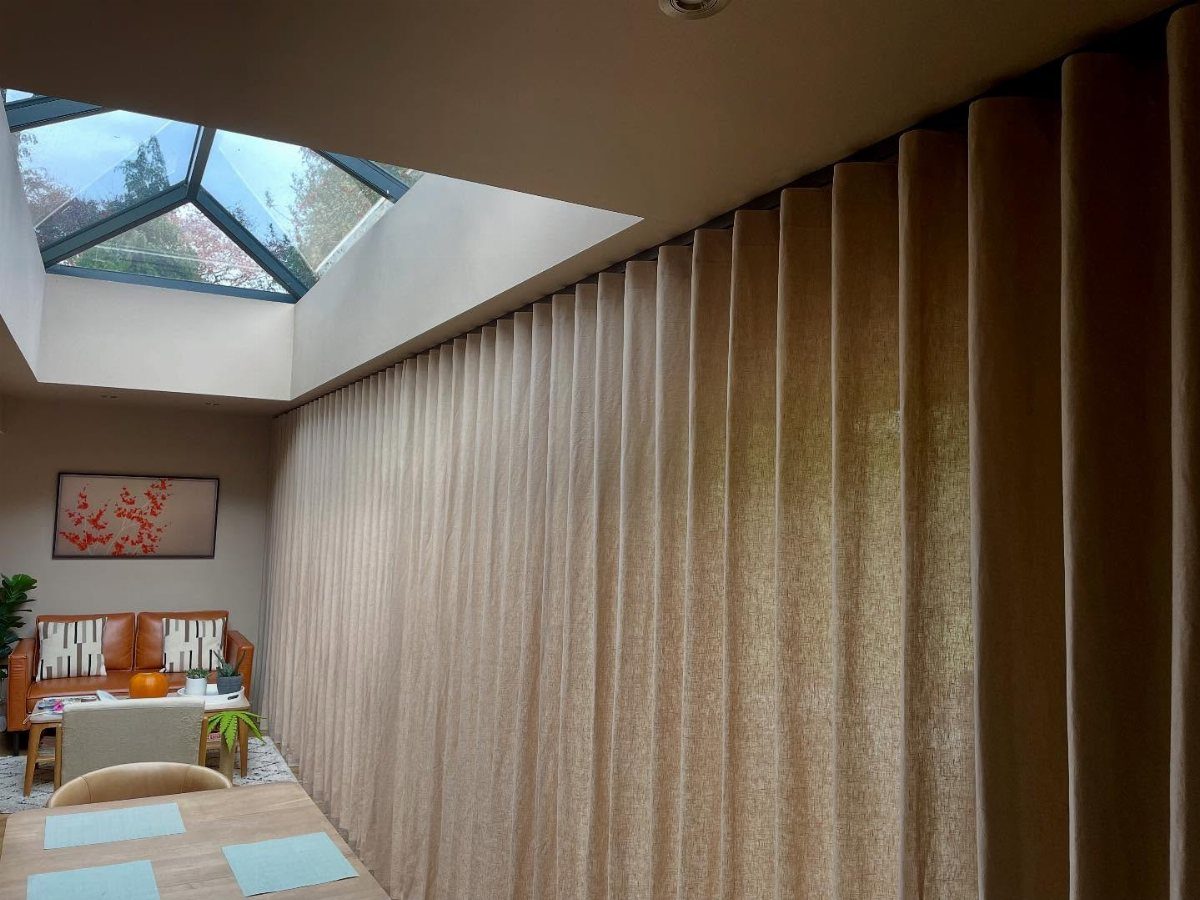
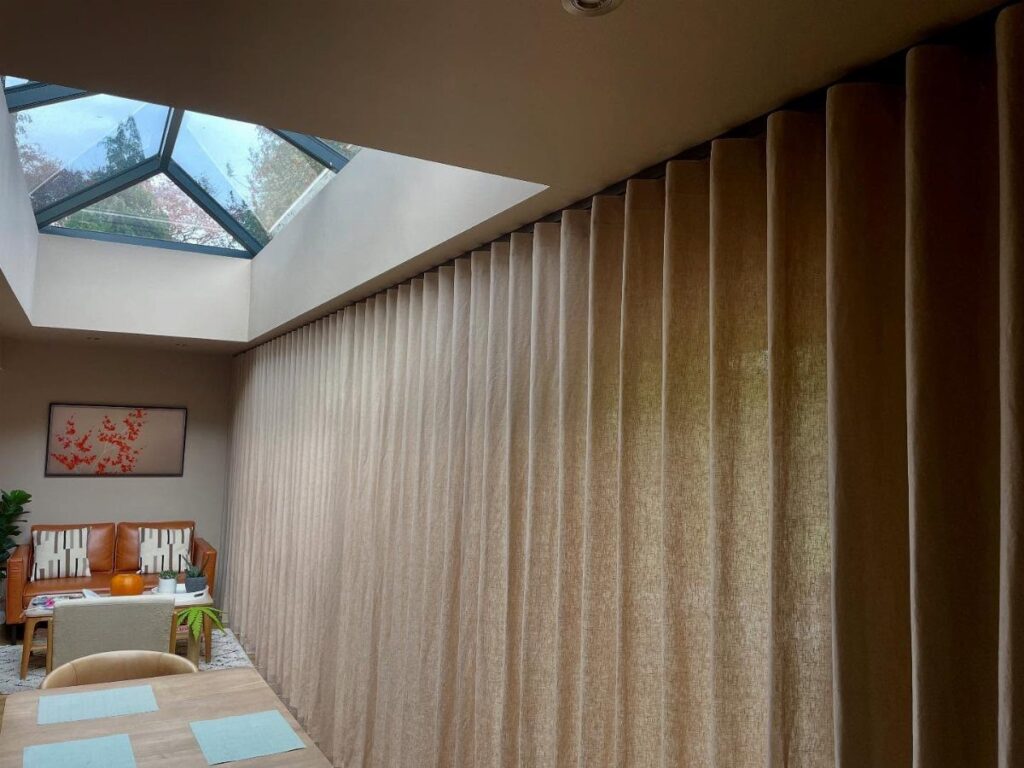
A wall of fabric hides the seams between door, window and skylight wall, so the whole opening reads as one calm surface. Linen in a single color does this best.
Measure the full width of the glazed area, not just the door, and buy panels with enough combined width that the folds look full instead of stretched flat. Open, the panels stack to the sides and leave the glass clear.
The cost is fabric: covering a big wall takes many panels, so keep to a simple, ready-made linen look.
3. Panel Track Blinds
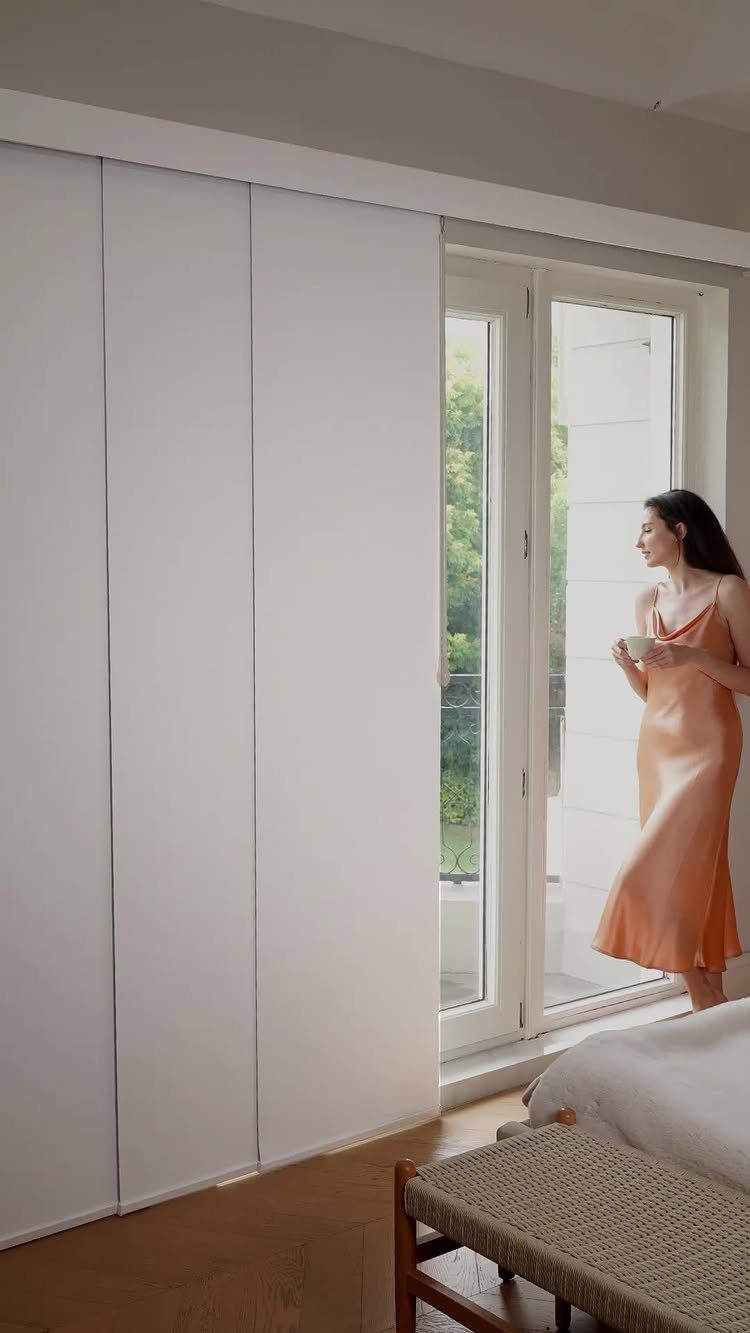
Wide panels that glide on a track make a tidy answer to the slatted vertical blind. Each panel is a flat sheet of fabric, so a sliding door ends up with clean lines and no clattering slats.
I like white in a bedroom because it stays quiet and lets the door blend into the wall. Stack the panels to one side when you want a clear view, or spread them across for full coverage.
Measure the door width and the height from the track position to the floor before ordering.
4. Patterns That Reflect Nature
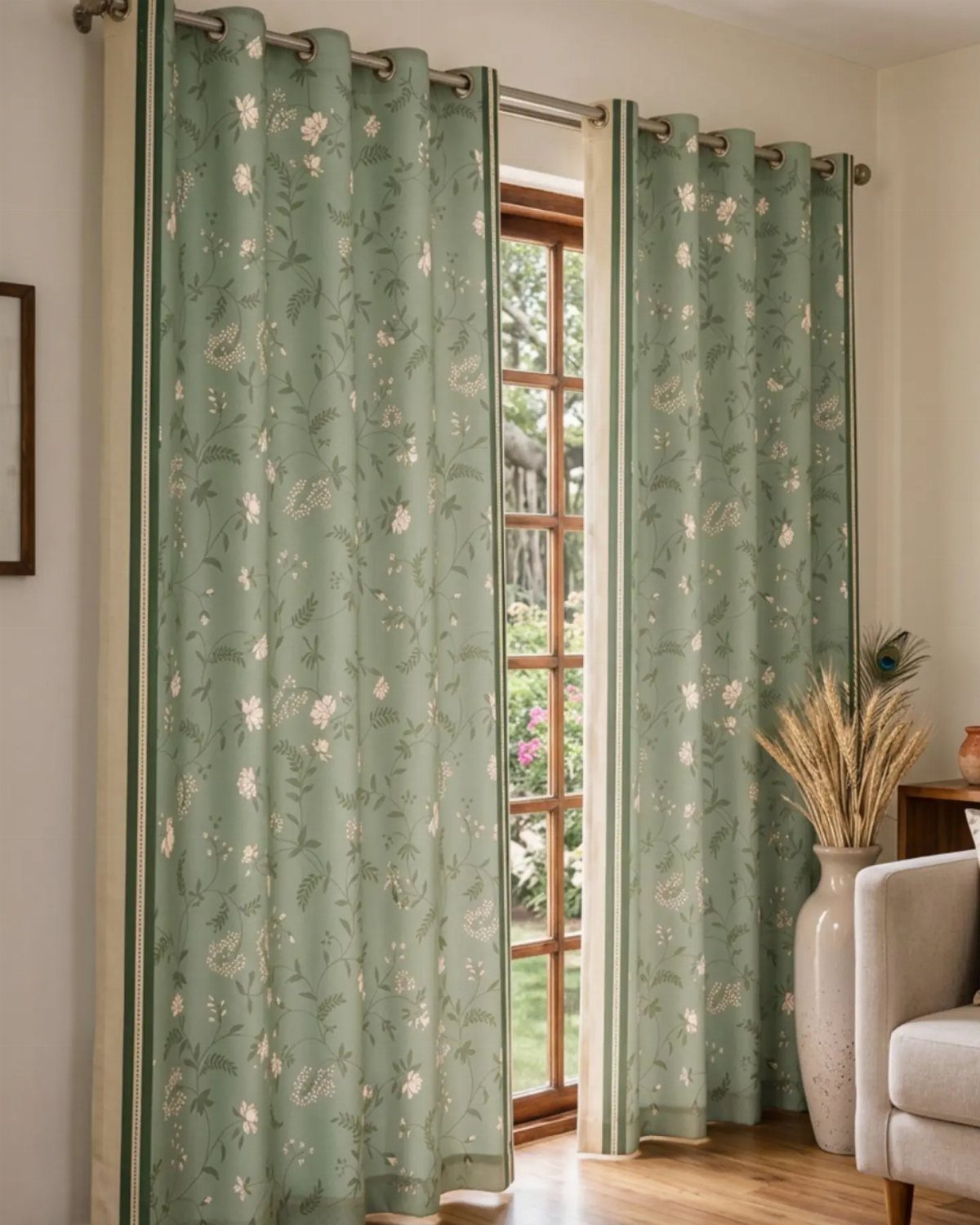
Sage green with white leaves and flowers brings the garden to the glass without a single plant to water. A sliding door already frames the outdoors, and a botanical print echoes it from inside.
Keep the rest of the room plain. When the curtains carry the pattern, solid sofas and walls let them breathe.
I would hang them on a standard rod and let them fall full, since a pattern looks best with folds rather than stretched flat. Small leafy prints are more forgiving than huge blooms.
5. Curtains from the Ceiling
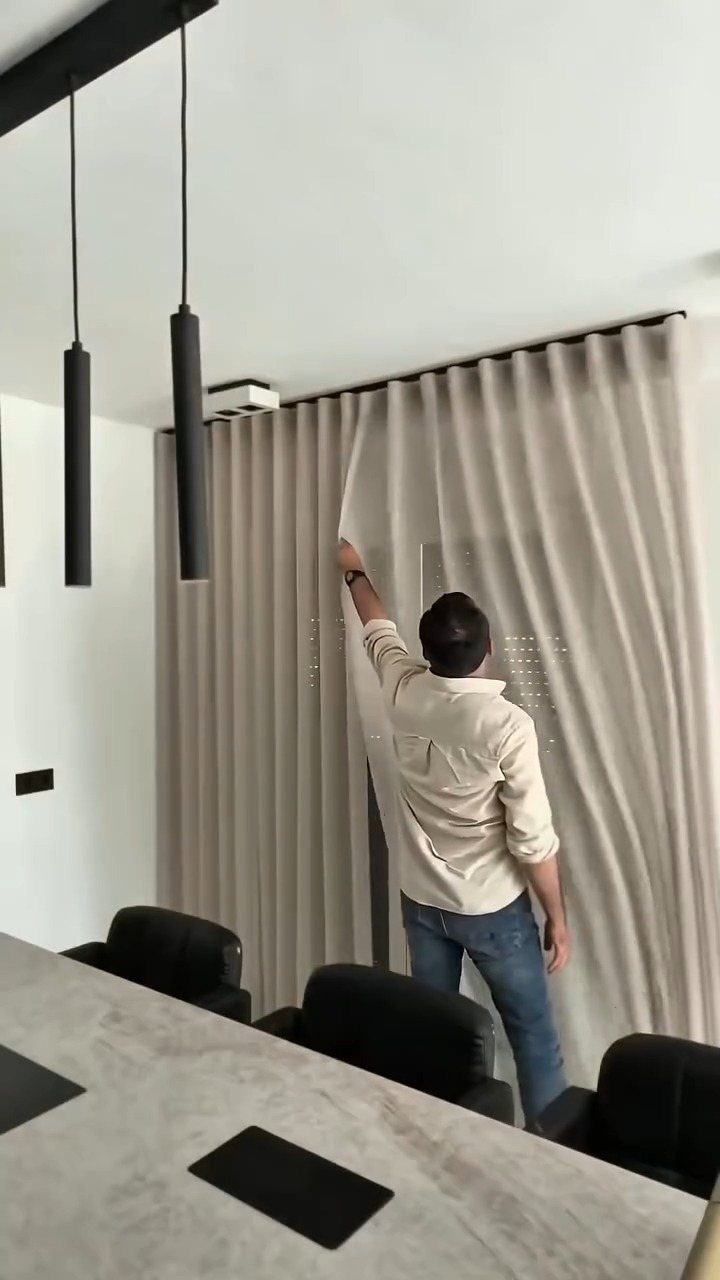
Hanging fabric from a ceiling track draws the eye straight up, so the wall looks taller than it is.
Mount the track at the ceiling, not above the door frame, and let the panels reach the floor. A ceiling track also removes the rod and brackets, which leaves a cleaner look.
Choose a color close to the walls so nothing breaks the vertical sweep. Skip fabric that puddles on the floor, which cuts the effect.
6. Neutral Drapes Framing Black Door
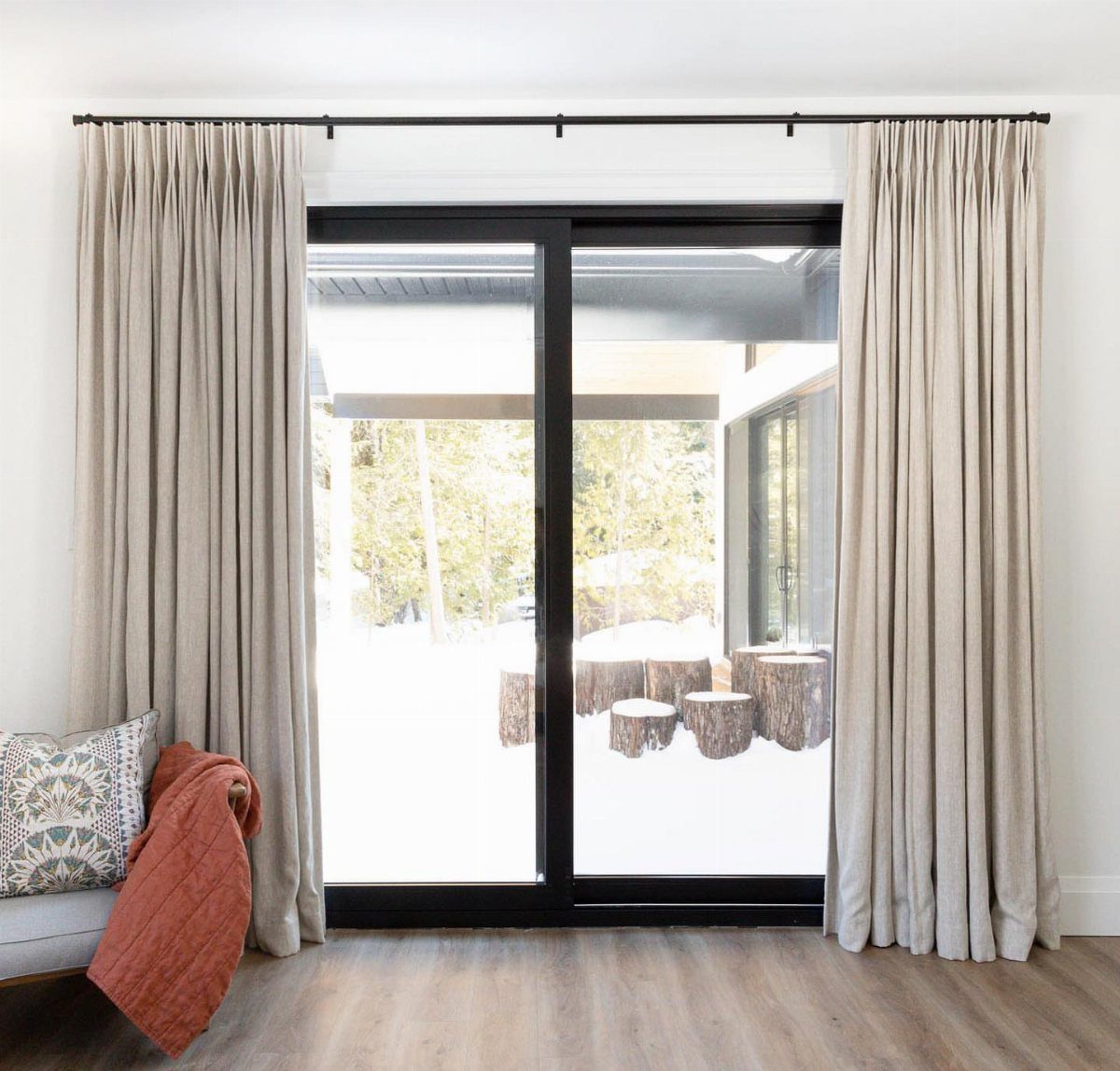
Black door frame, black rod, beige panels: the dark pieces repeat each other and the fabric softens them. Hung on each side rather than across, the curtains frame the glass instead of hiding it.
Pick a warm neutral so the door can stay the star, especially with a view as bright as snow.
Mount the rod a little wider than the frame so the panels rest beside the glass and let in full light when open.
A matching black rod ties the whole thing to the door.
7. Geometric Diamond Print Curtains
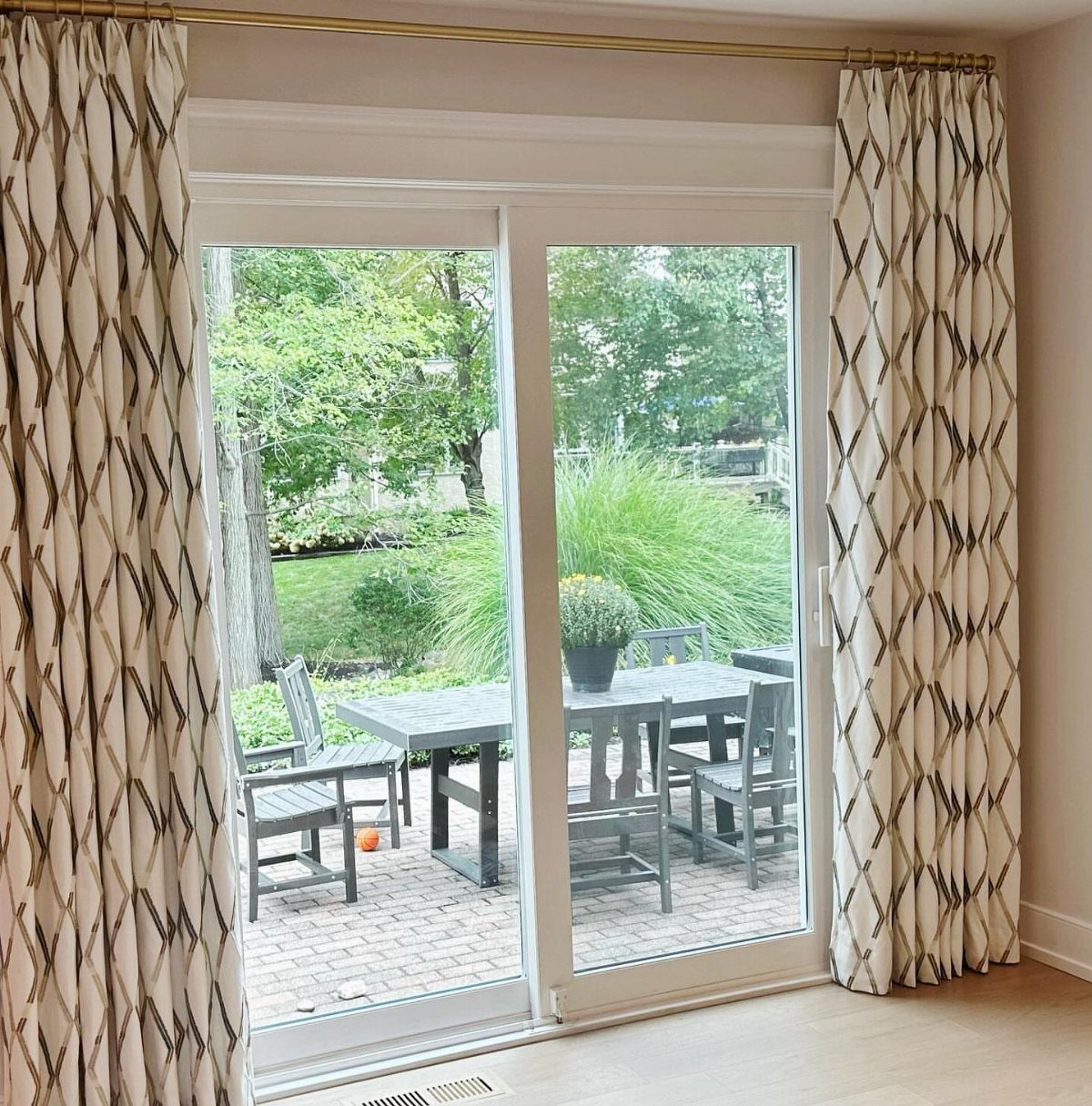
A brown diamond print on white fabric gives a plain sliding door some pattern without crowding it. The white keeps the glass bright, and the brown ties in easily with brick, wood and earthy outdoor furniture.
Hang the panels at each side and let them fall to the floor, since the diamonds read best with some fullness in the folds. Keep walls and furniture solid so the print stays the one busy thing in the room.
Pull the panels fully open when you want a clear view of the patio.
8. Zebra Roller Blinds
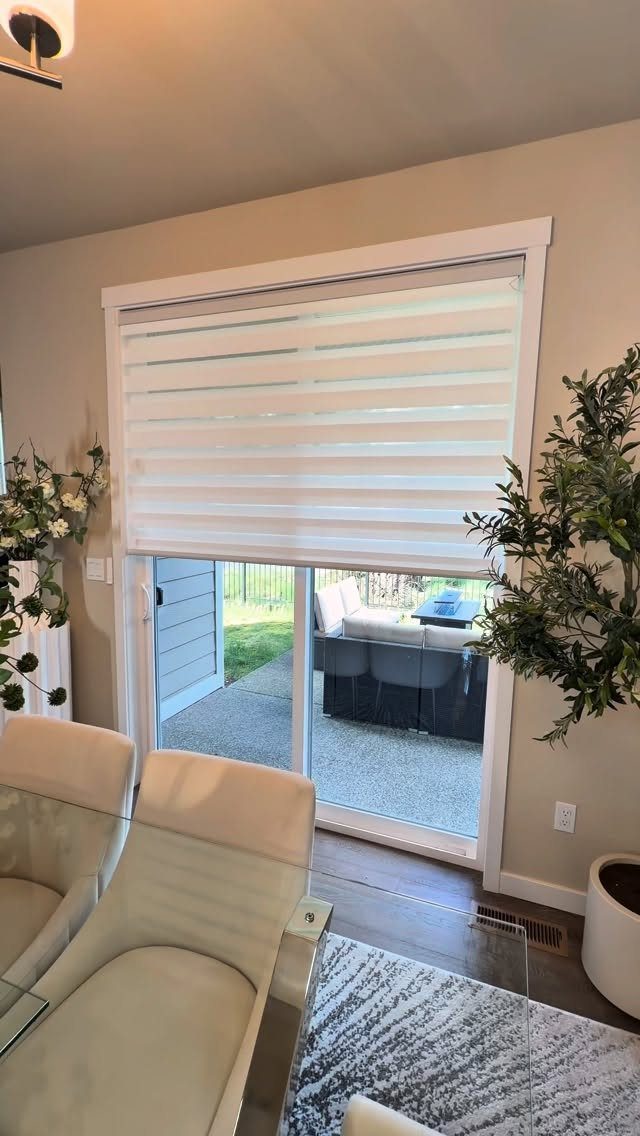
Zebra blinds alternate solid and sheer stripes on a single roller, so one pull sets how much light and view comes through.
Line the sheer bands up and the glass stays bright; line the solid bands up and the room goes private.
White stripes suit a modern room and blend with the door frame. Measure the glass width and the drop before ordering, and decide whether the blind sits inside the frame or above it.
I like them where a heavy curtain would feel too much.
9. Woven Bamboo Roman Shades
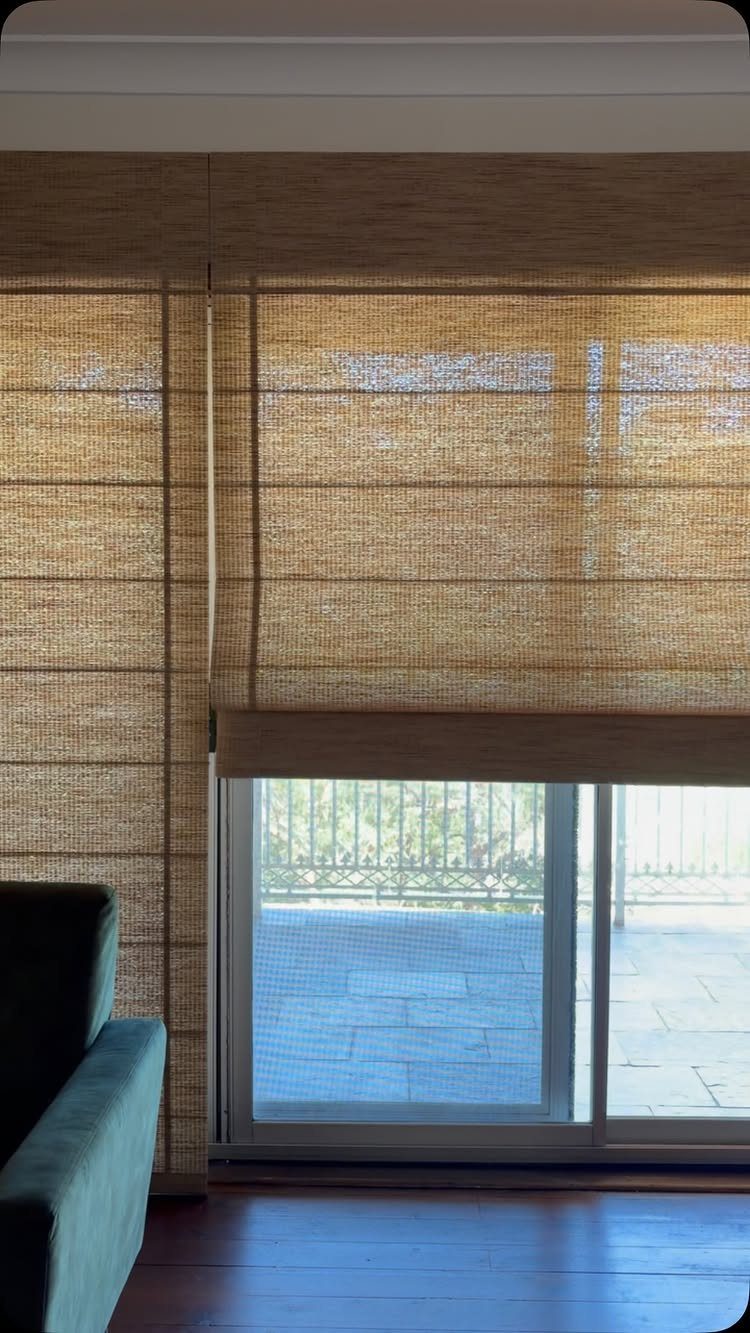
Natural bamboo brings texture and warmth that fabric panels can’t. A woven Roman shade folds up in neat horizontal pleats, and the pale, straw-like weave pairs well with a colored sofa or a patio full of plants.
Hang a shade over each door panel, or one wide shade if the opening allows. Mount it above the frame so it clears the glass when raised.
Choose a light, even weave for a calm look. The cost is that bamboo is more rustic than a smooth linen drape, so keep other textures simple.
10. Single Grey Curtain on Black Rod
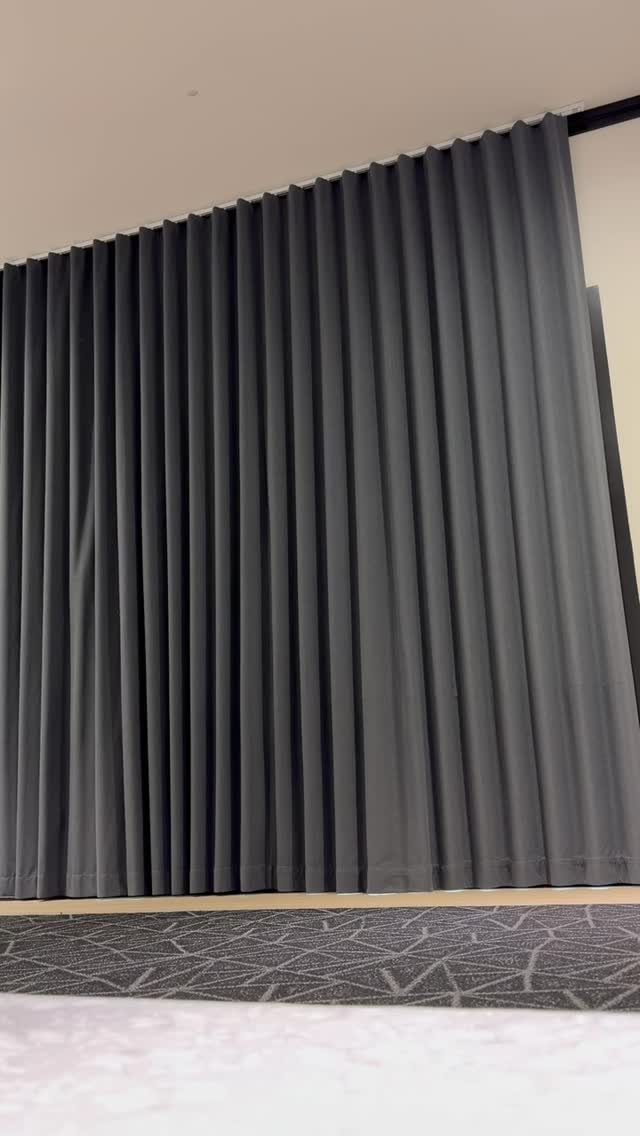
One full-length grey curtain on a black rod looks tailored, not fussy. Pleats hold the folds in a clean vertical line, and the black rod draws a sharp outline around the grey so the panel reads clearly beside the paint.
A pattern on the carpet is easiest to live with when the curtain stays solid.
A single panel needs a spot to stack when it is open, so pull it fully clear of the door opening before you decide where to mount the rod.
11. Curtains with Tassel Tiebacks
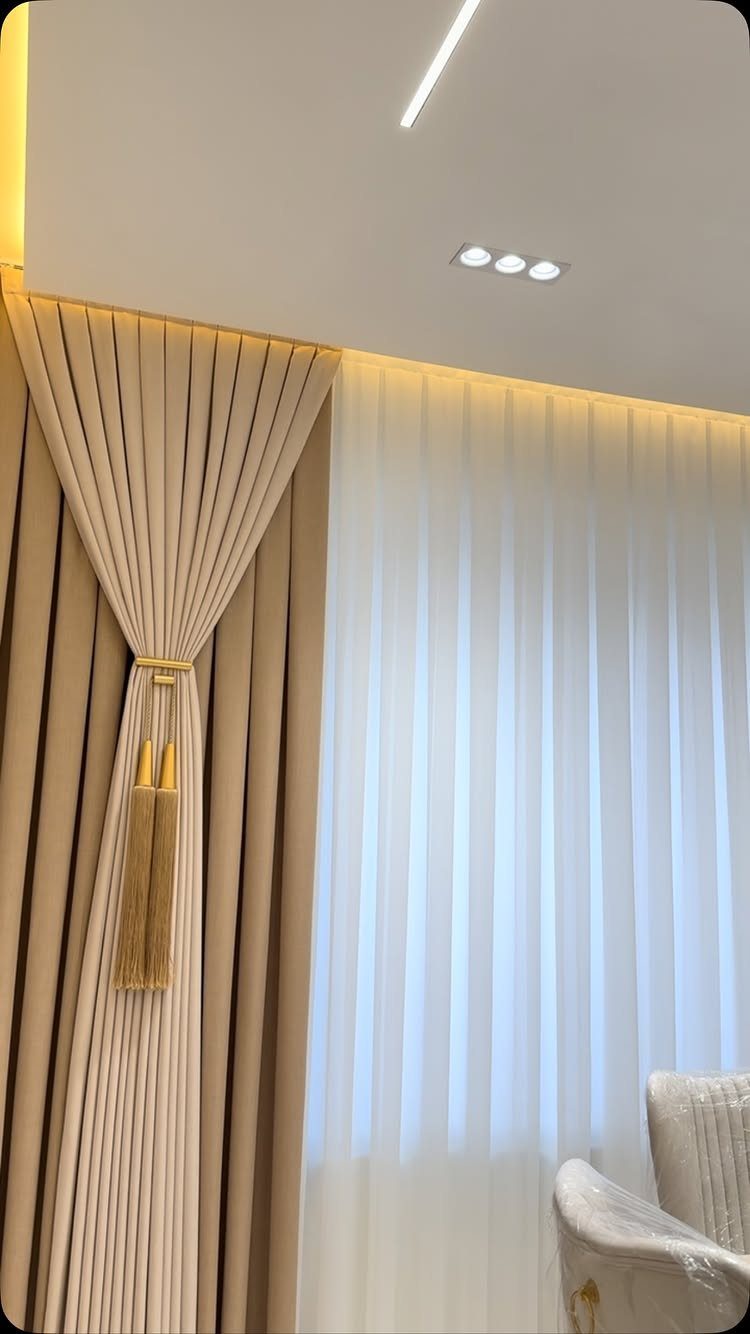
A gold tassel tieback adds a small formal touch to a plain beige drape. Pulled back, the fabric holds a soft curve beside the door and a white sheer stays behind it to filter the light.
Set the tieback about halfway down the panel so the curve falls naturally. Keep the drape a warm neutral, because the gold already supplies the decoration.
Tiebacks are the one thing you can swap later, so try a cheap rope first before buying a fancy one.
Material and Durability
Match the fabric to how hard the room works. A door that opens and closes all day, like one off a kitchen or a kids’ play area, does best in polyester, which holds up to constant handling.
Silk and velvet suit formal rooms, while cotton and linen fit casual ones.
Privacy follows how much fabric you can see through: sheers let in daylight but offer almost no coverage, semi-sheers sit in between, and blackout panels block both light and sound along with the view, which is why I use them in bedrooms.
A door on an outside wall takes sun all day, so add a lining to protect the fabric from fading. A thermal lining also helps with insulation, and I would pay for it on a big glass door.
Ease of Operation
A sliding door gets used more than almost any window, so think about how the curtain moves before you think about how it looks.
If you open it several times a day, grommet tops slide along a rod easily, with no rings to snag.
Motorized curtains work from a remote, a phone, or a voice assistant, and they can run on a schedule for sun and privacy. They make the biggest difference on sliders over 8 feet wide or ones you cannot easily reach.
The drawback is cost: expect a higher upfront price, and a professional often has to install the track and motor.
Frequently Asked Questions
How high do you hang curtains on a sliding glass door?
Hang them at the ceiling, not just above the door frame, and let the panels reach the floor.
Ceiling track has another perk: no visible rod or brackets, and the fabric pulls your eye upward, which makes the wall feel taller.
Pick fabric close to your wall color, and avoid panels long enough to pool on the floor; either choice breaks up the clean vertical line.
What are some good insulated covers for sliding glass doors?
Thermally lined curtains or insulated drapes are the best fit. Cellular shades are another option, and letting curtains hang a few inches wider than the door frame on each side cuts down on drafts.
Heavy thermal panels tend to look like a utility item, so I hang a decorative panel in front of them to soften the look.
How to dress patio doors without curtains?
Shades and blinds are the simplest swap. Panel track blinds use flat fabric sheets on a track, so they give clean lines without clattering slats, and white blends into the wall in a bedroom.
Zebra roller blinds pair solid and sheer bands of fabric, so a single tug lines them up for light or privacy.
Woven bamboo Roman shades add texture and fold up in neat pleats, which suits a room where a heavy curtain would feel like too much.





