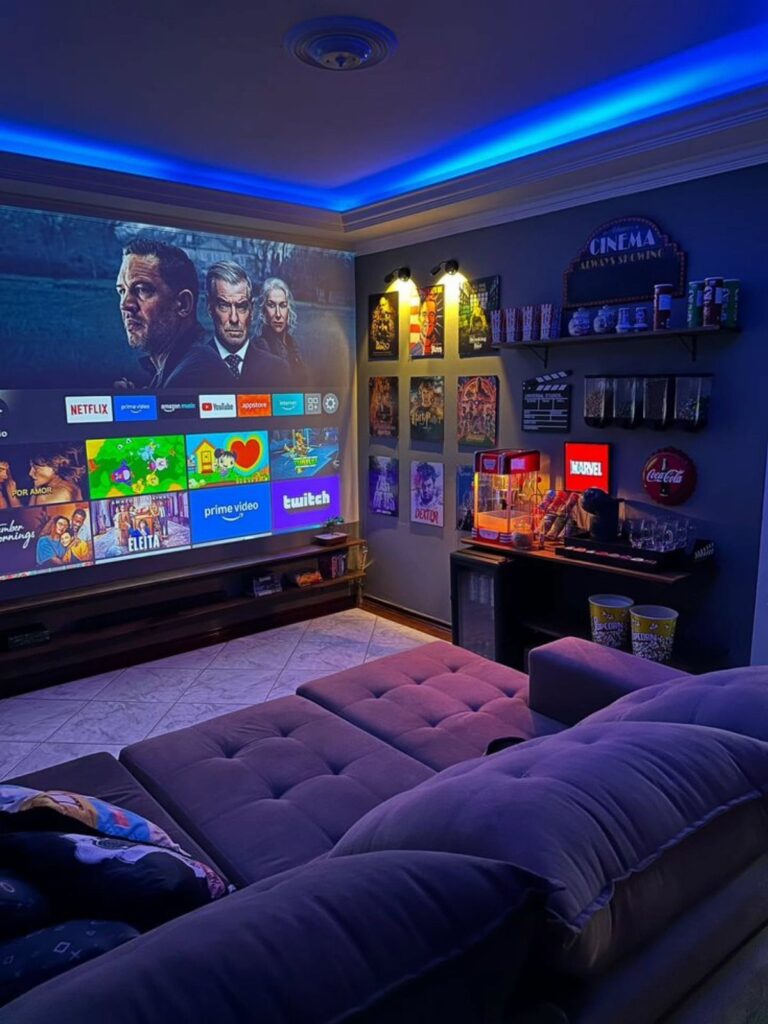
A basement with no windows takes to blackout paint and dimmers, an outdoor setup needs a projector and a way to block evening light, and a spare room sits somewhere in between.
Renters can hang posters with painter’s tape, and owners can install wood slat acoustic walls or a fiber-optic starry ceiling.
1. Basement Movie Theater Conversion
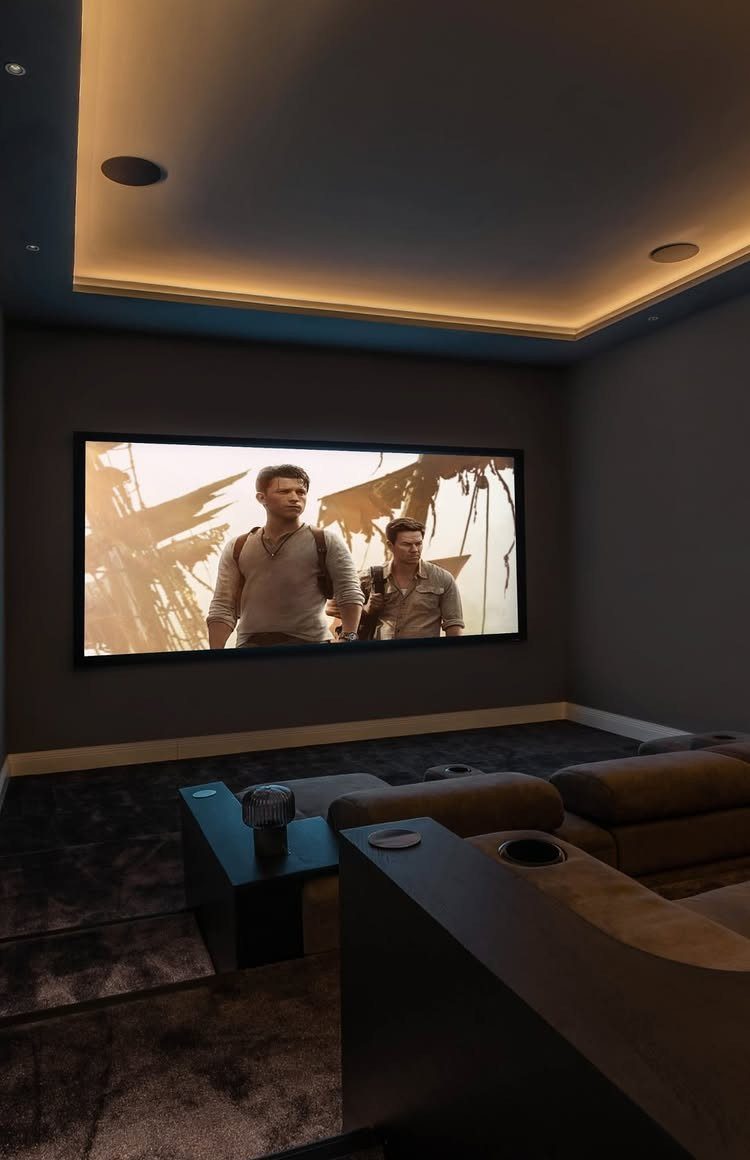
A basement already has what a theater needs: no windows to fight and a low ceiling that holds sound in.
Dark walls will make the screen the brightest thing in the room, so paint them a deep charcoal or navy rather than a light neutral.
Recessed ceiling lights work best on a dimmer, because a basement needs full light for folding laundry and almost none for a movie.
A big sectional in leather or a similar wipeable fabric suits a room people will eat in. Plan on a weekend for paint and lighting.
2. Home Theater Lighting Ideas
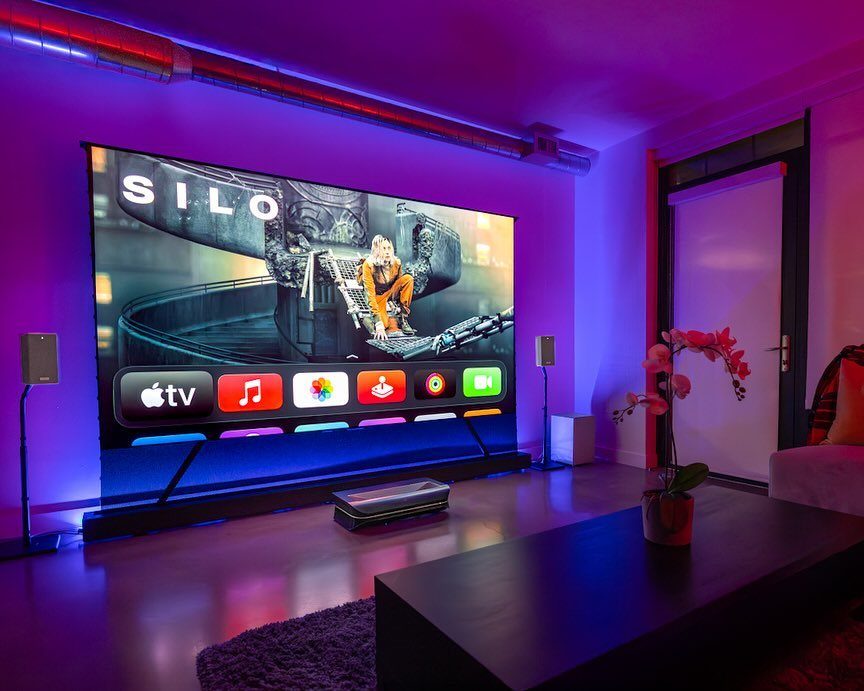
Color-changing LED strips are the cheapest way to give a theater a mood, and smart bulbs or strips let you set scenes from your phone.
Tuck them behind the screen or along a shelf edge so you see the glow, not the diodes.
Purple and blue read as calm and cinematic, though dimmer settings work better, since a bright wash of either color starts to look like a nightclub.
Light that competes with the screen defeats the purpose. Save a warm white scene for intermission and cleanup.
3. Movie Poster Wall or Gallery
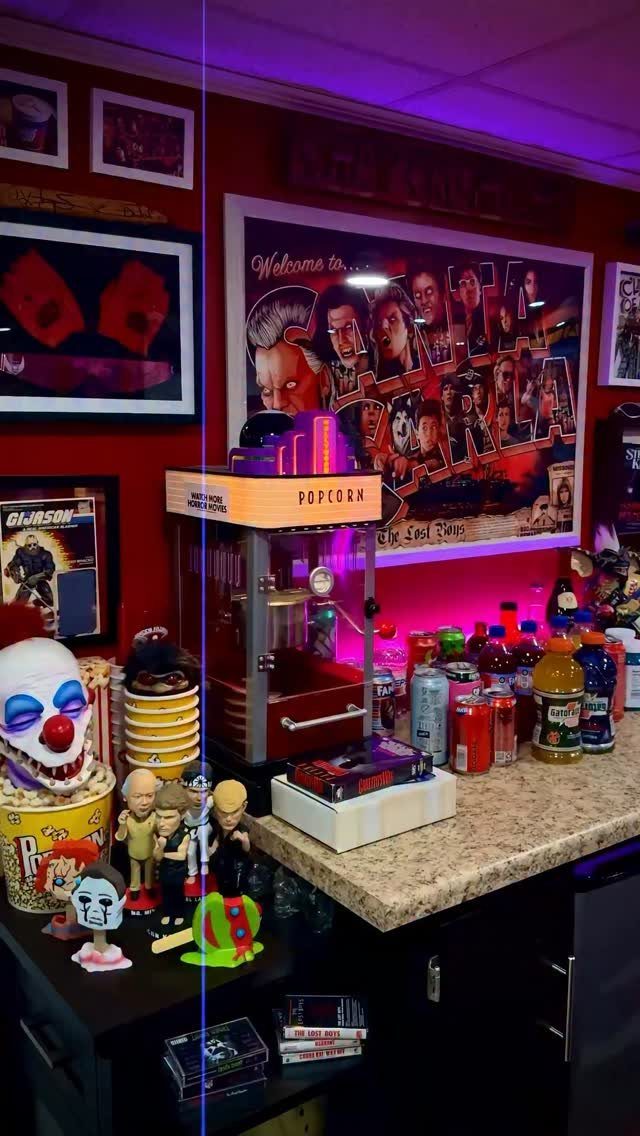
Posters earn their wall when they hang together.
Matching frames in black or a single wood tone make a mixed pile of one-sheets look planned, and a bold wall color like red gives them a backdrop that feels like a lobby.
Before any nail goes in, arrange the frames on the carpet, then mark each spot on the wall with painter’s tape so you avoid extra holes.
That matters most for renters. Keep the center of the group near eye level.
4. DIY Concession Stand
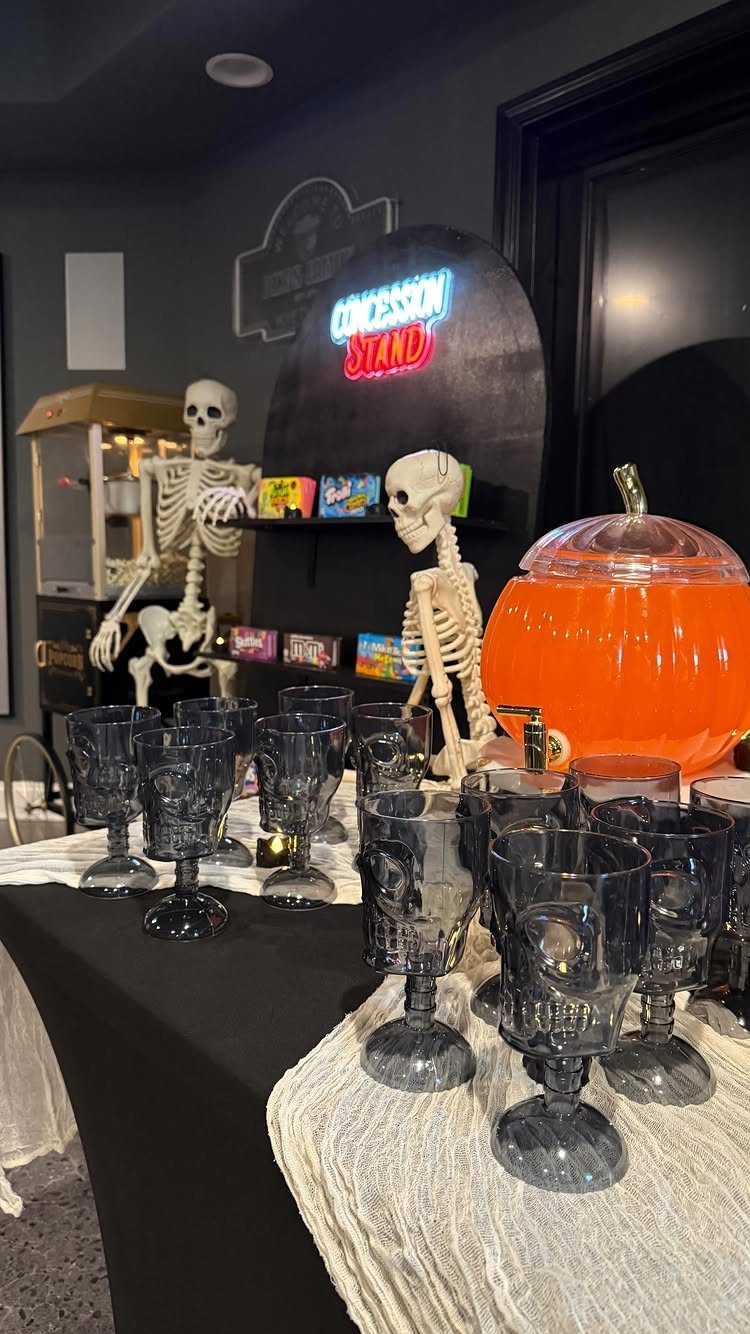
A concession stand needs 3 things: a popcorn machine, a spot to set candy and drinks, and a sign that tells guests where to line up.
A neon sign does the third job best, and a plain black table makes everything on it stand out.
Seasonal themes keep the idea cheap.
Changing out the props for each holiday costs a small fraction of what rebuilding the whole setup would. I would put the candy in clear jars so people can see the options at a glance.
5. Outdoor Home Theater Setup
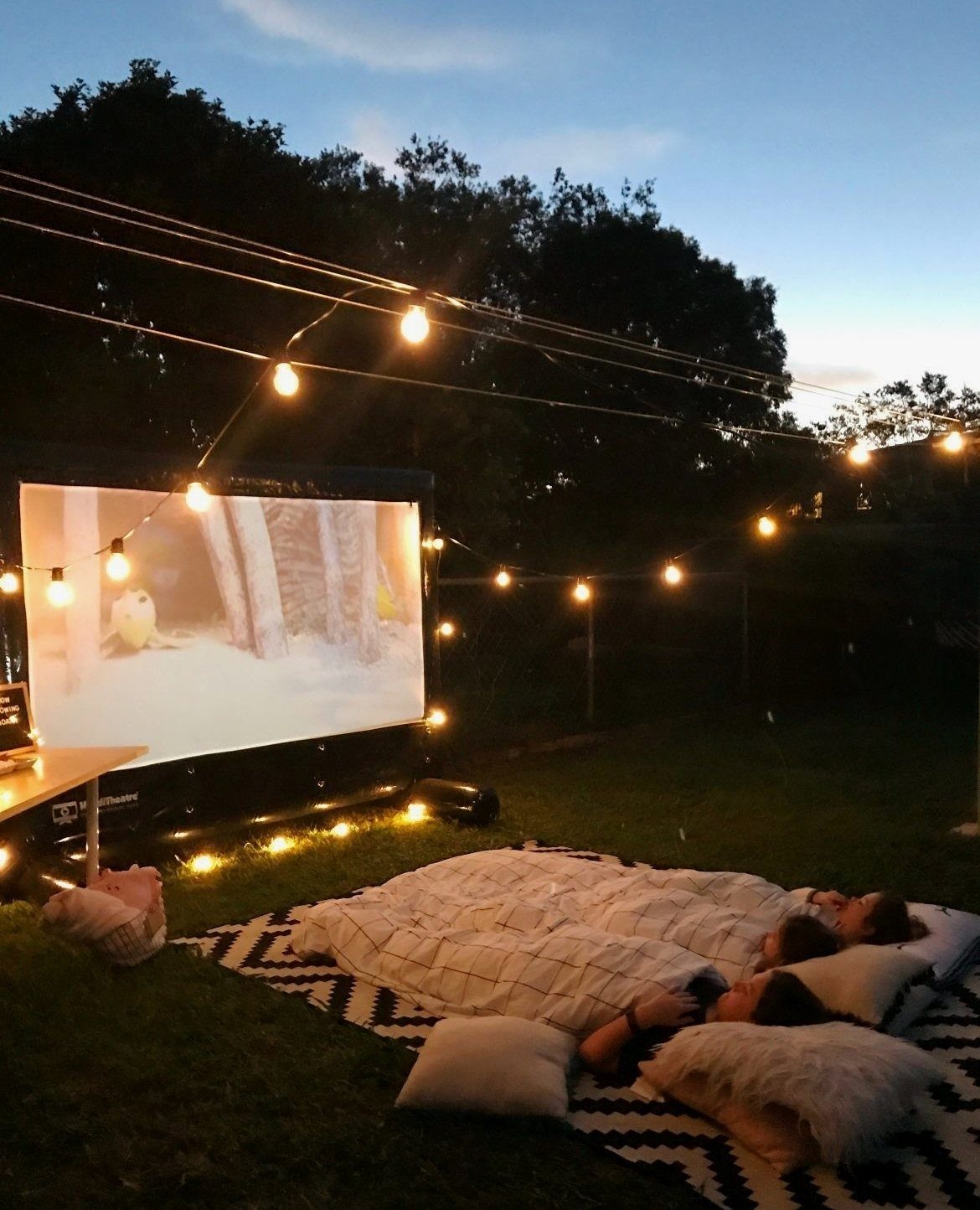
Backyard movie night starts with a projector and a screen, and a white bedsheet pulled tight works for a first try. Wait for dusk, since a projector washes out in daylight.
String lights keep the yard usable without lighting the screen directly, so hang them behind or beside the viewers.
Layer a big rug with pillows and blankets on the grass, which beats folding chairs for comfort. A long extension cord is the item people forget.
6. Movie Themed Decor
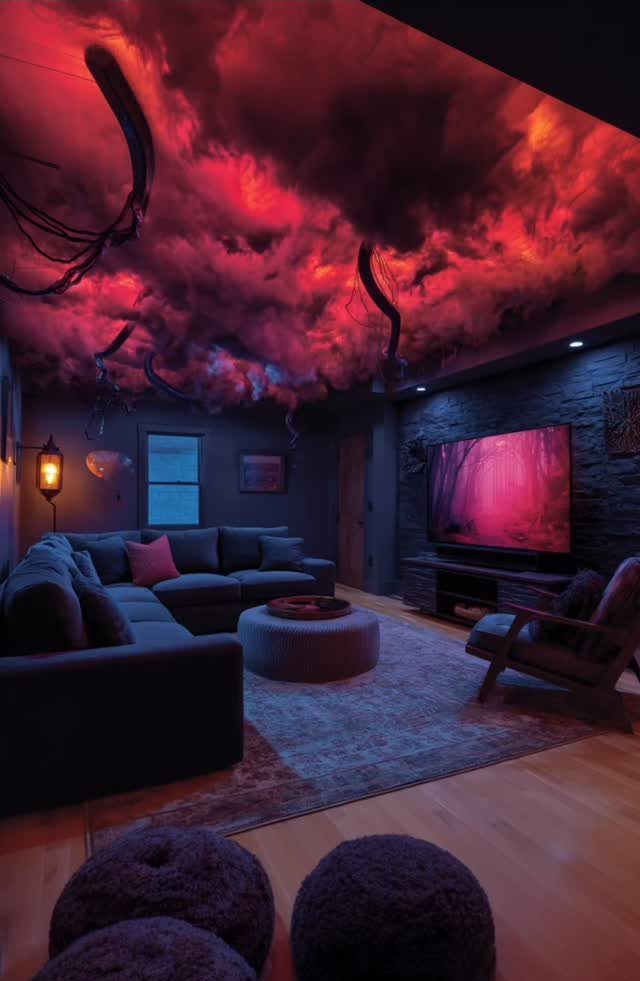
Pick one scene and let the ceiling carry it. Red clouds with black vines overhead turn an ordinary room into a set, while the furniture stays quiet in dark gray so nothing competes.
Painting a ceiling mural is a one-weekend job with a roller, a small brush and some patience.
Sketch the shapes lightly in pencil first. A glow effect from a hidden LED strip around the edge makes the red read as moody rather than loud.
7. Art Deco Revival
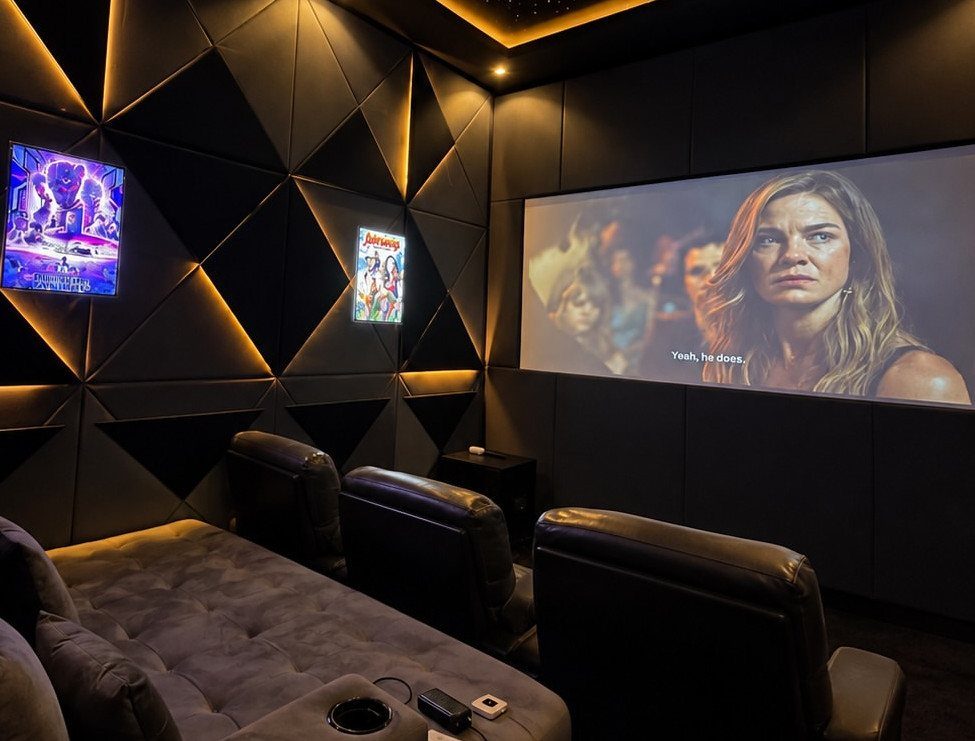
Art deco in a theater comes down to repeated geometry: angular panels, sharp lines and one metallic accent. Black walls with gold backlighting give that look, and the leather seating stays plain so the pattern does the talking.
Gold light behind the panels glows best on a dimmer, so it never fights the screen. For a rental, removable adhesive panels in a black geometric pattern work well, with a warm gold LED strip run along the edges.
8. Hollywood’s Golden Era
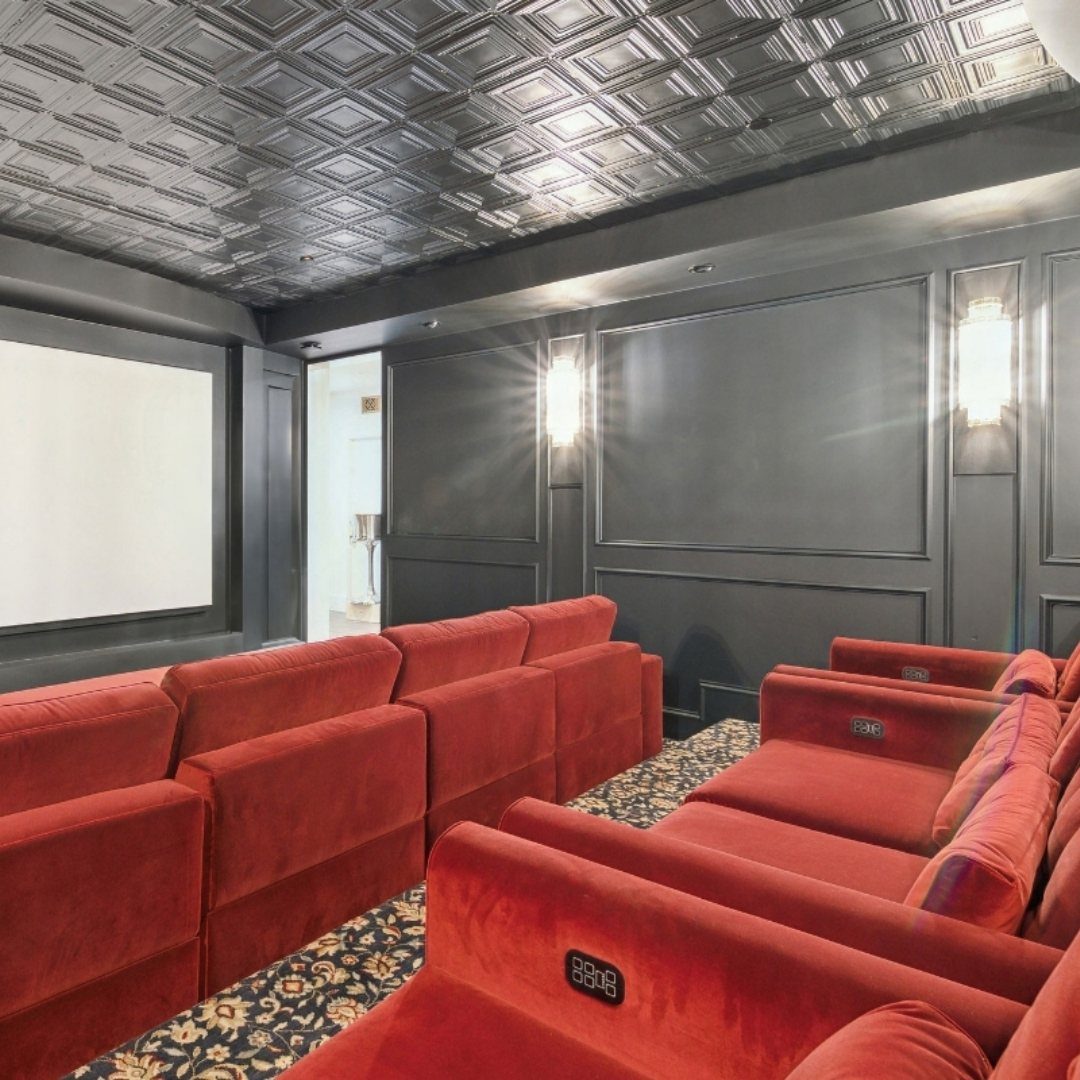
Red velvet seats against dark gray walls is the old-cinema pairing, and it works because the red is the only warm color in the room. Keep the walls matte and let the seats carry the richness.
A patterned carpet hides popcorn and spills better than a solid one.
Sconces on the walls give soft light for intermission. A pressed-tin ceiling is the splurge; I would skip it on a tight budget and spend on the seats and sconces first.
9. Gaming Memorabilia and Leather Seating
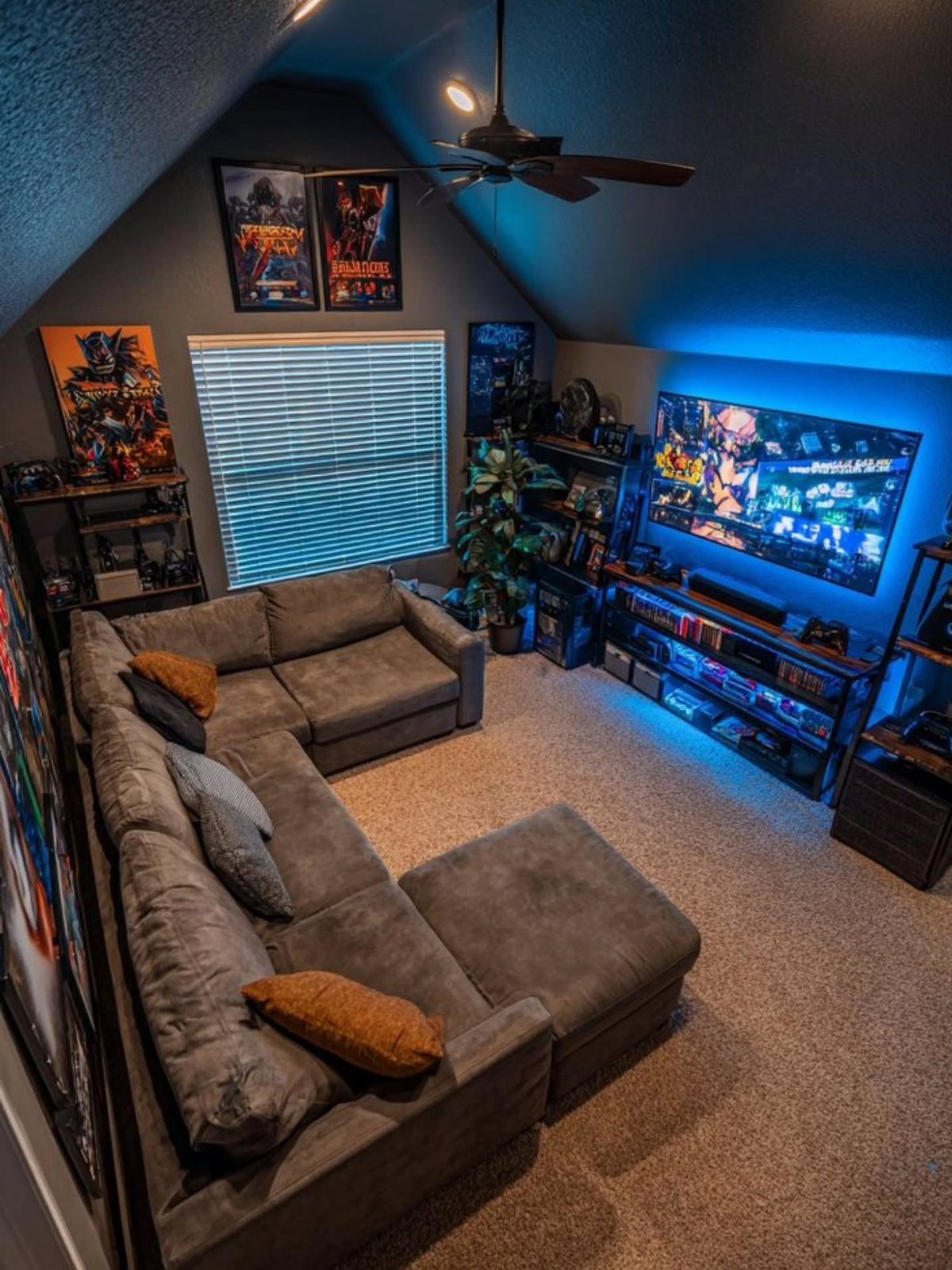
A room that serves games and movies needs one seating spot facing one big screen, and a gray sectional does that well.
Blue lighting behind the TV reads as a gamer’s glow and stays easy on the eyes during a film.
Posters and console memorabilia belong on the walls beside the screen, never behind it. Keep them in a tight group so the room looks collected, not cluttered.
If you want the leather look, choose a wipeable faux leather; controllers and snacks go with the territory.
10. Wood Slat Acoustic Walls
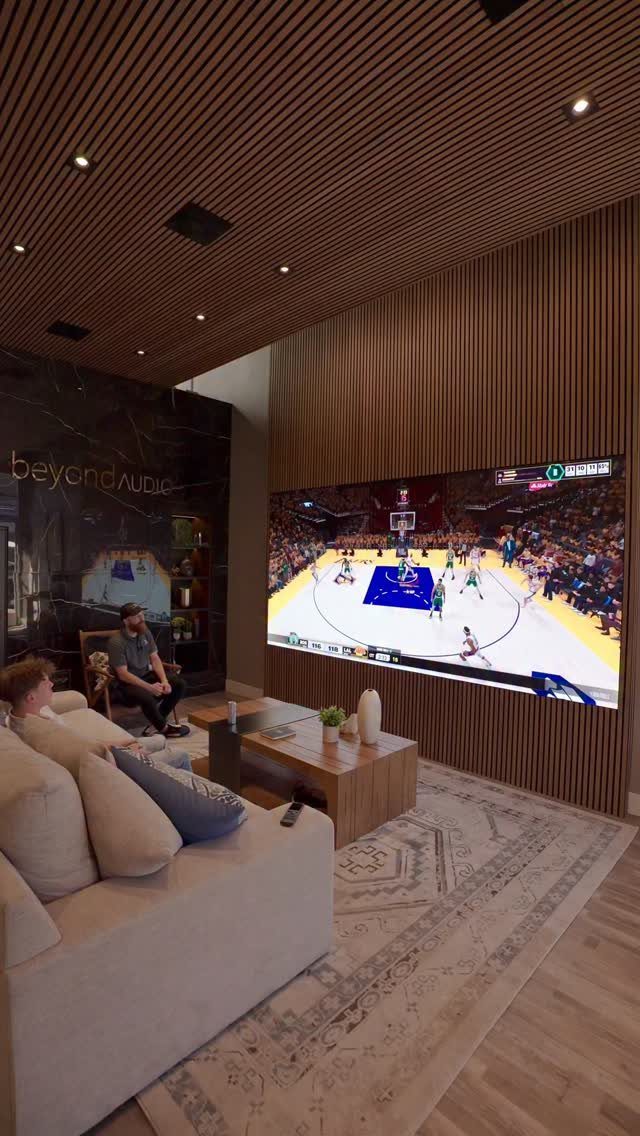
Wood slats on the walls and ceiling wrap a room in one warm material, and the gaps between slats give the surface a rhythm that looks custom. Running them vertical on the walls and horizontal overhead adds that contrast.
I like a light sofa against the wood, since the room stays bright in tone but still feels cozy. Slat panels cost more than paint, so try one wall first and extend later if you like it.
11. Starry Night Ceiling
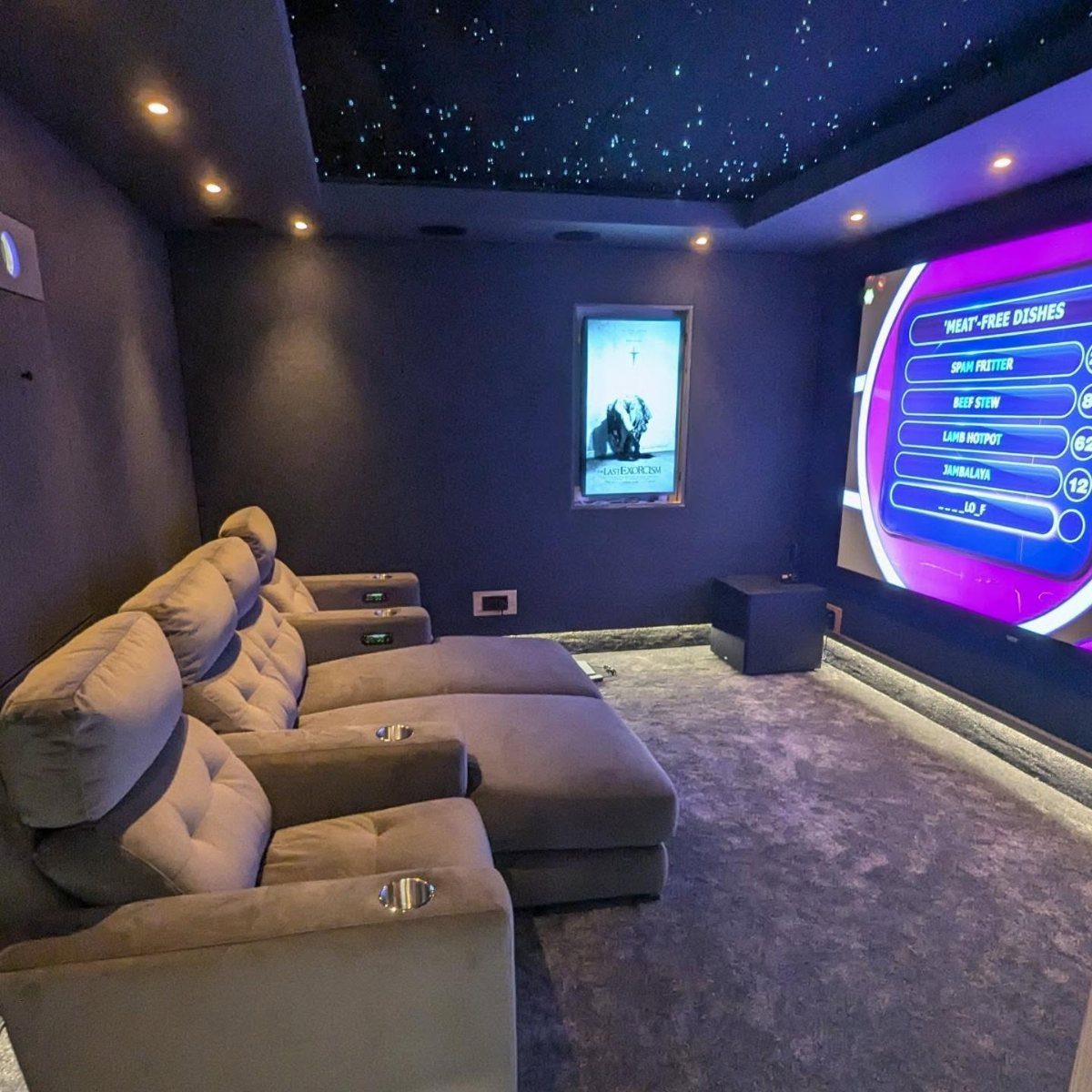
A starry ceiling comes from fiber-optic lighting: tiny strands pushed through a dark ceiling, all fed by one light source. Because the ceiling is the only lit surface, the room feels far larger than it is.
Pair it with a dark paint color overhead so the points of light stand out.
Plan this one carefully; poking strands through drywall is slow work, so set aside a full weekend. Reclining seats make it worth the effort, since you look up between scenes.
12. Tiered Riser Seating
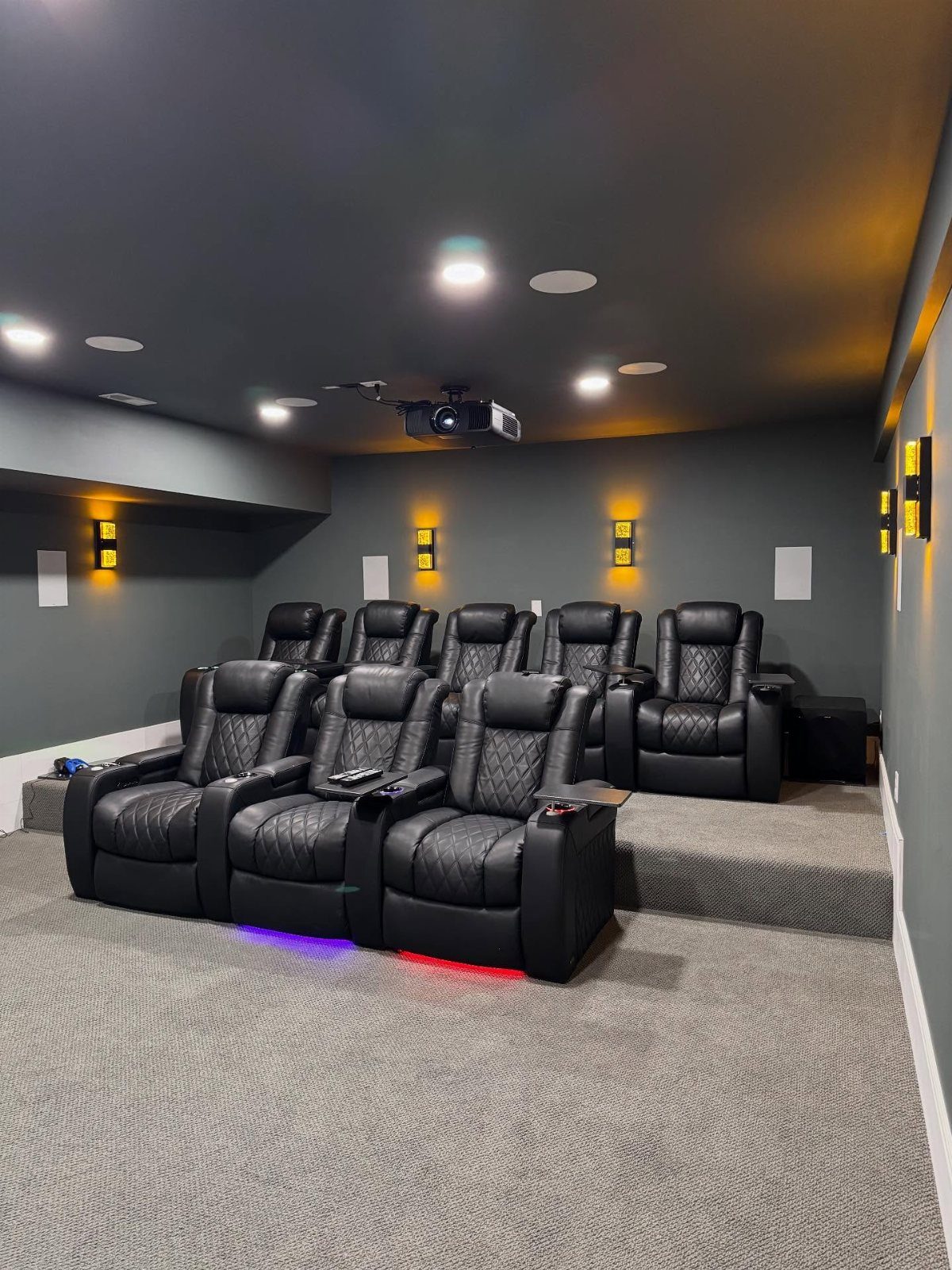
Two rows on a carpeted riser give the back row a clear view over the front, which is the real reason to build one.
Black leather recliners on tiers look like a commercial theater, and carpet on the platform deadens footsteps.
A ceiling-mounted projector keeps the sightline clear, so nothing sits between the back row and the screen.
Building tiered riser seating is a bigger project than installing a sectional, so it suits a room with a decent ceiling height and a long weekend.
13. Cozy Sectional Lounge Seating
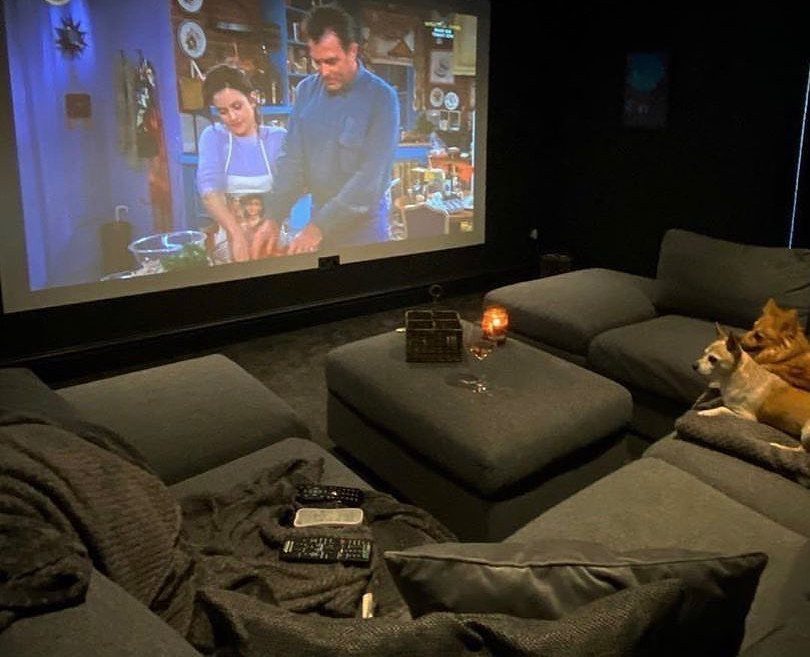
Deep fabric sectionals with a matching oversized ottoman turn a movie room into a place where people sprawl, and that is the whole appeal. Grey is a forgiving color in a dark room, so it won’t glow against the screen.
Pick seats deep enough to pull your legs up, and let the ottoman do double duty as a footrest and a spot for a tray of snacks.
Fabric feels softer than leather but shows spills, so I would choose a tight weave or a removable cover.
Pets will claim a seat, so plan on a throw blanket you can wash.
Must-haves for a Home Theater
Think in 4 layers: picture, sound, comfort and light. Start with the screen, since the choice between a projector and a TV sets the direction for everything else.
Sound comes next, and it deserves a real share of the budget. A good system makes a modest screen feel bigger than a large screen with weak speakers.
Seating should come before decor. Pick pieces you can sit in for a full movie, because a room people avoid after an hour has failed.
Blackout curtains are the cheapest way to control daylight, and they matter most with a projector.
Dimmable lighting on shelves or a media unit adds personality without competing with the screen. It also lights the path to the snack bowls, so nobody has to turn on the overheads mid-movie.
DIY Home Theater Ideas
Look at the spaces you already own before planning anything new. A basement is the obvious one, but an under-stairs nook or a spare corner can work too, and none of them needs a wall knocked down.
If a basement is unfinished, insulating the walls and adding soft carpet warms the room in 2 ways: the temperature goes up and the sound gets softer.
Once the screen and seating are in, personalize. A drive-in look with a snack bar is one example, and car-style seats are made by theater seat makers, so you can get the feel without real vehicles.
Pick one theme and let everything else stay plain.





