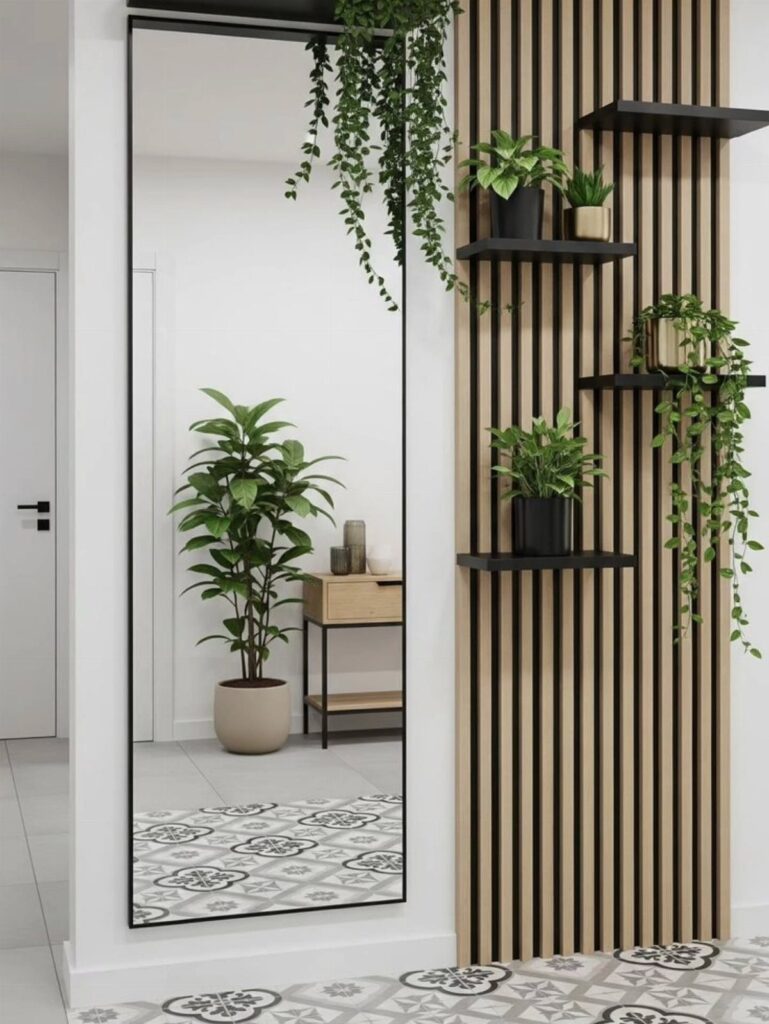
Whether you rent or own decides most of this list: a leaned mirror, peel-and-stick wallpaper, a corkboard and a taped-up gallery wall leave the studs alone, while board and batten, picture frame molding, wood slats and a floor-to-ceiling stone fireplace wall mean real building.
The ideas run from a coat of paint to a full masonry project, and the weekend-friendly ones sit well inside a small budget. Hang anything framed with the center of the piece at 57–60 inches from the floor.
1. Large Mirrors
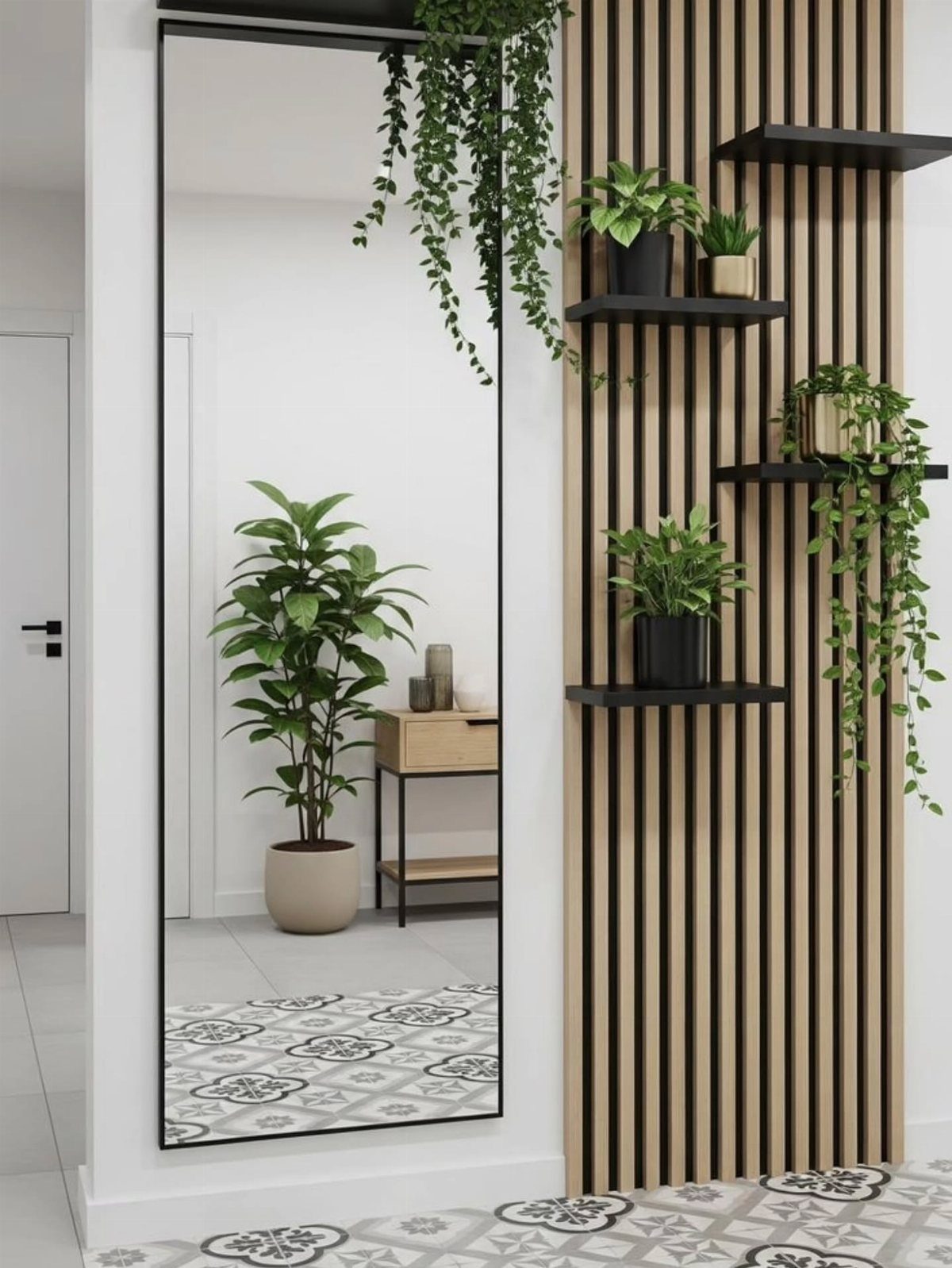
A tall mirror leaned against the wall is the lowest-effort way to open up a big blank stretch. Skip the wall mounting and you skip the drill, the anchors and the patched holes if you rent.
I like a black frame against white paint, because the thin dark line reads as a graphic edge instead of another piece of furniture. Set it where it catches window light, and the room looks deeper and brighter.
2. Transform with Wallpaper
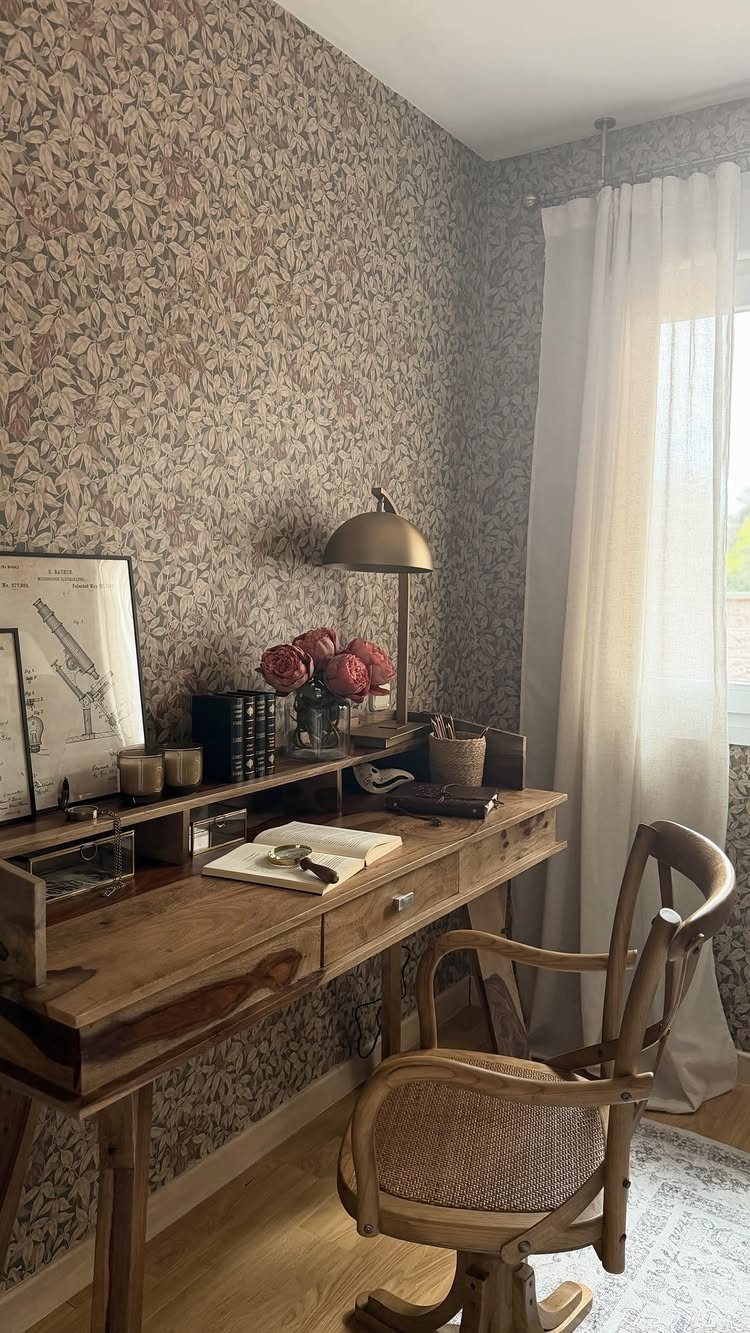
Floral wallpaper behind a desk gives a large wall color and pattern in one move, with no need for a gallery of art to fill the space.
Peel-and-stick is my pick for renters, since it comes off later.
Keep the desk styling simple: a lamp, a few books and one framed piece let the pattern do the talking. Busy paper needs quiet furniture around it.
3. Use Large-Scale Art for a Statement Look
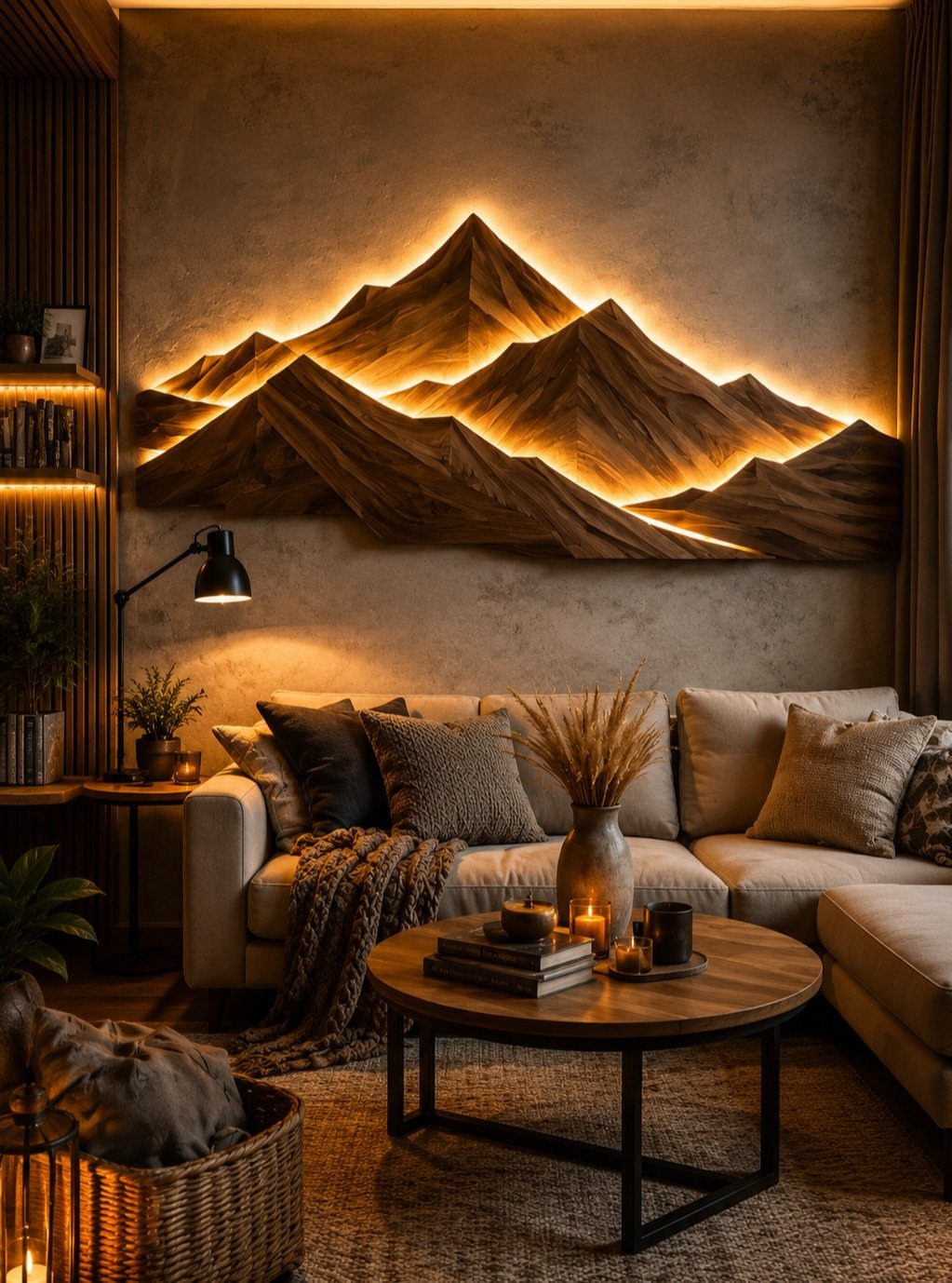
One oversized piece beats a cluster of small ones on a big wall.
Size it to the furniture below: a piece that spans most of the sofa’s width looks planned, while a small one floats and gets lost. Plan it before you commit, using paper cutouts taped to the wall.
4. Board and Batten
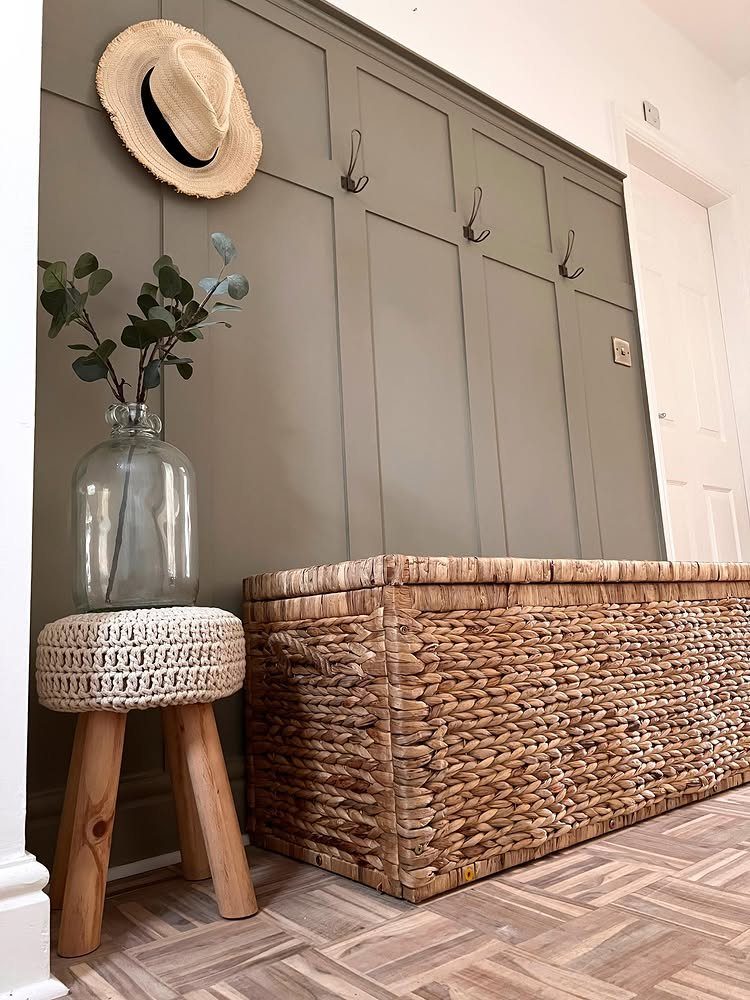
Board and batten is the classic wall treatment that suits an entryway, and a grey-green paint color gives it a calm, earthy look. Add hooks along the boards and the wall starts working for you.
The maker of this one said it took 2 days but could be done in one, so it fits a weekend with time to spare. Paint the boards and battens the same color for a clean, tailored finish.
5. Bold Paint Color
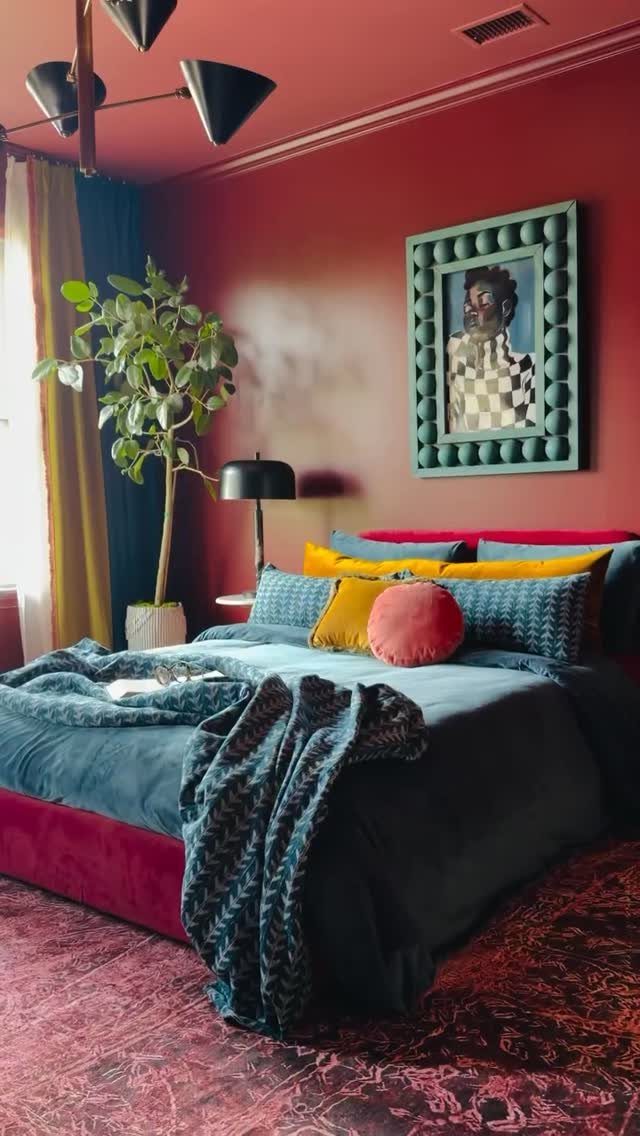
A deep red wall in a bedroom commits to color in a way a pale neutral never will. Paint is also the cheapest big change you can make, and a gallon covers a lot of wall for the money.
Keep the bedding and art in cooler tones, like the blue and teal here, so the red feels balanced instead of heavy. Test a swatch at night first, since dark reds shift under lamplight.
6. Floating Shelves
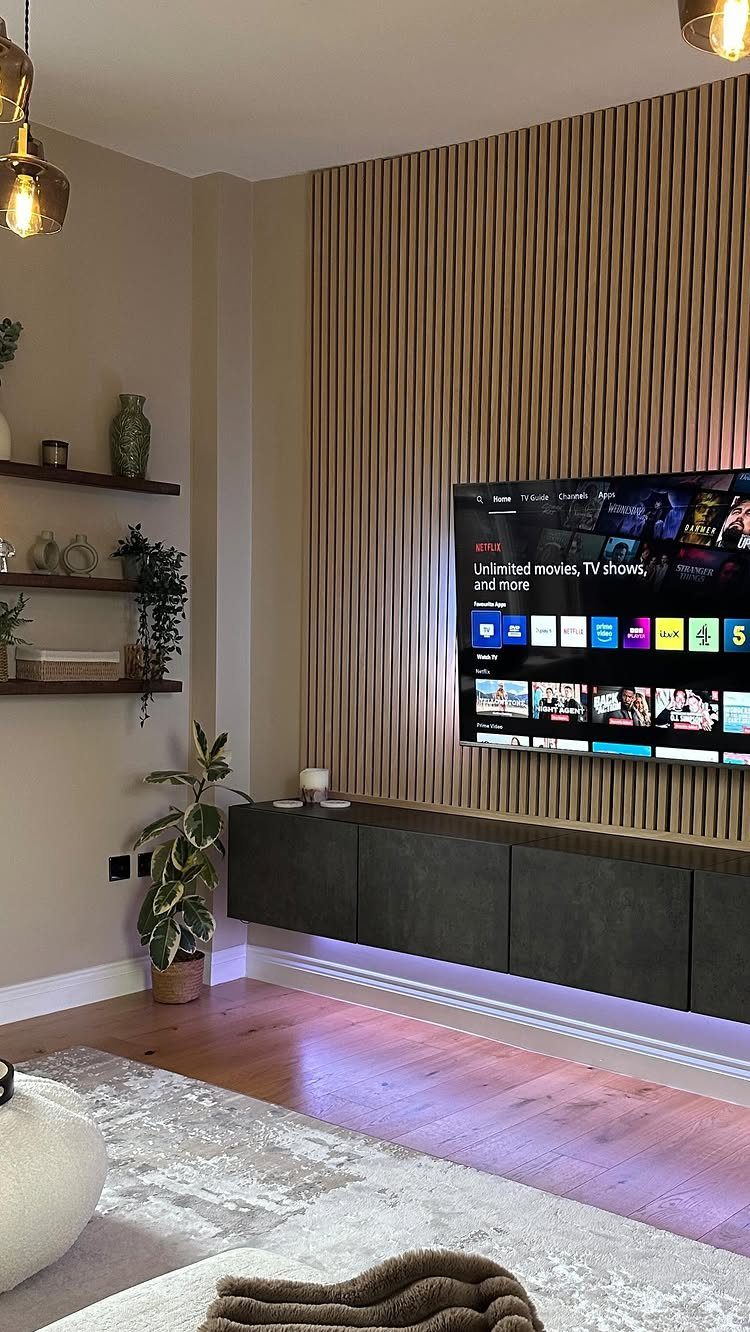
Floating shelves give a wall around a TV something to hold, and they cost a fraction of what a built-in runs. 2 shelves holding plants and vases soften all that screen and slatted wood.
I would stagger them rather than line them up, and mix heights so the display looks collected. Mount into studs when you can, or use proper anchors for anything heavy.
7. Corkboard Wall
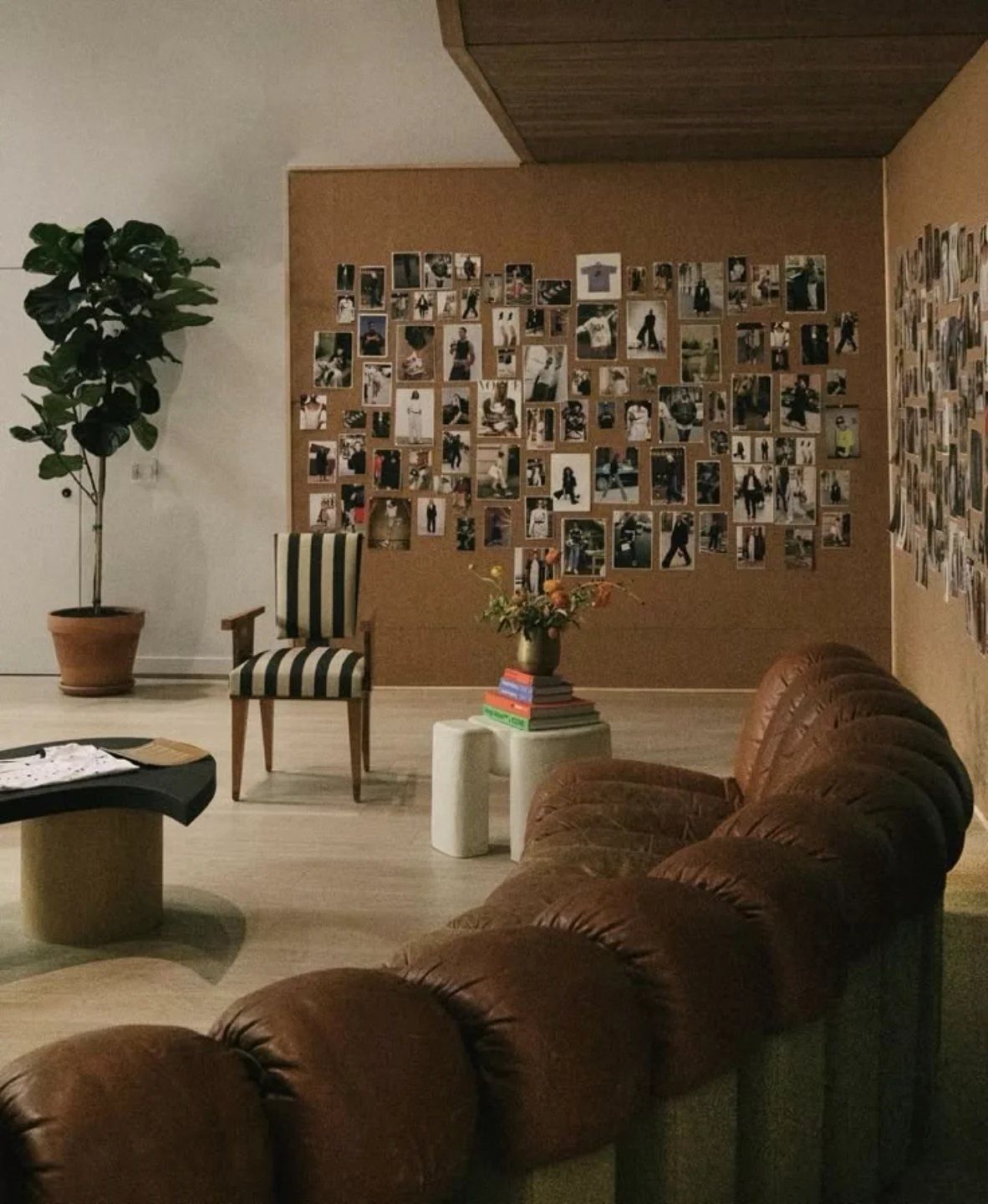
A corkboard wall is the one big-wall idea that never has to be finished. Pins out, pins in, and the display changes with the season or your mood.
Photos suit it well, and the warm tan of cork sits easily next to a brown leather sofa.
I would keep the pieces on it loosely grouped and leave some bare cork showing, since the board is part of the look.
8. Themed Artwork
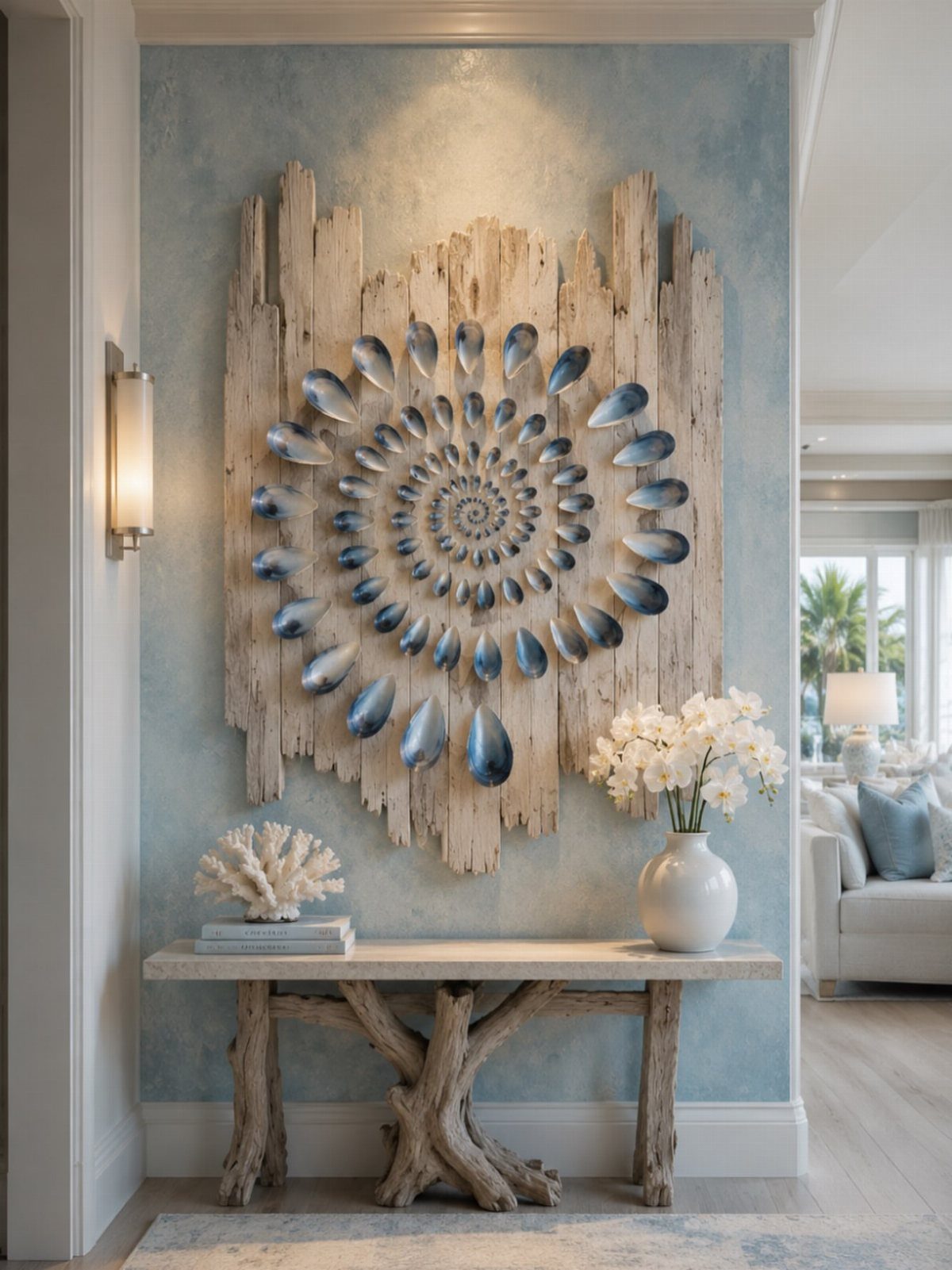
Shell art on weathered wood gives a wall a clear subject, and a spiral of blue shells gives it a focal point too. Hang it above a console so the two read as one vignette.
Match the setting to the theme.
Driftwood, pale wood and a few flowers in a vase keep the coastal idea consistent. Stick to one theme per wall, because mixing two makes the art feel like clutter.
9. Create a Stylish Gallery Wall
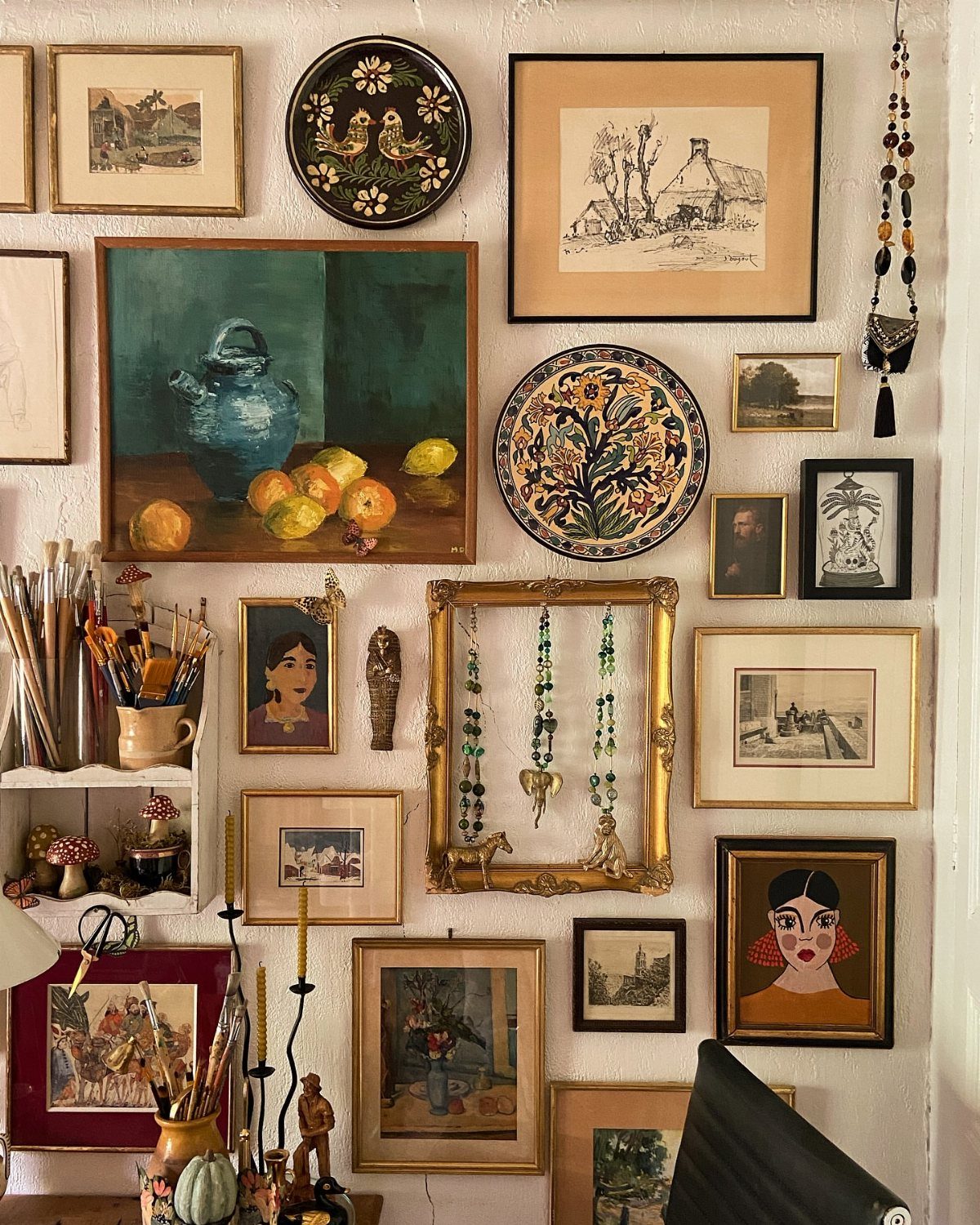
A gallery wall lets a big blank space hold paintings, sketches, plates and even jewelry, all at once. Mixing object types keeps it personal instead of matching.
Lay everything on the floor first and rearrange until the gaps look even.
Then trace each piece on paper, tape the cutouts to the wall and adjust before any nail goes in. White walls let a mixed collection feel cohesive.
To create a well-balanced wall that avoids looking too bare or overly busy, consider arranging your decor using the rule of threes.
10. Picture Frame Molding
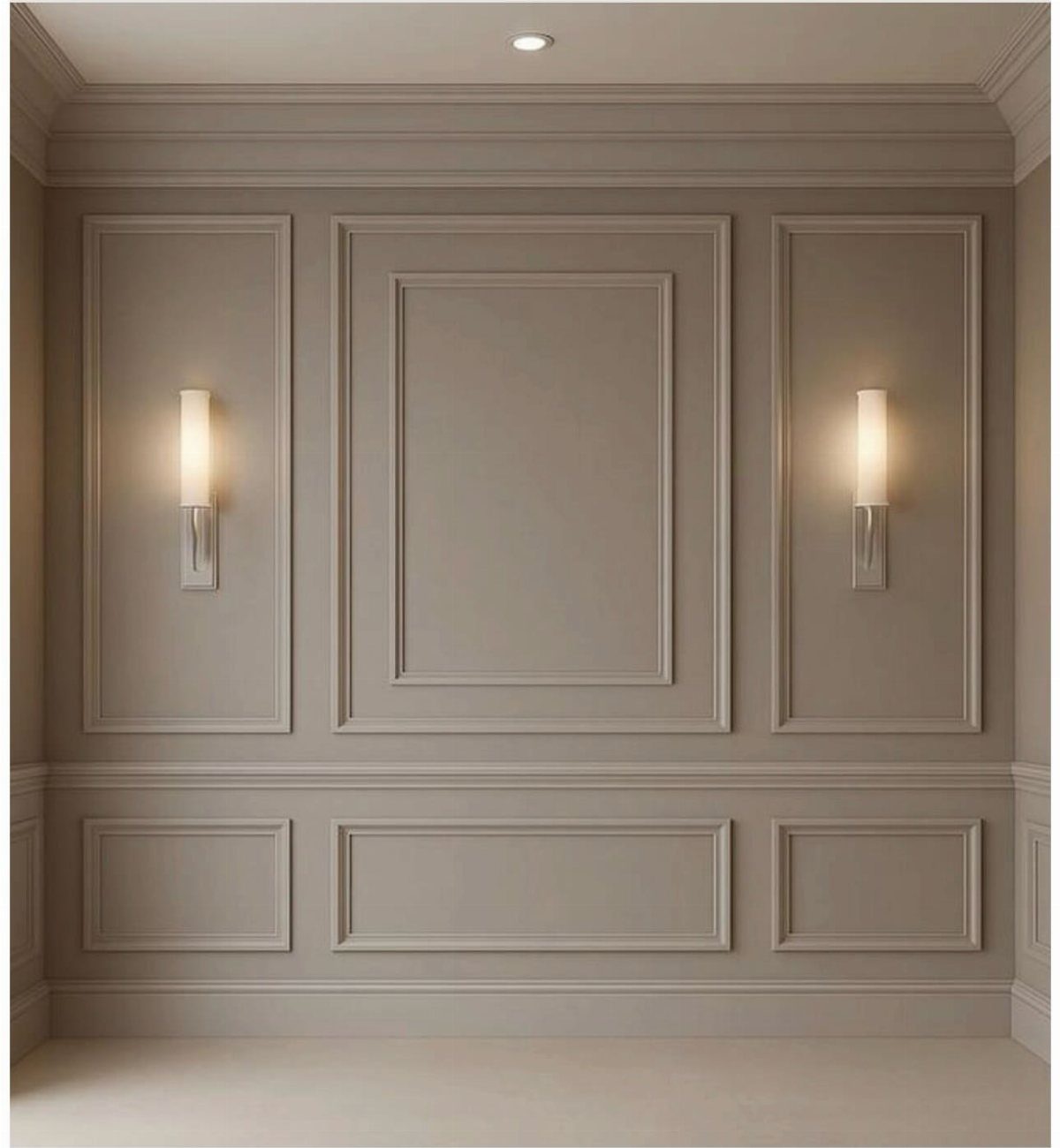
Picture frame molding draws rectangles on the wall with thin trim, and it gives a plain room architecture without adding any furniture.
I would paint the molding and the wall the same color, like the taupe here, for a soft, quiet effect.
Sconces placed between the frames add light and make the pattern feel intentional. Measure and mark the layout with painter’s tape before you glue or nail a single piece.
11. Rug on the Wall
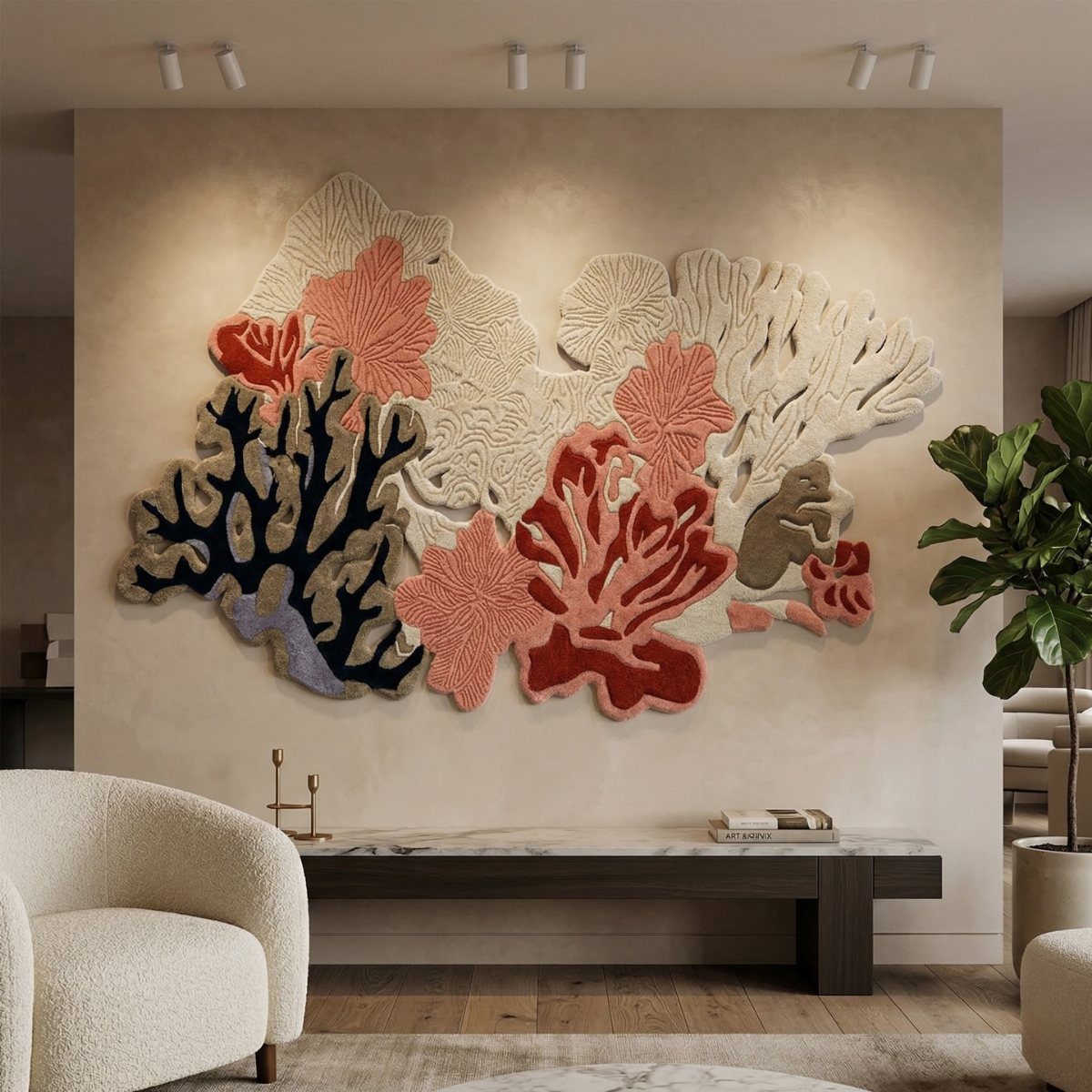
A rug on the wall works as textile art, and a sculptural, coral-shaped piece in red and blue adds color and depth that a flat print cannot.
Pick one with a lot of texture and let it be the only loud thing on the wall.
A beige wall behind it keeps the color from competing. Rugs can be heavy, so hang by the top edge on a sturdy rod or hooks and anchor them well.
12. Vertical Wood Slat Panels
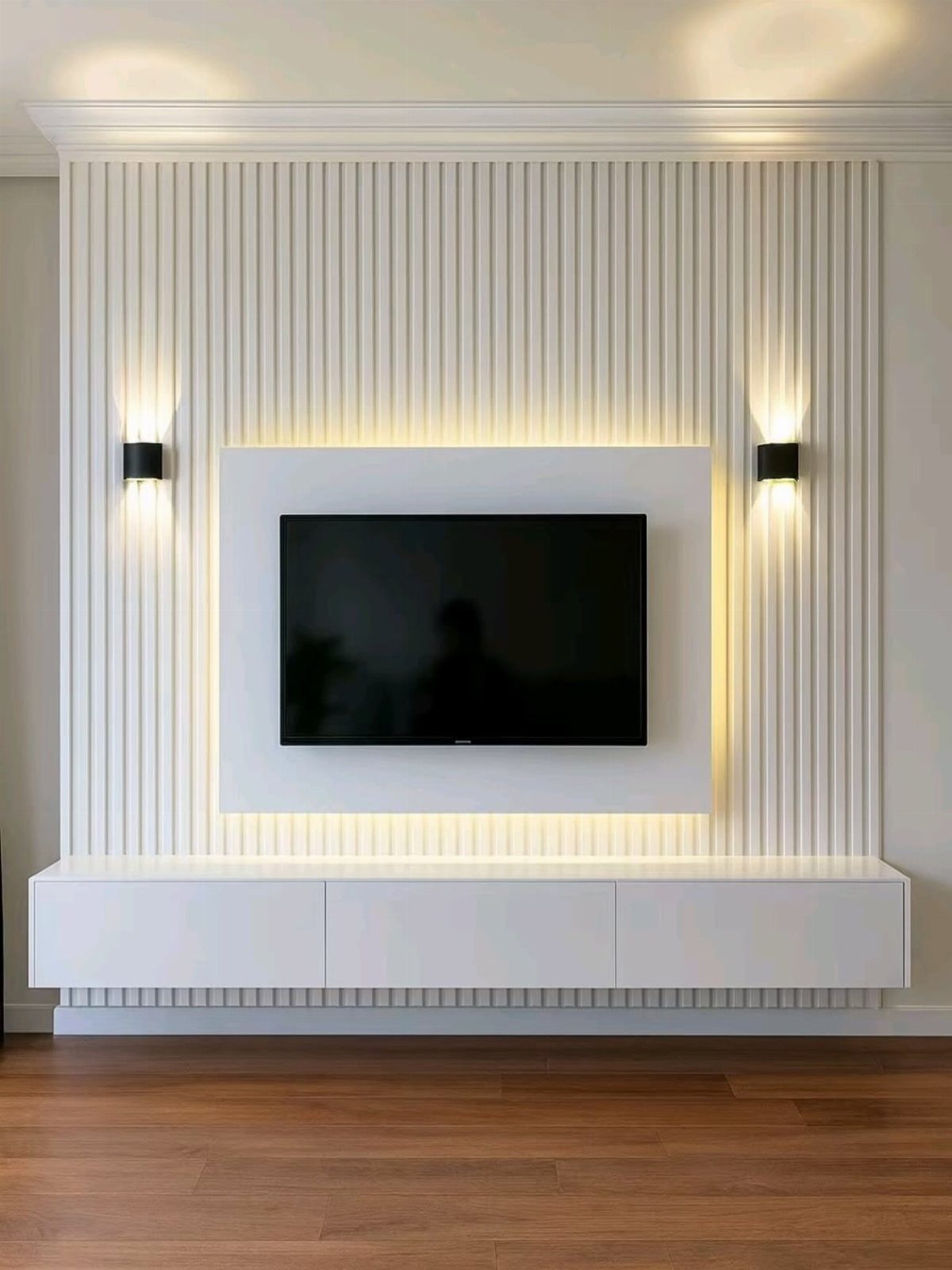
Vertical wood slats add texture to a large wall and give a TV a frame, so the screen looks built in instead of stuck on.
White paint keeps the slats from feeling heavy, and a floating console below keeps the floor visible.
I like black sconces on either side for contrast. Backlighting behind the TV panel softens the glare of a dark screen at night.
13. Floor-to-Ceiling Stone Fireplace Wall
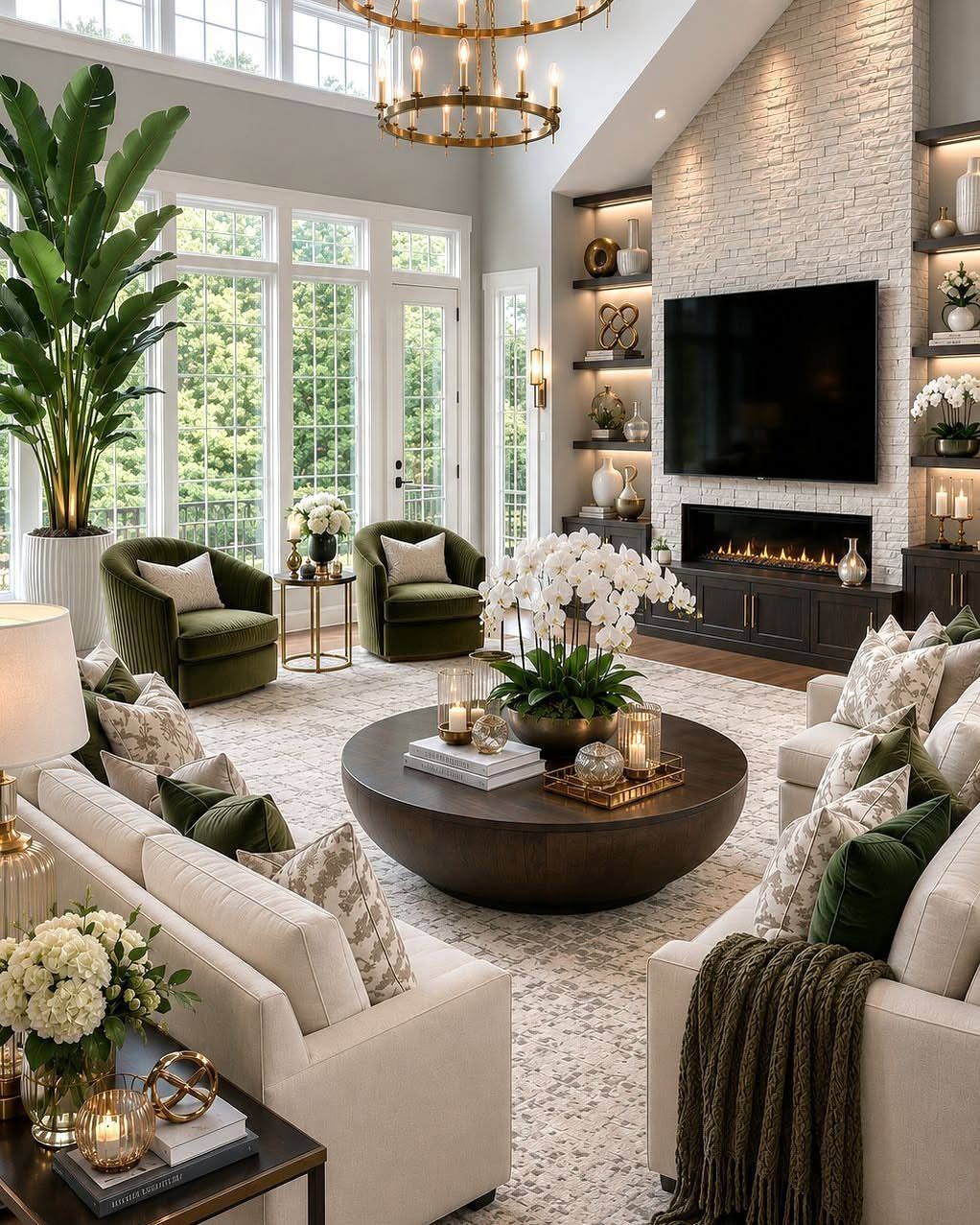
A full-height stone wall turns the fireplace and TV into one built-in feature, and it gives a tall room a single anchor instead of a scattering of small decor.
Pale, textured stone like this keeps the mass light, so the wall reads as architecture and not as a heavy block.
Green armchairs against cream sofas pick up the same calm palette, and one large plant beside the wall adds height without clutter.
This is a build, not a weekend job, and it costs far more than paint or paneling.
Renters should skip it. If you own and want the look for less, a stone-look veneer on a single wall is the version I would price first.
Tips for Choosing Art
Pick art that contrasts with the wall behind it. Dark art on a light wall, or a white piece on a dark wall, stays visible, while art close to the wall color blends in and gets lost.
A clean contemporary print against classic trim and furniture makes the room feel layered instead of matched.
Over a sofa, check the colors you already have.
If the rug and pillows are bright, a bright piece balances them; if you want calm, stay with neutral and complementary tones. A color wheel helps you pick a partner for the main color in the room.
Multi-panel layouts give a modern look and suit a wall that is wide but not tall.
Placement Guidelines
Hang art so its center sits at eye level, typically 57–60 inches from the floor. Measure to the middle of the piece, not the top edge, then work backward to find where the hook goes.
Check that the piece suits what surrounds it. Colors, frame finishes and the scale of nearby furniture should agree, so the art looks like part of the room and not something leaned there.
Step back, look from the doorway and from the sofa, and adjust until it feels right.
Budget-Friendly Options
Filling a big wall does not need a big budget. A large canvas or frame is the simplest start, and you can fill it yourself with paint, fabric or a photo.
Printable art is the cheapest route: download a file, have it printed large, and put it in a frame you already own.
Thrift stores and secondhand shops often have oversized frames and mirrors for little money, and a coat of paint can update a dated one.
Buy the frame first, then decide what goes in it. A good frame makes inexpensive art look deliberate.





