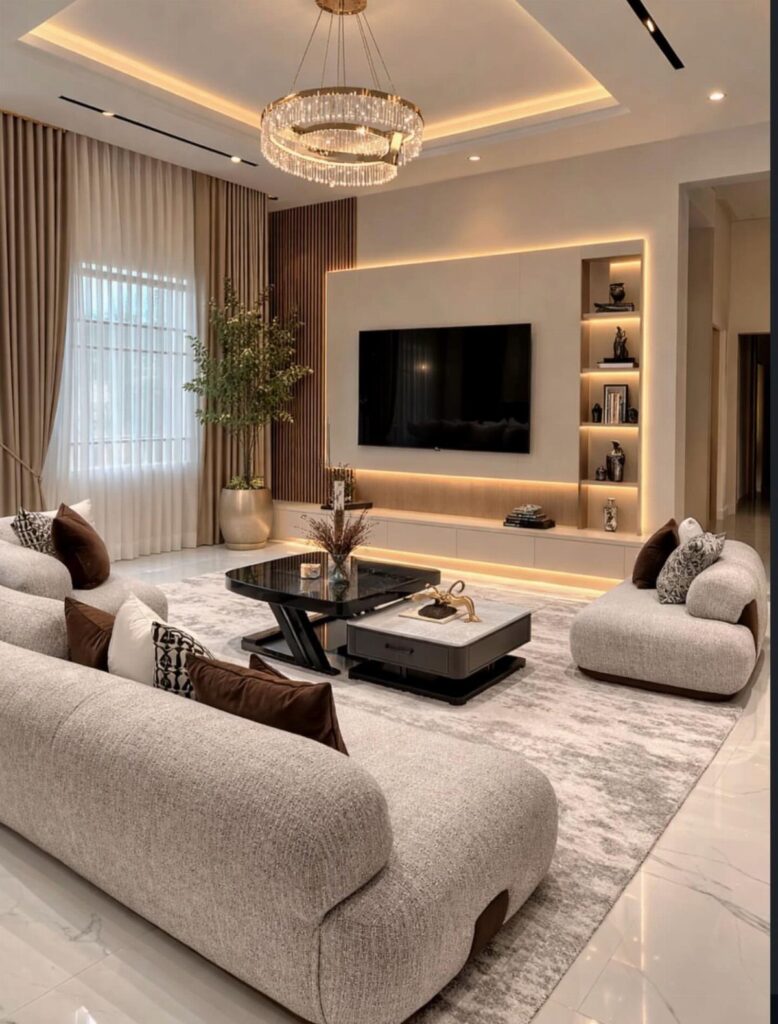
A cushion swap or a peel-and-stick panel goes up in an afternoon, while built-in storage or an entertainment unit is the kind of project that makes sense if you own.
The ideas run from a cushion change that takes a minute to built-in bookshelves that cover a wall, and several of them put texture on one surface rather than adding color.
Even the lighting follows that rule, with warm white around 2700K keeping cream sofas from turning gray.
1. Cove Lighting Along Panelled Walls
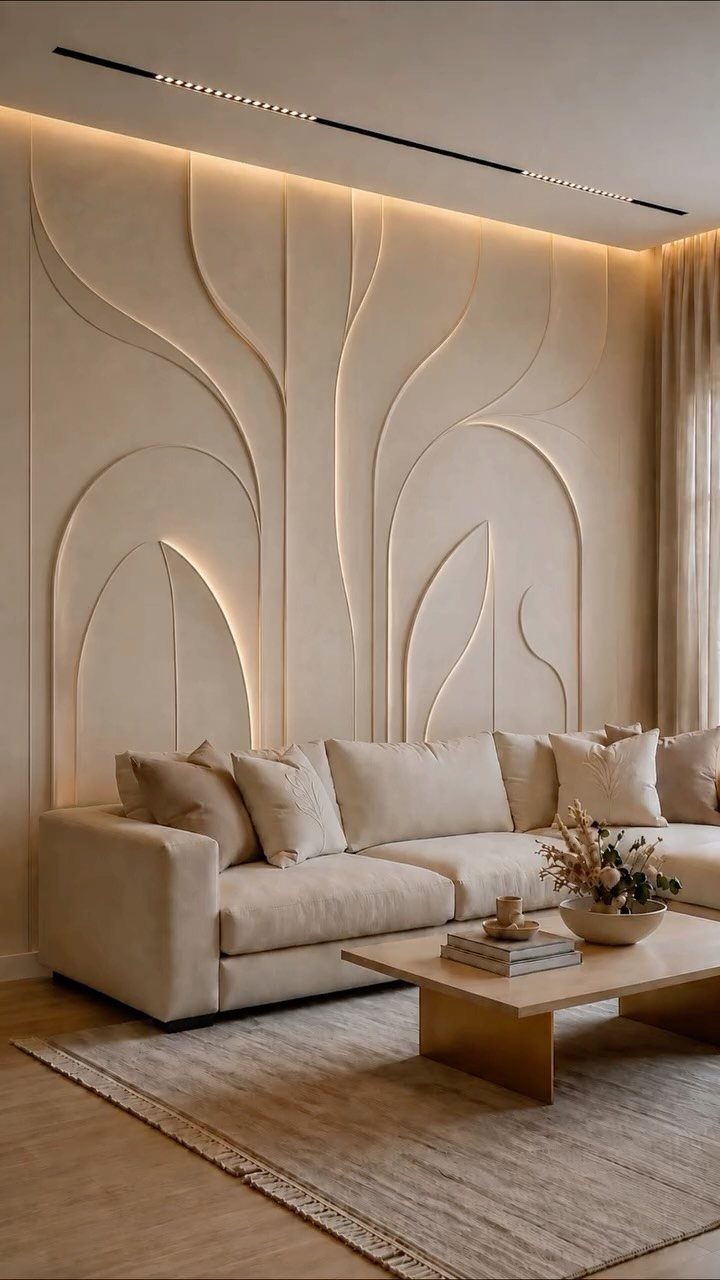
Two light sources layered on one wall give a room more depth than a single fixture can.
A concealed cove strip washes the curves of the panel with soft light, while a slim linear fixture on the ceiling handles the brighter, practical work.
I would put each source on its own switch or dimmer. Then the cove can glow alone in the evening and the ceiling light stays off.
Warm white, around 2700K, suits a cream sofa and a wood table best, because cooler bulbs turn cream gray and flatten the grain. Cool white tends to flatten both.
2. Fluted Panels Behind the Sofa
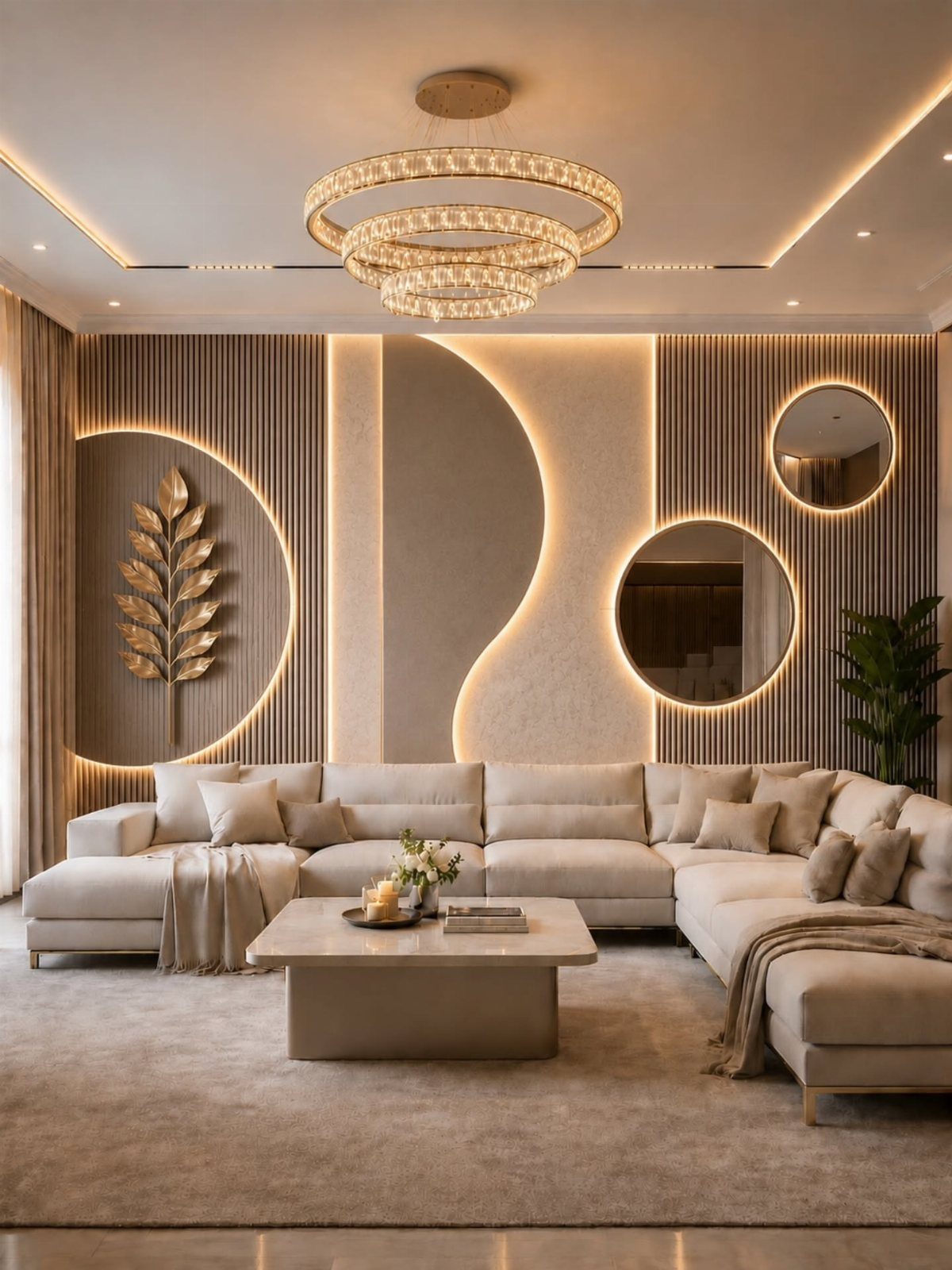
Fluted panels turn the wall behind a sofa into the room’s main feature without adding any color. The vertical grooves catch light and throw small shadows, so a plain beige wall reads as dimensional.
Backlit circles set into the flutes, like the ones here, add a second layer of glow. A chandelier overhead completes the look.
For a renter, I would try a peel-and-stick flute panel on one wall before committing to anything built in. Keep the panel width in line with the sofa so it frames the seating.
3. Floating TV Consoles
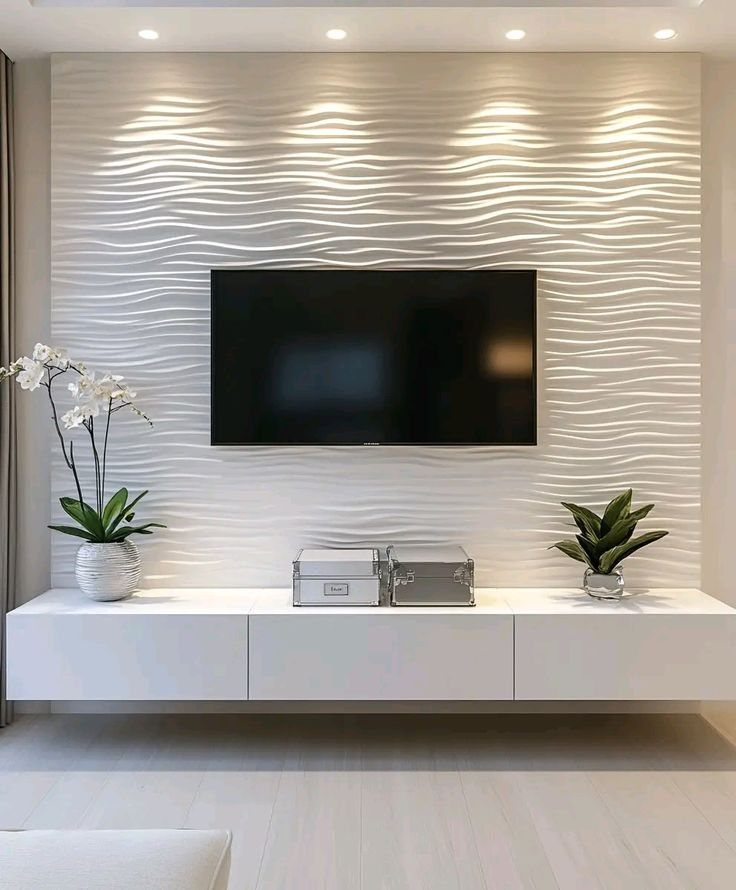
A TV console that floats off the floor leaves the strip underneath open, and that bit of visible flooring makes a drawing room feel larger. White on a white wall keeps the unit from looking heavy.
Mount it into studs or use proper wall anchors rated for the weight, since a console holds more than it appears to. Run the TV cables behind the wall or inside the unit.
Keep the top simple: one orchid and one small plant are enough.
4. Statement Wall Against a Neutral Backdrop
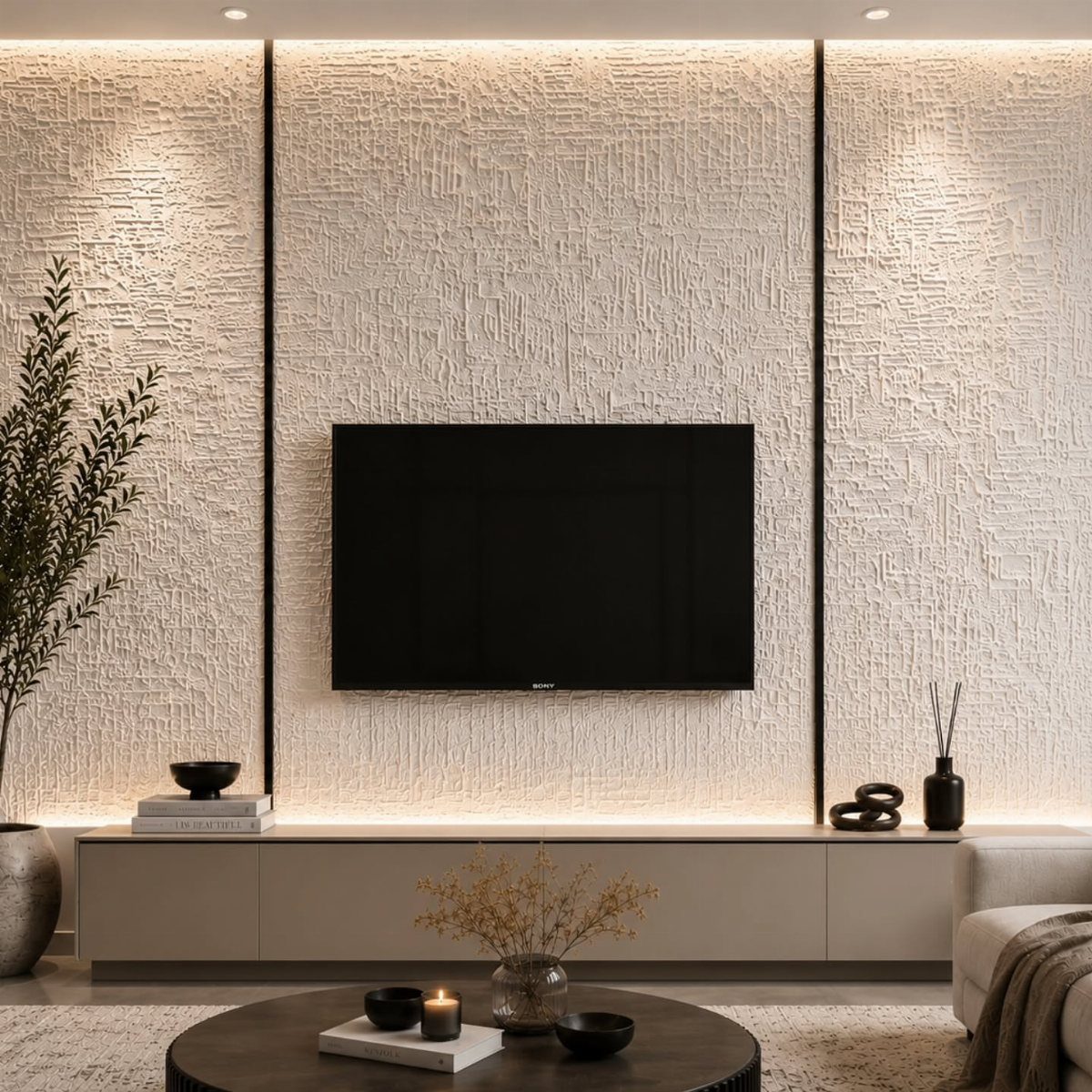
Texture does the work on a statement wall that stays white. The ridges or relief catch light and give the TV wall presence, so the rest of the room can stay quiet in off-white, grey and black.
I like this approach for a budget because one wall carries the whole effect. Pick a single treatment, such as a textured panel or plaster-style finish, and leave the other walls plain.
A long console and a round coffee table soften the straight lines of a statement wall, so pick curved or rounded pieces to balance it.
5. Sofas Facing Each Other
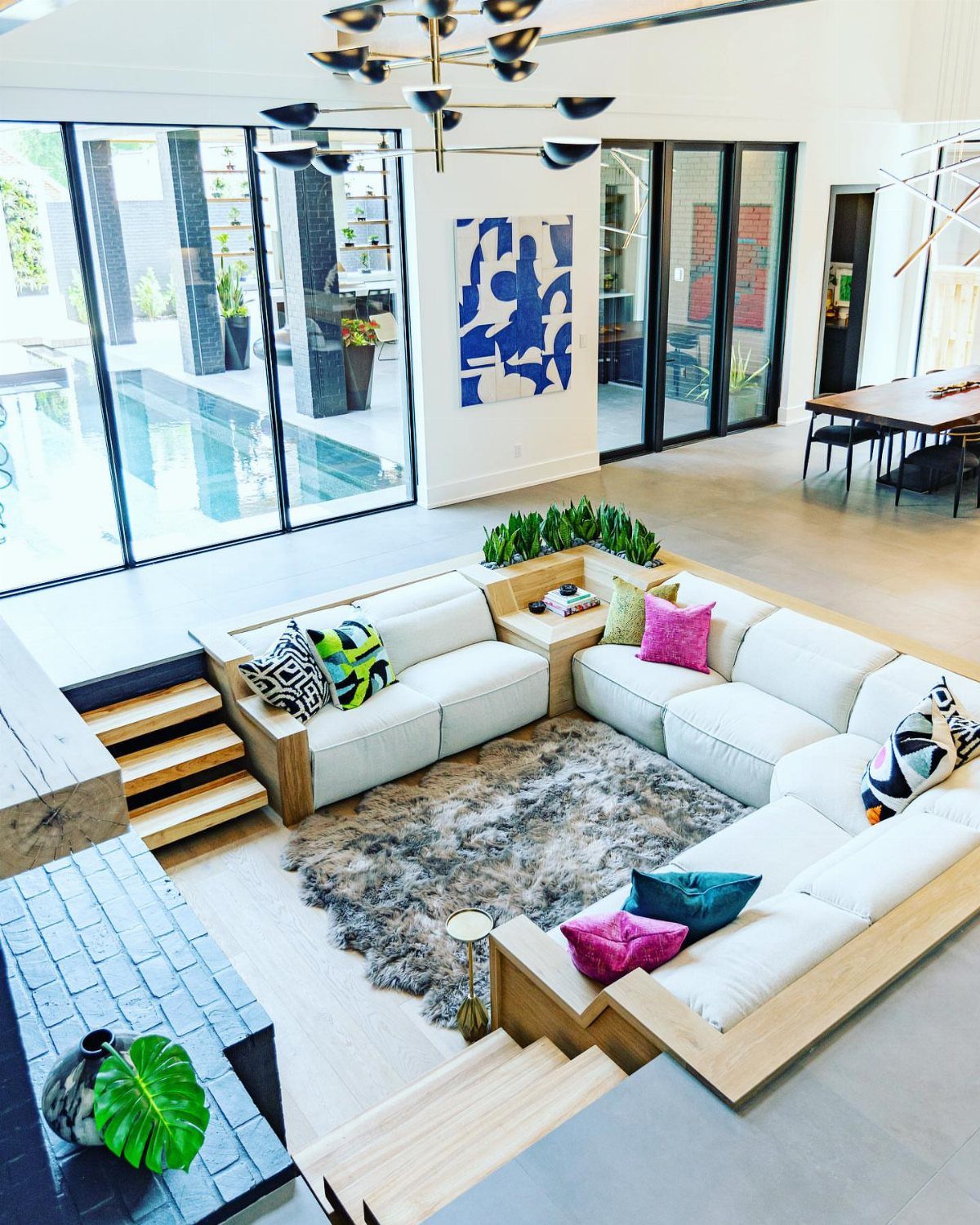
Seating that faces itself turns a living room into a place for talking rather than for watching a screen. An L-shaped sofa does this in one piece, with the arms of the L angled toward each other.
Anchor the group with a big rug, such as a gray shag, so the seating reads as one zone; an 8×10 feet or larger size lets the front legs of the sectional sit on it.
Leave a walkway at the open side.
Colorful pillows are an easy way to add contrast to a pale sofa. A painting on the wall gives the eye a focal point.
6. Decorative Cushions
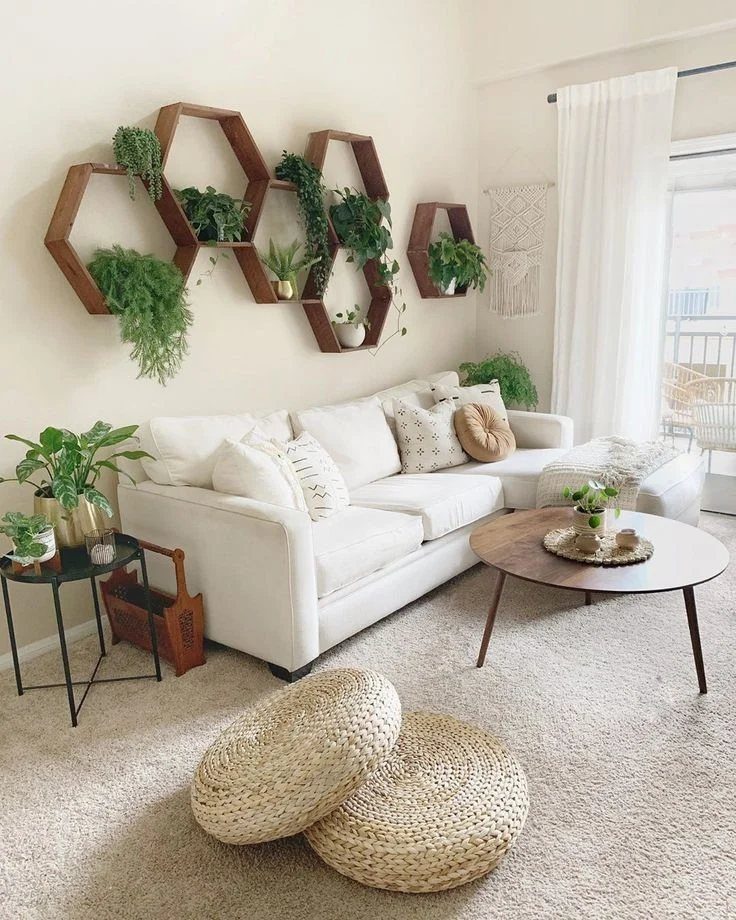
Cushions are the cheapest way to change a white sectional, and swapping them takes about a minute. Mix colors, patterns and sizes instead of buying a matched set, so the sofa looks collected.
I would repeat one shade from the room, such as the greens from the plant shelves, across two or three cushions. Woven poufs on the floor extend the same idea to extra seating.
Washable covers are worth choosing on a pale sofa, since light fabric shows every mark.
7. Coffee Table for Drinks and Decor
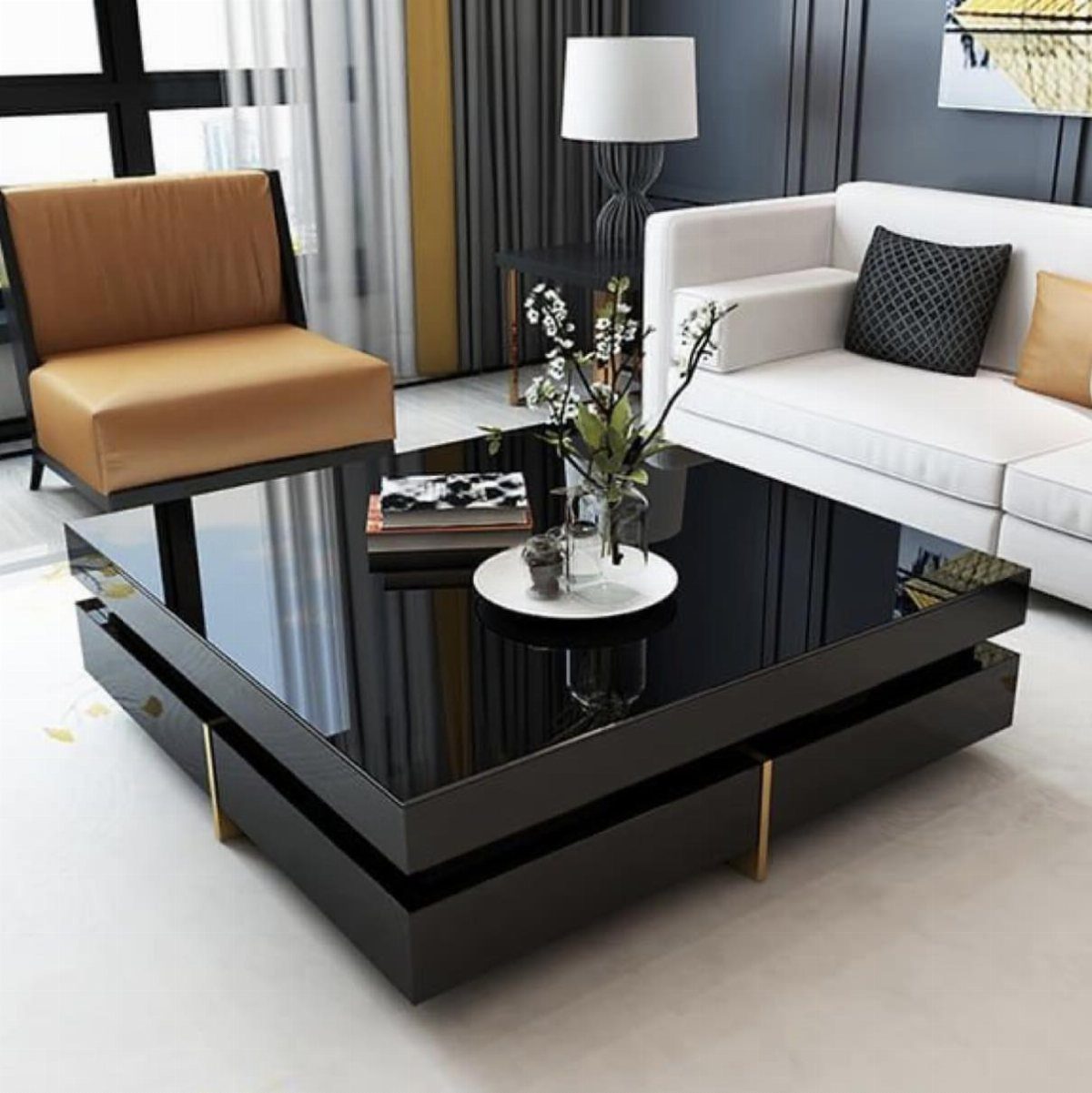
A glossy black coffee table gives a pale sofa and a tan armchair one solid anchor. The shine bounces light back into the room, so the dark color does not read as heavy.
Square works well for a seating group with an armchair on one side, since every seat sits at roughly the same distance.
Keep the top to a vase of flowers and a short stack of books, which leaves room for a drink.
Gloss shows fingerprints and water rings, so I keep a microfiber cloth nearby and use coasters.
8. Calming Whites
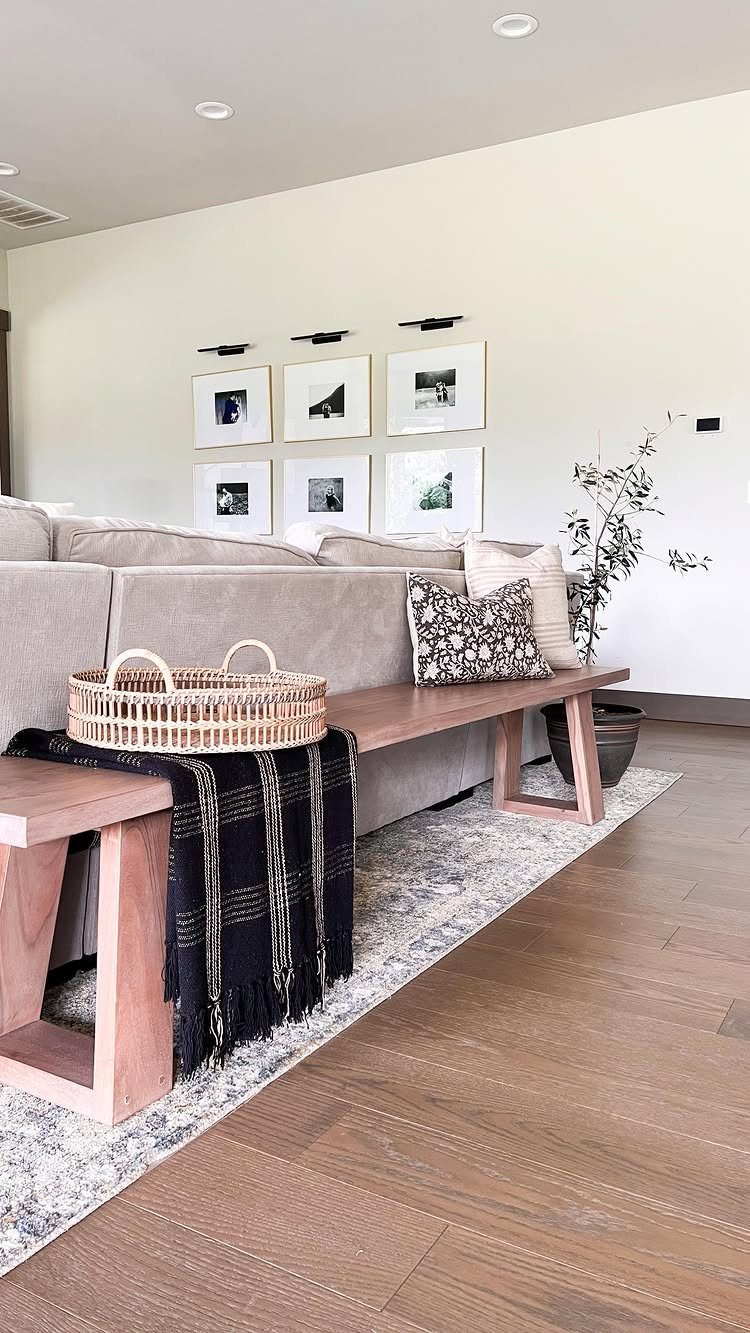
White walls with gray furniture make a quiet base, and the texture does the rest. A wooden bench, a basket with a throw and a gray rug add warmth without adding a loud color.
A gallery wall of black and white photos suits this palette well. Matching the frames keeps it tidy, and the photos need no color to stand out against white.
Cheap to try: paint one wall, hang the frames with a paper template first, and move the pieces around before you drill.
9. Built-in Storage Behind Sofa
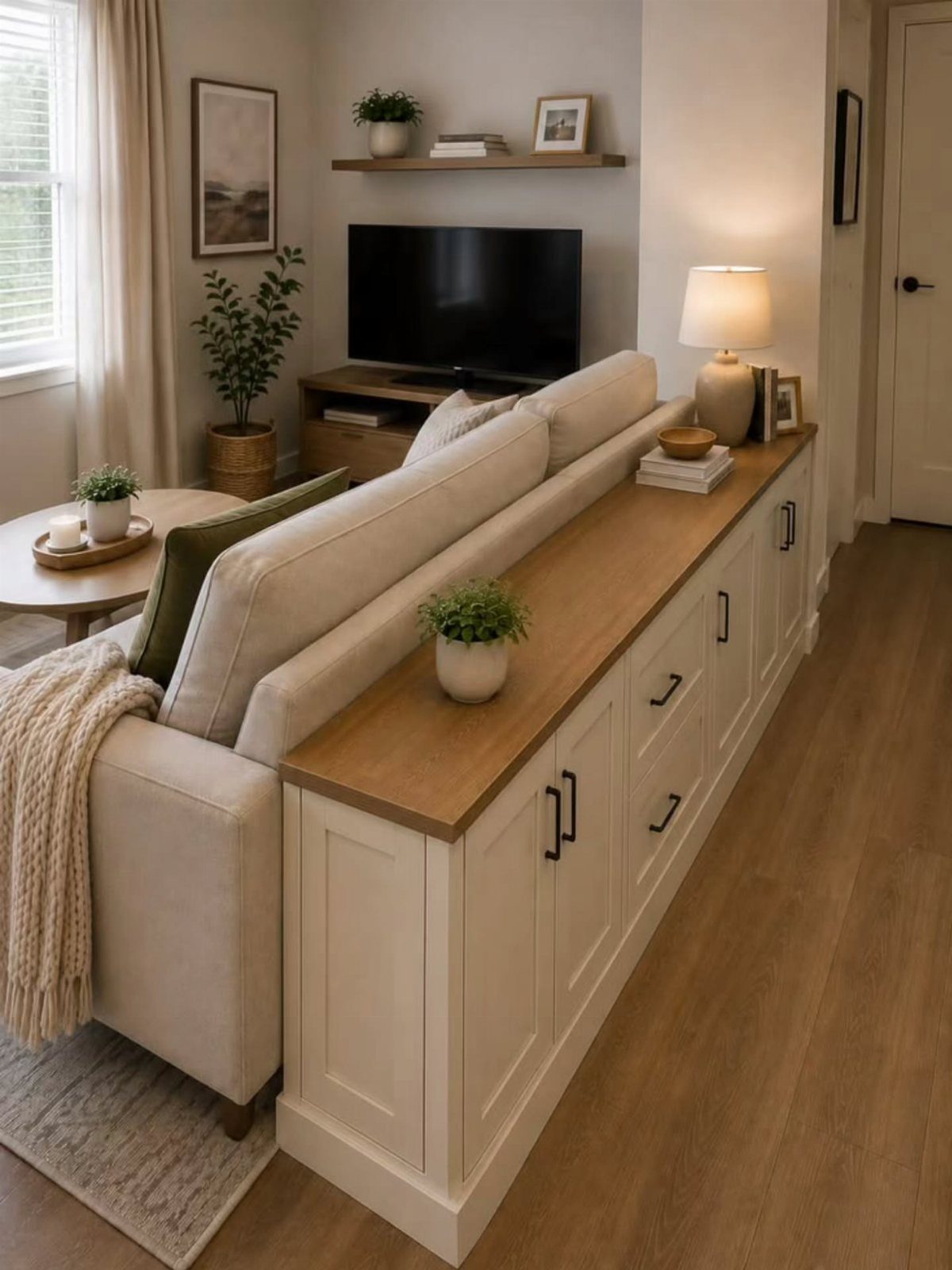
Behind a sofa, a long, low white cabinet with a wood top does 2 jobs: it stores things and it marks where the seating zone ends. The wood top gives lamps and a plant a proper shelf.
I like this for a room where the sofa floats away from the wall. Pick a cabinet depth that leaves a walkway, and push the sofa back close so the two pieces read as one.
Doors keep clutter out of sight, which suits a family room.
10. Built-in Entertainment Unit
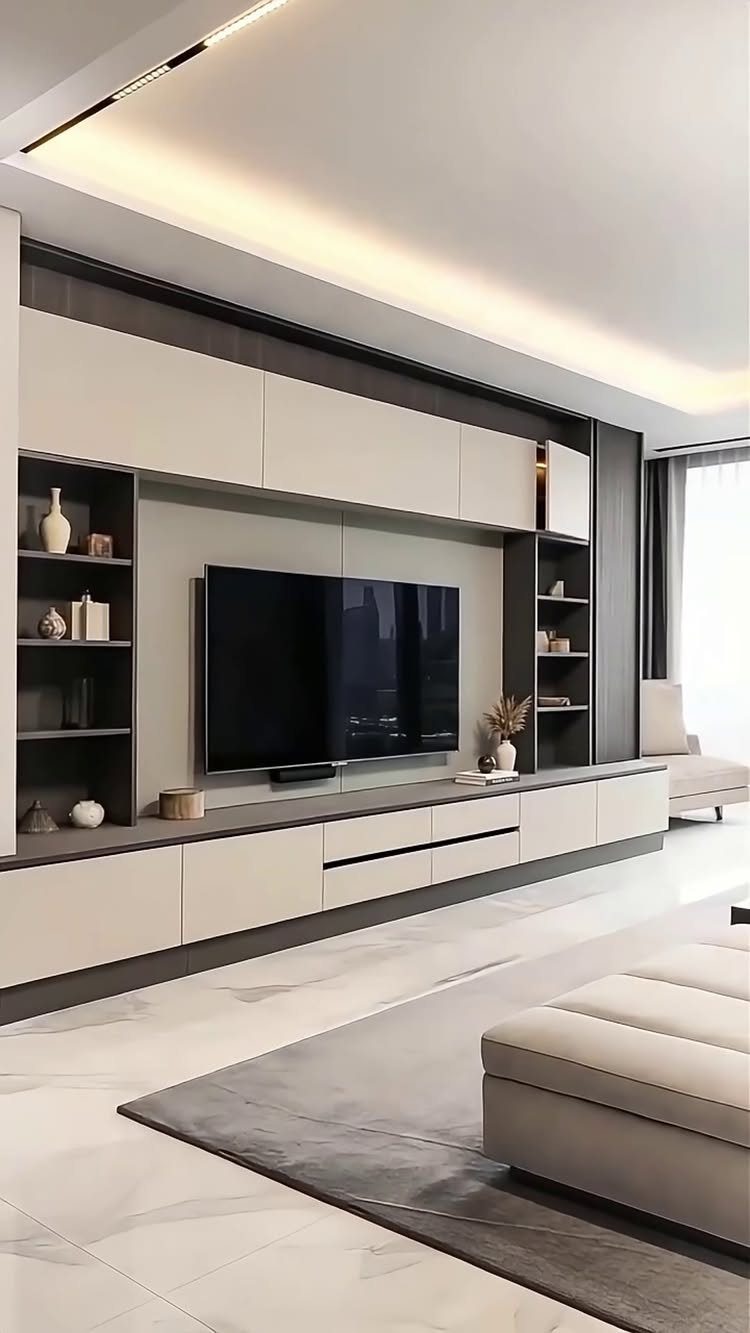
A built-in TV wall turns one whole side of the room into storage. Cabinets below hide cables and clutter, while open shelves above hold books and decor, so the TV becomes part of a unit instead of a black rectangle.
A light finish keeps a big unit from overpowering the room. Beige and gray furniture sits well against it.
This is a bigger project and a bigger cost than a freestanding console. I would price it out before choosing it, and consider it if you own your home.
11. Built-in Wall Bookshelves
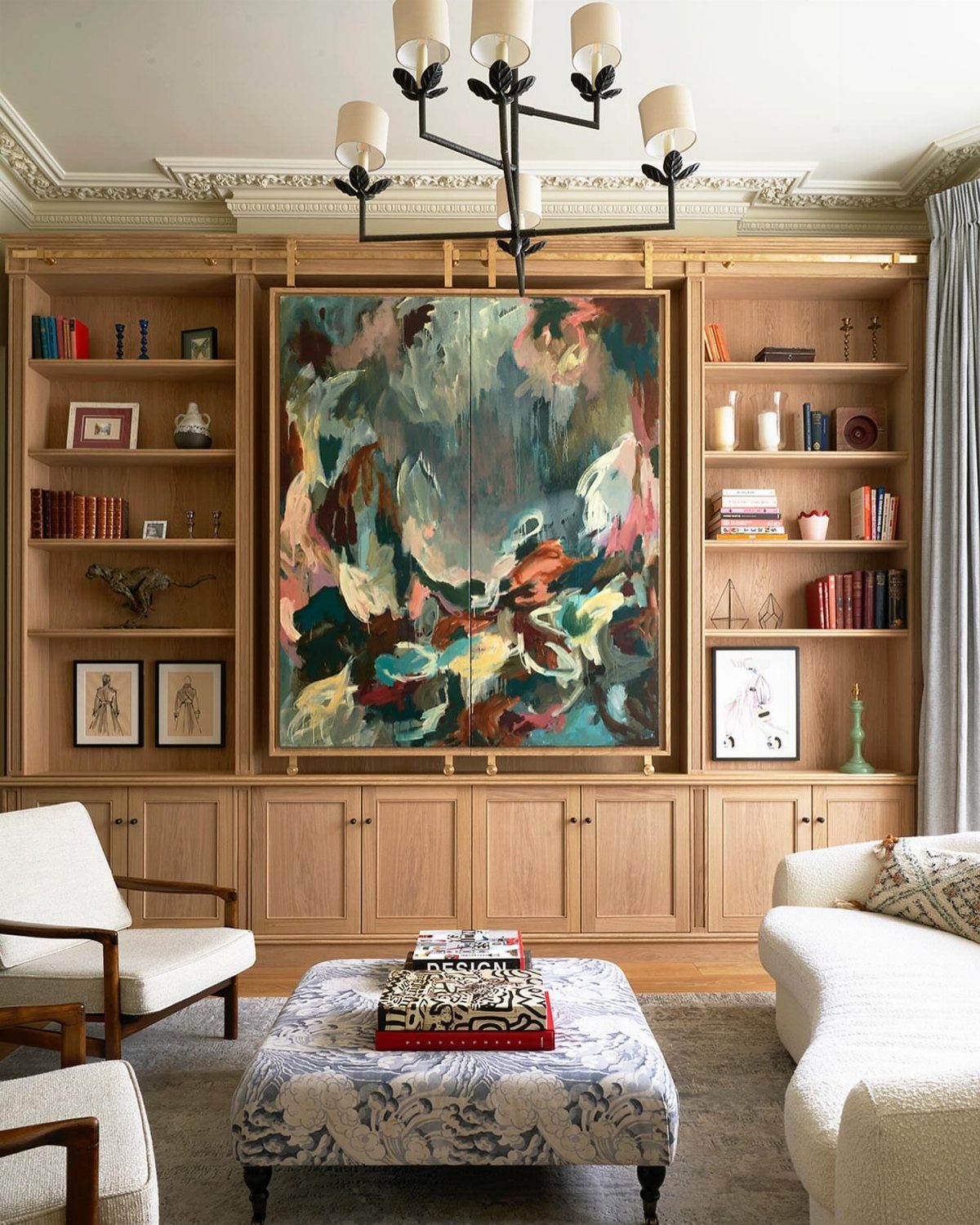
Light-wood shelves built into the wall on both sides of a large painting give the art a frame and the books a home. The wood keeps the room bright, where dark shelving would close it in.
I would not fill every shelf. Leave gaps, stack some books flat, and add a few objects so the wall looks styled rather than packed.
A patterned ottoman with books on top picks up the same idea at floor level.
12. Slatted Wood TV Accent Wall
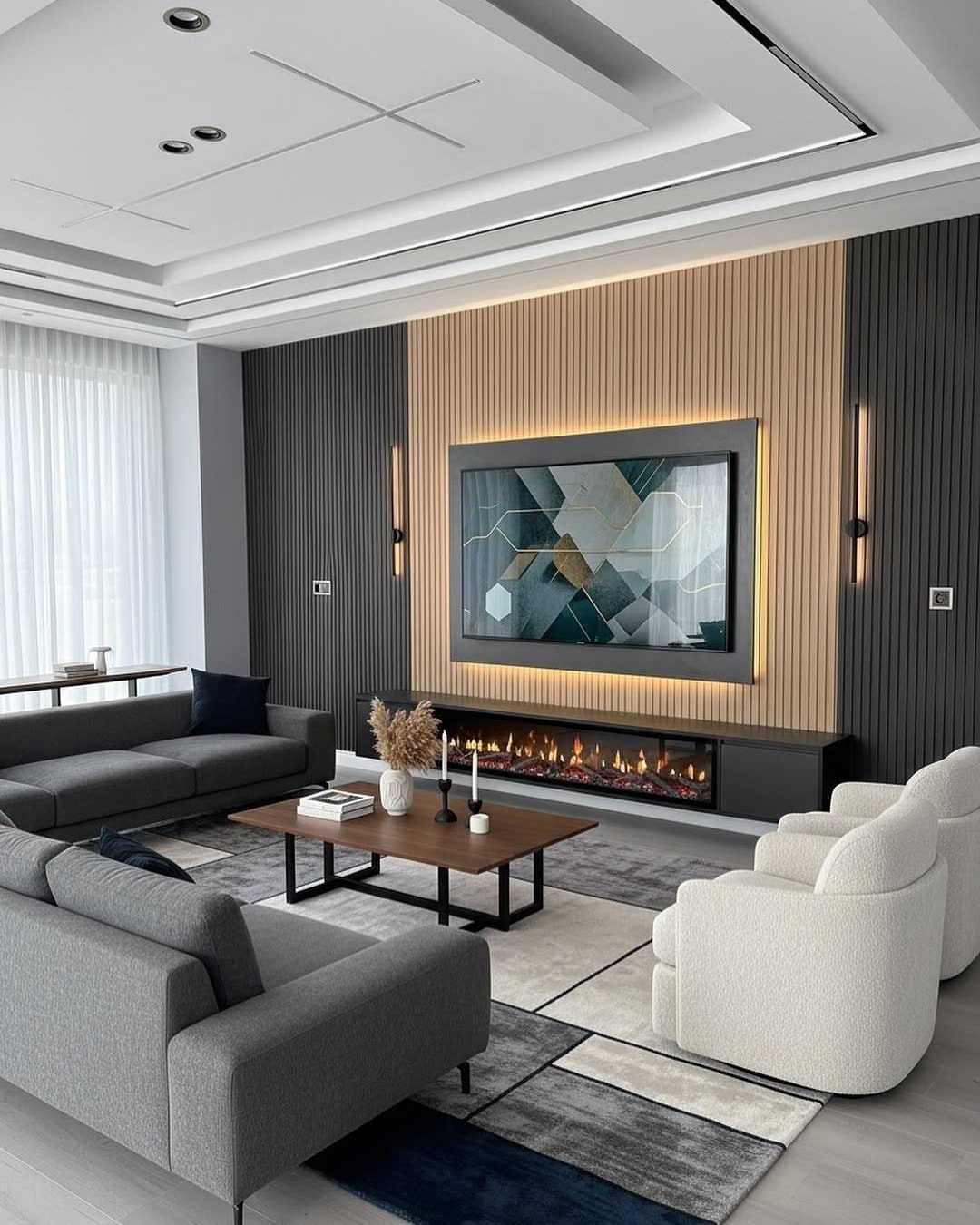
Vertical wood slats behind a mounted TV give the screen a warm backdrop, and a linear fireplace below makes the wall the focus of the room. The slats break up the flat expanse a TV leaves on its own.
Grays and whites in the sofas and armchairs let the wood carry the color. A geometric rug adds pattern without competing.
If you rent, I would test a lighter slat panel on a smaller section first. Fireplaces need professional installation, so plan that before the slats.
Frequently Asked Questions
What is drawing room interior design?
It is the styling of the room where you host guests and spend time with family, so the layout, lighting and finishes suit both conversation and relaxing.
The term dates to the late 16th century in Western countries, when the room was mainly for welcoming visitors and making them comfortable. Today it often means seating arranged for talking, a feature wall, and layered lighting.
Which color is the best for the drawing room?
White and other soft neutrals such as beige and gray are the safest choice, because they make a calm base that suits guests.
A wooden bench, woven basket or textured gray rug brings in that warmth once the neutral base is set.
If you want more color, bring it in through cushions, a painting or a single wood feature wall rather than painting every wall.





