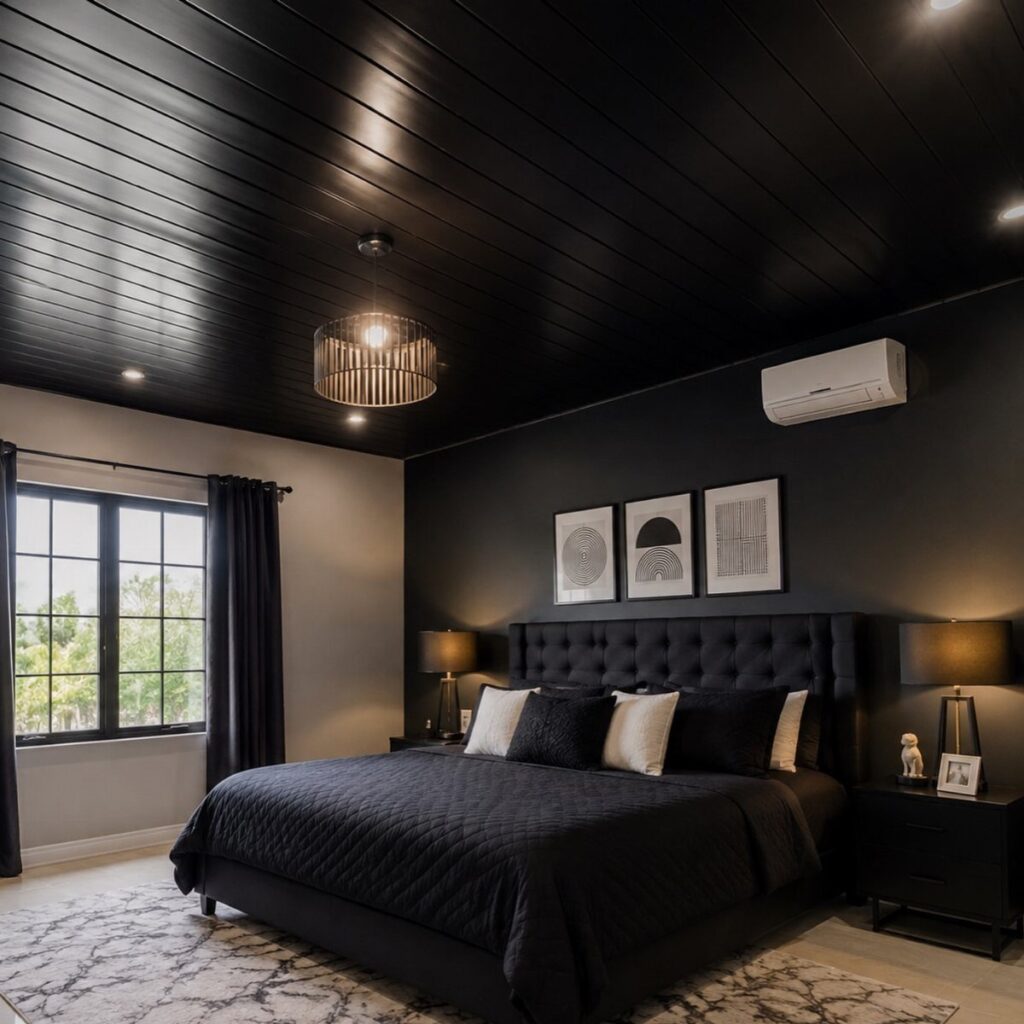
The ideas run from flat paint on drywall to slatted wood, exposed joists and coffers, and the cost follows what you start with: a plain ceiling takes a roller, while open joists or slats need a sprayer and careful masking.
Light walls keep every version from closing in.
1. Black Ceiling with Colorful Decor
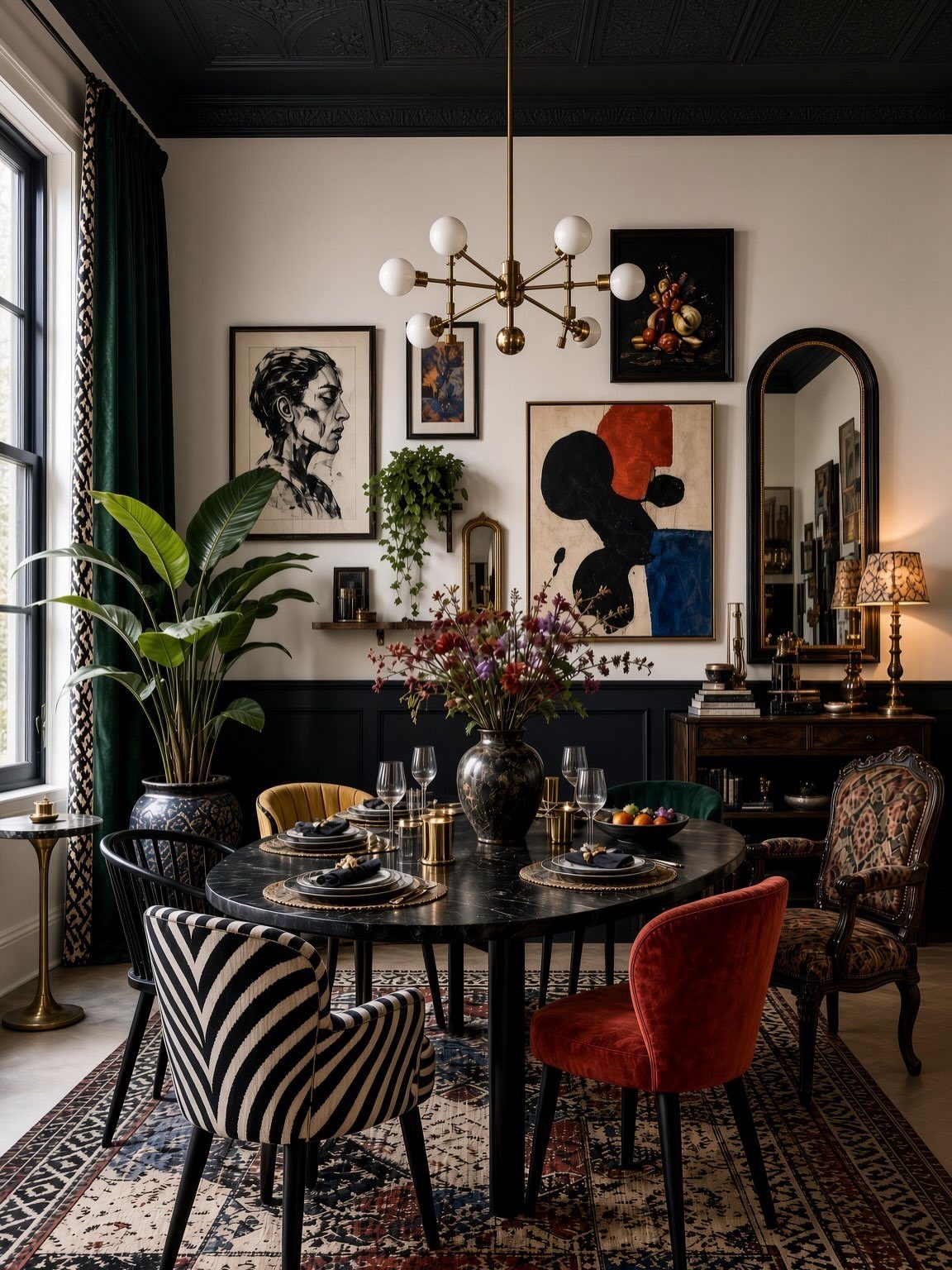
Chairs in mixed colors do the work here, and the black ceiling is what lets them read as bright.
White walls keep the framed art from fighting the ceiling, and the ornate molding gets a clear outline against all that dark.
On a budget, start with the chairs. Secondhand ones in different colors cost little, and a single big plant adds green without more clutter.
I would hold the ceiling to one color and let everything else carry the variety.
2. Matte Black Ceiling
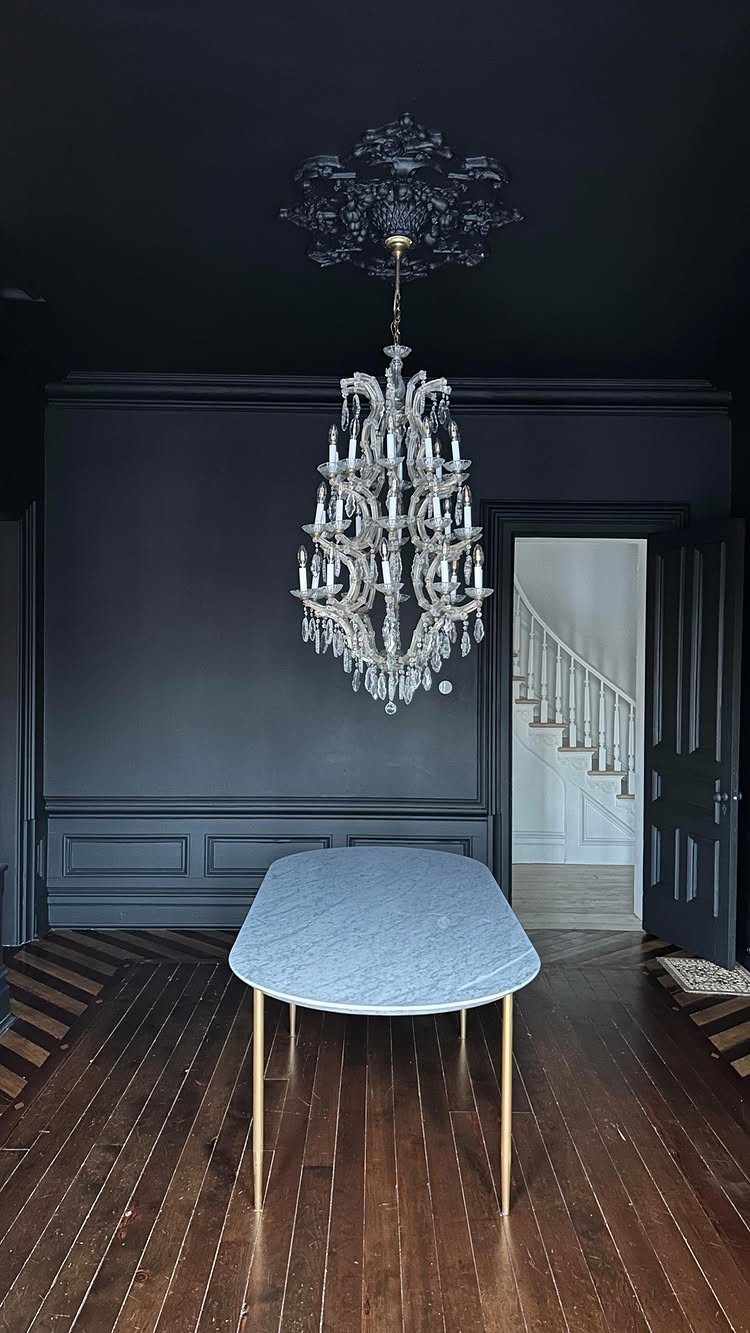
Flat paint gives a black ceiling its velvety look, because a matte finish soaks up light instead of bouncing it back. A crystal chandelier works well against that, since the glass supplies the sparkle the surface refuses to.
The maker of this room said it plainly: if you are on the fence about dark paint, go for it.
I agree, with one caution. Matte black on walls and ceiling together makes a cave, so add a bright table top or a white staircase glimpsed through a doorway, as this room does.
3. Black Ceiling with Light Walls
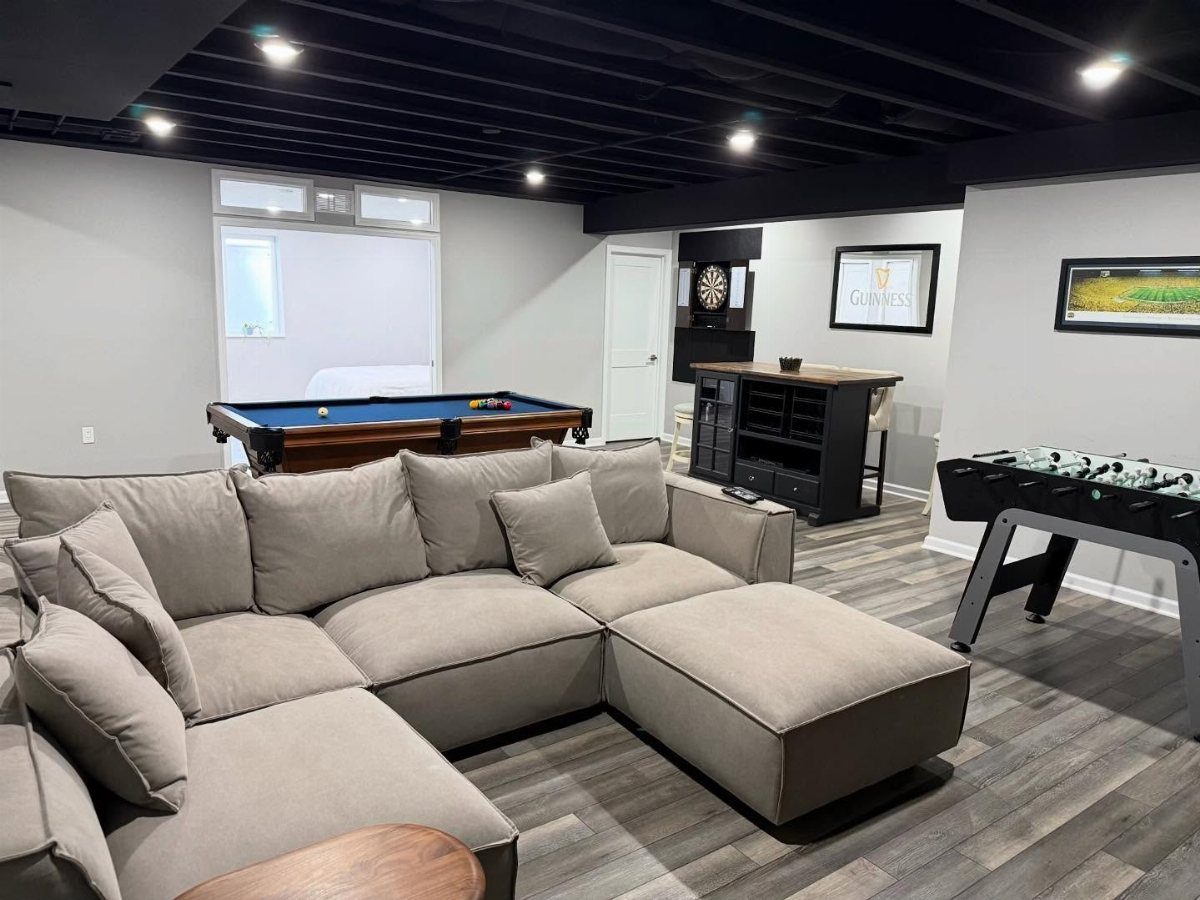
Light gray walls under a black ceiling make the ceiling look like a lid, and in a basement that feels intentional rather than gloomy.
Against a black ceiling, quiet furniture in a mid-tone like gray lets the loud pieces, such as a game table or bar signs, stand out without the room feeling chaotic.
For a weekend job, paint the ceiling first, then cut in along the wall line with painter’s tape. A crisp edge matters more here than anywhere, because the contrast shows every wobble.
4. Black-Painted Shiplap Ceiling
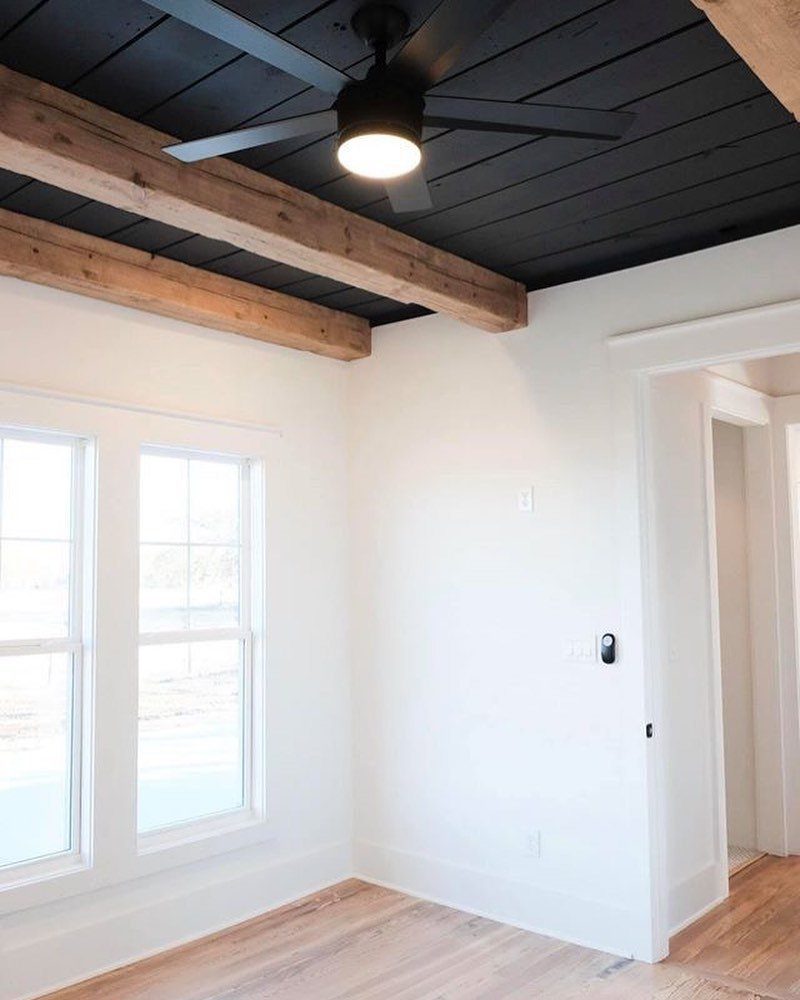
Shiplap painted black keeps its grooves, so the ceiling reads as lines of shadow instead of a flat sheet. Natural wood beams across it add warmth, and a black ceiling fan nearly disappears into the boards.
I would spray or roll the paint, then brush into the seams so no bare wood shows. White walls and light floors keep the room from feeling heavy.
This takes more paint and time than a flat ceiling, so plan for a full weekend.
5. Coffered Black Ceiling
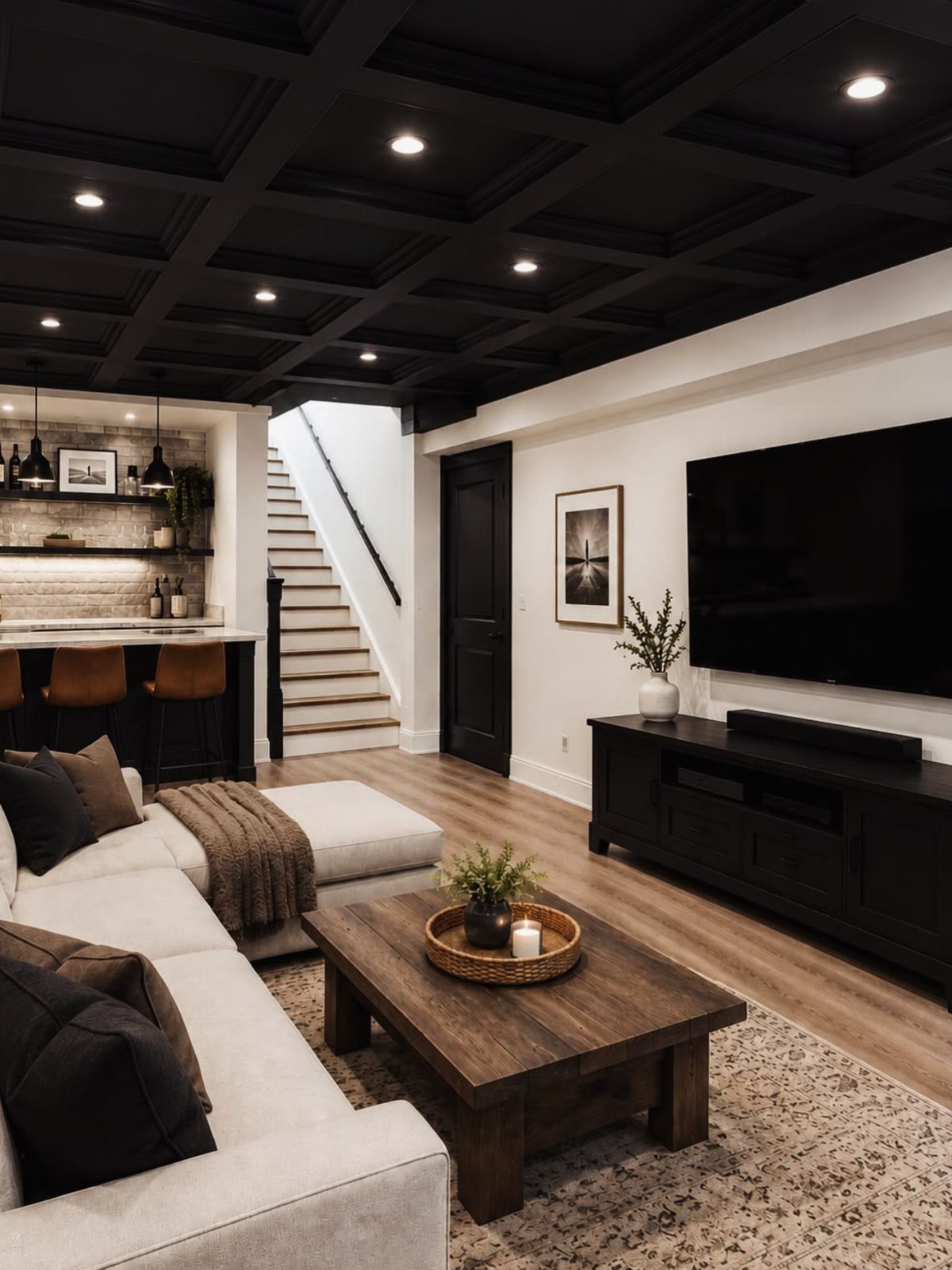
Coffers are the recessed squares, and black paint turns them into a graphic grid that makes a plain living room look built rather than decorated.
Pair a coffered black ceiling with white walls and a light sofa, and the dark stays overhead instead of pressing down on the room.
Paint the beams and the recessed panels the same black so the pattern stays clean. Use a brush for the inside corners and a small roller for the flats.
If your ceiling has no coffers, this look means carpentry first, and that adds real cost.
6. Bathrooms with Black Ceiling
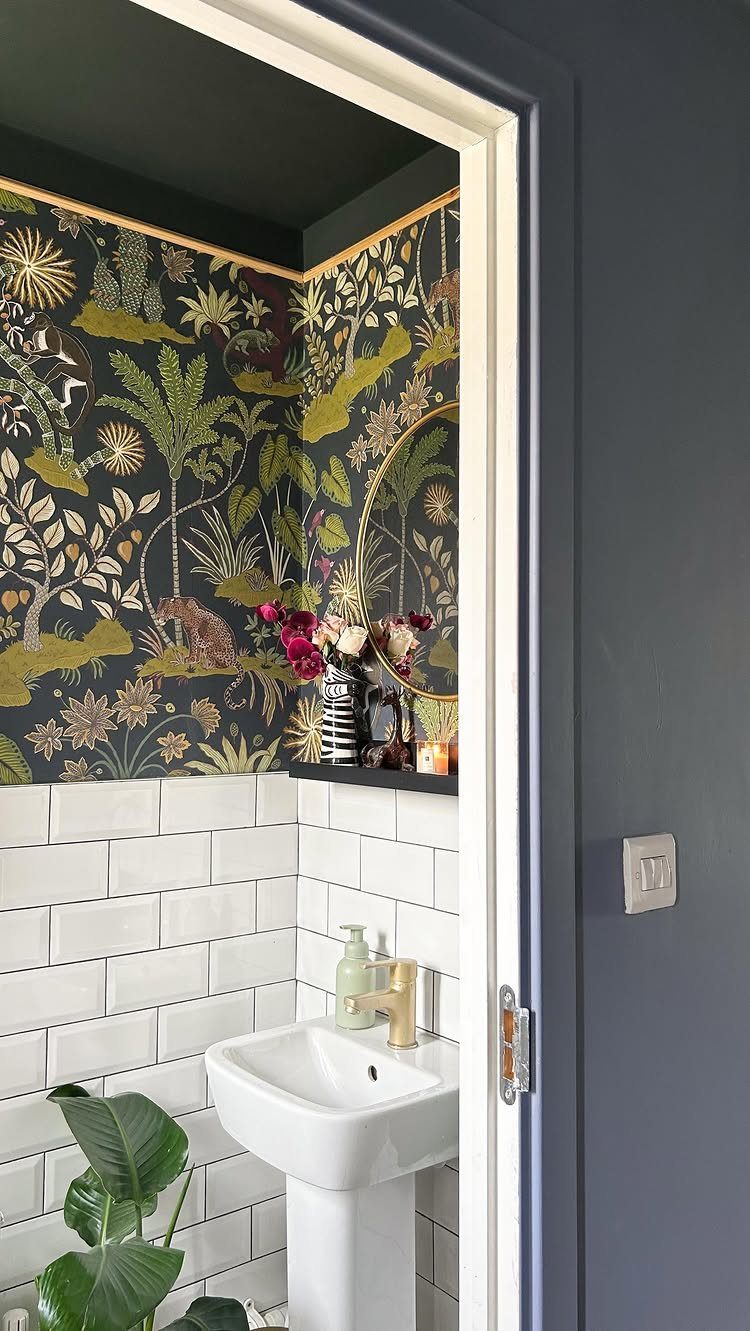
Small bathrooms handle a black ceiling better than you would expect, especially under dark botanical wallpaper. The ceiling and the leafy walls merge, and white subway tile and a pedestal sink keep things crisp.
Use a paint rated for bathrooms, and run the exhaust fan during and after showers so steam does not stain the ceiling. A gold faucet and a round mirror add small flashes of light against all that dark.
7. Black Ceiling with Light Fixtures
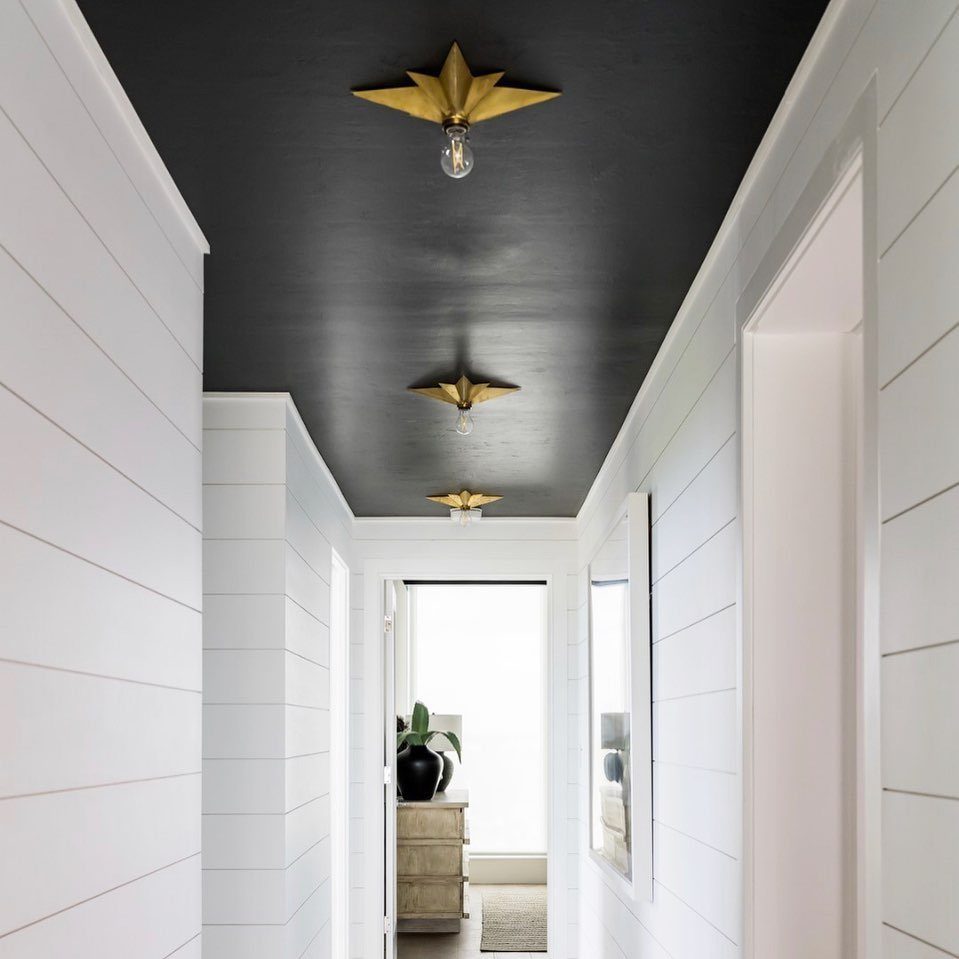
Gold stars against black read like a night sky, and in a hallway that gives a plain passage a destination.
Because the ceiling is dark, the fixtures are the only bright detail overhead, so choose them as you would a piece of jewelry.
White shiplap walls keep the dark from closing in. I would stop at three fixtures, spaced evenly, so each one gets room to stand out.
8. Outdoor Spaces with Black Ceiling
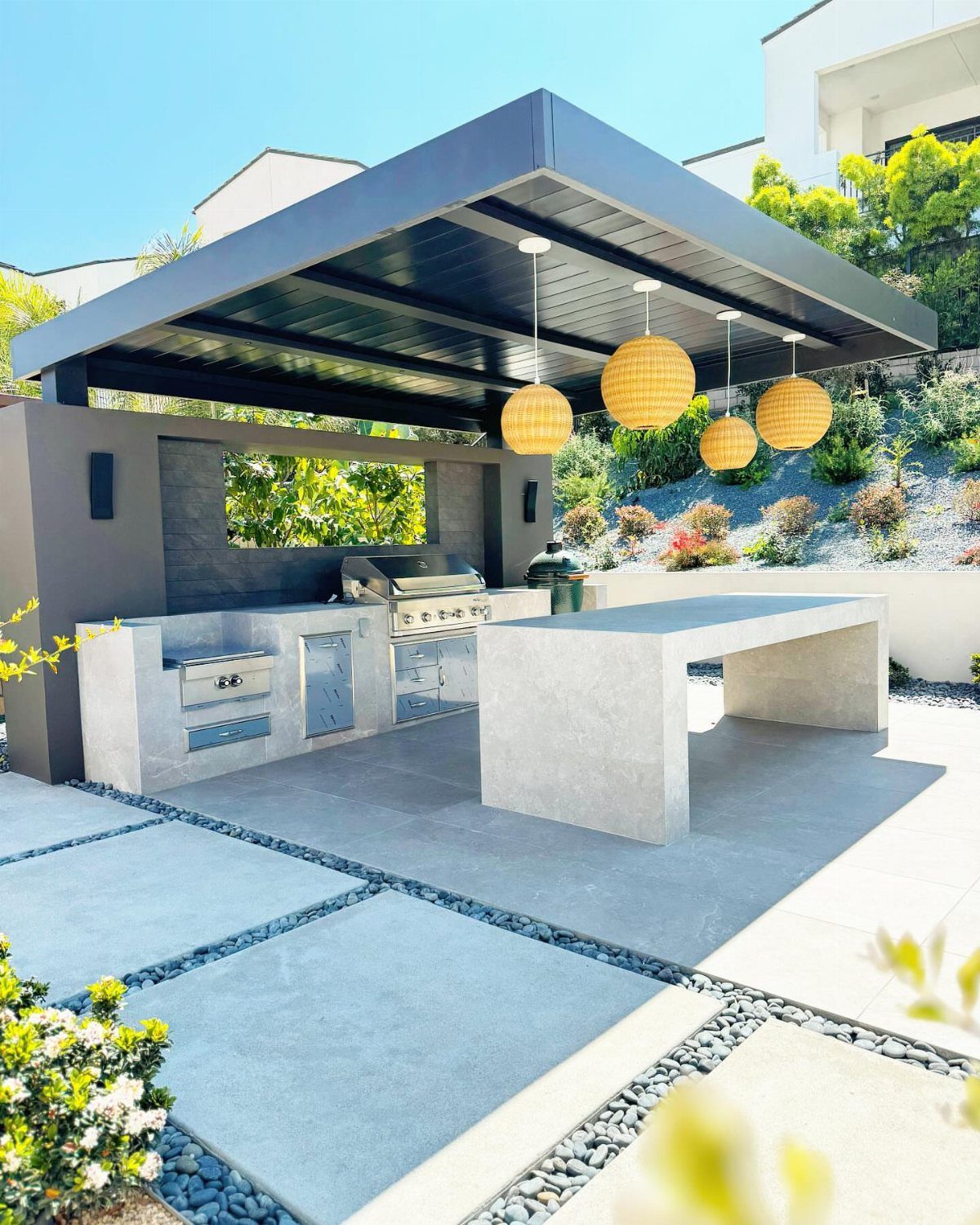
A black ceiling over an outdoor kitchen frames the cooking zone like a room, even with no walls around it. Slats let the dark overhead sit lightly, and round woven pendants hang well against it.
Concrete counters and stainless appliances are already cool and gray, so the pendants are where I would put the warmth. Choose paint labeled for exterior use.
9. Black Ceiling with Layered Lighting
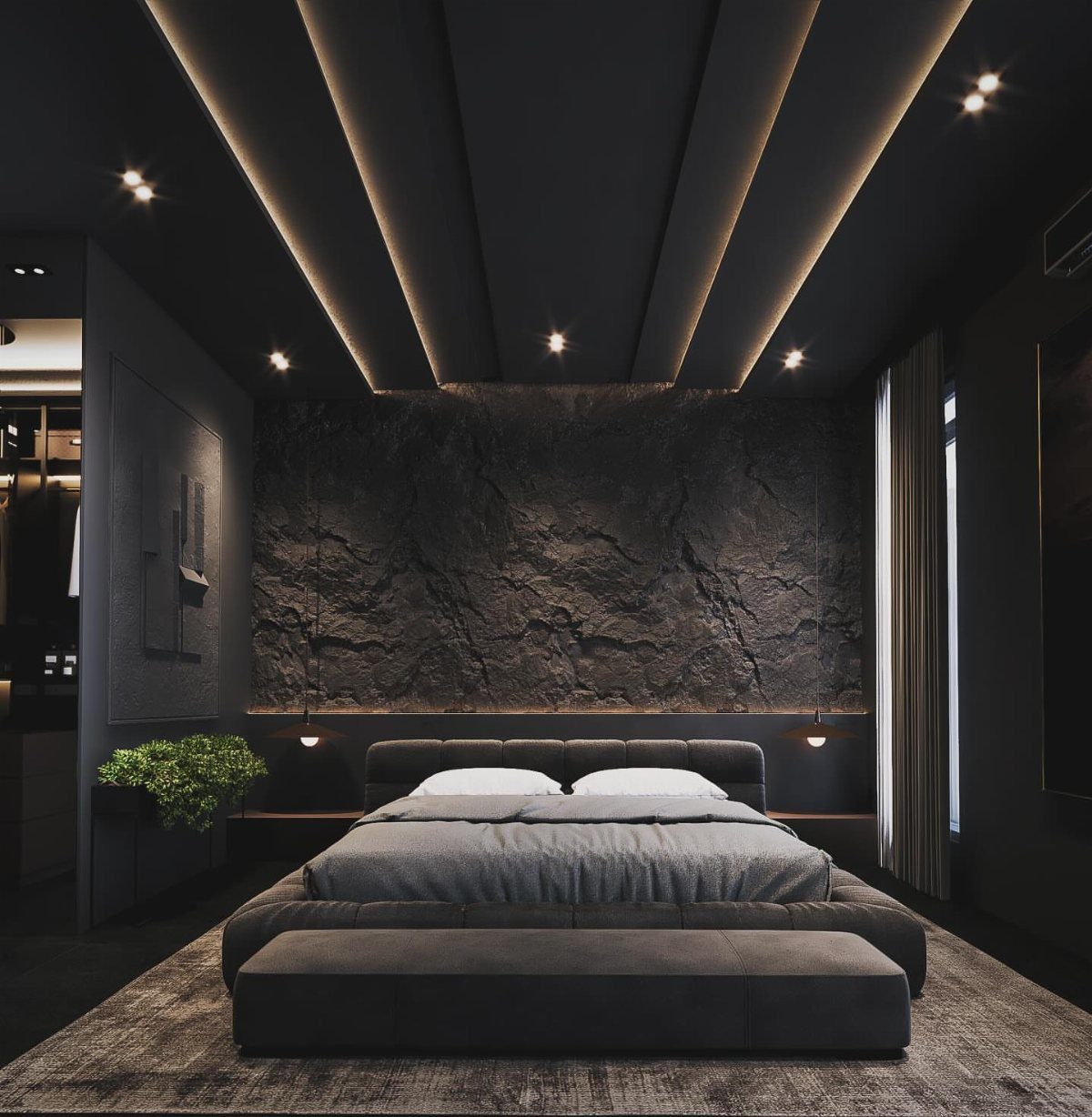
Black ceilings swallow light, so a bedroom like this needs more than one source to make up for it.
Put each kind on its own switch or dimmer, so you can run only the strips at night. I would plan the layout before painting, since cutting new holes in a finished black ceiling is a mess to patch.
10. Black Slatted Ceiling
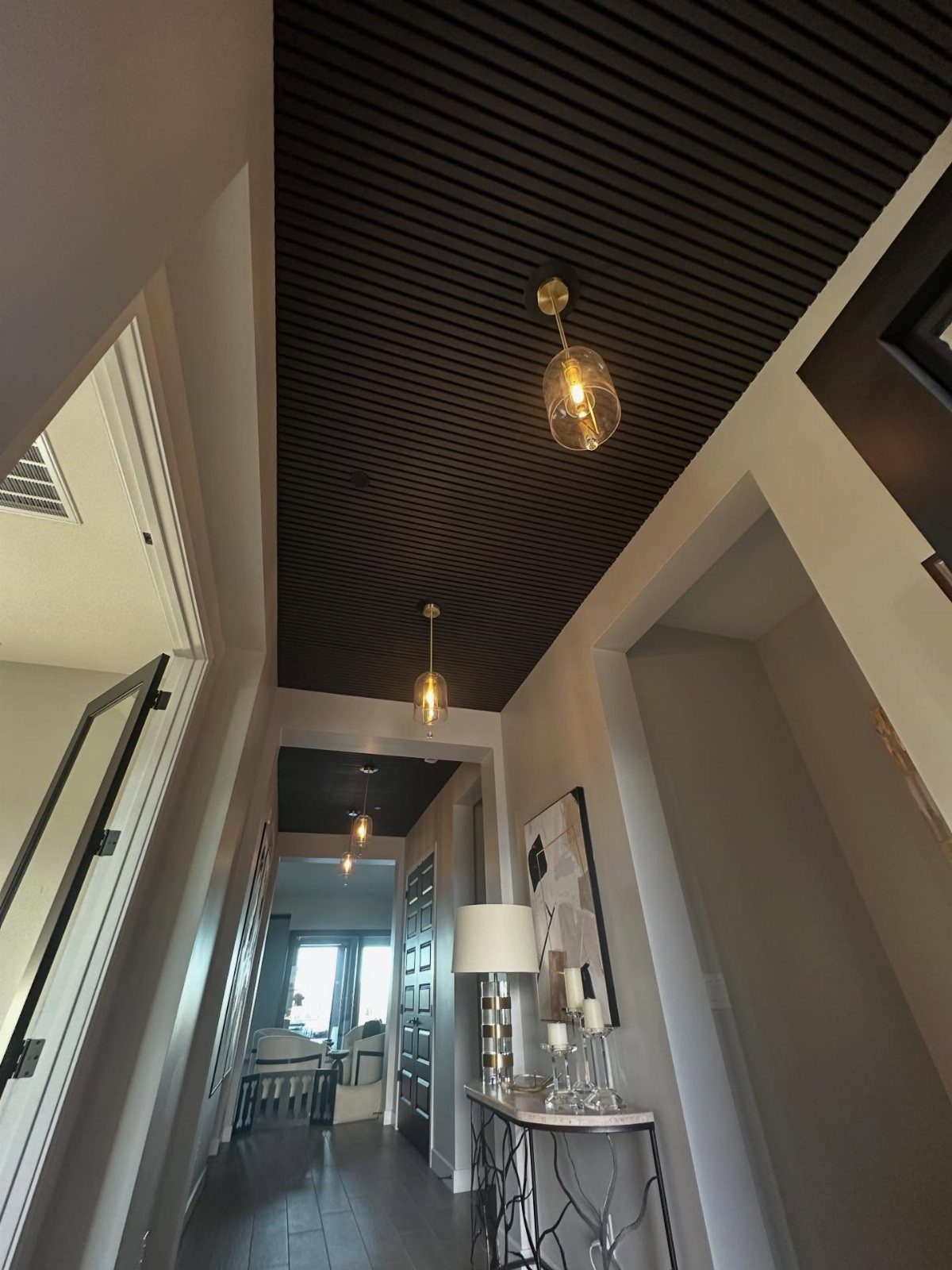
Slats give a narrow hallway texture overhead, and black paint turns the gaps into shadow lines that pull the eye down the length of the space. Gold pendants hang in front of that dark and look brighter for it.
Gray walls keep the hall calm, so the ceiling stays the one bold move. Paint slats before you install them if you can, since brushing between installed boards takes patience.
11. Black Open Joist Ceiling
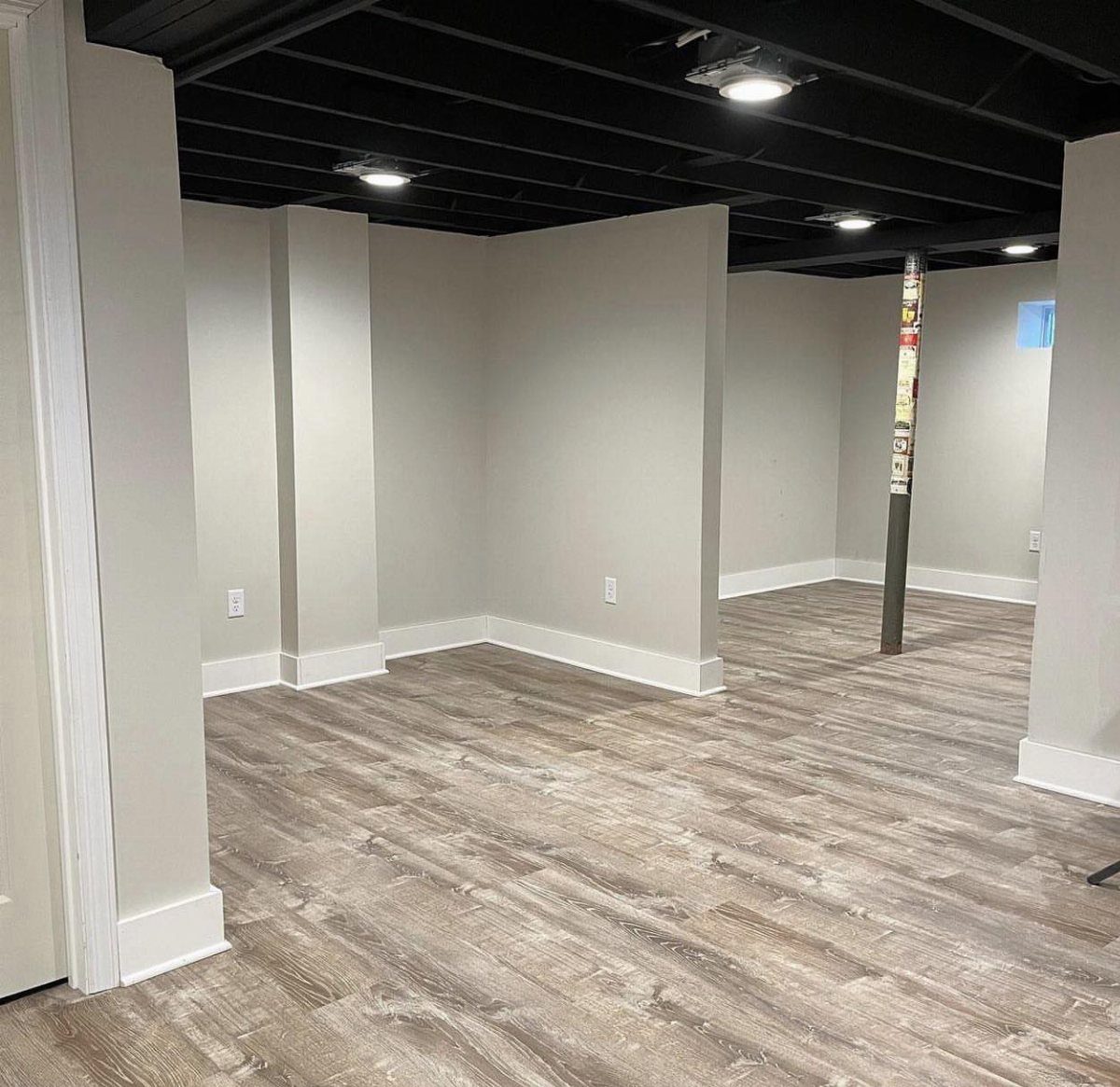
Painting an open-joist basement ceiling solid black hides the pipes, wiring and ductwork in shadow, which is cheaper than building a drywall ceiling. Joists, pillar and everything between them get the same color, so nothing stands out as clutter.
Light gray walls and wood-look flooring keep the room from feeling like a cave. Spraying is much faster than rolling around joists, and recessed lights add brightness without drawing the eye.
12. Black Tray Ceiling
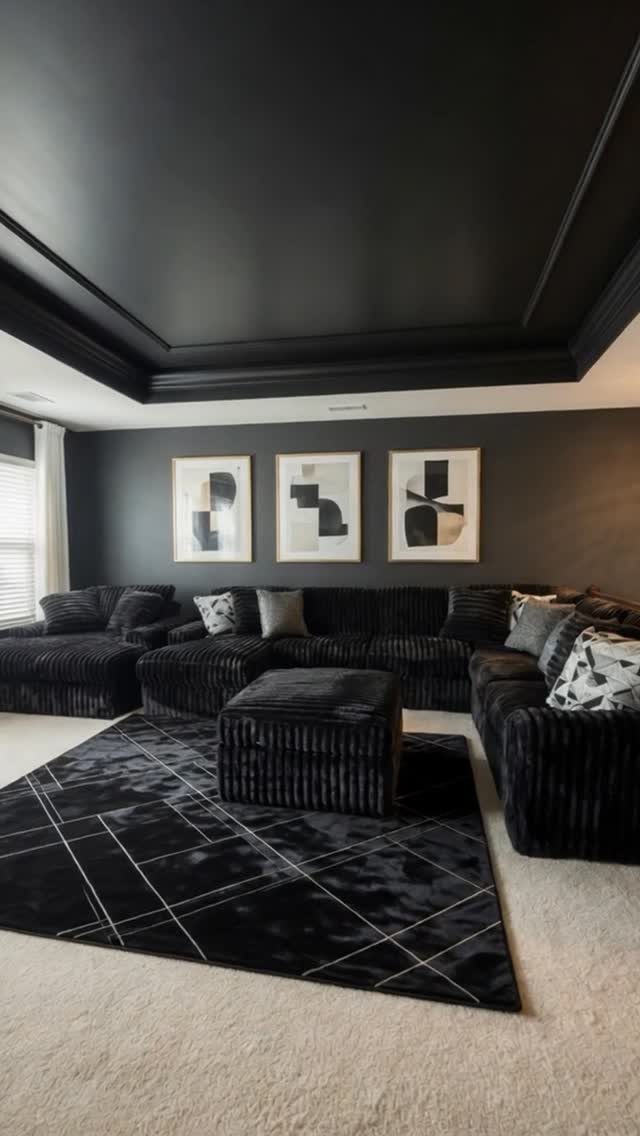
A tray ceiling steps up from the walls, and matte black paint on that recess draws the eye upward so the space reads taller, not lower.
A black ribbed sectional and patterned rug follow that same dark palette, so I would add contrast through art or a lighter throw. Painting a tray takes careful cutting in at each step.
13. Black Garage Ceiling
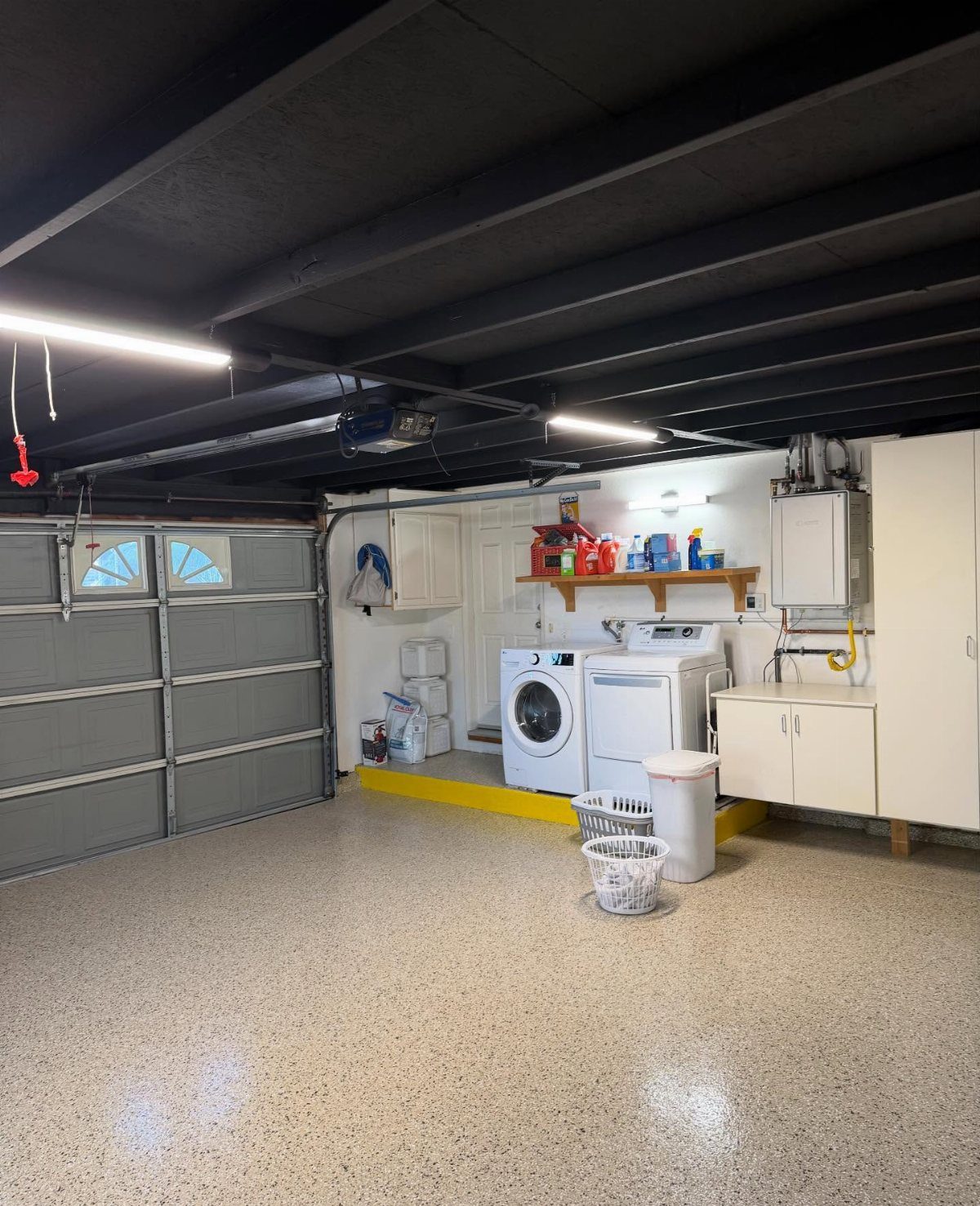
Exposed beams painted solid black give a garage a finished look that bare wood or white drywall rarely manages.
Beams and the boards between them should get the same black, or a pale stripe will show wherever the roller skipped.
A sprayer covers a beamed ceiling in a fraction of the time a roller takes, though it means masking everything below.
I would keep everything below the ceiling light, as this garage does.
14. Monochromatic All-Black Room
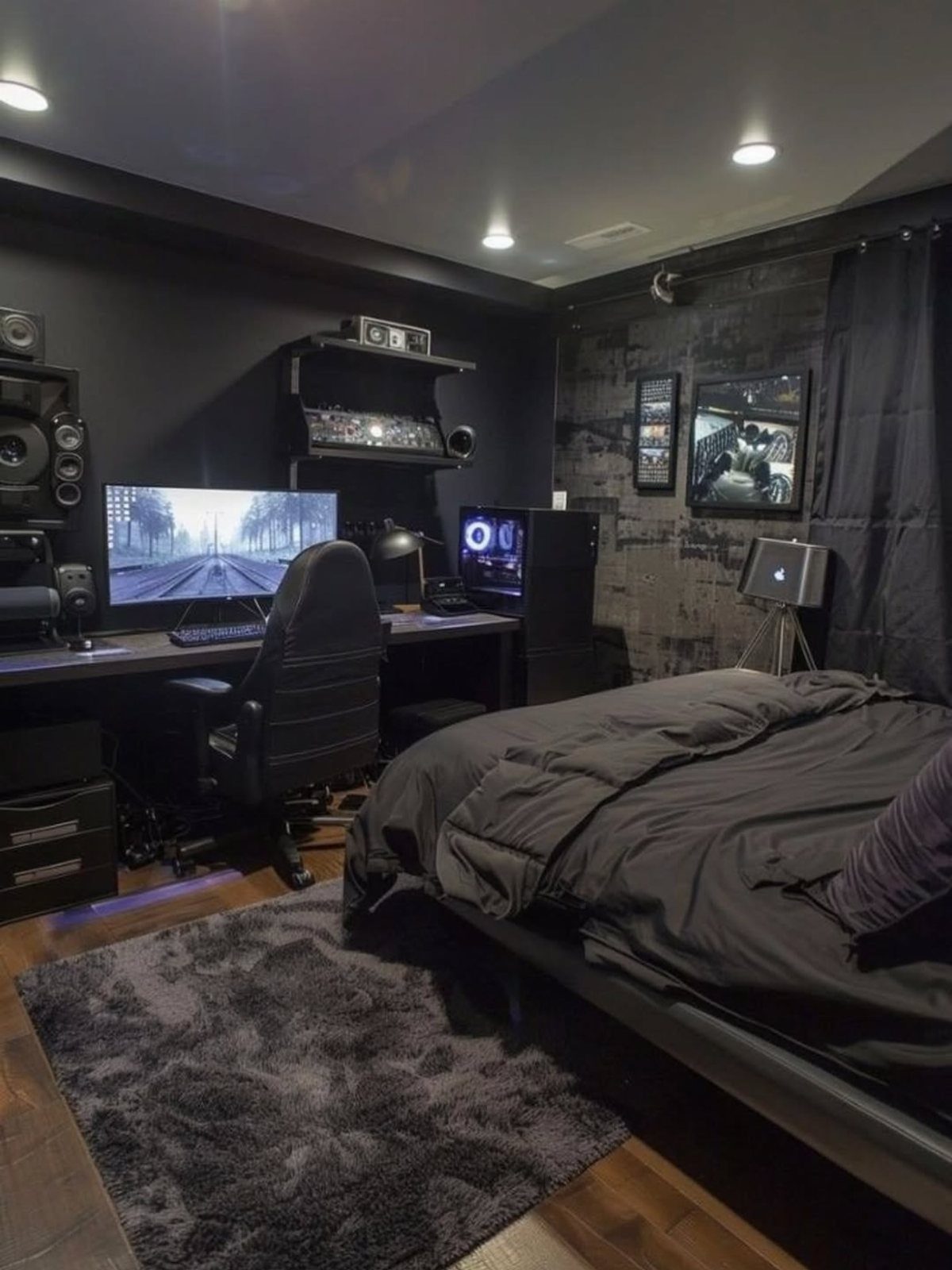
Black walls, ceiling and bedding make a bedroom that feels like one dark shell, and a gaming desk with a monitor suits that well because screen glow becomes the main light.
A gray rug is a smart move, since it breaks up the floor without adding color. I would keep the paint matte so the walls don’t pick up glare from the monitor.
Expect to need extra coats of paint, and be ready for a room that stays dark in daytime.
15. Black Drop Ceiling for Home Theater
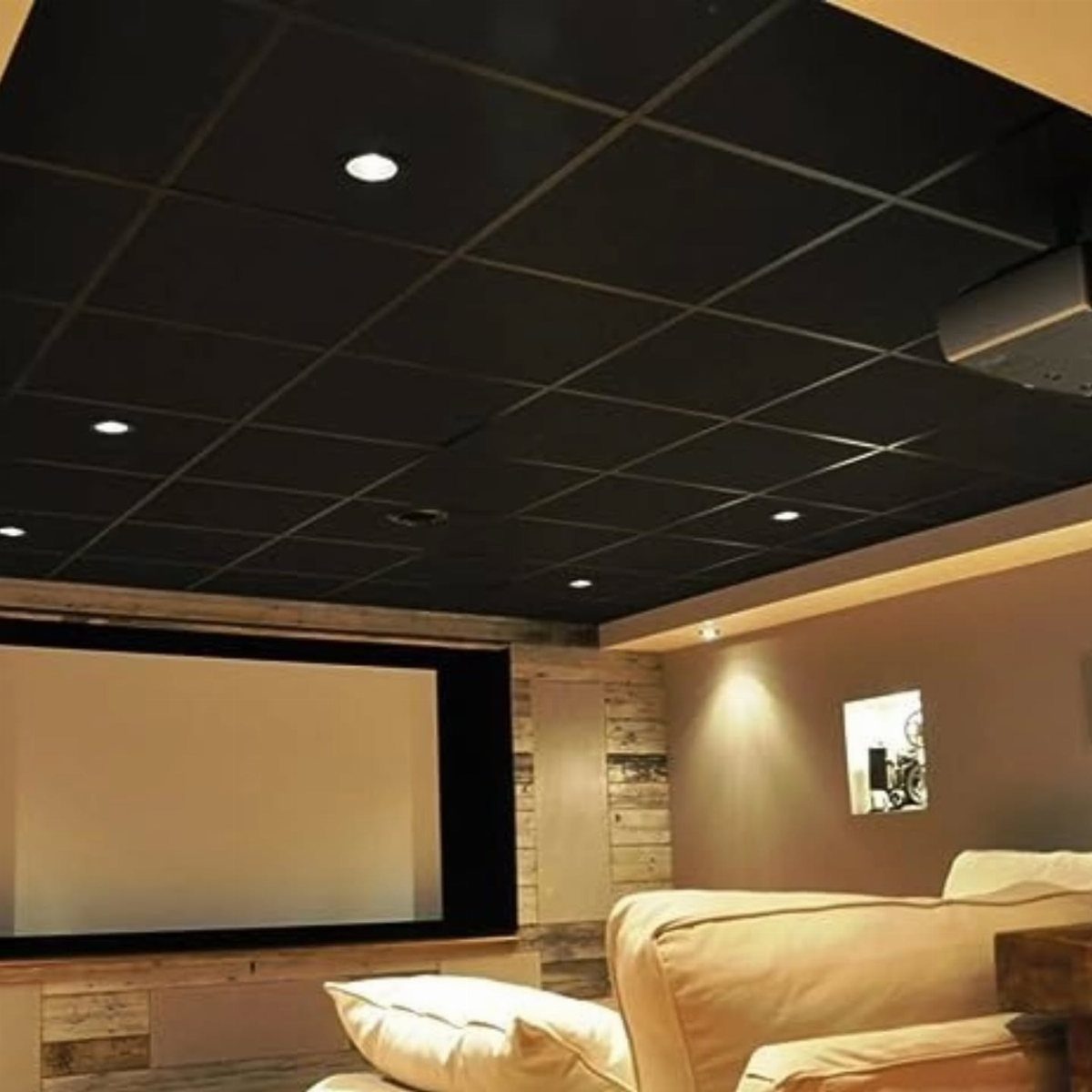
A black grid drop ceiling hides the clutter overhead and keeps the room dim enough for a projection screen. Recessed lights set into the grid give you dimmable light for movie nights.
Rustic wood paneling on one wall adds warmth against the dark, and a white sofa gives the eye a place to rest.
I would choose black tiles and a black grid, so the whole ceiling disappears when the lights go down.
16. Black Ceiling with Wood Accents
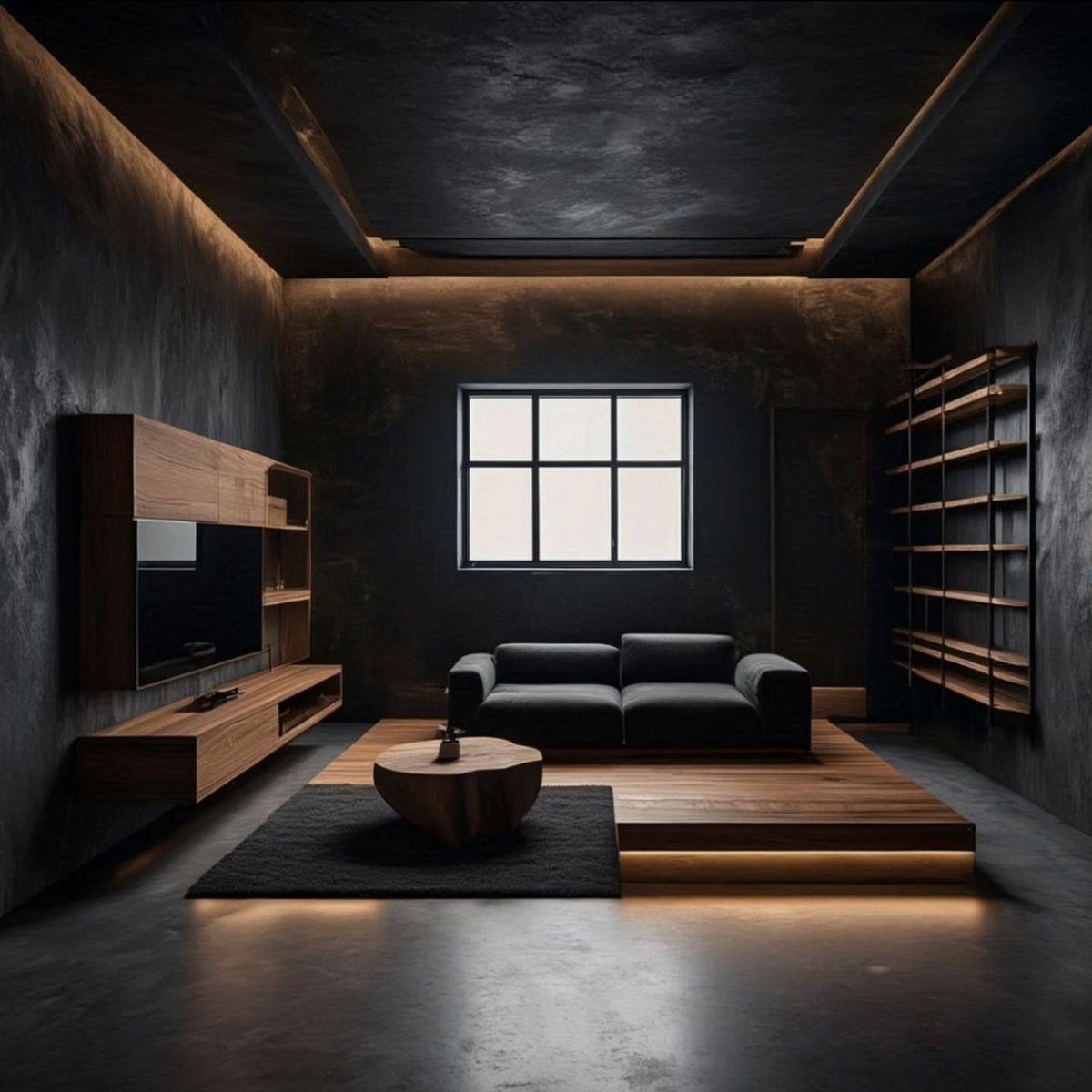
Wood is what keeps a black ceiling from feeling cold. A wooden platform, coffee table and wall unit bring warmth into a room with dark walls and a black sofa, and warm accent lighting makes the grain glow.
I would stay with one wood tone across all three pieces, so the room looks planned instead of mixed. Choose warm white bulbs over cool ones, because cool light flattens wood against black.
Benefits of Black Ceilings
A black ceiling changes how tall a room feels. Coffered or tapered ceilings can do the opposite and make a room feel taller.
Low rooms, at or below 8 feet, often gain the most. A white ceiling that low reads as a limit, while a black one reads as a choice, and it recedes from view.
Light walls keep the room from closing in under a black ceiling. Skip uplighters, since they throw a hot spot on the dark surface, and rely on floor lamps, table lamps and pendants that hang low.
In an open floor plan, painting just one section black marks off an area, like a dining space. A wooden beam makes a clean place to stop the color.
Against a black ceiling, white or light crown molding and trim stand out with a crisp, drawn-on edge.
Psychological Effects of Black
Many people avoid black indoors because of what it signals: sadness, mourning, isolation. That worry is why white and pastels get chosen again and again, even by people who keep saving photos of dark ceilings.
The same color also stands for luxury, style, drama and mystery.
Which one you get depends on what surrounds it. Dark overhead with light walls, warm bulbs and some texture below leans toward elegance.
If you worry about a gloomy mood, test it small before committing.
Paint one section, or a large sample board, and live with it for a week. Black is also timelessly modern, so it should not date quickly.
Best Practices for Painting
Ceiling formulas resist drips and dry especially flat. Anything glossier than eggshell reflects the room back at you, and it shows every flaw in the plaster.
Black shows patchiness fast, so wait before touching up.
At the wall line, tape carefully or cut in with a steady hand.
Against light walls, a crooked edge is the first thing anyone sees. Pull the tape while the paint is still slightly wet, at a low angle, for the cleanest line.





