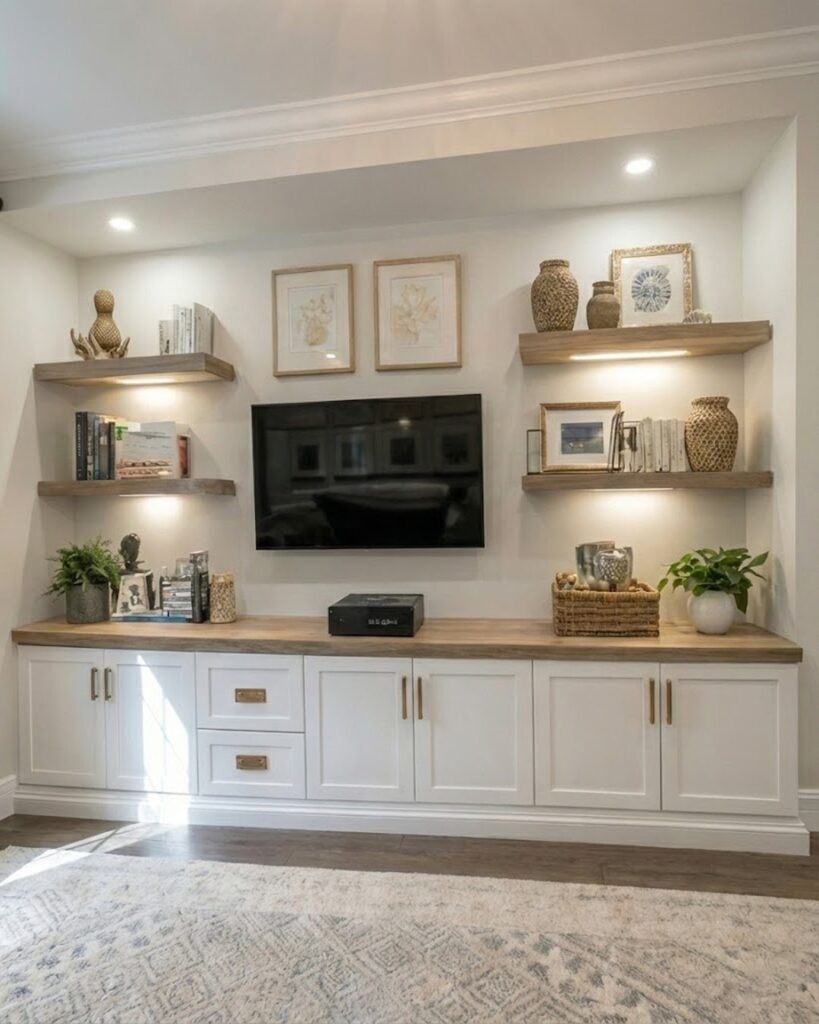
The 6 layouts run from a single shelf above the screen to shelves on every side of it, and most readers land on one by how much wall they want to fill versus how much planning they want to do.
A lone shelf or a pair flanking the TV goes up in an afternoon, while the full frame needs the layout taped out first so the spacing reads even.
1. Above the TV Shelf
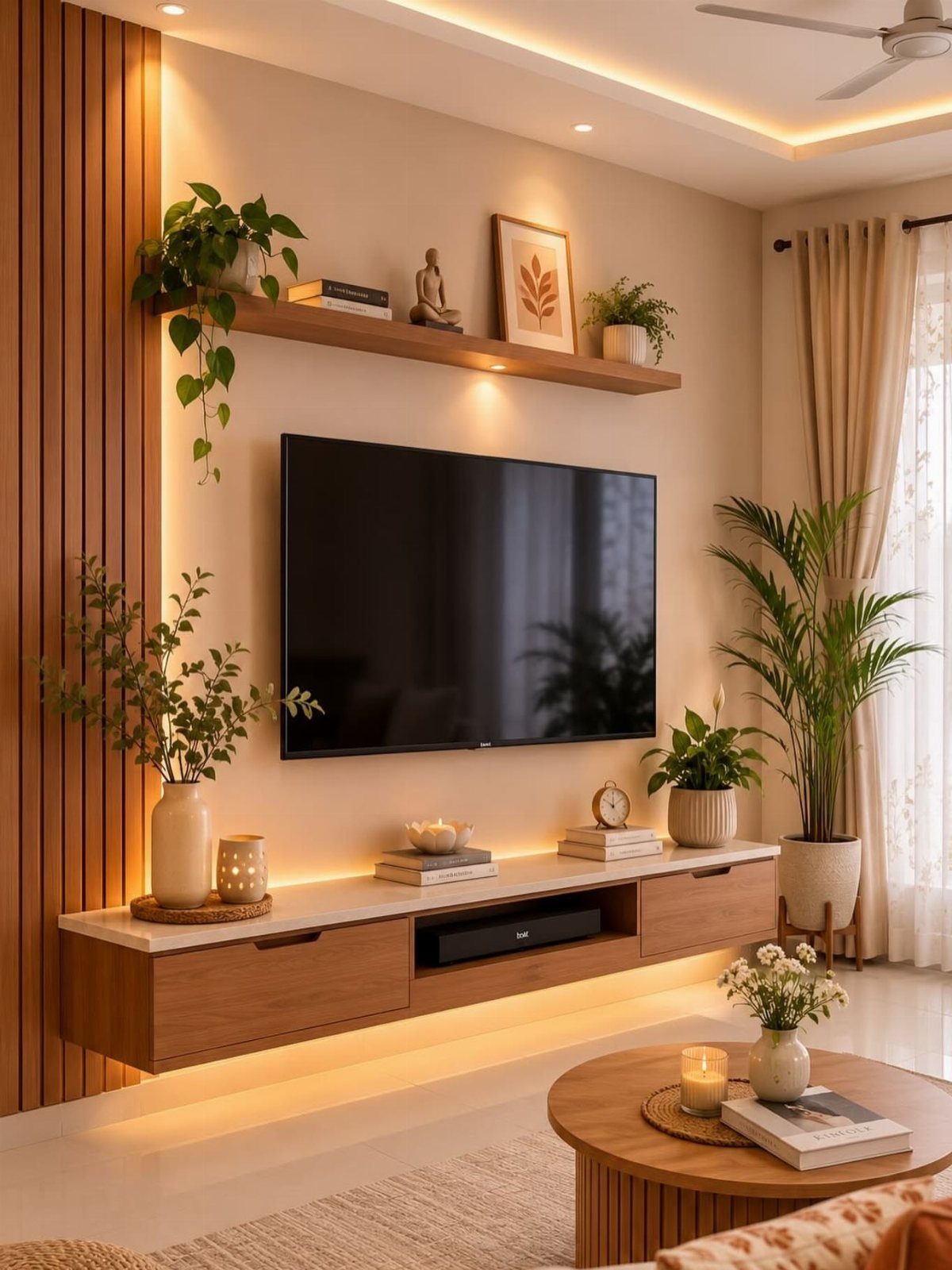
A single shelf above the TV gives the wall a second layer without crowding the screen. Keep it to a few pieces: a couple of plants and a few objects, since a loaded shelf competes with whatever you are watching.
Wood suits this spot because it echoes a floating console below. I would pick a shelf slightly narrower than the TV so the screen stays the main shape on the wall.
Anchor it into studs or use rated wall anchors, because everything on it sits over the screen.
2. Under the TV Setup
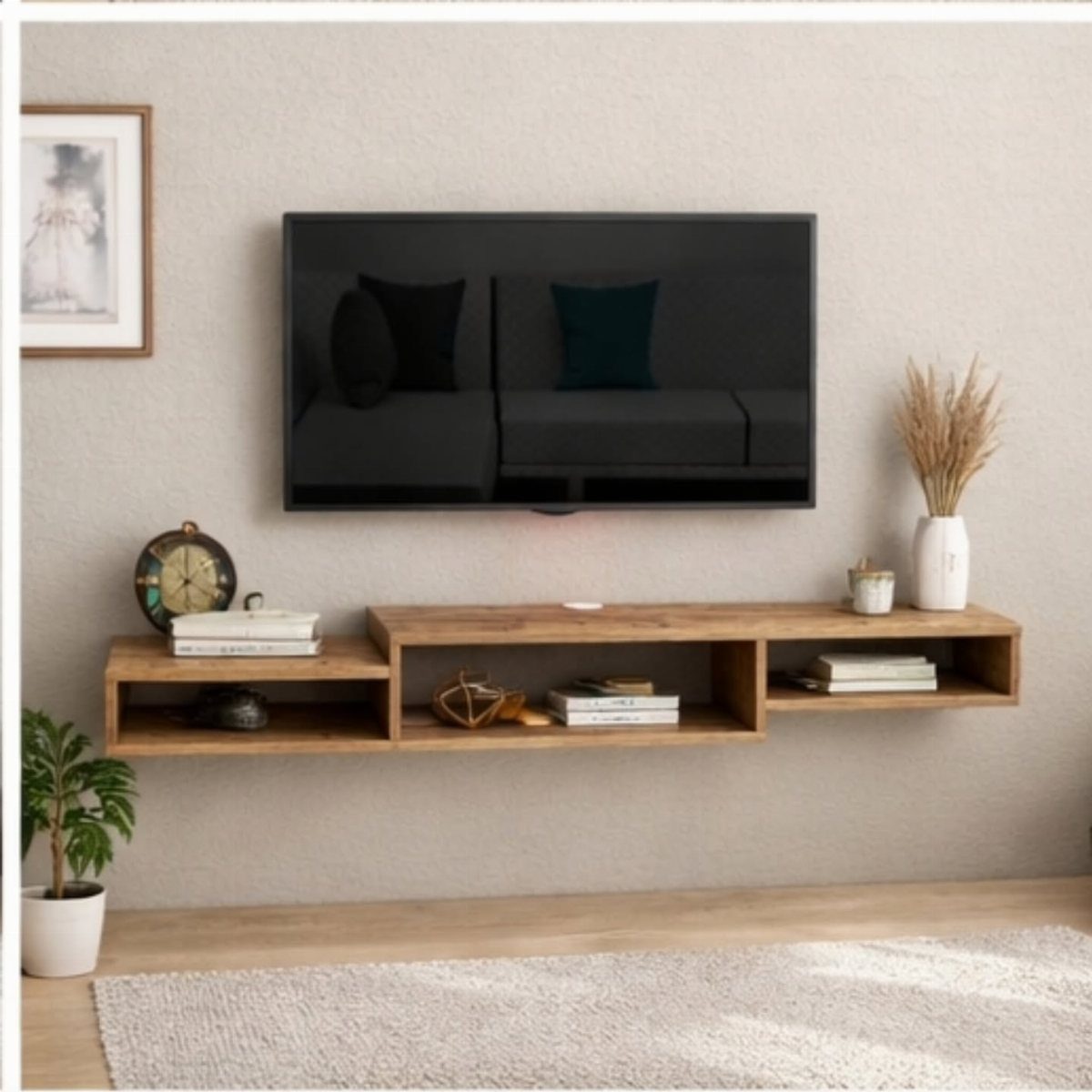
Swapping a bulky media cabinet for floating shelves below the TV frees up floor space and makes a small room read larger. You can see the rug underneath, which is a plus: nothing blocks it.
Rustic wood suits books and a few accents. Stack books in short piles and leave gaps so the shelves don’t look stuffed.
Cables are the catch. Plan where a power strip and cords will hide before you hang anything, since open shelves show everything.
3. Shelves on Both Sides
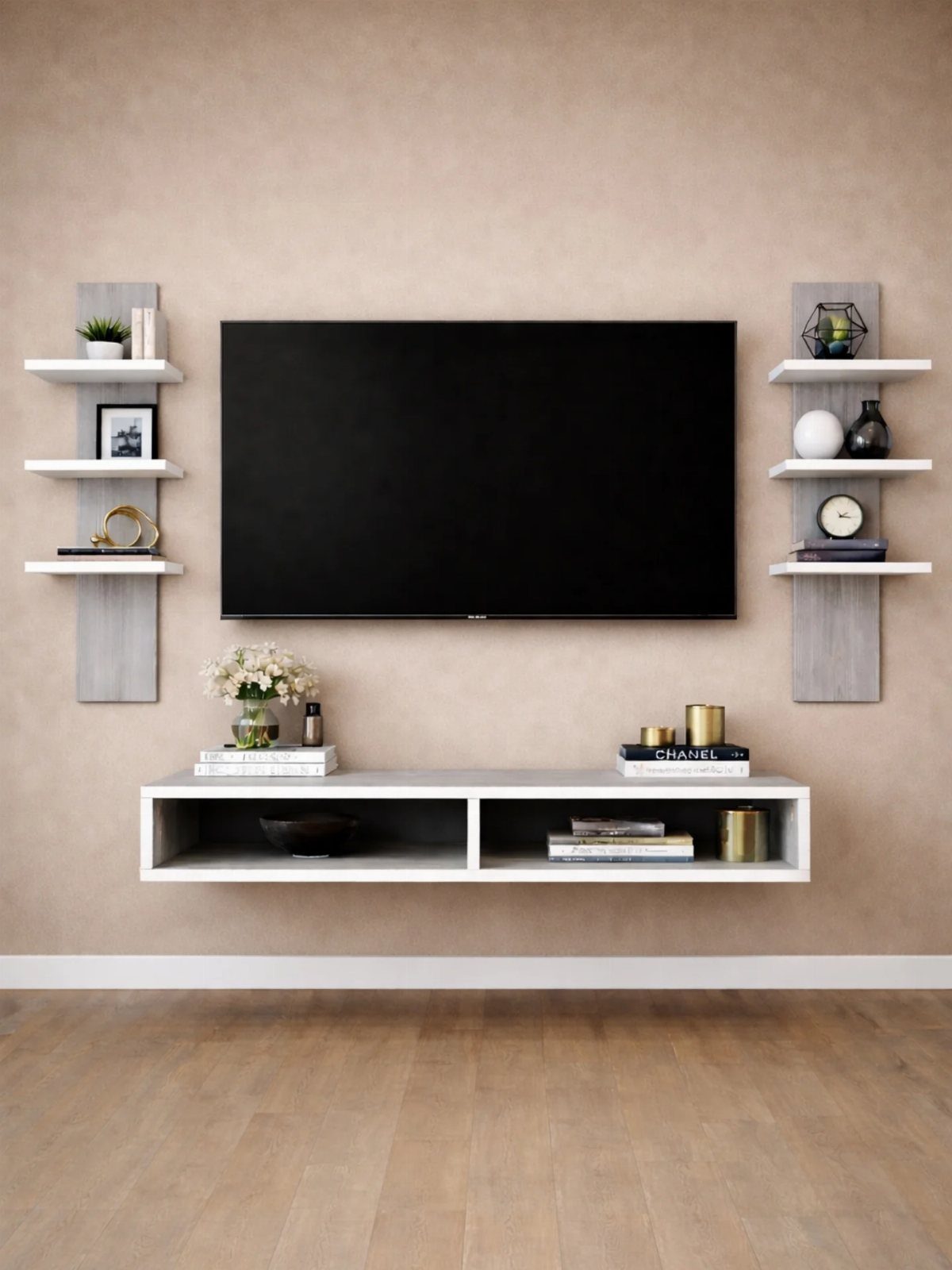
Shelves on both sides of the TV give the wall a built-in look for far less than custom cabinetry. White shelves on a beige wall keep it quiet, so the TV stays the focus.
Match the 2 sides in height and spacing; a level and a tape measure matter more than any fancy bracket here. A floating console below ties the pieces together.
I would keep the styling light: a few books, one or two objects per shelf. Symmetry looks best when it isn’t crowded.
4. Asymmetrical Shelving Layout
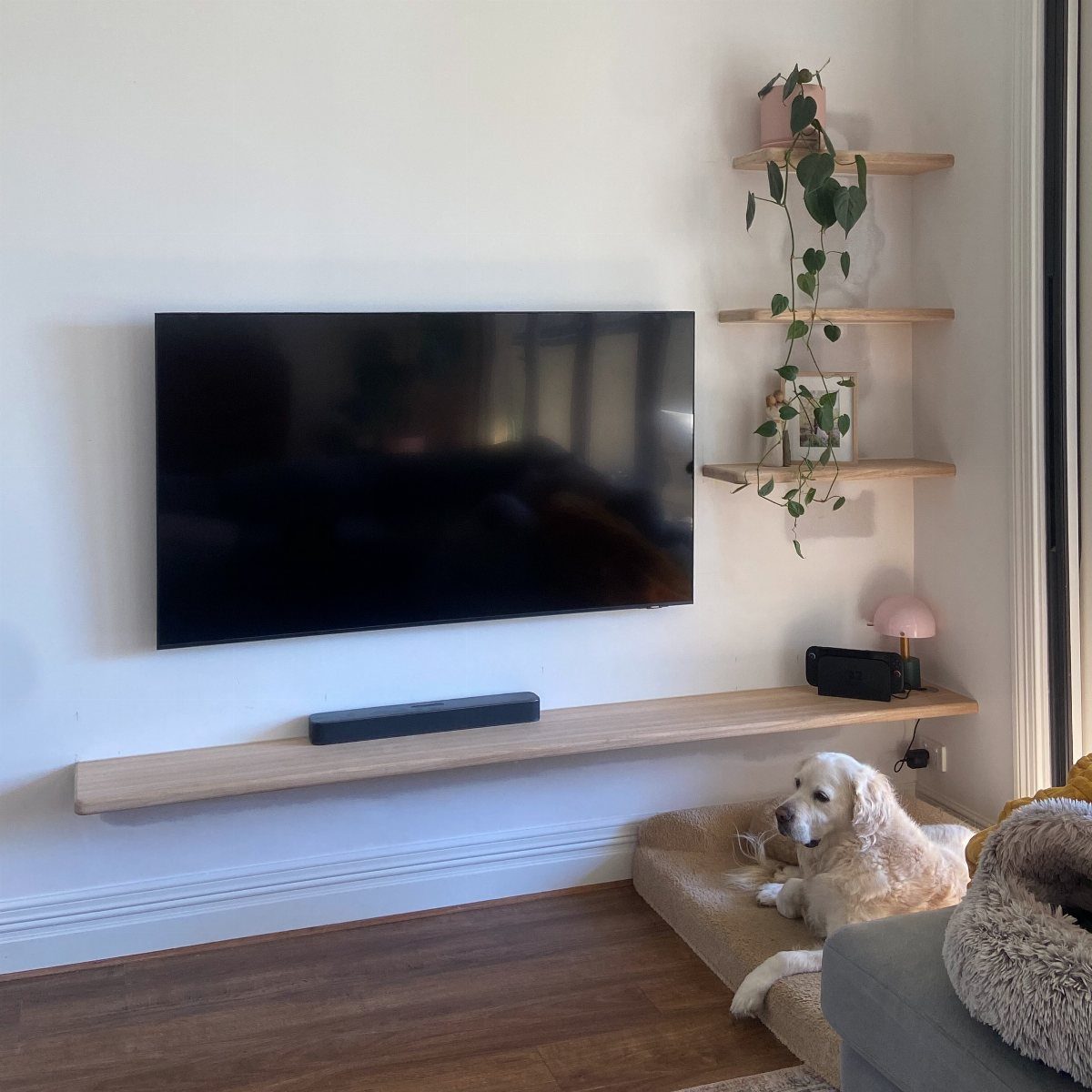
Uneven shelving feels more relaxed than a matched pair. One long shelf under the TV anchors the setup, while shorter shelves stack up on one side and add height where the wall needs it.
Wood keeps the mix warm. Space the short shelves evenly, even though the layout isn’t symmetrical, so it reads as planned rather than random.
Mark every position with painter’s tape first and stand back before drilling. It costs nothing and saves patched holes.
5. Shelves Framing the TV
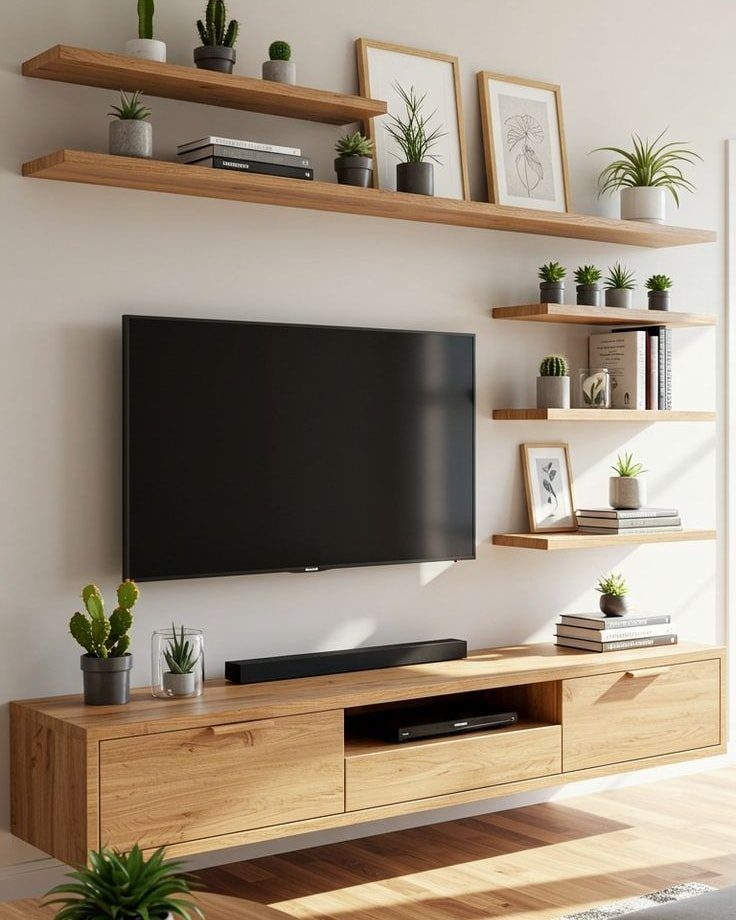
Shelves on every side of the TV turn it into part of a display wall, so the screen looks less like a black rectangle. Light wood and a matching console keep the whole thing cohesive.
Mix small plants, books and framed art, and leave some shelf bare. I like putting the art nearest the screen edge to soften the transition.
This takes the most planning of the six, so lay out the shelves on the floor or with tape before you drill.
Floating shelves help draw your TV into the overall design of your room – thereby eliminating the “black box effect” flat screen TVs can create.
6. Shelves Above and Below
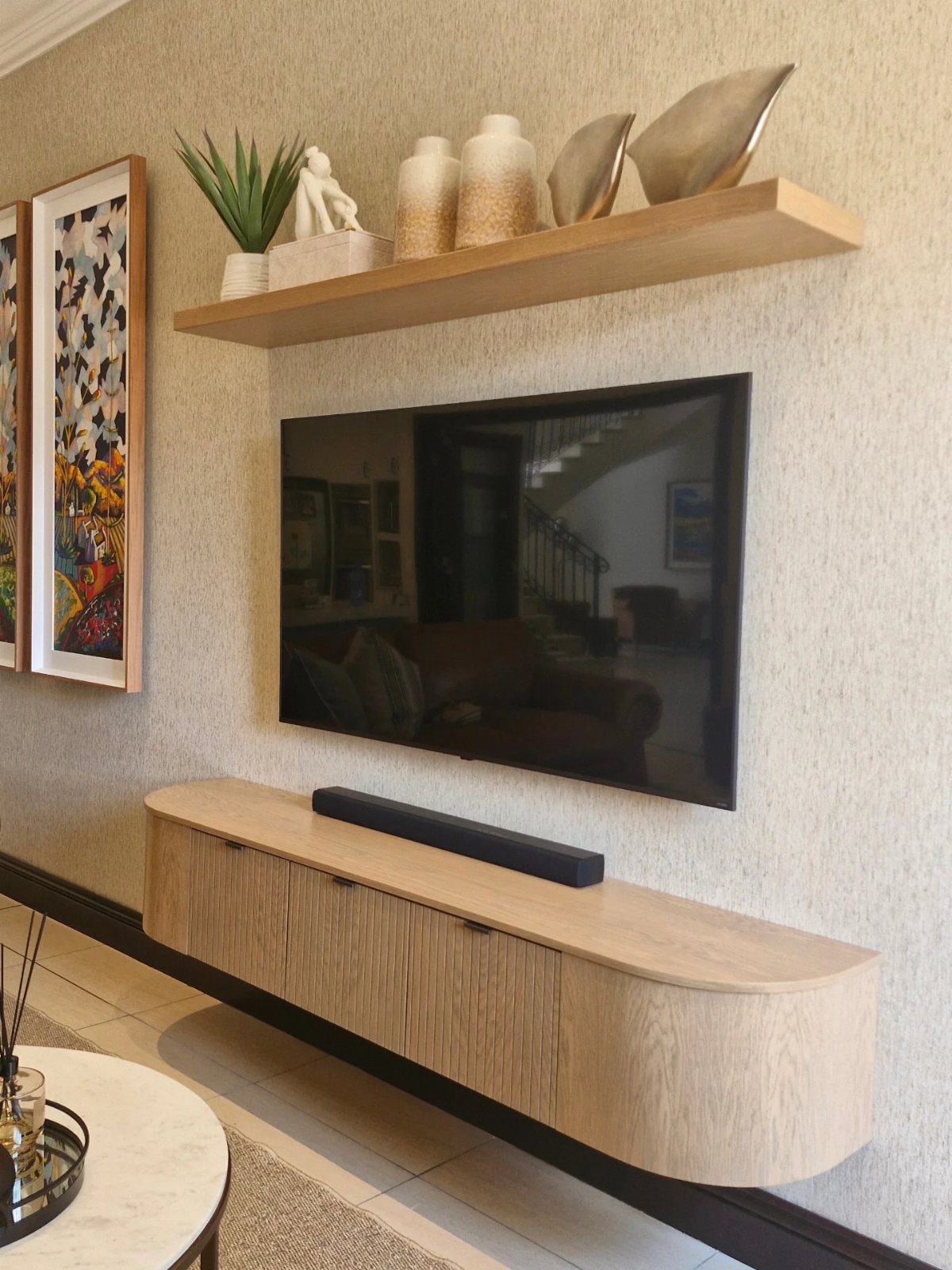
Matching light wood shelves above and below the TV create a neat vertical stack, with the screen in the middle. It is a tidy choice for a plain beige wall.
Use the same wood tone and similar depth on both so they look like a set. Keep the upper shelf for vases and a plant, and the lower one for what you reach for daily.
Center both on the TV so the lines stay clean.
Tips for Installing Shelves
Find the studs first.
A stud finder does it in seconds; mark each one with a pencil. Studs usually sit 16 or 24 inches apart, so check your marks against that spacing before you trust them.
If a shelf has to land where no stud is, wall anchors give you the placement flexibility. Drill pilot holes, set the anchors, then screw the internal support bracket into them.
Before drilling anything, I tape the shelf’s footprint to the wall, draw along the tape’s top edge with a pencil, and check it with a level, because a crooked line is far easier to fix at this stage than after the holes are in.
Do this before the drill comes out.
On a stud mount, the bracket screws straight into the wood and you skip the anchors. The bracket is hidden once the shelf slides over it, so tighten it fully and confirm it is level before the shelf goes on.
Choosing Shelf Materials
A TV screen is a dark slab on the wall, and whatever wood you hang beside it will either blend in with that slab or clash with it.
Against a pale wall, dark walnut adds warmth and contrast, and its deep tone sits comfortably next to the black screen.
2 other finishes are worth knowing.
Black shelves blend into the setup and nearly vanish beside the TV. On a deeper wall color, white shelves stand out clearly and lighten the look of the whole setup.
Order a sample before you commit. Screens misrepresent wood tones, and a small piece held against your own wall and TV tells you more than any photo.
Frequently Asked Questions
Can a TV go on a floating shelf?
Technically yes, but mounting the TV on the wall looks better. A wall-mounted screen matches the floating look of the shelves, and the same tools handle both jobs, so you can hang the TV and the shelves in one session.
A TV can sit on a floating shelf only if the shelf is rated for its weight, and a heavy set needs a deep, solid-wood or steel-bracket shelf screwed into studs, since nothing underneath will catch it if the mounting fails.
How do you style shelves around a TV?
Mix the types: stack 2 or 3 books flat, add something vertical like a small vase or sculpture, then a framed piece leaning against the wall. Leave gaps and some bare shelf so nothing looks stuffed.
A frame or small piece of art right next to the TV softens that hard black rectangle and makes the whole arrangement feel less like electronics, more like a wall you styled.
Are floating shelves out of style in 2026?
Nothing in my research says they are. The look remains popular because it delivers that built-in feel without the cost of custom millwork, and it keeps the floor clear instead of filling it with a console.
Keep the styling simple and the shelves level and evenly spaced, and they read as current.





