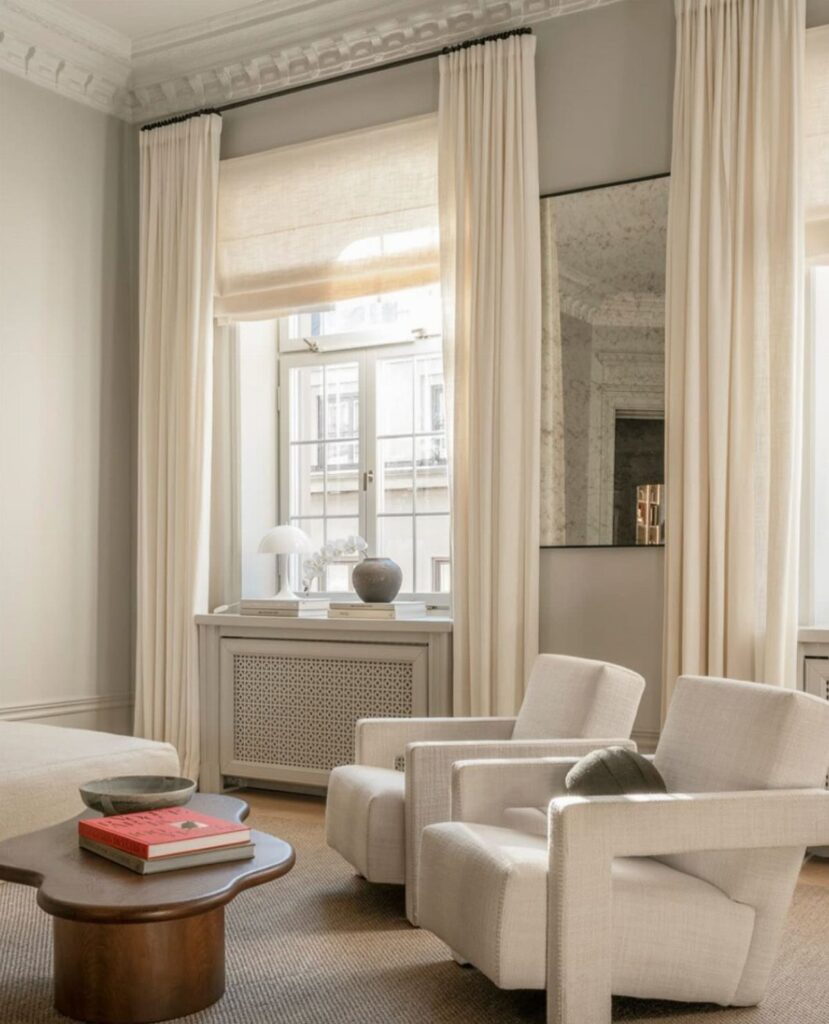
The pairings run from a plain beige shade under white curtains to a floral shade with a quiet cream panel, and the room decides which one wins: how much light it has to block and how much privacy the window needs.
Bedrooms that need full darkness do best with blackout Roman shades behind heavy curtains, and a living room can usually get by with far less.
A window can only carry one pattern, so a printed shade gets a solid curtain, and a patterned curtain gets a plain white shade.
1. Roman Shades and Curtains Combination
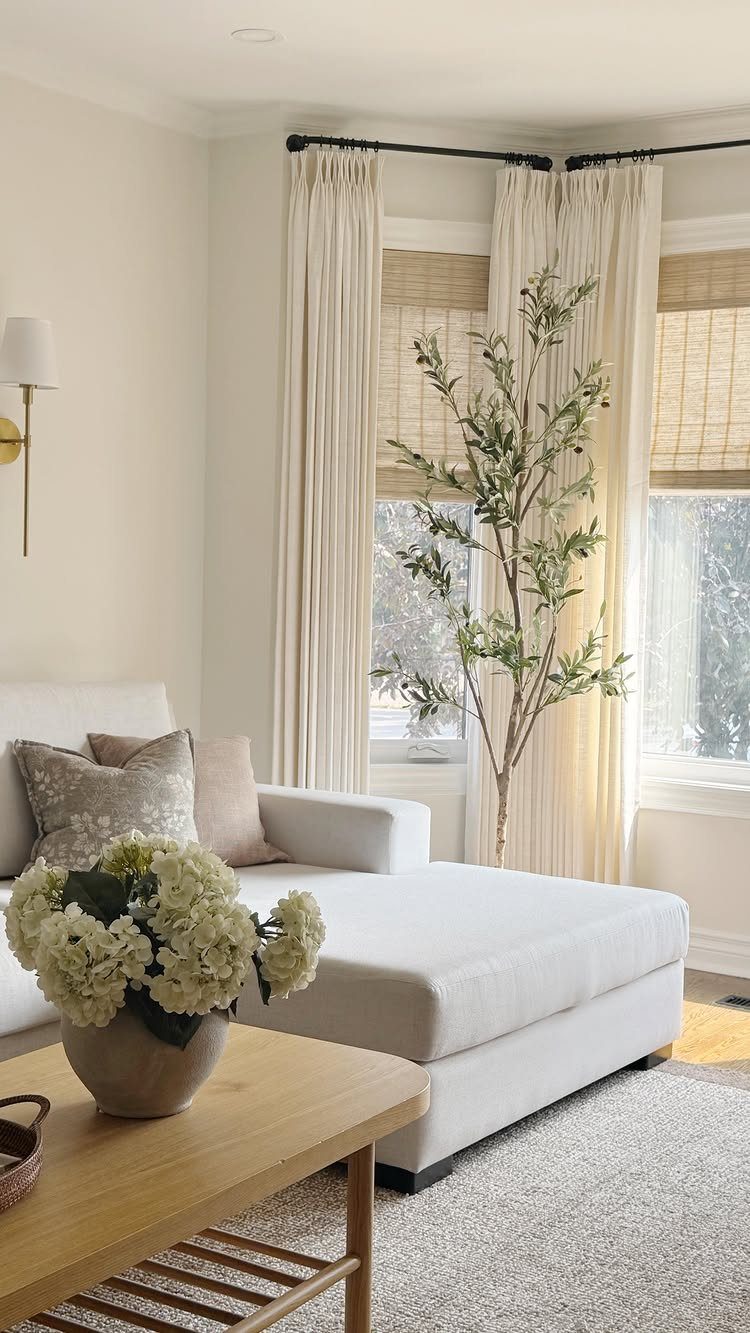
Beige shades under white curtains is the easiest pairing to get right, because the 2 colors sit close enough that nothing fights. The shade does the daily work of covering the glass, and the curtain adds softness on the sides.
Hang the curtain rod wider than the window frame so the panels stack off the glass.
I’d keep the fabrics similar in weight, since a stiff shade next to a floaty curtain looks mismatched. A single color family is also forgiving on a budget.
2. Blackout Roman Shades with Heavy Curtains
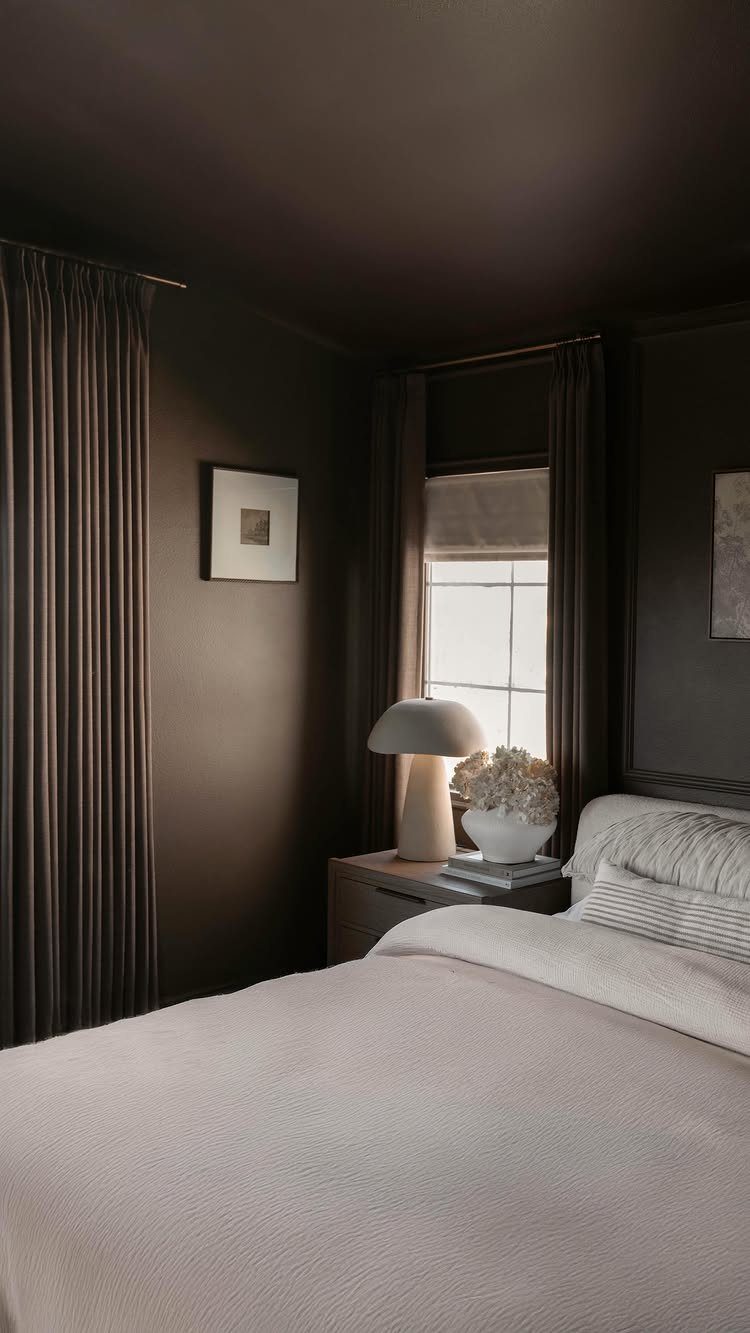
Dark walls ask for curtains with some weight, and brown does that job well. Paired with a light Roman shade underneath, the window gets 2 settings: shade down for daytime privacy, curtains closed for the evening.
I’d choose a lined shade and a thick, lined curtain so the layers block light together. Skip thin fabric here, because it reads cheap against a deep wall color.
The light shade also keeps the window from turning into a dark hole when the curtains are open.
The layering of a Roman shade and a curtain can give your space an instantly sophisticated, immediately more expensive look.
3. Neutral Roman Shades with Velvet Curtains
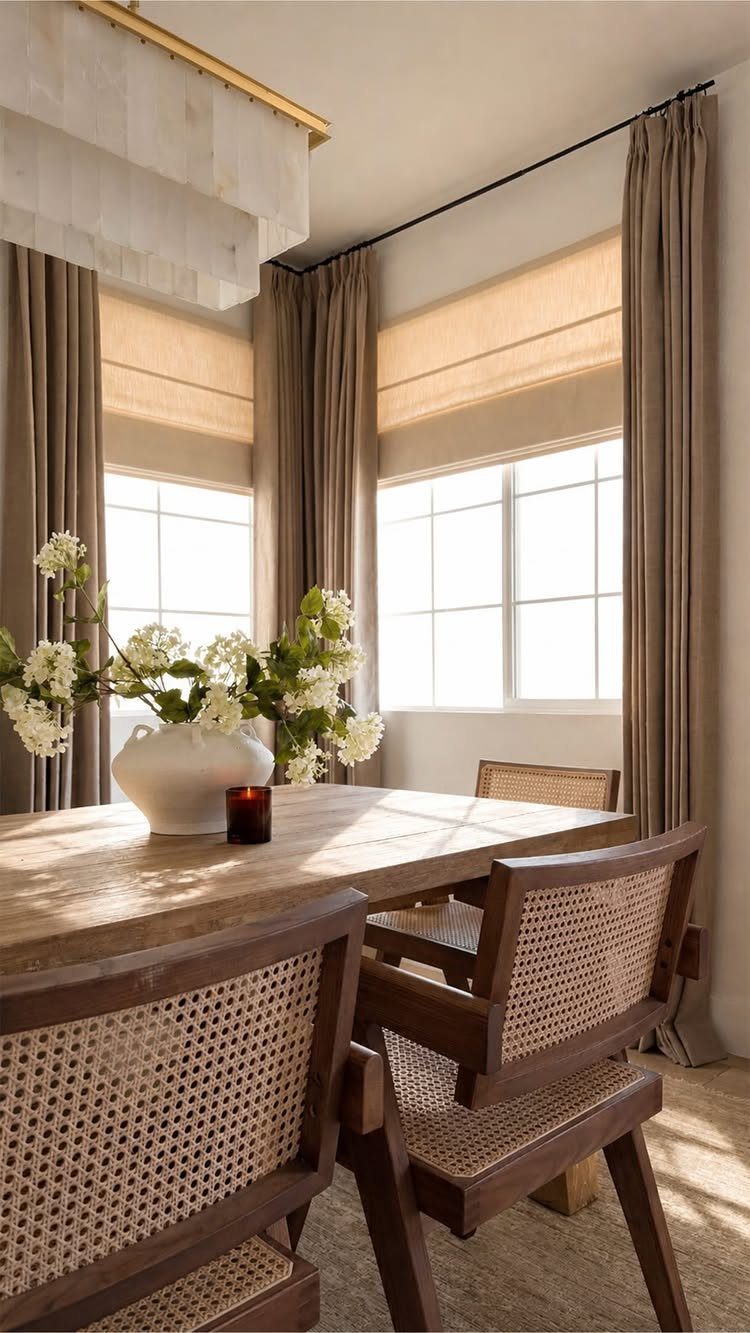
Velvet is the detail that makes this work. A taupe velvet curtain has a soft sheen and a heavy drape, so the plain neutral Roman shade behind it can stay simple and flat.
Keep the two colors within a shade or two of each other, as in a dining room with wood and cane. The texture then carries the interest instead of the color.
Velvet costs more per yard than most fabrics, so I’d spend there and keep the shades basic.
4. White on White Window Treatments
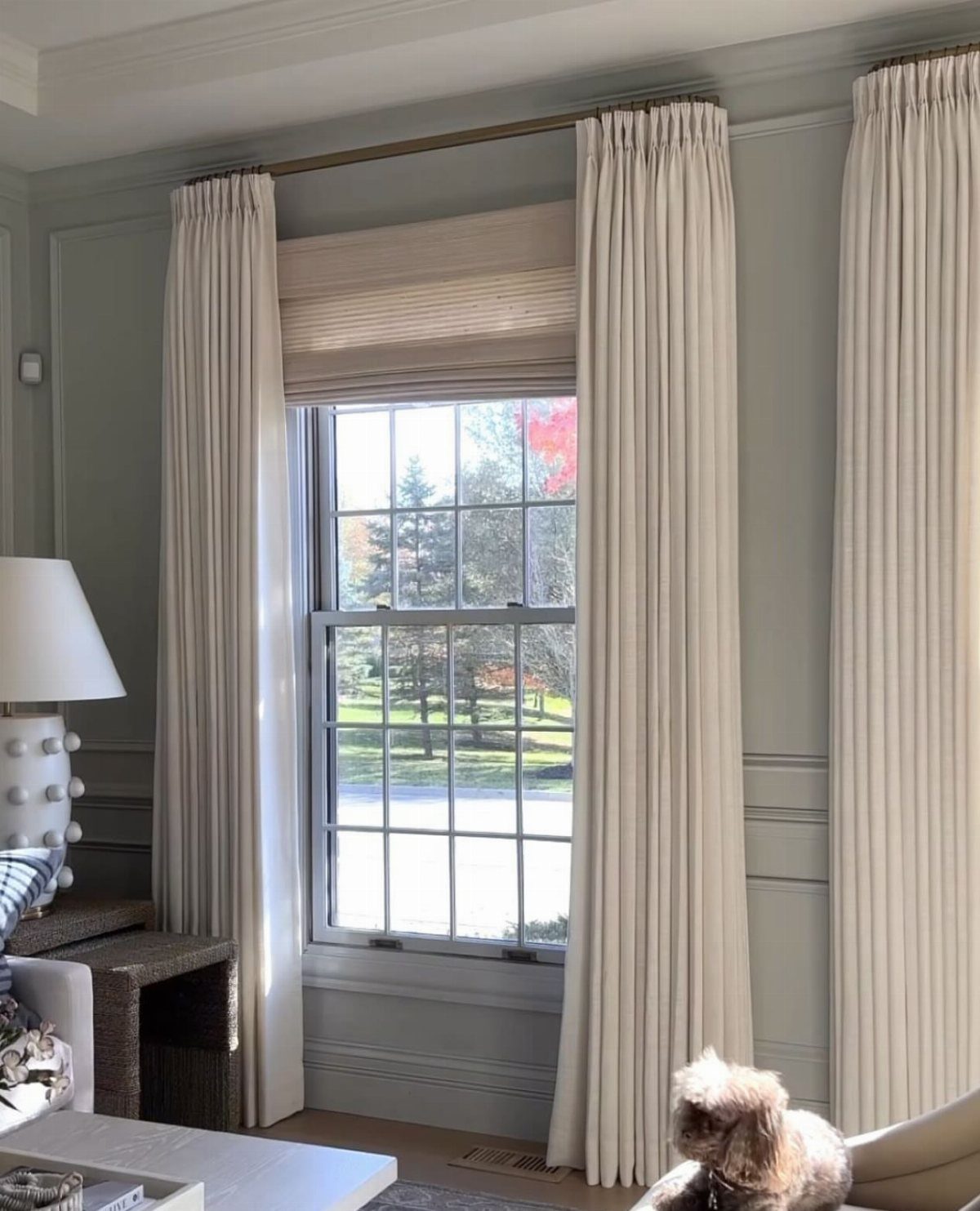
White shades, white curtains, and a gold rod: the metal is what keeps an all-white window from looking flat. Against a grey wall, the white also reads crisp rather than stark.
Hang the rod high and let the curtains reach the floor, which makes the window feel taller. A gold finish costs little extra and gives you a warm accent without adding another color.
Mixing slightly different whites can look off, so I’d buy both fabrics together and compare them in daylight.
5. Light Blue Curtains with Beige Shades
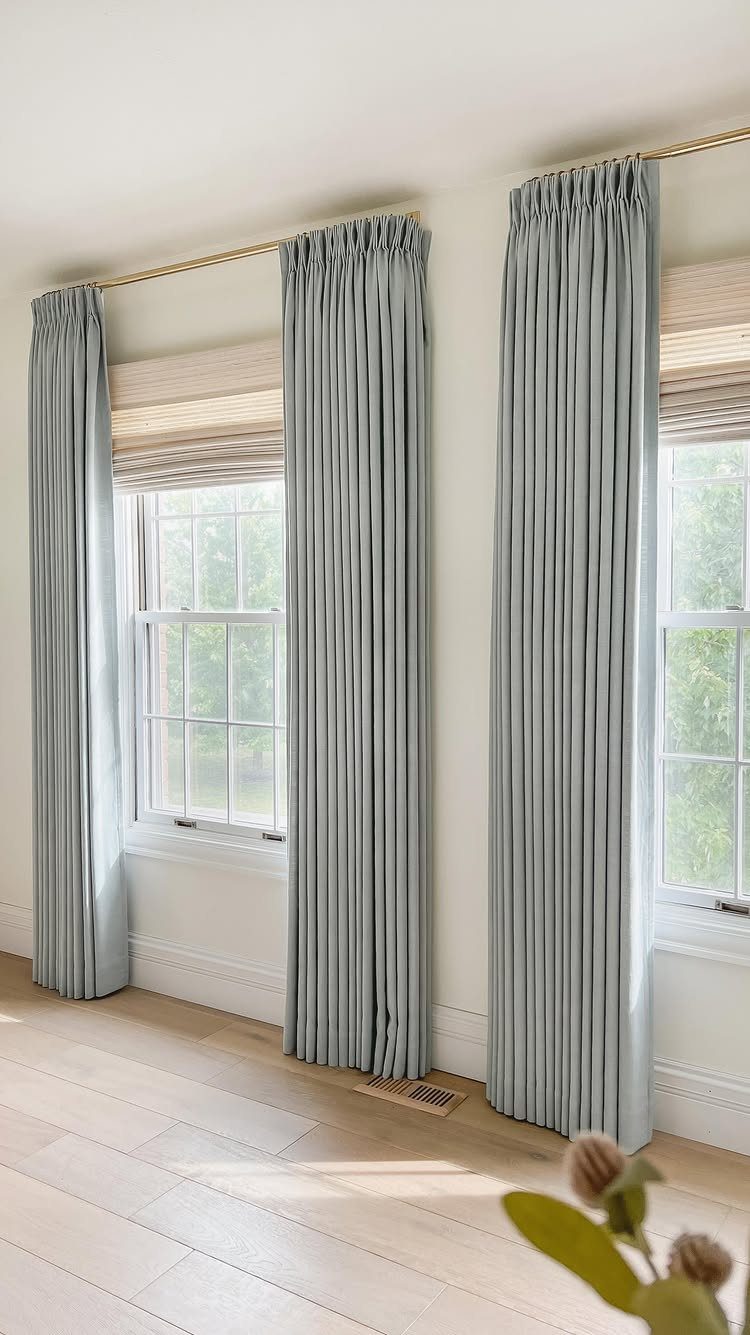
Light blue curtains on gold rods give plain beige shades a lot more personality. Because the shades sit inside the window frame, they stay tidy, and the curtains do all the color work.
This suits white walls and light wood floors, where the blue reads calm and airy. I’d hang the curtains long, to the floor, so the blue becomes a clear vertical stripe on each side.
Repeat the same setup on every window in the room so it feels planned.
6. Floral Roman Shade with Cream Curtains
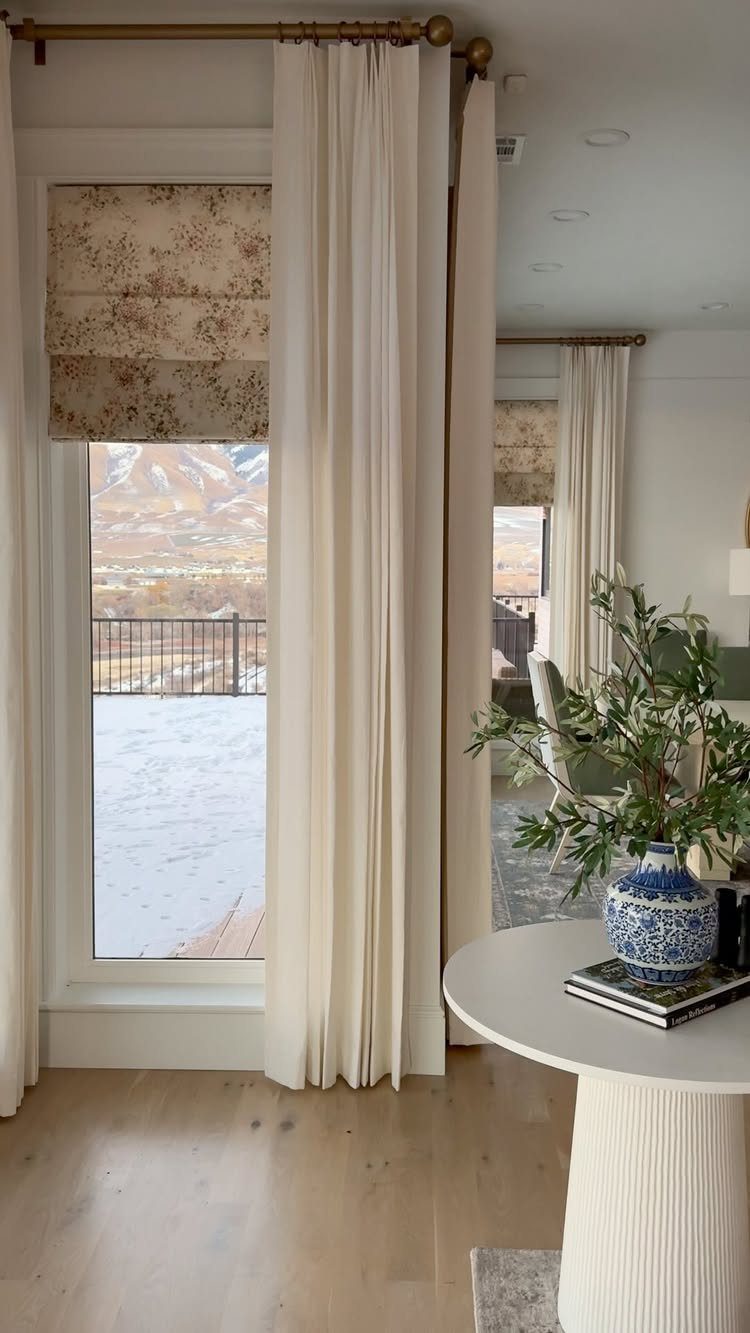
A floral Roman shade is the one busy element, so the curtains should stay quiet. Cream is a safe choice: it lets the pattern stand out and keeps a view, like the mountains here, from competing.
I’d pick a floral that shares a color or two with something nearby, such as a blue and white vase. That ties the window into the room without matching everything.
Keep the curtain plain and unpatterned, and let the shade carry the print.
7. Iris Floral Shades with Purple Curtains
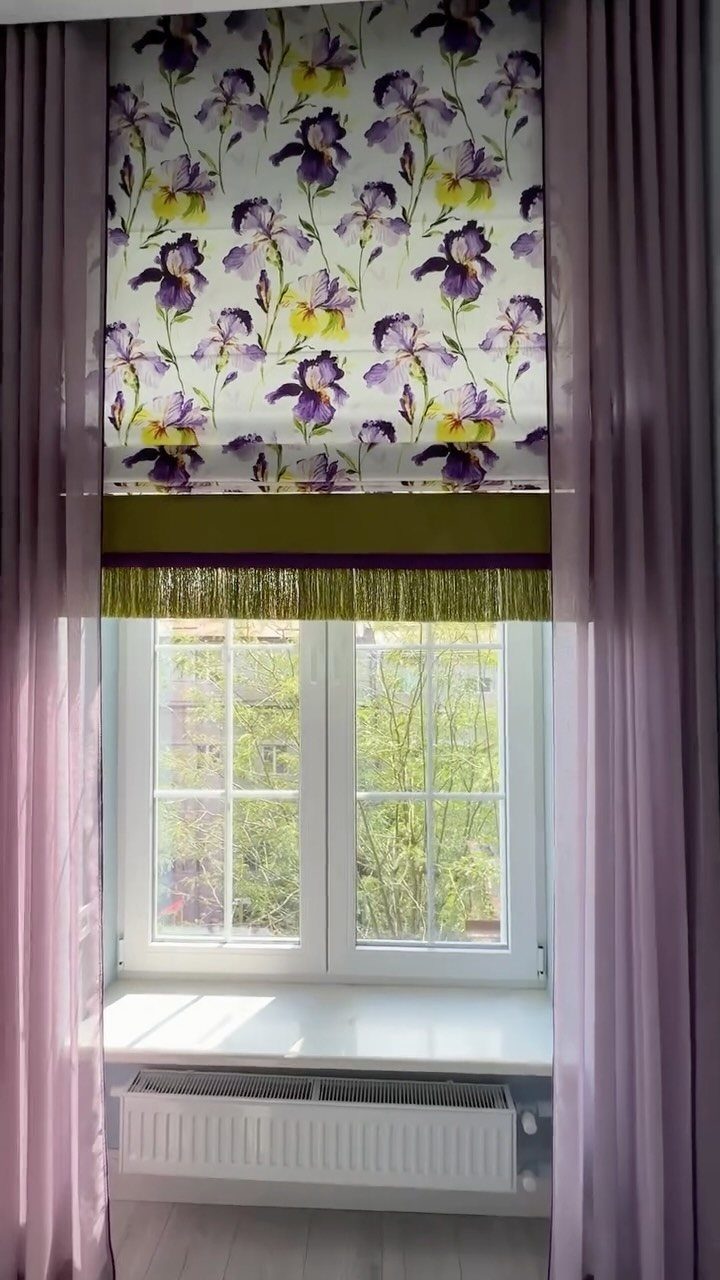
Purple irises on a Roman shade make the flowers themselves the color story, so the side curtains can simply pick up the purple. Matching the curtain to the iris petals ties the 2 pieces together without a second pattern.
Yellow in the print adds a bright note against green trees outside. I’d keep the curtain a solid color so the shade stays the only pattern in the window.
A white radiator sits below the sill, so a curtain that stops at the sill would clear it. Floor-length panels would cover it.
8. White Roman Shade with Patterned Curtains
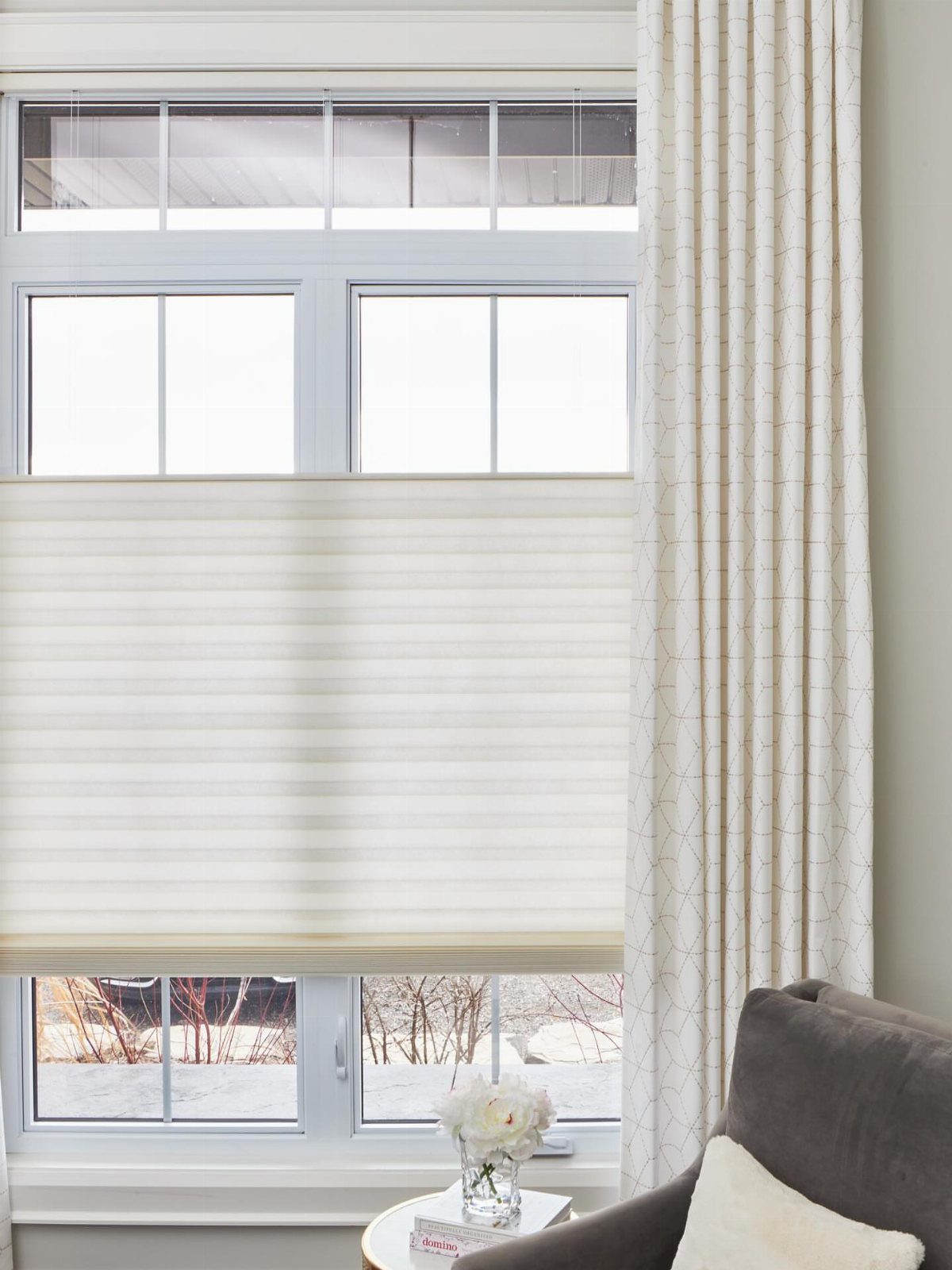
Plain white shade, patterned white curtains: the pattern is tone on tone, so it adds texture without adding color.
A plain white Roman shade stays quiet behind a patterned curtain, so it suits a bright room where the fabric should be the only loud thing, and it pairs easily with neutral furniture like a gray armchair.
Look for a pattern you can see up close but that fades from across the room. I’d hold the shade fabric up beside the curtain in daylight first, since whites can lean warm or cool.
Gather the panels to the side so the shade stays visible and the window keeps its clean center.
Cleaning Roman Shades and Curtains
Check the care tag before anything touches water. Fabric decides the method, and a lined or structured curtain that goes in the washer can shrink or lose its shape.
I run a vacuum brush over Roman shades every few weeks to keep dust from settling in.
Run it over the folds on low suction, since dust settles in the pleats. Spot-clean marks with a mild detergent and a damp cloth, dabbing instead of scrubbing so the fabric doesn’t pill or leave a ring.
Curtains split 2 ways: machine washable or dry clean only. If the tag says dry clean, believe it, especially with velvet or lined panels.
Keep the manufacturer’s instructions for both treatments, because the same fabric can be treated differently from one brand to the next.
Suitability for All Rooms
Start with what the room has to do, then pick the fabric. Light control and privacy needs differ from room to room, and both treatments can be made to fit any of them.
For a bedroom that needs total darkness, go with blackout Roman shades and heavy curtains. That pairing gives the most control over light.
A living room usually wants the opposite.
If a window faces neighbors, put privacy first and choose the shade fabric before the curtain. Layering also helps here, because the curtains can add a second barrier when the shade alone isn’t enough.
Frequently Asked Questions
Can you use Roman shades and curtains together?
Yes, and it works well because each piece does a different job. Mount the rod beyond the frame so fabric clears the glass when open, and check that your brackets support the combined weight.
What colors look best for Roman shades with curtains?
Beige and white sit close enough that the pairing reads calm rather than busy. If you want pattern, let only one piece carry it: a floral shade with plain cream curtains, or a plain white shade with tone-on-tone white curtains.
Hold samples together in natural light before you buy, since whites shift warmer or cooler depending on their base.





