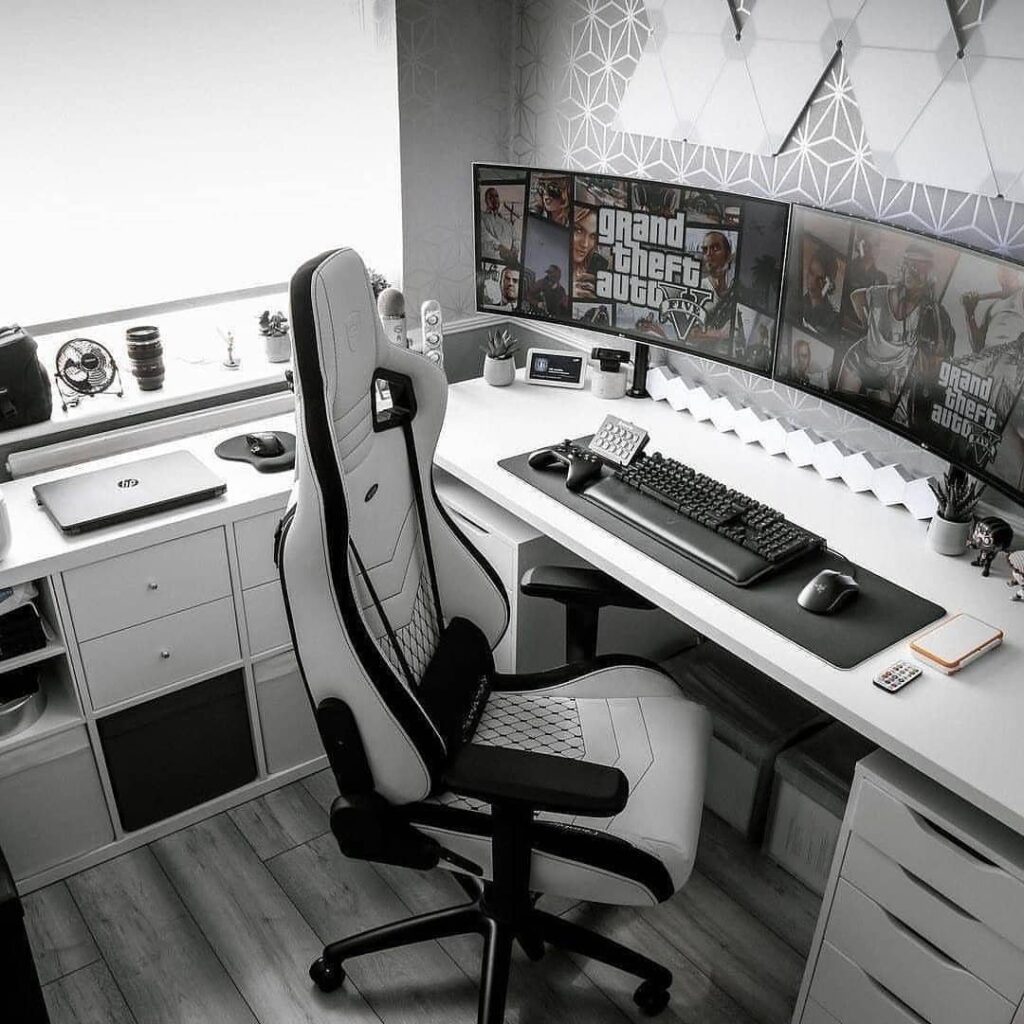
The ideas here run from a few rolls of painter’s tape on a black and white wall to a celestial ceiling painted overhead, and what decides between them is the room itself: how much daylight it gets and how big it is.
Satin handles most walls, and semi-gloss belongs on trim and the lower wall near seating, where controllers and chair backs do the damage.
1. Black & White
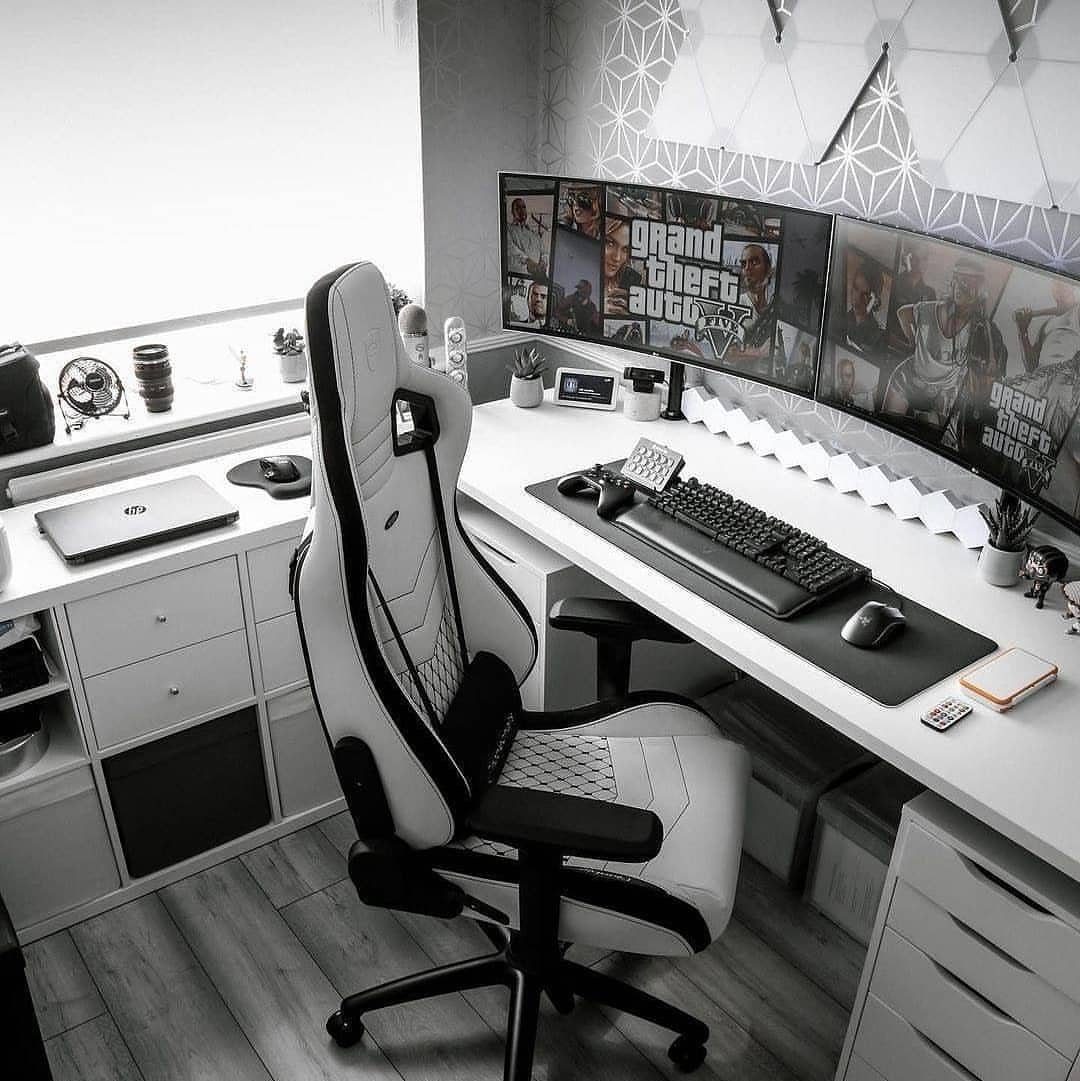
Black and white is the easiest palette to shop for, because desks, chairs, monitor stands, headsets and shelving all come in both colors. Nothing has to match a paint chip.
A geometric pattern on one wall keeps a black and white scheme from going flat; stripes, chevrons or large triangles all work, and painter’s tape does the layout.
I would paint the pattern in 2 flat finishes of the same black so it reads as texture, and leave the rest white.
Tape is the main cost. Use a low-tack painter’s tape and pull it while the paint is still slightly wet.
2. Dark Colors
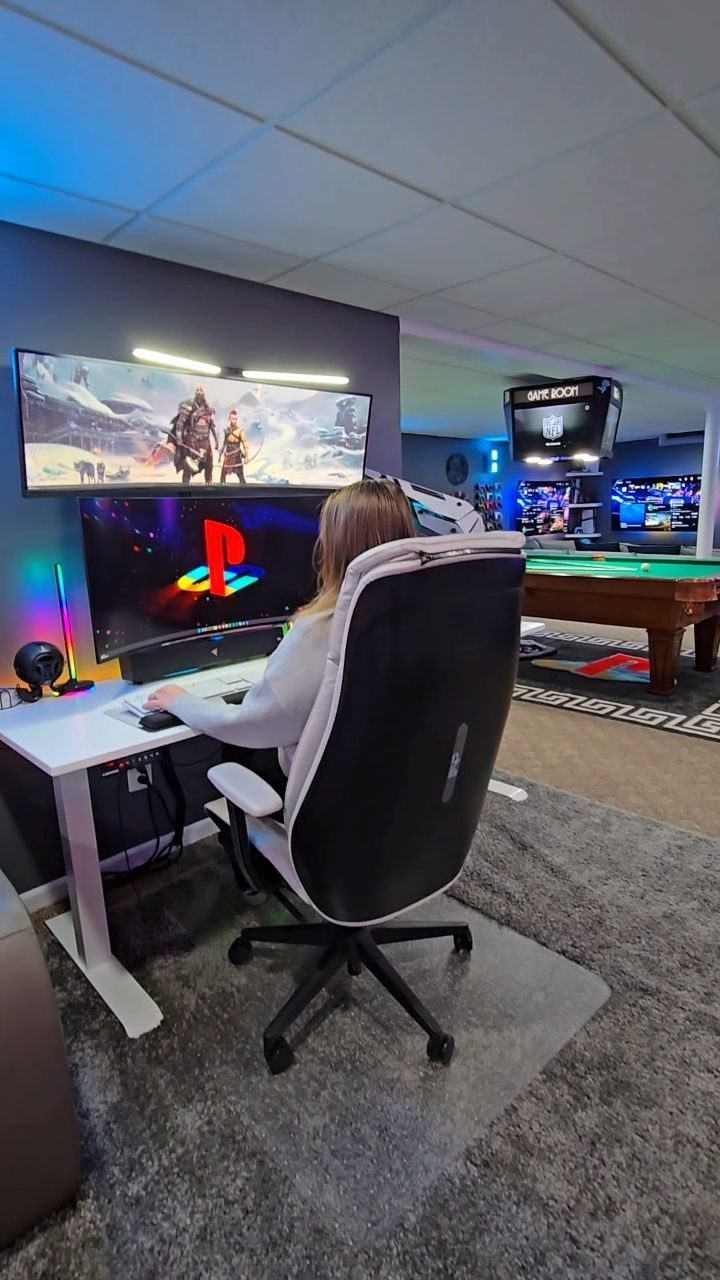
Dark walls make screens and lighting effects look stronger. Glare drops, and colored LED strips or a neon sign stand out against a deep grey far better than against white.
A dark grey like this one still leaves a pool table and a "GAME ROOM" sign readable, which black can swallow.
I would choose grey over true black for a first try; it is easier to live with and easier to repaint.
Plan on 2 coats, and prime first if the old wall is light.
3. Electric Blue Paint
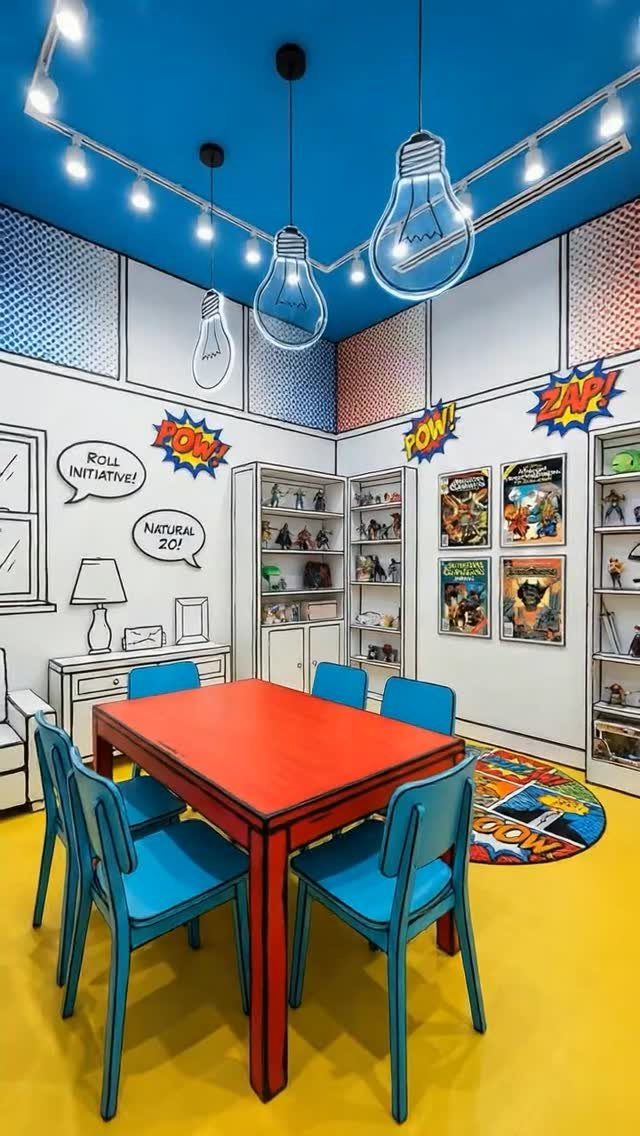
A bright blue ceiling brings personality to the space without touching the walls.
Painting a ceiling is a weekend job on a small budget: one gallon often covers a modest room, plus a roller on an extension pole. Cut in the edges first, then roll.
Electric blue is bold enough to carry a games room on its own, so I would keep any added color or artwork in check and let the blue stay the star.
4. Grey Paneled Accent Walls
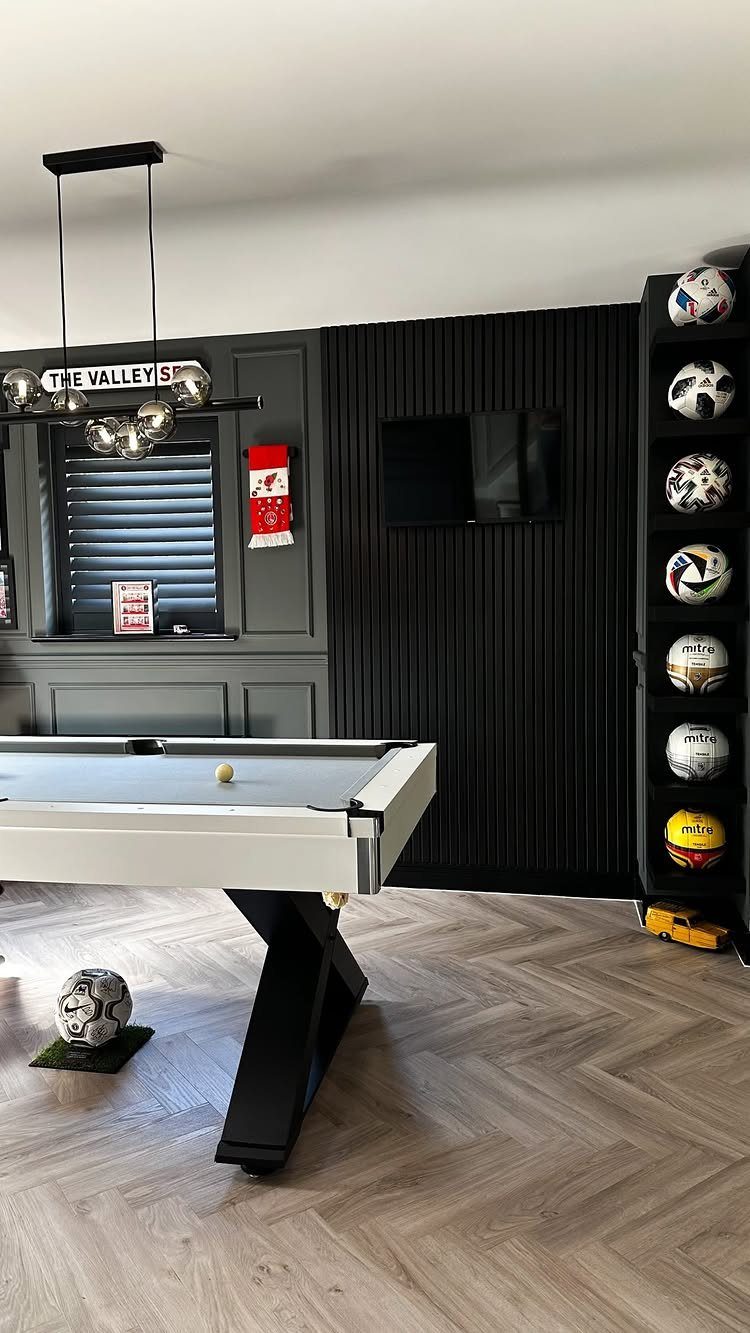
Grey paneled walls paired with black slats give a games room a clubhouse feel. The panels add depth, and the black section frames a pool table so it becomes the focal point.
Paint the paneled wall a mid grey and the slatted wall black, and keep everything else quiet. Slats take more time to paint than flat drywall, so use a small roller and a brush for the gaps.
A sign or a rack of balls on the wall finishes it cheaply.
5. Burnt Orange Walls
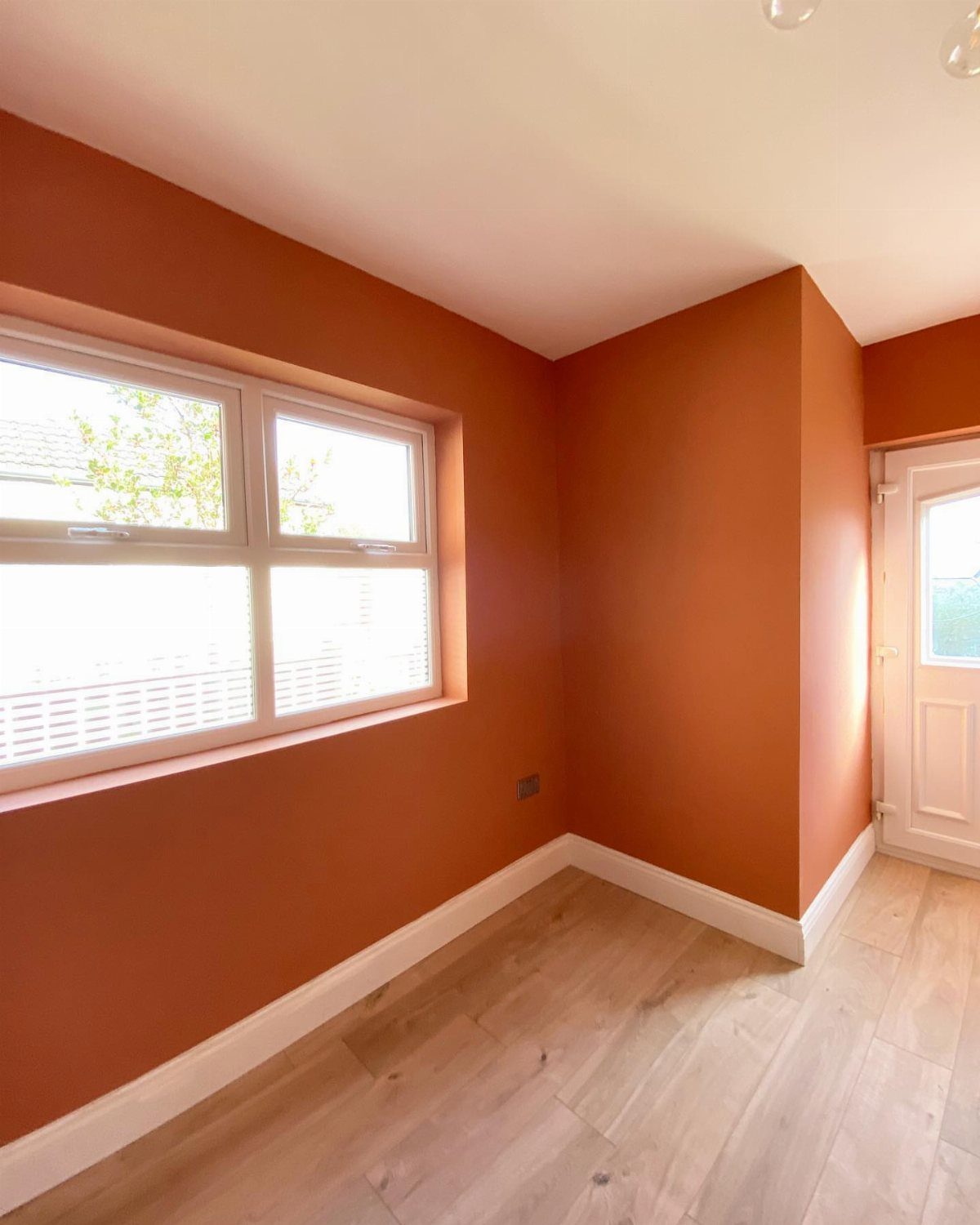
Burnt orange is a warm, earthy color that lights up a room even when it is empty. Against light wood floors and white trim, as here, it looks crisp rather than heavy.
Test a sample patch first and look at it morning and night, because orange shifts a lot with daylight. White window and door trim keeps the color contained, so I would leave the trim alone and paint only the walls.
Add game furniture in black or wood tones afterward.
6. Super Mario Sky Ceiling
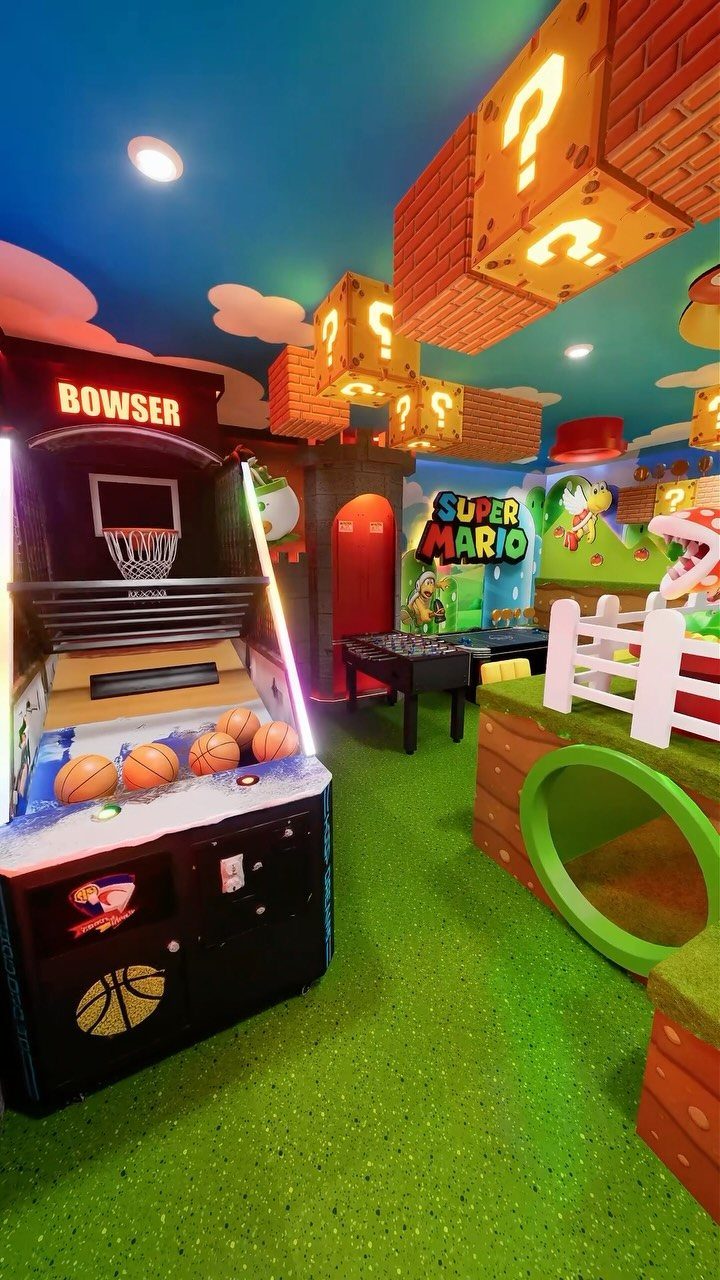
A sky-blue ceiling with soft white clouds turns a game room into a Mario level. Painted blocks floating against the sky ceiling finish the look, and green carpet and arcade games pair well with them.
Start with the blue base coat and let it dry fully.
Then dab the clouds on with a sponge or a roller in white, using a loose, rounded shape. Stencil or hand-paint the blocks last.
This is cheap, since it only takes a few small paint samples and a day or two.
7. Celestial Painted Ceiling
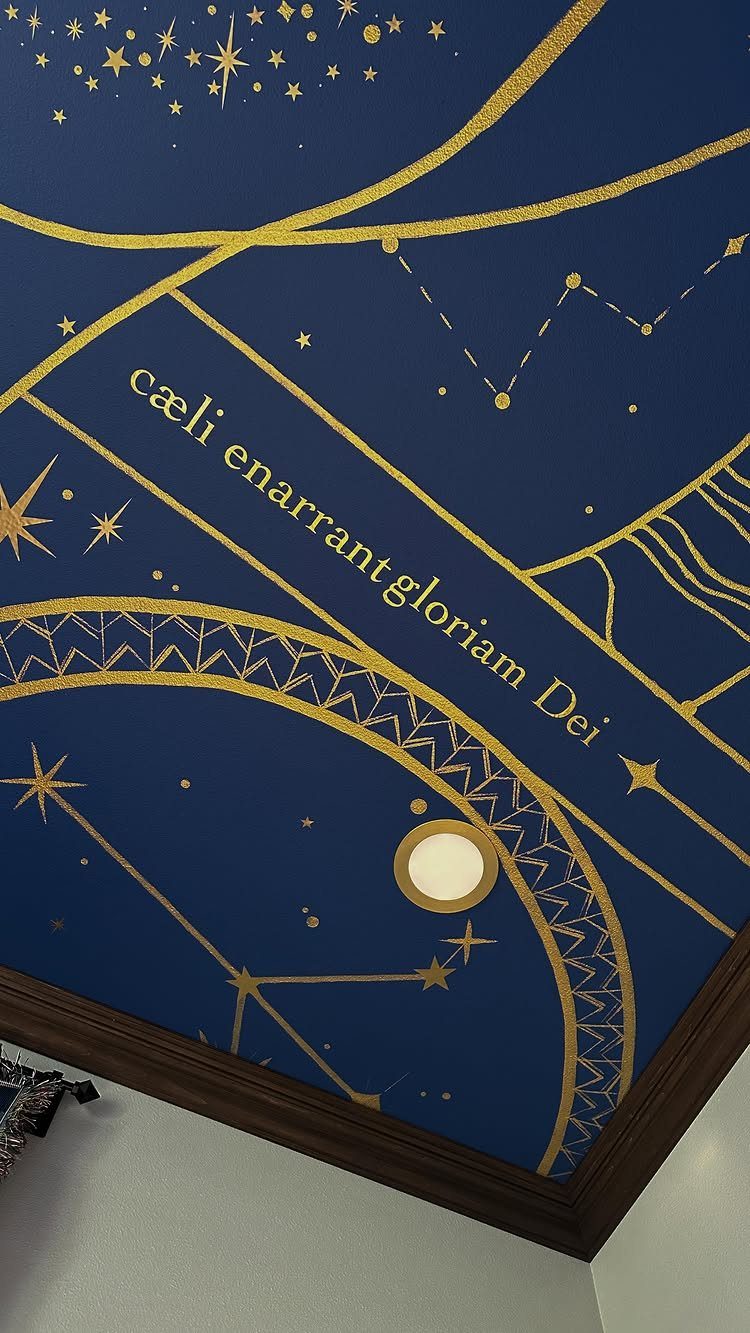
A deep blue ceiling with gold constellations and a line of Latin lettering demands the attention, and the walls step back to let it have the stage. Keep them plain and let the ceiling carry the room.
Once the ceiling’s base coat is dry, pencil the star shapes lightly, and fill them in with a small artist’s brush and gold paint. A paint pen handles the thin lines and lettering better than a brush does.
Wooden molding at the edge gives the design a frame, so I would leave it unpainted.
8. Warm Yellow Walls
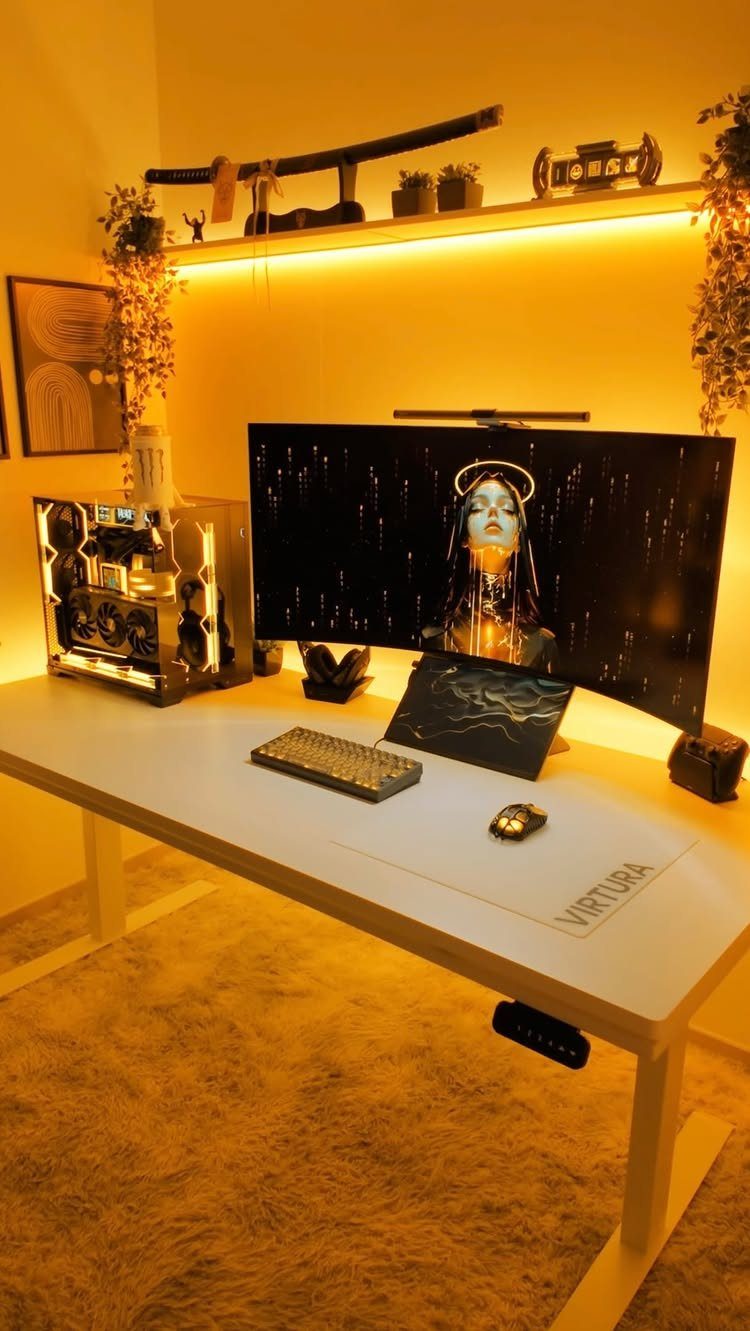
Soft yellow walls make a gaming corner feel warmer than the usual black and grey, and a white desk keeps it light instead of loud.
Pick a muted, buttery shade rather than a bright one; strong yellow gets tiring next to a glowing monitor. Warm LED strips behind the desk or shelf add to the glow and are an inexpensive finish.
Sample a patch first and check it at night under your actual bulbs, since yellow shifts with light. 2 coats on a small wall is an easy weekend job.
Lighting Effects on Colors
Paint looks different in every room because light changes it, so judge a color in your own space before committing. Natural light shifts through the day, and bulbs add their own tint at night.
A room with plenty of daylight handles darker shades well. A small, dim room usually feels bigger and friendlier in a light color, while a large room can take a deeper shade that adds depth and a cozier feel.
Finish matters as much as color.
A matte finish gives a contemporary, sophisticated look. High gloss reflects light and brightens the room, which also means it shows glare and wall flaws more.
If you plan to run LED strips, choose the paint and the light colors together. Black and white, or red and black, are common pairings that work because the tones support each other.
Durable Paint Finishes
Walls in a games room take scuffs from controllers, chair backs, shoulders and the occasional thrown pillow. For those areas, I would pick satin or semi-gloss over flat paint.
Both finishes wipe clean with a damp cloth, so fingerprints and dust do not become permanent. Semi-gloss is the tougher and easier to scrub of the two.
Satin is the better choice for most walls. It has a soft sheen that hides roller marks and bumps better than semi-gloss, which highlights every flaw.
Use semi-gloss on trim and doors, and on the lower part of walls near seating and doorways. Fix dents and patch holes first, since a shiny finish will show them.
Color Psychology
Decide the mood before you pick a color.
Warm colors energize a room, and cool colors calm it. A room for fast competitive play and a room for slow evenings with friends call for different answers.
Blue and green are my picks for a games room meant to settle people down: blue helps with focus during a long board game, and green keeps the mood even.
Light blue suits relaxation, while sage green or light gray gives a serene backdrop.
If you want more energy, deep navy gives the room some punch, and terracotta goes bolder still, especially on a single wall.
Strong colors need a quiet partner, so I pair them with off-white, taupe or greige on the trim and remaining walls.
Behr, Benjamin Moore and Sherwin-Williams all sell a wide range of these, so you can match a shade to the mood you chose.
Frequently Asked Questions
What is the best color to paint a game room?
It depends on the mood you want. For a calmer room, go cool: light blue reads restful, and sage green or a pale gray keeps the backdrop quiet.
When the room needs more energy, deep navy gives it punch and terracotta runs warmer and bolder, and either one works best on just one accent wall.
What to put on walls in a gaming room?
An accent wall is the easiest start: a geometric pattern in painter’s tape stripes or triangles, grey paneling with black slats behind a pool table, or a single bold color.
Painted ceilings work too, such as a sky-blue ceiling with sponged white clouds and blocks for a Mario look.





