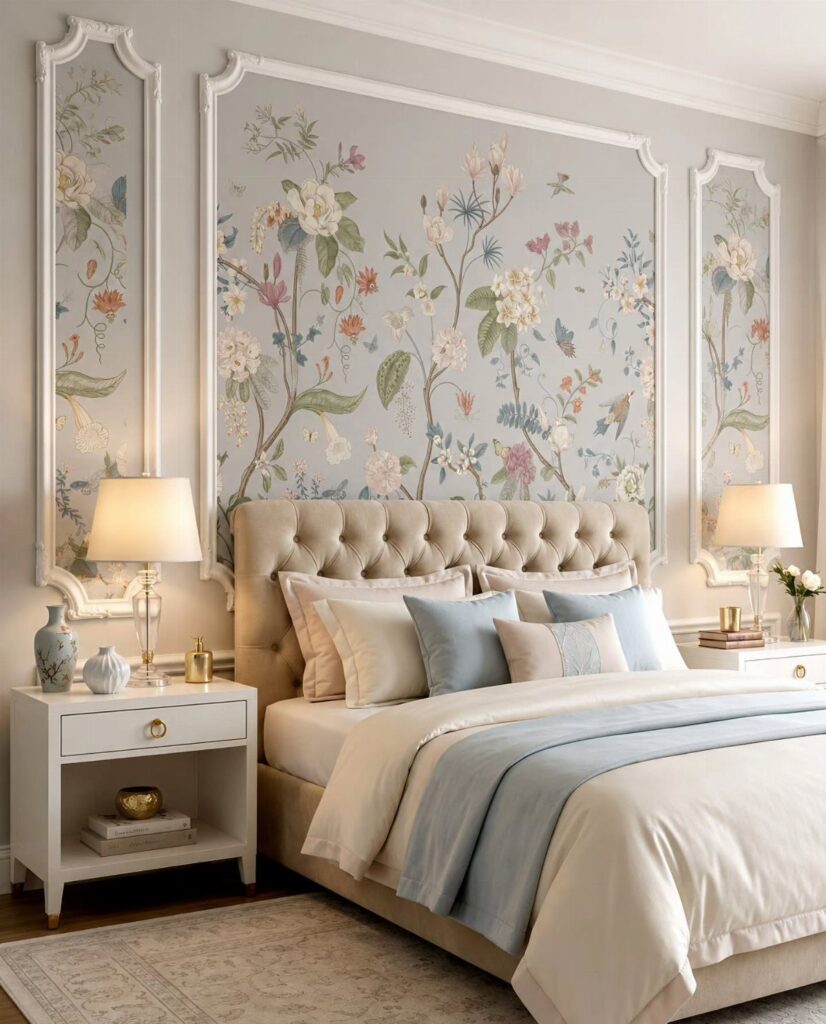
These ideas run from a framed wallpaper panel to a full weekend spent painting a mural, and the cost climbs or drops with how much you commit.
Framed wallpaper panels show how far one roll can stretch before you spend anything on art.
1. Framed Wallpaper
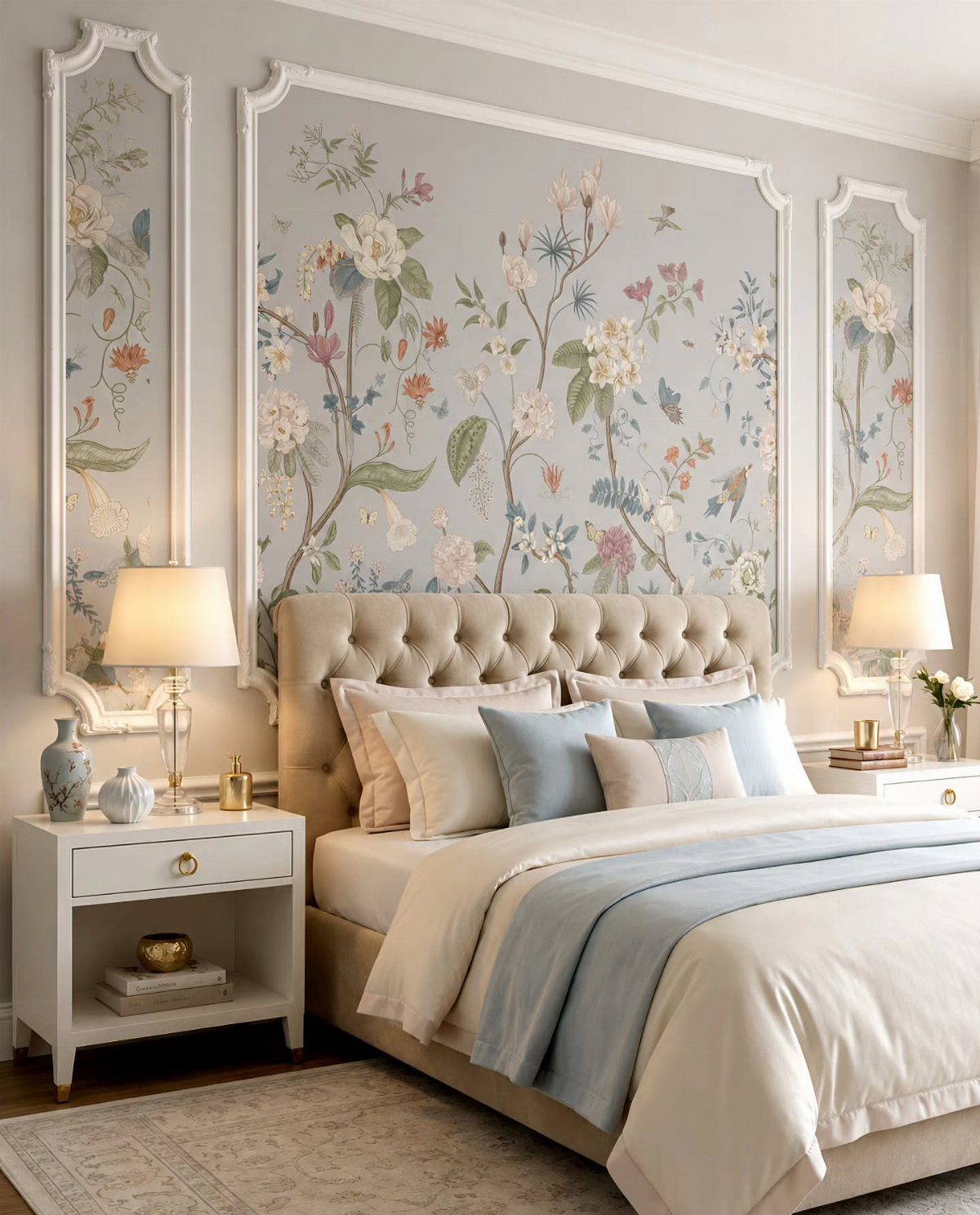
Leftover wallpaper from a bedroom or hallway project can become the art itself. Cut a panel for each frame, mount it, and the pattern reads as a set of pieces instead of a covered wall.
Painted wall molding in white gives each panel a crisp edge that sets off the pattern inside. A floral print behind a bed works well because the headboard keeps the pattern from feeling busy.
A single roll covers several panels, so this costs very little compared with papering the whole wall.
2. Wallpaper on Ceiling
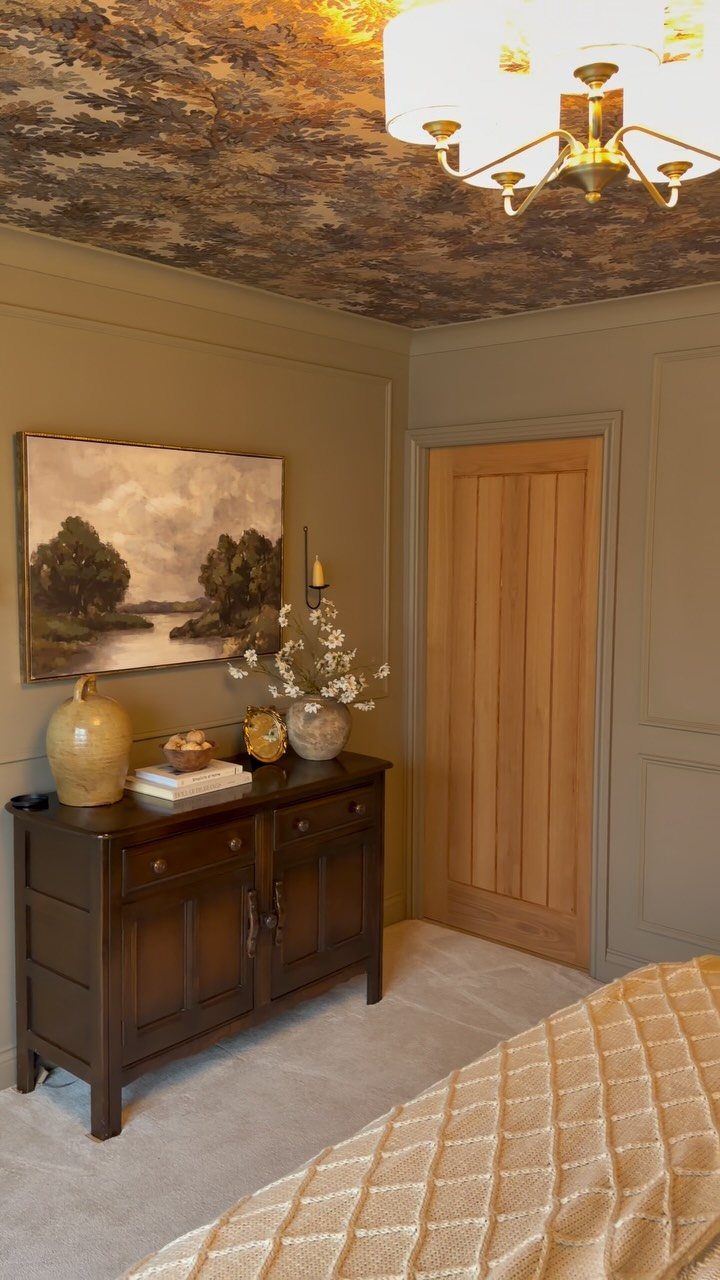
Ceilings get ignored, which is why a dark patterned paper overhead surprises people the moment they walk in. A nature print like this one pulls the eye up and makes a chandelier look like it belongs to the room.
I would keep the walls plain and let the ceiling carry the pattern. Dark paper overhead also pairs well with warm metal, as the gold fixture shows.
Expect it to be slower work than a wall, since you are hanging strips above your head. Have a helper hold the roll.
3. Gallery Wall
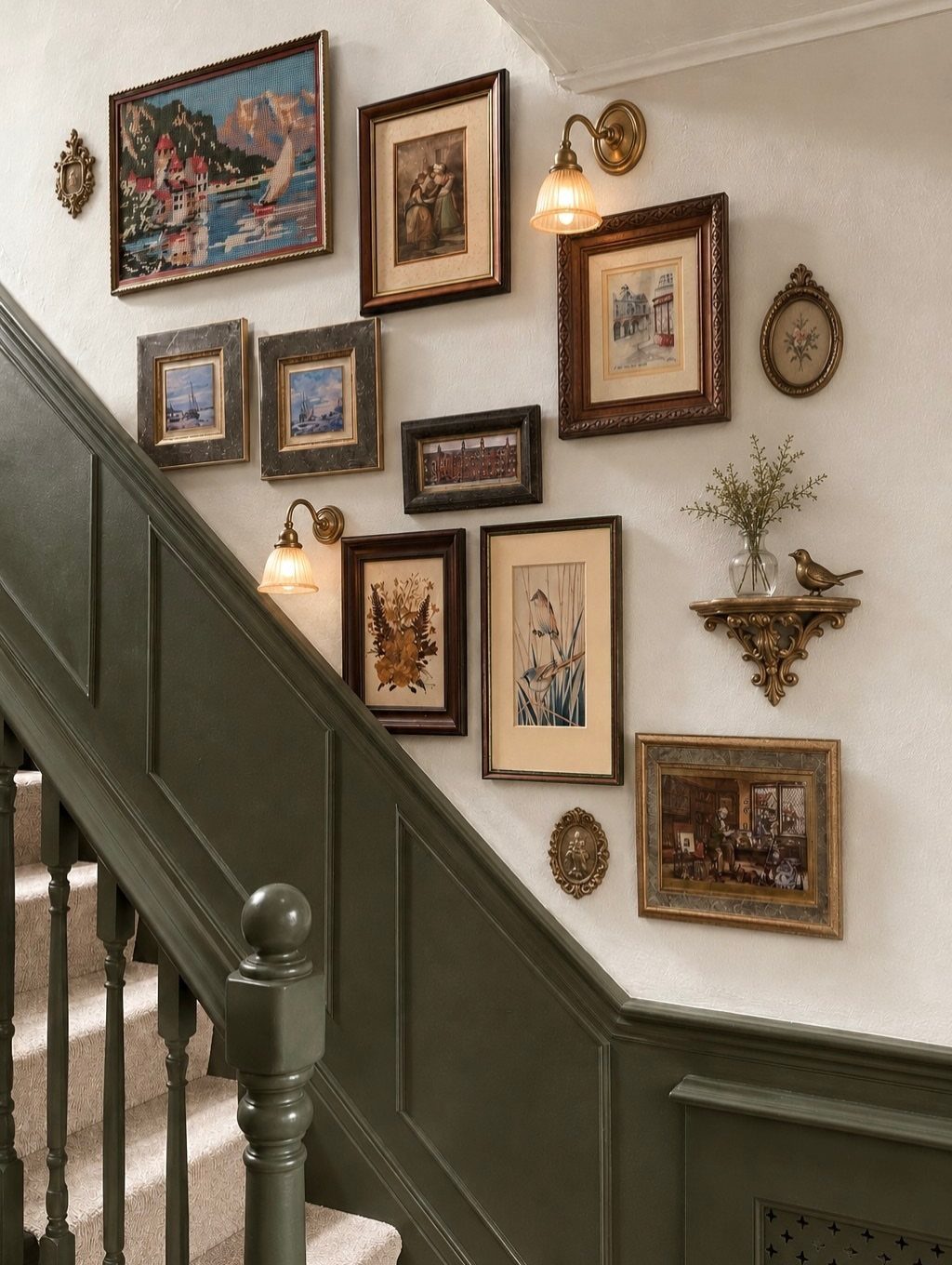
A staircase wall is an ideal spot for a gallery wall, because the long stretch gives you room to keep adding.
Mix frame styles, then tuck in a small shelf and a pair of sconces, as this one does, so the arrangement has depth and light.
Before you hammer anything, lay the pieces on the floor and shuffle them until the spacing looks even. Trace each frame on paper and tape the templates to the wall.
A dark lower wall makes white upper space and frames stand out.
4. Large-scale Artwork
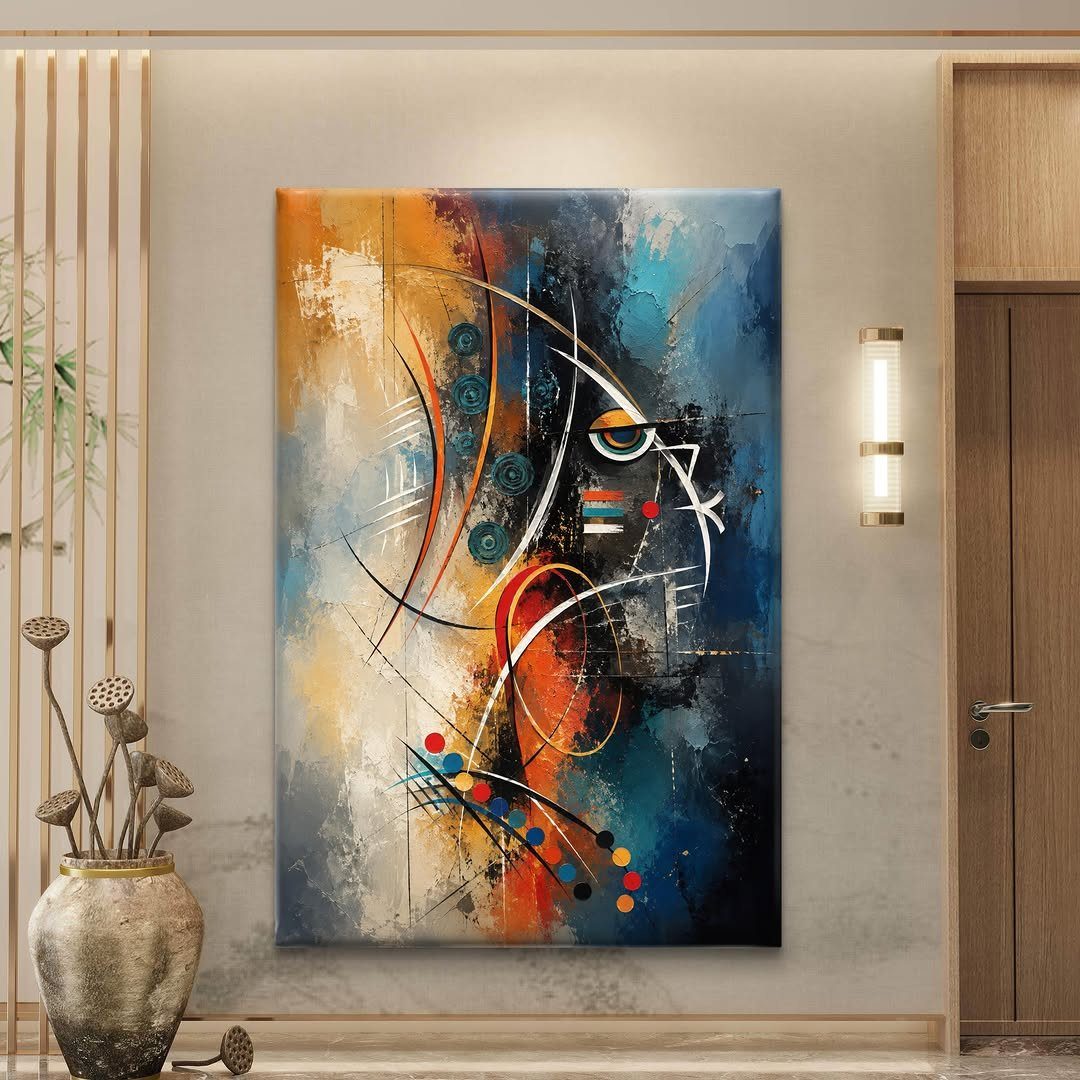
One oversized painting does the work of a dozen small ones. Pick a piece with strong color, like this blue and orange abstract, and let a neutral wall stay quiet around it.
Original canvases get expensive, so I would look at large prints or a canvas you paint yourself with a few tubes of acrylic. Either way, hang it with the center near eye level and leave breathing room on all sides.
Skip crowding it with other decor. The size is the statement.
5. Mirrors
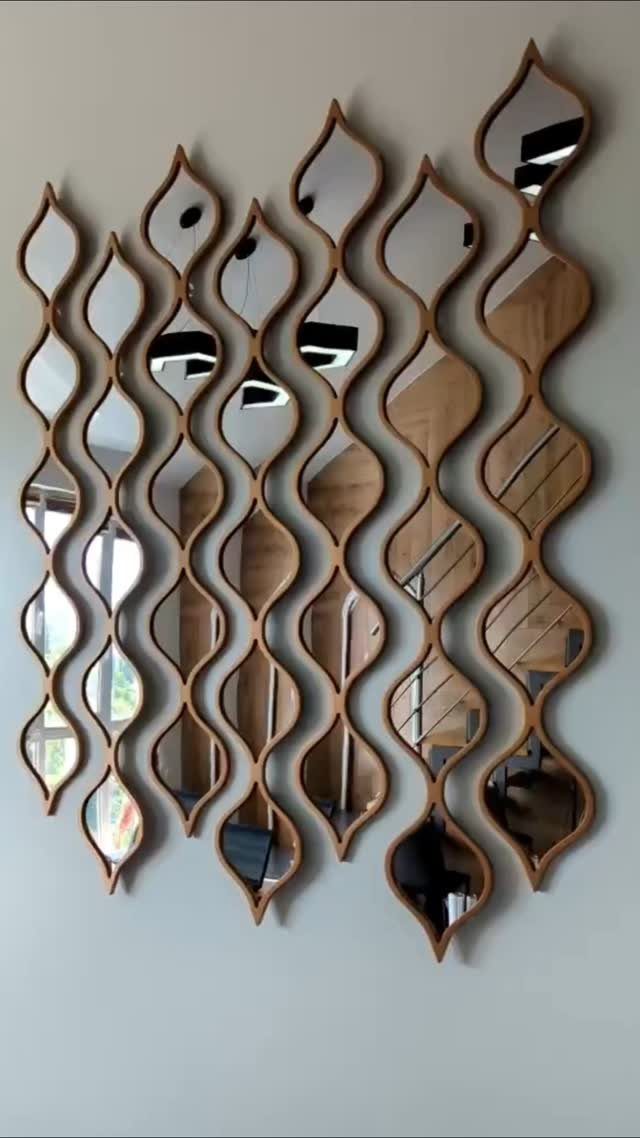
Mirrors earn their spot on a wall because they bounce light back into the room. A cluster of teardrop shapes with wooden frames turns that function into a pattern, and the warm wood softens all the glass.
Arrange them on the floor first, then hang them in columns so the curves nest together. Use hardware rated for each mirror’s weight.
If one big mirror feels too plain, a group like this gives you more shape for similar effect. Place it across from a window for the most brightness.
6. Mural
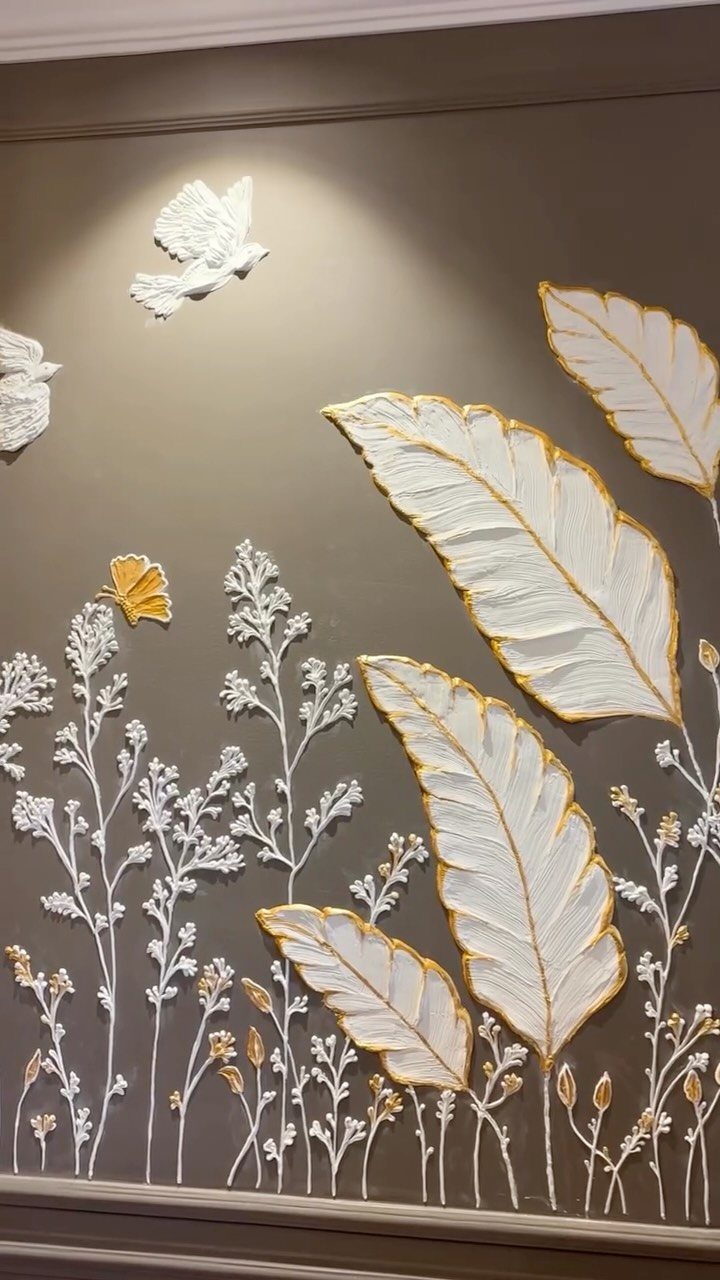
A mural turns a whole wall into the focal point, and texture pushes it further. Embossed murals catch light differently as the sun moves, which means white or metallic raised details show up better than flat ink.
Painting your own is the cheapest route; a textured wall covering is the easier route if you do not trust your brush. Keep the base color muted so the design does the talking.
Plan on a weekend for a single wall, and sketch the layout lightly before you commit.
7. String Art
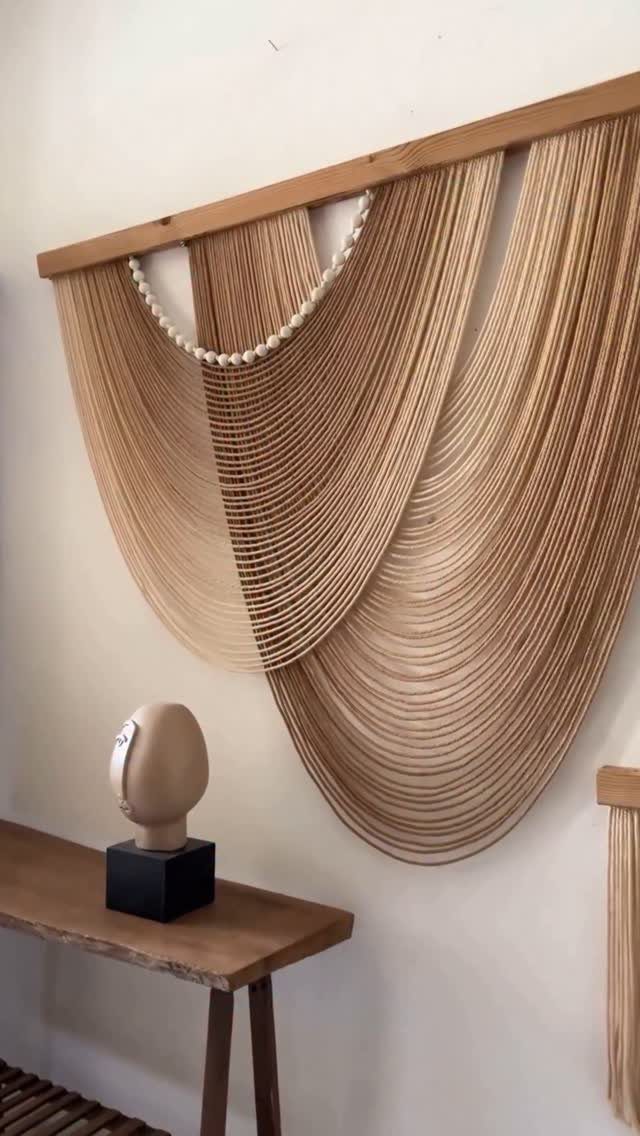
Knotted cord and white beads on a rod make a wall hanging you can finish in an evening, and the materials cost very little.
Brown cord against a white wall gives enough contrast that the hanging reads clearly without any added color.
Cut the strands longer than you think you need, since knots and beads eat up length. Space the white beads unevenly so the drape looks loose rather than measured.
Hang it above a table or console, where it frames the surface below.
8. Hang Hats on Wall Hooks
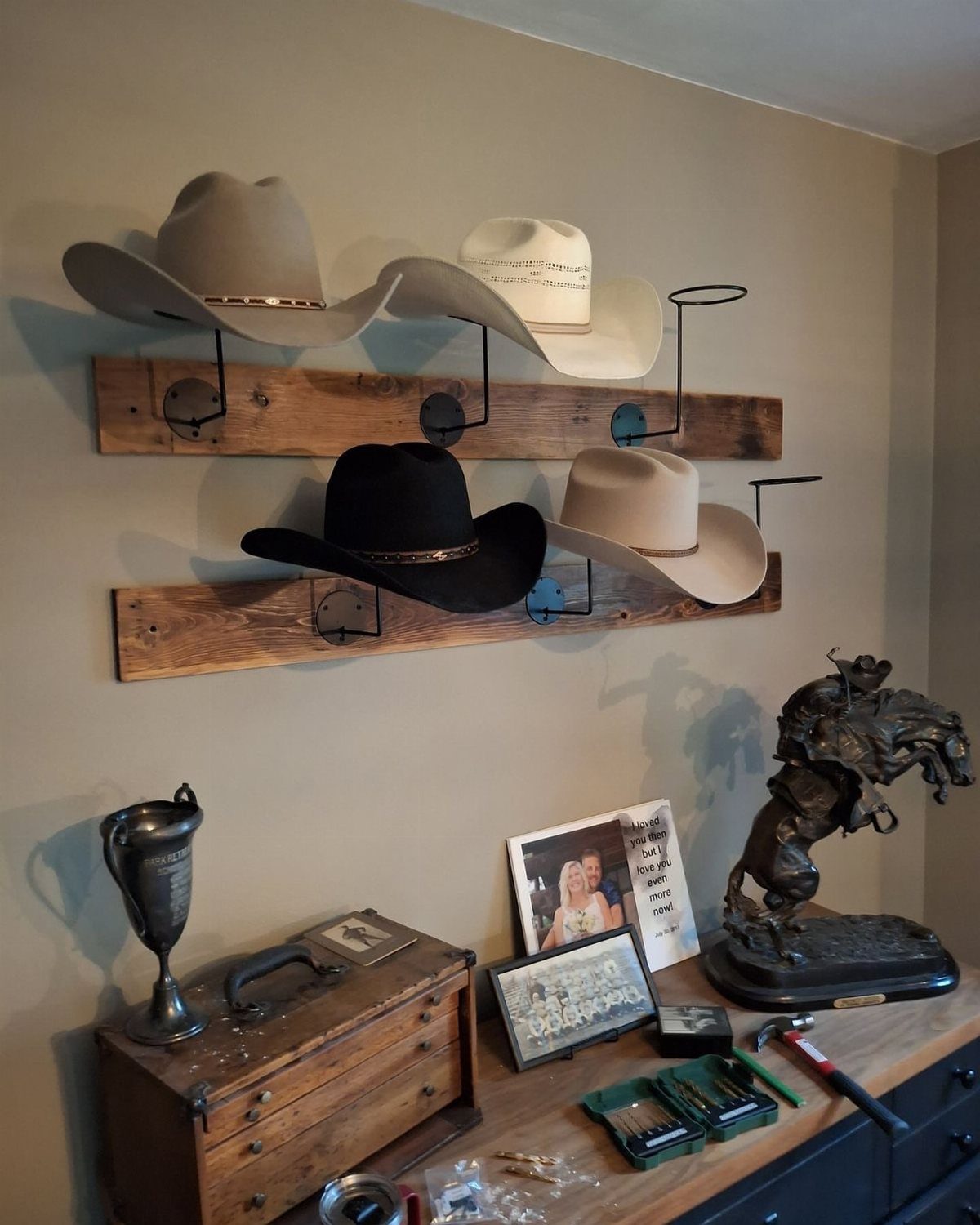
Hats you already own can be the wall decor. A pair of wooden racks with metal hooks, mounted on rustic plank walls, turns a row of cowboy hats into a display that costs a few dollars in hardware.
Mount each rack level, and give every hat its own hook so the brims never overlap. Keep the shapes and shades varied but the spacing even.
Above a dresser is a good spot, since the surface below can hold smaller pieces without competing with the hats.
Choosing Wall Decor
Decide the biggest, most committed piece first. If a room is getting wallpaper or a fabric wall covering, pick it at the start, because it sets the colors and mood for everything else.
Smaller art, accents and even the paint color can be chosen afterward to match what is already up.
Start with the finished look in your head, then buy pieces that fit it. A wall of random favorites rarely adds up to a plan.
Think about what the room is for, too. Choose art that matches the feeling you want while you are in that space, whether that is calm in a bedroom or warmth around a table.
Your own taste is the point, so skip anything you like only because it is popular.
“Wall decor should be an extension of the overall design plan,” Bratton, the owner and interior designer of Bambi A’Lynn Interior Design, says. “Always start with the end in mind, and curate wall decor and wall covering selections to fit within that vision.”
Mixing Styles
Stick with one style across a whole room and it can feel like a showroom. Mixing is how a space starts to look like yours.
A minimalist print gets character in a carved thrift-store frame, or you can run a reclaimed wood shelf on black pipe brackets. A velvet sofa from another era also sits well next to a rug with a playful pattern.
Keep one thing steady so the mix reads as a choice: a repeated color, or a similar frame finish. Experiment on a single wall first, since moving a few nails costs nothing.
Placement Tips
In a dining room, think about where people will sit.
Hang the piece so everyone at the table can see it. When you hang art above a buffet or console, I put the center at 57 inches off the floor so the furniture doesn’t block it.
In a bedroom, scale matters as much as height. Tall vertical pieces over each nightstand add height and symmetry, and larger works fill more wall and make a statement.
Before you commit, hold the piece up or tape a paper template in place and step back across the room.
Frequently Asked Questions
How do I decorate my room walls?
Start with the largest decision that locks in the most, like wallpaper or a full wall treatment, because it dictates everything else. Once that anchor is down, the art, accessories and paint can all respond to what it already says.
Good choices include one oversized painting, a cluster of mirrors, or a gallery wall. Hold each piece against the wall, or tape up a paper stand-in, and walk to the far corner before you commit to the spot.
Where can I find home decor ideas?
Start with what you already own. Leftover wallpaper cut to fit frames becomes art, and hats on wooden hook racks make a display for a few dollars in hardware.
Secondhand frames, salvaged wood for floating shelves, and oversized prints or a blank canvas you fill in with acrylics cost less and still deliver.
Mixing a few of these in one room makes it look like yours rather than a showroom.





