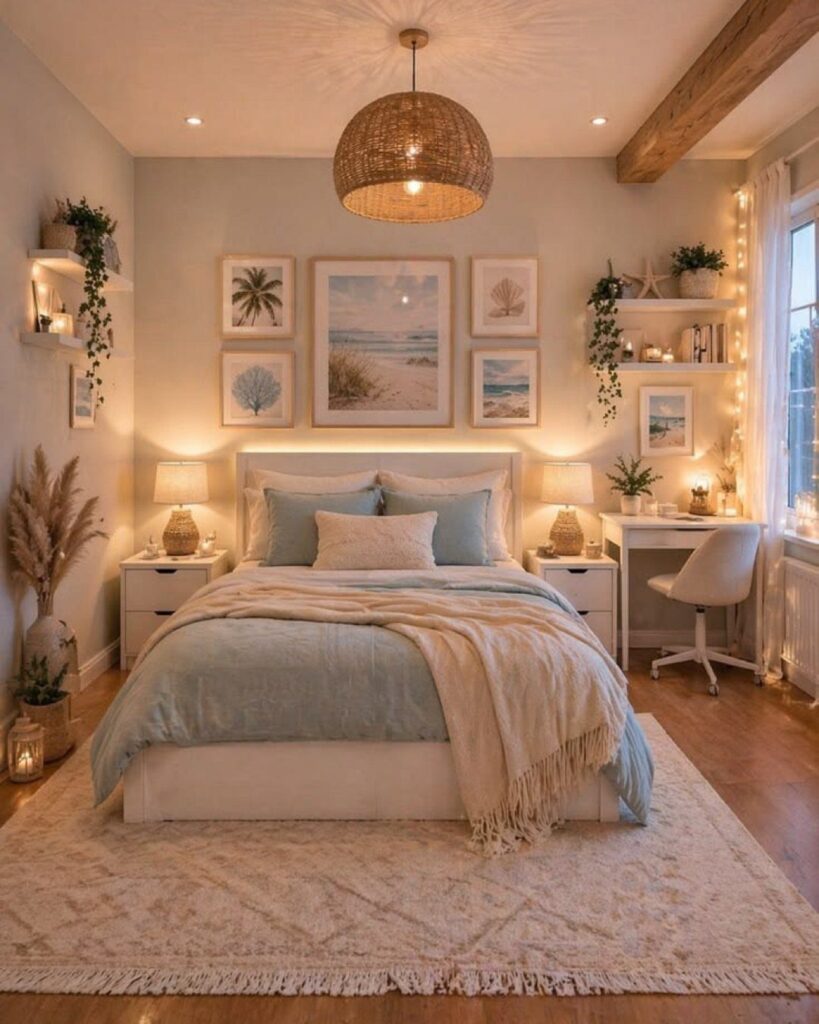
Light blue can be a few dollars of pillowcases or a full commitment of paint, and how much goes into the room depends on whether you rent, who lives with it and how easily you can swap it out.
If you can’t repaint, keep the blue in layers like curtains, bedding, cushions and throws; in a guest room nobody lives with it daily, so going all-in on blue paint is safe.
A tufted velvet sofa and a rug sit between those two, and I would buy them only in a shade you already love.
1. Blue with Creamy Whites and Beiges
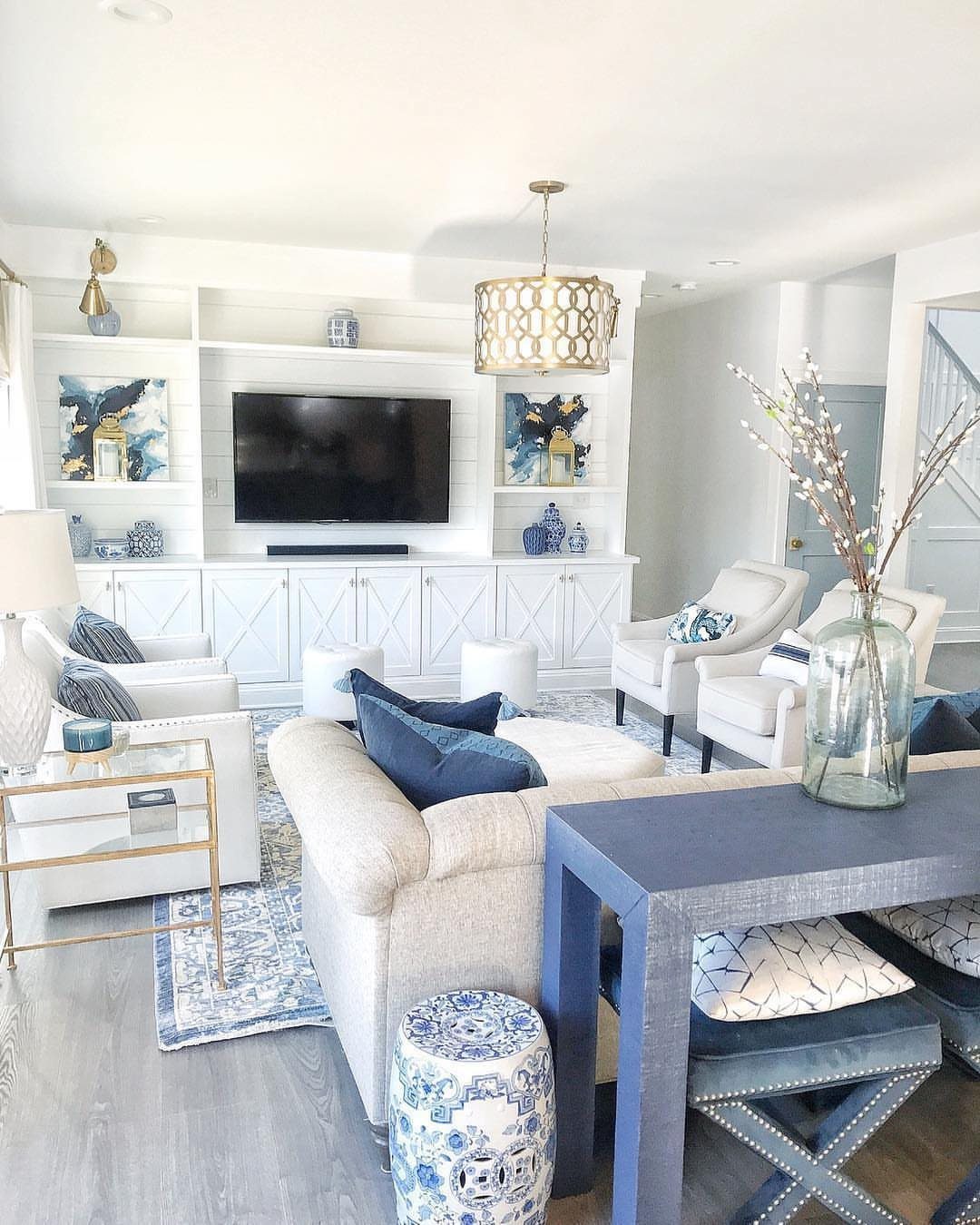
Cream and beige do the quiet work in a blue room: they soften light blue so it reads as relaxed instead of chilly.
A beige sofa and white armchairs hold the big surfaces, and blue stays in the accents and one console table.
I would keep the blue to 2 or 3 pieces with neutrals carrying everything else. Repeating the same blue in a pillow, a vase and a table ties the room together.
2. Marine-themed Prints
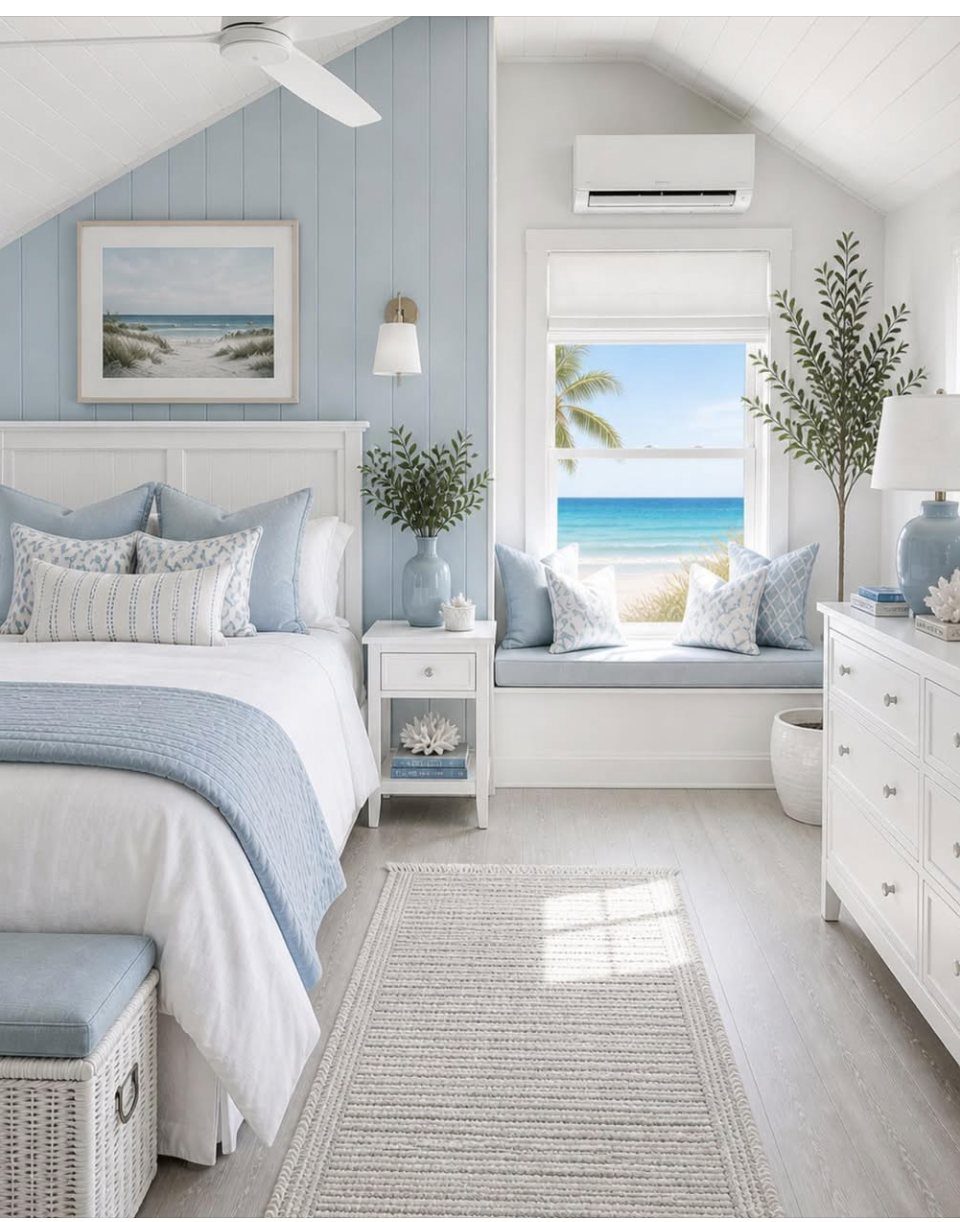
A single beach print can set the whole mood of a light blue bedroom. Hung where the eye lands first, it echoes the water outside the window and makes the pale walls feel intentional.
Pick a print whose blues sit close to your wall color, keeping the frame white so it stays light. Add a second marine piece, like a shell on the nightstand, only if the room still feels open.
3. Blue with Soft Greens
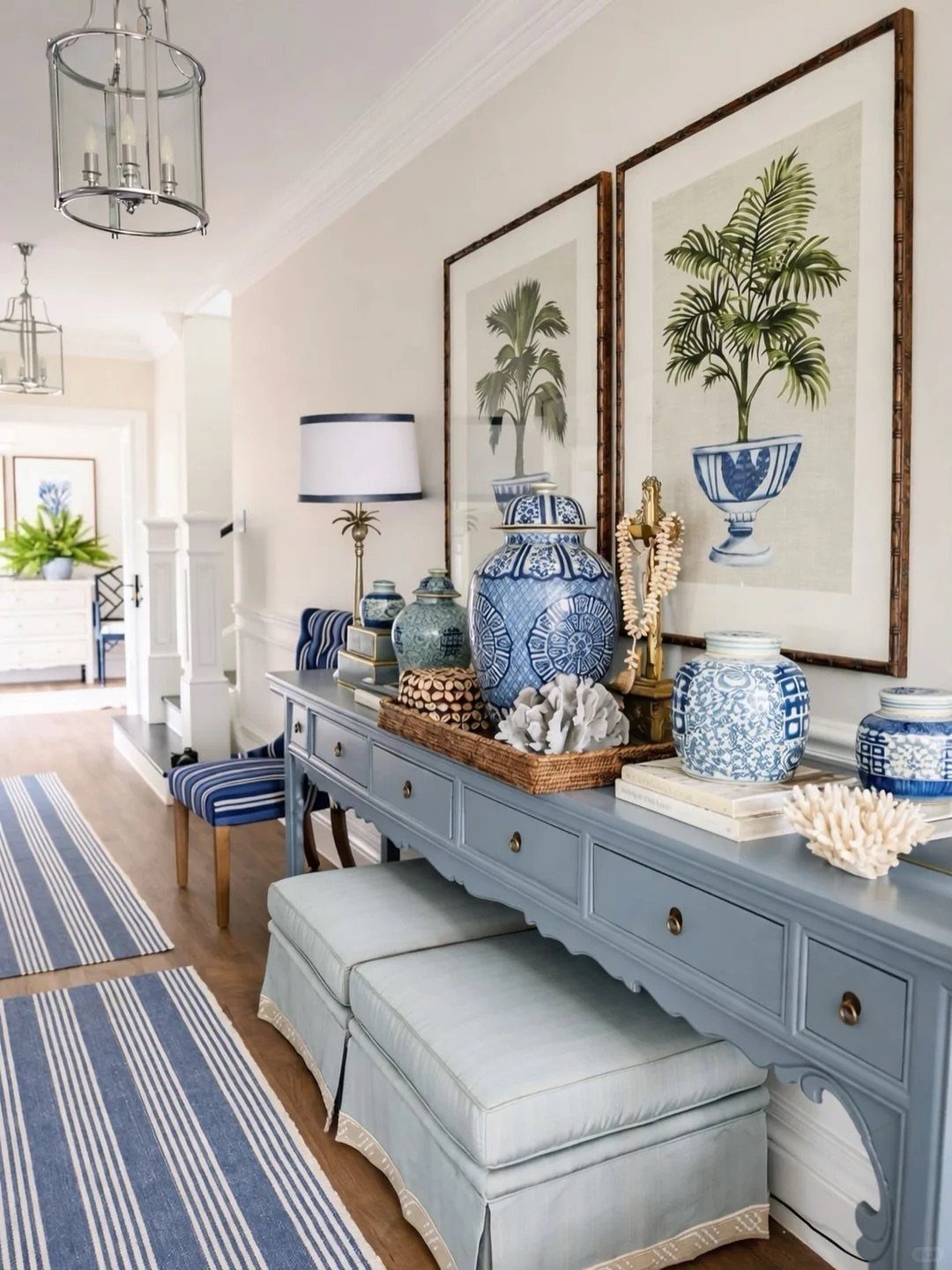
Green palms against a white wall make light blue feel warmer, because green sits next to blue and softens its cool edge.
Choose muted, leafy greens over bright ones. Blue and white ceramics on the console keep the blue present, and a pair of ottomans tucked underneath adds a second note of color without crowding the hallway.
4. Matte Blue Paint
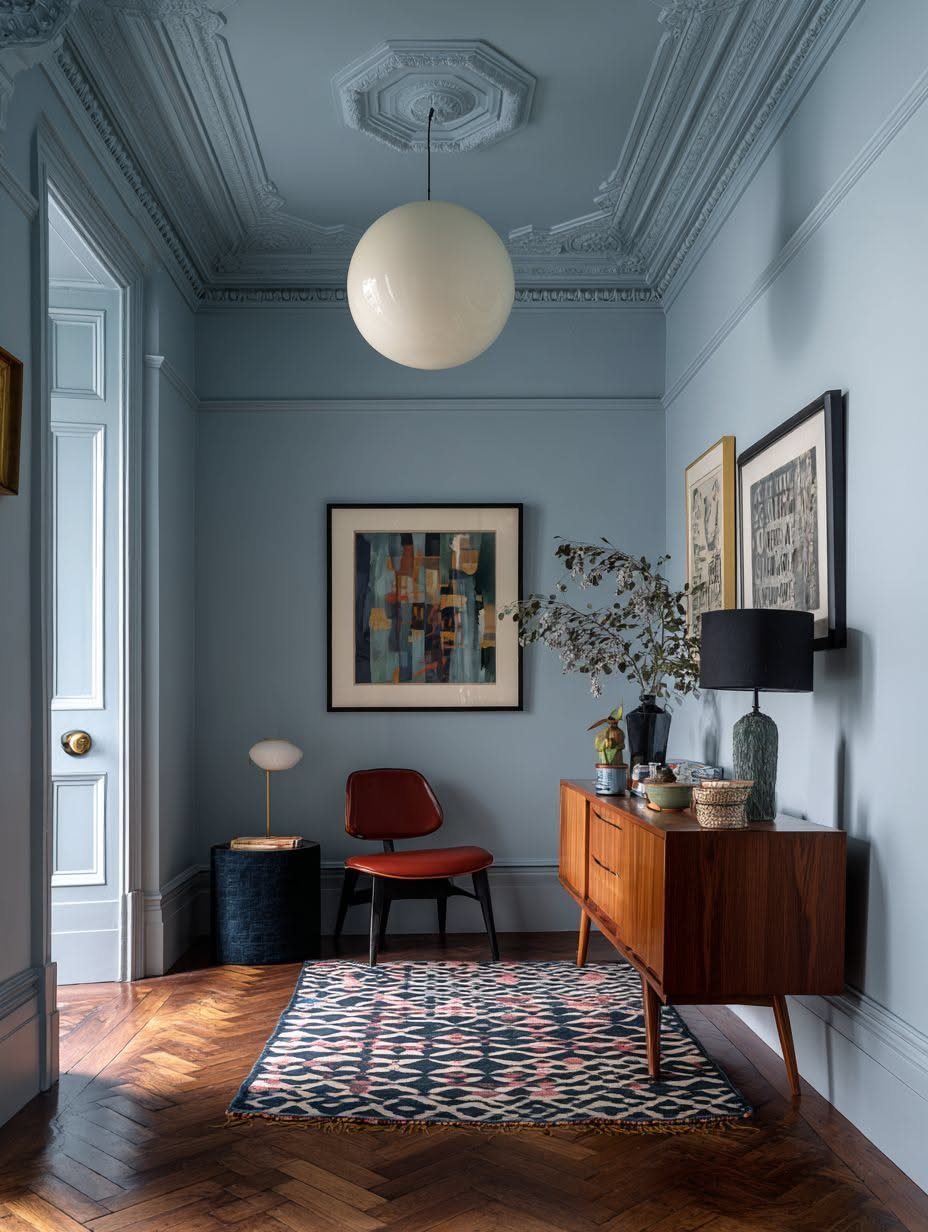
Painting the walls and the ceiling in the same matte light blue wraps a room in color and hides the hard line where they meet. Matte finish also looks softer and more grown-up than a sheen would.
Wood tones love this look: a wooden sideboard and herringbone floors give the blue something warm to push against. One bold accent, like a red chair, keeps it from feeling flat.
5. Go All-in on Blue for Guest Rooms
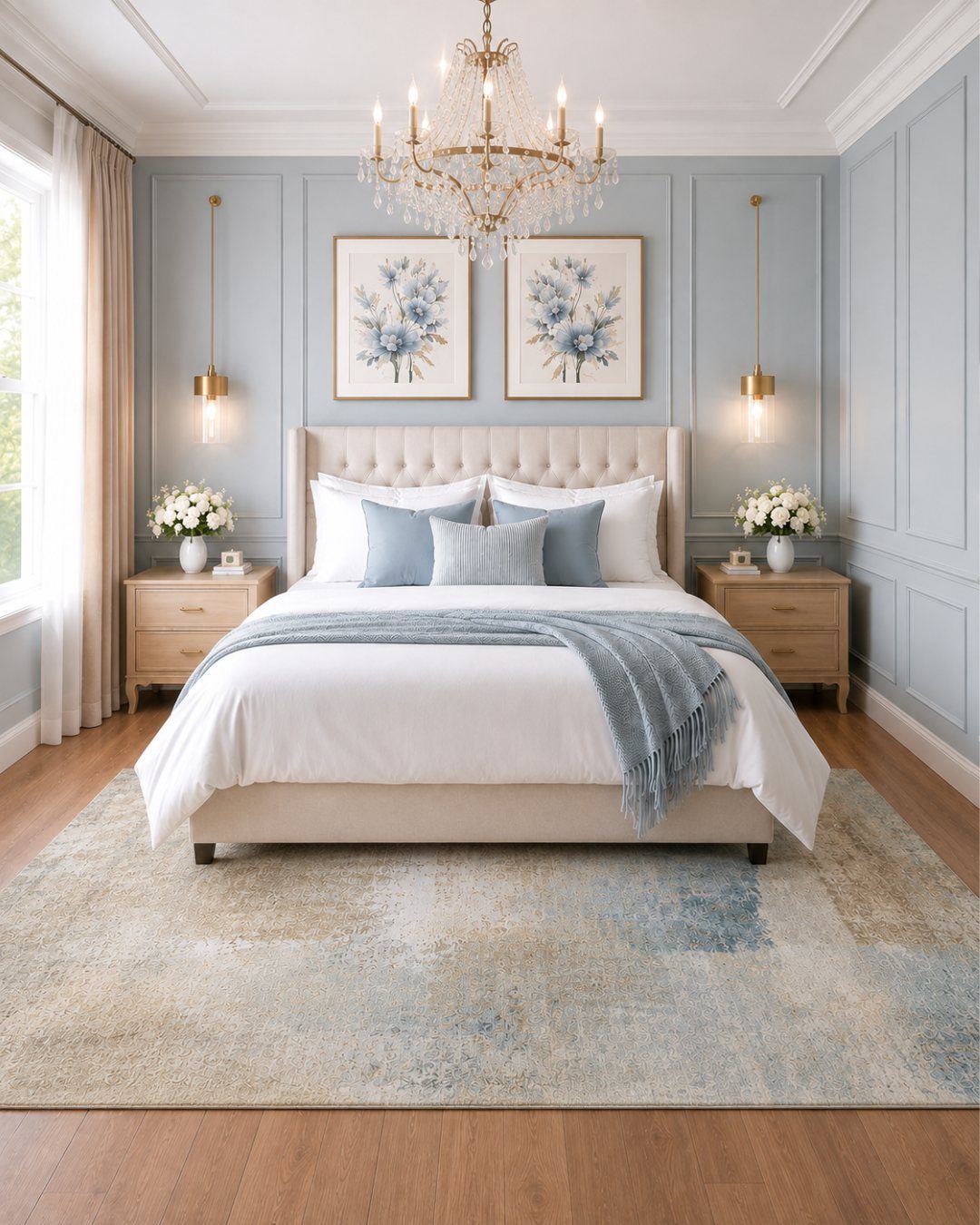
Guest rooms are where I would commit fully to blue, since nobody lives with it daily and the room can feel like a hotel suite.
Panels add depth that paint alone cannot. Keep bedding white or beige, and pull a blue-toned rug across the wood floor so the walls and floor agree.
6. Tap Into Grasscloth
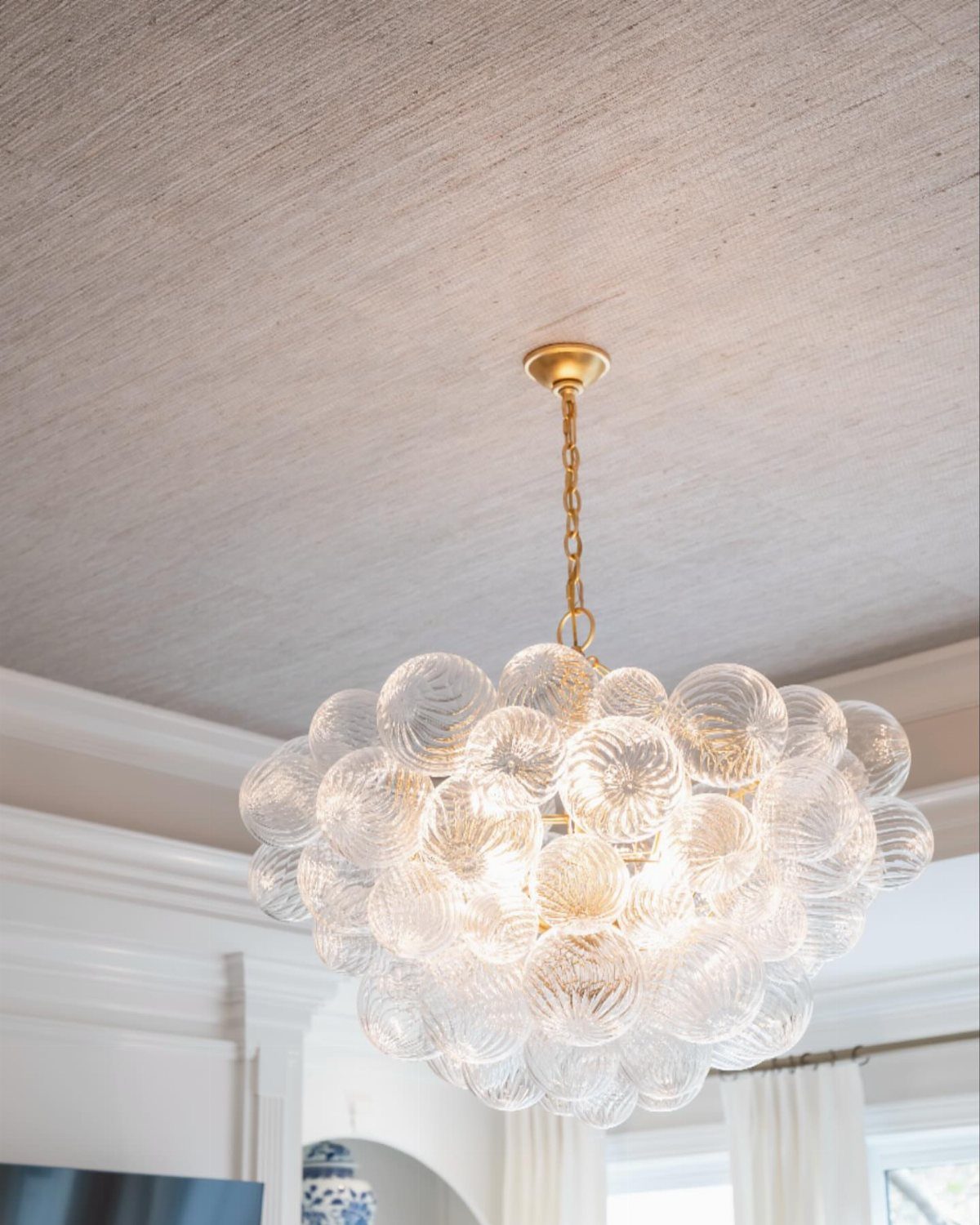
Grasscloth does not have to stay on the walls: run it across the ceiling and a plain white room gains texture overhead.
Grasscloth is a natural, textured wallpaper, so choose a pale shade that picks up your blue. Keeping the molding white gives the texture a clean edge.
7. Light Blue Painted Brick Walls
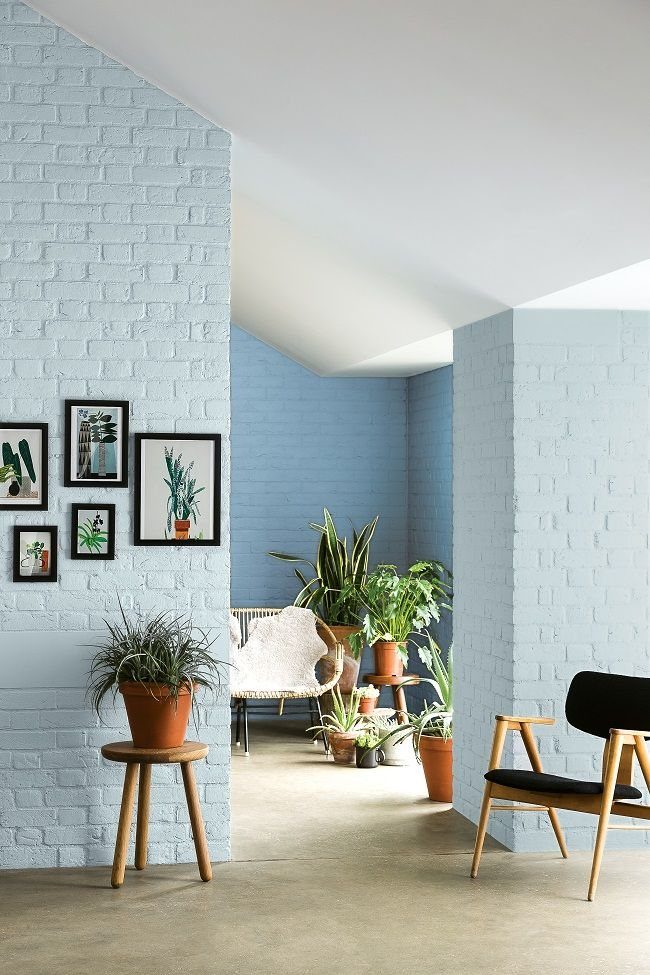
Brick keeps its texture under paint, so a light blue coat softens the wall without flattening it. Against a concrete floor, the pale color makes the room feel brighter and gives a gallery wall a calm backdrop.
Plants look good here because their greens sit right beside the blue. A white chair and one black modern chair keep the palette from tipping too sweet.
8. Light Blue Tufted Velvet Sofa
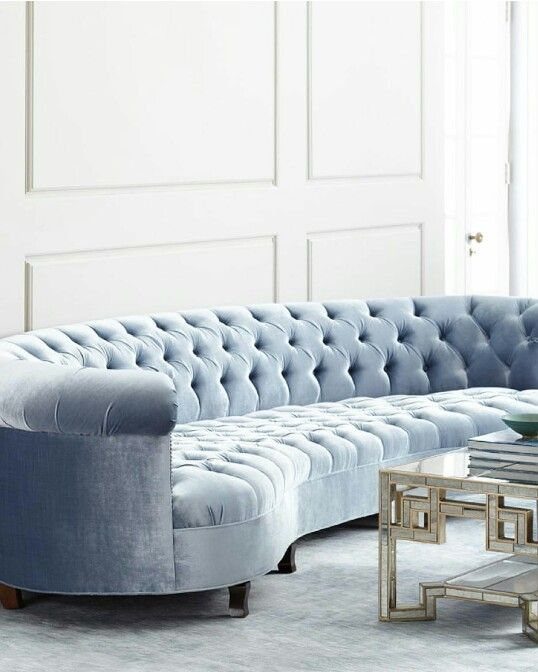
A tufted velvet sofa in light blue gives a white paneled wall something soft to sit against. The tufting catches light and the velvet deepens the color, so the sofa becomes the room’s focal point without any other blue.
I would pair it with a mirrored coffee table, since the reflections keep the look airy instead of heavy. Sofas are a bigger spend than pillows, so buy this one only if you love the shade.
9. Light Blue Curtains
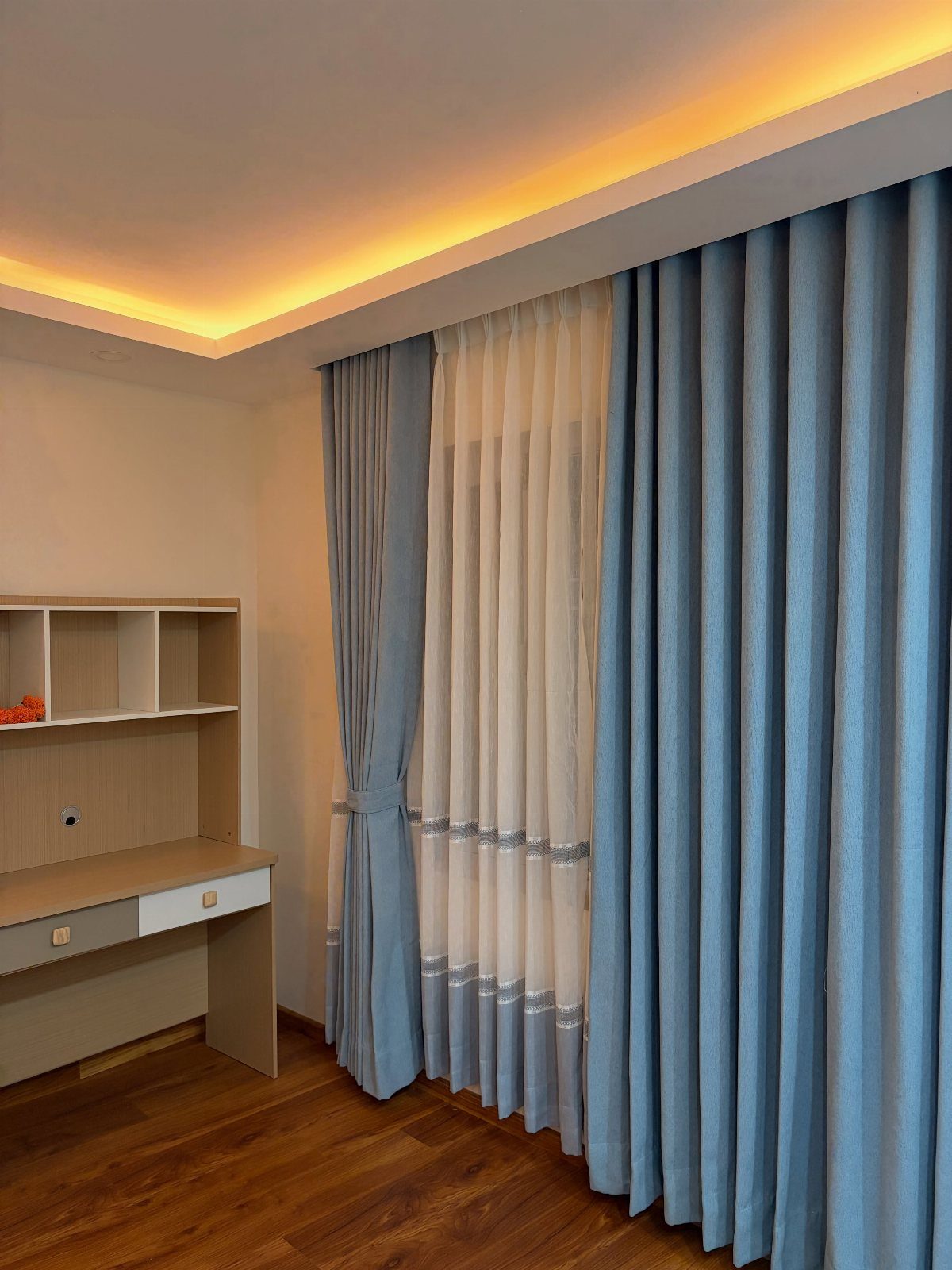
Light blue curtains layered over white sheers let you adjust the room’s light through the day: sheers alone for a glow, both panels closed for privacy.
On a room with wood floors and a desk, a soft blue like this adds color without crowding the furniture. Curtains are one of the cheaper ways to bring blue in, and easy to swap later.
10. Light Blue Bedding
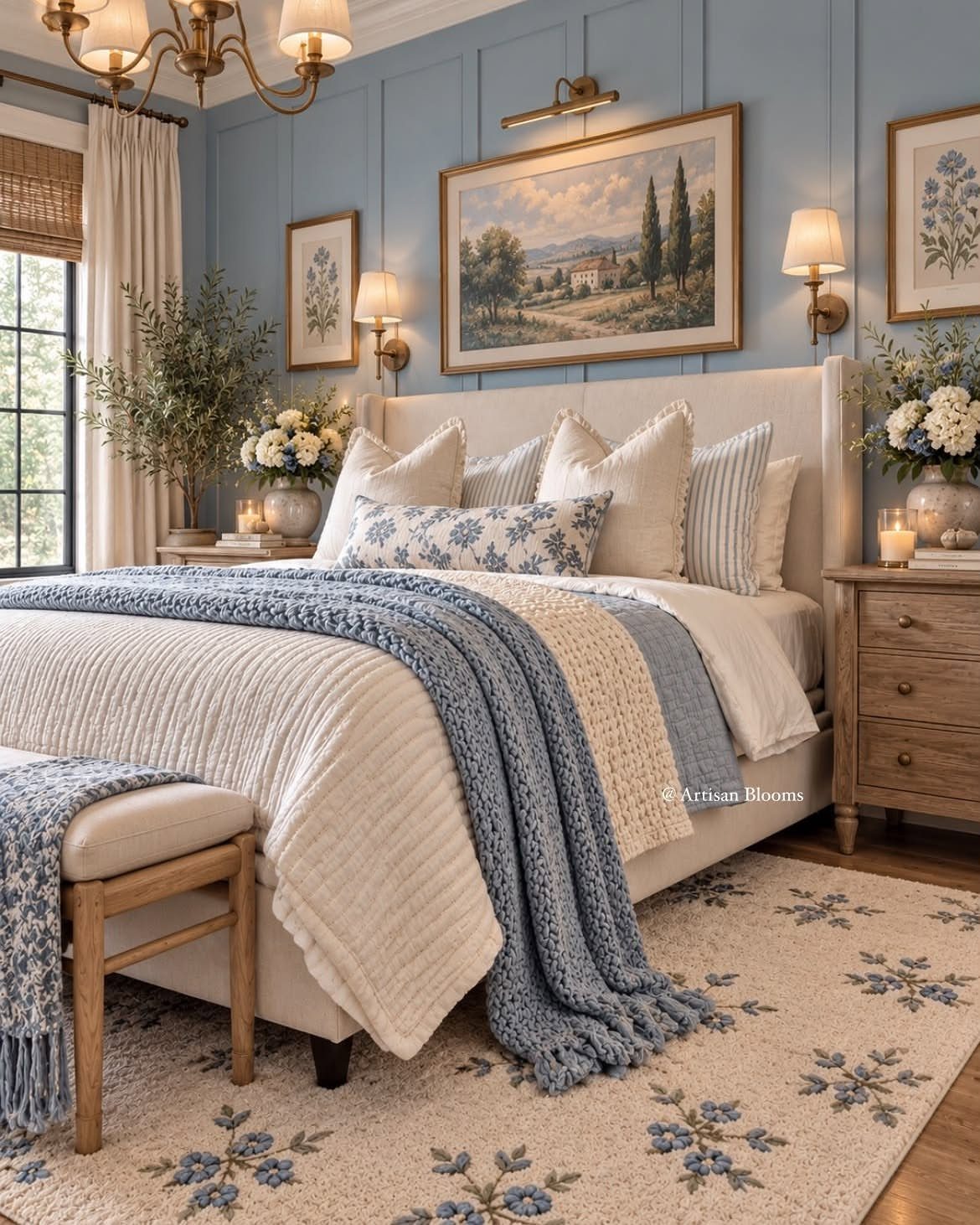
Bedding is the easiest way to bring light blue into a bedroom, and a mix of blue and white keeps it calm. A knit throw and patterned pillows add texture so the bed does not read as one flat block.
On a beige upholstered bed, I like keeping the blue in the layers you can change: pillowcases, a throw, a duvet cover. Matching the rug to the bedding ties the whole bed area together.
For some, light blue may be reminiscent of nursery spaces for boys or young kids’ rooms, so be careful to keep the overall mood mature when using baby blue copiously in retreats for adults.
11. Light Blue Wall Art
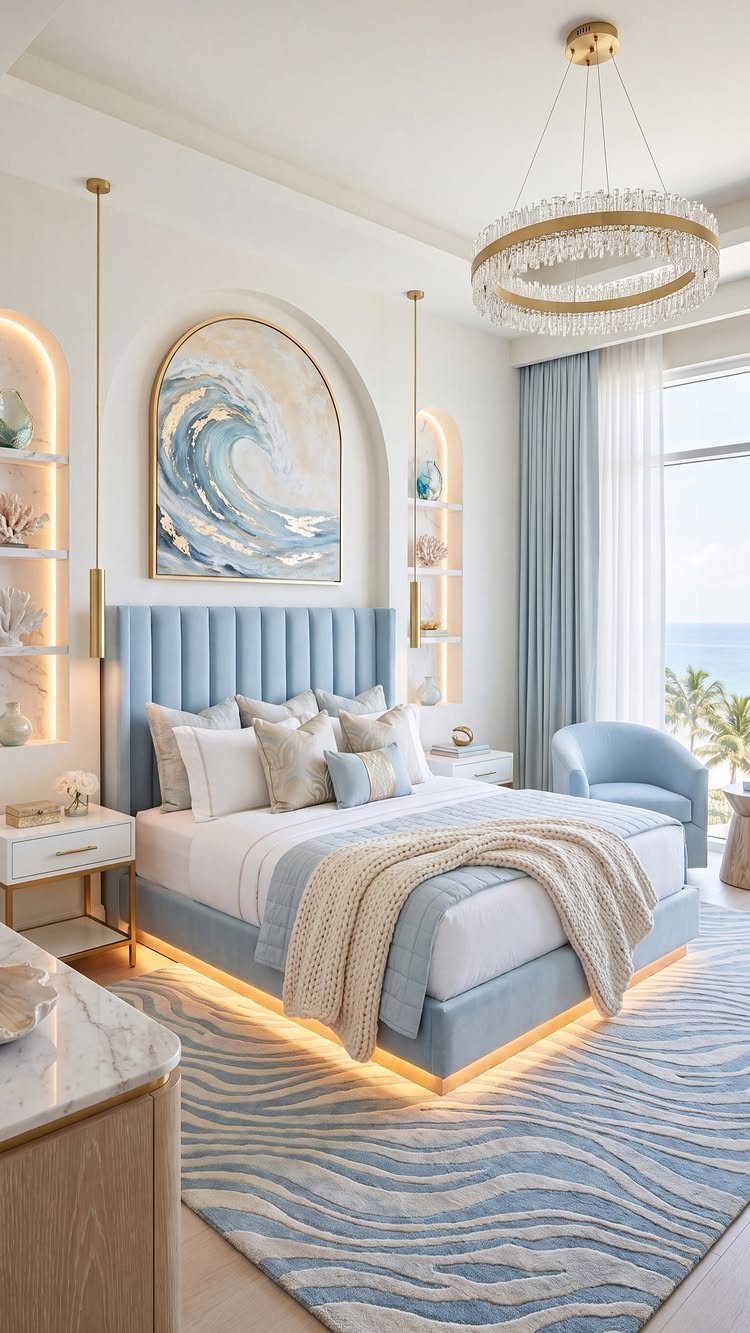
Art that carries blue tones can do more than fill a wall. A large wave painting above a bed pulls the eye up and repeats the color of the bed below it.
Size matters: choose a piece big enough to anchor the headboard wall, or it will look lost.
Hanging it in a recessed niche, if you have one, gives it a built-in frame. A blue patterned rug picks up the same hue from the floor.
12. Light Blue Rugs
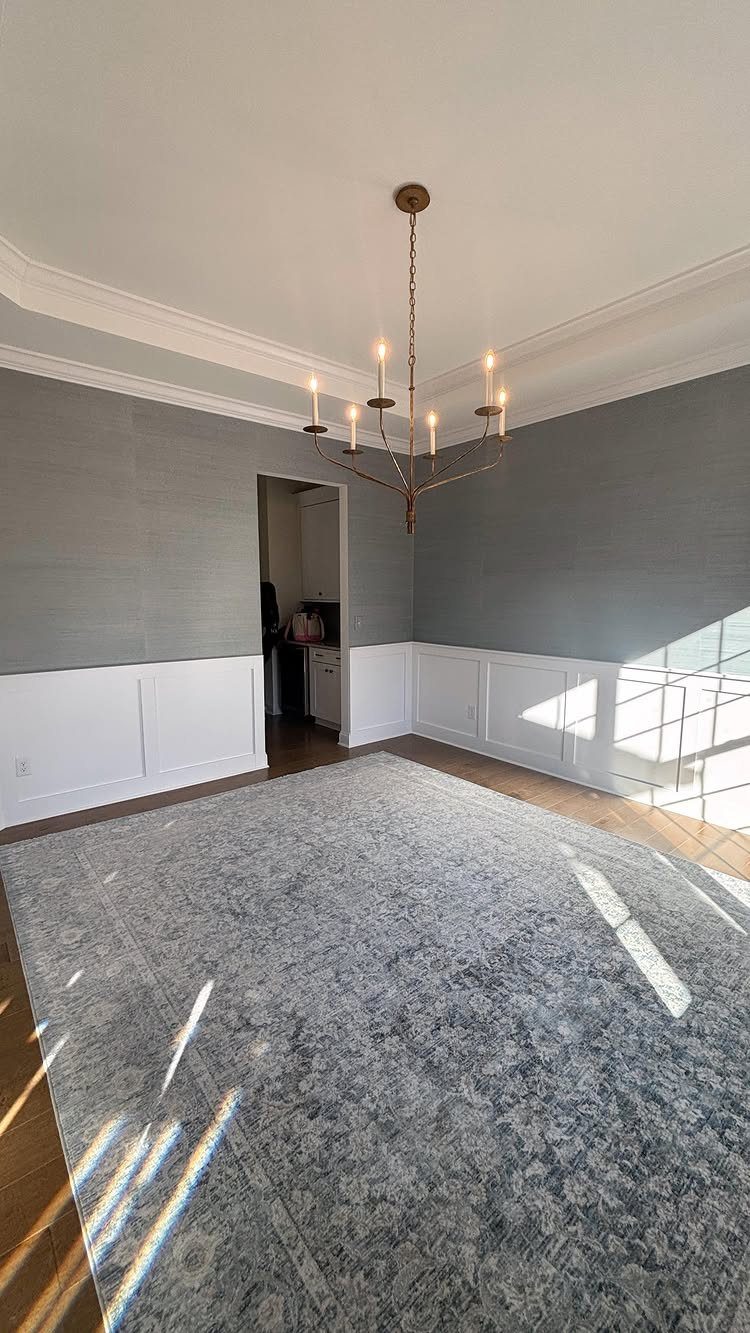
A large light blue patterned rug anchors a room with blue walls and white wainscoting, and the pattern keeps all that pale color from looking washed out.
Go big: a rug that covers most of the floor under the seating makes the space feel finished, and the wood showing around the edges adds warmth.
Pick a blue close to your walls so the two agree, and add a soft underlay if the floor is hard.
13. Light Blue Furniture Pieces
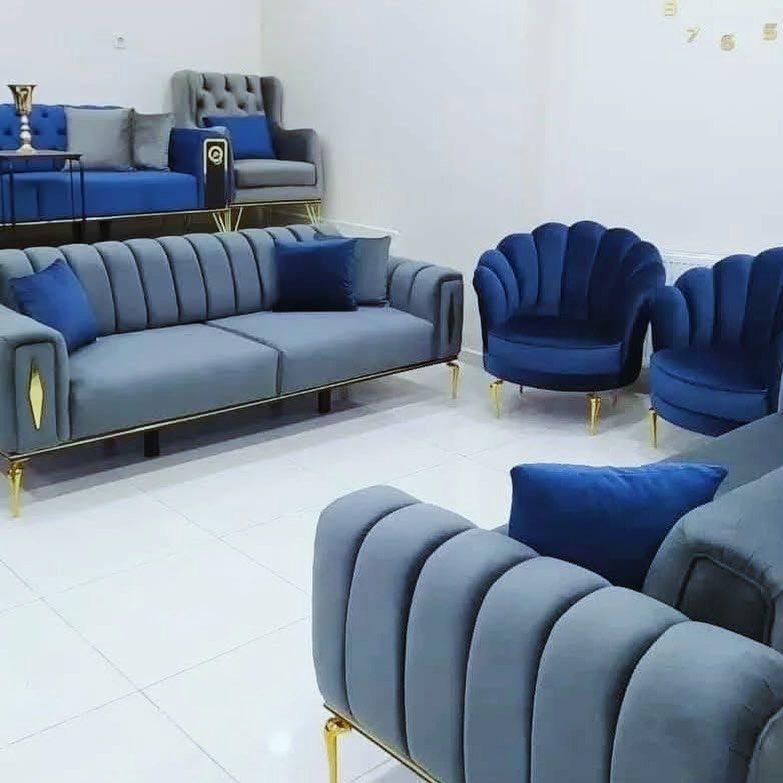
Velvet in two blues, a light sofa beside a deeper royal one, gives a white room depth without adding a single wall color. Gold-toned legs on every piece tie the set together, so the blue never feels heavy.
Shell-shaped chairs work as a pair, so they read as a deliberate choice instead of leftovers. One sofa should lead while the other stays smaller, which stops the two blues from competing.
Furniture costs more than pillows, so pick shades you already love.
14. Light Blue Cushions and Throws
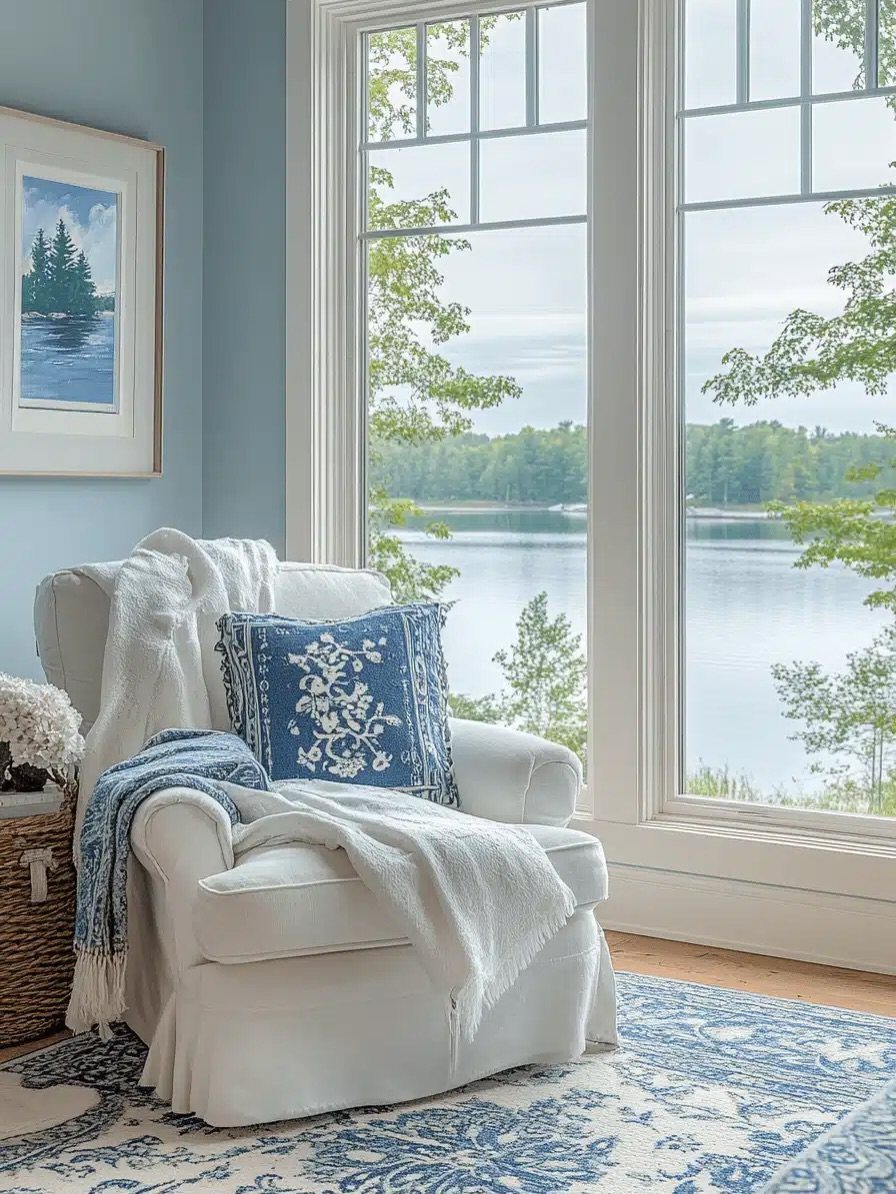
Pillows and throws let a blue room change with a few dollars and no tools. A white armchair is a good base: one patterned blue cushion and two blue and white throws add layers without covering it.
Stay close to the wall color so the pieces agree with the room, and mix a pattern with a plain blue for variety. Fold one throw over the chair arm, then drape the other loosely.
I would start with a single cushion and add throws only if the chair still looks open.
15. Light Blue Faux-fur Throw

A light blue faux-fur throw adds the soft, plush texture a flat beige sofa is missing. Draped over one arm or corner, it brings in color without a new cushion count to manage.
Pair it with a white knit blanket so the 2 textures sit side by side, fur against chunky knit. A small potted plant nearby keeps the corner from feeling too sweet.
I would buy just one fur piece. It is a quick, low-cost swap, and it is easy to put away when the room needs a lighter look.
16. Light Blue Lighting Fixtures

Lighting does not have to be a lamp: a blue neon heartbeat line on a dim wall gives a room a glow that paint cannot.
It works as both art and light source, so it can fill a bare stretch of wall.
Keep the room low-lit so the blue stands out, and hang it where nothing else competes, not crowded against other decor. I would choose a shape that means something to you, since it will be the first thing seen.
Neon suits a bedroom or den better than a formal living room.
Frequently Asked Questions
What colors go with blue in a bedroom?
Warm neutrals like cream, ivory and sand are the easiest partners for a light blue bedroom, because they take the chill out of the color and leave it calm.
Keep the blue to 2 or 3 pieces and let neutrals cover the rest. Warm accents like rust or camel also work, and if your blue leans green, an olive pillow or print suits it.
Is dark blue or light blue more popular?
Light blue is often favored for its calming, airy feel. Designers quoted on the topic expect fewer light cool blues going forward, with warmer mid-tone blues and blue-greens gaining ground.
Light blue can also read as a nursery, so keep the rest of an adult bedroom mature with textures, wood tones and neutrals.
Are blue bedrooms trending in 2026?
Yes, blue bedrooms keep their appeal because the color is soothing and works with so many other shades.
The shades in demand are shifting toward warmer mid-tone blues and blue-greens. Light blue still works if you pair it with warm neutrals and wood so it feels grown-up.





