The rented room takes a woven jute rug, a travertine accent table or nature-inspired artwork on the wall, while terrazzo floors, a wooden built-in bookshelf and a travertine kitchen island belong to homes you can alter.
The range covers warm lighting fixtures, woven jute rugs and nature-inspired artwork at one end, travertine stone and wooden built-ins at the other, and a stone vessel sink or sculptural furniture in between.
Most rooms here stick to 2 or 3 materials, which is what keeps them calm.
1. Natural Materials
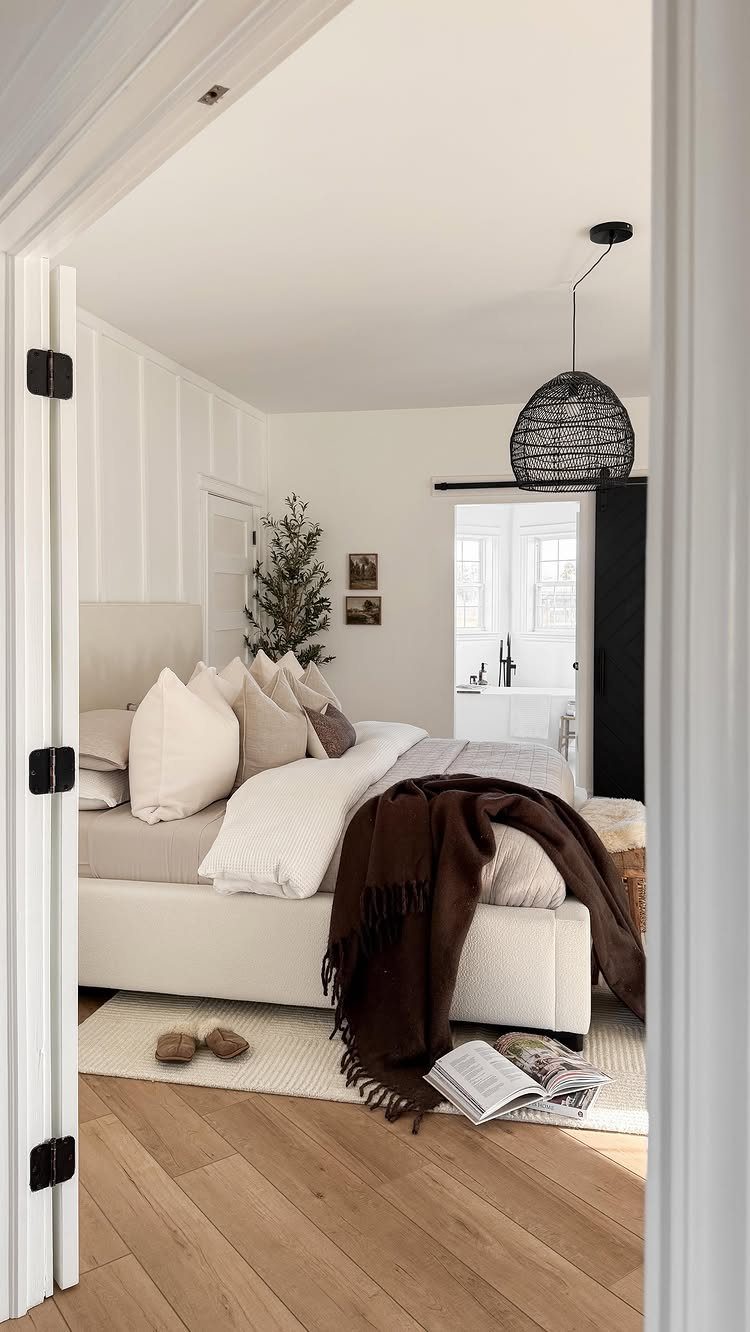
Texture does the work in this bedroom. A woven black pendant, light wood floors, a brown throw and white bedding give the eye a mix of surfaces without adding a single loud color.
For a weekend and a small budget, start with the throw and the lampshade. Swap a glossy shade for a woven one, then layer a chunky knit or linen blanket over plain white sheets.
Keep to 2 or 3 materials so the room stays calm.
The deceptively simple organic modern style combines modernist interior designs with natural materials and earthy colours.
— Dezeen
2. Biophilic Design Elements
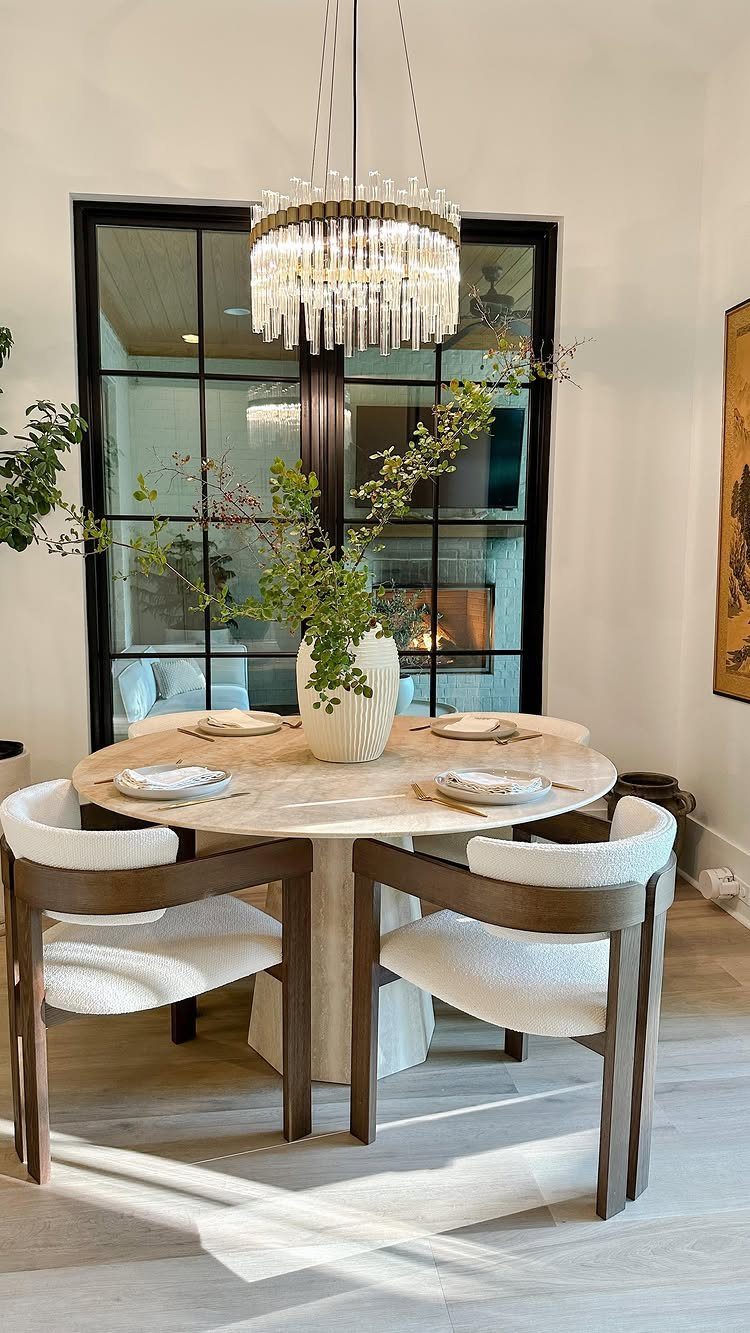
A big handful of branches in a vase is the cheapest biophilic move I know.
It brings green and height to a table, and it pairs well with a stone top, since the hard, cool surface makes the leaves look softer.
Pick one large arrangement over several small pots. Cut branches cost little and can be changed with the season, which suits renters who can’t alter the room itself.
Put it where you sit and eat, so you see it daily.
3. Warm, Diffused Lighting Fixtures
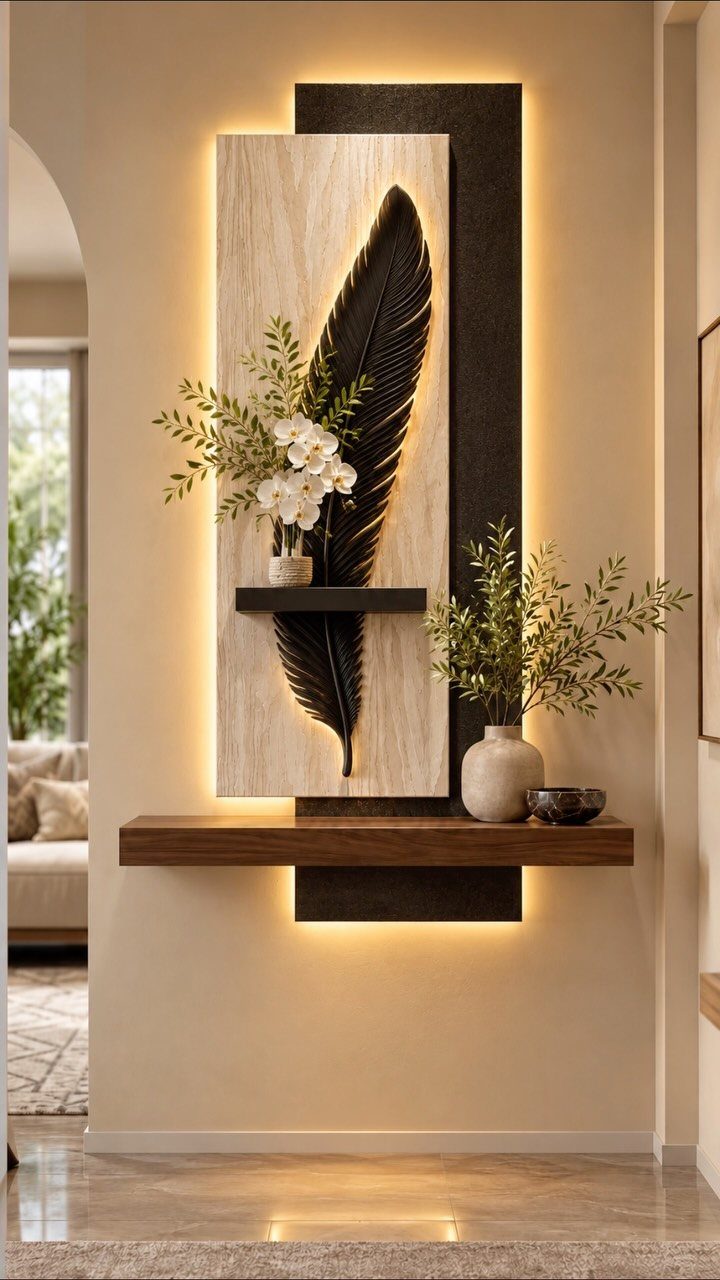
Light that comes from behind a surface glows instead of glaring. A backlit panel like this one washes the wall in amber and lets the texture of wood and feather show without a bright bulb in your eyes.
You can borrow the effect cheaply. Tuck a warm LED strip behind a shelf edge or a headboard, and pick a warm white bulb color.
Skip the overhead fixture in the evening and let low light carry the room.
4. Plush Sofas and Chairs
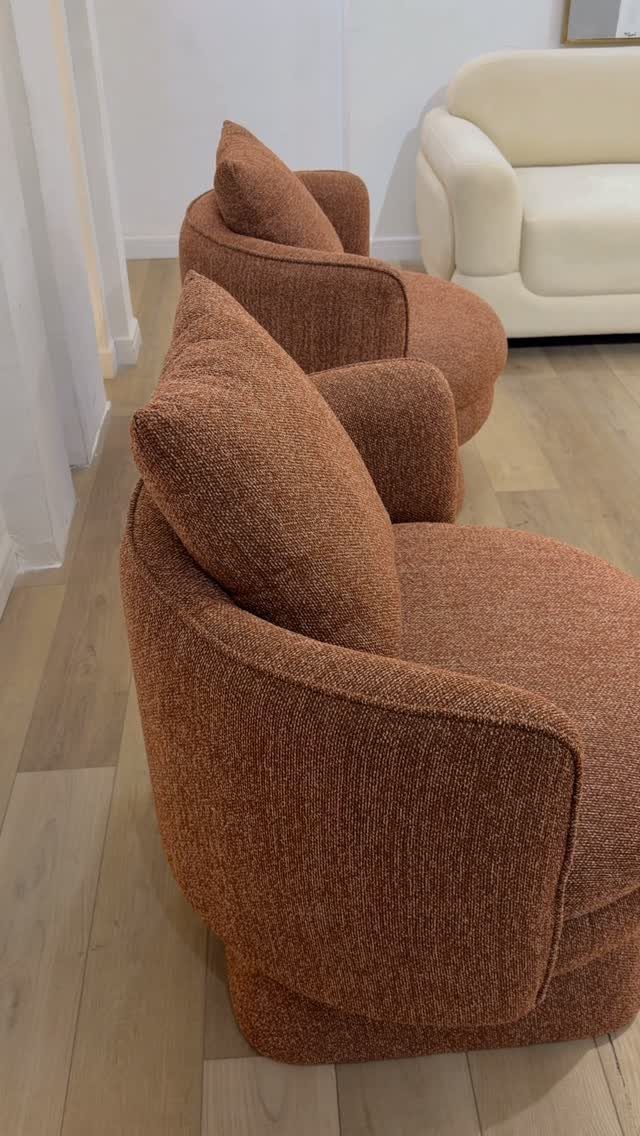
Rounded, deep-seated pieces in rust and cream make a room feel like somewhere you can sink into. 2 terracotta chairs against a pale sofa give color without crowding a light floor.
I would spend the money on the seating and keep the rest plain. One bold chair color is enough; a second or third starts to compete.
Test the seat depth in a store before buying, because plush looks inviting but should still let you sit comfortably.
5. Soft, Sculptural Silhouettes
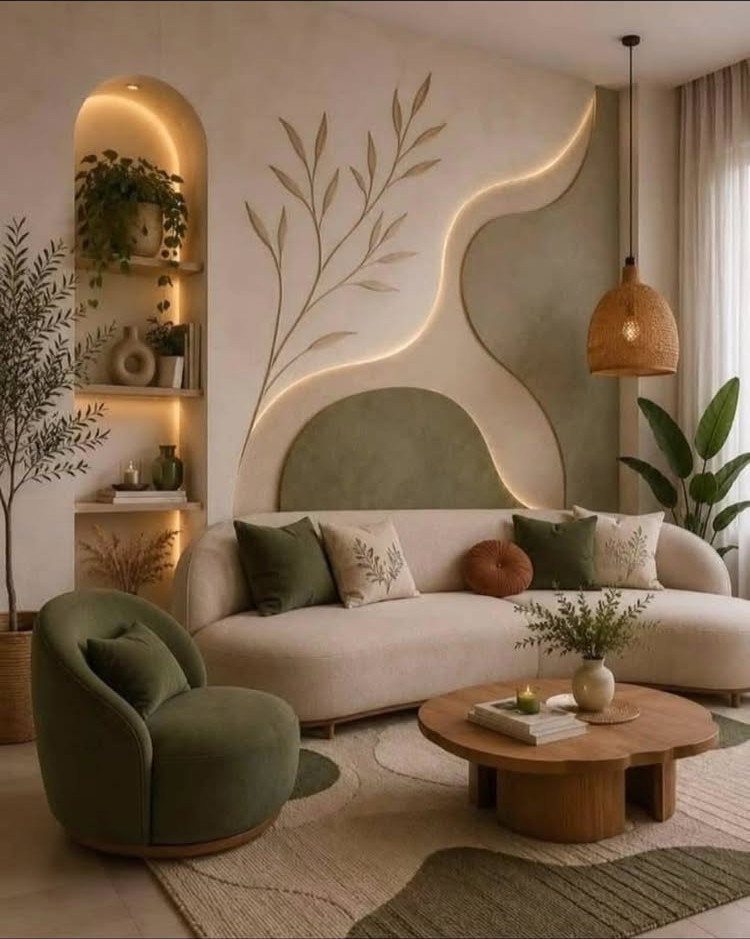
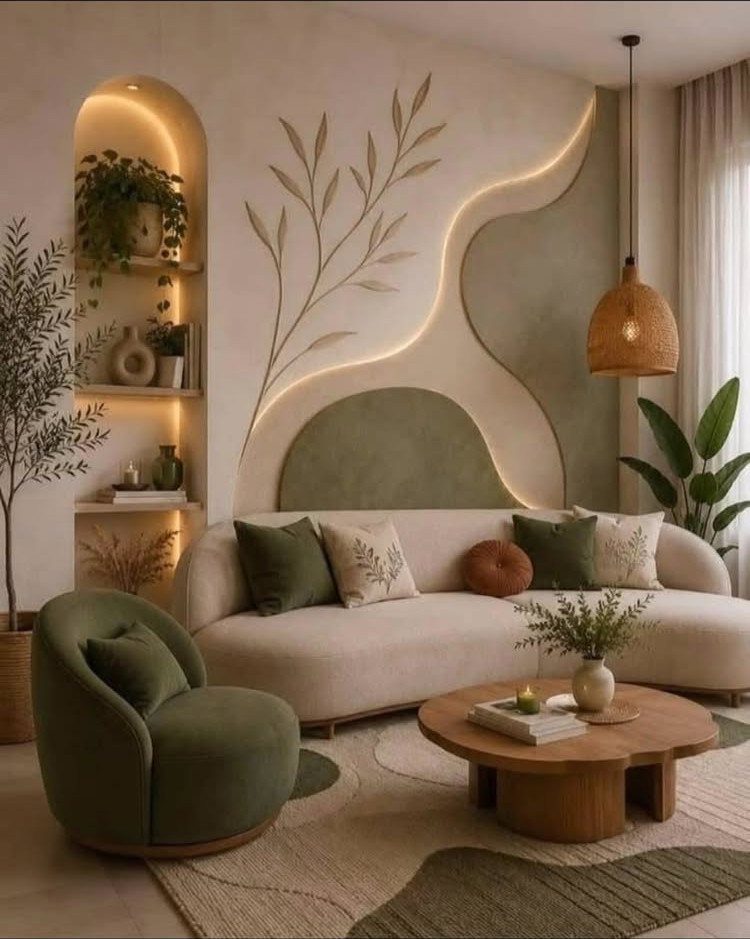
Curves are the easiest way to soften a boxy rental living room. A rounded sofa, a round wooden coffee table and a swivel chair in olive green each break up the straight lines of walls and windows.
If you can’t buy a new sofa, start with the coffee table. A round one costs far less and changes how you move through the room.
One creator describes an arched display niche in their space; a painted arch on a wall is a cheaper stand-in.
6. Streamlined Furniture
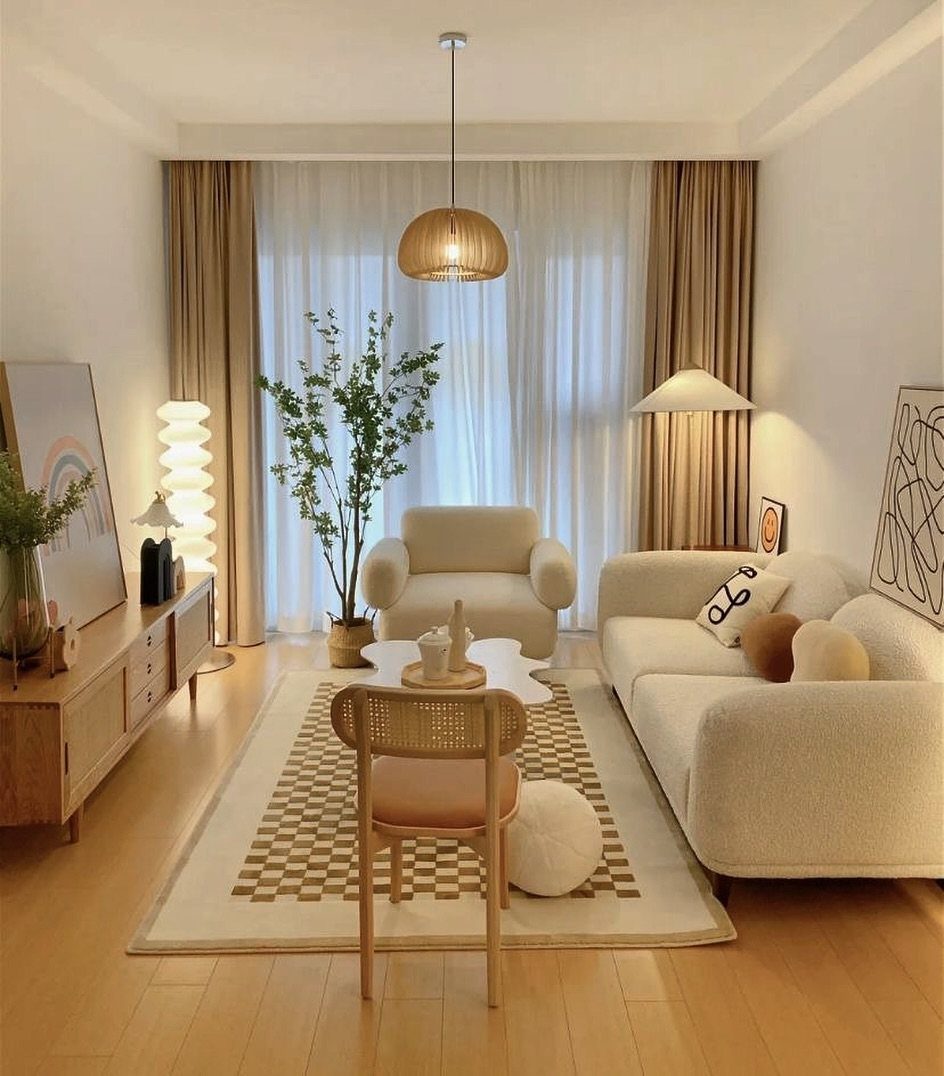
Fewer pieces, each with a clean outline: that is what keeps this living room calm. A boucle sofa, a cream armchair, a cane chair and a slim console share one pale palette, so nothing fights for attention.
Stick to a few main seats and leave floor space between them. Cane adds texture without adding bulk.
I would choose a light wood console over a bulky cabinet, since it holds a plant and keys and still looks open.
7. Vintage Pieces Alongside Modern Furniture
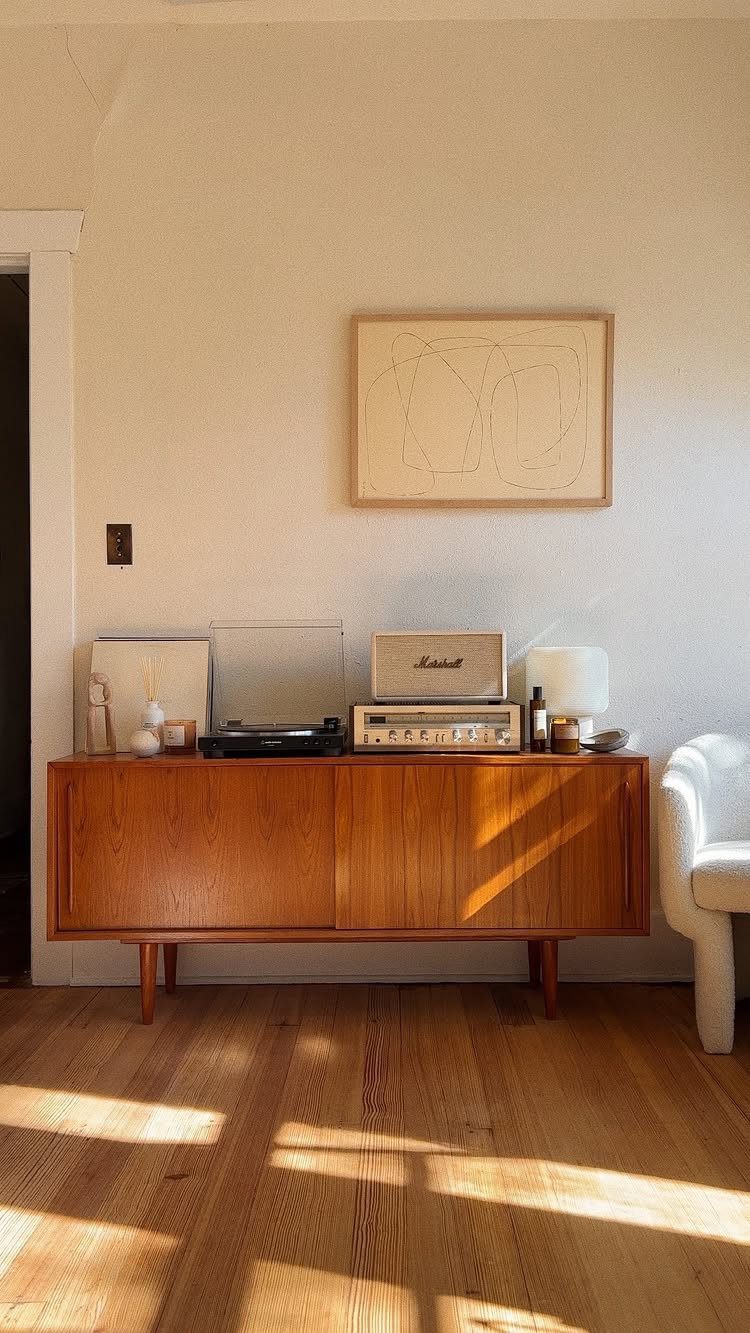
A warm wood sideboard can hold a record player, a speaker and a lamp on one surface, and that mix is the easiest way to let old and new share a room.
The low cabinet stays the anchor, and the white bouclé chair beside it keeps the look soft.
Buy the vintage piece first and build around it. Secondhand wood is usually cheaper than new, and a single older piece is enough.
Keep the wall above the sideboard plain, with one minimalist painting at most, so the furniture stays the star.
8. Nature-Inspired Artwork
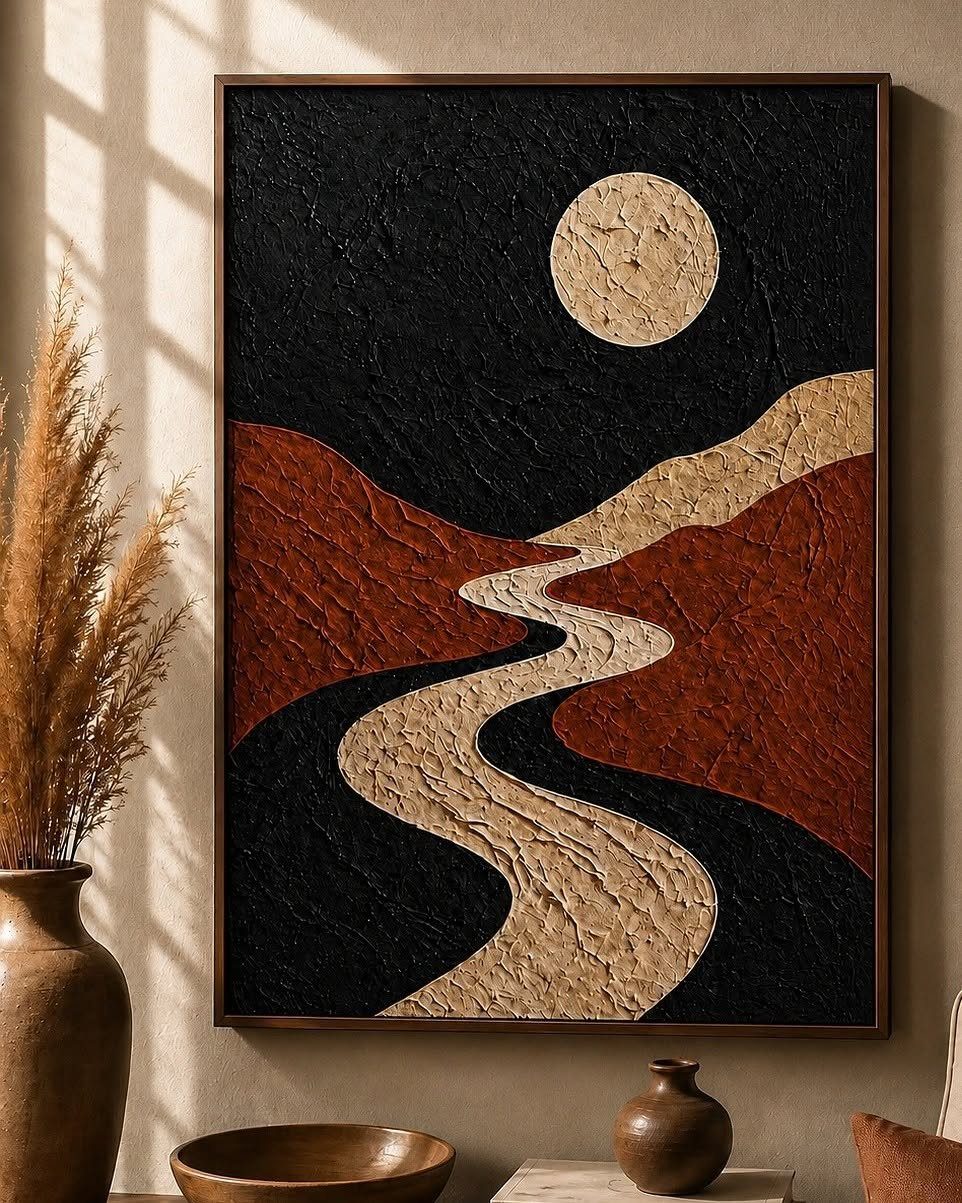
A textured painting of a river, mountains and a moon brings the outdoors in without a single plant.
Raised paint or plaster gives a wall real depth, and beige tones in it will pick up dried grass and ceramic bowls placed below.
I would pick one large piece over a cluster of small frames. Choose colors already in the room, like sand, clay or moss, so it blends in.
Hang it at eye level above a shelf or console.
9. Terrazzo Flooring
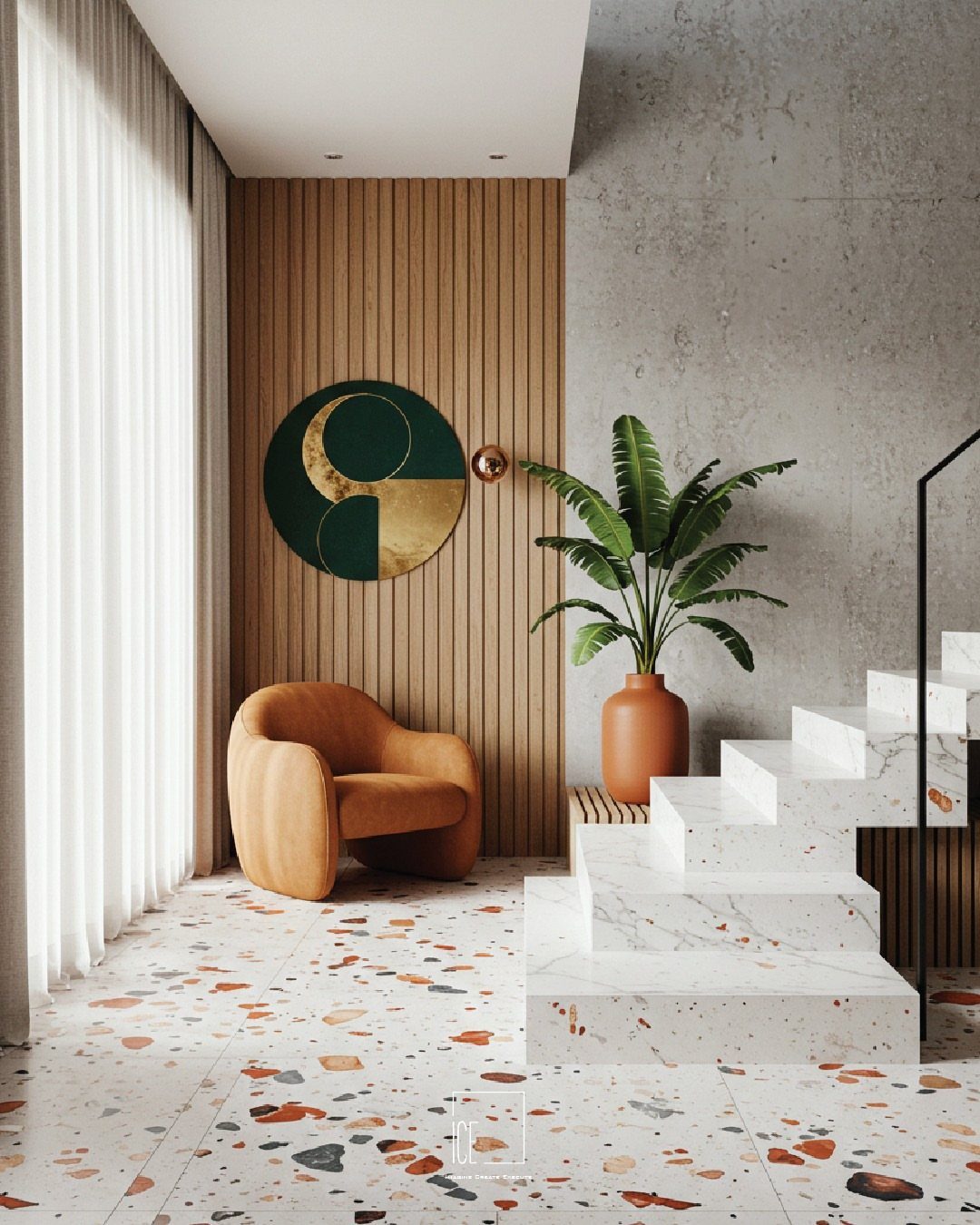
Terrazzo is a quiet showoff: a pale floor flecked with colorful chips holds its own next to concrete, wood slats and white marble.
Real terrazzo is a major job, so renters should skip it. Peel-and-stick tile in a terrazzo print gives the same speckle for a small budget and a weekend.
Keep walls and furniture plain around it.
10. Wooden Built-In Bookshelf
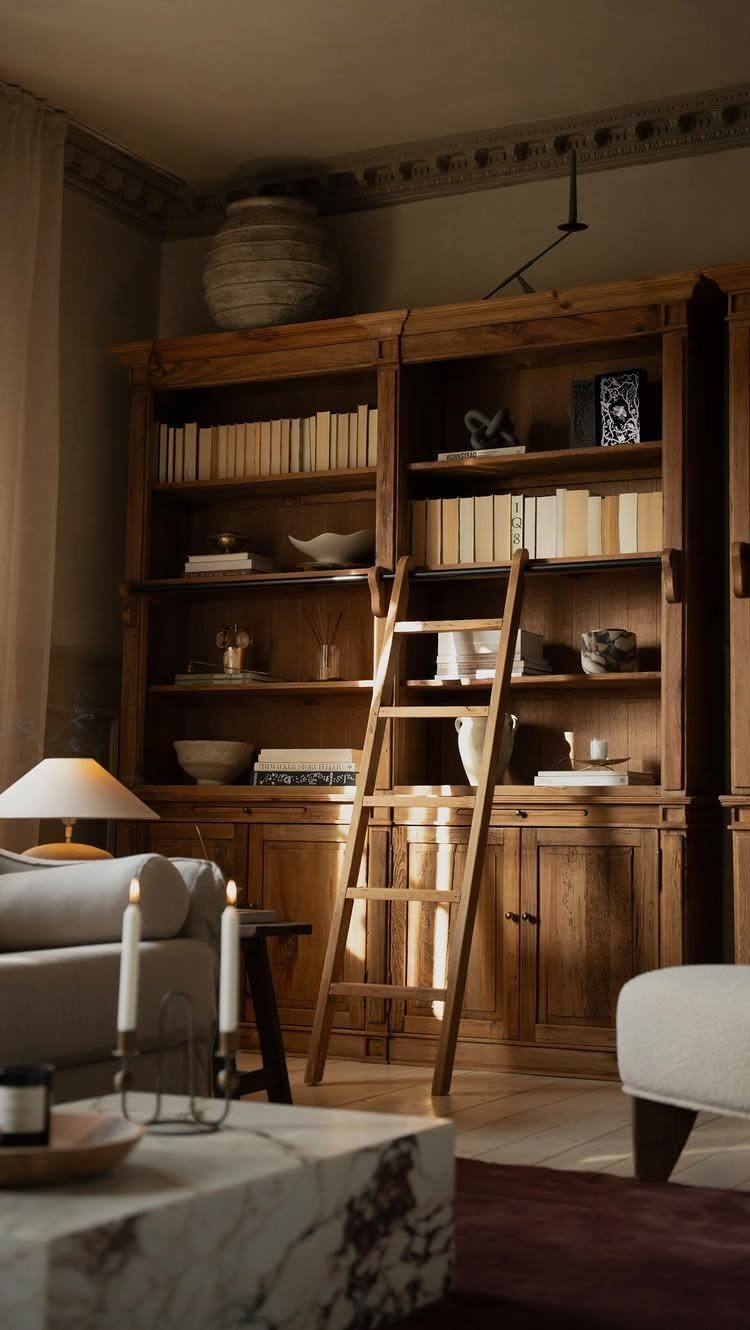
A wall of wooden shelves with a library ladder turns books into the room’s main decoration. Earthy pottery between the books breaks up the rows and adds the organic note.
Real built-ins are a big project. A cheaper route is to line up tall bookcases, paint them to match the wall, and add trim across the top so they read as one unit.
Mix books with a few bowls or vases, and leave gaps so the shelves can breathe.
11. Stone Vessel Sink
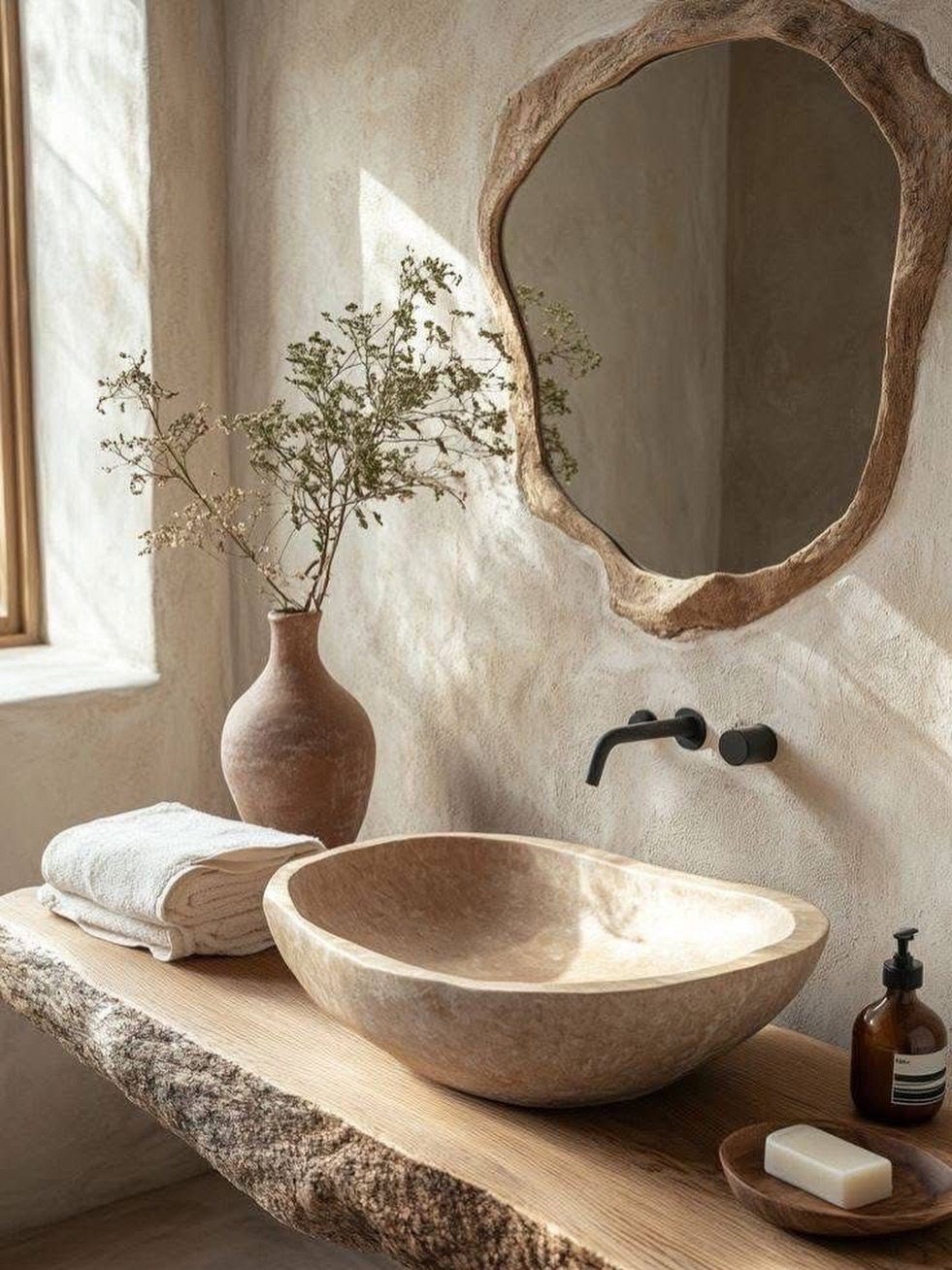
A rough stone vessel sink sits on top of the counter, so the stone itself becomes the sculpture. On a live-edge wood vanity, the raw edges of both materials echo each other, and warm neutral walls keep it calm.
I like it paired with a rough-edged mirror and a vase of dried flowers; they cost little and add the soft finish.
Pick a faucet that stands tall enough to clear the bowl’s rim.
12. Woven Jute Rug
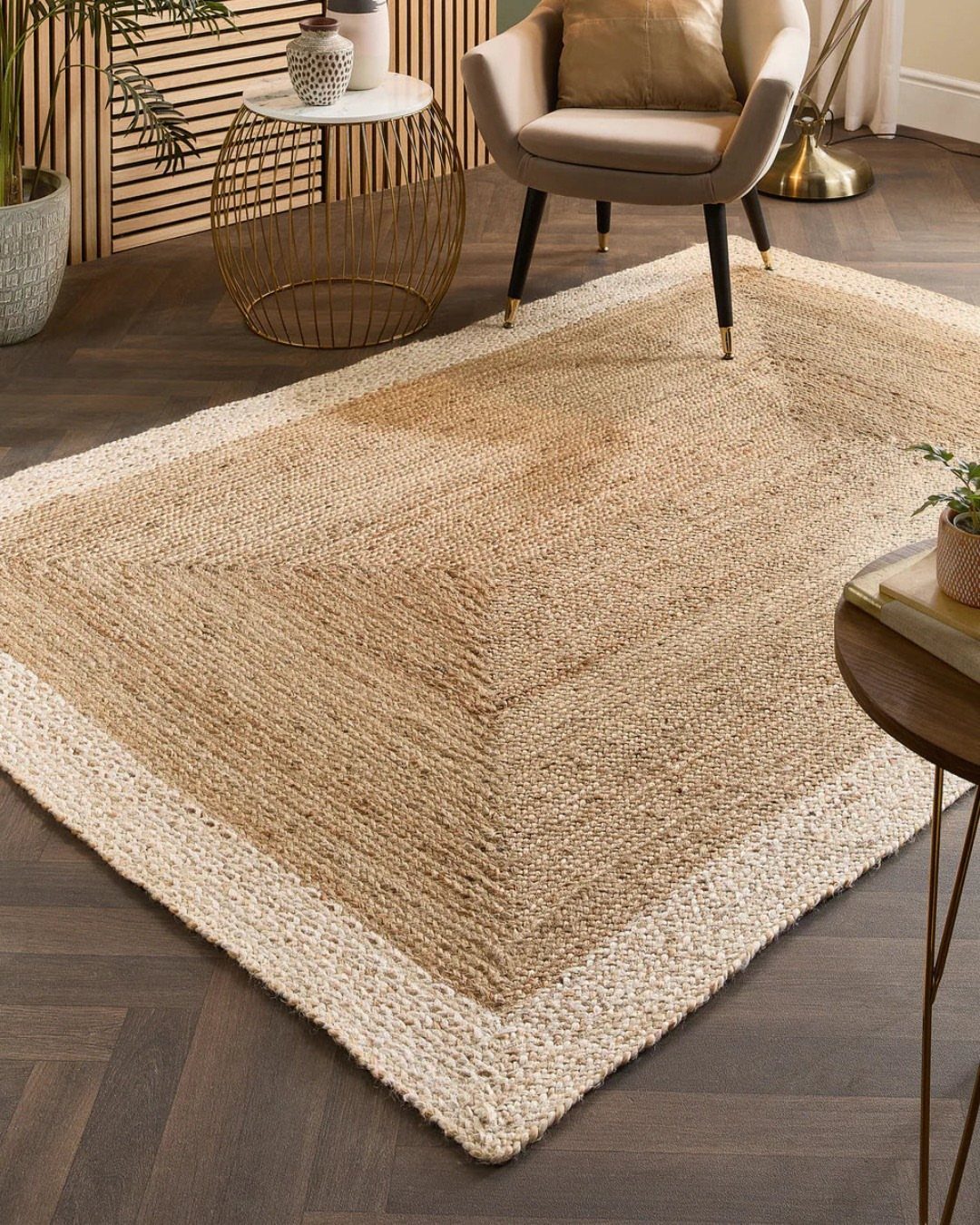
A woven jute rug with a border grounds the seating area and warms dark wood floors.
Choose a size large enough that at least the front legs of the chair rest on it. A rug that is too small looks like an afterthought.
Jute is a good budget pick, and the border adds a tidy frame without adding pattern.
13. Travertine Stone Kitchen Island
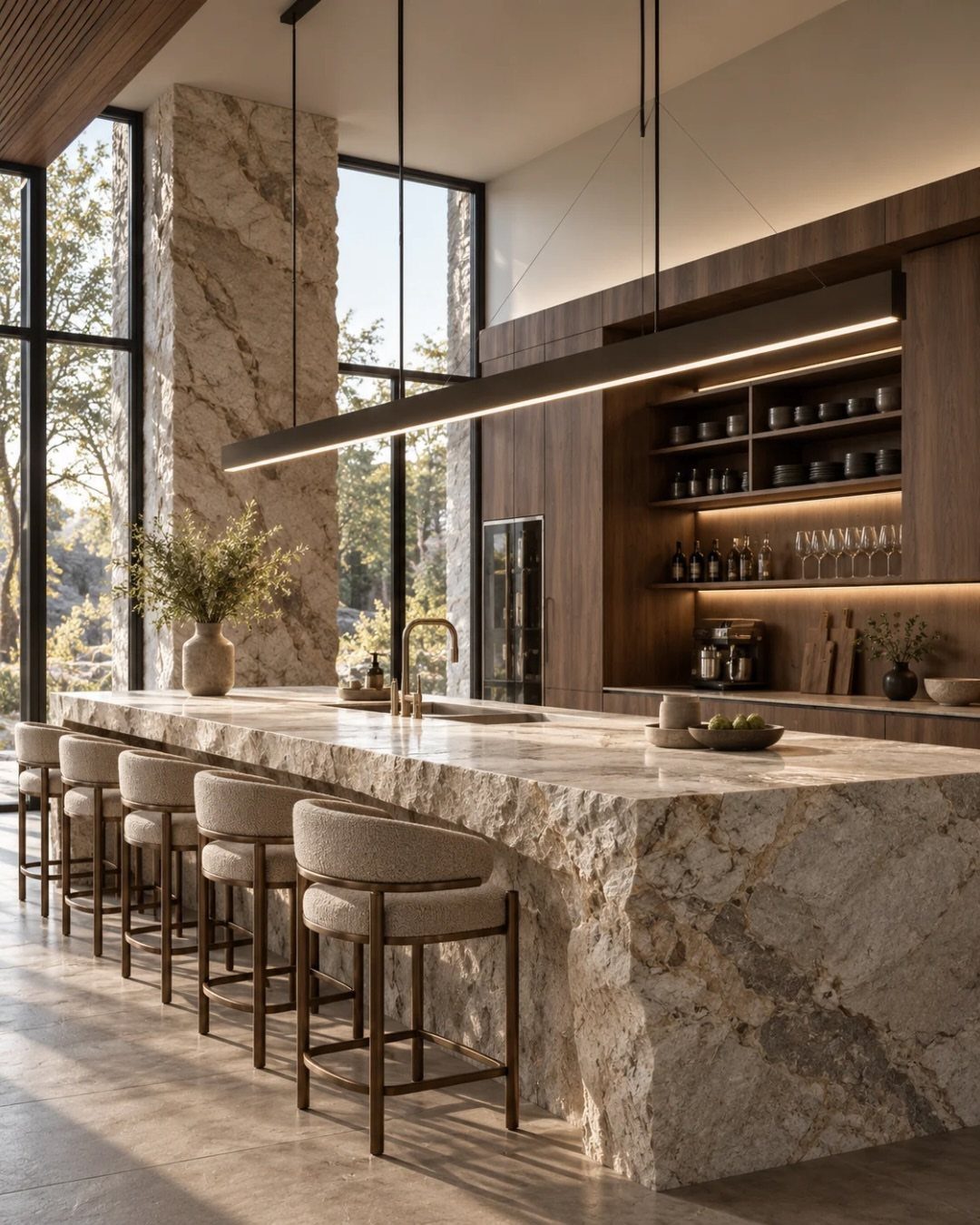
Stone with natural veining gives a kitchen island more character than any painted cabinet can, and against dark wood it reads as the lighter, softer partner. Travertine suits that pairing well.
A full slab island is a big, costly job, so most renters should look elsewhere. A cheaper route is a rolling cart or an existing island topped with a stone-look surface, then lined with stools.
Leave room for the stools to pull out, and let the island be the one bold surface in the room.
14. Travertine Stone Accent Table
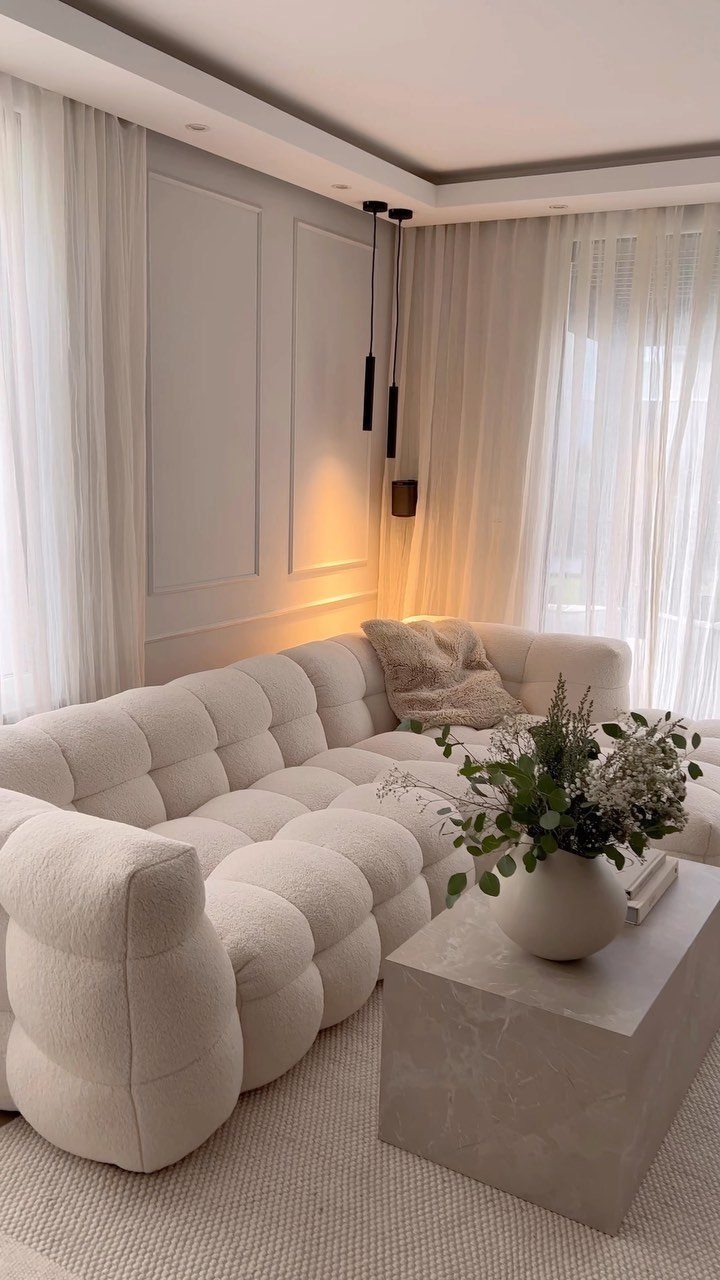
A rectangular stone coffee table is the smallest way to bring this material into a room, and a white sofa gives it plenty of calm space to sit in.
The cool, heavy top also keeps a vase of flowers looking grounded.
I would buy the table last, after the sofa, and choose one with a plain, low shape so it doesn’t compete with the seating.
Stone costs more than wood or metal, so a stone-look tabletop is a fair stand-in on a tight budget.
Keep the surface mostly bare: one vase is enough.
Creating a Calming Environment
Calm in a room usually comes from a narrow palette. Start with white, beige, taupe or soft gray as the base, then add earthy accents such as terracotta, olive green or muted brown in small doses.
Skip bold, contrasting colors, and build depth by layering several shades of neutral rather than one flat tone.
In a bedroom, sage, sand or soft gray works well with light wood and natural fibers. Swapping in linen bedding and a nubby wool throw takes one weekend and costs a fraction of what a new bed or chair would.
Shopping for a new piece?
Look for nightstands with softly rounded corners and a drawer or door that hides the clutter. They look soft and keep clutter out of sight, which does as much for calm as any paint color.
Handmade pottery or a raw-edge mirror adds dimension without crowding the surfaces.
Incorporating Nature
Choose plants for their shape.
Fiddle leaf figs, snake plants and monstera have bold, graphic outlines, so each one looks like a sculpture instead of clutter. I would put them in simple, neutral planters that match the room’s palette.
Restraint matters more than count. A few well-placed plants look better than a crowded windowsill, and they keep the room open and minimal.
Light and air count as materials too.
Heavy layers on big windows block the point of having them, so keep them bare or nearly so and open them when the weather allows; daylight and fresh air make the line between inside and outside feel thinner.
Leave floor space open and strip away the small stuff, and the wood, stone and linen get room to do the talking.
For renters, that costs nothing: move a chair away from the window, and the room already feels closer to the outdoors.
Designing for Functionality
Before buying anything, ask what the piece does and whether it is comfortable.
Skip ornate or fussy designs. Clean lines and unfussy shapes are easier to live with, and they pair with the pieces already in your home with little effort.
The same rule applies to decor.
Rather than filling every shelf, pick items that earn their spot: natural ceramics, sculptural vases, coffee table books and woven baskets. A basket that hides blankets is decor and storage at once.
Leave some surfaces empty. Warmth and personality come from a few chosen objects, not from covering every inch.
Frequently Asked Questions
What is organic modern style?
Organic modern style pairs clean, simple modern shapes with natural materials like wood, stone, linen and jute.
The result is warm minimalism: calm and uncluttered, but not sparse. Texture does the work that bold color would do in other styles.
What are some examples of modern minimalist interior design?
A pale living room where every piece, from the boucle sofa to the cane chair, follows the same quiet palette shows how a shared color holds a room together.
A round wooden coffee table with a single vase on it is another. Clean outlines, open floor space and bare surfaces are what make these rooms read as minimalist.





