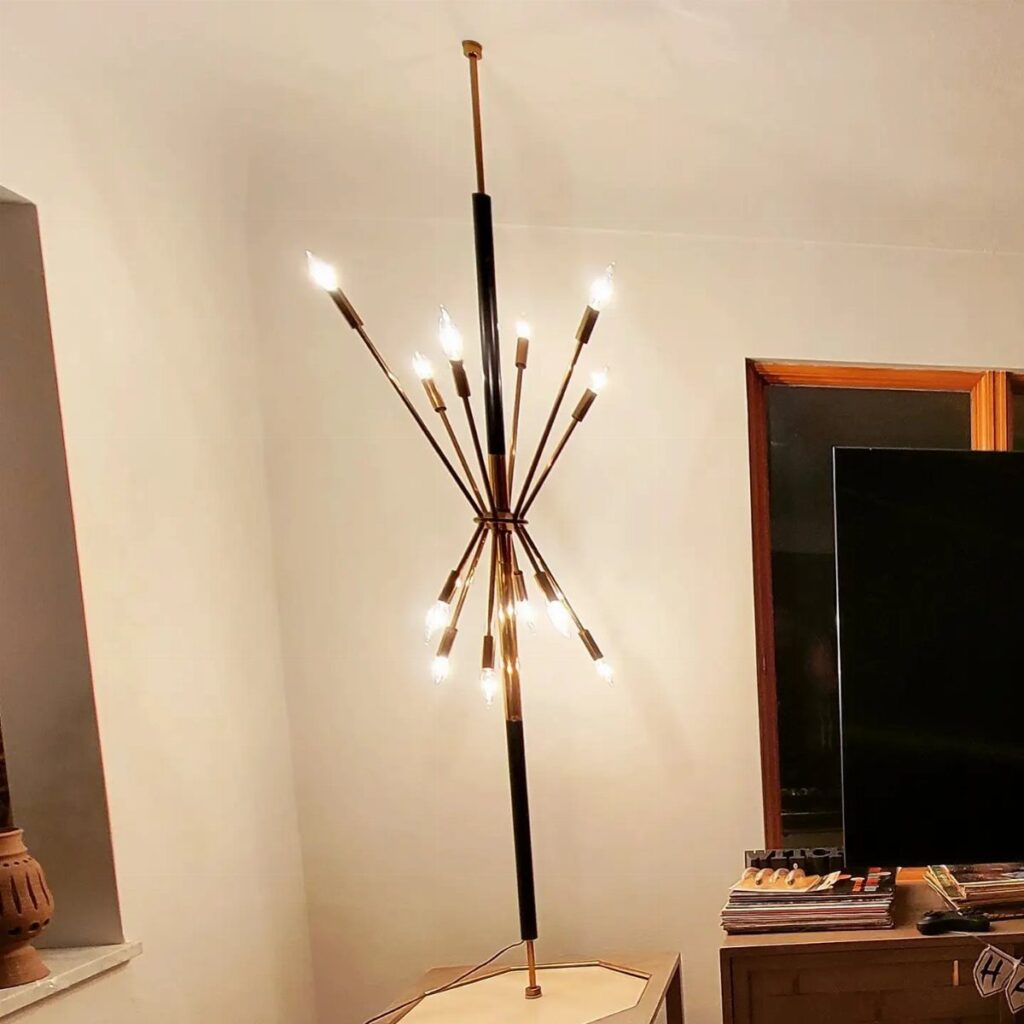
The ideas here run from a Sputnik chandelier or a set of tapered-leg chairs to terrazzo flooring or a wall of floor-to-ceiling glass, so the cost and the commitment depend on what you are allowed to change.
Renters can get the look from pieces that lift out and go with them, like a Sputnik chandelier swapped in for the original fixture or a speckled self-adhesive tile. Owners can take on paint, lighting, furniture and flooring.
1. Furniture with Tapered Legs
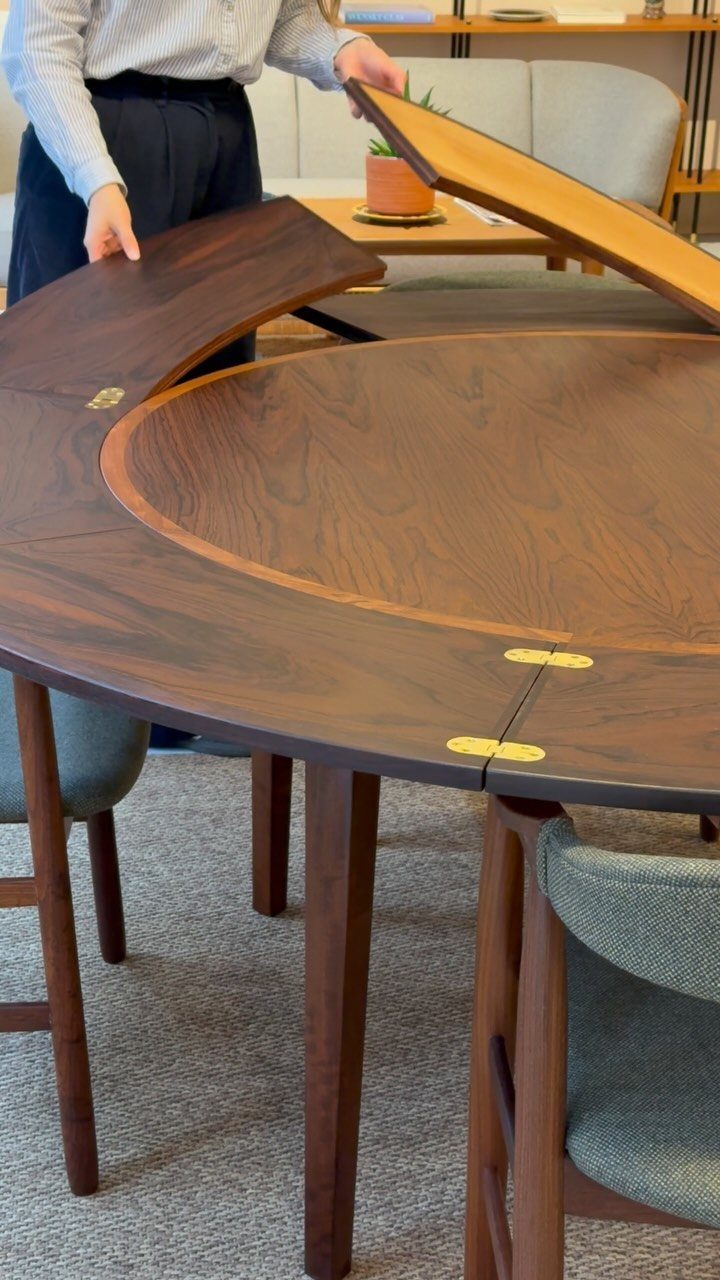
Tapered legs narrow toward the floor, and that small cut is what makes a heavy walnut table look light.
Because the legs thin out, you see more floor under the piece, and a round top keeps the whole set soft in a room with a grey sofa.
I would start with one piece, a dining table or a side table, rather than replacing everything. Pair it with chairs that echo the same slim leg so the set reads as a match.
2. Natural Color Palette with Earthy Tones
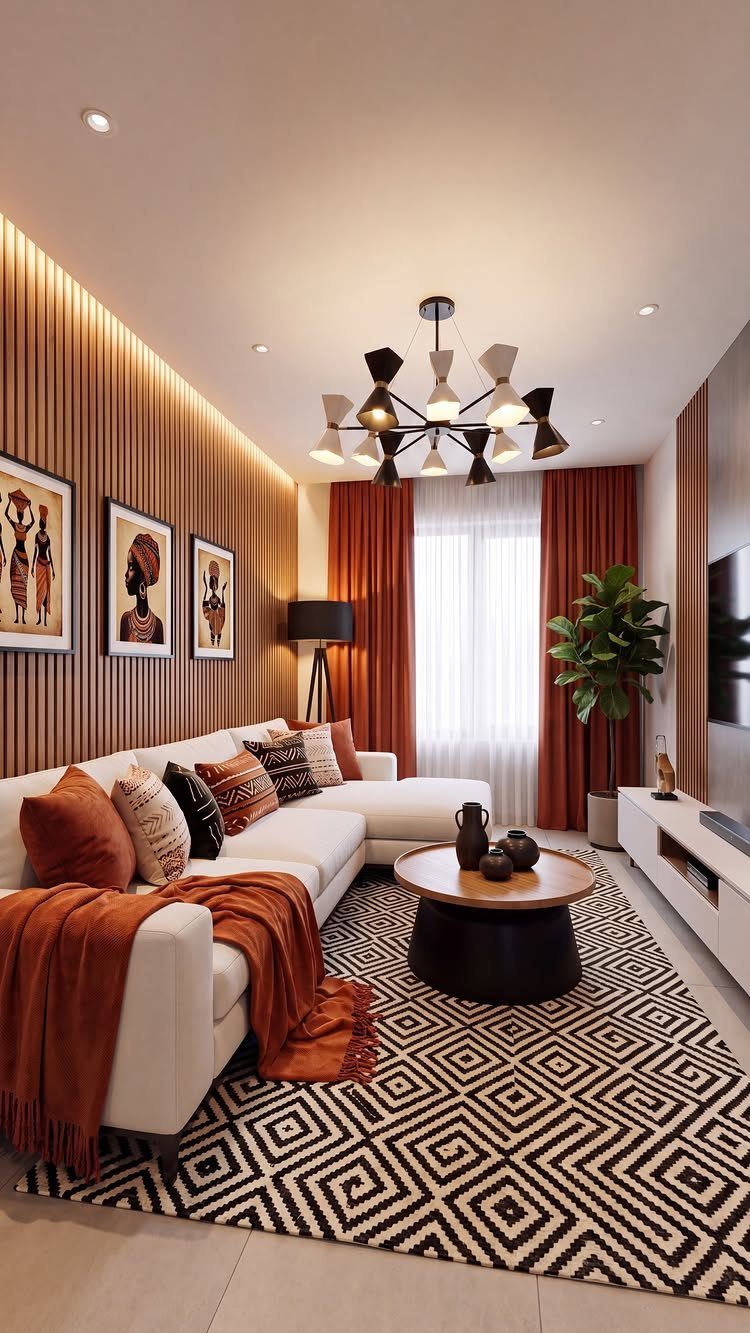
Burnt orange does the heavy lifting in this palette, and wood keeps it grounded. Warm paneling, a white sectional and one earthy accent color give a room plenty of character without a paint-heavy overhaul.
On a renter’s budget, I would bring in the orange through pillows, a throw or art before touching a wall. A geometric rug ties the colors together, and a single plant softens the whole mix.
Keep the accent to one color and let the wood and white do the rest.
3. Sputnik Chandelier
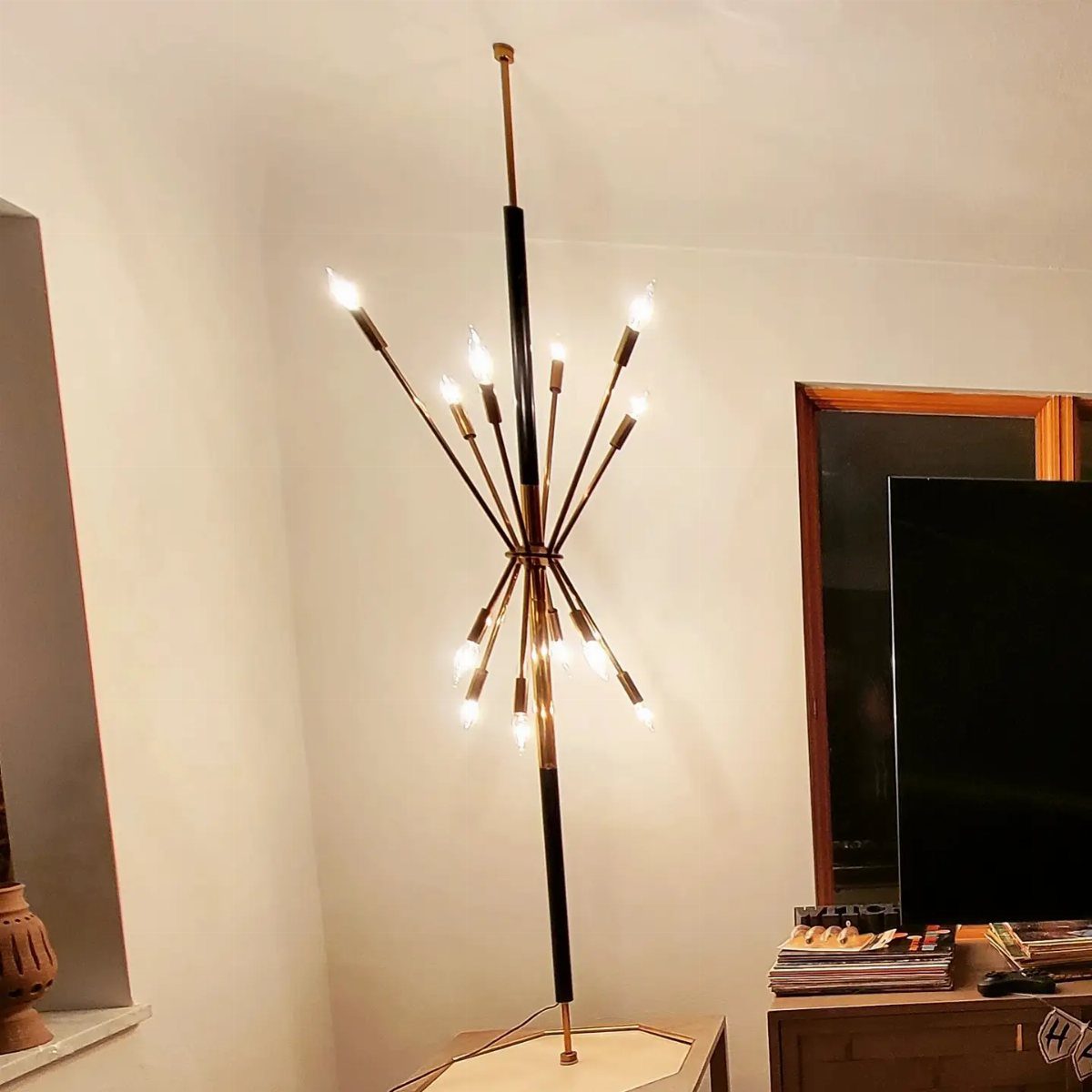
The Sputnik chandelier works as the one statement fixture in a room, so keep the other lighting quiet.
Renters can often swap a fixture and save the original, which makes this a good one-evening project.
Choose a finish that matches your other metals, and expect a lot of bare bulbs, so pick a warm bulb you like looking at.
4. Color Bands in Walls
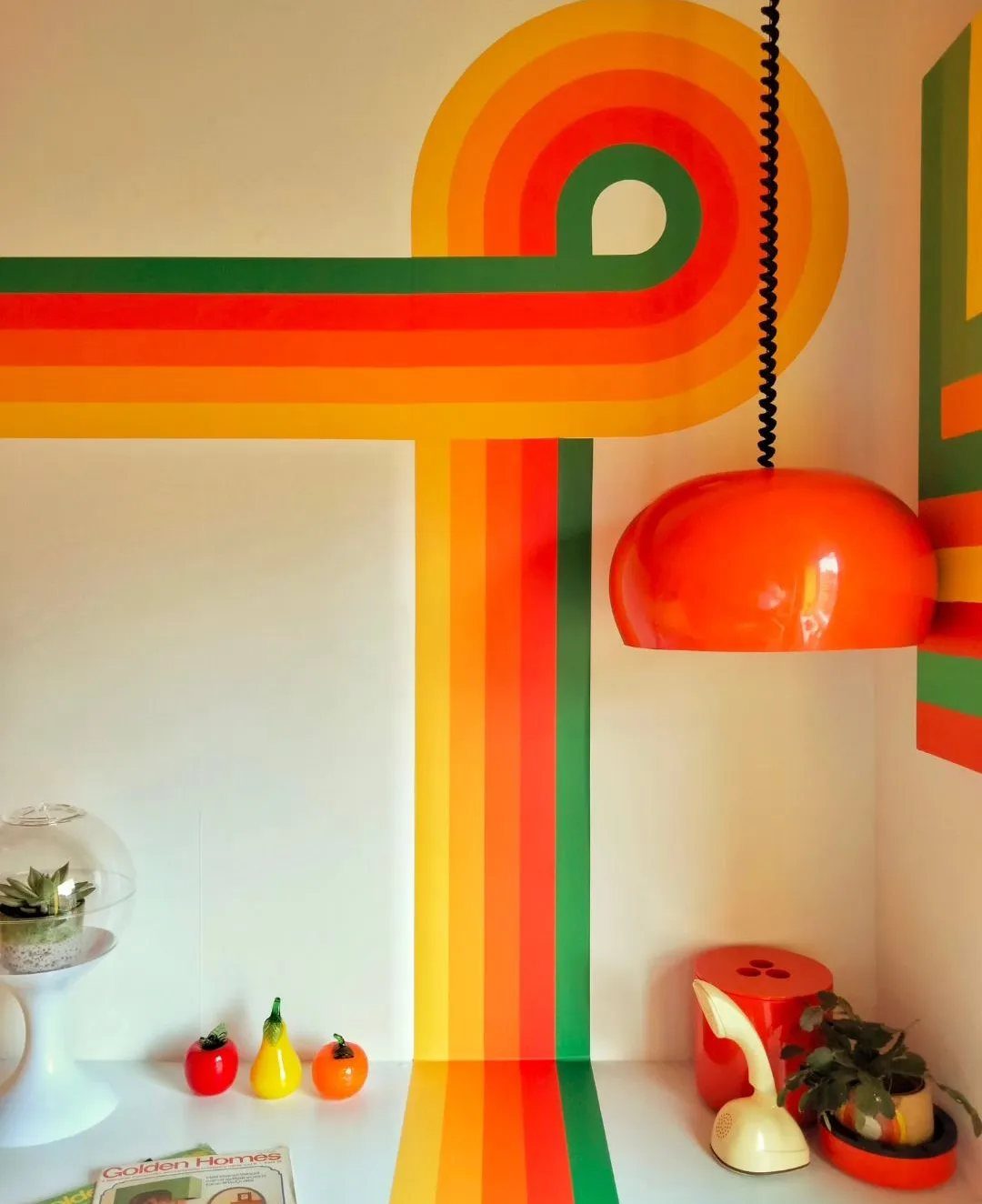
Painted bands turn a flat white wall into the main feature. Curving stripes of yellow, orange and green read like built-in graphics, and they need only a few small paint samples rather than a full gallon of each.
I would sketch the curve on the wall in pencil first, then tape the edge and press it down well before painting.
Keep the white wall as the background, and echo one band color in a lamp or small object so the wall feels planned.
5. Floor-to-ceiling Windows
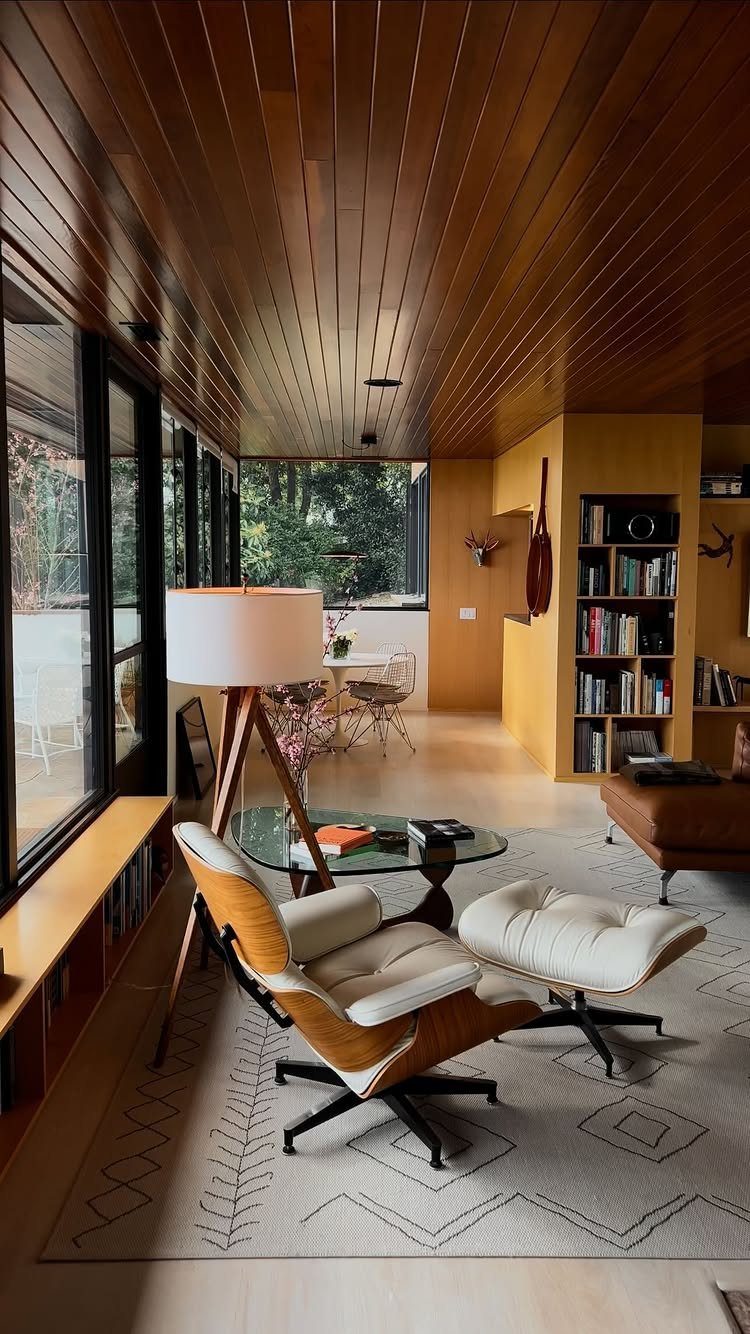
Glass from floor to ceiling makes the trees outside part of the room.
The look can still be borrowed.
Clear a window of heavy curtains, use sheer panels or none, and keep furniture low, like an Eames lounge chair, so the view stays open. A wood ceiling adds warmth that balances all that glass.
6. Vintage and Contemporary Furniture
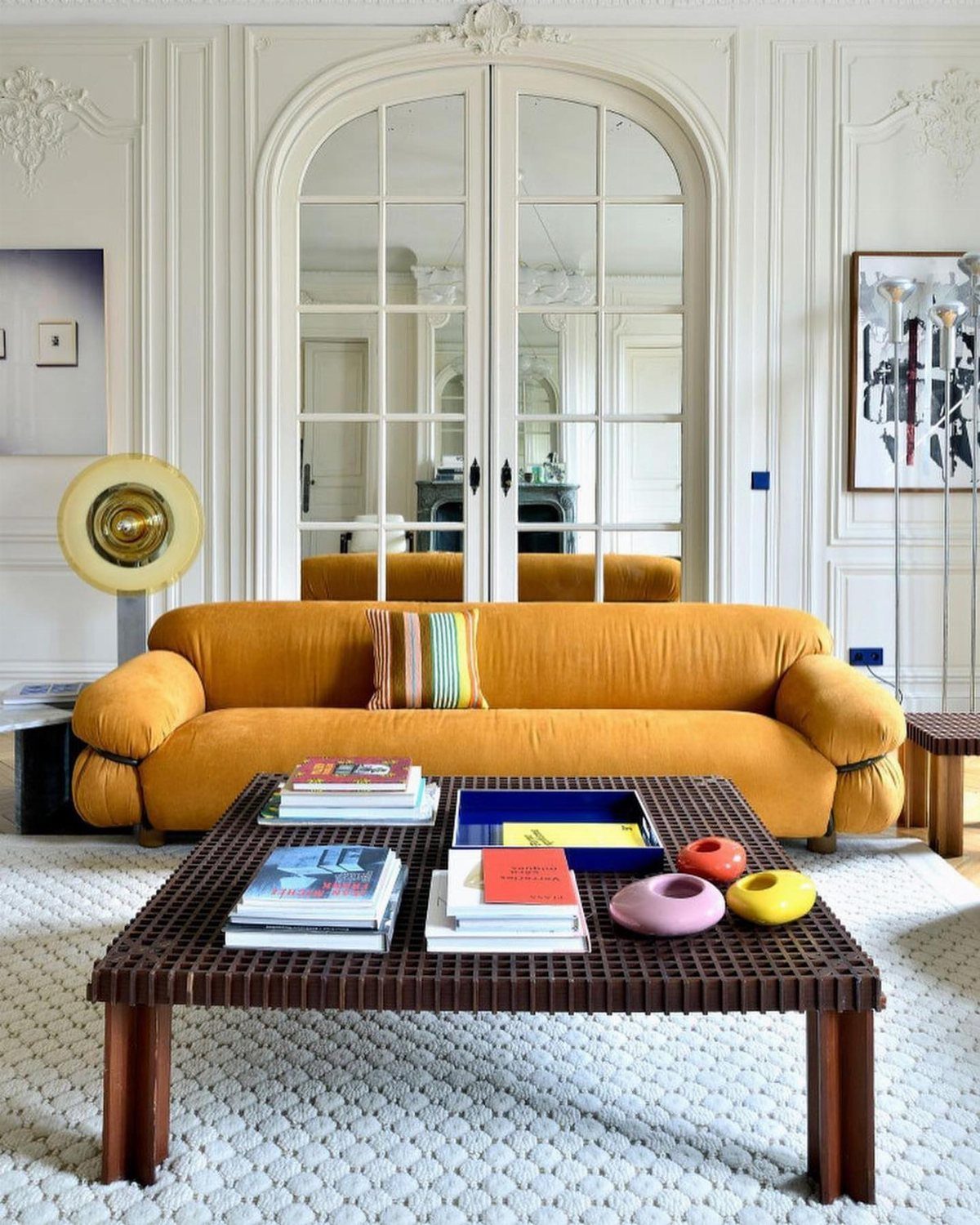
A mustard velvet sofa and a woven coffee table come from different eras of taste, and they sit together happily in a bright white room. One bold curved piece and one textured, natural piece is a combination I trust.
Buy the statement item new or secondhand, then let the second piece be quieter.
A textured rug in a light neutral keeps the color from feeling heavy. Stop at two or three standouts, or the room starts to feel crowded.
7. Terrazzo Flooring
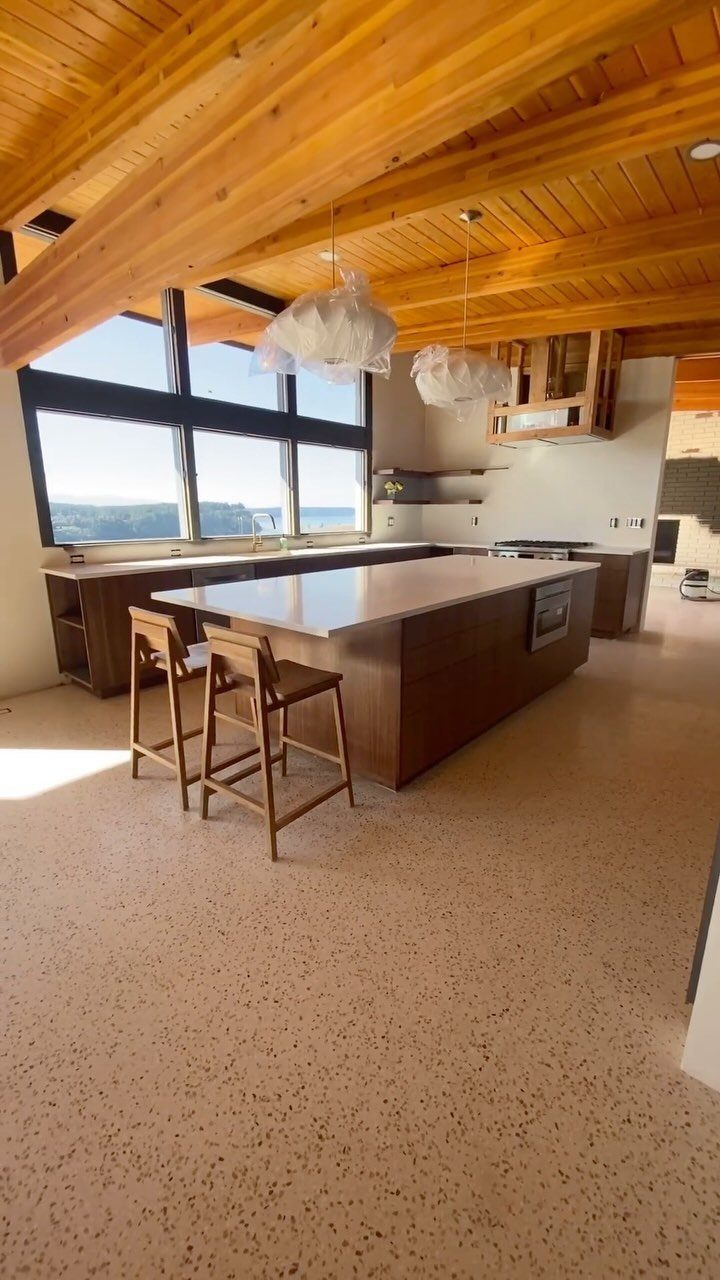
Terrazzo is a speckled floor, and in a kitchen with wood ceiling beams it gives the room a pattern without adding a single object.
The chips stay busy underfoot, so keep the island and stools in plain wood and let the floor carry the pattern.
Every flooring choice has pros and cons, terrazzo included, so price it out before you fall for it. Renters can get the look with a speckled self-adhesive tile that lifts off when the lease ends.
8. Timber and Metal
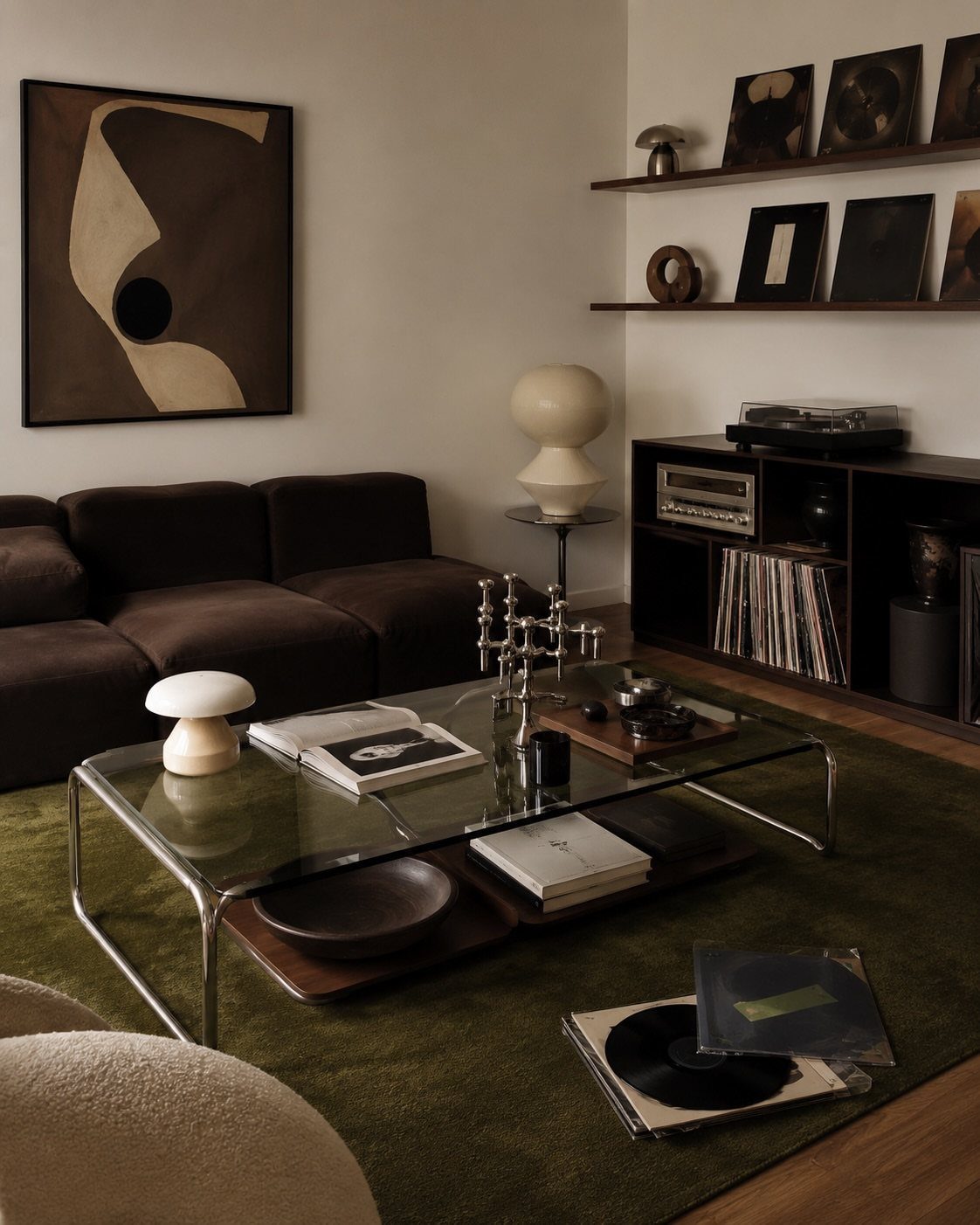
A thin metal frame paired with a wood shelf or top is the mix to copy: the metal stays slim, and the wood supplies the warmth.
I like that the glass keeps the floor visible, so the table never crowds a small room.
To copy the mix, pick wood in one tone for shelving and tables, then repeat one metal finish in a table frame or lamp base. 2 metals is plenty.
Thrift stores and secondhand listings are the cheapest places to find slim metal-framed tables.
9. Curved Contours and Flowing Lines
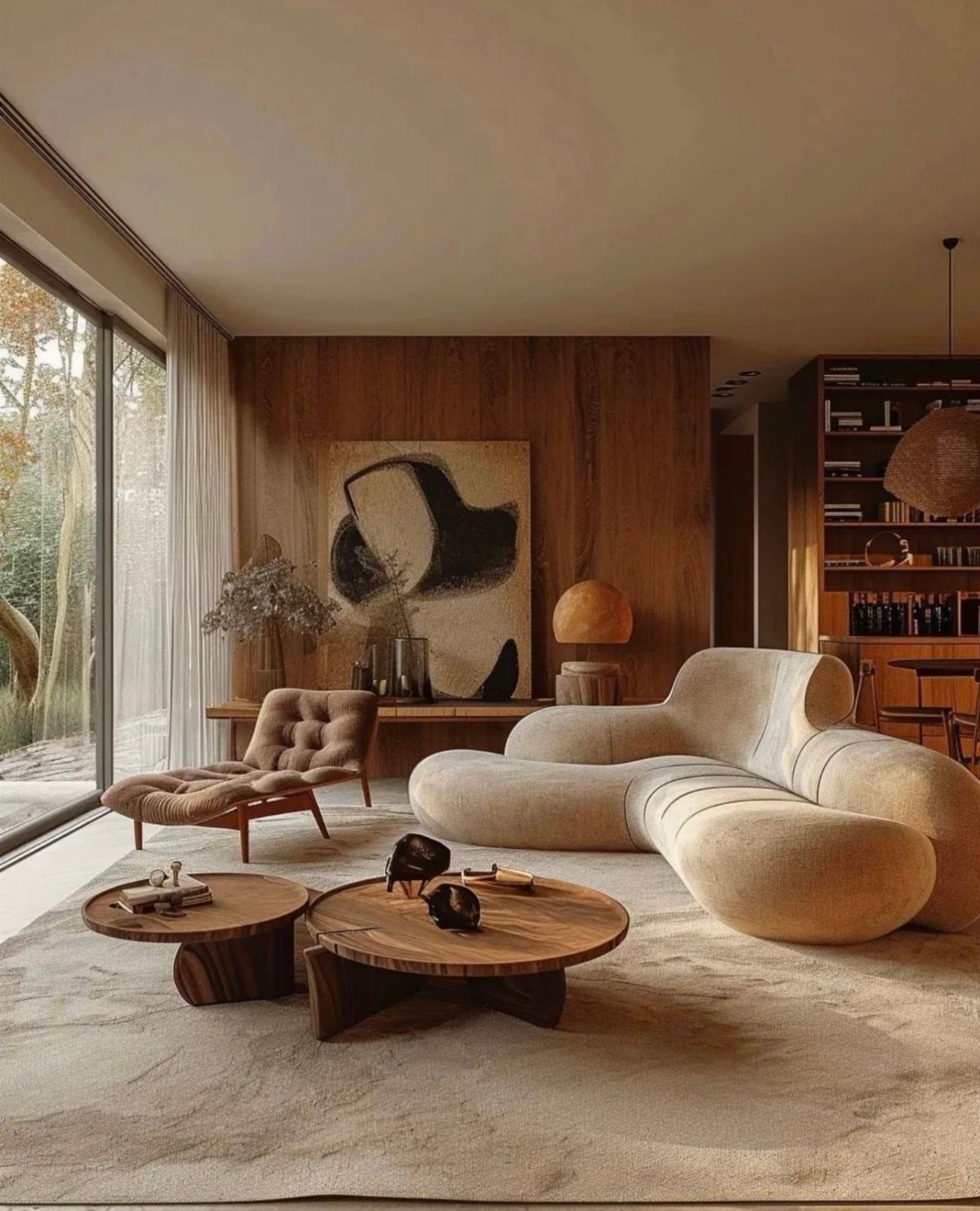
A curved sofa changes how a room feels more than any paint color, because nothing in it ends in a hard corner. Round wooden tables repeat the shape, and they are easier to walk around than square ones.
Pick one big curve and let the others be small, so the room flows instead of looking like a set of circles.
10. Indoor Plants
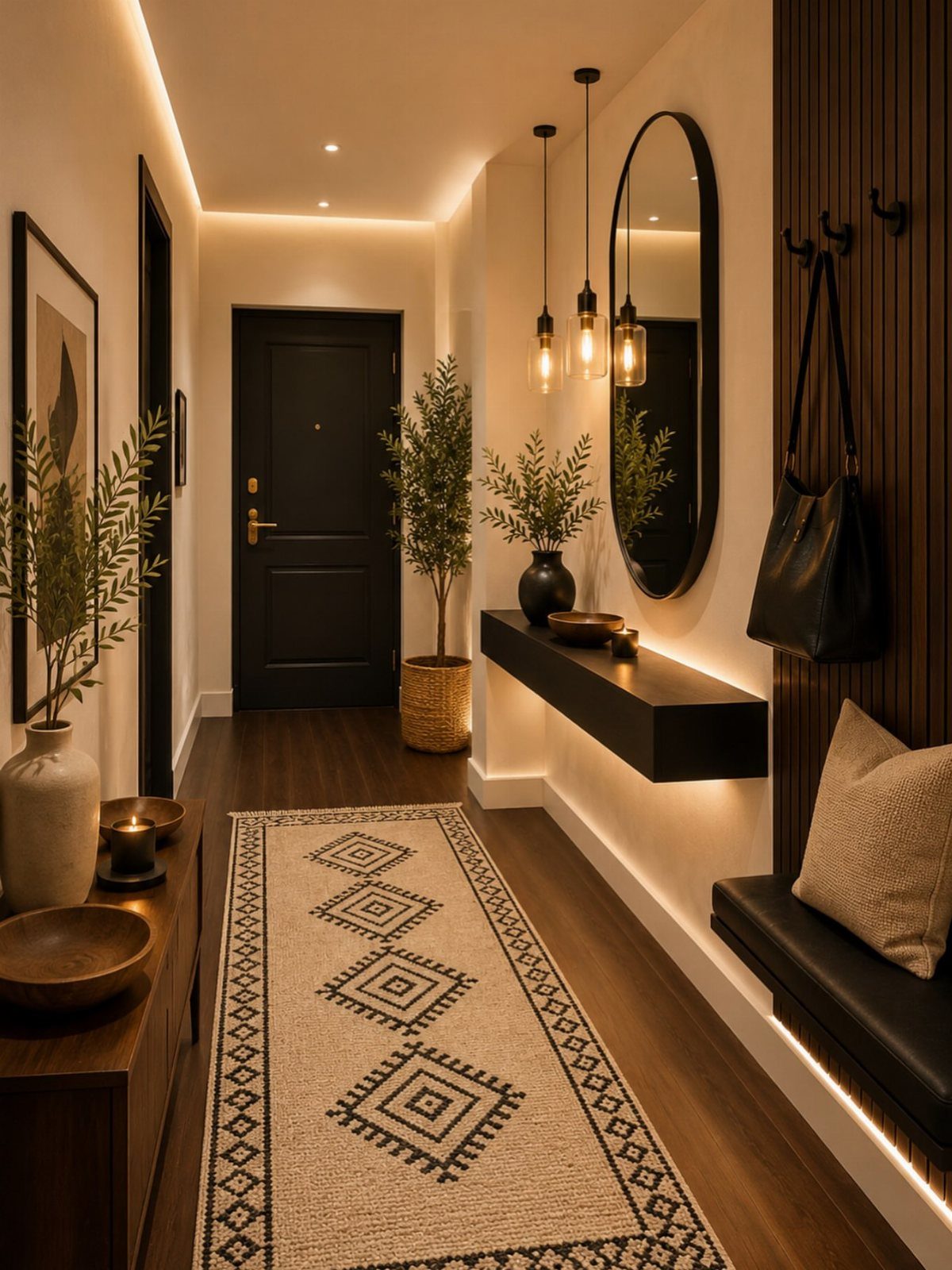
Potted plants bring nature indoors, and a hallway is a good place for them because a narrow space needs only a few green accents.
I would mix sizes: one plant on the shelf, one or two on the floor, in plain pots that suit the wood. Under a round mirror, the green doubles in the glass.
Start with one plant you can keep alive, then add more.
Mid-century Modern History
Mid-century modern grew out of the years after World War II, with Bauhaus and Scandinavian design as its main influences.
The style took shape after World War II, drawing from Bauhaus and Scandinavian design with a focus on function and simplicity.
Function came first. The design philosophy borrows Louis Sullivan’s line "form follows function," so ornament is used sparingly if at all.
Knowing that helps when you shop: ask what a piece does before you ask whether it looks the part.
Clean lines, basic geometric shapes and soft organic curves are the traits to look for, and a wide range of materials and colors is welcome.
The name itself is newer than the style.
Cara Greenberg gave the movement its name when she titled her book on postwar furniture, making the term stick in popular use. In listings you will often see it shortened to MCM, which is a handy search term.
“Midcentury modern was about stripping away unnecessary ornament and really getting to the essence of a design gesture,” designer Jonathan Adler says.
Differences from Other Styles
Mid-century modern and modern industrial both took off after World War II, and both carry "modern" in the name. That is why shoppers mix them up.
The split shows in the finish.
Mid-century pieces have clean, finished edges and lean on color, while industrial embraces raw materials. If a piece looks unfinished on purpose, it belongs to the other camp.
Plain modern minimalism is a different thing again.
It is rigid, while mid-century is playful and a little whimsical, a style that captured the optimism of its era. Bringing the outdoors in is part of that spirit, along with inventive use of materials.
When you can’t tell which style a piece is, check the edges first, then the color.
Smooth and warm points to mid-century. Raw and rough points elsewhere.
Famous Designers
Furniture is the most recognizable part of the style, so knowing a few names makes secondhand hunting much easier. Charles and Ray Eames, George Nelson and Eero Saarinen are the best known for inventive furniture and architectural design.
The list runs wider. Arne Jacobsen, Poul Henningsen, Eero Aarnio and Harry Bertoia all belong to the period too, and designers came from all over the world.
Searching a designer’s name along with the piece type can turn up original labels and good reproductions. Expect real craftsmanship in the originals, since many of these organic shapes were hard to make.
If the originals are out of budget, look for pieces that borrow the same simple, rounded forms. Judge them by shape and build, not by the name on the tag.
Frequently Asked Questions
What is midcentury house style?
Midcentury modern is a style built on clean lines, simple geometric shapes, soft organic curves and very little ornament.
Walnut, teak and oak do most of the work here, set against white or soft neutral walls, and then I add a single accent or two in olive, mustard or burnt orange so the room stays calm.
What is the 70/30 rule in interior design?
The rule says to use about 70% of one main color and 30% of an accent color so a room feels balanced.
Midcentury rooms follow a similar habit: wood and white do most of the work, and a single earthy accent like burnt orange supplies the rest. Keeping the accent to one color stops the room from feeling busy.
Who is the famous mid-century modern architect?
Frank Lloyd Wright usually gets named first, though Richard Neutra and Eero Saarinen shaped the look of the era just as much. Wright’s site-specific designs, flowing spaces and wood paneling show up in many midcentury homes.
Others who shaped the style include Philip Johnson, Le Corbusier, Walter Gropius, Alvar Aalto, Marcel Breuer and Pierre Koenig, plus Charles and Ray Eames on the furniture and architecture side.





