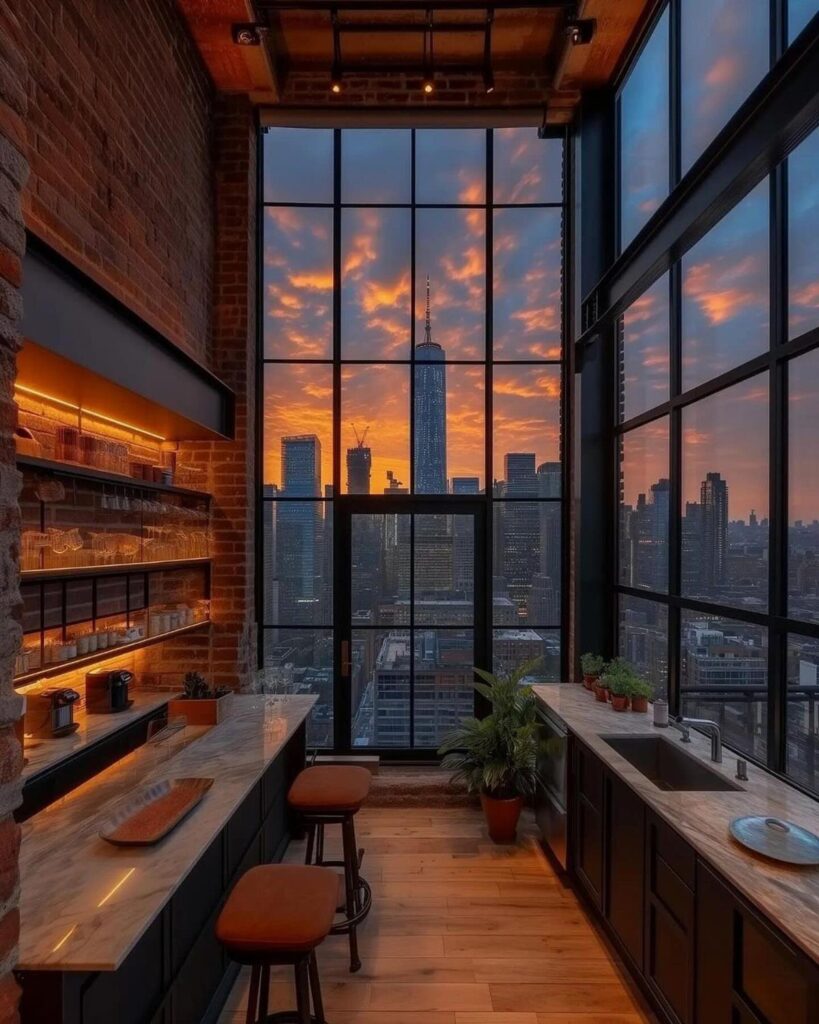
Renting or owning decides which ideas fit: a renter gets the most from things that move or come off, like sheer shades, plants or a coffee table on locking casters, while an owner can spend on the structure itself, from the beams and ductwork to the windows.
1. Luxury Loft Features
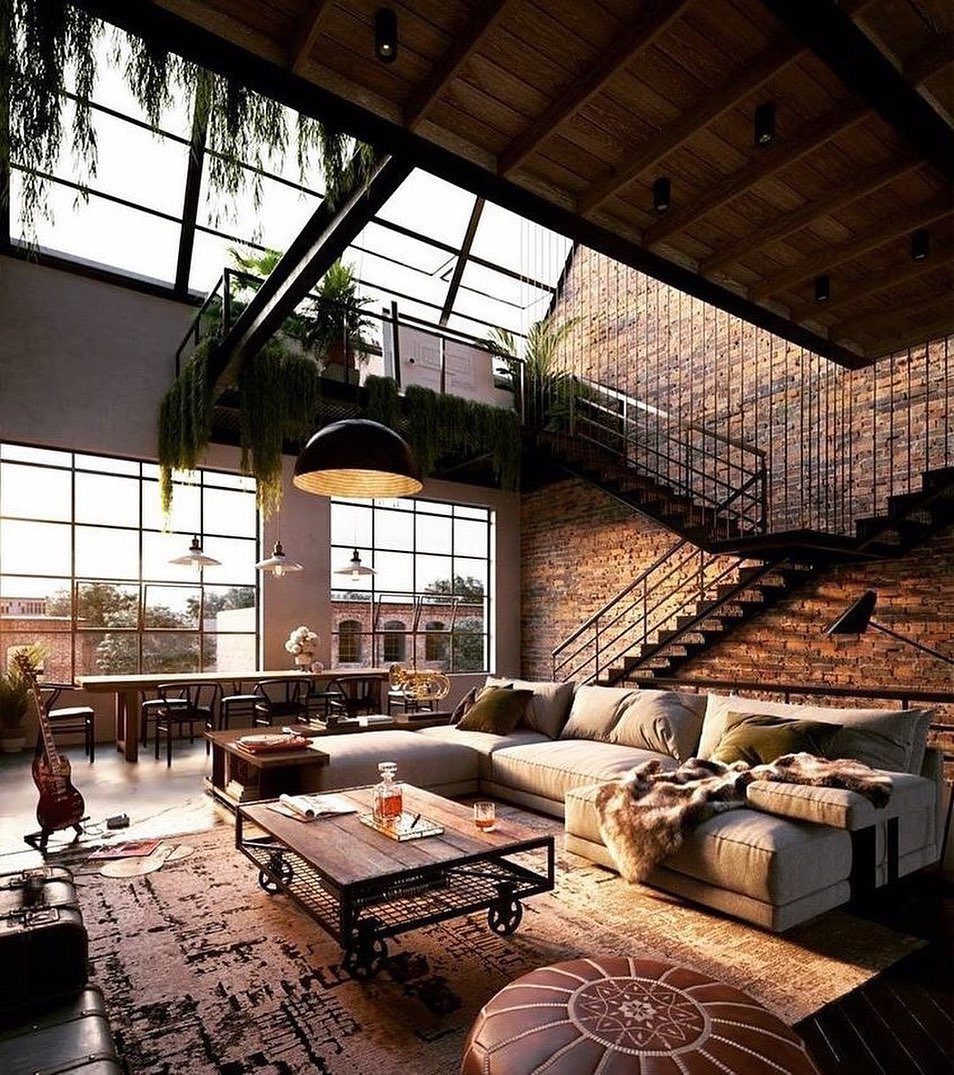
Brick, a mezzanine and a grey sectional can look like 3 separate ideas, but they read as luxury here because the finishes stay quiet and the structure does the talking.
I would copy that restraint: let the brick be the pattern, and keep the sofa a solid color.
A wooden coffee table on locking casters is the smartest piece in an open loft, since you can roll it aside for guests or push it against the sofa when you need floor space.
It lets you pull the seating area apart for guests, and it costs far less than custom built-ins.
Plants add softness against all that hard material. In a rental, they are the cheapest way to get the same effect.
2. High Ceilings
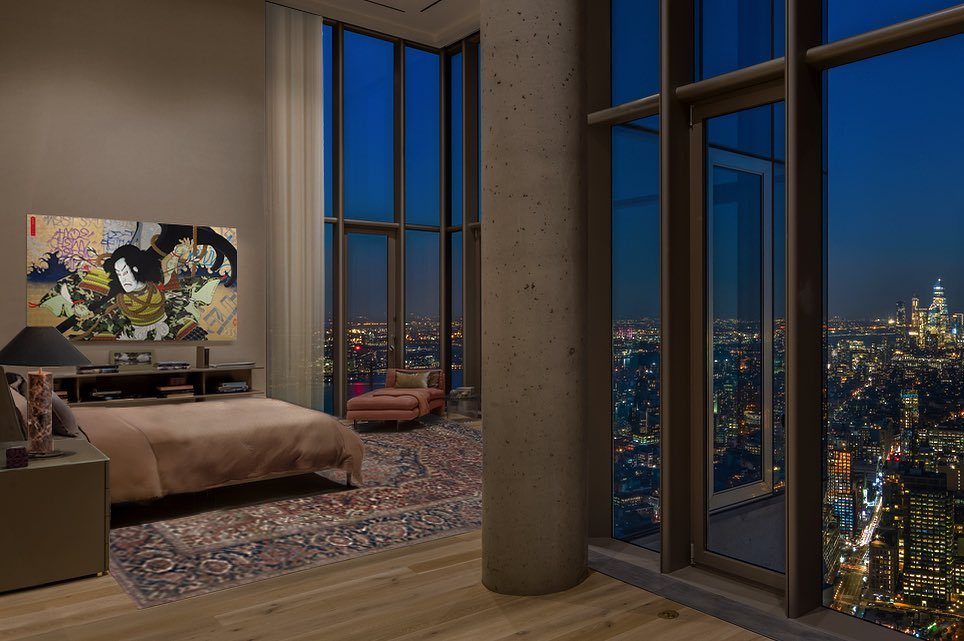
Ceilings above 12 feet change how a bedroom feels before any furniture arrives. Here, one concrete pillar and a low bed keep the room grounded, so the height reads as calm rather than cavernous.
With this much vertical space, a low bed and a large rug keep the room from feeling like it’s all wall. Tall headboards and busy walls compete with the skyline view.
Curtains are worth hanging high and long, close to the ceiling, to stretch the glass even further. Keep them simple, since the night view is the decoration.
3. Large Industrial Windows
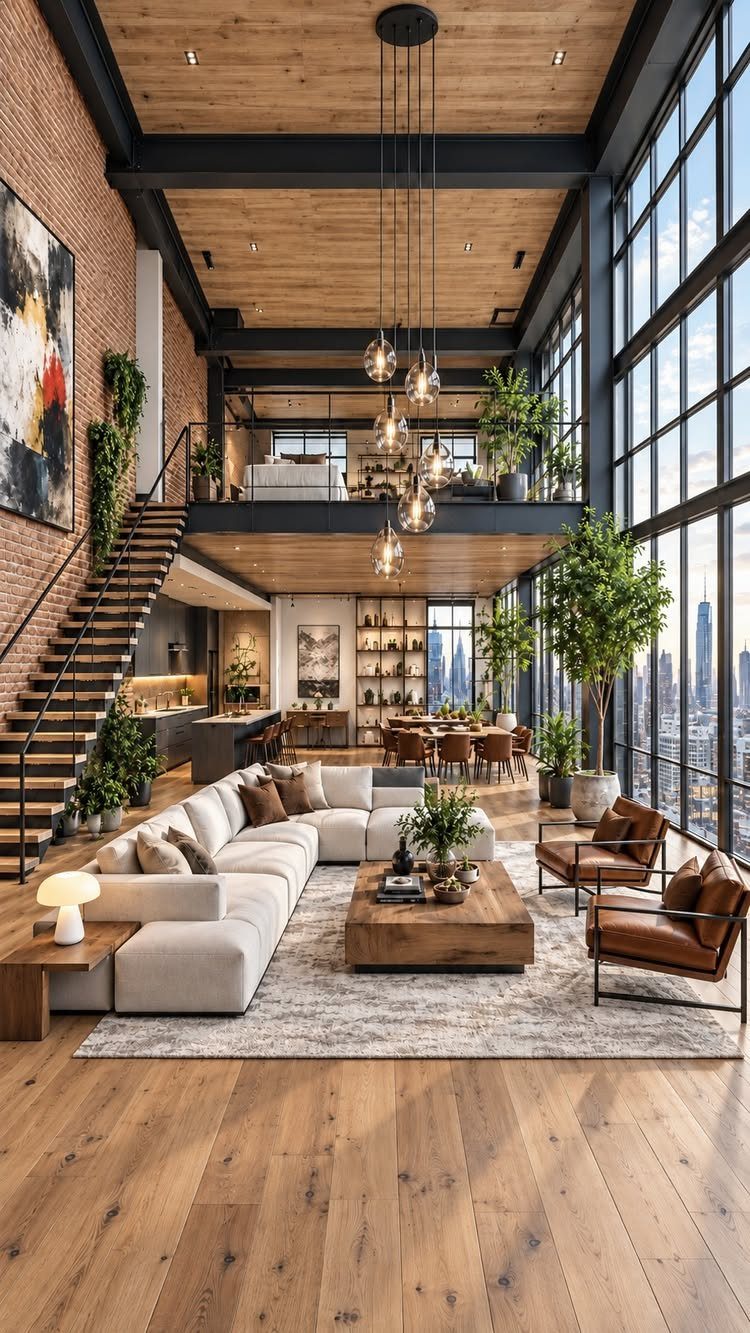
Black-framed glass does more for a loft than any paint color. The thin dark grid draws a clean outline around the skyline, so the city becomes the artwork on the wall.
Against brick and wood ceilings, I like leaving the glass bare. Heavy drapes defeat the purpose of floor-to-ceiling windows, which is letting in as much daylight as possible.
If privacy is a worry, sheer roller shades or a light-filtering blind can sit inside the frame and disappear when raised. Pick a color that matches the frame, and the window stays the star.
4. Exposed Beams, Columns, and Ductwork
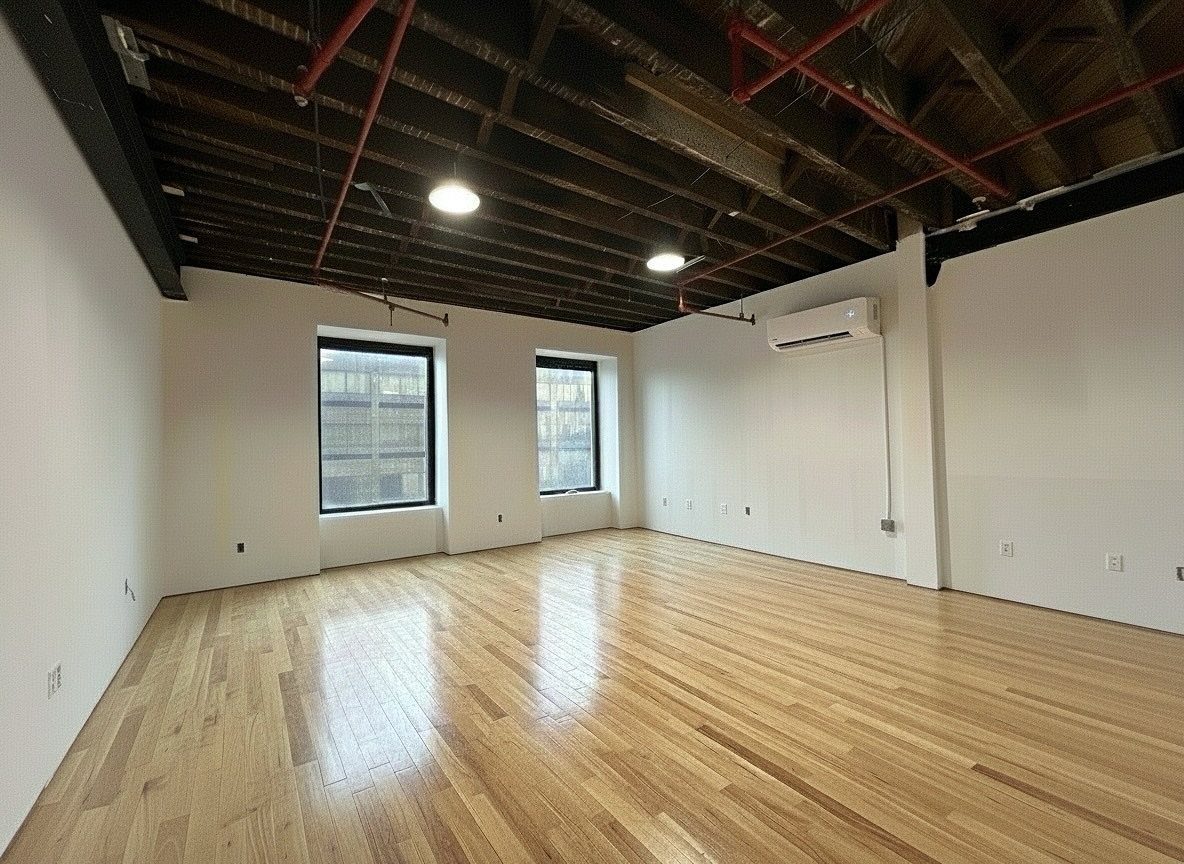
Dark wood beams and red pipes overhead give a plain white room its whole personality. Leave them alone, and the ceiling becomes the most interesting surface you own.
White walls and polished wood floors are the right backdrop, because they let the structure stand out. I would resist painting everything to match.
A bold color on pipes is a choice worth making deliberately.
If the red is too loud for you, a coat of paint in a darker shade calms it, and it is a weekend job with a ladder and a brush.
5. Warehouse Loft Style Apartments
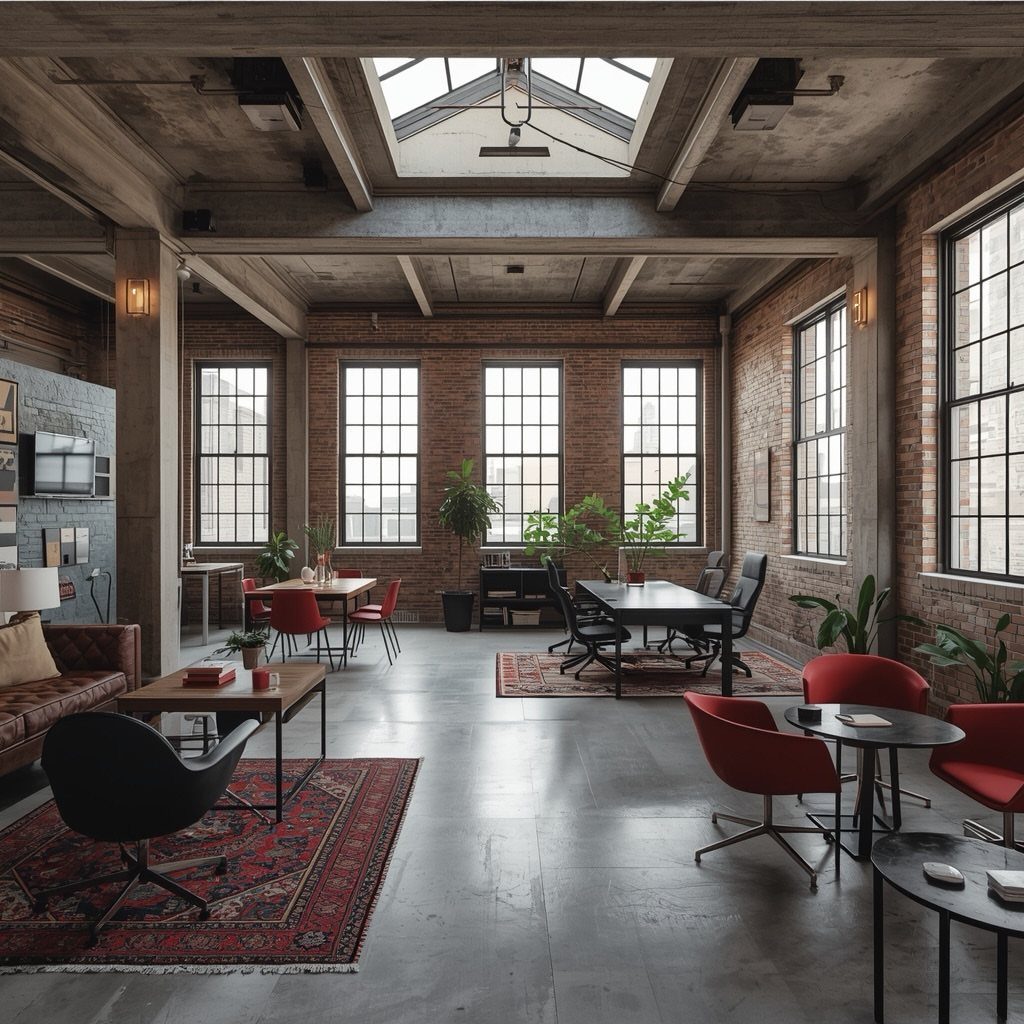
A true warehouse look comes from the shell: brick walls, concrete, a skylight and big black windows. Furnishings should be warm enough to make that hard shell livable.
A brown leather sofa grounds an open loft, and a set of dining chairs in one bold color, like red, marks off the dining area as its own zone without a single wall. Open plans need that kind of anchor.
Choose one saturated color and one soft material, then stop. The architecture already supplies the texture, so extra decor tends to look cluttered.
Loft Living Experience
Loft living pays off in light and flexibility. Factory-scale windows move sunlight across the room all day, and without permanent walls you can rearrange the space for a party or turn a corner into a home office later.
Authentic New York lofts began as manufacturing and warehouse buildings from the late 19th and early 20th centuries, later converted to homes in neighborhoods like SoHo and Tribeca.
That history is why the space feels so different from a standard apartment.
Before signing a lease, weigh the trade-offs. Open space has no walls to hide behind, so plan how you’ll handle privacy, storage and noise.
Design Challenges
Old factory floors were built with wide, uninterrupted plates held up by columns instead of interior bearing walls. In a conversion, that can mean a living room 30 to 50 feet deep, which is far more than most apartments offer.
The columns decide where things go. Map the column grid and the window positions on paper before you place a bed, a kitchen or a bathroom, because those three need light, plumbing and some privacy.
With no walls to lean on, a rug, a sofa back, a floor lamp or a shift from wood to tile will mark where one area ends and the next begins.
A rug, a pendant light over a table or a shift from wood to tile can mark a room’s edge. A column can also serve as a natural divider between 2 zones.
Investment Potential
Lofts have a long record of demand.
Artists were the first to move into empty industrial buildings in SoHo, Tribeca, the Village and the Brooklyn waterfront, drawn by big floors and cheap rent, and property values climbed after them. Demand has stayed strong since.
Authentic lofts are getting scarce, since only so many former commercial and industrial buildings exist and many are already residential.
If you’re shopping, original features like high ceilings, oversized windows, columns and exposed brick are what hold value. Prices vary widely, so compare listings before you set a budget.





