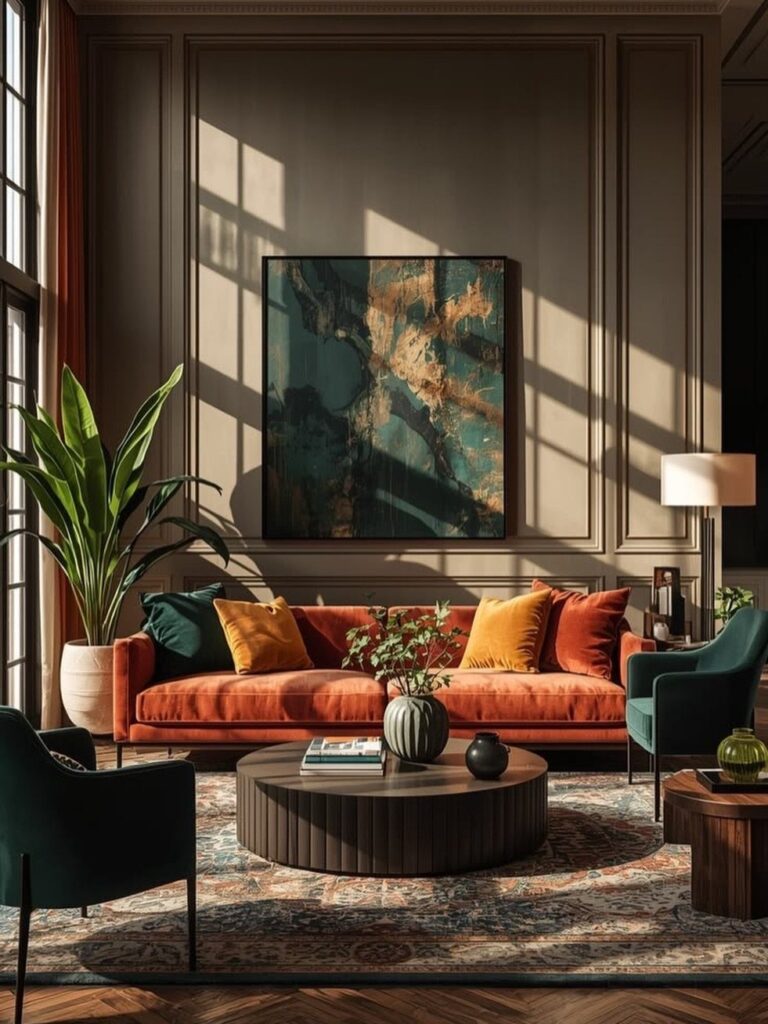
Renters and owners get different answers here: a leaned gilded mirror, jewel-tone accents or a curved chaise can go in over what is already there and come back out, while picture frame molding is glued to the wall and needs a landlord’s yes first.
The ideas run from a few dollars for a lamp shade swap to a full vintage tufted chaise lounge, so the lease sets the shortlist before the budget does.
1. Lamps, Sconces, and Overhead Fixtures
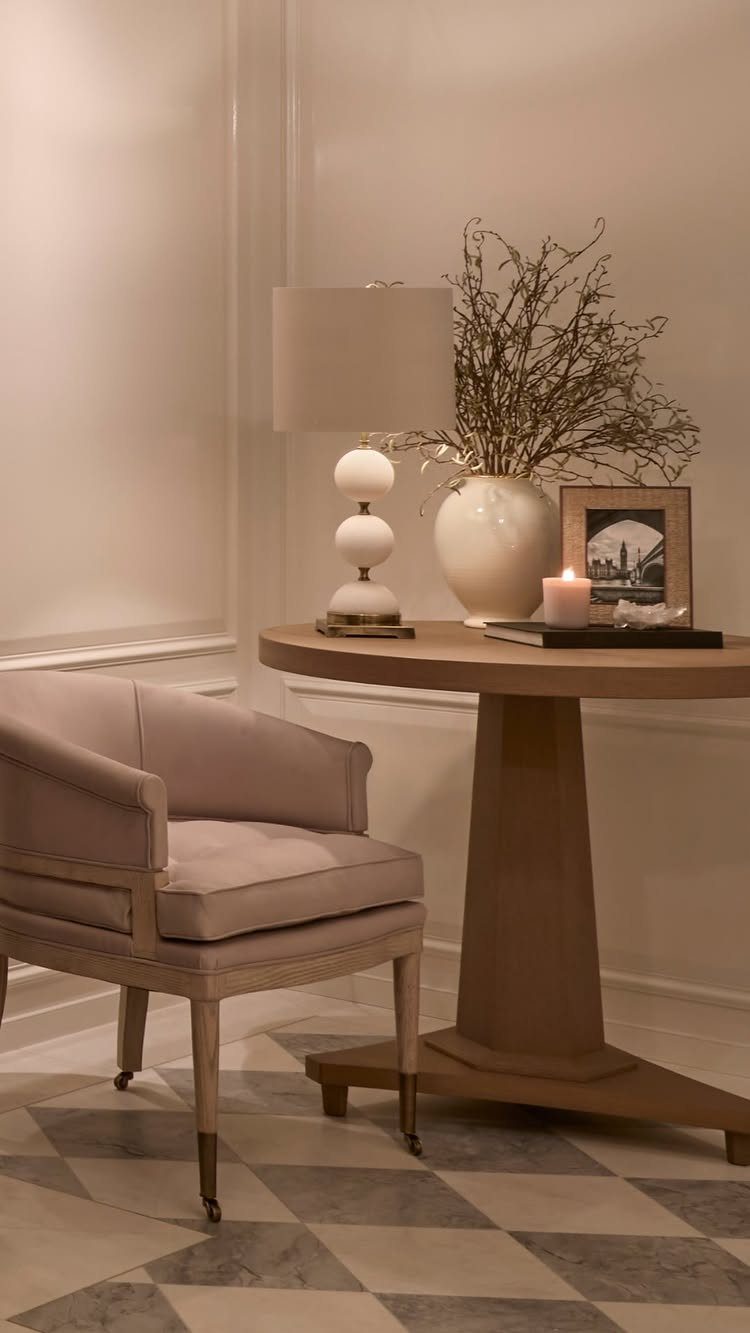
A pair of lamps at different heights does more for a room than one bright ceiling light ever will.
Put a table lamp on a side table beside a chair, as the white stacked-ball base does here, and the corner gets its own warm pool of light.
A round wooden table suits this well, since a single lamp, a candle and a small vase fit without crowding. Choose a white or cream shade so the light stays soft.
Add a sconce or a pendant later if the budget allows. One good lamp is enough to start.
2. Jewel Tones Through Accents
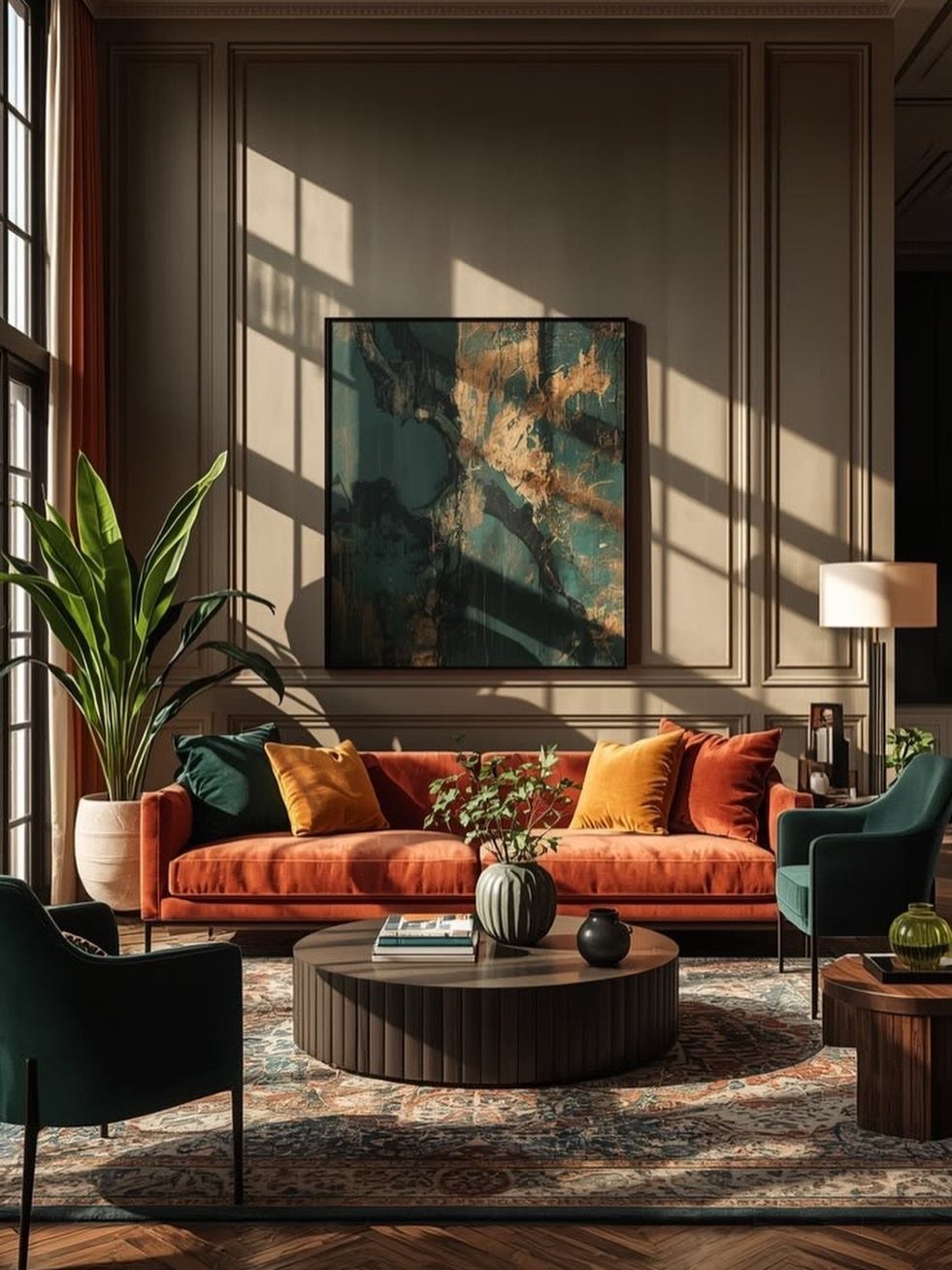
Rust and teal are loud colors, so keep them to the pieces you can swap: a velvet sofa, a pair of armchairs, a throw. The wall molding stays pale and lets the color sit in front of it.
For renters, pillows and a throw in one deep shade are the cheapest test. If it feels right after a few weeks, a single armchair in a second jewel tone is the next step.
I would pick 2 jewel tones at most. A third starts to fight the painting and the patterned rug.
3. Curved Furniture with Organic Shapes
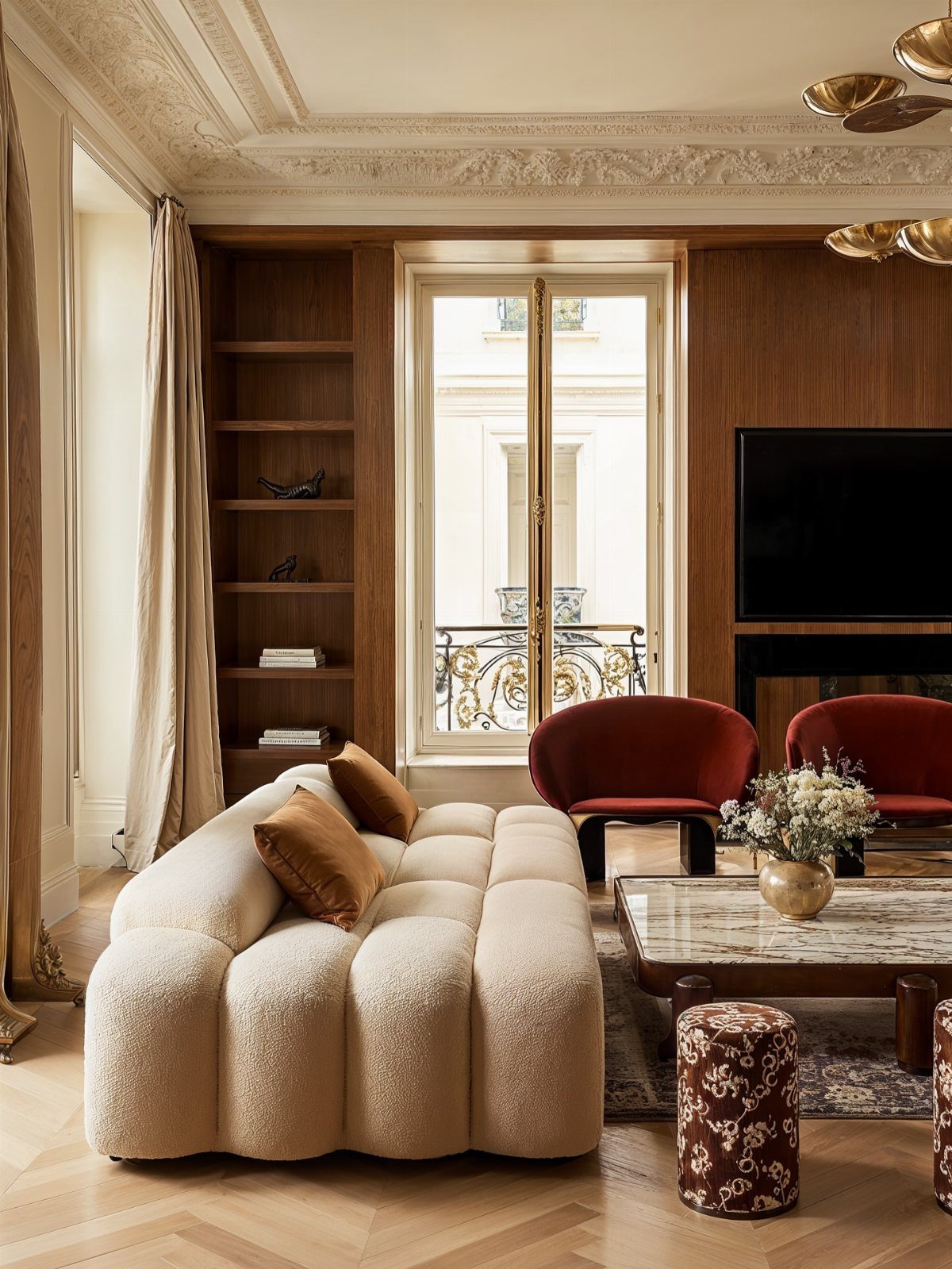
Rounded edges soften a room full of straight walls, and a curved sofa is the quickest way to get there. Bouclé fabric adds to the effect because its nubby texture reads as warm even in cream.
A full curved sofa is a big spend, so start smaller. A round marble-look coffee table or one rounded armchair gives the same shape without the price.
Leave walking room around curves, since they take up more floor than a square piece of the same size. Measure before you buy.
4. Light Neutral Palette
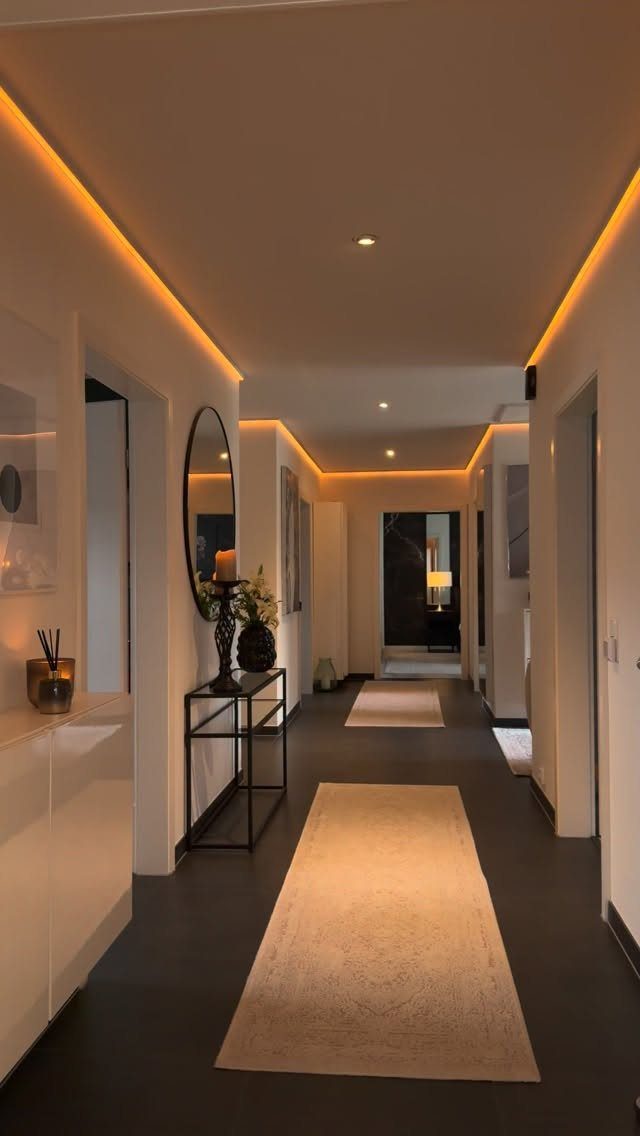
Start with white or soft beige on the walls and let everything else stay quiet. In a narrow hallway, light paint keeps the space from closing in, and a beige runner adds softness on a dark floor.
Warm lighting matters as much as the paint. Choose bulbs with a warm glow, not cool white, or a pale wall can look flat and clinical.
Then add one dark piece for contrast, like a black console table, and one round mirror to break up the straight lines. Fresh flowers finish it for very little money.
5. Effortlessly Chic Decor
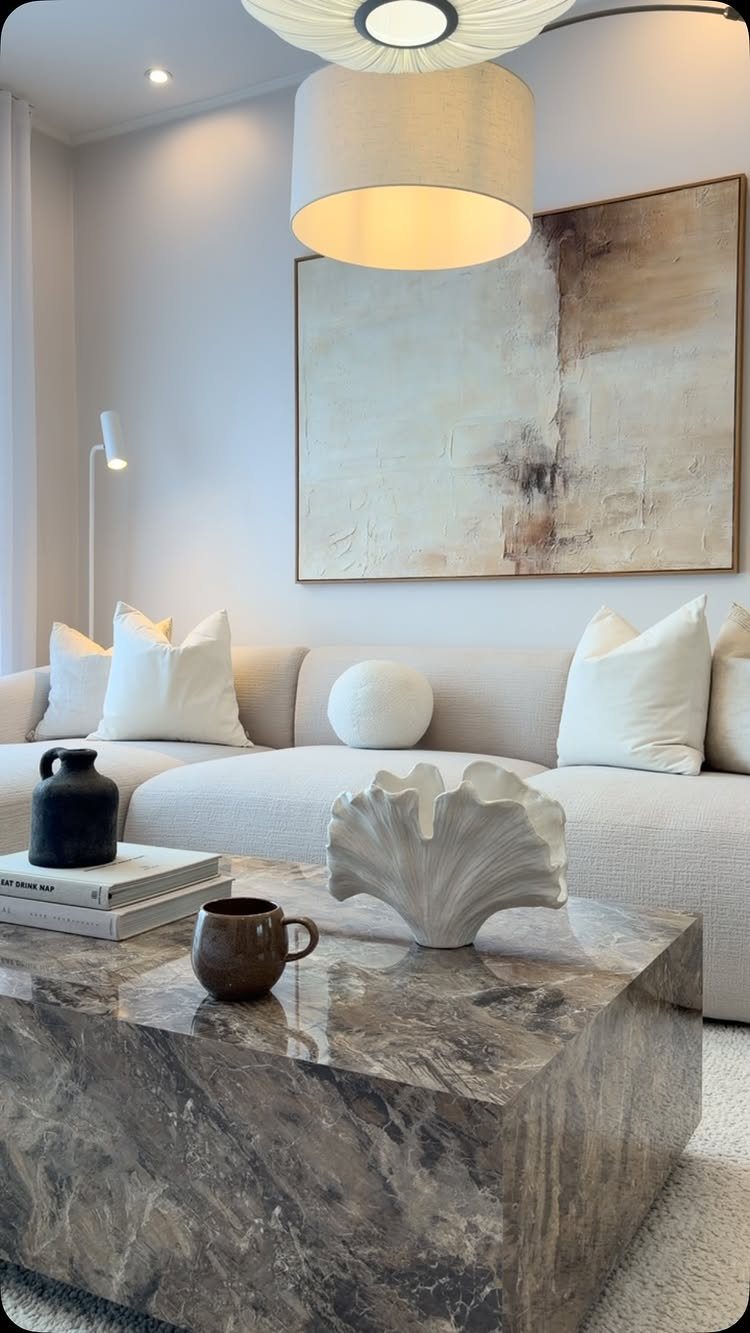
Chic that looks unforced comes from restraint: a white sofa, a marble coffee table and one large abstract painting, with nothing else competing. Each piece gets room to be seen.
A coffee table book stacked casually on top is my pick, since it keeps the space looking lived in. Pick one that fits your own interests, such as travel or food.
Keep the palette neutral and spend the money on the piece you will notice most. Everything else can be secondhand or inexpensive.
6. Gilded Mirrors
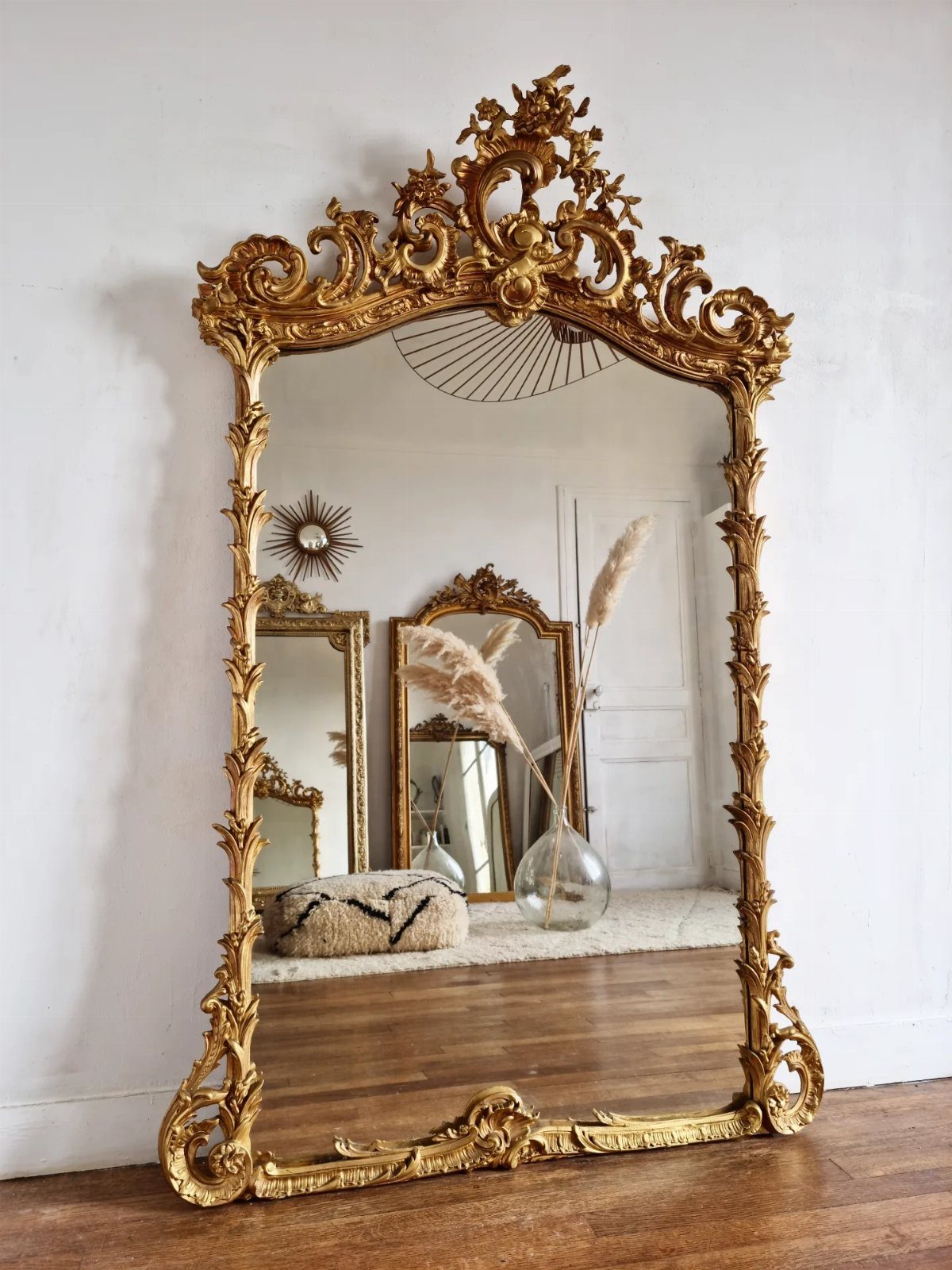
Oversized mirrors lean on the floor without any hanging, which makes them an easy choice for renters. A tall gilded frame against a white wall adds a touch of grandeur and throws light back into the room.
Check secondhand first, since ornate gold frames turn up often and run a fraction of the price of new ones.
Lean the mirror at a slight angle against a solid wall, and put a felt pad or rubber grip under the bottom edge so it can’t slide.
Place it across from a window to double the daylight.
7. Herringbone Flooring
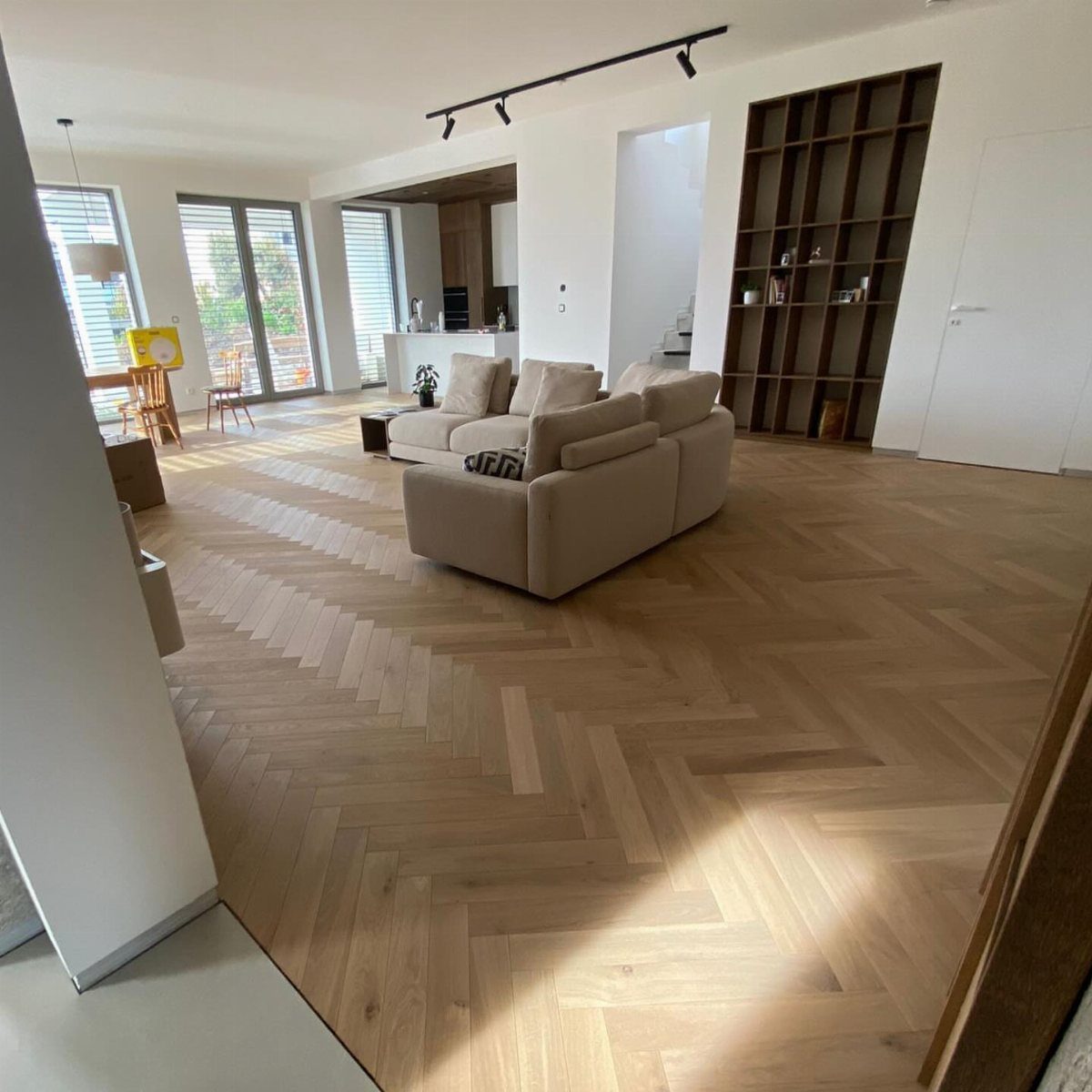
Herringbone sets short planks in a zigzag, and in a pale wood it gives a plain living room a classic Parisian floor without any extra furniture.
Because the pattern does the decorating, the beige sectional and built-in shelves can stay simple.
Real installation is a big job, so renters should look at peel-and-stick or click-together herringbone planks, which can go down over an existing floor.
Keep the wood tone light, as here, so the zigzag reads as texture instead of a busy grid.
8. Large Scale Art
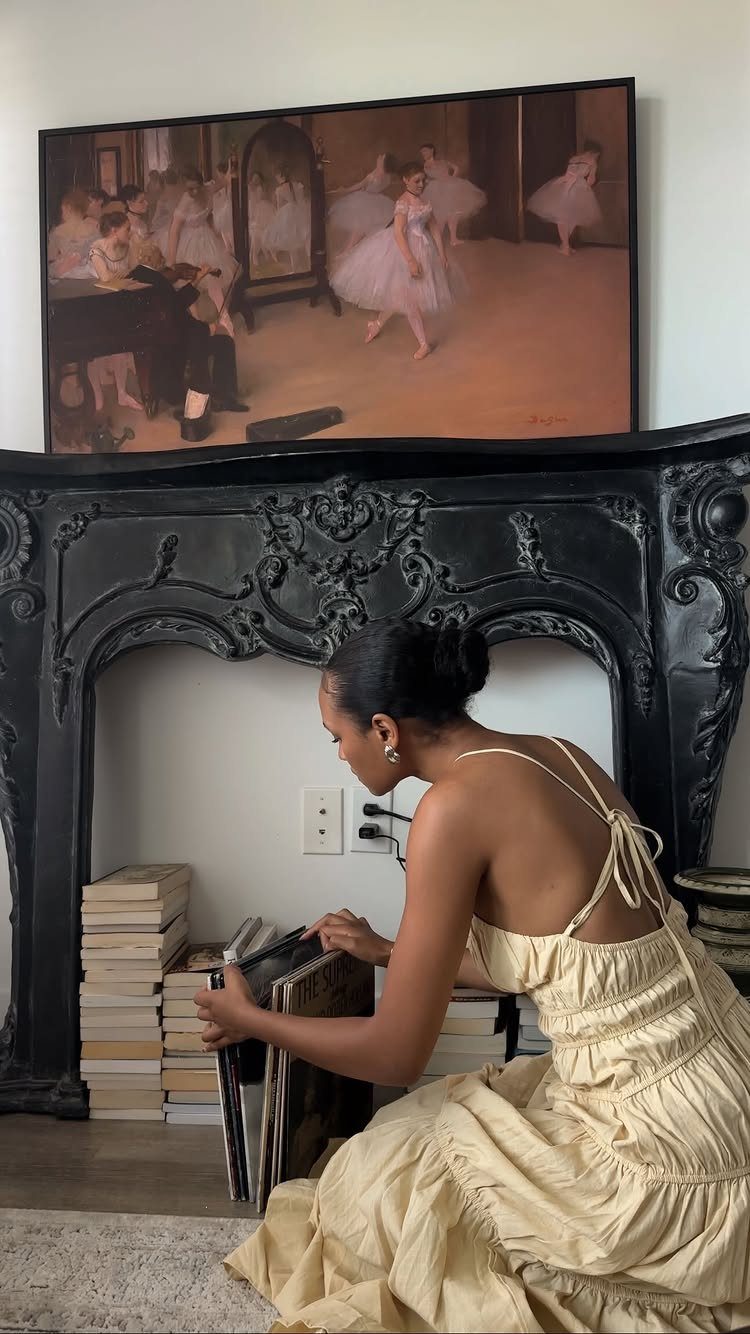
One oversized painting over a mantel carries a whole wall. A big canvas of dancers above a dark fireplace gives the room a focal point, and the scale makes the mantel look deliberate.
Big original art costs a lot, so look at large prints, secondhand canvases or a framed poster.
I would pick one piece wider than half the mantel, and hang it low enough to feel connected to it. Leave the rest of the wall bare.
9. Install Picture Frame Molding
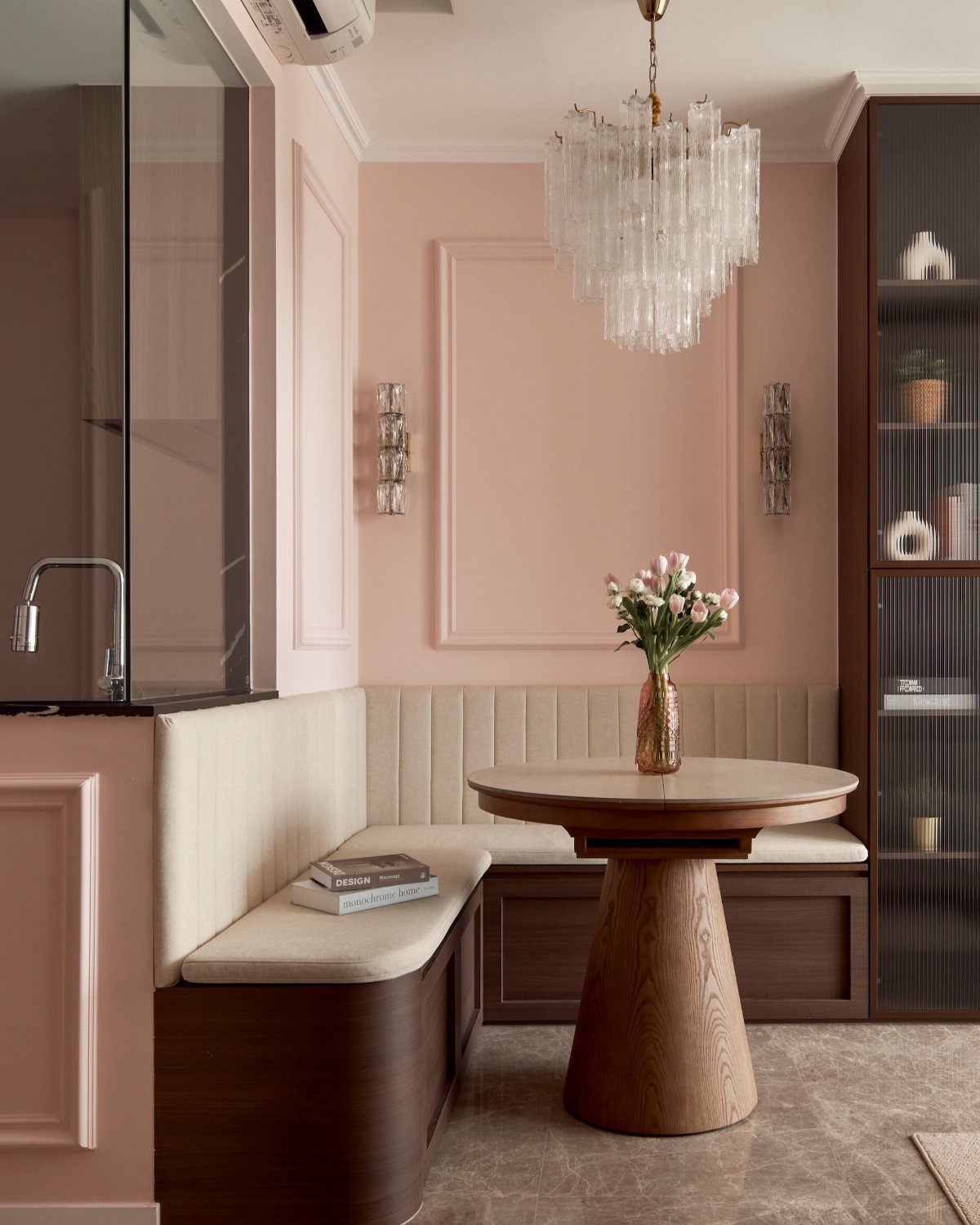
Picture frame molding turns a flat wall into a set of painted panels, and for a dining nook it is the lowest-cost way I know to add real architecture.
Thin trim strips, cut and glued to the wall, build the rectangles.
Paint the trim the same color as the wall so the shadows do the work. Renters should ask the landlord first, since the trim is glued on.
10. Bold Patterns and Multiple Textures
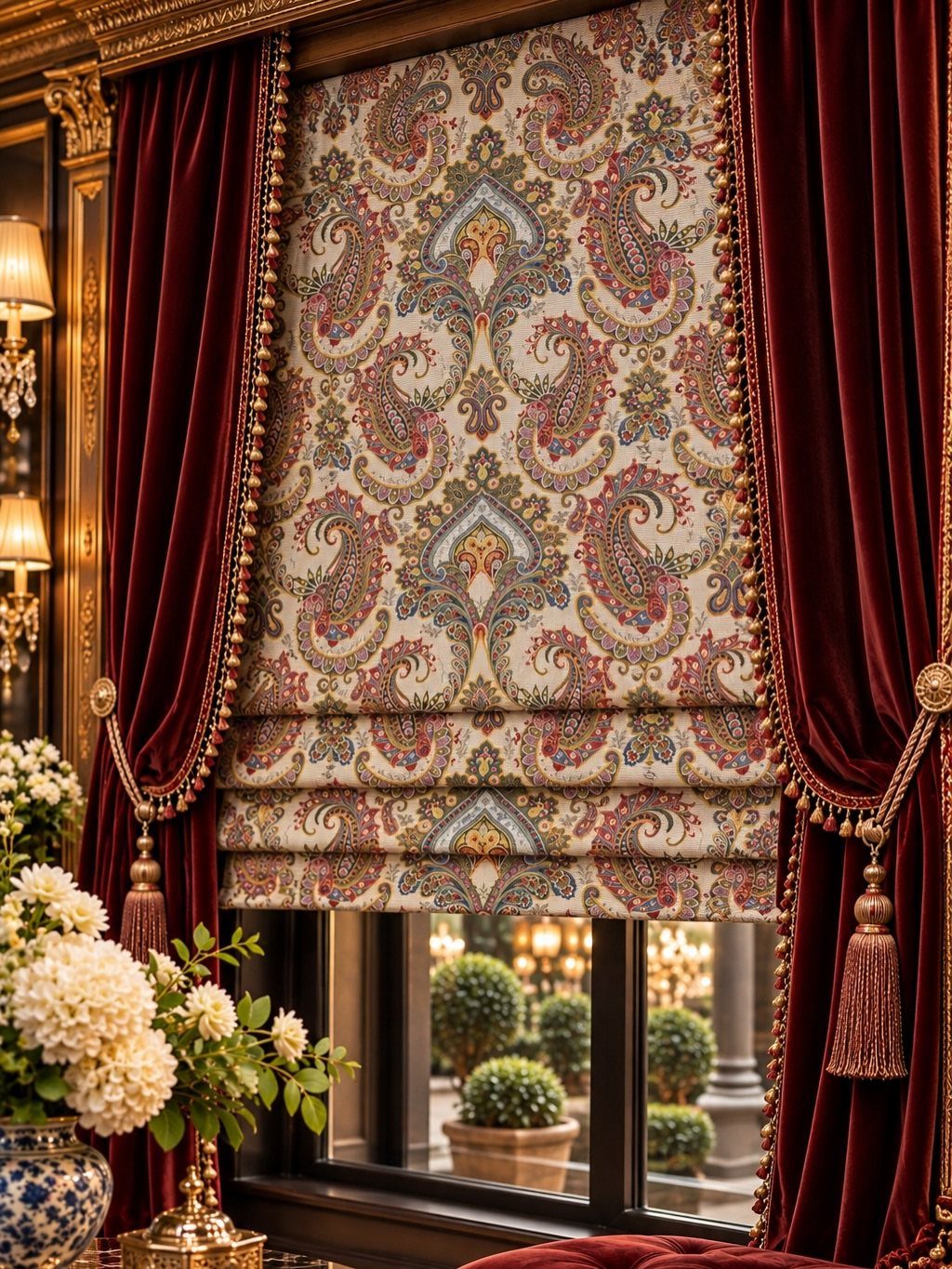
Layering works best when one pattern stays flat, one fabric brings deep, soft texture, and a trim in a shared color, like gold, ties the two together. The shade keeps the pattern tidy while the velvet adds weight.
Start with one patterned piece and one plush one, and repeat a single color between them.
Tassels or trim are a small add-on, and a few dollars a yard beats the price of new curtains. A fresh floral arrangement in front adds a third texture for little money.
11. Vintage Tufted Chaise Lounge
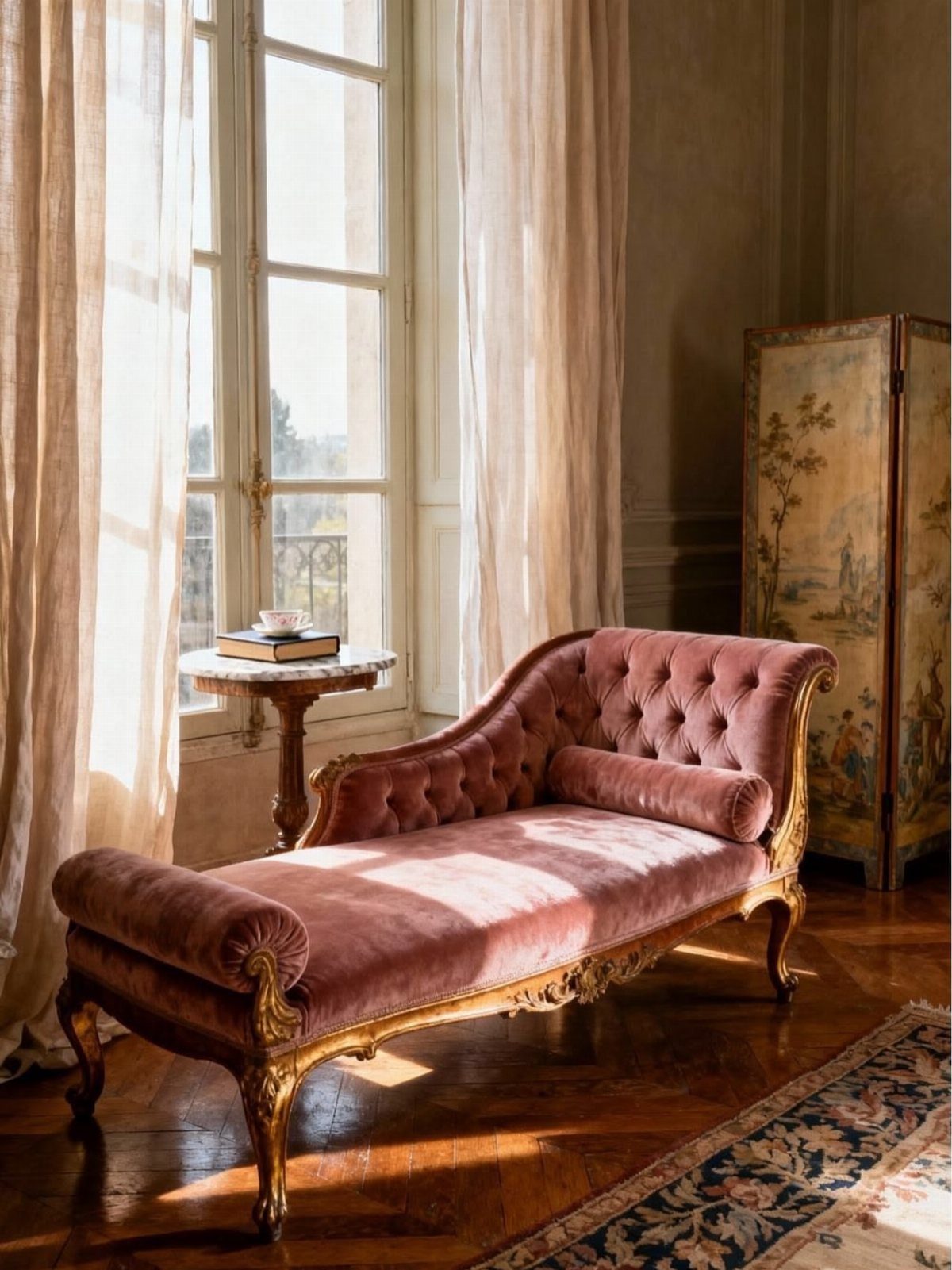
A tufted chaise longue in pink velvet works as furniture and as the room’s centerpiece. The gilded frame and deep buttoning give a Parisian feel, and the polished wood floor and white curtains keep it from feeling heavy.
Look for vintage or secondhand pieces first, since reupholstering an old frame is often cheaper than buying new.
Set it near the window so the velvet catches daylight. A small marble table beside it gives you somewhere to put a cup.
12. Modern Accents and Ornate Details
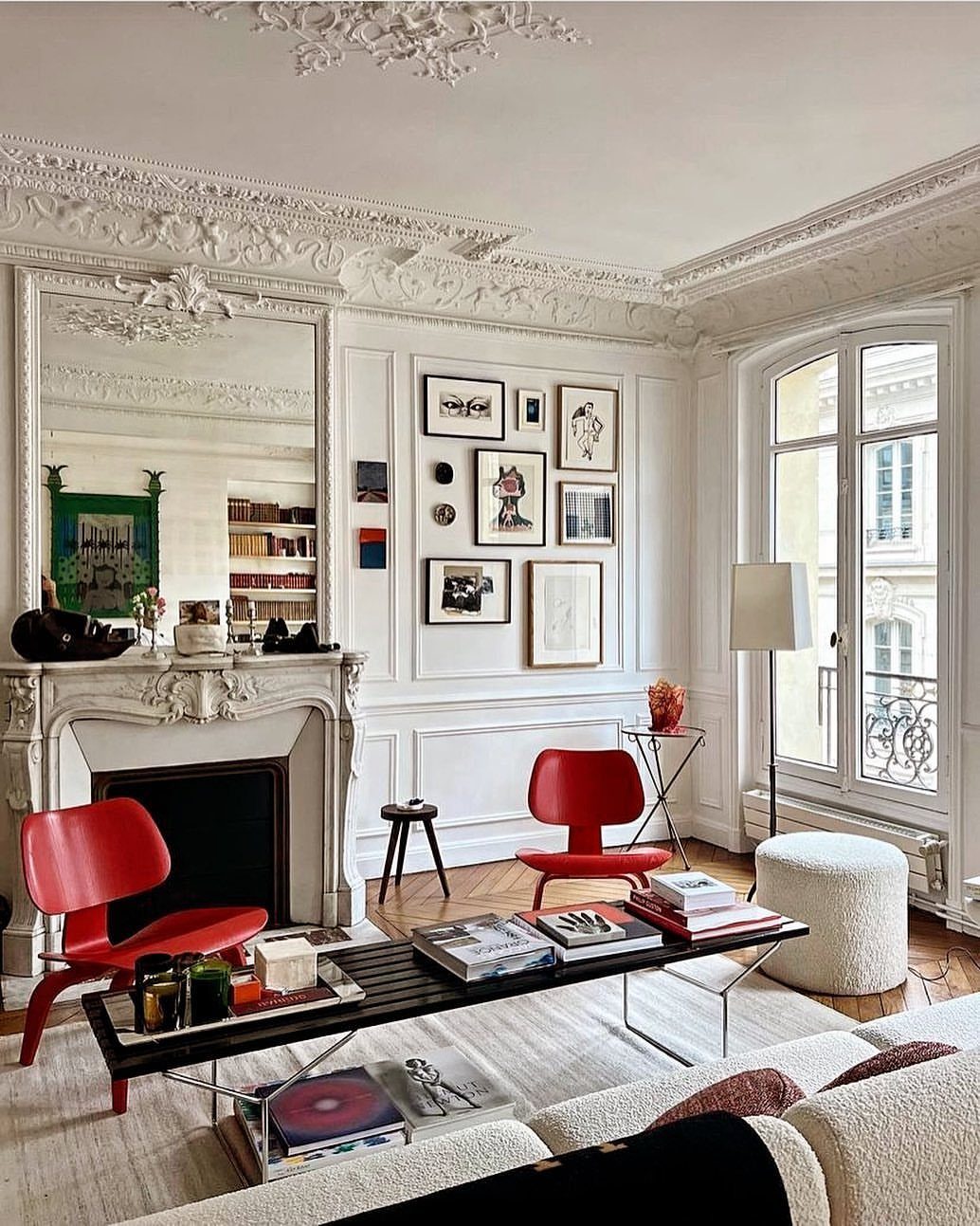
Ornate white molding and a fireplace give a room its old Paris bones, and two red modern chairs stop it from feeling like a museum.
The mix works because the backdrop is pale and the color arrives in just 2 pieces.
Keep the modern side simple: a black coffee table with a few books and a gallery wall of contemporary art. I would stick to one bold color, as the red does here, so the ornate details still get attention.
Embrace the Parisian Lifestyle
Parisian style rests on balance: timeless pieces on one side, a relaxed and lived-in feel on the other. A room that is all polish reads cold, and a room that is all comfort loses the elegance.
Mix old with new. An antique find next to a clean-lined modern piece looks collected over time, not bought in one trip.
Then fill the room with things you actually love. A cozy reading nook, a mirror that catches the afternoon light, or a chandelier’s soft glow will do more than any rule about what belongs.
Focus on Ambiance
Cream and taupe make a quiet base, and velvet or jacquard pillows add the texture so the room doesn’t go flat.
Ivory or pale French blue curtains pick up daylight nicely, and silk taffeta gives the softest glow if you can find it at a price you like.
A slim glass coffee table keeps the center of the room light, and framed vintage prints or flea market finds on the walls give it some age. The contrast between modern and old is the whole idea.
Finish with small details: lamps at a few different levels so the light is soft, fresh flowers, a stack of books and a scented candle.
Even a builder-grade home can feel Parisian with this kind of attention, and none of it needs a big budget.
Incorporate Personal Style
Parisian rooms are undone, elegant and above all personal, so let your own habits show. If you read, show it: fill shelves with books, or stack some on the floor in a neat pile.
Layer in what already matters to you.
A navy velvet chair in front of a wall of books acts like a fresh neutral, and mismatched chairs and sentimental objects deepen the effect.
Frequently Asked Questions
What is Parisian chic interior design?
Parisian chic is a decorating style that blends traditional and modern pieces into a room that looks elegant but relaxed.
Typical ingredients are wall molding, herringbone floors, marble, gilded mirrors and a pale palette. Old and new sit side by side, so the room looks collected over time instead of bought in one trip.
How to look Parisian chic?
Mix vintage and modern pieces on a neutral base, then add color in just one or two items.
Begin with pale walls, a gold-framed mirror propped against the baseboard, several lamps spread across the room and an oversized piece of art.
Keep the color to pillows, a throw or a chair so it is cheap to swap, and buy the antique pieces secondhand.





