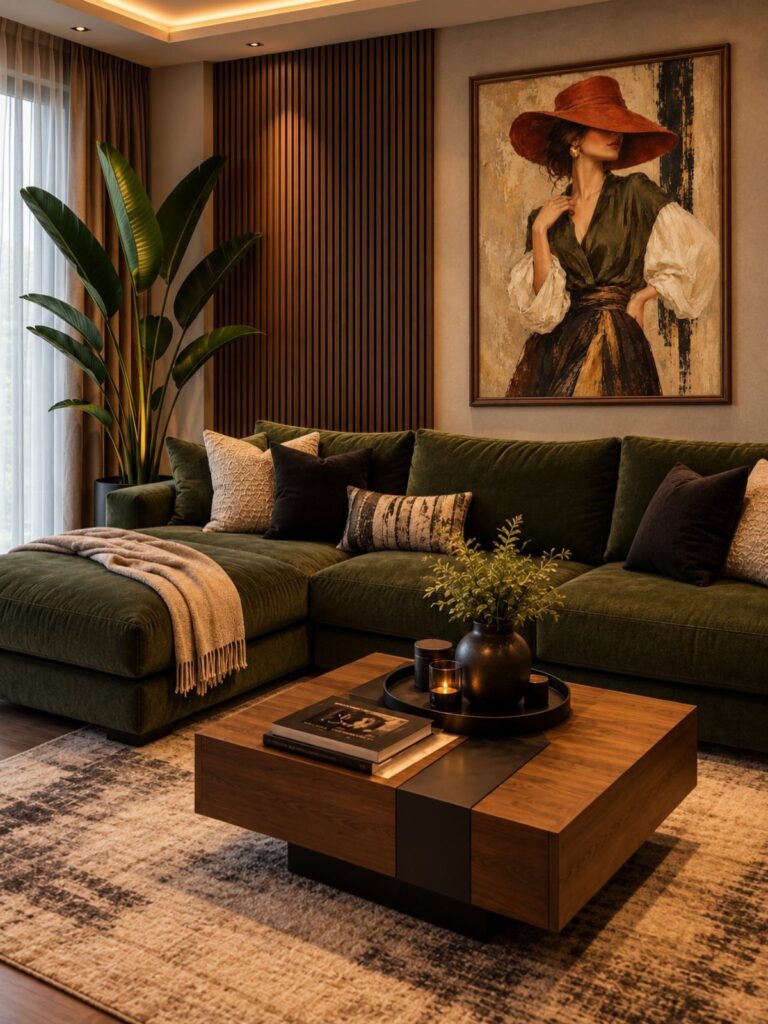
Start with the couch, since its length sets the size of whatever hangs above it: aim for art that covers about two-thirds of the seat width, so roughly 40 inches over a 60-inch loveseat and about 80 inches over a 120-inch sectional.
Inside that width you have plenty of choices, from a pair of framed prints that needs only 2 nails or hooks, to a gallery wall, floating shelves, sconces, or a woven piece you can finish in a weekend.
1. Gallery Wall
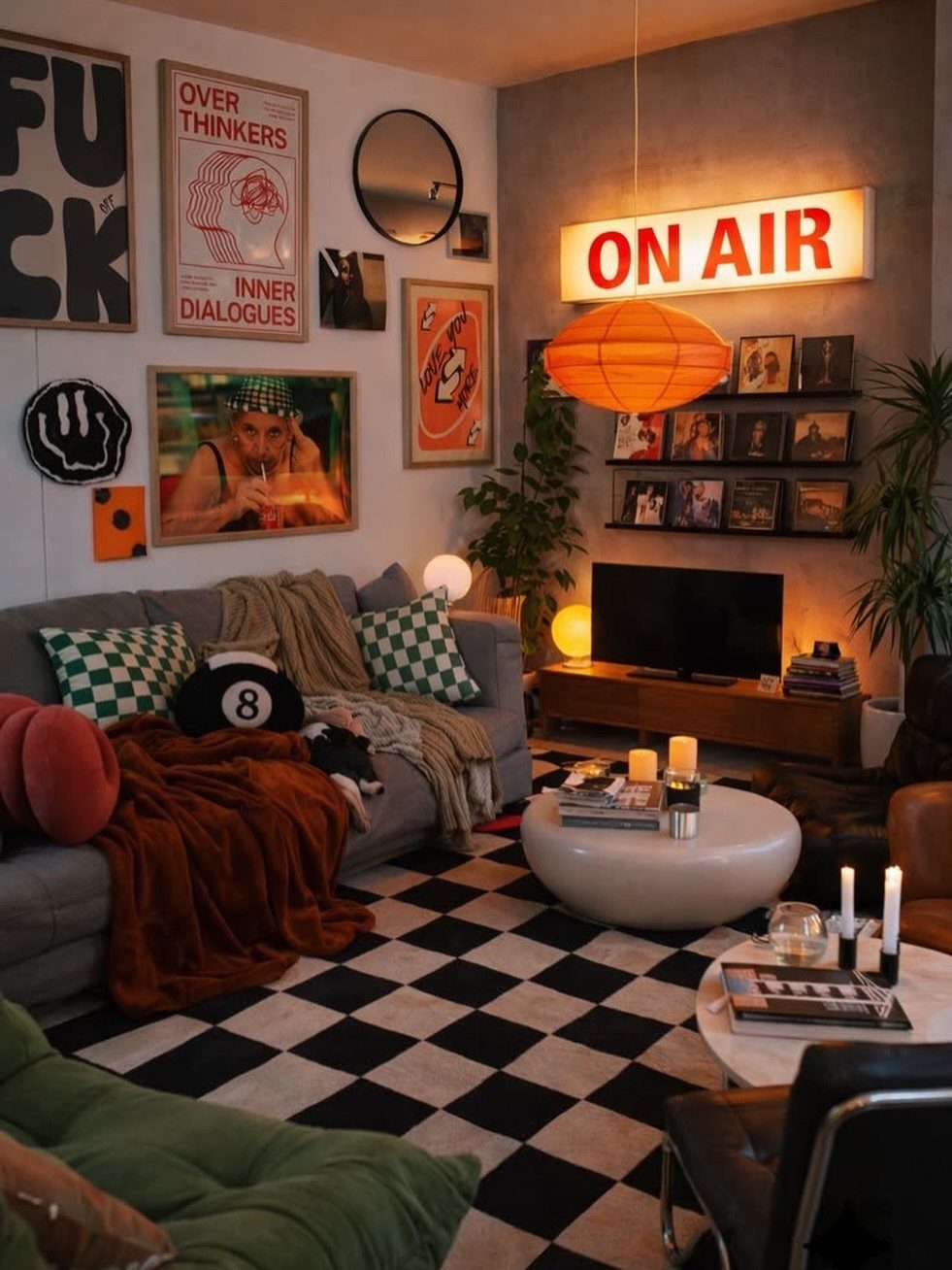
A mirror in the mix keeps a gallery wall from feeling like one long row of posters, and it bounces light back into the room.
Mixing frame shapes and sizes does the same job, and the wall looks gathered over time instead of bought as a set.
Bold, blunt typographic prints suit a renter who wants the wall to sound like her. Keep the whole cluster a bit narrower than the couch, so it sits over the seat instead of drifting past the arms.
2. Sconces Above Couch
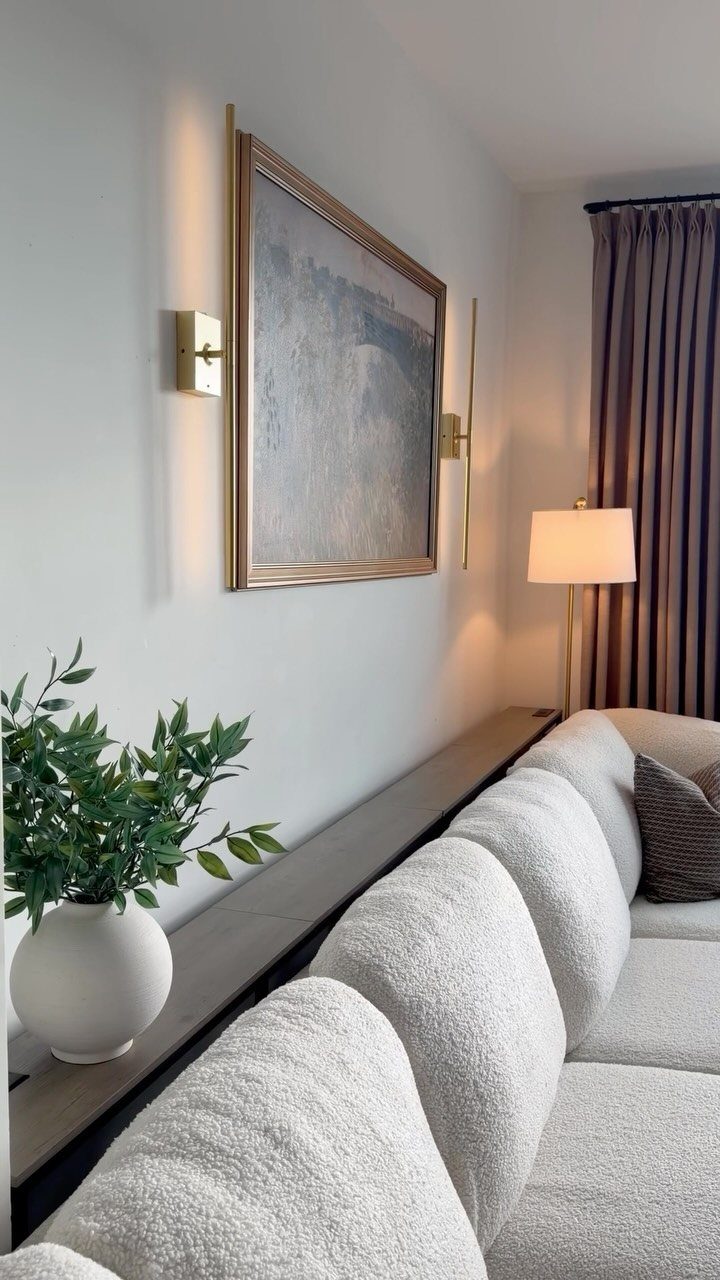
Sconces on either side of a framed painting give the wall its own light, which a table lamp can’t do, and a plug-in style with a cord cover works for renters.
Picking a plug-in style with a cord cover is the renter-friendly route, since it skips the electrician.
Hang them level with each other and a little above the painting’s midpoint, so the pair frames the art rather than competing with it. Warm gold also echoes whatever metal sits on the console below.
3. Sculptural Wall Art
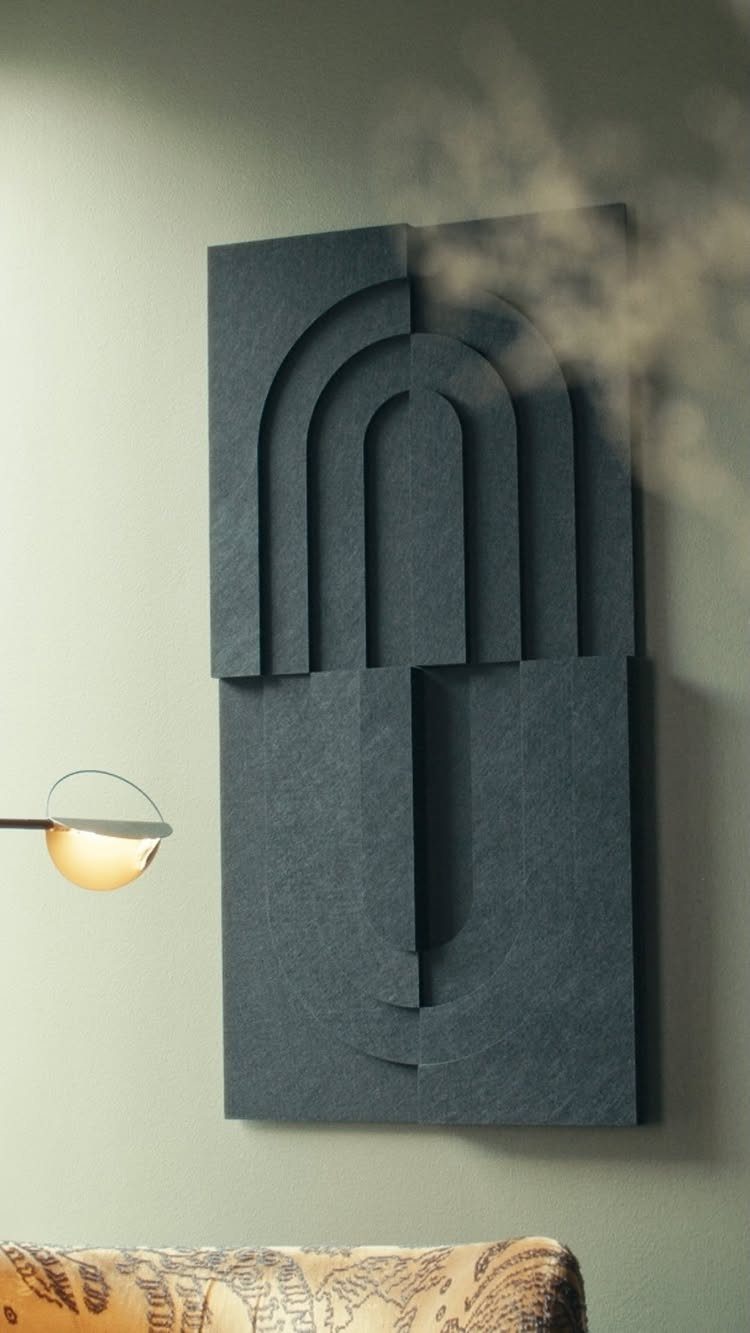
Dark, three-dimensional pieces throw shadows, and those shadows change through the day. That movement is what makes sculptural art worth choosing over a flat print, especially on a painted wall in a soft color like sage.
I’d pick one dark piece against a light wall for the strongest contrast. A patterned couch is busy enough already, so the art should be simple in form, with arches or clean geometry rather than more pattern.
4. Triptych Art
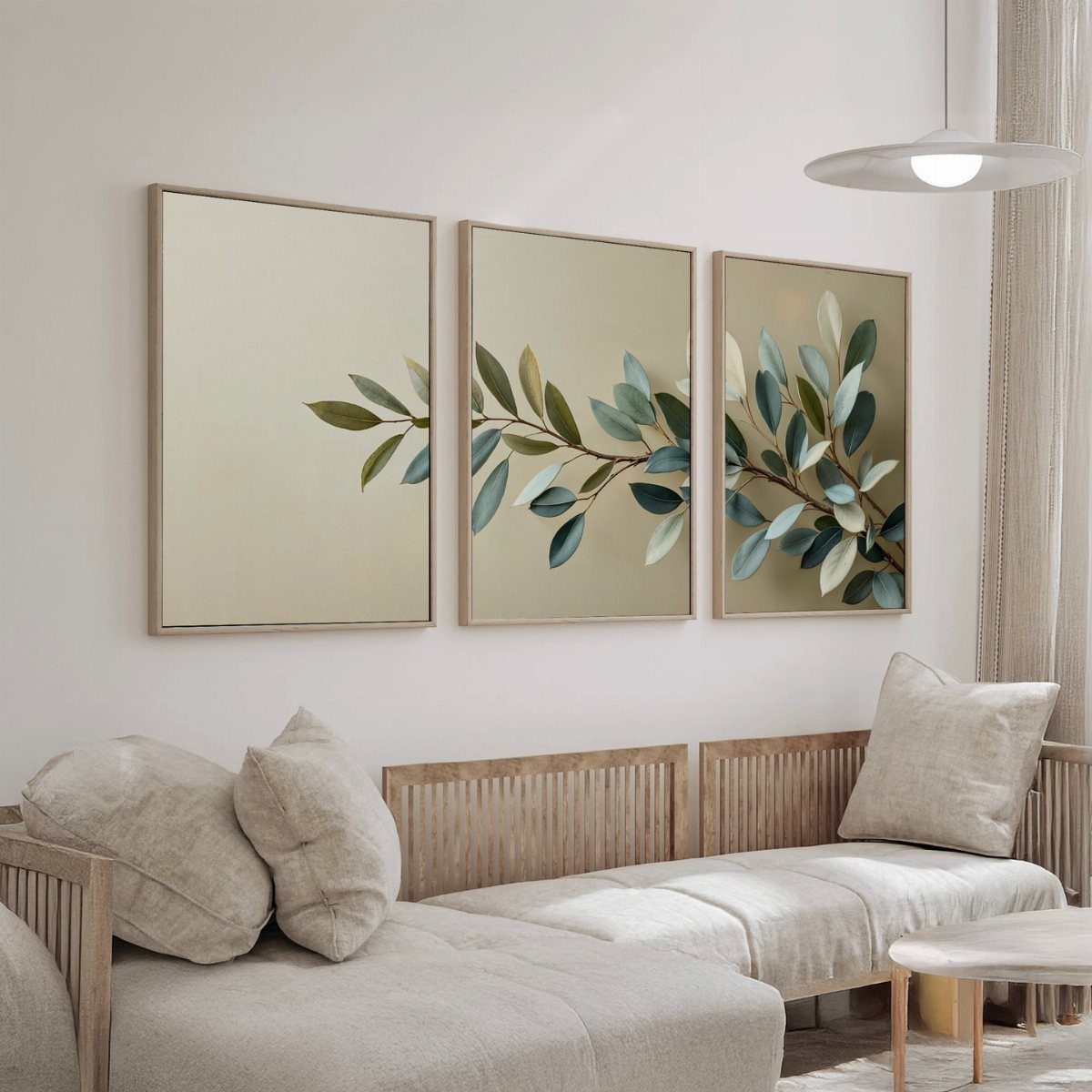
A triptych of three matching panels with one botanical branch running across them makes a quiet, tidy statement over a sofa, especially a neutral one.
Keep the gaps between frames even and narrow, so the eye reads them as a single image.
Equal frame sizes and the same mat color matter more than the subject. For a minimalist room, I like a single stem on a plain background: it adds life without adding clutter.
5. Macramé and Tapestries
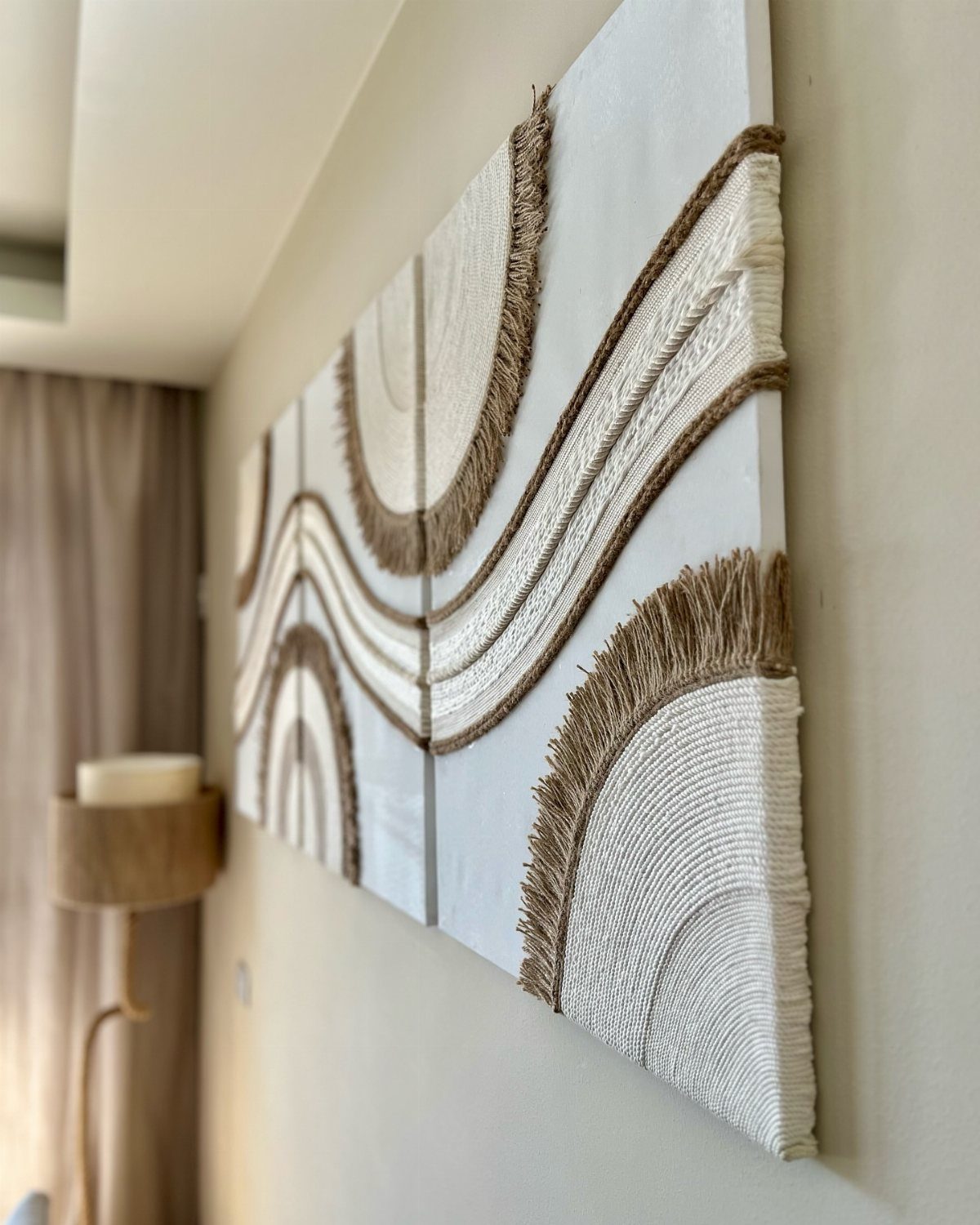
Texture is the draw with macramé and woven pieces: yarn curves with a fringe, mounted on canvas panels if you like, bring in warmth that glass-fronted frames can’t. Neutral tones keep it calm beside curtains and a lamp.
If you’re handy, a yarn piece is a cheap weekend project, and a panel set is easier to hang straight than one big hanging. Aim for a piece or grouping about 2/3 as wide as the couch.
6. Oversized Statement Art
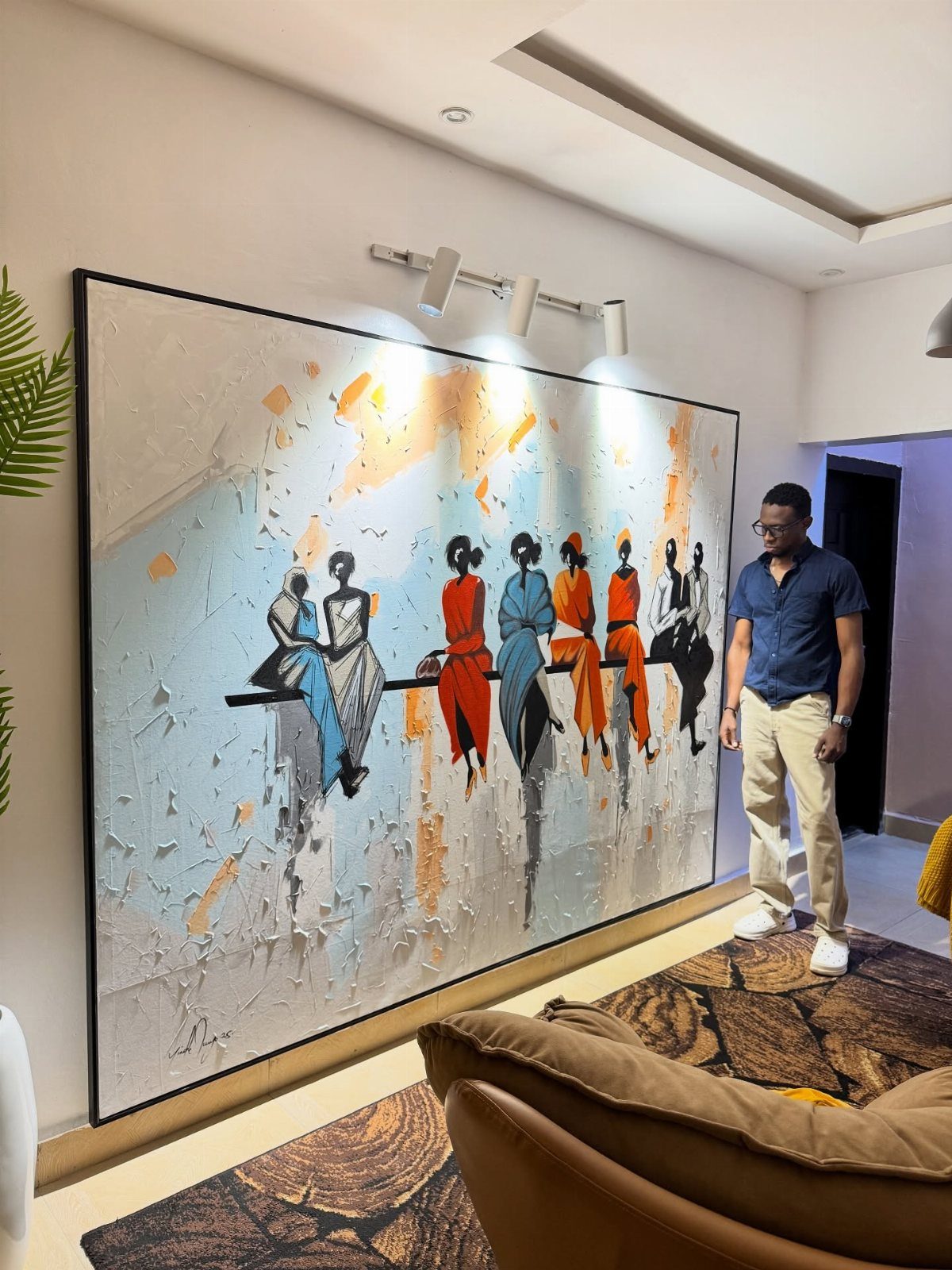
One large painting does the work of an entire gallery wall, and it’s the easiest way to make a white wall feel finished. Texture helps: thick, visible paint adds depth that a poster-sized print can’t.
Size it to the sofa.
A piece that spans most of the couch’s width looks intentional, while a small one floats. Hang it low enough to feel tied to the brown couch, not to the ceiling.
7. Woven Wall Art
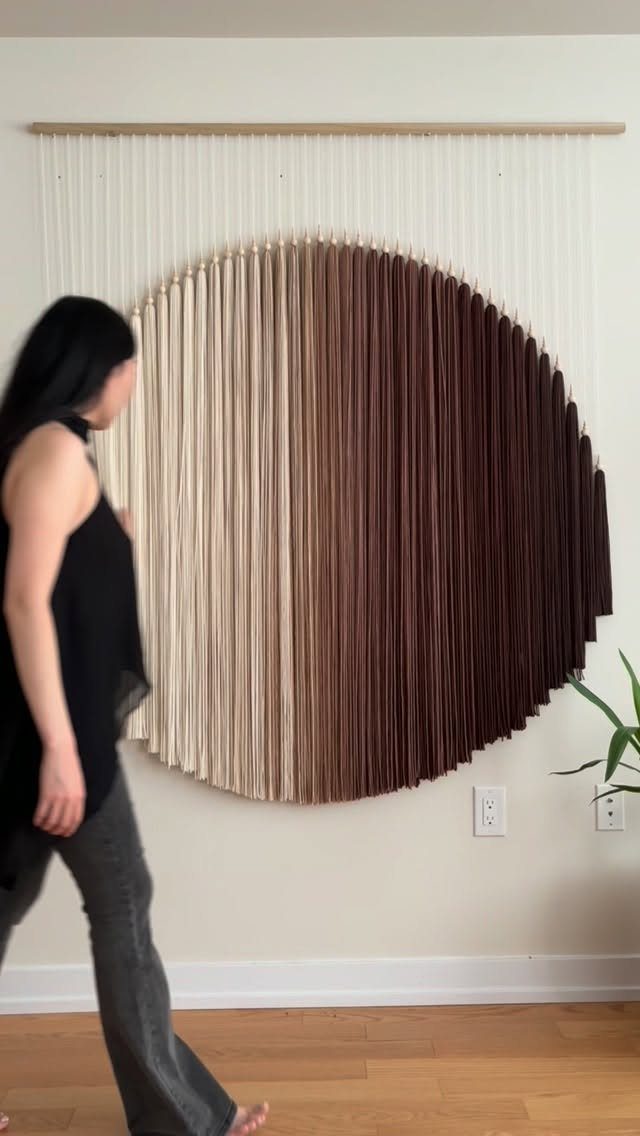
A round woven hanging breaks up all the straight lines of a sofa, a shelf and a window frame, and the brown gradient threads give a white wall some warmth without adding color.
Texture does the work here, so the piece needs no frame and no companion.
Because it’s circular, I’d center it over the middle of the couch and keep it clear of the arms. A hanging this size should sit low enough to feel connected to the seat.
8. Pair of Framed Prints
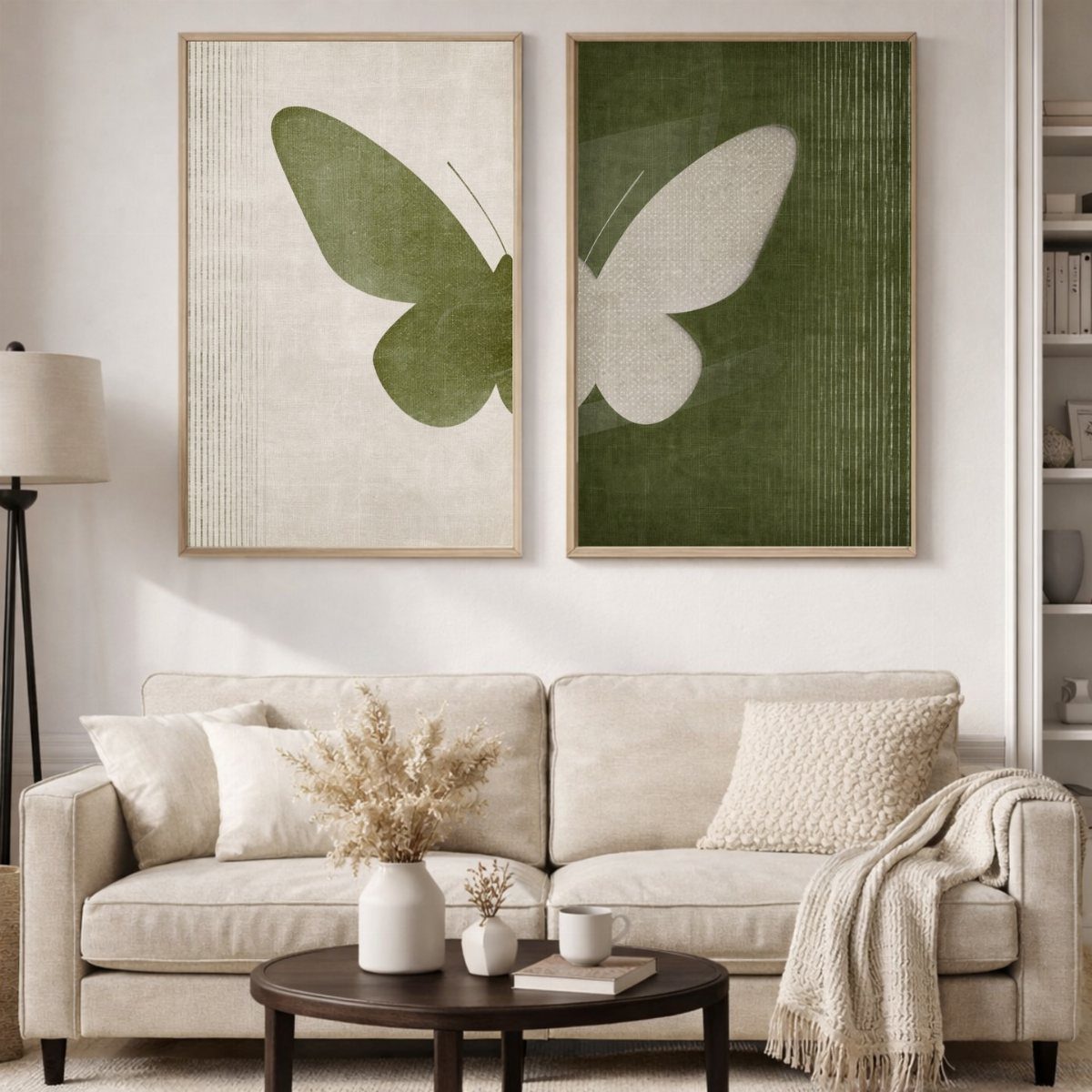
Two matching prints side by side give you symmetry with very little effort, and a split design like the butterfly pair reads as one image across two frames.
Buy both in the same size and frame finish, or the effect falls apart.
Hang them level, with a narrow, even gap between them, and center the pair on the sofa.
On a beige couch with pillows and a throw, a pair is calmer than a busy cluster, and it only takes 2 nails or hooks.
9. Floating Shelves Above Couch
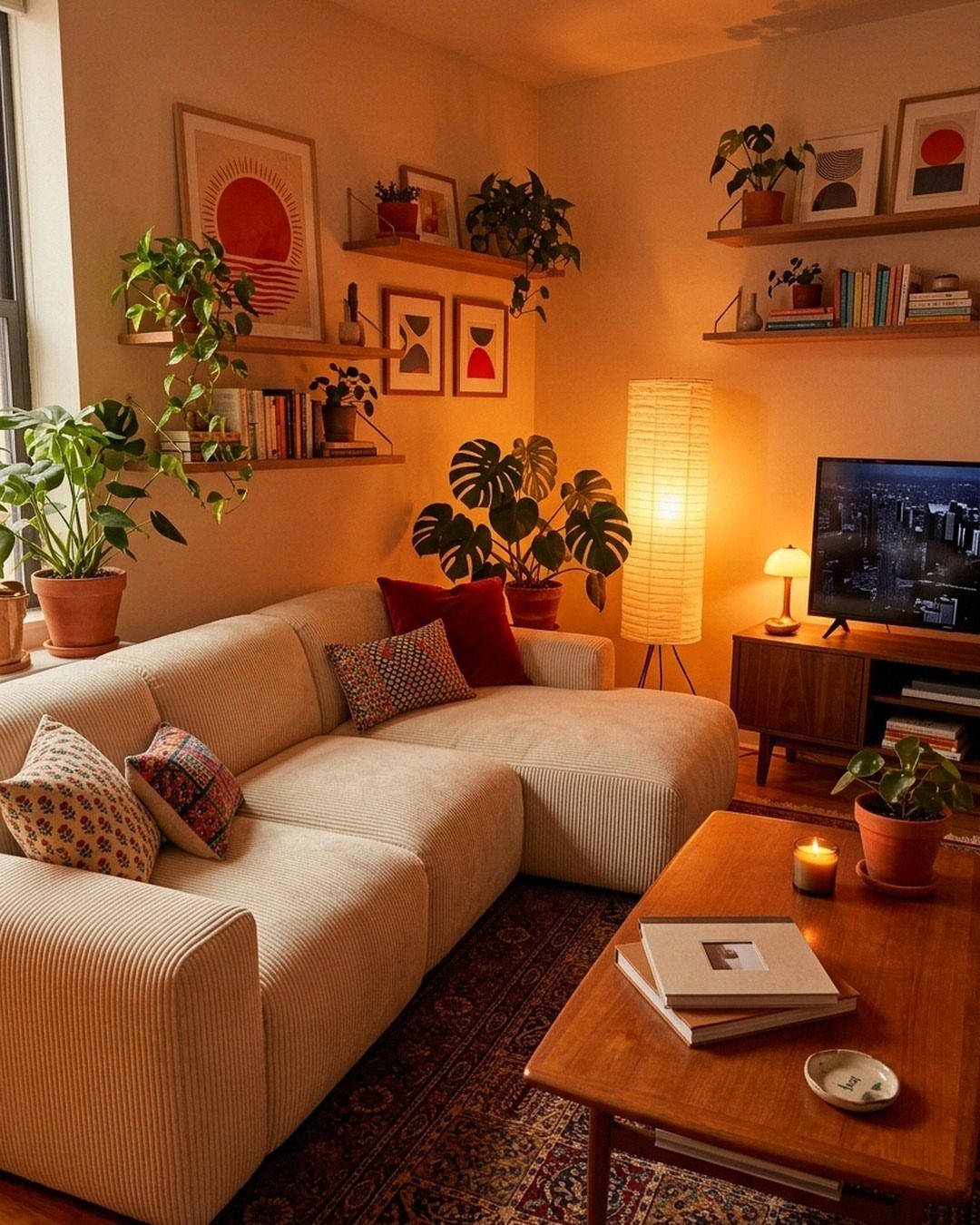
Wooden floating shelves turn the wall over a sectional into storage and display at once, which suits a living room with no spare console.
Mix small framed prints, a few books and a potted plant so the shelf doesn’t read as clutter.
I’d lean the art against the wall rather than hanging more of it, so you can swap pieces in minutes.
Anchor the shelves into studs or use proper wall anchors, since books and planters are heavy. Leave some bare wood between the objects.
Sizing and Placement Rules
A 60-inch loveseat wants roughly 40 inches of decor, an 84-inch three-seater about 56 inches, and a 120-inch sectional about 80 inches.
A group of frames acts as a single unit, so measure from the outermost left edge to the outermost right edge.
On a sectional, ignore the short return and measure only the longest straight section that faces out into the room, then apply the two-thirds guideline to that length.
Sectionals eat up more horizontal space than a standard sofa, so you’re often looking at 80 inches of art width or more to fill the span.
Back height changes the shape. A high-back sofa shortens the available height, so you’ll want something that runs wider and sits lower on the wall.
Choosing Art
Pull from what’s already there: the sofa fabric, the rug, the curtains, the wall color. Pick art that repeats two or three of them, and it will look planned instead of dropped in.
Starting from scratch?
Reverse it. Choose the large painting first and pull the room’s palette from its colors.
For a bold statement, go big. Unless the piece is wider than the sofa, bigger usually looks better than smaller, and a large piece also stretches the space visually.
Don’t skip the frame. Black, gold or wood frames give a piece more weight, and a calm abstract or textured canvas works well at this scale.
Lighting for Decor
Flat overhead light washes out texture, so give the art its own source. A picture light, an angled spotlight or even a nearby lamp brings out brushwork and detail.
If you rent or don’t want to hardwire anything, a battery-operated LED picture light is the easy route.
It mounts to the wall, runs on a rechargeable bulb, and most models include a remote so you can adjust the brightness without getting up.
Brass or matte black fixtures both look clean mounted directly above a large canvas or mirror.
For a big central piece, a sconce on each side frames it and gives anyone on the sofa a soft, flattering glow.
Frequently Asked Questions
How do you choose wall art that complements the couch’s color?
Repeat two or three colors the room already has, pulled from the sofa, rug, curtains or wall paint, and the art will look chosen on purpose.
A patterned couch does best under simple art with clean shapes, while a neutral couch can take a bolder piece. Another route: buy the big painting first, then let its colors set the palette for pillows and throws.
Is it okay to leave the wall above the couch completely empty?
Yes, a bare wall can be a deliberate choice, especially when the room already has plenty of pattern and texture elsewhere.
If it still feels unfinished to you, one large painting is the easiest fix. One oversized piece covers the same space as a whole gallery wall, and a plain white wall suddenly looks finished.
What is the 3-5-7 rule in decorating?
The rule holds that odd-numbered groups of 3, 5 or 7 read as more balanced and natural than pairs or sets of 4 and 6.
It applies to shelves, mantels and any arranged display. I use it on gallery walls to settle how many frames to hang.
How big should wall art above a couch be?
Plan for art that spans roughly two-thirds of the couch: about 40 inches over a 60-inch loveseat, 56 inches over an 84-inch sofa, and 80 inches over a 120-inch sectional.
With a sectional, base the math on the longest straight run that faces the room, not the whole L.





