Which of these ideas fits depends on whether you have a window and whether the lease lets you drill. Wall-mounted tables and shelving need studs and a landlord’s okay, while task lamps, plants and artwork need neither.
The range runs from a few cheap swaps to built-in glass panels, and even the lowest-effort ones, like natural light across the desk for 8 hours of screen time, change how a tight room works.
1. Small Wall-mounted Tables
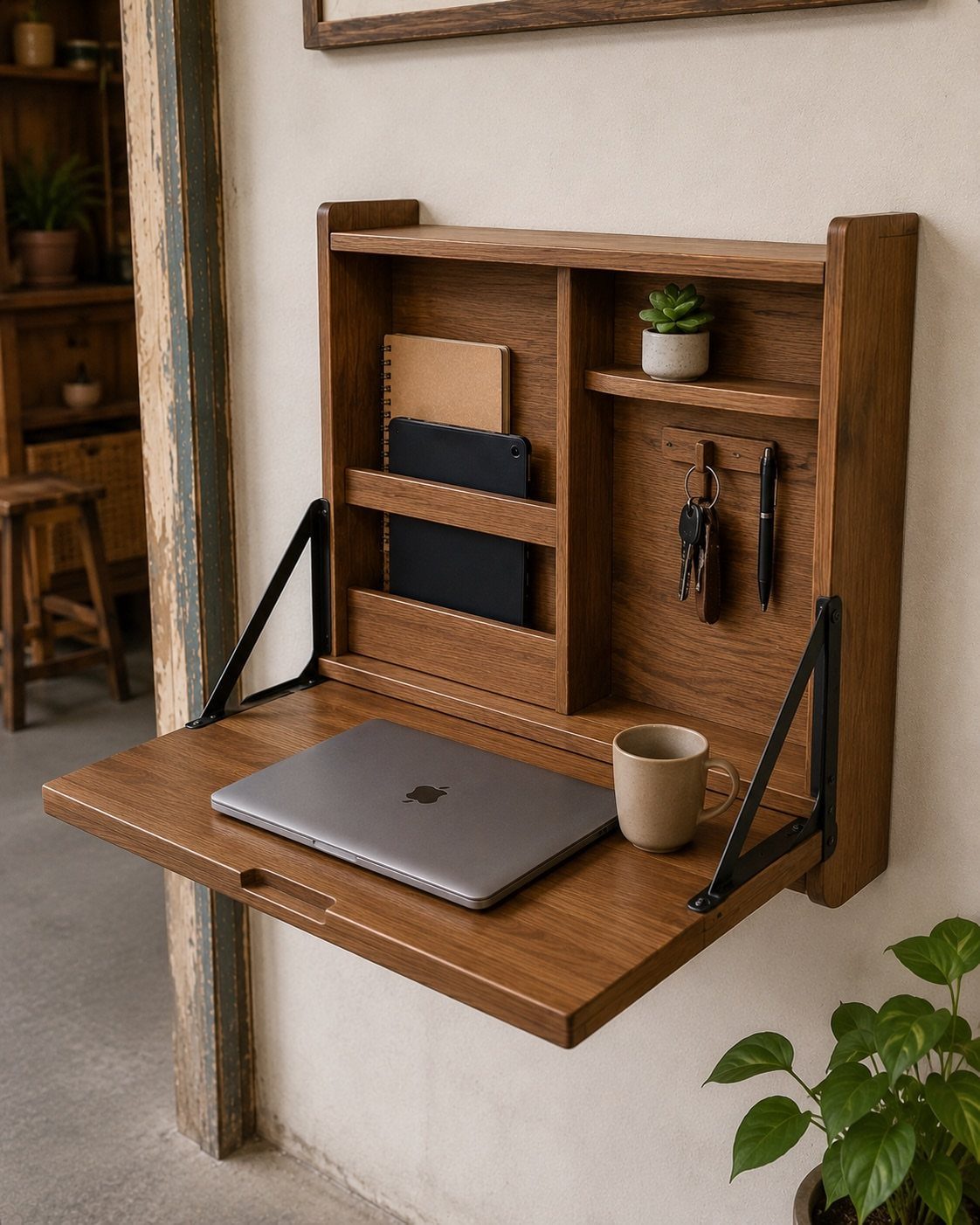
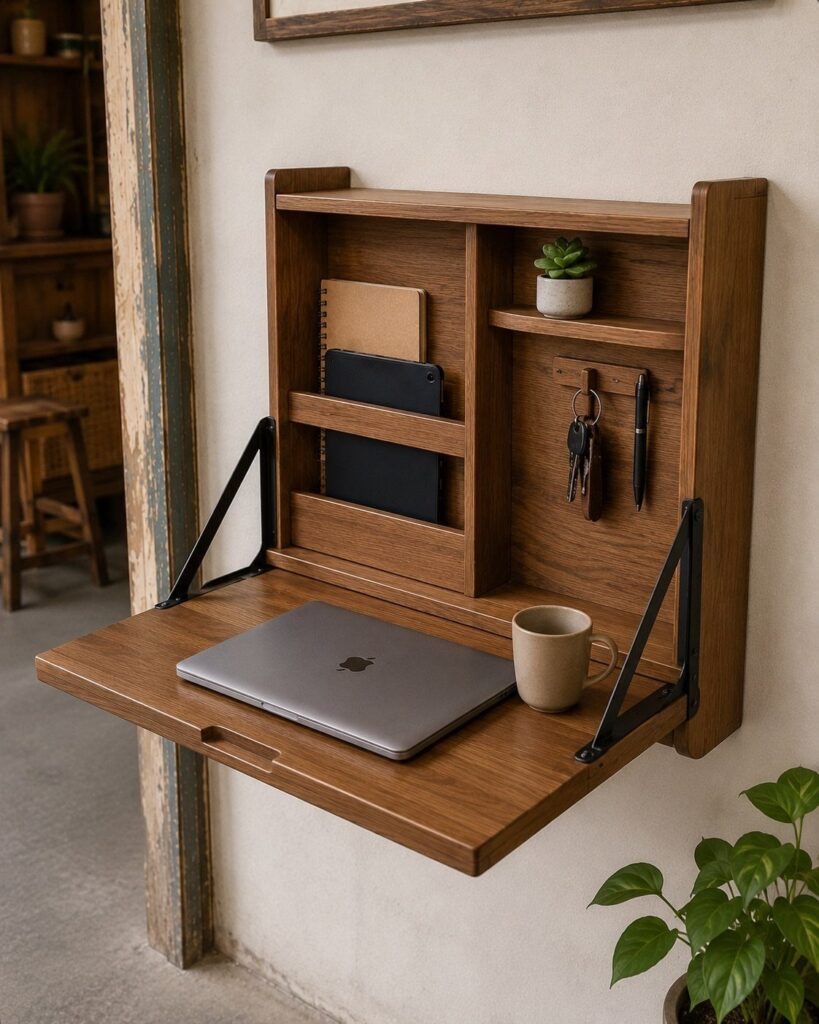
A folding desk that mounts to the wall gives a small office its floor back. Closed, it is just a wooden panel; open, it holds a laptop and a mug with room to spare.
The small shelves built into the wall beside it are what I would copy. A notebook, a tablet and a set of keys stay within reach, so nothing crowds the work surface.
Mount it into studs, not drywall alone, since a laptop and a full mug add up. Renters should check what the lease says about drilling before buying.
2. Smaller Bench Workstations
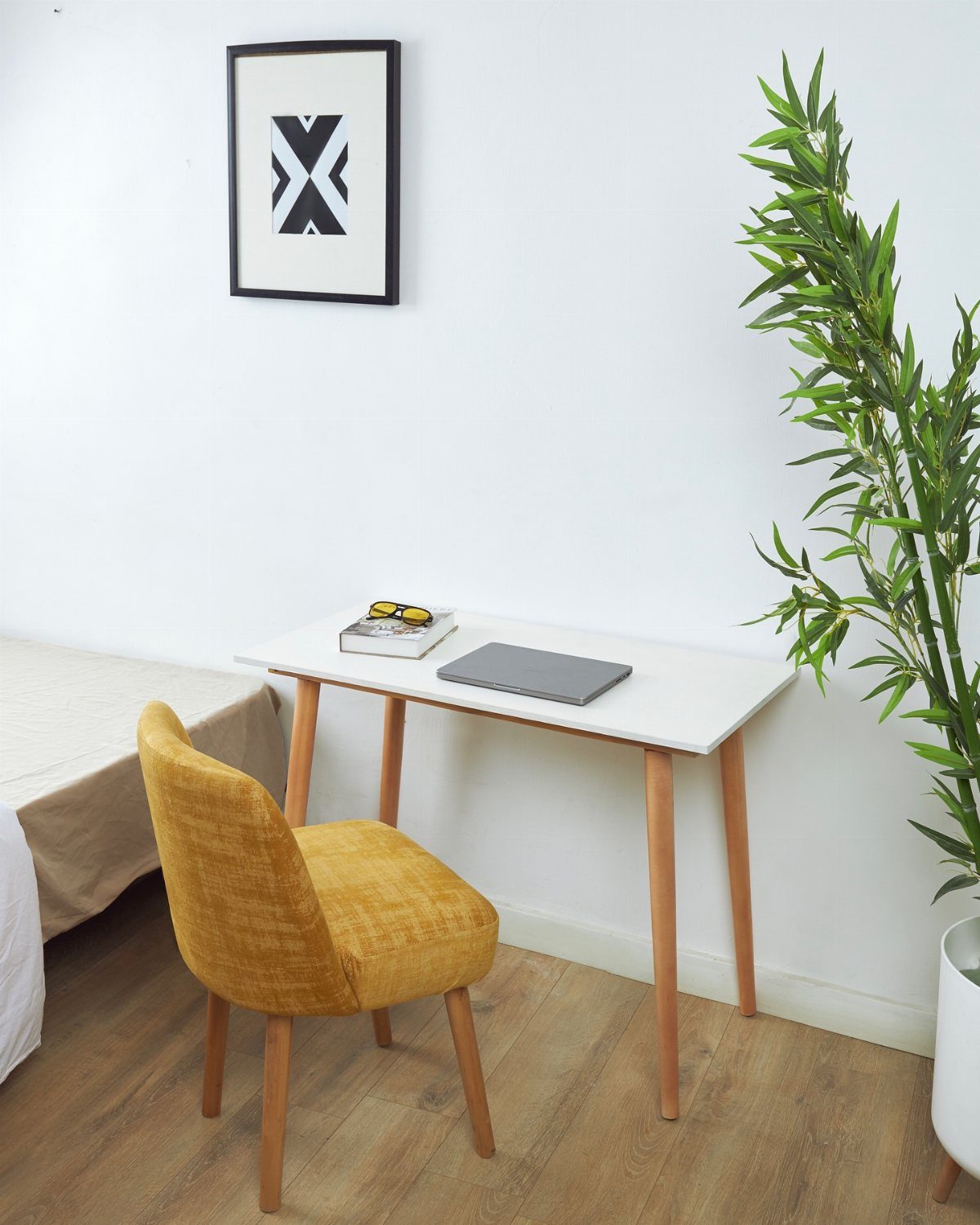
Shrinking the desk is the quickest way to make a tight room feel less like a storage closet. A narrow white top on slim wooden legs lets the floor show underneath, which keeps the space looking larger.
A laptop and one book fit comfortably, and that is about all a small desk should carry. A compact chair in a bold color, like yellow, adds personality without taking more room.
Measure the wall before shopping, and leave space to pull the chair out.
3. Wall-mounted Shelving
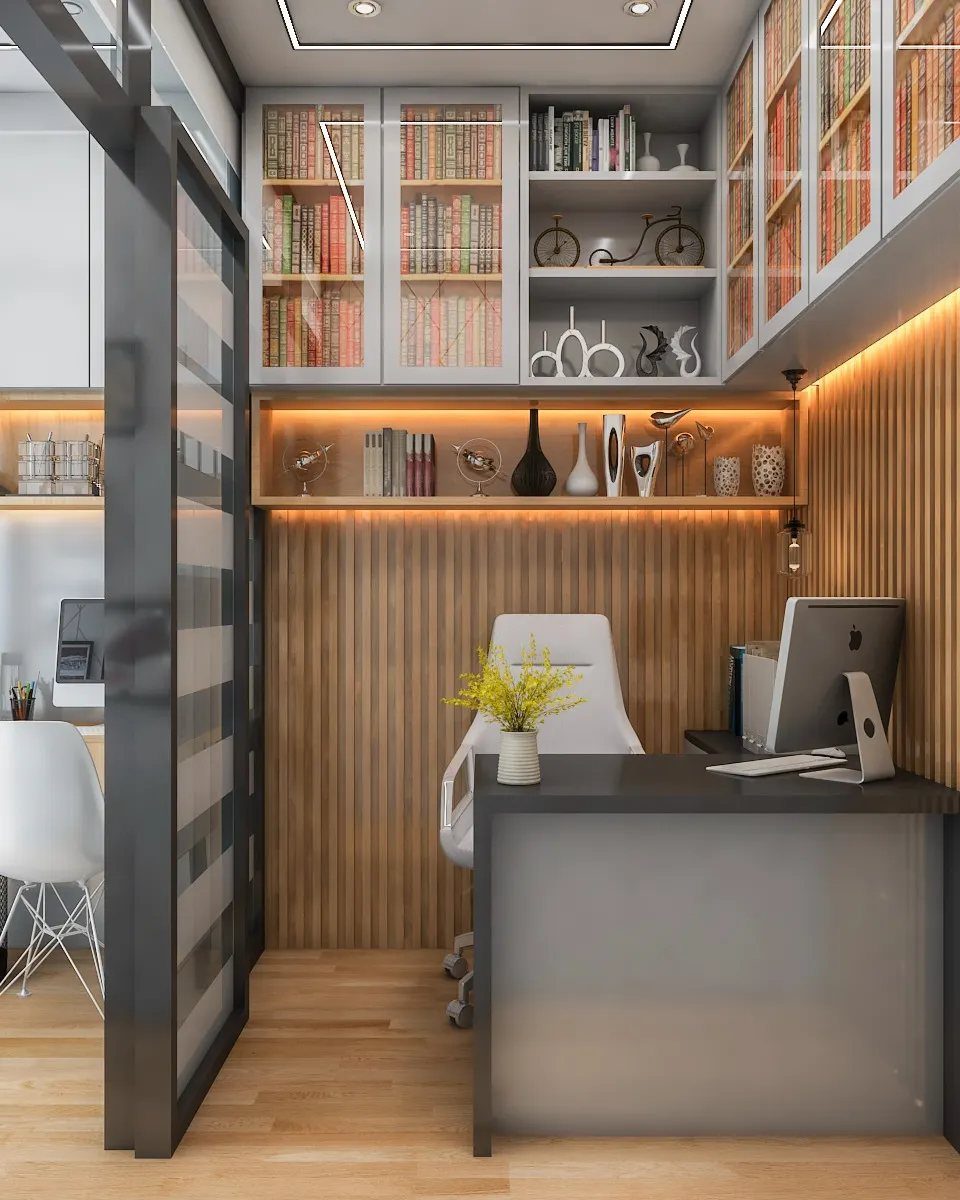
Shelves hung high on the wall hold the books and decor that would otherwise eat up desk space. In a grey-and-white office with wood slatted walls, a full run of shelving reads as built-in, even when it is not.
Keep the desk surface for the work itself and push everything else upward. I like mixing books with a few decorative objects so the wall looks styled rather than crammed.
Anchor shelves into studs for anything heavy. Books weigh more than they look.
4. Desks Near Windows
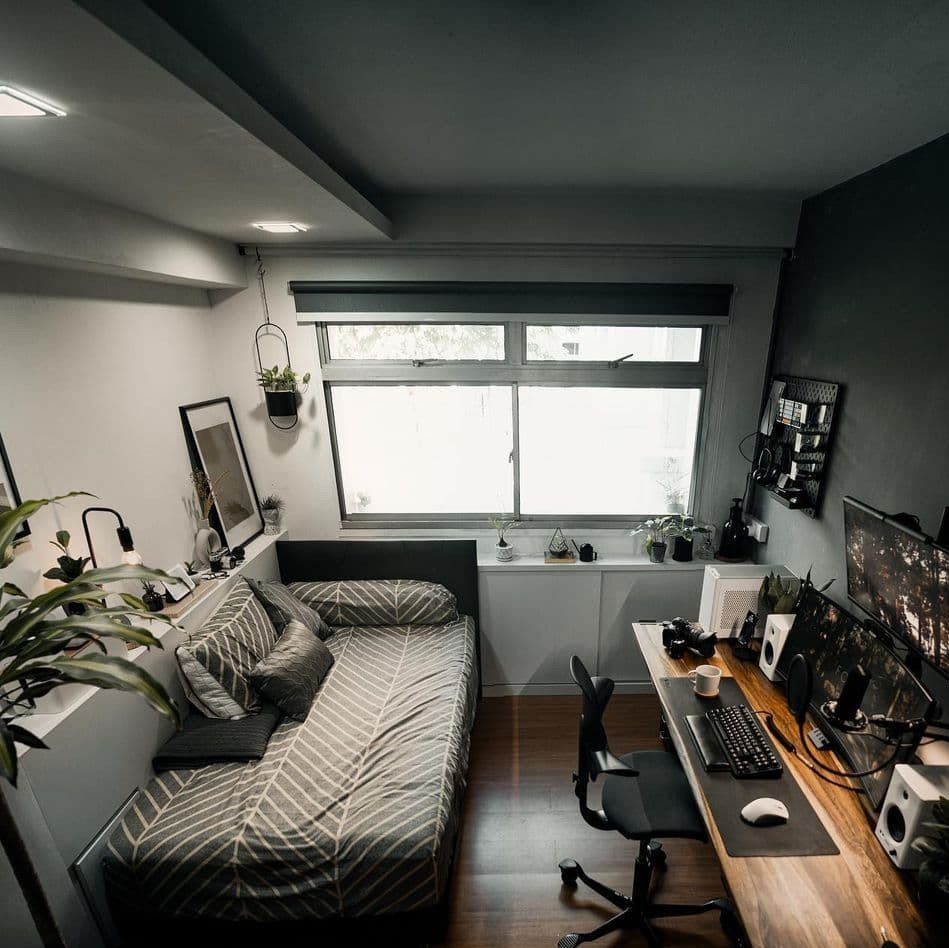
Put the desk beside the window and the room works harder. Natural light across a wooden desktop makes a small office feel bigger, and a quick look outside gives tired eyes a break from the monitors.
This setup also fits a daybed in the same room, so the office can double as a guest space. I would choose a desk narrow enough to sit flush under the sill.
Place screens at an angle to the glass, so daylight does not bounce straight into your eyes.
5. Layered Task Lighting
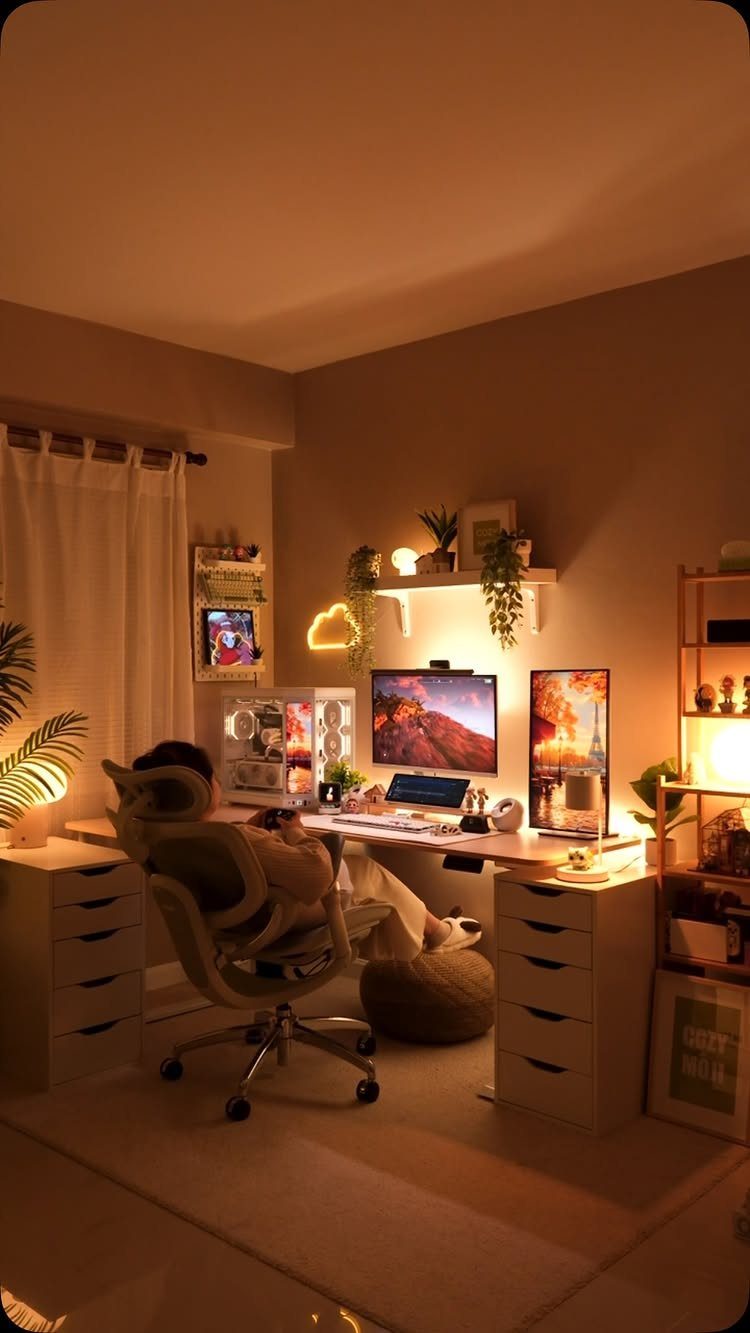
One overhead light is rarely enough at a desk, and layering fixes that. Combine a general light for the room, a focused lamp for the work surface, and a soft accent such as an LED strip behind the monitors.
Warm bulbs keep the glow easy on the eyes through a long day. Small plants near the lamps soften the tech-heavy look.
Cheap plug-in lamps and adhesive LED strips make this a weekend project on a small budget. Aim each lamp at the work area, not at the screen.
6. Glass Panels
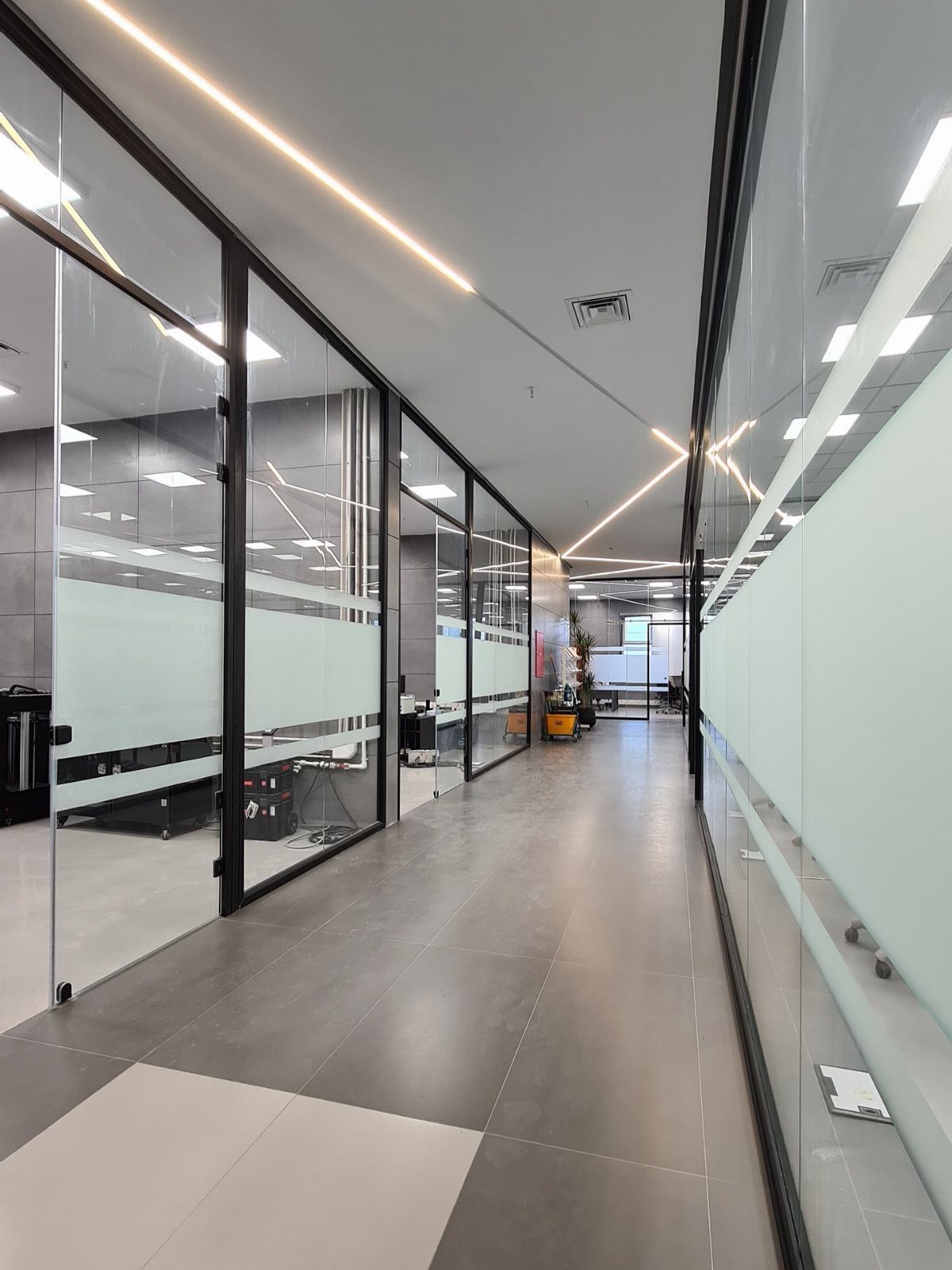
Glass panels divide a small office without closing it in. Light passes through, so the space stays open, and frosted bands across the middle add privacy at seated eye level.
I prefer that banded look over fully clear glass, because people walking by cannot see your screen. Full partitions cost real money and usually need installation, so tenants should ask the landlord first.
For a lower-cost version, apply frosted window film in horizontal strips to existing glass.
7. Soft Grey Walls
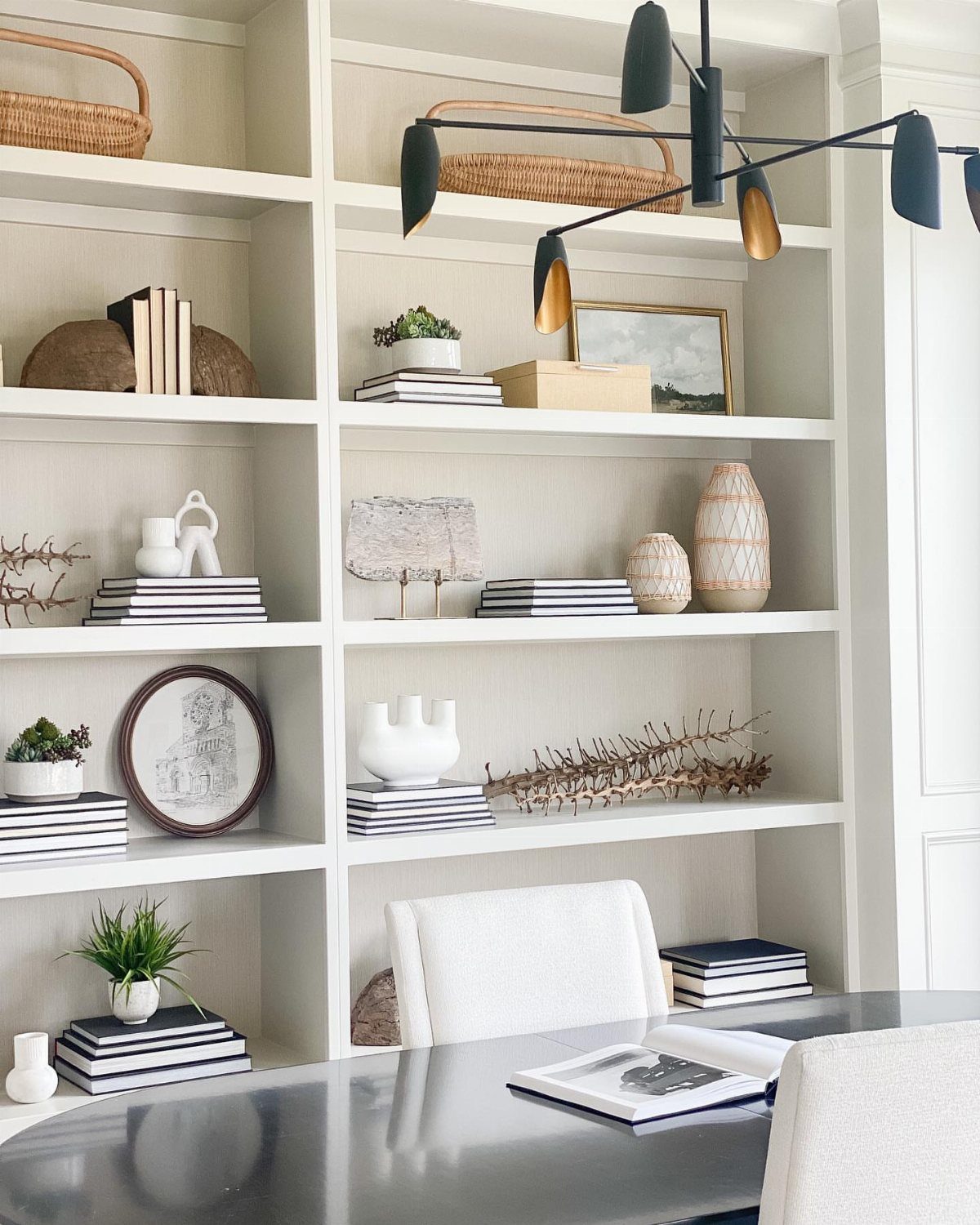
Soft grey walls give white built-in shelving a calm backdrop, so books and vases stand out instead of fighting the paint. A white desk and chair sit easily against it.
I would choose grey over stark white here because the shelves keep their definition. Test a sample patch beside your shelving before committing, since grey shifts with the light in the room.
Paint is cheap and renter-friendly if the lease allows it.
8. Plants and Artwork
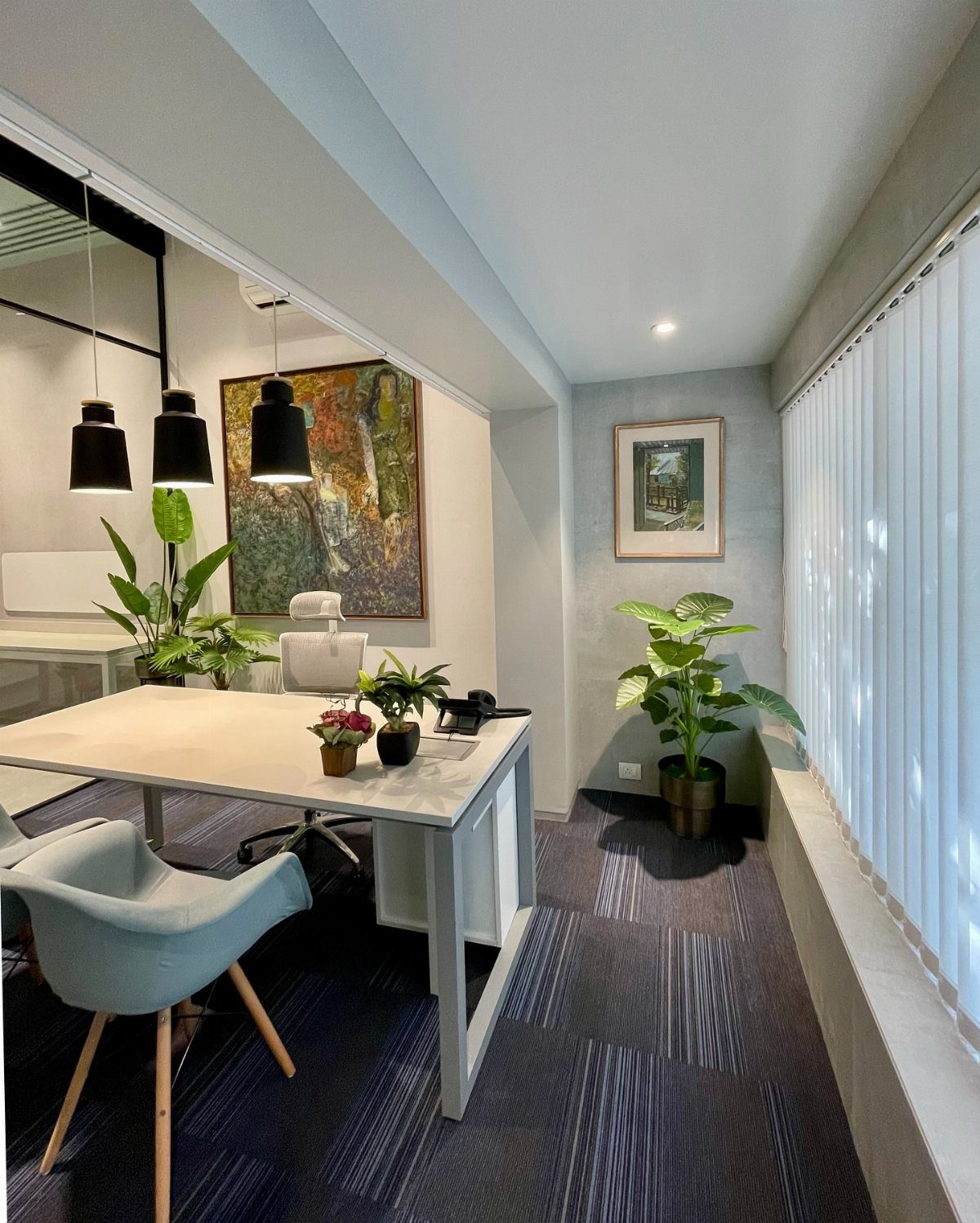
Three potted plants and one large painting give a plain white desk and blue chair a personality without costing any floor space.
The big canvas does the heavy lifting, and a smaller framed picture beside it keeps the wall from feeling bare.
I like odd numbers for plants, and I would hang art at eye level when seated, since that is where you look all day.
Both are easy to swap, which suits renters.
9. Design for Video Calls
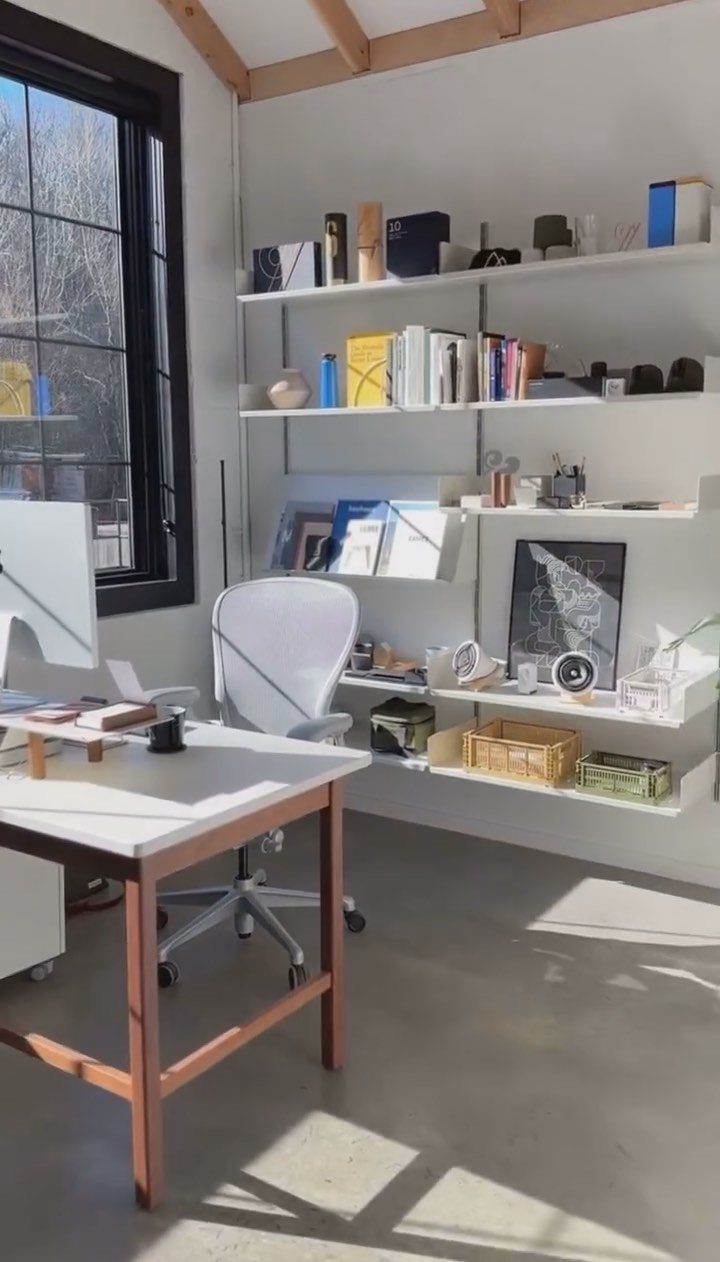
Whatever sits behind your chair is what everyone sees on a video call. Tidy wall-mounted shelving of books and a few decor pieces makes a background that looks organized without effort.
Keep the shelves edited, with a few objects rather than a crowd, so nothing distracts from your face. Sitting with the window beside you, not behind you, keeps you from turning into a silhouette.
Check the framing on a test call before the real one.
10. Hallway Office Nook
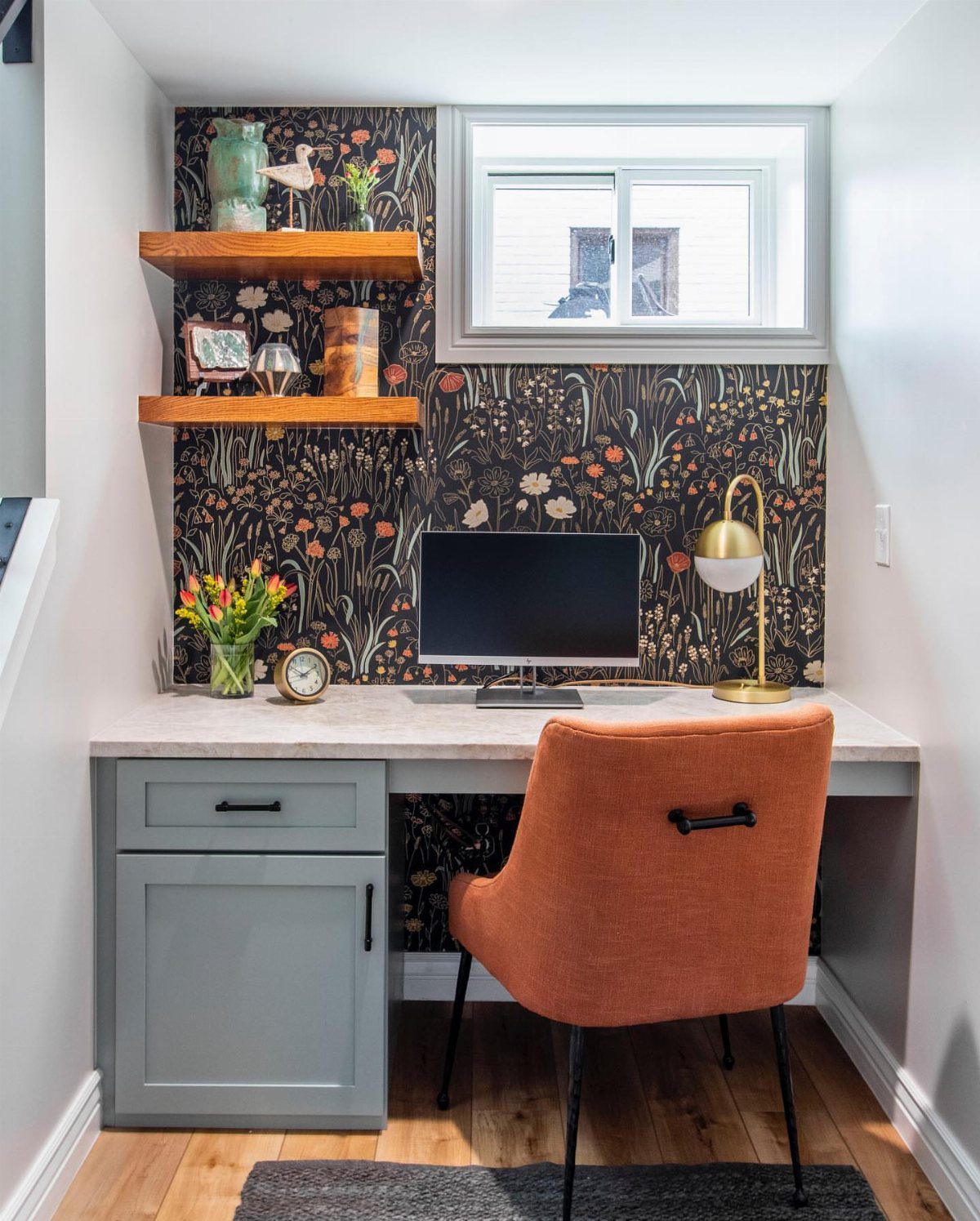
A narrow hallway can hold a full workspace if the desk fits under a window.
Here a slim grey desk, floating shelves and an orange chair do the job, and dark floral wallpaper makes the nook feel intentional rather than leftover.
Floating shelves keep the floor clear, which matters in a passage. Wallpaper on one short wall is a weekend job, and peel-and-stick versions suit renters.
Measure the width first so people can still walk past the chair.
11. Light-colored Furnishings
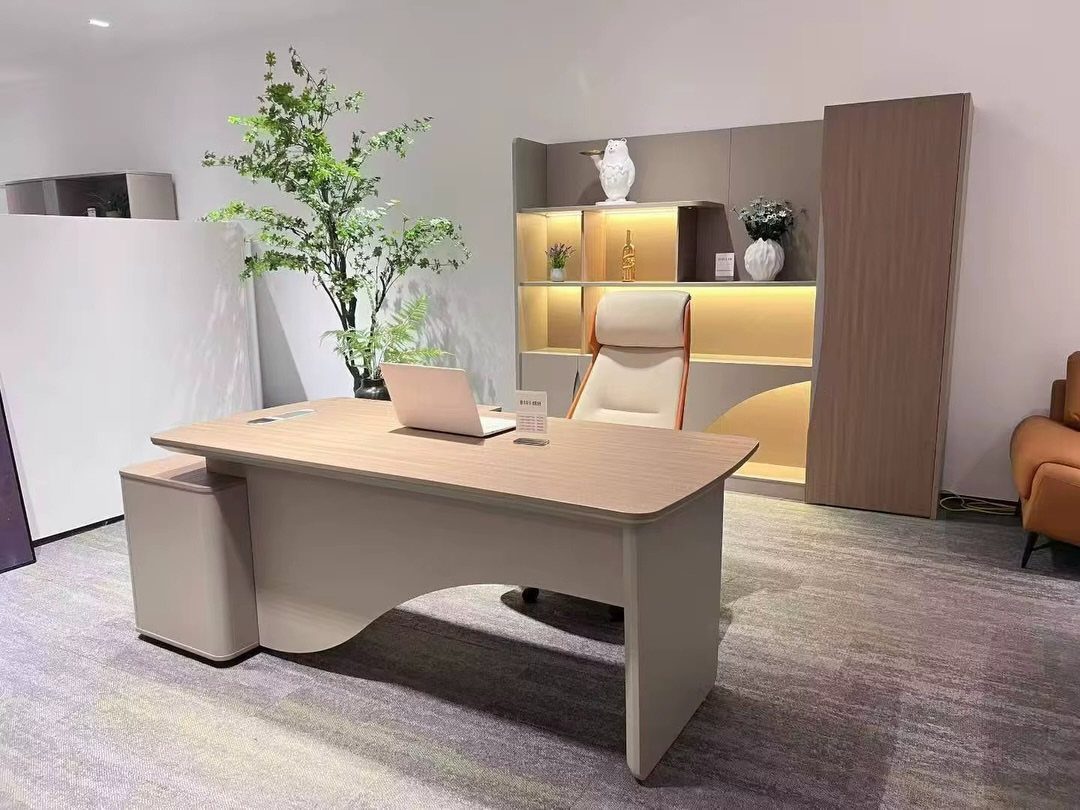
Light wood furniture and beige upholstery in the same tone carry the eye across the room instead of stopping it, which makes a small office feel wider than it measures. Matching tones read as one piece of furniture.
I would stay within two or three pale shades and let one potted plant supply the green. Lit shelving adds a soft glow that suits long afternoons.
Pale pieces show scuffs, so wipe them down regularly.
12. Soft Furnishings and Plants
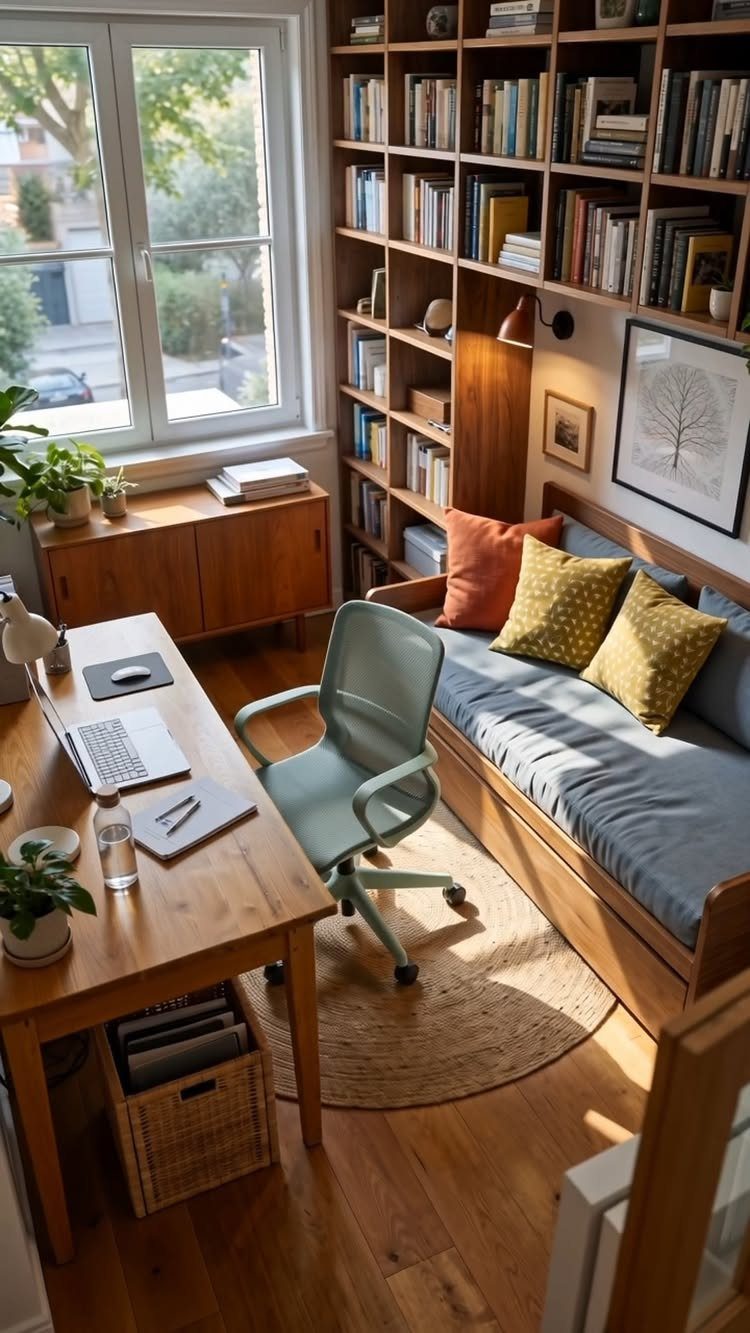
A daybed piled with yellow and orange pillows turns a work room into somewhere you also want to sit.
Cushions in warm colors soften hard surfaces and add personality without taking up floor space, which matters when the office is small.
Pillows are the cheapest part of this setup and the easiest to change with the seasons. Add a few indoor plants near the shelves for a softer finish.
I would pick washable covers.
Common Mistakes to Avoid
A desk that is too big for the room does the most damage.
Once you lose the walking space around it, the room feels cramped no matter how nice the desk looks, so leave a clear path to the door and the chair.
A single ceiling fixture leaves the room flat and your eyes working harder by midafternoon. Add a lamp at the desk so the ceiling fixture is not doing every job.
Open shelving only works when the contents are edited. Moving clutter from another room onto a shelf just puts it on display, so keep what looks good and store the rest in a closed box or drawer.
The camera also sees your room. Style what sits behind your chair before you finish the rest of the decor, because on a call it is a second view of the space.
Maximize Natural Light
Place the desk near the window rather than pushing it into a dim corner.
Natural light keeps your eyes comfortable through 8 hours of screen time, and a slice of outdoor view gives you a place to look when you need to think.
If the office shares a room with something else, mark it off visually.
A rug under the desk, paint on one wall or a lightweight screen between you and the rest of the room marks the boundary without framing and drywall.
Place lamps so they cut down shadows on the work surface, and choose colors and furnishings that keep the space calm.
Clear everything off the desk before you leave it each evening. Add enough drawers and shelves that putting things away takes under a minute, and you will actually do it every day.
If there is no window, a good desk lamp and decent overhead lighting are the fallback.





