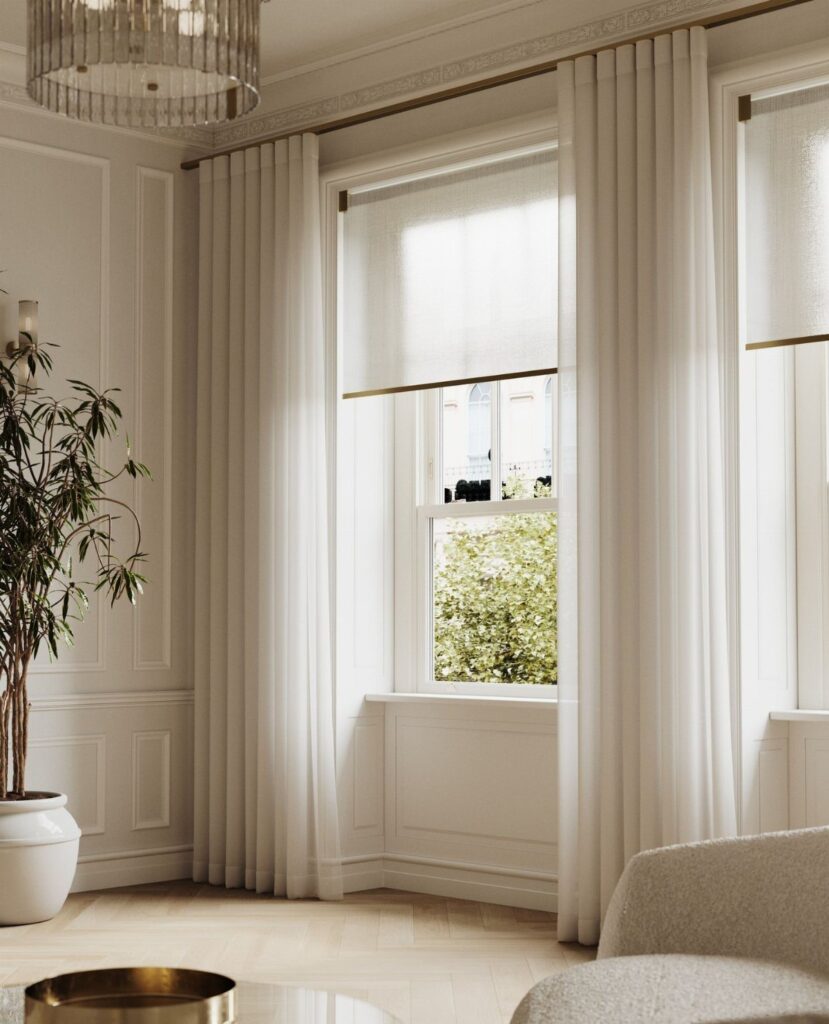
The layer closest to the glass does the practical work, and the list below covers it with Roman shades, roller shades, horizontal blinds and plantation shutters, so what the window needs decides the pick: light control, privacy or sun blocking.
Choose that first layer first, then add a curtain for softness and pattern.
The pairings here run from Roman shades under linen sheers to roller shades under full curtains, and the curtain side can be anything from a quiet solid to a matching fabric.
Set rods at the same height throughout a room, and let every panel fall to the floor the same way; the Curtain Rods Above the Window Frame and Installation Tips sections cover both.
1. Roman Shades + Linen Sheers
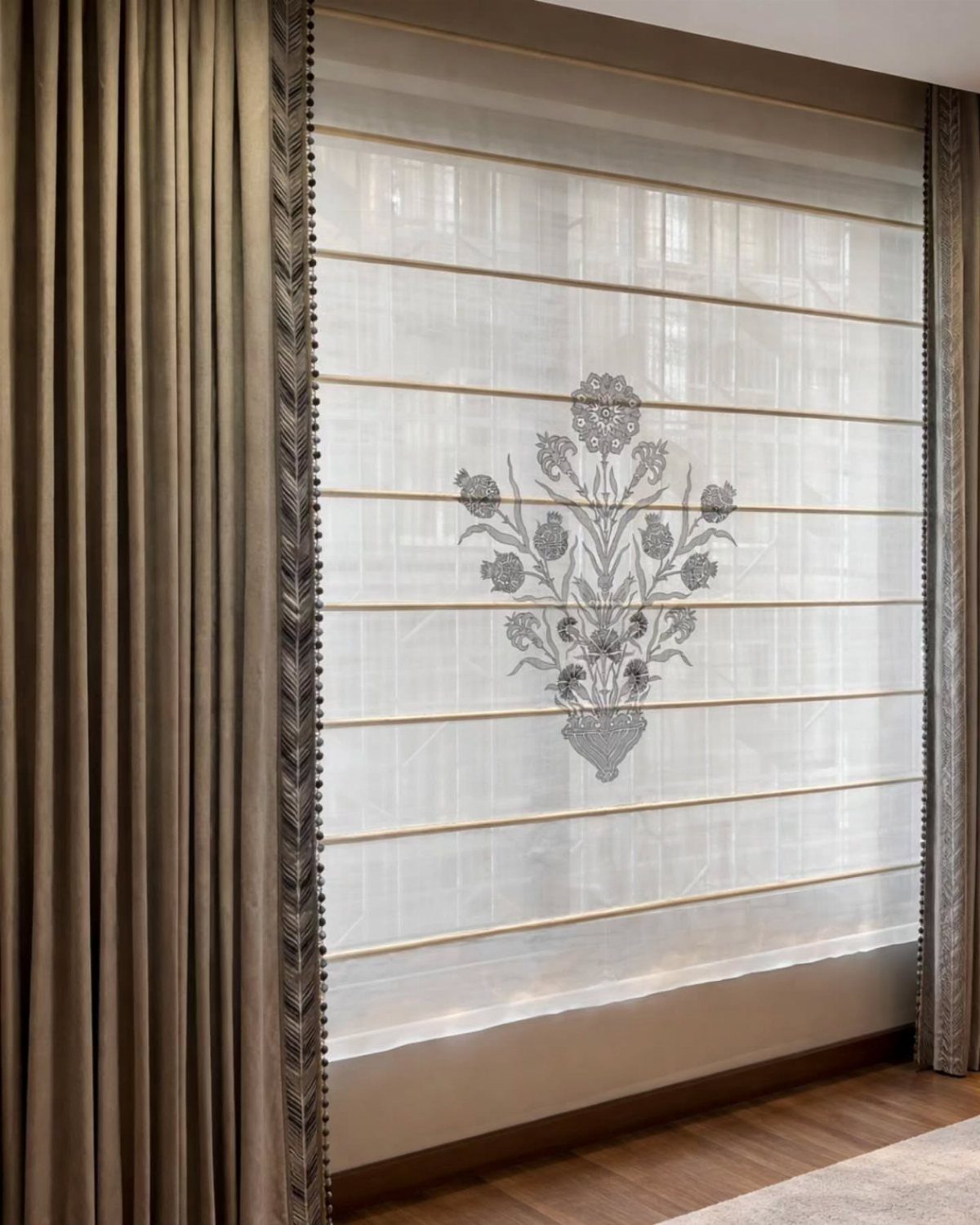
Layering a Roman shade, a linen sheer and a heavy curtain sounds like too much fabric, but the three do different jobs.
The shade handles light and privacy, the sheer softens the glass, and the curtain adds weight at the sides.
Keep the colors close.
White shades with a quiet grey pattern work under taupe drapes because everything sits in the same warm, muted range. If the shade has a motif, keep the sheer plain so the two don’t compete.
Hang the sheer and curtain on a double rod, sheer closest to the glass.
2. Roller Shades + Curtains
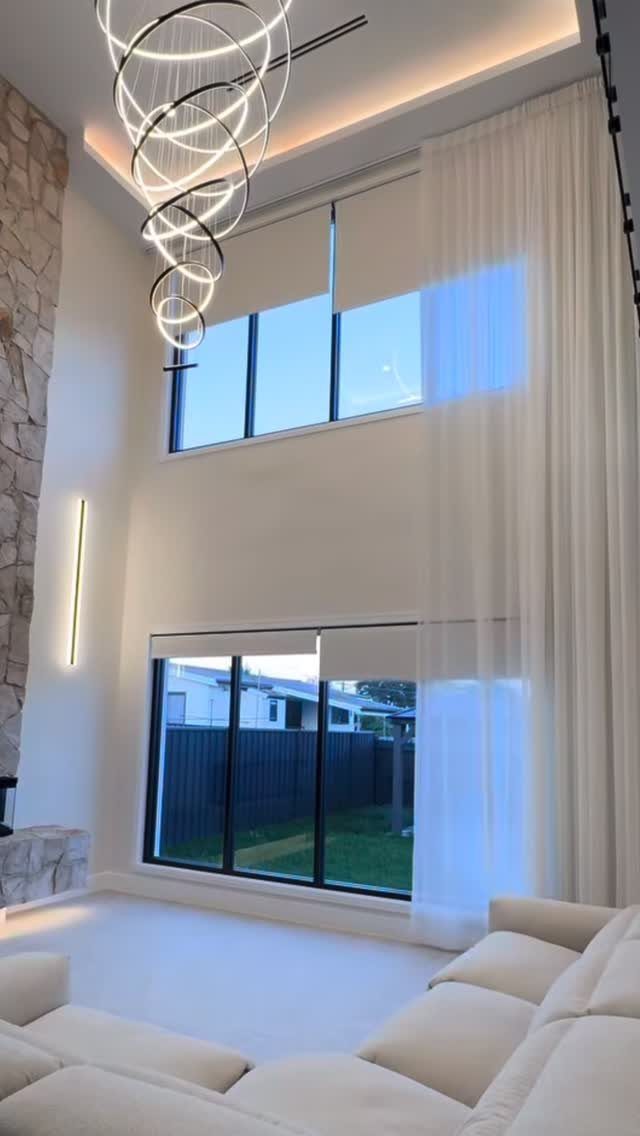
Roller shades are flat and clean, so white sheer curtains are the easiest soft layer to put over them. The shade stays up as a quiet backdrop most of the day and drops when you want glare or privacy control.
I like this pairing for big windows, where a bare shade alone can look stark. The sheers add movement and take the edge off the hard lines.
Buy sheers wide enough to look full when closed, since flat panels look thin. Mount the shade inside the frame and the curtain rod outside it.
3. Curtain Rods Above the Window Frame
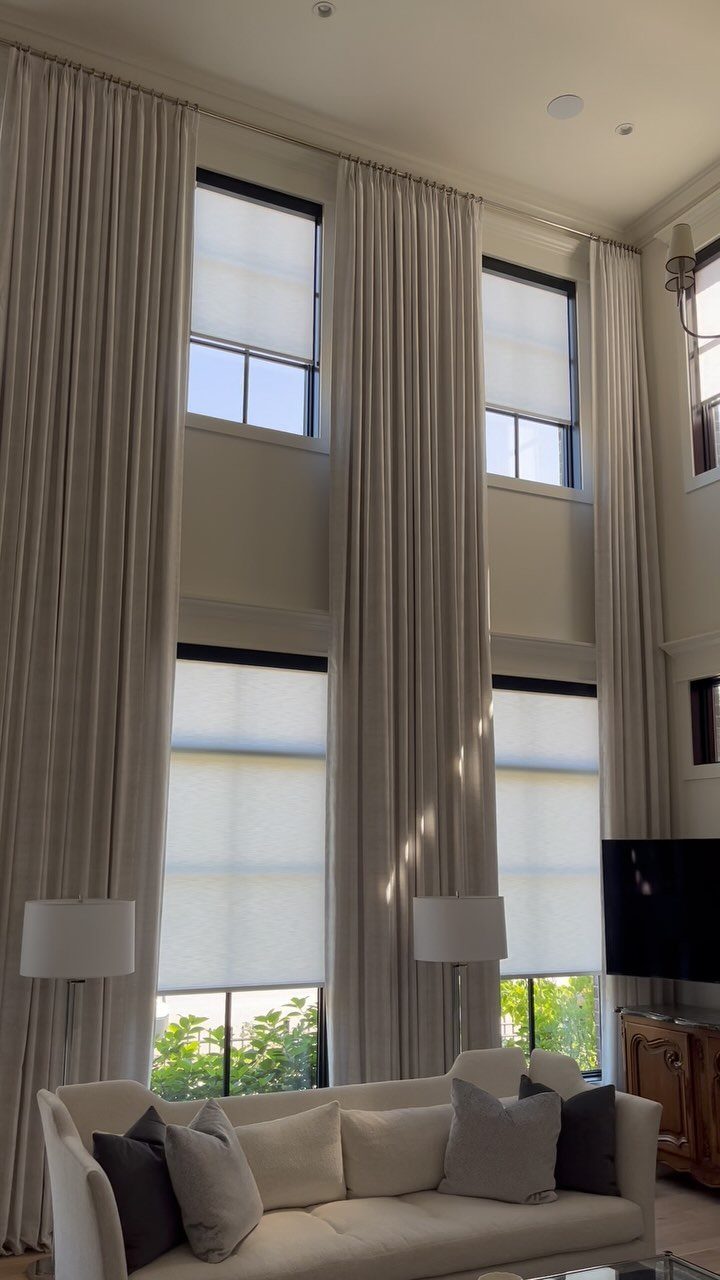
A rod set well above the window frame makes the glass look taller than it is. Long curtains falling from that height draw the eye up, and the ceiling seems to rise with them.
This works especially well over plain white roller blinds, which stay neat inside the frame while the curtains do the visual work. In a room with high ceilings, I would hang the rod closer to the ceiling than the frame.
Measure from the rod to the floor before buying panels, because a higher rod means longer curtains and a higher cost.
Let the panels fall to the floor and just graze it, with no more than a quarter inch of clearance.
4. Children’s Rooms Curtains and Blinds
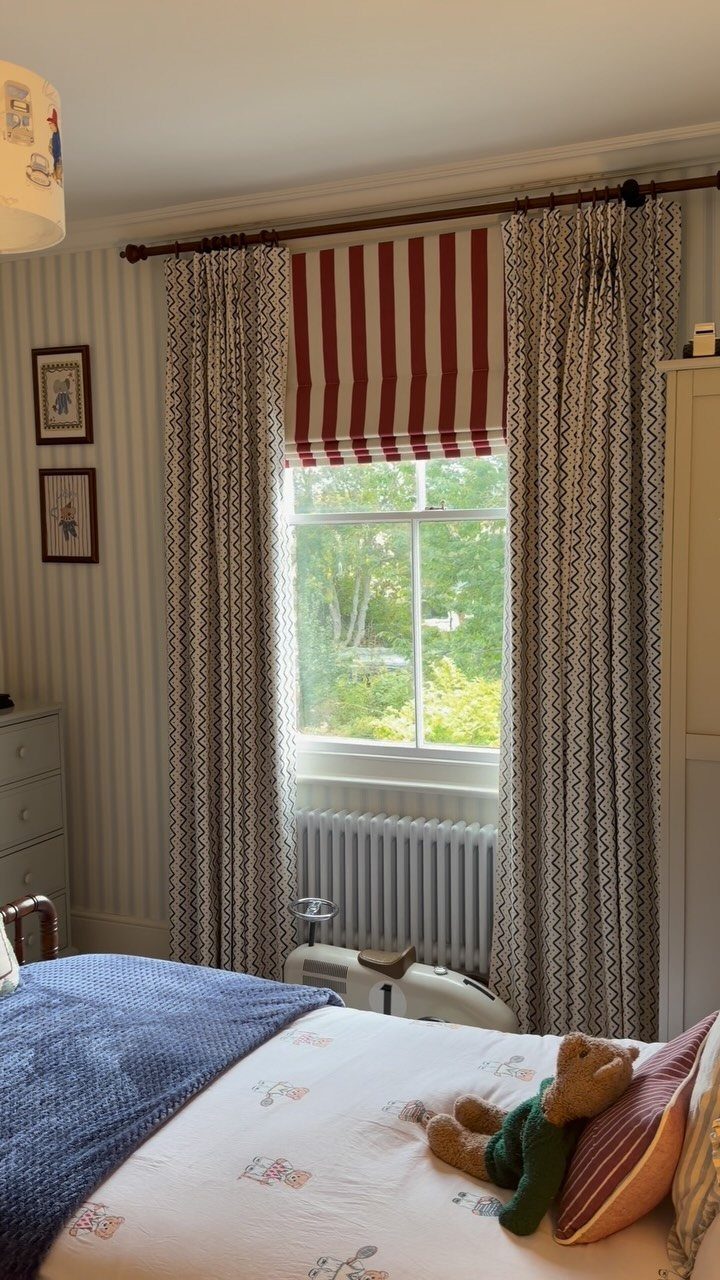
In a child’s room, the blind can carry the bold pattern while the curtain adds a second, softer one.
Red and white stripes on a Roman blind work well because stripes read as tidy even when the pattern beside them is busy.
Choose one color that both fabrics share, the red in this room, and give the other elements free rein to differ. That keeps 2 patterns from fighting.
Stripes on the wall add a third layer, so I would keep the curtain pattern small. Choose washable fabric for curtains in a room that sees sticky hands.
5. Sheer Curtains with Blinds
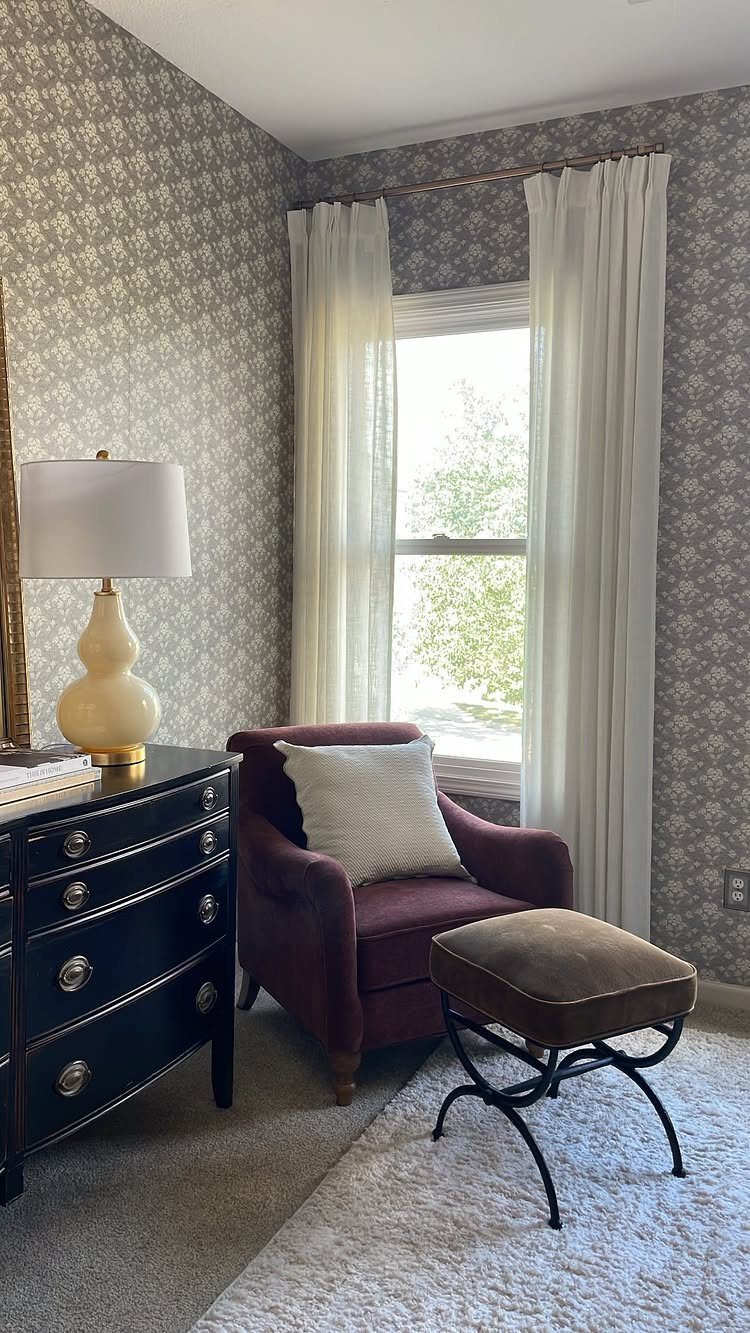
White blinds under sheer white curtains give you light control and a softer-looking window in a single setup.
Close the blinds when you need privacy or want to dim a reading nook; leave the sheers drawn the rest of the time and the glass looks finished instead of bare.
This suits a room with patterned wallpaper, since the white layers stay out of the way of the pattern. Keep the blinds and sheers the same white so they read as one pale layer.
Hang the sheers wider than the window so they gather gently.
6. Horizontal Blinds with Curtains
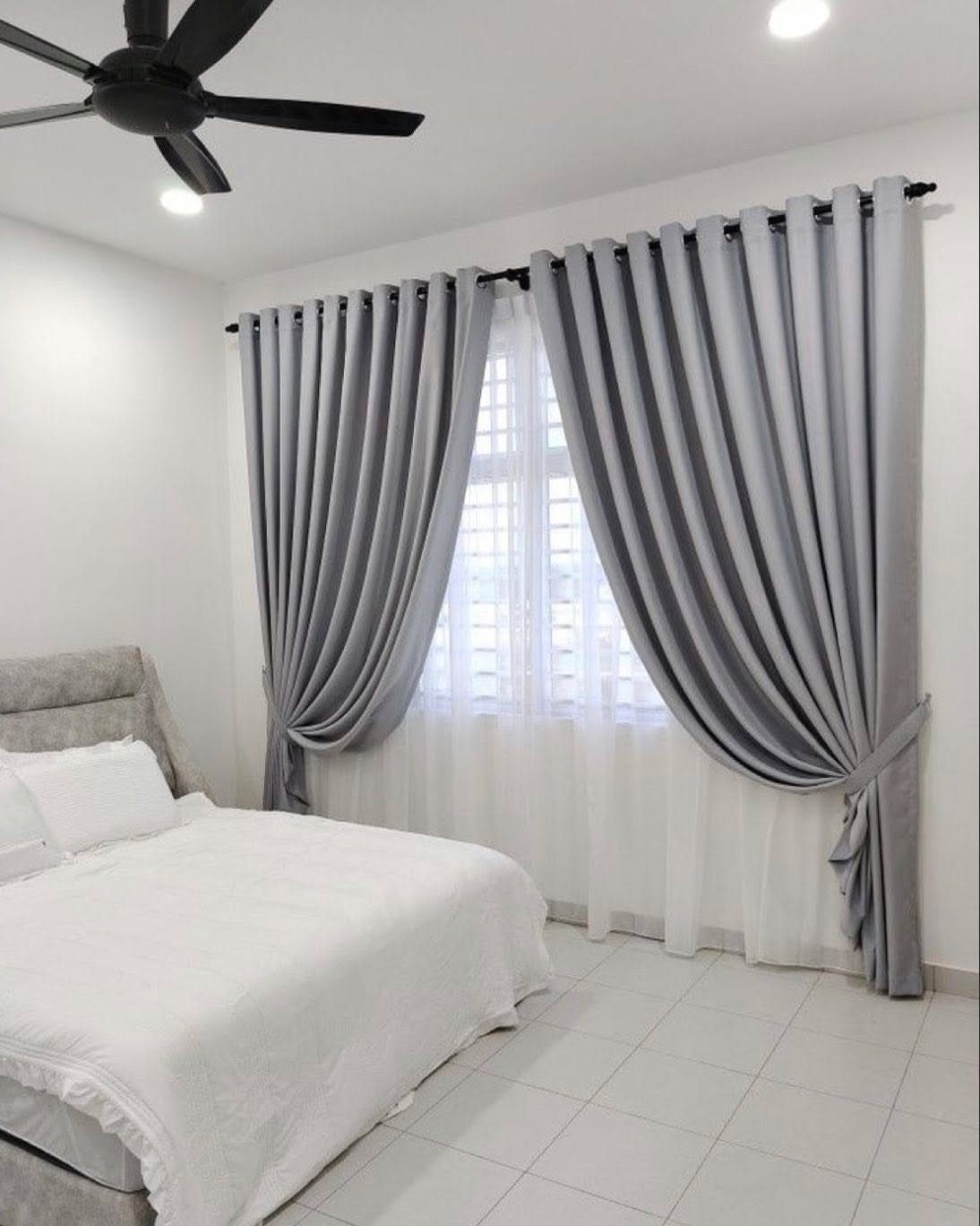
White horizontal blinds are the practical layer here: tilt the slats for light, close them for privacy at night. Grey curtains over white sheers add the softness blinds lack.
During the day I would tie the curtains back so the sheers and blinds stay visible and the window keeps its light. Grey against white bedding and blinds keeps the palette calm.
Use a double rod so the sheers and curtains move on their own. Set the blinds inside the window frame so the curtains hang in front of them without catching on the slats.
7. Plantation Shutters with Curtains
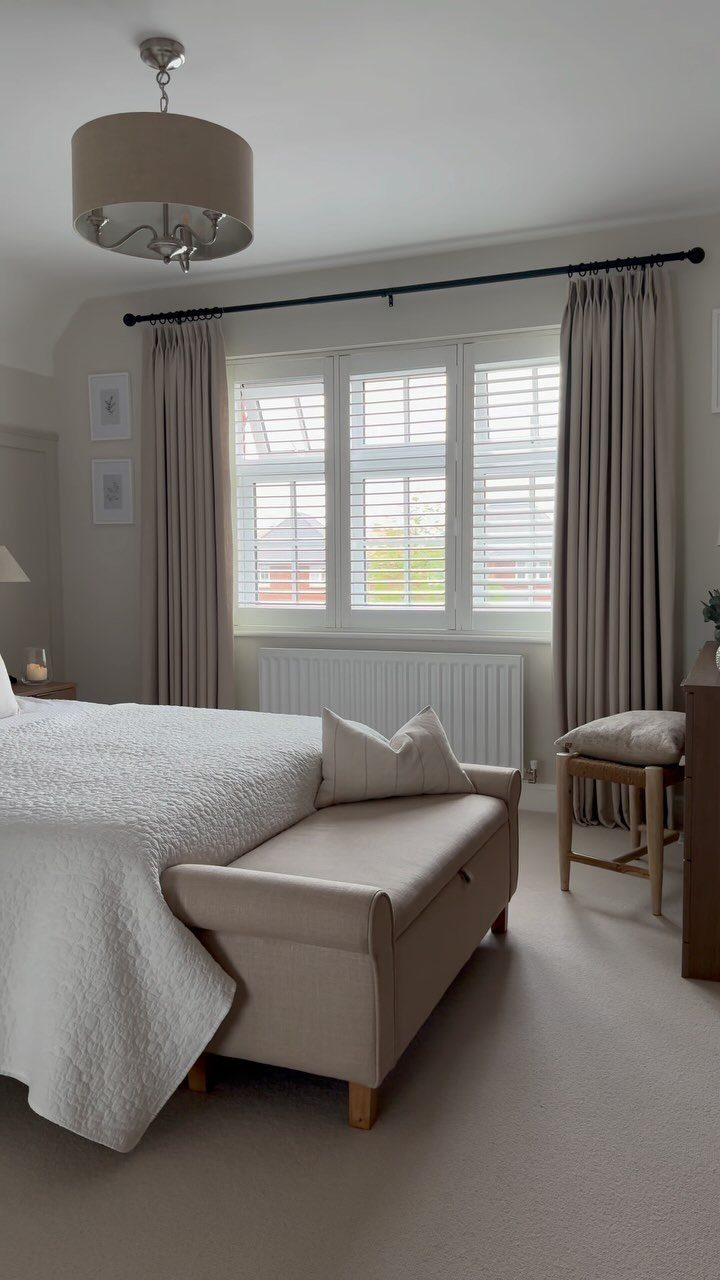
Plantation shutters already cover light and privacy, so the curtains here can be purely soft. Beige side panels against white shutters keep a neutral bedroom warm instead of flat.
Buy panels wide enough to cover the frame’s edges when drawn, but leave them open most of the time.
Shutters cost more than blinds, so I would add the curtains last and pick a shade close to the room’s other beiges.
8. Roman Blinds with Matching Curtains
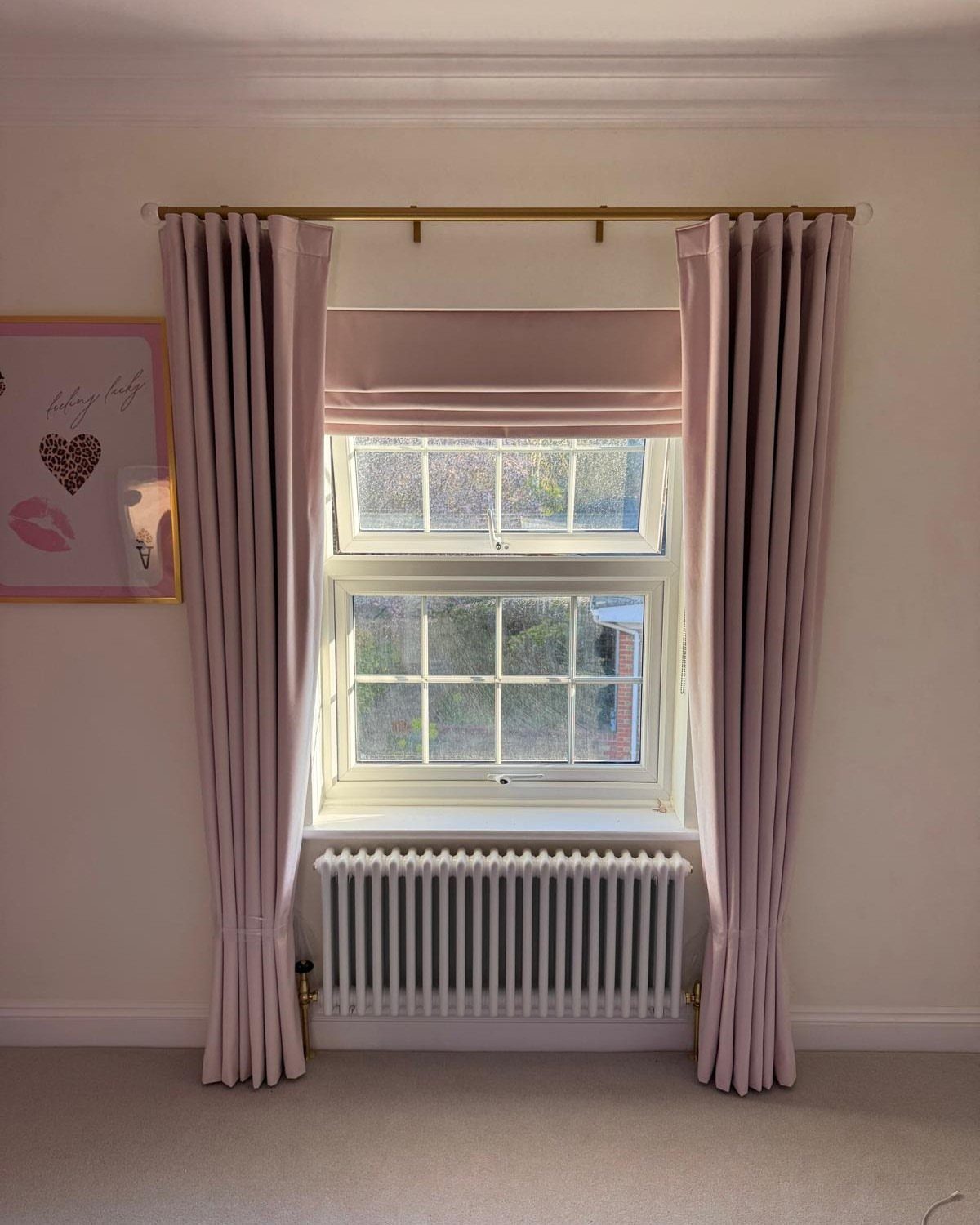
Cut from the same fabric, a light pink Roman blind and floor-length curtains read as one deliberate piece rather than two purchases. The blind handles the glass; the curtains frame it down to the floor.
A radiator under the window is the reason to choose this setup. The short blind clears it, while long curtains can hang beside it, so I would keep them open at the sides, with the pink framing the white window.
Order both from the same bolt or dye lot so the pinks match exactly.
Best Rooms for Layering
Bedrooms gain the most from layering, because privacy and sleep quality matter more there than anywhere else.
In a bedroom you want truly dark, hang blackout curtains over a room-darkening cellular shade; the shade’s air pockets hold heat and cold, and the panels stop the light that leaks around the edges.
Wood or faux wood blinds under floor-length drapery is the classic bedroom pairing. For a cleaner look, choose rod pocket or grommet panels over neutral blinds.
Before buying anything, decide which layer gets seen.
The base layer is usually the practical one, in a neutral shade that fades into the wall. The top layer is the fabric, and it is where color, pattern and texture go.
When the room is already busy with pattern or color, I’d keep the curtains quiet, a solid in a soft tone. If it feels bland, a bold curtain can pull everything together.
Installation Tips
Choose the blind first. Settle whether you need sun blocking, light control or insulation, then pick curtain fabric to suit it.
Put the pattern on the curtains. Blinds are often open and hidden, while curtains show even when pulled back, so a solid blind and a printed curtain make the better split.
Keep every rod and blind in a room at the same height. Mixed heights make a room look unplanned.
Curtain length comes down to 3 choices: a small puddle on the floor, a hem that just grazes it, or a hem hovering a hair above. Choose one and use it on every panel in the room.
Combining Styles
One layer on a window tends to read flat, so mixing two styles gives it depth. A sleek roller shade under a traditional curtain, or a modern blind under a tailored panel, gives the window some character.
Let the materials balance each other. Faux wood blinds add warmth, and I like a linen panel hung over them for a loose, tailored look.
Soft fabric next to a shade’s straight, rigid slats takes the edge off. The more modern the blind, the more a traditional curtain helps it feel at home in the room.
Keep one thing shared, such as a color or a tone, so the two styles read as a choice and not an accident.
Frequently Asked Questions
Is it a good idea to have blinds and curtains together?
Yes, because the 2 layers do different jobs. Blinds control light and privacy, while curtains add softness, pattern and weight at the sides of the window.
A cellular shade, the honeycomb kind, traps air in its pockets, and that layer slows heat moving through the window in both winter and summer.
Can you mix patterns on blinds and curtains?
Yes, as long as one layer stays quiet.
Put the bold pattern on one piece and keep the other plain or small in scale. Stripes on a blind pair well with a smaller print on the curtain.





