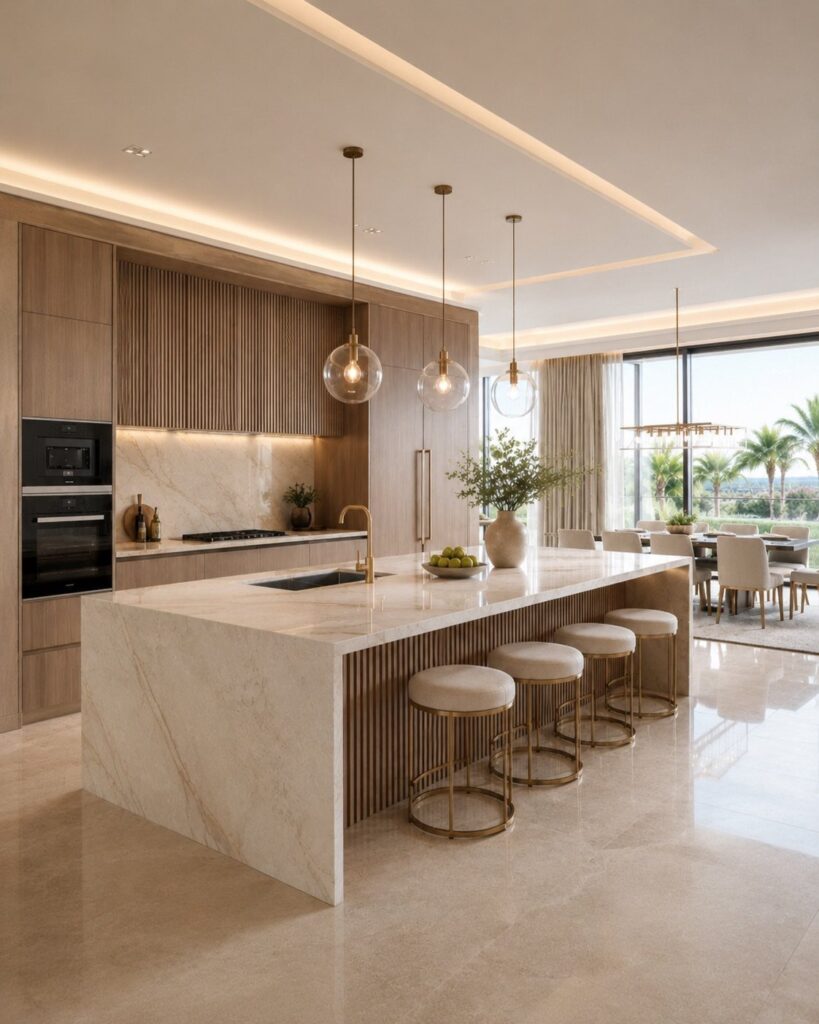
Ideas in this list run from a potted fiddle-leaf fig and a new set of throws to ordering bespoke cabinetry and a marble dining table, so what you rent or own, and how much of the room you’re allowed to change, decides where to start.
Either way, the look comes mostly from clear surfaces, a few well-chosen textures and personalized touches, not from a bigger budget.
1. Indoor Plants
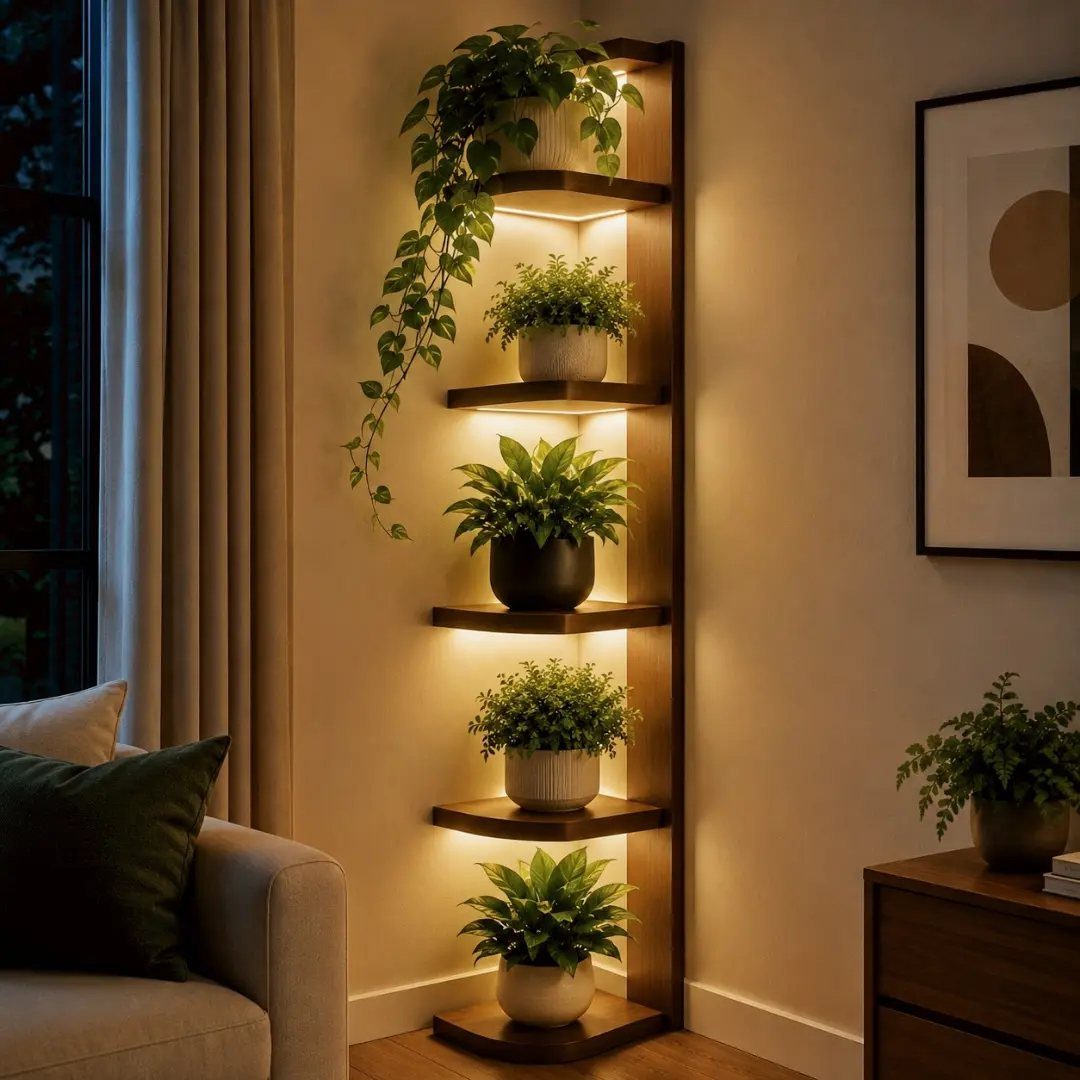
A corner shelf with built-in lighting gives plants a home that looks planned instead of scattered. Dead corners are the easiest place to start, since they rarely hold anything else.
Pots of different heights read better than a row of matching ones. Keep the pots in one or two finishes so the greens stay the focus, and aim the shelf light so it falls across the leaves in the evening.
Pick plants by the light your room actually gets, and buy one more than you think you need.
2. Layered Lighting
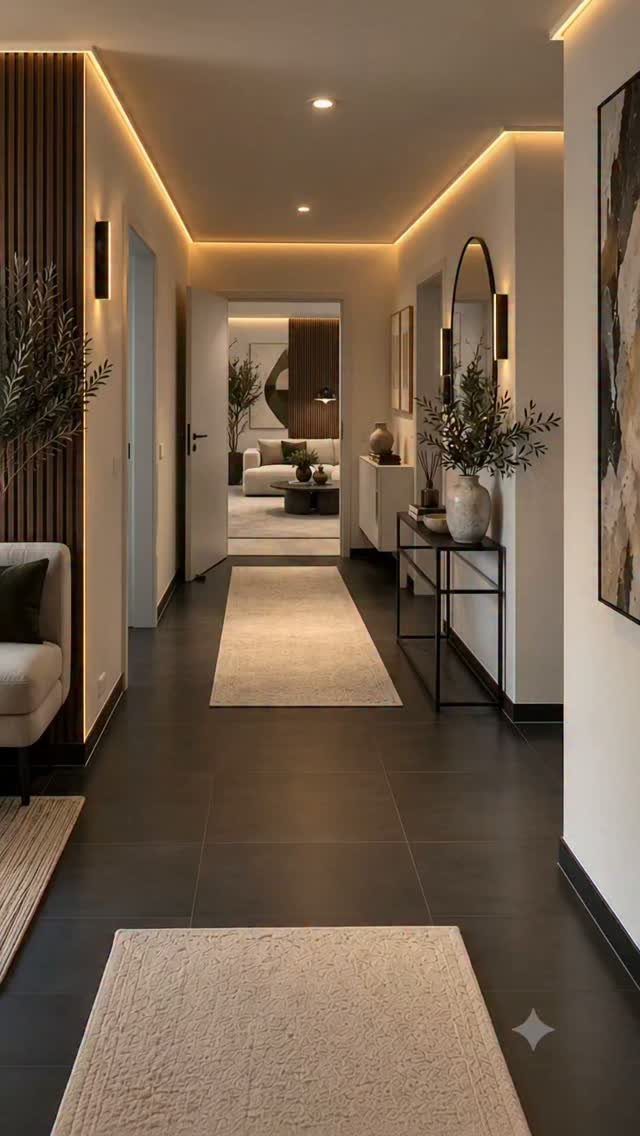
Recessed ceiling lights alone make a hallway feel like an office corridor. Add a warm LED strip around the perimeter and the same space softens, with the wood paneling and floor picking up a glow.
I would put each layer on its own switch or dimmer, so you can run only the strip at night.
Plug-in or adhesive LED strips are the renter-friendly route, and a strip tucked behind a ledge or trim hides the diodes.
Choose warm white for the strip so it matches the ceiling lights.
3. Comfortable Layout
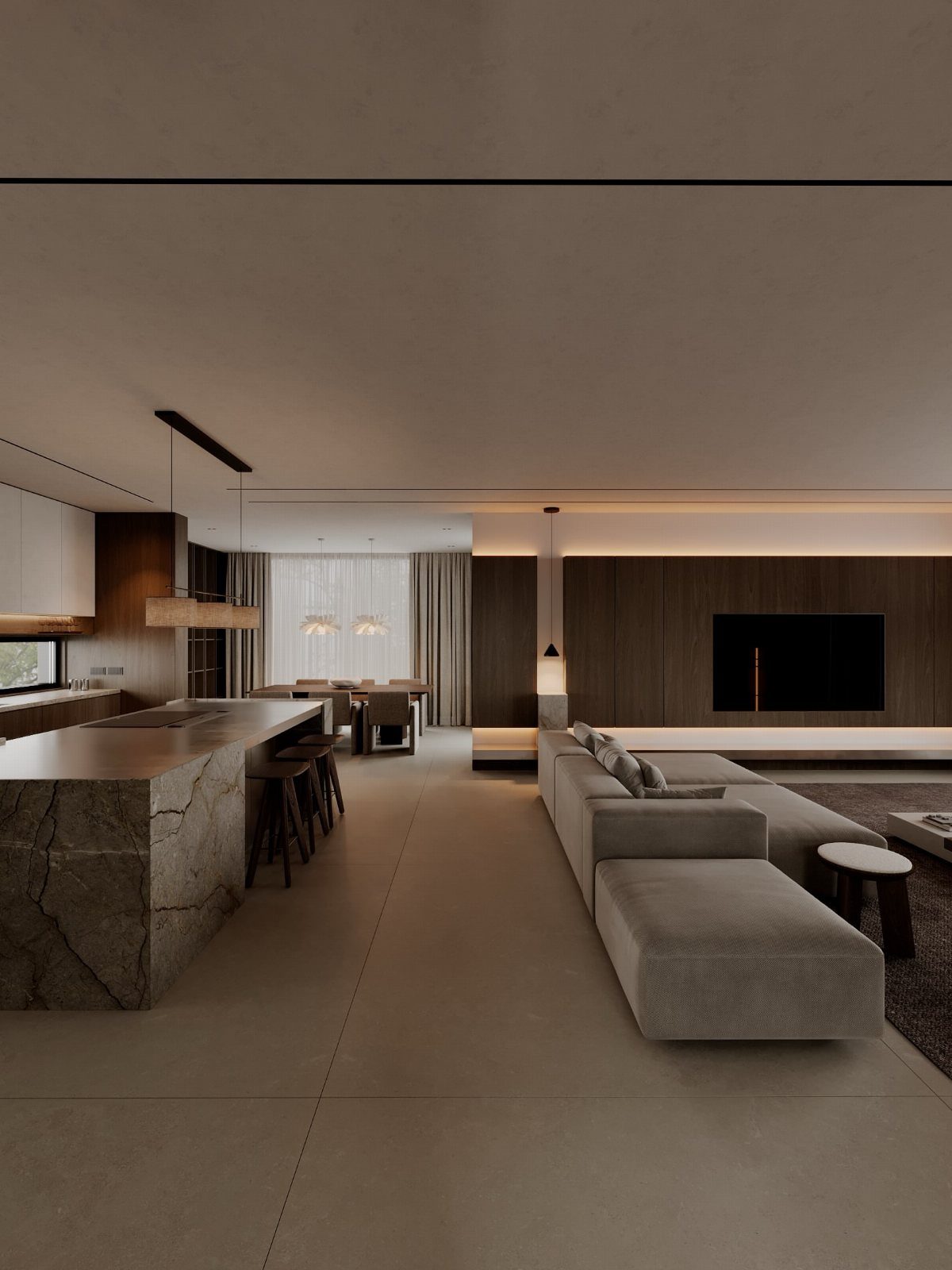
Walking through a room without turning sideways is the first test of a good layout.
Float the sectional so its back marks the edge of the living zone, and keep the television at a comfortable viewing distance.
I like leaving a wide lane between the island and the dining area, since that is where people pass most.
Before you buy anything, tape the footprint of each piece on the floor and walk it.
4. Neutral Shades with Bold Accents
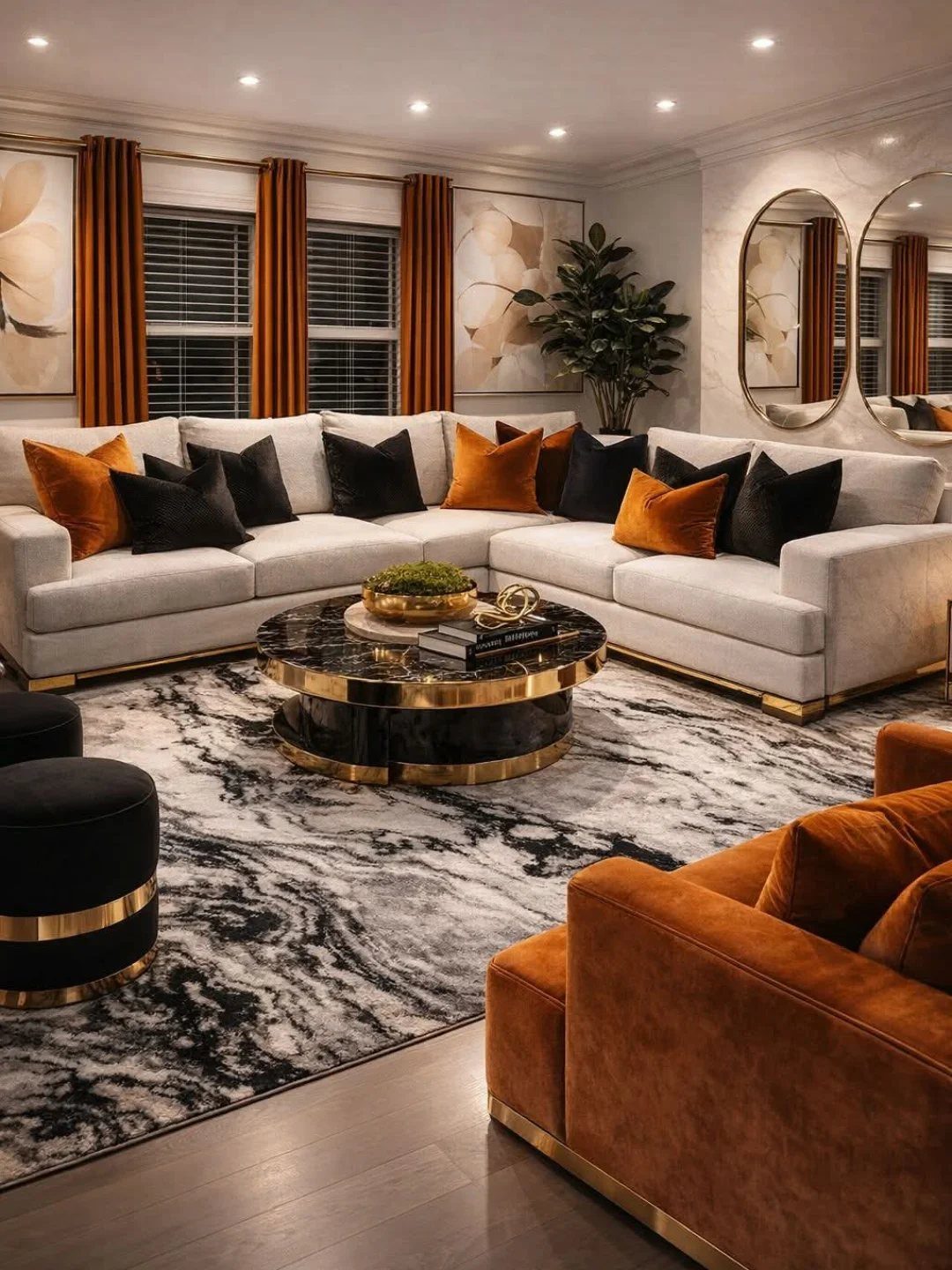
Gray furniture is a calm base, and a single hot color on top of it does the talking. Burnt orange pillows and curtains work because the color repeats in 2 places at different heights.
For a budget, swap pillow covers and curtains first; they cost far less than a new sofa and come off when you tire of them.
Accents work best in a single color, with the black and gold on the table acting as quiet backup.
Repeat the accent at least twice so it looks chosen.
5. Add Luxe Textures
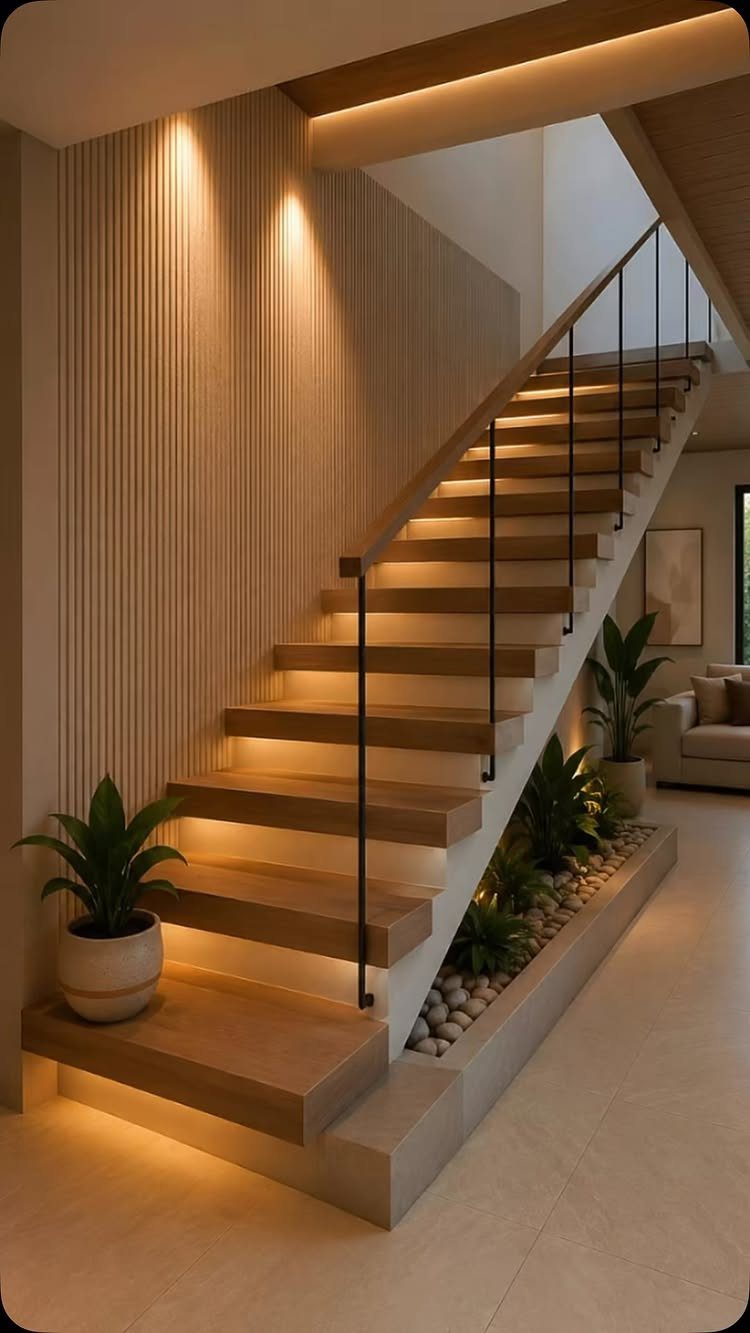
A fluted wood wall adds depth that paint cannot, because the vertical slats throw small shadows as the light moves. Pair it with smooth stone or a planter and the contrast does the work.
Slat panels are one of the few textured finishes a handy renter can approach in a weekend, though check your lease before fixing anything to a wall.
Lighting built into the stairs rakes across the grooves and makes them stand out.
Mix at least three textures in one view: wood, stone and leaves.
6. Designer Sofas and Custom-Made Tables
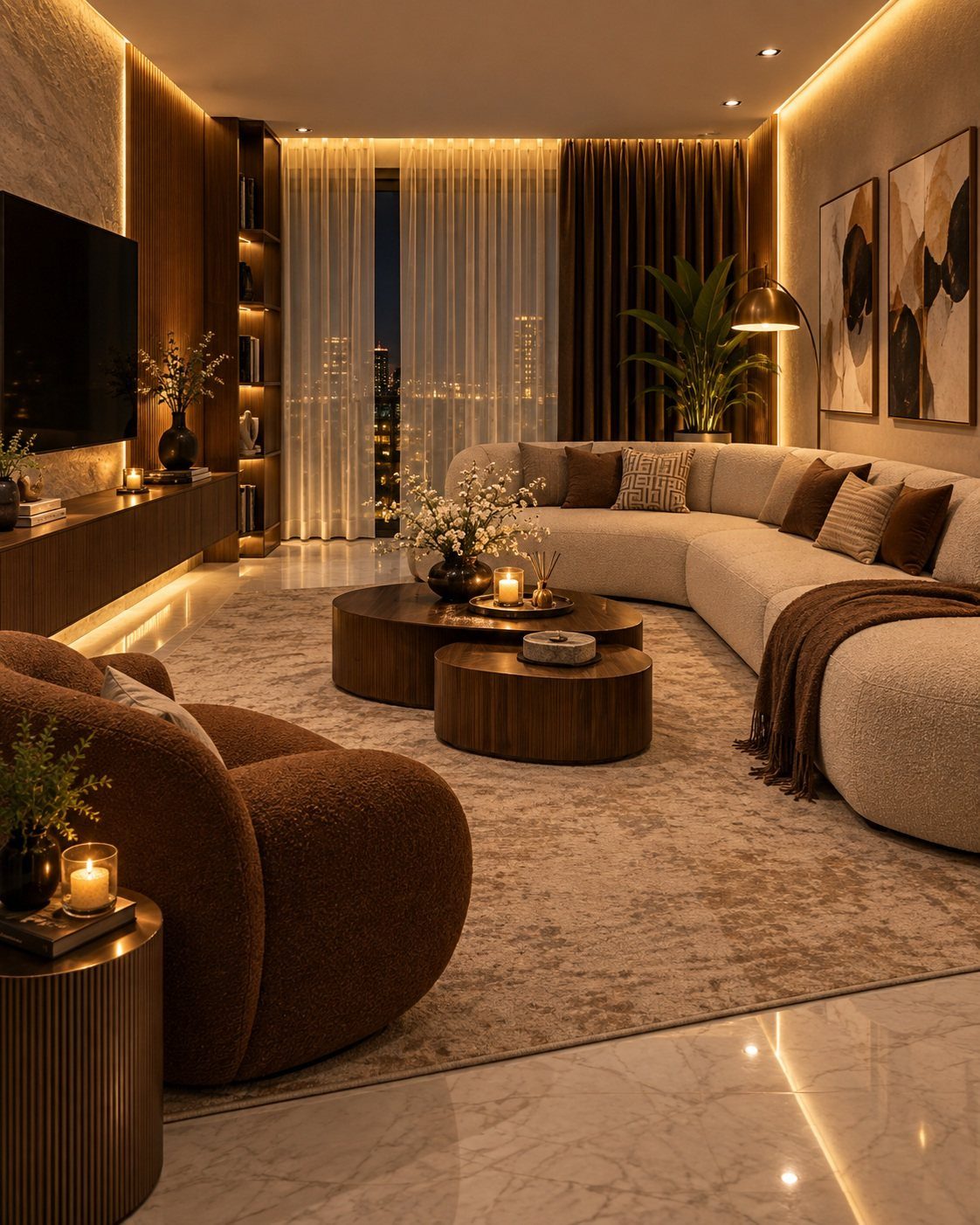
A curved sofa changes how a room moves, because there are no sharp corners to catch your shins.
Two round wooden coffee tables beat one large one for me: you can pull them apart for guests or push them together.
Designer and custom pieces cost real money, so splurge on the sofa you sit on daily and save on the smaller items.
7. Clear Surfaces
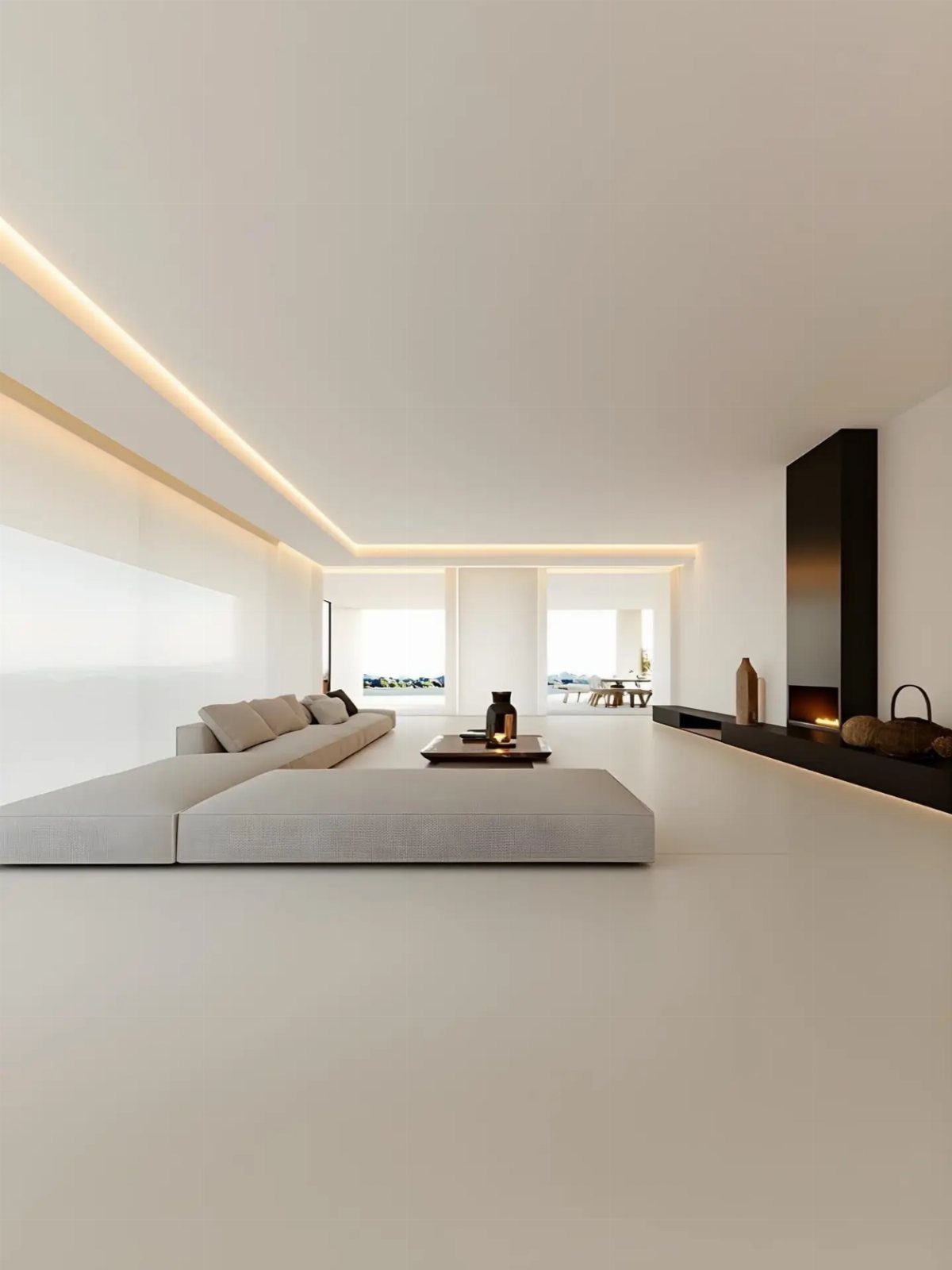
Bare surfaces are what read as expensive in a contemporary room: keep the walls, floors and coffee table simple and pale so the sectional has nothing to compete with.
Clear surfaces are the cheapest part of contemporary luxury, since they cost storage, not money.
Give every flat surface one job. The coffee table holds a single tray or bowl, and everything else goes into a closed cabinet or a basket out of sight.
A short weekly reset keeps clear surfaces clear better than a big purge twice a year.
8. Bespoke Cabinetry
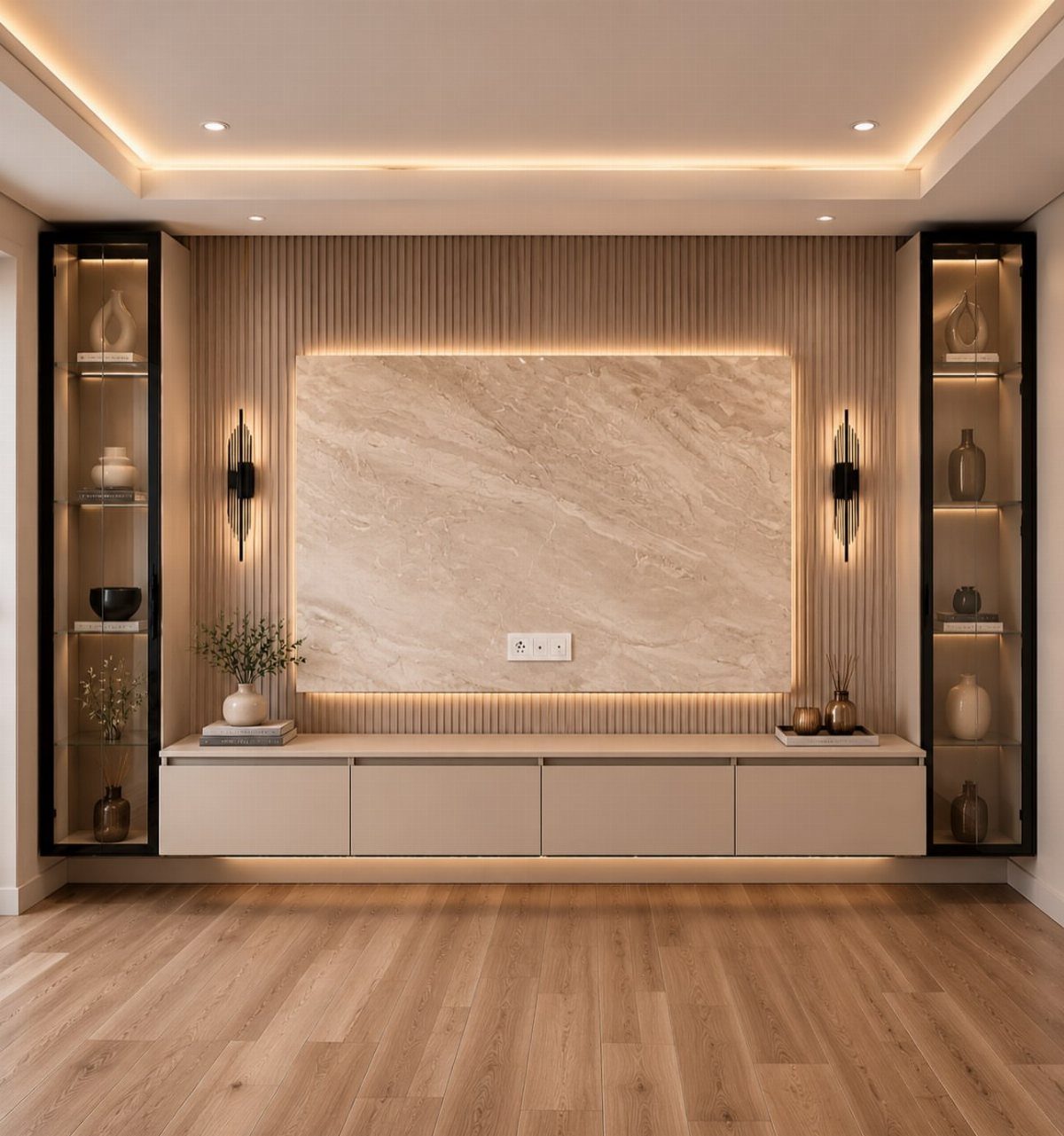
Floating lower cabinets keep the floor visible, which makes a wall of storage feel lighter than it is.
Custom millwork costs real money, so I would spend it on the lit display cabinets and fill the rest with stock units. A marble center panel and slatted wood backdrop can be done in peel-and-stick or thin panels.
9. Large, Bold Artworks
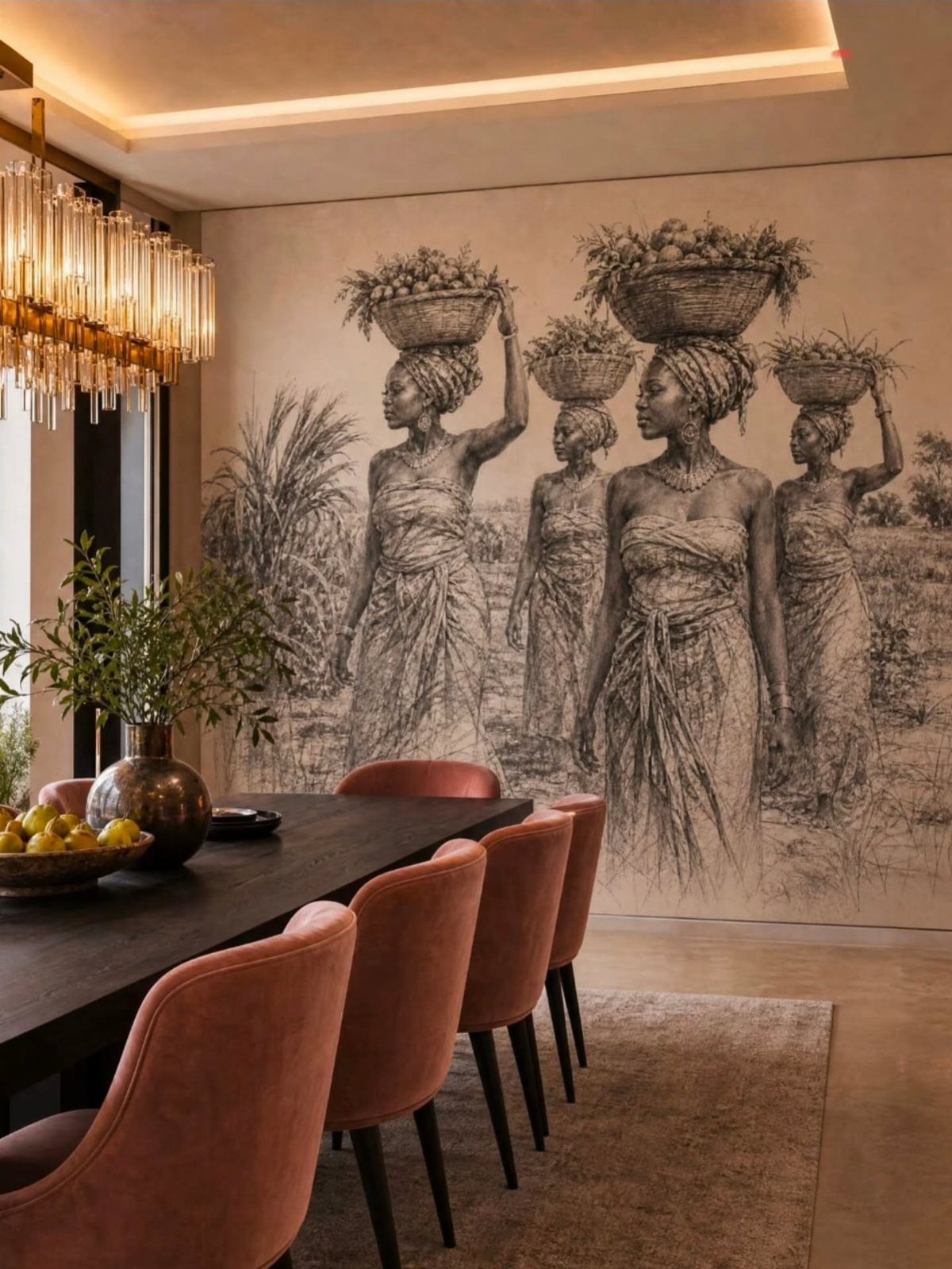
Pink chairs, a black table and a gold chandelier already have plenty to say, and a monochrome wall gives the eye somewhere calm to rest.
Go big: a small print would get lost on a full wall. Wallpaper murals or a large canvas are the budget routes, and a renter can choose removable paper.
10. Fireplace in the Bedroom
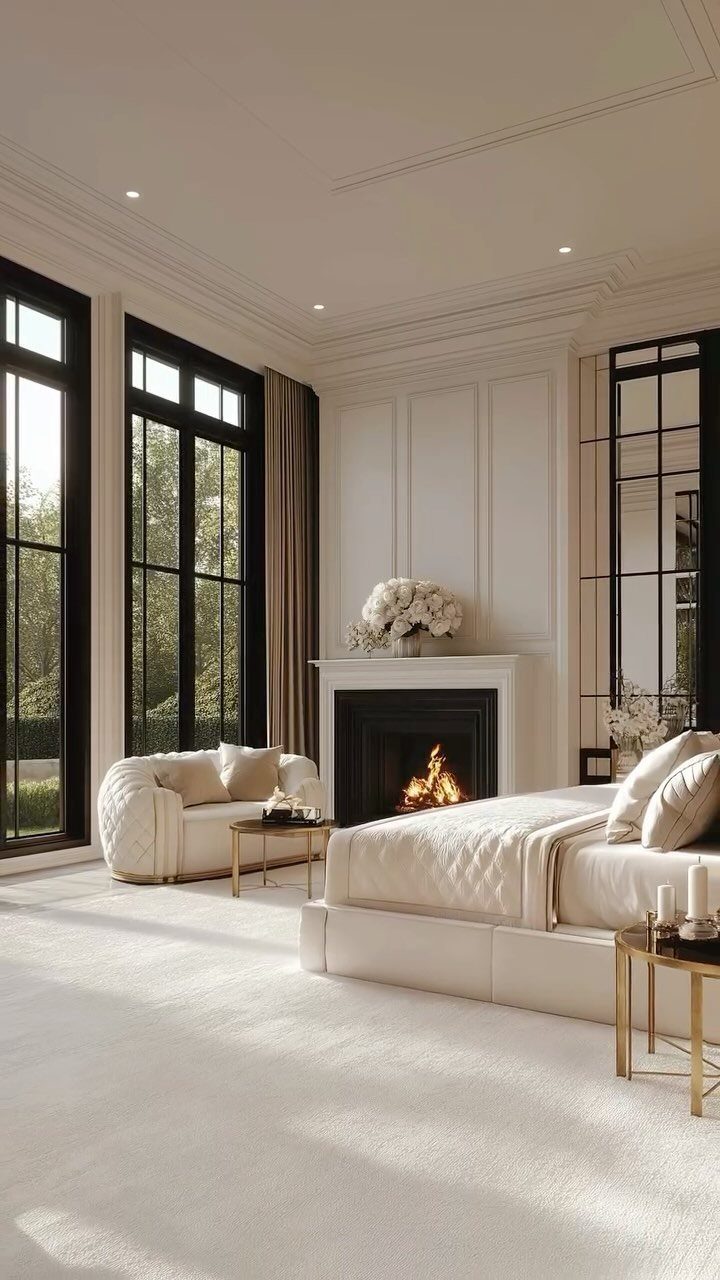
A fireplace beside the bed makes a bedroom feel like a suite. Pair it with a curved sofa at the foot of the bed and large black-framed windows, and the room gets a sitting area without adding a wall.
Gas and wood-burning units need installation, so check the rules before you plan one. Renters can get a similar glow from a freestanding electric model, which needs only an outlet.
Keep the bedding white and plain so the flames stay the focus.
11. Wood Paneling on Walls and Ceiling
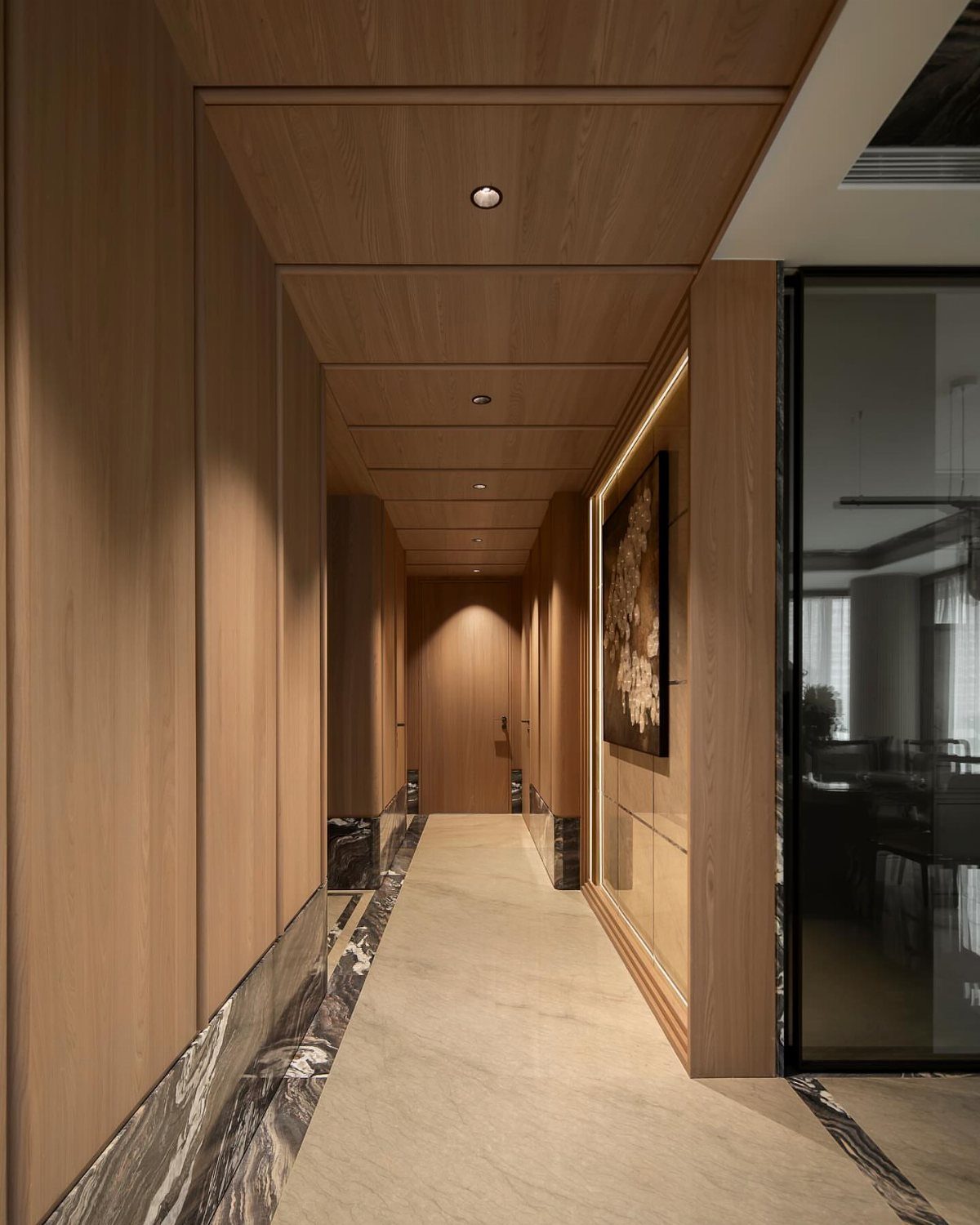
Wrapping walls and ceiling in the same light wood makes a hallway feel like one continuous piece, with no line where the wall stops. Recessed lights and a stone-look floor keep it from going cabin-like.
Light-toned wood is my pick for a narrow space, since dark boards would close it in. Thin panels or slats are the budget route, and they suit a weekend if the ceiling is not too high.
Hang one large piece of art on a single wall and leave the other bare.
12. Marble Dining Table with Statement Mirror
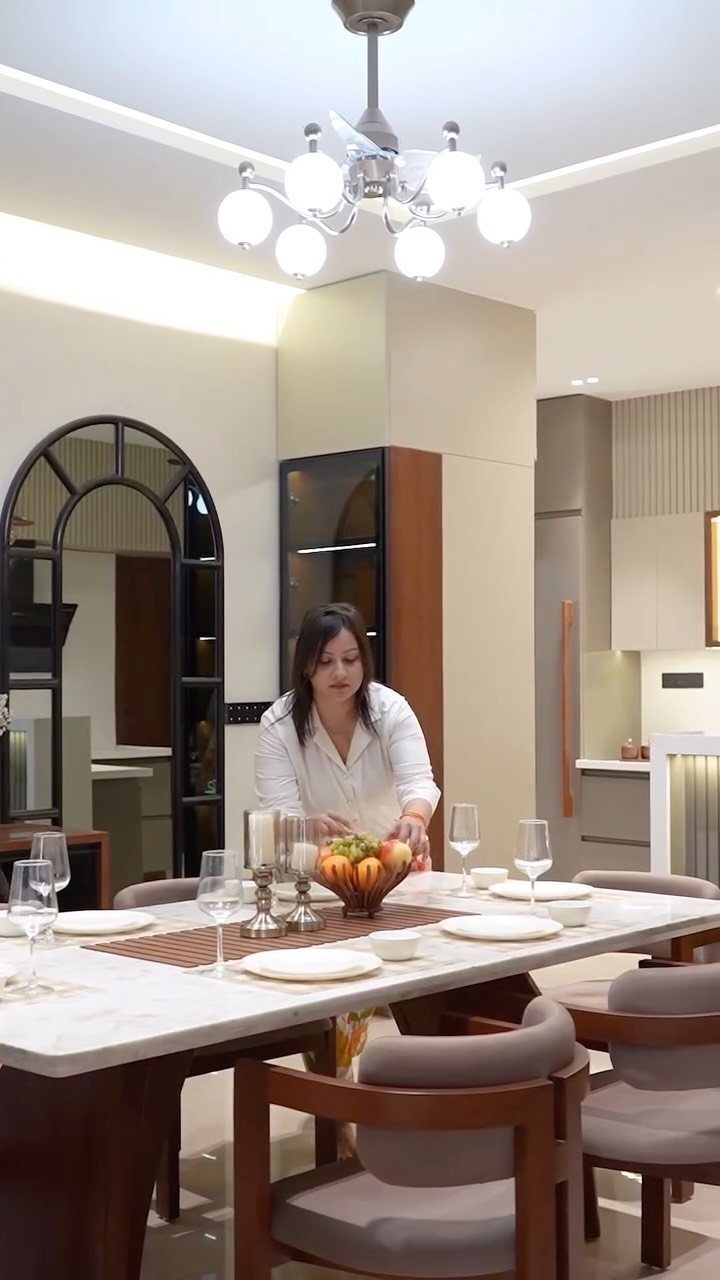
A white marble table and a large arched mirror with a black frame do the work of a whole design scheme. The mirror doubles the chandelier and the daylight, and the arch softens a room full of straight lines.
Real marble is heavy and costly, so a marble-look top over a sturdy base is the fair compromise for most budgets. Lean the mirror on a sideboard or hang it so its bottom edge sits just above the surface.
Keep the other furnishings quiet; these 2 pieces are enough.
Importance of Personalization
Customizing a room does not have to mean ordering custom furniture.
Start with your own habits: where you drop your keys, where you read, how many people sit down to dinner, because a space only works when it fits how you live.
Choose a few pieces you picked yourself, such as art, a lamp or a chair, and let those carry the personal side. A room built around your needs feels more special than one that copies a catalog.
If budget is tight, put money into one made-to-fit piece and keep the rest simple. Fewer personal touches, chosen with care, look more intentional than many small ones.
Functionality in Luxury Design
A luxury room has to work on an ordinary Tuesday. Place furniture so people can move through without squeezing past, and keep the room from filling up.
Open layouts can feel larger and more welcoming when good materials sit in a few well-chosen spots instead of everywhere. Empty space is part of the look, so leave some of it alone.
Before adding a piece, ask what job it does. If the answer is "nothing," skip it.
Trends in Luxury Design
Today’s luxury look is quiet and edited, with straight lines, clear surfaces and a few rich materials like stone, walnut and brushed brass.
I would rather own 3 good chairs than 6 forgettable ones, so buy less and pick each piece with care.
Detail does the heavy lifting. An ordinary hollow door starts to look expensive once it gets a tight, even frame, a good veneer or a lacquer finish, and a handle with some real weight to it.
Swapping cheap pulls for heavier ones is a small upgrade with a real effect.
Keep a shared look from room to room.
Repeat one hardware finish on doors, cabinet pulls and bathroom fixtures, then pick flooring, tile and counters that share a tone or texture, and the whole house starts to feel like one plan.
Defined by clean lines, decorated minimalism, and current trends, contemporary interiors are distinctly of-the-moment—even when the moment changes.
Frequently Asked Questions
What are 2026 interior design trends?
Contemporary luxury in 2026 still runs on the same logic: straight lines, calm surfaces and a handful of materials that actually cost something, like stone, walnut or brushed brass. Buying fewer, better pieces fits that look.
What are some luxury decor ideas for a living room?
Start with a curved sofa, a pair of round wooden coffee tables and warm layered lighting. Add a single bold accent color repeated in at least 2 places, such as burnt orange pillows and curtains against gray furniture.
Plush textiles, mirrors, statement art and well-placed greenery also add luxury without a big spend. Keep surfaces clear so these few pieces stand out.
What is the definition of contemporary interior design?
Contemporary design is a style built on clean lines and current trends, so it shifts as tastes change.
What is modern luxury style?
Modern luxury pairs sleek, minimal design with high-quality materials and close attention to detail. Spaces stay uncluttered so each finish and piece can make an impression.





