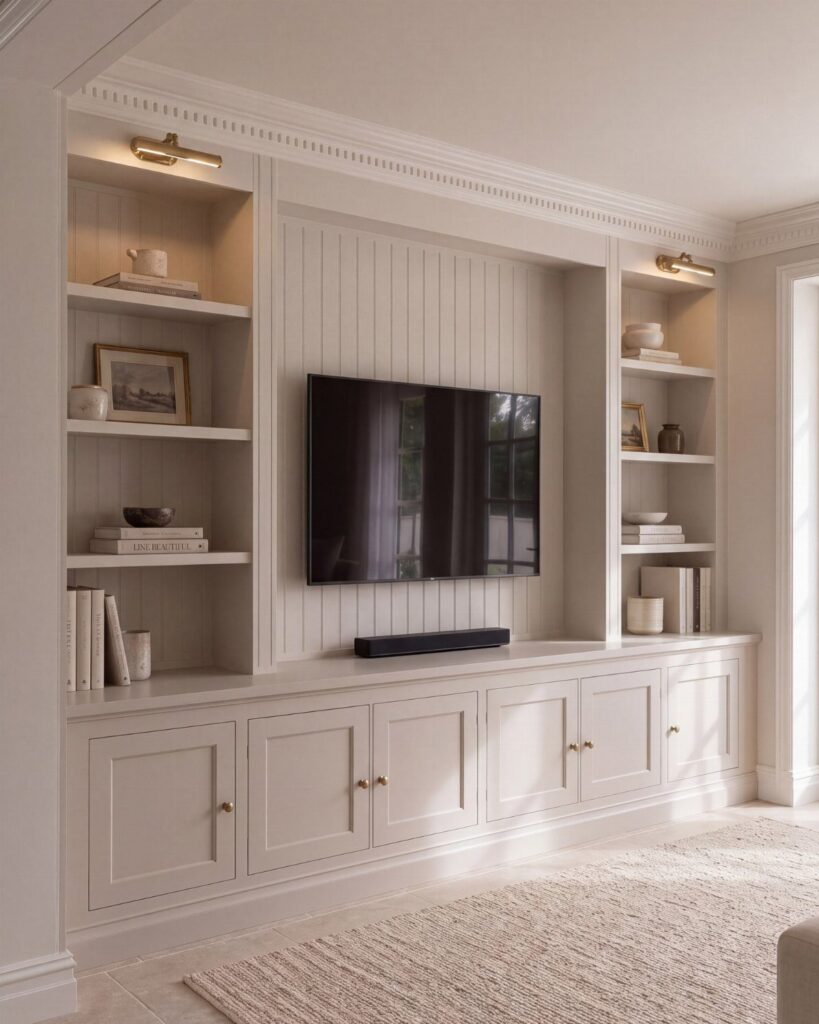
How much carpentry you are willing to take on decides which idea is yours: floating units mount to studs with only anchors and a bracket, while recessed walls mean framing a niche and patching drywall.
The list runs from that bracket-and-console job to full custom cabinetry with lighting and a fireplace, where one media wall quote came to £2,000 to £4,000.
1. Built-In Entertainment Centers
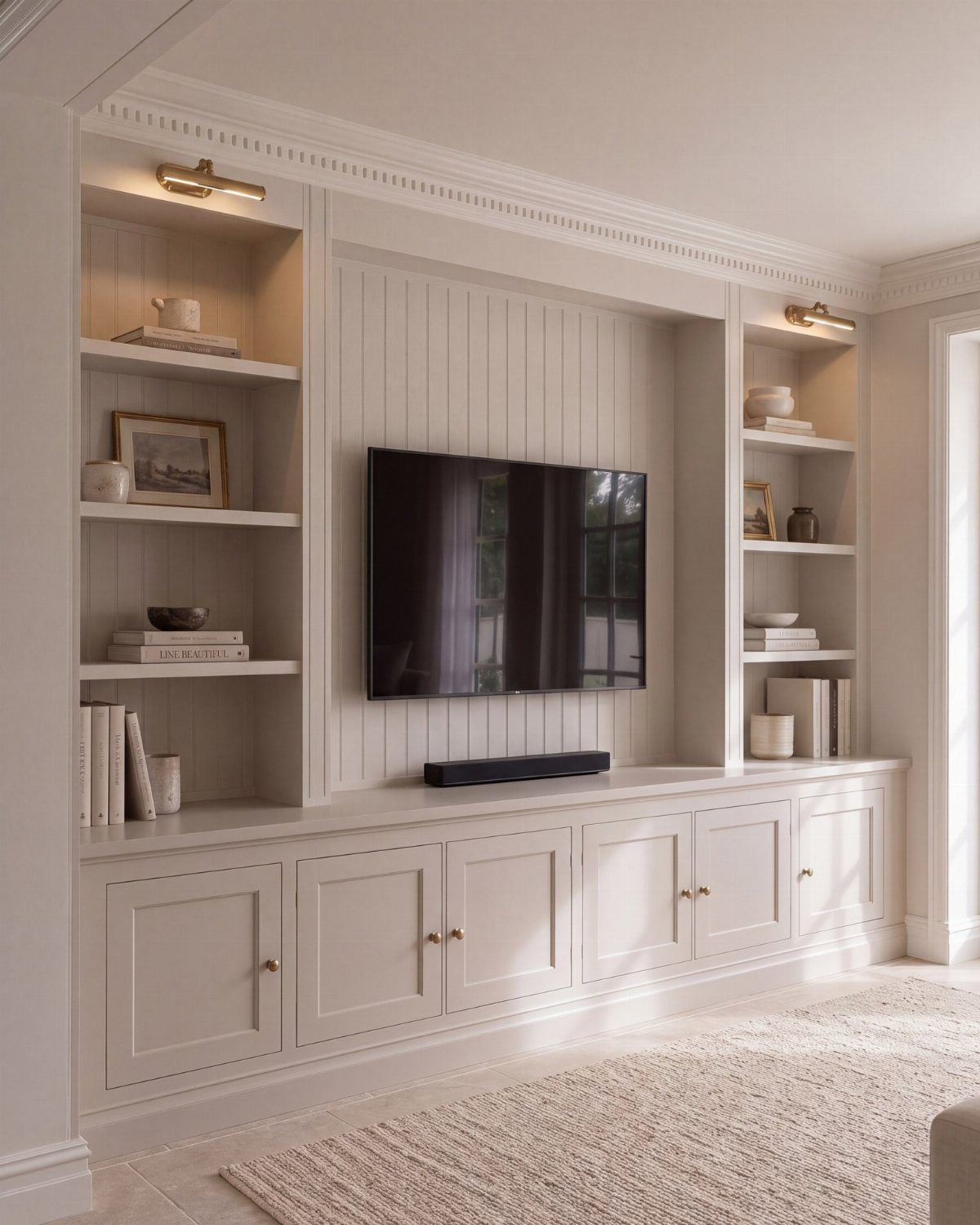
Cream cabinetry below and open shelving beside a recessed TV gives a wall one job: hold everything the room needs. Closed lower cabinets swallow remotes, game controllers and cables, while the open shelves handle books and a few decorative pieces.
I would keep the shelf styling sparse, since a soundbar and a TV already fill the middle.
Painting the whole unit one soft color, as this one does, makes it read as part of the wall instead of furniture parked against it.
2. Floating TV Units
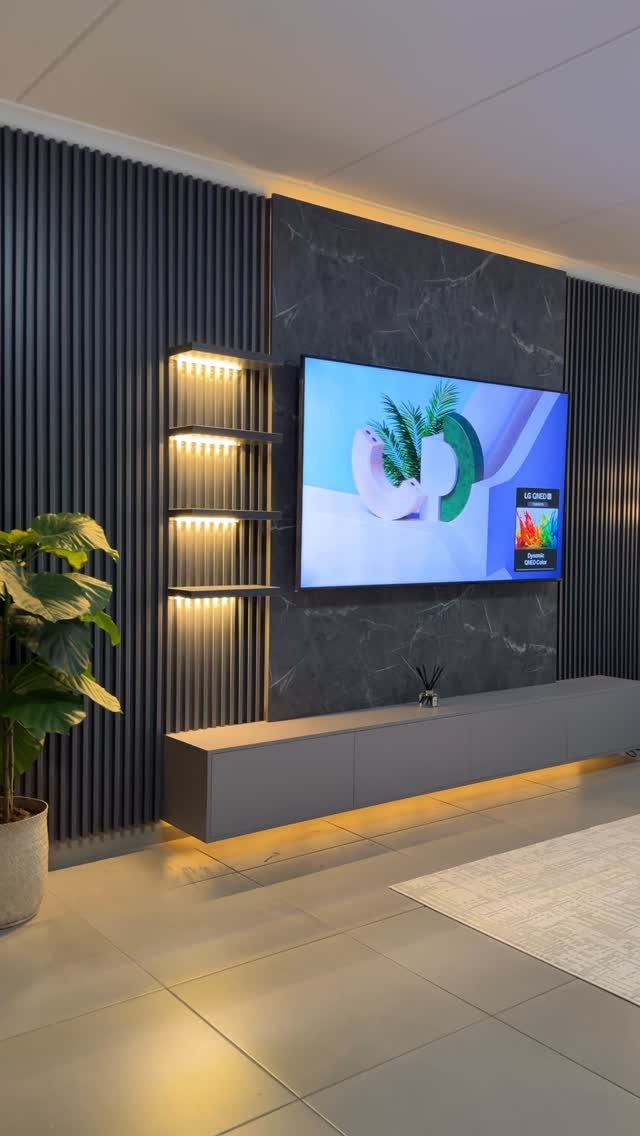
A grey console hung off the floor under a wall-mounted TV leaves a strip of visible floor, and that gap makes a small room feel bigger. Lit shelves beside it add a glow without taking up floor space.
Mounting means finding studs or using proper anchors for the weight. I would pick one backdrop, like the dark marble panel here, and keep the console plain so the two do not compete.
3. TV Wall with a Fireplace
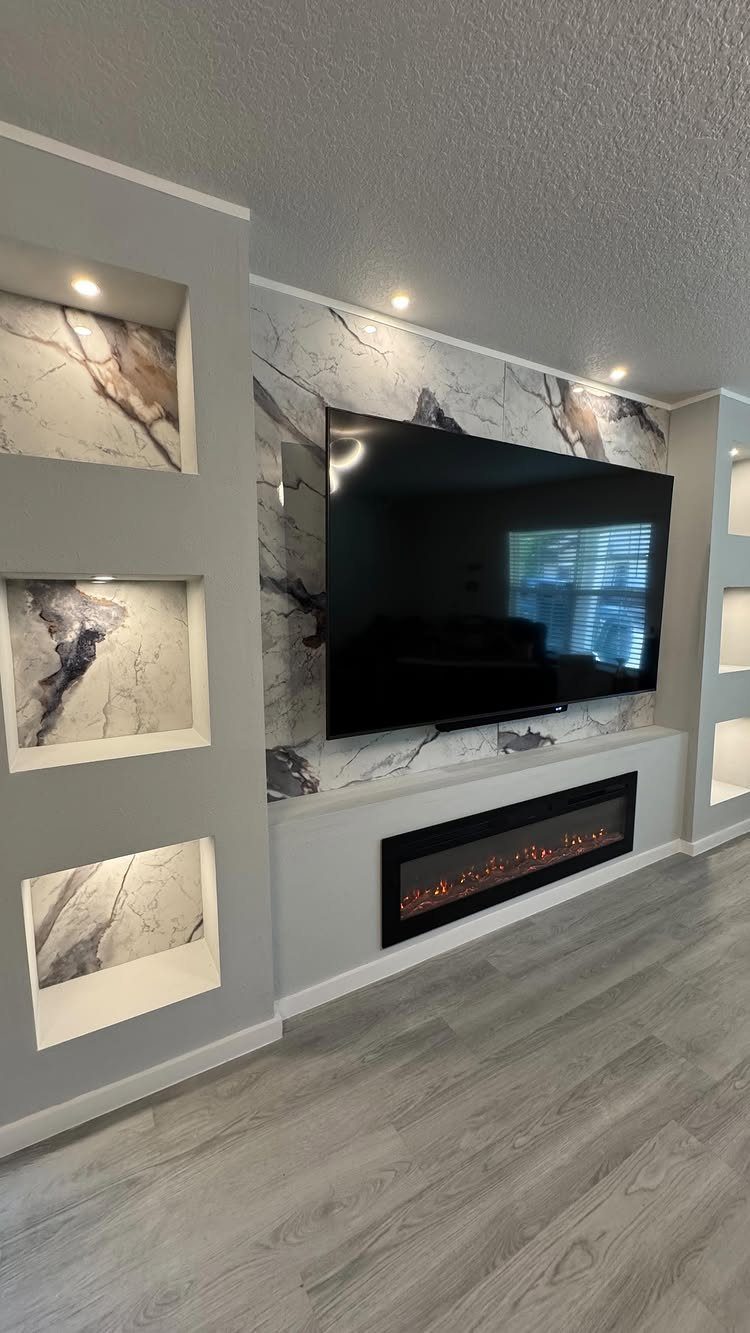
A linear electric fireplace under the TV puts heat and screen on the same wall, so the seating has one clear direction to face.
Electric needs only an outlet, which keeps it within reach of a renter or first-time owner, where gas means a plumber.
The maker of this wall built in custom niches on either side of the fireplace, each with a back panel that sets it apart from the drywall. I like that the niches soften all that stone.
4. TV Wall with Open Shelving
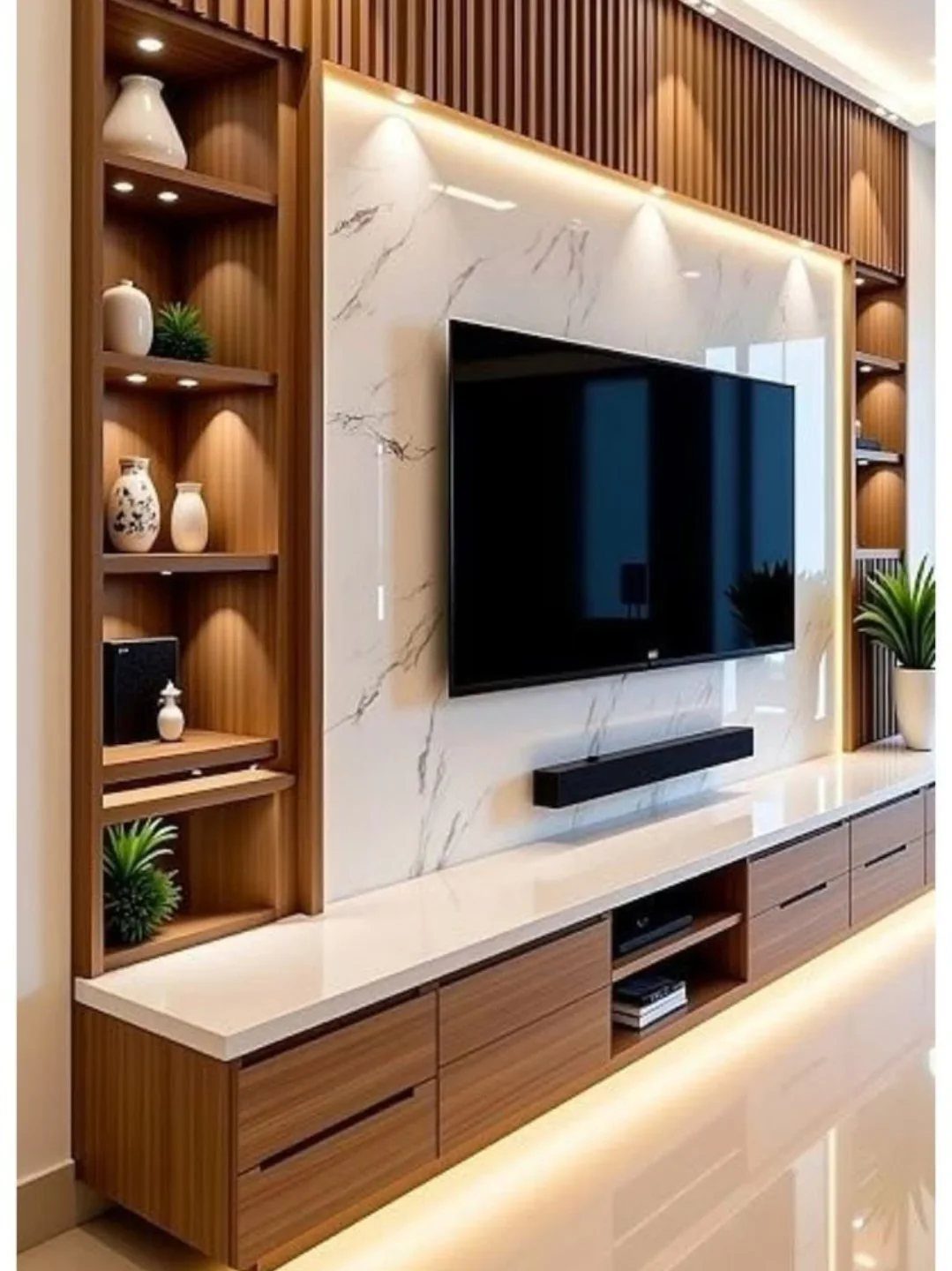
Wooden shelves against white marble keep a TV wall from feeling like a cold slab, and the drawers below hide the clutter the shelves cannot. That split is the whole appeal: you display some things and conceal the rest.
Sort what you own before you build. If the drawers will not hold your cords and games, the shelves end up crowded, so size the lower storage first and style the open shelves last.
5. Recessed TV Walls
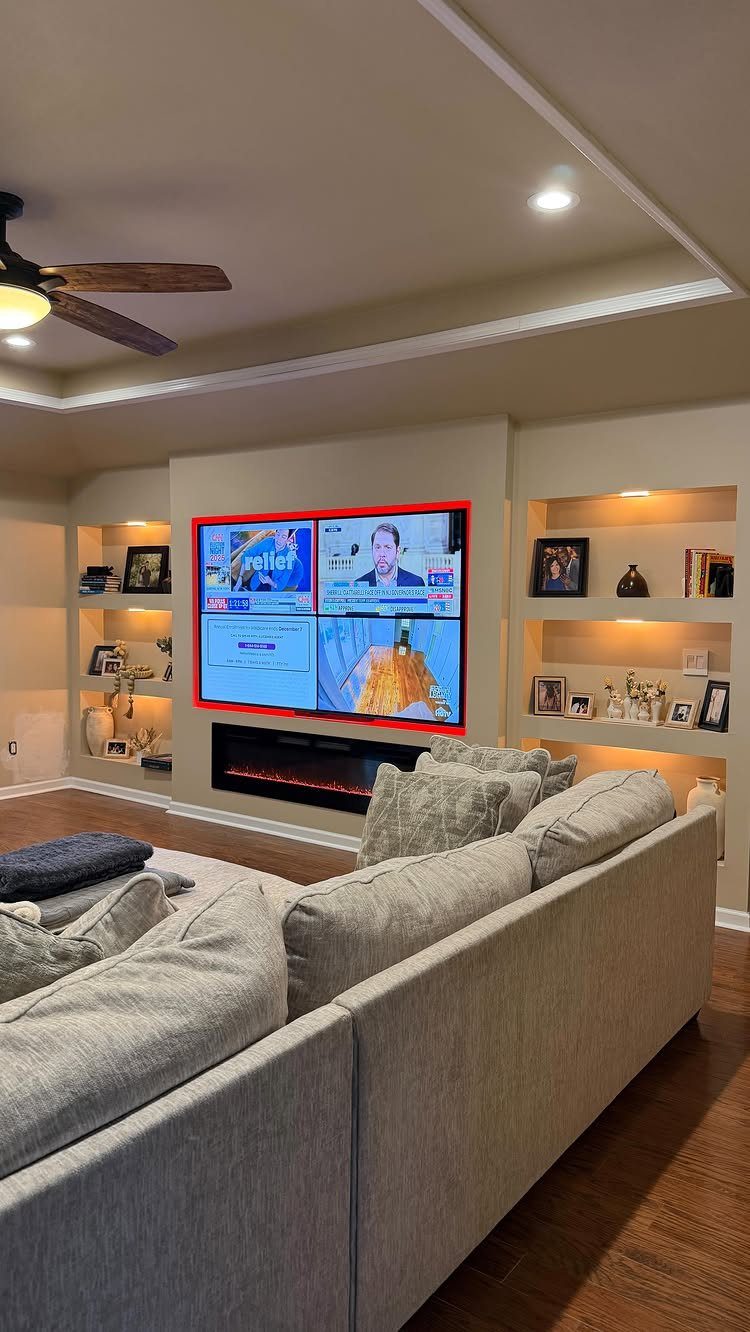
Sinking the TV into the wall puts the screen nearly flush, so the wall looks smooth and tidy from the sofa. Put an electric fireplace below it and the wall reads as one composed piece.
This is a bigger job than a bracket mount, since it means opening the wall and framing a niche.
Before cutting, check what is behind the drywall, and plan for ventilation and cable access. A beige finish like this one keeps the look calm.
Recessing the television into the wall rather than mounting it proud of the surface makes a considerable difference — the screen sits in shadow, framed by the surrounding plaster, and loses much of the visual insistence.
6. TV Wall with Flat Cabinetry
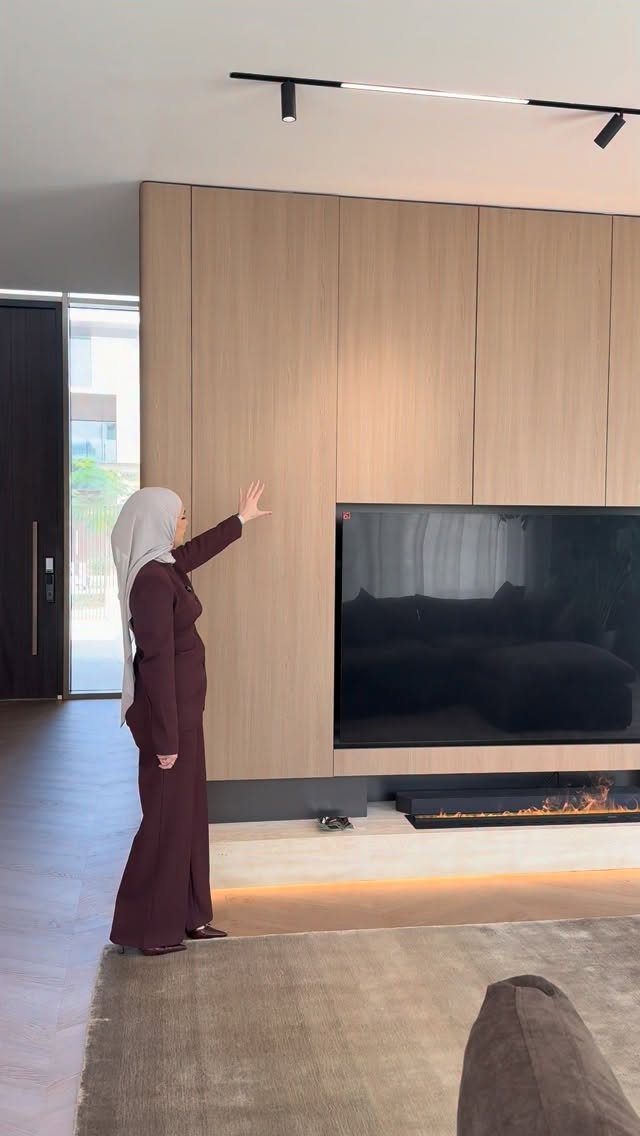
Flat-panel cabinetry with no visible handles or trim turns the whole wall into one quiet surface, with the TV set into it. Light wood keeps that surface warm instead of stark.
I prefer this over busy shelving when a room is already full of other things.
The linear fireplace below adds a horizontal line that balances the tall TV. Expect to spend more than on standard cabinets, since flush panels need tight, clean fitting.
7. Asymmetrical Built-In TV Wall
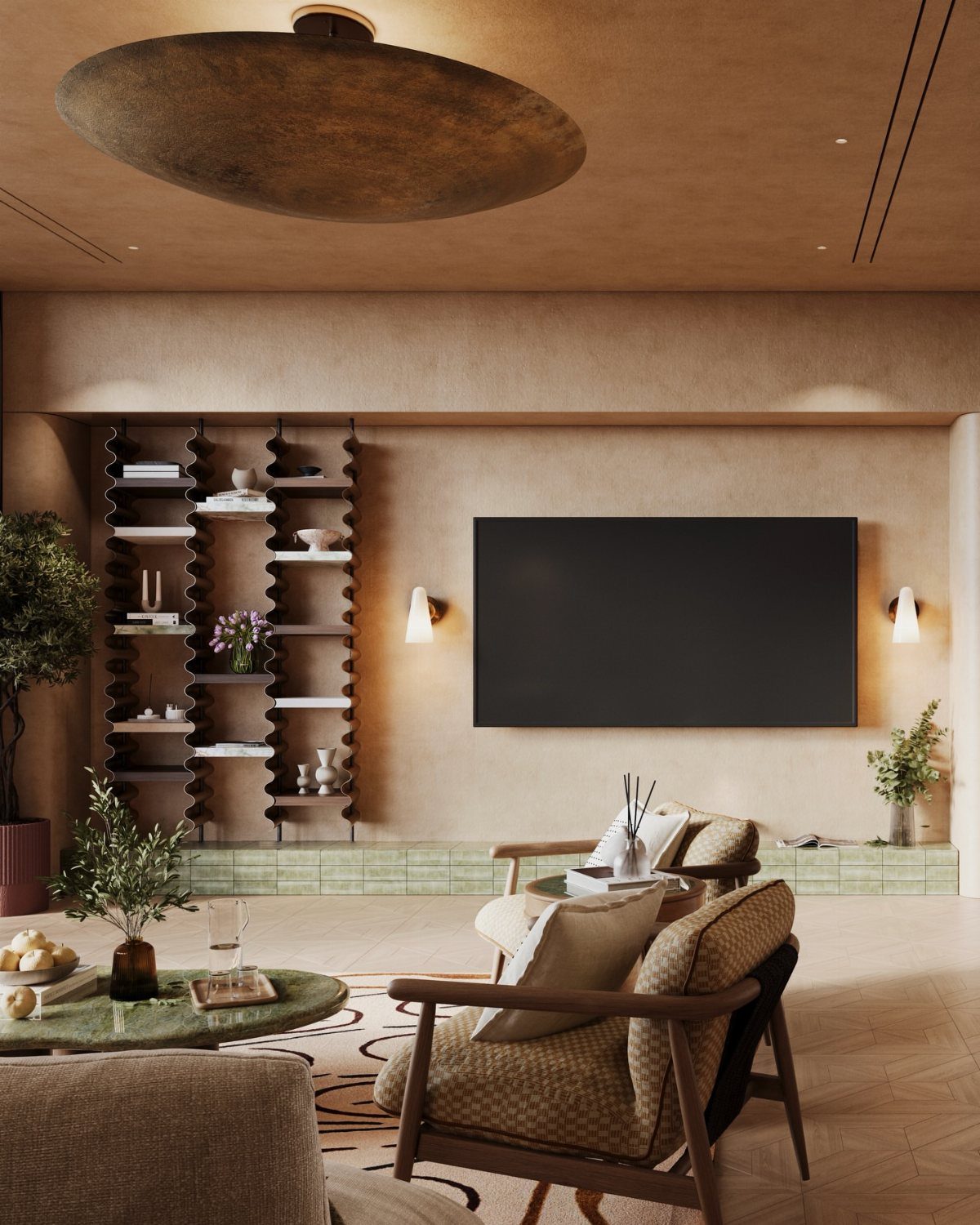
Pushing the TV off-center lets a wall hold a shape instead of a grid.
Here the screen sits to one side while a dark, wavy shelving unit takes the other, so the eye travels across the wall instead of stopping at the middle.
A few books or objects per shelf let the design breathe.
Balance matters more than symmetry: if the screen is the lighter element, let the shelving carry the visual weight. Seat the sofa so it faces the screen, not the wall’s center.
8. Wood-Slat TV Feature Wall
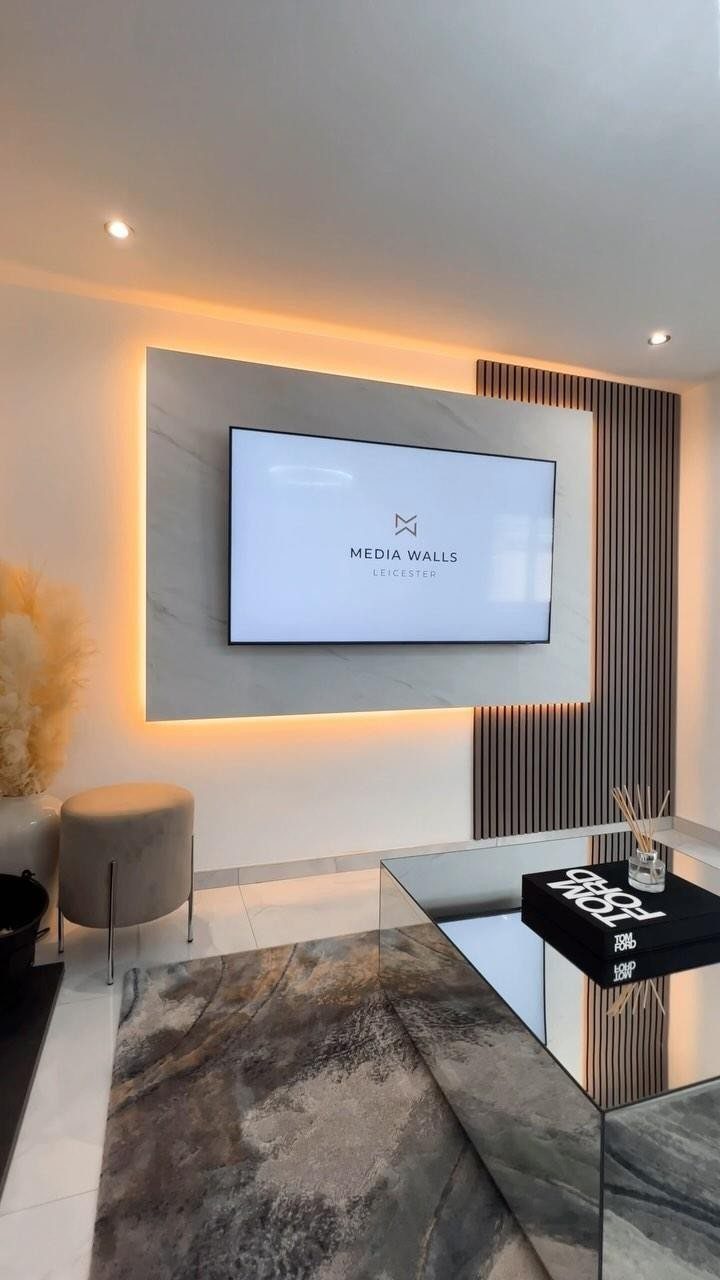
Vertical wood slats beside a backlit panel give a TV wall 2 textures: warm grain against a smooth, glowing surface. The lines of the slats also draw the eye upward, which helps in a room with a standard-height ceiling.
For a weekend budget, I would slat only the section beside the screen and leave the rest plain.
The backlight is the pricey part, so treat it as an option, not a requirement. Wood and glow together read warm in the evening.
9. Built-In TV Cabinet with Doors
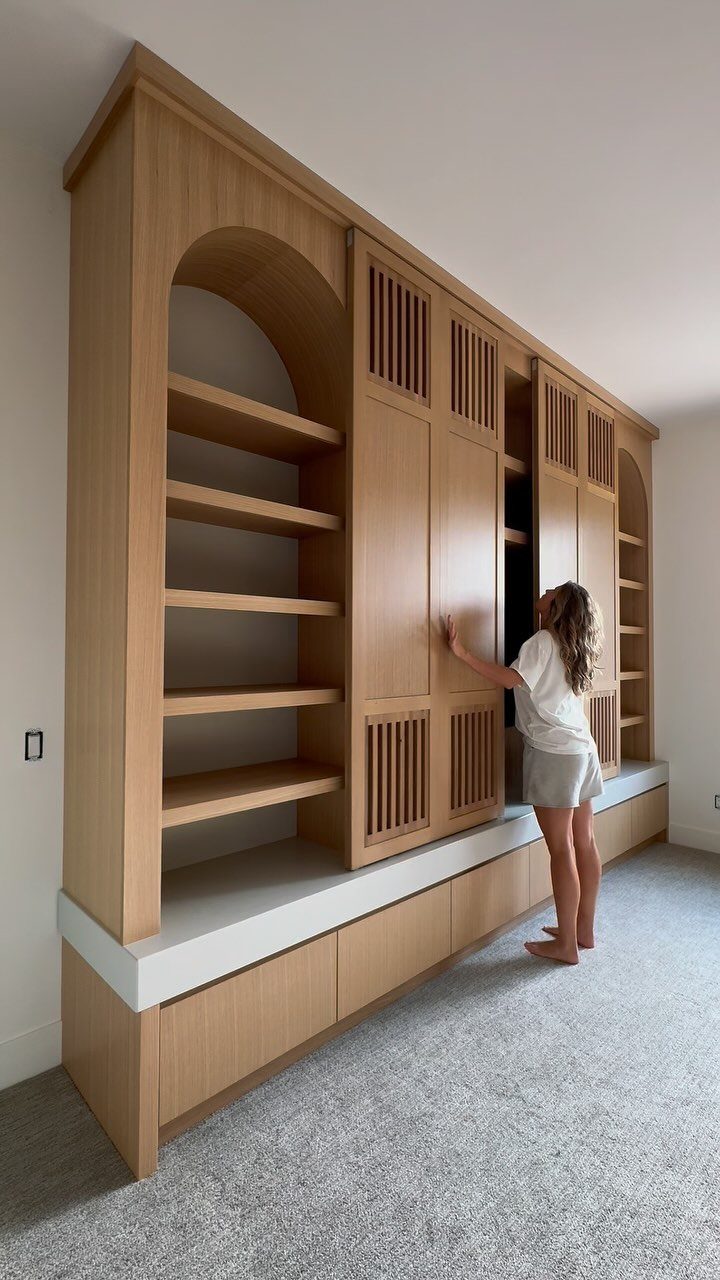
Sliding slatted doors turn the TV into part of a cabinet, so a dark screen never dominates the room when no one is watching. Closed storage below hides clutter while the open upper shelves stay visible.
Solid wood costs more than veneer or paint-grade panels, and a unit like this is a real carpentry project.
I would still choose doors over open shelving if the TV sits in a room you also relax or entertain in. Leave room behind the screen for cables.
10. Stone or Marble-Effect TV Wall
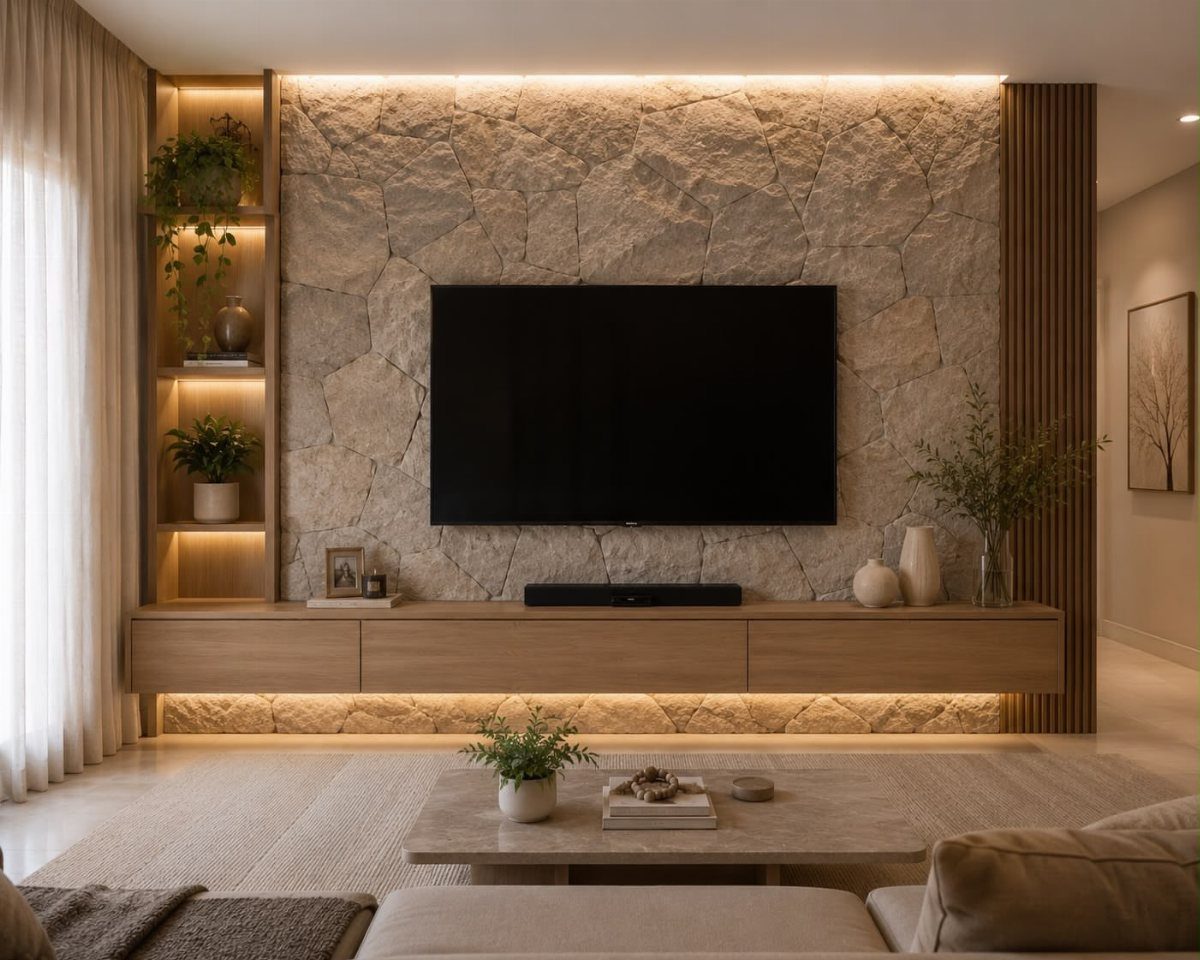
A textured stone wall behind the TV gives the room a bold backdrop, and the built-in lighting makes the surface look carved rather than flat.
Real stone is heavy and costly, so a stone-effect panel or veneer is the version I would choose on a renter’s or first-time owner’s budget.
Pair it with something warm, like the floating wooden console here, so the stone does not turn cold. Keep the lighting on a dimmer, since a bright wash flattens the texture.
Cable Management Solutions
Plan the wires before anyone picks a finish. Outlets and cable access need to be settled before installation, because moving them after the wall is closed means opening it again.
I route cables through conduit rated for in-wall use, or I hide them behind a removable panel or inside an access channel built into the frame.
I favor the removable panel: when a console or streaming box dies, you can swap it without cutting anything.
Cutouts that are discreet but easy to reach keep the wall tidy and make future repairs simple.
Do not run ordinary power cords inside a wall unless the product is rated for it, and ask an electrician if you are unsure.
Design Flexibility for Different Spaces
Match the wall to the room, not the other way around.
If the room is large, I fill the wall with built-in cabinets and open shelves lit from inside; in a small apartment, a floating mount with clean edges works better and leaves the wall light.
In a family room, I pick surfaces that survive fingerprints and clean with one wipe. When the TV wall faces an open kitchen, I match the cabinet door style so the two read as one space.
Basements and multi-use rooms can work too. A well-planned wall makes the technology look like part of the room instead of an intruder.
Cost Considerations for Custom Walls
Installation prices for a media wall can run £2,000 to £4,000, depending on design and materials. That is a UK figure, so expect to convert it and to get local quotes.
Cost follows size, materials and features. A streamlined TV wall sits at the low end; a full built-in with cabinetry, lighting and a fireplace climbs fast.
Get professional advice on stud walls and electrics before you settle on a design, since those two can change the total. If the budget is tight, I would build the simple version first and add lighting or a fireplace later.
Frequently Asked Questions
How much is a built-in TV wall?
The only figure I have is a UK one: installation for a media wall runs £2,000 to £4,000, so convert it and get local quotes.
Can you recess a TV into the wall?
Yes. A recessed screen sits behind the wall surface instead of projecting forward, which gives the whole setup a cleaner profile.
Locate studs, pipes and wiring first, then build the recess with clearance for heat to escape and room to reach connections.
Is a wall mounted TV a good idea?
Yes, in most rooms. A bracket gets the screen off furniture and opens up the floor, and pairing it with a floating shelf below keeps sightlines clear.
Anchors go into studs or use heavy-duty wall anchors that match the TV’s weight, because drywall alone will not hold it.
How much does it cost to have a TV installed on the wall?
It depends on the design and how involved the installation is.
A plain wall mount is the simple end. A recessed niche or full built-in with cabinetry, lighting and a fireplace costs far more, and the UK media wall range is £2,000 to £4,000.
Stud walls and electrics can change the total, so get professional advice on those before settling on a design.





